

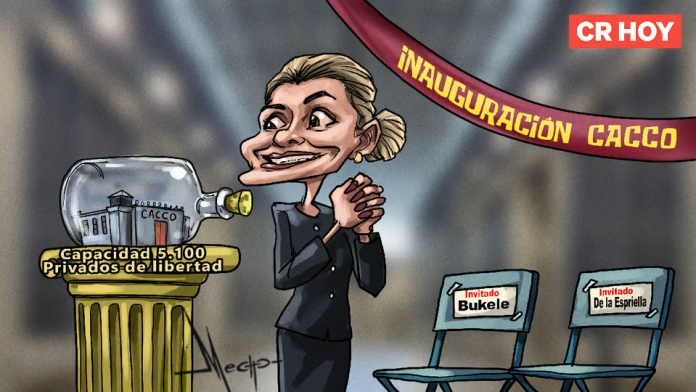


Q Costa Rica — Salvadoran President Nayib Bukele did not attend the opening Wednesday of Costa Rica’s new maximum-security prison, despite being invited to the ceremony and having helped inspire the facility’s design.
The Centro de Alta Contención contra el Crimen Organizado (CACCO)—High-Containment Center Against Organized Crime—was inaugurated on Oct. 14 at the La Reforma prison complex in San Rafael de Alajuela. Costa Rican President Laura Fernández led the ceremony.
Bukele’s absence had been anticipated but not officially confirmed before the event. Costa Rican immigration records showed that neither the Salvadoran president nor Colombian President Abelardo de la Espriella, who had also been invited, had entered the country by Wednesday morning.
Bukele last visited Costa Rica on Jan. 13, when he joined then-President Rodrigo Chaves for a ceremony marking the beginning of construction and helped lay the prison’s foundation stone. That visit didn’t go very well when the planned laying of the foundation stone went sideways.
Bukele’s January visit, which took place shortly before Costa Rica’s presidential election, drew criticism from opposition parties that described it as foreign interference. Costa Rica’s Supreme Elections Tribunal allowed the visit but warned foreign delegations not to intervene in domestic politics, according to The Tico Times.
The Salvadoran government donated the plans for the facility, which was modeled in part on El Salvador’s aggressive campaign against gangs and organized crime.
The CACCO can hold up to 5,100 inmates—roughly one-fifth of Costa Rica’s current prison population. The government says the facility will house people convicted of serious crimes, including drug trafficking, homicide and contract killings. The first inmate transfers are expected to take place at the end of October.
Costa Rican officials have presented the prison as a response to a sharp rise in killings and the growing influence of organized crime. Justice Minister Gabriel Aguilar has said the facility is intended to help the state regain control of a prison system that authorities believe has been penetrated by criminal groups.
Bukele’s security policies have made him a prominent figure in the regional debate over crime and incarceration. His government’s crackdown is widely credited with reducing gang violence in El Salvador, though human-rights organizations have accused authorities of arbitrary arrests, due-process violations and weakening democratic safeguards.
The Salvadoran president’s absence was not the only notable feature of the ceremony. Senior judicial officials, including the attorney general and representatives of the Supreme Court and the OIJ, also did not attend. Fernández highlighted the empty seats during her remarks and criticized members of the judicial system who, she said, opposed the government’s tougher approach to crime.
The missed appearance underscored the political sensitivity surrounding the prison.
Even without Bukele at the ceremony, the connection between his security model and Costa Rica’s new prison was clear. The CACCO is one of the Fernández government’s most visible efforts to adopt a harder line against organized crime as the country confronts a worsening wave of violence.