

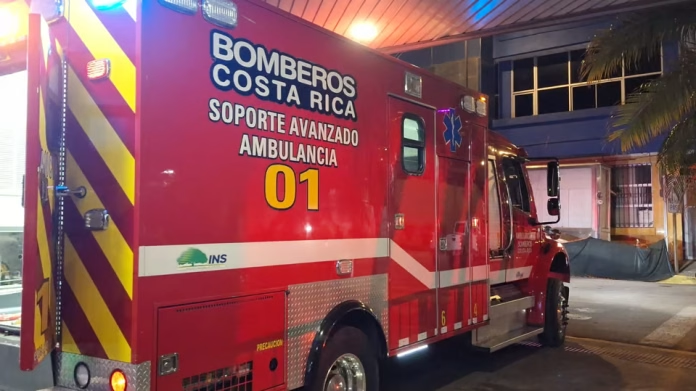


Q COSTA RICA — Two people who financed President Laura Fernández’s 2026 campaign through purchases of political-debt bonds are linked to a Brazilian company in a consortium awarded a ¢6.5 billion contract to supply 40 ambulances to the Cuerpo de Bomberos de Costa Rica (Costa Rica’s Fire Department).
Cristian Rodríguez Villalobos bought ruling party Partido Pueblo Soberano (PPSO) campaign bonds valued at ¢43 million; Hermmoth Rothe Paniagua bought ¢9 million. Both are connected to SGSV Soluciones Tecnológicas Integradas, one of two Brazilian firms in the consortium selected for the contract, according to La Nación.
The reported links go beyond campaign-finance records. Public-procurement documents identify Rodríguez as SGSV’s legal representative and describe him as the company’s regional sales director for Central America. Rothe has been listed as the company’s fiscal since 2015.
Both names also appear in emails related to the ambulance procurement, La Nación reported.
The contract, worth about US$13.8 million, was awarded to a consortium comprising SGSV and Bem Star through a special procedure that did not involve an open public tender. Fire officials cited an emergency purchase, following an instruction from Fernández to strengthen prehospital services.
The procurement excluded two Costa Rican firms that had experience selling ambulances locally and, according to the market study, offered prices up to US$2.3 million lower.
The Cuerpo de Bomberos de Costa Rica, the national institution responsible for emergency prevention, protection, and response, safeguarding lives and property, is operationally attached to the Instituto Nacional de Seguros (INS), the State’s national insurer.
Emails and unanswered questions
Documents in the public procurement file show that a Fire Department official emailed three companies—including SGSV, Comercializadora Técnica Industrial del Oeste (Cotisa) and AutoStar—to request price quotes and inform them of changes to the ambulance specifications. The message to SGSV was sent to Rodríguez.
In a later internal email, Rodríguez alerted colleagues to a clarification from the Fire Department. The correspondence copied Rothe and other company representatives. The following day, SGSV’s quote was sent to the agency with both campaign-bond buyers copied, according to La Nación’s review of the procurement records.
Rothe told the newspaper he bought PPSO bonds because he considered them a good investment, citing a 15% return. He acknowledged that the email address copied on the procurement correspondence was his, but said he did not remember why he had been included. Rodríguez did not respond to the newspaper’s calls and messages.
The Fire Department defended the selection, saying Bem Star had documented the manufacture and sale of 230 ambulances to five Brazilian government entities in 2025 and early 2026.
That experience was attributed to Bem Star, while neither company in the consortium had a record of selling ambulances to Costa Rican public institutions, according to La Nación’s account of the agency’s explanation.
Two inquiries, distinct questions
The campaign-finance connection has prompted scrutiny from electoral authorities. The Tribunal Supremo de Elecciones (TSE)—Electoral Tribunal—confirmed that it had opened a preliminary administrative inquiry into Rodríguez and Rothe, including checks intended to establish the origin and traceability of the money used to buy the bonds.
The inquiry concerns campaign financing; it is not, by itself, a finding of wrongdoing.
Separately, the Public Integrity, Transparency and Anti-Corruption Prosecutor’s Office opened an investigation into the Fire Department’s procurement decision. The case was initiated on Nov. 2 over the alleged offense of influence against public finances, according to La Nación.
The existence of an investigation does not establish that an offense occurred.
Analysis: appearance, process and accountability
The central issue is not simply that campaign contributors are associated with a company that later received a public contract. The reporting also places two bond buyers in communications connected to the procurement process, while the contract was awarded through a procedure that excluded potential competitors and accepted a price higher than offers cited in the market study.
Those facts raise legitimate questions about how the contract was planned, who shaped its specifications and whether the emergency procedure was properly justified. They do not, on their own, prove that campaign financing influenced the award or that the financiers acted improperly.
The available reporting establishes overlapping financial, corporate and procurement connections; it does not establish a causal link between the bond purchases and the contract decision.
That distinction matters. The TSE’s inquiry into the origin of the bond-purchase funds and the prosecutor’s investigation into the procurement address separate questions. Their findings—and the underlying records—will be needed to determine whether the connections reflect a conflict of interest, a breach of procurement rules, or no unlawful conduct.
For now, the case tests the public’s ability to see how a high-value emergency contract was justified and awarded. Clear answers from the Fire Department, the companies, the campaign and the relevant oversight bodies will be essential to resolving the concerns raised by the reporting.