

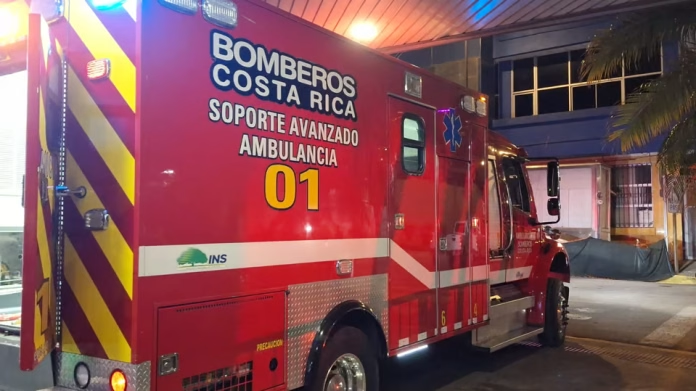


Q COSTA RICA — Costa Rica’s Fire Department (Bomberos) selected the most expensive offer in an emergency procurement for 40 ambulances, citing the bidder’s faster delivery timeline.
A week after awarding the contract, though, the department requested additional specifications that pushed back a milestone and left the supplier unable to guarantee the vehicles would reach the country by the end of 2026.
The winning consortium, SGSV–Bem Estar Hospitalar, was awarded a contract worth US$13.8 million. Its competitors had submitted lower bids: Cotisa offered US$11.5 million, while AutoStar offered US$13.7 million.
In a prior market study, the rejected bidders said they could deliver in 240 days; the winning consortium committed to 100 days. The Bomberos cited that shorter timeline as its reason for choosing the higher-priced offer.
The procurement was handled through a special emergency procedure. The department said the purchase was needed to strengthen prehospital emergency services and was ordered by President Laura Fernández.
The purchase was not made directly by the Bomberos, but by the Instituto Nacional de Seguros (INS)—State Insurer. The Bomberos operates under the protection and funding of the INS.
On October 28, the Bomberos requested new specifications covering ambulance color and markings. The consortium then asked to move the deadline for presenting the first model unit from November 2 to November 17. Its representative, Brazilian businessman Igor de Oliveira Roquim, signed the request.
That change matters because the promised 100-day delivery period does not appear to run from the contract award itself.
Long-time Bomberos director Héctor Chaves said the 100 days begin after the institution approves the model unit. The department’s additional requirements therefore affected the point at which the delivery clock could start—and the consortium no longer guaranteed arrival before the end of 2026, the report said.
Analysis: speed was the deciding factor, but the schedule remains exposed
The award rested on a clear trade-off: the winning bid cost more, but promised a much shorter delivery time. That rationale is only persuasive if the accelerated schedule can be achieved.
The later request for changes raises a practical question: how much of the delay stems from the supplier’s performance, and how much from requirements or approvals introduced by the buyer after the contract was awarded?
The reported facts don’t establish that the department acted improperly, nor do they show that the consortium has breached its contract. They do reveal a weakness in the timetable: the 100-day commitment depends on approval of a prototype, while the specifications for that prototype were still changing after the award.
For an emergency purchase, accountability should focus on the milestones and responsibilities behind the headline delivery promise.
The public should be able to see when the 100-day period begins, what conditions could pause it, and how the department will assess any further schedule changes. Without that clarity, the original speed advantage—the stated reason for paying more—becomes harder to evaluate.