The problem is that as a country it has been difficult to take the adjustment measures, but with or without a loan agreement, they must come, said Shirley Saborío, Executive Vice President of the Council for the Promotion of Competitiveness.
QCOSTARICA – On Monday, January 11, the central government began negotiations with the International Monetary Fund (IMF) without a plan B to address the government’s financing, despite the fact that at this time there is no guarantee of success.
“The problem is that as a country it has been difficult to take the adjustment measures, but with or without a loan agreement, they must be made,” said Shirley Saborío, Executive Vice President of the Council for the Promotion of Competitiveness.
This is even more noticeable if one considers that Elián Villegas himself, Minister of Finance, no longer sees the placement of Eurobonds as “essential” this year.
The dangers for the country in case the negotiations are not fruitful are multiple, including the drop in risk ratings, loss of competitiveness for investors, and the risk of default.
On the other hand, the exchange rate is another of the main problems, since it would skyrocket, at the same time that the Central Bank would be pressured to use its monetary reserves, as it did last year for more than US$1 billion dollars to maintain its stability.
Then there are interest rates. Costa Rica’s debt would be increasingly expensive, as it is forced to go exclusively to the local market to access credit, regardless of the fact that the rates are higher than in the foreign market.
This, without neglecting that the expiration dates are usually shorter in the domestic market. In November, 12.1% of the domestic debt had to be paid in less than a year, while only 1.1% was the case in the foreign market.
What to do?
If the negotiation with the IMF falls, is there a plan B? This is the opinion of experts.
Gerardo Corrales, Economist at Economía Hoy: There is no plan B, it would be to flood the domestic market that would skyrocket rates and, furthermore, not signing with the IMF would precipitate capital outflows, taking the exchange rate through the roof.
Melanie Jimenez, Economic Analyst at Cefsa: The Government would have a difficult situation obtaining funds, before which it could resort to options such as swaps or renegotiating the debt, but if a good adjustment is proposed, the confidence of the agencies can even be improved. This would be a complicated scenario, but not impossible.
Shirley Saborío Executive Vice President, Council for the Promotion of Competitiveness: Negotiating with the IMF is an option, and perhaps the best one now; But the important thing is the structural reforms that we as a country take to reduce the problem and ensure that it does not happen again.
Daniel Suchar, Independent Economic analyst: Changes must be made, even if the IMF says there is no agreement; that is, the public employment law, sale of assets, among others, are measures that must be taken.
The IMF deal
The talks with the International Monetary Fund intend to conclude with the acceptance of a loan for US$1.75 billion to help clean up the country’s finances.
This Monday an IMF team began its mission virtually with economic authorities, legislators, private sector organizations, civil society, and academics, trying to find out the actions that will be needed to ensure financial sustainability in the medium and long term.
The main expectation is to generate a minimum primary balance of 1% of GDP in 2023, in order to reverse the growing trend of debt.
However, doubts abound the talks, such as the contradictions in the government’s discourse and the lack of clarity in the measures to be discussed.
This is because legislators warn that both President Carlos Alvarado, as well as Ministers Geannina Dinarte and Pilar Garrido, had advanced the intention of increasing the VAT rate by 1% or assessing financial transactions.
However, just 24 hours after the ministers raised it with the legislators, Elián Villegas, the finance minister, denied that these measures were being considered.
Another issue that generates uncertainty is what will be the position of the IMF officials on the proposals made by the country?
Q TECH — We still read the internet with an assumption inherited from another era: that behind every page there is a person who wrote it. That assumption has just been refuted by a measurement.
The Pew Research Center, the leading research center for digital trends, analyzed 490,000 English-language web pages from the last five years, taken from the Common Crawl archive, and ran them through Open Pangram, a tool for detecting automated writing.
The result: in the sample from July 2026, 9.6% of all pages show strong signs of having been written or extensively edited by AI.
The figure seems modest until you read the fine print. The internet has accumulated decades of material that no machine could have written. When Pew filters pages prior to November 2022, the month OpenAI launched ChatGPT, the number shifts dramatically: 35% of pages published since then show AI authorship or editing.
More than a third of the new web no longer comes from human hands, or not entirely.
The question was never whether AI would write the internet, but when we would stop noticing it. Pew’s data says that moment has already passed.
Artificial text is not evenly distributed. In the “.com” domains, the commercial ones, 9.4% of pages show signs of AI. In “.org” domains, half that figure is 4.6%. In academic (.edu) and government (.gov) domains, it’s barely 1% and 0.8%, respectively. When ChatGPT appeared, the four domains were at almost identical levels, all below 1.1%.
This gap is the most revealing finding of the study. Where there is an economic incentive to produce cheap volume, the machine writes. Where institutional reputation is at stake, the human resists. The adoption of AI in writing did not follow the technology: it followed the business model.
The machine has already changed how the internet sounds
The structure of online prose is undergoing a technical transformation: the increasing use of the em dash, the Oxford comma, and terms favored by models confirms that algorithmic style is becoming the dominant trend.
Pew also measured the linguistic footprint. Compared to 2023, the use of the em dash almost doubled: it went from 5.79 to 11.19 occurrences per 10,000 words.
The Oxford comma, the one that precedes the final conjunction in a list, increased by 63%. Models’ favorite words, like “delve” and “testament,” more than doubled their presence. And the “it’s not just X, it’s Y” structure nearly tripled.
The internet doesn’t just have more typed text: it sounds increasingly like a machine. Models’ style, honed on journalistic and academic prose, has become the dominant accent of the new web.
Artificial text abounds, but it doesn’t govern what we read
A previous study by the web positioning consultancy Graphite, confirmed by Axios, estimated that AI-generated articles would surpass 50% of new publications by the end of 2024. The same study provides a counterpoint: 86% of the articles appearing in Google search results are still human-authored, and chatbots cite human sources in 82% of cases.
The web is undergoing a constant rewriting process where the volume of machine-generated text already exceeds a third of new publications since the appearance of chatbots.
Volume is not visibility. The tide of synthetic text exists, but the systems that organize the web still filter it out. Pew rightly warns that no detector is infallible on individual documents: the value of these figures lies in the aggregate, not in judging a single text.
The key takeaway is this: half of American adults already use chatbots, and 24% use them daily.
Each of these uses leaves a residue on the web. Human-generated text published online has begun to behave like a scarce asset: increasingly rare, increasingly valuable to search engines, to readers, and to the very machines that need fresh human prose to train themselves.
The web isn’t dying. It’s rewriting itself, and those who still write by hand have, for the first time in two decades, a measurable advantage.
Q REPORTS — Peru once again looked to the ground with unease on Thursday when a 7.2 magnitude earthquake shook the Ayacucho region, reigniting a question that resonates throughout South America: why are large earthquakes such a recurring part of its recent history?
In less than two months, Venezuela—first—and Colombia—later—also experienced significant seismic activity.
The new earthquake was centered 35 kilometers north of Coracora, in the province of Parinacochas, and reached a depth of 108 kilometers, according to reports from the Instituto Geofísico del Perú (IGP)—Geophysical Institute of Peru. In the first few hours, no fatalities or serious structural damage were reported, although there were reports of landslides in nearby areas.
The tremor occurred at 1:00 p.m. and was felt in several regions of southern Peru. According to official data from the IGP and the Centro de Operaciones de Emergencia Nacional (COEN)—National Emergency Operations Center, the earthquake was felt in Ayacucho, Arequipa, Cusco, Apurímac, Ica, and also in Lima, where the movement was felt most clearly in tall buildings.
The first images circulating on social media showed dust and landslides on slopes near rural communities, while authorities continued assessing vulnerable areas.
A magnitude 7.2 earthquake struck Ayacucho, reigniting concerns about large earthquakes in Peru
Why Peru is exposed to frequent and large earthquakes
The underlying explanation lies beneath the surface. Peru is located on one of the most active areas on the planet, the Pacific Ring of Fire, a vast band that encircles the Pacific Ocean and concentrates most of the world’s seismic and volcanic activity.
This region accounts for 90% of the world’s earthquakes and more than half of the planet’s active volcanoes.
This geological condition does not mean that every tremor will result in a catastrophe, but it does explain the repetition of episodes of varying intensity throughout the year.
In the case of Peru, the main cause is the Nazca Plate pushing under the South American Plate.
Simply put, a portion of the ocean floor is sliding beneath the continent. This friction accumulates energy over years, and when it is suddenly released, it produces an earthquake.
This dynamic has a technical name: subduction. In everyday language, it is the process by which one tectonic plate descends beneath another. This mechanism explains why the western coast of South America is among the areas with the highest seismic risk on the planet.
The Pacific Ring of Fire concentrates the greatest seismic energy on the planet
Geologist Andrés Folguera, a professor at the University of Buenos Aires (UBA) and a researcher at CONICET, stated that “90% of the Earth’s earthquakes” occur in the Pacific Ring of Fire, in areas where the Pacific Ocean floor subducts beneath the continent.
Illustration of the Ring of Fire encircling the Pacific Ocean and running along the western coast of Latin America
Folguera explained that, in the case of South America, the Cocos, a geologically young oceanic tectonic plate located beneath the Pacific Ocean off the western coast of Central America and Mexico, Nazca, and Antarctic plates participate in this process along different sections of the Pacific margin. Put more simply, the continent’s coast faces a system of constantly moving plates. This friction is invisible, but it defines the risk map.
Scientist Jorge Rabassa, a geologist with a doctorate in Natural Sciences, reinforced this idea: “All the energy of earthquakes and volcanism is located there. Earthquakes and volcanoes have the same origin: the movement and rupture of geological structures.” This statement summarizes why the problem goes beyond a single event and is part of a structural condition of the region.
The Pacific Ring of Fire is not only notable for its seismic activity but also for harboring the largest number of volcanoes and supervolcanoes on the planet. According to the Smithsonian Global Volcanism Program, this region contains 687 volcanoes that registered activity during the Holocene, representing approximately 57% of the world’s active volcanoes.
The intense tectonic and volcanic activity of the region is also reflected in the monitoring and prevention systems developed by the most exposed countries, such as Japan, Chile, Mexico, and the United States, which have implemented evacuation protocols and strict building codes to reduce risks from extreme events.
The Ring of Fire encircles the Pacific Ocean and runs along the western coast of Latin America, from Chile to Canada, passing through countries such as Colombia, Peru, Ecuador, Panama, Costa Rica, Nicaragua, El Salvador, Guatemala, Mexico, and the United States.
The key to the high seismic and volcanic activity of the Ring of Fire lies in the interaction of numerous tectonic plates. Among the main ones are the Pacific, Nazca, Cocos, Caribbean, North American, South American, Philippine, and Juan de Fuca plates.
In each region, these plates can collide, separate, or slide past each other, generating enormous amounts of stored energy. When the accumulated stress exceeds the resistance of the rocks, it is released suddenly, giving rise to earthquakes and, sometimes, tsunamis if the seismic movement vertically displaces the seabed.
Most of the world’s earthquakes occur near tectonic plate boundaries. The Pacific Ring of Fire is the main stage for this dynamic, as it is where subduction zones, faults, and divergent and convergent plate boundaries are concentrated.
What happened in Ayacucho and what Peruvian authorities said
Thursday’s earthquake reached an intensity of level III-IV in Coracora, according to the IGP (Geophysical Institute of Peru). This scale does not measure the energy released, but rather how the movement is perceived on the surface and what effects it can have on people, homes, and infrastructure. In this case, initial reports described a strong, prolonged event that was felt across a wide area of the country, although damage was limited in the first few hours.
Authorities ruled out the possibility of a tsunami.
This clarification proved crucial because many earthquakes along the Pacific coast generate immediate alarm due to the risk of large waves. On this occasion, the depth of the event and its initial characteristics directed the official assessment toward landslides and localized damage to rural homes.
Hernando Tavera also indicated that Coracora had not reported any loss of life or severe structural damage at the time of the initial assessments. Even so, monitoring teams maintained vigilance in unstable and difficult-to-access areas, where ground movements often occur after the main tremor.
Seismic History in Peru and the Challenge of Living with Risk
Recent history shows that Peru lives with this threat recurrently. In July, the Junín region suffered a series of tremors up to magnitude 5.4 that left five dead, hundreds homeless, and dozens of homes destroyed. Before that, the most devastating earthquake in recent decades was the 2007 Ica earthquake, a magnitude 7.9 quake that caused around 500 deaths and extensive material losses.
This history explains why each new earthquake triggers not only emergency operations but also a public debate about prevention, building quality, and response capacity. Pacific Rim countries like Japan, Chile, Mexico, and Peru itself have developed monitoring systems, building codes, and evacuation protocols to reduce the impact of future events.
Monitoring continues in Ayacucho and the areas near the epicenter, where authorities are working to determine the true extent of the landslides reported this Thursday. Beneath this unstable surface, the interaction of tectonic plates remains active, keeping Peru within one of the geological zones with the highest seismic risk in the world.
Q COSTA RICA — Laura Fernández announced the cancellation of the meeting scheduled for this Friday with the heads of the Legislative Assembly and the Supreme Court, after the Chief Justice, Orlando Aguirre Gómez, on Thursday, publicly announced that he would not attend.
The meeting was to take place this Friday morning at 10:00 a.m. at Casa Presidencial and was also to be attended by the President of the Legislative Assembly, Yara Jiménez.
Among his arguments, Aguirre stated that the proposed mechanism for the meeting was “inconvenient” because the meeting should be a space for sharing common problems, information, and coordinating efforts, not for setting deadlines and evaluating the Judiciary.
“Given the refusal of the President of the Supreme Court of Justice to establish a channel of dialogue to resolve urgent security issues, the meeting of the heads of the Supreme Powers, originally scheduled for this Friday, is suspended,” reads the statement issued by the Presidency.
Security Roadmap
President Fernández had stated that the meeting was convened to define a roadmap for security matters. The president announced that the meeting would be broadcast live on social media as a way to “guarantee transparency.”
Aguirre had already stated that he considered it essential to resume dialogue between branches of government, but that this would take place under conditions of respect for jurisdiction, in good faith, and with clear rules.
Meanwhile, President Fernández had acknowledged that the meeting would be held amidst a “tense” situation.
The relationship between the judiciary and Fernández had been strained since the President took office in May, with the situation escalating when Fernández and her administration sharply accused four justices from the Constitutional Chamber (Sala Cuarta) of attempting a “coup d’etat”.
The conflict began when the court ruled to temporarily extend the terms of substitute justices to keep the judiciary running smoothly. The executive branch and the ruling Partido Pueblo Soberano (PPSO) claimed this move sidestepped the Legislative Assembly’s sole authority to appoint magistrates, pushing political tensions to an unprecedented level.
Q COSTA RICA — Costa Rica’s ruling party, Partido Pueblo Soberano (PPSO), refused to issue a public condemnation from the Legislative Assembly of statements made by Justice and Peace Minister Gabriel Aguilar, in which he revealed that he has identified opposition members who criticize the “Zero Idleness” plan of Laura Fernández’s government.
Opposition members of parliament presented the motion for the legislature to condemn Aguilar’s statements, which they claim confirm the persecution of critical sectors. Furthermore, the legislators believe the minister’s statements confirm the use of personal data for intimidation and political persecution.
The opposition legislators’ initiative failed with 28 votes against it, 27 from the PPSO and one from the Partido Liberación Nacional (PLN), while the majority of the PLN supported the motion along with the Frente Amplio, the Coalición Agenda Ciudadana (CAC) and the Partido Unidad Social Cristiana (PUSC).
In statements made by Aguilar at Casa Presidencial, the official stated that even the “closeted leftists” had already been identified for criticizing the “Cero Ocio” (Zero Idleness) plan and that they had already realized that they had met “one day.”
“For all these abolitionists who talked so much nonsense that this was just a passing fad. These leftists, some still in the closet, whom we’ve already identified and who met one of these days,” were Aguilar’s words.
Pueblo Soberano defends the statements
In defense of the minister, the legislative leader of the PPSO, Juan Manuel Quesada, said that Aguilar’s statements referred to the “communists” in the opposition who participated in the civic protest, the “plantón” in defense of Costa Rica’s Judiciary, thus discrediting the accusations of persecution.
However, the leader of the Frente Amplio party, José María Villalta, condemned Aguilar’s statements, considering them intimidating and confirming the persecution of political adversaries.
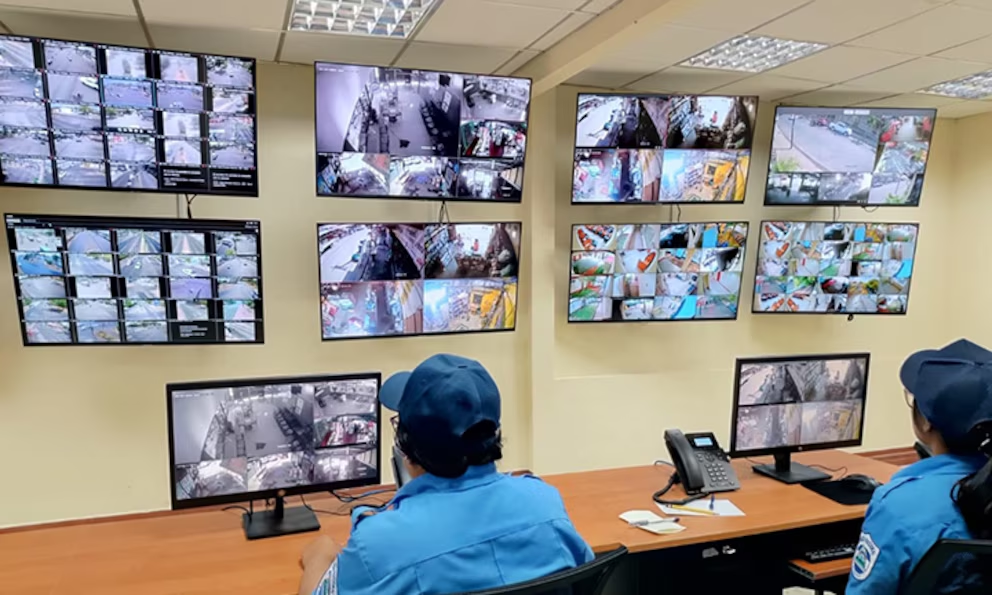
Q24N — Cameras, drones, and robot dogs are the key elements of China’s surveillance center in Nicaragua that the dictatorship of Daniel Ortega and Rosario Murillo will inaugurate this Saturday, August 22, 2026, in Managua.
The surveillance and monitoring facility is located in Centro Momotombo and financed by China for more than US$42 million dollars, in a country where social control and the persecution of critical voices are already part of the exercise of power.
By 2025, Nicaragua had announced 11 loans from China totaling approximately US$1.5 billion, although the actual disbursements were much lower. This context makes the new center particularly relevant due to its cost and the opacity surrounding the agreements between Nicaragua and China.
The new center will be administered by the regime without independent oversight and with a history of political surveillance of journalists, opposition members, civil organizations, and citizens who express critical views.
The regime presented the surveillance center as a platform for disaster prevention and will incorporate surveillance cameras, drones, robotic dogs, seismic and volcanic stations, and emergency alert systems. The infrastructure will be able to collect and transmit information in real time.
According to official information cited by Centroamérica 360, the center will have 97 seismic measurement instruments, 25 volcano monitoring stations, 20 river monitoring points, and 172 smart speaker systems. It will also incorporate aerial and robotic technology.
The dictatorship maintains that the platform will serve to anticipate earthquakes, eruptions, hurricanes, floods, and other emergencies. The central question, according to the publication, is not limited to the available technology, but rather who manages it and under what controls it operates.
This technological expansion coincides with increased control over neighborhoods and communications.
In Nicaragua, there are no independent institutions capable of overseeing the regime. In 2025, Daniel Ortega called for strengthening “revolutionary surveillance” in neighborhoods to persecute those the regime considers opponents.
This political orientation was combined in 2024 with new telecommunications legislation that expanded state powers to control digital content and communications. In this context, the incorporation of technology capable of observing, recording, and transmitting data in real time takes on a dimension that extends beyond emergency management.
China’s Role in Technological Expansion
The relationship with China adds another layer of opacity. Since the reestablishment of diplomatic ties in December 2021, Nicaragua has made China a strategic partner in infrastructure, telecommunications, energy, and technology.
This rapprochement has progressed with little public information on contracts, costs, financial terms, and disbursements. Independent investigations, cited by the media outlet, detected discrepancies between the loans announced by the regime and those recorded in official statistics.
China has financed or committed to projects worth hundreds of millions of dollars, while much of the financial detail remains confidential. In this context, the Momotombo center appears as a new piece of an alliance in which access to infrastructure, technology, and credit coincides with the progressive closure of spaces for transparency and accountability in Nicaragua.
The lack of public information about the contracts, the exact capabilities of the system, and the guarantees to prevent uses other than emergency care leaves unanswered what independent mechanisms will prevent a technology presented to protect the population from expanding the surveillance capacity of a State that has already demonstrated its willingness to use it against its critics.
Q COSTA RICA — The government of Laura Fernández announced it signed a collaboration agreement with Google to incorporate technology and artificial intelligence (AI) tools in areas such as education, health, and security, as part of the digital transformation strategy promoted by the new administration.
The alliance was presented during the accountability report on the first 100 days of the administration, an event attended by Ana Recalde, Director of Strategic Initiatives at Google; Paula Bogantes, Minister of Science, Innovation, Technology and Telecommunications; President Laura Fernández and the Second Vice President, Douglas Soto
The Executive Branch presented the agreement as one of its main alliances with the technology sector and stated that it seeks to put technology at the service of the population by strengthening collaboration between the Costa Rican government and one of the world’s leading technology companies.
“We are going to put technology and artificial intelligence at the service of the people of Costa Rica,” it was announced during the presentation of the agreement.
The initiative, as explained during the event, aims to facilitate the use of technological solutions in different sectors of the public sector.
Ana Recalde, Director of Strategic Initiatives at Google (left), stated that the company will collaborate with the country in its digital transformation process. Credit: Casa Presidencial
Google focuses on education and health
During her remarks, Ana Recalde highlighted the government’s focus on digital transformation and assured that the company will collaborate in various areas.
“Ms. Laura’s great vision regarding the entire digital transformation of the country. Through technology and with Google, we will be able to provide all these services in the different areas that Ms. Laura already mentioned, such as education and health,” Recalde stated.
Recalde also assured that Google’s participation will be aimed at supporting processes that can contribute to improving the quality of life of Costa Ricans.
“It’s a pleasure, and you can count on us for all this innovation and this transformation process,” she added.
The agreement comes at a time when various public administrations around the world have begun to incorporate artificial intelligence-based tools into administrative processes and services aimed at citizens.
In the case of Costa Rica, Fernández assured that her administration intends to accelerate this transformation and maintained that it is a commitment made during the election campaign.
Fernández: “Artificial intelligence is not the future, it is the present”
The president dedicated a subsequent speech to explaining the significance her government attaches to the alliance.
Fernández stated that since the beginning of his administration, a strategy has been in place to intensify the use of digital tools within the government.
“From day one, in fulfillment of my promise, as outlined in my government plan, I have made a firm commitment to digital transformation and the intensive use of artificial intelligence to improve the quality of public services that Costa Ricans receive,” she affirmed.
Q COSTA RICA (OP-ED) Raúl Alexander Camacho Alfaro, in an opinion piece for Delfino.cr, tackles the question: Who Will Save Costa Rica? He argues that the answer isn’t about a single hero. Instead, Costa Rica’s salvation lies in its strength to stop anyone from thinking they alone can save it.
Camacho Alfaro writes:
“For a long time, we have considered—and perhaps the idea still lingers as one of those cherished family memories—that one of the most valuable features of Costa Rican tradition lies in its relatively strong institutions, its competitive elections, the alternation of power, and, above all, the existence of limits on those who wield it.
“Despite mood swings, collective anxieties, power struggles, and other vicissitudes of our political landscape, Costa Rica remains a democracy. An imperfect democracy, certainly, and one currently subject to tensions that it would be irresponsible to downplay. We face escalating violence associated with drug trafficking, low levels of political trust, and more than evident institutional strains.
“But perhaps the greatest danger lies not only in these problems themselves, but in the way we are beginning to react to them.
“Democracies begin to go astray when a segment of the citizenry becomes convinced that institutions are obstacles, procedures are impediments, checks and balances prevent effective governance, and that, faced with an exceptional situation, an exceptional person is needed to do what ordinary rules forbid.
“It is then that the figure of the savior appears.
“This figure doesn’t necessarily arrive announcing the end of democracy. On the contrary, they often present themselves as the one who has come to rescue it. They promise to return power to the people, end privileges, defeat enemies, restore order where others have created chaos, and quickly accomplish what the institutions, with their exasperating slowness, have failed to do.
“The problem begins when, to save the country, it becomes necessary to weaken precisely what made it possible for the country never to depend on a savior.
“I believe that, as responsible Costa Ricans, we must not lose sight of the fact that our democracy was not built on the hope of periodically finding the right person. It was built on a much wiser suspicion: that no person, however righteous, popular, or well-intentioned they may seem, should wield too much power.
“Hence the checks and balances, the judges, the press, the opposition, electoral bodies, oversight, and even that uncomfortable institutional slowness that so often drives us to despair. Everyone can make mistakes. Everyone can and should be criticized. But their ultimate function is precisely to prevent the will of one from becoming the will of all.
“That is why it is paradoxical to hear, every so often, the question of who can save us.
“Perhaps we are still framing the question incorrectly. And perhaps Costa Rica doesn’t need to find someone supernaturally strong to save it. It needs to maintain institutions strong enough so that no ruler has to do so.
“And if any lesson deserves to be learned from that old family memory, it is precisely this: republics do not survive thanks to providential figures. They survive when their citizens understand that even the ruler they trust most must have limits.
“Because in the end, the answer remains far less spectacular than any strongman, but considerably more democratic:
“Who saves Costa Rica? Costa Rica.
“As long as it has the wisdom to distrust anyone who claims to save it.”
This article represents the opinion of its author. Published opinion pieces do not necessarily reflect the editorial position of this publication. Read the original article, in Spanish, at Delfino.cr
Q COSTA RICA — After several weeks of political pressure, legislator José Miguel Villalobos, of the ruling party, announced on Thursday his decision to voluntarily suspend his membership in the Colegio de Abogados de Costa Rica (Bar Association), while reiterating that he will remain in the ruling party and that he is a supporter of Rodrigo Chaves.
As a result, the legislator can no longer practice law, nor will he be able to practice as a defense attorney for anyone, including former president and current Minister of Finance and Chief of Staff, Rodrigo Chaves.
“I will no longer practice law, because although the Constitution allows it, and although I am proud to be a lawyer, the most important thing is consistency with what this people wants, and this people wants us to dedicate ourselves full-time to being legislators (…). I already spoke to Mr. Rodrigo, telling him that I will not be able to represent him in court, but now it’s easier for me. The moment one of those irate requests to remove (Chaves) his immunity comes along, José Miguel Villalobos will already be here, not as a lawyer, but as a legislator, defending him with all my strength and all my energy,” Villalobos said.
The debate about the possibility of preventing legislators from practicing law while holding office gained momentum after an incident involving Villalobos a little over a month ago, when he did not attend the presentation of a second package of security proposals presented by President Laura Fernández in Congress.
This is because at that time he was in court defending a man surnamed Sánchez, who is a suspect in alleged drug trafficking within the investigation known as the Pana case. The episode generated several ethical questions.
In legislative circles, there was talk of Villalobos resigning from the Partido Pueblo Soberano (PPSO) or even ceasing to be a legislator. However, the congressman clarified today that this will not happen.
“I Will Not Resign. I’m not leaving the Legislative Assembly, I’m not leaving the Sovereign People caucus, and I called you all together to tell you this directly, so you’ll stop constantly asking me about it. I’m proud of my president, I’m proud of my former president, I’m proud of my fellow legislators, and I’m going to do everything I can to ensure this continuity government succeeds,” he stated.
The politician also took the opportunity to point out that he will fight to pass the security-related bills presented by the government.
He also denied that having defended individuals linked to drug trafficking disqualifies him as a legislator.
“I’m going to take on all the security bills that have been sent and work on them with all my knowledge, hoping that this will finally stop the cowardly insults from behind the veil of anonymity, trying to make me believe I’m a lawyer for criminals. I know where the loopholes in the law are, and I’m going to work to close all those loopholes for organized criminal groups (…). Only the ignorant believe that a lawyer is the same as their client. But to avoid any more of this nonsense, I’m retiring from practicing law, and here I am, at the service of the nation, at the service of President Laura Fernández, and at the service of my friend and dear brother, Rodrigo Chaves,” he added.
The legislator closed the press conference by stating, “Here I am, at the service of the Rodrigo movement, and I’m not leaving my faction. And I hope you won’t ask me about it anymore. José Miguel Villalobos is a member of the Sovereign People party.”
Focused Work
On August 12, President Laura Fernández announced her support for a proposal to prohibit legislators from practicing their profession or holding other jobs while serving in the Legislative Assembly.
The president stated that those who are part of the public service must dedicate their full time to the responsibilities they assumed upon being elected.
“I have always been very clear that people must dedicate themselves full-time to public service. You don’t see me selling services on Saturdays or Sundays after I leave the Casa Presidencial,” Fernández affirmed.
The president added that, personally, she considers it incompatible for a public official to hold other jobs while serving in office.
“Personally, as President of the Republic, I am against people who are serving the people of Costa Rica having other jobs simultaneously,” she stated.
Reactivation
Voluntary suspension is entirely reversible. Under Article 12 of the Bar’s autonomous regulations, the board automatically grants voluntary leaves of absence, and you maintain your underlying degree qualification. You can formally petition to reincorporate and reactivate your practice at any time, provided you fulfill any outstanding administrative fees or back-dues required upon return.
Q COSTA RICA — The national weather service, the Instituto Meteorológico Nacional (IMN), has issued a new warning ahead of the imminent arrival of Tropical Wave #34, expected tonight, Thursday, August 20.
This new atmospheric disturbance, currently located in Panama, is showing little development and minimal cloud cover, mainly due to dry conditions in the region.
However, authorities are maintaining constant vigilance due to the recent impact of Tropical Wave #33, which caused severe damage and flooding in various parts of the country.
The IMN has reported that moderate trade winds are expected in the morning with occasional gusts of 40 to 65 km/h and possible rain in the Caribbean and Northern Zone. During the afternoon and evening, a reduction in humidity is expected, which would limit the intensity of rainfall, although isolated showers could occur in the Pacific, especially in the central and southern regions.
IMN issued a warning for the arrival of tropical wave #34, whose passage could cause downpours, thunderstorms, and conditions conducive to flooding in several areas of the country (Courtesy: IMN).
The IMN emphasizes that although the disturbance is in a low-humidity atmosphere, monitoring continues due to the vulnerability of the saturated terrain and the associated risks.
Given this scenario, authorities recommend taking precautions in flood-prone areas, paying attention to the possible saturation of streams and culverts, avoiding exposure to thunderstorms, and being alert to sea conditions, as an increase in tides and waves is expected, mainly in the Central and South Pacific.
Rescues in vulnerable areas during storms in Costa Rica. (Costa Rican Red Cross and Bomberos)
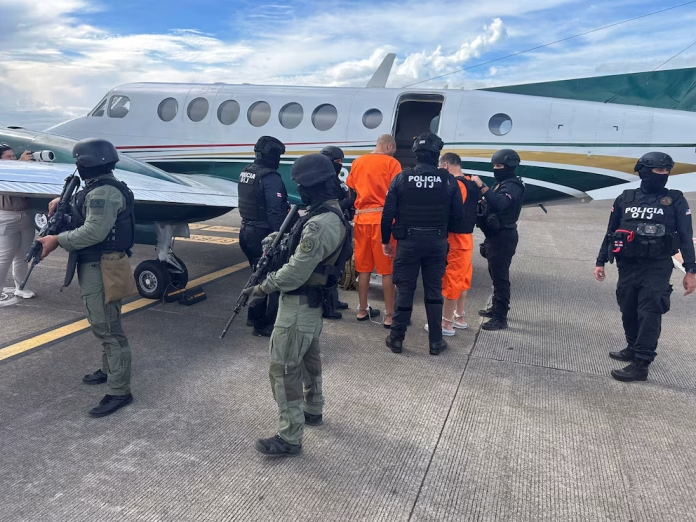
Q COSTA RICA — A total of 24 Costa Ricans are facing extradition proceedings to the United States, Panama, and France for crimes related to international drug trafficking.
This scenario was enabled by the reform of Article 32 of the Political Constitution, approved on May 15, 2025, which for the first time allowed the extradition of nationals in drug trafficking and terrorism cases under certain conditions and procedural guarantees.
According to the Office of Technical Advice and International Relations of the Public Prosecutor’s Office, 20 of the requests come from the United States, while Panama and France have each requested two individuals.
The current constitutional wording stipulates that no Costa Rican citizen can be forced to leave the country, except in cases of international drug trafficking or terrorism, provided that extradition is granted by the Courts of Justice and that fundamental rights and procedural guarantees recognized in the Constitution, international treaties, and national laws are respected.
This legal change opened the way for the Costa Rican justice system to process extradition requests exclusively for these two crimes.
Currently, legislators are discussing a bill to expand the grounds for extradition beyond international drug trafficking and terrorism.
France and Panama requested extraditions for drug trafficking
In the case of France, authorities requested the extradition of two men, Restrepo and Pablot, both Colombian citizens who became naturalized Costa Ricans, linked to international drug trafficking.
According to reports, Restrepo escaped from a prison hospital in Panama in 2014.
One of the extradition requests from Panama involves Villalobos, alias “Boligoma,” who was arrested in that country for drug trafficking and returned to Costa Rica after being released in 2016. The second person sought is Martínez, also for drug trafficking, who was among the most wanted by Panamanian authorities and was captured last June.
The U.S. accounts for the majority of extradition requests
The United States accounts for the majority of extradition requests. Among the first Costa Ricans extradited to that country were former magistrate and former minister Celso Gamboa Sánchez and Edwin López Vega, alias “Pecho de Rata”, who were handed over on March 20. Later, on July 9, 2025, a federal grand jury in the Eastern District of Texas returned a formal indictment against Gamboa.
The most recent extraditions are Gilberth Bell Fernández, alias “Macho Coca,” and Gabriel Lozano Bonilla, alias “Compadre,” a Colombian who became a naturalized Costa Rican citizen. Both were transferred to New York on August 13 and placed in the custody of the Southern District Court of that city.
U.S. authorities consider Bell Fernández one of Costa Rica’s top cocaine traffickers. Federal prosecutor Jamie McDonald and DEA Administrator Terrance C. Cole filed the formal indictment for conspiracy to traffic drugs into the United States.
According to the prosecutor, Bell Fernández allegedly obtained cocaine shipments from Colombia for years and transported them through Costa Rica for distribution in the United States. Lozano Bonilla, meanwhile, is identified as the leader of a group that exported drugs to Europe and Asia.
The extradition of Costa Ricans to other countries is governed by the new legal framework, which requires the approval of national courts and compliance with procedural guarantees and fundamental rights recognized by Costa Rican and international law.
RICO’s Q — A few days ago, journalist Juan Fernando Lara searched for and read Laura Fernández’s thesis, written for her Political Science degree at the University of Costa Rica (UCR).
It turns out that the journalist found that in 2016, ten years ago, when Laura was 29 years old, she wrote her thesis, in which she heaped praise on:
The Contraloría General de la República (Comptroller General).
The Separation of Powers.
The Judiciary.
In other words, a decade ago, Laura believed in the rule of law, in the democracy of a Republic with three independent branches of government — Executive, Legislative and Judicial — as established in Costa Rica’s Constitution.
Now, look at the curious twists and turns Laura has taken.
It turns out that 6 years before graduating, when Laura was 22, she visited the two-time former president of Costa Rica (1986-1990 and 2006-2020) and the Nobel Peace Prize winner in 1987, Óscar Arias Sánchez, at his home Rohrmoser.
We must wonder this: Why would a Nobel Peace Prize laureate, with so many international and national activities, dedicate an entire afternoon to “having coffee” with a 22-year-old girl in his private home?
Well, it turns out that shortly after, and without even having a university degree, Laura Fernández appears as an “advisor” to Vice President Kevin Casas, in the same government (2006-2010) of Don Óscar.
That role was followed up with Roberto Gallardo, who was Minister of Planificación (Mideplán) in the Laura Chinchilla administration (2010-2014).
Gallardo recalls that he always heard her express positions in favor of institutionalism and the checks and balances of the democratic system. Other people who have worked with her attribute to her opportunism and an ability to make her bosses need her, according to a report by SemanarioUniversidad.com in 2025.
A surprise! Right?
A young woman who hasn’t even graduated yet is already an “advisor” to the Vice President at Casa Presidencial.
But let’s get back to Laura Fernández’s thesis.
It turns out that in her thesis, Laura stated that there was a danger that a populist politician might one day come to power and try to destroy Costa Rica’s Comptroller General’s Office and the Judiciary.
The only thing she failed to mention is that this POLITICAL OFFICER would have:
Q COSTA RICA — On Wednesday, President Laura Fernández pushed back against her Finance Minister and Minister of the Presidency, former president Rodrigo Chaves, and took a jab at former President Carlos Alvarado, making it clear that the Costa Rican government has no plans to spy on citizens or political opponents.
Fernández categorically denied that her administration has any interest in acquiring the Pegasus technology and ruled out a repeat of the situation with the Presidential Data Analysis Unit (UPAD), created during the Partido Acción Ciudadana (PAC) administration (2018-2022).
“To leave no room for misinterpretation, even if we had the budget, even if we had the means, I will never bring another UPAD to Costa Rica. The PAC was the only party that came to try to spy on Costa Ricans. So, no way. We don’t have the money, we don’t have the interest, and there’s no need for anyone to send inquiries,” the president stated.
Rodrigo Chaves initially mentioned that the Executive Branch could potentially purchase the Israeli spyware called “Pegasus,” as some opposition leaders claimed; on Wednesday, he stepped back from those remarks to align with the president’s position, questioning the possibility of Costa Rica acquiring the spyware due to the existing restrictions on its sale and the high cost of this type of technology.
“The Pegasus computer system is extremely restrictive; it’s heavily regulated by the Israeli government, controlling who can buy it and who can’t, who gets access. So, clip the wings of the white horse, and those who claim that Costa Rica is contracting Pegasus to spy look like ordinary horses,” Chaves declared.
Chaves added that the cost of the software would represent an additional barrier for the country. “You’d have to be crazy to say the Costa Rican government can afford this. We’d have to cut a huge hole in the budget, and besides, each instance of espionage would cost, I imagine, possibly hundreds of thousands of dollars,” he said.
What is Pegasus?
Pegasus is spyware developed in Israel that can be installed on mobile phones without the user’s knowledge. Once inside the device, it allows access to information and activities performed on the phone, including location, payments, camera, video calls, phone calls, and messaging applications like WhatsApp.
The program has been criticized in various countries for its use in monitoring journalists, activists, and individuals considered adversaries of certain governments, especially in contexts where there are questions about authoritarian practices.
Q COSTA RICA — Under the argument that “public funds cannot be spent in secret,” Costa Rica’s four opposition parties in the Legislature decided to challenge President Laura Fernández’s declaration of national security as a state secret before the Constitutional Court (Sala IV).
The group, comprised of the Partido Liberación Nacional (PLN), the Frente Amplio (FA), the PUSC and Coalición Agenda Ciudadana (CA), filed a constitutional challenge, arguing that it constitutes “an affront to transparency, access to public information, and fiscal oversight.”
The “Democratic Bloc”, as the opposition calls itself, opposes the administration of security policies in the shadows under the pretext of a tailor-made “state secret.”
Oposición lleva secreto de Estado de Laura Fernández a la Sala IV
El grupo, conformado por el Partido Liberación Nacional, el Frente Amplio, el PUSC y Agenda Ciudadana, presentó una acción de inconstitucionalidad. pic.twitter.com/oTRWSjq1IL
“Hiding budgets, public purchases, and contracts behind the broad concept of ‘national security’ leaves citizens in a grave state of vulnerability to unilateral, arbitrary, and unconsulted decisions by the government in power. Citizens have the right to know how the resources we all contribute are being used, and the institutions responsible for overseeing them must be able to fulfill their function,” the group said.
The opposition also fears the potential purchase of the Israeli software (Pegasus, the military-grade mobile phone spyware developed by the Israeli cyber-intelligence firm) that could be used to spy on Costa Ricans, including journalists, opposition members of parliament, judges, academics, and other opponents to the government.
The concern stems from a public statement by former President and current Minister of Finance and Minister of the Presidency, Rodrigo Chaves, who mentioned that acquiring software used by Mossad, the Israeli intelligence agency, was under consideration.
“This (state secrecy) decree nullifies the right of citizens and legislative representatives to demand transparency and receive timely explanations regarding the use of public funds. Access to public information is the general rule, and state secrecy should be a strict and restricted exception,” the group stated.
Amid the fight against drug trafficking gangs, President Laura Fernández declared information concerning Costa Rica’s national security agency (Dirección de Inteligencia y Seguridad Nacional, DIS), the Elite Force, and security contracts to be state secrets.
The president had previously expressed concern about keeping some of the discussions and intelligence emanating from the Elite Force secret and, for this reason, even ordered polygraph tests for those who attended.
The Elite Force is a task force comprised of various police forces, judicial authorities, and high-ranking government officials tasked with combating drug trafficking and organized crime.
In this regard, the government justified its decision by arguing that the disclosure of certain data could compromise police operations, reveal institutional vulnerabilities, affect international commitments, and endanger the lives of officials and third parties in the face of the threat of organized crime.
State secrecy imposes an absolute duty of silence on all participants in these processes, including high-ranking officials, members of the police force, support staff, and advisors. The decree warns that those who fail to comply with this provision are subject to administrative proceedings, legal sanctions for breach of secrecy, and contract termination without liability for the administration.
“This decree serves to safeguard national defense actions, ensuring that the government is well protected and that what we are doing and will do does not fall into the hands of criminals. So, I reiterate, public information of national importance regarding security will remain public, but anything that could be dangerous for criminals to know will be classified as a state secret,” Fernández added.
Q COSTA RICA — The declaration of state secrecy on various security matters could also be used to spy on the government’s political rivals, according to former presidential candidate, former First Lady and legislator Claudia Dobles.
“Pegasus is spyware developed in Israel that can be installed on any mobile phone without the user’s knowledge and, from there, has access to all the activity performed on that phone: location, payments, camera, video calls, calls, and WhatsApp messages. (…) In other Latin American countries, it has been used to spy on journalists, activists, and people who oppose authoritarian governments,” Dobles said.
The opposition legislator recalled that the former president and current Finance Minister and Minister of the Presidency, Rodrigo Chaves, recently expressed interest in acquiring Israeli software to combat smuggling and tax evasion, which has raised suspicions.
The legislator fears that Pegasus, a military-grade surveillance software, is being used in Costa Rica.
“What is Operation Pegasus, and is this happening in Costa Rica on my phone or yours? We don’t know because, guess what, it’s been declared a state secret. How much more transparent can you get?” Dobles added.
President defends decision
Amid the fight against drug-trafficking gangs, President Laura Fernández declared information regarding the Dirección de Inteligencia y Seguridad (DIS) — Costa Rica’s intelligence service, a police agency attached to the Ministry of the Presidency — the Elite Force, and security contracts to be state secrets.
State secrecy imposes an absolute duty of silence on all participants in these entities, including high-ranking officials, members of the police force, support staff, and advisors.
The decree warns that those who violate this provision are subject to administrative proceedings, legal sanctions for breach of secrecy, and contract termination without liability for the administration.
“Public information related to national security will always be freely accessible. Any data related to security will continue to be freely accessible. However, what will not be freely accessible is information that could jeopardize national security. Such as? For example, what kind of weapons our police officers have, what the patrol schedules are, where the next drug seizures will take place, and how police operations are progressing,” President Fernández stated in defending the executive decree 45870-MSP.
The decree, which went into force on August 10, 2026, has generated strong national and international debate across various social and legal sectors, including freedom of the press, the risk of opacity, and the principle of legality.
The news website RaidosUCR(University of Costa Rica radio) says the government decree is an open menu of state secrets, which also allows the government to expand the menu of secret information without specifying its scope.
Laura Fernández denied that the decree allows for “what I choose, what I pick, what I feel like” to be a state secret.
Q COSTA RICA — In the fight against drug trafficking, it’s clear that Costa Ricans want a firm hand.
In fact, 96% of those surveyed by the firm Opol Consultores believe that laws against organized crime should be strengthened, while 2.3% responded that they should not. The remaining 1.7% did not know or did not answer the question.
The response should come as no surprise, since insecurity, associated with the struggle between drug traffickers for territory, has long been Costa Rica’s main problem, worsened in the last four years, when the country has registered record numbers of homicides, with a peak of 903 in 2023.
In that regard, 51.4% of those surveyed indicated that they feel just as safe as a year ago, while 27.4% stated that they feel safer. On the other hand, 20.6% reported feeling less safe compared to a year ago.
The survey, conducted nationwide between August 12 and 16, included 1,200 interviews with Costa Ricans over the age of 18, with a margin of error of +/- 2.8% and a 95% confidence level.
Furthermore, in addition to launching the special security group Fuerza Élite (Elite Force) to analyze criminal activity, President Laura Fernández has presented a second package of legislative proposals to combat drug trafficking and organized crime.
Among the initiatives are the elimination of the preliminary hearing to expedite trials, as well as the inclusion of new offenses that would allow for the extradition of Costa Ricans, such as international drug trafficking, contract killings, cybercrimes, and human trafficking.
An initiative was also presented to establish a prison sentence of up to 10 years for anyone who exploits, promotes, or finances illegal mining, in addition to allowing the confiscation of the machinery.
“We will not stop in the national crusade against organized crime, we will not stop in the all-out war against drug trafficking, and we will not waver in denouncing everything that prevents Costa Rican families from living in an environment of peace,” the president stated.
If you have not yet requested your ballot for the 2026 Midterm elections, please do so immediately using the Vote from Abroad website.
When your blank ballot arrives, the return method will depend on your state:
Returning Electronically
If your state allows you to return your ballot by email or electronic upload, carefully follow the instructions that come with your ballot.
Returning by EFax
If your state allows you to return by fax, then use an eFax online service. (Full instructions will follow in our September 19th email)
Postal Mail or International Courier
If your state requires that your ballot must be returned by postal mail or international courier, take action as soon as possible. International mail can take considerable time, so leave enough time to follow up if necessary.
You have several options:
U.S. Embassy in San José
You can send or take your completed ballot to the U.S. Embassy so it can be returned to the United States via diplomatic pouch.
Costa Rican Postal Service (Correos) We do not recommend using Correos for international delivery of your ballot to the United States. Voters have experienced inconsistent international mailing procedures and delivery times at different post offices. However, Correos may be used to send your completed ballot to the U.S. Embassy in San José for return through the diplomatic pouch.
Ballot Assistance Events
Attend one of our ballot-assistance events for help with your ballot and information about returning it through the U.S. Embassy.
International Courier
You may return your ballot using an international courier such as DHL. Rates start at approximately $55. More than one ballot may be included in the same courier envelope if the ballots are being sent to the same election office/address.
BALLOT ASSISTANCE EVENTS
This year, we are working closely with the U.S. Embassy to host several ballot-assistance events throughout Costa Rica.
Sept. 22 (Tuesday) — Heredia*
Sept. 24 (Thursday) — San Ramón*
Sept. 24 (Thursday) — Grecia
Oct. 6 (Tuesday) — Atenas*
Dominical — Date to be announced*
U.S. Consulate personnel will be on hand at these events to offer a presentation, answer questions, and assist with passport renewals and notary services.
Watch for our next Ballot Alert on September 19. We’ll send updated ballot-return information and step-by-step instructions to help you return your ballot safely and on time.
Q COSTA RICA — Driving in Costa Rica has become dangerous. Walking isn’t much safer either, since many drivers ignore the rules and the traffic police can’t keep things under control.
And the statistics prove it.
According to data from the national insurer, the Instituto Nacional de Seguros (INS), released to mark World Pedestrian Day, commemorated on August 17, the number of pedestrians killed in traffic accidents during the first six months of 2026 is already approaching the total recorded during the entire previous year.
During the first half of this year, the INS recorded 1,207 pedestrians involved in traffic accidents. Of these, 1,193 were injured, and 14 died.
The number of deaths is almost the same as the total recorded in 2025, when the INS recorded 18 pedestrian fatalities as a result of traffic accidents during the entire 2025.
This trend is also reflected in the number of people injured. Throughout 2025, 2,483 injured pedestrians were treated, while between January and June of 2026, 1,193 people have already been recorded with injuries resulting from these types of accidents.
Given these figures, the INS called for increased prevention and respect among all road users.
“Every accident involving a pedestrian represents much more than a statistic. Behind each case are people and families facing consequences that can change their lives forever,” said Gabriela Chacón, CEO of INS.
Unfortunately, the INS is not calling for an increase in the number of officials that make up the Policia de Tránsito, which currently stands at approximately 683 to 700 active traffic police officers patrolling its entire road network. The Greater Metropolitan Area (GAM) holds the highest concentration with about 219 officers.
Local labor unions and traffic authorities estimate that Costa Rica faces a shortage of at least 600 additional officers. Due to low personnel numbers, a single officer is sometimes responsible for covering up to 135 square kilometers. Because of the limited workforce and the high volume of traffic accidents, it can take national traffic officers up to two hours to arrive at and process a minor road collision.
Q COSTA RICA — The advance of the meteorological drought on the Pacific slope has intensified in recent weeks, according to the national weather service, the Instituto Meteorológico Nacional (IMN), now also encompassing the Central Valley and the Northwest Zone.
The most recent update of the climate forecast, valid until February 2027, suggests that this phenomenon could persist or even worsen in the coming months.
Regarding the El Niño phenomenon, the IMN indicates that the intensity observed through August is strong and that there is a possibility that, between September and November, it will reach a very strong phase.
According to Karina Hernández, a climatology specialist at the IMN, this technical classification refers to the level of warming of the surface waters of the equatorial Pacific, which would exceed two degrees Celsius above the average.
Hernández indicated that current levels even exceed those of the 2015 event, although the trend has stabilized in the last two months.
The period with the highest probability of an increase in intensity would be the last quarter of the year, since historically El Niño tends to reach its peak during that time.
Regarding rainfall, the forecast indicates that the North Pacific could end August with up to 80% less precipitation. Estimated deficits for the Central Pacific, South Pacific, and Central Valley are around 60%, while in the Northwest Zone they are approaching 40%.
Hernández pointed out that El Niño usually favors this contrast between a drier Pacific and a rainier Caribbean
Regarding temperatures, the increase, which was previously projected mainly for the North Pacific, now extends to the entire Pacific slope, the Central Valley, and the Northwest Zone, with ranges of between 1.5°C and 2°C above average. For the Caribbean and the Northeast Zone, the estimated increase is more moderate, between 0.5°C and 1°C.
This scenario has led to new maximum temperature records.
Q COSTA RICA — The dollar exchange rate continued its downward trend, reaching ¢448.96 last Friday, its lowest level since the Banco Central de Costa Rica (BCCR) — Central Bank — began tracking the historical series for the Mercado de Monedas Extranjeras (Monex) — Foreign Exchange Market — in December 2007.
The rate decreased by ¢0.21 compared to Thursday and accumulated a drop of ¢3.07 compared to the ¢452.03 recorded a week earlier.
According to economic analyst Daniel Suchar, one of the factors explaining the recent behavior is the increased demand for colones that typically occurs every two weeks with salary payments.
“What we are seeing is a bi-weekly effect that repeats itself precisely with that frequency,” Suchar explained.
The analyst noted that, for now, no measures have been implemented to reduce the pressure facing the foreign exchange market in Monex.
“We continue to experience a considerable delay in adjusting interest rates, since although the monetary policy rate has fallen to 3%, this does not mean that we will see any impact on the exchange rate in the short term,” he added.
According to Suchar, the reduction in the Tasa de Política Monetaria (TPM) — Monetary Policy Rate — does not necessarily generate an immediate effect on the price of the dollar, so the current pressures could persist for the next few weeks.
“Therefore, we must understand that we will continue to see these pressures to buy colones every 15 days until the Central Bank’s board of directors makes a much stronger decision and the legislature takes actions that reduce pressure on the exchange market,” he stated.
Last week’s performance has been particularly significant, as the dollar established new all-time lows in four of the five trading sessions.
Furthermore, the current behavior is pushing the exchange rate to levels not seen for more than two decades.
Suchar believes it will be necessary to observe both the decisions made by the Central Bank and any measures taken by the Legislative Assembly to determine if the pressures on the foreign exchange market begin to ease.
“That’s where we’ll see some significant impact on the exchange rate,” he concluded.
The fall of the dollar represents relief for those with expenses or debts in that currency, but it creates pressure for exporters, tourism-related companies, and other sectors whose income depends heavily on dollars.
Q COSTA RICA — This month, many drivers are having to make the decision to pump super or premium gas into the tanks of their vehicles that normally use regular. This is because super gasoline is cheaper than regular.
But that will change next month, in September, when regular gasoline will once again cost less, some ¢51 colones, than the current and lower than super, mainly due to a new shipment that allows for an update to its acquisition cost.
That is the good news.
The bad news is that we will see a new round of price increases next month if the regulatory body approves without changes the request by the Refinadora Costarricense de Petróleo (RECOPE) – the Costa Rican refinery that refines nothing —that would take effect in the early days of September
If the price adjustment requested is implemented, the price of regular gasoline will drop from ¢758 to ¢707 colones per liter, while super gasoline will rise from ¢704 to ¢726 colones (+¢22 colones).
For diesel, the price per liter would go from ¢606 to ¢688 (+¢82).
“Regular gasoline was more expensive than super because the purchases were made during periods of high international demand; however, the new shipments were purchased under more favorable conditions,” explained Karla Montero, president of RECOPE.
The estimated data considers international market behavior between July 10 and August 13, according to the current tariff methodology.
One of the main factors was the conflict between the United States, Israel, and Iran.
Difficulties in transporting oil through the Strait of Hormuz, along with disruptions at Iranian ports, increased uncertainty about global supply and raised the risk premium for crude oil.
Bitcoin mining was once a highly technical and resource-intensive process, requiring specialized hardware, significant electricity consumption, and ongoing maintenance. The rise of Bitcoin mining apps, however, has changed how everyday users can access the mining economy.
Today, cloud-based mining platforms offer a more accessible alternative, allowing users to participate without purchasing expensive mining equipment or managing complicated hardware setups.
In this guide, we take a closer look at how Bitcoin mining apps work, why cloud mining is gaining attention, and how platforms such as SHRMiner are using digital mining infrastructure to make crypto mining more accessible to a broader audience.
What Is a Bitcoin Mining App?
At its core, a Bitcoin mining app is a software-based service that allows users either to participate in mining through their own devices or connect remotely to larger mining operations.
Rather than requiring users to build and operate a physical mining setup, these apps can act as a bridge between individual users and large-scale mining infrastructure, simplifying access to the process of validating blockchain transactions and earning mining rewards.
Bitcoin mining apps generally fall into two categories:
Standalone mining apps: These are designed for individual miners who use their own smartphones or computers to participate in mining activities.
Cloud-based mining apps: These connect users to remotely operated mining infrastructure, allowing them to access computing power without owning or maintaining physical hardware.
For most retail users, cloud-based services provide the simpler entry point.
How the SHRMiner Bitcoin Mining App Works
SHRMiner is designed to make the cloud mining process relatively straightforward. Users can begin in three steps.
1. Create an Account
New users receive $15 in complimentary computing power after completing registration.
The credit can be used toward a free trial contract that, according to the platform, generates approximately $0.60 per day in mining rewards.
Users can select from a range of short- and longer-term cloud mining contracts based on their preferred budget and time horizon.
Available contract periods range from approximately 1 to 50 days, giving users flexibility when choosing how much computing power they want to access.
3. Start Earning Mining Rewards
Once a contract becomes active, users can monitor daily earnings through their account dashboard and withdraw rewards using supported cryptocurrencies.
Examples of Mining Returns
Contract Name
Price
Profit
Days
Principal + Total Return
New User Experience Agreement
$100
$4
2
$100+$8
Bitdeer Sealminer A2 Pro
$500
$6.25
5
$500.00 + $31.25
Litecoin Miner L9
$1000.00
$13.00
10
$1000.00 + $130
Bitcoin Miner S21 XP Imm
$5000.00
$70.00
25
$5000.00 + $1750
Bitcoin Miner S21e XP Hyd
$10000.00
$150.00
35
$10000.00 + $5250
ANTSPACE HW5
$50000.00
$900.00
45
$50000.00 + $40500
After a mining contract is purchased, rewards are automatically credited to the user’s account within 24 hours.
According to SHRMiner, the original contract principal is returned in full when the contract reaches maturity. Users can then choose to withdraw those funds or use them to purchase another mining contract.
SHRMiner positions itself as a cloud mining platform built around large-scale infrastructure, remote access, and automated reward distribution.
Several of its key features include:
U.K.-based operations: The platform states that it operates under a U.K. business structure designed to support greater compliance and operational transparency.
Global mining infrastructure: SHRMiner says it operates or accesses more than 150 large-scale mining farms and data centers worldwide, providing users with remote access to mining computing power.
100% remote participation: Users do not need to purchase mining hardware. Contracts, earnings, and account activity can be monitored through the SHRMiner platform or mobile app.
Security infrastructure: The platform says it uses McAfee® and Cloudflare® security technologies to help protect user accounts and platform infrastructure.
All-in-one account management: Mining contracts, earnings tracking, withdrawals, and reinvestment can all be managed from the same platform.
Key Advantages of Cloud Mining
For users who want exposure to cryptocurrency mining without operating physical equipment, cloud mining can remove several of the traditional barriers to entry.
Potential advantages include:
No need to purchase or maintain professional mining equipment
No direct responsibility for electricity bills or daily hardware maintenance
No requirement to constantly monitor markets or actively trade cryptocurrencies
Mining rewards are automatically settled every 24 hours
Users can access their accounts and manage withdrawals remotely
No hidden operational costs, according to the platform
A range of contract sizes and durations is available for different budgets
For crypto holders who already own assets such as BTC, ETC, DOGE, LTC, or ZEC, this model may offer another way to put digital assets to work without completely changing an existing portfolio strategy.
The broader idea is straightforward: instead of focusing exclusively on whether a cryptocurrency will appreciate in price, some holders are increasingly asking how their digital assets can be used more efficiently.
That shift has helped bring greater attention to mining infrastructure, staking, yield products, and other strategies designed to generate additional cash flow from crypto holdings.
The Bottom Line
For users looking to build an additional source of passive crypto income, cloud mining offers an alternative to actively trading the market.
When structured appropriately, cloud mining can run largely in the background, requiring considerably less day-to-day involvement than short-term trading. Users select a contract, monitor its performance, and receive automated mining rewards while the platform handles the underlying infrastructure.
Passive income remains an important objective for many investors and crypto holders, and SHRMiner aims to make that process more accessible by removing the need to purchase hardware, manage electricity costs, or maintain mining equipment.
Explore SHRMiner today and discover how digital assets can potentially do more than simply sit in a wallet—by opening the door to additional utility and potential cash-flow opportunities.
Q COSTA RICA — Costa Rican diplomat and former Vice President under José María Figueres (1994-1998), Rebeca Grynspan, has emerged as the frontrunner to lead the United Nations (UN) as its first female Secretary-General, beginning in December.
Prestigious international media outlets such as The Guardian and Reuters, and others, have reported that Grynspan is not only the continuity candidate but also enjoys the tacit support of outgoing Secretary-General António Guterres.
With less than four months until the election, to be held in December, it is expected that the Secretary-General will come from Latin America, in accordance with an informal regional rotation system that has been in place for years.
In a first preliminary secret ballot of the UN Security Council, held on July 30, the five permanent members and the 10 non-permanent members were asked whether they supported, opposed, or remained neutral regarding each of the seven candidates.
Grynspan received 10 “encouragement” votes, four “no opinion” votes, and one “discouragement” vote. The identity of the dissenting vote is unknown, but the fact that she received only one objection puts her in a favorable initial position.
The process is expected to conclude in October.
Grynspan’s parents emigrated from Poland to Central America. Her maternal grandparents were murdered by the Nazis. Today, she is the Secretary-General of the United Nations Conference on Trade and Development (UNCTAD), where she has been instrumental in extensively documenting the economic damage caused by the Israeli occupation of the Palestinian territories.
Her closest rival is Carolyn Rodrigues-Birkett, former Guyana’s envoy to the UN, who received nine votes in favor, two against, and four “no opinion” votes.
The key to Grynspan’s election lies in the origin of any potential opposition votes, as the appointment rules stipulate that five countries have veto power: Great Britain, the United States, China, Russia, and France. If any of them formally opposes her candidacy, she would inevitably lose the election.
The possibility of a Costa Rican being elected to the most important position in international multilateralism fills Costa Rica with pride.
As former President Carlos Alvarado points out, “Grynspan could bring Costa Rican values of peace, democracy, environmental sustainability, and the defense of human rights to the UN”.
Meanwhile, former President Laura Chinchilla also highlighted the significant international recognition Costa Rica would receive with the eventual appointment.
“Besides the personal merit, it would also be a merit for Costa Rica, because it would be recognition of a country that has historically championed peace, democracy, and a rules-based international order. I trust that Ms. Rebeca will ultimately be the deserving one, the rightful one, to become the first female Secretary-General of the United Nations,” Chinchilla stated.
“Regardless of political affiliation, we should all be praying to God and supporting her because her appointment will be of great benefit to our country. It will put us on the world map at the center of the fight for peace, for the development of nations, and for rules based on law to govern international relations. God willing, God willing, the countries will have the vision to nominate and appoint Ms. Rebeca,” stated former President Miguel Ángel Rodríguez.
The election comes at a critical moment for the legitimacy of multilateralism, due to a 20% reduction in its staff and the sometimes-ignored role of the Secretary-General as a conscience.
If Grynspan is elected, she would be the first Jewish Secretary-General of the UN. The United Nations has been criticized for focusing its debates excessively on Israel, but Grynspan has drawn on her Jewish heritage to defend the importance of ending conflicts.
“Peace was what made it possible for my parents, two refugees from World War II, to find respect and dignity in a small country, Costa Rica. I am a child of that peace, a testament to what peace makes possible,” the Costa Rican woman said in a speech before the UN General Assembly.
Furthermore, under Grynspan’s leadership, UNCTAD has documented compellingly and with a solid foundation of data the economic damage caused by Israel’s prolonged occupation of the Palestinian territories. A landmark report published in February 2026 concluded that “cumulatively, the Palestinian economy lost approximately US$212.2 billion (in constant 2015 dollars) between 2000 and 2024.”
According to the document, this estimated potential loss is equivalent to almost 20 times the entire Palestinian GDP in 2024.
The Secretary-General is elected for an initial four-year term, after the General Assembly, composed of 193 countries, receives a recommendation from the Security Council.
To be elected, a candidate needs nine affirmative votes and no vetoes from the permanent members of the Security Council.
Q COSTA RICA — Controversy has once again heightened tensions within Costa Rica’s Legislative Assembly, where the exchange of accusations between the ruling party and the opposition has escalated in recent weeks.
This time, the focus was on remarks made by legislator Cindy Murillo, a member of the Partido Pueblo Soberano (PPSO), against legislators Claudia Dobles, of the Coalición Agenda Ciudadana (CAC), and Abril Gordienko, of the Partido Unidad Social Cristiana (PUSC).
Murillo referred to both women as “escorts” when speaking about the pro-democracy demonstration held the previous week in the Plaza de la Democracia, an event that brought together various social and political sectors.
In an interview, the pro-government legislator described the meeting as a kind of alliance between the Partido Liberación Nacional (PLN) and the Frente Amplio (FA), adding that the two opposition legislators also participated.
The expression used by Murillo provoked questions both within and outside the ruling party. The term “escort” is often used to describe a person hired to accompany a client to social events and, depending on the context, is also used as a euphemism to refer to prostitution or call girl services.
The controversy reached the Legislative Assembly on Thursday, where legislators discussed a motion to reject the statements.
Finally, the Assembly approved a motion that categorically condemned the statements attributed to Murillo and indicated that this type of expression is incompatible with the exercise of parliamentary functions.
The motion stated that the words used against Dobles and Gordienko were “offensive, denigrating, and incompatible with the respect and dignity that must prevail in the exercise of parliamentary functions.”
Two ruling party deputies broke ranks with the Sovereign People faction
One of the defining elements of the day was that the motion received affirmative votes from members of the ruling party itself.
Legislators José Miguel Villalobos and Antonio Barzuna, both from the PPSO faction, supported the condemnation and broke with the faction’s position.
Villalobos’s vote was particularly significant because, as the legislator himself explained, it ultimately tipped the scales in favor of the motion.
The legislator asserted that he made the decision as a matter of conscience and maintained that he could not hold a different position after having previously criticized offensive remarks made by other legislators.
“What happened this afternoon is one of those difficult decisions, decisions of conscience, and I promised myself that only God and I have authority over my conscience,” Villalobos stated.
The legislator also explained that he had previously tried to get Murillo to offer an explanation or an apology, but that the legislator decided to maintain her position.
“I didn’t do it to hurt anyone. There was an opportunity for an explanation and an apology, and it didn’t happen. So, to keep my conscience clear, I have no choice but to vote in favor,” he stated.
Villalobos added that he was aware that his vote could determine the outcome.
Murillo stood by her words and offered no apology
Unlike some of her fellow party members, Cindy Murillo refused to offer a public apology during Thursday’s session and stood by her statements.
Murillo’s refusal was one of the factors that preceded the vote on the motion.
The situation led to legislator Nogui Acosta, the leader of the PPSO, having to offer an apology on behalf of the caucus.
Acosta asserted that the party did not endorse Murillo’s statements and called for a higher level of political discourse in Congress.
“We do not endorse Ms. Cindy Murillo’s comments. We believe they were unfortunate, and therefore we offer our apologies not only to Ms. Claudia and Ms. Abril, but also to each and every one of the deputies,” he stated.
Later, the party issued a statement calling the words “unfortunate,” although the statement did not directly mention Murillo.
Q COSTA RICA — The Costa Rican Ministry of Health (Ministerio de Salud) has established new criteria for managing waiting lists in health services, through regulations that modify how priority is determined for people waiting for a consultation, diagnosis, treatment, or procedure.
The main change is that the length of time a person has been waiting will no longer be the sole factor in determining their priority. From now on, clinical condition, severity of illness, risk of complications, and the impact of the wait on quality of life will be determining factors.
The Ministry described the measure as a “historic milestone” in the institution’s role as the governing body for the country’s health issues and affirmed that it seeks to guarantee the right to health for all Costa Ricans.
The new regulations are based on a central principle: “a person’s need for care must take precedence over their position on a waiting list.”
In practical terms, this means that a patient who has been waiting less time could receive care before someone with a longer wait if their condition poses a greater risk to their health.
The Regulation for Managing Healthcare Waiting Lists with Reasonable Waiting Times establishes five clinical priority categories, each associated with a maximum response time.
The classification is as follows:
P0 – Immediate care: less than 24 hours.
P1 – Urgent care: maximum 8 days.
P2 – Priority care: up to 30 days.
P3 – High-priority elective care: up to 90 days.
P4 – Moderate-priority elective care: up to 180 days.
The logic behind the system is that the greater the health risk, the shorter the response time should be.
In this way, the ranking system aims to provide healthcare institutions with a common reference point for determining how quickly each patient should be seen, based on their medical condition and not solely on their position on the waiting list.
According to the Ministry of Health, the objective is not only to reorganize the lists but also to protect people during the time they are waiting for care.
Priority may change while the patient waits
One of the central elements of the regulations is that a patient’s classification will not necessarily be final.
The clinical condition of individuals must be reviewed periodically. If, during the waiting period, there is a deterioration in health, a progression of the disease, or the appearance of new warning signs, the priority level may be modified.
This would allow a patient initially classified in a lower priority category to move to a higher level if their health status changes and they require more urgent care.
The regulations also stipulate that when a person exceeds the Reasonable Waiting Time defined for their condition, healthcare providers must implement corrective measures and follow up on the case.
Implementation will be phased in
The change will not be applied immediately to all components. The regulations include an adaptation period for healthcare providers.
Institutions will have a maximum of six months, starting from the date the regulations come into effect, to develop, approve, and implement their Institutional Plan for Managing Waiting Lists.
They will also have up to 24 months to complete the necessary adjustments to comply with the new provisions.
The obligation will apply to both public and private providers, so the new model establishes a common framework for managing waiting lists in the country.
The Ministry of Health maintains that “health cannot wait indefinitely” and that the administration aims to ensure that every person receives the care they need “when they need it and with the dignity they deserve.”
The regulations take effect upon publication in the official government newsletter, La Gaceta, at which point the established deadlines for implementing the new rules will begin.
Q COSTA RICA — On Thursday, August 13, 2026, Costa Rican authorities extradited notorious drug kingpin Gilbert Bell Fernández, known as “Macho Coca,” to the United States, where he is facing federal international drug trafficking charges in the U.S. District Court for the Southern District of New York.
The Elite tactical units extracted Bell from the maximum-security wing of La Reforma prison to the “base 2” of the Juan Santamaría International (San José) Airport, from where he flown out of Costa Rica on a U.S. Drug Enforcement Administration (DEA) aircraft bound for New York.
Gabriel Lozano Bonilla, alias “Compadre” (a Colombian-born naturalized Costa Rican citizen), was extradited on the exact same flight.
According to Costa Rica’s Fiscal General, Carlo Díaz, the DEA links both directly to the Clan del Golfo (Gulf Clan), Colombia’s largest neo-paramilitary group and most powerful drug cartel. According to Insightcrime.org, founded in 2006, the organization controls major cocaine trafficking routes, generates billions through illegal mining and extortion, and was designated a foreign terrorist organization by the United States in December 2025.
Bell, 63, is accused by U.S. prosecutors of leading a large criminal operation that gathered and shipped huge amounts of cocaine from Limón, Costa Rica, to North America between March 2022 and August 2023. The U.S. case presents proof that Bell negotiated to sell a drug sample and later arranged a shipment of 700 kilograms of cocaine headed for New York with an undercover federal agent.
Bell’s transfer marks a major change in Costa Rica’s legal system. Until 2025, the country didn’t allow its citizens to be extradited.
Bell became the third Costa Rican to be extradited to the United States under these new rules. The extradition process comes with firm judicial guarantees. Bell, along with former magistrate Celso Gamboa and Edwin Lopez, the first two to be extradited, is assured they won’t face the death penalty or a prison term longer than 50 years.
The video
Thursday afternoon, the Ministerio Público posted a video on its social media accounts in which Bell recounted the alleged torture he endured during his time at the maximum security wing of the La Reforma prison.
Among the abuses, he reported problems with food, medicine, pests, lack of light, and even the development of dementia.
However, one of the most striking moments was when “Macho Coca” thanked the United States for taking him into custody.
What did Macho Coca say?
“I thank the United States for taking me from this country. At this moment, I thank them for taking me; they are saving my life,” the now-extradited man stated.
He also indicated that he believes he will “live a few more days,” stating that his body could no longer endure what he was going through.
According to Bell, these types of situations and “torture” occurring in Costa Rican prisons should be investigated by judges. He even invited President Laura Fernández to visit the prison.
Q COSTA RICA — Costa Rican industries have halted expansion plans, paused new investments, and cut staff as the colón strengthens against the U.S. dollar.
This comes from the seventeenth annual Business Outlook and Competitiveness Factors Survey of the Manufacturing Sector, released Thursday by the Cámara de Industrias de Costa Rica (CICR) — Costa Rican Chamber of Industries.
The exchange rate tops the list of external challenges, with seven out of ten companies naming it as the biggest problem. The CICR’s Impact Index marks it as the leading factor hurting the industrial sector’s competitiveness for the fourth year in a row. This holds true for both free trade zone companies and those under the Definitive Regime (RD).
Not only is it the main issue, but its impact is growing stronger.
Across all companies surveyed, those naming it among their top three challenges jumped from 43.3% in 2025 to 54.1% in 2026. Companies calling it their biggest challenge more than doubled, rising from 19.2% to 40.5%. This trend is consistent across free trade zone firms and both large and small businesses, which saw an increase from about 12% to roughly 33%.
Sergio Capón, CICR president, explained, “The colón’s appreciation was modest for most of 2025—around 2.2%. But starting late last year and continuing into this year, it sped up to about 10%, worsening the negative effects companies have felt since mid-2022.”
The Consequences
Six out of ten companies said their income in colones dropped when converting the dollars needed to cover operating costs.
More than half—55%—reported lower profitability, with eight out of ten free trade zone companies feeling this pinch.
Additionally, 43% pointed to tougher price competition at home due to imported goods taking advantage of the favorable exchange rate.
Among these free trade zone companies, one in four struggles with cash flow because reduced income can’t cover purchases and expenses.
About 35% of free trade zone and large RD companies said they lost export markets because they can’t compete with countries whose currencies haven’t appreciated or have weakened.
These challenges have already affected investment, jobs, pricing, and financing.
Nearly a third of companies (31%) have paused expansion or new investments—almost half of those in free trade zones.
Thirteen percent have cut staff, and 30% haven’t replaced workers who left. This is especially true for free trade zone companies, where 23% reduced staff and 46% left vacancies unfilled.
At least one in four companies fears they’ll have to cut more jobs if the exchange rate stays the same.
Meanwhile, a third of large RD companies lowered prices to compete with imports, and 20% of small and medium businesses took out loans to handle cash flow problems.
Rising Costs
After the exchange rate, the biggest external challenges are infrastructure (67.5%) and social security contributions (66.7%).
Next come electricity costs, availability and quality of labor, and prices of raw materials and supplies, at 57.0%, 56.1%, and 55.3%, respectively.
Compared to last year, fuel costs jumped significantly from 32.1% to 46.5%, and raw material prices rose from 47.7% to 55.3%.
Raw materials climbed from eighth place in 2025 to second in 2026 in terms of their negative impact on competitiveness, right behind the exchange rate.
Q COSTA RICA — The government of Laura Fernández has recalled its Chargé d’Affaires in Nicaragua, Óscar Julio Solís Rangel, the highest-ranking diplomatic official at the Costa Rican embassy in Managua since 2018, for consultations.
The move comes amid escalating tensions and intense international criticism of the flagrant deterioration of human rights and the transnational espionage and violence perpetrated by the dictatorship of Daniel Ortega and Rosario Murillo.
Solís Rangel has headed Costa Rica’s diplomatic representation in Managua since August 2018, when the country stopped having an ambassador, following the social unrest and brutal state repression.
In the field of international relations, “recalling for consultations” means that a government requests its ambassador or diplomatic representative to return temporarily to the country to receive first-hand information and learn the exact extent of a situation or problem that has arisen in the country where they are stationed.
The decision is contained in an Executive Agreement, signed on July 27 by President Laura Fernández, which stipulates that Solís Rangel must remain in San José between August 24 and 28 to hold strategic “working meetings.”
Serious deterioration following the assassination of Roberto Samcam
In July, Costa Rica’s Foreign Minister Manuel Tovar Rivera condemned before the General Assembly of the Organization of American States (OAS) the assassination of Roberto Samcam, a former Nicaraguan military officer and opponent of the Ortega regime, which occurred in Costa Rica.
During his address, Tovar reiterated Costa Rica’s concern about the deterioration of human rights and democracy in Nicaragua and endorsed the OAS declaration on that country.
Tovar also alerted the inter-American forum about the wave of arbitrary detentions, forced disappearances, persecution of the Catholic Church, and the alarming presence of Russian military troops on Nicaraguan soil, in addition to the proliferation of organized crime and illegal mining in the shared border region.
Central America and the International Community Close Ranks
Costa Rica’s diplomatic move is not an isolated one, but rather reflects an accelerating international pressure against the regime. In recent days, governments in the region, such as the Dominican Republic and Panama, took the same measure by recalling their respective heads of diplomatic missions in Managua for consultations, as a sign of rejection of the constant violations of democracy.
Adding to this regional cooling is the firm stance of the new Colombian government of Abelardo de la Espriella, who assumed office on August 7, 2026, which formally announced that it will not maintain diplomatic relations with the Ortega-Murillo regime, citing its unwavering respect for democratic principles and the rule of law.
Furthermore, the severing of relations has transcended the continent. Just a few days ago, the Italian government definitively severed diplomatic ties with Nicaragua. Italy’s decision came as a direct response to the Ortega regime’s continued refusal and open protection of known Italian terrorist Alessio Casimiri, who lives peacefully under the protection of the dictatorship on Nicaraguan soil.
Q COSTA RICA — Former legislator for the Frente Amplio (FA) for the 2002-2026 and 2026 presidential candidate, Ariel Robles Barrante, proposed organizing a “plantón” (citizen mobilization and a sit-in) against former president and current Minister of Finance and Minister of the Presidency, Rodrigo Chaves, as a means of political pressure against the government.
The initiative, spearheaded by a well-known critic of the current administration, calls for taking to the streets to demand budgetary resources allocated to the Judicial Investigation Agency (OIJ) and to demand the resignation of Rodrigo Chaves.
From the perspective of opposition sectors, this proposal is presented as a legitimate measure to question the handling of issues of national interest and the management of public funds.
However, these assessments reflect the interpretation of its proponents solely, and therefore the real impact and public support for these calls to action remain a subject of debate in the public sphere.
Robles’s request comes after thousands of people gathered in the Plaza de la Democracia in support of the judiciary and against the statements of President Laura Fernández, who called the Constitutional Court’s decision to extend the appointment of substitute magistrates a “coup d’état.”
During the demonstration, protesters chanted “Out with Chaves!” and slogans against both President Fernández and Minister Chaves.
For his part, Robles proposed organizing patriotic committees to defend democracy, inviting all former candidates to join the initiative. At this time, the following have confirmed their participation: Álvaro Ramos, former candidate of the National Liberation Party (PLN), Claudia Dobles, former candidate of the Citizen Agenda Coalition (CAC), Juan Carlos Hidalgo, former candidate of the Social Christian Unity Party (PUSC), Boris Molina, former candidate of the Costa Rican Democratic Union Party (PUCD) and Walter Hernández, former candidate of the Costa Rican Social Justice Party (PJSC).
Robles’s stance aligns with the confrontational approach his party has maintained with the Executive branch, although his detractors argue that these types of calls seek more political prominence than effective solutions.
While the opposition defends street protests as a means of control, sectors aligned with the government question the timing and the underlying motives of these initiatives.
Costa Rican President Laura Virginia Fernández Delgado’s gift of communicating with the dead surprised many, given how rare such an ability is.
At first, people doubted her, but it’s now clear she does have this unique skill.
This could be a source of pride for Costa Rica. Yet, questions arise about the spirits she’s connecting with.
The big question is: who exactly is she talking to? Because there’s that old saying, “Show me your friends, and I’ll tell you who you are.”
She doesn’t seem to be in touch with respected historical figures. Nor are there signs she’s communicating with international leaders known for their wisdom.
As Luis Paulino Vargas Solís points out in his column, “it’s not the wise like María Eugenia Dengo, Carmen Lyra, Omar Dengo, or Rodrigo Facio. Not esteemed leaders like Juanito Mora, Alfredo González Flores, Pepe Figueres, Calderón Guardia, or Manuel Mora. Not distinguished figures like Clorito Picado, Yolanda Oreamuno, Ángela Acuña Braun, Monsignor Sanabria, or Melico Salazar.
“No, it seems she’s been holding long conversations with the likes of the Tinoco brothers (Federico and José Joaquín Tinoco Granados, who were the masterminds behind the only 20th-century military dictatorship in Costa Rica) if we’re talking Costa Rican ghosts—and with the Pinochets or Somozas when it comes to international spirits,” writes Vargas.
Judging by Laura’s tone, her mannerisms, and how she carries herself, there’s really no other conclusion to draw: she’s hanging with some seriously shady company, and it’s rubbing off on her.
From social media
Based on her behavior and decisions, it’s clear the company she keeps is having an impact on her government’s direction.
Q COSTA RICA — In just 48 hours, Costa Rican President Laura Fernández went from publicly defending the existence of a special pension for former presidents to announcing a bill to eliminate that benefit, an initiative that, she asserted, will also apply to her when her term ends.
This ‘flip-flop’ comes after Fernández defended the continuation of the special pension regime on Monday, August 10, arguing that holding the presidency entails particular conditions that justify former presidents receiving an income after leaving office.
On Monday, the president maintained that the pension constitutes more than just an economic benefit: she presented it as recognition for the characteristics of the office, also pointing out factors such as security and the difficulties a former president might face in re-entering the labor market.
After receiving thousands of negative comments for defending the pensions and possibly seeing her popularity waning, on Wednesday, Fernández announced a completely different position and gave her deputy minister of the presidency, Alejandro Barrantes, a bill called “zero tolerance for ‘pensiones de lujo’ (luxury pensions) for former presidents,” with instructions to present it to the Legislative Assembly that same day.
“Here I am presenting you with the draft bill for zero tolerance of the exorbitant pensions of former presidents of the Republic, all past presidents, including Mr. Rodrigo Chávez, and future presidents, including myself,” the president stated.
This change in position places the special pensions of former presidents (Rafael Angel Calderon, Miguel Angel Rodriguez, Abel Pacheco, Oscar Arias, Laura Chinchilla, Luis Guillermo Solis, Carlos Alvarado and Rodrigo Chaves) back at the center of political debate and, at the same time, opens a discussion about the evolution of the government’s discourse regarding this system.
From defending the benefit to pushing for its elimination
“The office of President has a series of prerogatives distinct from many other public offices, and that is why a pension for former presidents is recognized worldwide,” Fernández had stated.
Fernández also explained at the time that the benefit would allow former presidents to maintain a sustainable standard of living after leaving office, citing security and the difficulties of re-entering the workforce as reasons.
The statement came after the Legislative Assembly’s Social Affairs Committee rejected a report related to a bill that aims to eliminate pensions for former presidents.
In that vote, pro-government legislators spoke out against the report, sending the bill to the full Legislative Assembly with a majority negative opinion.
Now, with the new bill announced by the president herself, the issue has shifted again.
One of the central elements of the presidential announcement was the decision to include Fernández herself within the potential scope of the reform.
Fernández assured that the project does not intend to eliminate the benefit only for certain former presidents, but to establish a rule that applies to those who have held and will hold the Presidency in the future.
“Because what’s good for the goose is good for the gander,” the president said amid applause during Wednesday’s press conference.
The reference is especially relevant because both President Laura Fernández and former president and current Minister of the Presidency and Minister of Finance, Rodrigo Chaves, could eventually access a former president’s pension if the conditions currently stipulated by the legislation remain in place.
The benefit is currently around ¢4 million colones per month, equivalent to approximately US$8,700 at today’s dollar exchange.
Currently, seven of the eight former presidents entitled to this pension receive it, while Carlos Alvarado voluntarily renounced the benefit
Under Costa Rican law, a former president cannot legally renounce the right to receive their lifetime presidential pension because the benefit is classified as an irrenounceable labor right. However, a former president can choose not to keep the money personally.
While the state is legally mandated to disburse the pension, a former president can direct the Ministry of Labor’s Directorate of Pensions to deposit the funds into an account belonging to a third party, a charity, or an organization of their choice.
Fernández’s flip-flop adds a new chapter to a discussion that for years has pitted two arguments against each other: on one side, those who consider the pension a recognition of the particularities, responsibilities, and risks of serving as President; on the other, those who question the State’s continued provision of special benefits for those who have already held the office.
What happens now?
The ball is now in the Legislative Assembly’s court.
The bill must now begin its legislative process to eliminate presidential pensions by repealing or amending Ley N° 313 (1939) and Ley N° 7302 (1992), which currently govern these lifetime benefits. Because presidential pensions are established by ordinary statutory laws rather than the Constitution, a constitutional reform is not required.
Its eventual approval will determine whether Costa Rica definitively modifies the special regime that allows former presidents to receive a differentiated pension after leaving office.
Q COSTA RICA — The number of complaints about predatory lending “gota a gota” (loan sharking) practices in Costa Rica increased by 21% between January and July 2026, compared to the same period in 2025.
According to information from the Organismo de Investigación Judicial (OIJ), the judicial agency that handles the complaints, this type of loan is often used by people who cannot access the formal financial system.
Authorities warn that, in many cases, these loans are associated with organized crime, which can lead to threats and attacks.
Investigator José Rojas Valerio, assigned to the Miscellaneous Crimes Section of the OIJ, said that 95% of cases end in aggression against debtors.
The official noted that debt collectors generally use violent methods if payments are not made.
Regarding the geographical distribution of complaints, the highest concentration is reported in San José. However, the researcher explained that this is mainly due to the province’s population size, without any specific condition making it more vulnerable than others.
Provinces such as Heredia, Alajuela, and Cartago have also experienced increases in these types of reports.
The OIJ statistics show increases in February, March, and June, followed by a decrease in July. Despite this specific drop, the overall trend observed by authorities is upward.
Valerio added that many of those who resort to predatory lending practices are people who work in the informal sector or have a level of debt that prevents them from obtaining new bank loans.
According to the official, bank procedures are often more complex, and applications are sometimes rejected. This combination of factors leads some people to seek quick alternatives, even though they then face conditions imposed by the lenders.
The loan amounts requested range from ¢50,000 colones (US$110) to several million colones.
According to Valerio, the interest rates applied range from 20% to 100%, and the lenders determine both the repayment terms and the payment method.
The use of social media has become increasingly important in promoting these loans. According to reports, lenders use these channels not only to advertise, but also to gather information on potential borrowers.
The researcher warned that many people keep their profiles public, which facilitates the collection of images and personal data that, in case of default, can be used in threatening or coercive messages.
The debtors’ families can also be affected, as lenders may contact or harass family members to collect the debt. As a preventative measure, it is recommended to limit access to social media profiles and be cautious with the information posted.
Another common promotional method is through flyers posted on posts. Additionally, some people access these loans through referrals from third parties.
Connection to Criminal Structures and the Origin of Funds
Authorities have linked these types of loans to structures that seek to legitimize (launder) funds derived from drug trafficking. Among the groups identified are those led by Alejandro Arias Monge, alias “Diablo,” and Jonathan Pérez Méndez, alias “Tan.”
According to the Public Prosecutor’s Office, in the organization associated with “Diablo,” a man surnamed Quirós acted as the manager of the loan portfolio.
Regarding these connections, investigator Valerio recommended considering the risks involved in resorting to this type of financing and the fact that it can involve debtors in networks associated with illicit activities.
Authorities reiterate the importance of assessing the conditions and risks before accessing any type of informal credit, especially those that may be linked to pressure schemes or criminal networks.
Q COSTA RICA — Ukrainian President Volodymyr Zelenskyy held a significant phone conversation on August 11 with Costa Rican President Laura Fernández Delgado, marking a step toward closer cooperation between the two nations.
During the call, the leaders exchanged warm words of support and discussed several key areas of mutual interest, notably Ukraine’s ongoing security challenges and Costa Rica’s desire to learn from Ukraine’s experience in this sector. Zelenskyy expressed gratitude for Costa Rica’s support for Ukraine amid the continuing geopolitical tensions and conflict affecting his country.
The conversation also touched on humanitarian concerns, including the return of Ukrainian children who had been displaced or affected by the conflict. Both presidents agreed on the importance of humanitarian aid and cooperation.
A notable outcome of the dialogue was the mutual invitations extended by both leaders for official visits. President Zelenskyy invited President Fernández to visit Ukraine, while she reciprocated by inviting him to Costa Rica. This exchange signals a potential deepening of diplomatic and bilateral ties.
Furthermore, the presidents agreed that their respective teams would work on establishing a format for a possible high-level meeting to explore avenues for broader cooperation. This includes areas such as security expertise, bilateral cooperation, and potentially other sectors where their partnership could flourish.
Costa Rica, under President Fernández’s leadership, has shown a keen interest in enhancing its security framework, and Ukraine’s experience in dealing with security threats offers valuable insights. The dialogue also highlights Costa Rica’s growing role on the international stage through such diplomatic engagements.
This conversation represents a diplomatic opening for stronger ties and collaboration between Ukraine and Costa Rica, reflecting shared interests in security, humanitarian concerns, and international cooperation.