Q COSTA RICA — The number of people living on the streets of Costa Rica’s capital city, San José, has led mayor Diego Miranda to request urgent intervention from the government of Laura Fernández.
Miranda estimates that approximately 2,300 people are currently homeless in the city, a figure that, he warns, reflects a growing national problem.
Miranda sent a letter to the President asking the Executive Branch to assume a leadership role and coordinate the institutions responsible for serving this population.
“I am writing this letter on behalf of more than a million people who live, work, and travel through the capital,” the mayor states at the beginning of the document.
The mayor uses the number of homeless people to illustrate the scale of the problem and draws a comparison with the community where the president grew up.
“And consider that number for a moment, Ms. Laura. Today, there are more people sleeping on the sidewalks of San José every night than there are inhabitants in the community of San Rafael de Esparza, the district where you grew up,” Miranda stated.
According to the mayor, the number of people currently living on the streets demonstrates that the country faces a problem it has failed to resolve in recent years.
“This is the result of a failed policy. Socially, economically, and culturally, we are regressing,” Miranda states in the letter sent to the President.
San José Bears the Cost of Care
The Municipality of San José maintains that the growth of the homeless population has also generated increasing pressure on municipal services and various spaces in the capital.
According to the local government, the permanent presence of homeless people is linked to the occupation of public spaces, pollution, deterioration and invasion of properties, negative impact on businesses, and the loss of spaces considered safe for families.
The Municipality also points to the presence of structures related to illicit activities in some parts of the city.
Faced with this situation, the local government asserts that it allocates more than ¢2 billion colones each year to services related to assisting this population.
Among the actions implemented are the availability of 102 overnight shelters, in addition to collaborative work with social organizations that provide food, access to restrooms, and medical care.
These measures are complemented by the ongoing work of municipal crews and interventions by the Municipal Police in areas where illicit activities are detected.
However, Miranda believes that these actions are insufficient to address a phenomenon that transcends the jurisdiction of a single municipality.
The mayor’s position is that addressing the needs of people experiencing homelessness must be tackled as a national policy through the coordinated participation of institutions responsible for social services, health, security, and other related areas.
Three Proposals
In his letter, Miranda proposes three concrete actions that, according to the Municipality, would allow progress toward a coordinated response.
The first consists of creating a working group comprised of all the institutions responsible for addressing the problem.
The proposal seeks to define tasks, responsibilities, and budgets under a comprehensive care model. The local government asserts that it already has a proposal to implement this mechanism.
The second initiative is directed at the Legislative Assembly. The mayor proposes promoting a bill that would provide public institutions with tools they currently lack to address the problem.
Miranda states that he has already held talks with representatives of the three largest legislative blocs and that there is consensus on the need to move forward with legislation related to this situation.
The third proposal calls for establishing a permanent monitoring mechanism through the Social Council, linked to the Presidency, with the objective of ensuring that the agreements reached between the institutions are translated into concrete and sustained actions.
The initiative is not limited to the letter sent by the mayor.
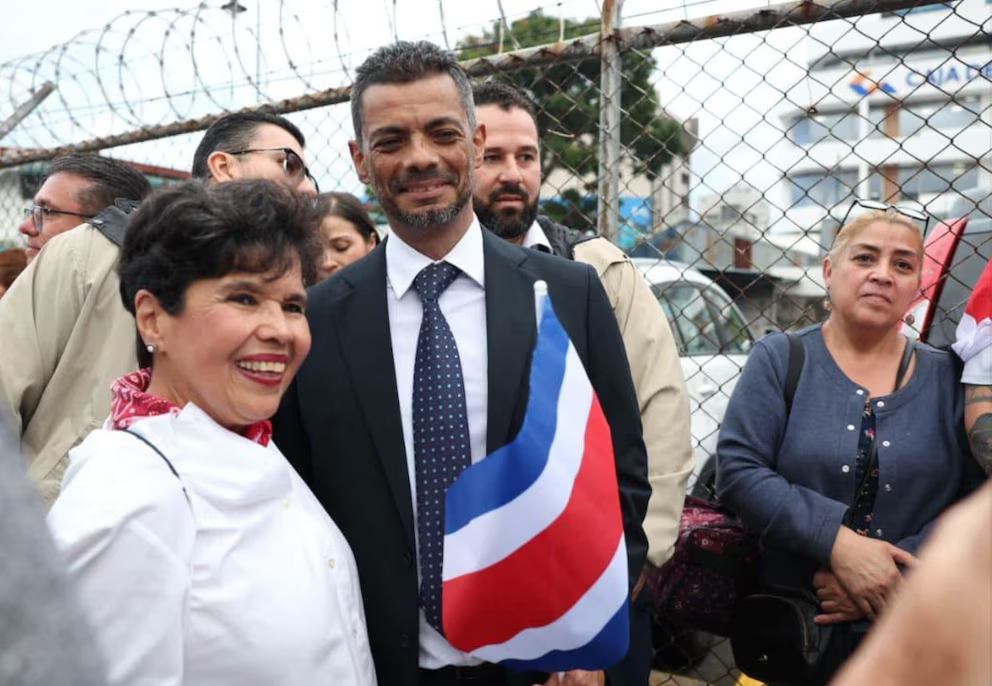
As part of the campaign, Miranda, accompanied by the first deputy mayor, Yariela Quirós, and the second deputy mayor, Fernando Venga, toured various locations in San José to collect signatures from citizens who support the request addressed to President Fernández.
The Municipality’s intention is for the document to reach Casa Presidencial along with the signatures of residents of the capital who believe the situation requires urgent government intervention.
The mayor maintains that the initiative’s objective is not to generate a political dispute, but rather to get national institutions directly involved.
“I am writing to you respectfully, but also urgently. I am not doing so on behalf of political interests or to generate headlines. I am doing so on behalf of thousands of Costa Ricans who feel they can no longer wait,” Miranda states.
The proposal stems from a premise: San José cannot continue to bear the brunt of a problem that, due to its scale, requires a national response, practically alone.
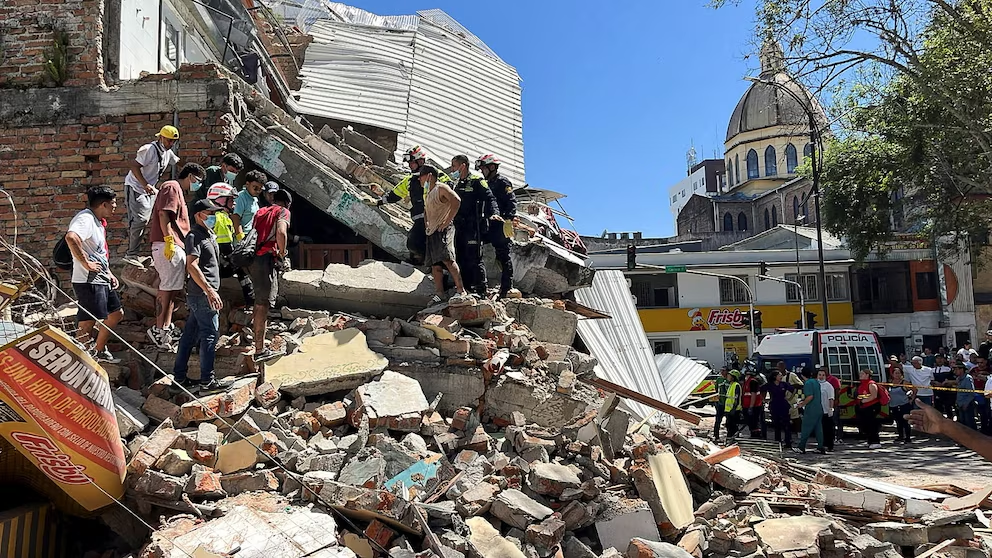
Q COSTA RICA — Costa Rica, Nicaragua, Guatemala, Honduras, Panama, and El Salvador, expressed their support for Colombia following Monday’s 7.4 magnitude earthquake that left at least 200 dead and 3,800 missing. The Colombian government declared a national disaster, as damage was reported to homes, buildings, roads, airports, health centers, and schools.
The official tally released by Colombian President Abelardo de la Espriella included hundreds injured, some 1,575 damaged homes, of which 37 completely destroyed, 61 collapsed buildings, 18 affected health centers, and 52 damaged schools. The president said in Bogotá that this was a preliminary figure and that an increase was expected.
The Colombian president stated that at least five departments (known as provinces in some countries) suffered extensive damage. He added that 18 highways were affected and that seven airports—Pereira, Manizales, Quibdó, Armenia, Cartago, Cali, and Buenaventura—were closed and unable to operate commercial flights due to infrastructure damage.
According to the Colombian Geological Survey, the epicenter was in San José del Palmar, in the department of Chocó, on the Pacific coast, at a depth of 82 kilometers (51 miles). In Quibdó, the departmental capital and the city closest to the epicenter, authorities reported injuries and serious damage to buildings.
In Cali, 20 buildings collapsed, according to reports from the Cali Mayor’s Office and the Civil Aeronautics Authority. The coffee-growing region of central Colombia was one of the areas most affected by the earthquake.
The quake overwhelmed parts of the health system, turning the rescue effort into one of Colombia’s largest disaster responses in years.
Colombia declared three days of mourning on Wednesday for the victims of an earthquake.
Costa Rica expressed its solidarity through a statement from the Ministry of Foreign Affairs. “The Government and people of the Republic of Costa Rica express their deepest condolences to the Government and people of Colombia in the face of the emergency caused by the earthquake,” the Ministry stated.
The Ministry also indicated that none of the approximately 2,000 Costa Ricans residing in Colombia are among those affected. It explained that its Consulate General in Colombia is closely monitoring the situation and has made its telephone lines and email available to handle requests for consular assistance.
El Salvador’s President Nayib Bukele offered on Monday the immediate dispatch of rescue teams, medical personnel, paramedics, and supplies to Colombia following the earthquake.
Bukele stated in a press release published on his X (formerly Twitter) account that his government was closely monitoring the aftermath of the earthquake. Bukele affirmed: “We are closely following the consequences of the powerful earthquake that struck Colombia this morning.”
He added that his country is “in communication and ready to provide immediate support” with whatever resources the Colombian authorities deem necessary. He also acknowledged the responsiveness of Colombian emergency teams and noted that El Salvador remains on alert to act without delay should it receive a formal request.
The Nicaraguan regime sent a message signed by Daniel Ortega and Rosario Murillo. “In these tragic times, on behalf of the Nicaraguan people and ourselves, we send you our solidarity and prayers, trusting in God that normalcy will soon be restored,” they wrote in a letter.
They also addressed a message to those who lost family members and to the communities affected by the destruction of their livelihoods. In that communication, they sent a “fraternal embrace” and prayers for comfort.
The president of Guatemala, Bernardo Arévalo de León, said in his regular press conference at the National Palace of Culture that he was following the events in Colombia “with great concern and sorrow.” He indicated that he had already conveyed his country’s solidarity to the Colombian president and offered any necessary support.
Arévalo added that the executive secretary of the National Coordinator for Disaster Reduction, Claudinne Ogaldes, is in contact with her Colombian counterpart to determine when an international request for aid could be activated. The Guatemalan Foreign Ministry, according to the publication, also reported that it is maintaining contact with some Guatemalan citizens residing in Colombia, although without complete information on the condition of most.
From Honduras, President Nasry “Tito” Asfura expressed his “solidarity” and “fraternity” with Colombia on X. The head of the Honduran Parliament, Tomás Zambrano, expressed his “closeness and empathy” to De la Espriella and the affected families and affirmed that the historical ties between the two countries “are stronger than ever.”
Panama’s President José Raúl Mulino offered assistance “within our capacity.” In Panama, the earthquake shook the eastern part of the country, prompting the precautionary evacuation of dozens of office and apartment buildings in the capital, as well as hospitals in the Darién province, which borders Colombia.
According to the Institute of Geosciences at the University of Panama, the tremors lasted between 40 seconds and 1 minute and were felt in Darién, the Guna Yala region, and other areas of eastern Panama. The institute’s director, Néstor Luque, explained, as quoted by the EFE news agency, that the earthquake originated “in a tectonic contact zone between the El Garrapata fault and the Eastern Panama Deformed Belt fault.”
Q COSTA RICA — Heineken Costa Rica contributed €492 million (US$568 million) — approximately 255.7 billion Colones — to the revenue of its parent company, Heineken N.V., during the period from January 30 to June 30, 2026.
This figure was included in Heineken’s half-year results, released on August 5 in Amsterdam.
The financial statements cover the six-month period ending June 30, 2026.
Heineken took control of the Costa Rican beverage and retail businesses of Florida Ice and Farm Company S.A. (Fifco) on January 30, 2026.
Although it contributed revenue to the group, Heineken Costa Rica recorded a loss of €6 million during the same period. This figure includes one-time adjustments related to the acquisition, according to the results published by the company.
Heineken also presented a calculation to measure the effect of having taken control of the Costa Rican operation from the beginning of the year.
According to the document, if control had been obtained from January 1st, the group’s consolidated revenues would have been €17.625 billion during the first half of the year.
This amount is €66 million higher than the revenues actually reported by Heineken for that period, which were €17.559 billion.
Purchase completed in January
The transaction made Heineken the controlling shareholder of Heineken Costa Rica, after acquiring the 75% stake it did not already own in Fifco.
The transaction also included the remaining 75% of Nicaragua Brewing Holding S.A. and the remaining 25% of Cervecería Panamá S.A.
With these moves, Heineken increased its indirect stake in Compañía Cervecera de Nicaragua from 12.45% to 49.85% and its controlling stake in Heineken Panamá from 75% to 100%.
The transaction was announced in September 2025 as a deal worth approximately US$3.25 billion.
Fifco shareholders approved the transaction on October 7, 2025, with 98.9% support at an Extraordinary General Meeting.
The Costa Rican conglomerate is selling its beverage, food, and retail divisions, including the iconic Imperial beer.
By Juan Pablo Arias
Read more
Purchase Transaction
Heineken reported at the end of June that the cash price for Fifco’s beverage and retail businesses was €2.694 billion, equivalent to $3.224 billion.
In addition, it paid €144 million to settle loans between the two parties, bringing the total cash disbursement to €2.838 billion, or about $3.396 billion.
Including adjustments related to cash flow hedges and other items, the total amount of the transaction reached €2.921 billion.
In its report, Heineken stated that the acquisition of Heineken Costa Rica strengthens its position in the Central American market and expands its product offering.
The acquisition gave it control of Imperial and Pilsen, which the company considered the leading beer brands in Costa Rica.
It also incorporated the non-alcoholic beverage operations of Fifco, whose main brand is Tropical.
The Dutch group added that the transaction adds a retail network that improves its distribution capabilities and market reach.
Imperial, Pilsen, and Tropical represent the majority of the intangible assets valued at Heineken Costa Rica.
Q COSTA RICA — The El Niño phenomenon not only represents a change in Costa Rica’s weather conditions. The increase in temperatures, greater exposure to solar radiation, and variations in rainfall patterns can have direct consequences for public health, particularly for those with chronic illnesses, the elderly, children, pregnant women, and outdoor workers.
The Colegio de Médicos y Cirujanos de Costa Rica (College of Physicians and Surgeons of Costa Rica) gathered the opinions of specialists from six areas to analyze the main risks associated with this climatic phenomenon and warned that its effects can impact various bodily systems.
Projections from the national weather service, the Instituto Meteorológico Nacional (IMN), point to a period characterized by above-average temperatures, increased solar radiation, and changes in rainfall patterns. This scenario can lead to cardiovascular, respiratory, dermatological, allergic, renal, and occupational complications.
The president of the College of Physicians and Surgeons, Dr. Elliott Garita Jiménez, urged the public to take preventative measures, but clarified that the goal was not to cause alarm.
“It’s not about creating alarm among the population, but about raising awareness about a situation that requires prevention,” explained Garita, who pointed out that people with chronic illnesses and other vulnerable groups could face an additional risk.
The specialist added that many complications can be avoided through simple actions, such as maintaining adequate hydration, continuing medical treatments, and paying attention to environmental conditions.
“Preparing will always be more effective than reacting when complications arise,” he stated.
The Heart Under Pressure
One of the main effects of high temperatures occurs when the body loses a significant amount of fluids, leading to dehydration.
When this happens, blood can become concentrated, and the cardiovascular system must work harder to maintain adequate blood flow. This situation is especially relevant for older adults and people with heart disease or cardiovascular risk factors.
From his expertise as a cardiovascular and thoracic surgeon, Garita explained that hydration should be considered a health protection measure.
“Dehydration can thicken the blood and contribute to cardiovascular problems in people who already have arterial disease or risk factors,” he stated.
The doctor recommended maintaining adequate fluid intake and observing urine color as a simple way to identify possible signs of dehydration. He also mentioned fruits with high water content, such as watermelon and cantaloupe, as part of a diet that can contribute to fluid balance.
High temperatures can cause dehydration and increase the effort the cardiovascular system makes to maintain adequate blood flow.
Heat can affect various organs.
The impact of high temperatures is not limited to the heart. According to Internal Medicine specialist Dr. Carlos Araya Fonseca, high temperatures can compromise virtually the entire body.
Heat waves have been linked to an increase in hospitalizations and mortality associated with heart attacks, strokes, and heart failure exacerbations. They can also increase episodes of kidney failure, kidney stones, and urinary tract infections.
People with diabetes and hypertension may also experience difficulties managing their conditions, while the heat can be linked to fatigue and negatively impact on mental health. Furthermore, it represents a risk factor that should be monitored during pregnancy.
“High temperatures affect multiple organs and systems. We are not facing an exclusively respiratory or dermatological problem,” Araya stated.
The doctor insisted that one should not wait until feeling thirsty to start drinking fluids.
“Many people believe they should only hydrate when they feel thirsty, but by that time the body has already begun a dehydration process,” he pointed out.
Dust and smoke complicate breathing
Environmental conditions associated with drier periods can also favor the presence of dust, smoke, and suspended particles in the air.
Pulmonologist Dr. Luis Ugalde Gamboa explained that El Niño does not directly cause respiratory illnesses, but it can modify environmental conditions and increase exposure to pollutants that irritate the respiratory tract.
In healthy individuals, symptoms such as cough, congestion, and a feeling of pressure in the chest may appear. The risk is greater among patients with asthma, chronic obstructive pulmonary disease (COPD), pulmonary fibrosis, and other respiratory illnesses.
“When dust, smoke, or fine particles increase in the environment, the respiratory tract responds with inflammation and irritation,” Ugalde stated.
The specialist warned that episodes of forest fires or burning pose an additional risk, because the particles present in the smoke can penetrate deep into the lungs and aggravate both respiratory and cardiovascular diseases.
Stored blankets can accumulate dust mites and cause respiratory allergies and lung infections.
Dust, smoke, and suspended particles can irritate the respiratory tract and trigger attacks in patients with asthma, COPD, and other lung diseases.
Allergies can also intensify.
Allergy specialist Dr. Patricia Monge Ortega explained that the phenomenon does not necessarily generate new allergic diseases, but it can modify the environmental conditions that favor exposure to substances capable of triggering symptoms.
Increased temperatures, variations in humidity, and extreme weather events can modify the presence of environmental allergens and favor respiratory exacerbations.
In Costa Rica, where allergic diseases are prevalent, specialists recommend paying special attention to patients with asthma and allergic rhinitis, as well as children, the elderly, immunocompromised individuals, and those with chronic respiratory illnesses.
“Climatic phenomena like El Niño remind us that the environment directly influences our respiratory health,” stated Monge.
The specialist emphasized the importance of keeping allergic diseases under control and seeking timely medical advice if symptoms worsen.
The skin is also affected.
Increased exposure to high temperatures and ultraviolet radiation is another risk highlighted by specialists.
Dr. Orietta Mata Jiménez, a dermatology specialist and president of the Costa Rican Association of Dermatology (ASODERMA), warned that increased sun exposure can raise the risk of sunburn and skin cancer, as well as exacerbate inflammatory conditions such as acne, rosacea, and various types of dermatitis.
Heat and sweating can also promote fungal and bacterial infections.
Among those who require special protection are children and newborns, older adults, people with fair skin, patients with a history of skin cancer or numerous moles, pregnant women, outdoor workers, and people with chronic dermatological conditions.
Mata emphasized that skin care should be maintained year-round.
“The skin has a memory. Every sunburn increases the risk of developing skin cancer in the future,” she noted.
Working in the sun also involves risk.
Workers who perform their jobs outdoors are among the groups most exposed to the consequences of heat.
Occupational Medicine specialist Dr. Viviana Gómez Sánchez pointed out that farmers, construction workers, road maintenance workers, security personnel, and waste collectors, among others, may face a higher risk of dehydration, heat exhaustion, heat stroke, acute kidney injury, and cardiovascular complications.
The doctor also challenged the perception that people accustomed to working in the sun are protected.
“There is a misconception that being used to the heat eliminates the risk,” Gómez explained.
Acclimatization can improve physiological tolerance, but it does not eliminate the possibility of suffering from heat-related illnesses.
Furthermore, heat can directly affect worker performance. As body temperature rises, concentration, working memory, coordination, decision-making ability, and reaction time can decrease, thus increasing the risk of accidents.
Therefore, the specialist recommended combining individual and company measures: hydrating before feeling thirsty, establishing recovery breaks, moving the most demanding tasks to cooler hours, wearing light clothing and sunscreen, and training staff to promptly recognize heat-related symptoms.
For the College of Physicians and Surgeons, the El Niño scenario requires anticipation and vigilance. The general recommendation is that people with chronic illnesses maintain their treatments, monitor any changes in their symptoms, and adopt protective measures against heat, solar radiation, and air pollution.
The experts’ message is clear: prevention can reduce the impact of the phenomenon on health, especially among people who already have medical conditions or who, due to their age, work activity or particular characteristics, face greater exposure to its effects.
Q COSTA RICA — Amid the fight against drug trafficking gangs, President Laura Fernández declared information regarding the Amid the fight against drug trafficking gangs, President Laura Fernández declared information regarding the Dirección de Inteligencia y Seguridad (DIS) — Costa Rica’s national intelligence agency reporting directly to the president, the Elite Force, and security contracts to be state secrets.
On Monday, the decree signed last July 27 was published in the official gazette, La Gaceta.
The document states that “the State of Costa Rica faces the need to combat increasingly complex and organized criminal structures, through strategic planning based on intelligence, operational coordination and timely decision-making, forcing it to react quickly and efficiently to situations that put social peace and the well-being of the population at risk.”
The president had previously expressed concern about keeping some of the discussions and intelligence emanating from the Elite Force secret and, for this reason, even ordered polygraph tests for those involved.
The Elite Force is a task force comprised of various police forces, judicial authorities, and high-ranking government officials tasked with combating drug trafficking and organized crime.
In this regard, the government justified its decision by arguing that the disclosure of certain data could compromise police operations, reveal institutional vulnerabilities, affect international commitments, and endanger the lives of officials and civilians in the face of the threat of organized crime.
State secrecy imposes an absolute duty of silence on all participants in these proceedings, including high-ranking officials, members of the police force, support staff, and advisors. The decree warns that those who fail to comply with this provision are subject to administrative proceedings, legal sanctions for breach of secrecy, and contract termination without liability for the administration.
Q COSTA RICA — Costa Rica’s roads might not be in the best shape, but how you drive can actually do more damage to your vehicle than the rough streets themselves.
Driving habits directly influence how long some of a vehicle’s main components can remain in good condition.
According to Randall Agüero, a technical specialist at Autopits, these everyday habits can accelerate wear on brakes, tires, suspension, steering, and other systems:
1. Take it easy on the brakes: Slamming on the brakes too often creates heat and friction, which wears down your brake pads faster and can damage the rotors. Also, braking abruptly puts additional stress on tires and suspension components. Maintaining a safe following distance and anticipating traffic conditions allows for more gradual deceleration.
2. Steer clear of potholes and rough roads. Impacts on potholes, speed bumps, and other road irregularities can damage shock absorbers, ball joints, tie rod ends, bushings, suspension arms, and rims. Over time, these impacts can also cause misalignment and reduce the lifespan of various parts.
3. Driving with incorrect tire pressure. Lower than recommended tire pressure increases rolling resistance, can increase fuel consumption, and causes uneven wear. When tire pressure is too high, less of the tire touches the road, which can make the vehicle less stable and reduce braking performance. It is recommended to check tire pressure regularly when the tires are cold, using the values indicated by the tire or vehicle manufacturer.
4. Ignoring noises, vibrations, or warning lights. A noise when braking, a vibration in the steering wheel, or a warning light on the dashboard can be signs of a problem that can still be addressed before it affects other components. Timely inspection can prevent problems with the brakes, suspension, or steering from becoming more expensive repairs.
5. Driving with the tank almost empty. Regularly driving with the tank close to empty can put the fuel pump under greater stress, as fuel helps lubricate it and dissipate heat. Also, a very low level increases the likelihood that sediment accumulated in the tank will reach the fuel system. Many drivers take it to “E” — échale (fill it up) in Spanish.
Other habits that can lead to faster wear and tear of your vehicle are testing your hand on the gear shifter, riding the clutch pedal in manual transmissions, shifting before completely stopping or riding the brake pedal in automatics.
Other driving behaviors that can contribute to your car’s wear and tear include aggressive acceleration, treating your gear shifter or clutch as a footrest, driving aggressively on a cold engine, dry steering, and overloading the vehicle.
Your car is a big investment, so it makes sense to keep it running and looking good for as long as you can. Simple things like driving carefully can help cut down on wear and tear, keeping your car in great shape both inside and out.
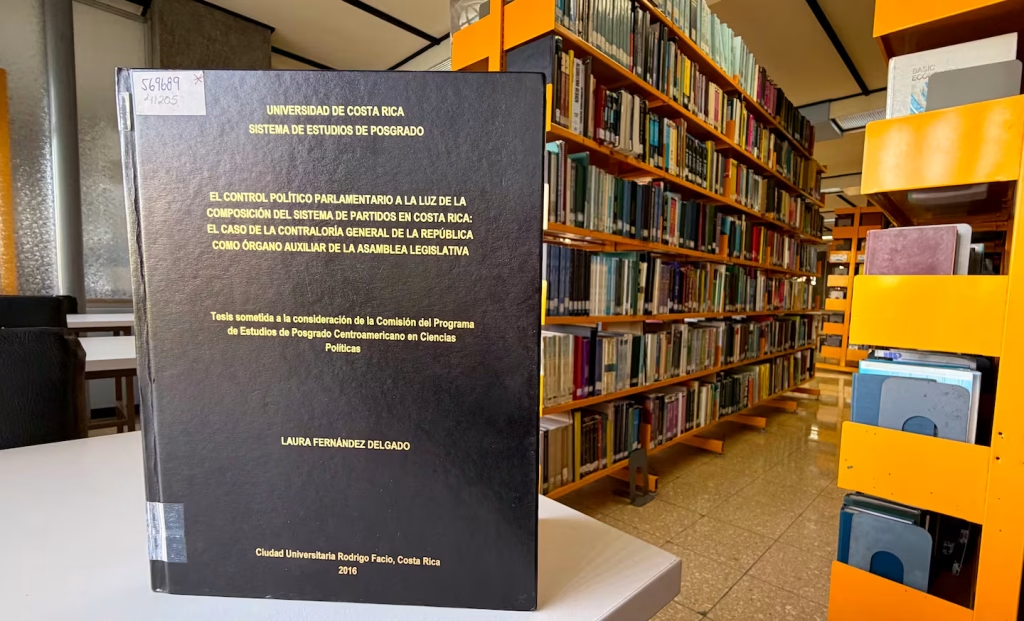
Q COSTA RICA — Before assuming the presidency, Laura Fernández crafted a university thesis at the University of Costa Rica (UCR) in 2016 that examined the role of the Contraloría General de la República (Comptroller General) as a critical check on the Executive branch.
In her academic work, Fernández defended the function of the Contraloría as a counterbalance to the government, highlighting its importance in maintaining oversight and accountability.
Her thesis analyzed how the Legislative Assembly and the Contraloría act together as brakes and counterweights to the Executive branch. At the same time, Fernández pointed out potential vulnerabilities or mechanisms by which the oversight and control functions of the Contraloría could be undermined or neutralized.
This dual perspective — recognizing the Contraloría as a key institutional counterbalance while also highlighting how its control can be disabled — has become a point of discussion given her current presidency and related political debates about oversight and institutional autonomy in Costa Rica.
On the shelves of the Luis Demetrio Tinoco Library at the University of Costa Rica, since 2016, rests the thesis in which current President Laura Fernández Delgado explained why a country needs checks on the power it wields. (La Nacion/Instagram)
This nuanced view acknowledged the institution’s value while cautioning about potential political or legal maneuvers that could undercut its effectiveness.
Since becoming president, Fernández has faced scrutiny and political debate over the balance of power and the integrity of institutions like the Contraloría.
Her earlier academic work is now being revisited as part of discussions on governance, institutional checks, and the limits of control within Costa Rica’s political system.
This reflection on her thesis reveals a complex stance: a recognition of the need for robust oversight bodies, paired with an awareness of how fragile these systems can be if political forces seek to diminish their authority.
You can find the full thesis and more details about this analysis on La Nación’s coverage here:
Q COSTA RICA — Former president of Costa Rica, Miguel Ángel Rodríguez (1998 – 2002), expressed his opinion on the Plantón por la Democracia, a peaceful protest advocating for democracy in the country, held last Thursday.
He acknowledged the importance of citizens voicing their concerns and the right to peaceful assembly. However, Rodríguez also emphasized the need for dialogue and constructive engagement with institutions to address democratic challenges, cautioning against actions that might destabilize social order or hinder progress. Overall, he supports democratic participation but calls for unity and responsibility in pursuing change.
Miguel Ángel Rodríguez, Former President of the Republic:
“On Thursday, I participated in the sit-in for democracy. I wasn’t there to defend privileges or to claim everything is working perfectly. I wasn’t there against anyone. I was there in support of Costa Rica.
“We must defend the independence of the judiciary and also demand significant and urgent changes to the justice system.
“Thousands of comments on social media regarding the sit-in reveal a divided country. Some saw it as a civic gathering. Others, as a meeting of privileged individuals protecting a slow judiciary that favors the wealthy.
“We shouldn’t respond with contempt. There are reasons to be dissatisfied. A trial that drags on for years can ruin a family or close a small business. A victim without answers feels abandoned. When a criminal goes free due to errors or expired deadlines, people lose trust. An innocent person subjected to an interminable trial suffers a severe and undeserved punishment. And those who can afford several lawyers tend to defend themselves better.
“But at the same time, if the judiciary is weakened, if judges and magistrates lose their independence, we all lose.
“It is understandably infuriating to see unjustified privileges and corruption cases that are announced with great fanfare at the start of their investigations, only to drag on for years without charges being filed and even longer without a trial. To deny this would be to bury one’s head in the sand.
“Nothing supports the conclusion that the entire judiciary is corrupt and exists to protect the wealthy. Such an accusation equally condemns the vast majority of the thousands of honest judges, prosecutors, investigators, public defenders, and employees who do their duty.
“Furthermore, destroying judicial independence would not primarily harm the powerful. They almost always find ways to protect themselves. Those who most need independent judges are the unjustly dismissed worker; the assaulted woman; the elderly person claiming their pension; the family facing eviction; the small business owner confronting a large corporation; the citizen accused without evidence; and the sick person needing legal protection to receive prompt care at the Costa Rican Social Security System (CCSS) instead of waiting three years. An independent judiciary is, above all, a defense of those with the least power.
“The main reform is to tackle the judicial backlog. Prosecutor’s investigations must have effective deadlines. The preliminary hearing must prevent accusations with no serious possibility of conviction from going to trial, and the accused must be able to appeal the decision to proceed to trial, just as the Prosecutor’s Office appeals a dismissal. Trials must have maximum time limits for their conclusion. Days spent reading indictments or incorporating already admitted evidence must be eliminated. Ordinary cases of debt collection should be transferred to notaries, thereby freeing up judges for other jurisdictions.
“We must also protect the lives and families of judges threatened by gangs that offer “lead or money,” and improve citizen protection against repeat offenders. All of this requires better management, goals, and accountability.
“Simply changing the way judges are chosen or replacing capable officials with people loyal to a party will not solve the backlog or bring more justice to the poor.
“Whoever wins an election must govern and implement their reforms, but the vote does not grant unlimited power. Controls prevent abuses.
“We gain nothing by dividing Costa Rica between a good people and hostile institutions. It also helps to call those who support the government ignorant or those who participated in the sit-in corrupt.
“The message of the sit-in should not be ‘let’s leave everything as it is.’ It should be: let’s change a lot, let’s change soon, and let’s change well. Let’s build a faster, more accessible, transparent, and equitable justice system for all, without destroying its independence.
“The message of the sit-in should be not to antagonize but to unite, not to discredit but to propose concrete reforms. Not to impose solutions but to build agreements.
“Let’s act as our grandparents often did, anticipating problems and uniting to agree on and implement solutions.
“That’s why I participated. I’m not against anyone. I’m in favor of a Costa Rica where the poor and the rich receive the same treatment, criminals are punished, the innocent are protected, power has limits, and institutions are accountable. Where the branches of government respect each other.
“That’s the reform we need: big, urgent, and well done.”
This article represents the opinion of its author.The opinions expressed do not necessarily reflect the editorial position of this publication. The opinion (translated) was featured on DiarioExtra.com. Read the original in Spanish here.
Q COSTA RICA — The trial against Ricardo Olivas Valle, former treasurer of the State bank, the Banco Nacional de Costa Rica (BNCR), has entered its final stage with the prosecution requesting a total of 396 years in prison for the alleged embezzlement of ¢3.293 billion colones (US$7.3 million) stolen from the vaults of the bank’s headquarters in San José.
The Deputy Prosecutor’s Office for Probity, Transparency, and Anti-Corruption (FAPTA) began presenting its conclusions to the Criminal Court, where it will explain why it believes the former official is responsible for the alleged acts and formally request a prison sentence.
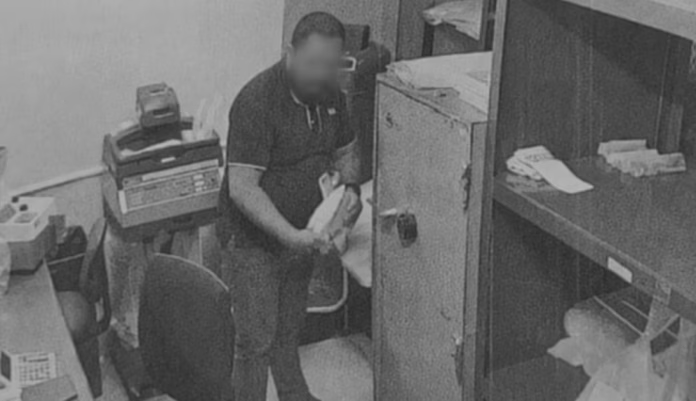
Olivas faces charges of 33 counts of embezzlement, one for each withdrawal of money over a two-year period that, according to the Public Prosecutor’s Office, he allegedly made between 2021 and 2023, taking advantage of the last minutes of the workday and times of least surveillance within the bank.
According to the investigation, Olivas made withdrawals mainly between 4:16 p.m. and 5:29 p.m., when activity within the facilities decreased. The Prosecutor’s Office maintains that the former treasurer took advantage of alleged lapses in internal controls to remove millions of colones from the vaults.
During the trial, dozens of security camera recordings were analyzed, which, according to the prosecution, show the former official placing bundles of bills into yellow manila envelopes before leaving the bank, passing through security checkpoints.
The case was dubbed “Gallo Tapado” (Hidden Rooster) by the Organismo de Investigacióon Judicial (OIJ) and the Prosecutor’s Office due to the alleged mechanism used to conceal the origin of the money.
According to the prosecution, Olivas allegedly used some of the stolen funds to buy large quantities of lottery tickets from the state lottery, the Junta de Protección Social (JPS). When he won, the money was deposited into his bank accounts, allowing him to introduce the funds into the financial system while making them appear to come from a legitimate source.
During the raids carried out at his home, authorities found nearly 3,000 lottery tickets, which were included as evidence in the court file.
Based on the evidence presented during the trial demonstrates the former official’s involvement in the embezzlement for which the Public Prosecutor’s Office requested a cumulative sentence of 396 years.
However, although the total sentence far exceeds the national legal limit, the eventual sentence must be adjusted to the maximum limit established by Costa Rican law, which is currently 36 years in prison.
In addition to the Prosecutor’s Office, the Attorney General’s Office and the Banco Nacional, the institution claiming the allegedly embezzled funds, are participating as prosecuting parties in the case.
He admitted to lottery addiction
During his testimony before the Court, Olivas admitted to having problems related to gambling, although he claimed his addiction was limited to buying lottery tickets.
“I was addicted to gambling at one point, only to the lottery,” declared the former official, who asserted that after entering preventive detention (prison) in 2023, his problem was solely related to “the urge to gamble.”
The former treasurer denied that his behavior was linked to other types of betting and stated that he mainly bought lottery tickets.
Failures in Banco Nacional Controls
The investigation also revealed alleged weaknesses in the Banco Nacional’s internal oversight mechanisms.
According to the prosecution, thorough physical audits of the vaults had not been conducted since 2019, a situation that allegedly allowed the thefts to continue undetected for several years.
In addition to Olivas, other individuals were included in separate investigations for possible omissions, dereliction of duty, or cover-up. These include supervisors, accountants, security personnel, and former legal directors of the institution.
The trial will continue with the closing arguments, after which the Criminal Court will determine the former official’s responsibility and any potential sentence.
Q COSTA RICA — Chikungunya resurfaced in Costa Rica in 2016 after nearly a decade without transmission, resulting in 438 cases treated at the Caja Costarricense de Seguro Social (CCSS).
This situation is concerning because the virus has shifted from imported cases to community transmission and could spread further during the rainy season.
According to El Observador, CCSS records include 338 emergency room visits and 100 outpatient visits for illnesses associated with the virus. The Ministry of Health, however, reports 48 PCR-confirmed cases up to epidemiological week 28, covering the period of July 12 to 18, published on August 6.
The difference between the two figures can be explained by the fact that a medical consultation for suspected chikungunya does not always result in a confirmed case, and because the same person may visit the same health center more than once, or different ones.
The first cases appeared in January and were linked to people who contracted the virus outside the country. Later, the presence of the transmitting mosquito allowed the contagion to take hold within communities.
The Director of Health Surveillance, Jennyfer González, explained that the outbreaks began with cases linked to importation, but local transmission was later established because the vector was already present. She also noted that all the cases classified as imported that the Ministry of Health had identified were related to travel to Nicaragua.
The change was rapid: between mid-June and early July, the country went from accumulating 11 cases to detecting significant clusters of local transmission.
One of these clusters was identified in Guanacaste. The first infections emerged in Playa Langosta, and later, health investigations found cases in Huacas, Tamarindo, Sardinal, Belén, and Flamingo. Another cluster appeared in Alajuela. Of the 16 cases that province recorded in July, 13 were linked to an outbreak in El Coyol.
González stated that the circulation of chikungunya had likely begun before authorities officially detected the first outbreaks. “These are people who don’t seek medical attention; we don’t receive notification, the system isn’t alerted, and we don’t find out. We only find out retrospectively when we begin the investigations,” the official said.
What is Chikungunya?
Chikungunya is a mosquito-borne viral disease characterized by the sudden onset of a high fever and severe, often debilitating joint pain. The infection is transmitted to humans through the bites of infected female Aedes aegypti and Aedes albopictus mosquitoes, which are also known vectors for dengue and Zika viruses.
The name “chikungunya” originates from the Makonde language of southern Africa and translates to “that which bends up” or “bent over in pain,” directly referencing the stooped posture assumed by patients suffering from its excruciating joint symptoms.
Key Symptoms
Symptoms typically present 4 to 8 days after an individual is bitten by an infected mosquito. While the clinical presentation is highly similar to Dengue and Zika, the joint pain associated with chikungunya is uniquely intense.
Sudden High Fever: An abrupt spike in body temperature is usually the initial indicator.Severe
Joint Pain: Primarily targets the extremities like wrists, ankles, fingers, and knees.Joint
Swelling: Accompanied by visible inflammation and localized tenderness.
Physical Weakness: Intense muscle pain, fatigue, and general physical exhaustion.
Skin Rash: A maculopapular rash frequently appears across the torso and limbs.
Other Signs: Headaches, nausea, and mild bleeding from the nose or gums may occur.
Treatment and Medical Management
There is no specific antiviral medicine available to cure a chikungunya infection. Medical care focuses primarily on relieving patient symptoms:
Over-the-Counter Analgesics: Medications containing acetaminophen or paracetamol are recommended to manage fever and pain.
Avoid Aspirin and NSAIDs: Do not use aspirin, ibuprofen, or naproxen until a doctor has explicitly ruled out dengue fever. If the patient actually has dengue, NSAIDs can critically escalate the risk of severe internal bleeding.
Hydration and Rest: Drinking plenty of fluids and getting complete bed rest are vital for recovery.
Chronic Management: While acute symptoms typically resolve within a week, the associated joint pain can become chronic, lingering for months or even years in older adults.
Prevention and Vaccine Status
The most effective way to minimize risk is through vigilant vector control and avoiding bites.
Bite Prevention: Apply EPA-registered insect repellents containing DEET, wear long-sleeved clothing, and utilize window screens or insecticide-treated bed nets.
Eliminate Standing Water: Routinely empty containers, flower pots, and tires where mosquitoes breed.
Vaccines: Regulatory bodies in multiple countries have approved two preventative chikungunya vaccines for at-risk populations. However, these vaccines are not yet in widespread global distribution. If you are planning to travel to an endemic area, consult a healthcare provider regarding availability and recommendations.
With notes from the World Health Organization, the Centers for Disease Control, and Wikipedia.
Q COSTA RICA — Extremely stubborn, persistent, and unwilling to give up on an argument, Costa Rica President Laura Fernández maintains that there was indeed an “institutional coup d’état” against the Legislative Assembly and continues her criticism of the Judiciary.
A day after the “planton”, a demonstration in support of the Judiciary attended by thousands across the country, Fernández reaffirmed her criticisms of the Judiciary and asserted that she maintains her claim that a “golpe de Estado” had taken place against Costa Rican institutions.
The president made these statements when asked about the repercussions of her remarks and the criticism she received during the protest held on Thursday, August 6.
When asked whether she would retract her statements or continue to criticize the Judiciary, Fernández responded by questioning the availability of concrete data on any potential economic repercussions from her declarations.
“Do you have any data on which companies, investments, or impacts are involved, or is this just an assumption on your part?” the president asked.
The Teletica journalist insisted that international media outlets had reported on the issue and questioned whether, from her perspective, her statements could generate political and economic uncertainty.
Fernández rejected that interpretation and asserted that the economic indicators her government is monitoring show a favorable scenario.
“No, I don’t think so,” the president responded before listing several indicators that she asserted continue to show positive trends.
“The data I have on investment growth, job growth, tourism growth, export growth, and the overall dynamism of our economy, thank God, are on the right track,” she maintained.
The president decided to elaborate on the concept she had used days earlier and asserted that it was not a statement she intended to retract.
“What I said about a coup d’état against Costa Rica’s institutions is absolutely true,” she affirmed.
Fernández explained that, from her perspective as a political scientist, institutional coups can occur when one branch of government uses its powers to undermine the independence or authority of another branch.
“When the branches of government—the Legislative, the Judicial, or the Executive—stage coups using the law, using their own power, against the independence or authority that each of these branches should have, those are called institutional coups,” she argued.
The president then directed her criticism at a decision by four justices of the Constitutional Court, whom she questioned for a ruling that, according to her interpretation, exceeded the powers established by the Constitution and the laws.
“When four justices of the Sala IV issue a vote that openly violates what they can do according to our Constitution and the laws, that is a blow to the institutional integrity of the Legislative Assembly,” she stated.
Fernández also linked her argument to the electoral legitimacy of the current composition of Congress. She noted that 31 legislators belong to the ruling party, the Partido Pueblo Soberano (PPSO), and were elected through elections she described as free and democratic.
The president also highlighted the high voter turnout in the recent elections and asserted that abstention had decreased by more than 10 percentage points.
“There was enormous participation from the people of Costa Rica,” she stated.
She also maintained that, for 44 years, no president of the Republic had had a ruling party of a similar size.
Based on this data, Fernández argued that her government has an electoral mandate that must be respected and questioned how judges who are not directly elected by the citizens can make decisions that, according to her, interfere with the powers of elected representatives.
“When I am elected by more than 1.2 million people with a legislative majority of that size, and then four magistrates, who were not elected by the people, come and issue a ruling that is not permitted by the Constitution or any law of the Republic, of course I, as president and as someone who firmly believes in democracy and the separation of powers, am concerned,” he declared.
Q COSTA RICA — Costa Rica is quietly revolutionizing emergency medical care with its nighttime air ambulance flights, a service that’s proving to be a lifesaver for many in critical situations.
Traditionally, air ambulance flights have been limited to daylight hours due to safety concerns and regulatory constraints. After months of uncertainty since Civil Aviation banned most nighttime air ambulance flights last October, Costa Rica has finally approved a national protocol to regulate them.
Now, nighttime air ambulance flights will be permitted from only five airfields and airports: Limón, Palmar Sur, Coto 47 near Ciudad Neily, Tobías Bolaños in Pavas, and Daniel Oduber in Liberia, in addition to Juan Santamaría International Airport (SJO).
Excluded are airfields and airports in other regions of the country, such as tourist destinations like Tamarindo, Quepos, and Puerto Jiménez.
This was defined in the Protocolo Nacional para la Coordinación de Traslado Aéreo Nocturno de Pacientes en Estado Crítico (National Protocol for the Coordination of Nighttime Air Transfers of Critically Ill Patients), the definitive document establishing the rules for the operation of these flights.
The availability of lighting and police presence at these locations was a key factor in their selection.
Nighttime air ambulance flights will be available only for critically ill patients with imminent risk to their lives and when it is not possible to wait until daylight for the transfer.
The regulations were developed jointly by the Ministry of Health, the General Directorate of Civil Aviation (DGAC), the Costa Rican Social Security Fund (CCSS or Caja), and the Air Surveillance Service.
During the period of restriction, transfers had to be carried out by land or wait until daylight hours, which jeopardized the lives of urgent patients.
This change matters. Costa Rica’s diverse terrain—dense rainforests, rugged mountains, and remote coastal areas—can make ground ambulance trips slow or impossible during emergencies. Nighttime flights ensure that patients in isolated communities get urgent care without delay, whether it’s a heart attack, severe trauma, or complicated childbirth.
Safety remains paramount. Night flights follow rigorous protocols, from weather assessments to communication checks, minimizing risks while maximizing reach.
For many, this means peace of mind. The assurance that, no matter the hour, life-saving help is just a flight away is a quiet but profound upgrade to the country’s healthcare system.
Q COSTA RICA — A maintenance worker hired by Caroline Heaviland to work on her Cabo Velas property is the prime suspect in her murder, according to Michael Soto, acting director of the Organismo de Investigación Judicial (OIJ), who confirmed the information to local media.
The 75-year-old American acupuncturist was found dead on Monday, August 3, inside her home in Santa Cruz, Guanacaste, with blunt force trauma to the head.
What led authorities to the suspect was not a report or a lead: it was a police checkpoint in Liberia. The man was driving the victim’s vehicle when traffic officers stopped him for reckless driving.
A court ordered him to serve 15 days of pretrial detention for that offense. Only later, during the course of the homicide investigation, did investigators find bank cards belonging to Heaviland in his possession.
Who was Caroline Heaviland?
Heaviland had lived in Costa Rica since 2002. For more than two decades, she treated patients as a certified acupuncturist with over 40 years of experience and even operated her own clinic in the Tamarindo area until 2023.
On the day of her death, she was scheduled to travel to California. She had hired a transportation service to pick her up in the early morning and take her to the airport. It was this driver who found her lifeless body in front of her house and alerted the authorities.
A friend, identified as Susan Curtis, posted on social media: “It is with the heaviest of hearts that I share the news that our sweet, amazing, and talented healer Caroline Heaviland passed away last night. She was the victim of a violent crime”.
Those close to the victim revealed to authorities a detail that has now become a line of investigation: weeks before the crime, Heaviland had mentioned a disagreement with a man who did gardening work on her property. The OIJ is analyzing whether this prior conflict is related to the homicide, although no conclusions have been reached so far.
A pattern that repeats itself in Guanacaste and other tourist areas
The Heaviland murder is not an isolated case in the region. In June 2026, Andrea Richter, a 63-year-old German woman who had lived in Costa Rica for five years, was found dead on a farm in 27 de Abril de Santa Cruz, the same geographic area where the acupuncturist was murdered. The is keeping that case open without any arrests.
In February 2026, American surfer Kurt Van Dyke, 66, who had lived in Costa Rica for many years, was found dead in an apartment in Cahuita, in the province of Limón, on the Caribbean coast.
Local authorities confirmed that Van Dyke was found strangled and with multiple stab wounds, following an apparent violent assault at his home.
In September 2025, the double homicide of the Austrian-German couple Manuela Daxer and Rüdiger Schickhaus in Quepos, Central Pacific, shocked the country. The suspects approached the victims feigning interest in buying their property, valued at approximately USD 1 million. Three people were arrested.
Costa Rica ended 2025 with around 900 assaults against foreign tourists, according to data from the OIJ . Most were concentrated in San José, although the Central Pacific region accounted for some 319 cases.
Q COSTA RICA — Extreme rainfall variations in Costa Rica during July left their mark on the country, with large areas experiencing meteorological drought and others with record-breaking surpluses.
The national weather service, Instituto Meteorológico Nacional (IMN), confirmed that the effects of El Niño caused an uneven redistribution of precipitation, generating deficits of up to 58% in the Pacific and Central Valley regions, while the Caribbean and the Northeastern Zone experienced increases of up to 70%.
The phenomenon was reflected in the records of nine weather stations that reported the lowest rainfall levels in July, such as Pavas in San José, with only 4.8 millimeters accumulated throughout the month. In contrast, Cariari de Pococí, on the Caribbean slope, reached a maximum of 1,274.6 mm, driven by two rain events that occurred at the beginning and end of the month.
Instituto Meteorológico Nacional (IMN) offices in San José, Costa Rica
July’s weather patterns coincided exactly with the warning issued by the IMN at the beginning of the month regarding the strengthening of the midsummer drought, which was expected to reduce rainfall in the Pacific and Central Valley regions, while the Caribbean would remain much rainier from mid-month onward.
The IMN warned that the rainfall deficit in the Central Valley, the Northwest Zone, and much of the North Pacific already meets the criteria for meteorological drought. Furthermore, other areas such as the Nicoya Peninsula, the Osa Peninsula, and parts of the Central Pacific could also experience this condition if the trend persists in the coming weeks.
Karina Hernández, a specialist at the IMN, explained that the main problem with El Niño lies in the way it modifies rainfall distribution: “The most complicated thing about El Niño is the distribution of rainfall. It can rain very heavily in a few days and then go several days with practically no precipitation. Furthermore, it generates a deficit in the Pacific and Central Valley, but increases rainfall in the Caribbean.”
Toda relación sana comienza con la sensación de estar enamorado, pero esta no dura para siempre, sino que cambia gradualmente y se transforma en un sentimiento más maduro y adulto. Y es precisamente en esta etapa cuando la relación se vuelve estable, y las personas realmente se abren y se aceptan mutuamente. Por eso, desde el principio vale la pena entender que el amor verdadero no es solo emociones agradables y sentimientos intensos, sino también la capacidad de aceptar los defectos y alegrarse de las cualidades de la pareja.
No todas las citas se convierten en una relación, y no todas las relaciones pueden convertirse en algo más, por lo que vale la pena estar preparado para la búsqueda y los fracasos. A veces basta con conocer a alguien en la calle o a través de amigos, y otras veces es mejor visitar sitios web especializados para encontrar el amor o parejas ocasionales, como mx.pander.pro.
El equilibrio, como base de una unión sólida
Cuando decidimos unir nuestras vidas con otra persona, es importante distribuir adecuadamente nuestro tiempo y nuestra atención. Por ejemplo, solo con un equilibrio adecuado, las parejas no se cansarán la una de la otra, pero tampoco perderán sus propios gustos y principios al tratar de complacer a la persona amada. Todos deben tener un espacio personal donde puedan ser ellos mismos y desarrollar sus propios pasatiempos o intereses. Por ejemplo, la mayoría de los psicólogos y coaches familiares recomiendan prestar atención a los siguientes puntos:
Tiempo solo para uno mismo. No hay que agobiar a la pareja con tanta atención: dédense al menos unas horas al día para estar a solas con sus propios pensamientos y recargar energías.
Apoyo y aliento. No es necesario que los enamorados hagan todo juntos ni que solo tengan pasatiempos en común; es muy útil alentar y apoyar los intereses individuales.
Sin celos ni comparaciones. Uno de los miembros de la pareja siempre tendrá más éxito en ciertos ámbitos, y aquí es importante alegrarse sinceramente por sus logros, sin compararse con él ni dejar que los celos empañen los sentimientos.
Cuando en una pareja ambas personas no se sienten limitadas y pueden desarrollarse libremente, confían más y se abren más la una a la otra. Y si a esto le sumamos el desarrollo conjunto y las nuevas experiencias, la relación se volverá más sólida y emotiva, ya que la sensación de novedad rompe fácilmente con la rutina aburrida.
La franqueza es el mejor remedio para fortalecer la relación
Según estudios de un conocido sitio de citas —ar.pander.pro—, la mayoría de las peleas, incluso en las parejas más sólidas, no surgen por ofensas reales o por la pérdida del amor, sino por simples dificultades de comunicación. Las personas no saben hablar abiertamente sobre sus necesidades o insatisfacciones, reprimiendo y ocultando su irritación hasta que todo termina en un conflicto grandioso. Pero esto se puede evitar con el enfoque correcto, si se siguen algunas recomendaciones sencillas:
No ocultes tus propios sentimientos. Cualquier insatisfacción debe expresarse de inmediato y abiertamente: tu pareja no puede leer tus emociones de manera inequívoca, por lo que es mejor formularlas y transmitirlas con claridad. Aquí te serán útiles frases sencillas y comprensibles, como «Me molesta» o «Esto me ofende», en lugar de insinuaciones veladas.
Diálogo en lugar de acusaciones. Siempre intenta hablar sobre cada situación problemática y entender el punto de vista de tu pareja, en lugar de acusarlo o criticar sus decisiones.
Compromiso en lugar de presión. En el amor no importa quién gane una discusión si eso hace que la otra persona se sienta infeliz. Por eso, el compromiso es la única solución correcta para cualquier conflicto.
Una pareja siempre está formada por aliados, no por rivales; por eso, solo juntos podrán superar todos los problemas.
Quizás también te interese el material de nuestros socios sobre un tema similar.
Q COSTA RICA — At 12:01 am Thursday, August 6, 2026, significant price reductions for fuels went into effect in Costa Rica, following approval from the regulatory authority (ARESEP) and publication in the official gazette, La Gaceta.
This price adjustment benefits families and businesses, marking a significant reduction in the prices of diesel, premium gasoline, and liquefied petroleum gas (LPG).
Diesel leads the largest decrease of the period with a reduction of ¢79 per liter, which significantly alleviates the operating costs of public transportation and freight vehicles.
Meanwhile, premium gasoline decreased by ¢55 per liter, and the 25-pound commercial gas cylinder fell by ¢451.
Unusual phenomenon: Super is cheaper than Regular
One of the most notable aspects of this price adjustment is that super gasoline is now ¢54 cheaper per liter than regular gasoline (Plus 91).
The RECOPE (the Costa Rican refinery that refines nothing) explained that during the calculation period used to set this price, no new shipments of regular gasoline were required, as reserves at domestic facilities were sufficient to supply the Costa Rican market. With no recent purchase invoices available, the price of Plus 91 remained frozen at ¢755.
With many drivers thinking about filling up with Super instead of the Regular fuel their car makers recommend, RECOPE President Karla Montero stepped in to clear things up. She explained that both types of fuel meet the same strict international quality standards and advised drivers to check their vehicle’s owner’s manual to make sure they’re using the exact octane rating the manufacturer suggests before making a switch.
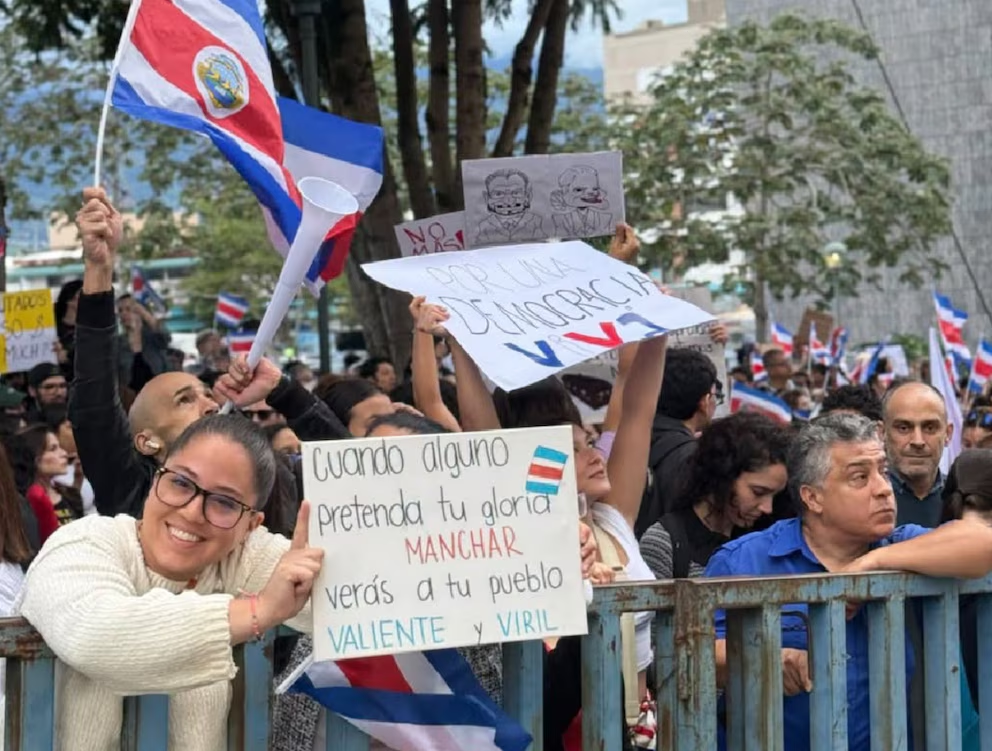
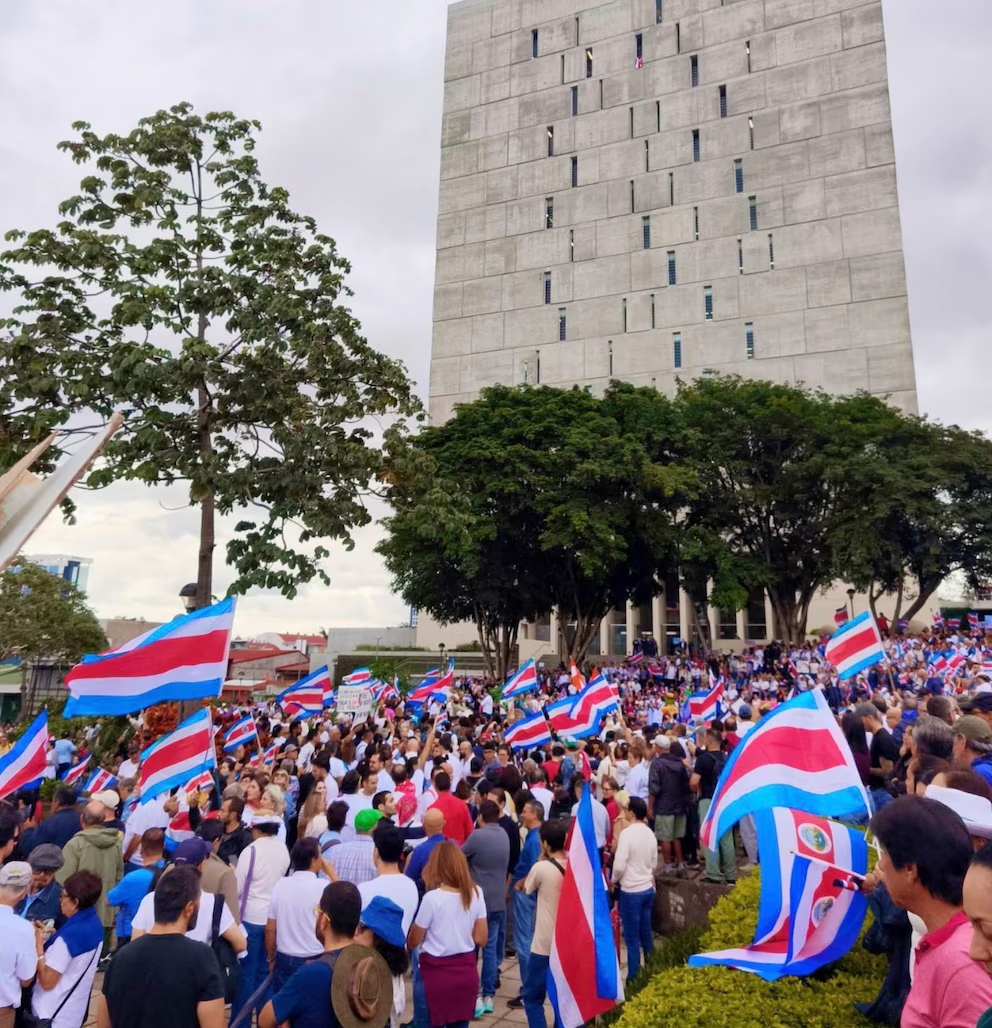
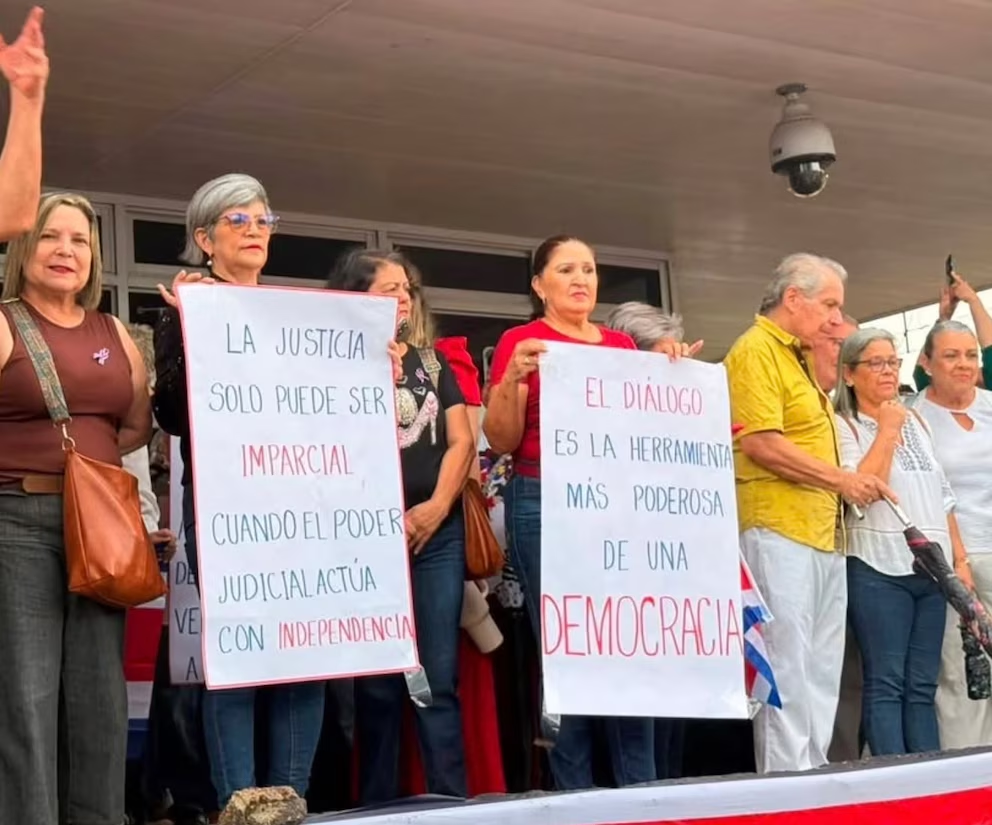
Q COSTA RICA — Waving Costa Rican flags and carrying signs and messages in defense of the institutions, thousands participated in the major national protest known as a “Plantón por la Democracia” that took place across Costa Rica on Thursday, August 6, 2026, starting at 4:00 p.m.
The major grouping was at the Plaza de la Democracia in San José, where protesters expressed their support for the Judiciary and rejected what they consider a growing confrontation between President Laura Fernández, Presidency Minister Rodrigo Chaves, and the justice system.
The gathering brought together citizens, including former presidents, legislators, and representatives of social organizations, academics, former public officials, and people without political affiliation, who agreed on the need to preserve the separation of powers.
The organizers of the event stated that the objective was not to support specific individuals or respond to partisan interests, but rather to call for the protection of democratic institutions and to ensure that conflicts between branches of government are resolved within the constitutional framework and through dialogue.
The demonstration was peaceful and without incident, while participants reiterated that Costa Rica’s democratic strength depends on mutual respect among the branches of government, the independence of the judiciary, and the full implementation of the rule of law.
Attorney General Carlo Díaz stated that he wants to live in a democracy. Former President Miguel Ángel Rodríguez (1998-2002) stated: “I am not against (Rodrigo) Chaves, I give him my support (to the demonstration) with all my heart”.
Spotted in the crowd was former president Luis Guillermo Solís. Opposition legislator and former first lady, Claudia Dobles, was greeted by the crowd as if she were the president of the country.
Using terms like “güichos”, “masoquistas” o “ingenuos” (fools, masochists, and naive), Chaves tried to undermine the event organized by various groups following days of intense attacks by the Executive Branch against the Judiciary, including budget cuts and accusations that went so far as to use the phrase “coup d’état” over a constitutional ruling to appoint substitute magistrates.
For her part, President Laura Fernández was unusually quiet on Thursday. Nor did the President comment on the news earlier in the day when Attorney General Diaz announced the opening of a case against Fernández and Chaves for illegal appointment of Katherine Tenori as director of the Fiscal Control Police (PCF) without having a police rank, as required.
The demonstration photos were gathered from social media platforms like Facebook, X, and Instagram, as well as websites including Crhoy.com and Diario Extra, and others.
Q COSTA RICA — The Judiciary registered a total of 28,104 requests for protection orders related to domestic violence during the first six months of 2026.
This figure represents 384 more than those registered between January and June of the previous year.
The situation also includes cases of sexual violence and femicides, violent deaths of women.
During the first quarter of 2025, the Public Prosecutor’s Office registered 3,260 victims of sexual violence. Girls and adolescents between the ages of 10 and 19 were the most affected group.
In addition, there are femicides. Between 2025 and June 10, 2026, 45 cases were officially recorded in the country: 36 during 2025 and nine in the first months of this year.
Furthermore, as of that date, 13 of the 22 violent deaths of women registered in 2026 remained under analysis, meaning some of these cases could later be classified as femicides.
These figures demonstrate the need for decisions and public policies to be based on scientific evidence and official statistics, according to specialists from the Universidad Estatal a Distancia (UNED).
The academics advocated for the use of concepts developed by various disciplines to understand the causes and manifestations of violence against women.
“Violence against women is widely documented by scientific evidence and national statistics. Concepts such as intersectionality, reproductive violence, and masculinities allow us to understand the factors that increase risk and guide better strategies for prevention, care, and punishment,” said Ana Rita Argüello, a researcher and professor in the Police Science program at UNED.
For her part, Zarelly Sibaja, head of the Gender Studies Institute at UNED, explained that the language used in scientific research allows us to recognize, measure, and understand different forms of violence and inequality.
“Naming the different manifestations of violence doesn’t create the problem; it allows us to recognize, measure, and understand it in order to confront it. When research identifies patterns and structural inequalities, it provides input for better protecting women and girls,” Sibaja added.
The statement came after Costa Rica’s delegation to the United Nations Human Rights Council rejected the use of some of these concepts.
The experts insisted that the public debate must consider the available evidence to strengthen institutional responses aimed at preventing, addressing, and punishing violence against women and girls.
Q COSTA RICA — To prevent tolls from becoming another traffic bottleneck, the Ministerio de Obras Públicas y Transportes (MOPT) is preparing a project to implement toll-free toll collection.
This system, known as “free flow” in other countries, essentially speeds up toll collection and, most importantly, eliminates the need for drivers to stop, thus improving traffic flow.
The plan is to install the systems at all toll plazas nationwide, including Ruta 27, according to Efraím Zeledón, head of the MOPT.
Zedón did not reveal the specific method to be used, but the RFID technology of the digital vehicle registration sticker — Marcahmo — that the Instituto Nacional de Seguros (INS) will implement starting in 2027 is compatible with photo enforcement and free flow toll systems, as the system records when a vehicle passes through a toll plaza.
An example is Panapass, installed in Panama, where the toll booths have devices to read the vehicle’s license plate and collect payment without forcing it to stop.
The system does not incorporate GPS or location tracking, but it does keep a record that the vehicle passed through that toll, as happens when paying by card or Quick Pass.
Currently, the only toll roads in the country are Ruta 32 and the Autopista Florencio del Castillo, managed by the Consejo Nacional de Vialidad (Conavi), and Ruta 27, operated by Globalvía.
The MOPT stated that Ruta 27 would be the first to be converted to a free-flow system because the company is interested in eliminating the bottlenecks caused by tolls, especially the Escazú toll plaza.
The tolls on Ruta 27 will be the first to use a “free flow” system with the new Marchamo RFID technology, so vehicles won’t have to stop to pay anymore.
Furthermore, the proposal includes plans for future road construction projects that will involve tolls. These include the expansion of the road to San Ramón and the concession of the Florencio del Castillo, which will have additional toll booths along its route.
However, the option to pay with cash will not be eliminated. MOPT Minister Efraím Zeledón assured that at least one booth accepting coins and bills will be maintained at all toll plazas. This will be done for users who do not wish to adapt to the new technology and in accordance with jurisprudence from the Constitutional Court.
Q COSTA RICA — In a charged exchange at Wednesday afternoon’s press conference, Frente Amplio legislator Edgardo Araya openly questioned the honesty of President Laura Fernández.
Araya, known for his outspoken style, did not hold back in his remarks. Amid the heated debate over pensions for former presidents, Araya questioned President Laura Fernández’s honesty, sparking a protest from the ruling party’s caucus that ended the day’s legislative session.
In his speech during the political oversight period, the Frente Amplio legislator from San Carlos said in a comment directed at Laura Fernández, “Yo creo que usted se hace la tontita” (I think you are playing dumb).
Despite the legisaltor’s attempts to apologize and claim it was a “misunderstanding”, the anger of the Partido Pueblo Soberano (PPSO) caucus was such that it simply ruined Wednesday’s legislative plenary session.
The events unfolded just as the afternoon’s session was beginning. Sibaja was the third to speak. Before him, Abril Gordienko López, of the Partido Unidad Social Cristiana (PUSC), addressed the risks of President Laura Fernández using the term “coup d’état,” and Claudia Dobles of the Coalición Agenda Ciudadana (CAC), called for Thursday’s demonstration at 4 p.m. in the Plaza de la Democracia (park in front of the Legislative building in downtown San José).
Then it was legislator Sibaja’s turn, who denounced the ruling coalition’s block of bill 24.793, the Frente Amplio’s proposal “that seeks to eliminate pensions for former presidents,” emphasizing that it would affect Rodrigo Chaves and Laura Fernández.
He pointed out that the current President will leave office at 43 years old with a pension of ¢4 million per month, despite not having specifically contributed to a pension fund for that benefit. Then, attempting to quote Fernández from her press conference Wednesday, he said, “I think she’s playing dumb, right? She’s being advised, I think that’s not the way to do it…,” but he was interrupted by an angry protest from the ruling party that ended the day’s legislative session.
During the presidential campaign, Fernández pledged to eliminate top-tier public sector “luxury pensions”, which would include pensions for former presidents.
However, during Wednesday’s press conference, when asked by the press whether these pensions should be eliminated, Laura Fernández actually defended the lifetime pensions of former presidents, marking a notable shift from her previous campaign promises.
Fernández stated that people who hold public office must contribute, just like any other worker, although she maintained that the Presidency has particular conditions that explain the financial recognition after leaving office:
“The office of President has a series of prerogatives distinct from many other public offices, and that is why a pension for former presidents is recognized worldwide. More than a pension, it is a form of recognition that, after having held this office, provides them with an income that allows them to maintain a sustainable standard of living, given that reintegration can be difficult.
“There are security issues, there are other important issues, but I believe it is relevant that these analyses be carried out, and I, for my part, as long as I can work and God grants me life and health, will do so,” said Fernández.
Q COSTA RICA — Costa Rica’s Foreign Ministry reiterated its recommendation on Tuesday to suspend all travel to the Middle East, given the ongoing tensions in the region and the risk of further escalation of the conflict, a situation that could lead to sudden airspace closures, mass flight cancellations, and a rapid deterioration of security conditions.
In a public notice, the Ministry of Foreign Affairs also urged Costa Ricans residing in countries in the region to remain attentive to official communications from local authorities and to prepare plans that would allow them to leave the region quickly should circumstances require it.
The Ministry of Foreign Affairs also reiterated that the possibilities of evacuating citizens from an armed conflict zone are “extremely limited,” and therefore recommended taking precautions well in advance and not waiting for the situation to worsen before making decisions.
The warning comes amid growing uncertainty in the Middle East. Over the past few months, the region has experienced a series of episodes of military and diplomatic tension that have led several governments to issue travel alerts for their citizens.
Costa Rica has even maintained similar recommendations since the beginning of this year and had previously asked travelers to suspend non-essential travel to several countries in the region due to the risk of the conflict escalating.
Concerns have intensified in recent days. Several U.S. embassies in the Middle East have issued alerts to their citizens advising them to consider leaving the region or to be prepared to do so immediately should hostilities escalate.
The warnings mention possible periodic airspace closures, flight cancellations, and further disruptions to international transportation services.
According to these reports, the tension is linked to the deteriorating relations between the United States and Iran and the possibility of renewed military confrontations, a scenario that has put governments, airlines, and international organizations on high alert.
The Costa Rican Ministry of Foreign Affairs has provided citizens with contact information for consular assistance in Israel, Qatar, and the United Arab Emirates, as well as the honorary consulates in Lebanon and Jordan.
Costa Ricans requiring assistance can contact the Consulate in Tel Aviv, Israel, via email at concr-il@rree.go.cr or by phone at (00 972) 3-613-5061. In Doha, Qatar, the following contact methods are available: concr-qa@rree.go.cr, the emergency number +(974) 3142-7178, and the general inquiries number +(974) 4498-0094.
The Consulate in Abu Dhabi, United Arab Emirates, can also be reached via email at concr-ae@rree.go.cr or by phone at +971 2 554 7458 and +971 55 564 7098. The honorary consulates in Beirut, Lebanon, and Amman, Jordan, remain open.
The government asked Costa Ricans residing in the Middle East to stay tuned to official information and prepare an exit plan in case the situation worsens.
Q COSTA RICA — Agents from the San José National Central Bureau of INTERPOL, part of the Organismo de Investigación Judicial (OIJ), arrested a U.S. citizen on Tuesday, wanted by U.S. authorities for his alleged involvement in financial crimes related to fraud and money laundering.
The man, identified as Dunning, is 46 years old and was located on a public street in the Pavas sector of San José, following a series of investigations conducted by judicial agents to locate him in Costa Rica.
According to the OIJ, the man had an active international arrest warrant and was wanted by the U.S. Federal Bureau of Investigation (FBI), which had requested international cooperation for his location and arrest.
After confirming his location, INTERPOL agents in San José proceeded with the arrest of the American, who was taken into custody by national authorities to begin the corresponding legal proceedings.
The detainee will be transferred before the competent judicial authority, where the extradition request from the United States will be processed. At this stage, authorities will analyze the documentation submitted by the requesting country and continue with the process established by Costa Rican law.
This case adds to the international cooperation efforts carried out jointly by the OIJ, INTERPOL, and foreign police agencies to locate individuals wanted for crimes committed outside the country or who face pending legal proceedings in other jurisdictions.
Judicial authorities explained that international arrest warrants allow for coordinated efforts between different countries to prevent individuals under investigation or wanted for serious crimes from evading justice by moving to other territories.
In this case, the investigation determined that Dunning was in Costa Rica, so specialized INTERPOL agents carried out the operation to arrest him.
Although the FBI is seeking his extradition for alleged fraud and money laundering offenses, the details of the international charges, the evidence presented by U.S. authorities, and the steps to be taken by the involved institutions will be determined during the legal proceedings.
Money laundering is one of the crimes that generates the most attention for international law enforcement agencies due to its connection with illicit financial transactions, concealment of the origin of funds, and the use of mechanisms to introduce illegally obtained money into the formal economic system.
In recent years, the INTERPOL National Central Bureau in San José unit has conducted various operations within the country to arrest foreigners and Costa Ricans with active international alerts, in coordination with national judicial authorities and foreign law enforcement agencies.
Q COSTA RICA — With at least 569 head of cattle spread across remote farms, some within Tortuguero National Park, the organization of Alejandro Arias Monge, alias “Diablo”, Costa Rica’s most wanted criminal, set up a money laundering scheme that, according to the indictment from the Deputy Prosecutor’s Office for Drug Trafficking, operated between November 2020 and December 2023 in four stages and involved a network of family members, front men, and shell companies.
The case, known as the “Colorado case”, does not directly investigate drug trafficking or contract killings, but rather the financial structure that transformed drug trafficking profits into seemingly legitimate assets.
The case gained momentum on December 18, 2023, when more than 600 OIJ agents carried out simultaneous raids in Limón, Heredia, Alajuela, and San José, arresting 29 suspects.
Arias Monge had been a fugitive for almost a decade and was captured on July 24, 2026, in San Bernardino de Horquetas, Sarapiquí, after a shootout with OIJ agents during a massive raid dubbed “Operación Némesis”.
Police forces and Diablo’s heavily armed security ring exchanged over 2,500 rounds of ammunition. One of Diablo’s key criminal accomplices, known by the alias “Cocuaimo”, was shot and killed by police tactical units.
Despite the heavy resistance, authorities successfully captured “Diablo” alongside another prominent cartel figure, Jonathan Pérez Méndez (alias “Tan”).
How the money entered the system
The indictment describes the placement of the money as the first link in the chain. According to the Public Prosecutor’s Office, the organization introduced drug trafficking proceeds through accounts, transfers, and electronic transactions designed to hinder tracing.
César Quirós is listed in the case file as the administrator of informal loans using the “gota a gota” (loan sharking) method. One of his accounts received more than US$345,746 during the period under investigation, primarily through the SINPE Móvil mobile payment system, deposits, and other mechanisms. The funds were mixed with income from commercial activities to cover their tracks.
The Use of a Restaurant
The second stage consisted of mixing the illicit money with income from legitimate businesses. Anyersson Villalobos Ocampo, identified by the Prosecutor’s Office as a mid-level manager of the organization, managed the El Ranchito restaurant for this purpose.
According to the case file, Villalobos received more than US$26,426 in transfers through platforms like SINPE and then made hundreds of transfers to third parties totaling more than US$29,949, actions that the Public Prosecutor’s Office attributes to concealing the origin of the money.
Companies and Third Parties to Register Assets
The third stage consisted of registering assets in the names of people who were not their actual owners. The indictment details that the organization created companies and used family members and close associates to register assets and project an appearance of legality.
This same logic was also applied to livestock.
The court document indicates that the animal brands and movement permits were registered in the names of Arias Monge’s father, Rafael Ángel Arias Azofeifa; his partner, Charlyn Pamela Jiménez Villalobos; his sister, Gelen Arias Monge; and other collaborators. The animals were transported to remote farms where the organization controlled territory and mixed with livestock of legal origin to hinder their tracking.
Illegal Lottery, Cattle, and Loans
The fourth phase combined three activities outside the formal financial system. The Prosecutor’s Office identified at least 18 clandestine lottery sales points linked to the organization, operated, according to the indictment, by Gelen Arias Monge, the criminal leader’s sister.
Charlyn Jiménez Villalobos managed a cattle breeding and dairy production business to launder drug money with seemingly legitimate income. The indictment adds that he opened and managed accounts at a private bank and a state-owned bank, through which more than ¢11.5 million colones was deposited, and that he made multiple transfers, debit card payments, and SINPE transactions to distribute the funds.
The prosecution also attributes to him a role of “empirical accountant”: he kept detailed records of income and expenses with full knowledge of the illicit origin of the money, according to the Public Prosecutor’s Office.
Cattle Theft Within the Scheme
The prosecution alleges that some of the cattle were not purchased, but stolen through violence. On November 23, 2022, an armed group, which, according to the case file, acted under Arias Monge’s orders, stormed the Chu Farm in Horquetas de Sarapiquí, gagged and tied up five people, and stole 16 branded head of cattle, as well as ¢280,000 in cash.
Almost a year later, on October 26, 2023, another attack on two adjacent farms in Aguas Gatas de Guácimo included the kidnapping of a caretaker for almost six hours and the theft of 13 head of cattle.
The largest lot identified in the case, 122 head of cattle—82 buffalo and 40 cows—was registered to Yerlin Sánchez Guzmán and was located on a property of more than 1.3 million square meters registered to the Port Administration and Economic Development Board of the Atlantic Slope (Japdeva), within the Tortuguero National Park area.
Bridge Accounts and Detected Assets
The financial experts assigned to the case detected a recurring pattern: money entered the accounts and left almost immediately, without accumulating significant balances. According to the Prosecutor’s Office, this behavior is due to the deliberate use of “bridge accounts,” financial products designed to receive, move, and disperse funds quickly.
Investigators also noted a discrepancy in the assets of several defendants: they acquired high-value assets without registering income or employment to justify them. Among the assets identified in the case are properties, jewelry, and a fleet of 13 armored vehicles.
Eight people remain in pretrial detention in the Colorado case: Andry Brenes Jácamo, Anyersson Villalobos Ocampo, Jafet Steven Murillo Cano, Yohel Fabián Gutiérrez Cisneros, Jorge Antonio Portuguez Ferreto, a police officer accused of aiding the organization, Marlon Parra Parra, Michael Raúl Jiménez Zúñiga, and Yerlin Sánchez Guzmán.
Arias Monge’s father, partner, and sister remain free after the court rejected a request to extend their pretrial detention for six months.
Q COSTA RICA — In Costa Rica, money laundering has become a growing challenge, with criminal networks moving millions through complex schemes that infiltrate the economy and distort financial systems.
According to recent reports, the amount of money seized in laundering operations has doubled in 2026, highlighting the scale and sophistication of these illegal activities.
Criminal groups in Costa Rica use various methods to clean illicit funds. They often disguise the origins of money gained from activities such as drug trafficking, corruption, and fraud by funneling it through legitimate businesses or financial channels.
These networks exploit weaknesses in regulatory oversight and economic sectors to integrate dirty money into the formal economy without raising suspicion.
One common tactic involves layering transactions to obscure the money trail, including the use of cash-heavy businesses and shell companies. In some cases, digital financial systems and pyramid schemes also serve as conduits for laundering, complicating detection efforts further.
The impact of money laundering extends beyond crime—it threatens the stability of the financial system and undermines economic development by allowing criminal organizations to gain influence in key sectors.
Authorities have increased efforts to counteract these networks, including greater financial intelligence and enforcement actions, which have led to the recent surge in seizures.
Despite these efforts, experts warn that the evolving tactics of laundering networks require continuous adaptation of legal frameworks and cooperation between public and private sectors to effectively combat the problem.
For a deeper look into how these criminal networks operate and the ongoing responses in Costa Rica.
The article “¿Cómo se lava dinero en Costa Rica? Así operan las redes criminales que mueven millones” from El Financiero explains how criminal networks operate in Costa Rica.
For a detailed understanding of the mechanisms and impact of money laundering in Costa Rica, the full analysis is available at El Financiero Costa Rica elfinancierocr.com
RICO’s Q (OPINION) Several days have passed since the news of the “coup d’état” went viral.
What has happened since?
International public opinion has turned its back on Laura Fernández and has not supported her so-called “coup d’état.”
Look at the number of governments that have internationally supported Laura Fernández’s claim of a “coup d’état”: 0
Even the State Department under Donald Trump and his Secretary of State, Marco Rubio, did not support or express solidarity with Laura Fernández’s “coup d’état” claim.
Furthermore, neither the regime of Nayib Bukele nor the government of Javier Milei has supported or expressed solidarity with the “coup d’état” that Laura claims to have suffered.
This demonstrates that no one in the international community in Latin America, Europe, or North America finds Laura Fernández’s words credible.
At home, three constitutional lawyers consulted by CRHoy rejected the notion that the Constitutional Court’s decision to provisionally extend the appointment of substitute magistrates could be described as a “coup d’état.”
Legal experts Rodolfo Piza, Rodolfo Brenes, and Julio Jurado agreed that the measure seeks to guarantee the functioning of the Constitutional Court while the Legislative Assembly resolves the election of the nine alternate magistrates, pending since December 2025.
What is the conclusion?
Laura Fernández and Rodrigo Chaves made a fool of themselves internationally by “denouncing” a fictitious “coup d’état,” revealing themselves as charlatans with very little credibility.
Unfortunately, this further damages Costa Rica’s international reputation, which is already being increasingly tarnished by the President and former President slash Minister of Finance and the Presidency.
Q COSTA RICA — The Ministerio de Obras Públicas y Transportes (MOPT) — Ministry of Public Works and Transportation – published a notice on its official platforms reminding drivers of the vehicle requirements for road use.
According to the official information, the requirements are:
Speedometer in km/h.
Lights in good condition: High beams, low beams, brake lights, reverse lights, turn signals, and hazard lights.
Windshield wipers: They must function perfectly and never create visual obstructions.
Front and rear windshields.
Front and rear bumpers.
If you were in an accident and your windshield was damaged, you shouldn’t drive until you buy or have a new one imported. The same applies to the bumper.
Steering wheel: It should be located on the left or in the center of the passenger compartment.
Seat belts must be three-point seat belts.
Brakes and parking brake.
Rearview mirrors.
Horn: It must emit a clear and audible sound within the permitted decibel levels.
Muffler: Essential for controlling and reducing the emission of noise and gases.
Additional Safety and Traffic Elements:
Besides the vehicle’s physical condition, remember to always carry up-to-date documentation, including your ID, valid driver’s license, and vehicle registration sticker.
It is also mandatory to carry emergency equipment such as a charged fire extinguisher, warning triangles or flares, and tire-changing tools.
Obligations of the MOPT
Though not a driver/vehicle owner responsibility, the MOPT should consider certain road features key to driving safely. Things like lane markings, lighting, and signage, among others. It’s frustrating—and dangerous—when you’re driving along and your lane just vanishes without warning.
Q COSTA RICA — The Nicoya Peninsula, in Costa Rica’s Guanacaste province, recognized as one of the world’s five official Blue Zones, is currently home to 61 centenarians and could reach 73 by the end of 2026.
Among them is José Flores Flores, born on July 11, 1907, according to the Registro Civil (Costa Rican Civil Registry), whose family is seeking official recognition of him as the oldest man on the planet.
If the certification is successful, Flores would surpass the current male record of 116 years by more than two years.
The oldest living person currently recognized is Ethel Caterham from England, who will turn 117 on August 21. The absolute record is held by Frenchwoman Jeanne Calment, who died in 1997 at 122 years and 164 days old.
Poverty that doesn’t shorten life
Nicoya is the poorest of the five “Blue Zones” in the world, a distinction it shares with Okinawa (Japan), Sardinia (Italy), Ikaria (Greece), and Loma Linda (California).
This condition, far from contradicting its longevity, makes it the most perplexing case of the group.
“We were poor, but we always ate well,” a centenarian named Panchito Villegas told El País in the municipality of Nicoya. The phrase sums up the paradox that researchers have been trying to explain for two decades.
Jorge Vindas, founder of the Nicoya Peninsula Blue Zone Association, clarifies the concept of deprivation: these are generations born at the beginning of the 20th century who grew up with physical labor, sufficient basic food, community life, and strong family networks.
“Let’s define poverty,” he proposes, before pointing out that these conditions, combined with a faith-based environment that helped them cope with losses such as the death of their own children, wove a way of life that money cannot guarantee.
José Flores claims that getting up early and eating corn cooked with ash has helped him live so long; several scientists have studied his case.
How Nicoya Entered the Longevity Map
The academic path that led this region to international recognition began in 2005, when demographer Luis Rosero-Bixby, from the Central American Population Center at the University of Costa Rica, presented a paper in France on the low mortality rate of older adults in the country.
Belgian demographer Michel Poulain, one of the creators of the “blue zone” concept, asked him if there were even more exceptional areas within Costa Rican territory.
Rosero confirmed that there were: in the northwest of the country, older adults were dying at rates 20% lower than in the rest of the nation. A study published in the journal Demography in 2008 clarified the magnitude of the phenomenon: the probability of a 60-year-old man reaching 100 in Nicoya was four times higher than for the rest of Costa Ricans, seven times higher than for a Japanese person, and 10 times higher than for an American.
Poulain and journalist Dan Buettner, from National Geographic, conducted expeditions to the peninsula in 2007 and 2008 to rule out the possibility that this was a case of exaggerated age predictions without reliable documentation. They concluded that the estimates were valid and added Nicoya to the official list of Blue Zones.
Corn, Water, and Longer Telomeres
The region’s traditional diet offers some clues. The ancestral consumption of corn—particularly the yellow or “pujagua” variety, with its purple and black hues—is accompanied by a process called nisquesado: cooking the kernels in water with ash from the hearth to remove the husk.
This technique increases the calcium content of the food, a mineral that also appears in high concentrations in the local water and which could be related to the lower incidence of hip fractures in old age. Rosero cautions that these are hypotheses, not conclusions.
What has been confirmed is that people over 60 in the area have longer telomeres than average. These structures, located at the ends of chromosomes, function as indicators of biological aging: the longer they are, the greater the additional life expectancy. “For some reason, in this geographic area, they have longer telomeres, like 10 extra years,” Rosero told El País.
The research also detected a higher percentage of Chorotega indigenous ancestry among the oldest survivors, people who overcame serious illnesses in the first half of the 20th century, before the state expanded basic health services.
If the certification is successful, Flores would surpass the current male record of 116 years by more than two years. The oldest living person currently recognized is Englishwoman Ethel Caterham, who will turn 117 on August 21. Photo from El País.
The story of Flores and his shadowed areas
Benerando López, a farmer from Sámara who at 99 years old was still growing rice for his family’s consumption, embodies today, at 103, the typical profile of a centenarian from Nicoya: blind, but with a health that surprises those who visit him.
His wife walks barefoot through the plot of land. A few kilometers away, in Obandito de Sardinal, Flores lives in a house made of wood and sheet metal, cared for by his family.
The Flores case is generating both enthusiasm and scientific caution. Spanish researcher José Antonio Rabadán, from the University of Alicante, is working with the family to submit the dossier to the Gerontology Research Group (GRG), a U.S. organization that validates supercentenarians—people over 110 years old—before any potential Guinness World Records recognition.
The dossier includes the birth certificate and a baptismal certificate signed by Bishop Luis Leipod in 1907.
Rosero, however, remains reserved. He points out that there is a gap in the documentation between the registered birth year and 1956, when Flores registered his first child.
“It’s very rare for a man from the coast to have his first child at 50 years old,” the demographer observed. The family explains this gap as years of work in other regions of the country, far from their hometown.
Rosero goes further in his concern: “The problem with promoting Don José’s story is that, if it’s revealed internationally that it’s not true, it casts a shadow on all the serious work we’ve done to document Nicoya’s exceptional longevity.”
José Flores claims that getting up early and eating corn cooked with ash has helped him live so long; several scientists have studied his case.
An advantage that diminishes with time
Rosero’s most recent research, published in 2023 in Demographic Research, adds a warning that the El País article itself includes: generations born on the peninsula after 1930 do not have the same longevity rates as their predecessors. By 2010, updated analyses indicated that the original Blue Zone had shrunk to approximately a quarter of its initial size.
Changes in lifestyles, accelerated by the region’s economic transformation, explain much of this erosion. Nicoya’s economy now depends on tourism and real estate development, driven by thousands of visitors and foreign residents who arrive, in part, attracted by the very secret that made it famous.
The irony is clear: the search for the lifestyle that made Nicoya long-lived could be one of the factors erasing it.
Q COSTA RICA — Various social organizations, labor unions, and citizen groups in Costa Rica have called on the public to participate in the “Sit-ins for Democratic Justice,” a demonstration to be held this Thursday, August 6, simultaneously in San José and Liberia, Guanacaste.
The purpose of the demonstrations is to express support for the rule of law and to reject what they consider an escalation of attacks against the country’s democratic institutions.
The ruling party is pushing a package of reforms that seeks to change the election of judges, reorganize the judiciary, and expand extradition in Costa Rica.
The call to action was issued by the Autonomous Collective for Social Resistance and the Communication and Logistics Commission of the Decentralized Organization for the Defense of the Instituto Costarricense de Electricidad (ICE) – State power and telecom, who invited social organizations, associations, unions, student movements, public institutions, activists, and the general public to join the event.
The organizers indicated that the objective of the mobilization is to defend Costa Rican democracy, the Political Constitution, and the independence of the branches of government, as well as to express support for public institutions and the rights of the working class.
The call to action also includes an appeal to those who defend human rights, freedom of the press, the separation and independence of powers, and the strengthening of democratic institutions.
“Today, more than ever, the defense of our democracy, our public institutions, and the rule of law requires the unity, solidarity, and commitment of all of society,” the organizations stated.
Authorities dismantle a network that paid vulnerable women, whom they called “babies,” to smuggle drugs into six Costa Rican prisons
The event will take place between 4:00 p.m. and 8:00 p.m. at two locations in the country: Democracy Plaza in San José and Mario Cañas Ruiz Park in Liberia.
The organizers also expressed their rejection of political violence, disinformation, and what they describe as constant attacks directed against public institutions and various sectors of the country.
In addition to the institutional component, the movement seeks to highlight concerns related to the cost of living and the impact of budget cuts. In their statement, they maintain that it is necessary to halt the reductions in resources that, they claim, affect areas such as justice, security, education, health, and social welfare programs.
They also called for guaranteeing the population’s access to basic necessities and maintaining the protection of public services, natural resources, and state assets.
The organizations also requested financial, logistical, and material support for the event, although they emphasized that the main form of support will be citizen participation during the day.
The organizers state that the event aims to send a message of support for democracy and rejection of the attacks against public institutions expressed in comments made by the President and Minister of the Presidency of Costa Rica. Credit: Screenshot from the Presidency of the Republic broadcast.
The organizers state that the event aims to send a message of support for democracy and rejection of the attacks against public institutions expressed in comments made by the President and Minister of the Presidency of Costa Rica. Credit: Screenshot from the Presidency of the Republic broadcast.
The demonstration comes amid growing political confrontation between the Government and the Judiciary, following a ruling by the Constitutional Chamber on the appointment of substitute magistrates that provoked strong criticism from the ruling party and the subsequent announcement of a series of constitutional reforms related to the functioning of the judicial system.
Although the call to action doesn’t directly reference a specific event, the organizers maintain that the current moment demands broad citizen participation to protect democratic institutions and preserve the rule of law.
The event is open to the public, and the organizers hope for participation from various sectors of society under the slogan: “Because democracy isn’t inherited: it’s defended.”
Q COSTA RICA — The United States has delivered the final legal guarantees required to proceed with the extradition of the Costa Rican Gilbert Bell Fernández, known as “Macho Coca,” bringing his transfer to New York closer to reality.
The US Embassy in Costa Rica provided these assurances as part of the formal extradition process, which is now advancing toward completion.
Among the main guarantees is the commitment to try him only for the crime for which extradition was granted. Likewise, U.S. authorities assured that they will not seek a life sentence or a term exceeding 50 years in prison, the maximum allowed under Costa Rican law for this type of case.
The documentation also establishes that Bell Fernández will not be subjected to torture and that the procedural guarantees recognized by the national legal system will be respected, including recognition of the time he has spent detained in Costa Rica while his extradition process was being resolved.
Regarding the death penalty, the United States did not make an express commitment not to seek it, because that punishment is not contemplated for the crime attributed to the Costa Rican under U.S. federal criminal law.
Gilbert Bell Fernández is a figure wanted in connection with serious criminal charges, and his extradition represents a significant step in international cooperation against organized crime.
According to the indictment, “Macho Coca” led an organization dedicated to international cocaine trafficking between 2022 and 2023
According to the indictment, Gilbert Bell Fernández allegedly led a transnational organization dedicated to the storage, distribution, and export of large shipments of cocaine between March 2022 and August 2023.
The investigation maintains that the group used maritime routes to transport cocaine from South America to Costa Rica, from where it was subsequently shipped to the United States and Europe.
The Costa Rican government is working alongside US authorities to ensure the legal framework and procedures are in place to facilitate the extadition.
This development follows a series of requests and legal actions by the U.S. aimed at extraditing individuals linked to drug trafficking and organized crime networks operating across borders.
The case of “Macho Coca” underscores the ongoing efforts between the two countries to combat illicit activities and bring alleged perpetrators to justice.
With the final guarantees now submitted, if the extradition goes through, “Macho Coca” will become the fourth Costa Rican extradited to the United States under the constitutional reform that allows the extradition of nationals for drug trafficking offenses, after former magistrate Celso Gamboa, Edwin Danney López Vega, and Johnny Angulo, known as “John Cadenas”.
Last week, the Government of Laura Fernández filed a legislative bill for a constitutional reform to expand Article 32 of the Constitution, allowing the extradition of Costa Rican citizens for a wide range of international and organized crimes beyond the current exceptions of drug trafficking and terrorism.
Q COSTA RICA — The Ministry of Health called on the population to reinforce preventive measures against the circulation of various respiratory viruses in the country, with the aim of reducing contagion and protecting the most vulnerable.
According to epidemiological surveillance, COVID-19 continues to circulate alongside other respiratory illnesses like rhinovirus and influenza, occasionally seeing brief upticks in hospitalizations during the rainy season.
Specifically, for epidemiological week 29, from July 19 to 25, a total of 126 confirmed cases were reported, representing a 34.04% increase compared to the previous seven days when 94 cases were registered.
An average of 28 people were hospitalized (28 in wards and 0 in the ICU). This represents a 55.56% increase compared to the previous week.
During this period, five deaths associated with this disease were reported.
Authorities recommend the following to the public:
Keep your vaccination schedule up to date.
Wash your hands frequently.
Cover your mouth and nose when coughing or sneezing.
Avoid contact with sick people and crowds, especially with young children and older adults.
Prefer well-ventilated spaces.
Do not attend activities if you have respiratory symptoms.
Seek medical attention promptly.
“The Ministry of Health maintains ongoing epidemiological surveillance and reiterates its call for the public’s shared responsibility to reduce the transmission of these viruses and protect everyone’s health,” they stated in a press release.
Q COSTA RICA — The official complaint filed by the ruling party against four magistrates of Costa Rica’s Sala IV (Constitutional Court) is at risk of being paralyzed in the Corte Plena (Full Court) due to the lack of appointment of substitute magistrates.
The four magistrates in question are currently under a complaint and must therefore recuse themselves from the Full Court proceedings.
However, because substitute magistrates have not been appointed to fill their places, the full Court cannot properly convene or reach a quorum to process the complaint.
This procedural deadlock means the official complaint—initiated by the government and the ruling party following a controversial court ruling on magistrate substitutions—may stall indefinitely. The complaint accuses the magistrates of prevarication related to their decision on the matter of magistrate replacements, which the government strongly opposes.
Without substitute magistrates to replace those involved in the complaint, the Full Court remains incomplete and unable to deliberate on this case. This situation highlights a critical administrative gap that is limiting the judiciary’s ability to address politically sensitive disputes within its own ranks.
In summary, the ruling party’s complaint against the four Sala IV magistrates risks being frozen in the Full Court due to the absence of appointed substitutes, leaving the case in limbo for now while the judicial system awaits a resolution on these appointments.