Q COSTA RICA — The official complaint filed by the ruling party against four magistrates of Costa Rica’s Sala IV (Constitutional Court) is at risk of being paralyzed in the Corte Plena (Full Court) due to the lack of appointment of substitute magistrates.
The four magistrates in question are currently under a complaint and must therefore recuse themselves from the Full Court proceedings.
However, because substitute magistrates have not been appointed to fill their places, the full Court cannot properly convene or reach a quorum to process the complaint.
This procedural deadlock means the official complaint—initiated by the government and the ruling party following a controversial court ruling on magistrate substitutions—may stall indefinitely. The complaint accuses the magistrates of prevarication related to their decision on the matter of magistrate replacements, which the government strongly opposes.
Without substitute magistrates to replace those involved in the complaint, the Full Court remains incomplete and unable to deliberate on this case. This situation highlights a critical administrative gap that is limiting the judiciary’s ability to address politically sensitive disputes within its own ranks.
In summary, the ruling party’s complaint against the four Sala IV magistrates risks being frozen in the Full Court due to the absence of appointed substitutes, leaving the case in limbo for now while the judicial system awaits a resolution on these appointments.
Q COSTA RICA — A computer system outage on Saturday, August 1, caused delays in immigration control processes nationwide, especially at Juan Santamaría International (San José) Airport, forcing the cancellation of a flight.
After the initial announcement of the system outage around noon, the problems with the immigration control system escalated. It wasn’t until 3:10 p.m. that immigration reported the system had been restored.
Not only was the JetBlue flight canceled, but 36 other passengers missed their flights.
Service continued to be provided following established protocols for these types of situations.
According to the Judicial Branch’s DTIC (Department of Information and Communications Technologies), they had scheduled maintenance on their internet connections, which not only affected internal services but is also impacting immigration services.
This is the second time in a month that such an incident has occurred. On July 12, a similar situation occurred at the airport terminal.
This system failure impacts the entry and exit of people at airports and other border crossings.
Daniel Ortega, Nayib Bukele, Hugo Chavez, Nicolas Maduro. Collage created by Grok
Q COSTA RICA — In Latin America, the transition from democracy to autocracy has evolved from traditional military coups to “autocratic backsliding,” where democratically elected civilian leaders systematically dismantle democratic institutions from within to consolidate absolute power.
In recent years, political analysts have been sounding the alarm over an unsettling trend. The process is often subtle, marked by six key signs that signal a democracy’s slow unraveling and transformation into a dictatorship.
First, the construction of a crisis combined with an exclusive leadership style takes hold. Leaders exploit or even manufacture crises to justify extraordinary measures, presenting themselves as the only solution. This leadership approach sidelines opposition and fosters polarization, creating an “us versus them” dynamic that weakens social cohesion.
Second, these leaders engage in the delegitimization and attack of institutional checks and balances. Courts, legislatures, and independent bodies that could restrain executive power are painted as enemies of the people or corrupt entities. By undermining these counterweights, leaders clear the path for unchecked authority.
Third, power becomes increasingly concentrated. The ruling faction captures institutions and decision-making processes, turning once neutral organs into tools for maintaining control. This centralization dismantles democratic mechanisms designed to distribute power and uphold accountability.
The fourth sign is the erosion of democratic norms and the rule of law. Legal frameworks are manipulated or ignored to serve the interests of those in power, often under the guise of expediency or national security. This undermines citizens’ rights and erodes trust in the justice system.
Fifth, there is a systematic dismantling of free press and civil society. Independent media outlets face censorship, harassment, or closure, while NGOs and activists are portrayed as threats or foreign agents. Silencing dissent narrows the space for public debate and scrutiny.
Finally, the political landscape becomes dominated by fear and repression. Political opponents, protesters, and critics are targeted through intimidation, legal persecution, or violence. This atmosphere stifles opposition and consolidates the authoritarian grip.
Experts emphasize that these signs rarely appear overnight. Instead, democracies erode gradually, with each step paving the way for the next until the point of no return is reached. Recognizing these warning signs early is crucial for citizens and institutions committed to preserving democratic governance.
This analysis draws on recent cases worldwide, highlighting how electoral mandates have been exploited to chip away at democratic foundations. The message is clear: democracy must be actively defended, or it risks slipping away under the guise of stability and order.
These stages collectively reveal how leaders elected democratically can gradually dismantle democratic norms and institutions, paving the way for authoritarian regimes.
Recognizing these warning signs is crucial to safeguarding democracy before it fully erodes into dictatorship
For a deeper understanding of these six warning signs and their implications, see La Nacion’s full report here.
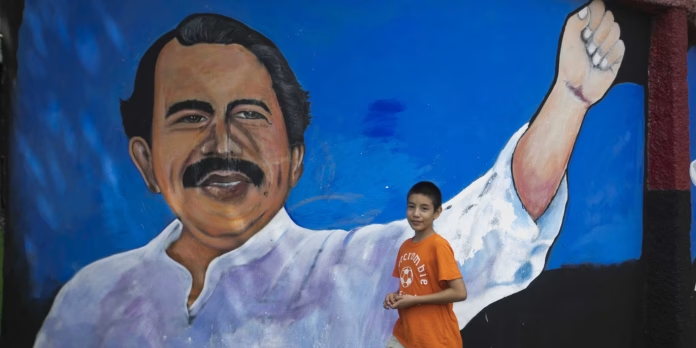
Q24N — For decades, Daniel Ortega was surrounded by men who were key figures in the armed struggle against the Anastasio Somoza dictatorship and in the triumph of the 1979 Sandinista Revolution.
Many of them took up arms, risked their lives in combat, and held some of the most important positions in the new government. They were considered heroes of the revolution and pillars of the Frente Sandinista de Liberación Nacional (FSLN) — Sandinista National Liberation Front.
However, the passage of time transformed several of these former comrades into enemies of the very power they helped establish. Today, some have died in state custody, others remain imprisoned, and several were sidelined from the inner circle of power by the very leadership they helped consolidate.
One of the most striking cases is that of Commander Hugo Torres Jiménez.
In December 1974, he participated in the historic guerrilla operation that led to the release of Daniel Ortega and other Sandinista prisoners. Ortega had been implicated in the murder of National Guard Sergeant Gonzalo Lacayo and was serving a seven-year prison sentence for his participation in the 1967 assault on the Kennedy branch of the Bank of London in Managua.
Hugo Torres was one of the men who risked his life to secure Ortega’s release and later fought as a guerrilla commander until the triumph of the Sandinista Revolution in 1979. He was part of the leadership that helped establish the new revolutionary government and for years was a respected figure within the historical Sandinista movement.
History took an unexpected turn more than four decades later. In June 2021, Hugo Torres was arrested during a wave of arrests targeting opposition members, former guerrillas, journalists, businesspeople, and presidential hopefuls. The regime accused him of allegedly “undermining Nicaragua’s independence, sovereignty, and self-determination,” as well as promoting foreign interference, invoking Law 1055. He remained imprisoned in solitary confinement, and his health progressively deteriorated while he was in state custody.
On February 12, 2022, he died without ever regaining his freedom. The commander who had risked his life to free Daniel Ortega ended up dying in a prison run by the government of the same man he had helped to release from prison decades earlier. For many, his case represents the greatest irony of Sandinismo: the man who helped establish the revolutionary project ended up becoming one of its most emblematic victims.
Another case that shook even the ranks of Sandinismo was that of Humberto Ortega, Daniel Ortega’s younger brother and founder of the Ejército Popular Sandinista (Sandinista People’s Army).
After the triumph of the revolution, he was the new government’s chief military strategist and played a decisive role in organizing the Armed Forces during the 1980s. For a long time, he was considered one of the most influential men in the country. However, as the years passed, he began to distance himself from the political course adopted by his brother.
In interviews and public statements, he warned that Nicaragua should prepare for a democratic transition and questioned the concentration of power around Daniel Ortega and Rosario Murillo. Shortly afterward, he was placed under house arrest, isolated from public life, and under strict surveillance. Not even being the president’s brother prevented him from being imprisoned. He died months later, demonstrating that the regime made no exceptions when it perceived dissent within its own family circle.
The purge also reached Bayardo Arce Castaño, one of the nine historical commanders of the National Directorate of the Sandinista Front and for decades considered Daniel Ortega’s main economic advisor.
Arce was one of the most powerful figures in the regime and one of the main links between the government and the business sector. His name was also linked for years to the controversies surrounding the so-called “Sandinista piñata,” a process by which numerous leaders of the Sandinista National Liberation Front were accused of appropriating state properties, companies, and assets after leaving power in 1990. However, after decades at the top of the power structure, he eventually fell from grace.
The regime itself investigated him, arrested him, and subsequently charged him with money laundering and defrauding the state. He was held incommunicado for months, and images later released showed a clear decline in his physical health, increasing concerns about his well-being. It was paradoxical that one of the men who had defended the government for so many years and was one of its key operatives ended up being prosecuted and imprisoned by the very power he had helped to consolidate.
The list also includes Carlos Fonseca Terán, son of Carlos Fonseca Amador, founder of the Sandinista National Liberation Front. For years, he was one of the leading ideologues of Sandinismo, a writer, and a close associate of the regime. His surname represented one of the revolution’s most significant historical symbols. However, he too was eventually caught up in the internal purge.
He was arrested and removed from public life amidst a growing climate of distrust toward former Sandinista leaders. His case made it clear that the regime no longer distinguished between historical commanders, relatives of the founders, or former close collaborators when it perceived internal differences or risks to its absolute control of power.
The cases of Hugo Torres, Humberto Ortega, Bayardo Arce, and Carlos Fonseca Terán share a common denominator: none of them were traditional opponents of Sandinismo.
On the contrary, they were all part of the revolution, shared years of struggle with Daniel Ortega, held positions of enormous power, and, at different times in their lives, supported the Sandinista leader when he needed it most.
They risked their freedom, their careers, and even their lives for a political project they helped establish. However, as the years passed, they ended up being caught by the very power structure they helped build. Hugo Torres died in state custody; Humberto Ortega spent his last months under house arrest and in isolation; Bayardo Arce was arrested and prosecuted by the very regime of which he was one of the most trusted men; and Carlos Fonseca Terán also ended up imprisoned.
For many, these cases show that neither loyalty, nor decades-long friendship, nor family ties guaranteed protection when differences arose with the leadership of Daniel Ortega and Rosario Murillo.
The story of these former Sandinista commanders and leaders paints a picture that is difficult to ignore. Men who fought together, who shared trenches, who helped free Daniel Ortega from prison, who contributed to the triumph of the Sandinista Revolution and helped establish the new revolutionary government, ended up imprisoned, persecuted, or ostracized by the very power they helped to build.
For many Nicaraguans, this series of events better encapsulates an old saying that has resurfaced today: “The devil pays poorly those who serve him well.”
RICO’s Q (Opinion): During his first term, Rodrigo Chaves often called his political rivals, critics, and opposing institutions “communists” or part of a “radical and communist” group, using the label broadly against opposition parties like Frente Amplio, established political factions, and parts of the judiciary.
In his current government, though he hides behind the role of Minister of the Presidency and Minister of Finance, nothing has changed, continue to call the Judiciary, which is made up of the Supreme Court, judges, prosecutors, and agents of the OIJ (Organismo de Investigación Judicial), allies of the “communists” to conspire against him.
Some words, however, through overuse, have begun to lose their meaning.
The word “communist” no longer describes an ideology, but is used as a propaganda weapon to discredit and polarize.
In reality, one would have to be quite naive to believe that all magistrates, judges, prosecutors, and OIJ agents in Costa Rica are “communists” and participate in a conspiracy against Rodrigo Chaves and Doña Laura, in the role of President.
So:
Is the judge who admits evidence against Rodrigo Chaves a communist?
Is the prosecutor, Attorney General, head of the OIJ, who investigates a possible crime committed by Rodrigo Chaves a communist?
Is the journalist who exposes the corruption of Rodrigo Chaves’s government a communist?
Is the legislator who opposes the obstruction of the Constitutional Court justices a communist?
Rodrigo Chaves and Laura Fernández are more interested in discrediting people with the “communist” label than in providing solutions to major national problems.
Meanwhile, the cost of living in Costa Rica is rising, new taxes, including taxing the “canasta basica’, a staple of the poor in the country, are being proposed.
Waiting lists at the Caja Costarricense de Seguro Social (CCSS) are growing, with frequent news headlines “patient given an appointment for important surgery in 203 something.
The agricultural sector is in crisis. The construction sector remains stagnant. Free trade zones are shrinking. CCSS contributors are decreasing. The fiscal deficit is increasing. Public debt is rising.
Can we blame all the foregoing on communists? Is President, sorry, Super Minister Chaves right?
No, we cannot blame these complex economic and structural issues on communists. Costa Rica does not have a communist government or a communist-controlled economy.
Costa Rica is at a critical crossroads. Finding ways to keep the economy moving forward despite outside pressures is more important than ever.
What we really need are leaders and real answers. Throwing insults won’t get us anywhere.
RICO’s Q — When the governments of President Rodrigo Chaves in Costa Rica and President Nayib Bukele in El Salvador promoted and inaugurated the ferry connecting the Pacific ports of Caldera and La Unión in August 2023, expectations were enormous.
The project was presented as a strategic alternative for Central American trade, promising to reduce transit times, expedite exports, and offer a maritime route that would allow goods to bypass Nicaraguan territory.
The initiative was announced as a historic step toward strengthening economic integration between the two countries. It was expected that hundreds of cargo trucks would use the new maritime connection, lessening dependence on the Central American land corridor and providing a solution when roadblocks or other problems arose in the region.
However, the reality turned out to be very different.
Just four months after beginning operations, the ferry suspended its trips indefinitely. What had been presented as a project destined to revolutionize cargo transport in Central America ended up becoming a commercial failure.
The main reason was a lack of demand. The volume of trucks and containers transported never reached the level necessary to cover the high operating costs. Many exporters and transport companies continued to prefer the land route through Nicaragua, since, despite the difficulties sometimes faced by regional transit, it remained a faster, more flexible, and, in many cases, more economical option.
Added to this were the ferry fares, port costs, and logistics that failed to compete with road transport. As a result, numerous trips were made with far lower occupancy than expected, making it unsustainable to maintain the service.
Finally, the Blue Wave Harmony vessel, used to operate the route between Costa Rica and El Salvador, left Central America and was transferred out of the region, bringing the project to an end.
The ferry’s failure provided an important lesson for all of Central America.
Although on paper it seemed like an excellent alternative to avoid passing through Nicaragua, experience showed that replacing the region’s main land route is not so simple. A project of this magnitude requires consistent demand, competitive costs, and logistics capable of offering real advantages over road transport.
The story has regained relevance now that, amidst recent diplomatic tensions between Costa Rica and Nicaragua, some are proposing closing the northern border or seeking alternative routes to bypass Nicaraguan territory.
However, the ferry case demonstrates that there are no quick fixes or magic solutions. At least until now, no alternative has managed to replace the importance of the Central American land corridor for regional trade.
In conclusion, the ferry that promised to become a landmark solution for freight transport barely survived a few months before disappearing. Its failure highlighted that, for now, the Central American economy continues to depend heavily on road connectivity and that any alternative must first and foremost demonstrate that it can be competitive, sustainable, and profitable in the long term.
Q COSTA RICA — The government of Laura Fernández took another step in its strategy to combat organized crime by presenting a constitutional reform to the Legislative Assembly that would expand the crimes for which a Costa Rican citizen can be extradited to another country.
The proposal, as part of a package of security bills, aims to extend the grounds for extradition beyond drug trafficking and terrorism, which are the only crimes currently covered by the Constitution.
If the initiative receives legislative approval, authorities will be able to authorize the extradition of Costa Ricans wanted by other states for crimes including money laundering, human trafficking, migrant smuggling, illegal arms trafficking, trafficking in human organsand tissues, contract killing, homicides related to criminal organizations, participation in transnational criminal structures, cybercrime, cyberfraud, and cyberterrorism.
During the presentation of the proposal, President Fernández asserted that nationality should not become a tool for members of international criminal organizations to avoid facing legal proceedings outside the country.
The initiative adds crimes such as contract killing, money laundering, human trafficking, arms trafficking, and cybercrime to the list of new grounds for extradition. (Image for illustrative purposes)
“Nationality is a right and a source of pride for millions of honest citizens; it is not a shield for members of transnational criminal organizations. There can be no abuse of the concept of nationality,” Fernández stated.
According to the Executive Branch, the reform responds to the evolution of criminal networks, which are increasingly operating in a coordinated manner across different countries and simultaneously participating in activities such as drug trafficking, money laundering, arms trafficking, human trafficking, and cybercrime.
The initiative represents a new chapter in the transformation of Costa Rica’s extradition system.
In May 2025, the Legislative Assembly approved a historic reform to Article 32 of the Constitution, eliminating the absolute prohibition on extraditing Costa Rican citizens, including naturalized foreigners.
Before this constitutional change, Costa Rica prohibited the extradition of its nationals to any other country, regardless of the severity of the alleged crimes. Authorities maintained that this restriction was exploited by criminal organizations, whose members obtained Costa Rican citizenship or remained in the country to avoid prosecution in other jurisdictions.
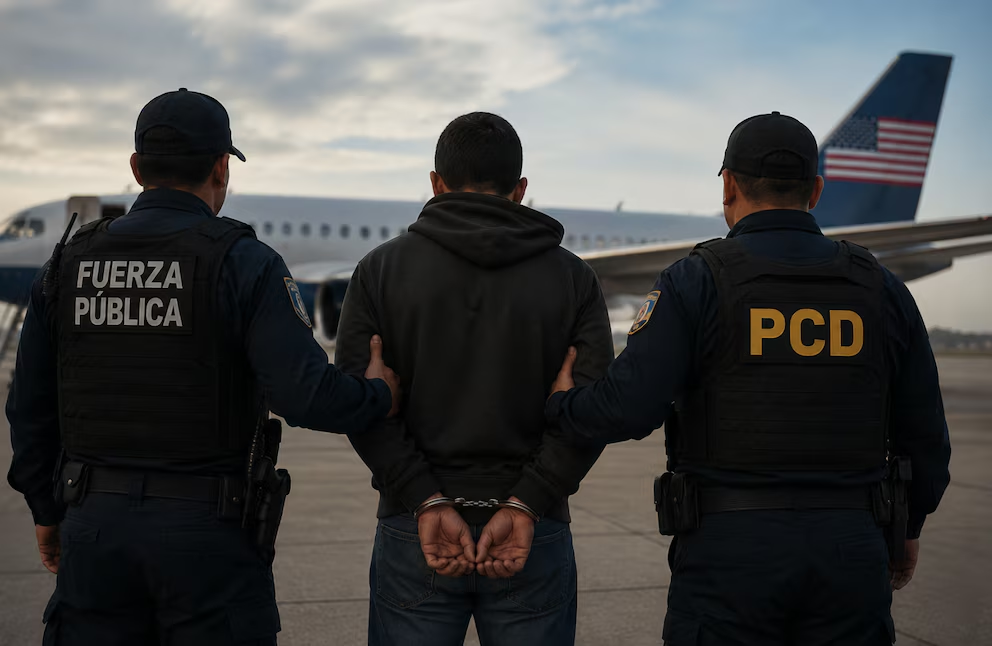
With the reform approved in 2025, Costa Rica began extraditing its citizens exclusively for crimes related to drug trafficking and terrorism. Since then, several people have been handed over to authorities in the United States and Europe as part of organized crime investigations.
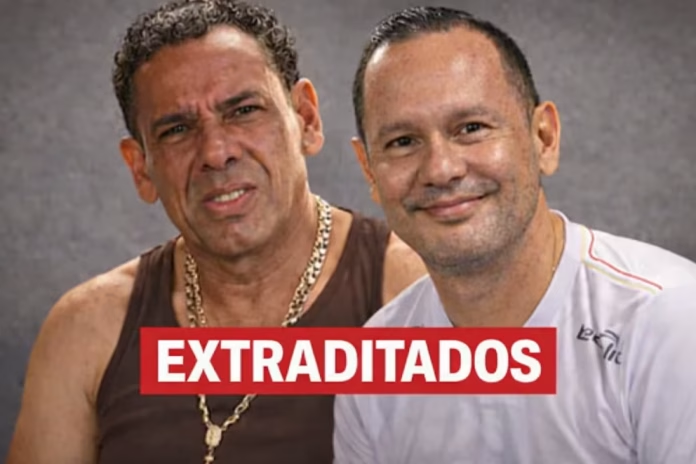
One of the most significant cases was that of former Minister of Public Security and former magistrate Celso Gamboa, who was extradited to the United States after being indicted for alleged drug trafficking offenses. His extradition became one of the first high-profile cases in which the new regulations were applied and set a precedent for the country’s international judicial cooperation.
Now, the government believes that limiting extradition solely to drug trafficking and terrorism offenses leaves out other activities also driven by transnational criminal organizations that have a significant impact on public safety.
The proposal must follow the established procedure for constitutional reforms, and therefore will require the approval of the Legislative Assembly.
With this initiative, the Executive Branch seeks to expand the legal tools available to strengthen cooperation with foreign authorities, facilitate the prosecution of individuals wanted for serious crimes, and prevent Costa Rican nationality from continuing to be used as a mechanism to evade international justice.
Q COSTA RICA — The world could have its first woman leading the United Nations, and that woman could be Costa Rican, in the U.N.’s 80-year history.
A first informal U.N. Security Council poll on Thursday showed former Costa Rican Vice President Rebeca Grynspan as the early frontrunner to become the next U.N. secretary-general.
Reuters reported that in the non-binding “straw poll” voting by the 15 members of the Security Council, Grynspan received 10 “encourage” votes to nine for former Guyanese Foreign Minister Carolyn Rodrigues-Birkett and seven for Argentina’s Rafael Grossi, head of the U.N. nuclear watchdog, diplomats said.
The other candidates are former Chilean President Michelle Bachelet, former Ecuadorean Foreign Minister Maria Fernanda Espinosa, former Senegalese President Macky Sall, and Ugandan diplomat Olara Otunnu, who entered the race last week.
Rebeca Grynspan, the current head of the United Nations Conference on Trade and Development since September 13, 2021, and former vice president of Costa Rica in the Figueres administration 1994-1998, emerged as the frontrunner.
However, the road ahead is long. The final outcome depends on the position of the five permanent members of the Security Council—the United States, Russia, China, France, and the United Kingdom—who hold veto power and have not yet revealed their preferences.
The process will continue for several months before Portugal’s Antonio Guterres’s term ends on December 31, 2026, after two five-year terms.
Q COSTA RICA — In a stern reminder to travelers, the United States government has issued a clear warning to foreign visitors: a single mistake or violation during your stay can lead to visa revocation, which may bar you from returning in the future.
According to La Nacion article, this caution comes amid growing scrutiny of visa holders and the increasing importance of adhering to U.S. immigration rules.
The consequences of a revoked visa are severe. Once a visa is canceled, the individual faces significant hurdles in applying for new visas or entering the country again. U.S. authorities emphasize the importance of following all regulations and maintaining compliance while in the country to avoid risking future travel opportunities.
This advisory is particularly relevant for tourists, students, and temporary workers who might unknowingly commit actions that jeopardize their visa status. Simple errors, misunderstandings, or violations such as overstaying the allowed time or engaging in unauthorized activities can trigger visa cancellation.
Travel experts urge visitors to exercise caution and fully understand the terms of their visa. The cost of losing a visa can be high, both financially and personally, as it may complicate family visits, education plans, or career opportunities in the United States.
The message from U.S. immigration officials is clear: do not risk your visa. Being informed and vigilant is the best way to ensure that your travels to the United States remain trouble-free and that you can continue to visit without interruption.
For those currently waiting for visa interviews or planning trips, it is also recommended to stay updated on any procedural changes or new requirements that the U.S. consulates may implement, as these can affect the application process and visa validity.
This warning underscores the delicate nature of international travel and the high standards the U.S. sets for visitors. Travelers are encouraged to respect these rules to avoid the harsh penalty of a revoked visa, which can have long-lasting effects on their ability to enter the U.S.
For more detailed advice and updates on U.S. visa policies, travelers should consult official sources and trusted travel advisors to navigate this complex process safely.
Read the full article ¡Visa revocada! La advertencia de Estados Unidos a los visitantes” published at nacion.com here.
Q COSTA RICA — If you’re hoping the dollar will rebound by the end of the year, it’s best not to get your hopes up too much.
In fact, experts at Mercado de Valores estimate that the US dollar will fluctuate between 455 and 465 colones by the end of 2026.
Furthermore, the economy is projected to grow by only 3.5%, and inflation is expected to remain below the Central Bank’s target range of 3%.
“While the Costa Rican economy continues to show solid fundamentals, the international context has introduced new elements of uncertainty that require a review of some assumptions.
“The moderation in growth is mainly due to a less dynamic external environment, while the exchange rate’s behavior reflects the abundant availability of foreign currency and the strength the colón has shown for much of the year,” explained Karol Fernández, economist at Grupo Financiero Mercado de Valores.
During the first half of the year, the colón experienced its strongest period of appreciation in recent years, reaching an exchange rate close to 449 colones per dollar.
Furthermore, demand for the foreign currency remains weak, and no structural pressures are observed that would drive sustained increases in the dollar’s value, even though the oil bill has increased compared to the beginning of the year.
The performance of exports, tourism, and foreign exchange inflows have also contributed to maintaining a highly liquid foreign exchange market.
Understanding the Bank Rates (Ventanilla)
When exchanging cash inside Costa Rican financial institutions, banks apply separate “Buy” (Compra) and “Sell” (Venta):
The Buy Rate (Compra): Around ¢444.00 – ¢445.00, is what the bank pays you in colones for every US dollar you give them.
The Sell Rate (Venta): Around ¢458.00 – ¢459.00 is what you must pay in colones to purchase one US dollar from the bank.
Know Where to Exchange Cash
Local Banks (Best Option): Public banks like Banco Nacional, Banco de Costa Rica (BCR) and Banco Popular offer the fairest retail rates. Foreigners must bring their physical passport to transact at a teller window.
Retailers: Big retail stores, as well most businesses and restaurants, often take US dollars (ask first) and will return change in colones at fair, standard bank exchange rates.
Airports (Worst Option): The currency kiosks at San José (SJO) and Guanacaste (LIR) airports charge awful exchange rates, so it’s best to steer clear of them entirely.
Money Tips for Travelers
The US dollar is widely accepted in Costa Rica. Most businesses, tour operators, and restaurants readily accept US dollar bills. As said above, ask first.
There is often no need to exchange large sums of cash into colones before or during your arrival.
Watch the Change. If you pay in dollars, merchants will give you change in local colones. Verify that they are calculating the day’s exchange rate fairly. Again, ask first.
Costa Rican businesses and banks are incredibly strict about foreign currency bills. They will reject any US cash that is torn, heavily wrinkled, or written on. This goes back to a time when the banks would not accept non-pristine bills for deposit, or would charge a fee for accepting them.
Avoid High or low denominations. Most businesses will not accept $100 and $50 bills and will frown if you pull out a wad of $1 (ones). $5, $10 and $20 are common. And yes, there is a $2 bill; it is official, active United States currency but rare to see it in circulation.
Q24N (Colombia) The U.S. dollar took a hit in Colombia on Thursday, July 30, dropping 73.89 pesos against the Representative Market Rate (TRM). This decline has some analysts wondering if the dollar might soon fall below the 3,000-peso mark, possibly within weeks or months.
According to Colombiaone.com, signs are pointing that way, especially after Thursday’s trading saw the dollar dip sharply, hitting intraday lows of 3,087 pesos.
By the end of the day, the dollar closed at 3,132.29 pesos, well below the TRM of 3,206.18 pesos. The trend over the past two months has been steadily downward, and it looks like it could keep sliding. For context, on June 1, the dollar was trading at 3,678.15 pesos.
If the peso slips below 3,000 in the next few days, Colombia would be stepping into territory it hasn’t seen since July 2019, right before the pandemic hit — back when the dollar hadn’t yet crossed that 3,000-peso mark.
Juan Pablo Vieira, an analyst at JP Tactical, shared his take with the financial paper Portafolio: “We’ve broken through the 3,200-peso support level. The market now faces a lot of room to fall.”
He added that over the coming months, the exchange rate could drift down toward the 3,000 to 2,800 peso range.
One big factor behind this shift is the U.S. Federal Reserve’s decision to hold interest rates steady between 3.50% and 3.75%. Markets had mostly expected this move, although it exposed some growing disagreements within the Fed itself.
But that’s not the whole story.
On the global stage, tensions between the U.S. and Iran are pushing oil prices up. This squeeze on crude oil supply is sending prices higher, which actually works in Colombia’s favor since it means more dollars coming in from exports.
Put simply, as Colombia earns more from oil exports, more U.S. dollars flow into the country. That extra supply of foreign currency pushes the dollar’s price down against the peso.
Some analysts don’t think the dollar will drop below 3,000 pesos anytime soon, but one thing’s clear: there’s no sign it’s going back up near 4,000 pesos in the short term.
Back in mid-2022, the dollar broke through the 4,000-peso mark in Colombia just before President Gustavo Petro took office. It stayed above that level for a few months, hitting a record high of 5,014 pesos on November 1 that year.
Q COSTA RICA — In a landmark ruling for the Costa Rican legal system, the Constitutional Court (Sala IV) extended the appointments of all substitute magistrates until the legislature appoints the new ones.
In doing so, acting as both judge and party, the constitutional body resolved a writ of amparo (a constitutional protection action) against the Legislative Assembly, putting an end to the opposition of the ruling party, the Partido Pueblo Soberano (PPSO).
The decision will allow the Constitutional Court to carry out its work normally, and cases that could not be resolved due to the recusal of the sitting magistrates will be reviewed and voted on by the substitute magistrates.
By mid-July, at least 120 Costa Ricans were awaiting a court ruling on issues such as medications, pensions, scholarships, and housing, among others.
The appointment process has been under discussion for seven months, and legislators have failed to reach an agreement on eleven occasions.
This is because the ruling party, with a majority (31 legislators), has vetoed the list sent by the Supreme Court of Justice, which, in turn, submitted the same list of 18 candidates twice to appoint nine people. Appointing a full or alternate magistrate requires 38 votes.
However, with the Supreme Court’s decision, the opposition from the PPSO would, in the worst-case scenario, allow the alternates to remain in their positions indefinitely. The initial appointments expired last December.
As of 7:00 p.m., neither the PPSO nor the Presidency (Executive Branch) had commented on the matter.
“As a temporary integration measure, with a view to avoiding the paralysis of the body and only in the most urgent and indispensable cases, as happens when the incumbent magistrates are legally unable to vote on matters in the Constitutional Courtr because they are incapacitated or disqualified, the terms of office of the alternate magistrates of this Court that expired on December 16, 2025, are provisionally extended, until the Legislative Assembly elects the nine alternate magistrates of this Court that correspond to the list sent by the Full Court on October 15, 2025,” the Sala IV said.
Q COSTA RICA — “We’re taking away the tax breaks for the wealthy (a colloquial term for the upper class),” said Finance Minister Rodrigo Chaves, announcing his new tax package, which aims to increase the Impuesto al valor agregado (IVA) — value-added tax — on basic goods from 1% to 13%.
But what this rhetoric masks is that, in reality, those who will pay the price with a decline in their quality of life will be those in the poorest and middle classes.
The Semanario Universidad reported that this was confirmed by an analysis conducted by Leiner Vargas, a researcher at the International Center for Economic Policy for Sustainable Development (CINPE) at the National University (UNA).
The Vargas analysis shapes and contextualizes the impact of this fiscal measure, which the Laura Fernández administration is considering as a response to the country’s fiscal situation—a situation, incidentally, that was considered “very good” before the end of the previous administration, headed by the current minister, Rodrigo Chaves.
Chaves assured that the lowest-income population would only have to show their cedula (ID card) when buying products to receive a discount corresponding to this percentage, because businesses will somehow have access to the Sistema Nacional de Información y Registro Único de Beneficiarios del Estado (Sinirube) — National System of Information and Single Registry of State Beneficiaries, which shows the people who are in the lowest income quintiles — the poorest population — of the country.
Even if this “personalized IVA” plan were successfully implemented to reimburse low-income individuals for overpaid taxes, the Cinpe-UNA analysis considers the risks of such a measure effectively achieving its intended goals.
Initially, Vargas indicated that this increase in IVA on basic goods would raise revenue from this source from ¢42.065 billion to ¢546.841 billion. This would represent 1% of the Gross Domestic Product (GDP).
“It sounds good in principle, but even applying the refund to the poorest, there’s a data leak affecting at least 50% of those who are poor. Therefore, it would hit households in the second and third income quintiles (corresponding to low- and middle-income families), where the lower-middle and middle classes clearly reside, promoting a highly regressive distribution system, because it’s a tax on goods and services, not on people,” the expert explained.
The poorest population, in the first quintile, receives an average monthly income of ¢321,351. The change would mean 6.7% of their income would have to be allocated to purchasing basic necessities. For the second poorest group (quintile 2), with an average income of ¢604,749, the effect would be between 4% and 5%.
For the other three income groups (quintiles 3, 4, and 5), the effects of the IVA adjustment would be less pronounced. For the middle class, the impact would be between 2.5% and 3.5%; for the middle class, between 1.5% and 2%; and for the upper class, only between 0.6% and 1%.
“Unlike the first group, which spends almost half of its income on basic necessities, the wealthiest group (or ‘Costa Ricans with a crown,’ as Minister Chaves calls them), which has an average monthly income of ¢2,675,743, spends only 9.9% of that amount on these products,” the researcher pointed out.
This expenditure analysis was conducted using the products with the highest weighting in the spending of the first two quintiles, according to the structure of the National Household Income and Expenditure Survey (ENIGH), which are rice, beans, bread and flour, eggs, chicken, beef and pork, dairy products (milk, cheese, cream), and tuna.
When analyzing the spending of the poorest families (first and second quintiles), they spend 44.1% and 28.8% of their income, respectively, giving another dimension to the impact that the IVA increase would generate.
“For a household in the first quintile, the magnitude is equivalent to losing about a month of food purchasing power per year. For the second quintile, which is made up of vulnerable but not poor households, the risk is significant in terms of falling below the poverty line,” Vargas stated.
However, the benefit generated by this new income would be 1% of GDP. If nothing is done about servicing the public debt, within two years those resources would be lost to paying high interest rates, leaving only a 0.6% profit.
RICO’s Q — This week’s outbursts, screams and direct attacks on the Judiciary by President Laura Fernández (the puppet) and former president and now super minister, Rodrigo Chaves (Yepeto), over the handling of Costa Rica’s most wanted criminal, Alejandro Arias Monge, alias “Diablo”, have trended on social media.
During Wednesday’s press conference, Laura’s voice rose as she made sure the Minister of Justice got her message loud and clear. In her usual fiery style, she shouted, “El ‘Diablo’ no se puede escapar de ‘La Reforma’. No se puede matar y no lo pueden matar.” (Diablo cannot escape from ‘La Reforma’. He cannot be killed, and they cannot kill him.)
Representatives José Miguel Villalobos and Sigrid Segura had a heated exchange, accusing each other of resorting to insults regarding the issue of security.
Country
Q COSTA RICA — To prevent cases like that of José Miguel Villalobos, a legislator from the ruling party, the Partido Pueblo Soberano (PPSO), the Frente Amplio caucus called on the Legislature to approve a proposed law that would prohibit legislators from practicing a profession while serving as legislator.
The controversy surrounding this issue came to light on Monday when Villalobos, who is a criminal defense attorney, failed to attend the presentation of a second package of security proposals by President Laura Fernández.
His absence was because, at the same time, Villalobos was in court defending a man named Sánchez, who is accused of alleged drug trafficking in the “Caso Pana”, an alleged criminal organization dedicated to international cocaine trafficking and money laundering,
“The proposal from former legislator Jonathan Acuña was presented for the second time to the legislature on April 24, 2024, and proposed an amendment to the Law Against Corruption and Illicit Enrichment. Today, more than ever, it is essential to approve this law,” said Sigrid Segura, a Frente Amplio legislator.
Legislators José Miguel Villalobos and Sigrid Segura had a heated exchange, accusing each other of resorting to insults regarding the issue of security
On Wednesday, a heated exchange erupted between the Frente Amplio legislator and Villalobos, who appeared offended by the indirect remarks from the second largest opposition block with seven legislative seat.
Segura questioned the Government’s actions of downplaying “Operation Némesis”, which culminated in the capture of Costa Rica’s most wanter, Alejandro Arias, alias “Diablo”, accused of being the leader of a criminal organization, and declared that “we should ask ourselves why there are legislators who defend drug traffickers.”
This prompted Villalobos to request the floor to accuse Segura of insulting him, without mentioning his name. This, in turn, triggered an intervention by José María Villalta, head of the Frente Amplio caucus, who denied that Segura had insulted him.
“You are questioning a legislator because she said that there are legislators who defend drug traffickers. There is no attack in that. You are a lawyer and you defend those accused of drug trafficking; that is neither a falsehood nor an insult. It is incorrect; it may be legal, but it is wrong, especially while the government was presenting bills to combat crime and drug trafficking,” Villalta said.
“I have the right to question. I deeply regret that he (Villalobos) felt offended. You know why. I imagine he may be resentful because I didn’t accept his invitation to dinner, but I won’t accept his accusation that I disrespected him,” Segura declared.
Opposition legislators Claudia Dobles of the Coalición Agenda Ciudadana (CAC), Salvador Padilla of the Partido Liberación Nacional (PLN, and Villalta himself criticized the government for limiting the judiciary, despite the operations. Padilla also demanded that former president Rodrigo Chaves, former security minister Mario Zamora, and former deputy minister Manuel Jiménez Steller be held accountable for decisions that became “a series of blunders in security.”
This prompted the President of the Legislature, Yara Jiménez, to intervene, asking the legislators to end these complaints, since she had a commitment to put to a vote motions of order, in which it was requested to censure the statements of the Minister of Finance and Minister of the Presidency, Rodrigo Chaves, for his demonstrations in Nicoya on July 25, in which he asked demonstrators if they were afraid of a dictatorship or the closure of the Judicial Branch.
Prior to being elected in February 2026 as legislator for the , José Miguel Villalobos has served as the personal defense attorney and legal counsel for former President Rodrigo Chaves in multiple high-profile judicial matters, such the impeachment & immunity iearings, and various lawsuits and judicial accusations levied during the 2022–2026 presidential term, among others. Beyond their formal professional relationship, Villalobos has publicly stated that he shares a close, decades-long friendship with Chaves dating back to their school days.
Q COSTA RICA — The Saharan dust, coupled with the presence of haze (a meteorological phenomenon consisting of very small particles of dust, sand, ash, or clay suspended in the atmosphere) and a significant reduction in rainfall, will cause a widespread deterioration in air quality in Costa Rica over the next few days.
The national weather service, the Instituto Meteorológico Nacional (IMN), forecasts that the most critical period will occur between Thursday and Friday, when the increase in particulate matter will impact almost the entire country and raise the risk of respiratory problems.
The concentration of particles will reach its highest levels mainly in the western part of the Central Valley, particularly in Alajuela and some areas of Cartago.
According to the IMN, the situation will improve significantly starting Saturday, when the dust cloud begins its movement toward other regions of Central America.
During the phenomenon, exposure to the polluted air can cause respiratory discomfort and exacerbate pre-existing conditions. Among the most vulnerable groups are children, the elderly, asthmatics, and allergy sufferers, who could experience symptoms such as asthma attacks, difficulty breathing, headaches, and allergic reactions if exposed for several hours.
IMN specialist Daniel Poleo explained that part of the dust cloud over the Caribbean Sea will enter Central America, increasing the particulate matter content in the atmosphere.
“Part of that dust cloud will reach the region, increasing the content of what we call particulate matter in the atmosphere,” the expert explained.
Although these particles may be imperceptible to the naked eye, their presence manifests as reduced visibility and a whitish or “milky” sky, a phenomenon known as haze.
Poleo pointed out that the dust will be present in almost the entire country, although the trade winds will concentrate larger quantities in specific regions.
Wearing a mask, reducing time spent outdoors, and stopping physical activity if symptoms appear are among the recommendations, even for people without respiratory illnesses.
Factors that aggravate the situation: particles, wind, and scarce rainfall
The phenomenon is due to a combination of factors. The particulate matter suspended in the air is composed of dust, soot, ash, pollen, and residue from burning or emissions.
In this episode, the Saharan dust contains especially fine particles, known as PM2.5, measuring 2.5 micrometers or less. Poleo emphasized that “they are respirable and quite harmful because, when they are smaller than 2.5 micrometers, they can reach the alveoli, which are the innermost part of the lungs.”
The risk does not come solely from the Saharan dust.
The force of the winds will also lift particles from the ground and carry pollen, while some burning in the region continues to contribute residue to the environment.
Official IMN weather forecast for Thursday, July 30, 2026:
This Thursday, trade winds in the Caribbean Sea will remain strong, generating wind gusts ranging from moderate (20 to 39 km/h) to strong (40 to 60 km/h) across the country, especially in mountainous areas.
At the same time, the presence of a mass of dry air over Central America is reducing humidity in the country, which promotes more stable atmospheric conditions. As a result, hot conditions will prevail during the day, along with very scattered and short-lived showers in the afternoon.
Q COSTA RICA — Credit card debt in Costa Rica reached ¢1,710 billion colones (US$3.71 million dollars) at the close of 2025, according to the most recent semiannual report from the Ministry of Economy, Industry and Commerce (MEIC), which also revealed an increase in the number of credit and debit cards issued in the country.
The study, prepared in compliance with Law against Usury, determined that the outstanding balance represents an increase of ¢92 billion (US$200.1 million), equivalent to 5.68%, compared to the previous semester.
However, the Ministry emphasized that this figure only corresponds to credit used and outstanding at the end of the period, and therefore cannot be automatically interpreted as an increase in Costa Rican household debt.
According to the report, the variation may be due to several factors, including seasonal changes in consumption, exchange rate fluctuations, changes in credit limits, refinancing strategies, or an increase in the number of active credit cards.
The MEIC analysis, based on information provided by public and private banks, cooperatives, and other financial issuers as of December 31, 2025, shows that the market continues to expand.
A total of 3,183,825 credit cards were in circulation, representing an increase of 173,186 cards, equivalent to a 5.7% rise compared to the previous six months. Of that total, 2,325,941 correspond to primary cardholders, while 857,884 are supplementary cards.
The report identified 363 different types of credit cards are offered by financial institutions, a 23.7% decrease compared to the previous report.
The Ministry of Economy, Industry and Commerce (MEIC) highlighted that none of the cards exceed the maximum limit established by the Banco Central (BCCR) — Central Bank of Costa Rica — under the Law Against Usury.
Regarding associated costs, the report indicates that none of the 363 types of credit cards charge an initial membership fee, and 354 products do not have an annual fee. Only two issuers charge a renewal fee, at US$10 and US$20, while more than half of the cards charge fees for cash withdrawals.
Additionally, 299 types of cards offer between 15 and 30 days to pay off the balance in full without incurring interest.
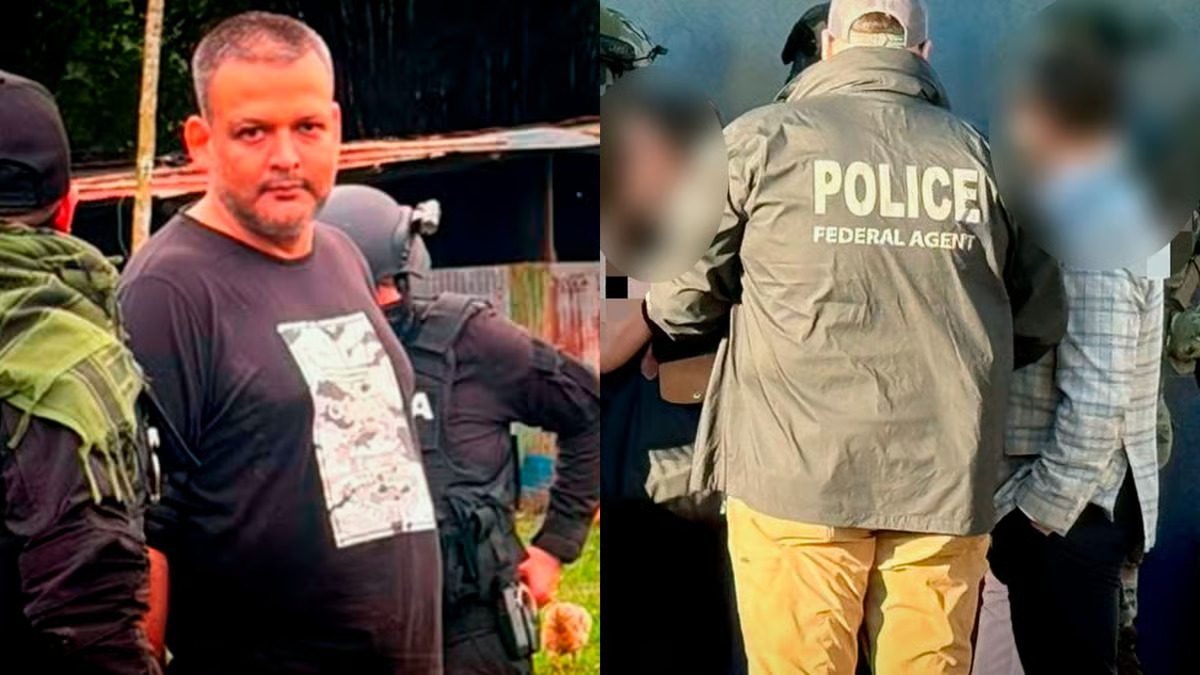
Q COSTA RICA — The Policía de Control de Drogas (PCD) — Drug Control Police — and the Ministry of Public Security deployed one of the largest anti-drug trafficking operations ever recorded in the country on Monday,, carrying out 65 simultaneous raids aimed at dismantling a criminal organization accused of sending large shipments of cocaine through the port of Moín, in Limón.
During a preliminary report, authorities stated that the investigation targeted 63 people, of which 49 were arrested so far and the Ministry of Public Security described the operation as a “historic” event and asserted that it represents one of the most significant blows dealt by the PCD in recent years.
According to official information, the criminal organization is allegedly responsible for trafficking large shipments of cocaine, using the port of Moín, Limón, as a departure point, with destinations in Europe and the United States.
In the last two years alone, the PCD seized more than 14 tons of drugs that investigations attribute to this organization.
Authorities also indicated that the alleged leaders of the organization are Melanie Fabiola Bell Ramirez and her husband, Joseph Eduardo Casanova Duartes, thedaughter and son-in-law of Gilbert Bell Fernández, alias “Macho Coca,” a name historically linked to drug trafficking investigations in Costa Rica.
One of the most striking findings during the investigation was the alleged involvement of nine police officers, who apparently belonged to the organization or collaborated with its illicit operations.
Authorities seized cash, 12 firearms, 14 magazines, 421 rounds of ammunition of various calibers, eight vehicles, two motorcycles, and several private security uniforms.
The raids were carried out in different provinces with the participation of specialized teams, after several months of intelligence and investigative work.
The Ministry of Security indicated that the main objective was to completely dismantle the organization’s logistical and operational structure, as well as to bring all suspects linked to the network to justice.
Meanwhile, the Government insisted that this operation demonstrates its strategy to combat drug trafficking and the corruption networks that facilitate its operations within the country.
Casanova and Melanie Bell Ramírez, Macho Coca’s daughter, are on the run following the raids carried out early Monday morning.
Q COSTA RICA — An electronic ankle monitor will replace imprisonment for child support debtors in Costa Rica, according to the bill presented this Monday, July 27, by President Laura Fernández to the Legislative Assembly.
In Costa Rica, if a monthly payment is missed or incomplete, it can land you in jail. The law doesn’t set a colón amount that triggers an arrest warrant. Instead, because child support is paid monthly upfront, failing to pay on time gives the recipient (typically the child’s mother or guardian) the right to immediately request a warrant.
Being sent to jail for missing a payment is not technically a criminal sentence for a crime, but a civil enforcement tool. You are detained until the outstanding debt is fully paid (up to 2 months on the first incident, 4 months on the second, and 6 months for the third, the maximum allowable time a person can spend in jail during a single detention period). Once the time expires, they must be released, though the debt remains legally enforceable through asset or wage garnishment.
In addition, anyone with an active child support case in Costa Rica faces an automatic departure impediment (travel ban). You’re not allowed to leave the country unless you’ve already paid 13 months of support upfront—12 months for the coming year plus the Christmas bonus (Aguinaldo).
The proposal
The initiative is part of the second package of security reforms that the Executive Branch submitted to the unicameral Legislature and introduces electronic monitoring as an alternative to imprisonment.
The State spends ¢75,294.97 colones per month on food alone for each person incarcerated, while each monitoring device costs the equivalent of US$7.20 per day, according to the bill’s explanatory memorandum.
How it would work
Under the proposal, the debtor would have to appear before the Administración de Adaptación Social (Social Adaptation Administration) within 24 hours of the court notification to have the device installed.
The Child Support Judge would define the permitted movement perimeter and could authorize outings for work, health, education, or family obligations.
Each day under monitoring would be equivalent to one day of the detention ordered by the judge. The stated objective is for the debtor to maintain their employment and the ability to generate the income necessary to catch up on their obligations.
The proposal is not universal. Incarceration in a penitentiary would remain mandatory for those with links to organized crime, drug trafficking, money laundering, sexual offenses against minors, or domestic violence and violence against women.
Also excluded would be individuals who pose a risk to the creditor or third parties, those without a fixed address and support networks, and those facing pretrial detention for another reason.
When is the benefit revoked?
The bill establishes three automatic grounds for revocation: failure to pay alimony for more than a month, damaging or altering the device, and violating mobility restrictions imposed by the judicial authority.
Upon revocation, the judge would order immediate transfer to the Sistema Penitenciario Nacional (National Penitentiary System). From there, the affected individual could request a special form of confinement that would allow them to leave prison exclusively to work during specific hours and return to incarceration outside of those hours.
The context of a prison at its limit
The proposal comes as the Costa Rican prison system is experiencing an overcrowding crisis. As of February this year, the prison population numbered 19,453 in facilities with a capacity of 13,289, representing an overcrowding rate of 46.4%.
The San José Detention Center (CAI) — the San Sebastión ail in San José — has the highest overcrowding rate, at 134.3%. It is followed by the Marcus Garvey CAI, prison in Limón, at 120% and the Antonio Bastida de Paz CAI in Pérez Zeledón at 101.4%.
Furthermore, one in four people deprived of their liberty—26.25% of the total—have not been convicted, a figure that has almost doubled since 2022, when there were 2,564 people in pretrial detention compared to the current 5,034.
A Broader Legislative Package
The proposal regarding child support debtors is one piece of a broader set of measures. On the same day, Fernández presented initiatives to eliminate the preliminary hearing in criminal proceedings, expand the use of ankle monitors for convicts in supervised release programs, increase penalties for illegal mining to between six and ten years in prison, and restructure police ranks with titles such as colonel, major, and captain.
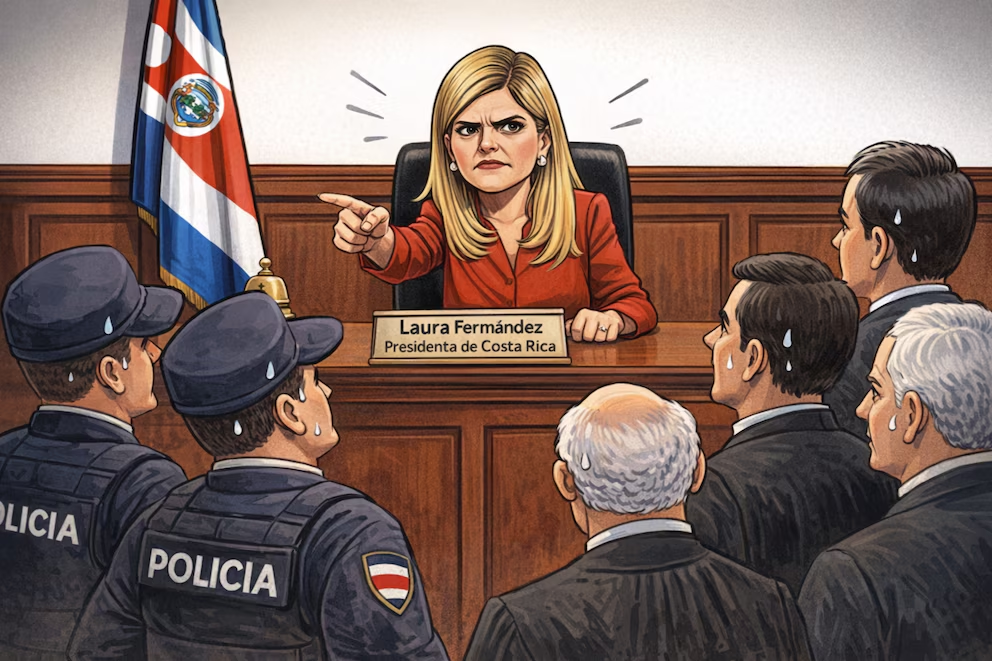
Tough cop. Costa Rican President Laura Fernández, visibly annoyed, reprimands a group of police officers, judges, and other officials. (Illustrative image Infobae)
The president also announced a constitutional reform to broaden the grounds for extradition of Costa Rican citizens, although this text was not formally submitted to the Legislature.
As she explained to the legislators, constitutional amendments must be presented during the ordinary session period, which begins in August.
“We will not stop in the national crusade against organized crime. We will not stop in the all-out war against drug trafficking,” Fernández stated during a speech lasting more than an hour before the Legislative Assembly.
Q COSTA RICA — The San Joaquín de Flores (Heredia) Prosecutor’s Office sentenced a man named Rojas Campos to 20 years in prison after proving his guilt in the sexual abuse of his stepdaughter, who was eight years old when the abuse began.
The sentence was handed down on July 15 by the Heredia Criminal Court, after the judges reviewed the evidence presented during the trial and concluded that the defendant was responsible for the investigated acts. The ruling was announced this week by the Public Prosecutor’s Office.
According to the investigation conducted by the Prosecutor’s Office, the abuses occurred between 2017 and 2019 in the town of La Asunción, in Belén de Heredia. During that period, the minor was the victim of repeated sexual assaults by the man, who lived with the girl’s mother and acted as her stepfather.
According to the evidence presented during the trial, the now-convicted man took advantage of his close relationship with the victim and the position of authority he held within the family to commit the crimes. The prosecution also argued that the man used his physical and psychological superiority to subdue the minor and facilitate the commission of the abuse.
The Public Prosecutor’s Office successfully proved these facts through the various pieces of evidence presented during the trial.
Although the sentence has already been issued, the process has not yet definitively concluded. While the ruling becomes final and the corresponding procedural stages are completed, Rojas Campos must remain in pretrial detention to ensure that the convicted person remains at the disposal of the judicial authorities until the sentence is finalized, especially in cases of serious crimes and when a significant prison term is involved.
Sexual offenses committed against minors are considered especially heinous under Costa Rican law due to the impact they have on the physical and emotional development of the victims. In addition to the immediate consequences, specialists have warned that these types of assaults can cause psychological repercussions that last for years without adequate professional support.
In many of these cases, the perpetrator is someone close to the victim, such as a family member, stepfather, guardian, or trusted individual. This makes reporting difficult and prolongs the time the crimes remain hidden.
Authorities emphasize the importance of paying attention to possible changes in behavior in children and adolescents, as well as reporting any suspicion of violence or abuse.
The Public Prosecutor’s Office has reiterated that the investigation and prosecution of sexual crimes against minors is an institutional priority. To this end, it works in coordination with other entities responsible for child protection, with the aim of reducing revictimization during the criminal process and strengthening the collection of evidence that will allow those responsible to be brought to justice.
Q COSTA RICA — The man who for years topped Costa Rica’s most wanted list, Alejandro Arias Monge, alias “Diablo”, will face various precautionary measures in several court cases following his capture last Friday.
On Monday, the Tribunal Penal de Pococí (Pococí Criminal Court), in the precautionary hearing held for security reasons in the First Judicial Circuit of San José, ordered three months and 22 days of preventive detention against Arias Monge as part of the criminal process he faces for a case related to two homicides, an attempted homicide and the alleged crime of illicit association.
In the same hearing, the court imposed five months and 26 days of pretrial detention on Jonathan Pérez Méndez, alias “Tan,” who is listed as a co-defendant in the same case.
This precautionary measure is the initial one: given that both suspects appear in multiple investigations, this case is the one in which the Prosecutor’s Office had the most guaranteed to obtain the imposition of imprisonment, as the legal battle now begins in the other cases, in which the prosecution will also request precautionary measures.
Furthermore, this case has been transferred to the organized crime jurisdiction, a special judicial body that allows suspects to be held in custody for longer periods and has greater resources to prosecute leaders of organized crime groups.
On Tuesday, Costa Rica’s Attorney General, Carlo Díaz, revealed that Arias Monge met with two U.S. Drug Enforcement Administration (DEA) agents in a meeting that took place on Monday at the San José Courts and that its purpose was to inform the alleged drug trafficker about the United States’ interest in requesting his extradition and to explore his willingness to cooperate.
This also explains why Arias Monge was transferred from La Reforma prison early Monday morning for a 1:30 p.m. court hearing, a move by the Judiciary heavily criticized by President Laura Fernández and Minister Rodrigo Chaves during their attendance at the Legislative Assembly.
Díaz confirmed that in Monday’s process, Arias Monge had held a meeting with the two DEA agents and stated that he did not understand the concern expressed by government officials.
“What are they afraid of?” responded publicly the Attorney General to government criticism over Diablo’s transfer.
He also clarified that only U.S. agents and the accused himself were present at the meeting, in accordance with established protocols for this type of proceeding.
According to Díaz, the main objective of the conversation was to inform Arias Monge of the interest of the US authorities in promoting a possible extradition process for alleged crimes related to international drug trafficking and to find out what his position would be in that scenario.
The Attorney General clarified that the meeting was completely private and that no official from the Attorney General’s Office or any other Costa Rican institution participated in the conversation.
“I don’t know what they discussed. I wasn’t at that meeting, and neither were any other Costa Rican officials. Only DEA agents were there,” he stated.
Although the DEA has not yet submitted a formal extradition request for Arias Monge, this approach demonstrates that U.S. authorities have already begun proceedings related to the case.
Díaz recalled that the DEA followed a similar procedure with Celso Gamboa and Edwin López Vega, who were later indicted by U.S. authorities for alleged crimes related to international drug trafficking and extradited to the U.S. earlier this year.
Q COSTA RICA — The capture of the main criminal leaders in the Costa Rican Caribbean marked a turning point in the fight against drug trafficking in the region. In the last three years, Costa Rican authorities have neutralized the 12 highest-profile drug lords, an action that is part of the state’s response to the increase in homicides linked to disputes over drug control.
The Organismo de Investigación Judicial (OIJ) and the Prosecutor’s Office attribute these results to a review of strategies following the most violent year on record in the country.
Michael Soto, interim director of the OIJ, explained that “most of the homicides were related to drug trafficking-related revenge killings” and that the new investigative tactics allowed for concrete progress in containing the violence.
These actions have allowed for a gradual reduction in homicides, according to Attorney General Carlo Díaz, who emphasized the importance of the operational deployment despite budget cuts suffered by both institutions.
“The struggle between the organizations and the dynamics of local drug trafficking have caused the increase in the number of homicides, but we believe that with all these operational actions, it will continue to decrease,” Díaz stated.
Criminal bosses, extraditions, and new drug trafficking routes
The dismantling of the networks began with the capture of Gilbert Bell, known as “Macho Coca“, considered the pioneer of international drug trafficking in Limón, although he was never convicted of that crime.
In February 2024, he was arrested for leading a fuel theft operation on the Refinadora Costarricense de Petróleo (RECOPE) — Costa Rica’s refinery that refines nothing — pipeline.
Later, in November 2025, a New York court requested his extradition for international cocaine trafficking. The investigation includes recordings obtained during negotiations with undercover DEA and FBI agents, and although a judge initially rejected the extradition last March, in June the Goicoechea Court of Appeals overturned that decision and authorized his transfer to the United States. These legal processes have been complex and have required international coordination.
Tony Peña Russell, alias “La T”, was arrested on June 21, 2024, in the Atlántida neighborhood during a surprise operation, six months after escaping an initial raid. Authorities identify him as the head of hitmen and the armed enforcer for drug cartels in the Caribbean, and attribute to him nearly 100 murders in the central canton of Limón.
Alexander Zacarías Herrera Hernández, leader of “La H”, was extradited in August 2024 after years on the run, despite being wanted by Interpol since 2012. Along with his brothers Guillermo Gilberto and Elías, he led the gang comprised of Nicaraguans who used false identities to pass as Hondurans and vie for control of the Moín Container Terminal, used to export cocaine. He recently pleaded guilty and cooperated as a witness with U.S. authorities.
Luis Manuel Picado Grijalba, identified as the head of the first drug cartel dismantled in Costa Rica, was arrested on December 31, 2024, at a London airport after being tracked by the OIJ. Since the extradition of Costa Rican nationals was not permitted at the time, the OIJ shared information with the DEA to coordinate his capture, and his extradition to the United States has been underway. The United Kingdom has also expressed interest in prosecuting him for drug shipments to that country.
In August 2025, his brother Jordie Kevin Picado, alias “Noni”, who had assumed command of the group, was arrested. His extradition has already been authorized, although the ruling has been appealed.
George Paniagua, alias “Curry”, was sentenced to 23 years in prison for homicide, but even while incarcerated, he continued ordering contract killings, coordinating drug trafficking operations, and planning an attack against a judicial official. On July 9, 2025, the OIJ (Judicial Investigation Agency) carried out a major operation to dismantle the drug trafficking network in Matina that he led.
Edwin López, alias “Pecho de Rata”, is identified as the leader of the second drug cartel dismantled in the country. He monopolized the importation of cocaine and marijuana to supply Diablo, his allies and other organizations, and was the first Costa Rican captured for extradition to the United States.
The investigations attribute to him the use of front men to purchase properties and build infrastructure for drug trafficking, including farms and a clandestine airstrip in Sixaola, near the border with Panama.
On June 26, 2025, Celso Gamboa, former Minister of Security, former Director of Intelligence, and former Supreme Court Justice, was arrested in Escazú, just hours after López’s capture.
The extradition request against Gamboa alleges that he received up to US$600,000 for his services and that in meetings recorded by undercover DEA agents in 2023, he claimed to have support within the government to move drug shipments.
Last March, Gamboa and López were transferred on the same flight to Texas, the first two Costa Ricans to be extradited following a landmark constitutional reform in 2025 that ended the ban on the extradition of its own citizens.
Herald Ruiz, alias “Guato”, was captured three weeks before publication while hiding in a remote mountainous area. He was a landowner and ally of Diablo in Valle La Estrella, Penshurt, and Bananito, and authorities link him to drug trafficking, homicides, kidnappings, and sexual assaults.
The central figure in the offensive was Alejandro Arias Monge, who had been a fugitive for 10 years and had extended his operations to all seven provinces. His organization controlled drug distribution and had networks for logistics and transportation, contract killings, security, and money laundering; this group is believed to be responsible for approximately 360 homicides.
Jonathan Pérez was considered Diablo’s manager in Batán de Matina and one of his main collaborators. He controlled drug sales in that community, escaped several operations since August 2024, and is linked to at least six armed attacks against officers, patrols, and police facilities, in incidents where two police officers died.
Ronnie Ríos, alias “Coco”, another of Diablo’s main landowners, ran drug sales in Guácimo, other communities in Limón, and Valle La Estrella. He was located in the same operation in which Arias Monge and Pérez were captured, but he was killed in a shootout with officers when he tried to avoid arrest.
Dinier Estrada, alias “Ojos Bellos”, was already in prison due to investigations by the OIJ (Judicial Investigation Agency) when he received a new 36-year sentence in October 2025, following a previous 33-year sentence in 2024. His conflict with rival organizations resulted in multiple homicides, including the Cieneguita beach massacre in Limón, where five bathers were killed in the crossfire.
Alejandro James Wilson, alias “Turesky”, was identified in 2021 as one of the main cocaine exporters from the Costa Rican Caribbean, using the drug to contaminate shipments of fruits and vegetables. This organization, less exposed to contract killings, moved millions of dollars that were then laundered through the purchase of motels, farms, businesses, luxury vehicles, and other assets. His case has already advanced to the preliminary hearing.
Randall Delgado, alias “Mr. Muscle”, is identified as Diablo’s main logistics coordinator and was in charge of organizing drug and money deliveries for the leader and his local operatives. He was also linked to the investigation into the murder of Geiner Zamora, deputy chief of the OIJ (Judicial Investigation Agency) delegation in Pococí, which occurred in February 2025.
Jorge David Núñez, alias “Coco Pastilla”, appears in a similar situation due to his alleged ties to Diablo’s networks in Pococí and the organization’s expansion into Turrialba and areas of Cartago.
Consequences and pending challenges for security in the region
The state offensive allowed authorities to identify mechanisms such as the use of front men and money laundering operations through the acquisition of farms, motels, and businesses. Ongoing investigations and extradition processes demonstrate the international reach of these networks and underscore the importance of cooperation between Costa Rica, the United States, and the United Kingdom in judicial matters.
The decrease in the number of homicides and the dismantling of the main drug trafficking structures in the Costa Rican Caribbean are considered positive results. However, authorities warn that it is still necessary to maintain vigilance and strengthen institutional resources to sustain these advances and respond to possible changes in criminal dynamics.
Q COSTA RICA — In observance of the apparition of the “Virgen de Los Ángeles” (Our Lady of the Angels), Patron Saint of Costa Rica, the U.S. Embassy and Consular Section in San José will be closed on Friday, July 31, 2026.
The Embassy and Consular Section will reopen to the public on Monday, August 3, during regular business hours from 7:30 a.m. to 4:30 p.m.
Virgen de Los Ángeles, affectionately known as “La Negrita,” is the official patron saint of Costa Rica. Her main feast day is celebrated every August 2nd, a “pago no obligatorio” (not mandatory) holiday according to the Labor Code.
The event brings together faithful in one of the largest displays of faith in Central America.
History and Discovery
The origin: The story dates back to August 2, 1635, in the Pardos neighborhood of Cartago.
Juana Pereira: According to tradition, a young indigenous woman named Juana Pereira found a small sculpture of the Virgin Mary with the Child Jesus carved on a dark stone.
The miracle: Juana took the image home, but it repeatedly disappeared, only to return to the same spot in the woods where it had been found. This was interpreted as the Virgin Mary’s wish that a temple be built on that exact spot.
Current Traditions
Romeria (The Pilgrimage): Millions of romeros (pilgrims) from all over the country walk enormous distances to the Basilica of Virgen de Los Ángeles in Cartago to fulfill vows or ask for miracles.
La Pasada (Procession): On August 3, a traditional procession takes place where the image is carried from the Basilica to the Cathedral of Cartago, returning to its formal altar a month later.
Q REPORTS (Felix Wiebrecht, Lecturer in Politics, University of Liverpool) Since being elected for a second term as Nicaraguan president in 2006, Daniel Ortega – the former Sandinista freedom fighter-turned-authoritarian leader – has extended his term of office several times. But last week he announced a new strategy for holding on to power.
He declared that there will no longer be elections in the Central American country. Making a speech to commemorate the anniversary of the 1979 revolution that toppled the Somoza dictatorship, which had ruled Nicaragua since 1937, he said: “The days when parties backed by the Yankees and the Somocistas would return to power are over – never again.” The legal changes are already moving through the country’s legislature.
Nicaragua’s elections have long been rigged and repressive. But this marks a new scale of authoritarian rule. The elimination of elections is a rare and extreme case, even in today’s landscape of authoritarian regimes. So this reflects a worrying trend of brazenness on the part of Nicaragua’s president.
Most modern autocrats are what researchers call “spin dictators”. They invest in a democratic disguise and the careful curation of a public image fostered by propaganda and misinformation. Elections play a central role in this playbook.
Hence, most authoritarian regimes nowadays hold somewhat competitive multiparty elections – and only a handful of regimes have resisted the turn towards elections that took off in the 1990s and 2000s. Among those are primarily hereditary monarchies such as Saudi Arabia and Brunei and the one-party state of Eritrea ruled by the People’s Front for Democracy and Justice (PFDJ).
While there are differences in how non-democracies design their elections, they all share a playing field that is inherently tilted towards the incumbents. Widely used methods include restricting ballot access for genuine opposition candidates, manipulating electoral commissions and courts to favour the incumbent and controlling media coverage. Incumbents also have the power to deploy state resources for campaigning while harassing or co-opting opposition figures.
Although it is not unheard of that authoritarian incumbents also lose elections, these tools are designed to keep them in power. It is against this very playbook that Ortega’s decision now stands out.
Yet, elections are often more important than simply providing a democratic facade. Instead, many autocracies let opposition parties and candidates compete because these elections provide several advantages for them.
For one, it gives them information about where supporters and opposition voters are located. For instance, if a city votes heavily for the opposition, the regime knows exactly where unrest might be brewing. In information-starved autocracies, that’s much-needed insight for rulers who would otherwise be flying blind.
Additionally, it gives rulers important information about their subordinates. It’s handy to know which elite figures are popular among voters and can mobilise the population for the regime. Whether won fairly or fixed, incumbent victories also demoralise the opposition.
Ortega himself relied on this logic for years, as even Nicaragua’s tightly controlled elections gave his regime a rough map of where dissent was concentrated.
Facade of legitimacy
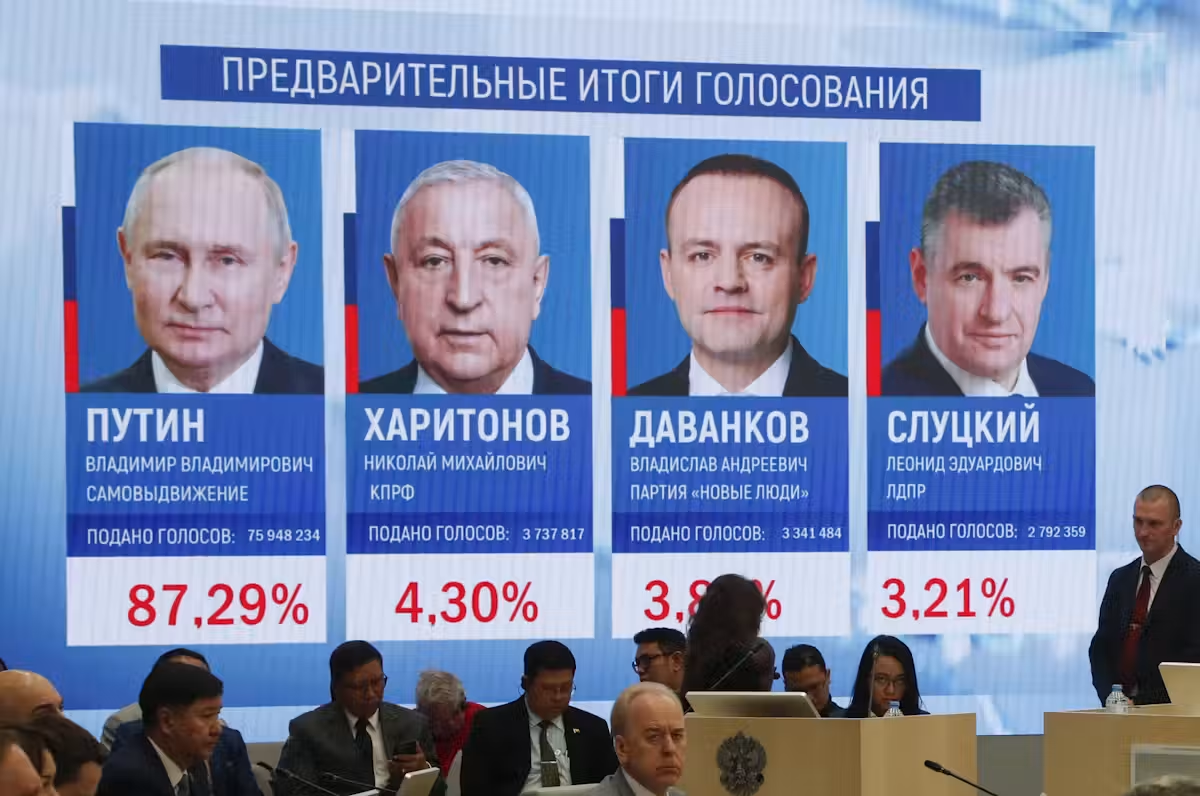
But even when elections do not feature opposition parties, keeping up the facade often still proves useful to autocrats. Vladimir Putin in Russia, for instance, still stages regular elections without meaningful competition.
Vladimir Putin, always seems to win elections in Russia with a huge majority. EPA/Maxim Shipenkov
In Myanmar, the reigning military junta was eager to hold sham elections even as it continued to wage war on much of its own population and controlled only parts of the country. After its violent takeover in 2021, the general elections of 2025/26 have served as an attempt to regain some legitimacy and establish the junta as the country’s rightful government.
In such cases, elections allow authoritarian regimes to project legitimacy both domestically and internationally. Even meaningless multiparty elections without real opposition allow autocrats to claim popular support and democratic credentials. They use these to bolster domestic authority and deflect international criticism.
Beyond legitimacy
But Ortega doesn’t seem to value these advantages associated with elections anymore. Since crushing mass protests in 2018, Ortega has ruled increasingly through repression.
Abolishing elections is simply the next step. Consequently, Nicaragua today is the least democratic country in Latin America, according to the V-Dem Institute, which tracks democracy worldwide. Even Cuba, a Communist one-party regime, and Venezuela, another electoral autocracy with severely curtailed freedoms, score marginally higher on democracy indices.
What the case reveals beyond Ortega is a growing brazenness among authoritarian regimes and a declining concern for international legitimacy. It shows that for many autocrats, even the appearance of democracy is no longer necessary. Abolishing elections entirely remains rare, but the direction of travel is familiar.
Similar examples in recent years include Venezuela’s dissolution of its legislature in 2017 under Maduro and Cambodia’s complete repression of the opposition following the 2013 elections.
Ortega has simply gone a step further. Worryingly, he he is unlikely to be the last autocrat to conclude that elections aren’t worth the trouble in an increasingly authoritarian international environment.
Q COSTA RICA — Amid escalating political tensions in Nicaragua, public statements by four former Costa Rican presidents have strengthened international condemnation of Daniel Ortega’s regime.
The former Costa Rican leaders described the direction Ortega has taken for Nicaragua as dictatorial, following Ortega’s assertion that no more elections will be held.
The Costa Rican leaders warned of the consolidation of an authoritarian regime in Managua.
The last time Daniel Ortega relinquished the presidency of Nicaragua was in 1990, after losing to Violeta Barrios de Chamorro. Chamorro’s daughter, Cristiana, who now lives in exile, challenged Ortega in the 2021 elections, was disqualified, and placed under house arrest. Since February 9, 2023, she’s been living in the United States after being suddenly taken from her home and flown out alongside 221 other political prisoners.
Among the voices speaking out against Ortega’s plans to eliminate elections is Laura Chinchilla (2010-2014). The former president pointed to the open display of absolute power by Ortega, who has been at the helm of Nicaragua for almost 20 years.
Chinchilla stated that “his power, obtained through fraud and repression, already spoke of his intention to perpetuate himself,” as quoted by Artículo 66. She emphasized her concern about the normalcy with which the international community accepts these types of practices and warned about the risk that other Central American leaders will replicate the authoritarian model.
Luis Guillermo Solís (2014-2018) also joined the criticism in a post from his official account. “Now that should be clear to all those who said, out of opportunism, pragmatism, or ignorance, that Nicaragua has (and will forever have, according to the Commander) the government ‘that its people have chosen,’” Solís stated in remarks reported by Costa Rican media.
The former Costa Rican president also warned that this phenomenon transcends Nicaraguan borders and reflects the global expansion of authoritarianism, autocracy, and contempt for pluralism and democratic and republican values. “We live in times where attacks against the judicial branch, terrorist attacks, the constant delegitimization of the media, and denialist religious fanaticism prevail,” Solís pointed out.
This chorus of voices was joined by two-time president Óscar Arias (1986-1990 and 2006-2010), and winner of the 1987 Nobel Peace Prize, recalled that Ortega has cultivated an authoritarian vision since the 1980s. According to Arias, the idea of remaining in power without elections has been a constant in the Nicaraguan president’s political strategy.
Former President Rodrigo Chaves (2022-2026) reiterated that Costa Rica maintains its democratic commitment and the holding of free elections. “Thank God,” he said, “Costa Rica is a democracy, and there will always be elections.” “God willing,” Chaves told local media after a parliamentary meeting. Chaves’s party proposed a formal condemnation of Ortega in response to his recent statements.
The current Costa Rican government of Laura Fernández’s reaction was more measured.
Condemnations in the Region
International rejection of Nicaragua’s authoritarian drift was expressed in diplomatic condemnations from Central American countries—Costa Rica, Panama, and Guatemala—and the United States.
In the Caribbean, the Dominican Republic recalled its ambassador from Managua for consultations, while Chile, Bolivia, and Peru issued critical statements. The Brazilian government, for its part, expressed concern about the situation, albeit in a more nuanced tone.
Nicaragua’s National Assembly, dominated by the ruling party, the FSLN (Frente Sandinista de Liberación Nacional), is preparing a package of reforms to be presented next month, with the aim of consolidating its grip on power after two decades of Ortega’s presidency.
This scenario has reinforced the perception of a political crisis with regional implications and fueled the debate about the risks of authoritarianism in Latin America.
Q COSTA RICA — Despite the request on Sunday from the Ministry of Justice that the hearing on precautionary measures against Alejandro Arias Monge, alias “Diablo,” and Jonathan Pérez, alias “Tan,” be held virtually due to the danger they pose, rather than the typical transfer to the courts.
The operation began around 7:00 a.m. this Monday, with the typical transfer of highly dangerous individuals. Under a strict aerial and ground security escort, Monge rode in “La Bestia” (Beast), while Tan rode in the typical paddy wagon; they were transferred some 22 kilometers from La Reforma to the Tribunales de San José (Primer Circuito Judicial de San José) located in downtown San José, some 22 kilometers from the prison.
At the hearing, scheduled for 1:30 p.m., the criminal leaders are expected to be charged with two counts of homicide and one count of attempted homicide and could face measures such as pretrial detention (remand) while authorities gather all the evidence for a final trial.
The request made by the Minister of Justice, Gabriel Aguilar, to the acting director of the Organismo de Investigación Judicial (OIJ), Michael Soto, was based on institutional security criteria aimed at minimizing the risks involved in the transfer and custody of individuals “considered highly dangerous,” such as Arias Monge.
“Diablo” and “Tan” remain under maximum security. If they are remanded, they will be transferred back to La Reforma prison complex, in San Rafael de Alajuela, under constant surveillance by tactical officers.
Alejandro Arias Monge was the most wanted drug trafficker in the country for the last ten years, while Jonathan Pérez Méndez (Tan) had been on the run for about 18 months and, apparently, was Arias’ right-hand man.
Q COSTA RICA — The Dirección de Inteligencia y Seguridad Nacional (DIS) and the Fuerza Pública (National Police) located a woman identified as Arias Fonseca, daughter of Alejandro Arias Monge, known as alias “Diablo,” during an operation near the main entrance of La Reforma prison in Alajuela.
The police intervention took place within the context of intensified actions to strengthen security in the prison area, following the arrest of the most wanted criminal in the country the previous day.
Following the detention, “daiblo” was transferred to the Maximum Security module unit of the La Reforma Penitentiary Center awaiting a pretrial hearing.
According to the police report, agents arrested Arias Fonseca while she was traveling in an armored vehicle and carrying a firearm.
Security controls reinforced around La Reforma prison
Public Security Minister Gerald Campos stated that the deployment responds to the need to guarantee “extreme security in all areas surrounding La Reforma prison.”
“We are working in conjunction with the DIS (akin to the Secret Service in the United States) and the Penitentiary Police, providing all the necessary support to ensure extreme security in the entire area surrounding La Reforma prison. We will be checking people, we will be checking vehicles, we will be monitoring all suspicious activity. It is time to put a stop to those who have caused so much harm to the country, and we will be working hard because our enemy is organized crime,” Campos stated.
The arrest of Arias Fonseca stemmed directly from the inter-institutional coordination that has been strengthened following the capture of her father, Alejandro Arias Monge.
During the inspection, it was verified that the detainee was carrying documentation authorizing her to carry weapons, but an investigation has been opened to determine whether the vehicle’s armor plating and the weaponry were being used for illicit purposes or as part of a personal protection strategy.
After the police intervention, Arias Fonseca was released, although authorities will keep the investigation open and reinforce security controls in the vicinity of the prison. So far, no further incidents have been reported.
The arrest of alias “Diablo” took place on Friday in Horquetas de Sarapiquí, in the northern section of Costa Rica, near the border with Nicaragua, following an operation coordinated by the Organismo de Investigación Judicial (OIJ) and other security forces, including the U.S. Drug Enforcement Agency (DEA), that now has a permanent station in Costa Rica, which left five police officials injured, and the death of one of the bad guys, in an hour long shootout according to police reports.
Security forces have intensified surveillance and controls in the vicinity of La Reforma prison. The deployment includes vehicle inspections, background checks, and monitoring of pedestrian traffic in the area, as part of actions aimed at preventing incidents related to organized crime and ensuring security around the prison.
Q COSTA RICA — Costa Rica’s Penitentiary Police removed a total of 187 television screens, 20 converter boxes, and 123 remote controls from seven prisons in Costa Rica, as part of new measures announced by the Ministry of Justice to strengthen security within Costa Rican prisons.
The seizures are part of the security policy implemented by the government of President Laura Fernández and the Minister of Justice, Gabriel Aguilar, who last week announced a series of actions aimed at strengthening state authority within prisons and reducing the privileges of incarcerated individuals.
The removal of these electronic devices was carried out in seven prisons through operations conducted by the Penitentiary Police, without any reported incidents during the interventions.
The measure is part of a directive issued by the Ministry of Justice and Peace ordering the removal of televisions from cells throughout the prison system. According to Minister Gabriel Aguilar, the decision is effective immediately and aims to strengthen institutional control over detention centers.
The tightening of regulations was presented by the Government as a strategy to combat the influence of criminal groups from within prisons and reinforce discipline within penitentiary centers. During the announcement of the new provisions, Aguilar stated that the intention is to fully restore the State’s authority in prisons.
In addition to the removal of televisions, the Ministry of Justice announced other actions that will transform the operation of the prison system. Among these measures is the elimination of transfers of incarcerated individuals for conjugal visits when both are incarcerated in different prisons, a practice that required the mobilization of state police and logistical resources.
The measures also include the periodic rotation of prison directors, as well as officers assigned to maximum-security units, to prevent them from remaining in the same position for extended periods and to reduce potential links with criminal organizations operating from within prisons.
Another announced measure involves strengthening internal controls over Ministry of Justice personnel. Authorities indicated that the lifestyles and any suspicious behavior of prison officials will be reviewed, and any indication of collaboration with criminal organizations will be reported to judicial authorities for investigation.
The government also warned that public officials arrested for smuggling drugs, cell phones, or other prohibited items into prisons, or for collaborating with criminal gangs, could be held in the future High-Containment Center for Organized Crime (CACCO), once it becomes operational.
CACCO is a high-security mega-prison under construction, featuring five modules, a capacity for 5,000 inmates, located within the sprawling grounds of La Reforma prison complex in San Rafeal de Alajuela. Total investment is between US$33 to US$39.6 million dollars, optimized through design cooperation with El Salvador, and is scheduled to be structurally completed and open at the end of September 2026.
Q COSTA RICA — Accustomed to answering questions about security, the economy, or government decisions, this time Laura Fernández spoke from a much more intimate place.
Without political speeches and in a relaxed tone, the President of Costa Rica opened the doors to her personal story during the “Alma de Mujer” (Soul of a Woman) podcast on Canal Gente OPA, where she shared episodes that, she confessed, shaped her character long before she arrived at Casa Presidencial.
The conversation began with a reflection on how she deals with public exposure and the constant criticism inherent in politics. Fernández asserted that the key has been self-knowledge.
“I think I know Laura very well. I know my strengths, my weaknesses, and I know very well what things affect me emotionally and what things don’t,” she stated.
Beyond her public image, the president confessed that she finds true balance in her spirituality. Although she asserted that she is not a particularly religious person in the traditional sense, she explained that faith occupies a central place in her life.
“To this day, my God has not failed me once in any trial I have faced,” she expressed, recalling that she usually entrusts every important decision to God and the Virgin of Los Ángeles, from state meetings to the most complex issues related to the country’s security.
But if there is a refuge that, she said, restores her peace of mind after intense days, it is her home.
The president recounted that, regardless of the accumulated fatigue after tours or meetings, everything changes when she crosses the threshold of her home.
“What I hear is my daughter Fernanda running around yelling ‘Mom!’ along with my two dogs, racing to see who gets there first to greet me. I forget everything,” she said with a smile.
That everyday moment, she explained, is what allows her to simply be Laura again and leave behind, for a moment, the weight of leading the country.
One of the most emotional moments came when the conversation turned to an episode she had rarely shared publicly: her first marriage.
Laura Fernández (right) shared previously unknown aspects of her personal life during her appearance on the podcast Alma de Mujer, on Canal Gente OPA. Screenshot Gente Opa
Fernández revealed that she married very young, around 23 years old, and that the relationship ended in divorce after her then-husband fell in love with another woman.
“Everything bad that can happen to you, happened to me,” she recalled.
The president confessed that that episode represented one of the hardest blows of her life.
“Devastated. That’s how I was. It was incredibly difficult to overcome the infidelity and learn to live alone,” she recounted.
After that experience, she said she completely lost faith in love and became convinced that she would never get married again.
“I said: I’m never getting involved in this marriage thing again,” she recalled.
However, she affirmed that it was precisely during that period that she decided to focus all her energy on studying and growing professionally.
“I worked sixteen or seventeen hours a day,” she commented, convinced that work was a tool for rebuilding herself emotionally.
Over time, Jeffrey appeared, who is now her husband and, in her own words, the man who showed her what it truly means to share life with a partner.
“When I married Jeffrey, I understood what it meant to have a husband. To have a true partner, someone who loves you, respects you, and rejoices in your growth,” she stated.
The president recounted that it was he who encouraged her to send her resume when then-President-elect Rodrigo Chaves opened the process to form his cabinet, even though she was 14 weeks pregnant.
Later, when the possibility of becoming a presidential candidate arose, it was Jeffrey again who encouraged her.
“Go for it. It’s the opportunity of a lifetime. I’ll support you; we’ll make it work somehow,” she recalled her husband telling her.
Fernández also spoke about the internal conflict she experienced as a Catholic woman when considering remarriage after a divorce. She recounted that she even went to confession with a priest to seek guidance.
As she recalled, it was that priest who asked her a question that completely changed her perspective: whether she truly believed God wanted her to spend the rest of her life alone because of a past mistake.
“I left that confession renewed,” she affirmed.
In addition to discussing her love life, the president recalled another of the most difficult moments in her life: her mother’s battle with breast cancer while she was still a university student.
She explained that she had to take on new family responsibilities while continuing her studies, even giving up academic opportunities abroad to remain close to her family.
That experience, she confessed, also affected her health, and she gained nearly 44 pounds due to stress and hormonal changes caused by the anxiety.
Despite all these difficulties, Fernández maintained that she never lost sight of the goal she had set for herself as a child.
“I come from a small town where the school had only one teacher, where there were no paved roads, and where I grew up among chickens and pigs. I became president of Costa Rica through education and hard work,” she stated.
Before concluding the conversation, she sent a message specifically to women going through difficult times.
“Education and perseverance are the way. You can achieve your dreams through your own efforts,” she said, convinced that setbacks, however painful, don’t have to define the rest of your life.
More than a political interview, Alma de Mujer revealed a side of Laura Fernández far removed from presidential protocol: a daughter who stood by her mother through cancer, a woman who suffered infidelity, a believer who found solace in faith, a mother who unwinds by playing with her daughter, and a wife who, in her own words, discovered a second chance at love when she least expected it.
Q COSTA RICA — The Organismo de Investigación Judicial (OIJ) — Costa Rica’S Judicial Investigation Agency — confirmed the arrest of Alejandro Arias Monge, known as “Diablo,” during an operation carried out this Friday morning, July 24.
The capture, led by the Oficina Contra el Crimen Organizado (OECDO) — Office Against Organized Crime — was the culmination of several years of investigations and involved the participation of OIJ tactical units.
In the operation, five OIJ agents were injured, one critically, reflecting the high level of risk associated with the arrest of El Diablo, considered one of the most dangerous criminals in Costa Rica, wanted for multiple violent crimes, and with an unprecedented criminal record.
The U.S. Department of Justice (DOJ) and Drug Enforcement Administration (DEA)had offered a US$500,000 reward for information leading to his capture or prosecution, in coordination with the Costa Rica’s Attorney General’s Office and the OIJ.
The interim director of the OIJ, Michael Soto, confirmed the arrest of Alejandro Arias Monge during a police operation in the San Bernardino de Sarapiquí area, close to the Costa Rica – Nicaragua border.
The operation, coordinated with the Ministerio Público and the Judiciary, also resulted in the capture of two individuals identified as “Tang,” from the Batán area, and “Coco Guásimo,” whose last name is Ríos Oconitrillo. The latter died after an exchange of gunfire with the officers.
According to Soto himself, the operation began at 5:00 a.m. and lasted approximately one hour. Tactical units from the OIJ, supported by the Surveillance Unit and the Organized Crime Office, entered the target area, where a high-intensity armed confrontation took place.
“It was a fairly complex operation, at five in the morning, when our SERT (tactical group), along with the support of the Surveillance and Monitoring Unit and the Organized Crime Office, entered this sector and a rather strong exchange of gunfire took place,” Soto explained.
According to official reports, four of the OIJ agents shot in the gunfight are in stable condition; the fifth was transferred to a hospital in San José.
Seized in the operation were at least five high-caliber assault rifles at the scene, including an FAL and an AK-47, as well as three pistols and drone surveillance technology. According to the OIJ, the drones were being used to monitor the surrounding area and hinder police operations.
Soto explained that the importance of this operation lies in the profile of those captured.
“Alias Tang has been responsible for a large number of homicides,” Soto stated. Regarding Arias Monge, he emphasized that “he is an individual who has caused a great deal of violence in the country.”
Soto noted that the operation demonstrates the institution’s and the Judiciary’s commitment to national security, despite recent budget cuts by the Laura Fernández administration. “This undoubtedly demonstrates that the Judiciary is committed to the country’s security, achieving such a significant result,” Soto asserted.
Soto said that more details about the results and implications of this police action will be released in the coming hours.
The profile of Arias Mong is characterized by the extreme use of violence, rapid territorial expansion, and a remarkable ability to evade authorities. According to official reports and judicial sources, he is attributed with up to 100 murders, in addition to direct threats against police, including audio recordings in which he offered rewards for the murder of agents.
Arias Monge had at least five criminal cases against him and had been a fugitive since 2016, the year he was declared a rebel for failing to appear in court for homicide. The OIJ notes that, unlike other local organizations that maintain a low profile in international drug trafficking, “Diablo” developed a decentralized network that combines street-level drug dealing with violent alliances.
His proximity to Nicaragua allowed him to move freely through rural and urban areas, making him difficult to locate and capture.
The arrest of alias “Diablo” represents a significant blow against organized crime in Costa Rica and demonstrates the international cooperation between the Costa Rican justice system, the U.S. DOJ, and the DEA in combating drug trafficking and associated violence.
Q COSTA RICA — This coming weekend and next are holiday weekends in Costa Rica, but with a difference: among them is the way these holidays are paid, which varies depending on the type of holiday, the employee’s payment method, and whether they work during the regular workday.
The experts recommend reviewing the regulations to avoid errors in salary calculations.
The July 25th holiday commemorates the 202nd anniversary of the Annexation of Nicoya, and the August 2nd holiday, corresponding to the Día de la Virgen de los Ángeles (Day of Our Lady of the Angels).
Under Costa Rican labour law, they are treated differently. Therefore, both employers and employees should be aware of how each holiday is compensated to avoid errors in payroll.
According to Article 148 of the Labor Code, July 25th is a mandatory paid holiday, while August 2nd is a non-mandatory paid holiday.
This difference determines how much should be paid if the employee works on those dates or chooses to take them as a day off.
In the case of July 25th, those who are paid hourly or daily in non-commercial activities are entitled to holiday pay even if they do not work. If they work that day, the day must be paid at double time.
For individuals with monthly, bi-weekly, or weekly salaries in commercial activities, holiday pay is already included in their regular salary. If they work on July 25th, the employer only needs to add an additional single payment to complete the equivalent of double pay.
If overtime is worked during that day, it must be paid at a rate of 50% above the hourly rate for the holiday.
The situation changes on August 2nd, when employees with monthly or bi-weekly salaries are entitled to enjoy that day with the holiday pay already included in their salary. If they work, the day must be paid at double time, and if overtime is worked, it is paid at triple time.
Those who receive weekly, daily, or hourly pay can rest on that day, but the employer is not obligated to pay for the holiday if they do not work. If they do work, the workday is paid at the regular rate, and overtime is paid at time and a half.
Although the general rule is that holidays are days off, the law allows companies to require their employees to work (except for the Día de la Madre – Mother’s Day on August 15) when the nature of the business requires it.
Unlike previous years, none of these holidays will be moved in 2026 to the following Monday to create a long weekend. July 25, which falls on a Saturday, and August 2, which falls on a Sunday, must be observed on their official dates.
How are holidays paid in Costa Rica?
July 25 (mandatory payment)
If no work is performed, holiday pay is due according to the employee’s salary scale
If work is performed, the workday is paid at double time.
Overtime is paid with a 50% surcharge on the hourly rate for the holiday.
August 2nd (non-mandatory payment)
Monthly or bi-weekly salary: the holiday is already included; if you work, double pay is due.
Weekly, daily, or hourly salary: if you don’t work, the employer is not obligated to pay for the day; if you work, you are paid at the regular rate.
Overtime is paid according to the applicable payment method.
Q COSTA RICA — The problem of waiting lists at public hospitals of the Caja Costarricense de Seguro Social (CCSS) is worsening rapidly.
An audit report of the institution, released by Legislator Ángela Aguilar of the Partido Liberación Nacional (PLN), reveals alarming data.
Between December 2024 and March 2026, waiting lists increased from 1,094,093 to 1,440,547 cases, a cumulative increase of 346,454 people (+31.7%).
By March of this year, the surgical waiting list had reached 204,622 cases, with an average wait time of 441 days; the procedural waiting list had reached 873,572 cases, with an average wait time of 207 days. The outpatient waiting list, which reached 362,356 cases, with an average wait time of 540 days, for a total of 1,440,547 cases awaiting care.
“The audit reveals deficiencies in the planning, implementation, and monitoring of the measures adopted, attributing direct responsibility to the Administration for the lack of effective results. Problems in resource allocation, the absence of control mechanisms, and weak accountability stand out, which have limited the achievement of the established objectives,” the legislator stated.
The main increase, according to the report, was concentrated in diagnostic and therapeutic procedures, which grew by 287,925 cases (+49.2%), while surgical waiting lists increased by 19,077 cases (+10.3%) and specialized outpatient consultations by 39,455 cases (+12.2%).
Meanwhile, waiting times worsened across all categories, most notably for outpatient appointments, where the average wait increased from 386 to 540 days—an additional five months.
“This deterioration reflects the fact that the measures outlined in the 2023 Roadmap were not implemented, with serious consequences for users, who face delays that affect their quality of life and the progress of their health,” the legislator added.
In this regard, the legislator demanded accountability from Mónica Taylor, the current president of the CCSS.
Previously, Taylor had stated that, essentially, nothing could be done to eliminate waiting lists.
That is why, last May, Taylor presented a comprehensive plan to address the problem.
This represents a shift in approach to waiting list management, moving from a fragmented model to one coordinated with central oversight. This will allow for a more efficient distribution of institutional resources and ensure more equitable care for the user population.
The official added that this initiative responds to the need to address a long-standing problem in a structural way.
“Here, the CCSS must act as a single network. It’s not about what corresponds to each (medical) center, but about guaranteeing that all users receive timely care, regardless of where they come from,” Taylor stated.