



RICO’s Q — Normally, I don’t post about Trump, but I couldn’t resist this one—especially given the timing: Election Day for the midterms.
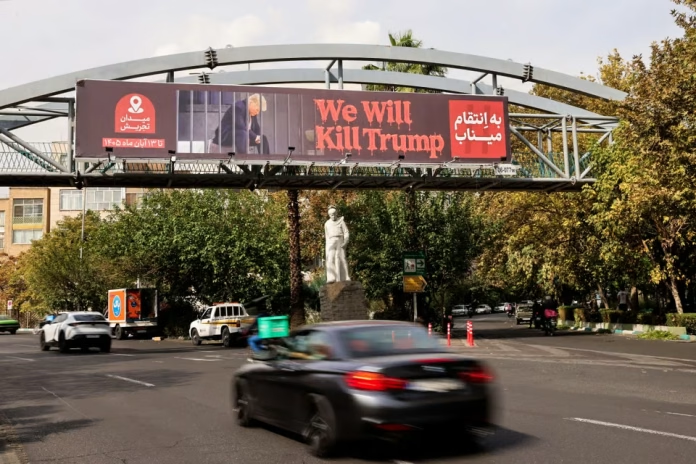
Iran displayed a giant billboard in Tehran bearing the words “We will kill Trump,” escalating the country’s public rhetoric against the U.S. President. The banner, placed over the busy Enghelab Square, showed Trump behind bars with his head lowered.
A nearby billboard depicted Trump alongside U.S. Vice President JD Vance, special envoy Steve Witkoff and Israeli Prime Minister Benjamin Netanyahu. Their faces appeared bloodied and their clothes torn, against a backdrop of worn U.S. and Israeli flags.

The displays appeared amid a gathering in the square, where dozens of people waved red flags and carried signs reading “There will be blood.” The crowd was calling for revenge over the killing of Iran’s Supreme Leader Ali Khamenei in U.S. and Israeli attacks on February 28, an event that triggered the regional war.
A political message as much as a threat
The billboard’s language is explicit, but its public placement and theatrical imagery also make it a political performance. Iran has repeatedly installed posters and banners in Tehran that mock Trump, promise retaliation and claim victory over the United States.
The latest display fits that pattern, while sharpening its message by naming the U.S. president directly.
That distinction matters. A public threat is not, by itself, evidence of a specific operational plan. The report describes propaganda and a rally; it does not provide evidence that the billboard signals an imminent attempt on Trump’s life. Still, the wording is unusually direct, and it adds to the hostility surrounding a conflict in which senior leaders and officials have become prominent targets of political imagery.
The timing also carries diplomatic weight. The efforts to bring Tehran and Washington to negotiations had intensified in recent days, as mediators sought to prevent renewed fighting. Against that backdrop, the billboard sends a stark message to domestic and foreign audiences alike: anger and calls for vengeance remain visible in Iran even as diplomacy continues.
The display does not tell us whether negotiations will succeed or whether the conflict will resume. It does show how difficult de-escalation may be when public messaging casts compromise as weakness and retaliation as a demand. For now, the banner stands as a vivid symbol of the gap between diplomatic efforts and the rhetoric playing out in Tehran’s streets.