Q COSTARICA — On Monday, the Costa Rican government presented the “Hello Brete” strategy, a free English language teaching program designed to improve job opportunities through accessible and widespread training.
As part of the initiative, the Executive Branch announced the hiring of Open English, a major online English learning platform, to provide up to 500,000 free licenses annually to Costa Rican citizens to boost national bilingualism.
The program includes classes taught by native speakers and uses artificial intelligence to reinforce learning. It will also be aligned with the Common European Framework of Reference for Languages (CEFR), which will allow for standardization of levels and certification of the skills acquired by users.
For the next four years, 2 million Costa Ricans will be able to receive free English training, announced President Rodrigo Chaves, alongside representatives from the renowned company Open English.
The president defended the initiative as a tool to close historical gaps in access to language learning.
“Knowing or not knowing English has been a wall that has divided our society: those who have opportunities and were able to attend, mostly, expensive private schools; those who were fortunate enough to have that opportunity, and those who were left out, seeing how learning English in the public education system has not been a realistic, achievable goal,” he stated.
Chaves added that this inequality stems from structural flaws.
“That wall didn’t go up on its own, no. That wall was built by a system that gave advantages to a few and denied the tools to the majority. A system that couldn’t recruit enough qualified teachers for public schools and colleges, nor dedicate enough time to bilingual education,” he pointed out.
The registration process will be entirely digital at https://hellobrete.com, through the creation of an account, the completion of a form, and a biometric identity validation (photo and ID verification).
Due to extremely high demand on launch day, the website experienced temporary outages, but authorities confirmed that licenses have not run out and technical adjustments are being made.
Open English offers a flexible, 100% online curriculum focused on professional fluency:
Classes: Unlimited live group classes with native-speaking teachers, available 24/7 every 30 minutes.
Levels: 8 levels of learning based on the Common European Framework (A1 to C2).
AI Tools: Includes Jenny, an AI tutor for practicing pronunciation, writing, and fluency.
Certification: Participants who complete the course receive a certificate endorsed by both INA and Open English.
RICO’s Q — Daniel Ortega, Nicaragua’s longtime president, has not been seen in public, staying in El Carmen, his private residence that doubles as a presidential house, for 50 days, sparking speculation and concern both inside the country and abroad.
Ortega, who has dominated Nicaraguan politics for over two decades (having recently marked 19 consecutive years in office, 24 years total) typically maintains a visible presence through frequent public appearances and speeches, making his absence all the more notable.
The official script indicates don’t worry…the country continues to “function”.
The “ghost president” as some calle him, hasn’t taken part in events, tours or in recent photos. Total silence, as if in “airplane mode”.
During his absence there have been no medical reports on his health, no public agenda published, no real official explanations. Translation: “Nothing’s happening here… and if something is, we’re not going to say anything.”
Some are already speculating:
In recovery? The octogenarian allegedly suffers from chronic, serious ailments including lupus and kidney failure.
A strategic silence or something more? Given the United States’s increasing pressure on the Ortega-Murillo regime through economic sanctions.
Or what? Reports suggest that the regime is facing increasing isolation and potential instability, following the political decline of allies like Nicolás Maduro, leaving his co-president wife, Rosario Murillo, in charge
Ortega has not disappeared from the political map in a permanent sense, but he has a well-documented history of prolonged public absences that frequently spark rumors about his health or death.
With each passing day of absence the mystery and the theories grow.
Q COSTARICA — An elderly woman from San Carlos found herself needing to appeal to the Constitutional Court (Sala Constitucional or Sala IV as it is often referred to) to guarantee her right to timely health and medical care.
The woman, whose identity was not released, was scheduled to receive care from the Caja Costarricense de Seguro Social (CCSS/Caja) — Costa Rica’s public healthcare system — in 2047; that is, in 21 years and after she has turned 85.
The woman suffers from knee osteoarthritis due to genu varum, a medical condition that hinders her daily activities, according to her complaint.
With the court ruling, the CCSS was forced to move up the appointment to the coming weeks.
The problem
To get an appointment with a specialist or undergo surgery, Costa Ricans must wait more than a year on average, according to CCSS data.
The number of days depends on the specialty and the service saturation at each hospital.
For example, a nephrology (kidney medicine and is a subspecialty of internal medicine) appointment at the Baltodano Briceño Hospital in Liberia requires a 350-day wait, but at the Calderón Guardia Hospital, only 164 days.
Meanwhile, for cardiovascular surgery, the wait is 640 days at Hospital México and 213 days at the San Juan de Dios Hospital.
Amidst all this, some patients suffer terrible pain or end up dying due to a lack of care.
According to the CCSS website, the wait time (as of today) for an outpatient consultation is 390 days; For a surgical consult is is 432 days.
Screenshot from the CCSS website on April 14, 2026
Many Costa Ricans dealing with long waits often turn to private insurance to get quicker access to private healthcare.
Q COSTARICA — Most cybercrimes in Costa Rica fall into two categories: online fraud and identity theft, which together account for 84% of reported cases, according to a cybersecurity report prepared by the Cybersecurity Research, Development, and Innovation Laboratory at the National University (UNA).
The study details that 62.1% of incidents are related to online fraud, while 21.7% are linked to identity theft.
This pattern confirms that digital attacks primarily focus on exploiting people’s trust and their vulnerability under pressure or fatigue.
Between January 2018 and August 2025, 40,457 reports of cybercrimes were filed, reflecting sustained growth in recent years, according to the report based on data from the Judicial Investigation Agency (OIJ).
The increase has been particularly rapid in the most recent period. Between 2023 and 2024, reports of domestic violence increased from 5,287 to 10,398 cases, representing a 96.7% rise.
Furthermore, in the first eight months of 2025, the total number of reports surpassed the previous year’s total, reaching 10,598.
Regarding geographic distribution, 79% of cases are concentrated in the Greater Metropolitan Area (gam), with San José leading at 38.2%, followed by Alajuela (19.2%), Heredia (11.4%), and Cartago (10.4%).
The profile of the victims shows that 86% are between 18 and 64 years old, with the highest incidence among people aged 30 to 39.
The distribution by sex is practically equal, indicating that the risk is not dependent on gender.
The report also notes that, although there has been progress in the adoption of security tools, this progress is not always uniform.
Some more advanced technologies have high levels of implementation, while basic measures are not yet widespread.
Meanwhile, the use of artificial intelligence in cybersecurity is progressing gradually. Twenty percent of institutions already use or test it, primarily to detect threats and monitor events, although there are still few teams specializing in this area.
Q COSTARICA — Global dependence on fossil fuels is intensifying the climate crisis and generating serious health effects, warned Christiana Figueres, former UN climate chief and key architect of the Paris Agreement, upon assuming the co-chairmanship of an international commission of a new Lancet Commission on sea-level rise, health, and justice.
The initiative, promoted by the scientific journal The Lancet, will investigate how rising sea levels threaten health, exacerbate inequality, and reshape habitats, with a final report expected by September 2027
It will also analyze possible legal frameworks for holding those responsible for health damages associated with the climate crisis accountable.
“Companies must understand that, for the continuity of their business, they must reduce emissions. Governments must understand that, to stabilize their economies and protect their populations, they must reduce emissions. I simply believe that enlightened self-interest, based on scientific facts—which is what the commission will propose—is a much more effective path to emissions reduction than a legally binding agreement from which anyone can withdraw,” said Figueres.
The commission’s work stems from calls by health ministers of Pacific islands, who have insisted on addressing sea-level rise as a public health and justice issue.
This phenomenon is already causing the contamination of water sources, impacting food production, and forcing the relocation of entire populations.
“From a health perspective, it is affecting drinking water, sanitation, and food security due to the salinization of all these coastal lands.” “It’s happening right now; it’s a health crisis and the root of all injustices,” Figueres added.
The specialist also linked current energy dependence to global instability, noting that the fuel crisis highlights the vulnerability of the current system and its repercussions for health.
The impact of rising sea levels is not uniform, as regions like the Pacific are experiencing increases above the global average, putting countries like Tuvalu, Kiribati, and Fiji at risk, which could become uninhabitable in the coming decades.
Likewise, low-lying coastal cities like New Orleans, London, and Amsterdam face increasing threats.
Recent research published in Nature warns that sea level rise could be greater than estimated, especially in regions of the Global South.
The commission will also address the social and emotional impact of displacement, as well as the inequalities faced by countries less responsible for climate change but more affected by its consequences.
Christiana Figueres, born in San José, Costa Rica, is the daughter of José Figueres Ferrer, who was President of Costa Rica three times, and Karen Olsen Beck, who served as Costa Rican Ambassador to Israel in 1982 and was a member of the Legislative Assembly from 1990 to 1994. Christiana’s older brother, José Figueres Olsen, was also President of Costa Rica (1994–1998) and presidential candidate in the 2022 elections.
Q COSTARICA — On Saturday, Costa Rica received 25 foreign nationals and one Costa Rican citizen deported from the United States, as part of the memorandum of understanding signed between the two countries.
The group is comprised of individuals from Albania, Cameroon, China, Guatemala, India, Kenya, and Morocco.
The largest group is from Guatemala, with eight people, followed by Cameroon and Honduras, with four each, three people from India, two each from China and Morocco, and one each from Albania and Kenya.
As part of the entry process, Costa Rican authorities implemented exceptional measures to facilitate the migrants’ care.
These measures included waiving the visa requirement for some nationalities and, in the case of Honduras, eliminating the requirement for a criminal background check.
However, it was indicated that all individuals underwent background checks in judicial systems, as well as consultations with international databases, including Interpol.
Upon arrival, migrants receive initial assistance from Costa Rica’s immigration police, with support from the International Organization for Migration (IOM), the organization that provides humanitarian assistance, including lodging, food, and support during the first seven days of their stay in the country.
During this period, individuals may choose to participate in the Assisted Voluntary Return program, which allows them to return to their countries of origin with logistical support.
Those who wish to remain in Costa Rica may also initiate a process for temporary immigration regularization for humanitarian reasons.
Another available option is applying for asylum, which can be done at any time in accordance with current regulations.
If neither of these options is chosen, individuals may leave the processing center and continue their journey on their own, after notifying immigration authorities.
The agreement
Last month, the government of Rodrigo Chaves agreed to receive up to 25 deported migrants a week from the United States, as part of U.S. President Donald Trump’s efforts to ramp up his mass deportation program, including removing immigrants to third countries that are not their country of origin. The Trump administration has said that such third-country deportations are necessary to remove people whose home countries refuse to accept them.
The new agreement allows Costa Rica a closer alliance with Donald Trump’s government, which has been securing cooperation from other Central American countries in accepting deportees from other nations who have been detained by US immigration agents.
“Costa Rica feels obligated to reciprocate at a time when the United States and its immigration services need the humanitarian cooperation of Costa Rican authorities,” said the Ministro de Seguridad Publica (MSP), Mario Zamora.
“With financial support from the United States, they will be provided with housing and food on Costa Rican soil. Costa Rican immigration authorities will collaborate with US immigration authorities to carry out all the necessary immigration logistics to guarantee the return of these individuals to their countries,” added Zamora and explaining that the agreement was voluntary, maintaining that the Costa Rican government had the discretion to decide the number of deportees it will accept, as well as their nationality.
Q COSTARICA — The court file on the murder in Costa Rica of former Nicaraguan military officer Roberto Samcam Ruiz includes an element that elevates the scope of the case beyond an individual crime: testimonies pointing to the existence of a list of exiled opposition members who were allegedly targeted for assassination in Costa Rica.
This information does not come from a single source, nor is it presented as a definitive conclusion by the Organismo de Investigación Judicial (OIJ)—Judicial Investigation Agency. However, it appears repeatedly in statements collected by investigators, within a context that coincides with documented patterns of violence against Nicaraguan dissidents.
One of the witnesses cited in the expanded report states that he was aware of a “list of 10 people whom the Nicaraguan government had planned to assassinate,” on which Samcam appeared along with other opposition leaders.
Another testimony, from a source with access to police structures, describes a similar logic: opposition members were considered “targets of opportunity,” meaning they could be attacked whenever the opportunity arose.
Beyond the testimonies, the case file reconstructs a sequence of events that reinforces the hypothesis of targeted attacks.
These include previous attacks and assassinations of Nicaraguan opposition members linked to the movement that emerged after the 2018 protests, particularly in the department of Carazo. Cases such as that of Joao Maldonado Bermúdez—who survived two attacks—or the murder of Rodolfo Rojas Cordero are part of this context.
The OIJ concludes that there is a “consistent pattern”: people who participated in the so-called “roadblocks” in 2018, who later went into exile in Costa Rica, and who maintained political or public activity against the Nicaraguan regime, have been targeted at different times.
This pattern does not necessarily imply direct coordination between the events, but it does define a specific risk group.
The testimonies help to identify the possible targets of this alleged list:
Nicaraguan exiles residing in Costa Rica
Participants in the 2018 protests
People with public visibility or political influence
Individuals who have denounced or investigated the regime
The report itself describes these individuals as having “public exposure as opponents of the Nicaraguan government” and active participation in social movements.
Samcam fit this profile. A former major in the Sandinista People’s Army, he had become an outspoken critic of Daniel Ortega’s government, with frequent publications, investigations, and public appearances.
The report also documents that the warnings about possible attacks were not isolated incidents.
According to the testimonies, information about the list began circulating among opposition members in exile, leading some to increase their security and even leave the country.
Several of the individuals named, according to these accounts, chose to relocate to other destinations, primarily Europe. Others, like Samcam, remained in Costa Rica.
This context makes the murder more than just an unexpected event: it positions it as the possible materialization of a previously warned threat.
International Reports
The OIJ file is not limited to collecting isolated testimonies. It also introduces a significant element: the correspondence between these accounts and the findings of international organizations regarding the persecution of Nicaraguan opposition members.
In particular, the investigators cite a report by the United Nations Human Rights Council that documents sustained patterns of repression since 2018. According to this document, “both state and non-state actors have constantly monitored, intimidated, and persecuted opposition members or those perceived as such,” in a scheme that is not limited to Nicaraguan territory.
The same report warns that “the government’s repressive actions transcend the country’s borders” and that these actions can be directed against opposition members abroad, as well as against their families, as a form of punishment or deterrence.
For the OIJ investigators, these findings are directly relevant to the Samcam case. The file indicates a “clear correlation” between the patterns described by the UN and the situation experienced by the victim, who was an active opposition member, stripped of his citizenship, and had his property confiscated in Nicaragua.
This convergence does not, in itself, prove the existence of a list of targets, but it does reinforce the context in which the testimonies gathered in the investigation emerged.
The result is an investigative hypothesis that, while not conclusive, is supported by multiple layers of evidence: testimonial, contextual, and international.
Q COSTARICA — The US dollar in Costa Rica keeps dropping to new lows, even with global tensions like the US-Iran conflict and rising inflation swirling around.
This Monday, the official dollar exchange by the Banco Central (Central Bank) is ¢458.94 colones for the buy and ¢465.15 for the sell, slipping even further from Friday’s close.
It’s the weakest dollar exchange rate seen here since 2007.
Why? Strong exports and foreign investments are playing a big role, along with the Central Bank holding the Monetary Policy Rate steady at 3.25%.
By not lowering the rate, the Central Bank is making borrowing more expensive, which impacts consumption with slower spending, and, in turn, turning Costa Rica into a magnet for dollars.
Vidal Villalobos, an economic advisor at Grupo Financiero Prival, told La República that 85% of Costa Rica’s GDP comes from a fixed-rate sector growing just over 3%. He said cutting interest rates and stabilizing the exchange rate would help this sector.
According to the expert, the Central Bank seems focused only on controlling inflation, overlooking how its choices shape the broader economy. Villalobos warns that while the effects might not show up immediately, the country’s competitiveness could take a hit down the road.
How the Exchange Rate Affects Living Costs in Costa Rica
A weak U.S. dollar is stirring mixed effects in Costa Rica’s economy, creating both opportunities and challenges. As the dollar loses value against the colón, Costa Rica is feeling the impact in several key areas.
For Costa Rica’s vital tourism sector, a weaker dollar is a double-edged sword. On one hand, it makes the country more affordable for travelers holding stronger currencies like the euro or Canadian dollar, potentially boosting visitor numbers. On the other, many tourists from the U.S., Costa Rica’s largest source of visitors, may find their trips more expensive, which could slow growth in this crucial industry.
Imports are another sector responding to the dollar’s weakness. Since Costa Rica relies heavily on imported goods priced in dollars, costs for everything from electronics to fuel have climbed. This inflationary pressure is being felt by consumers at the checkout line and by businesses facing higher operating expenses.
Meanwhile, Costa Rica’s exporters might gain a competitive edge.
In sum, the weak U.S. dollar is reshaping Costa Rica’s economic landscape with a complex mix of benefits and drawbacks.
Q COSTARICA — After nine days of reported missing, Costa Rica awoke Thursday morning to the news of the discovery of the body of 29-year-old Junieysis Adely Merlo Espinoza in a shallow grave at the Los Pericos condominium complex in Santa Ana.
The acting director of the Organismo de Investigación Judicial (OIJ), Michael Soto, confirmed the discovery of the body at 2:00 a.m.: A key piece of information was that Junieysis was last seen on March 31.
The young woman was originally from Nicaragua, and most of her family lives there. When they lost contact with her, they asked her partner about her whereabouts. However, the man, Gustavo Ramírez Calvo, 57, told them that she had gone to the beach with some friends and wouldn’t be taking her cell phone.
“She has an expensive phone, it’s worth more than a million colones. So I said to her, ‘Aren’t you afraid to take such an expensive phone if you’re going with people who are longtime friends?’ Then she said, ‘Well, I’m not going to take it.’ (…) There are about three other phones at home, and I said to her, ‘Why don’t you take that phone?’ And she said, ‘No, no, I’m going without a phone.’ So I took the expensive phone and said, ‘Okay, here, take this one,’ and she said, ‘No.’ Because when she says no, it means no,” the suspect told investigators when they found Junieysis’ phone in the house.
Then he told them she would “turn up tomorrow,” and he repeated this pattern for two days, prompting Merlo’s brother, along with another sister and a friend, to travel to Costa Rica to search for Junieysis.
Junieysis had around 15,000 followers on TikTok, where she frequently shared videos with her 4-year-old twin daughters, whom she had with the main suspect in her femicide.
1. Earthmoving
When the OIJ received the missing person report, they began their investigation and discovered that earthmoving had taken place on the property, a condominium complex of nine residences, with heavy machinery, on the same day Junieysis disappeared.
“A two-meter-deep pit was dug where the deceased was found,” Soto stated.
This earthmoving took place some 400 meters from the house.
“This individual hired machinery to build terraces on some lots and asked the person (backhoe operator)—who is not involved in the events—to dig a hole at the side of the road to contain the water flow; he is using this same hole for this purpose,” explained Soto.
2. The Raid
With the information obtained, a raid was carried out on Wednesday, April 8, starting at 7 p.m., on the property to locate the body.
Judicial personnel excavated delicately for hours and found the woman’s remains. At the time of the operation, the main suspect was not at the house in Santa Ana, as he informed judicial authorities that he would be moving to Cartago, with the twins, where relatives live.
He justified his move by saying that he “didn’t feel safe in the area.”
3. The Twins
When the arrest warrant for Ramírez was issued, the girls were already under the care of the Patronato Nacional de la Infancia (PANI)—National Children’s Welfare Board, said Soto.
PANI indicated that the girls were in an alternative protective care arrangement, although they would seek maternal relatives for their custody. “The local office in Santa Ana was locating family members for the evaluations and placement of the girls,” PANI informed, adding that the girls had been evaluated at a hospital and were in good health.
Wilder indicated, through this media outlet, that they were interested in custody. “We have their consent, that’s what we want most,” he stated.
4. Arrest
On finding the body of the young woman, Ramírez was immediately arrested in Cartago and transferred to the Pavas Prosecutor’s Office for questioning.
5. Cause of death
The interim director of the OIJ reported that the victim’s body showed no visible signs of gunshot or knife wounds and was hopeful that an autopsy report would indicate the cause and time of death.
The case is ongoing
The suspect’s sister told CRhoy.com in an interview: “She used to leave the little girls with him. She was already in a (another) relationship. She was seeing a Nicaraguan man who lives in the United States, and they were talking and planning to leave in May. She even asked my brother if they could advance the child support payments four months early so she could leave. Don’t just listen to what her father says, but listen to the real story, because they’re attacking my brother,”
The woman added that she was convinced Junieysis had traveled to the U.S., with the ¢600,000 colones her brother gave her, an advance on child support.
The woman insisted that Junieysis, the victim, had “three plans” with her alleged new partner.
“She wanted him (the alleged boyfriend) to come to Costa Rica, but he said no, that he didn’t want to come to Costa Rica. The other plan was for them both to go to Nicaragua and start a business there. This happened about a month and a half ago, when she told my brother about it. She even told him, ‘If you give me money, I’ll go to Nicaragua and open a soda shop.’ And she was going to sign to give me custody of the girls. The third plan was that this boyfriend told her to go to the United States.”
Q COSTARICA — The Board of Directors of the Instituto Costarricense de Electricidad (ICE) on April 9, just one month before Laura Fernández’s government takes office, dismissed its General Manager, Harold Cordero.
Cordero’s dismissal takes effect today, April 10. According to the information, ICE’s Executive President, Marco Acuña, will assume the General Management on an interim basis starting April 12.
“ICE thanks Mr. Cordero Villalobos for his dedication, effort, and contributions during his tenure, and wishes him every success in his future endeavors,” the statement reads.
Cordero assumed the General Manager position in October 2022, following a selection process conducted by an external consulting firm.
The statement does not detail the reasons for his dismissal, only that the Institute will begin an “internal selection” process to appoint the next General Manager.
RICO’s Q — I came across a post by Libertad Y Propiedad II on Facebook that caught my attention and felt it was worth sharing.
The post takes aim at Rodrigo Chaves for pulling us into the conflict that Donald Trump started with Iran on February 28th, declaring that nation’s military, among others, as terrorists.
It continues by noting that former President Otilio Ulate never involved Costa Rica in the Korean War while he was in office. Likewise, José Joaquín Trejos ensured Costa Rica stayed out of the Vietnam War during his presidency. And, in the 1980s, former Presidents Luis Alberto Monge and Oscar Arias both kept the country from getting caught up in the conflict between the Contras and the Sandinistas in Nicaragua. That cautious approach continued under Rafael Angel Calderón Fournier, who also steered Costa Rica clear of the first U.S. war against Iraq.
In Costa Rica, there is a long tradition among all political parties of maintaining total neutrality in armed conflicts, earning the nickname “the Switzerland of Central America,” for two reasons:
Since we don’t have an army, it is irrelevant and even comical to get involved in an armed conflict.
Costa Rica is small, even by Central American standards, and we don’t play in the big leagues where the world powers operate.
What Rodrigo Chaves did is ridiculous, stemming from his delusional ego. In his mind, he’s incredibly important; he thinks his pronouncements are heard in Europe, the Middle East, and North America.
Chaves feels he made a significant impact, even though his comments about Iran went completely unnoticed worldwide.
That’s why Chaves believes he did something important when his government declared on Wednesday (08.04.2026) the Iranian Islamic Revolutionary Guard Corps, and others (Hezbollah, Hamas, and Yemeni Ansarallah) as terrorist organizations, considering them a risk to international security.
The declaration that “Costa Rica is taking steps to ensure that our border security barriers and immigration systems protect the country” went completely unnoticed worldwide.
Chaves said he wants “the rest of the world to see how Costa Rica is trying to protect itself not only economically, but also from terrorism and the disastrous consequences that could result if these groups begin to operate outside the theaters where they usually operate.”
Costa Rica’s Diario Extra, the self-proclaimed newspaper, as having the largest circulation in the country, reported that the Chaves administration indicated that they will communicate this decision to the international community “to strengthen joint prevention and cooperation measures”.
No international news network reported on it.
And I’m sure that in Iran, like in the Oval Office, they don’t even know who Rodrigo Chaves is, and they won’t lose a single minute of sleep over what he decreed.
Q COSTARICA — As background, President Rodrigo Chaves acknowledged some decisions he made during his time in office, which he now regrets, just weeks before the end of his term.
As he begins the final stretch of his four-year presidential term, Chaves reflected on his regrets as the leader of the country.
In this regard, the president stated that his greatest regret is related to the time wasted trying to negotiate a hardline criminal policy with the opposition and the judiciary.
According to him, members of parliament like Rodrigo Arias and Gloria Navas, and Judge Patricia Solano, are not interested in these issues because they have a pro-crime perspective, favoring criminals over victims.
“I regret wasting my time talking with Rodrigo Arias, Gloria Navas, and Patricia Solano, having tea and cookies, trying to convince them to take action against crime, until April 2023, when, in a speech they called for my resignation, I told the then Minister of the Presidency: ‘You withdraw everything we presented against organized crime and drug trafficking, and let them, like men and women, shoulder their share,’” Chaves said.
This reflection stems from the fact that Costa Rica has seen more than 800 murders per year for the past three years due to a war between criminal gangs.
This has made crime the country’s main problem, and just days before leaving office, the political class failed to agree on comprehensive legislation to address the issue, despite four years in office.
“I spent, as a Costa Rican would say, almost a year, 11 months, trying to do it all at once, and if we have common interests and the nonsense about how those factions led, I should have started harder from the beginning, there I share a regret,” Chaves concluded.
Q COSTARICA — Inflation in Costa Rica maintained its negative trend in March, settling at -2.09% year-on-year, according to data from the National Institute of Statistics and Census (INEC).
With this result, the indicator has now remained below the Central Bank’s target range of 2% to 4% for 35 consecutive months.
The last time inflation was within this range was in April 2023, when it reached 3%.
After registering positive values between December 2024 and April 2025, the indicator returned to negative territory in May of last year.
Since then, inflation has maintained a downward trajectory, with negative figures in every subsequent month.
Although March marks the eleventh consecutive month with negative inflation, the indicator showed a slight rebound compared to February.
On a monthly basis, the Consumer Price Index (CPI) registered an increase of 0.34% during March.
The INEC reported that 48% of goods and services increased in price, while 35% decreased and 17% remained unchanged.
Among the products with the largest price increases were international tour packages, eggs, lemons, tomatoes, and airline tickets.
Increases were also recorded in services such as movie tickets, municipal services, and fuel.
Conversely, products like cabbage, papaya, potatoes, rice, and some durable goods such as cars and washing machines showed price decreases.
By sector, recreation and culture led the price increases, while transportation, financial services, and clothing saw decreases during the month.
Q COSTARICA — Western Canadians no longer have to travel to Toronto or Montreal to visit Costa Rica, with the announcement of Air Canada of the direct Vancouver-Guanacaste route.
The service will begin on December 13, 2026, and run until April 12, 2027, with flights on Mondays and Thursdays, arriving in Guanacaste at 7:35 a.m., according to the official schedule.
“We are delighted to offer this beautiful and exclusive leisure market from Vancouver next winter,” said Alexandre Lefevre, Vice President of Global Sales and Network Planning at Air Canada.
“Our new route to Costa Rica is strategically positioned to connect with a wide variety of flights at our Vancouver hub,” he added.
The Costa Rican Tourism Institute (ICT) highlighted that this opening is the result of ongoing work with airlines and industry stakeholders to expand connectivity.
“Canada is a priority market for Costa Rica, not only because of its volume, but also because of the quality of its demand,” stated William Rodríguez, Minister of Tourism.
“Expanding connections with the west coast allows us to advance in the geographic diversification of our visitors’ origins,” Rodríguez added.
Guanacaste Airport thus consolidates its leadership as the terminal with the most direct routes to Canada, including cities such as Toronto, Calgary, and Montreal.
“We celebrate the expansion of Air Canada’s operations with the new flights from Vancouver,” indicated César Jaramillo, General Manager of Guanacaste Airport.
“These figures reaffirm the confidence of Canadians in Guanacaste and in the destination’s potential,” Jaramillo concluded.
Zeus, a dog trained for rescue in high-risk areas. Photo: Costa Rica Fire Department.
Q COSTARICA — The so-called “summer” or “dry” season didn’t really show up this year, but the “rainy” season is just around the corner.
According to the experts, meteorologists from the national weather service, the Instituto Meteorológico Nacional de Costa Rica (IMN), the following is a timeline of the 2026 rainy season:
South Pacific: between April 27 and May 2
Central Valley: between April 29 and May 8
Central Pacific: between May 2 and 10
North Pacific: between May 6 and 13
Northern part of Northern Zone: between May 11 and 13.
The southern part of the Northern Zone and the Caribbean are the only regions without estimated dates, as the rainy season generally occurs year-round.
Among the characteristics of this year’s rainfall is a decrease: from April to June, it will be between 15% and 20%; from July to August, between 10% and 20%; and from September to November, between 10% and 30%.
In addition, temperatures will rise between April and November: up to 1.5°C in the North Pacific and around 1°C in the rest of the country.
As for the Atlantic hurricane season, which officially runs from June 1 to November 30 each year, early forecasts released today, April 9, 2026, suggest between nine and twelve systems, below normal. Last year was notable for its intensity rather than volume. While it had a near-normal total of 13 named storms, it produced three Category 5 hurricanes, the second-most on record for a single season.
Q COSTARICA — Considering them a threat to national security, the government of Rodrigo Chaves has declared Hamas, Hezbollah, Iran’s Islamic Revolutionary Guard Corps, and Ansar Allah, also known as the Houthi movement in Yemen, among others, as terrorist organizations.
With this declaration, their members will be barred from entering Costa Rica, and the entry of their illicit assets into Costa Rican soil will be investigated.
The Minister of Security, Mario Zamora, announced the decision on Wednesday during the press conference following the weekly cabinet meeting.
“These four organizations pose risks to international security, and Costa Rica is taking proactive measures to ensure that our border security barriers and immigration systems protect the country from these threats,” the minister stated.
The designated groups are considered declared enemies of the United States and the State of Israel, which adds geopolitical weight to the measure adopted by Costa Rica.
“At the United Nations level, there are organizations dedicated to this, and there are groups designated as terrorists. At the national level, it corresponds to the Consejo Nacional de Seguridad Presidencial (National Presidential Security Council), and from the Cancilleria (Foreign Ministry) we coordinate the international issue with allied countries with whom we share the relevant information,” said Foreign Minister Arnoldo André.
Countries designated as state sponsors of terrorism face severe economic, financial, and diplomatic restrictions, such as arms export bans, suspension of economic aid, blocking of international loans, and limitations on access to the global financial system.
Q COSTARICA — Traditionally, the transfer of power on May 8 every four years has been held at 1:00 p..m.; however, this year Laura Fernandez will receive the presidential sash from Rodrigo Chaves at 11:00 a.m.
The reason given by the Comisión del Traspaso de Poderes (Transition Commission) on informing the Legislative Assembly was to avoid potential disruptions due to the possibility of rain in the afternoon.
According to the organizers, the change aims to ensure the smooth running of the cultural program and the official ceremony.
“This decision is a preventative measure aimed at mitigating the potential adverse effects of the weather conditions,” explained Juan Marcos Vargas, president of the Commission.
The official added that the event will bring together a large number of attendees and international delegations.
For this reason, the goal is to ensure optimal conditions for safety, mobility, and adherence to the protocol.
Q COSTARICA — The Middle East conflict, more specifically the war between the United States and Iran, will result in a sharp increase in the price of gasoline in Costa Rica in May.
On Wednesday, the Refinadora Costarricense de Petróleo (Recope)—the Costa Rican oil refinery that refines nothing—announced that there will be an increase of ¢85 colones per liter for super gasoline, ¢67 colones for regular gasoline, and ¢136 colones for diesel.
Other fuels, such as natural gas and aviation fuel, will also see increases.
The government of Rodrigo Chaves clarified, however, that fuel prices are not expected to exceed ¢1,000 colones, as happened in 2022 when the world faced the beginning of the war between Ukraine and Europe.
Currently, a liter of super gasoline sells for ¢633 colones, so with the increase, it will reach ¢718 colones, while the current price of regular gasoline is ¢607 colones, and with the planned increase, it will be ¢674 colones. Finally, a liter of diesel currently costs ¢530 colones, and with the increase, it will cost ¢666 colones.
“We are strong, but the challenge will be enormous. We have a strengthened economy with negative inflation. We have to reduce the public debt. Imagine if the Middle East crisis had caught us at the end of the Alvarado Quesada administration, when the country was bankrupt. Today, instead of being here, I would be in the Basilica of Our Lady of the Angels asking our Virgin Mary to have mercy on us,” said President Rodrigo Chaves.
Chaves indicated that significant volatility is expected in the coming weeks.
Ceasefire
United States President Donald Trump said Tuesday night, just hours before the deadline, that he had agreed to “suspend the bombing and attack against Iran for a period of two weeks,” on the condition that Iran reopens the Strait of Hormuz.
The ceasefire, brokered by Pakistan, is intended to pause a month-long war and facilitate long-term peace negotiations.
Meanwhile, Iran announced that it will allow the safe passage of maritime traffic through the Strait of Hormuz for two weeks, provided that vessels coordinate with the Iranian armed forces.
This is one of the world’s most important maritime routes for oil transport, so any disruption has direct implications for global energy markets and geopolitical stability.
RICO’s Q — At least six Nicaraguans, whom the dictatorship of Daniel Ortega and Rosario Murillo had banned from returning to Nicaragua after traveling abroad, have received emails from the Ministry of the Interior (MINT) informing them that their entry into the country “is authorized,” the digital publication Confidencial confirmed.
“Amablemente hacemos de su conocimiento: el ingreso a nuestro país está autorizado. Favor acusar recibo”, escribió el MINT en los correos, en los cuales firma “Ministerio del Interior República de Nicaragua”. (We kindly inform you: entry into our country is authorized. Please acknowledge receipt,” the MINT wrote in the emails, which are signed “Ministry of the Interior, Republic of Nicaragua.)
Some of the citizens, who were effectively exiled, also received a form that the dictatorship requires foreigners entering or leaving Nicaragua to complete. The form requires them to provide personal information, nationality, details of their entry into the country, and whether they were invited by the government, a company, an embassy, or a friend.
The newspaper La Prensa also reported on the notifications from the Ministry of the Interior. According to their publication, some notices are also received via phone calls or WhatsApp messages.
Selective authorizations or a reversal?
With this decision, the Ortega-Murillo dictatorship would reverse its selective ban on Nicaraguans entering their own country, a policy it has implemented more regularly since mid-2023 and intensified in 2025.
However, authorities have not made any public announcement, and it is unknown whether the restoration of the right to enter the country is complete or if it will be applied in a discriminatory manner.
Several people consulted whom the dictatorship has banned from returning, said they had not been notified of any change in their situation.
In November 2025, the Minister of the Interior, María Amelia Coronel, justified the entry bans, saying:
“We do this, above all, because we have the legal authority to do so and, especially, to protect national sovereignty and our citizen security, which is the most important thing for the Ministry of the Interior and for all of Nicaragua.”
More than 300 Nicaraguans Barred from Nicaragua
The Grupo de Expertos en Derechos Humanos sobre Nicaragua (GRHEN)—Group of Human Rights Experts on Nicaragua—revealed in February 2025 that the regime has denied entry to some 318 Nicaraguans between June 2018 and August 2025.
Among the Nicaraguans effectively exiled are journalists, human rights defenders, activists, relatives of opposition members, and former political prisoners, among other citizens.
Several national and international YouTubers have also publicly denounced being denied entry to Nicaragua.
One of those denied entry to Nicaragua is this writer. I am a naturalized Costa Rican. At the time, in February 2022, traveling on a Costa Rica passport.
The entry bans increased after the mass expulsion of 222 former political prisoners to the United States in February 2023 and, according to GRHEN, are part of a “broader pattern of serious and systematic violations of the right to freedom of movement and to freely choose one’s residence.”
“We are going after organized crime, terrorism, and any action by any person that threatens our peace and security, which we have worked so hard to achieve,” the Minister of the Interior stated in an interview with the pro-government channel TN8.
This is how entry bans to Nicaragua work
The GRHEN explained that the banning process begins when airlines or bus companies send passenger lists* to the General Directorate of Immigration.
Immigration authorities use these lists to compare the names with another updated list they receive periodically from the Ministry of the Interior. These lists indicate who is “on alert,” prohibiting their departure from, entry into, or re-entry into Nicaragua.
At Immigration, officials supplement the information with searches on the internet and social media about the individuals listed. With this review, any data, social media post, or link considered “suspicious” is enough to create a file on the person attempting to travel and deem them ineligible to leave or enter the country.
Finally, citizens receive an email from the airline or transportation company, usually 24 hours before their return trip to Nicaragua, informing them that they have been denied entry. Several of those attempting to leave also have their passports confiscated.
In my case, I was planning to drive across the border. I had left my car on the Costa Rican side, with a confirmed reservation for a vehicle on the Nicaraguan side. When the immigration officers scanned my passport, the computer let out a series of beeps. After a long ninety minutes and indirect questions about my connection to QCostarica.com, they kindly informed me that I wouldn’t be allowed in today and escorted me back to the Costa Rican border.
My wife, who was born in Nicaragua and later became a Costa Rican citizen, has made several trips to visit her family. Each time she flies out of San Jose, the airline holds onto her Nicaraguan passport—just like everyone else on the flight—and hands it back once they land in Nicaragua.
Political operatives decide who enters and who doesn’t
GRHEN revealed that there is a chain of command for those who decide on denials of entry to the country, headed by the Deputy Directorate General of Police Investigation and Intelligence, the Army’s Directorate of Defense Information, and operatives of the Sandinista Front.
These officials and operatives investigate citizens and send the information to the Ministry of the Interior (MINT) for authorization or denial of entry.
Then, there is a written or oral notification of the prohibition of entry into the country issued by the Ministry of the Interior to means of transport or border crossings in Nicaragua.
There is also underreporting of de facto displacements, because many choose not to report them for fear of reprisals.
The Group denounces that “the lack of official documentation prevents regularization or relocation procedures in other countries.”
Changes after tensions with the United States
In recent months, the Ortega-Murillo regime has softened its repressive stance following actions by the United States government against its allies in Venezuela and Cuba.
This began with the release of some political prisoners after the arrest of Nicolás Maduro, and the rejection of accusations of drug seizures originating in Nicaragua. Even the propaganda media have begun interviewing alleged drug traffickers detained after attempting to cross into the country.
The regime also allowed some Catholic churches to celebrate Semana Santa (Holy Week) activities and sent its propaganda outlets to cover them, in an attempt to deny religious persecution, while prohibitions and police surveillance remain in place in most parishes.
“We call on those who have spread falsehoods about our religious experiences to refute what is clearly a politically motivated disinformation campaign that fuels hatred and has nothing to do with religion or faith,” the “Co-Presidency” said in a statement, accusing the accusers of being “spokespeople for the U.S. government.”
Since 2019, after imprisoning dozens of priests, more than 200 religious figures, including four bishops from the Episcopal Conference, have been banished and remain in exile, while the regime has illegally confiscated 39 properties belonging to the Catholic Church and religious orders, as detailed by CONFIDENCIAL in an investigation published at the end of 2025.
Q COSTARICA — The National Financial System (Sistema Financiero Nacional) has maintained adequate levels of solvency and liquidity in recent years, but faces areas of risk in consumer lending, according to the Central Bank’s 2025 Annual Financial Stability Report.
This positive performance has been maintained despite complex events such as the COVID-19 pandemic, the increase in interest rates in 2022, the resolution processes of financial institutions in 2024, and an international environment marked by geopolitical and trade tensions.
The Central Bank highlighted that the financial system is healthy following the crises of Coopeservidores and Desyfin, which culminated in the closure of these two financial institutions due to insolvency.
Stress tests applied under a macroprudential approach show that the system has sufficient tools to withstand adverse scenarios for up to 12 months, reinforcing the perception of overall stability.
The report aims to provide stakeholders and the public with a comprehensive overview of the sector’s recent performance, incorporating both internal and external factors.
The report places special emphasis on the behavior of the Regulated Financial Intermediation System ( Sistema de Intermediación Financiera Regulado) and, in particular, the National Banking System (Sistema Bancario Nacional), considered key axes for evaluating the stability and performance of the financial sector in the country.
Regarding loans to the private sector, it was observed that during 2025 there was a moderation in its rate of expansion, especially from the second quarter onward. However, its growth in real terms exceeded that of the gross domestic product and maintained a significant dynamic within economic activity.
When loans are broken down by currency, a slowdown is evident in both colones and dollars.
As summer temperatures rise, households across the country are facing soaring utility bills. The cost of electricity, in particular, has reached record highs in many regions, prompting homeowners and renters alike to look for ways to keep their homes cool without significantly increasing expenses. Experts are pointing to two often-overlooked strategies: proper insulation and effective ventilation.
Energy costs have been climbing steadily over the past several years, but this summer is shaping up to be particularly challenging. The combination of higher temperatures and more expensive energy has left households searching for alternative cooling strategies.
Insulation is often associated with winter heating costs, but it plays an equally important role during the summer. By reducing the amount of heat that enters a home, insulation decreases the workload on air conditioning systems, ultimately lowering energy consumption. “Many people think of insulation as a winter measure,” said Dr. Michael Grant, an energy efficiency consultant. “In reality, a well-insulated home stays cooler in summer as well as warmer in winter.”
The most common types of insulation are fiberglass batts, spray foam, and cellulose. Each has its own cost and installation considerations. Fiberglass batts, for instance, are inexpensive and relatively easy for homeowners to install themselves, though gaps and compression can reduce their effectiveness. Spray foam insulation offers a higher R-value per inch and can seal small cracks and gaps, but it is more expensive and usually requires professional installation. Cellulose, made from recycled paper, can be blown into walls and attics and provides both thermal resistance and some soundproofing.
In addition to insulation, ventilation is a critical factor in managing indoor temperatures. Proper airflow can remove hot air and reduce the perceived temperature inside a home. Common strategies include ceiling fans, attic vents, and whole-house fans. Ceiling fans, when used correctly, can make a room feel several degrees cooler without actually lowering the temperature, allowing residents to raise the thermostat slightly and save on air conditioning costs.
Attic ventilation is another key element. Without adequate vents, heat can accumulate in the attic, raising indoor temperatures and forcing air conditioners to work harder. Ridge vents, soffit vents, and gable vents are commonly used to create a continuous airflow, moving hot air out of the attic while drawing cooler air in. Homeowners can improve attic ventilation at a relatively low cost, often for less than the monthly increase in electricity bills caused by poor airflow.
Whole-house fans, which pull air through open windows and exhaust it through the attic, offer another option. Another fantastic option is large ceiling fans which unlike air conditioning, these fans use significantly less electricity and can be particularly effective during cooler evenings and nights. Installing a whole-house fan is generally more affordable than upgrading an entire air conditioning system, and many models can be retrofitted into existing homes.
Experts emphasize that combining insulation and ventilation can provide the most significant benefits. “Insulation keeps the heat out, and ventilation removes the heat that does get in,” said Grant. “Together, they create a more stable indoor environment and reduce energy consumption.” This approach also has long-term benefits. While energy prices fluctuate, the savings from reduced electricity use persist year after year, making the investment in insulation and ventilation cost-effective over time.
Homeowners looking to improve energy efficiency should start with a professional energy audit. These audits can identify areas where insulation is lacking, where air leaks are present, and where ventilation can be improved. Many utility companies offer free or discounted energy audits, along with rebates for insulation upgrades and ventilation improvements. The upfront cost can be offset by these programs and by the reduction in monthly energy bills.
Renters also have options, though they are more limited. Simple steps like using portable fans, keeping blinds or curtains closed during peak sunlight hours, and ensuring vents are not blocked can make a noticeable difference. In some cases, landlords may agree to upgrade insulation or add ventilation if it reduces utility costs and increases the property’s appeal.
As energy prices remain unpredictable, the need for low-cost cooling strategies is likely to grow. Insulation and ventilation provide a reliable, relatively affordable solution that does not rely on technology or complex systems. For many households, these measures can significantly reduce reliance on air conditioning, offering both financial relief and a more comfortable living environment.
For now, experts recommend starting with the basics: check insulation levels, seal gaps around doors and windows, and ensure that airflow is not blocked. Even small improvements can make a difference. In the face of rising utility bills, these strategies offer a practical way to cope with summer heat without adding to financial strain.
Q COSTARICA — On April 7, 2022, a Boeing 757-200 cargo plane operated by DHL Aero Expresso took off from Juan Santamaría International Airport in Alajuela, headed for Guatemala City. The aircraft, registered in Panama as HP-2010DAE and crewed by two Guatemalan pilots, soon encountered a hydraulic system failure combined with an unintended lever movement.
About an hour after departure, the pilots notified the Control Tower of the hydraulic issue and requested permission to return to El Coco Airport, the former and historical name for the Juan Santamaría International Airport (SJO).
The accident happened just south of runway 25, according to the final report (CR-ACC-CO-002-2022) released on September 22, 2023, by the Civil Aviation Technical Council’s Accidents and Incidents Unit (CETAC).
At around 10:30 a.m., roughly an hour after takeoff at 9:34 a.m., the plane attempted to land on Runway 07 but veered off. While braking, the pilots lost control, causing the aircraft to skid, spin 180 degrees, and crash into a ditch near the airport’s fire station. The fuselage broke in two at the tail section.
The 22-year-old plane was deemed a total loss. The airport shut down for several hours, disrupting about 30 commercial and cargo flights. Many incoming flights were diverted to Guanacaste Airport (LIR) in Liberia.
The report detailed that the left engine’s thrust was increased at a time when standard operating procedures did not call for it. This inadvertent movement of the left power lever contributed to the runway excursion. Investigators found the thrust levers in the retracted position when they arrived, consistent with the actions taken before completing the “Shutdown Procedure” checklist.
The hydraulic failure was traced back to excessive pressure causing multiple fractures in the wire strands of a flexible hydraulic hose linked to the left main landing gear’s down-lock actuator. These fractures showed signs of fatigue, cracks, and separation.
Blood alcohol tests for both surviving pilots came back negative. The accident also caused damage to nearby slopes and canals, spanning about 605 square meters.
Environmental impacts included nearly 8.32 cubic meters of hydrocarbons leaking into the soil, affecting 800 square meters of green space near taxiway Alpha and the southern access road. Additionally, 7,400 square meters of grassland suffered damage.
The accident was split into two main causes: the hydraulic system failure and a contributing factor related to pilot controls.
The hydraulic issue was caused by fatigue and tension in the individual cables within the flexible hydraulic hose for the left main landing gear’s down-lock actuator. Meanwhile, data from the Cockpit Voice Recorder and Flight Data Recorder revealed that the accident was influenced by an unintentional, simultaneous movement of the right reverse thrust lever and the left engine control thrust lever. These moves were not part of the standard “Landing Roll Procedure” or “After Landing Procedure” checklists.
Though the power levers were moved during a phase when the aircraft was supposed to be decelerating, the investigation ruled out human error as a cause.
After the crash, the airport preserved the plane’s fuselage remains next to the first fire station on the south side of the airport, using it as a training tool for firefighters.
Q COSTARICA — Fuel and food prices are expected to rise in Costa Rica in the coming weeks due to the war in the Middle East.
On Tuesday, the price of a barrel of WTI crude, the benchmark for the national economy, reached US$112, compared to US$67 in mid-March.
The Refinadora Costarricense de Petróleo (Recope) — Costa Rica’s oil refinery that refines nothing — warns that the price adjustment will depend on the regulatory authority of public services (Aresep), while the closure of the Strait of Hormuz is putting pressure on the global market.
Furthermore, increases in freight and fertilizer costs could impact food prices in the coming months.
Recope said on Tuesday that it will explain the situation in the coming days, along with several measures to mitigate the impact.
Other effects
Reduced economic growth, more expensive imported goods, and an increase in the dollar exchange rate are among the potential consequences.
In addition, the Costa Rican government would face higher interest rates to pay its foreign debt, and therefore, the Banco Central (Central Bank) is expected to be more cautious with the Tasa de Política Monetaria (Monetary Policy Rate).
Beyond the geopolitical tensions, Costa Rica will be indirectly drawn into the armed conflict.
According to Recope, the conflict in the Middle East would cause “a moderate, almost immediate increase in regular gasoline, diesel, and natural gas; while premium gasoline would decrease slightly.”
Q COSTARICA — Road safety in Costa Rica faces structural challenges. This is evidenced by the Estudio de Movilidad Segura 2025 (Safe Mobility Study 2025), an analysis that provides a snapshot of road accidents in the country between 2012 and 2024 and puts the magnitude of the problem into perspective.
The report, developed by Grupo Purdy in conjunction with the Centro para la Sostenibilidad Urbana (CPSU)—Center for Urban Sustainability, reveals that more than 5,400 people died at the scene of a road accident during that period.
This is compounded by a rate exceeding 15 deaths per 100,000 inhabitants, a figure higher than the regional average.
One of the most relevant findings of the study is the high vulnerability of motorcyclists. 41% of the recorded deaths involved this group or their passengers, highlighting the need to strengthen prevention, training, and enforcement on the roads.
“At Grupo Purdy, a leading provider of comprehensive mobility solutions, we believe that the figures for accidents, fatalities, and congestion reflect the challenges of mobility in Costa Rica. Part of the solution lies in training more prepared drivers and promoting a culture of safe and responsible driving. That’s why we want to professionalize driving with the opening of the Driving Academy,” said Alejandro Rubinstein, CEO of Grupo Purdy.
The analysis also examines traffic conditions in the country.
During peak hours, approximately 50% of the road network is saturated, which intensifies congestion and increases the risk of incidents due to greater driver exposure and longer travel times.
Beyond the human impact, road accidents represent a significant economic cost.
Various studies estimate that losses associated with traffic accidents can exceed 4% of the Gross Domestic Product (GDP), considering healthcare expenses, property damage, lost productivity, and emergency care.
Key Findings of the Study:
Road Congestion: 50% of the national road network is congested during peak hours.
Travel Times: Drivers can take up to 4.2 minutes to travel just 100 meters on the highway at the most congested points. On average, in critical areas, the travel time is 3.2 minutes per 100 meters.
Increase in Accidents: Traffic accidents have quadrupled in the country over a period of four years.
Victim Profile: 69% of road fatalities are vulnerable road users, primarily pedestrians and cyclists.
Given this situation, the report highlights the importance of promoting coordinated actions to improve safe mobility. Recommendations include:
Strengthening road infrastructure: A change in infrastructure is urgently needed, focused on managing vehicular demand instead of just expanding roads.
Increased enforcement of risky behaviors: Grupo Purdy has committed to addressing critical accident hotspots in partnership with local governments, such as the work done with the Municipality of Curridabat.
Promoting a culture of respect on the road: Innovation programs in educational centers to propose mobility solutions from an early age.
“This study gives us a clearer picture of what is happening on our roads. It’s not just about numbers, but about lives lost and a problem that requires the participation of all sectors of the country to move toward safer mobility,” said Arturo Steinvorth, coordinator of the Sustainable Mobility and Transportation Area at CPSU.
In this context, the private sector is beginning to take a more active role.
Grupo Purdy announced the launch of a state-of-the-art Driving Academy, through the free online platform Aprendo a Manejar (Learn to Drive), developed in partnership with FIFCO to prepare drivers for the written driving test. Aimed specifically at corporate fleets and heavy vehicle drivers, they have also launched a specialized academy with simulators and real-world practice. with the goal of professionalizing driving and reducing risks on the road.
In an environment where road safety impacts both people and productivity, the participation of the business sector is positioned as a key ally in driving sustainable change in the country.
Q COSTARICA — A 29-year-old Nicaraguan woman, identified as a TikTok content creator, was reported missing in Costa Rica after her family lost contact with her in late March.
Junieysis Adely Merlo Espinoza (known online as “Juni Merlo”) was last seen on Tuesday, March 31, in the Salitral sector of Santa Ana, specifically at the Los Pericos condominium, according to the Organismo de Investigacion Judicial (OIJ).
The formal report of her disappearance was filed on April 2, two days after her last known whereabouts, when her relatives became worried after not hearing from her.
According to information released by the OIJ, the case remains under investigation, and the corresponding protocol for the search for missing persons has been activated. Authorities are requesting the public’s assistance in providing any information that could help locate the young woman.
Junieysis was originally from San Juan de Río Coco, in the department of Madriz, Nicaragua, but had lived in Costa Rica for several years. She had become known as a content creator on social media, especially TikTok, where she had amassed over 8,000 followers.
Her posts focused on comedy videos, everyday situations, and family moments, particularly with her four-year-old twin daughters, who frequently appeared in her online content.
Her sudden disappearance has caused alarm among her followers and acquaintances, as she was very active on social media, making her lack of communication all the more unusual.
Last Contact and Conflicting Accounts
The young woman’s father, Máximo Merlo, 61, recounted that the last time he had contact with his daughter was on Monday, March 30, the day before her disappearance.
He explained that when he tried to contact her again on Tuesday, the 31st, he received information from the young woman’s ex-partner, who told Juni’s father that she had gone to the beach with a group of TikTokers.
“On Tuesday I called again, and they told me not to worry, that my daughter would return on Wednesday,” said the father, who also stated that he did not know the people with whom his daughter had supposedly traveled.
However, as the days passed without any news, alarmed, the family finally decided to file a missing person report with the OIJ.
Social Media Posts
Amid the uncertainty, people close to the young woman have used social media to ask for help and share information about the case. Some acquaintances have publicly pointed to a Costa Rican man, identified by the initials G.C.R., as someone who might have relevant information about Juni’s whereabouts.
“Please turn her in or give all the information to the police; her whole family is very worried. She has two daughters. Give the correct version of events,” a close friend wrote on Facebook, in a message that quickly began circulating among users.
To date, authorities have not officially confirmed anyone’s involvement in the events, so the case remains under investigation.
Call to the Public
The OIJ reiterated its call to the public to collaborate by providing any information that could be useful in locating the young woman.
For this purpose, the confidential hotlines 800-800-0645 and WhatsApp 8800-0645 have been set up, where information can be provided anonymously.
Meanwhile, the young woman’s family continues to wait for answers, appealing to the solidarity of the population and the authorities to find her alive.
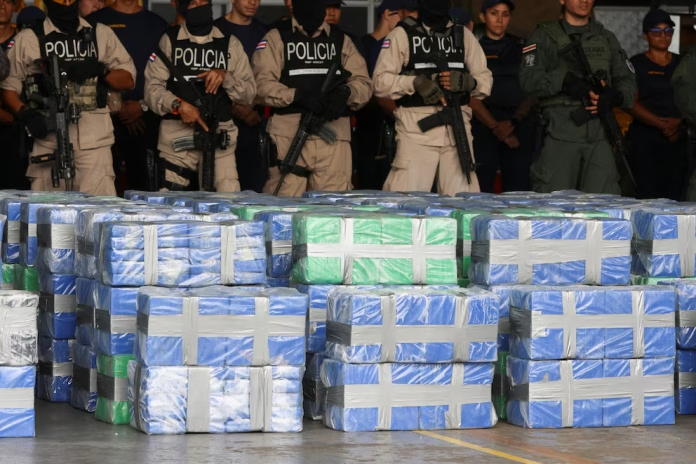
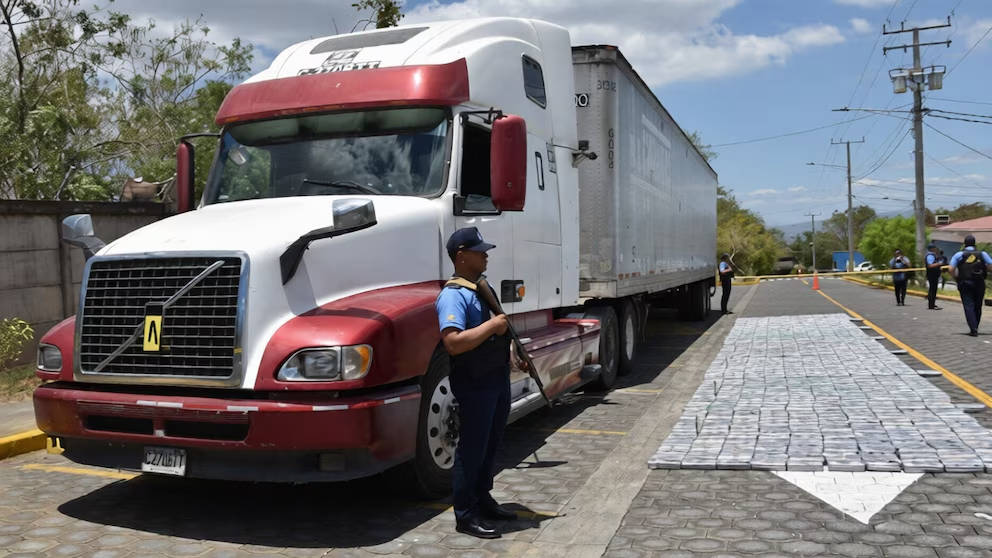
Q COSTARICA — Costa Rica has launched a joint investigation with the U.S. Drug Enforcement Administration (DEA) to clarify the circumstances behind the seizure of 1,312 kilograms of cocaine in Nicaragua, announced days ago by the regime of Daniel Ortega and Rosario Murillo.
The case comes amid official Costa Rican skepticism and was described by Public Security Minister Mario Zamora as “outside the normal parameters” of anti-drug operations in the region, according to a report on the regional news portal Centroamérica360.
As Zamora explained, the investigation seeks to determine how a shipment of such magnitude managed to cross the Peñas Blancas border crossing without being detected by Costa Rican controls.
Zamora added that the situation is “unusual and out of the ordinary.” The investigation, supported by the DEA, focuses on reconstructing the drug route and determining whether there were irregularities in the border protocols implemented by the authorities of Costa Rica and Nicaragua.
The complexity of the case is compounded by the fact that, according to local reports, the seizure led to the arrest of a Guatemalan citizen who allegedly gave unusually calm statements after his arrest.
This has raised suspicions in Costa Rica, especially given the apparent lack of a prior investigation by Nicaraguan authorities, a factor that does not correspond to the historical patterns of drug trafficking operations in the Central American region.
Costa Rica Distrusts Nicaragua’s Official Version and Reinforces Investigation
Costa Rican authorities have avoided issuing preliminary conclusions, emphasizing that they will only comment after all ongoing procedures are completed, according to the publication Centroamérica360.
Zamora emphasized that the government’s priority is to verify the accuracy of the information provided by Nicaraguan authorities; therefore, he personally went to the border to examine the procedures and gather information about the transit of the container involved.
The seizure was announced in an area considered a “key corridor for drug trafficking to North America,” highlighting the importance of international cooperation and coordination among the countries involved.
In this context, the joint investigation with the DEA seeks not only to identify potential failures in controls but also to clarify whether the case stems from still unknown circumstances or political motivations from the Ortega-Murillo regime.
The gravity of the situation lies in the volume seized—more than a ton of cocaine—and the apparent ease with which the illegal transit occurred, the main reason for the concern expressed by the Costa Rican government regarding the discrepancy with typical drug seizure patterns in Central America.
The Seizure and Nicaragua’s Version
On March 30, Nicaraguan authorities reported the seizure of 1,312 kilograms of cocaine on Sunday, March 29, at 6:00 p.m. at the Peñas Blancas border crossing with Costa Rica. The operation resulted in the arrest of Guatemalan citizen Juan José Ríos Trujillo, according to a statement released by the National Police.
The seizure, according to the police version, occurred when the drugs were found in 1,057 packages hidden in kraft paper rolls inside a heavy cargo truck that entered Nicaragua from Costa Rica and was destined for Guatemala. Field tests confirmed the presence of cocaine, according to the same source.
The detainee told authorities that he had been hired by Henry Sáenz García to transport tools from Mexico to Costa Rica, receiving US$1,800 for the operation. He also indicated that, after making the delivery in San José, Costa Rica, on March 26, he picked up 20 rolls of kraft paper from a warehouse in Calle Blancos, destined for Santa Lucía Milpas Altas, Sacatepéquez, Guatemala. The rolls were consigned to a warehouse belonging to a person identified only as “Luis,” according to reports.
According to statements collected by Nicaragua’s National Police, part of the route included a border scan in Costa Rica on March 28, which did not detect any irregularities in the shipment. Both the truck, the suspect, and the drugs were turned over to the courts in Nicaragua, the agency stated.
Nicaragua’s National Police announced that the investigation remains active to determine the possible involvement of others in the international drug trafficking case.
Nicaragua, located within one of the main drug trafficking corridors produced in South America and directed to North America, announced it is implementing its “Muro de Contención” (Containment Wall) strategy, which seeks to curb the transit of narcotics and illicit money, with the cooperation of the United States, Mexico, Russia, and neighboring countries in the region.
Article translated and adapted from Infobae.com. Read the original in Spanish here.
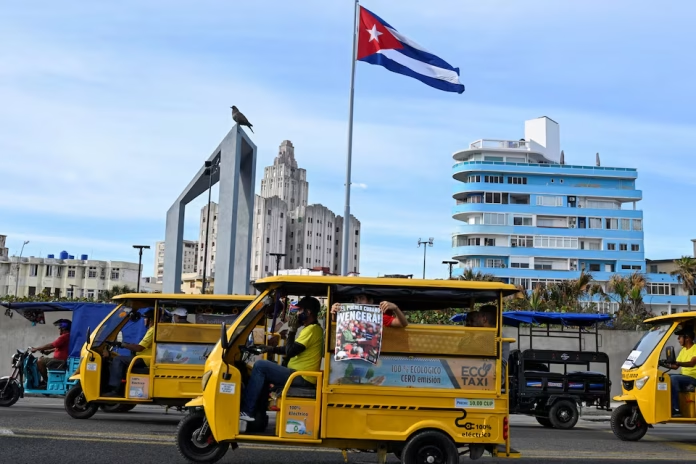
Q24N (Reuters) Cuban activists paraded on Thursday on bikes and electric tricycles along Havana’s waterfront Malecon boulevard, accompanied by Cuban President Miguel Diaz-Canel, in a show of defiance amid U.S. efforts to starve the island of fuel.
Participants in the government-organized caravan rode past the U.S. Embassy in the Cuban capital, their electric and pedal-powered vehicles displaying flags and banners attacking the sanctions imposed on the country by President Donald Trump’s administration.
The rally came a day after Cuba’s top diplomat in Washington publicly invited the U.S. government to help overhaul Cuba’s crippled economy as part of ongoing negotiations that have yet to yield results.
Participants in the rally said they favored talks with the United States but demanded respect for Cuba.
“I believe that genuine dialogue between both governments is possible, but international law and our country’s autonomy must be respected,” said Sheila Ibatao, a Havana law student and participant.
Diaz-Canel did not speak during the event.
The Cuban government often organizes large rallies at the U.S. Embassy. This caravan was smaller and more discreet, hampered by fuel shortages that have crippled mobility and hobbled public transportation.
A Russian-flagged tankership arrived in Cuba this week and off-loaded 700,000 barrels of crude oil, promising some relief in the coming weeks.
The Trump administration, which has threatened to slap tariffs on countries that export oil to Cuba and explicitly prohibited imports of Russian oil, said it allowed the Russian-flagged tanker to dock in Cuba’s Matanzas port for humanitarian reasons.
Reporting by Ayose Naranjo; Editing by Dave Sherwood and Will Dunham. Read the original at Reuters.com
Q COSTARICA — In the first months of the year, homicides have decreased by over 20%, according to figures from the Organismo de Investigación Judicial (OIJ).
The work of the police at all levels and joint operations with the United States Drug Enforcement Administration (DEA) and the Federal Bureau of Investigation (FBI) are yielding results, according to security chief Mario Zamora.
As of Wednesday, April 1, the country reported 177 murders, while 233 were recorded during the same period last year.
The minister attributed this decrease to a strengthened police presence and intensified coordinated actions against organized crime, especially drug trafficking.
“The security forces are working at the maximum of their operational capacity. We have tripled police patrols by air, sea, and land. This year, we broke the record for arrests with almost 215,000 arrests made by the security forces,” the minister stated.
Zamora emphasized that international cooperation has been key to the results achieved.
“All this great work by the police and the Policía de Control de Droga (PCD)—Drug Control Police, which has also seen a 300% increase in joint operations with the DEA and the FBI, has resulted in a significant reduction in homicides in our country,” he stated.
The ultimate goal
Despite the progress, Zamora acknowledged that the indicators are still far from ideal.
“We have achieved very significant numbers, but they are not yet satisfactory. We still have a lot to do to pull Costa Rica out of the homicide pandemic and achieve fewer than 10 homicides per 100,000 inhabitants,” he warned.
Currently, the country has a rate of 16 homicides per 100,000 inhabitants, a figure that, although high, shows signs of improvement.
“The reduction of more than 50 homicides in these first months of the year indicates that we are on the right track,” Zamora concluded.
Q24N — The temporary closure of Panama’s Bridge of the Americas following the fire in La Boca is not only a safety measure, but also an event with potential economic and social impacts nationwide, urban planner Rodrigo Guardia told La Estrella de Panamá.
According to the specialist, the magnitude of the problem lies in the strategic role this infrastructure plays within the country’s transportation system. Guardia emphasizes that it is the most frequently used route for Panamanians to reach the capital city, with thousands of people crossing it every hour to work, study, or access services in the capital.
Therefore, its closure affects not only Panama Oeste, but also the entire network of provinces that depend on this connection for their daily economic activity.
The urban planner explained that, although the Centennial Bridge can serve as an alternate route, its capacity is limited compared to the volume of traffic normally handled by the Bridge of the Americas.
In fact, he warned that the latter handles approximately twice as many vehicles, which anticipates longer travel times, increased transportation costs, and additional strain on the existing road network.
The fire started at 4:12 p.m. on Monday, April 6. Image from Panama Fire Department
The bridge’s closing was due to a large fire that broke out Monday afternoon in the La Boca area, near the Bridge of the Americas, where a tanker truck caught fire and the flames spread to a second similar vehicle.
The Panama Fire Department reported that at approximately 4:12 p.m., a fire was reported at the fuel depot located in the La Boca area of Balboa. The Director General of the Panama Fire Department (BCBRP), Víctor Raúl Álvarez, explained that the fire occurred near the Panama Oil Terminals S.A. (POTSA) company.
Álvarez stated that to extinguish the fire, they received support from the Panama Canal Authority, the Institutional Protection Service (SPI), and units from the Emergency Medical Service (SUME) and the Social Security Fund. A total of 75 personnel worked at the scene, 45 of whom were firefighters.
Álvarez reported that two firefighters suffered minor burns during the fire, and one person died after being trapped among the tanker trucks.
Q COSTARICA — In the final stretch of his term, President Rodrigo Chaves offered strong support to President-elect Laura Fernández, whom he hailed as a historic figure for the country, while calling on citizens to support her in what he described as a “struggle” that is not yet over.
“She will be, God willing, the best president in Costa Rican history after Juanito Mora. Because God willing, we will not face a challenge like the one the generation of 1856 had to confront,” Chaves stated, referring to Juan Rafael Mora Porras, a key figure in national history for his leadership during the National Campaign.
Chaves also adopted a combative tone to warn of what he considers internal threats, noting that “the filibusters today no longer come from abroad; they are locals, and you know them,” alluding to current political and social conflicts.
In that context, he made a direct appeal to the public: “Don’t abandon doña Laura in this fight! Because this is not over!”
The statements come as the government enters its final phase.
With the return to normalcy after Semana Santa, the Chaves administration begins its countdown, with barely a month remaining before the transfer of power on May 8.
In this final stretch of his term, the president has intensified his tours throughout the country. Before Semana Santa, he visited Guanacaste, and on Monday, he toured Cartago.
The president concludes his administration with significant levels of support. According to the March 2026 ranking by the consulting firm CB Global Data, Chaves ranks fifth among the world’s most highly regarded leaders, with a 56.8% approval rating.
Q COSTARICA — The president of the Banco Central de Costa Rica (BCCR) — Costa Rica’s Central Bank, Róger Madrigal, warned that the country could face an “inflationary shock” in the coming months stemming from the growing geopolitical tension between the United States, Iran, and Israel.
According to Madrigal, although the effects are not yet being felt directly in consumers’ wallets, they are inevitable in the short term.
“We will have news very soon. We haven’t felt it in our wallets yet, but there will be an adjustment in the prices of a large number of goods and services, which will accelerate inflation. We will very likely enter the tolerance range sooner than expected,” he stated.
Madrigal added that, while the country has certain macroeconomic conditions to mitigate the impact, these would not be sufficient to completely contain the phenomenon.
“In Costa Rica, we have the conditions to accommodate, I don’t know if all, but part of the inflationary shock that is coming,” he indicated.
This statement comes in an international context marked by uncertainty. The armed conflict between the United States, Israel, and Iran not only threatens to drag on, but is already having repercussions on global markets. Among the main effects are increased maritime transport costs, higher prices for imported goods, and a rise in the price of petroleum products, especially fuels.
Added to this is the trade policy pursued by US President Donald Trump, who has insisted on imposing tariffs on foreign products, which puts further pressure on international prices.
In this scenario, analysts agree that Costa Rica, as an open economy dependent on imports, could be more severely affected by the increased cost of key inputs, passing these costs on to the end consumer.
Monetary authorities, for their part, will have to evaluate possible adjustments to economic policy to contain inflation and prevent a decline in household purchasing power, amidst an increasingly volatile global environment.
Q COSTARICA — With sustained growth driven primarily by reinvestments, Costa Rica, a leading global hub for Foreign Direct Investment (FDI), once again surpassed US$5 billion in FDI, reaching US$5.1218 billion at the close of 2025, according to figures from the Banco Central de Costa Rica (BCCR) —Costa Rica’s Central Bank.
This result marks the second consecutive year above that threshold, after 2024 was also revised upward to US$5.1135 billion.
This performance occurred within a complex international environment, characterized by changes in the global investment dynamics.
One of the most significant elements of the period was the growth in reinvestments, which increased by 26% to $4.328 billion, becoming the main component of FDI.
This trend reflects the continuity of operations and the confidence of companies already established in the country.
In contrast, new capital reached US$895 million, a decrease of 18%, in line with the global decline in greenfield investment projects.
By sector, manufacturing led the flows with US$3.8973 billion, driven by reinvestments in the medical device industry.
The medical devices sector now accounts for 42% of the country’s total goods exports. As of April 2026, the sector continues to drive record-breaking FDI, largely fueled by reinvestments from established MedTech giants
Increases were also recorded in agriculture, the financial system, and real estate, while sectors such as commerce, tourism, services, and agribusiness showed declines.
The Free Trade Zone Regime accounted for 66.4% of total investment, followed by the Permanent Regime, tourism, the real estate sector, and the financial system.
Also noteworthy is the growth in investment outside the Greater Metropolitan Area (Gran Area Metropolitana – GAM), especially in free trade zones, where it increased by 24.3%.
Regarding the origin of capital, the United States continues to lead with 54.8%, followed by Switzerland, Mexico, and Colombia.
Between 2023 and 2025, the country attracted 175 new companies and more than 500 reinvestments.
In just 13 recent projects, investments exceeding US$833 million and the generation of more than 12,000 jobs are projected, reinforcing the trend of growth and territorial expansion of foreign investment in Costa Rica.