Q TECH — Walk up to any new car, and under all that smooth exterior, there’s a complex web of sensors doing their thing. They keep an eye on everything—from tire pressure to spotting pedestrians—and these little electronic helpers are a big part of how cars today handle the road, keep you safe, and even make decisions.
So, why do modern cars pack in so many sensors? And what happens if one of them quits working?
Q COSTARICA — Since the capture of Julio Alberto Gómez Pérez, alias “Gordo Julio,” on March 25, only two homicides have been recorded in the entire province of Cartago.
This figure contrasts sharply with the 23 murders recorded before his arrest and confirms the impact this figure had on the wave of drug-related violence that shook the province in early 2025.
Cartago was the epicenter of a struggle for territorial control of strategic drug trafficking points between criminal gangs, as confirmed by Michael Soto, acting director of the Judicial Investigation Agency (OIJ), in an interview with CR Hoy.
During those weeks of violence, the mayor of Cartago, Mario Redondo, received death threats, and false bomb threats were also made against the city hall and the Basilica of Our Lady of the Angels.
Police Territorial Control
Erick Calderón, head of the Fuerza Publica (National Police) in Cartago, said that another factor contributing to the reduction of violence in the province is the joint operations between the Judicial Investigation Agency (OIJ), the Prosecutor’s Office, the Drug Control Police (PCD), and the Municipal Police.
He indicated that, although the year began with a significant number of homicides, they managed to reduce the incidence starting in March. This is due to the identification of the main leaders of the criminal organizations in the area, their methods of operation, their mobility, and the recapture of spaces such as drug dens.
In addition to the capture of “Gordo Julio,” Calderón highlighted an operation at the end of January in which part of the “Los Maruja” gang was dismantled, resulting in more than 20 arrests. He emphasized the work done on the streets, such as the seizure of bladed weapons, non-lethal weapons, and firearms.
The Fuerza Publica also increased seizures of marijuana and crack cocaine compared to the same period last year. In total, 2,500 doses of marijuana and 2,056 doses of crack cocaine have been seized.
The officer indicated that they will continue with operations and monitoring of police actions in the province. He also explained that the arrest of leaders like “Gordo Julio” has a significant impact on criminal structures, as it creates instability and forces others to assume those roles, generally making mistakes that expose them.
“Gordo Julio’s” Dispute
“Gordo Julio” entered the dispute for control of drug-selling territories in neighborhoods of the central canton of Cartago, as well as in Oreamuno and El Guarco. In recent months, he gained prominence after consolidating operations in the Manuel de Jesús Jiménez project in San Francisco, from where he sought to expand into territories dominated by “Los Maruja.”
That offensive, launched in the middle of last year, ignited part of the drug war affecting Cartago. Meanwhile, the Sánchez brothers, leaders of “Los Maruja,” maintain extensive control over several territories in the province, leading to constant reprisals between rival groups.
“Gordo Julio’s” headquarters, near downtown Cartago, has been the target of several armed attacks. “Los Chacales” and “Los Gery” are also involved in the conflict. Both groups maintained alliances with “Gordo Julio” to try to weaken “Los Maruja,” who control areas such as Los Diques, Paraíso, and El Guarco.
Q COSTARICA — In the interscholastic competition “Antorcha” on Channel 13, a question was asked about the size of Costa Rica’s territorial sea, specifically regarding Cocos Island.
If we analyze this image, due to Cocos Island’s distance from the mainland, the entire ocean falls under Costa Rican jurisdiction.
Adding the 51,100 km² of mainland to the 589,682 km² of territorial sea, the grand total is 640,782 km², where the ocean and/or sea comprise 92% of our territory.
This makes it the largest country in Central America.
Credit: Museo Virtual de la Escuela Normal y del Liceo de Heredia. (Virtual Museum of the Normal School and the Heredia High School)
Q COSTARICA — Developing a structure with the sea as its central feature, on an iconic island steeped in history and also the country’s newest National Park, presents a series of challenges.
However, simply providing the island known as “la isla de los hombres solos” (the island of lonely men) with a new, modern, world-class tourist pier justifies all the efforts.
During an inspection visit to the Isla San Lucas, located in the Gulf of Nicoya, and declated Costa Rica’s thirtieth national park in August 2020, on Friday, March 27, by Tourism Minister William Rodríguez, project managers confirmed that the project is 26% complete, both in the structural work on the coast and in the impressive pilings, several meters high, driven into the sea.
The final handover and inauguration of the pier are estimated to take place between July and August of this year.
The total investment for the project exceeds 985 million colones, entirely funded by the Costa Rican Tourism Institute (ICT).
“Tourism continues to advance, and the new tourist dock on San Lucas in Puntarenas is a priority project to consolidate first-rate infrastructure and safety conditions at this site of high historical and natural value. With approximately 490 meters of construction, the design has been conceived to integrate with the environment and respect existing heritage structures, replacing a now deteriorated infrastructure,” explained Minister Rodríguez.
A Challenging and Necessary Construction
This modern dock will have the capacity to receive up to four vessels simultaneously and will incorporate accessibility criteria in accordance with Law 7600.
The project is the result of coordination between the Ministry of Environment and Energy (MINAE), the National System of Conservation Areas (SINAC), the Ministry of Public Works and Transport (MOPT), the Board of Directors of San Lucas Island National Park, and the Heritage Office of the Ministry of Culture and Youth.
For Karl Kuhlmann, engineer and technical director of the project, “among the main challenges are working within a National Park, an unprecedented undertaking for any construction company, as well as building at sea while respecting biodiversity.”
He also highlighted the logistical complexity due to weather and tidal conditions, in addition to the construction of floating docks. “We are pleased to know that this pier will be of great benefit to tourists and the community,” he concluded.
The project will contribute to the protection of biodiversity and provide better working conditions for guides and park rangers, promoting sustainable tourism. It will also create a network of services for tour operators from Puntarenas and neighboring areas, along with an increase in cruise ship visits.
San Lucas, an alternative for Semana Santa
It is worth mentioning that San Lucas continues to operate normally and is an attractive alternative for domestic tourists during Semana Santa
“While San Lucas is known for its former prison, it is much more than that. We have 15 kilometers of trails on the island, one of the last remaining tropical dry forests in Mesoamerica, and archaeological sites,” described Elvis Barrantes, a park ranger on the island.
In addition, tourists can enjoy sightings of species such as white-tailed deer, anteaters, and howler monkeys, as well as numerous resident and migratory bird species.
San Lucas is a heritage and historical treasure. For many years, it housed a prison that even inspired the book La Isla de los Hombres Solos” by José León Sánchez.
The park will be open to tourists and visitors throughout Semana Santa, from 8:30 a.m. to 3:30 p.m., Monday through Sunday. Guided boat tours are usually organized from the city of Puntarenas.
Q COSTARICA — Employees required to work during Semana Santa or on April 11 th, the Día de Juan Santamaría holiday, must receive additional compensation in accordance with Costa Rican law.
The Código de Trabajo (Labor Code) establishes that Holy Thursday, Good Friday, and April 11 are mandatory paid holidays.
For those who receive monthly, bi-weekly, or weekly salaries in commercial activities, pay for these holidays is already included in their regular income.
For clarity, if an employee is paid monthly, they receive their regular salary plus an additional single daily rate for each holiday day worked. If paid weekly or by the hour, they receive double the regular rate for hours worked.
However, if they are required to work on these holidays, the law stipulates that they are entitled to double pay for each day actually worked, as part of their labor rights.
When work on these days includes time beyond the regular workday, overtime, the extra hours must be paid at a higher rate: Specifically, the law states that overtime is paid at a 50% increase over the regular rate, which implies higher holiday pay and a special calculation of overtime.
This year, current regulations do not allow for these holidays to be moved to other days; therefore, they must be observed exactly on the dates indicated on the calendar. This reinforces the mandatory nature of holidays and their observance within the legal framework.
Employers are obligated to correctly apply these provisions or face sanctions under the Labor Code.
The next ‘mandatory holiday in Costa Rica is May 1 or Labor Day, with the same rules applied.
Q COSTARICA — Costa Rica assumed a leading role on the regional stage this Wednesday, as its representative to the Organization of American States (OAS), Alejandra Solano Cabalceta, began her term as head of the Permanent Council.
Her mandate will extend from April 1 to June 30, 2026, a period in which the country will lead important decision-making bodies within the organization.
The official handover ceremony took place at OAS headquarters in Washington, D.C., specifically in the Hall of Heroines and Heroes of the Americas. In addition to leading the Permanent Council, Costa Rica will simultaneously assume the leadership of the General Commission and the Preparatory Commission, key bodies for shaping the hemispheric agenda.
During her remarks, Ambassador Solano emphasized the country’s intention to strengthen channels of political understanding among the nations of the Americas. She also reiterated the country’s commitment to promoting regional cooperation and fostering actions that generate concrete results for the benefit of the people of the Americas.
Costa Rica’s work agenda will focus on promoting dialogue and understanding among member states, with a particular emphasis on reaching common agreements. This effort also seeks to support the organization of the next OAS General Assembly, scheduled for June 2026 in Panama.
In this new phase, the Vice Presidency of the Permanent Council will be held by the Canadian Ambassador to the OAS, Stuart Savage, who will collaborate with the Costa Rican delegation on the organization’s coordination efforts.
Costa Rica’s diplomatic team to the OAS will consist of Minister-Counselors Andrés Vargas, Beatriz Serrano, and Raquel Vargas, who will support the country’s work in this multilateral forum, focusing on diplomacy and international relations.
The Organization of American States (OAS) is the world’s oldest regional organization, serving as the primary political, juridical, and social forum for the 35 independent states of the Americas. Founded on April 30, 1948, in Bogotá, Colombia.
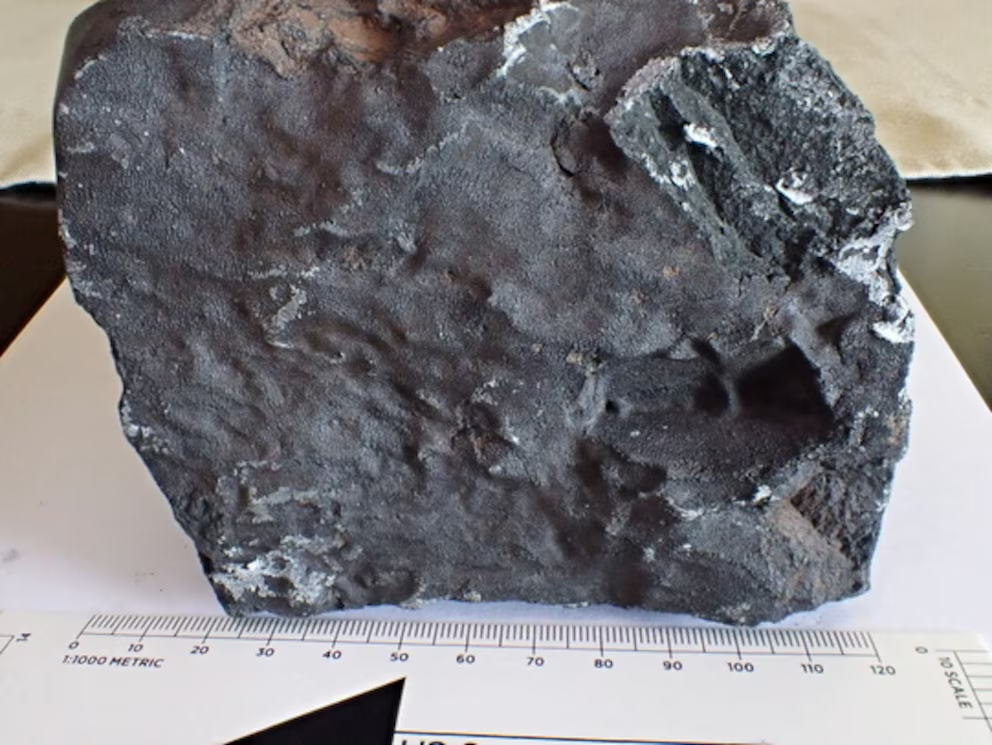
Q COSTARICA (iNFOBAE) On the night of April 1, 1857, the inhabitants of the Central Valley in Costa Rica observed a rare phenomenon: a chondritic meteorite impacted the city of Heredia, an event that transformed the town into a point of interest for international science.
According to historical reports and the Revista Geológica de América Central (Geological Journal of Central America), the event was recorded by numerous witnesses and left fragments that are now distributed in museums and laboratories in at least nine countries.
The fall of the Heredia meteorite was first documented in the Costa Rican press and in accounts collected years later by the historian Cleto González.
The phenomenon, as described by witnesses, included a very bright fireball that crossed the sky between the provinces of San José and Heredia, followed by detonations that were heard throughout the region.
The recovery of fragments was swift and allowed for their analysis in Europe and North America. According to El País, the specimen was formally cataloged in 1863 under the name of the city where it fell.
Scientific studies determined that the Heredia meteorite belongs to the H5 brecciated chondrite class, a variety of stony meteorites characterized by their high iron content and the presence of olivine, bronzite, and metallic minerals.
Subsequent investigations, cited by The Guardian, established that the material likely originated from asteroid 6 Hebe, located between Mars and Jupiter.
Detailed mineralogical analysis, first conducted in the 19th century and later in modern laboratories, allowed for a more precise classification and the reconstruction of the fragment’s cosmic history.
On April 23, 2019, a carbonaceous chondrite meteorite, millions of years old, fell in Aguas Zarcas de San Carlos, Costa Rica (Photo courtesy of the University of Costa Rica).
The International Dispersal of the Heredia Meteorite Fragments and Their Rarity in Central America
One of the most striking aspects of this case is the wide dispersal of the meteorite fragments. The largest fragment, weighing 410 grams, is housed at the Institute of Mineralogy at the University of Göttingen in Germany.
Other specimens are located at the École des Mines in Paris, the Natural History Museum in London, and the Royal Ontario Museum in Canada, as well as institutions in Switzerland, Austria, the United States, and France.
However, in Costa Rica, a small fragment weighing 2.9 grams is on display at the School of Geology at the Universidad de Costa Rica (UCR)—University of Costa Rica, donated by geologist Gerardo J. Soto after he acquired it on the international meteorite market.
According to the International Meteorite Catalog, only three similar events were documented in Central America during the 19th century:
“Heredia” in 1857
“Rosario” in Honduras in 1896
“Chinautla” in Guatemala in 1902.
This scarcity is explained by the fact that most meteorites fall in unpopulated areas or at sea, making their recovery and study difficult. An analysis published by the Central American Geological Journal calculated that Costa Rica could expect to recover a meteorite approximately every 1,200 years.
The meteorite connects Costa Rica’s natural history with the formation processes of the solar system, since chondrite meteorites preserve information about the evolution of asteroids and the primordial composition of rocky planets.
The Heredia meteorite remains relevant because it is one of the few verified cases in Central America and because of its value as an object of international study. Its story illustrates how an event witnessed in the 19th century continues to generate questions and allow for research on the origin and dynamics of the solar system.
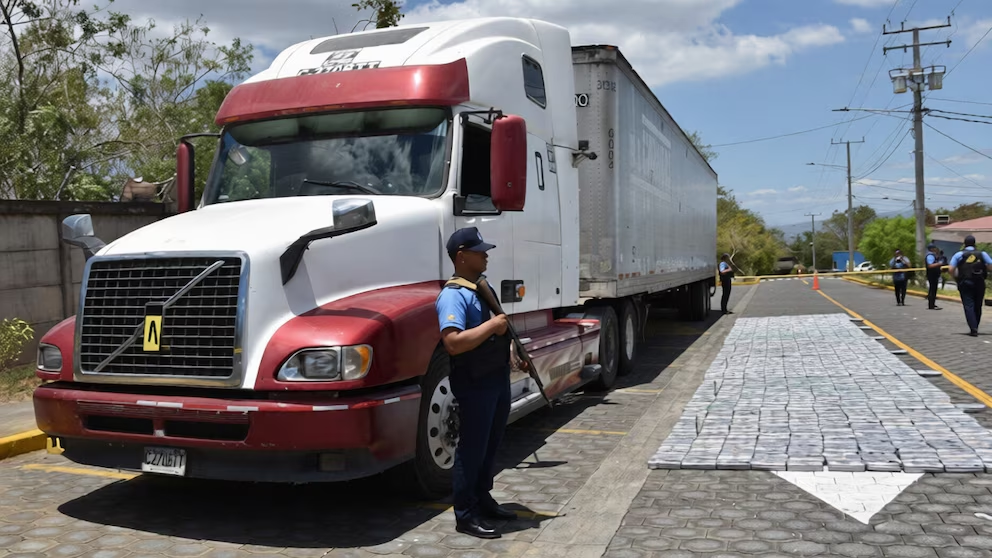
Q COSTARICA — The illicit drugs seized in recent days in Nicaragua allegedly originated in Costa Rica and even crossed border controls, which include scanners, according to Guatemalan truck driver Juan José Ríos Trujillo, who was arrested as part of the operation.
The Co-Director of the Nicaraguan National Police, Victoriano Ruiz, shared key details of the operation with the pro-government media news El19Digital.com.
According to the publication, the suspect claimed he was originally hired to transport a shipment of tools from Mexico to Costa Rica. The service was valued at US$1,800. It began on March 22 and concluded with the delivery of the cargo in Alajuela.
For the return trip, on March 26, the driver maintains he picked up a load of paper in Calle Blancos, on the northeast side of San José, with a destination of Santa Lucía Milpa Alta, Sacatepéquez, Guatemala.
However, that trip was thwarted by police intervention in Nicaragua.
“The detainee continued his account, stating that on Saturday, March 28, 2026, he headed towards the Costa Rican-Nicaraguan border. While in Costa Rica, his cargo was scanned, but no anomalies were detected,” reported El19Digital.
“On Sunday, March 29, 2026, at approximately 2:30 p.m., upon entering Nicaragua, anomalies were detected in the cargo. The drugs he was transporting in the coils were seized,” the report added.
Photo from El19Digital.comGuatemalan truck driver Juan José Ríos Trujillo in police custody, Photo from El19Digital.comPhoto from El19Digital.com
How were the drugs detected?
According to the Policia Nacional, the detainee acknowledged that he had not caused any problems on his journey: “I passed through the scanner (in Costa Rica), then I went to Peñas Blancas on the Nicaraguan side, I went to the Narcotics module, they put the stamp on me to go through the scanner, I followed the customs protocol, I went through the scanner and I came out suspicious,” Trujillo reportedly said.
According to the Police Chief, the operation began with profiling the suspicious vehicle as it entered Nicaragua.
“At 6:00 p.m., at the Peñas Blancas Border Crossing in the municipality of Cárdenas, Rivas department, the aforementioned vehicle was stopped, and an inspection of the interior of the trailer revealed twenty rolls of Kraft paper,” the publication explains.
It was there that the operation uncovered the suspicious cargo.
“Seven of the rolls contained 1,057 rectangular packages wrapped in adhesive tape. A field test was positive for cocaine, with a total weight of 1,312 kilograms,” they added.
The police chief confirmed that when the Scintrex Trace technique (a cocaine particle detector) was applied to the steering wheel, gearshift, and dashboard of the tractor-trailer, as well as to the suspect’s hands, palms, and clothing, the results were positive for cocaine particles.
Furthermore, on March 26, the Policia Nacional announced the arrest of Guatemalan citizen Ricardo José Munguía Rodríguez, after police agents found US$415,550 in cash in his vehicle.
“The National Police continues to strike blows against organized crime and drug trafficking,” they stated regarding the incident in the municipality of La Paz Centro, in the department of León.
Nicaragua Steps Up Drug Interdiction
El19Digital described the recent police action as part of their “decisive blows against organized crime and international drug trafficking”.
The United States has formally accused the Ortega-Murillo regime in Nicaragua of involvement in drug trafficking, marking a significant escalation in tensions between the two countries. According to U.S. officials, members of President Daniel Ortega and Vice President Rosario Murillo’s government have been implicated in facilitating the movement of narcotics.
The allegations point to a network that allegedly uses state resources and institutions to support drug shipments, undermining regional security and international law enforcement efforts.
Q COSTARICA (BBC Mundo) While the Nordic countries have long dominated the United Nations World Happiness Index, 2026 brings a surprise.
For the first time in the index’s 14-year history, a country from the Americas has entered the top five, thanks to Costa Rica’s rise in recent years from 23rd place in 2023 to fourth currently.
The rankings, produced annually by Gallup, the Oxford Centre for Wellbeing Research, and the UN Sustainable Development Solutions Network, are based on the average of how residents of 140 countries rate their own lives, along with factors such as GDP, social support, life expectancy, perceived freedom, generosity, and corruption.
For the second year running, no English-speaking country made the top 10, with Australia ranking 15th, the United States 23rd, Canada 25th, and the United Kingdom 29th.
This year, the countries in the top five have unique aspects that contribute to their happiness, although freedom to make life choices scored highly across the board.
The BBC spoke to residents of each of these countries to find out what contributes to their daily and long-term sense of happiness, and how travelers can get a taste of the local “happy life” when they visit.
1. Finland
For nine of the last 10 years, Finland has been ranked number one. The country scores highly for social support and low perceived corruption, and residents frequently point to the social safety net—including education and healthcare—that creates a sense of security and well-being.
“I love the fact that Finland is safe and I can trust the average person here,” said Olli Salo, co-founder of the Helsinki-based company Skimle. “Children walk to school from the age of seven, you don’t feel threatened walking home, and you can trust that if someone makes a promise, they’ll keep it.”
While the country has high taxes, residents see a clear trade-off. Salo compares it to paying for a premium software subscription; it may cost more, but the quality is better.
“Most of the really important things in life, like healthcare, education, and transportation, are public services, so why not spend a little and then enjoy them with good quality?” he commented.
He also finds Finnish workplaces more collaborative than in other parts of the world, with less hierarchy and less “corporate drama.”
For Daniel Sazonov, the current mayor of Helsinki, happiness also comes from the proximity to nature. “Being able to step outside and, in just a few minutes, be at the sea, a park, or a forest for an evening stroll is something special,” he said.
For visitors, experiencing Finland’s sauna culture should be the first stop. With some three million saunas for a population of just 5.5 million, the nation is certainly not short on options.
“I suggest trying the different saunas in Helsinki and maybe taking a dip in the chilly Baltic Sea,” Sazonov recommended.
Helsinki’s Oodi Central Library, opened in 2018, is a striking modern landmark and a popular meeting place for locals and tourists alike.
Beyond the capital, Salo recommends heading north in winter, renting a cabin, and watching the Northern Lights. But he cautions against overcrowding his itinerary.
“I’ve never understood those who book four activities a day and rush from a dog sledding tour to a Northern Lights tour,” Salo remarked. “That’s not the Finnish way.”
2. Iceland
Pushing Denmark out of second place for the first time since 2014, this island nation of just 400,000 people ranked first in social support, which measures the level to which residents feel they have someone to rely on in times of hardship.
It also ranks in the top 10 for GDP per capita, healthy life expectancy, and generosity, giving it the most comprehensive performance in the ranking.
“Historically, our isolation meant that survival was a communal effort. For centuries, there was no outside help. It was just us, and we had to stick together,” noted Ingibjörg Friðriksdóttir, a Reykjavík resident and digital commerce manager at Hotel Rangá. “That legacy has shaped a culture where helping each other is simply second nature.”
Icelanders also possess a remarkable adaptability, forged from surviving harsh, dark winters.
“We learn to appreciate the little things: a good cup of coffee, warm pools, and spending time with friends,” said Bryndís Björnsdóttir, executive director of the Laugara geothermal lagoon in Reykjavík. “When summer arrives, we suddenly have daylight almost all night, and everyone becomes more energetic and cheerful.”
No matter the season, residents suggest getting outside despite the weather. “The fresh air, the open landscapes, and the feeling of freedom are a big part of what makes this a great country,” Björnsdóttir said. It’s also worth taking the time to enjoy the food, especially the fresh fish.
At the Rangá Hotel, guests can sign up for the “Live Like an Icelander” program, where they’ll learn to pronounce the phrase “Þetta reddast,” which translates to the core Icelandic sentiment that contributes to the country’s happiness: no matter the situation, everything will be alright.
3. Denmark
A perennial top-ranked country, Denmark has never fallen below fourth place in the index’s history and has frequently held the top spot. Ranked third this year, the country also ranks third in social support and low corruption, and seventh in GDP per capita. But this sense of happiness isn’t always readily apparent.
“It’s not about having a big smile and laughing,” said Laura Hall, a Copenhagen-based journalist and author of The Year I Lay My Head in the Water, a book about swimming in Scandinavia.
“It’s really about faith in society, mutual trust, and the belief that everyone works together for the common good.”
Hall is raising two daughters here and says the sense of security is constant.
She also loves Copenhagen’s clean harbor, which the city transformed from an industrial canal in the 1990s into a place where residents now swim year-round.
In Ribe, the country’s oldest village, resident Lise Frederiksen sees happiness rooted in civic engagement. “Every day I walk along the cobblestone streets, I feel grateful for the life I have here,” she said.
She values the Danish education system, where children from all economic backgrounds attend the same public school for 10 years and parents are expected to coordinate playgroups in every household. “It’s important for children to visit each other’s homes so they can see that people can live in many different ways,” she said.
For travelers, Frederiksen advises visiting during one of Ribe’s many festivals, which range from oyster and tulip celebrations to heavy metal music. Visitors who come in the fall can appreciate the “black sun” period, when millions of starlings migrate across the region in flocks so dense they momentarily block out daylight.
In Copenhagen, visitors don’t need to plan a perfect itinerary to feel the laid-back vibe.
“Most of the time, visitors leave with a sense of calm and peace, and a touch of envy seeing people cycling about, going about their lives in a relaxed way,” Hall added. “There really isn’t a culture of rushing here.”
4. Costa Rica
Climbing to fourth place in this year’s rankings, Costa Rica is the first Latin American country to crack the top five, with its scores for freedom and social support measures nearly doubling since 2021.
While Costa Rica’s GDP and government support scores aren’t as high as those of the Nordic nations, residents report a high degree of freedom to make their own life choices.
They also have a significantly higher appreciation of their lives than the measured factors alone might predict, according to the index.
When resident Adrian Hunt was asked what makes Costa Rica such a happy place, he didn’t hesitate. “Community, community, community,” repeated the digital nomad who lives in Las Catalinas, a car-free village on the Guanacaste coast.
“Having people who share your passion for healthy living, being outdoors, and being neighbors,” he summarized.
Nature is also a source of daily happiness.
Hunt describes waking up in the morning, walking along the beach, and watching howler monkeys swing from tree to tree while fish chase each other in the bay.
“I think Costa Rica has the best quality of life of any country in Central America,” Hunt emphasized. “There’s something about the energy of the people, both locals and expats, that makes this country special.”
To get a sense of happiness in Costa Rica, he recommends sitting in a café and striking up a conversation or walking along the country’s many kilometers of trails.
“We want people to take away from this place how truly peaceful and tranquil it is,” he concluded.
5. Sweden
Entering in fifth place this year, Sweden has fluctuated between fourth and tenth place over the past decade. It ranks seventh in the world for healthy life expectancy and fifth for low perceived corruption.
Its presence at the top reflects what residents describe as a balance between progressive urban living and easy access to nature.
“One of the main reasons Sweden consistently ranks so high in happiness is that we are a small country,” explained Micael Dahlen, Professor of Wellbeing, Social Welfare, and Happiness at the Stockholm School of Economics.
“Distances are short—between people, between cities, and between nature.” We have learned to trust and depend on one another, to share and appreciate what we have, to live in harmony with nature, and to welcome new ideas and people.”
One cultural detail encapsulates this egalitarian trend: the universal use of the informal “du” (you) to address someone, regardless of status.
“No matter who you are—a pop star, a Nobel laureate, a prime minister, or a professor of happiness like myself—above all, you are du,” Dahlen emphasized.
Her center recently partnered with the capital to launch the Stockholm Wellbeing Index, ensuring that wellbeing is measured and developed alongside economic growth.
“I love the people and their kindness, the slower pace of life, the beautiful nature and landscapes, and the feeling that I made a good decision for my future and the future of my children,” commented Karolina Pikus, who moved here from Poland and writes a blog, LikeSweden.com.
In Gothenburg, where she now lives, she particularly enjoys being able to swim in the sea, visit a lake, and walk in the forest, all in the same day thanks to the excellent public transportation.
Locals recommend visiting during the summer, especially for first-timers. In the height of summer, visitors can dance to traditional songs, eat jordgubbstårta (strawberry cake), and enjoy the long Scandinavian evenings.
In Stockholm, Dahlen suggests simply walking. “Everything in Stockholm and our cities is within walking distance, and you might bump into anyone,” she said. The archipelago is a short boat trip away and “really worth it.”
But the simplest entry point is fika: sitting down with a coffee and a cinnamon roll and observing the rhythm of the street. “That, for me, is one of the best ways to understand Sweden,” Pikus said. “To pause, take a deep breath, and allow yourself to enjoy the moment.”
Q COSTARICA — Costa Rica took an unprecedented step in its commercial history by completing its first export of cannabis for therapeutic purposes.
On March 13, the company Hybrida Farms, in Cartago, shipped a consignment to Europe, marking the beginning of this new productive activity, as reported by the newspaper El Observador.
The export was made possible because the company met all the requirements established by the European Union and stipulated in current legislation.
These include high standards and requirements such as Good Agricultural and Harvesting Practices (GACP) certification.
For Walter Niehaus, a consultant at Hybrida Farms, this advancement represents a gateway to new international markets and an opportunity for the country to solidify its reputation as a reliable producer of medicinal cannabis with high standards.
The businessman emphasized that this type of product combines unusual characteristics, being simultaneously an agricultural commodity and a medical input, which implies meeting more rigorous health requirements for its international trade.
Slow Progress in Costa Rica
As of June 2025, under Law 10113, Costa Ricans have been able to legally access medicinal cannabis to treat illnesses such as cancer, epilepsy, and fibromyalgia; however, in practice, access is more difficult than it seems.
Current regulations require that medicinal cannabis products can only be purchased with a medical prescription and exclusively in pharmacies.
This last point has sparked a wave of criticism from investors, lawyers, and businesspeople, who believe that the Ministry of Health is creating an oligopoly in favor of large pharmaceutical chains.
How to Access Medical Cannabis in Costa Rica
To legally obtain medical cannabis in Costa Rica, you must follow these specific steps:
Medical Evaluation: You must undergo a consultation with a licensed Costa Rican doctor to determine if your condition qualifies for treatment.
Digital Prescription: If approved, the doctor issues a specialized digital prescription.
Pharmacy Purchase: Products containing THC or CBD are sold exclusively through registered pharmacies. They are not available over-the-counter or in standard “weed shops”.
Supply Limits: Prescriptions are typically capped at a 30-day supply.
Qualifying Medical Conditions
Doctors may prescribe medical cannabis for several conditions, including:
Chronic Pain: Fibromyalgia, arthritis, and neuropathy.
Neurological Disorders: Refractory epilepsy, Multiple Sclerosis, and Parkinson’s.
Cancer Support: Managing nausea, vomiting, and appetite loss from chemotherapy.
Mental Health: Severe anxiety, PTSD, and depression.
Sleep Disorders: Chronic insomnia.
Important Legal Restrictions
Recreational Use: Remains illegal. While personal possession of small amounts (often cited as 1–8 grams) is generally decriminalized and may only lead to confiscation, public consumption is prohibited.
Self-Cultivation: Growing your own cannabis at home is strictly prohibited. All medicinal products must be produced by licensed laboratories.
Tourists & Visitors: Prescriptions from other countries are not honored in Costa Rica. Visitors must consult a local doctor to get a valid Costa Rican prescription.
Public Smoking: Smoking any substance is strictly banned in all public spaces, including beaches, parks, and bars.
Q COSTARICA — The Clodomiro Picado Institute (ICP) of the Universidad de Costa Rica (UCR) announced the launch of the free mobile application “ICP App”, which makes it easier for people to identify the 25 venomous snakes found in the country and what to do in case of a bite.
This is an educational and informational application developed by the Clodomiro Picado Institute, part of the University of Costa Rica. Its objective is to provide information about the main venomous snake species in Costa Rica.
According to Dr. Andrés Hernández Bolaños, pharmaceutical director of the ICP-UCR and driving force behind the initiative, the idea for this app arose from the numerous and frequent inquiries the UCR receives from people sending photos of snakes to determine if they are dangerous.
For Dr. Hernández, these inquiries highlight the widespread lack of knowledge that persists among Costa Rican citizens regarding these animals, which underscores the urgent need for the country to have accessible tools—such as those available on mobile phones—that allow people to quickly and easily obtain information and act with scientific rigor.
Furthermore, with a tool backed by robust scientific evidence provided by the Clodomiro Picado Institute, which emerged in 1970 from a program promoted by the Ministry of Health of Costa Rica to develop national capacity to produce therapeutic antivenoms and the UCR, people no longer depend on information found online or in artificial intelligence tools, which could be inaccurate and even life-threatening.
“Almost every day we receive a photo of a snake, and people ask us what kind it is and if it’s venomous. Sometimes, they even tell us that the snake has already been killed, which is completely unnecessary. So, seeing that this was a constant occurrence, and that the need for information was there, we decided to promote this mobile application to provide scientifically sound information. We did this with the help of Fernando Morales Cascante, a student in the Computer Systems Engineering program, who helped us bring the idea to fruition,” Hernández explained.
Having immediate information, Hernández says, can make all the difference when encountering a snake. This benefits not only the public but also healthcare personnel. By strengthening the correct identification of a snake, medical decision-making in the event of a bite can be improved.
“Knowing what to do, or what not to do, can greatly clarify the situation and avoid conflicts or confusion. Having the information at hand, knowing which snakes a person might encounter in certain circumstances and how to act, can help provide greater clarity, better control of the environment, and prevent panic,” Hernández added.
In addition to first aid guides for bites, the application provides information about the Institute’s work, antivenom production, and the ICP-UCR’s official distributors internationally.
“This application can also be used by people who have suffered an accident to indicate the geographic area where it occurred, allowing the doctor, when issuing the report, to specify the type of snake that may have caused the incident. This is being coordinated with the Ministry of Health to gather more epidemiological data in the country,” Yamileth Angulo Ugalde, director of the ICP-UCR, explained.
The application also includes information on twelve commonly confused non-venomous snake species. Facilitating their identification is also important to avoid unnecessary reactions.
In the future, the Clodomiro Picado Institute at the University of Costa Rica plans to integrate artificial intelligence to identify snakes from photographs and collect georeferenced data on sightings.
Q COSTARICA — The exchange rate in Costa Rica continues to decline, and there is no certainty about the levels it will reach in the coming months. Given this scenario, companies must manage foreign exchange risk, an action that will allow them to avoid losses and protect their investments.
To achieve this, companies can use currency hedges, a financial tool that allows companies and investors to establish a contract that fixes the exchange rate at the present time, but which will be applied to future transactions.
Currency hedges aim to mitigate the risk associated with fluctuations in exchange rates and ensure profitability. By using them, users can reduce uncertainty in their foreign currency transactions.
“Companies and investors can access currency hedges through two methods. The first is delivery, in which one currency is exchanged for another on the agreed-upon date. The second is financial settlement, a method in which there is no physical exchange of currencies; instead, the difference between the agreed-upon exchange rate and the market rate is calculated,” explained Rodolfo Herrera, CEO of DAVIbank.
The ideal time to use currency hedges is when a company has exposure to a foreign currency, as this is when exchange rate risk arises.
“Exposure occurs, basically, when companies have to receive or make payments in foreign currency, or when any item on the company’s balance sheet is denominated in a foreign currency,” Herrera added.
Other actions to consider when discussing exchange rates:
Conduct regular reviews of foreign exchange market data (performance, current trends, and historical cycles).
Analyze economic data, including the country’s trade balance, imports and exports, and Foreign Direct Investment (FDI).
Develop efficient risk management.
Make informed decisions that are more consistent with market conditions and the company’s objectives and interests.
Manage cash flow
Inadequate management of foreign exchange risk, or a complete lack thereof, can generate undesirable effects, primarily on cash flow and the company’s profitability. By not hedging this risk, the company is exposed to exchange rate volatility and uncertainty about the price at which it will buy or sell foreign currency. Additionally, its balance sheet items will remain subject to these fluctuations.
“Companies must consider that, without proper foreign exchange risk management, their cash flow planning becomes uncertain, as it is impossible to accurately anticipate the exchange rate at which they will buy or sell foreign currency,” Herrera concluded.
To achieve a successful currency hedging strategy, the recommendation is to seek advice from specialists in the field and focus efforts on decisions that take into account all the variables of the current market.
Q REPORTS (EFE) The European Union (EU) has reacted to the tariff chaos unleashed a year ago by Donald Trump by accelerating its search for new partners and modifying the trade agreement initially reached between Brussels and Washington to include a clause against further attempts at blackmail.
The current state of the EU’s trade relations with the United States and other international partners is very different from that of a year ago, when US President Donald Trump launched his strategy of “reciprocal tariffs” against the world.
Plummeting European surplus
On April 2, 2025, Trump announced a 20% tariff on almost all EU exports, double the 10% universal tariff applied to other countries.
In the first quarter of that year, the European trade surplus with the world’s leading power exceeded 80 billion euros—a balance resulting from “unfair” trade practices, according to the Republican president—and represented nearly 20% of the bloc’s total exports.
Since then, and after months of trade war and tariff fluctuations on both sides of the Atlantic, the European surplus has steadily declined, reaching 31 billion euros in the last quarter of 2025.
New trade framework with protections for the EU
Last Thursday, the European Parliament decided to safeguard the Union’s interests in its trade with the United States by opting for the introduction of protective clauses against potential new tariffs or blackmail from the White House.
With this decision, the European Parliament brought to a close three months of tension after MEPs twice stalled the agreement’s ratification process. The first delay was due to Trump’s threats to seize Greenland and impose higher tariffs on European countries that reinforced their military presence on the Arctic island. The second was due to the Supreme Court ruling that struck down a significant portion of the Republicans’ tariffs.
The European Parliament’s approval will allow for the full implementation of the trade agreement reached last July, which set a maximum tariff of 15% on most European imports and eliminated EU tariffs on US industrial goods.
In addition to the initial agreement between Trump and the President of the European Commission, Ursula von der Leyen, MEPs added new clauses that allow the EU to suspend the pact if Washington introduces new tariffs or questions European territorial integrity, among other provisions.
Opening Up to Latin America and Asia-Pacific
In recent months, the EU has finalized its historic free trade agreement with Mercosur, which, after 26 years of negotiations, will create one of the world’s largest integrated trade zones. The trade pact will begin to be applied provisionally in May, pending a ruling from the Court of Justice of the EU, to which the European Parliament has appealed.
Furthermore, the bloc recently concluded a new trade agreement with Australia after a decade of talks, finalized negotiations with India for what both sides describe as “the mother of all agreements,” and reached another with Indonesia last September.
“These agreements are significant because, although they are not the countries with which the EU trades the most, they stand out for their large populations and economic growth prospects,” Pedro Aznar, Professor of Economics and Finance at Esade, told EFE.
The expert highlighted in particular the agreement with Mercosur, following its long and complex negotiations, and the agreement with India, which grants trade access to the world’s most populous country despite it being “a complicated and highly regulated market.”
While he believes it is necessary to “give these agreements time,” the academic considers the EU’s efforts “necessary but not sufficient” to compensate for the nearly 28% drop in its exports to the US over the past year, despite increased trade with other partners.
When asked about a possible rapprochement with China by the Union, something countries like Germany and France have pursued bilaterally, Aznar said it is a “delicate” option in which Brussels is trying to strike a balance between strengthening ties with the world’s second-largest economy while respecting trade rules, and at the same time avoiding further sanctions from Washington.
Una persona abastece de gasolina un vehículo este viernes, en Ciudad de Panamá (Panamá). EFE/ Carlos Lemos
Q COSTARICA — The price of a gallon of premium gasoline in Central America shows significant differences in March 2026, highlighting contrasts in energy policies, import costs, and tax burdens among countries.
According to regional data compiled from official sources and specialized platforms, Guatemala has the highest price at US$6.88 per US gallon, well above the rest of the region.
Costa Rica follows, with prices between US$5.11 and US$5.15, and Nicaragua, with a range of US$5.06 to US$5.10.
Honduras (US$4.27–$4.57) and Panama (US$4.32–$4.62) also show relatively competitive prices, although higher than El Salvador, the country with the lowest price, averaging US$4.08 per gallon, making it the most affordable market for consumers in the region.
The case of El Salvador: lower prices in a complex regional context
The low cost of fuel in El Salvador is due to a combination of structural factors and public policy decisions. Among these, state intervention in price regulation stands out, as well as measures adopted in recent years to mitigate the impact of international oil price volatility.
Unlike countries such as Costa Rica or Nicaragua, where prices include higher taxes or more rigid pricing structures, El Salvador has implemented mechanisms that allow it to contain abrupt increases, benefiting consumers and productive sectors.
However, this policy also entails fiscal challenges, since maintaining low prices can reduce revenue from fuel taxes.
A region with wide gaps
The difference between the highest and lowest prices in Central America exceeds US$2.80 per gallon, reflecting a region with heterogeneous energy dynamics.
Guatemala has the highest fuel costs, influenced by market conditions and logistics.
Costa Rica maintains high prices due to its tax system and government regulations.
Nicaragua’s prices are high, within the regional average.
Honduras and Panama have intermediate prices.
El Salvador leads the region with the cheapest fuel.
Economic Impact
Fuel prices have a direct effect on inflation, transportation costs, and the prices of basic goods. In this context, the lower prices in El Salvador represent a relief for household and business economies.
Outlook
Experts agree that the sustainability of these prices will depend on external factors such as the behavior of the international oil market, as well as internal fiscal and energy policy decisions.
Although El Salvador currently maintains a competitive advantage in fuel prices, the situation could change in the face of new international pressures or adjustments in public policy.
Q COSTARICA — Costa Rica and Panama took another step toward transportation integration by signing a memorandum of understanding to cooperate on the development of their railway projects.
The agreement was signed between the Instituto Costarricense de Ferrocarriles (Incofer)—Costa Rican Railway Institute — and the National Railway Secretariat of Panama.
The objective is to establish cooperation mechanisms that will allow for the analysis of a potential interconnection between the railway systems being developed by both countries.
The document outlines joint work on technical and engineering studies, social and environmental impact analyses, and territorial planning.
The three-hour trip from Panama City to Paso Canoas will cut the current 12-hour drive from San José to Panama City dramatically
It also includes cooperation on urban planning in border areas and on the management of risks associated with railway infrastructure development.
The memorandum will have an initial term of five years, during which time both institutions will exchange information and technical expertise.
The signing of the agreement comes as Costa Rica seeks to revive the electric train project for the Greater Metropolitan Area (GAM).
Meanwhile, Panama is making progress on the construction of its third metro line in the capital and is studying the feasibility of a train line extending to Paso Canoas.
This cooperation could lay the groundwork for a future rail connection that would facilitate the transport of passengers and goods between the two countries.
Q COSTARICA — Without hiding their relationship, legislator-elect for the Pueblo Soberano (PPSO) party, José Miguel Villalobos, and lawyer for President Rodrigo Chaves, has acknowledged his sadness over the arrest last week of his friend Carlos Solórzano Campos, known as “Chanchita” or “Wakanda,” who is also a lawyer and arrested on drug trafficking charges, with the intention of extraditing him to the United States.
Legislator-elect José Miguel Villalobos denies knowing about that case, although he admits being a close friend and represented him in two money laundering cases.
“I am his friend, I have affection and fondness for him. I have had dinner with him, I know his house, I know his family, I know his children. I feel sad about what happened,” Villalobos stated on Thursday at the Legislative Assembly, where he was approached by the press.
Villalobos also posted this message on his Facebook page.
The legislator-elect noted he had a phone conversation with his friend and pointed out that their names are both listed on the sign outside Solórzano’s law firm in the Southern Zone.
Still, he made it clear they haven’t actually worked together.
According to U.S. Drug Enforcement Administration (DEA) investigations, Solórzano, a lawyer, was allegedly part of a criminal organization dedicated to shipping large quantities of cocaine from Costa Rica to North America, using speedboats, ships, semi-submersibles, aircraft, and land routes.
From CRHoy.com
The arrest was carried out by the Organismo de Investigación Judicial (OIJ)—Costa Rica’s Judicial Investigation Agency, in coordination with the DEA, and now the Costa Rican Public Prosecutor’s Office will request precautionary measures while the extradition process proceeds, similar to the case of former magistrate Celso Gamboa.
Solórzanoa has been wanted since 2019 by the Eastern District Court of Texas for alleged international drug trafficking.
Previously, President Rodrigo Chaves stated that Villalobos is a legal professional who practices law like anyone else, and therefore did not criticize his contacts or his professional career, in which he has had to defend various drug traffickers.
The Name of Celso Gamboa. Last Thursday (March 26), CRHoy.com reported that the arrest of Solorzáno in 2015 was publicly confirmed that same year by Celso Gamboa, the first Costa Rican formally extradited for international drug trafficking.
At that time, Gamboa was serving as an assistant prosecutor for the Public Ministry and was the one who confirmed the news of the case against Solórzano, along with the then-interim director of the OIJ, Gerald Campos Valverde, now Minister of Justice and a close associate of President Rodrigo Alberto Chaves Robles.
Gamboa even stated a decade ago that the Prosecutor’s Office obtained records from the National Registry regarding properties linked to the drug trafficking group, to prevent any transfer or movement of those properties. He also referred to the use of helipads by the “Pelleja” gang.
Solórzano is the 18th Costa Rican subjected to an extradition process.
Q COSTARICA — Every year, communities across Latin America gear up for Semana Santa—the week leading up to Easter—a peculiar economic and social phenomenon unfolds.
At its heart, Semana Santa is a deeply spiritual time, marked by processions, rituals, and reflection. Yet, woven into this sacred fabric is a powerful surge of activity that impacts local economies, tourism, and cultural identity.
In 2025, Semana Santa left a significant economic impact on the region, with a 114% increase in sales value compared to the average for the rest of the year.
According to the latest analysis by NielsenIQ (NIQ), this growth was not uniform, revealing distinct strategic opportunities by country and sales channel.
The report highlights that Nicaragua saw the largest increase in consumption value during April 2025 (+26%), followed by Costa Rica (+20%) and Guatemala (+13%). Overall, the region experienced a 3% increase in the total market during this holiday period compared to the previous year.
Growth Drivers and Star Categories
NIQ’s analysis identifies that, while price increases were the main driver of growth in 2025, portfolio distribution (effective shelf presence) was a key factor, contributing an additional 12% to category growth compared to April 2024.
The categories that defined the season—canned sardines, canned tuna, powdered concentrates, and margarine—showed exceptional performance, growing 14% compared to the region’s monthly average.
Channel Transformation: The Rise of Self-Service
For business analysts, the most relevant data point is the consumer’s shift toward modern channels. Across Central America, the Self-Service channel (supermarkets) grew by 4.9% compared to the previous season. Conversely, the Traditional Channel (small grocery stores and neighborhood shops) faced significant challenges, with a regional contraction of -3.8%.
“Easter 2025 confirmed that competitiveness in Central America is being gained through supermarket execution. With a 114% seasonality in regional sales value for April, brands that achieve efficient distribution
are the ones that capitalize on this peak in demand,” states Tatiana Irizarry, Customer Success Manager, NielsenIQ Caricam.
Regional Indicators for Semana Santa 2025:
Total Central American Market: +3% increase in value vs. April 2024.
Growth by channel: Supermarkets +4.9% / Traditional -3.8%.
Increase in value by country (vs. annual average):
Nicaragua: 26%.
Costa Rica: 20%.
Guatemala: 13%.
Panama: 11%.
Honduras: 7%.
El Salvador: 6%.
Economically, the Semana Santa effect is a powerhouse. Tourism surges. So, the next time you hear about the “Semana Santa Effect,” think beyond just the religious rituals.
Q COSTARICA — Most drivers get into their cars every day without giving much thought to the little signals their vehicles constantly send. But learning how to “read” your vehicle can save you time, money, and headaches down the road.
Paying close attention to your car’s warning signals can save you from unexpected breakdowns and make your journeys safer—especially during hectic holiday travel like Semana Santa.
Your car communicates through a mix of dashboard lights, sounds, and even the way it handles. That flashing check engine light isn’t just an annoyance—it’s your vehicle telling you something needs attention. Ignoring it can lead to costly repairs or worse, a breakdown in the middle of nowhere.
Beyond warning lights, listen closely to your car’s noises.
Strange sounds like grinding, knocking, or squealing often point to issues that shouldn’t be ignored.
The way your vehicle drives can also provide clues. Pulling to one side, a shaky steering wheel, or uneven braking might mean it’s time for a tune-up or alignment.
Stick to the manufacturer’s recommended tire pressure levels. Keep your tires inflated to the pressure listed by the manufacturer—usually found on a sticker inside the driver’s door frame or in your owner’s manual.
Reading your vehicle isn’t about becoming a mechanic overnight. It’s about tuning in to what your car is trying to tell you, so you can act before small problems become big ones.
Taking a few minutes to understand these signals can keep you safer and your car running smoother for years to come.
Catching those early warning signs from your vehicle often means the difference between a smooth ride and an inconvenient—or even dangerous—mechanical failure.
Too many drivers wait until something goes wrong before they take their car in for a checkup. But most issues can be caught early if you learn to read the signs your vehicle gives.
Staying on top of maintenance doesn’t just save money—it’s a key part of keeping everyone in the car safe.
Regular checkups, tuning in to unusual signs, and driving responsibly are all simple but powerful ways to cut down risks and keep your journeys trouble-free.
Q COSTARICA — Former judge, minister, and high-ranking political figure, Celso Gamboa, will remain in prison while his case proceeds in U.S. courts.
Gamboa, the first Costa Rican to be extradited to the United States, and Edwin López Vega, the second, have been denied bail or house arrest while awaiting trial.
Both Costa Ricans are being tried in the United States for the alleged crime of international drug trafficking.
In a press statement, the Eastern District Court of Texas set the venue and key dates for the criminal proceedings: a pretrial hearing, scheduled for May 27, 2026, and jury selection and the start of the trial for Monday, June 1, 2026, at 9:30 a.m.
Q COSTARICA — The hardline approach implemented by Nayib Bukele in El Salvador to curb gang violence is admired by President-elect Laura Fernández, who intends to replicate that style in Costa Rica.
Fernández warns that in Costa Rica, “we went too far with a progressive model that protected criminals and neglected the victims of those criminals.”
The president-elect, who takes office on May 8, emphasized that her administration will use the results achieved in El Salvador as a reference, although she stressed that respect for the rule of law will be a central tenet of her administration.
Fernández made these remarks in an interview with the German international network DW Español.
“Yes, sir, I will replicate it. It strikes me as odd that international organizations are so concerned about the human rights of criminals and not equally concerned about the human rights of the victims murdered by those criminals. So, yes, I admire the results achieved in El Salvador, and there are things I want to replicate in Costa Rica, things that are already being replicated here,” she stated.
However, Fernández clarified that her proposal will not involve actions outside the Costa Rican legal framework.
“I am not saying here that we are going to promote the arrests of people without criminal records. The guarantees offered by Costa Rica’s constitutional and legal framework will be upheld,” she emphasized.
The president-elect also focused on the national prison system, pointing out structural weaknesses that, in her view, allow criminal activity to continue from within prisons.
“I admire Bukele’s model, which, with its maximum-security prison, managed to disconnect and dismantle organized crime gangs. What happens today here in Costa Rica? A person is sentenced for drug trafficking and organized crime and goes to prison, but from prison they remain connected to the gangs they belong to,” he questioned.
According to Fernández, the lack of effective controls in prisons allows inmates to continue operating within criminal networks.
“Inmates in Costa Rica, due to the lack of a prison system that establishes real controls, continue to operate within drug trafficking and organized crime networks from prison. The only difference is that now their shelter, food, and protection are paid for by Costa Rican taxpayers,” he concluded.
Fernández is accused of wanting to lead the country down the path of authoritarianism with her proposals for a hardline approach against drug trafficking and reforms of the powers of the State.
Blame the PAC
In that same forum, the incoming president blamed the two administrations of the Partido Accioan Cuiadana (PAC) for the insecurity the country has faced since 2022, with Rodrigo Chaves’ rise to power.
Specifically, she pointed to the administrations of Luis Guillermo Solís (2014-2018) and Carlos Alvarado (2018-2022).
“Yes, what failed us were, first and foremost, the two governments that preceded this administration. A kind of pressure cooker exploded on us,” Fernández emphasized in the interview.
Q COSTARICA — Here’s a bold move on the table: a proposed bill that would raise rents in dollars to allow for inflation. Many foreigners and others in Costa Rica pay rent in dollars.
Currently, the law Ley General de Arrendamientos Urbanos y Suburbanos (Ley 5427) — Costa Rica’s General Law on Urban and Suburban Leases — says rents set in foreign currency can’t be bumped up for inflation while the contract is still active.
Law 7527 also established that residential rental contracts in foreign currency must be for at least three years. That means no inflation-based price changes during that time. But if the lease is in colones, landlords can adjust rent annually based on inflation.
This is what outgoing legislator Alejandro Pacheco from the Partido Unidad Social Cristiana (PUSC) wants to change with proposed bill 24.565.
His proposal would scrap the last paragraph of Article 67 in Law 7527, which currently says: “When the rental price of a dwelling is in foreign currency, the agreed sum stands for the full contract term, with no adjustments allowed.”
The reform argues that stopping any rent increases in foreign currency contracts—even when inflation is steady—throws off the contract’s economic balance. It limits the chance for fair, controlled adjustments and pushes landlords toward informal or indirect ways to make up for lost value, which undercuts the legal certainty the law aims to protect.
This change wouldn’t just affect homes but also warehouses, offices, and other rented spaces priced in foreign currencies.
The bill has just started its journey through Congress. It needs to be assigned to a legislative committee before moving forward, a process likely to fall to new legislators since the current group’s term ends May 1.
If this passes, it could hit hard the wallets of many foreigners and others renting in dollars in Costa Rica—especially with the recent sharp drop in the dollar’s exchange rate.
Q COSTARICA — Cancer patients at the Caja Costarricense de Seguro Social (CCSS) —Costa Rica’s Social Security System—are waiting up to 648 days for an MRI, even though their cases are considered urgent.
An Internal Audit report on the Centro Nacional de Imágenes Médicas (CNIM)—National Center for Medical Imaging, reveals this troubling delay.
On average, patients wait about 115 days for their scans, but some end up waiting more than 18 months. These long waits could delay early detection and treatment for serious illnesses.
The audit looked at 418 MRI requests and found that wait times vary depending on how patients are admitted.
Outpatients, who make up 60% of those analyzed, face an average wait of 189 days, with some waiting as long as 821 days. Hospitalized patients have it a bit better, with average waits ranging between 11.5 and 13 days.
Still, the report warns that even these delays hurt patient care by keeping beds occupied longer and slowing down the admission of new patients.
The audit also found that patients who had to take legal action to get an MRI waited around 234 days on average, showing that access to this essential diagnostic test remains a challenge.
Lack of a consolidated registry
One of the main findings is the lack of a consolidated registry.
The National Center for Medical Imaging does not have a clear list of patients awaiting an MRI, which prevents an accurate assessment of the waiting list and increases the risk of delays or omissions in diagnoses.
Currently, requests are managed through the institutional SharePoint platform, where they are stored according to the date of the follow-up appointment with the specialist. However, the Audit Office points out that this mechanism does not guarantee timely scheduling, as there is no defined average time for the studies to be performed.
This is compounded by non-compliance with internal regulations, which stipulate that MRIs must be scheduled at least 30 days before the follow-up medical appointment, a requirement that is not met in practice.
The problem is not limited to the scheduling of studies. The Audit also revealed a significant backlog in the reading and interpretation of MRI scans.
Pending Studies
As of December 2025, the CNIM had a backlog of 11,570 studies waiting to be reported. Most of these—10,933—were from outpatient consultations, with 306 related to oncology patients and 331 from hospitalized patients.
In some cases, the wait to review scans stretches as long as 570 days, particularly for brain and neck scans. This delay stalls critical clinical decisions and disrupts ongoing treatment.
The Audit highlights that this backlog poses a serious risk to timely diagnosis, especially for patients with urgent conditions like cancer, who need quick intervention to improve their chances.
In its report, the oversight body warns that CNIM’s management faces “significant risks” that threaten its ability to provide timely diagnoses and consistent treatment.
It also reminds that health services must be delivered efficiently, without interruption, and promptly—as required by regulations and constitutional law. Importantly, resource shortages don’t excuse these delays.
Because of this, the Audit Office called on the current administration to review the findings and take steps to better manage MRI scans, cut down waiting times, and enhance care quality—especially for patients with the highest clinical risks.
Q COSTARICA — In response to a question from the press, President Rodrigo Chaves stated that newly elected legislator Claudia Dobles “should be appointed to the Committee on Trivial Matters” of the next Legislative Assembly.
The former presidential candidate, former First Lady of Costa Rica (2018-2022), and legislator-elect has been a fierce critic of the outgoing government in recent weeks, warning, among other things, about the United States’ role in the fight against drug trafficking on Venezuelan soil and the use of military force.
In that regard, Chaves told her to take it easy, warning that she might get stuck on some pointless legislative committee
“Ms. Dobles doesn’t even know which committee Yara Jiménez (the PPSO candidate to preside over the Legislative) is going to assign her to. She’s going around saying that I’m going to the Bar Association and we’re going to lead the fight against organized crime, and if she ends up on the Drafting Committee, the Honors Committee, or the Affairs Committee, we’ll have to create a Committee on Trivial Matters for her. What’s she going to do?” Chaves said.
The president noted that Claudia represents the Agenda Ciudadana party, a one-person party in the legislature, and therefore lacks political clout.
“So I think she jumped the gun on the race, and I don’t believe, or at least I don’t get the impression, that she will be a significant benefit for the people of Costa Rica,” he concluded.
Edificio principal del Banco Nacional de Costa Rica en San José, visto el 15 de octubre de 2024. Créditos: Luis Madrigal/Delfino.cr (CC BY-SA)
Q COSTARICA — Starting April 6, Banco Nacional de Costa Rica (BNCR) customers will notice changes to the methods for accessing the mobile application and online banking platform to access their accounts.
The modifications will require customers to complete a few steps to access the BN Móvil app or use the search function on the website.
The first adjustment is that users will no longer need to use their national ID or Cedula number to log in; they will instead need to create a personalized user account.
Another change announced by BN is that the BN Token application will be discontinued, as this function will be integrated into the BN Móvil app.
“We aim to offer a simpler, more modern, and more secure experience, continuously strengthening the mechanisms that protect our customers’ information and resources,” stated Joaquín Vásquez, Head of Channel and Customer Value Streams at Banco Nacional.
User creation and token configuration are self-managed, so people do not have to go to any branch to manage these settings.
The BNCR is a state-owned bank and the largest commercial bank in Costa Rica, offering a wide range of financial services to individuals and businesses through its digital channels and extensive branch network. Founded in 1914, it operates as an autonomous institution, with the Costa Rican government acting as its sole owner and providing a legal guarantee for its liabilities is the largest commercial bank in the country.
The bank is fully owned by the Costa Rican government. In the event of liquidation, the government is on the hook for all non-subordinated debts, as set out in the National Banking System Law. It operates independently with its own board and is regulated by the General Superintendency of Financial Entities (SUGEF). As one of Central America’s biggest banks, it runs more than 170 branches and 400 ATMs, holding a dominant position in Costa Rica’s banking.
Q COSTARICA — As part of its growth in key areas of the country, KFC Costa Rica has opened a new restaurant in Playas del Coco, Guanacaste, one of the most dynamic tourist and commercial areas.
With this opening, the chain reaches 69 restaurants in operation and advances its growth plan for 2026.
Playas del Coco reflects the brand’s vision of growth in dynamic and promising communities, bringing its offerings closer to more people in an area that attracts both residents and visitors.
The new store represents an investment of approximately US$1.3 million and generated 25 direct jobs for people from the community, in addition to indirect opportunities related to its construction and operation.
“Continuing to grow in Guanacaste is part of our expansion vision in the country, especially in areas with high tourist activity like Playas del Coco. This opening allows us to continue connecting with new communities and be part of their development, generating opportunities and bringing our offerings closer to more people,” said Alfonso Gutiérrez, General Manager of KFC Costa Rica.
The new restaurant was developed with a modern and functional format, designed to offer a comfortable, efficient, and accessible experience. It incorporates digital kiosks and spaces designed to facilitate customer interaction, optimize the purchasing process, and adapt to current consumption habits.
This opening also contributes to the innovation process that has been strengthening the brand in Costa Rica. By the end of 2025, KFC implemented self-service kiosks in 100% of its restaurants in the country, consolidating an increasingly integrated experience across its physical and digital channels.
As part of its commitment to the communities where it operates, the company is accompanying this opening with a social initiative in partnership with Fundación Sonrisas, an organization that works with vulnerable children through food programs, community activities, and support. Through this alliance, 35 combo meals will be donated monthly for three months to support the foundation’s initiatives.
In addition, the restaurant incorporates practices aimed at more efficient operations, including LED lighting, energy-efficient equipment, and the use of compostable and biodegradable packaging, in line with the “Cooking a Better Tomorrow” program, which guides the brand’s sustainability efforts.
The opening in Playas del Coco represents the second of seven openings projected by KFC Costa Rica for 2026, a year in which the company will continue to strengthen its presence in different regions of the country, boosting employment and expanding its reach in strategic communities.
“We want to invite the entire Playas del Coco community, as well as those visiting the area, to join us this Saturday, March 28, for the official opening of the restaurant. It will be an event open to the public, with activities and spaces designed for families to enjoy together and celebrate the arrival of this new meeting place for the community,” added Gutiérrez.
With this new restaurant, KFC Costa Rica continues to consolidate its growth in the country and reaffirms its commitment to generating opportunities, innovation and the positive development of the communities where it is present.
KFC Costa Rica is owned and operated by the Mexican family office Grupo Inversor Intelectiva, led by businessman Roberto González Alcalá. Intelective acquired 32 of the 33 KFC restaurants from QSR International in 2015. The brand itself is a subsidiary of Yum! Brands, a spin-off of PepsiCo.
El conductor Irving Ayala salió de El Salvador con el objetivo de aprender una cultura nueva y acumular experiencia como conductor de autobús en Costa Rica, formando parte de un proyecto de cooperación bilateral que ayuda a enfrentar la escasez de personal para esos puestos y convertirse en un ejemplo regional. EFE/ Jeffrey Arguedas
Q COSTARICA — Irving Ayala left El Salvador with the goal of learning a new culture and gaining experience as a bus driver in Costa Rica, as part of a bilateral cooperation project that helps address the shortage of personnel for these positions and serves as a regional example.
Ayala, 32, from the department of Sonsonate, is part of a group of Salvadoran drivers who have been working for public transportation companies in Costa Rica since last September. They have gradually won the affection of passengers and have received all the necessary support for their adaptation.
“I have felt very welcome. The company’s reception has been very good; they have been very kind, they have supported us in getting to know the company, in learning, and they have integrated us like a family. I feel like I’ve settled in quite well here, and the same goes for the people,” Ayala said before starting his shift with the La Tapachula bus company, covering the route between Santa Ana and San José.
In El Salvador, Ayala learned to drive at age 12, and although this is his first experience as a bus driver in Costa Rica, he had already racked up many miles driving cargo trucks.
“I saw it, more than anything, as an opportunity to get to know a foreign country and learn something different, a different culture, a different work methodology. Thank God the decision I made was worthwhile because I’ve learned a lot,” he said.
Ayala says that the opportunity to work in Costa Rica has made him think about settling here. “I’m thinking about buying a motorcycle. I’m looking at the long term, and from what I’ve seen and how I’ve felt, my idea is to stay, to settle here.”
A Regional Example of Orderly Migration
The governments of Costa Rica and El Salvador signed agreements and, in 2025, with the support of the International Organization for Migration (IOM), launched a pilot program for ethical recruitment.
This program involved the private sector and coordination between the Ministry of Labor and Immigration authorities, aiming to fill the 1,500 vacant positions in the country, according to the Cámara Nacional de Transportes (National Chamber of Transportation).
In September 2025, the first 12 Salvadoran drivers arrived, hired by three companies. They received formal work permits, license validation, and legally mandated wages and working hours, as well as support for housing.
The process has been financed by the companies themselves, such as La Tapachula.
Rodrigo Castro, manager of La Tapachula, explained that given the driver shortage in Costa Rica, meetings were held with government officials, the IOM, and the Chamber of Transportation. During these meetings, they discovered a market of skilled but unemployed drivers in El Salvador.
“The drivers arrived around September, and it’s been very interesting because they are people who treat passengers very well and provide excellent service, which is what we’re interested in,” Castro said.
The La Tapachula manager added that the company has received very positive feedback from passengers and also from the Salvadoran drivers, whom he considers “part of the family” and “very good people.”
“It’s a pilot program; the idea is to bring more drivers from El Salvador since they have a good driving school,” he noted.
As part of the initiative, the companies offer workers a formal 12-month contract, with the possibility of renewal, a higher salary, and greater stability than in their home country, in addition to good working conditions.
The program aims to establish itself as a regional model for orderly labor migration, guaranteeing people’s rights, facilitating their integration, and simultaneously meeting an urgent demand for public transportation.
Q COSTARICA — The government of Rodrigo Chaves announced on Monday the signing of a non-binding migration cooperation agreement with the United States, which allows the U.S. to propose the transfer of foreign nationals, who are not U.S. citizens, to Costa Rica, which may accept or reject each case independently.
Chaves, with the Ministra de la Presidencia (Chief of Staff) and president-elect, Laura Fernández, by his side as seen in images released by Casa Presidencial, signed a Memorandum of Understanding with the United States, focused on the joint management of migration flows, during the visit of the Special Envoy of the Shield of the Americas, Kristi Noem, Casa Presidencial indicated in a statement.
Source Casa Presidencial
“It is a protocol of collaboration between Costa Rica and the United States, so that Costa Rica can once again act as an ally of the United States on matters that matter in the hemisphere.” “It’s a voluntary agreement; we could reject anyone, not accept specific nationalities, but we will collaborate within the framework of our country’s human rights,” Chaves stated.
Thus, once in Costa Rican territory, the people sent from the U.S. will be processed under Costa Rican immigration law, receiving temporary legal status while their situation is being determined. According to the Costa Rican government, the agreement guarantees respect for human rights, including protection against return to countries where they may face danger or persecution.
“We are very proud to have partners like the president and Costa Rica, who are working with us to ensure that people who are in our country illegally have the opportunity to return to their countries of origin,” Noem said.
The government indicated that it estimates up to 25 people could be transferred per week, although the number could be adjusted as determined by the country.
The meeting between Chaves and Noem was held privately and was closed to the press.
The United States will manage the necessary financial support, while the International Organization for Migration (IOM) will provide assistance such as lodging and food, at no direct cost to Costa Rica.
On social media, the government stated:
“Costa Rica takes a firm and decisive step in defending its national security.
“Kristi Noem, U.S. Secretary of Homeland Security (sic)*, visited the Port of Caldera to observe how we are securing the entire country against drug trafficking and organized crime.
“Thanks to the support of the United States, and despite the obstacles placed in our way by the Comptroller General of the Republic, we installed scanners at APM Terminals, the Port of Caldera, the Gastón Kogan Port at JAPDEVA, and along the southern and northern borders.”
“Here, there is action, there is control, and there are results. Costa Rica is moving forward decisively to protect our people and their future,” the statement concluded.
* Somebody needs to let the person who posted that know that Noem isn’t the Secretary of Homeland Security anymore. She’s now the ‘Special Envoy of the Shield of the Americas’.
Q COSTARICA — In a press release, the U.S. Department of Justice (DOJ) highlighted the extradition from Costa Rica of former judge Celso Gamboa and Edwin López, alias “Pecho de Rata” (Rat Chest).
Both are in Texas, United States, to face charges of international drug trafficking.
In the official statement released on Monday, the DOJ emphasizes that Gamboa held important positions in public service, including within the judiciary, and that, despite this, he “allegedly facilitated the shipment of cocaine not only to the United States, but also to Europe.”
“Prior to his arrest, Gamboa Sánchez was a major drug trafficker in Costa Rica and had facilitated the shipment of cocaine worth tens of millions of dollars from Colombia, through Costa Rica, to the United States and Europe,” the statement indicates.
Gamboa served as Vice Minister and Minister of Justice, Prosecutor of Limón and Deputy Prosecutor of Costa Rica, anti-drug czar, head of the DIS (Directorate of Intelligence and Security), and finally, magistrate of the Third Chamber of the Supreme Court under the administrations of Laura Chinchilla and Luis Guillermo Solís.
The DOJ also noted that Gamboa and López are the first Costa Rican citizens extradited to the United States.
Both Gamboa and the Lopez face sentences of less than 50 years in prison, after Costa Rica stipulated to U.S. authorities that the penalties not exceed those permitted by the national Penal Code.
Q COSTARICA — Costa Rica’s president-elect, Laura Fernández, endorsed the agreement signed with the United States to receive up to 25 deportees per week.
“We have an alliance. We are voluntary partners with the United States government. When you have an alliance, you pursue common objectives (…) Peace in our hemisphere and the fight against organized crime and delinquency.”
“When you are in an alliance, you both receive and provide support to your ally.”
“Joint operations with the DEA and the FBI, maritime patrols are allowing us to reduce the amount of drugs entering the country, and we are cooperating to train our police officers.”
Costa Rica and the United States strengthen their strategic alliance!. Source Casa Presidencial
As background, the president-elect praised the agreement signed by President Rodrigo Chaves with U.S. Special Envoy Kristi Noem in San José on Tuesday.
Fernandez explained that the people deported from the United States do not have criminal records, which, in her opinion, reduces security concerns. Furthermore, she emphasized that the agreement is part of a broader strategy of international cooperation, which includes joint actions with agencies such as the DEA and the FBI.
Fernández insisted that the relationship with the United States is based on a logic of shared responsibility, in which both nations contribute resources and efforts to address common challenges, especially in the fight against drug trafficking and transnational crime.
The agreement, which has generated debate in various political and social sectors, is part of a regional cooperation policy aimed at strengthening security and stability in the hemisphere.
Source Casa Presidencial
Criticism
The government’s decision was questioned by Partido Liberación Nacional (PLN) legislator Monserrat Ruiz.
“Given the agreement announced to permanently receive migrants transferred from the United States, it is essential to make a clear statement: Costa Rica must unequivocally uphold its commitment to human rights and to the international treaties that protect migrants, which we have signed,” said Ruiz.
According to the legislator, “Costa Rica cannot become a human warehouse. This isn’t about numbers or flows: it’s about people, dignity, and rights. And that is non-negotiable.”
By Barbara Steenstrup — On March 28, Democrats Abroad Costa Rica will participate in a protest as part of the global day of defiance against authoritarianism. The event is timed to coincide with the “No Kings” Day demonstrations taking place across the U.S. on the same day.
The use of military force and putting American lives in harm’s way is a President’s most sacred power. The Trump regime is now waging a war for which it did not seek or secure Congressional authorization, making it illegal and unconstitutional. This unforgivable act has led to the death of 14 U.S. servicepeople and nearly 2,000 others in the region, a war involving 14 countries, and extensive destruction, with no end in sight.
This war of choice is costing more than a billion dollars per day, which is money that should be used to provide healthcare, nutrition assistance, housing, schools and more for Americans grappling with skyrocketing prices.
And we have not forgotten the murders of Alex Pretti and Renee Good at the hands of federal agents in Minneapolis. We will come together on March 28 to declare that the use of illegal force by this administration is unacceptable both abroad and at home.
The American people continue to fight back against the regime and its agenda with their voices and their votes. Since he was elected, voters have flipped 28 districts which initially voted for Trump, choosing Democrats instead.
According to Democrats Abroad International Chair Martha McDevitt-Pugh:
“2026 is a critical election year. All 435 Members of the U.S. House are up for (re)election, as well as 33 Senate seats, and 36 governors. Organizing and participating in actions such as the March 28 No Tyrants event is just one part of a massive turnout effort in 2026. It helps U.S. citizens abroad see they are not alone and that we are protesting and fighting back together. ”
The authoritarian tendencies of the regime are worsening as they confront the likelihood of a majority Democratic Congress being elected in November 2026. They are trying to scare and intimidate people from speaking out, showing up and voting. Democrats will do everything in our power to ensure free and fair elections in November.
Where: U.S. Embassy, San José, Costa Rica (Pavas)
When: Saturday, March 28, 1 – 3 pm
Media Contact: Barbara Steenstrup
email: brsteenstrup@gmail.com
WhatsApp: 7241 8653
About Democrats Abroad
Established in 1964, Democrats Abroad (@DemsAbroad) is the official arm of the Democratic Party for the millions of U.S. citizens living outside of the United States. We strive to provide U.S. citizens abroad a democratic voice in our government and elect Democratic candidates by mobilizing the abroad vote. We are recognized as a State Party by the Democratic National Committee and send delegates to the Democratic National Convention to vote for President and Vice President.
All eligible U.S. citizens abroad can vote. Our nonpartisan online voter registration tool – votefromabroad.org – makes it easy to request a ballot and vote absentee from any place on the planet.
Disclaimer: This article is provided solely for informational purposes related to community service activities. All opinions expressed are those of the author and do not represent any affiliated group or institution by QCostarica.com.
Q COSTARICA — Central America, a region heavily reliant on fuel imports, is feeling the effects of the Middle East crisis with gasoline prices rising to over US$4 per gallon (3.785 liters) after increases in recent weeks.
This has sparked consumer fears about the anticipated impact on the transportation and food sectors.
In Panama, El Salvador, Honduras, Guatemala, and the Dominican Republic, a gallon of gasoline sells for between US$4.09 and US$4.90, while in Nicaragua and Costa Rica it exceeds US$5, although both countries have special circumstances in place.
Authorities have attributed the price increase to market volatility stemming from the conflict in the Middle East.
Consumers rush to fill up their tanks
In Panama, prices are adjusted every two weeks, and starting Friday, March 20, gasoline is selling for a maximum of US$1.19 per liter or US$4.62 per gallon for 95-octane, US$4.32 per gallon for 91-octane, and diesel for US$4.76, with increases of between US$0.74 and US$1.18.
“We understand that this increase directly impacts Panamanian families, transportation, and the daily dynamics of the economy,” the Energy Secretariat said in a public statement.
Many drivers filled their tanks the day before to avoid the new prices, including a Panamanian taxi driver who commented that he drives without air conditioning to consume less gasoline and that if this trend continues, he will look for another job because fares cannot be increased without government authorization.
This anticipation is also evident in El Salvador, where drivers are filling up a day before the gasoline price changes. On March 17th, the price increased by 25 to 26 cents per gallon, reaching highs of between US$3.85 and US$4.09 per gallon.
In Guatemala, the price has risen by about US$1.30 in the last two weeks, settling at between US$4.60 and US$4.90 per gallon of regular gasoline.
Social media is rife with comments that gasoline is getting less mileage, and Guatemalan authorities are conducting operations to prevent price gouging at gas stations. Subsidies, Price Freezes, and Advance Purchases
In Honduras, where gasoline prices have risen between 11 and 15 cents and are selling for between $3.81 and $4.27 per gallon, the government will absorb 50% of the price increase for regular gasoline and diesel, costing the state approximately 50 million lempiras ($1.8 million) per week.
In Costa Rica, gasoline is selling for between US$5.07 and US$5.11 per gallon. The last price adjustment was made in February. Fuel prices in Costa Rica are adjusted on a monthly basis. See here the official fuel prices in Costa Rica.
In Nicaragua, the price has remained frozen since April 2022 at US$5.06 per gallon for premium gasoline, US$4.94 for regular gasoline, and US$4.47 for diesel, according to the Nicaraguan Energy Institute.
Q COSTARICA — Family businesses are one of the pillars of the global economy. Various international studies estimate that they represent between 70% and 90% of global GDP and generate nearly 60% of employment, solidifying their position as one of the essential drivers of economic development.
However, ensuring their continuity over time remains one of the greatest challenges in the business world. International evidence shows that only around 30% of family businesses successfully transition to the second generation, and less than 15% reach the third, highlighting the difficulty of consolidating these businesses in the long term.
According to Savia Studio, a firm specializing in supporting evolution and governance processes in family businesses, this challenge is particularly relevant in economies like Costa Rica’s, where the productive fabric is largely composed of small and medium-sized enterprises, many of them family-owned.
“In Costa Rica, strengthening the management of family businesses is not only a business challenge. It is also a key factor in improving the productivity, competitiveness, and sustainability of the country’s business ecosystem,” says Felly Salas, Founding Director of Savia Studio.
In the early stages of a family business, the founder’s leadership and the close relationships among family members typically drive business growth. However, as the organization grows, so does its complexity: new markets emerge, the number of employees increases, and strategic decisions require more sophisticated management structures.
In this context, according to Savia, many organizations face recurring challenges, such as the concentration of decision-making power in a single person, the absence of formal governing bodies, a lack of clarity between family and business roles, and difficulty managing generational transitions.
Given this scenario, business professionalization becomes a turning point for business continuity. This process involves institutionalizing how strategic decisions are made, strengthening oversight mechanisms, and developing organizational leadership that transcends individuals.
“Professionalization doesn’t mean losing the family character of the company. On the contrary, it means building the structures that allow that business legacy to be sustained and evolve over time,” Salas explained.
One of the central elements of this process is corporate governance. International standards such as ISO 37000 indicate that organizations need clear structures that guide strategy, monitor performance, and ensure accountability. In family businesses, these systems also help balance the relationship between family, ownership, and management.
Another determining factor for business continuity is intergenerational dialogue. The transfer of leadership, vision, and purpose within the business-owning family is key for the business to adapt to new contexts and emerging opportunities.
In this sense, Savia Studio supports family businesses in professionalization processes, strengthening governance, and preparing for generational transitions, helping to build organizational structures that allow them to sustain growth and competitiveness in the long term.
For the firm, the challenge for family businesses is not only to preserve the legacy built by one generation, but to transform it into business institutions capable of enduring and continuing to generate value for future generations.