

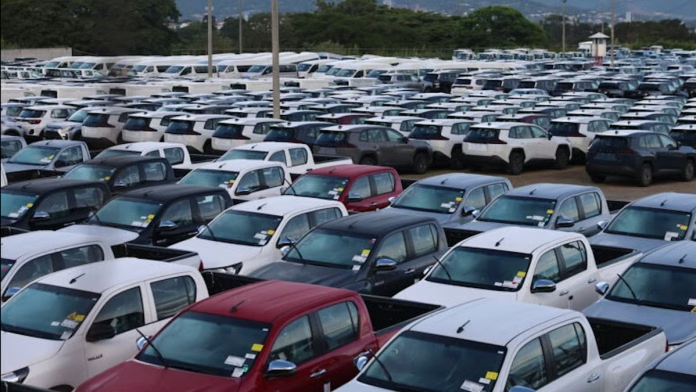


Q COSTA RICA — Used vehicles that are 12 years old or older—that is, built in 2014 or earlier—may not enter Costa Rica unless they have a certificate verifying their pollutant emissions.
This measure is in effect following a decree that requires passenger cars and light-duty cargo vehicles—weighing up to 3,500 kilograms—to meet, at a minimum, either the European Euro IV standard or the U.S. Tier II standard.
To comply, owners must submit a certificate or an emissions measurement report.
For new vehicles, this documentation can be submitted by “family code” (grouping similar models), but for used vehicles entering the country for the first time, a separate certificate must be provided for each individual vehicle.
Disagreement between the association and the ministry
The association representing used-car importers, the Asociación de Empresarios y Profesionales en Vehículos Usados (AEPSAU), argues that such a specific document does not exist, and that all car models from 2009 onwards already meet the required standards.
The Ministry of Health stated that the year of manufacture alone is not sufficient to confirm that a vehicle complies with the regulations. However, the ministry acknowledged that not all vehicles manufactured in 2009 are barred from entry; rather, each case is evaluated based on the vehicle’s age and its specific documentation.
The Ministerio de Obras Públicas y Transportes (MOPT)—Ministry of Public Works and Transport—is responsible for verifying compliance with these standards and coordinating with the General Directorate of Customs to grant the necessary approval for the formal importation (nationalization) of the vehicles.
Importers claim that this requirement is one of several administrative hurdles that have left hundreds of cars stranded at Customs.
The Ministry of Health indicated that it is open to reviewing the matter alongside the MOPT and the Ministry of Environment to explore alternative ways to demonstrate compliance with the standards.
The institution maintained that the certification requirement is intended to help protect public health and air quality.
Discover more from Q COSTA RICA
Subscribe to get the latest posts sent to your email.