



Q COSTA RICA — Before assuming the presidency, Laura Fernández crafted a university thesis at the University of Costa Rica (UCR) in 2016 that examined the role of the Contraloría General de la República (Comptroller General) as a critical check on the Executive branch.
In her academic work, Fernández defended the function of the Contraloría as a counterbalance to the government, highlighting its importance in maintaining oversight and accountability.
Her thesis analyzed how the Legislative Assembly and the Contraloría act together as brakes and counterweights to the Executive branch. At the same time, Fernández pointed out potential vulnerabilities or mechanisms by which the oversight and control functions of the Contraloría could be undermined or neutralized.
Read more: What insult did Edgardo Araya make about Laura Fernández?
This dual perspective — recognizing the Contraloría as a key institutional counterbalance while also highlighting how its control can be disabled — has become a point of discussion given her current presidency and related political debates about oversight and institutional autonomy in Costa Rica.
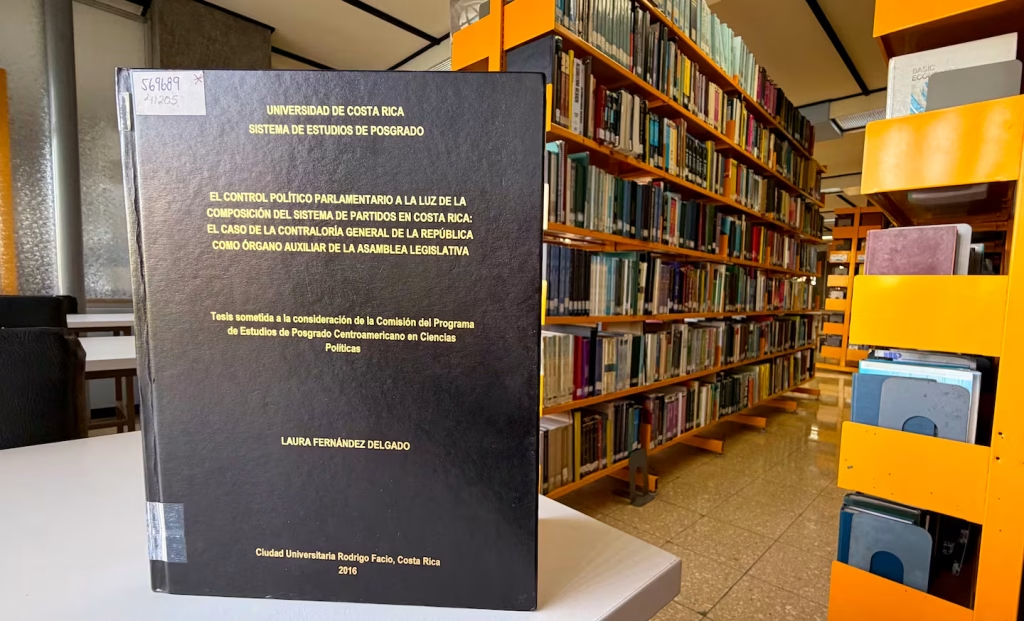
This nuanced view acknowledged the institution’s value while cautioning about potential political or legal maneuvers that could undercut its effectiveness.
Since becoming president, Fernández has faced scrutiny and political debate over the balance of power and the integrity of institutions like the Contraloría.
Her earlier academic work is now being revisited as part of discussions on governance, institutional checks, and the limits of control within Costa Rica’s political system.
This reflection on her thesis reveals a complex stance: a recognition of the need for robust oversight bodies, paired with an awareness of how fragile these systems can be if political forces seek to diminish their authority.

You can find the full thesis and more details about this analysis on La Nación’s coverage here:
- Summary and context: La Nación article
- Full thesis text: La Nación full thesis