Two stone spheres are among them. The stone spheres are declared a world heritage by the United Nations. They are from the Díquis archaeological region and date from the period 500-1000 AD.
Venezuela will return nearly 200 pre-Columbian stone and ceramic archaeological artifacts to Costa Rica on Jan. 2, making good on a promise to return plundered goods.
Two stone spheres are among them. The stone spheres are declared a world heritage by the United Nations. They are from the Díquis archaeological region and date from the period 500-1000 AD.
Sculpted by the Indigenous of Costa Rica, the 196 items include items of significance to understanding the Indigenous cultures and peoples who populated the Americas before Christopher Columbus’ landing on the continent and reflect the diversity of the country’s region in the Atlantic, North Pacific-Guanacaste area and Diquis, Osa.
These items include stone spheres that are significant to world heritage, sculptures of human figures, and two metates (mealing stones) used to process grains and seeds. No such similar items exist anywhere else in the world, and in many cases, the pieces are unique.
Venezuela’s Ministry of People’s Power for Culture and the Institute of Cultural Heritage agreed to repatriate the treasured Indigenous heirlooms after they were discovered among various properties seized by Venezuelan authorities.
The 196 archaeological pieces returned to Costa Rica by the Venezuelan government were to be auctioned in the United States. They entered illegally into Venezuelan territory in 2012 and were confiscated in 2013.
After Harry Mannill Laul passed away in 2010 at his Costa Rican mansion in San Rafael, Heredia, local authorities found over 100 pre-Colombian treasures. That same year, Venezuelan customs officials obtained 56 similar items illegally held at a warehouse, tipping them off to search his home in the country. It was there that they found a veritable museum of artifacts. The house was searched two more times in 2015.
Laul was an archaeological art collector of Estonian origin who allegedly aided the German Nazis in 1941and 1942.
The process of identifying and verifying the origin of the archaeological items required that the National Musem of Costa Rica invested US$22,000, and was implemented through the collaboration of the Costa Rica and Venezuela’s consulates. The National Gallery in Costa Rica also worked alongside the Cultural Heritage Institute of Venezuela.
A photo from Irene Steinberg’s Facebook page of her family, who lived in Scarsdale, N.Y. From left, William, Bruce, Irene, Zachary and Matthew Steinberg. Credit via Facebook
A New York family of 5 are among the 10 Americans killed in Sunday’s plane crash in Guanacaste.
According to the New York Times, several weeks ago, Bruce and Irene Steinberg, from Scarsdale, New York, had told their friends and family how excited they were about the adventure they were going to undertake with their three children in a country with “exuberant tropical forests and beaches.”
Irene Steinberg’s Facebook page of her family, who lived in Scarsdale, N.Y. From left, William, Bruce, Irene, Zachary and Matthew Steinberg.
The Steinbergs were accompanied by the children William, Zachary and Mathew (17, 19 and 13).
The family, along with a group of 15 other American tourists, had been visiting Costa Rica’s Pacific coast. On Sunday, the Steinbergs, in the second group of 10 American tourists, were headed to San Jose for their flight home. But the small plane, a Cessna Grand Caravan with the tail letters TI- BEI, carrying them crashed in the area of Nandayure, Guanacaste, minutes after taking off at 12:10 pm.
Crahs site. Photo from MSP Facebook
The other victims of the crash were identified as Thibault Astruc, Amanda Rae Geissler, Charles Palmer, Leslie Weiss and Sherry Wuu; and the Nature Air pilots, Costa Ricans Emma Ramos and Juan Manuel Retana.
The first plane, carrying the other 10 American tourists, had taken off at 11:00 am and had landed at the Juan Santamaria airport at 11:40 am and without incident.
Authorities responded to smoke and flames rising from a wooded area near the Punta Islita airfield, first responders finding the charred wreckage of the small aircraft and the burned remains of those who had been on board. There were no survivors.
Punta Islita aerodromo. Photo from MSP Facebook
The New York Times reported, “A sister of Mr. Steinberg confirmed Sunday night in a Facebook post that her brother and his family had died in the crash. A relative who answered the phone at Mr. Steinberg’s parents’ home in Florida confirmed that the Steinbergs lived in Scarsdale, a suburb north of New York City, with their sons William, Zachary, and Matthew.”
“They were the kind of people you would like to have many of,” the relative said before saying she had to hang up. “They always did everything as a family,” said the report.
Aviacion Civil (Civil Aviation) authorities on Sunday said the cause of the crash was unknown but that the small airplane had encountered bad weather – wind gusts of up 50 km/h. Ennio Cubillo, director of the Civil Aviation, explained at a press conference that the plane, on its way to Punta Islita from San Jose, had landed first at the Tambor aerodromo (airfield), taking off again after the winds had died down, eventually landed at 11 am at Punta Islita.
After picking up the passengers, the plane took off for San Jose. Photos posted on Facebook by the Ministerio de Seguridad Publica (MSP), show that the small plane crashed several hundred meters from the end of the Punta Islita runway.
On Facebook, President Luis Guillermo Solis, who is vacationing in Spain, lamented the tragedy, offered his condoliences to the families of the tourists and pilots and confirmed that an investigation would be underway today (Jan. 1) to detemine the cause of the crash.
In September, an American and another passenger on a Nature Air flight died when a single-engine Cessna crashed in the Torres river, in San Jose, minutes after taking off from the Pavas airport.
On Twitter, former President Laura Chinchilla (2010 – 2014) said her cousin had been the pilot of the downed plane.
La fatalidad se interpone en las celebraciones de familia. Nuestro querido primo fallece como parte de la tripulación de la avioneta siniestrada en Guanacaste. Fuerza a sus hijos y hermanos y paz a sus restos.
Permanecerás en nuestro corazón querido #JuanManuelRetana
The Organismo de Investigacion Judicial (OIJ), reported last night all the bodies of the victims had been recovered and were transferred to the Forensic Medicine Lab in Heredia.
Gesline Arango, photographer for La Nación, and part of the team in the coverage of the air tragedy that left 12 dead, this Sunday ( December 31) in Guanacaste, gives a heatbreaking account of the crash site and the moment the bodies of the victims were removed.
Juan Manuel Retana was in command of the Nature Air airplane that fell this Sunday afternoon in the mountainous area of Bejuco en Corazalito de Nandayure, Guanacaste.
The downed aircraft, that left 12 dead (ten foreigners and two Costa Rican pilots), was one of two small planes that left Punta Islita to with tourists headed for the Juan Santamaria airport in San Jose.
The aircraft, with the tail letters TI-BEI left Punta Islita, on the Pacific coast, at 12:10 pm, ten minutes later the fall of the aircraft was reported.
The first aircraft, TI-BBC, had left Islita at 11:00 am and arrived at the Juan Santamaria at 11:40 am.
TI-(xxx) is the Costa Rica aircraft registration prefix.
Ennio Cubillo, director of Civil Aviation, during a press conference, explained Retana had reported gusts of wind caused the pilot to opt for the Tambor airfield, to wait for them to decrease. Once informed of an improvement in conditions, Retana retook the flight plan to Islita. There he picked up the passengers and took off for the flight to San Jose.
Cubillo assured that the aircraft was certified to navigate and rejected that there is any relationship between the crash and an investigation of the company months ago, confirming that the aircraft went through the proper inspection a month ago.
According to a statement by Nature Air, the 10 American tourists were identified as Thibault Astruc, Amanda Geissler, Charles Palmer, Bruce Steinberg, Irene Steinberg, Matthew Steinberg, William Steinberg, Zachary Steinberg, Leslie Weiss and Sherry Wuu.
Accompanying Retana in the flight cabin was pilot Emma Ramos.
Nature Airt, in a statement, said, “In total 20 passengers were traveling from Punta Islita to San Jose, the group was divided into two flights.”
Infograph from La Nacion
The downed aircraft was a Cessna 208B Grand Caravan turboprop, manufactured in the United States.
Civil Aviation is investigating the causes of the crash.
On Facebook, President Luis Guillermo Solis lamented the tragedy.
Punta Islita, on Costa Rica’s Pacific Coast, is popular among North American and European tourists for its pristine beaches and lush landscape.
UPDATED 8:00pm – The number of road fatalities rose by 5 this Sunday, bringing the total for the year (so far) to 457, surpassing the 456 recorded in 2016. Among the victims this Sunday are four motorcyclists losing their lives in three separate accidents Sunday morning, in Cañas, Pococi and San Carlos.
—
Authorities at the Policia de Transito (Traffic Police) are calling it an epidemic: as of December 30, a total of 452 people died in traffic accidents this year, the second consecutive year with such high numbers. With one day to go, the final number could be close or even surpass last year’s 456 traffic accident deaths.
In the last five years, almost 2,000 people have died in traffic accidents in the country.
The mortality rate due to road accidents went from 5.39 per 100,000 inhabitants to 9.16, between 2013 and 2016, but this figure takes into account only those who died at the scene of an accident and not those who die in hospitals or clinics following the crash. When taking all the traffic accident related deaths, the real number is much greater.
An epidemic is considered when the mortality rate reaches 10 per 100,000 inhabitants.
In homicides, the country is already encountering an epidemic with an unprecedented 579 murders in 2017 (to December 30), a rate over 11 per 100,000 inhabitants.
Sonia Monge, deputy director of the Policia de Transito, lamented that road deaths was not reduced this year the campaigns launched by the government, and the integration of municipalities in controlling traffic.
For Monge the lack of respect for the rules of the road is a primary cause of the deaths on the roads.
According to figures by the Policia de Transito, the number of deaths per year:
It is almost a fact that in San Carlos and Limón it will be raining by midnight on this December 31st. Photo Jeffrey Zamora.
A low-pressure system is dampening the year-end plans of many, with rain in areas of Northern Zone and the Caribbean, and intermittent drizzle in the Central Valley.
It is almost a sure thing that in San Carlos and Limon it will be raining by midnight on this December 31st. Photo Jeffrey Zamora.
The Instituto Meteorológico Nacional (IMN) – national weather service – explains that it is part of the normality of the ‘summer’ climate in San Carlos and Limon, while the Central Valley will most likely continue with the cloudy skies and winds.
“We hope it stops raining in the country starting January 2 or 3, when the low-pressure system is expected to blow over,” said meteorologist Juan Diego Castro.
According to Castro, when the clock strikes twelve on this December 31, it is very likely that in the different parts of the country there will be some rain, describing it in Spanish as, ” cayendo un pelito de gato tirando a pelo de tigre”.
The meteorologist recommends for those in the Northen Zone and the Caribbean to better have the ‘carnita asada’ (bbq) indoors, or at least under cover.
In the Guanacaste, Central and South Pacific, the sun will continue to shine and the temperature ‘hot’.
This early Sunday morning, reports of light showers were reported on the west side of San Jose and other areas of the Central Valley, and light rain in San Carlos. Also strong cold winds.
Not umbrella weather, but certainly sweater time or a jacket in the higher altitudes.
Q MAGAZINE – Last Thursday, December 28, the immigration service registered the arrival in the country of U.S. citizen Stefani Joanne Angelina Germanotta. The name may not sound familiar to you, but that is the real name of the famous artist Lady Gaga.
Lady Gaga’s from her album, Joanne. Courtesy of the artist.
The arrival of Germanotta in Costa Rica not only surprised those on the ground at the airport but also caused a commotion among the passengers of the commercial flight she flew to Costa Rica.
Typically, celebrities at the level of Lady Gaga fly private. But not this Germanotta.
A couple on the flight with Lady Gaga lit the social networks with their Tweets.
So we just boarded a flight to Costa Rica and @ladygaga is on-board. I really need her to sing to us over the intercom. It is a crime to look so pretty on plane!!
There’s something remarkably comforting about having the most famous singer on earth on your flight. Who wants to be the pilot that screws up Gaga’s flight. #ladygagaisonmyflight
The actress and singer joins other celebrities such as the actors Christian Bale and Norman Reedus who are enjoying their vacation in Costa Rica, as well as the Colombian actress Manuela González.
'Mosquito factory' churns out sterile males produced without genetic modification to fight Zika
After its success in controlling a devastating fruit fly with nuclear technology, Argentina is gearing up to fight a new enemy: mosquitoes that transmit Zika, in addition to dengue and chikungunya.
The method applied in both cases is the sterile insect technique, SIT, an insect birth control method that uses irradiation to sterilize and release insects to suppress pest populations.
‘Mosquito factory’ churns out sterile males produced without genetic modification to fight Zika
The International Atomic Energy Agency, IAEA and the Food and Agriculture Organization of the United Nations (FAO) have supported Argentina in applying SIT against fruit flies since the mid-1990s.
Argentina has a long history of applying area-wide SIT successfully. Ever since the Mediterranean fruit fly appeared in the country in the 1900s, fruit trade with countries free of the pest was restricted. This resulted in multimillion dollar losses due to quarantine restrictions and costs associated with postharvest treatments required for fruit exports.
Thanks to an eradication program using an integrated pest management approach that includes SIT and with the technical support of the IAEA and the FAO, plant protection authorities and trading partners declared Patagonia free of this pest in 2005, a status the region has enjoyed since.
As a result, Patagonia’s fruit industry has saved millions of dollars by not having to use post-harvest treatment to kill fruit fly larvae as a prerequisite for exports. The industry, mainly focused on growing pears and apples, generates US$700 million a year, according to the National Food Quality and Sanitation Service (Senasa).
SIT has also helped Mendoza — a region in western Argentina famous for its peaches and plums— maintain the fly population at very low levels since 2009.
Argentinean scientists are currently working with the IAEA and the FAO to apply SIT in the northeast of the country, where they have already started trial releases of sterilized fruit flies in pilot areas. The idea is to reduce direct damage to citrus production while also restricting insecticide use.
“Ideally, we would be creating two large belts of Mediterranean fruit fly-free areas,” said Gustavo Taret, engineer at the Institute of Health and Agricultural Quality in Mendoza, ISCAMEN. “One starting in the north and the other in the south. The idea is to control the fly population in all affected regions, gradually, until both belts meet in the middle.”
After this success, Argentina is looking into the possibility of applying SIT to Zika-transmitting mosquitoes, a possibility that is still at the early research stage.
“We recovered from a fruit pest only to dive into a new problem: Zika,” said Celina Horak, Manager of Radiation Applications at the Argentine Atomic Energy Commission (CNEA).
In 2016, Argentina reported more than 41.000 confirmed cases of dengue, 322 of chikungunya and 21 of Zica, all diseases caused by viruses that are transmitted by the Aedes aegypti mosquito. This year, Zika cases have increased considerably, reaching a peak of 102 suspected cases during week 14.
Responding to requests for assistance at the height of the Zika outbreak in 2015, an IAEA technical cooperation project kicked off to help 21 countries in Latin America and the Caribbean, including Argentina, develop the SIT package to suppress Aedes aegypti mosquito populations.
Since the start of the project, Argentina has made significant progress. “We are already conducting studies in cages and laboratory assessments in our mosquito rearing laboratory at the Ezeiza Atomic Centre, and the plan is to do pilot testing in Posadas in 2019,” Horak said.
India has become more important for Latin America's exports than any European country.
US. President Donald Trump has revived the Ugly Gringo fears of Latin Americans. Humiliated by Trump’s insults and anti-NAFTA stand, Mexico is keen to diversify its trade partnership. Other Latin Americans too are disgusted by the protectionist policies and Caudillo tantrums of Trump.
Caught between the bullying US President Donald Trump, protectionist Europe and trade deficit with the Chinese, the Latin Americans have started looking more seriously at India
They are also disillusioned with Europe which is mired in trade protection, anti-immigration and other such issues.
On the other hand, China has emerged as the second largest trading partner of Latin America overtaking European Union. It has given around US$150 billion dollars of credit and invested around US$120 billion dollars in the region.
But Latin Americans are wary of the non-transparent and sometimes high-handed business practices of the Chinese and the hidden agenda of Chinese government owned enterprises. Realizing the risk of the overwhelming dominant presence of China, they want to reduce their overdependence.
The Latin Americans have started looking more seriously at India, which has become more important for Latin America’s exports than any European country.
Latin America’s GDP growth is projected to increase to 2.2% in 2018 from 1.3% in 2017. The Pink Tide has receded for the moment, giving rise to more centre right governments in the region.
In the first six (April-September) months of 2017-18 fiscal year, India’s exports to Latin America have increased by an impressive 17% reaching US$6.2 billion.
India’s exports to some Latin American countries are larger than the exports to some neighbouring countries and traditional trade partners. For example, India exports more to Mexico than to Thailand, Myanmar, Iran, Canada, Russia, Egypt or Nigeria.
Latin America is the largest destination for India’s vehicle exports with Mexico as the largest for cars and Colombia for motorcycles. In some countries such as Guatemala and Colombia, Indian motorcycle brands are the leaders with the highest market share.
In the past, distance was perceived as the major barrier for trade with Latin America. The economists saw Indian and Latin American exporters as competitors for the same consumer markets of the developed world, exporting raw materials and importing finished products. But these perceptions and theories have been upended with a new paradigm of business in the 21st century. The Indian and Latin American companies and markets are discovering new synergies and complementarities.
Indian companies have started getting infrastructure projects and contracts for supply of equipments and machinery in the region. Sterlite Power Grid of India has just won a billion dollar power transmission line project in Brazil. Latin America has become a regular contributor to India’s energy and food security.
In 2017, Indian firms have increased their investment in Mexico and Brazil especially in auto parts, IT and agrochemicals. It is interesting that UPL, the largest Indian agrochemical company has more revenue in Latin America than in India.
This is an opportune time for India to take the win-win economic partnership with Latin America to the next level. The appointment of Mr. Suresh Prabhu as Commerce Minister of India is welcome news for economic relations with Latin America. He has been taking interest in the region with his deep knowledge and understanding.
Mexican companies have increased their investment in India in 2017. Group Bimbo has invested US$50 million dollars. Cineopolis has become the fourth the largest owner of multiplexes in India.
Aje, a Peruvian company has bet on the Indian cola market with production of Big Cola brand of soft drinks in Maharashtra.
In 2017, there have been more joint ventures in entertainment business. “ Thinking of him”. a film on Tagore’s romance with the Argentine celebrity Victoria Ocampo was coproduced by an Argentine-India venture and was premiered in the Goa Film festival in November. Prabhakar Sharan from Motihari in Bihar became a hero in a Latin American film “ Enredados: La Confusion” ( Entangled: the confusion) produced in Costa Rica and released in February. It is the first Latin American film produced in the Bollywood style of songs and dance.
India has become more important for Latin America’s exports than any European country.
Latin American market prospects
Latin America’s GDP growth is projected to increase to 2.2% in 2018 from 1.3% in 2017, according to the 14 December report of the UN Economic Commission for Latin America and Caribbean(ECLAC). Although the growth of 2.2% is modest, it would be the highest since 2013.
The GDP growth prediction for the major countries are: Brazil – 2%, Mexico-2.4%, Argentina-3% and Colombia-2.6%. Panama will have the highest growth with 5.5%, followed by Dominican Republic-5.1% and Nicaragua-5%. In South America, the growth champion in 2018 will be Bolivia with 4%. Venezuela is the only country which will face GDP contraction, at 5.5%. The consolation is that the contraction would be less than the 2017 figure of 9.5%.
Political developments
In 2018, Brazil, Mexico, Colombia, Costa Rica, Paraguay and Venezuela will have presidential elections. Venezuela’s political and economic tragedy could get worse.
While most of Latin America has firm democratic foundations, three countries have remained as exceptions.
In the elections held in December, the business-friendly billionaire Sebastian Pinera was elected as President of Chile. Lenin Moreno, who was elected as President of Ecuador in February, is more moderate and pragmatic than his predecessor Rafael Correa who had confrontations with foreign companies and got carried away by his anti-imperialist rhetoric. Argentina, Brazil, Peru and Paraguay have changed their leftist governments with centre right ones in recent years.
In 2018, although Lula in Brzail is leading in the opinion polls, he faces the risk of disqualification if his conviction in the corruption case is confirmed by the Supreme Court. In Mexico, Lopez Obrador, the leftist candidate who lost narrowly in the last two elections, is the favourite to win. His strong personality and nationalistic position is considered as positive to stand upto Trump who heaps insults upon the Mexicans.
In Colombia, President Manuel Santos will leave office after having achieved peace in the country with the FARC agreement. The FARC, in its new avtar as a political party, will participate in the 2018 elections but they have very limited chances. The next president of the country will have a fresh start focussing on economic development free from the war burden. Thanks to the end of the guerrilla war, vast new areas of the country have now opened up for agriculture, mining, oil exploration and infrastructure development.
The political crisis in Venezuela will continue in 2018 and could get even worse. President Maduro will try to get reelected in 2018 by hook or crook. Honduras is living up to its reputation of “Banana republic” with its ongoing agitation against the reelection of President Hernandez after alleged electoral malpractices. Cuba, which was opening up, has slowed down its reforms in reaction to Trump’s revival of the failed policy of restrictions and isolation of Cuba. Raul Castro will step down as President in April 2018 but will continue as the communist party head.
The Apolo is the backbone of San Jose's commuter train service. The machines in use in Costa Rica were built in the 1980s and refurbished in the 2000s.
Think you have it bad getting parts from abroad for your vehicle. Put yourself in the shoes of the country’s national railway, an institution with low funding and struggling to keep the few trains not severely damaged by the almost daily incidents with vehicles.
The Apolo is the backbone of San Jose’s commuter train service. The machines in use in Costa Rica were built in the 1980s and refurbished in the 2000s.
According to the Instituto Costarricense de Ferrocarriles (Incofer), getting parts for the Apolo trains takes up to 310 days. That is almost a year.
A great part of the reason is that the Apolo trains, imported from Spain in 2009, were built in the 1980s and refurbished in the 2000s, according to the former head of the Incofer, Miguel Carabaguíaz.
Think that is old. The other locomotives, the blue ones, used daily are from the 1960s.
This is Costa Rica’s mass transport system that attempts to move thousands daily on weekdays, a service that besides having to deal with normal maintenance of its trains, has to deal with constant run-ins with vehicles.
The arrival of the first four Apolo trains in Costa Rica in 2009
In its report, La Nacion gives the examples of public tenders, although approved in days, taking months to get the parts in the country. La Nacion hinted that the internal workings of the Incofer may be the major culprit, citing that it requested information of tenders from the Incofer on October 4, but it wasn’t until December 12 it received a reply.
The former Incofer president defends the purchase of the Apolo trains, saying when the trains were purchased they came with an ample inventory of spare parts, valued at some 200,000 Euros.
The man who is responsible for the reviving of the commuter train for the Greater Metropolitan Area (GAM) of San Jose and replaced by the current administration, sustains that wearable parts like brake shoes and others to maintain the trains in good condition was part of the purchase.
He would not speculate publicly as to the current situation.
In the first nine months of 2016, the commuter train moved 2,872,000 people on the Heredia-San José, Pavas-Curridabat, San José-Cartago and Belén-San José routes.
This year, in the same period this year, the train moved 2,894,000 people on the same routes. Not a big jump in ridership, only 25,000 more people used the train the first nine months of this year over the same period last year.
Elizabeth Briceño, the current head of the Incofer, announced months ago the plan to purchase eight new trains for 2018, the first 3 expected to arrive in the first three months of the year. As well, the Incofer will be starting negotiations for the development of an electric train service.
While the commuter train could be an important part of the solution to San Jose’s major traffic congestion, red tape to obtain replacement parts and new trains, leading to poor and constant interrupted service, is not giving confidence for people to opt for the train.
One example is the hours of operation. The limited train service only runs, when it runs, in the mornings and afternoons. That is, commuters have to arrange their work schedule to accommodate the train, rather than the other way around.
If you ask a digital nomad what is her bare minimum requirement for being productive, high chances are you will get to know about positivity. A positive surrounding with like minded people, all weary of regular routine and venturing out of the box, is all they seek.
Millennial these days need few basic necessities to survive. Good food, a cozy place, constant WiFi connection and good health feature high in their list. It goes without saying a location independent nomad will choose a stay from an array of options that suffices his basic needs. Costa Rica is the new haven for those wanderer souls.
Imagine a place nestled between the beaches of Pacific Ocean and the Caribbean Sea, as well as dotted with active volcanoes. Who will not want to be a part of that lush celebration that facilitates the modern amenities unequivocally?
“All work and no play, makes jack a dull boy” you will not fall prey to this age-old idiom when working from Costa Rica. Christopher Columbus had discovered the land of wonder dating back to the fifteenth century. Time flew to develop the country as one of the coveted vibrant tourist lands with diverse culture, climates, flora, fauna, and landscapes.
The lush rainforests might soothe your eyes. But it sure kindles the creative urge of the nomad in you. Pretty often you will find yourself sitting in a co-working place, exchanging idea with bright minds and indulging in a meaningful intellectual discussion. Fast internet and access to technology are few of the main concern of the small expat community living in the little towns by the Caribbean.
Here is a helpful list of towns where it will be easy to find an expat community. Hopefully, it will help you socialize and mingle for a leisure life over the weekends.
Puerto Viejo de Talamanca in Limon
Playa Jaco in the Central Pacific
Playas del Coco in Guanacaste
Playa Tamarindo in Guanacaste
San Jose (Escazu/Santa Ana area) in the Central Valley
Dominical/Uvita in the South Pacific
Grecia in the Central Valley
Despite heavy traffic and crowd that might make you annoyed at times, these towns are pretty balanced with expat population, friendly locals, ample opportunity to work and make merry. Did I mention about the fabulous nightlife already? Or better I will leave it up to you to find out.
A typical lifestyle suitable for a digital nomad is more about spending as little as possible without maintaining a strict budget per say. Costa Rica is an apt choice for that. Rented apartments are easy to find. If you want to splurge a little, you may even find a quirky boutique accommodation for yourself. Once tired after relentless work for few nights, unwind on the beaches of Pacific.
Surfers can swear by the waves of the coast here. Seaside shacks serve delicious food, cooked to your taste. Picture a life with a beer bottle in a seaside shack gazing at the panoramic horizon and munching French fries. Costa Rica is indeed adored for good reasons!
Central America and tropical weather often creates a heady cocktail that Costa Rica is. A preferred emerging remote working location among digital travelers it also offers a cheap and affordable lifestyle.
Pura Vida life as locals call it here is the most sought-after lifestyle in vogue for digital nomads without much delay.
Short Flight To North America & South America. In case you are homesick or are tired of slow-paced life, worry not for Costa Rica is well connected with both the Americas with multiple flights.
Hopefully the short introduction has inspired you enough. Have any suggestion in your mind?
Ricardo Rudin Mathieu ran a racket. He put labels bearing the U.S. Department of Agriculture’s organic seal on boxes of pineapples grown conventionally with chemicals.
Large “five count” pineapples was a red flag.
Before Rudin was caught, he managed to export more than 400,000 of the phony organics to the United States and Canada — enough to supply a pineapple to every resident of New Orleans.
Rudin confessed in 2014, USDA records show. Then something remarkable happened. The agency did nothing to him.
Like others responsible for what appears to be a rising tide of fakes in the US$43 billion U.S. organic food market, Rudin escaped consequences for duping U.S. consumers, who pay steep premiums for food that may not meet the promise of the USDA seal.
The USDA records show that a year into a meandering three-year investigation, agency managers told Costa Rican officials they had no idea whether Rudin continued selling conventional fruit as organic.
A former business partner has filed a lawsuit against Rudin, 42, accusing him of mislabeling produce again, exporting 40,000 conventionally grown pineapples to the U.S. last year at a 100% markup.
“He’s moved on to bananas and I believe avocados and plantains, from what we know,” William Umana Aguirre, co-owner of Packing House Gala Gold in Costa Rica, told NerdWallet.
Umana accused Rudin last year of misappropriating company money to export phony organic pineapples using another supplier’s certificates. He says he reported Rudin to judicial authorities but they have not taken any steps against him.
“I really need to get this guy shut down, but nobody does anything,” Umana said.
Rudin denied all of Umana’s accusations.
The Rudin case exemplifies the weakness of the USDA’s enforcement system, as purveyors succumb to the temptations of profiting from forbidden fruit, a NerdWallet investigation found. Markups are so high — anywhere from a third to almost triple, at retail — that swindlers belly up to the organic trough, with little to fear if they’re caught.
Such temptations extend to the 80 powerful certifiers the USDA authorizes to inspect organic operations worldwide. Those certifiers are accredited by the agency but then chosen and paid by the organic companies themselves, creating a conflict of interest.
Among the findings of NerdWallet’s four-month investigation: Some consumers who pay extra for organics are bilked and don’t know it. Honest organic farmers are undersold and struggle to survive. And cheaters are emboldened as culprits walk and the USDA organic seal loses credibility.
Fake organics involve far more than just pineapples. The Washington Post reported in May, for instance, on a load of conventionally grown soybeans shipped to the U.S. and sold as organic at a $4 million premium. Watchdog organizations such as The Cornucopia Institute in Wisconsin say that dairies and egg producers break organic rules while managing cows and hens.
“This industry is way, way out of control,” said Pat Dockstader, managing partner of USDA-certified Doc’s Organics LLC, whose sister company, P&T Enterprises in California’s Imperial Valley, farms 800 acres of lemons and other organic fruit.
“I’ve been around a few campfires where guys say, ‘Well, how much nighttime spraying do you do?’” said Dockstader, referring to secret application of chemicals banned for organics. He says he doesn’t do any.
Merely by relabeling, a dishonest competitor can get $35 for a $25 box of conventionally grown lemons, Dockstader said.
NerdWallet investigated the Rudin case by interviewing him and others involved, and by examining hundreds of pages of emails, documents and photos the USDA released in response to public records requests.
NerdWallet’s investigation also found another glaring example of USDA inaction, also involving Costa Rican pineapples. In the separate, ongoing mess, PrimusLabs, the same certifier as in the Rudin case, is accused by a Costa Rican government investigator of improperly certifying a big farming operation, allowing millions of dollars of bogus organics to reach the United States.
Facebook says it is getting tough in ‘engagement baiting’, the spammy posts that goad people into interacting with likes, shares, comments, and other actions. For example, “LIKE this if you’re an Aries!”
This tactic, known as “engagement bait,” seeks to take advantage of our News Feed algorithm by boosting engagement in order to get greater reach, write Henry Silverman, Operations Integrity Specialist and Lin Huang, Engineer, on Newsroom Facebook.
So, starting this week, Facebook will begin demoting individual posts from people and Pages that use engagement bait.
The writers say to help Facebook foster more authentic engagement, “teams at Facebook have reviewed and categorized hundreds of thousands of posts to inform a machine learning model that can detect different types of engagement bait. Posts that use this tactic will be shown less in News Feed.”
Additionally, over the coming weeks, Facebookwill begin implementing stricter demotions for Pages that systematically and repeatedly use engagement bait to artificially gain reach in News Feed. “We will roll out this Page-level demotion over the course of several weeks to give publishers time to adapt and avoid inadvertently using engagement bait in their posts. Moving forward, we will continue to find ways to improve and scale our efforts to reduce engagement bait,” said the Facebook team.
“Posts that ask people for help, advice, or recommendations, such as circulating a missing child report, raising money for a cause, or asking for travel tips, will not be adversely impacted by this update. Instead, we will demote posts that go against one of our key News Feed values — authenticity. Similar to our other recent efforts to demote clickbait headlines and links to low-quality web page experiences, we want to reduce the spread of content that is spammy, sensational, or misleading in order to promote more meaningful and authentic conversations on Facebook.”
Perhaps this will bring many back to Facebook, yours truly whose engagement in Facebook social media has been limited to a few hours a week instead of per day. Engagement baiting and other spammy practices in the newsfeed led me to find other sources to better use my online time.
How will this impact Pages?
Facebook says publishers and other businesses that use engagement bait tactics in their posts should expect their reach on these posts to decrease. Meanwhile, Pages that repeatedly share engagement bait posts will see more significant drops in reach.
The social network giant recommends page Admins to continue to focus on posting relevant and meaningful stories that do not use engagement bait tactics. Learn more about engagement bait and how to avoid using it here.
Costa Rica has a well-deserved rep as a hot spot for adrenaline-fueled adventures, from zip-lining through jungle canopies to rappelling down waterfalls. But there’s also some serious local yin to balance out all that yang. So much so that you could easily create an entire — pretty epic — relaxation retreat here. In this version of your vacation, treetop naps lead into thermal pool soaks, which in turn set the stage for sublime spa treatments in the rainforest.
In fact, even the trip’s logistics minimize stress: There are nonstop flights from 15 U.S. cities, English is widely spoken, dollars are widely accepted and the time zones are never too far off from your own (Costa Rica lines up with CST).
Here, seven more reasons to pack up your loose, flowy favorites and go:
1. Check in to Zen-inducing digs
Though humans have long intuited that nature relaxes us, recent advances in neuroscience, among other fields, are backing that belief with all kinds of evidence. Turns out that even brief exposure to nature can, for example, lower stress hormones, heart rate, blood pressure and anxiety. So actually staying out in nature is like megadosing on tranquility.
And that’s where Costa Rica’s loftiest lodgings come in: Set up in the treetops, these perches place you face-to-beak with some of the country’s most colorful characters (yup, toucans included). From simple but comfortable tree house hotels to more elaborately constructed rental units, options abound.
Of course, if you’d rather stay among the trees than atop them, you have even more options that include rainforest reserves with open-air bungalows.
2. Dip into a bath that’s already drawn, naturally
An active member of the Pacific Ring of Fire, Costa Rica is famous for dazzling displays of volcanism — and all that geothermic activity makes for some amazing soaking ops. Occasionally manmade but always derived from natural springs, these steamy, mineral-rich, volcano-adjacent pools make for sublime day trips — or focal points of your stay.
Consider a soak and mud bath near the Rincón de la Vieja volcano, or check out the geothermal waterfalls and around the Arenal volcano.
In both places — as in so many other prime Costa Rican soaking spots — spa facilities are obligingly close at hand. So if maximum bliss is the desired result, proceed directly from a steamy pool to a treatment table. You’ll likely find yourself in an open-air cabana, with only jungle noises for a soundtrack — and locally sourced muds, oils, and botanicals for treatment ingredients.
3. Go with the (ebb and) flow
If your brand of chill involves hypnotic wave action and watching the sun rise or set over the sea, you’d do well to visit a country whose very name means Rich Coast. (Or Delicious Coast, if you prefer — and we kind of do.)
Between the Pacific and the Caribbean, there are 912 miles of national shoreline. Of those, one of the quietest and prettiest stretches on the Caribbean side is Punta Uva (you’ll have to take a twisting jungle road and some unmarked dirt roads to get there, but you’ll be glad you did once you’re swimming among the corals and communing with the local monkeys and macaws).
On the Pacific side, don’t miss the stunning beaches of Manuel Antonio in the national park of the same name. You’ll find sweeping vistas, calm waters and a wild array of companions, from sloths to squirrel monkeys.
4. Find your om away from home
If yoga’s your de-stressor of choice set your out-of-office message to “namaste in the jungle” and find your perfect rainforest retreat. You can choose from group yoga retreats, private ones, and add-ons that include everything from aerial silk to fire dancing.
A good geographic starting point is the longstanding coastal yogi haven of Nosara, where you’ll find no fewer than five yoga centers.
5. Stop and smell the flowers … every two seconds
Little Costa Rica has a disproportionate allotment of flowering plants — at least 9000 species by most counts, of which more than 1000 are orchids (the pinky-purple variant known as the ‘guaria morada’ is the national flower). You’ll likely spot plenty of orchids in the wild, but you can see 400+ species in one go at the Monteverde Orchid Garden, thanks largely to the humidity and elevation of the surrounding cloud forest.
Of course, not all orchids are scented. But what they lack in aroma they more than make up for in gorgeousness, from crimson polka-dotted yellow bucket orchids to fuchsia-striped Easter orchids. And research has shown that through color, scent or a combination of the two, flowers can be stress-relieving and mood-boosting.
6. Go off the grid
Even if you have an unlocked phone or international data, wireless coverage can be spotty and extra charges can stack up — both great reasons to put the phone down (yes, you too) and be totally present during your vacation. Okay, the occasional #SlothSelfie doesn’t automatically negate mindfulness, but don’t let your pics tempt you into an all-out Facebook/Insta/email-checking binge.
7. Treat yourself to a stress-fighting smoothie
Bucking notions of comfort food (i.e., anything fried), much of the produce that goes into the local blender concoctions is comforting in its own right. Examples range from papaya (combats the effects of stress) to cacao (lowers blood pressure) to mint (calms nerves).
But whatever the fresh-squeezed — and likely organic — ingredients in your glass, the local catch-all phrase makes for an especially appropriate toast: Pura Vida!
Posted on Twitter, a photo of Costa Rica President Luis Guillermo Solis sitting in Business Class of an Iberia flight to Madrid, Spain
In a classic ‘Do as I say, not as I do’, after asking Ticos (Costa Ricans) to “turistear” (visit) areas affected by tropical storm Nate to boost the local economy, President Luis Guillermo Solis and family headed for Spain for the holidays, despite his call on the social networks.
Posted on Twitter, a photo of Costa Rica President Luis Guillermo Solis sitting in Business Class of an Iberia flight to Madrid, Spain
Solis will be out of the country from December 23 and will return on January 7, 2018, is the official notice sent to the Legislative Assembly.
“The tropical storm #Nate left great destruction in its wake and hundreds of affected families, but they are not alone … they count on our help,” says a Tweet on December 26. “Therefore, this summer enjoy the tourist places that were affected by the phenomenon,” he continues.
La tormenta tropical #Nate dejó gran destrucción a su paso y cientos de familias afectadas. Pero ellos no están solos… cuentan con nuestra ayuda.
Por eso, este verano disfrute de los lugares turísticos que fueron afectados por el fenómeno. https://t.co/ZlNSn2uHWx
This request was accompanied by a video that presents the different beauties offered by Guanacaste, Osa, Monteverde, Montes de Oro, Zona de los Santos, Aserrí, and Acosta.
But the message hit the nerve of some Costa Ricans who considered Solís’ message contradictory for traveling abroad instead of spending time in these places in Costa Rica and questioning it on social networks.
Diay…pero se hubiera ido para el Sur y no para España, entonces.
Ahí lo vimos muy orondo, sentado en Business Class de Iberia, dando el ejemplo a los costarricenses…#NOTpic.twitter.com/DLMsL3JT1L
There we saw him, sitting in Iberia’s Business Class giving the example to Costa Ricans … #NOT
Some were not so kind with their words for the Prez.
Y mira decime una cosa, me imagino que vos andas ahi … ah puta no jalaste para España con la doña … tuanis ! Asi se hace #selfipresi ! Oh no wait fijo mandaste a Mariano en tu representación
Señor Solis y usted donde está ahorita?En PérezZeledón,Los Santos, zona norte?A no,está en España,no cortico eso,es su derecho,pero no sean tan habla paja e hipócrita,usted es el mejor ejemplo que dese un aula cualquiera habla paja pero a la hora de la hora no sabe gobernar.
Lest we not forget, Solis is in the last months as a president of a country he and others have deemed unmanageable. Solis, after being elected on the wave of ‘change’, made that known at the end of his first year and would not seek re-election in future elections.
In Costa Rica for the holidays and the opening the movie “Hombre de Fé”, the story of his life, Keylor Navas was guest at the bullfights of the bulls at the Zapote Fair on Wednesday night.
Keylor Navas (left) posing with the two faces that represent him in the film: the boy Juan José Coste and the Colombian Matt Márquez. Photo: courtesy of Esteban Chinchilla.
The Tico goalkeeper got more than one scare in the bullfights. Between the applause of his followers, the photos, the shouts from the public Keylor had to endure the grips of wife Andrea every time the bull lifted in the air an amateur bullfighter, “improvisado” in Spanish.
“It’s a bit strange to see your life on the screen, there are mixed feelings, very nice moments and a great illusion”, Keylor Navas.
Keylor was the guest of honor Wednesday night, invited to the traditional “corridas” (run of the bulls) and who, with his family, took front row with the bulls up close and personal.
Today, Thursday, December 28, the film on the life Keylor Navas’ rise to fame in the ‘cancha’ (soccer field) opens in cinemas across the country.
Tuesday night, December 26, the movie was prescreened to a group of some 4,000 invited guests.
At the Centro de Eventos Pedregal, Keylor Navas was present a the prescreened of” Hombre de Fe”
Hombre de Fé (Man of Faith) is about a child (Keylor) from Perez Zeledon, a rural area of Costa Rica, who finds fubtol (soccer) his passion and a way to a better life. On his way to achieve his sporting and professional goals, and to help his family, he faces an unknown city and challenges that will test his character, but that will make him discover the true strength behind his dreams.
The movie began shooting in May 2017 and lasted 64 days of production, 54 in Costa Rican 5 in Spain. The film, directed by Costa Rican Dinga Haines, had a budget of US$1.3 million dollars.
Jose Leon has spent most of his recent days sitting in a rocking chair on the porch. The 80-year-old suffered a stroke five years ago and has been confined to his home since.
Although his 15-year-old grandson is strong enough to carry him, the only time Leon has left the house has been when the ambulance has come to pick him up for appointments at the hospital.
His story is not uncommon in Guanacaste, Costa Rica, where adults and children who have become immobile due to accidents or illnesses such as polio and diabetes often lack resources to obtain wheelchairs. Many of them rely on family and friends to move around; some get around by sliding or crawling on the ground.
Free Wheelchair Mission Gifts Mobility and Hope to Children and Adults With Disabilities
The World Health Organization estimates that 70 million people living in developing countries share similar experiences. Free Wheelchair Mission (FWM), a nonprofit, humanitarian organization, was founded to help these individuals by gifting them durable and inexpensive wheelchairs.
Don Schoendorfer is the mastermind behind FWM. A biomedical engineer by trade, Schoendorfer was determined to build a simple and cost-effective wheelchair for people in need. In 2001, he established FWM to raise funds for the assembly and delivery of wheelchairs to children and adults with disabilities around the world.
“Human beings have such an innate need and desire to move independently,” said Schoendorfer. “When you rob them of this, you take away so much humanity. Some of these people have been waiting for a wheelchair for maybe 25 years. Once you put them in one, they instantly gain this dignity from sitting up straight. It’s that simple.”
Right at Home Partners With Free Wheelchair Mission to Transform Lives Together
In April 2017, Right at Home teamed up with the Free Wheelchair Mission to extend the gift of mobility. Today, Right at Home has raised approximately $129,000, or three containers of wheelchairs, for people who need them most.
In the fall of 2017, 11 members of the Right at Home team from Nebraska, Massachusetts, Connecticut and Missouri joined the Free Wheelchair Mission to assemble and deliver 35 wheelchairs to those in need in Costa Rica.
“Every day we see how lack of mobility affects the quality of life for the seniors we serve,” said Rosaleen Doherty, owner of Right at Home Boston and North. “For people living with a disability in less-resourced nations, a wheelchair opens doors to an education, a job, independence and social interaction. Mobility encourages renewed self-confidence and hope.”
Right at Home provides in-home care and assistance to seniors and adults with disabilities in the U.S. and seven countries around the world. Empowering elders and adults with disabilities to maintain their independence and dignity is our mission, and that aligns perfectly with the goal FWM aspires to achieve.
A Somber Reflection on Preventative Care and Healthcare
Delivering free wheelchairs to meet the need in Costa Rica serves special meaning this holiday season. As Tropical Storm Nate tore through Costa Rica in October 2017, damage to the country is still visible. Floods have left much of the country inundated, and the elderly and people with disabilities who were unable to evacuate their homes were often stuck with water coming up to their beds.
“We felt honored to be part of this journey,” said Kirsten Pahde, owner of Right at Home St. Charles, Missouri. Pahde thought that going through the entire process — from fundraising to assembling, delivering and fitting individuals in their new wheelchairs — was immensely powerful. “When people get their wheelchairs, they just light up,” she said.
Pahde learned that many of the recipients became disabled due to lack of preventative care. “We are so fortunate to take that for granted,” she said. “When you have an infection in the U.S., you go take care of it. But in Costa Rica, it may lead to an amputation. A lot of the people we met hadn’t left their homes in years. If they left, they crawled, or their family members carried them.”
Another member of the “Vision Trip” (as referred to by FWM) felt similarly to Pahde. Betty Harris from Right at Home’s headquarters found the trip humbling. “It’s overwhelming to be right there and see families struggle and then see the change. It was immediate,” said Harris.
Durable Wheelchairs Boost Social Interaction for Those With Disabilities
As Padhe, Harris, Doherty and the rest of their team began building wheelchairs, they were informed that they needed to put the assembly on hold so they could quickly deliver one wheelchair because their first recipient had to leave for a hospital visit soon.
The team arrived at Leon’s house to find him sitting in his rocking chair. He was excited to have a “new car” and said he would finally be able to go to church and visit friends and neighbors outside the periphery of his porch.
Right at Home is in the process of adding more Vision Trips to its calendar and hopes to partake in two trips in 2018. The cost to manufacture, ship, build and deliver one wheelchair is $80. Join us to be part of the movement to help people with disabilities around the world!
theblondeabroad.com – With a rich culture, lush rainforests, and incredible beaches, Costa Rica is one of Central America’s greatest escapes. Nestled between Nicaragua and Panama, this little country has so much to offer in natural beauty and fabulous weather.
Defined by its location between the Caribbean and the Pacific Ocean, this country offers everything from black-volcanic-sand coastlines, to rugged coves, to white-sand beaches.
Ready to see it all?
Here is the best time to go to Costa Rica.
January to February in Costa Rica
While you’ll always see crowds in the Caribbean around Christmas and New Year’s Eve, things clear out quickly afterward. You’ll have the place to yourself after only a few days into January, and you’ll be able to take advantage of some of the lowest prices of the year.
The dry season is just starting. You’ll have nice sunny days, but the forests will still be lush and green with flowing waterfalls.
Without the rain, it’s an ideal time to surf. Best of all, the local farmers are taking in the coffee harvest making it the prime time for farm tours and tastings. (Hello, fresh coffee!)
And, for those of us who love nothing more than to be covered in glitter and dance the night away, February is all about the Envision festival, an amazing celebration of art, spirituality, yoga, music, and dance.
March and April in Costa Rica
Spring is a great time to head out and enjoy the breathtaking nature of Costa Rica. The country is still green, and the weather ranges from seventy to ninety degrees. As you move further into the dry season, you’ll find that some spots are pretty dried out.
Spring is an amazing time for getting outdoors. You can see Poas Volcano without fog and hike the rainforest or surf the seas. Some river levels drop making them too low for rafting during the spring, and some of the trees in the northwest are dry and bare, so check out the specifics of where you’re going.
To avoid the crazy crowds, watch out for spring break rush and avoid Semana Santa (the week leading up to Easter) in March. They are both ultra busy times for travel.
May and June in Costa Rica
The rainy season starts back up in May. The rivers fill up again and you’ll see adorable sea turtle nesting. Don’t miss the leatherback sea turtles taking to the Caribbean! The rising water also makes for major swells for surfing from the spring through October.
As the weather cools off, you’ll start to see fewer tourists, so it’s a good time to find low prices and wide-open spaces.
July and August in Costa Rica
Summer is still an off-peak time, but you’ll find that the rain is letting up a bit. You’ll see some quick afternoon showers, but generally it’s pretty nice.
The heart of summer is the best time for rafting and waterfall rappelling; this is the perfect season for outdoor adventurers. Be sure to head out to Golfo Dulce to see the sea turtles and Antarctic humpback whale pods.
September to December in Costa Rica
The end of the year is the wettest time on the Pacific side. While you’ll see fewer showers over on the Caribbean side, it’s generally still pretty gray weather.
You’ll find one of the best events of the year here in October. The Limon Carnival is a twelve-day street party, which celebrates Costa Rica’s Afro-Caribbean Culture. It’s worth the gray skies to party it up Costa Rican style.
Although the weather isn’t the greatest, winter is the cheapest time to go, and you’ll see the fewest tourists. That is until the holidays come around. The travel season briefly comes into full swing at Christmas and New Year’s Day, as people come from all over to live it up.
Article by Kiersten Rich, the bikini-obsessed author of award-winning solo female travel and lifestyle blog, The Blonde Abroad, featuring travel tips, fashion, food, festivals and photography from around the world.
Cuba’s president Raúl Castro, right, will step down in 2018; Venezuela’s Nicolás Maduro, left, insists he is going nowhere. Photograph: Stringer/Reuters
The anti-establishment tide that has swept much of the world is set to break over Latin America in 2018. Some 350 million voters are due to head to the polls in Brazil, Colombia, Mexico, Venezuela, Costa Rica and Paraguay to elect new presidents – and in several cases, potentially slam a defibrillator into their ailing political systems.
“Attempting to understand or interpret the elections for what they mean in a left-right swing would be a mistake,” said Christopher Sabatini, a Latin America expert at Columbia University. “What we are more likely to see is more popular reaction against corruption.”
Seizing the headlines in July will be Mexico, where Andrés Manuel López Obrador, the perennial candidate of the left, will face off against José Antonio Meade, the technocratic successor to Enrique Peña Nieto. Few will miss the incumbent, whose term of office has been stained by a failure to rein in the country’s soaring murder rate, and pervasive corruption – in which the presidential couple themselves have been implicated.
While López Obrador, 64, a former mayor of Mexico City, is not as radical as his detractors claim, his promises to tackle graft and poverty have won him a 5% to 15% poll lead over his rivals. Yet López Obrador’s own missteps – such as suggesting an amnesty for criminals – and fear of change may see voters plump for business as usual.
Brazil’s Michel Temer, meanwhile, probably views even Peña Nieto’s meagre ratings with envy. Temer – a rightwing 77-year-old career politician who helped remove Dilma Rousseff in last year’s controversial impeachment – has seen his approval ratings drop as low as 3% amid widespread allegations of corruption, which have at times seemed to implicate Brazil’s entire political class.
The beneficiary in October’s presidential race is likely to be the former leftwing president Luiz Inácio Lula da Silva, currently polling at around 36% – although he too faces corruption charges that could bar him from running. Meanwhile, the far-right homophobe Jair Bolsonaro (on 15%) is gaining strength despite – or perhaps because of – his enthusiasm for Brazil’s military dictatorship.
“Whoever can present himself or herself as the cleaner, less tainted candidate will be likely to win in Brazil and Mexico,” said Sabatini.
Across Latin America, voters will be led not by ideology but issues – such as the demand for cleaner government, rejection of entrenched political groups, or, in Colombia, concerns over the peace process with the leftwing former rebels of the Farc.
Cuba’s president Raúl Castro, right, will step down in 2018; Venezuela’s Nicolás Maduro, left, insists he is going nowhere. Photograph: Stringer/Reuters
In neighbouring Venezuela, some doubt whether presidential elections scheduled for December will even take place, especially after the embattled Nicolás Maduro threatened to ban major opposition parties. If allowed a free and fair ballot, Venezuela would probably opt for change. But a divided opposition has failed to convince enough people that it is a better proposal than hyperinflation, shortages of basic goods, and rampant crime.
Democracy will be in the crosshairs elsewhere. Bolivia’s Evo Morales will probably press ahead with his plans to run for a fourth term in 2019 after compliant judges scrapped term limits. Here too, voters are increasingly disappointed with the incumbent, but have yet to find a viable alternative.
Nicaragua’s Daniel Ortega, president since 2007, will probably take steps to deepen his illiberal rule – and possibly pass even greater power to his wife (and vice-president) Rosario Murillo. Honduras could see greater turmoil after its December presidential election was marred by serious allegations of fraud by the rightwing incumbent, Juan Orlando Hernández. The Cuban leader, Raúl Castro, will step down, but his departure is unlikely to bring political or economic change.
Even normally staid Chile faces an uncertain panorama. The centre-right businessman and former president Sebastian Piñera won December’s presidential election having suggested expelling all undocumented immigrants and played on fears of Venezuela-style chaos should his centre-left rival have won. But his second term in office will be harder than his first – opposition parties outnumber his coalition in congress, including the radical leftwing Frente Amplio coalition, which rudely interrupted 30 years of two-party politics in November.
Yet for most people in Latin America, electoral politics will be low down on a long list of concerns. Across the region, economies will remain sluggish, jobs scarce and pay low.
Most pressing for many will be worries about corruption, security and crime. Despite eradication efforts, cultivation of coca – the raw material in cocaine – remains buoyant and cartels continue to operate with impunity across borders.
And beyond some experimentation with legalised marijuana, few politicians will put their head above the parapet to admit change is needed. The US-backed militarised war on drugs is likely to grind on in its main battlefields of Mexico, Colombia and Central America.
Violence, impunity and cartel-backed corruption will keep driving people from Honduras, El Salvador and Guatemala, and enforcement efforts in Mexico and along the US border will force migrants to take increasingly dangerous routes in search of safety.
But the experience of most Latin Americans will be far from violence, struggle and poverty. The middle class will still grow, if not at the dizzying rate seen in the early years of the century. Tens of millions will be glued to the television during their lunchbreak as the region’s champions duke it out for World Cup glory in Russia.
And when the final whistle is sounded on 15 July, Colombia, Mexico, Paraguay and Costa Rica will have new presidents, while everything will still be to play for in Brazil and Venezuela – for better or worse.
A career as a travel nurse is one of the most popular careers in healthcare right now. Aside from the obvious fact that you get to visit some of the best locations in the world while getting paid to practice nursing, working as a nurse in certain areas also means you are making a big impact in the local community.
Among the many countries you can choose from, Costa Rica is one of the best destinations to consider. There are several reasons why Costa Rica is the perfect location to practice nursing and we are going to review some of them in this article.
More Nurses Are Needed
Several areas in Costa Rica are still recovering from the 2017 hurricane season. Many communities are struggling to deal with the health implications and demand for better healthcare services is on the rise. As a result, more nurses are needed across the country.
There are a lot of great healthcare facilities in Costa Rica that could really use your help. There is also a bright career path you can pursue in this country, plus you don’t have to worry about barriers to practice nursing. Most medical institutions will take care of your travel documents and other requirements for you.
Even students who are currently pursuing their MSN online at top universities such as the University of Arizona are being approached. On the other hand, you have the opportunity to work as a nurse in Costa Rica while taking an RN to MSN online course from any university you like.
It is a Beautiful Place
There is no doubt that Costa Rica is one of the most beautiful countries to visit. The country has long, gorgeous beaches, warm towns and villages, and of course a wealth of cultural roots to explore. Practicing nursing in Costa Rica allows you to have an adventure of your own.
We all know that being a nurse is a demanding job, but that doesn’t mean you will not have time to explore the beautiful cities and interesting places. In fact, there is already a big community of expats in the country and they all love to travel.
That brings us to the next reason.
Great Community of Expats
Costa Rica is a prime destination for professionals, including nurses and medical practitioners. It will not be long before you start connecting with people from around the world and making new friends. The expat community (communities, to be exact) in the country is among the best in the world.
Being part of the community means you can always get the help you need while working in the country. Whether it is finding a restaurant near where you live or understanding the local customs, there is always a friend you can contact.
It’s Rewarding There are two more things that make practicing nursing in Costa Rica very appealing. The first one is the low cost of living in this country. You can live a great life with only a fraction of what you would normally spend in the US.
On top of that, nurses in Costa Rica receive a great average salary and benefits. The growing demand for professional nurses will only make these benefits more attractive and a move to this country that much more alluring.
So, what are you waiting for? Start browsing through the many job vacancies for nurses and take that first step towards practicing nursing in Costa Rica.
Some call them travel resolutions, I say they just a smarter, cheaper way to travel that can be applied all year round and not just at the beginning of the new year.
My list is about reducing the cost and stress of travel and can be applied to plans that include international travel, exotic vacations or getaways closer to home.
Be Flexible
If you don’t have to arrive or depart on a certain day at a certain time and are open to different accommodation options, you may reap the reward of lower prices. Airfare search engines such as Kayak and Google Flights allow flexible date searches. Search for good sources for last-minute travel deals. Sign up for alerts and be prepared to act.
Learn The Language & Lingo
These days, online courses and apps can help travelers learn a language for free. Commit at least a few phrases to memory before traveling abroad and have an advantage when haggling with locals.
And besides the foreign language, also take the time to learn the ‘travel lingo’. For example, know the difference between ‘direct’ and ‘non-stop’, it could save your hours of travel or downtime in a foreign airport.
Procrastinate On Your Accommodation
As soon as you know where you’re going, book a hotel — as the arrival date approaches, rates are likely to go up is the common sense recommendation. Depends on your destination and travel dates, the opposite could be true.
For my recent trip to Colombia, I waited until the last minute to book my hotel at Booking.com and got a good deal. Had I waited a day more, would have saved a few extra dollars.
Back to the former, if you book early on, book where you can cancel within 24 or 48 hours without penalty, so no harm in booking early and then seek out a better deal.
Take Advantage of Hidden Freebies
Who doesn’t like a freebie? No? Right. Many hotels, primarily for upscale stays, offer perks to get you to stay with them or to sweeten the splurge, bigger room, spa, etc. Many of these perks are not listed, all you have to do is ask.
Perks, like free upgrades, can be had at some airlines. Just ask. Nothing lost in asking. You may be surprised.
Stop Checking Luggage
Avoid checking in luggage and fees. Travel light, if it can’t fit in your carry-on you probably don’t need it. Also great if you want to change your connection, reduce the wait time or even destination. No checked luggage, no problem.
Don’t Forget The Necessities
Necessities like a toothbrush, soap, shampoo can easily be found in hotels, but staying with friends or an Airbnb* not so much. Don’t forget phone and camera chargers. All can be purchased locally, yes, but…stay organized, stock travel essentials in your go pack.
Sign Up For Airline Rewards
Don’t think that frequent flyer or rewards programs aren’t just for frequent flyers or for business travelers. Anyone, even you, can sign up for free when you book a flight. Earn points or miles. Some don’t expire. Use them to get free flights or upgrades. All costing you nothing.
Always Book Flights Online
Booking by telephone, the airline airport counter or ticket office could cost you $25 more for your travel. Airlines love to find ways of charging you for things they never did, you would never expect them to. Many airlines charge you a fee for assistance to book your flight.
Booking online you get the see the various options with respect to baggage, ticket changes, dates and times more convenient for your travel, etc, things a live assistant may not take the time to explain.
For example, airlines like Copa and Avianca have multiple flights daily to and from San Jose. Booking online you can choose the best time for your travel. Choosing an off-time or longer stop-over can save you a lot of money. Copa, for example, signing up with them (free) allows you book reserve a flight for 24 hours without payment. If you don’t complete the reservation it goes away.
Be Open To Rental Over A Hotel
Even if you are a hotel die-hard, sites such as Airbnb* and Homeaway are worth taking a look at. You may be surprised to find unexpected deals that are cheaper and more comfortable than a hotel room.
Stop Paying Fees
Watch those ATM fees. Though many foreign ATMs charge a fee locally, you can control your costs by switching to a bank with no foreign transaction fees and learning which foreign ATMs don’t have local fees (with your card) or lower fees than the others.
Withdrawing just a few dollars each time can add up. Look for foreign ATMs with larger per transaction limits. Careful with withdrawals in local currency. Withdrawing in US dollars and then exchanging at the local bank or foreign exchange house can save you money.
Get More Out Of Business Trips
While traveling for work, take advantage and spend some time as a tourist. Even if you can’t afford to stay extra days, a few hours for sightseeing can be possible.
Learn To Use A Camera
A picture is worth a thousand words. Even if it’s just your smartphone camera, take the time to learn photo tips to help you take better photos or videos. Images of your trip are perhaps the cheapest souvenirs and the most valuable. With today’s technology, there is no expense is buying and film developing. You can take hundreds, even thousands of photos, download them your computer, up to the cloud, whatever.
*Affiliate link. Clicking on the link may earn me a commission, at no cost to you.
LA PINTADA, Panama (AP) — Cultural authorities at UNESCO have recognized the artisans of Panama for their distinctive woven hats. No, not those hats; the famed “Panama hat” comes from Ecuador.
In this Dec. 16, 2017 photo, Pasion Gutierrez, 81, holds a finished traditional Panamanian pintao hat at his home in El Jaguito, Panama. The round hats of circular brim and light, natural fibers are still made on a household scale with various family members typically pitching in. (AP Photo/Arnulfo Franco)
Panama’s real contribution to the world’s hat heritage is the pintao, or painted hat, handmade from five different plants and a dose of swamp mud.
Production of the circular-brimmed hats is still a family affair carried out on a household scale. The industry’s center is La Pintada, a district about 170 kilometers (105 miles) west of Panama City.
In this Dec. 16, 2017 photo, Reinaldo Quiros explains the confection of a traditional Panamanian pintao hat in La Pintada, Panama. The cultural authorities at UNESCO have recognized the artisans of Panama for their distinctive woven pintao hats. (AP Photo/Arnulfo Franco)
“They don’t have anything (artificial), no machinery; no factory as such exists here in La Pintada,” said Reinaldo Quiros, a well-known artisan and designer who sells hats out of his home. “Each artisan in his own home makes the hats maintaining the techniques taught by his ancestors.”
The widely known “Panama hat” is a brimmed hat traditionally made in Ecuador from the straw of the South American toquilla palm plant. The hats are thought to have earned their misleading name because many were sold in nearby Panama to prospectors traveling through that country to California during the Gold Rush.
Artisans of the truly Panamanian pintao hat start with the fibers of several plants that are cured and then woven into braids that are wrapped around a wooden form and sewn together from the crown of the hat down.
In this Saturday, Dec. 16, 2017 photo, Pasion Gutierrez, 81, extracts fibers from a plant to weave a traditional Panamanian pintao hat at his home in El Jaguito, Panama. Artisans start with the fibers of several plants that are cured and then woven into braids that are wrapped around a wooden form and sewn together from the crown of the hat down. (AP Photo/Arnulfo Franco)
Pasion Gutierrez, 81, grows some of the plants around his house in El Jaguito outside La Pintada, while others are found high in the mountains. Gutierrez, his wife Anazaria and several of their children and grandchildren make pintaos. His eyesight doesn’t allow him to do the fine needlework anymore, but he harvests, prepares and braids the fibers.
On a recent day, Gutierrez said he’d gone out the night before to cut agave leaves because they believe the quality of the fibers is best when harvested under a full moon.
“It’s no good with a new moon,” he said.
Several bands of fiber are dyed black with the leaves from a different plant and then stuck in mud for three days. The fibers are woven into fine geometric designs and integrated into the hat giving it its name.
“The pintao hat has become an integral part of regional outfits throughout the country worn during traditional dances and community festivities,” the United Nations’ heritage arm’s statement said.
In this Dec. 16, 2017 photo, an artisan holds plant fibers used to make a traditional Panamanian pintao hat, in La Pintada, Panama. “The pintao hat has become an integral part of regional outfits throughout the country worn during traditional dances and community festivities,” the United Nations heritage arm’s statement (AP Photo/Arnulfo Franco)
Depending on the quality of the work some pintao hats can cost hundreds of dollars. Authorities estimate that 4,000 of La Pintada’s 25,000 residents work creating or selling the hats.
Pedro Mendoza, a 50-year-old hat maker, hopes that the UNESCO recognition takes the pintao hat beyond the country’s borders.
“It’s really good what’s happened,” he said. “The hat for us is a way of life.”
In this Dec. 16, 2017 photo, Pasion Gutierrez, 81, holds a finished traditional Panamanian pintao hat at his home in El Jaguito, Panama. The round hats of circular brim and light, natural fibers are still made on a household scale with various family members typically pitching in. (AP Photo/Arnulfo Franco)
In this Dec. 16, 2017 photo, Reinaldo Quiros explains the confection of a traditional Panamanian pintao hat in La Pintada, Panama. The cultural authorities at UNESCO have recognized the artisans of Panama for their distinctive woven pintao hats. (AP Photo/Arnulfo Franco)
In this Dec. 16, 2017 photo, Reinaldo Quiros talks about the traditional traditional Panamanian pintao hat, in La Pintada, Panama. The pintao hat is handmade from the fibers of five different plants and a dose of swamp mud. (AP Photo/Arnulfo Franco)
In this Dec. 16, 2017 photo, an artisan holds a traditional Panamanian pintao hat, in La Pintada, Panama. In La Pintada, authorities estimate that 4,000 of its 25,000 residents work in creating or selling the hats. (AP Photo/Arnulfo Franco)
In this Dec. 17, 2017 photo, men wearing traditional Panamanian pintao hats leave Sunday Mass in La Pintada, Panama. “The pintao hat has become an integral part of regional outfits throughout the country worn during traditional dances and community festivities,” the United Nations heritage arm’s statement said. (AP Photo/Arnulfo Franco)
In this Dec. 16, 2017 photo, Pasion Gutierrez, 81, and his son Juan Carlos Gutierrez, 37, stand on their home yard where they extract the primary materials to weave traditional Panamanian pintao hats, in El Jaguito, Panama. They start with the fibers of several plants that are cured and then woven into braids that are wrapped around a wooden form and sewn together from the crown of the hat down. (AP Photo/Arnulfo Franco)
In this Dec. 16, 2017 photo, a man cleans part of a plant to obtain fibers, the primary material to weave a traditional Panamanian pintao hat, in La Pintada, Panama. Artisans start with the fibers of several plants that are cured and then woven into braids that are wrapped around a wooden form and sewn together from the crown of the hat down. (AP Photo/Arnulfo Franco)
In this Dec. 16, 2017 photo, an artisan washes a plant to obtain fibers used to weave the traditional Panamanian pintao hat, in La Pintada, Panama. Artisans start with the fibers of several plants that are cured and then woven into braids that are wrapped around a wooden form and sewn together from the crown of the hat down. (AP Photo/Arnulfo Franco)
In this Saturday, Dec. 16, 2017 photo, an artisan holds dried fibers as he prepares to weave a traditional Panamanian pintao hat at his home in El Jaguito, Panama. The round hats of circular brim and light, natural fibers are still made on a household scale with various family members typically pitching in. (AP Photo/Arnulfo Franco)
In this Saturday, Dec. 16, 2017 photo, Pasion Gutierrez, 81, extracts fibers from a plant to weave a traditional Panamanian pintao hat at his home in El Jaguito, Panama. Artisans start with the fibers of several plants that are cured and then woven into braids that are wrapped around a wooden form and sewn together from the crown of the hat down. (AP Photo/Arnulfo Franco)
In this Dec. 16, 2017 photo, an artisan holds plant fibers used to make a traditional Panamanian pintao hat, in La Pintada, Panama. “The pintao hat has become an integral part of regional outfits throughout the country worn during traditional dances and community festivities,” the United Nations heritage arm’s statement (AP Photo/Arnulfo Franco)
In this combination of photos taken on Saturday, Dec. 16, 2017, Anasaria Ortiz, 74, left, herson Juan Carlos Gutierrez, 37, center, and her husband Pasion Gutierrez, 81, pose for a portrait wearing traditional Panamanian pintao hats in El Jaguito, Panama. The artisanal family make the pintao hats by hand at their home. (AP Photo/Arnulfo Franco)
In this Dec. 17, 2017 photo, a man wearing a traditional Panamanian pintao hat stands behind hats displayed for sale, at a market in Penonome, Panama. Depending on the quality of the work some of the hats can cost hundreds of dollars. (AP Photo/Arnulfo Franco)
In this Dec. 17, 2017 photo, Pedro Gonzalez sells traditional Panamanian pintao hats outside his home in La Pintada, Panama. La Pintada is the center of a cottage industry for pintao hats, about 170 kilometers (105 miles) west of the capital. (AP Photo/Arnulfo Franco)
In this Dec. 17, 2017 photo, traditional Panamanian pintao hats are display for sale in a shop in La Pintada, Panama. In La Pintada, authorities estimate that 4,000 of its 25,000 residents work in creating or selling the hats. (AP Photo/Arnulfo Franco)
The Tope de San José, the annual horse parade in the streets of downtown San Jose is about horses, their riders, drinking beer in the open (albeit prohibited) and music.
This year, featured on one of the number of stages along the Avenida of Chepe (San Jose) was Elena Umaña, who left her fans speechless during her show.
Umaña came out on stage with a tight dress that play a trick on her.
Live, at first glance few noticed the incident. But many viewers of Reprtel (local channel 6) caught the sight, a panty slip (chingoleta). It didn’t take long for the image to go viral on the social networks:
It appears Umaña didn’t notice the wardrobe failure as she kept dancing and singing.
Raquel Mora Fernández has been modeling for 16 years, five years of being a nurse and the same amount of time dedicating her time to her project “Regalamos Sonrisas” (Let’s Give Smiles) aimed at giving a hand to the indigents of San Jose.
Costa Rican model and nurse Raquel Mora Fernández. Foto Lateja.cr
This Friday, at 8 in the morning, Mora will in the main areas of “Chepe” (San Jose) to deliver food and clothing to people living in the streets.
“Everything is already packed, this time I am a little late, but the response from the people was very positive to help,” she said.
“They are people socially repressed and invisible to society, that’s why I’ve always liked to give them a hand because there are many who forget them,” said the model and nurse.
The homeless of Chepe (San Jose). Foto Alonso Tenorio, Lateja.cr
Raquel invites all who want to give a hand, to contact her by way of Facebook accounts Raquel Mora Fernández and Secretos del armario, Naty & Raque.
“Each person will be given two to three change of clothing, food, we have everything ready, we just need people to sign up to deliver the packages,” added Mora.
A woman rests with her two children in this July 2016 photo by Juan Carlos Ulate/Reuters. many of them paid smugglers to reach Central America. However, when they arrived at the Nicarguan, they were denied entry and were left with nowhere to go. Ibtimes.co.uk
Ranked fourth in Latin America, Costa Rica accepted 4,180 refugees last year, while another 3,600 persons are in the process of seeking asylum.
Panama is second in Central America with 2,350 refugees, followed by Nicaragua with 331.
Honduras with 16 is last in the region.
A Costa Rican Red Cross member distributes food to migrants in an encampment of Africans in Penas Blancas, Guanacaste, Costa Rica in July 2016. In a makeshift camp hundreds of tents shelter Haitians, Congolese, Senegalese and Ghanaian migrants waiting to continue their journey to the United States. Photo Ezequiel Becerra/AFP/Getty Images. Npr.org
Globally, Turkey is the country that hosts the greatest number of refugees, while several nations, including Timor-Leste, Vanuatu, Vietnam, Singapore and Barbados, have no refugees.
By the end of 2016, 66 million individuals were forcibly displaced worldwide as a result of persecution, conflict, violence, or human rights violations (numbers in brackets indicate each country’s population of refugees).
A child fills his jug with water at a community tap in Los Pinos, in the municipality of Tacuba, in the western Salvadoran department of Ahuachapán. Access to piped water is still a problem in many rural communities in Central America. Credit: Edgardo Ayala / IPS
(IPS)- The countries of Central America are striving to define a plan to promote the sustainable use of water, a crucial need in a region that is already suffering the impacts of climate change.
A child fills his jug with water at a community tap in Los Pinos, in the municipality of Tacuba, in the western Salvadoran department of Ahuachapán. Access to piped water is still a problem in many rural communities in Central America. Credit: Edgardo Ayala / IPS
This effort has materialised in Central America’s Water Agenda, the draft of which was agreed in November, in Tegucigalpa, by the governments of Belize, Costa Rica, El Salvador, Guatemala, Honduras, Nicaragua and Panama, along with the Spanish-speaking Caribbean nation the Dominican Republic.
These countries form part of the Central American Integration System (SICA), the economic and political organisation of Central American countries, since December 1991, where they are working to address the issue of water with a regional and sustainable perspective.
The document is expected to be approved at a regional meeting to be held in February in Santo Domingo, according to Central American officials and experts interviewed by IPS.
“In the region there has been no political instrument to establish a common agenda on water issues, which is why this effort has been made: to generate a space for coordination among the environment ministers, who are responsible for the management of water.” — Fabiola Tábora
“We saw that it was convenient for us to work on a plan, a sort of agenda, that would give expression to the issue of the integral management of the resource,” Salvador Nieto, executive director of the Central American Commission for Environment and Development (CCAD), told IPS.
This is the SICA agency made up of the environment ministers of the eight countries, focused on coordinating efforts to collectively preserve the region’s ecosystems.
And water is a vitally important issue for the 50.6 million Central Americans, especially farmers who have lost their crops due to a lack or excess of rainfall, as a result of climate change.
“All the studies recognise the vulnerability of the region, and point out that the most severe impacts of climate change for Central America will be because of the water issue,” Nieto added.
He said that although reports show that there will be intense storms, they also warn that in the medium term the main problem will be a shortage of water throughout the region.
However, the region has good water availability, because Central American countries use less than 10 percent of their available resources, points out the August edition of Entre-aguas, a report by the regional office of the GWP, an international network of organisations involved in the question of the management of water resources.
The problem, the report says, is the irregular temporal and geographical distribution of precipitation, and the scarce mechanisms of water storage and regulation.
That limits an optimal and efficient use of water, which leads to basins with problems of water scarcity in the dry season.
The GWP report adds that, due to the high climate variability associated with climate change, the concentration of rainfall in certain regions or in certain periods and droughts in others, affects the quantity and quality of water available.
Fabiola Tábora, the executive secretary of the Global Water Partnership (GWP) office in Central America, takes part in one of the preparatory meetings for the World Water Forum, which will be held in Brasilia in March 2018. Credit: GWP Central America
In 2014, 17 percent of Central America’s total population, some 7.8 million people, did not have drinking water in their homes, according to the World Bank.
In this sense, the Agenda seeks to ensure water availability for present and future generations, but also to establish actions to face extreme climate events.
This situation in Central America, a region constantly affected by climate phenomena, convinced the political elites to take action not only in their countries, but at a regional level.
For example, droughts “generate more political will (in the governments of the region) to promote these instruments, and to reach agreements in presidential summits to draft a work agenda,” the executive secretary of the GWP for Central America, Fabiola Tábora, told IPS.
The GWP has been working with the CCAD to promote the strengthening of governance of water resources in Central America.
“In the region there has been no political instrument to establish a common agenda on water issues, which is why this effort has been made: to generate a space for coordination among the environment ministers, who are responsible for the management of water,” Tábora said, from the GWP regional office in Tegucigalpa.
The Agenda emerges from the effort to establish integrated management of water resources, one of the objectives contained in the CCAD Regional Environmental Framework Strategy, approved in February 2015 by the environment ministers of the region.
This integrated management, from which the Agenda arises, contemplates addressing key areas, such as the promotion of governance systems for the sustainable use of water, which involves actions, for example, to generate and share data and experiences regarding the problems involving water.
“The development of knowledge about water resources is through research, monitoring, or establishing measuring stations and sharing information, a recurrent need in all the countries of Central America,” José Miguel Zeledón, water director in Costa Rica’s Environment and Energy Ministry, told IPS.
He stressed that “we have to make progress in assessing the water situation, because our countries lack information, in order to know what water resources we have, what state they are in and how we can distribute them.”
Another strategic area is the development of instruments for the integrated management of international water bodies, which involves the promotion of a political dialogue at the highest level on protocols, agreements or successful model agreements on the subject.
“The implementation of the Agenda would bring benefits because many communities with water problems are in shared or transboundary basins, and that is why a main focus is to work on the question of international water bodies,” Silvia Larios, an expert on water in El Salvador’s Environment Ministry, told IPS.
Of the river basins in Central America, 23 are transboundary, covering approximately 191,449 square km (37 percent of the Central American territory), and the region has 18 transboundary aquifer systems, according to the GWP.
The GWP also emphasises the importance of promoting technology exchange, as there are communities that cannot be supplied with traditional systems, or cannot properly manage their wastewater, but will have to look for other technical options.
Larios stressed that the Agenda seeks both to reduce conflicts over the use of water resources and to guarantee availability. She also recognises access to water as a human right, to guarantee the supply to communities.
The GWP’s Tábora said that Central America has made progress in water coverage and infrastructure development, but that there is still a gap between rural and urban areas.
“Rural areas continue to be but on the back burner,” she said. Of Central America’s total population, 58 percent lives in urban areas, according to the GWP study.
Also, added Tábora, water quality has been neglected, both in cities and in rural areas.
Addressing the challenges related to water, she said, necessitates an understanding that solutions have inherent political actions, such as the enactment of water laws, given that the resource is linked to economic interests.
To set the Agenda into motion, its operational plan has yet to be implemented, alliances have to be built with various organisations and its funding must be organised and managed by the regional cooperation mechanisms.
This is the last week of the week for more the owners of more than 1.3 million vehicles on the road to pay the Marchamo, the annual circulation permit.
The deadline for payment is December 31, that is to day vehicles on the road without the 2018 Marchamo starting January 1 risk a fine of ¢51,000 colones.
Mario Calderon, chief of the Polica de Transito (Traffic Police) reminded that in January of this year, some 46,000 traffic tickets were issued to drivers of vehicles without their 2017 Marchamo.
“It is important that people pay their marchamo, to be up to date with the obligations of owning a vehicle and part of the Traffic Law,” said Calderón.
Do all vehicles pay the Marchamo?
All vehicles that are registered in the Registro Nacional (Land Registry), have to pay the Marchamo. Even the vehicles that are newly purchased, and still do not have an assigned license plate, have to pay. Even all vehicles that not on the road, but continue being registered.
Not only the cars pay, any other vehicle: motorcycle, moped, ATV, trucks (big or small), or whatever, if it’s registered, you pay for it.
How is the Marchamo different than taxes?
It isn’t. A major component of the Marchamo is a property tax on the vehicle that is payable each year. The property tax is based on the “valor fiscal” (tax value) of the vehicle, thus the higher the value the higher the annual tax. The Ministerio de Hacienda (Ministry of Finance) updates values each year, taking into accoun depreciation. Important the tax value is not the actual value of the vehicle in the market.
The Marchamo also included the obligatory insurance and payments to support a number of institutions. The Instituto Nacional de Seguros (INS) – the state insurer – is the government agency responsible for the collection of the Marchamo.
Where can the 2018 Marchamo be paid?
Payment for the 2018 Marchamo can be made at any bank (state and private), Servimas found in Masxmemos and Walmart stores, a number of retailers such as Gollo, Importadora Monge, the post office (Correos de Costa Rica), or if you prefer, directly in the INS. Payment can also be made online.
If payment is made at a point of collection (POC), you will receive a sticker and circulation permit. Each permit is printed at the time of payment. Banks typically have a special window solely for the payment of the Marchamo. If payment is online with your bank, each institution has their delivery process that could be picking up the sticker at the local branch or delivery to your home or office by courier.
What documents are needed to pay the Marchamo?
Usually with identification, ie cedula or passport for non-residents and the license plate number of the vehicle is enough. But it is recommended to have on hand the last Marchamo paid and/or the title of the vehicle. Some POC have strange ways of dealing with the process…better to be prepared than have to make line again.
The vehicle inspection or (RITEVE)
To pay the Marchamo the vehicle will need to be up-to-date with the vehicle inspection (Riteve). For banks and other POC to issue the Marchamo the INS system must have a record of the inspection. No Riteve, No Marchamo. Simple.
If down to the last few days for the inspection, remember that it takes at least 24 hours for the Riteve to pass on the information to the INS. That is, if you have your vehicle inspected today, most likely it won’t be until Thursday morning that the INS system will show the update and banks and POC can issue the Marchamo. If it doesn’t show, you will need to visit an INS office with the Riteve to get updated, which will show in the system within 24 hours.
What happens if the license plate is not in the system?
Sometimes it happens with the newly imported vehicles, are not in the Marchamo system. The vehicle has already left customs, duty is paid, the vehicle is circulating, but it does not yet have a license plate issued by the Registro (Registry).
In this case, best is to go directly to the neared INS office. Standing in line at the bank or POC and being denied the Marchamo is not the best use of your time.
When in doubt…
If you are in doubt that your vehicle is not showing up on the INS Marchamo list, like the foregoing for example, you can check online here. The link will also give you the total and detailed payment information.
IMPORTANT: Where do you place the sticker?
There is no specific location that you must place the sticker, other that it must be in a visible location on the INSIDE of the windshield. For practicality, the most common place for the sticker is in the upper right corner of the passenger side of the windshield, next to the RITEVE and REGISTRO stickers.
The Marchamo card, along with the title and Riteve, should be kept in the glove compartment for easy access.
Removing the old sticker is easy. Years ago, the INS in one of its ill-fated experiments, used a sticker that was next to impossible to remove. The institution said it was for security, that became a headache each year. One year it took me close to 30 minutes to clean the windshield of the residue of the old sticker. Now, start with a corner, start peeling at an agle gently, and in seconds the old sticker is gone and ready for new.
What happens if you don’t pay the Marchamo before Jan 1?
As of January 1, all outstanding Marchamos will start to incur late fees and interest and the traffic police (transitos) can issue a fine and/or two the vehicle, or worse, confiscate the license plate.
Starting Jan. 1, it is customary for the Traffic Police to be vigilant of the Marchamo. In some areas, like downtown San Jose, Transitos station themselves along the Avenda 2 ready for no payers. It always amazes me people driving in the Transito infested area of the San Jose aiport without their Marchamo. Or Riteve.
The traffic fine for the (non paid) Marchamo is ¢51,000 colones, plus costs. This fine can be issued every time you get stopped, though it is my understanding from Transito contact that only one ticket will be issued within a zone. That is to say, if you are in downtown San Jose and get a ticket, most likely other Transito in the downtown San Jose core will respect it (for the day), but, it does not mean that a Transito in a neighbouring area will respect it. So, you could get several tickets on the same day as you travel from one area to another. However, I am daring to say that if you get a ticket today, good chance you won’t get another no matter where you get stopped that day, just show your first ticket. But, guarantee you will get another fine tomorrow and the day after that and so on.
What are the fines for not paying the Marchamo after Dec. 31?
The Marchamo is made up of a number of items, ie insurance, property tax, parking fines, and so on. Each has a different penalty for late payment. Here are some examples:
Transito: outstanding amounts are subject to late penalties and interest that accumulate with each passing day. After Jan. 1 the INS online Marchamo consult will show the payment if made that day.
INS: The obligatory insurance will apply a fine for each day that is delayed in paying. The fine is the basic passive rate of the BCCR plus five percent.
Traffic Fines accumulate at 36% annual interest.
Property: Hacienda (Tax Department) will apply 12% annual interest, plus 10% fine every month.
Parking:a fine of 2% per month, up to 24% per year.
Can the 2018 Marchamo (cost) be appealed?
Yes, the cost of the Marchamo can be appleaed. But usually it is not very profitable to do so.
The institutions never resolve the appeals on time, and less in the months of November / December. In the end one always ends up paying the original amount to be able to circulate in January.
The most common and resolvable appeal is the tax value of the vehicle that is used to calculate the property tax payable. Typically any won appeals are forward loaded, that is will apply to the following year’s Marchamo, rarely – I have never heard of it happening – is it applied to past Marchamos, paid or unpaid.
In Costa Rica anything is appealable, but the system is so that most will give up an appeal or even try. The only thing worth appealing are traffic fines and tax value, if done correctly you can save lots of money. The rest of, not worth the bother. The INS online Marchamo consult will detail all the costs and the tax value of the vehicle. Your Marchamo (in the glove box) also indicates all the costs and vehicle tax value. Compare it to past Marchamos (I keep all mine together) and you should see depreciation. But don’t be surprised if not, or even an increase. Again, the government uses that value to apply the tax rate to calculate your annual payment. Same rate, but higher value, equals what? For the earlier example, my ‘1972’ plated vehicle, a 1975 Landcruiser still has a tax value of ¢430,000 colones. !Tome chichi! (toe-may chee-chee), a Spanish idiom that can mean, among other things, take that and…!
Can one file an action of unconstitutionality against the Marchamo?
Yes, but nothing new, just ask perennial presidential candidate Otto Guevara. Many have already tried to put a ‘salacuartazo’ (a Costa Rican term to filing an action before the Constitutional Court or Sala IV) to the Marchamo. All were rejected. The laws that are behind the Marchamo are solid, and so far there have been found no unconstitutionality with the law.
But, since filing is free and can be made by anyone, even literally scribbled on a napkin, you can try. But most likely it will be rejected by the clerk of the Court, not for the presentation or lack of lawyer filing the appeal, but the reality that the law is solid.
people killed in a traffic accident, at kilometer 27. A motorcyclist and the driver of a Land Rover Discovery died this afternoon, after 1 p.m. m .. The accident occurred in the lane of San José-Caldera. Photo: Rafael Pacheco
A crash between an SUV and a motorcycle left two dead on Christmas Day on the Ruta 27.
According to Mario Vargas, of the Policia de Transito (Traffic Police), apparently, the driver of the Land Rover sports utility vehicle tried to make a u-turn when a motorcyclist, traveling at a high speed, ran into it.
Two people died in a traffic accident, at kilometer 27, Turrucares, of the Ruta 27 Christmas Day. A motorcyclist slammed into a Land Rover Discovery shortly after 1 pm on the San José-Caldera lanes. Photo: Rafael Pacheco, La Nacion
The motorcyclist hit the car dead center on the driver’s side and flipped on its side. Both drivers died on site. Neither of them carried passengers, according to the traffic official.
The identity of the drivers was not released to the public, authorities did say the driver of the SUV was a foreigner.
Cierre temporal de la Ruta km 27, sector Turrucares por accidente. Use vías alternas.
The crash occurred minutes after 1:00 pm at kilometer 27, in Turrucares in the San Jose – Caldera direction.
people killed in a traffic accident, at kilometer 27. A motorcyclist and the driver of a Land Rover Discovery died this afternoon, after 1 p.m. m .. The accident occurred in the lane of San José-Caldera. Photo: Rafael Pacheco
The bullring is a staple at traditional Costa Rica festivals, where men and women run in front of and away from charging bulls.
It’s Christmas Day in Costa Rica and that means Zapote, the annual fair of all fairs that takes place in San Jose. Starting at noon today and running to Jan. 7, the Zapote fair attracts thousands from the Central Valley and around the country.
The ‘redondel’ (bullring) is the center piece of the Zapote Fair that kicks off today at noon and runs to Jan. 7. The first running of the bulls stats at 3.
The annual fair includes chinamos (street food), bars, concerts, games and of course, what would Zapote be without the toros (bulls). Tuesday last (Dec. 19), the Municipalidad de San José (Municipality of San Jose) announced at a press conference the investment of ¢60 million colones carried out by the Coopecasa company.
The redondel this year can accommodate 300 more people, for a total of 3,000 per each of the two daily events
The first “Toros a la Tica” takes place at 3:00 pm today, in the newly renovated “redondel” (bullring) that can accommodate 300 people more this year, for a total of 3,000 spectators per show. There are two shows daily, 3:00 pm and 8:00 pm.
The Toros a la Tica is a bunch of mainly young men taunting a bull and then running out of its way. By an large the bulls are tame and their horns not so sharp, but the bull doesn’t always lose the taunt.
The Zapote fair opens at 11:00 am daily.
The Zapote fair is located on the east side of San Jose, near to Multiplaza del Este and Pricesmart.
The Tope
On Tuesday, December 26, horses and their riders take over Paseo Colon and Avenida Segunda in the annula “Tope” (horse parades).
The tope is more than just horses. File photo
The annual event following Christmas Day usually involves thousands of horses and riders. On several occasions Buffaloes have been part of the event.
Although drinking in public is not permitted, open cans of Imperial (beer) and liquor are visible throughout the route.
The Carnaval
Behind them are the crews of sweepers, making Paseo Colon and Avenida 2 clean enough for the return of the “Carnaval” – the street parade – on Wednesday, December 27.
This year the event includes eleven comparsas (musicians and dancers) from across the country, floats and some 50 vintage cars.
The Tope and Carnaval will move in a westerly direction from Avenida 2 to Paseo Colon. In the case of the Carnaval, there is an open-air concert, on Paseo Colon, at the end of the parade.
Beyond San Jose
The annual tradition of fairs, bullfights and carnavals conitnues beyond San Jose to all small and big towns across the country.
Some of the more notable events are the Palamares and Puntarenas festivals, almost matching the size and attendance of Zapote.
Palmares is about 40 minutes from San Jose. The event is held this year from Jan.11 to Jan. 22 .
Palmares Fiestas is one of the most highly anticipated cultural celebrations in Costa Rica. File photo.
This year, the Pacific port town of Puntarenas will play host to the annual event between Feb. 8 and Feb. 18.
The Pacific port town of Puntarenas will host its annual event between Feb. 8 and Feb. 18. File photo.
The Central Bank of Nicaragua forecasts that by the end of 2017 the economy will have grown by between 4.7% and 5.2%, and next year the increase will be between 4.5% and 5%.
From a report by the Central Bank:
The President of the Central Bank of Nicaragua (BCN), Cro. Ovidio Reyes R., presented a general balance of the State of the Nicaraguan Economy during 2017 and the Perspectives for 2018, highlighting that it is estimated that for the current year there will be robust economic growth between 4.7% and 5.2% and inflation between 5% and 6%. The projected economic growth is similar to that of the last 7 years, in which the rate of the Gross Domestic Product (GDP) has averaged 5.2%.
For 2018, GDP growth is estimated between 4.5 and 5% and inflation between 5.5 and 6.5%. The main macroeconomic risks are the stability and variations in the prices of primary export goods, the change in trade policies, the rise in international interest rates and extreme weather events.




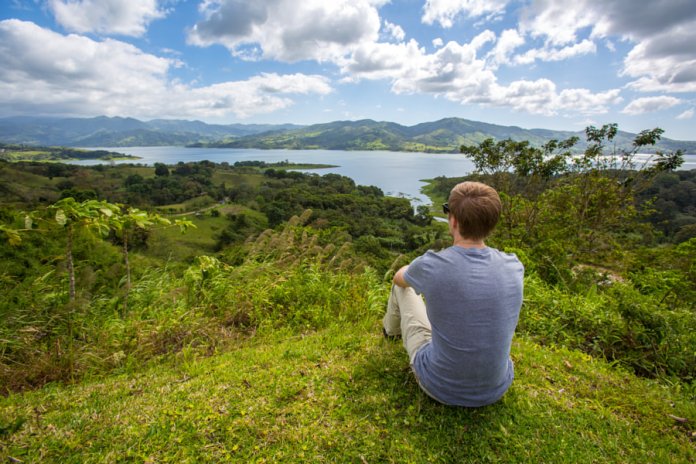


 ¡No te la pierdas!


