Eva hard at work, pouring cement! Image www.globalroutes.org
Though Costa Rican workers are often branded “lazy”, they are in fact in second place for the most hours worked in a year in the latest Employment Outlook report by the Organization for Economic Co-operation and Development (OECD) published in 2017.
Tops in the the OECD list for the number of hours worked per year are another “lazy” branded workforce, Mexicans.
The OECD reports suggests the average Costa Rican works 2,112 hours a year (which equates to around 40.6 hours a week). Only Mexicans, on average working 43 hours per week (2,255 hours per year), top Costa Rican workers.
In comparison, the average Brit works 1,676 hours a year (32.2 per week) and Germans 1,363 (26.2 per week) according to OECD data. Also enjoying plenty of downtime are citizens of The Netherlands, Norway, Denmark and France.
Following Costa Rica, often described as the world’s happiest country, is South Korea, Greece and Chile complete the top five.
Which nationalities work the longest hours?
Mexico – 2,255 hours per year
Costa Rica – 2,212
South Korea – 2,069
Greece – 2,035
Chile – 1,974
Russia – 1,974
Poland – 1,928
Latvia – 1,910
Israel – 1,889
Lithuania – 1,885
Iceland – 1,879
Estonia – 1,855
Portugal – 1,842
Turkey – 1,832
Ireland – 1,820
US – 1,783
Czech Republic – 1,770
Hungary – 1,761
New Zealand – 1,757
Slovakia – 1,740
Italy – 1,730
Japan – 1,713
Canada – 1,703
Spain – 1,695
Slovenia – 1,682
UK – 1,676
Australia – 1,669
Finland – 1,653
Sweden – 1,621
Austria – 1,601
Switzerland – 1,590
Belgium – 1,551
Luxembourg – 1,512
France – 1,472
Netherlands – 1,430
Norway – 1,421
Denmark – 1,410
Germany – 1,363
Overall, average working hours have fallen in every country for which the OECD has data. Bigger decreases have been seen in other countries, such as Hungary. Its residents worked 2,033 hours a year in 2000; by 2017 that figure fell to 1,761.
Hours Worked as per the OECD Average annual hours worked is defined as the total number of hours actually worked per year divided by the average number of people in employment per year. Actual hours worked include regular work hours of full-time, part-time and part-year workers, paid and unpaid overtime, hours worked in additional jobs, and exclude time not worked because of public holidays, annual paid leave, own illness, injury and temporary disability, maternity leave, parental leave, schooling or training, slack work for technical or economic reasons, strike or labour dispute, bad weather, compensation leave and other reasons.
The data cover employees and self-employed workers. This indicator is measured in terms of hours per worker per year. The data are published with the following health warning: The data are intended for comparisons of trends over time; they are unsuitable for comparisons of the level of average annual hours of work for a given year, because of differences in their sources and method of calculation.
Costa Rica Labor Code Rules For Working Hours And Overtime (Crlaborlaw.com) Working hours vary slightly across the country. However, according to general pattern, daytime working hours extend to eight hours a day with a total of not more than 48 hours a week.
The Costa Rica Ministry of Labor allows an extension of working hours up to nine hours a day provided the work environment and the work would not affect the health of the employee. For example, employees in retail stores are allowed to work up to nine hours a day. The working hours in the private sector usually include eight hours of work on a daily basis from Monday to Saturday and from 8 am to 5 pm.
A 45-minute break for lunch and two 15-minute breaks for coffee – usually in the morning and afternoon – are allowed during working hours. Additional breaks might be allowed by certain businesses in the private sector.
The working days for Costa Rica Government employees are Monday to Friday with working hours 7.30 am to 4 pm.
Evening Or Night Shift Working Hours. Costa Rica Labor Code allows working time of six working hours every night with not more than 36 hours of night working hours per week. Night shifts are allowed from 6 pm to midnight or from midnight to 6 am. Weekends and public holidays are viewed as special working days with a maximum of 12 hours of work allowed per weekend.
Employees older than 15 but younger than 18 are allowed to work only six hours per day with a maximum of 36 hours per week.
Overtime. Costa Rica views overtime as an exception and allows it in only very necessary situations. All overtime work has to be paid with an extra 50% of the regular hourly wages. Overtime on holidays is to be paid at double the rate.
The chunks were reviewed everywhere. Photo: Courtesy Riteve
From the “that can’t be but true” department in the land of Pura Vida, the three “chuzos” donated by the United States to fight crime in Costa Rica hit a roadblock, the Riteve inspection.
In a report by La Teja, the three specialized vehicles for use by Costa Rica’s police forces did not pass the vehicular inspection. The news was confirmed by Jennifer Hidalgo, Riteve press officer.
Photo: Courtesy Riteve
“At Riteve we took to inspecting these vehicles, which, like all (vehicles) to comply with the technical vehicle inspection requirements,” said Hidalgo, who was light on the details of the result of the inspection, given that “by law we can only provide that information to the owners of the vehicles”.
Although the official test results were not available, La Teja said it was able to find out by “other means”: the vehicles failed the inspection for the following reasons:
The first was the exhaust, since none has a silencer, though silencers are not required because the vehicle’s exhaust system does not make excessive noise.
The second, the vehicles have an electro-welded mesh that blocks the muffler exhaust (tailpipe). The mesh makes it impossible to insert the probe into the tailpipe to measure the gases by Riteve inspectors. However, the mesh is installed for a specific reason. Given they are used in conflictive situations, the mesh prevents a blockage of the exhaust, which could cause the vehicle to stall or not start. We all know that stuffing a potato or banana up the tailpipe pipe causes restriction of a vehicle exhaust that can incapacitate it.
And finally (the third), the vehicles do not have retroreflective devices (reflectors). Whoa, stealth gives the vehicles an advantage in a tactical situation.
The three vehicles were donated last month by the U.S. Embassy in San Jose; one destined for use by the Fuerza Publica (National Police), the second by the Organismo de Investigacion Judicial (OIJ) and the third by the Unidad Especial de Intervención (UEI) – the S.W.A.T. unit. However, none have been able to count on their use.
So, who can make sure that the “chuzos” take to the streets?
Photo: Courtesy Riteve
According to the U.S. Embassy, it’s not their problem. La Teja says it contacted the Embassy, who washed their hands of the situation, saying it’s not up to them to what happens now.
“The United States Embassy donated the three armed vehicles to the Ministerio de Seguridad Pública, the Organismo de Investigación Judicial y la Unidad Especial de Intervención two weeks ago with the purpose of providing these police forces with new tools to keep the communities safe. Any question about the vehicles must be formulated before the police bodies that received them,” informed the press department of the Embassy.
The Cosevi, the branch of the Ministry of Transport that regulated the vehicular inspection?
“Given that they are vehicles that require modifications for their use, each state institution that will receive them must send a note to the Executive Directorate of Cosevi, requesting authorization for them to be inspected under these conditions based on their use. They must include, in addition to their VIN, all the attachments they have for the purpose of being assessed by the board of directors for authorization,” said Ronald Ramírez, spokesperson for Cosevi.
La Teja said it was able to contact two of the three institutions to learn if they had followed the Cosevi guideline, the OIJ did not respond the calls.
The three modified vehicles are based on the Ford Nemesis, weighing almost 9 tons each and can carry 13 people. They are four-wheel drive, equipped with special external lights, infrared cameras, a navigation system, armored glass, sirens, intercoms and run-flat tires, among other features. Each is valued at US$208,000 dollars.
The three are in addition to “The dcBeast“, a modified Ford F-350, dressed in black and fully armored vehicle used by the OIJ in tactical situations since 2015.
Colombia and Brazil have announced a series of measures to control their border with Venezuela, as hundreds of thousands of people have fled the deteriorating situation there.
Colombian President Juan Manuel Santos announced that strict immigration controls would be implemented, with 2,120 Colombian soldiers deployed to the 1,378 mile long border to enforce them.
Bogota also said that they would no longer issue migratory cards that had allowed 1.5 million Venezuelans to cross the border without passing customs. Now, only those with valid passports or existing migratory cards will be able to pass.
“There will be more control and more security at borders,” Santos said in a speech in the border city of Cucuta. He added that any unlawful behavior by the migrants would be strictly dealt with, but reminded his constituents of the friendship between the peoples of the two countries.
“Venezuela was very generous to Colombia when Colombians went in search of a better life,” Santos said, referring to the millions of Colombians who fled the country during the height of its civil war in the 1990s and early 2000s. “We should also be generous to Venezuela.”
“I want to repeat to President Maduro — this is the result of your policies, it is not the fault of Colombians and it’s the result of your refusal to receive humanitarian aid which has been offered in every way, not just from Colombia but from the international community,” Santos said, referring to Venezuelan President Nicolas Maduro.
The International Monetary Fund forecast that the hyperinflation in Venezuela will hit 13,000 percent in 2018, making basic necessities such as food nigh-unaffordable for 95 percent of the population. Caracas was also accused of beating and torturing thousands of protesters by Human Rights Watch and other rights groups
Venezuelan leaders fired back at the allegations. On Wednesday, Venezuelan Foreign Minister Jorge Arreaza accused Santos of being “submissive” to the United States and blamed the US and its South American allies for being the source of “pain, wars, displaced communities, refugees, extreme poverty, paramilitarism, contraband, drug production, drug trafficking [and] narcopolitics.”
An estimated 200,000 Venezuelans entered Colombia in 2017, over half of them in the last two months of the year. Altogether, an estimated 600,000 Venezuelans have fled to Colombia since its economy began to crumble in 2013.
A smaller number of Venezuelans have also fled in the opposite direction to Brazil. Approximately 60,000 have crossed the border into northwest Brazil, according to local lawmakers.
Brazil’s defense minister, Raul Jungmann, told local outlets that Brasilia was considering ways to bolster security along the border and relocate the migrants. “This is a humanitarian drama. The Venezuelans are being expelled from their country by hunger and the lack of jobs and medicine,” he told reporters on Friday. “We are here to bring help and to strengthen the border.”
Both Santos and Jungmann announced that they would try to keep track of how many migrants had fled into their sovereign territory.
Colombia and Venezuela have traditionally enjoyed a strong economic relationship, with citizens of both nations living in one and working in the other.
But as the economic and political situation in Venezuela continues to deteriorate, hundreds of thousands of Venezuelans have taken advantage of the porous border to flee.
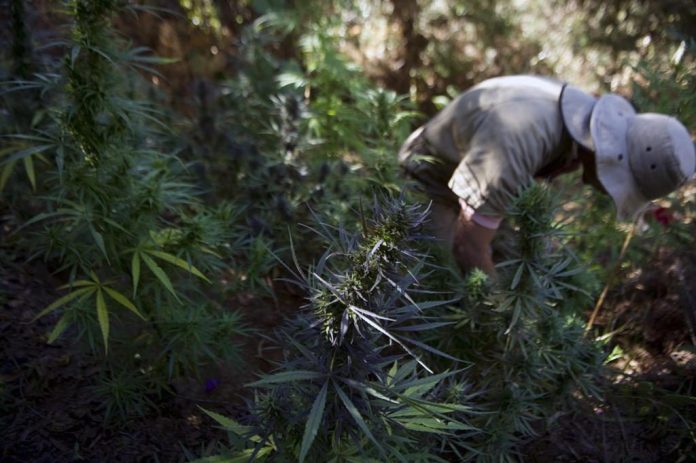
(Ozy.com) Decades have passed since the bulk of marijuana cultivation in the Americas shifted from Colombia up to Mexico. But the tides are turning again. This time, suited businesspeople, not drug cartels, are betting on a lucrative Colombian weed crop, bound for markets around the world. The investors? Many are coming from Canada.
Legislation passed in 2017 provided a framework for commercial medical cannabis cultivation, and at least six companies surpassed the licensing processing by late in the year and planted their first seedlings in December. They formed the Colombian Association of Cannabis Industries in late 2017.
Of these six, three companies are headquartered in Toronto — though they were born in Colombia — underscoring the promising partnership shaping up between growers in Colombia, a nation of vintage renown for quality weed, and investors in Canada, the world’s top source of venture capital for cannabis companies. Tens of millions of dollars of Canadian capital have flowed into Colombian companies, allowing them to build robust operations ahead of any revenue.
There’s a lot in this for Colombia too. On the same mountains where the high-grade pot of Pablo Escobar’s early empire once grew, a corporate crop is sprouting that could mean big money for the South American country. Growers plan to exploit the country’s equatorial sun, tropical rain, robust cut-flower industry and indigenous marijuana strains to conquer a budding global market, as nations across the Western Hemisphere begin to open to medical marijuana products. This time around, Colombia will produce pharmaceutical-grade oils and extracts for prescription use — not dried herbs.
“It’s like the starting gun is just going off now,” says Mark Monaghan, a Canadian financier and director of Khiron Life Sciences Corp., a Colombian cannabis company headquartered in Toronto.
Khiron launched in Colombia on December 7 at Bogota’s Marriott Hotel to an audience of sharply dressed Colombian medical professionals, invited guests and Canadian investors. CEO and founder Alvaro Torres declared the company’s goals to provide medical cannabis extracts of the highest pharmaceutical standards, help doctors understand the legitimacy of cannabis products, open a series of branded pain clinics to prescribe and dispense cannabis in Colombia, then branch out to other emerging marijuana markets in Latin America. Torres, a former infrastructure engineer, says in an interview that he hopes to buck the trend of Latin American countries selling cheap raw materials for refinement in wealthier nations, and to instead sell finished products straight to consumers. Khiron was born, he says, from a chance meeting on a Panamanian beach with Monaghan, who described the eagerness of Canadian investors to put money into cannabis ventures abroad.
The flow of capital from Canada to Colombia for the cannabis industry isn’t really surprising. Alan Brochstein, founder of cannabis industry business news services 420investor.com and NewCannabisVentures.com, describes Canada as the world’s only advanced capital market for financing cannabis ventures, a place where stigma has faded and effective business models have been developed.
And Colombia is responding to that interest. More businesses have recently applied for licenses to join the six firms already in the Colombian industry. “We’ve been impressed that the country is totally open for business,” says Christian Scovenna, investor and director of Canadian venture capital firm High Hampton Holdings, who flew to Bogota for the Khiron launch. “They’re paving the way for other countries in South America.”
The coming year will be a “period of consolidation” for Colombian cannabis companies, says Rodrigo Gomez, president of the cannabis industry association. Growers and refiners, he adds, will begin testing products and honing in on a marketable portfolio. “Investment is coming to Colombia because of the quality of the terrain,” says Gomez, a former director of Colombia’s Pharmaceutical Industry Chamber.
Growers in Colombia can cultivate cannabis year-round for a fraction of the cost paid by growers in Canada, or Washington State or Colorado, where they use warehouses, high-powered sun lamps, and climate control. “You could grow bananas in New York,” explains Patricio Stocker, CEO of PharmaCielo, another Toronto-based Colombian cannabis company. “But you need to generate a tropical climate.”
Brochstein, of 420investor, agrees with Colombia’s potential, but worries that the country’s prospects could be dampened by lack of demand in Latin America, coupled with new supply from other freshly deregulating Latin American markets. “If it turns out Colombia has better genetics, then it will be interesting,” he says.
PharmaCielo, which was founded on a gamble in 2014 before Colombia legalized cannabis production, has spent two years collecting cannabis breeds from rural farmers, breeds that once went to drug cartels and made Colombia’s reputation for high-grade illicit weed. “You have this country where you can find unique strains, historically used for medicinal and religious purposes by indigenous communities,” says Stocker, who was previously CEO of DaimlerChrysler Colombia. PharmaCielo began to register collected strains with Colombia’s Ministry of Health in December. The company board includes executives from Philip Morris, a former World Medical Association chairman, two Colombian flower growers and a Canadian retailer. It aims to export cannabis products, first to Canada and, later, elsewhere abroad.
The company has planted its first crop throughout 30 acres of open-air greenhouses in Rionegro, a city in the hinterlands of Medellin. Nearby, PharmaCielo’s laboratory is geared up to produce the first medical extracts from its cannabis crop. Elsewhere in the country, the company has partnered with rural communities for cannabis cultivation and dreams of expanding its own operations to thousands of acres soon.
It expects its first commercial sales and exports in 2018.
“We want to become one of the world’s largest suppliers,” Stocker says. “This may become a very, very huge model.”
enezuela’s opposition will present a nationwide front to protect people’s rights, its negotiator Julio Borges said Thursday after talks with the government collapsed.
“We are beginning a series of meetings with political parties and opposition sectors to create a big national front representing the Venezuelan society, which stands firmly on its rights,” he said in a statement cited by the Democratic Unity Roundtable party.
Borges, an opposition leader, said he would embark on a trip to several countries to raise awareness of the political and social crisis in Venezuela ahead of the presidential election.
The Venezuelan government and the opposition clashed in the Dominican Republic this week over the polling date after authorities pushed it forward to spring. The opposition refused to sign off on a deal, leading to the government unilaterally setting the date for April 22 on Wednesday. The election was initially expected to take place in late 2018 but the government pushed it forward.
After Venezuela’s decision on snap presidential polls, Peru announced it would convene a meeting of the Lima Group of Latin American nations to assess the situation in Venezuela.
“Given the decision of Venezuelan electoral authorities to call a snap election for April 22, which does not warrant a fair, free, transparent and democratic process, the Peruvian government has invited Lima Group member countries to meet this Tuesday, February 13, in the Peruvian capital, to evaluate measures to respond to the Venezuelan political situation,” it said.
Brazil's President Left Without a Pension After Failing to Prove He's Alive
The odd mix-up occurred after pension office administrators in the Brazilian state of Sao Paulo indicated that the president had failed to provide them with the necessary paperwork to prove his condition back in September, when he celebrated his birthday.
Brazil’s President Left Without a Pension After Failing to Prove He’s Alive
President Michel Temer, 77, was left pensionless after officials suspended his payouts for the months of November and December because he did not take a ‘proof of life’ test two months earlier, local media reported.
As a result of the mistake, Sao Paulo Social Security, the government office which manages the pensions of state employees, withheld checks in the amount of 45,000 Brazilian reals (about $15,000 US), which Temer has been entitled to receive since his retirement from the job of public prosecutor of Sao Paulo in 1999 at the age of 58.
The lack of a pension did not affect Temer’s remuneration as president. The office of the president told local media that he did not reregister in time because of his busy schedule, and that he has already taken the necessary steps to re-register.
The mix-up is not without a sense of irony, as the Temer government has been actively pushing a controversial pension reform initiative, despite opposition from lawmakers and unions. The money-saving reforms, aimed at accounting for the country’s growing adult population, propose requiring people to work between 25 years and 40 years in order to qualify for a full pension. The government’s proposal also suggests raising pension age for women from 60 to 62. Brazil’s House of Representatives rejected the bill in October, with Temer vowing to try again this month.
Brazilians will go to the polls in October to elect a president, federal and state lawmakers and governors. Former president Luiz Inacio Lula da Silva is currently leading in the polls, but faces jail time over corruption charges which may disqualify him from the race.
Researchers have uncovered more than 60,000 structures, including pyramids, palaces and causeways through the power of ground-penetrating laser technology.
The breakthrough laser technology, dubbed LiDAR (light detection and ranging), was used to map 2,100 square kilometers of the Maya Biosphere Reserve in the Peten region of Guatemala and revealed a huge interconnected network of ancient cities with their own highways and complex irrigation and terracing systems. The discovery was made possible by the researchers removing the tree canopy from aerial images of the landscape.
“The LiDAR images make it clear that this entire region was a settlement system whose scale and population density had been grossly underestimated,” said Thomas Garrison, an Ithaca College archaeologist and National Geographic Explorer who took part in the project.
This digital 3D image provided by Guatemala’s Mayan Heritage and Nature Foundation, PACUNAM, shows a depiction of the Mayan archaeological site at Tikal in Guatemala created using LiDAR aerial mapping technology. Researchers announced Thursday, Feb. 1, 2018, that using a high-tech aerial mapping technique they have found tens of thousands of previously undetected Mayan houses, buildings, defense works and roads in the dense jungle of Guatemala’s Peten region, suggesting that millions more people lived there than previously thought
The groundbreaking discovery has changed everything researchers have ever known about Mayan civilization, proving that it was extremely advanced with a population estimated at 10-15 million.
“This was a civilization that was literally moving mountains,” co-researcher Marcello Canuto said. “We’ve had this western conceit that complex civilizations can’t flourish in the tropics, that the tropics are where civilizations go to die. But with the new LiDAR-based evidence from Central America and [Cambodia’s] Angkor Wat, we now have to consider that complex societies may have formed in the tropics and made their way outward from there.”
Furthermore, the scientists found defensive walls, fortresses and terraces that showed warfare was “large-scale and systematic, and endured over many years,” as well as determined that the greatest Mayan city ever known, Tikal, turned out to be up to four times larger than previously known.
The researchers also suggested that the Mayan royal dynasty known as the Snake Kings ruled over an area stretching from Mexico and Belize to Guatemala, having conquered Tikal in 562.
The three-year project is expected to eventually map more than 14,000 square kilometers of Guatemala.
Automated programmes, known as "bots", threaten to smear political campaigns, through massive deceitful messages, which can disrupt the democratic game. Credit: Phys.org
(IPS) – The use of technological tools in political campaigns has become widespread in Latin America, accompanied by practices that raise concern among academics and social organisations, especially in a year with multiple elections throughout the region.
Automated programmes, known as “bots”, threaten to smear political campaigns, through massive deceitful messages, which can disrupt the democratic game. Credit: Phys.org
The use of automated programmes – known as “bots” – to create profiles in social networks intended to offset critical messages, propaganda, the spread of lies and hate campaigns on platforms such as Facebook, Twitter and WhatsApp are already the digital daily bread in the region.
“Clearly, this gives the impression that these technologies impoverish the debate with superficial answers. There is a problem in companies that handle ‘big data’, such as Google. They accumulate information, but we do not know how it is managed. Complex algorithms are used. How it is managed is a mystery,” he told IPS.
Gravante was one of the five winners in 2017 of the Seventh Worldwide Competition for Junior Sociologists organised by the International Sociological Association, and is one of the editors of “Technopolitics in Latin America and the Caribbean”, published in 2017.
In 2018, six Latin American countries will hold presidential elections, while others are holding legislative elections or referendums. And technopolitics is part of the electoral landscape in the region.
As the July 1 presidential elections in Mexico approach, the use of social networks is already being seen, and the same is expected for Colombia’s elections in May and Brazil’s elections in October. Voters in Costa Rica, Paraguay and Venezuela will also elect new presidents this year.
“The main problem is that regulating a discourse means deciding what is a lie and what is not, and that is a problem. In terms of freedom of expression, anything should be said and the limits should be minimal. Election laws must be updated to face the challenges of on-line campaigns, but I’m not sure whether that’s a good idea.” — Catalina Botero
“The two-way digital technology (anyone speaks-anyone hears) represents a great advantage for freedom of expression, as it not only enhances the possibility of informing but also of getting informed. But it also shows how the problems of society are appearing in the networks,” Colombian expert Catalina Botero told IPS.
The problem involves the potential reach of a message on the Internet, which also applies to its possible negative effects, said Botero, the current director of the non-governmental Karisma Foundation, which works for human rights in the digital environment, and a former special rapporteur for Freedom of Expression of the Inter-American Commission on Human Rights (2008-2014).
The use of social networks and digital media in political campaigns broke onto the scene in the United States in 2008, at the hands of Democrat Barack Obama (2009-2017), who won the presidential elections in November of that year.
Since then, there is a perception that new technologies can determine the tone, and therefore the outcome, of election campaigns.
That belief was consolidated even more with the use of big data and data mining in 2016 by current US President Donald Trump, to build electoral models and tailor messages.
As a result, political parties across the spectrum have sought advice in these fields, while marketing and digital imaging agencies have added those services to their portfolio.
Six out of 10 Latin Americans use a social network, according to a December study carried out for the Spanish newspaper El País by the consultancy firm Latinobarómetro and the Institute for the Integration of Latin America and the Caribbean, a unit of the Inter-American Development Bank.
Map of the 2018 elections in Latin America. Credit: ACE
Brazil, Chile, Colombia, Costa Rica, Mexico, Paraguay and Uruguay are the countries most connected to social media such as Facebook, WhatsApp, YouTube, Instagram and Twitter.
In 2015, 43 percent of Latin American households had internet access, according to data from the Economic Commission for Latin America and the Caribbean (ECLAC). Argentina, Uruguay, Chile and Costa Rica head the list of the most connected households, while Honduras, Guatemala, Nicaragua and El Salvador are the least connected.
As several studies have shown, there are already practices in the region to manipulate information and guide political discourse, as has happened in countries such as the United States, Great Britain and Germany.
The report, prepared by two researchers from the Computational Propaganda Research Project (COMPROP) of the University of Oxford Internet Institute in Britain, considers that governments and political parties promote these digital hosts, through official institutions or private providers.
Another 2017 analysis, “Computational Propaganda Worldwide”, also published at Oxford, found that bots and other forms of computer propaganda have been present in Brazil.
The study says they were used in the 2014 presidential elections, the 2016 impeachment of former president Dilma Rousseff (2011-2016), and the municipal elections in Rio de Janeiro the same year.
“Highly automated accounts support and attack political figures, debate issues such as corruption and encourage protest movements,” says the report.
In Mexico, another report identified in 2016 the presence of bots in 2014 to block criticism of the government of conservative President Enrique Peña Nieto, in power since 2012.
“They want to create trends, but nobody knows how people can appropriate that discourse, although it can be stimulated with some provocations. The only antidote against this is to take to the streets, as a response to these manifestations, get organised neighborhood by neighborhood. The learning process is linked to social needs,” said Gravante.
In this respect, the expert argued that social conflicts enhance “empowerment processes”, in which “there has been impressive progress…In that sense, I am techno-optimistic,” he said.
The 2016 US elections won by Trump offer a preview of what is taking shape in Latin America.
In September 2017, Facebook said it found some 80,000 publications on controversial issues in the U.S. elections, created by Russian-linked agents, which reached more than 126 million people in the United States from June 2015 to May 2017.
For Botero, it is worrying how citizens can be involved in political processes that use digital media and the emergence of manipulation through networks, which can determine election results and, ultimately, impoverish democracy.
“WhatsApp chains are impacting the way people are informed and viralizing a lot of information that could be labeled as ‘fake news’. Their impact has not been measured,” she said.
The use of social networks is not regulated in the region, although most governments monitor their use, and in countries such as Costa Rica, Ecuador and Mexico the electoral authority reviews on-line advertising and propaganda.
“The main problem is that regulating a discourse means deciding what is a lie and what is not, and that is a problem. In terms of freedom of expression, anything should be said and the limits should be minimal. Election laws must be updated to face the challenges of on-line campaigns, but I’m not sure whether that’s a good idea,” said Botero.
Liberty Latin America, the newly split-off unit of Liberty Global focused on Latin America and the Caribbean, has announced an agreement to acquire 80% of Costa Rican cable operator Cabletica.
Cabletica main offices in La Sabana
Cabletica is valued at an enterprise value of around US$250 million dollars, a multiple of 6.3x of its fiscal year EBITDA including projected cost synergies, with current owner Televisora de Costa Rica set to retain the remaining 20% stake at close.
Cabletica provides TV, broadband internet and fixed-line telephony services to residential customers, with its hybrid fiber-coaxial network passing around 562,000 or 40% of the homes in Costa Rica at 30 September. The company served a total of 207,000 customers at the end of September, who subscribed to 327,000 services.
Liberty Latin America added that it intends to finance the all-cash deal acquisition through a combination of incremental debt borrowings and existing liquidity. The transaction is subject to customary closing conditions, including regulatory approvals, and is expected to close during the second half of 2018.
Balan Nair, President and CEO of Liberty Latin America, commented, “The acquisition of a leading cable operator in Costa Rica is an exciting move as it adds further scale to our growing platform and diversifies us into one of the region’s most attractive markets. We look forward to building on Cabletica’s achievements and partnering with its current owners, further investing in enhancing products and services for Cabletica’s customers, while also integrating the business with Liberty Latin America. This transaction is a prime example of our consolidation ambitions, leveraging our unique subsea and terrestrial footprint, in a region that remains highly fragmented and continues to be both underpenetrated and underserved by high-speed data services.”
René Picado, President of Televisora, said, “We are delighted to enter into this agreement and look forward to a long and successful partnership with Liberty Latin America that will deliver many benefits for both our customers and employees. We also look forward to further developing the strong content alliance between Cabletica and Televisora and have extended the carriage of exclusive local sports channels TD+ and TD+2 as part of the transaction.”
Televisora comprises Cabletica and certain other content assets including Costa Rica’s largest Free-To-Air channel (canal) 7. Televisora was founded in 1958 by the Picado Family and has been a market leader ever since. Today, Televisora is number one in ratings and advertising share in Costa Rica.
Liberty Latin America is a leading telecommunications company operating in over 20 countries across Latin America and the Caribbean under the consumer brands VTR, Flow, Liberty, Más Móvil and BTC. In addition, Liberty Latin America operates a sub-sea and terrestrial fiber optic cable network that connects over 40 markets in the region.
A retreat in Costa Rica is offering black women the chance to spend their vacation free from white people, as showcased in a new documentary by Vice News.
Costa Rica ‘healing’ retreat located in Puerto Viejo has banned white people. Guests enjoy yoga, meditation and vegan food in the retreat run by Andrea X, who has ‘completely cut out white people’ from her life due to ‘damage’ they caused
“At a time when white supremacist groups march out in the open, and the president disparages African countries as shitholes, it’s not surprising many black Americans are feeling isolated and unsafe in communities and workplaces,” says the Vice News article.
Andrea X, an expatriate who gave up her life in Brooklyn to create the Women of Color Healing Retreat in Puerto Viejo in 2014, said she had a hard time communicating with white people in the U.S. without focusing on their constant “micro-aggressions” and “passive-aggressiveness.”
The Women of Color Healing Retreat is a 10-day travel experience emphasizes yoga, vegan food, and political education seminars — and specifically banned white people.
“I decided one day to just eliminate white people from my personal life, and ever since then my life has been way more breezy,” she told Vice.
Andrea X said she envisions a “safe space” free from the oppression of white people and believes white Americans shouldn’t be able to travel outside their own country. “I feel like white people shouldn’t even have passports,” she said, laughing. “They need to stay in the United States.”
The retreat is currently held at a white-owned resort, but Andrea X and a business partner have invested US$100,000 to build their own black-only retreat space about 20 minutes away.
Vice News traveled to the retreat to get a first-hand look at how it operates and discovered hundreds of thousands of dollars were being spent on locations to facilitate completely white-free communities.
This segment originally aired February 5, 2018, on VICE News Tonight on HBO.
In this perspective view of the shallow megathrust fault, looking seaward towards the trench, the frontal prism has been cut away. The color scales indicate depth below seafloor, and grey denotes the seafloor. (Image credit: Edwards et al., Nature Geoscience, Feb-2018)
Geophysicists have obtained detailed three-dimensional images of a dangerous megathrust fault west of Costa Rica where two plates of the Earth’s crust collide.
In this perspective view of the shallow megathrust fault, looking seaward towards the trench, the frontal prism has been cut away. The color scales indicate depth below seafloor, and grey denotes the seafloor. (Image credit: Edwards et al., Nature Geoscience, Feb-2018)
The images reveal features of the fault surface, including long grooves or corrugations, that may determine how the fault will slip in an earthquake.
The study, published February 12 in Nature Geoscience, focused on the Costa Rica subduction zone where the Cocos plate slowly dives beneath the overriding Caribbean plate. Variations in texture seen in different portions of the fault surface may explain why Costa Rica has complex, patchy earthquakes that do not seem to slip to shallow depths, unlike some other megathrust faults, said first author Joel Edwards, a Ph.D. candidate in Earth and planetary sciences at UC Santa Cruz.
Megathrust faults are capable of producing some of the largest earthquakes in the world.
“Our new imagery shows large variability in the conditions along the megathrust, which may be linked to a number of earthquake phenomena we observe in the region,” Edwards said in a news release.
The survey yielded detailed 3D images of the Costa Rican subduction zone, where the Cocos plate sinks and slides under the Caribbean plate.
Great earthquakes
Megathrusts, the huge continuous faults found in subduction zones, are responsible for Earth’s largest earthquakes. Megathrust earthquakes can generate destructive tsunamis and are a serious hazard facing communities located near subduction zones. Understanding the mechanisms at work along these faults is vital for disaster management around the globe.
Edwards worked with a team of geophysicists at UC Santa Cruz, the U.S. Geological Survey, the University of Texas-Austin, and McGill University to obtain 3-dimensional imagery of the fault interface using cutting-edge acoustic imaging technology. The long grooves, or corrugations, they observed along the interface are similar in size to those found along the base of fast-flowing glaciers and along some ocean ridges. The images also showed varying amounts of smoothness and corrugations on different portions of the fault.
“This study produced an unprecedented view of the megathrust. Such 3-D information is critical to our ability to better understand megathrust faults and associated hazards worldwide,” said coauthor Jared Kluesner, a geophysicist at the USGS in Santa Cruz.
The acoustic dataset was collected in spring 2011 on the academic research vessel Marcus G. Langseth. The ship towed an array of underwater microphones and sound sources behind it as it made a series of overlapping loops over the area of the fault. The data were processed over the next 2 years and have since been used in a number of studies looking at different aspects of the subduction zone process. This particular study focused on the interface between the sliding plates, which serves as a record of slip and slip processes.
“The 3-D site selection was really good and the resulting acoustic dataset showed extraordinary detail,” said Edwards, noting that coauthor Emily Brodsky, professor of Earth and planetary sciences, was the first to recognize the corrugations. Such features had been observed in exposed faults on land, but never before in a fault deep beneath the surface.
“I had an early rendition of the interface that vaguely showed long grooves, and during my qualifying exam, Brodsky saw them and asked, ‘are those corrugations!?’ I didn’t know, but I knew they were real features. Slip-derived corrugations was a really neat hypothesis, and we dug into it after that,” he said.
Target for drilling
The area in this study had long been a target for drilling into the megathrust by the Costa Rica Seismic Project (CRISP). Coauthor Eli Silver, professor emeritus of Earth and planetary sciences at UC Santa Cruz, and others in the CRISP program decided to pursue a 3-D seismic study, which must precede any deep drilling, and the project was funded by the National Science Foundation in 2009. “At present, two drilling expeditions have been accomplished with shallower targets, and, though not yet scheduled, we are hopeful that the deep drilling will occur,” Silver said.
Researchers hope to use similar imaging techniques on other subduction zones, such as the Cascadia margin along the northern U.S. west coast, where there is a long history of large megathrust earthquakes and related tsunamis. “Conducting this type of 3-D study along the Cascadia margin could provide us with key information along the megathrust, a plate boundary that poses a substantial hazard risk to the U.S. west coast,” Kluesner said.
“At present, two drilling expeditions have been accomplished with shallower targets, and, though not yet scheduled, we are hopeful that the deep drilling will occur,” said Eli Silver, planetary sciences professor at UC Santa Cruz.
The Panamanian government has decided to increase, in some cases by up to 30%, import tariffs on several products, including flowers, cement and bituminous coal, most of which are imported from the South American country.
According to a Cabinet Decree published on January 10 in the Official Newspaper, the Panamanian government decided to modify several fractions of the National Import Tariff, taxing at 30% imports of roses, carnations, chrysanthemums, calla lillies, astomerias, gladiolas and “flor de confite” (Calyptronoma plumeriana (Martius) Lourteig), which mostly come from Colombia.
Imports of bituminous coal will be taxed at 15%, purchases of white cement at 5%. Added to the list of products with a tariff of 30% are toilet paper and paper towels.
Far from being resolved, the problem seems to be getting more and more complicated. What started more than two years ago with the imposition by Colombia of mixed tariffs on imports of textiles and footwear from Panama has turned into a kind of commercial war, in which both countries are using tariff increases to defend their position.
The new tariffs apply from February 1 of this year. See decree (in Spanish).
Lucía Rojas, Gerente de Mercadeo de City Mall. Foto: Rafael Pacheco
The real estate group, Lady Lee Corporation of Honduran origin, has announced that in 2019 it will start construction of a mixed project in Alajuela that will house a hotel, an office and a restaurant.
Lucía Rojas, City Mall marketing manager. Foto: Rafael Pacheco
Without giving further details, representatives of the developer of the “City Mall” shopping center located in Alajuela, announced that in 2019 they will start groundwork to build, on a piece of land adjacent to the mall, a building that will have offices, a gastronomic center and a hotel.
Regarding the project, City Mall’s Marketing Manager, Lucía Rojas, explained to Elfinancierocr.com that the development will start with “… earthworks in 2019 and they are making projections for 2020. It will be an interesting project because it will give a lot of dynamism to the mall, we are assured of customers throughout the day with office lunches and we will have all the facilities for them next door.”
She added that ” … the details of each of these projects are going to be publicised little by little.”
Super Bowl LII may not have gone the way Tom Brady wanted, but the New England Patriots quarterback appears to be enjoying his first official weekend of the offseason.
On Sunday, Brady shared a photo of himself vacationing with his wife, Gisele Bündchen, in Costa Rica.
He captioned the post, “This Sunday’s outcome is a lot better than last Sunday’s! #losingstreakstopsatone ????❤️????”
With high scores on travel and doing business, Costa Rica is the best country in Central America, according to US News Overall Best Countries index, made in partnership with Y&R consultants and The Wharton School.
Rounding out the north of the Americas, Canada is # 2; the United States is # 8; and Mexico is #31 in Best Countries Overall. Honduras, El Salvador and Nicaragua were not included in the ranking.
Globally, Switzerland is number one, while Algeria is last among 80 countries evaluated.
Rankings are based on global perceptions of trade, ease of doing business, investments, travel, entrepreneurship, and quality of life, among other characteristics (numbers in brackets indicate the global position of each country).
96/5000
The mothers of family assured that they will keep the school closed. Taken from Aguas Zarcas T.V
Parents padlocked the gates of 20 schools in Costa Rica on Thursday to protest sex education classes for teens that some believe promote homosexuality, the Ministerio de Educación Pública (MEP)- the Education Ministry – said.
Mothers assured that they will keep the school closed. Photo from Aguas Zarcas TV
The actions — on the first day of the new school year — were initially reported in a few areas in the northern Costa Rican but spread to other areas also in the southern zone and around the Caribbean port city of Limon, the ministry said.
Parents also loudly protested the sex education guide to local media and in social media posts.
The protests were happening against a backdrop of heightened religious and social conservatism in the country energized by presidential elections which have propelled into first place an evangelical preacher, Fabricio Alvarado, the candidate of the National Restoration Party, a right-wing Christian party, and who opposes gay marriage.
He emerged as the frontrunner after the first round of elections in February 4 elections. On April 1 he faces a runoff against the ruling party, the Partido Accion Cuidadana (PAC) candidate, Carlos Alvarado, who is no relation.
False information
A video circulating online featured an unidentified man explaining his opposition to the sex education program at the Puerto Escondido school in Pital, in the northern district of San Carlos, where he said his child was enrolled.
“We are not going to allow this sexual guide to be implanted in our children,” he said. “We are putting on chains and padlocks to say no to this program.”
In the República de México school in Cajón de Pérez Zeledón, parents did not allow the students to enter the school on their first day of the new school year
Some parents interviewed by La Nacion said they believed the sex-education guide promotes homosexuality, something the government denied.
Education Minister Sonia Marta Mora asked parents who had doubts about the program to contact the schools to get information about its content.
The program has been in place since 2012 for students in their penultimate year of high school, usually aged around 16.
Last year Mora sent a memorandum to high schools telling them sex education was not compulsory, and that parents could exempt their children from the class.
“It’s very serious that they are claiming that the program promotes homosexuality. It is unacceptable that such false information is circulating,” Mora said.
Her predecessor, Leonardo Garnier, also criticized the bigotry that he said has surrounded the sex education initiative.
“We have now entered a new phase of intolerance. Now schools are being closed to oppose education about sex and intimacy. This is an attack on the right of all to education,” he wrote on his social media accounts.
In all, closed on Thursday was the Escuela Daytonia in Limon; five in Pérez Zeledón: Escuela El Porvenir, República de México, Escuela Pejibaye, Escuela Uvita and Peñas Blancas; and in 14 San Carlos: Escuela San Gerardo, Escuela Garabito, Escuela Puerto Escondido, Escuela Cerro Cortés, Escuela Santa Fe, Escuela La Lucha, Escuela San Francisco, Escuela Viento Fresco, Escuela Mario Salazar, Escuela Vuelta de Kooper, Escuela de San José, Escuela El Futuro, Escuela Aguas Zarcas, Escuela Monte Cristo.
The public school year in Costa Rica runs from February to December. Some private schools, however, follow the United States and Canada school year.
The new effort to impeach President Pedro Pablo Kuczynski offers a high-stakes spectacle of Machiavellian struggles in the vein of Game of Thrones or 48 Laws of Power.
Kuczynski is the target of new, identical proceedings just two months after surviving an impeachment vote. The president allegedly made a deal with Kenji Fujimori to pardon former President Alberto Fujimori in exchange for Kenji thwarting the impeachment vote. In addition to surviving impeachment, the move was an elaborate power play which upends the gameboard for the next effort to oust him.
With Kenji Fujimori and nine of his followers in Popular Force abstaining, the impeachment failed by eight votes. Kuczynski pardoned Alberto Fujimori three days later in a bold move to divide the Popular Force party led by Keiko Fujimori which had been blocking his initiatives.
Kuczynski knew the pardon would cost him members of his own party, further weakening his position in Congress and even prompting resignations from his Cabinet. But Popular Force also expelled Kenji Fujimori and his nine cohorts, reducing the opposition’s supermajority to 61 votes in the 130-seat chamber.
Claiming to put country over party, Kenji Fujimori has proclaimed his new bench will support Kuczynski’s government. It seems the president’s gamble paid off, but the new impeachment drive means he’s not out of the woods yet.
The two motions are being pushed by the divorced leftovers of what was the leftist Broad Front party in the 2016 elections. The 10-member faction led by Veronika Mendoza sat out the first vote, but her base which supported Kuczynski in the 2016 runoff to avoid a Keiko Fujimori presidency was enraged when he pardoned Alberto Fujimori. Hence the new drive to impeach.
At first glance an extra 10 votes would do the trick in forcing Kuczynski out. However, more than half of Peruvians approved of Fujimori’s release, not least of all the voting base of the 61 remaining Popular Force legislators. Not only was the pardon popular in Peru with 53% supporting, but for the first time Kenji Fujimori’s personal approval rating surpassed Keiko’s (38% to 30%). In fact, Kenji is Peru’s most popular politician right now.
Will Popular Force really vote to impeach Kuczynski after he pardoned their spiritual leader? Kenji may peel away more Popular Force legislators. He’ll have the help of Kuczynski’s party. The first shots have already been fired in driving a wedge in what remains of Popular Force.
“I don’t think Popular Force is going to get dragged into this new attempt,” housing minister and Peruvians for Change spokesman Carlos Bruce told El Comercio. “I don’t think they’ll simply fall in line or jump on command for these groups on the left.”
And therein lies the rub. For this new impeachment to work, the right-wing populists must ally with the firebrand leftists, the latter of whom are wholly motivated by the pardon of the former’s raison d’etre. At the same time, the right-wing populists’ claim to fame was the pardoned ex-president’s neoliberal economic reforms and the defeat of Marxist rebels, Shining Path. You couldn’t find stranger bedfellows.
If this weren’t enough fun, there is a comedy-of-errors element in the inept leftists who could not keep a 20-member coalition together. The divisions between Mendoza and Broad Front leader Marco Arana culminated in Mendoza walking away from what she saw as a marginalized figure to ally with more dignified leaders like Gregorio Santos.
Will the 20 leftist agree on one impeachment petition? Will Kenji Fujimori steal more Popular Force votes, or will Keiko hold it together? Let’s watch. It’s better than Game of Thrones.
The views and opinions expressed in this article are those of the author and do not necessarily reflect those of Peru Reports.
By Colin – I first visited Latin America in 2007 and moved here in 2008. I think it’s great. But not everybody thinks so.
They might think Mexico or Brazil are great, or Peru or Argentina. But nobody thinks Uruguay is great. Nobody thinks Ecuador is great, and certainly, nobody thinks shitholes like Venezuela or Honduras are great. Why?
After having American history pounded into your brain growing up in the States, it’s a little weird learning how things went down here. Where the Americans built a nation based on a vision for a new kind of society and government, in Latin America there was no appetite for a new way of doing things. Where victories came early and often for the States, things were chaotic across Latin America, a comedy of errors.
And almost without exception (Brazil), the newly independent countries of Spanish America splintered into less significant, less powerful territories and even city states (Uruguay). The caudillos and idle aristocracies of various regions could not get along with each other without a Catholic monarchy as the masthead.
When it came down to these caudillos’ own family interests vs. those of the new nation, they chose their own and went to war. They never learned the quintessential democratic value of compromise. As a result, Latin America is rife with shitholes (notice how the use of that term on this blog has increased 1000% since you-know-who used it).
So in the long tradition of old white dudes redrawing national borders to improve governance and make things more efficient, I’m going to chop up and remix Latin America.
Make Latin America Great Again!
Under my scheme, Latin America less Jamaica and company spans eight* countries, down from a whopping and redundant 23**.
* Eight assuming Hispaniola comes to fruition.
** 23 plus Puerto Rico, so 23.5.
Below is a country-by-country explanation of the thinking behind the new borders and why this increases greatness in Latin America.
Brasil
Brazil was the only colony to hold together in independence, largely because independence was delayed when the Portuguese king brought his court to Rio de Janeiro. The managed transition that ensued held Brazil as one or it would surely have followed the same fate as Spanish America.
Brazil will absorb Guyana, Suriname and French Guiana. Brazilians may not be happy about picking up only three shithole countries, and the fact that most people in the world wouldn’t know which continent those three are on. But we don’t want any more Portuguese speaking than there already is. Portuguese is not great.
So the new Brasil gets just three. To make up for it we’ll stop spelling their name wrong. No more Brasil with a Z.
Rio Plata
The countries of Argentina, Uruguay and Paraguay will be merged into one. The new state will be headquartered in Buenos Aires, but it won’t be called Argentina due to their historic fall from grace over the last century and appalling economic disappointment. They need a new name to symbolize a fresh start.
Uruguay should almost win the right to govern from Montevideo for being one of the region’s most stable democracies, but with a population just north of 3 million they’re not really a country anyway. They’re a city state, so fewer props for what’s really just a mayor running an efficient city hall.
As for Paraguay, well what can you say about Paraguay? Maybe you know the name of the capital and that over 10% of the people don’t speak Spanish. Do you know why you don’t know anything else? Because Paraguay is not great.
But they can be great, under the new country called “Rioplata” after the former colony, Rio de la Plata. That name, however, is four words. And under my new scheme I won’t allow any country to have more than one word in their name. It must be simple, like “America” for example.
Chile
I was tempted to merge Chile under Rioplata but it broke my heart to lose the region’s leading performer in social progress and economic indicators. Chile is always a step ahead of the region in development, given Uruguay is not really a country of course, and it’d be a shame to dilute that governance with the Argentine half-wits and never-do-wells.
But I’m transferring Chile’s Atacama Desert back to Peru. Don’t be a pain in the ass about it, Chile. I let you keep your country, and I gave you that little nib of Argentina at the southern tip of the continent.
Peru
Peru will absorb Bolivia, formerly known as “Upper Peru” (Alto Peru) for its altitude. Maybe Peru’s leading gastronomy and tourism sectors will help Bolivians, and maybe Bolivians can instill some of their indigenous pride in Peru’s self-hating cholos.
Peru will also regain the Atacama Desert from Chile, including the port cities of Arica and Antofagasta. That land is rich with copper, and Chile needs to get on without it already.
I was tempted to transfer Ecuador to Peru also, on the justification that Quito was a large kingdom of the Incas. But then I thought the Spanish must have put it under Gran Colombia for a reason. Whatever reason that is, let’s leave it alone.
Colombia
Gran Colombia will be reunited sans Panama, with Colombia, Venezuela, and Ecuador forming Gran Colombia sans “Gran.” Only one word allowed, so it’s just “Colombia.”
Venezuela has proven beyond a shadow of a doubt their inability to govern themselves, so better to transfer the decision-making to the adults in Bogota. Interestingly, if I would have redrawn this map 25 years ago it probably would have had the opposite result, with the inept Colombians subjugated to the more prosperous Venezuelans in Caracas.
Ecuador will also come under Colombia, and their three flags will be easy to merge, but I had to give the Galapagos Islands to Panama. I’m worried the Colombians will turn the place into a sex-tourism paradise with yachts filled with prepagos and Aguila-branded thatch huts selling aguardiente and cocaine all while blaring vallenato.
Vallenato is not great and the ecotourists and scientists would be appalled, so best to keep the islands under the gringo-trained Panamanians and Costa Ricans.
Panama
The Panama Canal is too important to transfer to a country like Colombia, which may be doing well now but has proven flaky enough throughout history not to trust with this important shipping lane for world trade. Teddy Roosevelt took that shit away for a reason!
As much as it pains me to create such a tiny state in my epic redrawing of Latin America, I also want to preserve the competent political and economic management of Panama and Costa Rica. So I will transfer the shithole of Nicaragua to them as well. Nicaragua has a good number of those black rasta types from the Caribbean, so that’s justification enough to lump them in with the Costa Ricans and Panamanians instead of the Mayans to the north.
Panama was the original name of the area during the colonial era, and Costa Rica is two words. So we’re going with “Panama” for the name, and they’ll be getting control of the Galapagos Islands. The Costa Ricans’ expertise in tourism and the Panamanians experience in shipping should improve the state of the islands and the gringos’ experience. Make the Galapagos great again!
San Andres goes to Panama, just because I honeymooned there and enjoyed everything about it except for the vallenato. Removing the Colombian influence is the best way to preserve its Raizal culture.
Mexico
Mexico, for all its problems with drug gangs and violence, is the strongest Spanish-speaking nation in Latin America and a cultural giant. It’s great on its own.
And it makes no sense to have three extremely violent and poverty-stricken shitholes in Guatemala, El Salvador and Honduras to the south. So Mexico will absorb their 32 million combined inhabitants, which still won’t bring it to even half of its Nueva España splendor, but will lend some greatness to the three aforementioned shitholes.
Hispaniola*
The situation in the Caribbean presented a difficult challenge. All four countries in Cuba, Haiti, the Dominican Republic and Puerto Rico are relative shitholes. Only DR has proven itself capable of self-governance, and that has only been recent.
Let’s start with the easy one: Haiti, the Americas’ most failed state. Haiti can be absorbed into the Dominican Republic by reuniting the island of Santo Domingo.
Cuba’s also a shithole whose political system has only survived this long because they’re an island. Time to join the 21st century, and that won’t happen with the current government or any of its officials, not even the buildings. So they’ll be managed from Santo Domingo.
Puerto Rico presents a bit of a challenge because they’re a U.S. territory (as many poorly educated Americans learned after Hurricane Maria), and the American citizens who are “Puerto Ricans” have never shown the least interest in independence, not that they’re capable anyway. They just haven’t opted for full statehood. So what to do with them?
Well, it’s time for the PRs to shit or get off the pot. They’re going to hold a referendum in which they will choose between American statehood or they will break off. But breaking off won’t mean independence since they’re far too small and incompetent. Their choice will be statehood in America or form part of Hispaniola, headquartered in Santo Domingo. In New York you can’t tell the difference between a Puerto Rican and a Dominican anyway, so they’ll get along just fine.
With this idea of Hispaniola coming together, I realized it’s probably not wise to lump two major shitholes in Haiti and Cuba and possibly one more in Puerto Rico (although there’s no chance in hell they’ll give up the blue passport) under a barely competent state (and maybe even a shithole) in the Dominican Republic.
So I backed up and thought about Cuba again, how close they are to Florida both geographically and culturally, and the fact that they were an American territory for a few years before seceding and fucking it all up. Should Cuba lose their chance to join the U.S. just because they weren’t as wise as Puerto Rico in not striking out on their own?
So I decided to also hold a referendum in Cuba to decide whether they would rather form a state in the United States or join Hispaniola in Santo Domingo.
With this new development, both Puerto Rico and Cuba will be voting whether or not to join the United States. Then I realized that it’s not just possible but highly likely that both islands will choose Team America over the merged Dominican Republic and Haiti, which would probably be a shithole by and large. So to be fair, why not give Hispaniola a choice too?
Now each of the three islands will have the option to join the United States. But then I thought, what happens if the Dominican-Haitian vote opts for American statehood and one or both of the others do not? What kind of country would that look like? So the answer is that Hispaniola’s referendum will be held first, and the other two will only hold referendums if Hispaniola opts for independence. If they don’t, PR and Cuba will automatically be annexed into American states. They will greet us as liberators!
Hence the asterisk in the map.
As I was looking at the map, I realized these islands could be given the option to merge with Panama to create what would be a Caribbean power. But I had already designed the maps. And you generally don’t want that many Caribbeans in one place. Fuck that noise. Having them divided is better for the region.
My plan kicks ass. Make Latin America great again!
Battling traffic on the roads is frustrating. For emergency vehicles, it can be life-threatening. Now four new, fully equipped BMW Firexpress motorcycles will cut through traffic jams and respond to fires faster, getting a start on putting it out while waiting for the big engines. And if it’s an easily contained fire they can handle it by themselves.
“It’s a solution to a big problem,” explained José Ureña, a top official of the Fire Department in San Jose. “Motorcycles can maneuver in traffic where a fire truck is stalled.” The motorcycles carry tanks for water and foam and 30 meters of hose that can be hooked up to a hydrant. They have sirens and rotating lights and radios to communicate with the fire station. These motorcycles are huge with 1,200 cc engines and an electrical system. The cost is $200,000 each but is worth the weight and price when it comes to saving lives or property, and to keep costs down for the fire department.
Firefighters on motorcycles cannot wear their regulation helmets while driving a motorcycle. They wear motorcycle helmets and carry their firefighting helmets to use on the job. Nor can they drive while wearing the heavy rubber boots used by firefighters. Instead, they wear a special type of leather boot that meets the standards set by the National Fire Protection Association (U.S.A.).
Motorcycles are a new idea for emergency units and in Ecuador and in some parts or Europe paramedics use them to cut through traffic when on a call. Fire departments in Germany and Holland have motorcycle brigades, says Ureña. And the concept is spreading.
In Costa Rica, twelve firefighters have been trained to use the cycles. “It helps if they already drive a motorcycle, but these are much bigger,” says Ureña. “They need to practice driving on a heavily loaded cycle. They must also learn how to handle the equipment which is more compact.” Training is ongoing to keep up their skills. Costa Rica’s BMW agency provides the training. Motorcycle firefighters go in pairs. Because they work 24-hour shifts with 48 hours off, there are always two on duty, day and night. Because of the success of the motorcycles in responding, the fire department has already ordered two more.
Firefighters respond to many types of emergencies. In addition to fires in cars and buses, homes and brush fires, they take on accidents and rescues, chemical spills, gas leaks, and yes, they also respond to cats in trees and animals in distress.
Public reaction to the new way of firefighting is positive, says Ureña. People take pictures of the firemen on motorcycles.
The International Criminal Court (ICC), the one everyone talks about and deposits their hopes onto in regard to war crimes and crimes against humanity, is now little more than a bureaucratic institution that has been systematically corrupted.
Following Nicolas Maduro’s most recent massacre against captain Oscar Perez and his team, many people discussed the ICC as a way of prosecuting and convicting the Venezuelan dictatorship. However, for the democrats of the world, the truth is harder to accept. The ICC has proven to be “useless.”
In order for a case to be investigated and tried, it has to go through the court prosecutor, followed by a Pre-Trial Chamber—a bureaucratic process that could take up to several years.
The ICC, whose duty is to investigate and prosecute large-scale atrocities, such as genocides or crimes against humanity, also depends on the consent and approval of the United Nations (UN) Security Council, which is made up of delegations from China, France, Russia, the United Kingdom, and the United States.
Any of the previously mentioned states have the power to veto actions the prosecution or court wishes to take. This veto power inevitably leads to friends of the accused putting a stop to justice being served, as they would with the Venezuelan dictatorship.
Though it is true that every legal, diplomatic, and international recourse need be exhausted to achieve justice, it is also necessary to acknowledge the fact that since its creation in 2002, the ICC has only executed four judgments in fifteen years.
To further expand on how inefficient the ICC can be in its “achievements,” it is important to remember that in March of 2005, the UN went to the ICC to investigate and prosecute a genocide in Sudan. The court concluded its trial in 2009 and ordered the arrest of President Omar Al Bashir, who, incredible as it may sound, has not yet been apprehended.
Corruption and Questionable Members
The inefficiency of the ICC is not the only tumor within the ‘prestigious’ court. In addition to its lack of results, one must also look at the internal institutional corruption, its questionable members, and extensive government influences.
In 2017, it was revealed that the ICC shied away from investigating Mexico for presumable crimes against humanity by agents of the state of Baja California between the years 2006 and 2012, during the mandate of president Felipe Calderón Hinojosa.
A report in the digital portal “Proceso” revealed that the denial from the ICC occurred after the government of the current president Peña Nieto decided to exert strong pressure on the court to protect his predecessor.
Peña Nieto had managed to “avoid the court from even analyzing the different appeals against Mexico.”
In Colombia, the court was asked to investigate crimes against humanity by the FARC guerrilla group in 2005, and still, over a decade later, there is no end in sight for the case.
Are we to believe, then, that the case of Venezuela and the constant crimes committed by the dictatorship of Nicolas Maduro will be trialed before the ICC?
Venezuelan lawyer Carlos Ramirez López, who has a degree in International Criminal Litigation, asserted in an interview with PanAm Post that the ICC “is useless,” due to the series of corrupt officials that sully the true purpose of the institution.
The current president of the ICC, Silvia Fernández de Gurmendi, former prosecutor Luis Moreno Ocampo, and the current prosecutor, Fatou Bensouda, seem to be ensnared in the tentacles of corruption.
A report published by ICN Diario revealed that Fernández got his position in the ICC thanks to former Argentine president Cristina Kirchner, who is currently being imputed for crimes in Argentina, and a great “friend” of Hugo Chavez’s and Nicolás Maduro’s Socialism.
Additionally, we have Bensouda’s dubious credibility, who was the right hand of Ocampo during his time as a prosecutor and had to have been aware of everything he was doing. This includes, but is not limited to, the money he was receiving and hiding in secret tax haven accounts.
During his tenure, the Argentine lawyer could not be involved in “any activity that could interfere with his role as prosecutor or affect the confidence in his independence;” however, documents revealed by the Spanish newspaper “El Diario” maintain that Ocampo acted against the Court’s best interests during his defense of Libyan oil magnate Hassan Tatanaki.
The lawyer used his personal network within the institution for the benefit of his client and put the confidentiality of the tribunal’s investigation at risk.
Venezuela: A lost cause?
On January 20th, the president of the illegitimate and Chavista Supreme Court of Venezuela, Maikel Moreno, published photos on social media with the president of the ICC and Haifa El Aissami, the sister of the Venezuelan vice-president, who has been accused of narco-trafficking in the United States.
@IntlCrimCourt SHAME!#ICC President Silvia Fernández invites and receives Maikel Moreno (alleged violator of human rights and ilegitimate “pres.” of the spurious Tribunal Supremo de Justicia of Nicolas Maduro’s regime) An image of INFAMY for history… #19Ene#LaHaya@DolarTodaypic.twitter.com/tlDoo1ZbzE
Haifa El Aissami is the ambassador for Maduro to the ICC and the one who makes “special contributions” to the international institution’s budget.
Once again, officials of the ICC are seen surrounded by Venezuelan government officials with a ‘dirty’ reputation.
Ramirez López told PanAm Post that taking the Venezuelan cases to the ICC is merely a pipe-dream. He explained that the former prosecutor closed 22 cases regarding Venezuela and that there have been 6 new ones since July of 2017 that have remained in a drawer.
“What is the point of that bureaucratic process? It would only be detrimental in Venezuela because there would be unrest that would not reach to any conclusion.”
In López’s’ opinion, Venezuela needs military help: countries like Colombia, Brazil, and the United States should join and create an alliance to intervene in Venezuela.
“They are also being affected by the narco-trafficking, the money laundering, and the terrorism that originates from the country. It is not because I am in Miami and it is easy for me to say so, but people who are in Venezuela do not have the answer to the crisis, do not know how to get out of it, and it is because it is evident that in a dictatorship there is no such thing as a peaceful or democratic solution. Either God will help us or other countries should…”
Farmers growing arabica in Central America were hit hard by the spread of an airborne fungus known as roya in 2012.
Read more: http://www.dailymail.co.uk/wires/reuters/article-5373835/Costa-Rica-lift-30-year-ban-planting-robusta-coffee-trees.html#ixzz56gfXAkYW
Follow us: @MailOnline on Twitter | DailyMail on Facebook
(Reuters) – Costa Rica will join other coffee-producing nations in the region and start planting robusta, lifting a 30 year-ban on a crop that is more resistant to diseases and rising temperatures than arabica trees, the Minister of Agriculture said on Friday.
Robusta survives better in warmer temperatures, and higher-levels of caffeine make the trees hardier against some diseases and pests.
The agriculture ministry‘s resolution, which would allow for the production of robusta varieties, still needs to be signed by President Luis Guillermo Solis before it takes effect.
“It’s a decree for the cultivation of robusta in specific areas that the national coffee institute ICAFE will determine so there is no mixing of the varieties, including the post-harvest processes,” Costa Rica’s Agriculture Minister Felipe Arauz told Reuters in an interview.
Costa Rica is one of the region’s smaller coffee producers, but famed for its high-quality arabica varieties.
Robusta trees thrive at lower elevations and the beans, with their stronger and more bitter taste than the more highly prized arabica, are typically used to make instant coffee or added to blends as a cheaper ingredient. Robusta is also used to create the froth in some espressos.
“If we’re going to harvest robusta, the process should be ordered, planned and technically sound,” said Arauz.
The minister added that ICAFE will determine where the crops can be planted and what varieties will be allowed.
ICAFE was not available for comment.
The move in Costa Rica comes as changing climates are making robusta farming more attractive and as a growing number of farmers in Latin American are starting to plant the cheaper crop.
Robusta survives better in warmer temperatures, and higher-levels of caffeine make the trees hardier against some diseases and pests.
Farmers growing arabica in Central America were hit hard by the spread of an airborne fungus known as roya in 2012.
In low-lying areas, which are more susceptible to roya, some producers are now looking to robusta as an alternative crop because many varieties are resistant to the fungus and less costly to grow than arabica.
Still, some in the industry see robusta as a threat to Costa Rica’s global reputation as an exporter of high-quality arabica beans.
“The complaints can be resolved with clearly designated areas (for planting robusta) and by talking to farmers. We believe that if it’s done right there won’t be a negative effect on arabica,” said Arauz.
The minister said robusta is a good option for areas too hot and humid for arabica and where the crop of choice is pineapple, which along with bananas is Costa Rica’s main agricultural exports.
“We need to create jobs and well-being in agricultural areas where the most profitable crop is the pineapple,” he said. (Reporting by Enrique Andres Pretel; Writing by Anthony Esposito; Editing by David Alire Garcia and Sandra Maler)
Read more: http://www.dailymail.co.uk/wires/reuters/article-5373835/Costa-Rica-lift-30-year-ban-planting-robusta-coffee-trees.html#ixzz56geFdVSJ
Follow us: @MailOnline on Twitter | DailyMail on Facebook
More people look to experiential travel to invest in themselves every year. Travelers desire a more unique, engaging and authentic immersion in adventure and culture, to be within the everyday essence of a site rather than sight-see.
Costa Rica Pacuare
These travelers increasingly turn away from traditional pre-packaged destination brochures. Today, the travel industry offers more interconnected travel experiences, and though technology may isolate individuals, it also brings them together. Apps possess the power to connect travelers with natives to gain tips on enjoying a more culturally authentic experience and meet up with other adventurers.
Millennials have been a popular target demographic for hoteliers promoting experiential travel — 78 percent tend to spend on experiences over things, and reports indicate the experiential luxury sector repeatedly outperforms other areas of luxury goods. From bootstrap to luxury traveling, people desire transformative experiences where they don’t have to leave their routines or passions behind, and they gain new insight into the world around them, changing because of it.
Meanwhile, popular travel destinations experience a homogenization in the globalization of mainstreaming travel experiences and the invasion of fast food chains, large hotels and too similar modern architecture. Moving away from homogenously westernized, brochure-chic travel destinations, Costa Rica plays a significant role in the experiential travel trend.
Costa Rica Among the Top Experiential Travel Destinations
A 2016 Virtuoso travel specialist survey revealed an increase of sales for adventure and specialty travel, and Costa Rica placed among the top experiential travel trends, with the Great Barrier Reef ranking third as an endangered, adventure destination. Popular activities include hiking, biking, food and wine, wildlife viewing, scuba diving, photography and arts and culture.
Millennials aren’t the only group enjoying experiential travel. All ages of various relationship styles are booking destinations for experiential travel, with couples and honeymooners coming out on top as adventure travelers. Next comes immediate families, friend groups, solo travelers and multigenerational family travelers.
travelers focus more on destinations that offer multiple types of experiences. For example, travelers book lodgings more in Latin America to enjoy the combination of culture, nature and varied activities available. Remote destinations, such as the Arctic, are also popular for the unspoiled but endangered natural landscapes.
Costa Rica is beautifully ancient and yet modern in consistently warm climate, with a wet and dry season, and doesn’t sit in the middle of a hurricane zone. What’s not for travelers to love?
PEAK DMC chose Costa Rica as its Central America base due to its commitment to the environment and extensive ecotourism offerings. In 2016, Costa Rica generated 98 percent of electricity without relying on fossil fuels, which shows an earnest commitment to sustainability travelers want to see and support. The destination management company plans innovative offerings that showcase iconic sites as well as hidden gems, such as coffee harvesting among the Guatemalan highlands and sleeping over in a Mayan village.
Villa Punto De Vista, a luxury villa in Manuel Antonio Costa Rica, goes beyond mere mentions of luxury amenities and surrounding attractions — rather, the villa knows and expresses the soul and atmosphere of the area where it is based as an active participant and helps curate guests’ experiences. Guests hike through the national park to discover hidden waterfalls and observe the poison dart frog or ride on horseback on a family farm to take in the trees that compete with California Redwoods. Downtown nightlife is noted as a step away, detailing various types of Central American cuisines for foodies.
How Hoteliers Can Enhance Their Offerings
Experiential travel addresses the needs and desires of visitors on multiple levels. Many want feelings of seclusion and adventure away from the world, while others want to be immersed in nature, deep in the waves and go out in the evenings to drink and eat like a local. Organized trips guide travelers but sometimes leave them feeling obligated to the pre-planned itinerary when something else catches their eye.
Hoteliers are uniquely positioned to draw in experiential travelers. Think of your destination as more than a place to stay or getaway — it’s truly a home away from home. Now, go a step further.
What are most uniquely local aspects of your destination? Imagine the couples, solo travelers and families coming to stay with you. What might their day look like? What if you curated a haunted dining experience with a five-course meal after a local ghost tour? Is your area a popular bird watching destination, and have populations been on a rise or decline? Do you have unique gardens an artist or nature enthusiast might appreciate?
Whether small or large, you offer more than a place to sleep. Curate experiential travel experiences based on your relationship with the community and outside area. Your guests will take home an even greater memorable stay and venture back to adventure again.
Costa Rican women dressed as characters from ‘The Handmaid’s Tale’ to vote in support of women's rights and gay marriage: "We vote for our rights. We vote for our safety. We vote for our freedom."
On Sunday, a group of women dressed in costumes like those worn in The Handmaid’s Tale took to the polls to cast their vote in Costa Rica’s presidential election.
The eight women dressed dressed in the bright crimson robes and white bonnets made famous by the book and Hulu television series the “Handmaid’s Tale”, which is based on a Margaret Atwood novel, as a way to demonstrate against policies and politicians they feel are are oppressive to women.
The message was directed at Fabricio Alvarado, the presidential front-runner’s stance on women’s rights and gay marriage.
Fabricio, an evangelical whose political stock soared after he came out strongly against same-sex marriage.
Today we celebrate rights through voting, but we also defend and fight those that are still needed.
A video showing the women arriving at a voting centre in Heredia, just outside the capital of San Jose, was shared on social media, along with photos of the women submitting their ballot.
Angelica Leon, one of the women taking part in the protest, shared other images on her Facebook page showing support for Alvarado’s closest competitor, Carlos Alvarado, a former journalist who served as labour minister under current President Luis Guillermo Solis.
“I believe in an inclusive country, that looks towards the future,” she wrote in another post. “Let’s get out and vote, this is beautiful!”The group released the following statement explaining their protest:
We are very lucky. Still.
We grew up in a democratic and stable country, where media outlets are used to talking about a “fiesta electoral” (“electoral party”).
Today we celebrate, and we decided to make it a costume party as well. Why? Because we want to and we can. Because protest is also a form of celebration. That’s how lucky we still are. We can pretend to be part of a renowned work of fiction, in the face of a fundamentalist threat that is anything but fictitious.
Costa Rican women dressed as characters from ‘The Handmaid’s Tale’ to vote in support of women’s rights and gay marriage: “We vote for our rights. We vote for our safety. We vote for our freedom.”
We face a landscape where the material conditions for women have been a topic neglected by media and most political parties.
Most political proposals towards women have to do with caring for others, and an apparent obligation to reproduce.
Our obligation and participation as citizens, however, transcends that.
We protest in favor of a secular state that celebrates all liberties because there’s still a lot of work to do before reaching true equality.
We vote for our rights. We vote for our safety. We vote for our freedom.
Today we use our voices – because we still count on them and don’t plan on letting go.
The two leading candidates hold opposing stances on gay marriage, an issue that came to dominate Costa Rica’s presidential campaign.
The issue became a focus of the campaign following a January decision by the Inter-American Court of Human Rights that said Costa Rica should allow same-sex couples to wed, adopt children and enjoy other rights afforded to married couples.
A recent poll said about two-thirds of Costa Ricans oppose same-sex marriage. The country is majority Roman Catholic with an increasing evangelical population.
However, with Carlos Alvarado claiming 21.7 per cent of the vote with 94 per cent of the ballots counted as of Monday, it likely means the country will head to a runoff to decide who will be the Central American nation’s next leader.
Costa Rican election rules state that if no one in the 13-candidate field finishes above 40 per cent, the top two advance to a runoff that would take place April 1.
The volcano that keeps on giving, the Turrialba, registered on Tuesday morning an eruption blowing steam and gas some 1,000 meters above the active crater.
The Turrialba at 1:20 pm Tuesday. Foto: Ovsicori
The Observatorio Vulcanológico y Sismológico de Costa Rica (Ovsicori) said the eruption occurred at 7:30 am and lasted all day.
The Ovsicori said they received reports of ash fall in higher elections of Goicoechea and Heredia.
Experts say this is normal for an active volcano like the Turrialba.
Not to be outdone, the Tenorio Volcano located between Cañas, Tilaran, Guatuso and Upala in Guanacaste, that had lava flows and phreatic eruptions hundreds of years ago, then entered a period of inactivity, until it was classified as a dormant volcano, has shown “high seismicity”.
Experts say this is could be a possible awakening of the volcano.
Meanwhile, the Poas volcano national park remains closed to visitors.
Costa Rica’s presidential election will be decided in a runoff on the first Sunday in April after no candidates secured the 40% of the popular vote to be declared a winner.
Fabricio Alvarado
In the April 1, Costa Ricans will have to decide between the top two vote-getters, Fabricio Alvarado of the Partido Restoracion Nacional (PRN) and the Carlos Alvarado — no relation — of the Partido Accion Cuidadana (PAC).
Carlos Alvarado
In the February 4 election, Fabricio Alvarado won 24.91%, while Carlos Alvarado 21.33%. Antonio Desanti Alvarez of the Partido Liberacion Nacional (PLN) placed third with 18.62%, the others: Rodolfo Pisa (PUSC) 16.02%; Juan Diego Castro (PIN) 9.52%; Rodolfo Hernandez (Republicano) 4.95%; Otto Guevara (Movimiento Libertario) 1.02%; the balance divided up between the 6 other candidates.
Desanti said he had been left blindsided by the quick rise of Fabricio Alvarado.
Absenteeism was 34%.
Source: TSE
While both Alavardos have a common background in music — Fabricio, a 43-year-old journalist with a prominent career as a preacher and Christian singer and Carlos, 37 years old, sang in a progressive rock band — their politics are very different. Fabricio is a right-wing opponent of same-sex marriage, while Carlos is considered a center-left supporter of same-sex marriage.
Fabricio said he would withdraw Costa Rica from the Inter-American Court of Human Rights should be elected. “People said, ‘This is the person that I want to defend us in the face of international impositions,’” he said.
The 2018 Presidential election was dominated by the issue of same-sex marriage after the international court ruling said Costa Rica should allow same-sex marriage.
For deeply Roman Catholic Costa Rica, the gay marriage ruling came as an “external shock” to the campaign, political analyst Francisco Barahona told The Associated Press.
His fellow students at the Universidad de Costa Rica (UCR) called him the cricket (el grillo). They awarded him this moniker because of his version of “The Fable of the Cricket and the Sea,” the famous Guatemalan song he delighted in singing as he made unrequested advances on the women at the university.
Perhaps, it was the nickname or maybe mere coincidence that his life followed the story.
The cricket as the story goes was renowned for his performances. He delighted crowds night after night with his moonlight chirping, offering a brief interlude to the haste and tragedy of daily life. The man too drew crowds who worshiped this idol who presented himself to them in all his golden glory.
The crowds, driven by the emotion of their music, urged them both – the cricket and the man – to seek glory – one to the sea and the other to the government. The familiar trap closed, the last temptation of Jesus in the desert, Satan offering rule over nations, taking both what is Caesar’s and what is God’s. It was the temptation that Jesus rejected, accepting his life of humility and sacrifice. But like the cricket, the man plunged ahead into the trap, assured of the glory he would find.
But the sea could not be so easily pleased like his audience at home. The cricket had to soothe it, fill it with visions and lies, misleading it with fear and false promises of love.
And like the cricket the man sang a siren song, seeking to enchant waves, movements of people raging against a strange shore. He showed his willingness to latch on to whatever passing fear or moment would rally the crowds to his side and trust in him as a messiah come to save them from breaking on the beach. Even though the breaking was inevitable, guaranteed by greater forces, they trusted and believed in him, and again he was accepted as an idol, worshipped blindly by the wave.
But neither the cricket nor the man loved the sea. They only wished to control it for their own glory. Without love, true love, the song was no more than a resounding gong, a clashing of cymbals. Sure it made noise, but it could not last. For in the end, when generations move on and what we have built is dust in the wind, what is left is love.
And those – like the cricket and like the man – who live a life of fear and hate, will have nothing.
Of course, their paths diverged. The cricket, unable to master the sea, returned home. The man fooled at least part of the sea, tamed it and controlled it, sending it to break on anyone different than himself.
But the story does not end there. Like Paul I have faith, hope and love. I have faith in the sea, in the people who can’t be fooled forever. I have hope for the future, a future that presents dignity and respect for all. I have love, love for my fellow citizens and for those who are vulnerable to the raging sea. And the most important of these is love.
Like all fables, this one has a moral: we should learn from the sea and the cricket’s end, ignoring the faint chirping, preferring instead to form our own wave, our own movement that leaves behind the cricket to sing his siren song to the void.
This year’s election asks us not to just choose candidates or parties, but to decide the very nature of the government we wish to serve us. We are faced with an existential crisis asking us to reinvent the meaning of our ever-changing society. It is no surprise that the vociferous debate has brought to the forefront competing views, has revealed the division in our country.
The questions facing us are clear.
Do we want Fabricio Alvarado’s theocratic rule with the beliefs and doctrines of the evangelical church becoming law, and pastors looked to for legal opinions? Do we want sermons delivered from the Casa Presidencial? Do we really want a government led by a narrow definition of not only religion but who deserves dignity and respect?
It is no surprise we are presented with this choice as marginalized groups push for equal rights, dignity, and respect. As all civil rights movements have done, the current push has revealed – not created – the undercurrent of bigotry in the country.
Perhaps we prefer Juan Diego Castro’s approach? A feeble course revealing him as too cowardly to withstand the trials of compromise and democratic discourse. Do we want to be ruled by a dictatorial president who has eliminated any checks on his power – both governmental (his attacks on both the assembly and the judiciary) and non-governmental (his attacks on the media and the very public he would rule)? Do we want a president who rules by decree like Maduro in Venezuela or Pinochet in Chile?
It is no surprise we are presented with this choice amidst a corruption scandal and legislative ennui. Costa Ricans rightfully disgusted with the dirty deals and the frigid pace of change have turned to Castro, a candidate who promises to fight corruption and act.
Desperate for change, the country has turned to these populist villains who seek to flip the table and scatter the cards and chips of the political game.
But you can’t fight corruption with a corrupt process, a process that threatens the rights and protections our forefathers fought wars and dictators to secure. (Have we really forgotten so easily the Civil War of 1948?) And you can’t run a democracy – a government that requires involving diverse voices and finding a compromise – on bigotry and hate.
Amid this chaos have come voices seeking to define democracy, all too many of which have relied on the common fallacy of democracy as the will of the majority. But too often the majority has run ramshackle over the minorities, enslaving them, stealing their land, and massacring them. You can’t have a democracy without individual and collective rights even if the majority wishes to destroy them.
A functioning democracy protects its most fragile citizens, the marginalized and forgotten, the downtrodden and hopeless. We have too often failed in this ideal with disastrous consequences, but we have never rejected it, knowing that to do so creates a tyranny of the majority as Adams, Madison, Burke and so many others claimed. And if we forget and reject these protections, we open ourselves to the frenzy of a mob, angered by what they don’t understand, stripping dignity and rights from anyone who doesn’t fit their narrow definition of a person.
As we head to the polls on Sunday, our choice is clear. Let us choose rights and protections. Let us choose democracy.
Arturo Fuente, known for its Dominican cigars, has announced plans for a new cigar factory in Estelí, Nicaragua. It is called “Gran Fabrica de Tabacos La Bella y La Bestia.”
On Jan 26th, Carlito Fuente surprised those in attendance at Puro Sabor 2018 when he announced that “Carlito’s Back!” in Nicaragua. Arturofuente.com
“I’m very grateful to Nicaragua and the people of Nicaragua. I’m back in Nicaragua. Carlito’s back,” said Carlos “Carlito” Fuente Jr. “This factory is just putting my heart, planting my flag here in Estelí.”
Fuente Jr. said the company opted for a colonial look, opposed to a factory that looks Cuban, as a tribute to Nicaragua. He credited Manny Iriarte of being able to sketch his vision.
It will be built on a property the family acquired many years ago. The plot of land is described as roughly two and a half times that of the property of the company’s main factory in the Dominican Republic. The company plans additional buildings, such as tobacco storage and packaging, on the land in the future.
This year marks 30 years since the company’s last Nicaraguan factory was burned down during the Nicaraguan Revolution. Carlos Fuente Sr. had opened a factory in Nicaragua in the 1970s following the Cuban Revolution. That factory employed 300 people and produced 18,000 cigars.
After the factory was burned in 1978 and the loss of the company’s factory in Honduras a year later, the company decided to go to the Dominican Republic, where its cigars have been produced since 1980.
Arturo Fuente Don Carlos Eye of the Shark, Cigar Aficionado’s 2017 Cigar of the Year.
The announcement was made at the company’s farms in Estelí, which have been functioning for a handful of years now.
Fuente is finishing construction of a new Dominican factory last year, the latest in a series of construction projects in both the Dominican Republic and its home in Tampa.
Felix Mesa will oversee the new operation when it opens.
“I think of my father so much because this is my father’s dream to come back,” said Fuente. “I’m coming here with my heart, soul, blood, sweat and tears because of my colleagues, my family and friends.”
He also said the Cigar Family Charitable Foundation, the family’s foundation with the Newman family, will also come to Nicaragua.
Fuente Jr. told halfwheel construction would start “immediately,” though admitted there wasn’t an exact day for a groundbreaking ceremony.
The recent trend in expat living is the Gringo Bubble, creating an insulating layer of US culture. So many expats and foreign tourists never have a true Costa Rican experience. Living here for years, they might never eat at a Costa Rican restaurant or learn much Spanish beyond “pura vida” and other simple phrases.
Not that they should be judged too harshly. The parts of the country advertised and pushed on foreigners are pockets of US culture – a counterfeit Florida bringing the comforts of home.
The Costa Rican experience has become a dinner at Applebee’s after watching the latest US blockbuster, surrounded by other foreigners and served by friendly Costa Ricans hoping to practice their English. Economic imperialism has supplanted so much of what is Costa Rica with so much of what is the US.
The Gringo Bubble can be difficult to pop. Costa Ricans form tight-knit communities of friends and family early in life, lacking the need to form new friendships the way transient foreigners do. And foreigners themselves might fear speaking in Spanish, focusing on the mistakes they might commit, forgetting the friendships and experiences they might make. Others flee upon facing culture shock, taking refuge in the sanctuary of the malls and Tony Romas of Escazu.
But the shell can be cast off, broken through with a little effort and with a daily choice to try something out of that warm comfort zone. It means replacing a trip to the movies with a trip to a local theatre or even the festivals of independent Costa Rican films. It means looking for a small, locally owned restaurant or cafeteria instead of the foreign chain. It might mean occasionally leaving foreign friends at home, creating an expectation of meeting new people.
And anyone who embarks on this often frightening and always exhausting journey will be rewarded with a more fulfilling Costa Rican experience.
In the jungles of Costa Rica alternative communities have removed themselves from Western life attempting to create their paradise on earth. Ben Zand heads to meet some of these groups, and to search for a controversial cult leader called Nature Boy.
Nature Boy runs a group called Melanation and has convinced thousands of people online to follow his message. He’s even convinced people to give him money, and to give up everything they own to live with him in the tropics.



 The Costa Rica Ministry of Labor allows an extension of working hours up to nine hours a day provided the work environment and the work would not affect the health of the employee. For example, employees in retail stores are allowed to work up to nine hours a day. The working hours in the private sector usually include eight hours of work on a daily basis from Monday to Saturday and from 8 am to 5 pm.