The hundreds of tourists arriving at Costa Rica’s main international airport, the Juan Santamaria (SJO), in San Jose eager to discover the beauties of the country, must first endure the huge lines when getting off the plane.
Waiting in line at immigration. Photo S. Fitzgerald Haney Twitter
Within minutes of landing, the line to the immigration counter almost reaches the stairs, the baggage claim area is packed and the queues at the customs controls, the last step before exiting the terminal, is two line deep.
This is the scene every day.
Although immigration and customs officials do their best to move the lines, the increased volume has the terminal pushed it to the limits.
And while some report moving through the process quickly, others have had to endure an hour or more of lines. One of those is former U.S. ambassador to Costa Rica, S. Fitzgerald Haney, who posted on his Twitter account of his one hour in the immigration line, then half hour at customs, in total taking more than 90 minutes to exit the terminal.
Ejemplo d desafíos q enfrenta ????????- recursos p Migración y Aduanas. Llevo hora en fila de Aduanas. Los q viven acá sabemos q no es así día a día pero p los turistas q llegan p 1a vez q pena (y sí en los ????????he durado 1.5 horas pero nunca en ????????) pic.twitter.com/APeuX8r1IL
Airport authorities blame the recent increase of travelers mainly during peak hours. Days ago, adding to the problem of the long lines was the start-up of a new passport review system.
The lines at customs, the last step in the process. Photo Melissa Fernández, La Nacion
Peak hours (horas ‘pico’ in Spanish) is between 9 am and 10 am, from 11 am a 1 pm, 3:50 pm and 4:40 pm, and from 7 pm to 10 pm.
Photo Melissa Fernández, La Nacion
The worst of the worst is between 1 pm and 2 pm, when almost a dozen flights arrive during this time slot, with more than 1,000 passengers converging on immigration and customs.
During my current visit to the Nicoya Peninsula, this cow in Playa Tambor was very vigilant of my presence. She followed my every move, got the stare down, as I snapped the photos.
Later in the morning, got a visit to my hotel/cabina.
Relieved the visit was for a sip of water. Thought the Puntarenas cow mafia was out to get me!
Brazil’s female samba dancers the spill the beans on the darker side of working at the iconic Rio de Janeiro Carnival.
Viviane Morais Ferreira Guimarães, 24, works for a living as a street pizza saleswoman, but when the Carnival is in full swing, she dons her garbs and represents the Unidos do Porto da Pedra school.
As she puts it, the Carnival brings both joys and woes to its participants.
“The image of a woman in Carnival is very complex, not just for those on the ‘inside’ but for the people on the ‘outside’ as well. We are really being regarded as objects. The sensuality and the bodily aspect that are intrinsic to the dancers, they are not bad by themselves. However, when we dance we represent our block, and people seem to be unable to differentiate between these aspects,” Viviane said.
Viviane explained that female dancers have to deal with this kind of prejudice both at dancing schools and in everyday life, and that she has been approached to become a prostitute on numerous occasions.
Drum queen Raissa de Oliveira from Beija-Flor samba school performs during the second night of the Carnival parade at the Sambadrome in Rio de Janeiro, Brazil February 13, 2018
Her concerns were echoed by Rayane da Silva Ferreira, a dancer representing the Acadêmicos do Salgueiro samba school, who claimed that the image of a female dancer at the Carnival is being “overly sexualized.”
“We are being harassed always and everywhere,” Rayane said.
And Fernanda Florentino, representing Império da Tijuca, Paraíso do Tuiuti and Lins Imperial, also confirmed that sexual harassment toward dancers is not limited to carnival performances.
“I experience indecent behavior of others towards myself every day, even outside of the Carnival. I’d even say that women get even more respect during the Carnival,” she remarked.
Family Matters
A samba dancers’ family life is often fraught with complications.
For example, Rayane ended up divorcing her husband who was against his wife’s love of carnival dancing.
Ariane Assis de Santana Azevedo, a 21-year old representative of the Unidos de Vila Isabel samba school, also broke up with her boyfriend under similar circumstances.
“He told me to choose between the Carnival and himself. The Carnival is my life, so I chose the Carnival,” the dancer said.
Racial Prejudice
According to Ariane, she also often encounters a peculiar form of prejudice when people immediately assume that she’s a samba dancer because she’s black.
“They tell me ‘Oh, you’re from Rio, you’re black, so you must be a samba dancer.’ No! Why they assume that I have to be able to dance? Because I have black skin and I’m from Rio? No!” she fumed.
“They think that if you’re a samba dancer they have a right to caress you and say something salacious, but that’s not true. We come to the Carnival because we like it. Samba is a dance. We dance because we want to make people happy, not to listen to these bawdy jokes; they’re so unpleasant,” Ariane said.
Carnival as a Symbol of Liberty
Dr. Rosane Borges, who teaches journalism at the University of Sao Paulo, pointed out however that the Carnival always was, and still is, a form of cleansing oneself from sin; it is a realm of pure freedom so it’s small wonder that the image of a woman is being sexualized, often up to a point of vulgarity.
Drum queen Juliana Paes from Grande Rio samba school performs during the first night of the Carnival parade at the Sambadrome in Rio de Janeiro, Brazil February 12, 2018
“A female body – whether it belongs to black woman or white doesn’t matter – is displayed during the Carnival simply as a beautiful body for everyone to see, there are no strict censorship limits there,” she explained.
Borges noted however black women and mulattos are being discriminated against, and that an old proverb recorded by the sociologist Gilberto Freyre – “white to marry, black to work, and mulatto to fornicate” – sums up the tensions that are being exposed during the Carnival.
She added that women’s role in Brazilian society is essentially the result of a collective image of women created by mass media.
“Society is being fed these images, these paradigms that say what is a black woman and what is a white woman… I call it a two-way street. These images, these symbols are being discussed and relayed by the media which is a part of society,” Borges surmised.
Happy No Matter What
And yet despite all these grievances, it appears that Brazilian women have no intention of abandoning their country’s carnival traditions.
For Viviane, dancing at the carnival helps her forget about everyday problems.
“When I start dancing, when I hear the bateria’s rhythm, I become a completely different person. It is a character that exists there to be happy and to interact with the audience. When I see a child, a girl looking at me just like I once looked at dancers when I was a child myself, it is a magical feeling,” she said. “I cannot live without samba anymore.”
“I’m in love with the samba school whose honor I uphold, and when I die I think they’ll put a Salgueiro crest on my coffin. Even if at some point I’ll have to leave the school, it will forever remain in my heart… This passion can only be explained via bateria,” Rayane added.
Mexico is the main destination of the shrimp farmed in Hondura. (Photo: Asociación Nacional de Acuicultores de Honduras)
It has been four months since Mexican authorities blocked shrimp imports from Honduras, with no solution in sight in the short term.
Mexico is the main destination of the shrimp farmed in Hondura. (Photo: Asociación Nacional de Acuicultores de Honduras)
Alleging the presence of the yellow head disease, a blockade has been in effect in the North American country since October 20.
As a result of a commercial dispute, sales of shrimp abroad declined in the last year. According to the Honduran association of fish farmers, between 2016 and 2017 the export volume fell from 13.9 million pounds to 10.7 million pounds, which is equivalent to a reduction of 23%.
In this context, Arnaldo Castillo, the Secretary of Economic Development of Honduras, sent a letter on February 8 of this year to his Mexican counterpart, Idelfonso Guardado, requesting a resolution of the commercial dispute.
According to Elheraldo.hn in the letter the Honduran official states that ” … the Australian Animal Health Laboratory (CSIRO) confirmed that ‘there is no presence of the Yellow Head Disease virus in the samples collected by Senasa and sent in a prompt manner to the Senasica’.”
In the letter Castillo requests ” … that the corresponding authority intercede to lift the restrictive measure on Honduran shrimp’s entry into the Mexican market, which represents a clear economic impact on producers of this product in Honduras. “
El Peñon rock at Santa Teresa beach. Credit Sean Davis
(Nytimes.com) As Tulum has become overrun with Los Angelenos and New Yorkers trying to recreate the cultures of their own hometowns in a more idyllic setting, Santa Teresa, a string of beach-backed hamlets on the southern tip of Costa Rica’s westernmost peninsula, has an edge-of-the-world vibe that still feels remote and inspires dreams of relocation.
All of life’s necessities advertised on Santa Teresa’s sleepy main drag. Credit Sean Davis
Driving down the dusty dirt road that connects the locale’s four beach areas — Playa Carmen (notable mainly for having the only ATMs in this no-credit-card zone), Playa Hermosa, Santa Teresa proper and Mal Pais — you look at the tanned, yoga-toned people carrying their surfboards back from the beach and wonder what your life would be like in a town that experiences almost year-round sunshine (punctuated by the occasional biblical rainstorm, sure) and consistent 80-degree temperatures.
Once a sleepy fishing village, Santa Teresa is now an increasingly luxurious surfer’s paradise filled with people who have made this particular fantasy their reality — and the occasional detox-seeking celebrity who likes living it for a week at a time. In addition to native Costa Ricans, or “Ticos,” there are American chefs (if you rent a villa, request James Kelly, who serves delicate, artful compositions of unusual local ingredients), Australian surf instructors, French cafe owners and Argentine hoteliers.
An outer ripple of Costa Rica’s countrywide eco-tourism boom, Santa Teresa’s international community blossomed in the 2000s as foreign adventure-seekers discovered its confluence of natural attractions: white-sand beaches, reliable, long-breaking waves and innumerable species of wildlife. And while New Age hippies still populate the town’s scores of yoga studios, Santa Teresa is now evolving to cater to the growing number of comfort-loving creative-industry types who’ve discovered its charms, including its proximity to the pristine 3,000-acre Cabo Blanco nature reserve, five miles to the south, and an increasing array of excellent small hotels, villas and restaurants. (The only thing missing so far: a good boutique or two.)
But reaching paradise still requires work (rightfully, it feels): Visitors take a short flight from Costa Rica’s capital, San José, to an airstrip in the town of Tambor, followed by a scenic 45-minute drive across the hilly farmland of the Nicoya Peninsula.
Then there’s the daily endurance test of your car’s suspension as you travel anywhere along Santa Teresa’s only road, so dusty and pockmarked it gives the town an almost lunar landscape. This road is what both mars and maintains Santa Teresa’s perfection.
One day it may be paved, but until then, it allows you to feel like one of the very few lucky souls able to visit this beautiful, unspoiled place.
QCostarica.com was not involved in the creation of the content. This article was originally published on Nytimes.com. Read the original article.
Is it the economy, stupid? A preliminary analysis would have concluded that such a maxim would prevail in Costa Rica’s presidential race: unemployment is high (especially among the youth), the cost of living is one of the highest in Latin America, and public finances are at a breaking point.
However, culture wars, in particular same-sex marriage, dominated the debate leading up to the first round of elections held on Sunday.
Fabricio Alvarado
How can this be explained?
From the beginning this was an atypical presidential race for Costa Rica, due to the rise of a right-wing populist candidate who led the polls for many months. With a messianic and authoritarian rhetoric of “rebuilding the country” aimed at a “direct democracy with no parties or corrupt politicians,” Juan Diego Castro, a well-known litigation lawyer and former minister of security, became the candidate of the until then miniscule and irrelevant National Integration Party.
Castro’s phenomenon showed once again something that had become evident during the previous election: Costa Rica, Latin America’s oldest democracy, is not immune to populism. The country harbors several conditions that feed such a phenomenon. There is a tremendous animosity towards the political class, which is perceived as both corrupt and inept. This resentment also affects the media, businesspeople, and the judiciary. The rise of violent crime—2017 recorded the highest homicide rate in the country’s history—and the perception that the authorities are too weak on crime, further feeds the anger.
A widespread corruption scandal, in which the incumbent Solis administration was directly involved, along with the judiciary and various opposition parties, dominated public attention for months and strengthened Castro’s candidacy. Just one month before the election, polls showed him and Antonio Álvarez Desanti, from the National Liberation Party, as the most likely candidates to move forward to the run-off on April 1.
Yet there was a January surprise. On January 9, the Inter-American Court of Human Rights responded to an inquiry from the Costa Rican government on what sort of legal protection same-sex couples should have. The Court ordered the country to modify its laws to give them the same legal protections that heterosexual couples enjoy. Due to the principle of “conventionality control” with which the opinions and rulings of the Court are endowed in the Costa Rican legal system, that opinion de jure legalized equal marriage.
The issue was not alien to the campaign. In December, a march organized by the Catholic Church in favor of the “traditional family” brought together hundreds of thousands of people in San José—including seven presidential candidates. For some reason, the fight against the so-called “gender ideology” was already receiving more attention than the economy. A poll later revealed that two thirds of Costa Ricans oppose the Court’s decision on same-sex marriage.
The effect of the Court’s opinion was immediate. Fabricio Alvarado, an evangelical preacher and the only congressional representative of the National Restoration Party, went from having 3% in the polls to leading them, after promising to withdraw Costa Rica from the Inter-American Human Rights System. Carlos Alvarado, from the incumbent Citizen Action Party (PAC), also benefitted after young progressive voters rallied to support him for being the only candidate that welcomed the opinion of the Court. Ironically, the new scenario harmed Juan Diego Castro, who in spite of his right wing populism maintained a moderate approach regarding the rights of gay people.
The Court’s decision is deeply worrisome, even for those of us who defend the equal rights of sexual minorities, since its legitimacy with public opinion—which is crucial for these issues to advance and avoid generating reactionary movements—is extremely weak. This does not mean that same-sex marriage should have waited for the approval of the majority of the population, but that the decision would have had a more solid standing if it had emanated from Costa Rican institutions. Unsurprisingly, a large segment of the population reacted negatively to the perception that a foreign court was imposing same-sex marriage on the country.
The first round of elections confirmed that this issue prevailed over any other topic—including the previously most important one, corruption. Fabricio Alvarado received nearly 25% of the vote, while Carlos Alvarado came in second place with 21.7%. Antonio Álvarez Desanti, who also tried to lash out against the so called “gender ideology” and equal marriage rights, finished third with 18.6%.
Unfortunately, missing from the debate was the economy. It is possible that the low inflation rates of the last four years (averaging an annual 1.9%) contributed to a false sensation of macroeconomic stability. A crisis is nonetheless looming given the unsustainable trajectory of public finances: the fiscal deficit reached 6.2% of GDP in 2017 and it is forecasted to rise to 7.1% this year. The central government’s debt has grown to almost 50% of GDP.
If the problem—caused by unconstrained public spending growth—is not tackled immediately, then the government’s indebtedness will push interest rates up higher—something that is already happening—thus hampering consumption and investment. Growth will fall and unemployment, already at 9.4%, will worsen. The government will asphyxiate the economy.
The future president will take over with this difficult dilemma and will be far from having a parliamentary majority. The structural reforms needed to avoid a crisis will require a lot of political capital. That is why the future president should have spoken frankly to the Costa Rican people about the magnitude of the fiscal problem and the measures required to fix it. Costa Ricans, however, chose to focus on the “culture wars.”
Consulting with Canadians
Promoting trade and investment with emerging markets is a priority for the Government of Canada.
(Reuters) – The Canadian government plans to open free trade talks with the four-nation Mercosur trading bloc in South America, an official said on Friday, at a time when the future of NAFTA is facing increasing uncertainty.
Consulting with Canadians. Promoting trade and investment with emerging markets is a priority for the Government of Canada.
Canada sends around 75% of its goods exports to the United States and is looking for new markets to reduce the reliance on its southern neighbor.
Trade Minister Francois-Philippe Champagne is set to arrive in Paraguay on March 9 to launch talks with Mercosur, which also includes Argentina, Brazil and Uruguay.
“The stars are sort of aligning right now. Whether it’s auto parts, chemicals, lumber, sea food, this is actually a very attractive market,” said Champagne spokesman Joseph Pickerill.
Watch: What could happen if Trump pulls out of NAFTA
Canada’s overall bilateral trade with Mercosur is only worth CA$8 billion (US$6.38 billion) a year, he said. Trade with the Pacific Alliance grouping of Mexico, Colombia, Peru and Chile – all of which have free trade deals with Canada – totals CA$48 billion a year.
That is dwarfed by bilateral Canada-U.S. trade, which according to Statistics Canada totaled CA$780 billion last year.
“This (opening talks with Mercosur) makes a lot of sense and right now we have got countries very, very eager to work with us,” said Pickerill, adding that Canada was interested in free trade in both goods and services. Exploratory talks took place last year.
The Consejo de Seguridad Vial (Cosevi) – road safety council – offices in La Uruca was raided this Monday morning, as investigators delve into the alleged donation of confiscated property.
Photo Rafael Murillo, La Nacion
The Ministerio Publico (Prosecutor’s Office) said that the purpose of the raids on the central offices of the Cosevi was to collect evidence in their investigation.
It was minutes shortly after 7:00 am when agents of the Organismo de Investigación Judicial (OIJ) and left after 8:00 am.
The press office of the Cosevi was quick to say that the police action did affect users, that all services, such as drivers licenses and payment of traffic tickets, among others, were functioning normally.
With a Nicaraguan flag in the background, passports from Nicaragua, with the silhouette of Central America on its cover, are held up. The country’s southern border with Costa Rica is closed by a "containment wall" policy that keeps out migrants travelling from South America towards the United States. Credit: José Adán Silva / IPS
(IPS) – Nicaragua’s “containment wall”, aimed at bolstering internal security, has been successful with regard to the fight against transnational crime. But its victims are migrants who are relentlessly blocked from passing through the country en route to their destination: the United States.
With a Nicaraguan flag in the background, passports from Nicaragua, with the silhouette of Central America on its cover, are held up. The country’s southern border with Costa Rica is closed by a “containment wall” policy that keeps out migrants travelling from South America towards the United States. Credit: José Adán Silva / IPS
A situation that also represents a paradox, given that Nicaragua is the Central American country with the largest number of nationals living abroad, second only to El Salvador.
Roberto Orozco, a former social researcher at the Managua-based think tank Institute for Strategic Studies and Public Policies, and current independent consultant on security issues, reminded IPS that the origin of Nicaragua’s current migration policy lies in the crisis unleashed in the region in November 2015.
At that time, a wave of migrants seeking to reach the United States before that country stiffened its immigration policy generated a crisis to which several Central American countries, as well as Colombia and Mexico, sought a solution.
But the government in Managua, headed since 2007 by the Sandinista National Liberation Front’s (FSLN) Daniel Ortega, refused to participate in joint actions to facilitate the mobility of the 3,000 Cubans who had been stranded in Costa Rica, on the border with Nicaragua.
This country deployed police and military troops, as well as border guards, to block access by the migrants, and created an unprecedented humanitarian crisis in the region, which was only solved with measures from other governments to allow migrants to continue their journey without passing through Nicaragua.
Ortega and Nicaragua’s military and police brass have explained that the containment wall consists of the coordinated use of the armed forces and the State institutions involved in the fight against organised crime: drug trafficking, terrorism, human trafficking, smuggling of undocumented migrants, and other threats to national security.
Orozco argued that the closure of Nicaragua’s southern border, blocking the passage of people – not of Cubans today, but of Africans, South Americans, and Haitians among others – has since late 2015 benefited Mexico, antechamber to the migrants’ target: the United States. It also benefited the U.S., Nicaragua’s main trade and aid partner.
But he questioned the effectiveness of the containment wall in reducing the flow of migrants through the continent, as well as the activity of the “coyotes” or human traffickers, and noted that there is a lack of official information on the matter, from government agencies, the police and the army, as IPS confirmed.
The only hard data was provided in September 2017 by the Nicaraguan army’s commander-in-chief, General Julio César Avilés, at a ceremony in Managua celebrating the anniversary of the armed forces.
“In the fight against illegal migration, 4,579 migrants were detained, the vast majority of whom came from countries in Africa and the Middle East, and were trying to reach the United States,” he said at the time.
The International Organisation for Migration (IOM) states that some 800,000 citizens of Nicaragua live abroad and 40,000 migrate every year. The main reason for Nicaraguan emigration is poverty, which according to the latest World Bank figures affects 29.6 percent of the population. Credit: José Adán Silva / IPS
Ricardo de León Borge, dean of the Faculty of Legal Sciences and Humanities at the American College, told IPS that “indeed, Nicaragua’s immigration policy responds in the first place to safeguarding the interests of the Nicaraguan population, safeguarding their security and integrity within the national territory.”
In his opinion, the containment wall policy aims to “ensure that undocumented migrants move through our country in an orderly manner, so that they are not part of the sad statistics of people swindled by the ‘coyotes’ involved in a dangerous network of traffickers and organised crime.”
But De León Borge said that irregular migration is controlled not only with laws or hard-line policies. “It is an issue that often exceeds the capacity of a State more used to being a country that generates large numbers of migrants, than a country of transit or temporary stay of migrants,” he said.
Achievements beyond migration
But the academic stressed that the “iron fist” policy, beyond the issue of migration, has provided the desired effects in terms of security.
Nicaragua is now proud to have the highest safety rates in Central America: a homicide rate of six per 100,000 inhabitants in 2017, the lowest in the last 15 years, according to the National Police.
“Both Nicaragua, as well as its neighbours in Central America, Mexico and the United States, benefit from a containment wall that provides tangible results, based on the laws that govern the issue of migration against non-traditional threats to the security of States and people, such as drug trafficking, gangs, trafficking in persons or organs, and human smuggling,” De León Borge said.
Collateral damage: human rights
However, behind the containment wall policy, abuses and violations of human rights are reported, according to the non-governmental Nicaraguan Centre for Human Rights.
Gonzalo Carrión, a lawyer with the NGO, told IPS that the Nicaraguan state has criminalised illegal migration and has made it more dangerous for travelers seeking to cross the country en route to the United States.
To illustrate, he mentioned three cases: the forced expulsion of thousands of Cubans and Africans at the end of 2015, the death by drowning of 12 African migrants in 2016, who sought to circumvent the controls through Lake Nicaragua, and the trial of a Cameroonian woman who was arrested in December 2017.
Marie Frinwie Atanga is originally from Cameroon and a resident of Belgium, from where she traveled to Nicaragua in 2017 to claim the body of her 20-year-old migrant son, who was shot dead in southern Nicaragua in an alleged clash between a border patrol and a group of “coyotes”, who were transporting migrants from Costa Rica to Honduras.
She was detained and accused of belonging to an international migrant smuggling ring, and could face up to 12 years in prison, which Carrión considers to be “a legal and moral barbarism of Nicaragua against migrants.”
In addition, under the containment wall policy, the authorities have prohibited local residents from helping migrants in transit and have even brought criminal charges – of collaboration with human trafficking – against people who have provided food, water or clothing to migrants who were abandoned by the coyotes and were in a risky situation.
For Carrión, the heavy-handed approach on migration runs counter to the history of Nicaragua, a country with a population of 6.3 million people, since 11 percent of its inhabitants live and work abroad, mainly in the United States, Costa Rica, Panama and Spain.
That, according to a 2017 report by the International Monetary Fund (IMF), makes it the second source of migrants from Central America, only behind El Salvador, which has 24 percent of its citizens abroad, while Honduras is third, with seven percent, followed by Guatemala (6.5 percent), Panama (four percent) and Costa Rica (3.5 percent).
Nicaragua has a poverty rate of 29.6 percent, according to the latest figures from the World Bank, which places it as one of the three poorest countries in the Americas. This year, this nation expects to receive 1.424 billion dollars in migrant remittances, 3.5 percent more than in 2017, according to data from the country’s Central Bank.
FAO regional representative Julio Berdegue (R), and the deputy regional representative Eve Crowley, during the presentation of the organisation’s 35th Regional Conference objectives, to be held in March in Jamaica. Credit: FAORLC
(IPS) – Identifying territories where rural poverty is most entrenched in Latin America and the Caribbean to apply new tools and innovative policies to combat hunger is the new strategy that will be discussed at a ministerial meeting to be held in early March.
FAO regional representative Julio Berdegue (R), and the deputy regional representative Eve Crowley, during the presentation of the organisation’s 35th Regional Conference objectives, to be held in March in Jamaica. Credit: FAORLC
Julio Berdegue, regional representative of the United Nations Food and Agriculture Organisation (FAO), announced this in the Chilean capital, explaining the objectives of the organisation’s 35th Regional Conference, to be held May 5-8 in Montego Bay, Jamaica, with the presence of ministers and representatives of the 33 countries in the region.
“We have over 43 million people in Latin America and the Caribbean who go to sleep every day with empty stomachs. We also have an epidemic situation of malnutrition and particularly of overweight and obesity,” warned Berdegue, who is also FAO’s Deputy Director-General.
The population of the region stands at 651 million, according to the latest projections.
Berdegue said the eradication of hunger is an uncompleted task and described as “terrifying” that “hundreds of thousands of children suffer from hunger.”
The proposal to identify these pockets of poverty, which are about a hundred, arises from the fact that the fight against hunger “is becoming increasingly difficult because we are reaching the hard core of the problem, the hunger that is concentrated in remote indigenous rural populations, and among women and the elderly,” he said.
“To eradicate hunger and extreme poverty, we have to deal with the problems of ethnic, gender, economic and territorial inequality and these are major challenges,” he explained.
The most recent figures from FAO show that hunger increased dramatically in Venezuela, affecting 1.3 million people there. In addition, the fight against hunger was stalled because of the high rate of extreme poverty in Haiti: 47 percent of the population.
“To eradicate hunger and extreme poverty, we have to deal with the problems of ethnic, gender, economic and territorial inequality and these are major challenges.” — Julio Berdegue
To this is added a small upturn in the proportion of people suffering from hunger in Argentina or Peru.
The regional representative also warned about the effects of climate change which threaten agriculture, and lamented that millions of rural dwellers in the region live in extreme poverty.
Poverty affects 46 percent of the rural population, while 25 percent live in extreme poverty, “a startling fact in a very rich region, with a very strong agricultural sector,” Berdegue said.
Asked by IPS about the role of rural and indigenous communities in the face of these serious problems, Berdegue responded that “they play a crucial role in food security.”
“First of all, the role of their own peoples, because the persistence of hunger is very high in indigenous populations. In many countries it even quadruples the national averages,” he explained.
Therefore, he said, “if indigenous communities are not central actors, there is no way to solve hunger in those places. This will not be solved by bringing food in helicopters.”
“In these communities we have an important issue of gender inequality, and inequality in access to land, access to political power within local communities, and access to participation, and that is a sensitive issue because of the norms and customs of native peoples,” he said.
.
According to Berdegue, “the empowerment of indigenous women is part of the agenda in the fight against rural poverty and hunger in indigenous communities.”
The conference in Jamaica will also discuss the problem of overweight, which affects half of the population in the region, and the obesity suffered by some 90 million people.
According to FAO estimates, in 26 countries of the region, diseases associated with obesity are responsible for 300,000 deaths each year, compared with 166,000 people killed in homicides.
The 15 million family farmers of the region who produce fresh vegetables and traditional foods that contribute to a healthier and more diversified diet play a major role In the fight against obesity and overweight.
Another crucial issue in the 35th Conference will be the conservation of natural resources described by the regional representative as “key for a healthy life and for our survival and of all other species on the planet.”
Berdegue called for a discussion of “how we shall continue producing crops, how rural populations shall continue to live in the countryside in this era of climate change, and how to establish more effective risk prevention and management systems at a time when these risks and threats are much more intense. ”
“There is concern among the population, specialists and governments, because we cannot continue with agriculture that consumes 70 percent of the fresh water. It is no longer tolerable to say that we produce more food but on the basis of destroying tropical forests. Intensive agriculture based on the use of fertilisers that end up in rivers causing pollution is no longer acceptable,” he said.
Meanwhile, Eve Crowley, secretary of the Regional Conference and FAO deputy regional representative, said that the conference will discuss the problem of migration that affects thousands, who flee due to violence, lack of opportunities, poverty and environmental risks.
“We want migration to always be an option and not a necessity,” she said.
Crowley also highlighted the issue of conflict, saying that “conflict-ridden societies with political instability have higher levels of hunger than societies without conflicts.”
“When conflict decreases, there is less food insecurity. When food prices rise, as in the 2008 crisis, there is an increase in demonstrations and political instability,” she said.
In the first years of the century, Latin America and the Caribbean made significant progress in combating hunger, and became the first region in the world to reach the first Millennium Development Goal by 2015, by halving the proportion of hungry people, from 1990-1992 levels.
According to Berdegue, “with respect to hunger and the reduction of poverty, Latin America and the Caribbean have done their job well… the problem is that we have been losing speed.”
“We were advancing very fast and the world was seeing how well the region was doing it… They were looking at our public policies. But in recent years we have lost this great speed. What we want to discuss with the countries is how we can put our foot back on the accelerator,” he explained.
“We have been improving our capacity to eradicate hunger. Today we have instruments and tools that we did not imagine 15 or 20 years ago. The problem remains, but the specific answers to the problems have been changing and I would say that they have been improving,” he concluded.
If this continues, it would seem that the goal set by the Community of Latin American and Caribbean States (CELAC) of reaching zero hunger by 2025 is moving away rather than getting closer.
The new commitment that FAO will now put on the table in Jamaica to the 33 governments of the region will be for the fight against hunger to focus on rural pockets that make up the hard core of extreme poverty.
People often hear stories of travel incidents but they don’t think it’ll happen to them. Two of the biggest problems for travelers are stolen, damaged or lost passports, and medical emergencies.
Many travelers think their country’s healthcare will cover their medical needs while traveling. In fact, the coverage is limited and travelers could be left with a hefty bill if they don’t have traveler’s insurance.
For example, Canadian travelers think their provincial healthcare, such as the OHIP in Ontario, according to the OHIP website, Ontario travelers will be covered up to CA$50 a day for outpatient services and up to CA$400 a day for hospital services– this includes operations or intensive care.
When the Embassy can and cannot help
Depending on the situation, the traveler’s government might not be able to help. Travelers often think that if they’re ever in trouble in Costa Rica they can get them out of trouble immediately by contacting their country’s embassy, but that is unfortunately not always the case.
It’s much better to be prepared than to be surprised.
Embassy officials can help travelers with:
Legal resources (including information for local police)
Replace a lost, stolen or expired passport
Lists of medical centers nearby, and hospitals in the area
Contact family or friends on your behalf (with permission)
Help in case of a death abroad
Advocate on the behalf of travelers with the host government
However, in most cases, embassies cannot offer legal advice, provide lawyers, cover health expenses, perform investigations into crimes or get travelers out of jail.
It’s important for travelers to educate themselves about the local laws and customs before their trip.
For all travelers who do find themselves in trouble, they should contact their embassy’s emergency contact. Other travel tips include checking travel advisories.
Tigo (Millicom) is set to invest US$30 million in Costa Rica this year to substantially expand coverage, double broadband speed and bring DTT to all its customers, reports La Republica, citing the operator’s corporate affairs director Norman Chavez.
The investment is broadly in line with the company’s recent annual capex and is aimed at consolidating its position ahead of the arrival of Liberty Latin America, which recently acquired 80 percent of Costa Rican cable operator Cabletica.
Chavez welcomed the entry of the newly split-off unit of Liberty Global, stressing that Millicom is present in 12 countries and used to competing with big players.
“In Costa Rica we are leaders in the internet, IP telephony and cable TV sectors, we have the highest market share and our investment strategy will remain unchanged regardless of the competition,” Chavez said.
The latest figures from the Costa Rica Tourism Board (ICT) indicate that a total of 76,173 visitors from the UK travelled to the destination in 2017 – representing an increase of 6.7%on the previous year.
This positive figure strengthens the position of the United Kingdom as Costa Rica’s largest source market in Europe.
Germany (70,960), France (69,803) and Spain (69,782) follow the UK in 2017 visitor numbers to Costa Rica.
The UK was also the biggest source market of visitors to Costa Rica in 2016 (71,392), one year after British Airways launched direct flights between London Gatwick and San José.
Rob Wilson, UK representative for the Costa Rica Tourism Board, said: “We are extremely pleased to see the continued growth of visitors from the UK to Costa Rica, helped greatly by the BA route. The green Central American country is truly making a space for those interested in unique wildlife and stunning landscapes. With these natural assets, we expect this growth to continue in the future.”
In total, Costa Rica welcomed 2,959,869 worldwide visitors in 2017, a 1.2% upsurge compared to 2016.
Ziad Akl was apprehended by officers of the Air Surveillance Service hours after they murdered his brother Elijah. Ministry of Public Security for LN
Ziad Akl, brother of Elias Akl, the Canadian-Lebanese national murdered last May 15, in front of a school in Escazú, remains in the custody of the Dirección de Migración y Extranjería – immigration service – after he was released on Friday from preventive detention.
Ziad Akl was detained at the San Jose airport by officers of the Air Surveillance Service hours after his brother was murdered. Photo Ministerio de Seguridad Pública (MSP)
The Pavas criminal court imposed the immigration detention for Akl, in the expectation that he will be deported.
The Minister of Public Security, Gustavo Mata, said he will ask judicial officials to empower the immigration service to proceed with immediate deportation, rather than keep him in the country for a trial on charges of attempted murder, kidnapping,, extortion and home invasion.
“The fact that he would be deported immediately and that he is not in the country is a palliative measure in the face of the increase in violence in the country, knowing the way in which these brothers operated. I respect the judicial criterion, but I do not share it,” Mata said.
Ziad Akl was arrested by officers of the Air Surveillance Service (SVA) at the Juan Santamaría airport the same day his brother was killed in Guachipelin de San Rafael de Escazu, along with a bodyguard. A young boy, a student at the school, was injured.
That day, Ziad Akl, with no luggage and carrying only his passport and cellular phone, intended to leave Costa Rica by boarding a flight for El Salvador and bound for New York.
According to Costa Rica migratory movements, Ziad Akl first entered the country on April 17, 2015, and to May 2017 (his arrest) he had numerous comings and goings.
In addition to pending cases in our country, Canadian media reported that the Akl brothers were wanted in that country following a violent dispute in a bar in Laval, Quebec, in December 2009, later fleeing Canada.
In Costa Rica, Akl brothers were alleged to be involved in money laundering, drug trafficking and loan sharking.
A rail line connecting Panama City and David is the first of several joint infrastructure projects to be studied, as part of a cooperation agreement between Panama and China.
Technical discussions over the rail link, which would include both passenger and cargo operations, were held last week in Panama City, between Panamanian government representatives and China Railway Design Corporation.
David, the capital of Chiriqui province, located in northwest Panama, is 325 kilometers from the capital.
The economy of Chiriqui is largely based on agricultural production, notably coffee, followed by tourism, especially in the Boquete highlands, which have a temperate climate all year.
China Railway Design plans railroad and urban transit projects, including engineering services and project management.
The Chiriqui project is among 22 cooperation agreements signed by Panama and China since the two countries established diplomatic relations in June 2017.
Mexico’s America Movil, the crown jewel of Mexican billionaire Carlos Slim’s empire, better known as “Claro”, with extensive operations in Costa Rican and Central America, reported its largest loss in 16 years in the fourth quarter, hampered by the Mexican peso’s depreciation against the US dollar and euro.
According to a Reuters report, the telecommunications company, which is controlled by the Slim family and has operations throughout the Americas and in eastern Europe, posted a net loss of 11.295 billion pesos (US$575 million dollars) for the fourth quarter to December, far wider than the loss of 5.972 billion pesos in the same quarter a year earlier.
The company attributed the result to foreign exchange headwinds in the quarter, as Mexico’s peso depreciated almost 8 percent against the dollar.
That hurt America Movil because its debt is primarily in denominated in the U.S. dollar, the British pound and the euro, said analyst Gregorio Tomassi of Itau BBA.
Experts say the peso has been impacted in recent months by uncertainty over the future of the North American Free Trade Agreement (NAFTA) and jitters ahead of the Mexican presidential election in July.
Other Mexican firms have been hurt by the currency’s depreciation, including companies like FEMSA, the largest franchise bottler of Coca-Cola products in the world and Bimbo, the world’s largest baking company, both with a major presence in Costa Rica.
Carlos Alvarado (left) and Fabricio Alvarado (right) - no relation - are vying the presidential chair on April 1
With only weeks to go for the second round of Costa Rica’s presidential election on April 1, little has emerged on the economic plans of Fabricio Alvarado, the candidate of the Partido Restauración Nacional (PRN).
Carlos Alvarado (left) and Fabricio Alvarado (right) – no relation – are vying the presidential chair on April 1. Photo Gerson Vargas/La República
His opponent Carlos Alvarado – no relation – of Partido Accion Cuiadana (PAC), currently the ruling party, has a plan for the next four years if he is elected.
But, the PAC has not proposed any clear initiative to reduce the cost of government operations, especially the compensation of officials, which this year will consume almost 50% of the budget, a pressing issue of voters.
Alberto Franco, an economist at Ecoanálisis, told La Republica, “Probably in Restauración they refer to limit the purchases of goods and services of the central Government, many parties have tried this without success. This item represents more than 3% of total spending, so any moderation in this area has a small impact on the deficit. In Acción Ciudadana they talk about limiting the growth of spending through the draft fiscal rule. Both are limited in details.”
The reality is that, without any fiscal reform, the deficit would reach 7.1% of the Gross Domestic Product (GDP) at the end of 2018, according to the Banco Central (Central Bank).
In the Feb. 4 election, none of the 13 presidential candidates was able to obtain the required 40% of the popular vote, forcing a run-off election on April 1 between the top two candidates.
The latest polls indicate Fabricio Alvarado a small percentage lead over Carlos Alvarado, however, when taking into account the margin of error, the two Alvarados neck-in-neck.
A group of primarily Detroit Lakes women (plus a couple of their non-local friends) took a trip to Costa Rica in January.
(Dl-oline.com) Pura Vida: a Spanish expression meaning “pure life” that can be used as a greeting, farewell, or way to say “thank you;” a symbol of a simple way of life that revolves around enjoyment and being happy; the most commonly used phrase in Costa Rica.
A group of primarily Detroit Lakes women (plus a couple of their non-local friends) took a trip to Costa Rica in January.
Surrounded by lush, green mountains on three sides and a gleaming Pacific Ocean on the other, the 13 Midwestern ladies swirled and twirled in one of their resort’s three luxe swimming pools, getting their morning fitness fix with a little Aqua Zumba.
It was 80-some degrees outside and the sun was shining, a warm breeze blowing; another beautiful day in Guanacaste, Costa Rica. A full 100 degrees warmer than it had been back in Minnesota just a day or two earlier.
The ladies were being led by instructor Nancy Hebert, who spearheaded this trip for them and also leads their Aqua Zumba fitness classes at the Detroit Lakes Community and Cultural Center. Later in the afternoon, as the sun set over the sea, Hebert led them again, this time in some stretches and relaxation exercises on the sandy beach outside the resort.
In between workouts, it was ladies’ choice: they could take guided trips through the nearby rainforest, visit the neighboring wildlife sanctuary to see monkeys and other exotic animals, go snorkeling or scuba diving, do some shopping in town, hike to jungle waterfalls, zipline, go deep sea fishing, take a jungle safari boat cruise, go river rafting, tour an active volcano or take part in any number of other fun and adventurous outdoor activities.
Or, they could just relax at their 5-star hotel, where there was a spa, casino and five different theme restaurants right on site. Totally up to them. Tough choices, eh?
This was the ladies’ posh lifestyle every day for a week. From Jan. 11-18, the group soaked up the sun in this tropical paradise.
The sun sets over the beach in Guanacaste, Costa Rica, during a recent group trip led by Detroit Lakes fitness instructor Nancy Hebert. Submitted image
Located in Central America, between Panama and Nicaragua, Costa Rica offers the perfect winter escape, with its year-round warm weather, endless options for outdoor excursions and plethora of opportunities to unwind.
It was the sixth group trip Hebert has led, and she said it was “beautiful.” She plans a fitness-focused vacation to somewhere “warm and by the ocean” every winter, she said. Travelers in the group vary a little from year-to-year, but most of them attend her fitness classes at the Center, or are friends of those class members.
Beve Melgaard, for example, is in Hebert’s Aqua Zumba class here. Prior to going to Costa Rica, she traveled with Hebert to Jamaica, Panama and Cozumel. She said “the camaraderie of the girls that go,” the “great destinations,” the reasonable package prices and the organization of it all make her want to keep going with the groups year after year.
The Little Cormorant Lake area resident described Costa Rica as “wonderful.” She has particularly fond memories of walking across suspended bridges at the lush and foggy Monteverde Cloud Forest Reserve (clouds hover around the upper canopy of the forest and provide a bounty of moisture, creating a rare amount of biodiversity).
She also took a tour of a working coffee plantation up in the mountains (she learned a fun fact—lighter roasts have less flavor and more caffeine, while darker roasts have more flavor but less caffeine), saw wild sloths, monkeys and toucans, visited a butterfly house, and had hummingbirds sit right on her fingers.
The resort the group stayed at, Hotel Riu Guanacaste, is located in a secluded area on the country’s northwestern coast, on the Gulf of Papagayo. Melgaard and Hebert both remarked on the hospitality of the staff, the perfectly manicured and colorful gardens and grounds, the spotless facilities, the beautiful beach, the diverse entertainment and dining options on-site, and the inviting pool area, among other amenities.
The resort was all-inclusive, Hebert said, so all the group’s meals and drinks were included in the price of the trip: “There’s no hidden costs. I kind of like that.” It was recommended by Cheryl Chivers at Travel Travel in Detroit Lakes, who has booked all of Hebert’s group trips.
“I prefer working with a travel agency so there’s someone to ask questions of, and who can help with any travel issues,” Hebert said. “It’s just nice to have someone there, especially with a larger group.”
Hebert said her goals for the trips are to get women together to travel and see different parts of the world, have fun, and “still do some physical activity, which is important.”
“Some people wouldn’t travel on their own, so being able to go as a group allows a lot of people that may not travel on their own to go,” she said. “Of course, sun and beach and warm and ocean are high on the list, too!”
With its well-established system of national parks and protected areas, Costa Rica is widely known as the poster child of ecotourism. It’s home to a rich variety of plants and animals, and is popular for its rainforests, pristine beaches, multiple tropical waterfalls, and several active volcanoes, all of which can be visited safely.
In 2016, Costa Rica was named the most environmentally advanced nation on earth by the New Economics Foundation’s Happy Planet Index. That index also ranked the country as the “happiest place on earth,” based on measures of life expectancy, well-being, environmental footprint and equality. It’s no wonder ‘Pura Vida’ has become the country’s unofficial slogan.
QCostarica.com was not involved in the creation of the content. This article was originally published on Dl-online.com .Read the original article.
Of late there has been little or nothing about the Interoceanic Canada project or Grand Canal in Nicaragua, as the Ministry of Transportation and Infrastructure (MTI) allocates resources to carry out a feasibility study to build a deepwater port in the South Caribbean, in Bluefields.
According to the Annual Contracts Plan (PAC) 150.6 million córdobas (almost US$5 million dollars), coming from the Inter-American Development Bank (IDB), allocated to the port project.
The construction of the port in Bluefields is gaining strength now that the road project that will keep this municipality connected to the Nicaraguan Pacific, through New Guinea, is nearing completion.
If the construction of the port were to become a reality, Nicaragua would be less dependent of the ports of Honduras and Costa Rica to make its exports and imports.
In addition to guaranteeing sovereignty, in theory, with the construction of this port it will significantly reduce the operating cost of the imports and exports that leaves of the Nicaragua, especially those destined for the United States.
Tourism has become the great machine for obtaining dollars for the Costa Rican economy, and the data supports the claim.
In the last ten years, the tourism industry generated US$28 billion dollars and with the exception of 2009, due the consequences of the global crisis, the growth was almost 10% per year.
To put this in perspective, between 2008 and 2017, the banana, the star of the country, accumulated sales of only US$8.3 billion, the pineapple, US$7.6 billion, while medical devices US$4.5 billion, according to Procomer and the Central Bank.
The year with the greatest generation of the U.S. dollar from tourism was 2016, with $3.7 billion, the lowest or “slump” in 2009 with only $2 billion generated.
In the ten years, a total of 23.9 million visitors arrived in Costa Rica, spending an average of US$1,200 dollars each, according to numbers by the Tourism Board, the Instituto Costarricense de Turismo (ICT).
Americans made up the bulk of the tourist arrivals with 40%, tourism from the isthmus (Central America0 accounted for 29% of the arrivals, Europeans 14%, South Amerians 6% and the rest, 12% from others.
The data of foreign currency generated includes numbers to the third quarter of 2017 and tourist arrivals to November 2017.
The Central Bank announced it will end the SINPE (Sistema Nacional de Pagos Electrónicos) transfers format by the end of the year, when all financial entities must apply the International Bank Account Number (IBAN).
Starting on January 1, 2019, the 17 digit SINPE client account number currently used to receive or send money between financial institutions, will no longer be used.
The IBAN is an internationally agreed system of identifying bank accounts across national borders to facilitate the communication and processing of cross-border transactions with a reduced risk of transcription errors.
The IBAN is currently used by financial institutions in Costa Rica for international transfers. The IBAN uniquely identify a customer’s bank account, consisting of an alphabetical country code, followed by two digits, and then up to thirty five characters for the bank account number.
This IBAN system has a number of advantages, mainly security and functionality, since it has more checks when passing or requesting money from bank accounts. In addition, it will allow the sending or receive money from abroad in a more agile and fast way, and without the confusion of the local SINPE number.
The Central Bank has given financial institutions to the remainder of the year to finish developing their IBAN programs.
“Continuing with the work schedule, during 2018 the Implementation of the IBAN Standard – Phase II is scheduled, which corresponds to a task of replacing the internal systems of its entities, which work with the client account number and the internal account number, so that they operate exclusively with the IBAN account format,” explained Carlos Melegatti, director of the Central Bank’s payment division.
“To date, all entities should already be able to provide their customers with the IBAN account in at least one of the different channels and instruments (printed on debit and credit cards that are being issued, website, mobile banking , statement, printed on the payment vouchers, call center, check form, among others),” said Melegatti.
A Costa Rican IBAN number would look something like this: CR 76 0 15202001993951055
(Prensa Latina) More than 30 million Mexicans are working in the informal economy, representing 57% of the working population, according to a report spread today by the National Institute of Statistics and Geography (Inegi).
The Institute reported that in the fourth quarter of 2017, some 30.2 million people held informal jobs in Mexico, a 1.1% increase with regard to the period of 2016.
The Inegi informed in its National Survey of Occupation and Employment that 1.8 million Mexicans are unemployed, which means 3.3%of the economically active population, lower than 3.5% registered in the same quaerterly of 2016.
The Mexican states with the greatest unemployment rate were: Tabasco (6.9%); Mexico City (4.8%); Queretaro (4.6%); South Baja California (4.3%); Tamaulipas (4.3%), State of Mexico and Coahuila (4.1%).
Everyone seems to agree that opposites attract. Young and old people, happy and distressed couples, single folks and married partners – all apparently buy the classic adage about love. Relationship expertshave writtenbooks based on this assumption. It’s even been internalized by people who are on the hunt for a partner, with 86 percent of those looking for love saying they’re seeking someone with opposite traits.
Opposites will never attract, scientists have found Photo: Alamy
Whether people really find opposites more attractive has been the subject of many scientific studies. Researchers have investigated what combination makes for better romantic partners – those who are similar, different, or opposite? Scientists call these three possibilities the homogamy hypothesis, the heterogamy hypothesis and the complementarity hypothesis, respectively.
The clear winner is homogamy. Since the 1950s, social scientists have conducted over 240 studies to determine whether similarity in terms of attitudes, personality traits, outside interests, values and other characteristics leads to attraction. In 2013, psychologists Matthew Montoya and Robert Horton examined the combined results of these studies in what’s called a meta-analysis. They found an irrefutable association between being similar to and being interested in the other person.
In other words, there is clear and convincing evidence that birds of a feather flock together. For human beings, the attractiveness of similarity is so strong that it is found across cultures.
Because similarity is associated with attraction, it makes sense that individuals in committed relationships tend to be alike in many ways. Sometimes this is called assortative mating, although this term is more often used to describe the ways in which people with similar levels of educational attainment, financial means and physical appearance tend to pair up.
None of this necessarily means that opposites don’t attract. Both the homogamy hypothesis and the complementarity hypothesis could be true. So is there scientific support that opposites might attract at least some of the time?
Filling in my weak spots with your strengths
Love stories often include people finding partners who seem to have traits that they lack, like a good girl falling for a bad boy. In this way, they appear to complement one another. For example, one spouse might be outgoing and funny while the other is shy and serious. It’s easy to see how both partners could view the other as ideal – one partner’s strengths balancing out the other partner’s weaknesses. In fact, one could imagine the friends and relatives of a shy person trying to set them up with an outgoing person to draw the shy one out. The question is whether people actually seek out complementary partners or if that just happens in the movies.
As it turns out, it’s pure fiction. There is essentially no research evidence that differences in personality, interests, education, politics, upbringing, religion or other traits lead to greater attraction.
We’re totally different – she uses weights on our morning walks. CREATISTA/Shutterstock.com
Beyond that, there’s evidence that small differences between spouses can become larger over time. In their self-help book “Reconcilable Differences,” psychologists Andrew Christensen, Brian Doss and Neil Jacobson describe how partners move into roles that are complementary over time.
For example, if one member of a couple is slightly more humorous than the other, the couple may settle into a pattern in which the slightly-more-funny spouse claims the role of “the funny one” while the slightly-less-funny spouse slots into the role of “the serious one.” Scientists have demonstrated that, yes, partners grow more complementary over time; while they may begin as quite alike, they find ways to differentiate themselves by degree.
In the end, people’s attraction to differences is vastly outweighed by our attraction to similarities. People persist in thinking opposites attract – when in reality, relatively similar partners just become a bit more complementary as time goes by.
The Castro regime deprives political prisoners the ability to communicate with the outside world. (PanAm Post)
After a week of uncertainty, we finally heard from one of the founders of Cuba’s Anarcho-Capitalist Libertarian Movement—recently founded in the eastern province of Camagüey—who was detained by state forces without any notice of his whereabouts.
The Castro regime deprives political prisoners the ability to communicate with the outside world. (PanAm Post)
It so happens that only the Communist Party is legal in Cuba, and therefore all political activity outside the party is banned.
Which is why state security officers forcefully removed Nelson Rodríguez Chartand from his place of residence, only days after being released from a previous arbitrary detention and having his cell phone burned with acid to prevent any communications or data exchange. Without a phone, it was impossible for him to inform anyone about his situation. This time around, his crime was handing out posters with libertarian quotes.
Fellow members of the Libertarian Anarcho-Capitalist movement in Camagüey went to the local detention center to inquire about Rodriguez’s welfare. They were told that he was no longer under arrest but had been banished from the province of Camagüey as long as he intended to continue to carry out any political activities.
The authorities indicated that they would not allow any type of activism. Rodríguez had to stay quiet or leave.
Due to PanAm Post reports of what happened with Rodriguez, the publication was called “subversive” by the security forces during Nelson’s interrogation, and on the days he was arrested.
It is not the first time that accusations of this nature arise. A little more than a month ago, a note appeared on a socialist website that accused PanAm Post of being at war against the Castro regime. Which is not surprising under a regime that abolished press freedom.
In Cuba, publications have to be authorized by the state. The same applies to civil society groups (that is, voluntary associations). For this reason, Rodríguez was accused of creating a counterrevolutionary association.
On the first day of his detention, he was sent to a “technical facility”. On Sunday, he was transferred to a second unit, and on Monday afternoon he was sent by bus– or as they say in Cuba, “guagua”–to the Vivac detention center, which is for prisoners awaiting trial, still in the province of Camagüey. However, local authorities told the activists who requested information about his welfare, that he had already been sent back to Havana.
He went from one place to another without any means of communicating, no way to notify anyone about his well-being, and only reappeared after a week. This is the reality of anyone who opposes the regime in Cuba, to disappear in the middle of the night and remain under surveillance indefinitely.
Rodríguez was eventually deported to Havana, and it was not until recently that he was able to communicate. In addition to not having a telephone–and without the computer that was confiscated by state forces months ago–his Internet access was denied.
Since the government is the only Internet provider, Cubans access the world wide web through the only existing network: “Nauta.” Rodríguez’s user was blocked until further notice, as was the credit he had on it.
Cases like his demonstrate how economic and civil liberties go hand in hand. By not being able to access or offer a service, not having options to choose from, and depending economically on the regime and its ability to offer and enable permits, access to communication and information is enormously limited for individuals.
In a regime like Cuba’s, the monopoly of services allows control, censorship and the denial of the most fundamental civil liberties.
The two most controversial presidents in the Americas decided to speak out on feminism last weekend.
Maduro declared himself the president of women; Trump said that he’s with everyone.(PanAm Post)
In Venezuela, President Nicolas Maduro declared himself a feminist, and said he is and always will be “the president of women.” Donald Trump said: “I would not say that I am a feminist…I’m for women, I’m for men, I’m for everyone.”
These statements lead us to explore how the age-old strategy “divide and conquer” is applied to an ideology that divides humanity in two: men and women.
As such, various politicians take advantage of the situation to affirm themselves as heroes.
Soy y seré el Presidente de las mujeres. Me declaro feminista. No me tiembla la mano y mis ministras y ministros lo saben. No permitiré que ni una sola mujer deje de acceder a sus derechos de hoy y del mañana. #MujeresConMaduro2018pic.twitter.com/3ewAVtJTno
Tweet: I am and always will be the President of women. I declare myself a feminist. My hand does not tremble and my male and female ministers know it. I will not allow a single woman to stop accessing her rights today and tomorrow.
True to the Marxist dialectic of class struggle, which divides society between the oppressed and oppressors, feminism—which was born in the bourgeois spheres, like socialism—earned popularity in the lower classes by linking its discourse to victimhood. So much so that both the Communist Manifesto and the Feminist Manifesto were published in 1848 , exchanging the term bourgeois for man and proletarian for woman.
That is, for the first time in history, an ideology has managed to divide society—and therefore, humanity—in half.
Several populist leaders have managed to take advantage of it, for populism divides society between people and “anti-people.” In this way, the leader proclaims himself as the savior chosen by the people to destroy the enemy. Either they are with us or they are against us.
In Canada, for example, the openly-feminist prime minister Justin Trudeau banned pro-life candidates from his party (in 2014) as well as young people seeking the summer program (this year) who disagree with abortion, an ideal of the ideology that he promotes as a “reproductive right”. This undermines the freedom of worship of countless people, as well as freedom of expression. This promoter of diversity draws a line when it comes to the diversity of ideas.
Thousands of women marched against Trump wearing pink hats, imitating female genitals. (WikiCommons)
Likewise, biased measures that differentiate women from men before the law are proliferating in the Americas and Spain. Instead of treating women with equality, weight is added to their favor on the scale of justice. Through “femicide” and “gender violence,” blind justice is a thing of the past, as is the presumption of innocence. The life and death of a man is judged differently, as is his testimony.
So much so, that in Venezuela there is the Ministry of Popular Power for Women and Gender Equality, as well as homonymous institutions in several Spanish-speaking countries. Although they proclaim equality, they do not have an equivalent for the male sex.
And, although logic dictates otherwise, to them, it is not contradictory that a ministry that promotes equality ignores the other half of the population. It is not contradictory because it responds to an ideological purpose.
But the truth is that entities like these, far from “empowering” women as their narrative claims, condemn them/us to perpetual dependence and to be a political instrument.
Two years ago, in the event “The role of women in the ideas of freedom,” Isabel Pereira from the organization Vente Venezuela, said: “Nobody suffers more in Venezuela than women, because there is no greater pain for a mother than not being able to give milk to your child. “
Given the scarcity of resources in Venezuela, everything from food to feminine hygiene products have become a luxury—not only due to their high costs, but also because they have become nearly non-existent due to severe shortages. So the regime, from the time of Chavez, uses state funds to promote micro-industries and courses in government entities to manufacture “ancestral” feminine hygiene products with methods dating back the previous century.
Meanwhile, since the election of President Trump in the United States, the most numerous feminist marches in history have been called against his administration. One of the triggers was access to contraceptives. Crowds marched demanding the government to finance their contraceptives, others for them to be covered by insurance. That is to say, it is either the State or the employer that must pay for everyone’s individual choices.
Another complaint is the cost of feminine hygiene products. Some sectors ask for “free” products, others request subsidies, and some, taxes for male products.
Meanwhile, the majority of Venezuelan women are giving birth in unhealthy conditions, such as in the middle of a hallway or on a bench. The lack of infrastructure and the most basic products has caused local indigenous women go to the border to give away their children. Others flee to neighboring countries to give birth with dignity. Still, thousands of feminists in the United States march with pink hats symbolizing female genitals in protest against their president, whom they call misogynist and racist.
However, a report from the Independent Women Forum published last month, states that black women have been the group most benefited in terms of work during Trump’s presidency.
The unemployment rate among black women decreased from 7 to 5.8% last year. Among white women, the rate went from 3.8% to 3.4% and among Hispanic women from 5.9 to 5.3%.
The saying goes that you don’t know what you have until it’s gone.
Instead of advocating for greater autonomy, to be free to choose among a variety of products and acquire them with their own resources, they look to government policies for a solution.
Despite the fact that unplanned pregnancy is greatly due to the lack of access to contraceptives in Venezuela, the regime approved an budget of 700,000 Bolívares (USD $ 3.5) for pregnant women; while the base salary in Venezuela is 248,510 Bolívares (USD $ 1.24).
In comparison to any other nation, the amount it offers is miserable; but in Venezuela, it marks the difference between life and death, and socialist leaders benefit from the situation they create. Because, the more dependent the population is, the more they will need from their government; even if it’s the government who caused the scarcity.
The bigger the government, the more it replaces the effort of families to take care of themselves, and thus replaces their role in society.
The difference between the two presidents is in the narrative. Trump does not offer policies or campaigns aimed at women or men but towards all. Work and not subsidies, autonomy and not dependence. Unemployment decreased and tax cuts put money in people’s pockets, this positively influenced women of all ethnicities.
It should be noted, then, that defending feminism does not mean defending women. That ideology, far from promoting autonomy, leads to state dependence.
Feminism does not “empower” women, it does not liberate women. Women are not being treated with equality but with supreme condescension, and men are treated with indifference.
Whether Maduro is a feminist or not, what is clear is that he does not govern for women—nor for anyone else other than those with government ties, and those who have a monopoly over available resources.
Former finance minister and current chairman of Oxfam International escorted by armed police. Image: REUTERS
Guatemalan authorities have detained Juan Alberto Fuentes Knight, the chairman of the Oxfam International charity’s board, over corruption charges during his tenure as the finance minister of the Latin American country, media reported Tuesday.
Former finance minister and current chairman of Oxfam International escorted by armed police. Image: REUTERS
According to the Financial Times, Fuentes was detained along with a group of other former Guatemalan ministers and ex-President Alvaro Colom (2008 – 2012).
The FT added that the detention took place against the backdrop of the investigation into the corruption scandal over purchases of public buses for the needs of the Guatemalan capital.
Juan Alberto Fuentes being frisked by police. Image: REUTERS
Colom was arrested in his home in Guatemala City in connection with an investigation into subsidies to a bus service that began operating in the capital in 2010. “For us, everything was legal,” he told reporters, saying he had yet not been notified of charges.
Colom is the second Guatemalan ex-president to be detained for corruption. His succesor, Otto Pérez Molina, is in jail facing trial on charges relating to a major corruption network dubbed “La Linea”.
For its part, Oxfam International said in a statement: “Oxfam does not yet know the nature of formal charges, if any, against Dr Fuentes Knight. However he has been entirely open with his Oxfam board and executive that he has been among former officials being investigated as part of a budgetary transaction made by the Guatemalan government while he was finance minister.”
Winnie Byanyima, the international charity’s executive director, responded to the detention of Fuentes, who had been its chair since 2015 saying that the official had assured the organization that he was cooperating with the investigators.
“Oxfam does not yet know the nature of formal charges, if any, against Dr. Fuentes Knight. However, he has been entirely open with his Oxfam board and executive that he has been among former officials being investigated as part of a budgetary transaction made by the Guatemalan government while he was finance minister. He has assured us that he has cooperated fully with the investigation in the confidence he did not knowingly transgress rules or procedures,” Byanyima said, as quoted by the organization’s press service.
The incident with Fuentes is not the first scandal related to Oxfam that has broken out in recent days.
Last week, The Times reported citing its sources that a number of Oxfam workers, including charity’s former country director for Haiti, Roland van Hauwermeiren, had been spending time in their official residence with prostitutes. On Sunday, the charity was hit by similar allegations that Oxfam staff had paid women for sex in Chad in 2006. Oxfam’s Deputy Chief Executive Penny Lawrence said that she was resigning amid the scandals.
The performance of the construction sector at the end of the year explained the acceleration registered in the country’s economic activity up to December 2017.
From a report by the Central Bank of Costa Rica (Banco Central de Costa Rica):
The acceleration observed, for the fourth consecutive month, obeys mainly to the behavior of the construction industry
The country’s production of goods and services, as measured by the cycle trend series of the Monthly Economic Activity Index (IMAE), registered an interannual and average variation of 3.5% and 3.1%, respectively, in December 2017.
The acceleration observed in the indicator, for the fourth consecutive month, is mainly due to the behavior of the construction industry. The information available for this activity shows that construction slowed from January 2017 to August, coinciding with a deceleration observed in the general indicator. As of October, both the construction and the IMAE reversed this behavior.
According to the trend cycle series, most of the economic activities presented positive interannual rates in December 2017, highlighting the manufacturing activities and business services as the industries with the greatest contribution to the variation of the indicator.
The IMAE includes monthly indicators for the following industries: agriculture, forestry, hunting and fishing; mining and quarring; manufacturing industries; electricity and water; construction; wholesale and retail trade; transport, storage, communications; financial services and bussiness services. No monthly indicator is available for activities involving real estate services, public administration services, hotels and restaurants, and communal, social, and personal services; thus their trends are introduced into the IMAE by expressing in monthly terms the projected annual rate of change in value added for the current year; for previous years the same procedure, while using the observed rate of change in value added.
View this Monday of the land removal works to create a link between the General Cañas highway (left) and route 3 to Río Segundo. / John Durán
On Monday, the first works began for a series of road changes in the area of the Juan Santamaria international airport in Alajuela, focused on streamlining traffic.
Earth moving began on Monday for the changes to the airport intersection to be complete by April. Photo John Durán / La Nacion
The initial works consisted of the removal of earth on lands adjacent to the General Cañas, for the construction of a “loop” that will connect the Ruta 1 with Ruta 2 (Rio Segundo) and the connection to the radial Alajuela.
This new loop will have two lanes and will allow access to Ruta 3, eliminating the turn right to Heredia or left to Alajuela that is now at the traffic lights.
According to the Minister of Obras Públicas y Transportes (MOPT), German Valverde, these are first of a set of works to improve the intersection, that would be fully completed by April.
The infograph produced by La nacion details the changes to the intersection. Particular interest is in block ‘C’ that shows the changes to the current intersection.
A contract has been awarded to a French-Spanish consortium to carry out the location study and master plan for the new airport in the Huetar Norte Zone, in San Carlos, thanks to a contribution of ¢228 million colones (US$400,00 dollars) from the Corporación Centroamericana de Servicios de Navegación Aérea (Cocesna) – Central American Corporation of Air Navigation Services.
An airport in the northern zone would strengthen tourism in places like La Fortuna and Arenal
The coordination of the commission for the new airport in the northern zone is in the responsibility of the General Director of Civil Aviation, Enio Cubillo and representative of Costa Rica to the Cosesna, Carlos Segnini, former minister of the public works and transport (MOPT).
“An Airport is a work with a vision of the State,” said Segnini, adding that “we are in a country where we have to look for meeting points, because these works are not made in a single administration and thestudy will mark the steps that must be followed to achieve the objective. “
As a result of the international tender in which eight globally recognized companies took part, the company selected to carry out the “Site Study and Master Plan for the New Huetar Norte Airport” is the CEMOSA-ADPI consortium,“Centro de Estudios de Materiales y Control de obra SA” (CEMOSA) with headquarters in Spain and Aeropuertos de París Ingenierie (ADPI), based in France.
The amount of time the studies will take is not yet determined.
Costa Rican officials in Baltimore on Tuesday raised their country's flag aboard the refurbished U.S. Coast Guard patrol boat renamed the Libertador Juan Rafael Mora Porras, one of two decommissioned U.S. Coast Guard patrol boats that were donated to Costa Rica. Photo Colin Campbell / Baltimore Sun
The Costa Rican flag rose Tuesday in Baltimore on a refurbished former U.S. Coast Guard patrol boat, one of two outdated vessels the United States is donating to the country to help fight drug and human trafficking.
Costa Rican officials in Baltimore on Tuesday raised their country’s flag aboard the refurbished U.S. Coast Guard patrol boat newly christened the Libertador Juan Rafael Mora Porras, one of two decommissioned U.S. Coast Guard patrol boats that were donated to Costa Rica. Photo Colin Campbell / Baltimore Sun
Costa Rican Coast Guard crews are undergoing ten weeks of training at the U.S. Coast Guard Yard in Curtis Bay, learning to operate the 110-foot cutters formerly known as the Long Island and the Roanoke Island, worth about US$18 million dollars.
The Baltimore Sun reported the newly christened Libertadors Juan Rafael Mora Porras and Gen. Jose M. Canas Escamilla, are outfitted with new radar, communications equipment, and paint, and will make their 19-day maiden voyages in April to the port of Caldera on Costa Rica’s Pacific coast.
Sharon Day, the U.S. ambassador to Costa Rica, called the donation “the result of long hours of work and unrelenting dedication.”
“Fully trained and full of conviction, the Costa Rican Coast Guard will return to their country prepared and ready to play a transformational role protecting its waters and safeguarding Costa Rica territory from a scourge of drug trafficking, human trafficking, illegal fishing and other illicit activities,” Day said.
Román Macaya Hayes, Costa Rica’s ambassador to the United States, said that although the country has no army, it will not tolerate lawlessness — and the new patrol boats will extend its reach and aid in the crime fight.
After 10 weeks of training in Curtis Bay, the Costa Rica crews of the two boats, pictured, will make the 19-day journey to the port of Caldera, on Costa Rica’s Pacific coast. Photo Colin Campbell / Baltimore Sun
“What happens at sea does not stay at sea,” he said. “It enters our neighborhoods and schools, and starts to threaten the very fabric of our society.”
The Minister of Public Security (MSP), Gustavo Mata, said the patrol boats will be crucial to cutting off a “cocaine tsunami” that could bring as much as 3,300 tons of the drug through the country this year.
Admiral Charles D. Michel, vice commandant of the U.S. Coast Guard, exchanged ceremonial gifts with Mata before the flag raising Tuesday.
He said he planned to attend the boats’ formal commissioning ceremony in Caldera this spring. “These assets will not just benefit Costa Rica, but truly our entire region, including my country, right here, the United States of America,” Michel said.
The Donation
The donation of the Island-class cutters, known as the “workhorses of the Coast Guard,” is made through the Office of International Acquisition’s Excess Defense Articles program, which offers used U.S. military equipment to allied nations.
Rear Adm. Michael J. Haycock, the director of the program, said the cost of maintaining the boats rises as they become more and more outdated. When they’re decommissioned, the vessels are first offered to other U.S agencies; if they’re not claimed, they are advertised for sale to the militaries of U.S. allies.
If the boats don’t sell, refurbishing and donating them saves the U.S. military the cost of scrapping them and strengthens relationships with partner nations.
The donated boats had been based in Alaska until their decommissioning in 2015. They are among 38 in the class, built in the late 1980s, that are being phased out as newer, larger replacements are commissioned.
The deal with Costa Rica was struck in October. “These boats have served the U.S. Coast Guard well,” Haycock said. “If the costs weren’t climbing on each of these, they’d still be in operation.”




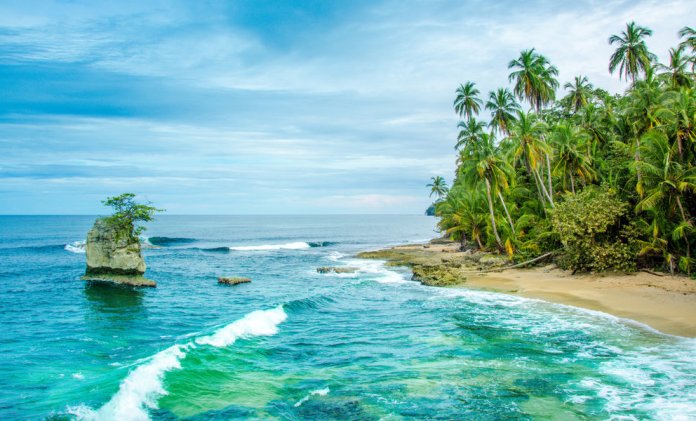


 In the end, people’s attraction to differences is vastly outweighed by our attraction to similarities. People persist in thinking opposites attract – when in reality, relatively similar partners just become a bit more complementary as time goes by.


