Monday, April 13, 2026
Home Blog Page 380

‘App’ Will Alert Tourists About Insecurity in Costa Rica

0

An app(lication) with warnings and safety tips for tourists would be ready in December, at the beginning of the peak tourist season, reported Friday the Tourism Board – the Instituto Costarricense de Turismo (ICT)

The application will have geolocation to alert the user about the dangers according to where they are, explained the Minister of Tourism, María Amalia Revelo.

Revelo said that it will also work to provide tourists with tips on renting a car and “how to safely leave their valuables in the hotel.”

Once active, the app can be used to receive warnings of security risks, including dangerous currents on the beaches, information from embassies and links to applications on earthquakes and websites such as the national weather service.

“The updates and improvements will be implemented throughout the current administration,” said the minister.

This application will be part of the investment of US$1 million dollars per year for the next four years of the Comisión Nacional de Seguridad Turística (Consetur) – National Commission of Tourist Security.

The announcement came after the murder of two tourists last weekend, Spanish tourist Arancha Gutiérrez López, on August 4 in Tortuguero de Pococí, in the Caribbean, and of the Mexican María Trinidad Mathus, a day later in Cóbano de Puntarenas, on the Pacific coast.

In addition, last Thursday two Spaniards were assaulted in the Rincon de la Vieja National Park, in Liberia, Guanacaste.

The commission is made up of ICT, the Ministry of Security, the Judicial Investigation Agency (OIJ), the Attorney General, and representatives of the United States Embassy, the National Chamber of Tourism (Canatur) and the Chamber of Tourism. of Guanacaste (Caturga).

The project will include training for 2,000 tourist entrepreneurs in the next six months to protect their businesses and communities against possible crimes. The goal of ICT is to double the figure by the end of 2019.

A Tourism Security Congress will also be organized, which will bring together national and foreign experts to share success stories on the subject.

Likewise, the Ministry of Security and the ICT will launch a campaign to raise awareness among the population about gender violence, together with the National Institute for Women (Inamu).

For his part, the Deputy Minister of Security, Eduardo Solano, announced that the staff of the tourist police will be reinforced and mega-operatives will be made in places with the greatest tourist visitation.

“We have operational groups for certain areas, the idea is that their range of action reaches tourist areas. Also, students of the Police Academy will be located in the areas that most require police,” said the vice minister.

These were the responses of the authorities to the murders of the In addition, this Thursday two Spaniards were assaulted in the Rincon de la Vieja National Park, in Liberia.

- A word from our sponsors -

Couple Arrested For Assaulting Canadian Tourists Through The “Pinchonazo” Method in La Sabana

0
Photo MSP

A married couple, using the ‘pinchonazo’ method – puncturing a tire that uninflated slowly – was arrested on Saturday for assaulting Canadian tourists.

Photo MSP

According to authorities, the couple, he a Colombian national identified by his last name Caicedo and the wife, a Costa Rican identified by her last name Centeno, would scout car rental agencies for their intended suspects and the would offer help when their mark had the flat tire.

Photo MSP

While the woman would offer her assistance, the husband would take advantage of the situation and would remove valuables from their victim’s vehicle.

Such was the case on Saturday, their victims a Canadian couple who had just left the car rental agency on Paseo Colon.

The arrest by Officers of the Department of Police intelligence, tourist police and Organismo de Investigacion Judicial (OIJ) took place around 4 p.m., in La Uruca, after a chase that began in La Sabana.

Among the items stolen from the Canadian tourists on Saturday was medication that could only be obtained in Canada, US$1,000 in cash, photographic equipment, and a tablet.

Photo MSP

Both Caicedo and Centeno had been arrested, in February, on similar crimes. The director of the OIJ at that time, Walter Espinoza, said the couple “never used weapons, they acted in a very courteous manner, which allowed them to approach the victims with ease.”

- A word from our sponsors -

Is it really over? Is anyone really buying it?

0

(OPNION) Is it really over? The violence has stopped, peace and tranquility has now taken over Nicaragua. If you believe Daniel Ortega and Rosario Murillo, it is. If you believe the ‘fake news’ sources like El Nuevo Diario, La Prensa or 100% Noticias and others not pro-government, well, it is far from over.

From El19digital.com

In the past few weeks Daniel Ortega has been all over the world, on CNN Español, Euronews, RT (Russia), TeleSur (that he partly supports) and many others, telling his side of the story of how the coup by the Americans trying to get him out, financing terrorism in his country, was defeated and how all he wants is peace through dialoguen for his country.

During all the interviews, even the ones falling over him, he never got irritated, even when called a dictator or being called a liar. He was the perfect statesman, calm, focused on his message.

During his last 11 years in office he had never given interviews.

On the other side of the bed, his wife and now vice-president, has been working on her own version of the truth.

Through the government website El19digital.com, if you were tuning in today for the first time, you wouldn’t believe that between 195 (Ortega’s claim) and more than 400 people, as per the human rights organizations, have died in the violent clashes between police, pro-government forces, paramilitaries and citizens calling for the couple’s ouster.

This past week, Murillo unveiled a PR campaign aimed at bringing back international tourists. The ‘Beautiful as ever!’: Nicaragua campaing pushes tourism despite the ongoing crisis.

Today’s front page (August 11, 2018) shows Nicaraguans enjoying tourist centers, culture gastronomy, the beaches, the festivals and the big ‘carnaval‘ in Managua.

From El19digital.com

According to the El19digital.com website, the economy is recovering.

There are reports of protests, violence, killings, etc. What you would read is about how the families are marching to demand punishment for the terrorists or the demands of justice for the victims of terrorism, how the (university) “students are committed to Peace and Justice for the victims of coup-plotting terrorism.”

If you were tuning in today you would believe it is all over.

But is anyone really buying it?

Let’s hope not.

Something I read recently and appropriate here: “Someone who talks big are actually terrible leaders and drops the mask once no foreigner is looking at them. These leaders only put on a show – a facade – to fool an international audience, while their own countrymen are sick and tired of them”.

What is your opinion? Use the comment section below or post to our official Facebook page.

Article originally appeared on Today Nicaragua and is republished here with permission.

- A word from our sponsors -

More than half a million Venezuelans fled to Ecuador this year, UN says

0

More than half a million Venezuelans have crossed into Ecuador this year as part of one of the largest mass migrations in Latin American history, the United Nations said on Friday.

More than half a million Venezuelans have sought refuge in Ecuador to escape crime and political violence. Photograph: Rodrigo Buendia/AFP/Getty Images

About 547,000 citizens of the crisis-stricken South American country have entered Ecuador since January – mostly through its northern border with Colombia – to escape rampant crime and political violence, a collapsing economy and severe shortages of food and medicines.

That is nearly 10 times the number of migrants and refugees who attempted to cross the Mediterranean into Europe over the same period. The International Organization for Migration this week announced that 59,271 migrants and refugees tried to reach Europe by sea between January and August, with most coming to Spain, Italy or Greece.

The UN’s refugee agency, UNHCR, said a daily average of up to 3,000 Venezuelan men, women and children had entered Ecuador this year but that the already “massive influx” was now accelerating further.

About 30,000 Venezuelans – more than 4,000 per day – arrived in the first week of August, leading Ecuador to declare a month-long state of emergency.

Some reports have suggested fears Colombia’s newly installed president, Iván Duque, could close his country’s borders had caused the surge which has seen huge crowds of roofless migrants converge on the Rumichaca Bridge between Colombia and Ecuador.

UNHCR spokesman William Spindler told reporters: “Many of the Venezuelans are moving on foot in an odyssey of days and even weeks in precarious conditions.”

“Many run out of resources to continue their journey and, left destitute, are forced to live rough in public parks and resort to begging and other negative coping mechanisms in order to meet their daily needs.”

For all of those hardships many exiles say conditions abroad are preferable to those back home where the International Monetary Fund (IMF) predicts inflation will hit one million per cent this year.

More than a million Venezuelans have crossed into Colombia since the exodus began in 2015. Others have fanned out across Latin American and Caribbean nations including Mexico, the Dominican Republic and Trindad and Tobago. Tens of thousands have hiked into Brazil down a remote Amazon road known as the Hunger Highway.

Spindler said about 20% of those entering Ecuador were expected to remain while most continued south to Peru or Chile. About 40% were women and girls who faced “serious risk of sexual violence, in particular survival sex and trafficking”.

The Venezuelan exodus has become an increasingly high-profile and contentious political issue in neighbouring countries, with some border regions struggling to cope with the influx.

“Xenophobic reactions to the exodus have been noted in some quarters,” Spindler said. Earlier this week a Brazilian judge briefly blocked Venezuelans from entering northern Brazil.

On Thursday night the crisis was raised during the first televised debate ahead of Brazil’s October presidential election. “The [Venezuelan] government is collapsing and this is generating a humanitarian crisis of absolutely unacceptable proportions,” said one candidate, the former finance minister Henrique Meirelles. “We must act so that the situation changes in Venezuela and the regime changes … so Venezuelans want to go back.”

Álvaro Dias, another presidential hopeful, said Brazil could not turn away those fleeing hunger, violence, misery and death: “It would be perverse to expel human beings who have been driven out by a bloodthirsty and merciless dictatorship.”

Article originally appeared on Today Venezuela and is republished here with permission.

- A word from our sponsors -

Constitutional Court Passes The Ball On Same-Sex Marriage

0

- A word from our sponsors -

Latin America’s fight to legalize abortion: the key battlegrounds

0
Pro-abortion activists demonstrate outside the Argentine embassy in Chile on Wednesday, hours before the Argentine senate rejected a bill to decriminalise the procedure. Photograph: Martin Bernetti/AFP/Getty Images

An estimated 6.5 million abortions take place across Latin America each year. Three-quarters of these procedures are unlawful, often performed in unsafe illegal clinics or at home.

Pro-abortion activists demonstrate outside the Argentine embassy in Chile on Wednesday, hours before the Argentine senate rejected a bill to decriminalize the procedure. Photograph: Martin Bernetti/AFP/Getty Images

Of 33 countries across Latin America and the Caribbean, only Cuba, Uruguay and Guyana permit elective abortions. Women also have the right to choose in Mexico City. Currently, abortions are allowed in Costa Rica only in order to preserve the life or physical health of the woman.

Elsewhere, however, the right to an abortion is severely restricted, with terminations often permitted in cases of rape, or if the pregnancy will endanger the life of the mother.

Nicaragua, Honduras, El Salvador, the Dominican Republic, Haiti and Suriname all have a complete ban on abortion.

Brazil

Activists consider Brazil a key battleground in the fight to decriminalize abortion in Latin America. Days before the crucial vote on abortion in Argentina, Brazil’s supreme court began hearings on allowing elective abortions through to the 12th week of pregnancy. Opposition to any loosening of existing laws – which currently ban abortions except in the case of rape or threat to a woman’s life – remains strong. Jair Bolsonaro, the leading conservative presidential candidate in Brazil’s forthcoming elections, has pledged to veto decriminalization attempts, while evangelical Christian members of Congress are pushing a rival bill that would make abortion illegal in all circumstances.

Chile

Last year, Chile removed its total ban on abortion, with terminations made legal in cases of rape, incest and where there is a danger to a woman’s health. A bill legalizing abortion up to 14 weeks has now been put before the Senate. Last month, three women were stabbed at a reproductive rights rally organised in favour of decriminalisation. President Sebastián Piñera has said he will oppose any attempts to further ease restrictions on terminations.

Venezuela

Earlier this year, Venezuela’s national constituent assembly, which has the mandate to update or reform the country’s national constitution, said it would debate the decriminalization of abortion. Abortion is currently only legal if a woman’s life is endangered.

Uruguay

In 2012, the country became only the second in the region after Cuba to decriminalize abortion for all women in the first trimester of pregnancy. It is considered a model for women’s reproductive rights.

Colombia

In 2006, Colombia lifted its blanket ban on abortion. Terminations are now allowed in cases of rape, incest, fetal malformation, if the fetus is at risk, and if the physical or mental health of the mother is at risk.

El Salvador

Women can face up to 50 years in prison for having an abortion in El Salvador, which – like its neighbors Honduras and Nicaragua – maintains a total ban on abortion in any circumstance. All attempts to legalize abortion to save the mother’s life, or in cases of rape or incest, have failed. The success of conservative parties in legislative and municipal elections will effectively block any loosening of the ban in the near future.

Peru

Three years after Peru’s congress voted against broadening laws to allow abortion in cases of rape or incest, the government is facing calls to consider decriminalization.

TheGuardian.com

- A word from our sponsors -

“They Didn’t Warn Us About The Danger”, Says Family Of Spanish Woman Murdered in Costa Rica

0
The mother, partner and father of Arancha Gutiérrez (l-r). KIKE PARA

“Don’t fail us again.” That’s the message from the family of Arancha Gutiérrez, a 31-year-old Spanish woman who was murdered in Tortuguero last weekend while visiting Costa Rica with her husband and a group of seven other Spaniards.

The mother, partner and father of Arancha Gutiérrez (l-r). KIKE PARA, El Pais

Speaking to Spain’s El Pais, Miguel Ángel Escribano, said nobody – not Spanish or Costa Rican authorities or the management at their hotel – had told them that police had stopped patrolling the beaches: “They didn’t warn us of the danger we were running.”

“Spanish people travel across the world to destinations that can be more or less dangerous and we decide how much risk we take,” he said, reading from a statement inside San Fernando de Henares City Hall, in the Madrid region. “But this does not mean we are looking to get ourselves killed.”

Escribano said that before traveling to Costa Rica the couple had consulted information offered by Spain’s Ministerio de Asuntos Exteriores (Ministry of Foreign Affairs) on global destinations.

“We thought Tortuguero was a very safe place where nothing ever happened,” explained Escribano. “After the tragedy, we became aware of things that, it seems, no one knew about.”

Spain’s Ministry of Foreign Affairs website has been updated since the murder of Gutiérrez and María Trinidad Mathus, from Mexico and now recommends that tourists “travel with caution” to Costa Rica. According to the website, travelers should “adopt measures to protect themselves and avoid traveling alone or to remote or poorly lit places, both in urban settings and tourist areas.”

“There has been an increase in violence with the use of firearms (although not directed specifically against tourists) in the most conflictive areas of the urban area of cities such as San José or Puerto Limón, especially at night.

“Since the aggressors are usually under the influence of drugs, in the case of being assaulted, it is recommended not to resist and to prevent this type of events the basic rules of prudence should be adopted with luggage and personal objects, especially with valuables (cameras, video devices …). It is recommended not to wear jewelry and it is strongly discouraged to travel in pirate cabs,” explained the Ministry in the Security section.

In addition, as a result of recent attacks against female tourists, “it is recommended to take self-protection measures and avoid traveling alone or in isolated or poorly lit areas, both in urban areas and in tourist areas.”

The website asks travelers to Costa Rica to keep handy Spanish embassy’s emergency phone number (+506 6050 9853).

Escribano thanked the Spanish consulate and embassy in Costa Rica, as well as the Costa Rica government and police force, for their support following the murder. But he called on the Spanish government to do more: “Don’t leave us in this important moment because this matter cannot be left unresolved. Don’t fail us again.”

The family returned to Spain on Thursday. Escribano and the victim’s family – mother, father, sister, and brother-in-law – agreed that the attack had been sexually motivated.

“Arancha left to go running early in the morning, like any woman wishing to enjoy her holidays would have done. She was attacked by a vile pervert, a blot on the human condition,” they said.

“We do not know how far machismo reaches, and up to what point a woman cannot enjoy nature by herself in broad daylight, creating fear and insecurity for the rest of the women who want to live freely.”

OIJ Raids Home of Suspect

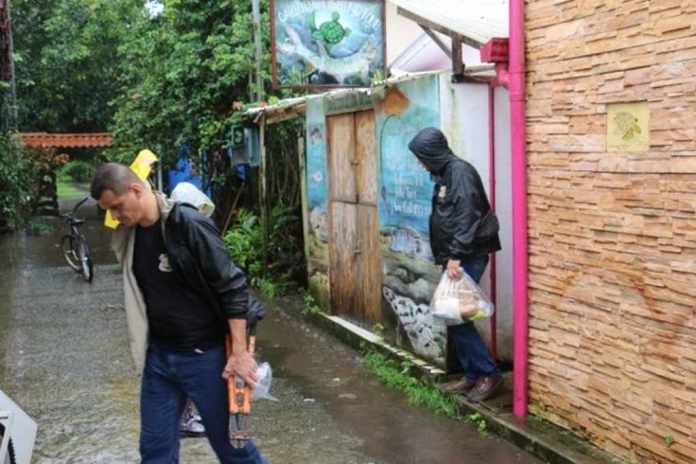
Meanwhile, in Costa Rica, the Organismo de Investigación Judicial (OIJ) raided Friday morning the apartment of the suspect in the killing of the Spanish woman, an individual named Albin Díaz Hopkins, in the community of Tortuguero de Pococí, in search of elements that tie him to the murder.

Hopkins is believed to have met the victim the before the murder, was released on Monday for insufficient evidence to place him in preventive detention. The court did, however, turn him over to immigration officials given his ‘irregular’ status in the country.

Hopkins, of Nicaraguan nationality, remains since Tuesday in the custody of the  Dirección General de Migración y Extranjería (immigration service), since he is illegal in Costa Rica, being held in the Central Region Apprehension Center (CARC), located in Los Lagos de Heredia.

Authorities suspect sexual motive was behind the attack, as Gutiérrez’s clothes had been torn off.

More tourism security promised

The Tourist Police (Policía Turística) increased the vigilance in Tortuguero since Friday.

Also on Friday, the Costa Rican Tourism Institute (ICT) reported that for December, when the high season starts, it hopes to have an application ready with warnings and safety tips for tourists.

The application will have geolocation to alert the user about the dangers according to where they are, explained the Minister of Tourism, María Amalia Revelo.

This in addition to President Carlos Alvarado’s announcement on Thursday that the central government will allocate US$1 million annually from the budget of the Costa Rican Tourism Institute (ICT) to tourism security.

- A word from our sponsors -

Nicaragua is on the verge of civil war. The fallout could become ‘biggest wild card’ in the U.S. midterms

0

It’s been just over thirty years since Nicaragua dominated U.S. headlines during the famous Iran-Contra Affair. The scandal revealed that senior members of the Reagan administration had been secretly funding Nicaraguan rebel groups fighting the leftist Sandinista government by conducting clandestine arms sales to Iran.

Students yell slogans during an anti-government protest outside the National Autonomous University of Nicaragua (UNAN) in Leon, Nicaragua, July 30, 2018.
Oswaldo Rivas | Reuters

Since Iran-Contra and the end of armed conflict in 1990, the poor Central American nation has largely managed to stay off the front page of American newspapers.

But that could all change this fall.

Nicaragua, once again, is on the verge of complete collapse, as protests that began this spring over government cuts to social security have steadily escalated and are now turning deadly. Over 400 people have been killed as a result of the on-going conflicts between demonstrators and pro-government security forces since the crisis began.

During the last Nicaraguan civil war, over 250,000 Nicaraguan refugees sought asylum in the United States.

Opposition forces are focused on forcing the early removal of husband and wife duo President Daniel Ortega and Vice President Rosario Murillo, from office.

Yes – you did read that correctly. The vice president is married to the president.

Leaders of the opposition charge that Ortega, now poised to enter his twelfth consecutive year in power, is running the country like a dictatorship. They charge that Ortega and his wife have been cracking down on peaceful protests, cutting off all non-state media propaganda as well as banning opposition parties. Demonstrators are hoping to force early elections; yet, with Ortega and his loyalists are standing firm, the risk of the country spiraling into civil war is looking increasingly likely.

Iran-Contra Affair. President Ronald Reagan receiving the Tower Commission Report, following the Iran-Contra Affair, February 26, 1987.
National Archives, Washington, D.C

The Nicaraguan political crisis could easily spin so far out of control that it creates a massive refugee crisis at the U.S. border – perhaps even as early as this fall.

And that’s how Nicaraguan unrest could become a major issue during the midterm elections.

For most candidates vying for seats in this year’s midterms, Nicaragua hasn’t been a talking point on the standard stump speech. That could change quickly.

Even in states that do not directly border Mexico, another Nicaraguan civil war and an ensuing refugee crisis could shift the national debate back to border security and immigration reform.

“The political situation in Nicaragua is a pressure cooker, and the lid could blow off at any point,” said Dean Phillips, the Democratic candidate for Congress in Minnesota’s 3rd District. “You don’t need to be an expert on border security to realize that if Nicaragua lapses into civil war, there will be tens of thousands of additional immigrants fleeing north.”

Even in states that do not directly border Mexico, another Nicaraguan civil war and an ensuing refugee crisis could shift the national debate back to border security and immigration reform.

Bradley Honan, a political strategist who worked for Bill and Hillary Clinton, Mike Bloomberg, Tony Blair and others, thinks that Nicaragua is the “October Surprise” that both parties should be preparing to deal with. “The potential for a widespread Nicaraguan refugee crisis on our southern border is the biggest political story that candidates from both political parties need to be paying attention to,” said Honan.

The last time Nicaragua entered a period of sustained armed conflict was in the 1980s, when over 250,000 Nicaraguans sought asylum in the United States. A generation later, the population of Nicaragua is now more than twice what it was then and already thousands of Nicaraguans have fled to neighboring countries; it is just a matter of time some begin making their way to the U.S. border.

A Nicaraguan wave

A massive influx of Nicaraguans would dwarf the current numbers of migrants from Honduras, El Salvador and Guatemala, who have sought to enter the United States over the last decade in an effort to escape the escalation in gang and cartel violence.

Some political insiders have privately mused that the “wave” that pundits will be discussing in late October isn’t necessarily a blue one or a red one; the wave on everyone’s mind will be a Nicaraguan one, referring to the waves of war refugees that might come crashing down on America’s southern shores.

Politically, a Nicaraguan surge of asylum seekers at the southern border could break one of two ways.

Democrats claimed a victory of sorts when Trump was forced to backtrack on his policy of separating children from their parents at the border, and they might hope to see Trump fumble the ball once again, motivating turnout from the Democratic base.

But a case could also be made that Trump might be able to spin an out-of-control crisis at the southern U.S. border as an “I told ya so” moment. Trump might use a Nicaraguan immigration crisis as leverage to get his “Border Wall” funded in Congress, enabling him to take a victory lap on a major campaign promise, thereby benefiting him and his allies politically.

It’s entirely possible that the violence in Nicaragua doesn’t escalate into a full blown, country-wide civil war, and that cooler heads eventually prevail. Nicaragua is a country whose own protracted internal conflict in the 1980s is still vivid memory among many survivors on both sides of that war – and taking up arms again is a decision that no one will likely make in haste.

Even if the country doesn’t unravel into all-out armed conflict, the breakdown of law and order could still lead to a significant migrant problem for the U.S.

The situation in Nicaragua might seem like an international story issue a long way from the purplish suburban toss-up districts across America, but it could easily become the biggest wild card in this November’s midterms.

Arick Wierson is a six-time Emmy Award-winning television executive and former deputy commissioner under New York City Mayor Michael Bloomberg. He currently works as a political and branding consultant to clients in the United States, Africa and Latin America. He worked for the Nicaraguan Ministry of Foreign Relations during the Chamorro government in the early 1990s.

Javier Arguello Lacayo is a Nicaraguan political analyst and former executive director of the Nicaraguan Foundation for Socio-Economic Development (FUNIDES). He currently serves as the Executive Director at COGx, a research and development firm in applied cognitive science.

Article by Arick Wierson and Javier Arguello Lacayo originally appeared at CNBC.com. Read the original here.

Article originally appeared on Today Nicaragua and is republished here with permission.

- A word from our sponsors -

Immigration Arrested Owner of Casas Vita, Accused of Fraud, When He Tried To Leave The Country

0
Attorney General Emilia Navas

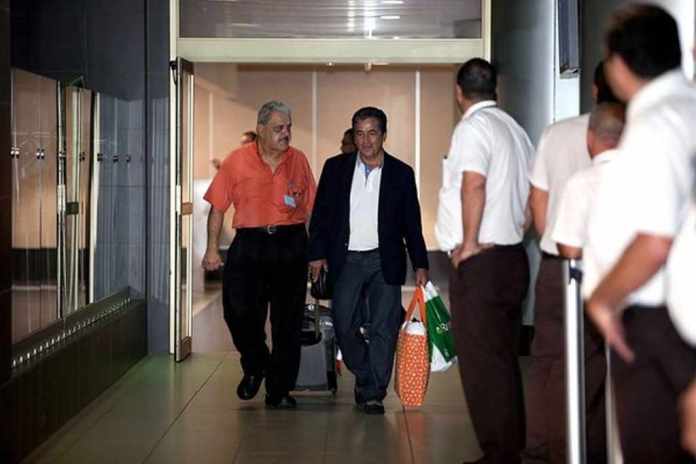
A real estate developer, identified by his last name Villagra, accused of defrauding at least 150 buyers of the Casas Vita housing project was detained at the Juan Santamaría International (San Jose) Airport this Friday morning when he was about to leave the country.

Deputy Prosecutor’s Office of Frauds confirmed that they notified immigration authorities that Villagra could possibly skip the country to avoid prosecution.

According to the Fiscalia (Prosecutor’s Office), the complaints against Villagra had grown from 47 in May, to 125 a month later and now more than 150.

After several raids in May and arrest, a judge released Villagra, without precautionary measures.

Attorney General Emilia Navas said Villagra was re-arrested this Friday morning because “there is a risk that his departure from the country had no return. It is not only a problem of economic content – because whole families have lost life savings – but it has to do with their life projects and the right to have a decent home.”

Villagra was sued by buyers for simulating the sale of land and properties that carried mortgages or belonged to other people. The victims affirm that they gave Villagra high sums of money for deposits for the purchase of the houses that were never delivered.

- A word from our sponsors -

In Guanacaste, Plane Propeller Slices Through Pickup Truck Like Paper

0

A fumigating plane that was on the ground lost control and hit a pickup that was on the runway. The propeller hit the box of the pickup truck and cut it as if it were paper. The incident occurred this Thursday shortly before 8:00 a.m. on the Cerritos airstrip, inside a farm located in Liberia, Guanacaste.

“The aircraft, with the call letters TI-ABM, was with the engine running as part of the equipment was being cleaned, when a compartment was opened by a lever that accelerated the propeller,” said Rolando Richmond, deputy director of Civil Aviation.

“The plane began to move uncontrollably until the propeller repeatedly hit a vehicle from the Central Azucarera del Tempisque Sociedad Anónima (Catsa) that was parked, as well as a nearby supply warehouse,” added Richmond.

No one was hurt in the incident.

The spokeswoman for Catsa, Marissa Marín, stated that the aircraft is not theirs and did not work for that company at the time of the accident.

- A word from our sponsors -

Costa Rica Postpones Naming Ambassador to Nicaragua

0

The government of Costa Rica has postponed naming an ambassador to Nicaragua, replacing Eduardo Trejos Lalli, who on July 31 took on the post of director of the Dirección de Inteligencia y Seguridad (DIS).

Political experts and career diplomats had urged President Carlos Alvarado and vice-president and Chancellor, Epsy Campbell, that it was not an opportune time to send a new ambassador to the neighboring country.

“Obviously the current conditions make us evaluate different scenarios and at this moment we are taking the decision of what kind of personnel we require at the Embassy. The approval will not be sent yet and in the coming weeks we will be announcing the measures that we will take with the diplomatic staff that is already there,” Campbell explained.

Despite the socio-economic crisis Nicaragua is facing at this time, it continues to be a “vital” commercial partner for Costa Rica.

- A word from our sponsors -

Lottery Denies “Ominous Force” In The Drawing of the Acumulado

0
Photo courtesy JPS

Tonight the tombola will spin again for the ‘acumulado’ prize of ¢1,040 billion colones or add another ten “melons” (million colones) to Sunday’s draw.

Photo courtesy JPS

The  acumulado has not been won since June and with each draw that it goes unwon more “melons” get piled on.

This is unprecedented in the history of the acumulado. Some have begun to think there is an ominous force at play, like the use of a magnet to keep the acumulado ball from falling (being drawn) from the tombola.

Other theories include that the person who puts the balls in the tombola is a “gatazo”, that somehow manages to get the acumulado ball to stay away from the drop hole. Then there is the theory of the “hot and cold” balls that keep the acumulado from being drawn.

Photo courtesy JPS

Claudio Madrigal, head of marketing and distribution at the Junta de Protección Social (JPS) – the lottery – assures that everything is above board.

To that effect, Madrigal is inviting anyone who wants to see “there is no pull of wool over the eyes” (no le están metiendo gato por liebre, the Spanish term), to visit the JPS auditorium in San Jose, located next to the emergency entrance of the Hospital Nacional de Niños (Children’s Hospital), to present their cedula to the security guard and see for themselves all the security that is behind each draw.

“When a draw is made, people see only the draw, so sometimes they do not realize all the security behind any of the lottery events, whoever wants to come and see can do so,” Madrigal said.

To get the acumulado to come out, for each draw missing are the balls drawn in past. Less balls mean an increase in the acumulado ball falling. At least that is the theory behind it.

Meanwhile, in the streets, authorities have increased their operations against vendors from speculating (selling tickets at higher prices) and from being robbed due to a high increase in sales and cash on hand.


- A word from our sponsors -

Another Try! Government Sends Legislators New Draft Tax Reform

0
Legislators at work

In an effort to keep alive the reforms to the Plan Fiscal (Tax Reforms), the government of Carlos Alvarado delivered to the legislative caucuses a new substitute text, which includes changes in the articles on the Value Added Tax (VAT), income tax and unemployment benefits for public officials.

Legislators at work

The draft comes after days of intense meetings.

Among the proposed changes is the increase from ¢430,000 to ¢648,000 colones per month the amount of residential rental income (and rents paid by Pymes) that the 13% VAT tax will be applied; as well an increase from 250 to 280 kilowatt-hours consumption before the tax is payable.

At the same time, a new VAT rate of 1% is included for the transactions of agricultural goods of the basic basket, as well as for items such as wheat, soybeans, sorghum, fruit, corn and palm oil.

The revised draft establishes that taxpayers may deduct from income, as part of their expenses, all the interest they pay for loans with entities of the national financial system or with foreign banks of ‘first order’.

In respect of reforms to public salaries, a phrase is included that establishes that, in no case, the unemployment benefit (of a public official) may exceed eight years. But the rule won’t apply to public officials who currently have a greater benefit based in their collective agreement. Some institutions now pay benefits up to 20 years.

In order to avoid misunderstandings, the Ministerio de Hacienda (Finance) included several clarifications in the chapter on VAT exemptions, for example, the payment of tuition in public universities will not be subject to this tax, nor will the fees for tuition or credits from these institutions of higher education.

Next, see the main changes established in the new draft of the project:

- A word from our sponsors -

Legislators criticize Sala IV for passing onto them the responsibility on gay marriage

0
Photo Alonso Tenorio

Legislators on Thursday joined in the criticism of the Constitutional Court passing onto them the responsibility of same-sex marriage.

Photo Alonso Tenorio

The ruling of the Sala IV on Wednesday had the rare effect of bringing together in agreement most of the legislators, even it if was to criticize the decision.

The Court declared unconstitutional the articles of the Código de Familia (Family Code) and the Ley de la Persona Joven (Law of the Young Person) that prohibit marriage and the recognition of de facto union between persons of the same sex. However, it decided that – and the reason for the criticism not only from legislators and many others – the rules will remain in effect for a year and a half while waiting for the Legislature to adopt the legislation.

Critical of the Court were legislators of the Liberación Nacional (PLN), Restauración Nacional (PRN), Acción Ciudadana (PAC), Integración Nacional (PIN) and the Frente Amplio (FA). Only legislators of the Unidad Social Cristiana (PUSC) considered correct the Court decision to transfer the responsibility to regulate same-sex marriage to legislators.

Carlos Ricardo Benavides, head of the PLN caucus, said Thursday before the plenary that the resolution of the constitutional magistrates “is anything, less clear.” The legislator said that the lack of clarity and forcefulness of the Sala IV prevents the PLN from thinking about an easy resolution of the issue in the Legislature.

“More doubts arise when the magistrate Fernando Castillo (president of the Sala IV) speaks expressly of the possibility that the legislature has a term of 18 months to regulate same-sex marriage or assume a certain figure for a transitory period that is not known what would it be,” said the liberationist.

Meanwhile, over at the Restauración Nacional, a party that opposes same-sex marriage, the attacks against the Constitutional Court were harsher. Legislator Eduardo Cruickshank warned that the term of 18 months that the magistrates fixed will be fruitless due to the radical differences of opinion that exist between the parties.

For Cruickshank, the Sala IV ruling is not legal, but has strong political overtones that he described as a trap for the legislature.

Over at the PIN, Wálter Muñoz, head of caucus, agreed that “there is nothing clear and precise” in the resolution of the Court: “On the contrary, what it did was, basically, pronounce in a confusing, incomplete and move to the Legislative Assembly a controversy that, in reality, does not fall within the remit of the Legislature at this time. We censure that the Court has not acted with clarity and transparency,” he said.

José María Villalta, Frente Amplio legislator, also launched attacks against the Constitutional Court.

The legislator agreed that it is unfeasible for the Legislature to make a decision on the matter in the year and a half of the term granted by the Court and that its members lost the opportunity to resolve a complex case, accepting, without any justification, the possibility of sizing the effects of a resolution on social life.

Enrique Sanchez, legislator for the PAC, criticized the additional validity that was given to the rules declared unconstitutional.

“The resolution of the Constitutional Court opens a window of 18 months, there is discrimination and there are unprotected couples and they continue like this ‘because we feel like it’, because there is no justification for that rule, discriminatory and unconstitutional, to remain in force”, he said in the legislature floor.

Minutes later, Casa Presidencial made official the call for the bill to regulate same-sex marriage. It is a basic text proposed by the PAC, PLN and Frente Amplio in the legislative period 2014-2018. In addition, the proposal regulates aspects of the adoption of minors by same-sex couples.

On Twitter, President Alvarado tweeted,”Our commitment to full equality remains intact.”

Contrary to the opinion of the majority of ‘bancadas’ (party benches), Erwen Masís and Pedro Muñoz, legislators for the PUSC, affirmed that the resolution was legally correct, because, “to which it corresponds to legislate in the country is the legislators”.

“What draws the attention powerfully is that if the issue is already resolved why they (Sala IV) give 18 months to the Legislature to be the one to solve it. So, my interpretation is that there are nuances that are being left at the discretion of the Legislative Assembly,” said Muñoz.


- A word from our sponsors -

In Search of Nice Americans: First Impression of Costa Rica!

0

Extracted from Geoff Steward’s entertaining travel book ‘In Search of Nice Americans‘, the following is his light hearted and very, very funny (The Telegraph) first impression of Costa Rica.

Trough my one half-open eye, I am taking in the new landscape and country. I have never been to Central America. The houses are roadside shacks made of whatever materials were  to hand: some brick, some wood, some corrugated iron, some steel, some chicken wire, some Toyota suspension parts and shock absorbers, all fnished off with a splash of magenta or cyan or mustard or a combination of all three. We pass one such multicoloured patchwork shack with six dead fridges outside it. No doubt they will feature soon in the construction of some other properties and cars.

Each little village has little more than a church, a football pitch (field) and a Coca-Cola sign. Skeletal horses are wandering the streets and we nearly run over the dog off the front cover of J. M. Coetzee’s book Disgrace. It had the good sense to not be standing in a pothole, otherwise Seasick Steve would almost certainly have hit it.

The children here seem happy enough, though. Those who are over the age of ten are playing around on motorbikes and scooters. The younger ones are riding on the saddle-less frames of  push-bikes twice their size. The wheels of one bike are bigger than the boy riding it. All the playful children are smiling, despite being deprived of internet connectivity or social media. They seem to be able to socialise without media, and they can even climb trees.

Father Christmas gifted Joe and Mary a bike each, two years ago, and they have sat in the garage ever since. I asked Mary why she never rides her bike and she told me it was because she had lost the charger.

Some ex-friends of mine in London once bought a child like these, from Mexico. It was legitimate, not kidnap. They couldn’t have children due to faulty ovaries so went through a Jewish adoption agency specialising in Mexican children. They became better friends of mine during the adoption process; so much so that they asked me to be a referee. I had to be interviewed by a social worker to attest to them being good, non-childmurdering people. They bought their child from a young Mexican girl who was a drug addict. I never met the child because my friendship was no longer required once the adoption process was completed and the papers said that a partner in a law firm had validated their credentials. That is the type of superficiality with which I have slowly come to terms in London.

Despite the unsuspended cars, the deep potholes, the undernourished farm animals, the oversized bikes, the roadside fridges and the DIY accommodation, Costa Rica topped the Happy Planet Index rankings in 2016 (having previously come top in 2009 and 2012 as well). Even though its economy is based primarily on farms and hotels, its people have higher well-being scores than in the US and the UK, have a better ecological footprint, and live longer. It is smaller than Scotland but is home to the greatest density of species in the world (which is what brought me here, as Haywards Heath only has badgers and squirrels).

But perhaps Costa Rica’s master stroke in achieving happiness and contentment is that it abolished its army in 1949 and has since reallocated defence funds to be spent on education, health and pensions. It is a surprisingly simple idea, but unlikely to be tried in England despite the fact that the last time we were invaded was in 1066.

For anyone at a crossroads, contemplating a temporary or permanent career break, this affectionate travel romp is essential reading. Buy your copy here.

- A word from our sponsors -

Immerse yourself in the experience of a flight with the Space Drone Simulator SDS-1 at the Paseo de las Flores

0

For the first time in Costa Rica, the Space Drone Simulator SDS-1, arriving from Europe, is on display in the Paseo de las Flores mall in Heredia.

This simulator is used for gamers or to train professional or military pilots. It has a P3D program from Lockheed Martin, one of the largest defense companies in the world.

It has the shape of a spaceship, all the characteristics of a space shuttle and has 3 audio systems, robotics, 3 high resonance screens and 4 computers with the same software used by the United States Air Force (USAF).

From August 3 to September 8, during shopping center hours, you can experience the experience of being inside the cabin of operations of an aircraft and seeing in its windows what the pilots see, even perceiving the sensation of the takeoff.

“This experience was very different, since I have never traveled, the feeling of being on an airplane and appreciating the landscapes was really exciting, besides the experience of leaving the earth is very real, you can appreciate the constellations and the stars,” explained Jennifer Sancho Acuña, one of the first people to enter the simulator.

- A word from our sponsors -

Disappearances Alarms Nicaraguan Socitety

0

Organizations of civil society and social movements denounced a process of forced disappearances in Nicaragua by ‘paramilitaries’, mainly in Masaya, León, Jinotepe, Diriamba and Jinotega.

The paramilitaries are those that execute the kidnappings and have orders to act with impunity.

“According to the specialized terminology of international human rights organizations, the arrests without proper order and executed by paramilitaries, are not really captures, but enforced disappearances,” said a statement signed by 11 unions and civil society organizations. including the Civic Alliance, the autoconvocados and the University Coordinator, among others.

They add that in Nicaragua the population is intimidated, threatened and kidnapped by paramilitaries, who would be ordered to act “with impunity” by the government of Daniel Ortega.

“Another aberration is committed, which is to invent situations of guilt of the prisoners, which lead to the courts under the control of the regime,” the organizations maintain.

According to the statement, in Nicaragua there are more than 130 people prosecuted for terrorism, mostly young people, university students and residents.

Release political prisoners

“We demand the release of all political prisoners, including those who are in the dungeons of the regime, but officially the government has not accepted that they are captured,” the organizations demanded.

Local and international organizations have denounced the act of paramilitaries in Nicaragua, who arrest people without presenting a court order.

They have also questioned the judicial processes to which protester have been subjected, whom they point to for the crime of terrorism.

Among the people who are being prosecuted is the leader of the Oriental market, Irlandaa Jerez; the peasant leaders, Medardo Mairena and Pedro Mena; also Cristian Fajardo, of the April 19 Movement in Masaya.

This crisis, which leaves hundreds of people arrested and disappeared, has also caused more than 400 deaths (according to Nicaraguan human rights organizations) and thousands of wounded.

As a form of protest, the organizations will hold a national march on Saturday (from the Jean Paul Genie roundabout to the Cathedral of Managua), on Sunday there will be a 5k race and a march on Wednesday.

Source (in Spanish): El Nuevo Diario

Article originally appeared on Today Nicaragua and is republished here with permission.

- A word from our sponsors -

Retailers remain closed in Masaya for fear of armed groups

0

At least 10 businesses, located in central streets of the city of Masaya, remain closed, the owners having taken the decision not to reopen due to the insecurity that the city is living, the constant arrests and the patrol of armed civilians throughout the day.

Ciudad de Las Flores street in Masaya

Among the closed retailers are pharmacies, pizzerias, food shops, bars and paint stores, most of these looted in previous months by hooded criminals, who destroyed the infrastructure and took away all merchandise.

Don Augusto Amador, who has had a small restaurant for 5 years, expressed his fear of returning to work again, due to the danger he and his workers can face due to the constant illegal detentions.

“Opening again I think it would be a failure or expose our lives to danger, with much effort we had our eatery and overnight we lost everything, the armed civilians think they own the streets, because they are everywhere, that is not a good image to attract foreign clients or visitors,” said Augusto Amador.

Paola Herrera, owner of a pizzeria, said “we are not in a good time to attract investment, visitors from other countries are not going to feel comfortable to see that there are hooded people in each corner with weapons, we still have not opted to open, our economy fell to 80%, today we only have losses and many debts. ”

Most of the owners consulted said that one of the options would be to emigrate to another country to establish their businesses and look for new opportunities to invest or sell the establishments to recover part of the money lost in the three months of crisis that the country has experienced.

“One of the ideas is to go to set up in Panama or Costa Rica, because we no longer see the opportunity to continue investing and do it at this time would be taking a big risk, because we could lose everything again. Masaya is living a time of high unemployment, before all this we had a good percentage of customers, today we have nothing,” said Winston Rafael Ulloa, owner of a bar.

The small businessmen ask for the disarming of the armed civilians and stop sowing fear in the population, so that the trust, the tranquility and the economy in the town of Masaya can be overcome.

Article originally appeared on Today Nicaragua and is republished here with permission.

- A word from our sponsors -

Following An Appeal To The Sala IV, Patient Does Not Have To Wait 9 Years For An Ultrasound

0

For an increasing number of patients of the Caja Costarricense de Seguro Social (CCSS), the State Health System, an appeal to the Sala IV (Constitutional Court) is the only remedy to accelerate urgent medical care.

Such was the case of a Desamparados woman who requires a follow-up ultrasound every six months due to her medical condition, and whose next appointment at the Marcial Fallas Clinic was scheduled for September 2027. More than nine years away.

The Sala IV has ordered the clinic to schedule appointments for the woman every six months, as established in her medical history.

In 2017, a total of 6,620 appeals were filed with the Court for cases of appointment dates, a figure that represented 28.7% of all appeals filed with the Constitutional Court.

In the first six months of this year, the Sala IV has received 3,535 complaints related to health. That is, on average, 19 appeals per day.

As in the case of the Desampardos woman and the majority of the others, the judges of the Sala IV considered that the appointment waiting period was excessive and violated the woman’s right to health care.

- A word from our sponsors -

Aresep in the process of developing an application for taxi drivers

0

The controversy generated by the incursion of Uber in Costa Rican has one more episode, as the Autoridad Reguladora de los Servicios Públicos (Aresep)  – regulator of public services –  works on an application (app) to improve the service provided by taxi drivers.

Earlier this week, the app was presented to the leaders of the formal taxi sector so they can analyze the progress that Aresep has implemented, and thus better outline the type of service they wish to provide.

Gilbert Ureña, President of the Presidente del Foro Nacional de Taxistas (National Forum of Taxi Drivers), commented on the position of the union regarding the use of this technology, saying it is an important tool for the members (taxis) to improve its service to the public.

In addition, Ureña did not miss the opportunity to tell the Aresep the Foro’s position against Uber.

The app, in addition to letting users know the cost of the trip and keep track of the trips, allows rating the service in things such as vehicle cleanliness, safety, driver treatment, among others.

- A word from our sponsors -

Venezuela to Ask Colombia, US for Assistance in Probe Into Maduro Murder Attempt

0

The Venezuelan prosecutor’s office plans to ask Colombia and the United States for assistance in the investigation of an assassination attempt on President Nicolas Maduro, Venezuelan Prosecutor General Tarek William Saab said Wednesday.

“Our prosecutors are now working on requests for mutual assistance in criminal cases to the United States and Colombia, so that they cooperate in the investigation,” Saab said on television.

The prosecutor general pointed out that 19 people linked to the assassination attempt had already been identified.

Saab said that the suspected sponsors of the attack remained outside Venezuela.

“[Colombian resident] Rayder Russo and retired National Guard Col. Oswaldo Garcia are residing in Colombia, Osman Delgado resides in the United States. The new Colombian government must extradite these criminals to Venezuela,” the official said.

He noted that three suspects had already been arrested, while their assets and bank accounts had been frozen.

“The suspects are accused of treason, failed assassination attempt of the head of state, usage of explosive devices, terrorism, damaging property and collusion to commit a crime,” Saab said.

He pointed out that two drones with explosives were used during the assassination attempt.

The mentioned murder attack took place on Saturday, when a military parade in the Venezuelan capital of Caracas attended by Maduro was hindered by what the authorities said was a killing attempt on the life of the president. Venezuela’s Information Minister Jorge Rodriguez said several drones detonated close to the presidential box during Maduro’s address. The president was not injured, but seven soldiers sustained wounds.

Maduro blamed the attack on Venezuelan right-wing opposition, Colombia and individuals living in the United States. Both Washington and Bogota denied any involvement in the attack.

Article originally appeared on Today Venezuela and is republished here with permission.

- A word from our sponsors -

Ecuador Declares State of Emergency in 3 Regions Over Venezuelan Refugee Influx

0

The government of Ecuador on Wednesday introduced a state of emergency in three provinces of the country due to the influx of refugees from Venezuela, the Ecuadorian Foreign Ministry said.

The state of emergency is in place in Carchi, Pichincha and El Oro provinces, the ministry specified, adding that the measure would last at least until September.

“We reacted in a timely manner. The state of emergency is introduced for the first time to give an effective and substantial response in favor of the people who come to Ecuador,” Deputy Foreign Minister Santiago Chavez was quoted as saying by the ministry.

Venezuela has been struggling with the economic fallout due to a global slump in oil prices and ongoing US sanctions. The May presidential vote resulted in the re-election of President Nicolas Maduro, however, the tensions escalated after a drone attack on the President earlier in August.

According to the European Parliament, over 2 million people have left Venezuela since 2014.

- A word from our sponsors -

Protests in Argentina Over Rejected Abortion Bill Led to 8 Detentions – Reports

0

Eight people were detained on Thursday during the protests in Buenos Aires that erupted after the Argentinian upper house declined a bill that would have legalized abortions during the first 14 weeks of pregnancy, the Nacion newspaper reported, citing sources in the security forces.

The protests in Buenos Aires erupted several minutes after the session of the upper chamber wrapped up, according to the Nacion. Before the unrest erupted, the police started to use tear gas, while the protesters responded by throwing bottles and stones. Among the detainees, there are seven women and one man.

Earlier in the day, the Argentine Senate rejected the bill despite it being approved by the lower house. Currently, women in Argentina can undergo abortions only in cases of rape or if their life or health is in danger. The Amnesty International slammed the upper house’s decision for the failure to support the human rights of women.


Commenting on the issue later in the day, Argentine President Mauricio Macri stated that the country would continue discussing the issue of granting women the right to abortion despite the country’s upper house’s decision to reject the bill that would have legalized abortions during the first 14 weeks of pregnancy.

“This is a discussion that is getting started and it will continue. The problem exists and we have to continue our work so that these young women have a right to choose and plan their lives,” Macri told journalists as aired by local broadcasters.

The president also pointed out the need to continue providing sex education for the youth and help schools hand out contraceptives.

At the same time, local Nacion newspaper reported, citing Chief of Cabinet of Ministers Marcos Pena, that the Argentine government was not planning to hold a referendum on the legalization of abortions.

In Latin America, abortions are only fully legal in Uruguay, Cuba, Guyana and in Puerto Rico. In Mexico, the voluntary termination of pregnancy is possible only in the country’s capital city. Most Latin American countries allow abortions only for a medical reason, but they are completely banned in Chile, Suriname, El Salvador, Haiti, Honduras, Nicaragua and the Dominican Republic.

- A word from our sponsors -

Fátima Pinto Releases ‘Tic Tic Tac’, Her First Song in Spanish

0

A year ago, at 17, Fátima Pinto, was just beginning with her first singles, but they were enough to take her to the concerts of Ricky Martin and Ariana Grande. Now, the Costa Rican singer, songwriter, designer and model returns with a new theme, and her first song in Spanish, with which she hopes to finish conquering the local audience.

“Tic Tic Tac” is the name of her new single.

“I like all kinds of music and obviously I love Latin music and I think everything fell into place, I wanted to try it,” Pinto said in a telephone interview with La Nacion.

“Reggaeton is super strong right now, so it was the most opportune moment. I think the response has been very positive,” she added.

At 16 years of age she created the web page Fatima’s Advice, “because I want to be able to reach out and connect with people of my age around the world to share fashion advice and ideas.”

Tic Tic Tac was produced in Miami, along with the well-known producer Yasmil Barrufo and composers Édgar Barrera – who wrote Hey DJ of CNCO and El Anillo by Jennifer López – and Mario Cáceres, known for creating hits like Felices los 4 by Maluma and Seniors by Becky G.

During this month (August), the video of “Tic Tic Tac” will be recorded in San Miguell Allende, Mexico.

Although Fátima Pinto previously had incursion in the world of modeling and even fashion design, now it is said to devote 100% her time to music.

“In the future I would like to go back to fashion and all that, but for now, just the music and well, since I finished school, I went to the U (University, she laughs). I would like to study communication with an emphasis on social networks,” she said.

Recently, Fátima signed with the label Leaf FM of London and considers that this new commitment means starting almost from scratch.

“I want to have my music and I want to study. I’m going to do general subjects in Texas Tech that is now in Escazú, they do not have communication, but they offered me a very flexible plan for my music,” she said.

Article first appeared at Costa Rica Confidential.

- A word from our sponsors -

Confirmed, Jorge Luis Pinto was hired in Costa Rica1

0
Pinto remains as technician of the Sele. One never knows. Photograph Jose Cordero

The Colombian coach, Jorge Luis Pinto, who took Costa Rica’s national team to a new in the World Cup 2104 in Brazil, and then fired, will be back again in Costa Rica later this month.

Will Pinto (bags in hand arriving at the San Jose airport) be back to coach the national team? One never knows. Photo Jose Cordero / Archives

Though if he will be hired back to coach La Seleccion is still in the air, one never knows, Pinto was hired by Linafa, the third level of Costa Rica soccer pyramid, to give a seminar to trainers.

The seminar will be on Friday 24 and Saturday 25, from 9 in the morning to 4:30 in the afternoon, at the Costa Rica Tennis Club in San José.

Among the subjects that the ‘cafetero’ will be touching on are the new soccer training tactics, the analysis of Costa Rica team in the 2014 Brazil World Cup and the tactical behaviors of France in Russia 2018. In total there will be 10 different topics.

Juan Carlos Román, president of Linafa, explained that this meeting is a motivation for all the coaches of the amateur league with the idea of updating them on topics related to soccer techniques and tactics, and what better than with Pinto, a highly respected coach in the country.

Though the Linafa seminar is for its coaches, it is open to the public. Those interested should call 2589 1460 or write to the inbox of Facebook Linafa CR (Official Site).

Entrance has a cost of ¢35,000 colones for trainers affiliated to Linafa or ¢45,000 colones for everyone else. That cost includes lunch and a coffee.

- A word from our sponsors -

They kill him and leave the corpse in Ciudad Colón

0

Murder victim 360 for the year was identified (preliminary) as 27-year-old Christopher Madrigal Rojas, shot several times and whose body was found by a passerby early this Thursday morning in Calle El Bambú en Ciudad Colón, San José.

Photo MSP

Authorities say the body was dumped in that location, a solitary stretch of road accessible only on foot or a four-wheel drive and given no shell casings at the scene.

“It seems that the man was killed in another place and they came to throw him here since there were no casings in place,” said the San Jose deputy police chief Jorge Madrigal.


- A word from our sponsors -

Constitutional Court Orders Congress To Legislate Same-Sex Marriage in Costa Rica Within 18 Months

0
The LGTBI groups have carried out a large number of demonstrations and demonstrations in favor of equal marriage. Diego Ugalde and Marcel Zúñiga are a couple who attended one held in the Plaza de la Justicia, in San José. Photography Carla Orozco

The Constitutional Court or Sala IV has ordered the Legislative Assembly (Congress) to legislate same-sex marriage in Costa Rica within a maximum period of 18 months, otherwise, it will be effective almost immediately.

The Constitutional Court building in Sabana Sur.

After an intense day, the session beginning Wednesday morning, the magistrates of the Court debated about the appeal of unconstitutionality presented by lawyer and former president of the Diversity Movement, Marco Castillo, as well as the same-sex couple Laura Flores-Eztrada Pimentel and Jasmine Elizondo.

Wednesday’s session was the longest in almost 29 years.

This means, in simple words, that they gave the Legislative Assembly 18 months to regulate this matter. According to magistrate Fernando Castillo, president of the Constitutional Court, if the legislature does not act within the 18 months, the Court would annul article 14, subsection 6 of the Código, thus allowing same-sex marriage.

The LGTBI groups have carried out a large number of demonstrations and demonstrations in favor of same-sex marriage. Diego Ugalde and Marcel Zúñiga are a couple who attended one held in the Plaza de la Justicia, in San José. Photo Carla Orozco

The Defensoría de los Habitantes (Ombudsman’s Office) was surprised by the Court ruling. The Defensoría considers that although it respects the resolution, the Court did not allow the opportunity for the resolution to be conclusive and definitive.

Defense groups of this union gathered outside the institution to demand equality, leaders questioning why the Court the need for the 18 months, meaning same-sex marriage is continues prohibited until then.

Last January, the Inter-American Court of Human Rights (IACHR), based in San José, resolved the advisory opinion presented by the government of Luis Guillermo Solis regarding equal marriage and the economic rights of the LGBTI community.

The IACHR ruled that the 22 signatory states of the American Convention on Human Rights should recognize and guarantee all rights derived from a family bond between persons of the same sex.

The ruling caused a huge stir in the Costa Rican society, especially among the most conservative groups, which immediately opposed the application of the rule. And possibly had an effect on the presidential elections held on Februay 6.

The Supreme Electoral Tribunal (TSE), directly involved in the issue, announced last May that it began receiving applications for registration of marriages between persons of the same sex and making a marginal annotation, but, that the marriages could not be registered until the Constitutional Court resolves the changes in the Family Code.

The TSE, thus, left it to the Constitutional Court to repeal or annul the articles of the law that directly clashed with the approval of same-sex marriage.

The ruling of Sala IV places Costa Rica in the countries of the Americas such as Argentina, Brazil, Colombia, the United States, Canada, Uruguay and Mexico, where same-sex marriage is legal.

- A word from our sponsors -

East Bengal Had The Resources To Buy Johnny Acosta, But Couldn’t Arrange For An Interpreter

0
East Bengal FC were left embarrassed when they had to cancel the unveiling of the Costa Rican 2018 World Cup player Johnny Acosta as the Kolkata club failed to arrange an interpretor for the player.

The East Bengal FC were left embarrassed when they had to cancel the presentation of the Costa Rican 2018 World Cup player Johnny Acosta as the Kolkata, West Bengal, India club failed to arrange an interpreter for the player.

East Bengal FC were left embarrassed when they had to cancel the presentation of the Costa Rican 2018 World Cup player Johnny Acosta (center) as the Kolkata club failed to arrange an interpreter for the player.

According to India Today, Acosta, who played all the three Group E matches for Costa Rica at the 2018 FIFA World Cup in Russia, came to Kolkata two days ago and was slated to address the press for the first time on Wednesday.

“Acosta speaks only Spanish, so please make your questions to the point so that it is easier for us to make him understand,” newly-appointed club CEO Sanjit Sen said at the beginning.

India Express reports, since Acosta was not accompanied by a translator, the club officials decided to take the help of ‘Google Translator’. But unfortunately, poor network at the media center left the officials as well as newly-appointed CEO red-faced.

After the first question was asked, Sen started answering on the player’s behalf to which the journalists objected. “We want him to do the talking,” said one of them and the downfall of the event started.

According to Goal.com, club ambassador Alvito D’Cumham, who is from Goa, tried his best to help with the little Portuguese he knew but could not translate accurately the two languages.

Acosta tried his best taking the help of Google Translate. But all his efforts went in vain as there was no internet connection.

Acosta was then asked to move to a different corner of the media center where there was better connectivity but most of the questions from the journalists were in Bengali, making the task of ‘Google Translator’ even more difficult.

“We will have the interaction later,” said an official and the 50-odd anxious media persons had to leave dejected.

East Bengal meanwhile revealed that Acosta would don jersey number 2, the same number that he wore for the Costa Rica national team in Russia.

“I’m glad to be part of Indian football. It’s a new challenge for me. I’ve heard a lot about East Bengal from my agent and other friends. Hopefully, I’ll be able to help my team win trophies,” said Acosta.


- A word from our sponsors -

President Carlos Alvarado Meets With Curaçao Prime Minister

0

In Colombia for the inauguration of that country’s new president, Ivan Duque, Costa Rica president Carlos Alvarado met with the Prime Minister of Curaçao, Eugene Rhuggenaath, for talks about relations between Costa Rica and the Kingdom and especially Curaçao.

During the bilateral meeting, with also the presence of Vice President and also Foreign Minister, Epsy Cambell, it was agreed that Costa Rica and Curaçao will cooperate by sharing knowledge and experience about the poverty reduction project in Costa Rica, Agenda 2030 and the ‘sustainable development goals’. The countries will also look at structural possibilities to strengthen economic relations.

The heads of state also discussed the accreditation of universities in Costa Rica and soon a committee of Curaçao will travel to the Central American country to visit the universities. Finally, they discussed the further cooperation under the San José Convention against organized crime in the wider Caribbean region.

- A word from our sponsors -

Crisis in Nicaragua has left 70,000 people unemployed in the tourism sector

0

The crisis in Nicaragua since April 18 has left at least 70,000 people unemployed in the tourism industry, a source in the sector said today.

Some 70,000 jobs have been lost due to the crisis, more than half of what the tourism industry generates

“Some 70,000 jobs have been lost, more than half of what the tourism industry generates,” said the president of the National Chamber of Tourism of Nicaragua (Canatur), Lucy Valenti.

The executive said that the tourism sector annually generates about 120,000 jobs, however, due to the current crisis in this country companies, including hotels, restaurants and tour operators, have had to do personnel reduction.

She also said that, to the end of June, the closures accounted for 80% of small hotels and that, in the case of Managua, where the majority of hotels in the country operate, the occupation has dropped between 12 to 14%, when the average annual has been 67%.

In the case of restaurants, of 2,500 that are registered in Canatur, close to 800 have closed, that is, 32%.

“The tourism industry has been hit hard,” Valenti summarized.

For the Central Bank, the tourism sector will experience a loss of US$231 million dollars, with the expectation that this loss will be cumulative, that is, that it will remain for a long time, since the tourist is the one that is most difficult to mobilize and to be able to guarantee that it arrives in the country, according to Central Bank president, Ovidio Reyes.

The Government had estimated to capture US$924 million dollars in tourism revenues in 2018, however, as a result of the crisis that indicator has fallen to US$693 million.

International tourism left Nicaragua with revenues of US$700 million dollars in 2017, 9% more than in 2016, according to official figures.

Nicaragua is going through the bloodiest crisis since the 1980s, also with Daniel Ortega as president, and that has left between 317 and 448 dead, according to several humanitarian agencies. Meanwhile, Ortega himself told the international press on Monday, July 30, the number of deaths to be 195.

Article originally appeared on Today Nicaragua and is republished here with permission.

- A word from our sponsors -

Costa Rica Taxpayers would pay millions in fines for ‘factura electrónica’ errors

0
laptop, cup and diary on table in office

As the obligatory ‘factura electrónica’ or electronic invoicing approaches for almost all taxpayers, it increases the number of software suppliers that provide this service in the country.

Users must assume their tax and commercial responsibility, instead of delegating it to electronic invoice providers

In the market, it is estimated that about 60 companies offer the services, some at very low prices. However, the Asociación GS Uno Costa Rica calls on Costa Ricans to pay close attention to the conditions of the contracted provider, as the taxpayer is solely responsible to the Directorate of Direct Taxation against an error or omission.

According to Article 83 of the Tax Code, for each error induced by a problem of electronic invoice software, the taxpayer must pay 1% of the base salary. The base salary for 2018 is set at ¢431,000 colones. Thus the fine is ¢ 4,310 colones, not a big deal, but one takes into account that the error is generated in 1,000 invoices, the amount to be paid will be ¢4,310,000 colones or US$7,700 at the current dollar exchange rate.

The main errors committed by taxpayers are data with wrong formats in XML files, omission of exemption data in specific cases and miscalculation of sales tax once the exemption is applied.

Luis Paniagua, specialist in electronic invoicing of GS Uno affirms that “the taxpayers, whether personal or corporate, should be aware that the software or supplier they use to administer the process of invoicing complies with the requirements of resolution DGT-R-48-2016”.

In addition, taxpayers should pay attention that the companies that offer these services have a certificate granted by an impartial third party. For this reason, the Asociación GS Uno Costa Rica grants a “Seal of Guarantee” using global standards.

According to the association, currently, only 10 suppliers of electronic invoice solutions have the Guarantee Seal of GS Uno.

The recommendation of the experts is that taxpayers choose suppliers affiliated with the GS One Association and preferably have the Guarantee Seal that this organization grants, however if not, they must take into account that the service provider is a formal company, duly registered with legal status and if it is a web solution must be registered as issuer and receiver with Taxation and with the ability to demonstrate that it complies with the resolution issued by the Ministerio de Hacienda.

Taxpayers should not delegate their responsibility of the tax process in the suppliers of their electronic invoice software solution, they should keep an eye on details such as the version of the system they use  that is the latest; to the notifications that the Ministerio de Hacienda sends you in case of errors and to the time of storage of the tax information, which generally in the free solutions do not exceed three months, however, all the contributors are obliged to keep the backups of their electronic invoices of at least five years.

“Each taxpayer has particular characteristics…the supplier must adapt to the user and not the other way around,” said Guillermo Varela, executive director of GS Uno.

Varela reminds that training is another tool that taxpayers can use to avoid making mistakes

The obligatory electronic invoicing applies to all starting on November 1. The process started in January applied professionals in accounting, financing and administration and starting on September 1 applied to all taxpayers based on the last digit of their personal or corporate cedula as follows:

  • September 1: 1, 2 & 3
  • October 1: 4, 5 & 6; and,
  • November 1: 7, 8, 9 & 0.

Exonerations of sales tax (not a complete list) allowed by the Ministerio de Hacienda:

– Authorized Purchases
– Exempt sales to diplomats
– Purchase order (public institutions and other bodies)
– Exemptions General Directorate of Finance
– Free trade zone

Source (in Spanish): Revistasumma.com

- A word from our sponsors -

Northern Triangle Exceeds US$ 10 billion in remittances

0

Remittances sent by migrants to Guatemala, El Salvador and Honduras, the Northern Triangle of Central America, exceeded US$10 billion dollars between January and July of this year, according to their central banks.

Guatemala leads with the highest flow of dollars and a growth of 10.62% in those seven months of 2018 compared to the same period last year. According to statistics released by the Central Bank of Guatemala, in the first seven months remittances reached US$5.217 billion. The remittances represent 10% of the Gross Domestic Product (GDP), according to the International Organization for Migration (IOM).

For its part, the Central Reserve Bank (BCR) of El Salvador registers the income of US$2.688 billion, with the difference that this report only covers the first half of the year. In those six months they saw a growth of 9.3%, with respect to that period of 2017.

Meanwhile, the Central Bank of Honduras (BCH) reports that US$2.8 billion, between January and July, with year-on-year growth of 9.2% in relation to that date of 2017.

The growth in shipments by the diaspora of the Northern Triangle of Central America, is derived from a good performance of total employment in the United States of 4% last June, equivalent to 0.2% more than the rate recorded in May. The Hispanic labor supply, meanwhile, totaled 4.6%, which was 0.3% lower than that reported in the previous month.

In 2017, three million Guatemalans living abroad sent a record US$8.192 billion; El Salvador received US $5.021 billion from 2.8 million migrants living in the United States. No data was available for Honduras.

Source (in Spanish): Revistasumma.com

- A word from our sponsors -
th>

¢461.96 BUY

¢466.89 SELL

/
27 March 2026 - At The Banks - Source: BCCR