(QCostarica) Last week, the director of Public Credit Ministry of Finance Ministerio de Hacienda (Crédito Público del Ministerio de Hacienda), Juan Carlos Quirós, reported that it began advertising on the Bloomberg website, with the purposed of attracting foriegn savers.
Quiros explained that investors would be able to access information on bond auction schedules. Hacienda also expects banks will share this information to let their foreign investors know they can also access the domestic market.
The government is looking to take advantage of the current good external environment, with the rise in Costa Rican bond prices.
According to Quiros, there is a reshuffling that benefits emerging economies and Costa Rica. “The issue of Brexit has made that markets take refuge in other types of securities, such as U.S. Treasury bonds; that has led to a movement in the spread (margins among foreign bonds and Costa Rica) that has benefited us,” said Quiros.
Thelmo Vargas, former Minister of Finance, says the strategy to place public debt denominated in dollars among foreign investors, is favourable in the short term, because it reduces the burden of current interest and pressure on the domestic financial market. “But says the problem, by bringing more foreign exchange, contributes to downward pressure on the exchange rate, which is a disincentive to exports of goods and services with high local content,” he added.
In addition, Vargas said, it exposes the Government to currency risk. If in the future the exchange rate rises, the cost of government debt maintenance in colones will rise.
In a statement by the Ministerio de Hacienda (), for the remainder of the year the government plans to issue US$1.115 billion in the local market, and launch a new type of debt instrument to encourage investment in longer maturities.
From a statement issued by the Ministry of Finance:
The Ministry of Finance announced this afternoon (July 20, 2016) the financial measure it is planning consisting of a gross placement of ¢960 billion colones for the second half of the year, of which 37.5% has already been raised.
Among the projects for the second half of the year is the opening up of phase II of Direct Treasury, via the internet, to a greater number of public entities and private banks and other financial institutions. In addition, is the creation of a new title called Sovereign Adjustable Title Deed (known as TPRAS), indexed to the sovereign curve calculated by the Central Bank (BCCR), to promote long-term placement by investors.
(Today Colombia) International politicians, celebrities and multinational companies have all made the same spelling mistake: Colombia is spelled with an O. Now, this South American nation is working to correct it.
Adidas apologized for “Colombia” spelling mistake #ItsColombiaNotColumbia
Adidas apologized for “Colombia” spelling mistake #ItsColombiaNotColumbia
(QCostarica) The Turrialba, Costa Rica´s most current active volcano, recorded two new eruptions Monday morning, after a night of intense activity. This followed last Friday’s (at 3:42 pm) powerful eruption.
Monday morning, 7:24am, eruption of the Turrialaba. Photo by the www.ovsicori.una.ac.cr
The Volcanological and Seismological Observatory of Costa Rica (OVSICORI) informed through his Facebook page, that at 7:22am the volcano had an eruption that reached a height of 3,000 metres above the summit. A second eruption was recorded at 8:26am, this time reaching only a height of 1,500 metres.
Sunday night two eruptions were recorded, the first at 9:23pm and the second at 10:17pm, reported the OVSICORI, with ashfall reported in area of Barva de Heredia and Poas in the Central Valley and also in Cartago.
The Turriala Monday morning at 7:48am. Photo by www.ovsicori.una.ac.cr
In the Sunday night eruption, the winds scattered thea ashes in the direction of the Orosi Valley, Gerardo de Dota and Quepos, all southwest of the volcano.
The Monday morning eruptions are believed to be tied to an increase in volcanic tremors recorded starting at 11:00pm Sunday night.
Given the increased activity of the volcano, OVSICORI volcanologist Javier Pacheco, recommends “romeros” – the faithful making their pilgrimage to Cartago in this year’s celebration of Virgen de los Ángeles (Our Lady of the Angels) on August 2, wear facemasks – especially those suffering from respiratory ailments.
Watch this great new video of Costa Rica´s Turrialba´s eruption on Friday!
(Today Colombia) Colombian mining company Carbones del Cerrejon Ltd. has inaugurated Latin America’s first large-tire recycling plant, which will export part of its production to other countries in the region and to Asia.
The plant in Albania, a municipality in the northeastern province of La Guajira, has the annual capacity to recycle 2,360 tires from mining equipment used at Cerrejon’s massive open-pit coal mine, which produces more than 33 million tons of thermal coal a year.
Annual production from the plant will amount to approximately 2,300 tons of steel, as well as 5,000 tons of crumb rubber that can be used for the new fourth-generation highway network being built in Colombia, Vice President German Vargas Lleras, who headed Friday’s inauguration ceremony, said.
“The rubber component in the asphalt blend provides the roads with optimal safety conditions and will greatly contribute to environmental management,” the vice president added.
For his part, Carbones del Cerrejon CEO Roberto Junguito Pombo said the process of recycling large rubber tires, each of which weighs 3.5 tons and is 3.2 meters (10.5 feet) in diameter, is “fully mechanical and non-polluting.”
This project to generate value from our waste arose “with the idea of going the extra mile in terms of environmental management and being an example of sustainable development,” Junguito said.
Cerrejon invested 13 billion pesos (around $4.5 million) to build the plant, with Bancolombia providing the financing and Indutrade Recyling carrying out the construction.
Indutrade Recycling manager Alejandro Aristizabal said for his part that commercial contacts had already been made for exporting the crumb rubber to South Korea, Chile and Brazil.
Haitians, Congolese, Senegalese and Ghanahian migrants
Haitians (pretending to be Africans) are among the Congolese, Senegalese and Ghanahian migrants camped out at the Costa Rica side of the Peñas Blancas border with Nicaragua, waiting to continue their journey to the United States. Photo AFP.
The following is a story from Agence France-Presse (AFP) on the migrant crisis in Costa Rica, making news around the world. Hundreds of African migrants (and Haitians pretending to be Africans) live in makeshift camps on the Costa Rica side of the Peñas Blancas border with Nicaragua. The hundreds of Congolese, Senegalese, Ghanahian and Hatian migrants are waiting to continue their journey to reach the United States.
From Rawstory.com – Europe’s toughened borders are prompting migrants to switch focus to the United States, but their trek is being thwarted in Central America, where a bottleneck has formed, according to the International Organization for Migration.
In Costa Rica, a makeshift camp has sprung up housing hundreds of Africans and Haitians. Elsewhere in the country smaller numbers of Afghans and Pakistanis are biding their time to head north.
They are being stalled by Nicaragua, which strictly closed its border eight months ago to migrants without visas, mainly to stop the flow of thousands of US-bound Cubans through its territory.
But that closed-door policy has also trapped what are called “extra-continental” migrants — those coming from outside Latin America.
There are an estimated 2,000 such migrants in Costa Rica.
Their number has increased since March, since the EU did a deal with Turkey to send back migrants trying to reach Europe through Greece and eastern European states built barriers across their borders.
“We have documented cases of people telling us they chose this route to the United States or Canada because they felt that getting to Europe was too dangerous, that it was too difficult to enter Europe or the conditions in Europe weren’t what they hoped for,” said the IOM’s representative in Costa Rica, Roeland de Wilde.
“Most of them seem to be coming through from Brazil and other South American countries that are facing declining economic situations.”
The Pakistanis and Afghans, accounting for around 10 percent of the migrants, are well-organized and often lay up in basic hotels, de Wilde said.
Most of the ones saying they are from Africa are making do with plastic sheets strung up as shelter by the roadside.
Haitians pretending to be Africans
Not all of the latter are “extra-continental,” although many pretend to be.
“More than half” the migrants presenting themselves as Africans are from Haiti, an impoverished Caribbean country with a predominantly black population that speaks French, de Wilde said.
“They say they are Congolese, but when questioned they don’t know from which part of Congo they come from,” he said.
“Sometimes they say Kinshasa or Brazzaville, mixing up one Congo for the other. When asked which ethnicity they belong to, they have no idea.”
The Democratic Republic of Congo, whose capital is Kinshasa, and the Republic of Congo, ruled from Brazzaville, are neighbors in central Africa.
While both use French, the former is riven by deadly ethnic violence in its east, increasing the odds of emigrants from there receiving asylum.
In northern Costa Rica close to the border with Nicaragua, near the town of Penas Blancas, African and Haitian migrants try to get by in rudimentary conditions while hoping they will be allowed to continue north to America.
“We can’t stay here. No human being can live in these conditions,” complained Alin Treme, a 31-year-old who said he was from Congo.
“It rains every day, we’re always in mud, the water pours into the tents and we sleep soaked,” he said, speaking a mix of Portuguese, French and Spanish.
Near him, a man cut garlic under the burning sun, preparing an improvised soup for his wife and one-year-old son.
Trash from the camp piled up not far away, raising a cloud of stink, flies and mosquitos in the tropical air.
“Our destiny isn’t in Costa Rica or Nicaragua or Honduras. Why won’t they let us pass?” asked Wilson Joseph, a migrant who said he was from French-speaking Senegal though he spoke Spanish with an accent from the Dominican Republic, Haiti’s neighbor.
Brazil’s downturn
When questioned by AFP, many in the camp claiming to come from the Democratic Republic of Congo or Senegal were unable to give precise details about those countries. They often communicated in languages and accents suggesting they were Haitians trying to hide their nationality.
Most said they had worked in Brazil for several years, but decided to leave when that country’s economy dived into recession.
“When I arrived in Brazil, it was great: there was a lot of work in 2011, 2012 and 2013. Things got difficult in 2014, the economy got worse, and in 2016 I could no longer support my wife and my kid,” said Eddie Miche, a 27-year-old wearing the blue-and-red of Haiti’s flag though he said he was from Congo.
Miche’s lot was better than the others. He was staying in a shelter set up by the Costa Rican government in community centers and sports halls. But there was not enough room to accommodate all the migrants.
In any case, all were determined to find a way to get through the closed borders, to America.
Some have turned to people-smugglers, known as “coyotes,” who promised passage for more than $1,000.
Wilson Joseph was one who paid.
“I paid a coyote $1,200 who took me to San Juan (a town in southern Nicaragua). He left me in a house and said ‘I’ll come back later today or tomorrow.’
“After three days he didn’t return and I went out into the street, where the police saw me and arrested me and threw me back into Costa Rica,” he said.
Meanwhile, the backlog keeps growing.
Mauricio Boraschi, the head of Costa Rica’s prosecutorial unit fighting illegal migrant people-smuggling, said he had reports of more groups heading up from Brazil, Colombia and Panama.
“This isn’t going to stop just like that,” he told Costa Rica’s Radio Columbia in an interview.
Liza Castillo, the newly appointed Deputy Minister of Transport, hinted this week of the possibility of Uber being legalized, and insists she has bever used Uber, not even downloaded the app.
Liza Castillo, the newly appointed Deputy Minister of Transport, hinted this week of the possibility of Uber being legalized, and insists she has never used Uber, not even downloaded the app.
(QCR) The newly appointed and controversial Deputy Minister of Transport, Liza Castillo, hinted this week of the possibility of the government legalizing Uber in the country.
In a statement to the press, Castillo said, “at the government level action is being taken to find a solution to the situation. Measures are being established to formalize what the procedure would be.”
Asked directly if that meant Uber would be legalized, Castillo replied, “we are looking into all the options”.
As to the accusations of her using the “illegal” ride share service, Castillo said, “I am not a user of Uber, I have not downloaded the app(lication), I believe in the formal system (legal taxis) and I believe in the ability of the formal system to modernize.”
According to the Deputy Minister, her concern is that the Uber system further complicates traffic congestion as the service promotes low-capacity vehicles, that is to say, more cars on the road instead of mass transit systems.
As to her being able to testify before an Administrative Court on the charges filed against her by a group of taxis drivers who say they have proof of Castillo using Uber, the Deputy Minister would only say she is waiting on a directive from her boss, Carlos Villalta, the Minister of Transport.
The daily traffic nightmare lived all around the greater metropolitan area of San Jose. Photo La Nacion
(QCostarica) The backlog in road infrastructure has turned our roads into real battlefieds, warriors (drivers) battling out positions to get to work on time or home at a reasonable hour, their prize.
The daily traffic nightmare lived all around the greater metropolitan area of San Jose. Photo La Nacion
Although drivers know they are breaking the rules of the road and principles of good driving, they do so anyways.
The worst of the worst has to be in the Greater Metropolitan Area (GAM), where drivers “invade” shoulders and islands to create free space and lanes, even travelling in the opposite direction, to get “ahead of the other guy”.
Mario Calderon, director of the Traffic Police (Policia de Transito) calls these drivers “mañosos” (crafty) and blames them for aggravating the congestion.
In an interview with La Nacion, asked what causes the backlogs in traffic, Calderon said, “sometimes on the road, we have to beat the behaviour of the others, be the keenest, the shrewdest; that’s a bad habit that many drivers have picked up nowadays.”
The vehicular fleet in the county is now about 1.3 million. According to estimates by the Transito, some 300,000 vehicles daily circulate the metropolitan area of San Jose.
Although there is a vehicular restriction in place in San Jose, daily from 6:00am and 7:00pm, monitoring compliance is a difficult task for the understaffed traffic police. There just aren’t enough traffic officials to ticket drivers in vehicles restricted to circulate. Or clear blocked intersections. Or keep traffic moving. Reduce the time to respond to traffic accidents.
And the problems of the rainy season, the collapsing and flooding of roads, mainly due to lack of road maintenance and infrastructure, aggravates the situation.
And then there is the delay in implementing announced changes like the creation of exclusive bus lanes or the reorganization of bus routes.
One change that may alleviate some of the congestion is the announced shift in the starting work time of some 100,000 public sector workers that is to take effect in the first week in August, when civil servants can opt to start their work day at 6:30am, 8:00am or 9:30am and work up 10 hours a day for four days, with one day off in the week (not a Monday or Friday).
La Nation’s Kenneth Barrantes presents this video of what really goes on in our roads today and the reaction of drivers who get caught on camera doing “their” thing. Some will shy away, one driver sped off when he saw it was a news camera, others are frank, with a common refrain: everyone is doing it, I know it is wrong but, it’s the only way to get ahead, I don’t do it all the time, not every day and so on…
Share the video with your friends. Use the comments section to tell us your traffic nightmares, routes to avoid during rush hour or tips on driving through the battlefields across the GAM.
In Venezuelans lines at supermarket can go on for up to 8 hours a day. Last weekend, thousands crossed into Colombia to buy basic food and commodities. Photo Prensa.com
(Today Venezuela) With US$100 million dollars in its wallet, the government of Nicolas Maduro is heading to Panama to buy food and personal care products, among others, to fill the shelves of supermarkets in Venezuela.
The plan is to negotiate with Panamanian companies interested in selling food and commodities that can come into the country duty free.
Deputy Minister of Domestic Trade in Venezuela, Urbáez Renier said that “… ‘As soon as we have analyzed the profile of companies that are financially solvent, have acceptable prices and can guarantee shipping logistics, we will be signing the contract and making a down payment.”
Venezuela and Panama consolidate trade agreement
On the shopping list is more than one thousand tons of products, … including canned tuna, tomato sauce, mayonnaise, pasta, wheat flour, rice, lentils, black beans, margarine, oatmeal, coffee, powdered milk and canned meat, ” said the official, who is hopeful that the products will reach Venezuela’s stores in not more than three weeks.
Personal hygiene products include shaving razors, sanitary towels, soap, toilet paper, toothpaste, shampoo and deodorant.
“… Urbáez explained that so far more than six Panamanian companies have expressed interest and they expect to finalize contracts this week. ”
Urbáez told Prensa.com that this does not involve any debt negotiation, and the operation does not involve Venezuelan private companies, but the state.
“The case of the Colon Free Zone (Panama) is a private to private transaction, but this purchase of food and commodities is covered by the binational trade deal between the governments of Venezuela and Panama, agreed at the meeting of the Association of Caribbean States (Asociación de Estados del Caribe) held in Cuba last June, where presidents Nicolas Maduro and Juan Carlos Varela decided to promote trade. It is important to note that this US$100 million is already available because it is a direct payment of the Venezuelan State to Panamanian companies, ” said Urbáez.
It is not the first time that Venezuela makes direct food purchases. Traditionally it acquires products in Brazil, Argentina and the Dominican Republic, with whom it has also negotiated an exchange of oil for food.
Some of the processed foods that Venezuela wants to purchase in Panama are imported (not produced in Panama), products the country cannot obtain directly or through intermediaries from the producers or distributors.
(Q24N) In 2015 countries in the region imported 130,650 tons of new pneumatic tires, worth US$469 million, while Costa Rica exported 30,626 tons.
Data on the Pneumatic Tires Market in Central America, provided by the Business Intelligence unit at CentralAmericaData.com, shows that Guatemala led imports made by Central American countries in 2015, with a total of US$132 million in value and 39,471 metric tons.
Costa Rica, where Bridgestone’s manufacturing plant is located, exported a total of 30,626 metric tons, valued at US$151 million, while US$86 million worth of new tires were imported.
El Salvador purchased a total of 12,823 tons of tires in 2015, valued at $48 million.
In the case of Panama, there was a reduction of 7% in the total import value between 2014 and 2015, going from US$85 million to US$79 million while an increase was seen in total tons, which grew from 19,896 in 2014 to 20,737 tons in 2015.
Bridgestone de Costa Rica (BSCR) is a member of the Latin American Division of Bridgestone Americas Tire Tire Operations and a direct subsidiary of Bridgestone Americas, Inc. BSCR was established and built its first tire in 1967 Belen, Heredia.
Many are turning to vehicles that use less fuel and get around the traffic congestion nightmare
(QCostarica) Following the recent “hit” (increase) in gasoline prices, next week we can see some relief. Not much. But every colon counts. Literally.
The Autoridad Reguladora de los Servicios Públicos (Aresep) on Friday approved a reduction of ¢1 colon more than requested by the state refinery (that does not refine anything), the RECOPE, asking for a drop of ¢12 for gasoline and ¢3 for diesel fuel.
The approved drop is ¢13 colones for a litre of super or regular gasoline and ¢9 for diesel fuel.
Thus, following the publication in the official government newsletter (that must be within five working days of approval), the price at pumps for a litre of super gasoline will be ¢589, down from the current ¢602; ¢562 for regular, down from ¢575, while diesel will be ¢447 a litre, down from ¢451.
This reduction eases the sting of the ¢84 and ¢77 hike at the beginning of the month for super and regular, respectively.
This pitiful decrease follows four consecutive increases that saw a litre of gasoline rise more than ¢150 and diesel fuel ¢106, following a “historic” decrease in .
According to the RECOPE, the lower price is justified by the (international) oversupply of oil and its derivatives, a situation that puts pressure on the global market.
Say what they may, everyone knows that we in Costa Rica are being (edited for the Google Gods) by RECOPE and the current administration.
Gasoline prices in Costa Rica are regulated, the RECOPE being the sole importer and distributor of fuel products to independent gasoline retailers. The price at the pumps is the same at all gasoline stations across the country.
(QCostarica) What was behind the shootout inside a dental office in Limon on Thursday, where the assailant and a preschool teacher were killed and a police officer wounded?
The Organismo de Investigación Judicial (OIJ) identified the shooter, a 22 year old (his last name Green), who was working as a bodyguard at the time of the shooting, sitting in the waiting room for his boss (a man whose identity was not released to the press) that was having dental treatment at the time.
Deputy director of the OIJ, Gerald Campos Valverde, explained that the shooting began when a young man, an 18 year old named Davies, entered the clinic, armed, with intent to hold it up.
Davies gained entrance when the receptionist opened the door for Ronny Carballo Leon, 32, a local police official who was a patient at the clinic, forcing his way into the medical office, gun waiving. “This is a stick up”, he shouted asking for the wallets and cellular phones of the people in the waiting room.
The director said the assailant’s gun, a .38 revolver must have jammed and as he did not fire off even one round. Green, however, fired off several round from his .9mm, one of the bullets hitting Julieta Patricia Sawyers, 60 years old, standing at the reception counter, having just come out of the dentist’s office.
In the confusion, Campos said Green also chased the police official, who was in civilian clothing and believed to be an accomplice to the stick up, and shot at him.
“The official, who was on his day off and dressed in civilian clothing, who knocked on the door was believed to be an accomplice of the assailant. Perhaps for his clothing…what happens is that he comes and knocks on the door, the receptionist, as she did knew him and was client, opens the door for him. At the same time, the assailant takes the opportunity to force his way in to stick up the clinic,” said Campos.
“The policeman was unarmed, on hearing the gunshots, takes cover in a bathroom, when Green chases him shoots at him. He was hit on the shoulder and neck,” said Campos.
The wounded police official was treated at the Hospital Tony Facio, where he is in stable condition recovering from his gunshot wounds.
Davies (the assailant) was shot three times, once in the head and twice in the body and the woman one shot to the head. Both weapons, the assailant’s .38 and Green’s .9mm had been reported stolen; neither Davies nor Green had a permit to carry weapons, said the OIJ in a statement.
The Fiscalia (prosecutor’s office) has yet to determine what Green will be charged with.
Surfer victim paddling to shore on his surfboard. Photo Rafael Laurent, Surfingnationmag.com
An american surfer had to have his leg amputated after being attacked by a crocodile in Tamarindo beach, Guanacaste on Friday.
The first news came in a 7:00am, that of Arthur Jonathan Cker (according to La Nacion report), 59 years of age, while surfing was dragged by wave into the estuary, where he was attacked by the reptile.
Cker had severe bites to his right leg and some scratches on his face, right hand and other body parts that required stitches, explained the director of the Hospital Enrique Baltodano Briceño (in Liberia), Zeydi Herrera.
According to Herrera, the man was admitted in critical and unstable condition and was immediately sent to the operating room, where he underwent a two hour surgery that resulted in the amputation of right leg from the knee down and required a blood transfusion.
Surfer fighting off the crocodile attack. Photo Rafael Laurent, Surfingnationalmag.com
“He lost a lost of blood, the injuries did not involve any internal organs,” said Herrera lat Friday afternoon.
The doctor added that Cker is in stable condition, in the intensive care unit. The man’s family will have to determine if he will continue treatment in Costa Rica or moved to the United States.
According photographer Rafael Laurent, who captured the moment of the attack, Cker was among a dozen surfers near the mouth of the estuary, almost all beginners.
Laurent, who is in Costa Rica doing a photo shoot for Surfing Nation, a magazine specializing in Costa Rica surfing. According to the magazine, since 2008 there have been five attacks on surfers, one in Esterillos (Parrita), one in Playa Hermosa (Jaco) and there in Tamarindo.
Laurent said man fought the crocodile and came to shore by his own means, holding on to his surfboard.
The American was transferred to the Liberia hospital where he underwent surgery. Photo La Nacion
“The surfer victim fought the animal, after being able to free his leg the crocodile went for his face, a decisive moment, he never stopped fighting the reptile, in the end the surfer lost part of his left and suffered multiple injuries on his face and all over his body but came out of the water paddling his board to shore, where was treated by surfers and Tamarindo lifeguards who applied a tourniquet and stabilized him awaiting a private ambulance that him to hospital,” said the magazine report.
The Tamarindo estuary is a RAMSAR declared wetland, of international importance meaning that its biodiversity is under strict protection. The crocodiles were not always part of the landscape of the estuary.
According to Surfing Nation, a few years ago it was very common to see people swimming in the crystal waters, but sadly human intervention led to the estuary being populated by crocodiles. The situation is very difficult to understand by people who do not live their in the water.
Rivers, estuaries and beaches of the Pacific are sites that have the highest number of fatal and nonfatal attacks by crocodile.
“The recommendations of authorities of Tamarindo beach is simply ‘Do not go int the water’…something like telling people to ‘d not drive’ after an increase in traffic accidents,” says the magazine.
Has this ever happened to you? You are searching Google, let’s say you’re looking for Pinterest tips, but the articles you see are from 2013.
Not so helpful when they’re outdated, right?
Did you know you can filter Google results to find something more recent?
Here’s how:
1. Type your search in Google as usual, and hit enter.
2. Click the “Search tools” tab.
3. Click the “Any time” dropdown menu and choose your date range. Handy!
Both Donald Trump and Venezuelan leader Hugo Chávez broke all the rules of presidential conduct. Composite: Rex Features
(The Guardian) He was a one-man media hurricane dominating the news with insults and provocations, promises and policy pronouncements. He would tweet at all hours, phone TV chat shows, stage rollicking rallies.
He hired and fired people live on air. Humiliated and taunted foes and bragged about winning. He could be funny and coarse and buffoonish and broke all the rules about presidential conduct.
Over time, it became clear there was genius to it. He sucked up all the oxygen, leaving allies as well as rivals gasping for air. Even if you were sick of him you paid attention.
This may sound familiar as Donald Trump marches towards the Republican presidential nomination. But actually it describes Venezuela from 1999 to 2013 under the reign of Hugo Chávez.
Some called him a clown. They were wrong. Chávez was a shrewd strategist and masterful communicator. He outfoxed elites and channeled frustration into a potent political force.
There are profound differences between the socialist strongman, who died in 2013, and the Manhattan billionaire. If Chávez were alive today he would surely lock horns with the GOP candidate, an ideological opposite. But having reported on both – I was the Guardian’s Latin America correspondent from 2006 to 2012 before moving to Los Angeles to cover the western US – I am struck by the similarities in character and style.
In the extemporized mix of bombast, menace and bawdy humor, the symbiotic relationship with crowds, the articulation of long-repressed grievances, Trump echoes the comandante.
The US is not Venezuela, which today reels from power cuts, food riots and hyperinflation. That is hardly likely here even under President Trump. But with polls giving Trump a chance against Hillary Clinton in November’s election, it is instructive to revisit Venezuela’s fate under a media-savvy populist.
Donald Trump’s mix of bombast, menace and bawdy humor echoes that of the comandante. Photograph: Josep Lago/AFP/Getty Images
Language Is Key
I first encountered Trump in July 2015 addressing a rapturous audience in Phoenix, Arizona. It was an unscripted grab-bag of jokes, boasts and tirades against illegal immigrants, Mexico, terrorists, Democrats and fellow Republicans. “Let’s say Jeb Bush is president: ay, ay, ay,” he groaned. “How can I be tied with this guy? He’s terrible.” He bashed other foes and talked up his talents. “I went to the Wharton School of Business. I’m, like, a really smart person.” In cold print that sounds asinine. Verbalized, it was actually funny, and meant to be. The press, Trump continued, jabbing at the media pen, were liars. “They’re terrible people. Terrible. Not all of them, but many of them.”
The crowd booed; one guy gave us the finger and I felt transported back to Valle Seco, a Caribbean hamlet which in August 2007 hosted an episode of Chávez’s weekly TV show, Aló Presidente. From a desk on the blazing beach the soldier-turned-revolutionary bantered with the audience and joked, among other things, about his anatomy. “I’ve a very big size, look.” He bared a foot. “I take 44.” About an hour in (shows tended to last seven hours) I was handed the microphone and asked him if a plan to abolish term limits augured authoritarianism. Chávez scowled, then launched a harangue about media hypocrisy which unspooled into denunciations of capitalism and racism. “Never has a European journalist asked our opinion about the arrival of Christopher Columbus.” As he thundered the red-shirts seated beside me inched away to avoid guilt by association with the terrible media person.
Trump works the same pitch as Chávez – the avenging outsider who will overturn a rotten system – and uses similar methods to show he is that savior.
Language is key, notably humor, insults and vulgarity to rupture protocol and connect with supporters on a gut level. Trump brands opponents “pussies”, “idiots” and “disgusting”. Chávez branded his opponents “assholes”, “squealing pigs”, “vampires” and, in the case of George W Bush, “more dangerous than a monkey with a razor blade”. Trump brags about penis size. Chávez leered at a camera to tell his then wife, “Marisabel, you’re going to get yours tonight”.
Coarseness reinforces the message that the candidate is different.
“He’s unorthodox, sure, but at this point we need a complete change,” Garry Pollard, 35, a navy veteran-turned-Disneyland cleaner, told me at a recent Trump rally in Anaheim. “Oof, the comandante can make me blush but we need someone who will shake things up,” Alba López, a teacher, told me at a ruling party rally in Caracas in 2010.
Trump’s appeal is not just what he says, it’s how he says it. He shuns teleprompters and makes freewheeling discourses, one moment plugging his books, the next vowing to “bomb the shit” out of the Islamic State. Over the course of 20 minutes I clocked him riffing on Caterpillar trucks, golf balls, trade deals, phone calls from Paris, Humvees, conversations with his wife, Sino-Russian relations, sanctuary cities, Hillary Clinton and his desire to send “traitor” Sgt Bowe Bergdahl (the freed US army hostage) back to Afghanistan.
Donald Trump’s appeal is not just what he says; it’s how he says it. Photograph: Jim Lo Scalzo/EPA
Chávez also improvised and zigzagged from the personal to the political, whimsical to the serious. It injected energy and tension into speeches because anything could happen. He would discuss his favourite book, then veer to trade deals, housing construction, baseball, phone calls from Havana, conversations with his daughters, Latin American solidarity, socialist cities, Barack Obama, alleged coup attempts and his desire to jail opponents and “traitors”, who in many cases were subsequently jailed .(Recognising his gift of the gab, the army trained Chávez in communications, and as a young officer he once hosted a local beauty pageant.)
You’re Fired
Trump revels in his persona from The Apprentice: a boss unafraid to usher his signature catchphrase “you’re fired”. Chávez gloried in such power. In 2002 he went on TV to dispatch executives of the national oil company, PDVSA, naming and shaming with gusto. “Eddy Ramírez, general director, until today, of the Palmaven division. You’re out!” He grinned and blew a whistle with each firing.
Trump, like Chávez, baits opponents and exults when they bite. “Thank you!” the real estate businessman yelled at a protester who infiltrated a recent rally in San Diego, as the man was bundled out. Such scenes bolster his stagecraft. When a protester was escorted out of another rally, he said: “I’d like to punch him in the face.” The audiences crackle with glee and sometimes violence. Protesters who burn flags and clash with police, as happened in Albuquerque and San Jose, play into his hands. “Did you see them?” he demands. Supporters howl.
Chávez, in fact, perfected this tactic. He played opponents like a harp, plucking strings so they overreacted in ways which, he noted happily, “drove them crazy”. It helped that some were discredited, racist elites. They called him a monkey and enlisted the Bush administration’s tacit backing for a 2002 coup which briefly ousted Chávez. Then they staged a ruinous national strike. Forced to choose, most Venezuelans backed the president.
When opponents moderated and played by the democratic rules Chávez did not ease up. He calculated that Venezuela’s electoral arithmetic made polarisation a winning strategy. So he denounced opponents as worms, fascists and CIA saboteurs and blacklisted millions who signed a petition against him.
Presidential patronage enlisted enablers to stoke division. Chávez appointed judges who enforced executive decisions. Electoral authorities hobbled his opponents. State media pumped propaganda, led by Mario Silva, a TV host who used leaked wiretaps to assail opposition politicians as “scum”, “faggots” and “limp dicks”. Chávez declared it his favourite show and phoned in to banter with Silva. “Did you see The Razorblade last night?” he would ask supporters at a rally. “Magnificent.” If you think Trump’s bromance with Fox’s Sean Hannity cannot get ickier, think again.
oth Trump and Chávez had their own TV shows. Composite: Getty Images
Chávez differed from Trump in important ways. He never bashed immigrants nor denied climate change. He spoke of tackling social injustice. He wanted to rein in US excesses in a region all too familiar with yankee imperialism. He could be specific about how he would achieve goals, to the point of numbing his audience with maps, charts, diagrams and statistics.
Distraction technique
From 2003 to 2009 the comandante could claim success. Poverty tumbled and Venezuela led a leftist alliance against the gringos. It was, however, a house of cards. Record oil revenues and borrowing from China flooded the country with cash and imports but masked decay. Agriculture and industry hollowed and crime soared.
As failures mounted, Chávez created distractions, a continuous parade of stunts and diversions which turned Venezuela, in effect, into the Hugo Chávez show. In addition to his weekly show and press conferences, he appeared on TV almost daily, often marathon broadcasts. He sang, danced, rapped. Rode a horse, a bicycle, a helicopter. Exhumed Simón Bolívar’s remains. Hosted Naomi Campbell and other celebrities. Mobilised troops. Changed Venezuela’s flag and currency. Moved the clocks forward. Picked fights with foes real and imagined.
He also promoted conspiracy theories: the CIA gave leftist leaders cancer, Nasa faked the moon landings and assassins, not tuberculosis, killed Bolívar. Trump, meanwhile, grabs headlines by suggesting New Jersey Muslims cheered 9/11, assassins killed Vince Foster and Justice Antonin Scalia, and Ted Cruz’s father aided Lee Harvey Oswald.
As president, Trump is hardly likely to seize farms, nationalise industries and impose exchange rate controls. But he has already shown a Chávez-like knack for distraction. If cornered on tax returns, policy flip-flops or awkward revelations, he says or tweets something provocative or outlandish, picks a fight, and at a stroke, attention shifts. Like Chávez, he knows when and how to manipulate a news cycle which churns forever forward, in thrall to novelty and outrage.
Chávez as a warning
It often takes outsiders to identify overlooked grievances. Trump has performed a democratic service by identifying a constituency which feels marooned by economic stagnation and cultural shifts, and abandoned by traditional elites. His remedies may be opportunistic demagoguery but his supporters now feel heard. Chávez did the same for Venezuela’s poor, who suffered historic neglect.
People gathered before the start of Hugo Chávez’s funeral in Caracas, Venezuela. Photograph: Mario Tama/Getty Images
They came up different ways. As a lieutenant colonel Chávez led a 1992 coup attempt. It flopped militarily – and dozens died – but made him a media star, paving his political rise. He kept his eyes on the prize: the presidential palace, Miraflores. Trump reportedly mulled a White House bid for decades. Now, three years after Chávez died, the casino owner campaigns as if channeling his ghost. Thunder and dazzle. Insult and provoke. Suck up oxygen. Dominate.
If Trump wins he will not have petro-state dollars to splurge on subsidies and giveaways. Or (one hopes) find judges, congress and state agencies so ready to bow to presidential whim. But Chávez’s rule serves as a warning: the longer he was in office the more intolerant he became, suborning state institutions to his will. Power amplified his faults.
The same would surely hold true for Trump, if elected. With reality miring plans in quicksand he would ratchet up polarisation and distraction. As commander-in-chief, all the easier to conjure. Dispatch a battleship to the Yangtze delta, say, or appoint Arizona’s notorious anti-immigration sheriff, Joe Arpaio, FBI director.
Even if forced to retreat the brouhaha would benefit Trump by spewing a radioactive climate.
Early skirmishes give a taste of what may come. “She took my flag and stomped all over it, some Mexican chick,” Irene Rodriguez, 42, a Trump-supporting optician, told me amid a raucous confrontation with anti-Trump protestors in Anaheim, California. “I told her, ‘you can do what you want to me, but not the flag. Show some respect’.” Richard Hernandez, 44, a Trump-supporting army veteran, scorned the protesters. “If you’re here illegally, I’m sorry, you shouldn’t be here. They’ve been paid to cause trouble. I’ve seen it on Pinterest.”
Two final predictions, should Trump win.
Opportunists and true believers will jostle for nourishing rays from the sun king – jobs, influence, favours. The louder opponents shout, the tighter they will bind to the administration. In Venezuela we called the greediest ones “boligarchs”. They enable and entrench despotism.
And if the Republican reaches the White House, government through television will turn the US into the Donald Trump show. He will play different parts – the sober statesman, the Rottweiler partisan, the glossy celebrity, blurring the personal and political, the trivial and grave. There will be many crises, real and confected. If Trump is as smart as Chávez – a big if – he will turn each one to his advantage, shoring up his power even as the country unravels into tragicomedy.
New Cases of Zika, Chikungunya and Dengue Detected in Costa Rica
New Cases of Zika, Chikungunya and Dengue detected, with Garabito continues to be the most affected canton by the Zika virus
(QCostarica) The weekly newsletter from the Vector Control Directorate of the Ministry of Health (Dirección de Control de Vectores del Ministerio de Salud) reports that 52 new cases of Zika have been detected in the past week.
According to figures by Health it shows that since the beginning of the year there have been a total of 255 confirmed cases of Zika, 17 of them imported, and an addition 816 suspected cases, which have been ruled out.
Out of the 238 autochthonous cases, 146 are women – 15 of them pregnant (5 in the past week) – and 92 males; the average age is 26, the youngest infected is one-year-old, and the eldest is 74-years-old, says the report.
The most affected affected by the Zika virus remains Garabito (Jaco, Hermosa and Herradura), with 106 registered cases. The other areas most affected by the Zika are also in the Pacific: Quepos, with 20 cases); Parrita with 12 cases (both are south of Garabito); and, Santa Cruz, in Guanacaste, with 14.
The report also shows that so far this year, 1.647 cases of Chikungunya have been detected and 10.210 Dengue cases were reported, an incidence rate of 211 per 100,000 inhabitants.
(QCostarica) Monday, July 25, is a holiday in Costa Rica, the commemoration of the annexation of the province of Guanacaste to Costa Rica, which occurred in 1824.
“De la patria por nuestra voluntad” (part of this country by our own choice) is the slogan used by Guanacastecos to renew their pride in being a part of Costa Rica.
Those who wish to take advantage of the long weekend, “Vamos A Turistiar” (let’s go sightseeing), the official site of the Costa Rica Tourism Board (Instituto Costarricense de Turismo – ICT) has 31 promotions of up to 50% off on hotels, tours, car rentals, rafting, among others for July and August.
The destinations include: Monteverde, Puntarenas, Montezuma, Guanacaste, Manuel Antonio, Turrialba, Ballena Bay, and Tortuguero.
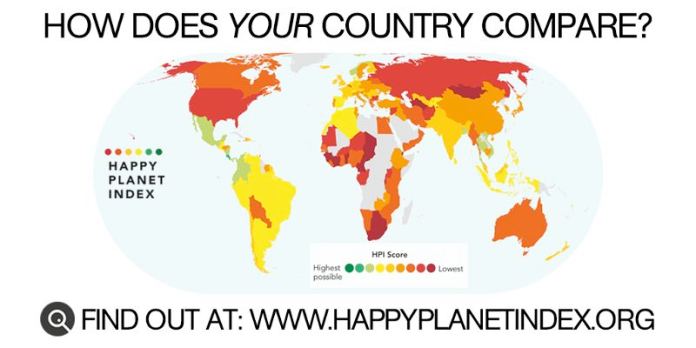
For 2016, the HPI seeks to move away from purely economic measures of happiness and instead ranks countries by how much happiness they get from the amount of environmental resources used. The HPI measures a country’s happiness in relation to the wellbeing, life expectancy and social inequality and then dividing it by its ecological footprint.
The overall results highlight success stories in Latin America and Asia Pacific, where residents enjoy relatively high and equally distributed life expectancy and wellbeing, while leaving a smaller ecological footprint than other more advanced economies.
In the top 10 are 3 of the six Central American countries: Costa Rica (1), Panama (6) and Nicaragua (7). In the top 10 are also Mexico (2), Colombia (3) and Ecuador (4).
While the list is topped by many Latin American countries: Argentina is 19, Peru is 21, Brazil is 23, and Venezuela is 29, larger western countries perform less well: the UK (before Brexit) is 34, France is 44, Italy comes in at 60, Canada at 85 and the U.S. ranks at 108.
What does success look like?
According to the HPI, in Costa Rica, people are living longer, and are more satisfied with life than people living in the U.S. What really sets the country apart is that it manages to combine long, happy lives with an environmental impact that’s little more than one third of the size of the USA’s.
HPI comparison of Costa Rica vs. the U.S.
What’s the secret to Costa Rica’s success?
Abolishing its army (in 1948) and reallocating resources to funding education, health and pensions and the culture of forming solid social networks of friends, families and neighbourhoods are among the factors that contributing to Costa Rican’s high wellbeing.
Environmental protection and renewable resources – 99% of electricity used there comes from renewable sources – has placed Costa Rica far ahead of many wealthier nations, the government having committed the country to becoming carbon neutral by 2021.
The HPI report says that, while Costa Rica’s commitment to environmental sustainability is impressive, it still has some way to go before its Ecological Footprint of 2.8 global hectares per capita reaches the sustainable level of 1.7 global hectares per capita. Like every nation, Costa Rica has more work to do to reach the ultimate goal of truly sustainable wellbeing.
But its success, scoring top place on the HPI, demonstrates that there are alternatives to the development paths that have been followed in the West. It provides a shining example of a country that is well on its way to creating good lives that don’t cost the Earth.
The others
In second place is Mexico despite the country being plagued by growing corruption and gang violence. Colombia was named in third place on the list, with good scores for both happiness and eco-footprint. Fourth is Vanuatu a South Pacific Ocean nation made up of roughly 80 islands. In fifth place is Vietnam, followed by Panama in sixth and Nicaragua seventh. Bangladesh, ranking eight is one of the world’s most densely populated countries. Ninth is Thailand. And rounding out the top 10 is Ecuador in tenth spot of the world’s 140.
(Matadornetwork) And so it begins… I’m a Latina. Four years ago I filled my bags with what I believed were the things I was going to need the most: a photo album, my favorite pair of jeans, and a book of Venezuelan recipes.
I didn’t know what to expect of the big Texas in the even bigger US. I just knew that my future awaited.
I stepped off the plane onto the parched Texas soil, and my soul split in two. Half remains hidden among the azure Venezuelan beaches and the forest playground of my youth, but the other half soars in the open Texas skies.
Here are a few things I’ve learned in my 1,500+ days living in the States.
1. We are all Latinos, but we are all different.
I’ve known Dominicans, Puerto Ricans, Cubans, Salvadorans, Colombians, Mexicans… all with their own culture and nitpicking habits. We respect our differences and will even pop jokes about them, almost like half brothers and sisters. “Óyeme… I didn’t realize Venezuelans eat so much plantains. I thought that was a Dominican thing”. “What’s a Lapa Lapa? Ahhh, you mean a Conuco?” Despite our differences, the warm blood and the deep friendship at first sight are undeniable comforts as we traverse this new land together.
2. There are parties and then there are rumbas.
Even at a piñata party, Latinos understand that the celebration will go on until the wee hours. On the list of appetizers and drinks, nestled comfortably between the sodas and the cherry Jell-O, you’ll see that bottle of whiskey proudly foreshadowing the fun to come. Of course it’s Johnny Walker because no one wants to listen to your Tío’s endless whining (yes, Tío is the one with the mustache). The guest list is over twenty-five-person long, only the closest family of course. The music will be loud and the food abundant. And there are always one or two toddlers who end up exploding in noisy tears because they couldn’t fill their baggies with cheap toys and sweets from the piñata. Did you follow me on that visual? Yes, our parties are chaos at its best.
On the other side of the pristine picket fence celebrations are a bit more organized… ok, let’s say a lot more organized. Four to six primly dressed, oxford-clad kids from school watch a movie or stiffly participate in carefully orchestrated activities that mom found browsing on Pinterest three months ago. Music lulls at a respectable level, and by 6:00 pm all the kids trundle off to their cowboy pajamas.
3. Mom’s love is different from Mamá’s.
American moms seem more inclined to protect their children in the younger stages of life. They hold their delicate little hands and helicopter around the school to make sure their little cabbages have everything they need. Mamá… not so much. In your early life as a Latino kid, your mother builds your character and has the highest expectations of you. La chancla is always within reach of her hand, the maestro is always right, and you pray that la Virgencita protects you if you dare to speak back to this powerful force of a woman.
However, when you turn to your grown years and the whole universe changes, both motherly figures change with it. Moms will eagerly send their little ones to college, convert their bedrooms into sewing rooms, and trust in their abilities to confront adulthood by their own means; mamás, on the the other hand, will transform into an overwhelming pampering force that can spoil even the most independent spirit. I’m almost thirty and my mamá makes my lunch box to take to work every single day and prepares me a cafecito every night.
4. The US is the place to experience the king among all Latino sports.
Americans believe that soccer is the most Latino of sports, and they would be correct if by Latino they mean Mexican or Argentinian. But baseball… That’s Latino! Every boy in the Caribbean dreams about becoming a “pelotero.” Puerto Rico, Dominican Republic, and the dirt streets of the countryside of Venezuela share a common sight: kiddos playing with whatever they can find from bat and ball to wood sticks and soda caps. I mean, if you can hit a freaking soda cap… guess what you can do with a baseball!
I will never forget my first experience at the Arlington ballpark, home of the Rangers. They were playing against the Yankees. Yes, the freaking Yankees! I couldn’t believe my luck when Andrus (for my national pride, a Venezuelan) stole third and our group jumped on our chairs and erupted in screams of joy. The fans in the next row gave us the stink eye while gingerly taking bites of their hot dogs. These pathetic excuses labeled “hot dogs” only had one thin line of mustard squeezed on each, nothing else, and this sad reality brings me to my next lesson.
5. Nothing tastes the same!
Not Oreos, not even the Cocosette which was THE candy during our school breaks back in Venezuela. Sodas, candies, chocolate, salsas… you name it. American products don’t taste remotely the same as their equivalents back home. But don’t get me wrong, during my years in the US, I’ve grown fond of the light smoky scent of a melting marshmallow over the campfire on a warm summer night. And I’m sure if I return to Venezuela, those wouldn’t taste the same.
6. Red lights need to be respected at all times.
It’s general knowledge in Caracas that you don’t need to stop at the red lights after 10:00 p.m. A quick glance at the intersection will suffice as you move on through. The same happens with the stop signs in most Latin American countries… It comes as no surprise that a whole lot of Latinos think they’re mere suggestions!
Not only do traffic rules must be followed to the letter in the US, but American police officers work 24 hours a day to ensure their fulfillment. They even have cameras that send you a video link of your infraction along with the hefty bill. Yes, it happened to me!
7. Traditions will be engraved in your mind for generations to come.
No matter how many years have passed under the red, white, and blue, your homeland traditions will carry on: cooking out with salsa music blaring in the background, Cerveza Polar or Pampero and Coke on a sunny Saturday, salt over the shoulder if it spills, the matica of aloe by the window or the pesebre in the corner of the house for Christmas.
It doesn’t matter if you haven’t stepped in a church for the last 15 years, the divino niño will be at your home because that’s what your abuelita used to do. At the end of Thanksgiving dinner, los maduros will be resting on the table next to the cranberry jam as you smile at the faces around you: the faces of a new family, the one you chose for yourself in the land you now call home.
Original article can be found on the Matador Network
I’ve lived in Costa Rica for the past eighteen years, I’m naturalized as a Costa Rican Citizen (I vote in elections), my wife is Costa Rican, I’m a practicing Attorney in San Jose, and I have also travelled around Latin America fairly extensively.
The most common topic of discussion that I see on ex-pat internet news and discussion web sites, is the cost of living comparisons of one destination country versus another. I would be the first to admit, that Costa Rica is not an inexpensive retirement destination. However, except for those retirees forced to live in the most frugal of circumstances, should the cost of living play such an important role in your choice of retirement destinations? In my opinion, it should not.
Wherever you choose to live in Latin America, there will be the obvious differences in societal norms that you will have to make compromises and adjustments for, in coming from countries such as the U.S. and Canada, which have their traditions based on British, rather than Latin social principles. For some, this will be a relatively easy adjustment to make, but for others, it will be the “deal breaker”.
Having surpassed this hurdle of social compromising and assuming that frugality is not a necessity in your choice of retirement destinations, I would suggest that the most important considerations in choosing a Latin American retirement destination would be the quality of life offered and that of personal security.
In my opinion, the quality of life offered in Costa Rica is very high in comparison with its Latin American counterparts. Costa Rica has had a very long and close association with the U.S. and Canada, with Free Trade Agreements in effect with both Countries. Consumer goods are available and prevalent from both, particularly in the San Jose Metropolitan area and larger centers of population throughout the Country.
Scheduled airline connections to North American destinations are numerous, with airline connections to Europe and other Latin American destinations increasing at an exponential rate.
The climate is one of Costa Rica’s most significant attributes, with the mountainous topography in the interior of the Country providing a myriad of micro-climates, varying from true tropical climates on the coast to cooler climates at altitude in the interior regions.
The Central Valley, where the capital city of San Jose is located and the majority of the Costa Rican population resides, is on-average, 3,500 feet above sea level, providing very agreeable year-round temperatures, similar to my hometown of Victoria, B.C.’s summertime temperatures. Good quality medical and dental services are also readily available at very affordable prices, with highly trained professionals in both categories.
Personal income taxation is only levied by Costa Rica on a territorial basis, which means that income from offshore sources, such as investment and pension income, is not taxed by Costa Rica. As an example of less friendly jurisdictions with respect to taxation, Ecuador has just instituted an Asset Tax of 1% of the value of all assets of an individual located within the Country, foreigner’s included, to help pay for the recent earthquake damage.
Personal security is also an important attribute of any country chosen to feel comfortable with. Costa Rica is again at the fore-front in this category, when compared with its neighbouring Latin American countries. Secure living arrangements are available throughout the Country, varying from free-standing homes in residential communities to gated and guarded condominium developments of every type of housing configuration.
Although violent crime does exist, it tends to be centered on dispute resolution between rival gangs, or cartels, involved in the drug trade. Like any countries in the world, there are practical solutions to be considered, such as avoiding certain known “bad” neighbourhoods, or parts of a country, known to harbour individuals engaged in criminal activity.
Costa Ricans, have lived without a standing Army since 1948, and are peace-loving people by nature, which contributes to the aspect of the high level of personal security enjoyed by its citizens, over-all.
It will be difficult to find an absolutely perfect retirement destination in all aspects, but in my opinion, Costa Rica is as close as it gets.
(QCostarica) While on a Costa Rica beach and you see a sign that reads: “COCODRILOS. NO NADAR. NO ALIMENTAR” (CROCODILES. NO SWIMMING. DO NOT FEED), take heed of the advice.
Photo Michael Miller
Although such signs may be rare, our very own Michael Miller did find one in Playa Uvita, on the southern Pacific coast of Costa Rica, while visiting last week.
“I saw this pretty lagoon and took a few pictures. Then I saw this sign,” says Micheal on Facebook.
Now, if you happen to be on a beach were there is no sign, just look around and if none of the locals are in the water there probably is a pretty good reason. And probably because of crocodiles.
I saw this pretty lagoon and took a few pictures. Then I saw this sign. Photo Micheal Miller
Costa Rica is a very popular vacation destination, whether you are looking for complete relaxation or an action packed trip, and visitors to Costa Rica can choose from a wealth of fun activities that are sure to suit their tastes. Here are some of the most popular things to do in Costa Rica.
Zip Lining
One of the most adrenaline filled activities to enjoy in Costa Rica is a zip line adventure through the spectacular forest canopy. Tourists can take an aerial tram ride up to a rainforest viewing platform with amazing aerial views before enjoying a thrilling zip line ride through the treetops. One of the best is in the Arenal Reserve, with panoramic views of the Arenal Volcano.
White Water Rafting
True thrill seekers will love the white water rafting trips that they can find in Costa Rica. The Naranjo River’s El Chorro section offers one of the most intense experiences with technical narrows and tight squeezes between canyon walls.
Relaxing
Many visitors to Costa Rica prefer to just take time out from their busy lives, completely relax and enjoy the things that they love most. Whether reading a book, unwinding by the pool, sunbathing or even visiting www.alljackpotscasino.com to enjoy the excitement and fun of All Jackpots Casino’s range of popular online games like video poker, blackjack and slots with the chance having a big win, there is plenty to do in Costa Rica to keep even the most picky holidaymaker happy.
Hot Springs
For those who prefer a more relaxing experience on their vacation, the EcoTermales Hot Springs in Costa Rica provides the perfect retreat. This private oasis offers warm mineral waters that heal and restore as well as rainforest walking trails, an elegant cocktail lounge and and authentic homestyle restaurant.
Golfing
Keen golfers will be delighted to discover that Costa Rica has numerous courses for you to choose from. One of the best is the La Iguana course at the Los Suenos Marriott hotel with a spectacular location in a secluded cove. Pristine and beautiful, there are wonderful views of the local coastline and lush rainforest to enjoy here while you tee off.
The crocodiles in the Tarcoles river are a must see. From high up above, of course.
Diving and Snorkeling
The clear and nutrient rich waters of the Costa Rican coastline provides a wonderful experience for divers and snorkelers of all ages and levels of experience. There is a wealth of wildlife to spot including dolphins, manta rays, sea turtles and whale sharks and with amazing visibility, there is no better way to spend the day. El Bajo del Diablo is one of the most popular diving spots where tropical fish and sharks can often be seen.
Beach-Hopping
Despite its location, tucked between the Pacific and the Caribbean, Costa Rica’s beaches have a character all of their own. From the brown sand beach at Playa Matapalo to the unusual sands at Playa Conchal where are made entirely from crushed shells, there is something for everyone to enjoy. Surfers should head to Tamarindo Beach which is known for its excellent waves.
These are just some of the wonderful things you could do in the beautiful Costa Rica. Enjoy your stay!
Amado Serrano, 78, has to wait until 2021 to see a urologist, the date of his medical appointment with the specialist at the Cartago clinic, for his medical problem.
(QCostarica) At 78 years of age, Amado Serrano Alvarado, hopes his testicular problem will not worsen and that he can make it to his medical appointment with the urologist at the Clínica Alfredo Volio, in Cartago, on February 12, 2021.
Serrano, a resident of Cachí, Paraiso de Cartago, was a farm labourer all his life and is not the only case of having to wait years for an appointment at a State clinic.
Recently, the Constitutional Court (Sala IV) ordered the Clínica Solón Núñez, in Hatillo (San Jose), to advance the ultrasound breast exam for a woman scheduled in 2020.
Krisia Diaz Valverde, director of the Max Peralta Hospital (in Cartago) where the Volio clinic is located, said by email to La Nacion that the Urology department is one with more limitations in the country. In the case of the Cartago hospital, in the last two months has had only three urologists to meet the needs of more than 500,000 inhabitants.
According to Diaz, the hospital is working to reducing the waiting time, applying measures such as opening an outpatient department, purchasing new equipment and looking to hire more medical staff.
As to Serrano’s case, Diaz has asked the patient or a family member to send in the original appointment receipt so that it can be evaluated by the head of services and schedule an appointment at an “optimal date” for the patient.
En la imagen con fecha del domingo 10 de julio cuando turistas llegaron a Cuba. Este domingo 17 estimaban salir de la isla. (Grettel Muñoz para LN)
Tico tourists arriving in Cuba on Sunday, July 10. They were scheduled to leave on the 17th. Photo by Grettel Muñoz sent to La Nacion.
UPDATE: Grettel Muñoz confirmed that all 78 passengers that were to have returned from Cuba on Sunday, arrived in Costa Rica at 3:42pm Tuesday.
Despite the reports on Monday that their flight was cancelled due to a lack of jet fuel on the island, Pedro Negrini, operations manager in Costa Rica for Cubana airlines, said the delay was due to a technical problem with the aircraft that makes two weekly fligths (Sundays and Thursdays) between San Jose and La Habana.
– – –
(QCostarica) A group of some 70 Costa Rican tourists are apparently stuck in La Havana (Cuba), not able to leave on Sunday as scheduled, after the Cuban airline, Cubana, cancelled their flight due to an apparent jet fuel shortage on the island.
La Nacion says it was able to confirm on Monday night with Maria Clara Muñoz Soto, the coordinator of the tour, that the group of Tico tourists – part of some 200 tourists in total – were to have left the island on Sunday, July 17.
“We are in trouble in Cuba, like as we are being retained. The point is that there is no gasoline and our flight was to have left Sunday and until now (Monday night) we have no idea when will return (to Costa Rica). I think Cubana is trying to place us on flights on Avianca and Copa at any moment. Meanwhile we are in a hotel,” said Muñoz said via Whatsapp.
The tour organizer said they were taken to a hotel and have been provided food, but have their movements restricted. She explained that many had to return to work on Monday and are very concerned.
Another affected, Grettel Muñoz, sister of the tour organizer, also by Whatsapp said they are having difficulty with communications by telephone and internet, which are expensive and very limited.
“It is awful. We are in a hotel and given food, but as if locked up,” said Grettel.
On Friday, speaking before the People’s Assembly – Cuba’s Parliament – President Raul Castro admitted to “a contraction” in fuel supply from Venezuela, “despite the willingness of President (Nicolas) Maduro to fulfil”.
Since 2000, Venezuela has provided the island with approximately 100,000 barrels of oil per day in exchange for professional services. The crisis in Venezuela, a main trade partner of Cuba, has affected its ability to deliver.
However, ruled out a “collapse” of the Cuban economy or return to the Special Period.
(QCostarica) The slow movement towards an efficient public transport system in Costa Rica, can be explained to some extent by the fact that a large part of government revenue, is related to vehicle ownership.
Just last year, the Ministry of Finance (Ministerio de Hacienda) took in some ¢255 billion colones in duties on the import of a record number of 73,000 vehicles.
Add to the import tax, the tax collected on gasoline sales, some ¢600 billion colones, all adding to million of reasons to keeping public transport in the slow lane.
Critics point out that the appointment of Liza Castillo last week as deputy minister of transport clearly shows the government is in no hurry to implement an agile, modern and secure system of public transport, which could eliminate the circulation of thousands of vehicles daily. Castillo is alleged to have ties to bus operators who are divided on electronic payment and the reorganization of bus routes, some operators completely against it and are impeding changes. Castillo’s appointment replaced Sebastian Urbina, who was forced to quit his post, following a confrontation with bus operators to force a change.
Doing so, the critics point out, would result in a significant reduction in the resources (tax money) the government takes in annually.
Esteban Arrietta, writer for La Republica, says for the government it is essential to receive this money, given that in recent years it had to borrow more to fund operating expenses, such as payment of public employee wages and pensions.
Arrietta continues to say that an efficient, cheap, quick and safe public transport and with electronic payment will likely sway many people to leave their cars at home, thus reducing traffic congestion.
Every day there is some 19,000 buses, including buses used for tourism, student transport and private use, on national roads, increasing congestion problems that account for some ¢330 billion colones in lost production, according to the State of the Union report last year.
Companies in Costa Rica like Bridgestone (tires) will be able to export immediately without tariffs.
Companies in Costa Rica like Bridgestone (tires) will be able to export immediately without tariffs.
(QCostarica) The Free Trade Agreement (FTA) between Costa Rica and Colombia will become effective this August 1, with it expectations of higher exports for some industrial sectors, except that this agreement is a prerequisite for an eventual accession process of Costa Rica to the group of countries of the Pacific Alliance (Alianza del Pacifico – AP) composed of Mexico, Colombia, Peru and Chile.
Medicines, tires, foliage, some plastics, frozen bread and cookies are some of the goods that will be duty free starting from August 1. The agreement states that 75% of industrial goods will become duty-free immediately, and the other products within 5 to 15 years.
Francisco Gamboa, executive director of the Chamber of Industries of Costa Rica (ICRC) recalled that the union supported the terms in which the FTA was negotiated, as the main trade of the two countries, in both directions, is the industrial sector.
Meanwhile, the Minister of Foreign Trade (Comex), Alexander Mora, recalled that the market size of Colombia is equal to all of Central America combined, which raises expectations in that country.
Among the products were excluded from the FTA are, among others, oils, some milk, some meats, beer, waffles, chewing gum, some plastic products, paper products and some metalworking goods.
Nacion.com reports that “…In the chapter of excluded products were, among others, oils, some milk products, some meats, beer, waffles, chewing gum, some plastic products, paper products and some metalworking goods.
Colombia is by far the largest market in South America for Costa Rican products. In 2015 it represented 27% of the value of exports to the continent, according to figures by PROCOMER.
by Roberto Acuña Ávalos, Vozdeguanacaste.com – It is almost impossible to imagine a 25th of July without music. Every song you hear is a story of the province, a snapshot of its people and a piece of its heart.
Karol Cabalceta, a researcher from Hojancha, sought out women in the area who have done just this: deeply move Guanacastecans with lyrics that they identify with and melodies that become tunes that cannot be erased from Guanacaste culture.
Cabalceta compiled the best songs from these women composers and recorded them in a collection that has not yet been distributed, called “Guanacaste en voz de mujer” (Guanacaste in a Woman’s Voice).
The Voice of Guanacaste publish an exclusive of these original pieces that were composed by seven of the province’s female vocalists, those who struggle to be part of a scene that is usually dominated by males.
What follows is a brief profile of each of them:
Elsa Centeno
Elsa Centeno, from Abangares, has 31 song titles registered with the Association of Costa Rican Musical Composers and Authors (ACAM- Asociación de Compositores y Autores Musicales de Costa Rica).
Since she was in school, Centeno claims that she has had a creative spirit, a need to tell stories as well as to be able to transmit them in music form.
She has never played any instrument but she writes lyrics for 15 different musical genres such as cumbia, bolero, ranchera, bachata and, of course, the traditional parrandera.
“La Tulita” is one of her best known songs, although it is really called “Requiem de los Mineros” (The Miners’ Requiem) since it is a tribute to those workers.
Just a few months away from turning 70, Centeno asserts that the only thing that grows old is life, so she hopes to continue sharing her folklore.
Amalia Martínez
“I don’t know anything about music. What I do is start humming.” This is how Amalia Martinez explains what she has done throughout her 87 years of life to write songs and poems.
Although she was born in Liberia, Martinez is basically from Tilaran since she has been living there for more than 50 years. She was among the first women who graduated as a teacher from the Guanacaste Normal School in 1949, and in 1952, she decided to open a kindergarten in Tilaran.
While teaching children, she realized that there were not many textbooks nor children’s books with stories and songs. That was how she began to make use of her creativity.
Because of her age, her vocal cords are no longer like before— she says— but she still hasn’t lost her joy for singing, so much so that she has no problem with crooning three songs over the telephone acapella.
Pilar Rodríguez
Liberian Pilar Rodriguez was not taken by surprise by the music in her life. Since she was little, she was always surrounded by a family of musicians since her dad, grandparents and uncles were part of the National Band of Guanacaste and most of them were great marimba players.
“I grew up in the time when Guanacaste fiestas were always livened up by marimbas, because there were no DJs or all of the things there are now,” Rodriguez recalls.
Her passion for music was not limited to those fiestas that she enjoyed with her family. After graduating high school, she enrolled at the National University (UNA) in Heredia to study music education. There she learned to play piano and the recorder and perfected her skills on guitar and marimba.
Although she has written many songs in her 62 years, to her, there are only two that identify her as a composer: “Añoranzas” (Longings) and “Hombre de Mi Pueblo” (Man from My Town).
In the first song, the writer discusses many of the traditions that have been lost. It was this song that led her to win first place in the Grano de Oro Festival in the year 1989. The second title was a tribute to her town, Liberia, to the parrandera rhythm.
Rodriguez prefers to be considered more as a rescuer than as a songwriter because she has dedicated her life to performing a lot of the music that was made in the province in the 1920s.
Aida Blanco
“I am 70 and a bit. I don’t count the other bit.” That is how feisty and fun Aida Blanco is, who divided her life between music and her work as a nurse.
She was born in Abangares and as much as she travels, she has not visited a place as beautiful as her own land, she says. Her canton is her muse. “Abangares,” “Nuestro Pueblo” (Our Town) and “Nuestra Gente” (Our People) are some of the lyrics that she has written thanks to inspiration from her community.
The moon in Abangares and town festivals and the wind are some of the elements that make her go get paper and a pen and start writing.
She never studied music or composition but she has always felt the need to write, since she believes that the anecdotes that she has experienced in life have to be expressed and read by others.
Routines bore her and she always needs to find humor in everything. “I like chatting,” she says between bursts of laughter. Between laughing and joking, she is also aware that machismo in the province greatly affected the participation of women in music and men are the ones who have always dominated most Guanacaste songs. Despite this and the fact that her voice begins to weaken, the songbird keeps singing.
Eyda Miranda
In 1975, there was not a single radio station, television channel or newspaper that did not tell about the great feat of Antonio Obando, the 15-year-old boy who saved three lives after an accident where a bus with 50 passengers ended up in the bottom of the estuary in Puntarenas. After the rescue, young “Toñito” died and his death made him a hero.
To Eyda Miranda, that story did not happen in vain. That was when she began to write verses and poetry about news that impacted her.
In her community of Rio Piedras, in Tilaran, she gets more than enough requests to write songs. One of them is the lyrics to the local school’s hymn.
Her grandchildren also ask her to help them with poems for some school presentations, but since the death of her husband, Juan Ramos, in 2014, the pain in her heart will not let her transmit her feelings, she says.
At 75 years of age, she thinks that one of her loveliest songs is “A Mi Lago” (To My Lake), which is an ode to Lake Arenal.
“To me, writing is born within me. I feel like it is like expressing a story and wanting it to stay there,” she says.
Young people with long hair and ripped pants have also caught her attention and that was how she wrote the song “Las Modas de Hoy” (Today’s Fashions).
Now she longs to be able to sing accompanied by one of her children playing guitar, but they have all left Guanacaste to go work. Her vocal cords do not tremble as she sings a few stanzas without any instrument.
Carmen Leal
Carmen Leal always knew that she wanted to dedicate herself to music, although the idea did not make her dad happy. She started singing when she was very little. At age 9, she won the school festival at the Maria Leal de Noguera Elementary School in Santa Cruz, formerly called the Girls School. At age 16, when she started taking basic courses at the University of Costa Rica, she participated in Channel 13’s contest “Somos Como Somos” (We Are As We Are), in which she won first place for portraying the great singers of Guanacaste.
When she finished high school, she had to enroll to study teaching since her father forbid her to study music.
She continued singing and playing guitar, despite all of the warnings from her father. “The Guanacaste woman has been very inhibited in her feelings. I like to express myself,” she says now.
At 52 years old, she likes to compose music for her grandson, the children she teaches at school and her beloved Santa Cruz.
Guadalupe Urbina
Undoubtedly, Guadalupe Urbina has one of the most recognized faces in her hometown of Sardinal of Carrillo and in Guanacaste. With her music, she has crossed the country’s borders, performing in both the United States and Europe.
Both her mom and her dad sang and played music at home, so from age 17, she began writing poetry and later music.
She pursued a higher education at the National University in Heredia, where she majored in musical studies and won several student festivals.
Urbina’s repertoire may include more than 100 songs, a number that she considers “normal” for a 56-year-old who has been devoted to music.
To Urbina, Guanacaste folklore has been reduced to replicating images as if they were a postcard for tourists, without representing reality and the way of life of its inhabitants.
“Folklore in Guanacaste is dead, since young people are practically not interested, and why aren’t they interested? Because the folklore that is done has nothing to do with reality, and the art of folklore is representing a way of life and representing the people,” she says.
Among the dozens of songs written by Urbina, the singer affirms that “Vengo de una Tierra” (I Come From a Land) is one of the most liked by Guanacastecans because it tells about coming “from a burning hot land that is only for one people who know how to feel and who want to live.”
The diary of a desperate mother trying to put food on the kitchen table in Venezuela.
(Bloomberg) In an effort to illustrate what day-to-day like is on the ground, Bloomberg reporter Fabiola Zerpa documented her efforts to secure food for her middle-calss family and talks about the looking, the blackouts, the mob lynchings and the hospital with no supplies, as Venezueal collapses into disarray on a scale unseen in the Western Hemisphere in decades.
The following is an excerpt of the selection of entries from her month-long chronicle. Click here for the English version or the versión en Español.
Zerpa drives past a small barrio on her way to a store, having visited several supermarkets and kiosks in search of shortage products on a Thursday afternoon.
June 9
Thursday. My one chance in the week to buy staples—cooking oil, rice, laundry detergent—at state-set prices. All Venezuelan adults are assigned days of the week to shop for regulated goods based on the numbers on our national ID cards. Continue reading…
Zerpa chats with a fellow shopper about two cartons of milk they find sitting on a shelf. They are the only ones left and appear to be spoiled, but the other woman says she will take one anyway, just in case they’re wrong.
June 14
I’m in search of bread again. Because it’s becoming harder and harder to buy fresh bread—as Venezuelans have traditionally done—I decide to look for the packaged kind. At noon, I head to a nearby grocery store. There’s no line outside. Hmm. Continue reading…
Store shelves that are well-stocked, like those in this bakery near Zerpa’s house, are typically full of non-essential items set at sky-high prices.
June 15
On my way to work, I drive by the local supermarket to see if the line is manageable enough to sneak in and look around. It’s not. What’s unusual on this morning, though, is that the municipal police officers who normally keep order on the line order aren’t there. Continue reading…
Harina P.A.N., the corn flour Venezuelans use to make arepas, on Zerpa’s kitchen table.
June 17
Big score. Isaac, through the friend of a friend he works with at an ad-production company, got his hands on 5 kilos of corn flour. This is huge. Flour is the main ingredient in arepas, the flat, round corn bread that’s the most important staple in the Venezuelan diet. Continue reading…
At a supermarket near her neighborhood, the line is so long Zerpa doesn’t bother waiting.
June 25
I head out early to a farmers’ market near my house. Before dawn each Saturday, the farmers truck in their produce from the surrounding mountains. Everything’s sold at free-market prices. This is, technically speaking, illegal but essentially goes unenforced nowadays. Shopping here, at these prices, is a luxury I know that millions of Venezuelans can’t afford. Continue reading…
At another supermarket, Zerpa inspects the special station it has for shortage products sold at high prices, like tuna fish.
July 1
It’s 7 p.m. I need to load my kids in the car and swing by the local bakery. I’m dreading it, to be honest. These streets are especially dangerous after dark, something I was acutely reminded of the day before when a woman was kidnapped just a few feet from the bakery. Continue reading…
Zerpa exits a store with her purchases.
July 7
Thursday. My day of the week to buy staples. I head over to the local supermarket just after 10 a.m. Sixty people or so are waiting outside. They’ve come from all over the city, especially the poorer neighborhoods where food is scarcest, to stand in line. Continue reading…
The United States and Cuba will not be able to establish normal migration relations until US ends immigration-related adjustment and admittance programs, the Cuban Ministry of Foreign Affairs said in a press release.
On Thursday, Cuban Foreign Affairs Ministry official Josefina Vidal Ferreiro and US Deputy Assistant Secretary of State for Western Hemisphere Affairs John Creamer led delegations in migration talks held in Havana, the release noted.
“The Cuban delegation reiterated that there could be no normal migration relations between both countries as long as the ‘wet foot/dry foot’ policy’, the Cuban Adjustment Act, and the Cuban Medical Professional Parole Program continue to exist,” the release stated on Thursday.
The Cuban Adjustment Act gives Cuban citizens preferential migration treatment, allowing those who arrive in the United States automatic admittance despite the ways and means they use to arrive to the country.
The Cuban Medical Professional Parole Program allows Cuban medical staff working in third world countries to leave their missions and migrate to the United States.
The US programs are a violation of the Migration Accords which commits both governments to ensure legal, safe and orderly migration, the Cuban delegation added.
Venezuelans crossed on Sunday the border bridge Simon Bolivar in San Antonio del Tachira (Venezuela). Many returned hoome empty handed, finding prices in Colombia too high. Colombia said on Monday Venezuelans’ shopping sprees are over. EFE
The Colombia border is open to Venezuelans seeking to buy basic needs not available in their country. But, rising prices in Colombia has caused many thousands of people, of the some 88.000 who crossed the weekend, could not afford to purchase some of the commodities and medicines they came for.
“I came because I was told that there was a possibility on the other side to buy medicine for my mother and I found that the medicine cost much more than in Venezuela, I could not buy anything,” Javier Quintero told the Sputnik news agency, returning to Venezuela from the Colombian city of Cucuta, Norte de Santander.
Venezuelan and Colombian authorities discussed the final opening of the border
Similarly Mileida Prada had the same experience on the other side, for whom the pedestrian opening channel between the two countries has become a commercial corridor that benefits Colombia.
“This is not a humanitarian corridor, this is a commercial corridor, it is not true that there (in Colombia) you can buy anything, prices are very expensive, in two weeks the rose twice, Colombians are taking advantage of the Venezuelan situation,” complained Prada.
Venezuelan authorities report there were restrictions on the Colombian side for Venezuelans who wanted to cross the border and that people who identify with the opposition wanted to create unrest in the area.
“We note that on our side the situation was normal (while) the Colombian side there were some restrictions,we also saw many people who identify with the opposition, calling for disorder, but the people did not echo those calls, people wanted to cross to Cucuta did so in peace, and the people of Cucuta who wanted to pass to Tachira (on the Venezuela side) also did so in peace,” said Carlos Yanez, head of the Operative Zone of Integral Defense of the state of Tachira (Venezuela).
However, Venezuelans’ shopping sprees in Colombia are over. Colombia’s Foreign Ministry said on Monday it will not allow more temporary border openings to allow Venezuelans shop for goods that have become scarce in the neighboring country. Instead, the governments of both countries will continue negotiations that seek the permanent opening of the border once there is agreement on security measures, said the press release.
“Next weekend there will be no passage for Venezuelans seen last weekend and the one before,” said Colombia’s Foreign Minister Maria Angela Holgui. Instead, she said, “we will work towards a quick reopening of the border, but a safe border.”
Costa Rica's legislator in action. Photo Crhoy.com
Costa Rica’s legislator in action. Photo Crhoy.com
(QCostarica) Under the banner of fighting drug trafficking, but more important the country not falling on the “black list” (lista gris in Spanish), Costa Rica’s legislator have approved in first debate reforms against terrorism and money laundering.
With a vote of 39 (of 55) in favour, the reforms criminalize terrorism financing, which covers the trafficking of unauthorized drugs and related activities and money laundering.
Follow the money. “Terrorists need money to carry out their atrocities, money for weapons, for supplies to make explosives, for travel. This money trail will provide valuable information to investigators and often allow them to identify those involved in the terrorist attacks”, says the FATF
The move was necessary for the country not to fall into the black list of countries that do not cooperate with the Financial Action Task Force (FATF) in the fight against terrorism, as warned by the Costa Rican Drug Institute (Instituto Costarricense sobre Drogas – ICD) earlier this month.
The reforms, which requires approval in second reading in the Legislative Assembly and ratification by Casa Presidencial (the President’s signature), asks the country to present a report on the actions to combat terrorism and money laundering on August 1 in Buenos Aires, Argentina.
The passing of the reforms was possible after legislators reached a political agreement and the Movimiento Libertario (ML) party withdrew motions against the proposal.
Second debate (and voting) is expected on Thursday.
The United States issued a security warning for Colombia where an ongoing truckers strike has raised tensions across the South American country.
The alert urged US citizens on Friday to avoid areas where demonstrations are taking place.
“Even demonstrations intended to be peaceful can turn confrontational and escalate into violence,” the State Department message warned.
The alert also cited a recent trucker’s union’s announcement of a plan to block all roads entering and leaving Bogota as a cause for concern.
The strike, which began in June, has escalated over the past month and turned violent last week.
The US State Department’s warning supplements its general travel warning for Colombia. While the warning admits that the security situation in Colombia has improved significantly in recent years, it specifically warns US citizens to be careful when traveling by road.
The US government has strict guidelines for how its officials are allowed to travel. They are normally not allowed to travel by road outside of major cities. In its travel warning, the State Department urges Americans traveling to or living in Colombia follow similar guidelines.
African migrants crossing into Costa Rica at the Paso Canoa border with Panama. Photo EFE
(Qcostarica) Panama let’s them pass, Nicaragua stops them from moving through their territory and moving north to their final destination, the United States, and Costa Rica has to feed them. That is the reality of the migrant situation facing the country as hundreds of African migrants amass at the northen border.
The Ministry of Security (Ministerio de Seguridad Publica – MSP) says it has unofficial information that Panama authorities are not impeding the African migrants from crossing into Costa Rica despite the police presence at the border control posts
“We call attention due to the vulnerability that exists, especially on the Panamanian side. Foreigners with irregular immigration status pass without any filter,” explains a statement by the press office of the MSP.
At the northern border with Nicaragua, Peñas Blancas, unofficially up to 3,000 African migrants are held in tents. Costa Rica officials say they count is less than 1,000. Photo La Nacion
MSP officials say the vulnerability on the south side (Panama border) allows the entrance of persons who do not meet the minimum requirements for entry into the country. So once again we warn that when detected we will proceed according to law.
Authorities in Costa Rica remind that all persons with proper immigration status can enter and leave the country by way of Paso Canoas without any problems.