Every day there are more cases of domestic violence in the country. In some situations, in particular, the aggressor was under the influence of alcohol or drugs, in others, the aggressions were due to jealousy.
During 2017, 5,382 people were arrested for domestic violence; that is, 15 arrests every day.
The most worrying thing is that in hundreds of cases there are no formal complaints made and there is also the situation that in some couples the behavior is repetitive.
The provinces of Guanacaste and Limón have the great majority of cases, almost always in the most humble and remote communities.
Without forgetting that in the greater number of cases are in the Greater Metropolitan Area (GAM) of San Jose.
Passers-by through the Parque Central in San José were surprised by a new attraction in the park: a glass box with a mannequin and the new uniform of the Selección Nacional de Fútbol – national soccer team – that will be worn in the World Cup friendly against Scotland on Friday.
A similar display was placed in the central parks of the provinces of Alajuela, Heredia, Puntarenas and Limon. Guanacaste the only missing.
The display in the heart of the capital city featured the shirt with number 19 worn by Kendall Waston, an important figure of the National Team.
The new uniforms by New Balance will be delivered to members of the Federation, the national team’s coach, Oscar Ramírez and the players on Thursday in Scotland.
The design raised criticisms from some fans and even players; nevertheless, the company assures that the garment has many details that for now are not appreciated given they are in a glass case.
“The people have not finished seeing the design of the shirt … they only saw it inside a showcase, but this Thursday they will see it in detail,” explained Alberto Bissot, representing New Balance, adding the shirts will also available for purchase starting Thursday.
At least four men held up this morning a branch of the Banco Nacional (BN) in Moravia.
Authorities said the men arrived on two motorcycles, two went in while the other waited outside, then ditched the bikes less than a kilometer from the bank.
The bank robbery occurred around 11 am. No one was injured. The amount taken is still unknown.
Less than a month before Raúl Castro officially leaves power in Cuba his successor is still unknown. Which raises the question: will the power change merely serve as an instrument to perpetuate the tenure of Raúl, heir of the Castro dynasty?
Raul Castro is planning to step down, but he will still exercise control over Cuba behind the scenes (PanAm Post).
“Raúl’s plan is to have a puppet in office and remain in power until his death, as well as leave his family safe from possible legal reprisals,” Andrés Albuquerque, an Afro-Cuban Forum activist, told the PanAm Post. But Castro’s plan will not necessarily succeed, especially considering the leader’s fragile health.
Albuquerque says his impression is that the Junta is in the process of negotiating with Washington, in order to avoid the possibility of a collapse.
“When there is so much silence between the two capitals, something is usually going on, and the assassins have always been much more willing to negotiate with the hawks than with the doves,” he adds.
Many are unaware that it was the Castro brothers who overthrew the government of the first Hispanic president of African descent, Fulgencio Batista. The Castro family has since monopolized power and established themselves as a veritable political dynasty.
“The proverbial demagoguery of the left and its acolytes paints a world in which the right is racist and they are intolerant, not only in terms of race and ethnic groups but in terms of inclinations of all kinds,” Albuquerque said.
“It is easy to see how Mrs. Clinton, trying to justify her shameful defeat, blames everyone else, and calls those of us who voted for Trump racist and ignorant. It is ironic that this corrupt lady accuses me, who is black, of hating African-Americans. According to her, those of us who vote for the current president are like that,” he said, adding, “many in Latin America do not know that the party of slavery and the Ku Klux Klan was historically the Democratic Party, not the Republican party.”
“Wherever the left has managed to impose its will, we have seen the breakdown of the family, intolerance for opposing points of view, and racism,” he said.
Albuquerque also said that Communist regimes from the USSR to Cuba have herded homosexuals and people of religious faith into concentration camps. The Cuban author Pablo Milanés, and the former head of the Catholic Church, Jaime Cardenal Ortega y Alamino, are survivors of such abuse.
However, he said that prejudices of all kinds exist on both sides of the ideological spectrum, which is why “it is fundamental that we do not allow the left to distort and manipulate history.”
He speaks from firsthand knowledge. He grew up in a family aligned with the Popular Socialist Party (the Communists before Castro).
His constructive criticism of the Castro regime has left Albuquerque unemployed; a common phenomenon in Cuba, and in any regime where state control is so strong that those in power decide who can work and who cannot.
As Trotsky, leader of the red army and lover of Frida Kahlo, persecuted and assassinated during one of the Stalinist purges, said: “In capitalism, those who do not work do not eat; in socialism, those who disobey do not eat.”
Because of his disobedience, in 1988 Albuquerque was exiled. Now that he enjoys freedom of expression, he tells us that just as Soviet socialism had its purges, so did Cuban socialism.
The current first vice president of Cuba, Diaz-Canel, managed to escape from such a purge, despite his closeness to Roberto Robaina, who was dismissed from his position as foreign minister.
According to Albuquerque, Diaz-Canel’s positioning as a favorite for succession is in order to “avoid the distrust of the generals.”
“There is a version according to which some elements close to power would be putting forth Diaz-Canel as president of the State Council, and Rodríguez Parrilla as president of the Council of Ministers, as in the times of the USSR. Brezhnev, Podgorny, and Kosygin,” he says.
Considering that he has only three years of military experience, he suggests that Díaz-Canel helps to “clean up” the image of the Junta; “Chosen by Raúl as a front, but the power, for now, will continue to be exercised from his office.” Thus, with a civil face, the military regime would “control the country behind the scenes.”
Albuquerque distinguishes the military from the “historical leaders.” For example, Ramiro Valdez, Guillermo García, and Machado Ventura have no military experience or troops under their command. That’s why he does not talk about viable candidates, but “usable” candidates, like Rodrigo Malmierca, among others.
(Insightcrime.org) An annual report by the US State Department on international drug trafficking suggests that Latin America continues to struggle with developing effective strategies to combat criminal activities due to a variety of factors ranging from corruption to shifts in regional drug dynamics.
MIGRACION-HONDURAS/
The annual International Narcotics Control Strategy Report (INCSR), published on March 19, breaks down regional trends and developments in international drug trafficking.
According to the report, more than half of the countries listed as being major drug producing or transit countries, as well as major sources of precursor chemicals, are located in Latin America. Several are also listed as major money laundering countries.
Below, InSight Crime looks at some of the highlights from the report’s findings on Latin America.
Bolivia and Venezuela Singled Out
The US State Department singles out Bolivia and Venezuela as the only countries worldwide that “failed demonstrably” in their anti-narcotics efforts in 2017.
In Bolivia, the report points to President Evo Morales’ decision last year to increase legal coca cultivation as being a primary factor in this determination. According to the report, the “inadequate control” that authorities have over legal domestic coca cultivation is a major concern given the country’s role as a cocaine producing and transit nation.
As the report suggests, US officials strongly opposed the increase to the legal coca cultivation limit in Bolivia. But while the increase is likely to further boost cocaine production and trafficking, it’s unlikely to have a significant impact on regional dynamics. Colombia and Peru dominate coca production in the region, and the increase will only add a very small amount of additional coca into the illicit market.
In Venezuela, the report blames widespread corruption within the administration of President Nicolás Maduro for hindering the country’s anti-narcotics efforts. According to the report, the Maduro administration engaged in “minimal bilateral law enforcement cooperation” with the United States in 2017. Moreover, the administration was often “complicit in the country’s rampant corruption and made minimal efforts to prosecute corrupt officials or suspected drug traffickers,” the report states.
Given the deepening criminality of the Maduro administration, the singling out of Venezuela is unsurprising. Links between the Venezuelan government and criminal actors — including allegations of collusion with Colombian criminal groups along the Colombia-Venezuela border and their involvement in international drug trafficking — have continued to surface as the country slips further into chaos. The United States has broadened its crackdown on top officials, including Maduro, with sanctions.
Conflicting US Rhetoric Towards Colombia
The report further highlighted conflicting views on the effectiveness of Colombia’s anti-drug efforts. With former CIA Director Mike Pompeo now slated to become the next US Secretary of State, Trump may be trying to shift US policy on Colombia, and Latin America more broadly, towards his own personal views, which could further strain US-Colombia coordination on crime-fighting strategies.
While the US State Department did criticize Colombia’s lack of progress on curtailing record cocaine production, the report’s overall rhetoric towards Colombia’s anti-drug efforts differs greatly from recent comments made by US President Donald Trump.
According to the report, the US State Department believes that the Colombian government “continues to take steps” to combat growing cocaine production, and that the country’s current anti-drug strategy will have a “lasting impact in curbing coca cultivation and cocaine production.”
However, in September 2017 President Trump threatened to label the Colombian government as not compliant on anti-drug efforts amid heightened tensions between the two nations over how best to tackle security issues.
Central America and Caribbean Role in the Drug Trade
The role of Central American and Caribbean nations in the regional drug trade has been shifting in recent years as cocaine production in Colombia is at record levels. The State Department report suggests that these shifts are leading to an uptick in violence and innovation.
All Saints Day Guatemala
Although Costa Rica continually boasts one of the region’s lowest homicide rates — 12.1 per 100,000 inhabitants in 2017 — the report found that continued “turf-war related shootings and cartel-style assassinations” suggest that the country’s expanding role is having an adverse effect on levels of violence.
A similar phenomenon is taking place in the Dominican Republic, a country that has also seen its role in the drug trade evolve alongside increased cocaine production in Colombia. According to the report, 2017 saw an “increase in drug-related violence, especially as local groups engage in violent turf battles to control domestic drug distribution.”
In El Salvador, drug traffickers have become more innovative. According to the report, last year there was a decline in maritime drug trafficking within Salvadoran waters — 200 nautical miles from the country’s coastline — suggesting that traffickers have further developed their strategies and moved their operations farther out into the Pacific Ocean to evade authorities and transport cocaine shipments coming from South America more easily.
As InSight Crime previously reported, the Central American and Caribbean cocaine corridors have both been revitalized after the surge in cocaine production in Colombia. Both routes are critical for cocaine shipments destined for markets in the United States and Europe. The increased violence and innovation caused by this development has made anti-drug efforts more difficult.
Corruption Still Hindering Efforts in Guatemala and Honduras
Despite the many positive advances that authorities in Guatemala have made in battling graft amid extreme pushback from elites, the State Department report highlights how “widespread corruption permeates public and private institutions and exacerbates the country’s security, governmental, and economic challenges,” adding that “corruption levels remain high and public confidence in government institutions is low.”
Neighboring Honduras is facing similar problems. The report found that corruption in the Northern Triangle nation “remains widespread” in public institutions despite some successes achieved by the country’s internationally-backed Support Mission Against Corruption and Impunity in Honduras (Misión de Apoyo contra la Corrupción y la Impunidad en Honduras – MACCIH).
Despite the presence of internationally backed anti-corruption bodies in both of these countries, the report makes clear that levels of corruption remain high. The upcoming election of new attorneys general in these two Central American nations, however, will likely represent a new chapter in anti-corruption efforts, for better or worse.
More Money for Militarization in Mexico
Mexico logged its most homicidal year in the country’s recent history in 2017 after recording 29,168 homicides for a homicide rate of 22.5 per 100,000 inhabitants — a 27 percent increase from 2016. However, even as officials question traditional security strategies, Mexico’s Army and Navy will see a 13.4 percent and 11.4 percent increase, respectively, to their budgets with most of these resources “dedicated to strengthening military and naval infrastructure, much of which will be dedicated to combating transnational criminal organizations,” the report found.
The increased resources being allocated for the continued militarization of Mexico’s security strategy places further doubts on the ability of authorities to combat increased criminality and related violence. As InSight Crime previously reported, resources would be better spent on judicial reforms and strengthening institutions.
Venezuela condemned new US sanctions introduced against Caracas calling them crime against humanity, the country’s Foreign Ministry said in a statement.
US President Donald Trump Bans US Transactions With Venezuela’s Digital Currency
On Monday, US President Donald Trump signed an executive order to prevent US citizens from using Venezuela’s new digital currency. The US Department of Treasury also included four incumbent and former Venezuelan officials in the sanctions list.
“With these actions Trump’s administration … is committing a crime against humanity that may be regarded by the International Criminal Court as a violation of the Article 7 of the Rome Statute,” the statement said.
The Venezuelan Foreign Ministry noted that the US unilateral sanctions violated the UN Charter and principles of the international law determining civilized relations between sovereign countries.
“They [sanctions] are new imperial aggression aimed at financial persecution and economic boycott as well as pushing our economy into chaos and destroying the will of our people to live in freedom, peace and hope,” the statement added.
The US-Venezuelan relations have been remaining tense for decades with Caracas regularly accusing Washington of interfering in its internal affairs and exerting economic and political pressure on Venezuela
A senior US administration official said earlier that the United States is still considering the option of imposing sanctions on Venezuela’s oil sector but has no specific timetable for such action.
Colombian authorities captured Raúl Gutiérrez, a 43-year-old Cuban, who was plotting an Islamic terrorist-style attack against 29 diplomats at the American Embassy in Bogota.
Bogota, Colombia,11/03/2018.- Police pat down voters in Colombia prior to casting a ballot in a voting station EFE/Iván Valencia
The Colombian Attorney General’s office delivered evidence of communication between Gutierrez and several Moroccan citizens, identified as Matin Muhanad, Said Samuid, and Francisco Quintana, that showed links between the Cuban native and the Islamic State (IS). Gutierrez entered the country illegally on several occasions, and his objective was to sacrifice himself in the name of the terrorist group.
According to the Attorney General’s office, the attack was planned for March 6 in the country’s capital.
Jaime Luís Zapata, an expert in jihadist terrorism said in an interview that the interest of this radical organization in the region began after Latin American military fought in Iraq and Syria, when some men made contacts before returning home. “At the time of their return there were problems with the combat experience and terrorism of the Latin American fighters,” he said.
He explained that this type of an illegal entry of individuals and/or organizations was possible due to Colombia’s lackluster border security. “The country shares a wide border with Venezuela and this can be used by this type of group, a weak migratory control also reinforces the ease of entry.”
Zapata said that the captured Cuban traveled from Ecuador. It was the third time he managed to enter the country.
Why Islamic terrorism is in Bogota and not in other cities
Bogota is the third most populated city in Latin America and its cosmopolitan residents live alongside many citizens of other countries.
Colombia is not prepared for this type of threats. “It’s an easy target,” said Zapata, adding that “Bogota has weak relationships between police patrols and the population.”
Facing the presence of this type of terrorist organizations coming from the Middle East, Zapata dismissed that they could have deep roots in Latin America. However, he assured that there have already been some extremist attacks, like the one at the Israeli embassy in Argentina which was supported by Iran and perpetrated by Hezbollah.
“Terrorism by IS members is different from Hezbollah’s. The latter is Shiite and has a more local and nationalist jihadism. The goal is to expel the settler. On the other hand, the nature of the IS, in general, is not only to expel the invader and reconquer the califate, it involves the south of Europe and North of Africa, it is an imperial expansionist project,” he said.
He also noted that the planned attack against American diplomats is not characteristic of a hierarchical and centralized structure like Al-Qaeda’s, but instead, these actions operated at a minimal level, without leaders.
“They look like decentralized cells or solitary attacks, without support or funding, they are individuals inspired by the jihadist ideology, who wish to do this kind of attacks by their own means.”
He concluded that the security situation in the country shows a fragility that serves as an incentive to establish networks with guerillas or organized crime regarding funding, support and route controls to carry out terrorist acts.
For Eduardo Mackenzie, Colombo-French journalist and expert in armed conflict, this event is a step toward the escalation of terrorism in Colombia.
Mackenzie wonders if authorities were able to establish where the Cuban citizen came from, “I can only speculate. For instance, did he come from Venezuela? Did he cross Colombia’s border among the influx of Venezuela’s refugees? I would not be surprised if that is the case. That was the way several Islamic terrorists entered France before massacres there.”
The fact that Raul Gutierrez is Cuban deserves consideration, he said. “This individual was part of the Cuban refugees entering Colombia two or three years ago, saying they were trying to go to Central America in order to cross the American borders. Facts are needed to make a complete diagnostic,” he noted.
Hezbollah in Latin America
John Marulanda, security and defense expert, said that Hezbollah is particularly very settled in Latin America.
“As of 20 years ago, thanks to the opening that Chavez government gave to Iran’s government headed by president Ahmadinejad” he explained.
Marulanda added that “this opening included trade agreements, a blooming of Iranian cultural centers and of diplomats with members of Hezbollah, a terrorist group created and supported by Iran.”
Marulanda pointed out that since then, Hezbollah has progressed in intelligence and economic activities related to drug trafficking: “Colombia is the favorite place for them regarding location and connection with the different drug cartels to obtain resources that amount to US$ 200 million monthly.”
He noted that outside the Middle East, South America is now their main center of activities. He also said that different North American agencies have identified the presence of extreme cells operating in Latin America.
“In 2008, Condoleezza Rice denounced that there was evidence of a relationship between the FARC and Hezbollah. Last year the U.S. Treasury showed that a FARC advisor, together with Venezuela’s vice president, Tareck El Aissami, were laundering a huge amount of money from the organization in Panama through a company, with the consultancy of lawyers from the Panama Papers.”
The government of Nicaragua announced last Wednesday its suggestion for the country’s legislature to take steps to regulate social media (Facebook, Twitter, YouTube, among others)–under the pretext of protecting the integrity of families and guaranteeing civil security.
Photo credit: MattHurst on Best Running / CC BY-SA
Emulating the regimes of Venezuela, Bolivia, and Cuba, Daniel Ortega’s government is further limiting his people’s freedom of speech. Not only have they closed down a number of newspapers, TV, and radio shows, now they also intend to control social media; one of the few alternatives to government talking points.
According to the government, the proposal aims to “protect” children and youth from cyberbullying, in addition to “guaranteeing the people’s stability and peace,” and avoiding ‘false information’ that supposedly jeopardizes Nicaragua’s stability.
“We’re in social media and we can be negatively influenced through these social networks, the Internet, because we receive this information from other realities and other countries,” said vice president, Rosario Murillo.
However, preparing reforms to punish and control online information is only a step closer to legalizing censorship and inhibiting citizens from expressing their disagreement with Nicaragua’s government.
“There are concerns about the increase of critical comments against the government, which has resulted in their attempt to control the internet and limit the people’s right of complaint,” said José Bernard Pallais, a leader of the Broad Front for Democracy coalition, in an interview with the PanAm Post.
Pallais said the current Criminal Code Act already enables the courts to punish violators for the crimes they’re targeting with the new controls.
“If people’s dignity and honor is harmed, if national chaos is provoked, we already have laws that prosecute such conducts. According to logic, if a crime is committed, it must be exposed and punished, but not by limiting and censoring the citizen’s right to express himself in social media. A citizen must be prosecuted when he or she commits abuses or causes harm, but without affecting future publications.”
Pallais also highlighted that, in any case, what must be done is to create awareness regarding responsibility over what is published in social media, “but never prior censorship.”
Totalitarian countries serve as a blueprint for Nicaragua’s government
For Pallais, the Nicaraguan regime’s proposal “follows the model of countries like Russia, China, North Korea, Cuba and Venezuela,” where there are no democratic protections against overreach.
“Nicaragua is crossing that line of intervention, of closing, censoring and suppressing the spaces in social networks,” he said, emphasizing that the ALBA countries, on the whole, have chosen to follow that “suppression” model.
Ortega and his friends from the ALBA Summit, by perpetuating themselves in power and by having complete control over state powers have nefarious reputations in the international community; including making self-serving constitutional reforms in the way of Fidel Castro in Cuba, Hugo Chávez in Venezuela, and Evo Morales in Bolivia.
Pallais highlighted that the government plans to “close the only space left for citizens to complain and criticize [the government]”, and he added that with this decision, the government would not be only violating a fundamental human right recognized by the United Nations but also the country’s Constitution.
According to article 30 of Nicaragua’s Constitution, “Nicaraguans have the right to express their thoughts freely in public and in private, individually and collectively, in oral, written forms or by any other mean.”
These proposed reforms ignore the fact that the right of freedom of speech extends to the Internet. Since 2012, the UN Human Rights Council recognizes and establishes that “the same rights that people have offline must also be protected online”.
With some ¢500 million colones (US$890,000) that seized from drug trafficking, the Costa Rican Social Security Fund (CCSS) also known as the Caja, will bolster of care for people with addictions in the country.
With the money, the Caja will propose a project for the detection of people consuming psychoactive substances in the emergency services of national hospitals.
That is the word from the Costa Rican Institute on Drugs (ICD) after forming an alliance with the Caja.
Tourism should be promoted with a strong marketing plan in social networks, said Sandra Mormels, general manager of the Jade Boutique Hotel. Gerson Vargas / The Republic
Tourism should be promoted with a strong marketing plan in social networks, said Sandra Mormels, general manager of the Jade Boutique Hotel. Gerson Vargas / La Republica
San Jose could generate significant income and provide plenty of jobs if it were to be promoted as a destination of international tourism.
What the city needs to achieve that goal include better sidewalks, lighting, signing and information centers for visitors, according to the owners of leading hotels.
National fencer Karina Dyner Villa continues to see the results of the work and dedication she has put into the discipline of fencing.
Karina recently won a silver medal in the Pan-American Cadet and Youth Fencing Championship held in our country
This Tuesday the the 15-year-old Tica, appeared in the position 12 of the world ranking in the ‘Junior’ category, placing her as the best of the American continent.
“The feeling of being number one in the area and 12 in the world is inexplicable. I have worked very hard to improve and give the best of me and the effort is seen in the results. It’s really an honor because there has never been anyone from Costa Rica so far ahead in the world ranking,” Dyner said.
The International Fencing Federation (FIE), revealed the ranking. The Italian Federica Isola is the best in the world in the category.
“This only shows that the work we have been doing with the national team and my coach Jerzy Konczalski have yielded results and that we are still working to continue on this good path,” said Karina, who recently won a silver medal in the Pan-American Cadet and Youth Fencing Championship held in our country.
“If you ask me, with the greatest frankness in the world, this road could be in a hypothetical and theoretical scenario – totally – maybe by the end of 2020. There is too much to do to leave this highway as God intended,” of emphatic and firm was Pablo Contreras, engineer of the Consejo Nacional de Vialidad (Conavi) – National Council of Roads – in charge of the central stretch of the road to San Carlos.
These statements with a touch of frankness and reality come at a time when the budget approval is discussed to continue with work on the 30-kilometer route between La Abundancia de Ciudad Quesada and Sifón de San Ramón.
With the second round of the Presidential elections looming, several issues have dominated the campaign thus far — scandal has been to the fore, notably the Cementazo furore, while the same-sex marriage debate has been the issue that has most engaged voters, and their opposing views on this question have therefore come to form the central platforms of both Fabricio Alvarado and Carlos Alvarado.
However, in the eyes of some commentators, the focus on scandal and the legalization of gay marriage has come at the expense of serious debate about the economy. In particular, discussion of the state of the public finances has been largely missing from the campaign. The rate of public spending as a proportion of GDP, continued rising debt, and an impending interest rate rise are all issues that have the potential to disrupt the fairly tranquil economic progress that Costa Rica has been making in recent years.
What has been particularly disappointing about the way the debate has been framed is that there have been no especially clear views articulated by either candidate about new future directions for the Costa Rican economy, or potential areas for growth and expansion.
In particular, neither of the contenders seem to be looking at ways in which Costa Rica could enhance its standing and position globally by expanding its current role in the online gaming industry. For some time, international online gaming companies have been able to operate out of Costa Rica, but the government has still not put a licensing or regulatory regime in place, despite all the discussion on the formulation of a gaming control board over the last five years or so.
This delay has had a significant impact on the country’s potential to turn online gaming regulation into a significant part of the economy. As more and more major countries around the world, such as the UK, begin to regulate their online gaming industries, they will only allow companies that operate from jurisdictions with strong and robust regulatory regimes to advertise and offer gaming services in those countries.
However, because a gaming company that operates from Costa Rica is not received as being sufficiently audited or controlled and is therefore excluded from access to these newly-regulated countries’ online gaming markets, there is no incentive for gaming operators to be based here. In fact, the opposite situation has occurred, in that there used to be a very large number of online gaming brands operating out of Costa Rica, but the best and most reputable of these have moved on because their potential for growth and international reach have become severely restricted.
An innovative and forward-thinking approach by an incoming President would therefore be to set up a strong Costa Rica gaming authority, along the lines of those in Malta and Belize, which would license and audit the operations and activities of online gaming companies based in the country.
With a proper regime of licensing and oversight in place, including requiring operators to have effective problem and responsible gambling policies, there is the potential that UK bingo sites and casino operators might be persuaded to once more see Costa Rica as a positive and profitable jurisdiction from which to operate. Companies based here would then have access to regulated markets, while players would understand that they have proper redress when things go wrong, thus boosting consumer confidence in the Costa Rica ‘brand’.
Unfortunately, the existing approach to online gaming regulation in Costa Rica is simply not robust enough given the ways in which the industry has evolved in recent years. At present, online casino, bingo and poker companies who are perceived as operating out of Costa Rica are largely seen as unreliable and untrustworthy, or rogue operators as the industry likes to call them. Whether this is or isn’t the case is immaterial — it is how both the wider industry and players see them because there are no real conditions enforced by a licensing authority as to how they operate.
However, this reputational damage to the Costa Rica online gaming brand could be repaired if a new government were to move to set up a professional gaming regulatory authority with real powers and clout. Both Malta and Belize provide us with models as to how this might look.
Malta, for instance, despite its size has become one of the world’s most trusted and powerful online gaming regulatory jurisdictions in the world. This is both in terms of ‘grey’ markets, such as those in Canada and New Zealand (from where it is illegal for online gaming companies to operate, but who have no restrictions on residents playing at offshore sites), as well as fully regulated markets like the UK, which has placed the Malta Gaming Authority (MGA) on its ‘white’ list. This allows gaming operators with a MGA license to offer and market their services to players in the UK, one of the biggest online gaming markets in the world.
There are now more than 500 international online gaming operators licensed by the MGA, and it is constantly evolving in line with new industry and technological developments, such as the growing use of cryptocurrencies in online gambling.
Belize too is an example of a successful small country that nevertheless manages to punch above its weight in the online gaming industry. It introduced the Computer Wagering Licensing Act (1995) in May 1996, and companies who are licensed by the Belize Computer Wagering Licensing Board (BCWLB) are able to offer sports betting, casino games and other online gaming services to players internationally. The BCWLB has a positive reputation globally for providing a fair and secure gaming environment through its regulatory regime, and as such Belize continues to be a destination of choice for online gaming operators.
Allied to all of this, a forward-thinking regulatory regime that seeks to bring some control and security to the hitherto fairy unruly cryptocurrency gambling market, which is already well established in Costa Rica, could see the country become an industry leader in this sector. Casinos that enable players to use Bitcoin both to fund their accounts and as in-play currency are currently already being operated from Costa Rica, but as they are unregulated they are attracting a reputation for being unreliable and untrustworthy.
However, by establishing a robust authority along the lines of the MGA, the BCWLB or the UK Gambling Commission, Cost Rica could steal a march on its rivals and become a respected and trusted authority when it comes to the licensing of Bitcoin gambling sites.
In saying this, however, it is important to note that Costa Rica operating a regulatory regime does not necessarily mean that online gambling has to become legal here for Costa Rican citizens— in fact, neither Belize nor Malta, nor countries like Israel where some of the world’s biggest online companies are based, allow their citizens to gamble online.
Rather, this is about growing the economy and attracting foreign capital; the current laws regarding Costa Ricans gambling online do not have to change for the country to establish a powerful international regulatory authority. In short, moral concerns over gambling in this country need not be a part of the conversation.
Regulation of online gambling and the introduction of a gaming control board has been talked about in Costa Rica for far too long, and far too little action has been taken. Perhaps this should be one of the first items on the agenda of the new President, whoever that might be.
A key midfielder for Costa Rica’s national team, Christian Bolaños, suffered a lower-leg fracture over the weekend that has cast doubt on his availability for this summer’s World Cup in Russia.
San Jose-based club Deportivo Saprissa said on its Web site that medical tests showed Bolaños suffered a distal third tibia fracture during a Costa Rican league match.
The 33-year-old, who was a key player during the Ticos’ successful World Cup qualifying campaign, underwent a type of surgery known as ankle osteosynthesis on Monday and is expected to need between six and eight weeks to recover.
Saprissa said it would provide the Costa Rican national team’s doctors with detailed updates on the player’s recovery process.
Bolaños sustained the injury on Sunday on a hard tackle during a game between Saprissa and Herediano on Matchday 16 of the Costa Rican league.
The player will miss the remainder of Saprissa’s season, which will end in May.
“The pain was severe and I couldn’t continue. Unfortunately the injury comes at a time that I was feeling quite good and getting my rhythm. But that’s part of soccer,” the player told Costa Rican television station Canal 7.
Bolaños was a member of the Costa Rican squads that competed in World Cups in Germany in 2006 and Brazil four years ago and is one of the few players with a chance to compete for a third time in soccer’s showcase event.
He was one of the biggest standouts during the qualification stage due to his generalship in midfield, his skill in creating goal-scoring chances and his ability to attack down both sides of the field.
Costa Rica has been drawn in Group E at the 2018 World Cup and will play its opening match against Serbia on June 17, followed by games on June 22 and June 27 against Brazil and Switzerland, respectively.
The Government of Japan made a donation of 60 hybrid and electric vehicles to the Government of Costa Rica, which allows continuing strengthening actions of 13 public institutions.
Photo Ministerio de La Presidencia
The purpose of the donation is to promote the economic and social development of Costa Rica and to support efforts to reduce the national impact of global warming since they are eco-friendly vehicles.
The vehicles provided are advanced technology, which will serve to alleviate environmental pollution and reduce greenhouse gas emissions and represents a donation of 300 million Japanese yen, the equivalent of US$2.8 million.
The delivery includes the Mitsubishi Outlander PHEV, the world’s best-selling plug-in hybrid SUV together and the i-MiEV, the first mass-produced EV vehicle and the Prius and Camry from Toyota.
The initiative forms part of the Overseas Development Agreement between the Japanese and Costa Rican Governments, through which Japan has committed to provide a range of next-generation vehicles to the country.
In 2015, Costa Rica announced that it would seek to reduce its greenhouse gas emissions by 25% from 2012 to 2030, and today is one of only 5 countries whose national climate commitments are rated ‘sufficient’ by the international Climate Action Tracker (CAT).
Costa Rica has continued with its efforts to become one of the world’s greenest nations, revealing in November 2017 that it had broken the world record for the most consecutive days running on renewable energy.
The donated vehicles will be utilized by 13 different government agencies and universities, supporting the Costa Rican Government’s efforts to promote eco-friendly mobility, among them Ministerio de la Presidencia, Ministerio de Salud, Ministerio de Justicia y Paz, the INAMU and the Universidad de Costa Rica.
TICO BULL by Rico – It’s time Costa Rica’s traffic police and/or the OIJ is allowed to come out of the dark ages when it comes to responding to the scene of a traffic crash involving a fatality.
As it stands now a judge has to be present at the scene of an accident to order the removal of the body. Without this presence, the traffic police and investigators of the Organismo de Investigacion Judicial (OIJ), must wait. And wait.
It doesn’t matter if traffic congestion occurs, even if the entire road infrastructure collapses. They must wait.
Two cases in point are the events of March 15 on the Autopista General Cañas and February 23 on the Circunvalacion.
In the former, a driver lost control of his vehicle in the area of Cariari, crashing into the concrete abutment. The official time of the accident was 12:47 am.
I tuned into the morning 6 am news and there was, in front of me, live coverage of the accident. The body had been covered up with a white sheet, the traffic police, and OIJ investigators milling around, waiting…waiting…waiting. It wasn’t until minutes before 7 am when one lane of the Autopista was opened and the body removed.
By this time traffic had backed up. The lucky one who had gotten an update on the social media, Waze, Google Maps, avoided the Autopista. Many others not.
The latter, on the Circunvalacion, a young doctor, after losing control of his vehicle, shortly after 4 am, crashed onto a stationary tractor trailer. It was hours later that the road was reopened.
In both cases, the waiting aorund for the judge to be present at the scence casused considerbale traffic chaos to the already traffic nightmare of San Jose.
Months back, I was personally present at a similar scene, this time on the Costanera coming from Jaco. Moments before I arrived at the point as it goes up from the Tarcoles (crocodile) bridge, traffic had come to a standstill. You know something is terribly wrong when there is no traffic on the opposite lanes.
It was minutes after 4 pm. I got out the car, I was not driving that day, and walked the 500 meters to the scene. The bodies of two motorcyclists had just been covered up. It was at a point that traffic that cannot be diverted. All the Transitos (traffic police) could do is wait. Wait. Wait. The paramedics had left the scene, there was nothing more for them do do, the driver of the pickup truck involved in the accident was OK.
It was starting to get dark. The OIJ investigators had arrived. But there still was missing, the judge. It wasn’t until minutes before 8 pm that traffic was cleared to move.
These are not isolated incidents. Deaths on the roads of Costa Rica are daily.
And although I can respect the process that has been put in place sometime in the dark ages, a time when the police authorities like the Policia de Transito, Fuerza Publica and the OIJ, were nothing like the professional forces they are today, a time when they required a higher authority.
This is a topic that has been discussed over and over between the respective agencies and authorities, but nothing has changed.
Maybe now is the time that it does.
Transitos and/or the OIJ agents should be empowered to do the job that is now required to be done by a judge, that in the words of the OIJ director, Walter Espinoza,”is of little value”.
The speeding up of the process is in the “public interest”. It also alleviates anxiety, sorrow, and pain of the family of the victim(s) having to endure seeing their loved ones laid out on the road for hours on end.
At every scene of an accident, fatal or not, who arrives first? The first responsders like the paramedics and firefighters, followed by police (Transito and Fuerza Publica). If there is a fatality involved, the OIJ is called in. And the judge.
The victim crashed into a railing on the Francisco J. Orlich bridge. Photo: José Cordero
The Judicial Investigation Organization (OIJ), the Policia de Transito (Traffic Police) and a former criminal judge advocate that the removal of bodies in traffic accidents be carried out without the presence of a judge.
The driver crashed into the concrete barrier on the autopista General Cañas losing his life and sending the passenger to hosptial. The crash occurred at 1 am on March 15, but it wasn’t until after 6 am when a judge and prosecutor appeared at the scene to order the removal of the body and allowing the re-opening of the Alajuela bound landes of the freeway. Photo: José Cordero, La Nacion
The discussion gained strength after less than a month two traffic accidents with fatalities, generated traffic chaos in two of the main roads – the Circunvalacion and the autopista General Cañas last Thursday that resulted in the shut down of almost 7 hours – of the greater metropolitan area of San Jose (GAM).
Alajuela bound traffic (right) due to the accident well after 7 am. The other side traffic (left) is normal morning traffic on the General Cañas. Foto: José Cordero, La Nacion
Carlos Núñez, former criminal judge and who currently works in Flagrancia courts, explained that the presence of a judge is required by the Criminal Procedure Code; However, he recognizes that this issue has already been discussed in the judicial circuit and it is considered that the presence of this authority is unnecessary.
According to the provisions of that Code, “the judge arrives at the scene, takes note of the conditions of the corpse and some other details that he considers necessary, it is not possible to delegate everything to the OIJ, although it is they who work the accident scene,” said Núñez, in explaining the standard.
It was the February crash on the Circunvalación, when a young doctor lost the control of his vehicle crahing on to a stationary tractor trailer, that Walter Espinoza, director of the OIJ, said publicly that the presence of a judge and prosecutor at the senece had “low value”.
In that accident, the entire west side of San Jose and the GAM was paralyzed for hours. The Circunvalación and the General Cañas are two of the three marjor arteries in the GAM, choke one, the others collapse entirely.
“If the OIJ had the possibility of carrying out the work independently (without the judge), it would obviously be quicker to pay attention to the case and also to satisfy the public interest,” said the director of the OIJ.
For his part, Mario Calderon, head of the Policia de Transito, said that the ideal for the February 23 and March 15 crashes is to seek a different procedure for the removal of the bodies, taking into account the impact the procedure has on the transit situation.
“This is an issue that more than affecting the traffic police, it affects the drivers,” added Calderón.
(Q MAGAZINE) Just a month ago, Costa Rica model Karina Ramos participated in the catwalks of the New York Fashion Week. Then the news got better, when her boyfriend, model and engineer, Esteban Castillo was ablt to cast and was selected, with the surprise that the organization also wanted his twin brother, Douglas, to be part of the L.A. Fashion Week.
“There had already been talk about the possibility of going, because the Fashion Week in New York organization is the same as the Los Angeles,” Ramos said on learning of the news. Esteban Castillo added: “We are excited because this was not a stroke of luck; With this, a large window opens. We hope that we do very well. We want to do casting with some agencies and take more advantage of the trip.”
But the presence of Karina Ramos, who is usually quite active in social networks, angered one of her followers, who called her “pola” after posting several videos at Fashion Week in Los Angeles that was held from March 12 to 16.
The user, identified as melissalazar, seemed not to like how the beauty queen (Kraina) spoke English, so she suggested taking classes in Open English, posting on social media, “it is unforgivable that she has a bad use of the language and as a fair a terrible ‘pola’ accent”.
For her part, Karina said (on social networks) that she was “full of laughter, since her accent always pleases her audience when she is in the United States”, adding she realizes she doesn’t speak it (English) well, but it is fine. “I am all over myself with laughter,” wrote Karina.
JAJAJAJA que tan sin vida sacar el tiempo para hacer esto ????????♀️ increíble lo “hater” que puede ser una mujer ???? dígale a la teacher que le de clases entonces ????????????
— Kai_Campos???????????????? (@namastekai20) March 14, 2018
Kai_Campos chimed in saying, “how lifeless to take the time to do this, amazing that the ‘hater’ is a woman, tell the teacher to give you classes then”.
melisalazar está un poquito enojada porque no le gusta mi acento ???????? El “acento de pola” que siempre me piropean cuando estoy en USA (que no es perfecto obvio, but i speak fine) ???????????????????????? de verdad no puedo con la risa ???????????????????????????? pic.twitter.com/6tW2EyRVjr
melisalazar está un poquito enojada porque no le gusta mi acento ???????? El “acento de pola” que siempre me piropean cuando estoy en USA (que no es perfecto obvio, but i speak fine) ???????????????????????? de verdad no puedo con la risa ???????????????????????????? pic.twitter.com/6tW2EyRVjr
Former president Laura Chinchilla was appointed as vice president of the World Leadership Alliance – Club de Madrid, an organization that has the mission of promoting democracy, its institutions and values around the world.
The entity is composed of former presidents and former prime ministers who have been democratically elected in their respective countries.
Agradezco al @CLUBdeMADRID la distinción. Será un honor seguir levantando las banderas de la democracia, la paz y la justicia social desde ese prestigioso foro global. https://t.co/J5aKC240j1
I thank @CLUBdeMADRID for the distinction. It will be an honor to continue raising the banners of democracy, peace and social justice from that prestigious global forum, “said the former president in her Twitter profile.
The Turista Responsable (Responsible Tourist) campaign calls on the resident population of Costa Rica to take care of natural resources and strengthen communities through sustainable tourism. In the same will give a series of advice to the public on best practices to visit parks, reserves, beaches and even calls for caution on the road.
The campaign is being organized by the citizen initiative Que Buen Lugar, the Tropical Science Center, the National Chamber of Ecotourism and Sustainable Tourism and the digital media El Mundo. This alliance promises to strengthen the capacity to disseminate information and best practices for the national tourist.
With 15 years at National Geographic, journalist Dan Buettner developed an unusual expertise in finding the most extraordinary populations on earth, then doing a bit of reverse-engineering to figure out what made them so special.
His work led him to explore the secrets of happiness, which scientists measure in terms of life satisfaction. His new book, The Blue Zones of Happiness: Lessons From the World’s Happiest People, offers a blueprint for what makes life more fulfilling, less stressful and just plain better.
Happiness Is Made, not Born
There’s a “queer genesis” to happiness, Buettner said. It doesn’t just evolve on its own, and the best place to start is at the macro level. Nations need an established history of economic stability and security.
The law has been on the books since 2010, but it has never been applied. However, starting April 20, 2018, the immigration service – Dirección General de Migración y Extranjería (DGME – will begin applying a fine to foreigners who overstay their time in Costa Rica.
The fine is US$100 for every month of their overstay, that is ‘illegal stay’ in the country. The fine is retroactive to March 2010.
The fine is payable at the Banco de Costa Rica (BCR), Puntos Tucan (BCR), the immigration website and the Correos de Costa Rica (Post Office).
To know (officially( if you are subject to the fine, the immigration service, starting April 13, 2018, will have a page to consult the amount to be paid due to irregular stay in the country.
For those who are unable or unwilling to pay the fine, Costa Rica can bar the person for up three times their ‘irregular’ (illegal) stay.
For simplicity sake, say you have overstayed your stay by 9 months, the fine would be US$900 or be barred from re-entering the country for 18 months. If you are one of those that has been irregular in the country, that is without ever leaving, since 2010, you can add up the months. Best is to leave by April 19, 2018.
The Ley General de Migración y Extranjería Nº 8764 went into force on March 1, 2010. Article 33, paragraph 3 deals with fines and the bar for non-payment. Click here for the text of the law (in Spanish).
ARTÍCULO 33, 3:
Las personas extranjeras tendrán la obligación de egresar del país cuando venza el plazo de permanencia autorizado por la autoridad migratoria, salvo que medie la solicitud de un cambio de categoría o una prórroga otorgada por dicha autoridad migratoria. Toda estancia irregular en territorio costarricense hará que las personas extranjeras deban cancelar una multa migratoria equivalente a cien dólares moneda de los Estados Unido de América (US$100,00), por cada mes de estancia irregular en el país o, en su defecto, se les prohibirá el ingreso por un plazo equivalente al triple del tiempo de su per
manencia irregular.
Most tourists entering Costa Rica can stay legally up to 90 days. The operative word is ‘up to’. There have been cases of brought to the Q where authorized stays have been for 7 and 14 days.
The 90 days applies to visitors from Canada, the United States, and Europe for the most part. Stays for nationals of other countries is 30 days. See here list of countries and stays.
The number of days is clearly stated on the passport within the stamp placed by the immigration official at the port of entry.
Who pays? The fine is applicable to tourists, visitors in transit, flight crews, persons with “temporary residence” or “special category” that has expired. The fine also applies to persons who have been denied and notified their application for residency and have not filed an appeal.
Who does not pay? The fine does not apply to permanent residents, even if their residency has expired; minors (under the of 18); seniors with disabilities, cross-border workers; and, tourists within their stay period.
How to avoid getting fined? To avoid having to pay a fine, the immigration service suggests leaving on time (within your legal stay period) or obtain an extension.
On April 13, 2018, the DGME will have on their website a page where one can check if they have overstayed their time in the country and the applicable fine. Click here or the image above.
Costa Rica, the beautiful Central America country, attracts hundreds of thousands of visitors within its nearly 20,000 square miles each year. The country was a Spanish colony for about two hundred years and declared its independence at the beginning of the nineteenth century.
Beginning in the early twentieth century, gambling in Costa Rica has become popular not only among locals but also among tourists, too. What makes Costa Rican casinos different from those in Vegas and Macau is the fact that in Costa Rica it is not the casino that attracts tourists, but the hotel. In other words, most casinos in Costa Rica are a small part of a much larger hotel. Also, some of them are used as studios from where live casino dealer games are streamed.
And yet, despite this, the casino industry in Costa Rica flourishes. There are more than 400 casinos currently operating in the country and, even though they are much smaller than those in the USA, they are surely worth a visit. If you are planning a trip to Costa Rica, we recommend you go and check out one of the following casinos – they are the ten best casinos in Costa Rica.
Located in the gorgeous Pacific region, the Amapola hotel will show you what comfort feels like. The venue is just an hour away from the San Jose International Airport. Make a reservation here and you will have all sorts of fun and entertainment options at arm’s reach.
The casino part of the complex is supplied with slots, electronic games, and Texas Hold’Em poker. The casino is air-conditioned and it is open every day between 02:00 P.M. and 02:00 A.M.
Best Western Hotel & Casino Kamuk
Looking for comfort, tranquility, and relaxation in Costa Rica? Visit the 4-star Best Western Hotel & Casino. The establishment is located in Quepos and is close to the sea. The Manuel Antonio National Park is just five minutes away. The park attracts millions of tourists each year with its exotic flora and fauna. That is not all – the Pacific Ocean is just a few minutes’ walk away, too.
After you have had your daily fix of beautiful and exotic nature landscapes, come and relax at the casino. Best Western Hotel & Casino Kamuk offers its clients endless gaming opportunities. Moreover, this is the only Quepos casino that offers games like Tute, Roulette, Romy, Mini Bacara, and, of course, slot machines. The casino is opened to the public between 11 A.M. and 4 A.M.
Best Western Irazu Hotel & Casino
Conveniently located close to the San Jose International Airport, the Best Western Irazu Hotel & Casino can satisfy every one of your needs. The hotel part of the establishment has recently undergone a massive renovation – all 327 rooms of the hotel were modernized and air-conditioning systems were installed in each room.
The complex features various dining venues and you will even be given a free welcome drink as well. Many hotel guests dine at Denny’s restaurant – a restaurant that is attached to the complex. There are also restaurants located nearby, most popular of which is the Latin American Rooster restaurant.
The casino is located below the restaurant area and it attracts both locals and tourists. Players can try their luck in a local version of blackjack called Rummy.
Byblos Resort and Casino
Byblos is a unique jungle resort located on top of a hill in Manuel Antonio in Costa Rica. This is one of the first hotels built in Manuel Antonio and here you can rest in a free-standing bungalow, a deluxe hotel room, or you can even rent your own house, too. What is more, the personnel at Byblos is discreet. In other words, Byblos is all about guest comfort and relaxation.
Do not think that when you stay at Byblos you will be confined to the jungle experience only – the resort provides clients with easy access to various local activities. Most popular activities here include surfing, fishing, or kayaking. Furthermore, Ecotourism is popular here, too. If you are more into relaxation than activity, you can treat yourself at one of the restaurants or spas within the resort.
The casino offers digital slots and poker machines, table games, as well as the favorite game of Costa Ricans – Tuti. The casino has an air-conditioning system.
Doubletree Cariari by Hilton San José
This resort is located just 15 minutes from San Jose – the capital of Costa Rica. The resort is comfortably located so that guests can have access to all forms of entertainment.
The hotel offers spacious rooms whereas the casino will make sure that you are entertained throughout the day.
Flamingo Beach Resort & Casino
What could be better than drinking a cocktail on the North Western Atlantic coast? Gambling here. The Flamingo Beach Resort & Casino has three bars, a gym, and a casino.
The casino part of the complex features various classic games as well as traditional Costa Rica games which can entice even those with most conservative views on gaming. The Flamingo Beach Resort & Casino is one of few venues in Costa Rica where gamblers can indulge with Caribbean stud poker.
Coco Beach Hotel and Casino
The Coco Beach Hotel and Casino is located on the Atlantic coast, too. The resort is located in the beach town of Playas del Coco. The casino is on the third floor of the complex and it offers some of the best gaming adventures available in the country. There are more than 50 slot machines in the casino and here you can even play an electronic roulette, too. Of course, the complex also has various table games. Players can test their luck at poker, blackjack, and craps.
Best Western El Sitio Hotel & Casino
Located in the capital city of the Guanacaste province—Liberia—Best Western El Sitio Hotel & Casino is another must-visit establishment. The city is famous for the Pan-American Highway which intersects the main road to the beaches.
The hotel is part of the Best Western hotel chains and it offers guests relaxation and tranquility. The casino does not disappoint as well – there are table games like poker, roulette, and blackjack. Nevertheless, most guests here are drawn towards slot machines.
Aurola Holiday Inn & La Palma Aurola Casino
Located in the capital San Jose, this entertainment and leisure establishment will make your stay an experience worth to remember. The casino features games like craps, Caribbean stud poker, Rummy, Tute, and many more. Of course, the house has thought about its slot machine-preferring audience and there are all sorts of slot machines here as well.
Fiesta Casino Herradura
Like all the other casinos mentioned here, this one, too, is part of a hotel. This time it is the Wyndham San Jose Hotel. The attractive interior of the casino attracts players of all ages. The casino is really popular – table games at the Fiesta Casino Herradura are said to be the best in the country. Players can play various table games, including tute, craps, poker, roulette, and many more. What is more, the complex is supplied with 85 slot machines.
You will undoubtedly grow thirsty from winning. So, we recommend you take a refreshment from right across – at the Pirates Sports Bar and Grill. The restaurant offers a variety of high-class cuisine as well as a variety of in-house cocktails that embody the Caribbean spirit.
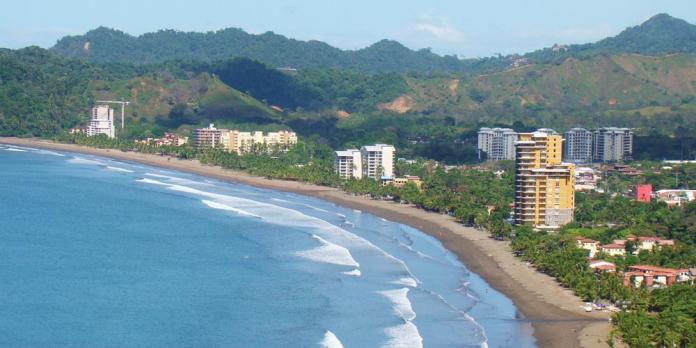
The growing lack of opportunities in the area of Jacó in Puntarenas led area businesses to seek a solution to return the town as it was before.
According to the Jaco area businesses, for some time now, the community has seen a reduction in tourists, due to the emergence of other destinations, as well as the persistence of certain prejudices.
“Garabito is much more than a canton of beaches and bars…”, said Juan Carlos Chávez, President of the Cámara de Turismo y Comercio Sostenible del Pacífico Central (Catucoso) – Chamber of Tourism and Sustainable Trade of the Central Pacific.
The Cruz Roja (Red Cross) resumed this Monday morning the search for a man who went missing in the waters of playa Calder, Puntarenas.
According to authorities, the man, whose identity was not made public, rescued his son who was drowning and then disappeared after being dragged by the current, in front of the restaurant Mar Azul.
Transitarte was not to the enjoyment of all who visited, some drivers got a bitter experience. After touring the artistic spaces, when they searched for their car, they realized that the plates had been removed.
The San Jose Municipal Police on Sunday got tough on illegally parked cars in the area of the Bulevar (Boulevard) and areas around the Legislative Assembly.
Though they recognized that they had parked illegally, many were upset expecting tolerance from traffic official given it was a Sunday and that the activity had been organized by the municipality.
The event was free, but for the handful of vehicle owners, the cost now is ¢51,000 colones and the time and frustrations in the process of retrieving their vehicle’s plates.
The OIJ arrested on Sunday a woman and three men suspected of murdering Rándall Chacón Chavarría, 51, and Allan Gabriel Chacón Vega, 26, father and son respectively. Photo: OIJ
The OIJ arrested on Sunday a woman and three men suspected of murdering Rándall Chacón Chavarría, 51, and Allan Gabriel Chacón Vega, 26, father and son respectively. Photo: OIJ
As confirmed by the Judicial Investigation Organization (OIJ), the woman, 21 years of age, was identified by her last name Baez Rodríguez, who has a history of appropriation; the three young men were identified as 18-year-old Coronado Urbina, 22-year-old Fallas Urbina and 24-year-old Carmona Durán.
According to the police, the motive for the crime would have been a robbery.
Chances are, you’re over the bitterly cold temps much of the U.S. has been experiencing this winter, and are desperately seeking sun on a spring vacation. But that doesn’t mean you should overpay for the pleasure. Here’s how to plan a budget getaway that doesn’t feel like it.
1. Use points and credit card rewards
You know this, but it’s worth a reminder: travel card rewards, hotel points, airline miles, an untouched balance from your cash-back card—cash them all in if you can. You can use them toward flights, hotels, even rental cars.
2. Be flexible
A few small changes can yield hundreds in savings.
Travel dates: Try traveling right before or after “peak season,” allowing you to save big and avoid crowds, says Isar Meitis of Last Minute Travel. So, instead of hitting Cancún in late March, when it’s besieged with spring breakers, scout deals in mid-April.
And if you’re planning a long weekend, take Monday off work instead of Friday. Sunday is typically the cheapest weeknight at a hotel, Meitis adds.
Peak travel season in Costa Rica is December to May.
Destination: Take the “road less traveled”—literally—suggests travel blogger Nate Hake. For example, consider Nicaragua over “it” destination Costa Rica for a cheaper jungle zip-lining and surfing experience. “Or try Tbilisi, Georgia, rather than Prague or Vienna, for your quintessential historic Old Town with delicious food and culture,” he says.
Airport and hotels: When hunting for affordable flights, consider alternative airports, says Sarah Hollenbeck, savings expert for Offers.com. If you’re heading to Los Angeles, say, check fares into Burbank, Long Beach, Orange County and Ontario in addition to LAX.
Similarly, “stay outside of big cities to find more upscale hotels for around half the price, with more reasonable parking to boot,” Meitis says.
3. Consider a vacation home instead of a hotel
From “resort fees” to $8 minibar water, hotel costs can rack up. If you’re traveling with a group, look for deals on home rentals through Airbnb, HomeAway and VRBO.com. Of course, you can still sample local cuisines as you like—but with access to a full kitchen, you don’t have to.
4. Live like a local
While review sites are helpful, there’s nothing like firsthand knowledge. Ask friends for locals-only secrets, “so you can really immerse yourself in your travel destination without paying tourist prices,” suggests frequent traveler and event planner Jamie O’Donnell.
5. Avoid unnecessary fees
Used to grabbing a $20 out of any old ATM? At $4.69 apiece, those out-of-network fees can add up if you’re not careful. Also consult your cellphone provider to avoid (or plan for) any roaming fees ahead of time.
6. Don’t overtip
Americans are used to adding an extra 15% to 20% to restaurant tabs, but that’s not customary everywhere. Do some research to make sure you’re not overtipping—and scrutinize your bills to be sure you’re not tipping on top of an automatic service charge.
In Costa Rica, a 10% ‘gratuity’ is included in every restaurant bill. It is the law of the land.
7. Cut transportation costs
Often, strolling a city is better than watching scenery whiz by in a car. If your destination is too far to walk, try using local transportation, like subways or buses. Many will have a handy app to download with schedules and route maps.
(Bloomberg) Alvarado is going to win next month’s presidential election in Costa Rica. There’s no doubt about it. None. But Alvarado is also going to lose. That’s 100 percent certain, too.
Confused?
Well, it even took Costa Ricans a while to get their heads around the peculiarities of this campaign: For the first time in 170 years of voting in the Central American country, the two final contenders share the same surname.
“People ask me who I’m voting for, and I say ‘Alvarado,”’ said Mariela Abarca, 28, an entrepreneur in San Jose. “Then they ask me, ‘Which Alvarado?’”
Fabricio Alvarado
That would be Fabricio, a 43-year-old conservative preacher who made his name in the country as a journalist and writer of evangelical songs. The other Alvarado is Carlos, a 38-year-old novelist and former rock ‘n’ roll singer who leans more to the left. They’ve clashed on issues ranging from abortion to the privatization of power utilities.
Policies aside, people shouldn’t have trouble differentiating when they show up to vote. The colors and flags of the candidates’ respective parties will be printed on ballots, along with the fellows’ photographs. Sure, there are similarities, but really, they don’t look that much alike.
Carlos Alvarado
Alvarado, by the way, isn’t that ordinary a name in Costa Rica. It’s the 14th-most-common, according to the website Forebears, shared by only about 1 percent of the population. (Rodriguez and Vargas, for those wondering, hold the top two spots.)
Genealogist Mauricio Melendez took the trouble to trace the candidates’ family trees and concluded they both descend from a woman named Maria Alvarado who lived in Costa Rica at the end of the 18th century. It’s 80 percent probable that they are distant cousins, Melendez said.
So, which one will it be? The latest polls point to Fabricio, who’s racked up a 10-point lead over Carlos. The people will pick their Alvarado on April 1.
The state’s official economic development organization, Enterprise Florida, reported about $23.2 million in total sales after it led an export mission to San Jose, Costa Rica.
The Feb. 26 to March 1 mission focused on allowing small to mid-sized Florida companies to make connections in the Central American marketplace in sectors such as beauty products manufacturing, hotel and restaurant equipment, renewable energy and more.
Kimberly Jazmín Barrantes Pérez, 20 years of age, is the eight femicide this year, losing her life at the hands of her former partner.
Photo from Facebook
According to the Organismo de Investigación Judicial (OIJ, in the attack that occurred Saturday night in Siquirres de Limón, a man identified by his last name Campos, around 12:45 am entered Kimberley’s home and shot her in the head. She died at the scene. Injured was her mother, who is recovering at the Hospital Calderón Guardia in San José.
The man is still at large.
According to the Civil Registry, Kimberley had two children, 1 and 2 years of age, both little girls fathered by the suspect.
This is the sixth femicide this month. The others are:
On March 17 in La Union de Cartago, 18-year-old Grettel Tatiana Téllez Ortíz, who was pregnant, was gunned down in front of her 2-year-old daughter.
On March 12 in Pavón de Golfito an individual killed Karen Vanessa Jiménez Arguedas. The suspect was arrested.
On March 10 in Puerto Jiménez, Golfito, Rita Arias Piedra, 26, was attacked and killed with a metal pipe by her former partner.
On March 6 in Liberia Guanacaste, Mariana Leiva Fernández died at the hands of her husband Sequeira, who then turned himself into the police.
On March 3 in Florencia de San Carlos a day worker kills and throws into the river his pregnant companion, Maritza Vargas, 25 years old.
The number of femicides registered in the first months of this year is alarming when compared to the 16 cases for all of 2015. According to the OIJ, since 2010, there have been 224 femicides.
“There is a worrying increase. It is a crime that is generated in the most intimate of homes and is not easy to control. It is very worrying and will involve making decisions”, said the director of the OIJ, Wálter Espinoza, several days ago.
Authorities in Costa Rica define femicide as the murder of a woman by her partner – a spouse or ex-spouse or significant other.
Today, Sunday in Escazu and March 27, 28 & 29 in Zapote
The Caja Costarricense del Seguro Social (CCSS) – Costa Rican Social Security Fund – made a call to the population of Escazú to voluntarily donate blood on Sunday, March 18, at the República de Venezuela school.
The doors will be open from 8 am at 12 noon and they expect to receive around 120 people.
In addition, the Banco Nacional de Sangre (National Blood Bank) teams are also ready to assist donors on March 27, 28 and 29, at the Banco’s facilities, located in Zapote.
Doors are open for donations between 7 am and 3 pm.
What you need to donate:
Be over 18
Carry I.D.
Be in good health
Eat a light breakfast that includes coffee or black tea, fruits, juices, bread without butter
Not having undergone chemotherapy or radiotherapy
Do not suffer from epilepsy or hematological and cardiac diseases
Not pregnant or breastfeeding
Note, if in the last 15 days you had any relative or partners with a viral illness, it is preferable not to donate.