Membership to the Santa Ana Country Club starts at US$25,000
The Santa Ana Country Club (SACC) is getting ready to open its doors to the public in March 2019, boosting the supply of private clubs in the country.
Membership to the Santa Ana Country Club starts at US$25,000
The private club segment had 40 years of stability in Costa Rica, which created the stage for a new player to take a portion of the market: three months after its official start of memberships, the SACC has sold 900 shares out of the 2,500 available.
The current price is US$25,000 per unit and it is estimated that it will continue to rise.
The SACC, at an investment of US$50 million by at least nine National companies, and located in Santa Ana, competes with similar clubs such as the Cariari Country Club (Heredia), Costa Rica Country Club (Escazu) and Club Unión (downtown San Jose).
To be believed or not, the Cariari and Costa Rica country clubs both welcome the SACC, they see it as a complement in the market rather than competition.
Mauricio Montes de Oca, general manager of the Club Union, doesn’t see the SACC as competition, rather a different experience, “a weekend in the country experience”, whereas his club is one for business people.
According to the SACC, 74% of the 900 members already bought in live in Escazú and Santa Ana, the majority (85%) married and have children (80%). Almost half (45%) are between 40 and 49 years of age, while 29% are between 30 and 39.
The dairy cooperative Dos Pinos centralized the support services of its regional operation in a single unit to standardize the technological processes and for better business practices, for which it will reduce around 100 jobs in the administrative and managerial area.
According to Francisco Arias, Manager of Corporate and Livestock Relations of Dos Pinos, the employees involved in the cut will be offered a special compensation package that includes encouragement to their reintegration into the labor market.
“The cooperative has been making a series of investments and changes to rationalize the use of resources and use all possible efficiencies in the productive and administrative processes,” said Arias.
The reduction of the jobs, according to Arias, is to consolidate the regional operation and face the changes in a competitive environment, determined by a process of market opening and tariff reduction.
Dos Pinos employs 5,200 people in Costa Rica and Central America.
With the age of the “factura electrónica” – electronic invoicing or digital invoice – in Costa Rica, it has giving rise to a niche in electronic fraud.
“Hola. Este pago fue aprobado y enviado esta mañana, por favor confirme los detalles del beneficiario y firme. Gracias”, reads the text of the fraudulent email with an attachment to a “factura electrónica”.
Although targeting mainly accounting and human resources departments of business, whose employees would proceed normally to open the attachment to verify the payment. However, it is not exclusive to the business world and anyone, even you, can be victim.
So, be careful in opening it. Know the source first. Did you really make the purchase? Why are you getting a bill for it? For example, it could be a receipt for your cellular phone. Or is it one the mass emails making its way around the web containing a malicious program that will infect your computer and steal sensitive information an/or demand a ransom for its return.
Once the attachment is clicked on, there is no turning back.
Criminals take advantage of the lack of knowledge that still exists in relation to electronic invoicing and with the help of “phishing” – a social engineering technique – the victim is tricked into revealing personal and/or company information.
Data from the Organismo de Investigación Judicial (OIJ) reveals that in 2017, 1,042 complaints were filed and in 2018 the number increase, 1,286 up to November 28.
The most common complaints filed with the OIJ are scams involving credit or debit cards and its use online, fraud with a card without consent and computer scams.
Now with the use of electronic invoicing, the risks increase.
“At the beginning of last year we began to see the impact of a combination of low education (of cybercrime) of users, a population that was not prepared to start in electronic invoicing, even many did not what one looked like, nor did they know the process of creating an account … All this giving rise to a niche in electronic fraud,” explained Esteban Jiménez, founder of ATTI CyberLabs told El Financiero.
How can you detect that you are facing an electronic invoice scam?
Either by telephone or email, there are five main scams to be aware of:
Falsification: The fraudster sends an email asking the victim to fill out a form in order to complete the invoices. The data is then used to send to others invoices that seem official, making it more credible and expand their contact base.
Ransomware: The attachment to the emails activates malicious code that, when opened, allows the fraudsters to demand payment in exchange to get back information.
Verification of accounts: The victim receives a phone call from a supposed official of the Ministry of Finance (with respect to the electronic invoice) and asks for personal and/or corporate and banking information to “help” the taxpayer to enter their account and verify the status of “connection” with the Treasury system to consult the amounts of the payment of taxes.
Install a program: The scammer asks the victim to install software as a requirement for the tax system to work properly and can issue invoices.
Counseling: The taxpayer is contacted by the fraudster who poses as an official of the Ministry of Finance and offers to be an “adviser” to configure the electronic invoice appropriately. The criminal requests an electronic payment for such help, which is never given.
The main recommendation is to learn to recognize fake emails (or phone calls) and knowing who is the invoice provider.
Opening an email from a provider you have not done business with or not known to you could be a signal.
Take great care of your data
For the consumer there is another risk, businesses are taking advantage of the electronic invoicing, asking their buyers more information that actually needed to generate the digital document.
It could be as innocent as a check out at the local supermarket, the checkout clerk asking if you want your name of the ‘factura’ to asking all types of information that the retailer can now use, with your permission, for marketing purposes. Or by scammers.
The Law for the Protection of the Person against the Processing of Personal Data (Ley de Protección de la PersonaFrente al Tratamiento de sus Datos Personales) establishes that the merchant can request from the client only their identification number (cedula or passport for example), their name and email address.
To date, the Agency for the Protection of Data of Inhabitants – Agencia de Protección de Datos de los Habitantes (Prodhab) – says it has not received complaints regarding the bad treatment of data in relation to electronic invoicing, according to Ana Karen Cortés, director of the agency.
However, Prodhab recommends that it is important that, when you must provide your data with respect to the electronic invoice, provide only the necessary (ID number, name, and email).
Telephone numbers, addresses, date of birth, financial or other data that serve as marketing tools have to be requested by the merchants and it is your right to refuse to give it.
In case of receiving suspicious calls or if you are a victim of fraud, the Ministry of Finance has enabled the Denounce Ya form on their website.
One of the keys to suspecting a scam is the sense of urgency that the criminal has. Phrases like “if you do not give me the information you will be fined” is one of the main signs.
What has been your experience with the “factura electrónica”? Have you received suspected emails or been asked for more that the required information when making a purchase? Post your comments below or to our official Facebook page.
33 years ago, Costa Rican Franklin Chang traveled to space for the first time
33 years ago, January 14, Franklin Chang traveled to space for the first time
The former NASA astronaut is today, based in Guanacaste, Costa Rica, involved in developing a plasma rocket engine and a bringing to mass use a of the hydrogen powered bus.
In Costa Rica, a person can legally own up to three guns
Legislators of the Security and Drug Trafficking Commission (Comisión de Seguridad y Narcotráfico) have been engaged in a debate about the number of guns a person in Costa Rica can have.
In Costa Rica, a person can legally own up to three guns
Currently, the legislation allows an individual to legally have three weapons. However, a reform of the Weapons and Explosives Law (Ley de Armas y Explosivos) would reduce the amount to one.
At the committee level, the proposal to reduce the number of guns was initially supported by the Partido Liberación Nacional (PLN), Partido Acción Ciudadana (PAC), the independents of the Nueva República bloc and the Partido Republicano Social Cristiano (PRSC).
“The problem is not with the legal owners of guns, but the criminals who get them back in the black market” Legislator Zoila Rosa Volio
However, on Monday, the legislators of the committee voted for a motion to leave the number unchanged, despite the insistence of the Minister of Security, Micheal Soto.
Soto argued that the greater the number of weapons, the more likely they up in the hands of criminals.
The argument did not sway the majority of the legislators.
PLN legislator Gustavo Viales, chairman of the Security and Drug Trafficking Commission (Comisión de Seguridad y Narcotráfico) explained that his party bloc is demanding valid technical criteria from the Ministry of Security before it would support the reduction initiative to the full legislative assembly.
The number of legal guns in Costa Rica went from 99,000 in 1997 to 244,000 in 2017. However, there is a large black market, that could easily double or more the actual number of guns in the possession of the public.
According to data cited by PAC legislator Enrique Sánchez, 80% of the owners of legally registered weapons have only one, while 16% have two and 4% have three or more.
The legislator added that the idea of registering firearms every three years is aimed at traceability, but that does not happen.
The Ministry of Security said that it confiscates, on average, an illegal firearm every four hours. Punishment for the illegal possession of a weapon is minimal, in most cases, only community work is considered as punishment.
PIN legslator Zoila Rosa Volio was one of the more vocal against reducing the number of guns that can be legally owned by a person in Costa Rica. Foto: Rafael Pacheco
For her part, Zoila Rosa Volio, legislator of the Partido Integración Nacional (PIN), who did not support the bill to reduce the number of guns in legal possession of the public, said that if a person uses their ‘legal’ weapon to defend themselves, it would be confiscated by the Organismo de Investigacion Judicial (OIJ) leaving them defenseless, however, when it comes to criminals, they can easily obtain another weapon in the black market.
“The problem is not with the legal owners of guns, but the criminals who get them back in the black market,” said the legislator.
In addition, Volio assured that Russian made weapons are entering Costa Rica directly from Nicaragua that can be purchased in the black market.
“No criminal will go to get a permit to carry weapons, let’s not be ridiculous. Let’s call things the way they are,” she emphasized.
The authoritarian leader of Nicaragua, Daniel Ortega, was decorated by the Communist Party of Russia under the logic that he “contributes to peace.”
Foto by Clarín/NI
Ortega received the distinction of the first vice president of the Committee for International Affairs of the State Duma (Lower Chamber of the Russian Parliament), Dmitry Georgievich Novikov in a private ceremony over the weekend in Managua.
Novikov said this award is “in recognition of his (Ortega) contribution to peace and the work of progressive governments, as well as his contribution to the relationship between the countries of the world and between Russia and Nicaragua.”
The Russian bestowed the decoration to Ortega on behalf of Russian President Vladimir Putin and the president of the Russian Communist Party Gennady Zyuganov.
Paradoxically Ortega, decorated for defending peace, governs Nicaragua with an iron hand and is accused of sending paramilitaries, anti-riot squads and police to repress unarmed citizens who have been protesting since April 2018.
MANAGUA (IPS) – Eight months of social and political crisis in Nicaragua have hit the exercise of independent journalism in the country, with 712 cases of violations of the free exercise of journalism, one murdered reporter, two in prison and dozens fleeing into exile, in addition to several media outlets assaulted by the security forces.
Newspaper La Prensa and El Nuevo Diario will stop circulating due to the retention of raw materials by the Government
A report by the non-governmental Violeta Barrios de Chamorro Foundation, called “2018 Year of Repression against Press Freedom in Nicaragua”, published on Jan. 9, states that between April and December there were 712 violations of press freedom and the exercise of journalism.
Guillermo Medrano, author of the report, told IPS that the study reflects that journalism has become a high-risk profession in Nicaragua, “to the extent that journalism has been officially criminalized by charging two journalists who criticized the government with terrorism.”
Medrano refers to journalists Lucía Pineda and Miguel Mora, press director and owner of the television news channel 100% News, respectively.
They were arrested on Dec. 21 at the station’s headquarters and later charged with “provocation” and “conspiracy to commit terrorist acts”.
Before they were arrested and were incomunicados for several days, sympathizers of Daniel Ortega’s government filed a report against Pineda, Mora and other journalists from the channel at the Public Prosecutor’s Office, accusing them of “promoting hatred” because of their critical editorial line.
Their families and lawyers have not been able to see the journalists, who are to be tried later this month. The TV station was shut down, its signal taken off the air and its accounts and assets seized by the authorities.
The arrests of the two journalists triggered protests by international human rights and press freedom groups.
The Committee to Protect Journalists (CPJ) issued a statement backed by 300 leading journalists from around the world condemning the arrests and demanding their prompt release.
At a national dialogue with President Daniel Ortega in May 2018, a woman holds up a newspaper showing images of people who died in protests in Nicaragua. More media outlets are providing hard-hitting news about the violent crackdown. (AP/Alfredo Zuniga)
The document also includes a strong condemnation of the Nicaraguan government for the assault and seizure of the newsrooms of the Confidencial magazine, the Niú website and the television programmes Esta Semana and Esta Noche.
The magazine and TV programmes belong to journalist Carlos Fernando Chamorro and the Dec. 14 seizure marked the beginning of Ortega’s last, radical offensive against independent journalism.
Apart from the criminalization of the two journalists, the report details that a reporter was killed in April, at least 54 have been exiled because of threats and political persecution, and 93 were beaten and injured.
In addition, 102 media outlets and journalists were censored, 21 suffered judicial harassment or investigative processes and 171 have faced different forms of intimidation.
“It’s a situation we haven’t seen since the years of the Somoza (dictatorship), not even during the contra war against the United States. It’s terrifying,” writer Gioconda Belli, president of the Nicaraguan chapter of PEN-International, told IPS.
A policeman guards the closed building of the Confidencial magazine and other digital and television media owned by Carlos Fernando Chamorro, which was seized by the Nicaraguan police on Dec. 14. Credit: Jader Flores/IPS
According to the writer, the regime of Ortega, a former Sandinista guerrilla, “has surpassed the horrors of the dictatorships of the past that Latin America remembers” by targeting peasant farmers, students, feminists, religious sectors and, finally, journalists and the media.
“He has committed the atrocity of accusing journalism of terrorism; he has kidnapped and prosecuted two journalists, Miguel Mora and Lucía Pineda, as criminals; he has assaulted newsrooms and confiscated private media outlets, such as the Confidential,” she denounced.
In addition, “now he wants to strangle La Prensa by denying it paper,” Belli warned.
A local photographer makes a video of journalist Carlos Fernando Chamorro’s office the day after it was raided by the national police in Managua, Nicaragua. (REUTERS/Oswaldo Rivas)
The newspapers with the largest circulation in Nicaragua, La Prensa and El Nuevo Diario, both opposition papers, have reported that their paper reserves will be exhausted in a few months and that the customs authorities are blocking imports of raw material.
A small newspaper, Q´hubo, published by ND Medios, closed down in December due to a lack of paper.
The building where the Confidencial magazine operated was taken over by the National Police, after the legislature eliminated the legal status of several non-governmental organizations.
The government links the media to the Centro de Investigaciones de la Comunicación, one of the nongovernmental organizations whose legal status was repealed along with eight others on charges of “fomenting terrorism.”
However, Chamorro stated that both the office building and the censored media outlets belong to the company Invermedia and Promedia and have no relation whatsoever with the NGO that was shut down.
The raid and the confiscation of their equipment and facilities were, he denounced, “a direct attack against journalism and private enterprise.”
Arlen Cerda, editor-in-chief of Confidencial, who was granted precautionary protection measures by the Inter-American Commission on Human Rights (IACHR), said the publication is the victim of an “unprecedented” escalation of repression against modern-day Nicaraguan journalism, while he said its journalists planned to continue reporting, “even with their fingernails.”
“In the raid, the equipment, files and databases were taken away, we didn’t have a roof over our heads in order to work,” he said. “But also from the beginning we have maintained the firm conviction that we will not be silenced, and that we will do everything possible to continue to provide quality material to our public.”
In crisis since April
Ortega, 74, ruled the country between 1985 and 1990 as leader of the Sandinista National Liberation Front (FSLN), which defeated dictator Anastasio Somoza in 1979. After the triumph of the Sandinista revolution, he was also a member of the governing junta.
The current crisis in this Central American country of 6.4 million people began in April 2018, triggered by a controversial social security reform that was later withdrawn, revealing broad discontent with the government.
The protests, led by university students, lasted until July, and according to the IACHR, 325 people were killed during the unrest, mainly at the hands of police and irregular forces organized by the government.
The government puts the number of casualties at 199, and blames “terrorist groups attempting to mount a coup d’état.”
Voices in exile
Luis Galeano, director of the program Café con Voz, which was broadcast on the 100% Noticias channel, left the country in December after the government issued an arrest warrant against him for “fomenting terrorism.”
“The accusations are absurd, they seek to silence critical voices, but they won’t succeed, because we as journalists are going to continue reporting from anywhere, from exile, from prison, from social networks, from clandestinity, from everywhere,” he told IPS from Miami.
Journalist Jeniffer Ortiz, director of the digital platform Nicaragua Investiga, told IPS that she left the country because of direct threats against her for her journalistic work.
“I have been away from Nicaragua for a couple of months. I left because of the constant threats and sieges of our house. They were also sending us messages through the social networks,” she said from San José, Costa Rica.
She said that due to the increasing repression, many of her sources stopped talking to her media outlet which, added to the economic crisis and threats, forced her to continue her work from outside Nicaragua.
“We are now in exile aware that our colleagues there are finding it increasingly difficult to do their work because of threats. The sources are afraid, and from here we can continue our work and contribute to the daily flow of information that people are asking for,” she told IPS.
Police riding the river boats full of tourists. Photo (MSP)
A mega-operation by the Fuerza Publica (National Police) held this weekend in areas of great influx of tourists to the country led to the arrest of two individuals who assaulted a couple of tourists in Uvita de Osa, in the southern part of the Costa Rica.
Photo Ministerio de Seguridad Publica (MSP).
On Saturday, a Costa Rican and a Canadian tourist told police that two men threatened them with a machete and stole their cellular phones and other valuables while walking along Playa Hermosa, in Uvita de Osa.
The two anti-socials were arrested some 3 kilometers from the scene fo the crime, when they tried to flee among the many trails in the area. Found on them were the belongings of their victims. The men, identified by their lastnames Vargas and Alvarado, are now in the hands of the Osa Prosecutor’s office.
The results of the operation
The mega police operation included roadblocks, checks at bus terminals, airports, hotels, beaches and rivers.
In the operation, another 36 people were detained, of those 13 for alleged crimes against property (robbery, break-in, etc) and 10 had outstanding arrest warrants.
Police riding the river boats full of tourists. Photo MSP.
Five firearms were also confiscated, four during an operation in Cartago, where a presumed drug dealer was apprehended for assaulting police.
Also confiscated were 2.2 kilos of marijuana and 462 doses of crack seised on a bus from Limon.
A total of 63 people were found to be ‘in an irregular migratory condition’ (illegal in the country) and handed over to the Dirección General de Migración y Extranjería (DGME), Costa Rica’s immigration service.
The operation also found irregularities in vehicle registrations, seizing 28 motorcycles, the license plates of 11 motorcycles and 15 automobiles, and fining 33 drivers and 114 motorcyclists for various traffic violations, including not having the 2019 Marchamo, vehicular inspection (Riteve), current or driving with an expired drivers license.
During the operation, the Fueza Publica reports its officials talked about security issues with some 5,640 foreign and national tourists.
The three Costa Ricans – mother, son, and his girlfriend, suspected of heading the kidnapping of an American businessman – lived it up in Zaragoza, Spain until the short arm of Organismo de Investigacion Judicial (OIJ) caught up with them.
Photos from Spain’s Guardia Civil (Police)
In this Spanish city, 25-year-old Morales Vega, his mother Vega Aguirre and girlfriend Solis Chaves, wanted by the OIJ for the kidnapping of William Sean Creighton on September 24, 2018, tried to hide, trying not to attract attention, however, paid high rents and had planned to purchase a luxury SUV.
“They were seen living a higher standard of living than they had in their country of origin, daily moving about in taxis and staying in homes for which they paid up to 800 euros (over US$900) per week,” reported Spain’s Guardia Civil (police).
Photos from Spain’s Guardia Civil (Police)
In their report, the Guardia Civil noted the three gave wrong contact information and changed their address frequently, but lived houses with a high rents, the latest paying more than US$3,300 dollars, used taxis to move about the city and were planning to buy a luxury sports utility vehicle, among other luxuries.
The money is alleged to have come from the almost US$1 million dollars in bitcoins ransom paid by Creighton’s family. The kidnappers had demanded US$5 million dollars.
The investigation into Morales, belived to be the mastermind of the operation, reveals that he left Costa Rica headed for Cuba where he remained there for some time. His mother and girlfriend joined him later.
Authorities in Spain report that Morales entered their country on November 9, 2018, by way of the Madrid-Barajas international airport.
Photos from Spain’s Guardia Civil (Police)
“He was detected trying to rent a large house in the province of Alicante, with the more than possible intention to accommodate the rest of the members of his organization, who previously fled with him to Cuba,” said the Guardia Civil.
On November 19, Spanish authorities detected the arrival of three adults and minor linked to the Morales’ organization. They headed for the La Nucia (Alicante) neighborhood, staying at the house Morales had rented.
Spanish authorities added that in the raid on Friday, January 11, 2019, in Zaragoza, they arrested the Morales, his mother and girlfriend and confiscated computers, accounting records, cash, bank cards and other evidence related to the criminal activity. The other two, an adult and a minor, not believed to be part of the organization, were not detained.
On the same day, in Costa Rica, nine others linked to Morales and his organization, were arrested, that included his grandmother, uncle and two traffic police officers who are alleged to have pulled over the victim using a police stop as a ruse in the kidnapping.
Photos from Spain’s Guardia Civil (Police)
On the night of September 24, 2018, 43-year-old Creighton was stopped by two traffic officials, pulled out of his vehicle and taken to house (grandma’s house) in Moravia. Creighton’s car was found abandoned in Heredia.
The OIJ scoured grandma’s house in search of clues to lead them to Creighton’s whereabouts. So far they have been quiet on and if they found anything.
Investigators in Costa Rica do not believe that Morales had worked for Creighton. His experience and knowledge in bitcoins may have been the attraction to kidnap Creighton.
Ironically, according to the OIJ, it was a bitcoin transaction, on a computer from the Moravia house that led them to Morales.
The resignation of Rafael Solís to his position as magistrate of the Supreme Court of Justice (CSJ) and to the militancy of the Sandinista National Liberation Front (FSLN), is already described as treason by the officials who support the Daniel Ortega regime.
Rafael Solis was the best man at the Daniel Ortega and Rosario Murillo wedding.The image is from 2008 from LA PRENSA
“He is a traitor,” was the only thing Sandinista legislator Jacinto Suárez said when he was consulted by LA PRENSA by telephone about Solís’ resignation. Then he hung up the phone.
In the social networks, the Orteguistas call him a traitor, sell out (of his country), a bought man, an opportunist, and other disqualifications and epithets.
Solís resigned as magistrate through a letter on January 8, in which he also denounces the consolidation of a “dictatorship with the character of a monarchy of two kings”, and warns of a civil war due to lack of political will to dialogue and denies the coup d’état, which is the main argument of the Ortega regime to suppress protests.
The day before, on January 7, he entered Costa Rica where according to that country’s immigration records has not left.
Solis directly blamed Ortega and his wife Rosario Murillo for arming the paramilitary groups that repressed “by fire and blood” the protests and dismantled the barricades that the citizens erected in the most critical months of the repression.
The former judge recognizes that there were at least 325 deaths due to police and paramilitary repression, as well as the reports and investigations of international organizations, such as the Inter-American Commission on Human Rights (CIDH) and the Interdisciplinary Group of International Experts (GIEI).
The official online government news El 19 Digital does not report any of this or other political issues facing the power couple (Ortega and Murillo), only about tourism, love and “celebrating the joy of living in peace this weekend”.
Supreme Court still incomplete
The Supreme Court of Justice is a 16 member body and has been incomplete since August 2016 when Dr. Antonio Alemán died, who was never replaced.
In April 2019, the five-year term for which they were appointed expires, including magistrate Rafael Solís Cerda.
In this way, 14 magistrates are still operating, although it is rumored that there are other magistrates who could present their resignation in the coming days.
The same Solis warned in an interview with Radio France International that these resignations could occur soon.
Rafael Solís’ role
The resignation and denunciation of Rafael Solís are especially significant because he has played an important role at different times in the political, and even personal, life of Ortega.
Solís was best man at the wedding of Ortega and Murillo when they were married by the Church in 2005. He also had a prominent role in finding the legal way to ensure the first re-election of Ortega in 2010, when the Constitution prevented him from so doing.
Then in the Constitutional Court – when the Sandinista magistrates resolved expeditiously – and in the absence of their liberal colleagues – he provided protection in favor of Ortega, so that he could run for president again, which was immediately accepted by the then president of the electoral tribunal, magistrate Roberto Rivas.
The presidential reelection was “a mistake”
The former judge declared that it was a mistake to allow the presidential re-election of Daniel Ortega in 2011. Solis made the statement in an interview with the The New York Times two days after his resignation was announced.
“I did not think that it would lead the nation to this. I never imagined it,” Solis said in reference to the more than hundreds of deaths caused by police and paramilitary repression against the civil protests.
The constitutional decision
Solís was one of the Sandinista magistrates of the Constitutional Court which in 2010 allowed Ortega to participate as a presidential candidate for re-election in the 2011 elections.
The Sandinista magistrates, in the absence of the Liberals, ruled in favor of a Recurso de Amparo (appeal) presented by Ortega, who argued that the prohibition of presidential re-election was a violation of their human rights.
Lawyer and expert on constitutional issues, Gabriel Álvarez, always pointed out that the decision was a political manipulation to give a “legal formality” to Ortega’s ambition to re-elect himself.
Latin America is generally viewed as comprising twenty independent sovereign states, stretching from Mexico to Cape Horn. As well as the countries shown in the infographic below, it includes Panama, Venezuela, Costa Rica, Guatemala and ten more nations.
While there are challenges to overcome, we believe the investment outlook for Latin America as a whole is quietly encouraging, making it one of our key investment themes in 2019.
In the 1980s, the region was characterized by hyper-inflation, dictatorships and state-ownership of assets, but today the principles of democracy and economic liberalization are more in evidence. The macro-economic picture for much of Latin America is currently supportive, but there are also long-term tailwinds which suggest the region could outpace its developed market rivals in the years ahead.
A demographic profile to enhance future investment opportunities
Latin America has an excellent demographic profile compared to much of the developed world. Its working-age population is forecast to grow by 18% between 2015 and 2030 and, together with significant growth in the middle class, this will translate positively for many domestic industries.
Investment-wise, Brazil and Mexico dominate the region, representing over 84% of the MSCI Latin America Index as at October 2018. However, Argentina, Chile, Peru and Colombia also have relatively substantial financial markets. Together, the economies of these six nations represent 477 million people, with a combined GDP of nearly US$5trn. Economically, this is on a par with Japan.
Investor opportunities in Brazil and Mexico
Argentina’s many problems have been well documented, but it is far from representative of the region.
Both Brazil and Mexico will start 2019 with relatively new presidents. They are at polar opposites of the political spectrum, but each is a populist whose election may not be the calamity that some initially feared. While Brazil’s Jair Bolsonaro has been likened to Donald Trump, given his penchant for hyperbole, he could be the right man to deliver much-needed economic reform and liberalization.
Recovery is on the way
The banking systems of both these economies have relatively few bad debts and, although both Brazil and Mexico have suffered from an extended period of weak domestic demand, recoveries are now underway.
Mexico’s participation in the United States-Mexico-Canada Agreement (USMCA) – the trade deal which replaced NAFTA – should not be underestimated, as it allows Mexico continued access to a booming US economy
Meanwhile, China is already Brazil’s largest trading partner and the US/China trade tensions have been a boon for Brazil’s farmers; the price of Brazilian soybeans has appreciated by over 30% in 2018.
One of the biggest issues for both Brazil and Mexico is the fact they have been running budget deficits on a near permanent basis, although they are hardly alone. In a global context, their public debt as a percentage of GDP is not extreme. Both economies have also comfortably financed their current account deficits through long-term sources, rather than relying on the vagaries of short-term funding.
Making the most of investment opportunities in 2019
If, as we believe, the investment environment is supportive for equity markets in 2019, we may seek to introduce an exposure within portfolios if an opportunity presents itself.
Caveats in investing.
Investment involves risk. The value of investments and the income from them can go down as well as up and you may not get back the amount originally invested. Past performance is not a reliable indicator of future performance.
The information provided is not to be treated as specific advice. It has no regard for the specific investment objectives, financial situation or needs of any specific person or entity.
The information contained herein is based on materials and sources that we believe to be reliable, however, Canaccord Genuity Wealth Management makes no representation or warranty, either expressed or implied, in relation to the accuracy, completeness or reliability of the information contained herein.
All opinions and estimates included in this document are subject to change without notice and Canaccord Genuity Wealth Management is under no obligation to update the information contained herein.
“Medical tourism,” or traveling to another country for medical care, is a growing trend. Patients Beyond Borders says that between 11 million and 14 million people travel each year for medical care.
According to Patients Beyond Borders, a guide to medical tourism, top destinations include Costa Rica, India, Israel, Malaysia, Mexico, Singapore, South Korea, Taiwan, Thailand, Turkey, and the United States.
Many people are drawn to travel abroad by the potential for cost savings on medical procedures.
The top specialties for medical travelers include cosmetic surgery, dentistry, cardiovascular, reproductive and weight loss.
How big is the market? The Medical Tourism Association, an international trade organization that acts as a liaison between patients and international providers, estimated the industry’s worth at US$100 billion in 2016-17.
And the market is growing as the world population is aging and becoming more affluent at rates that surpass the availability of quality healthcare resources. Patients Beyond Borders says worldwide medical tourism market is growing at a rate of 15-25%, with inbound patient flows highest in Mexico, Southeast, and South Asia.
How much can you save? According to Patients Beyond Borders, using US costs across a variety of specialties and procedures as a benchmark, average range of savings for the most-traveled destinations:
Brazil: 20-30%
Costa Rica: 45-65%
India: 65-90%
Malaysia: 65-80%
Mexico: 40-65%
Singapore: 25-40%
South Korea: 30-45%
Taiwan: 40-55%
Thailand: 50-75%
Turkey: 50-65%
Caution advised
There are significant risks in traveling abroad for medical treatment, the US Centers for Disease Control and Prevention cautions.
“Antibiotic resistance is a global problem, and resistant bacteria may be more common in other countries than in the United States,” the agency warns.
In addition, the CDC warns of other risks to consider, like Communication may be a challenge, medication may be counterfeit or of poor quality in some countries, and flying after surgery can increase the risk for blood clots.
Thinking about medical tourism?
The CDC has a number of suggestions for anyone thinking about getting medical care in another country:
Check of the qualifications of the health care provider that includes the surgeon and the clinic or hospital.
If you go to a country where you do not speak the language, determine ahead of time how you will communicate with your doctor and other people who are caring for you.
Before planning vacation activities, such as sunbathing, drinking alcohol, swimming, or taking long tours, find out if those activities are permitted after surgery.
Get copies of all your medical records before you return home.
Choose internationally credentialed facilities, and be aware that standards for providers and clinics in other countries may be different than those in the United States.
The Mothers of April Association of Nicaragua, formed by women who have lost their children or relatives in the demonstrations against President Ortega, demanded on Thursday to the OAS member countries to apply the Democratic Charter to the Government of Nicaragua.
The “Mothers of April” made up of about 70 women and was created on September 29th
In a public letter, published in Managua, the Mothers requested the Permanent Council of the Organization of American States (OAS) “to support that the Democratic Charter be applied” to the Government of Ortega in an extraordinary session that the organization will hold Friday in Washington.
In the letter, the “Mothers of April” also advocated for “supporting all those necessary measures to encourage or oblige the Nicaraguan State to comply with human rights matters and its obligation to find the truth and impart justice.”
The association of mothers, made up of about 70 women, was created on September 29th and has as a slogan “Love the truth, love justice, love and do not forget.”
On January 4, the OAS Secretary General, Luis Almagro, convened an extraordinary session of the Permanent Council of the organization for this Friday in order to follow up on the situation in Nicaragua.
On December 27, after another meeting of the Permanent Council, Almagro announced the beginning of the process to apply the Democratic Charter to Nicaragua due to the crisis that has plagued that country since last April, centered on the protests of Nicaraguans who are requesting the resignation of President Ortega.
“We are forced to begin the implementation of the Inter-American Democratic Charter,” said Almagro, who was supported in this initiative by Argentina, Colombia, Chile, USA and Peru.
The Democratic Charter is a legal instrument that, in its articles 20 and 21, contemplates diplomatic procedures against a member State where there is “an alteration of the constitutional order” and, if these efforts fail, it smooths the process for its suspension, thereby stopping participation in the programs of the organization.
To approve the suspension, the highest form of sanction that the OAS has, 24 votes are necessary, that is, two-thirds of the 34 countries that are active members of the organization (Cuba belongs to the institution but has not participated in it since 1962).
Nicaragua suffers a serious crisis that has left 325 dead since April, according to the Inter-American Commission of Human Rights (IACHR), although some groups raise the number of fatalities to 561, while the government only recognizes 199 and denounces an attempt at a coup d’état.
One of the most pragmatic voices of Ortega’s inner circle distances himself from the dictator and warns of the dangers of civil war
The ex-magistrate of Nicaragua’s Supreme Court of Justice, Rafael Solis Cerda, entered Costa Rica one day before submitting his resignation his position and denouncing the existence of “a dictatorship” and “a state of terror” in his native country.
One of the most pragmatic voices of Ortega’s inner circle distances himself from the dictator, resigning from his judgeship in Nicaragua’s Supreme Court and the Sandinista National Liberation Front, now taking refuge in Costa Rica
Solís, a man considered close to President Daniel Ortega, entered Costa Rica on Monday, January 7, according to the immigration service. To date there is no record of him leaving Costa Rica.
A day later, on January 8, in a letter addressed to Ortega and his wife, Vice President Rosario Murillo, he announced his resignation to the Court and his militancy in the Sandinista National Liberation Front (FSLN).
The letter was also addressed to the president of the National Assembly, Gustavo Porras. In it, Solis denounces the establishment of “a dictatorship with characters of absolute monarchy” in Nicaragua.
“I present my immediate and irrevocable resignation from this moment on as magistrate of the Supreme Court of Justice, and all political positions including militancy in the FSLN. This resignation is independent of the decision taken by the National Assembly to accept it or not, even though there are only three months left to conclude my term. However, I prefer to do it now, to avoid having applied to me that article of the Constitution that establishes that public officials elected by the National Assembly must continue in office if new appointments aren’t made, including even the Magistrates when their terms expire, which is what I think will happen in April,” wrote Solis.
The Dirección General de Migración y Extranjería (DGME) – immigration service – would not confirm if Solis has requested or not refugee status, alleging Constitutional Court ruling N° 2017012926 that prevents the DMGE from giving out any such information.
The Nicaraguan online newspaper and a target of President Daniel Ortega’s crackdown on independent media describes Solis as a loyal political operator in the judicial system for Daniel Ortega and one of the most pragmatic voices within the circle of advisers surrounding Ortega.
In the letter, Solis explains that his decision is due to Ortega and Murillo’s handling of the political crisis in the country that, according to the OAS’ Inter-American Commission of Human Rights, has left at least 325 dead, more than 2000 wounded, 550 imprisoned and prosecuted, the dismissal of 300 doctors and other health professionals, and the expulsion of at least 144 students from the UNAN university.
Rafael Solis was one of the most eloquent political spokesmen of the FSLN and one of the executors of the constitutional reforms that allowed Ortega to perpetuate himself in power.
In January 2009, Solís was Ortega’s political operator in the Supreme Court that issued a ruling that freed former President Arnoldo Aleman from a 20-year sentence for fraud against the state, in exchange for the latter guaranteeing Ortega control of the National Assembly.
At the end of 2009, the Constitutional Court, of which Judge Solís was a member, issued a judicial ruling that guaranteed Ortega the possibility of re-election, despite the fact that the Constitution prohibited continuous re-election.
It remains to be seen how the Ortega will react to the resignation.
Solis, who Ortega very well, made clear in his letter he has no hope of a change in the authoritarian drift of the dictator.
Hopefully a miracle will happen and you will reflect, and resume the path of the National Dialogue and the true reconciliation of the country, but the history of Nicaragua has taught us something different and in this case history will be repeated, and if you continue to sow winds you will reap the whirlwind, until it reaches an end that by force will be inevitable,” wrote Solís, who accompanies the letter with a copy of his ID.
The State refinery, Recope, presented this Friday a request for a price drop in gasoline prices that, if approved, would be in effect next month.
The request before the Public Services Regulatory Authority (Aresep) would see a drop of ¢16 colones for the price of a liter of super and regular gasoline and ¢10 for diesel fuel.
The request is based on variations in fuels in the international market and the dollar exchange rate in Costa Rica.
If approved, this will be the third consecutive price drop for super gasoline and sixth for regular grade and diesel.
The early Friday morning raid on grandma's house in Moravia
He is 25, identified by his last names Morales Vega and alleged to be the mastermind behind the kidnapping of 43-year-old William Sean Creighton, who went missing in Costa Rica last September 24 and hasn’t been heard of since.
The early Friday morning raid on grandma’s house in Moravia
Morales, his mother, 45-year-old mother (Vega Aguirre) and his girlfriend (Solis Chaves) were living large in Zaragoza, Spain, apparently with the ransom money paid by Creighton’s family for his return.
However, on Friday the party came to an end when in a predawn raid by Spain’s Guardia Civil, all three were arrested.
The trio are the upper part of the structure that, presumably, kidnapped Creighton and whose whereabouts are still a mystery.
In Costa Rica, nine others were arrested by the Organismo de Investigacion Judicial (OIJ) in a series of raids that took place La Unión de Cartago, Santo Domingo de Heredia, Ipis, El Alto de Goicoechea, La Trinidad de Moravia, and Siquirres. All are Costa Ricans and all allegedly linked to the kidnapping.
Among the arrested in Costa Rica were Morales’ uncle, identified as Vega Aguirre and 71-year-old grandmother, surnamed Aguirre Leal.
The OIJ on Friday detailed the movements of Morales and what led them to the arrests in Costa Rica and in Spain with the cooperation of Spanish authorities.
Walter Espinoza, director of the OIJ, though he did not detail the timeline, explained that Morales left Costa Rica by land to Panama where he then traveled by air to El Salvador and then to Cuba where he spent about a month before continuing on his journey (escape) to Spain.
In Spain, he moved around some, first living in Alicante – some 400 kilometers from Madrid – then moving to Zaragoza, where he was arrested on Friday.
Once settled in Spain, his mother and girlfriend who had stayed behind in Cuba, joined him. In fact, Cuban authorities provided important information for the investigation.
“They left the country sequentially. The first was Morales Vega. Then Vega Aguirre, Solís Chaves, another accused of surnamed Sanabria and a man surnamed Vega Aguirre (uncle of the young man), who were in Cuba together with Morales. They (Sanabria and Vega Aguirre) have returned to the country. The only ones who have remained outside since the days close to the kidnapping is the leaders of the organization,” said Espinoza.
At the time of the arrest in Zaragoza, there were two other Costa Ricans present but were not related to the kidnapping. The two are believed to be relatives of the accused, one of which is a minor.
In their investigation, the OIJ learned that Morales never worked nor had any previous contact with the victim, however, did have extensive knowledge on the subject of the ‘bitcoins’ cryptocurrency.
Who is the victim?
William Sean Creighton in an American national naturalized in Costa Rica through marriage to a Costa Rican who reported him missing the day following his disappearance.
Also known as “Tony”, he is described as a wealthy businessman linked to the business of online sports betting. His company, 5Dimes, is an online sportsbook with customers from all over the world. This type of business is prohibited in the United States, thus most of the activity takes place in Latin American and Asian countries where it is permitted.
The OIJ said that during their investigation into the kidnapping they learned that Creighton was the subject in a U.S. Department of Homeland Security investigation for alleged money laundering.
The takedown
The OIJ director said that during their investigation into the kidnapping they learned that mother Morales spent time outside the 5Dimes offices located in the Equus building in San Pedro, a short distance north of San Pedro Mall.
Espinoza said she is the one who alerted the crew when ‘Tony’ left the building.
Infograph by La Nacion
Allegedly involved in the kidnapping the night of September 24 were two transito (traffic) officers, identified by their last names Medrano Vargas and Jiron Lopez. Their role was to follow the vehicle driven by Creighton and then pulled him over.
Once pulled over, Creighton was abducted (no details where given) and his vehicle was driven off by a man identified as Ford Dowdon, who was in a pick-up following Creighton and the traffic cops. Ford drove the vehicle to San Francisco de Heredia, where he lost control. There he left the vehicle, a Porsche Cayenne.
At grandma’s house
The OIJ determined that the kidnappers took Creighton to a house with a large yard in La Trinidad de Moravia, grandma’s house, and from where he has never been heard from again.
Police continue their search of grandma’s house in Moravia in search of clues that could lead to Creighton’s whereabouts
Creighton’s wife reported the disappearance the following day, on September 25.
After paying a ransom of US$1 million dollars in bitcoins Creighton never showed up. The kidnappers had demanded US$5 million.
“His family received extortion calls and made a significant payment to secure his release; However, since September 24, the police and his family have no information on his whereabouts,” explained Espinoza.
“We are interested in finding indications that allow us to identify the fate or whereabouts of the foreigner whose freedom was deprived and to locate him in any way possible,” said the OIJ chief.
“The OIJ with its experts managed to establish that one of the members of the organization had access to the (bitcoin) wallets and had connected from a home in Moravia, to where we tracked the IP address and specified the location,” said Espinoza.
The location is grandma’s house.
What comes next
As of Friday afternoon, the OIJ reported continuing their search the home hoping to find clues that could lead them to Creighton’s whereabouts.
Meanwhile, the Ministerio Publica (Prosecutor’s Office) and OIJ now working on the process of extradition for the three in Spain.
The short arm of Costa Rica’s Organismo de Investigacion Judicial (OIJ) extended to Zaragoza, Spain this Friday in the arrest of three people linked to the kidnapping of the American businessman William Sean Creighton, owner of a sportsbook in Costa Rica, who went missing on September 24, 2018.
Spain’s Guardia Vicil carried out the raid in Zaragoza, Spain to arrest three Costa Ricans believed to be the “brains” behind the kidnapping of Sportsbook owner William Sean Creighton. Photo from OIJ
According to the OIJ, the brains behind the kidnapping and disappearance of the Creighton, are a couple (both Costa Rica) and the mother of the main suspect identified by his last names Morales Vega; while his girlfriend is surnamed Solís.
Morales’ mother was also arrested, a woman named Vega and who is alleged to have participated in the kidnapping. The three left Costa Rica with various destinations between October 2018 and January 2019 prior to their arrest this Friday
In Costa Rica, the OIJ raided locations in Cartago, La Unión de Cartago, Santo Domingo de Heredia, Guadalupe, Siquirres and Limón, resulting in the detention of nine people. All the detained are Costa Ricans.
Creighton, a sportsbook operator in Costa Rica, disappeared after leaving work on September 24, 2018. His wife, a Costa Rican, reported him missing the following the day.
The director of the OIJ, Walter Espinoza, explained the investigation started on September 25.
“His family received extortion calls and made a significant payment to secure his release; however, since September 24 it is not known where he is,” said Espinoza.
Espinoza added that the payment was made through the use of bitcons and that it was by tracking the money that the investigators got the first break in the case.
“There was a payment in virtual money (bitcoins). That payment was made through 3 virtual wallets. The OIJ with its experts managed to establish that one of the members of the organization had access to one of those wallets and had connected through an IP located in their home, which means that we have advanced from a technological point of view,” added the OIJ chief.
“The leaders of the group are in Zaragoza and in Costa Rica, it was determined that there are another nine people close to the those that planned the kidnapping,” Espinoza said.
He added that the objective of the raids, in addition to the detentions, is to determine the whereabouts of the Creighton, also known as “Tony”.
Photo from OIJ
Creighton is linked to the sportsbook 5Dimes, which operates in the Equus building, in San Pedro de Montes de Oca.
Creighton was last seen in Granadilla de Curridabat.
During the investigation into the kidnapping, the OIJ learned that the U.S. Department of Homeland Security was investigating Creighton for alleged money laundering.
Last October, an online news source reported that police have recovered the body of the 43-year old Tony. The story was refuted by a spokesperson for the online sportsbook stating, that the reports of Creighton found dead are incorrect and that everyone at the company “stays positive that he will return to them soon”.
William Sean Creighton is a naturalized Costa Rica, married to a Tica in 2011. The couple made their home in Santa Ana.
In March 2016, La Nación published a series of articles in which it was reported that a sportsbook based in Costa Rica would have used gift cards from the amazon.com shopping site to allow Americans to place illegal bets on the Internet and launder allegedly about US$2 million dollars.
Of the 1,277 law graduates aspiring to become lawyers who took the bar exam to be enrolled in the Colegio de Abogados (Bar Association) in November, 1,154 or 90% failed.
The graduates were from 22 universities, both public and private. Most had already taken the exam at least once.
The Colegio said the overall approval results for 2018 declined with respect to other years in which the percentage of success was also low.
In 2017, only 25% (261 or the 1,048) graduates passed the exam. In 2016, the pass was 14% 0(112 of 809).
The bar exam consists of 75 questions that assess knowledge about constitutional, labor, criminal, civil, family, commercial and administrative law.
Why so few manage to pass?
“We think that maybe people do not prepare very well. For November and December, people go into a lethargy. We believe that if the graduate has been four or five years in the university he/she has knowledge (to perform the exam),” said Gerardo Solís, academic director of incorporations of the Colegio de Abogados.
For him, the reasons (for the fail) is due to psychological aspects such as stress or level of anxiety, or mistakes because they did not read well the question or did not stop to review their answers.
“We are basically managing the seven areas of knowledge in law that are similarly taught in all universities,” Solís added.
According to the Bar Association records, only four of the 216 graduates of the Universidad Latina, the law school with the largest number of graduates, passed the 2018 exam. The Universidad de San José was the law school with second largest number of passing, 14 of the 159 students.
The law school with the highest percentage of passing the exam was the Escuela Libre de Derecho, almost half (14 or 47%) of the 30 graduates passing.
The Universidad de Costa Rica (UCR) had 17 graduates (45%) of the 38 who took the exam passing.
Rosa Monge, rector of the Universidad Latina, said the approval results at the country level are very “worrying”. She considers that there is a problem with the Bar Association exam.
“The Universidad Latina is very sure of the quality of our graduates and we have been working hard to improve the academic quality even more. We continue updating content, incorporating innovative teaching methodologies and improving our faculty,” she told La Nacion.
Medalina Wabe, academic director of the University of San José, expressed a similar view. She considers that the exam is rote and not practical, which does not evaluate the skills of the professional.
“What they need to know with the test is if it is a good professional who is going to go out in practice, not if it is a person who memorizes things. The form of evaluation methodology is not correct because it is only a mark with x. The career does not deserve memorizing, it does not do me any good to know something from memory today because the Law evolves.
“A + B is not always C, in jurisprudence, we have to see each case. We are still asked about the things that we saw 20 or 30 years ago. One thing is the basis of the Law, that I understand, but what do they pretend, that we do not evolve and continue teaching us with books from 30 years ago,” said Wabe.
Infograph from data of the Colegio de Abogados, prepared by La Nacion
Playa Hermosa, Nicoya Peninsula. Photo from The White House webstie
Former British Prime Minister David Cameron (2010 to 2016) has been chilling on a sunny beach in Costa Rica while Theresa May’s government has been sent into meltdown over Brexit, the impending withdrawal of the United Kingdom from the European Union.
Playa Hermosa, Nicoya Peninsula. Photo from The White House webstie
Cameron, who called the EU referendum, has been on a family holiday in Costa Rica’s Playa Hermosa* with its 33 Celsius plus temperatures and sunny weather. He was spotted out surfing on the getaway with his wife Samantha and children.
Cameron has been slammed for calling the divisive referendum and then quitting as Prime Minister as soon as he lost the 2016 vote – leaving May to pick up the pieces.
Playa Hermosa, Nicoya Peninsula. Photo from The White House webstie
A worker at the local surf shop told the Daily Mirror that Cameron rented a 9 foot surf board for three days. They told the newspaper: ‘It was only because of his security we realized he was someone famous. We had to google him. He seemed very relaxed and didn’t appear to have a care in the world. He surfed for about three days. He loved the waves here.”
Cameron is well known for his love of surfing. He was often photographed in his wetsuit and clutching his board while spending his summer holidays while Prime Minister.
A worker at a local coffee shop, Café Social, a commonplace to see many celebrities while vacationing in Ticolandia, including Victoria’s Secret former model, Gisele Bündchen. “He was very carefree. If you can’t relax here you cannot relax anywhere. They (Cameron and his wife) ordered breakfast and then left together. My sister-in-law is British and it was she who recognized who he was,” said one of the staff.
While in Costa Rica, Cameron stayed at ‘The White House’ located beachfront on Playa Hermosa*, just a little north of Santa Teresa in the Mal Pais Area, in Puntarenas, in Costa Rica’s Nicoya Peninsula.
Immigration records indicate Cameron entered Costa Rica on December 22, 2018, through Juan Santamaría International Airport, and remained in our country until January 3, 2019, when he left for that same air terminal.
Back in the UK, Cameron has been accused of deserting his country after he broke his promise and quit after losing the referendum.
*There are three – yes 3 – Hermosa beaches in Costa Rica: the first two in the province of Punaternas – one south of Jaco and in the other in the Nicoya Peninusal – the third in Guanacaste.
With notes from the Daily Mirror UK, test by Qcostarica
Colombia, Argentina, Chile, Brazil, Honduras, the United States, Canada, Guyana, Saint Lucia, Panama, Costa Rica, Peru, Guatemala, Paraguay, Jamaica, the Dominican Republic, the Bahamas, Ecuador, and Haiti are the 19 countries, representing, representing well over 80% of the combined population of the Americas, that on Thursdsay refused to recognize the legitimacy of Nicolas Maduro’s presidency, during a vote at the Organization of American States (OAS).
Nicolas Maduro assumed his second term as President of Venezuela on Thursday, Jan. 10, 2019
Eight nations, including Mexico, El Salvador, Uruguay, Trinidad and Tobago, and Belize, abstained.
Six nations, including Venezuela, Suriname, Bolivia, and Nicaragua – the latter two formerly democratic states now teetering on the brink of totalitarianism – representing the population of less than 5% of the Americas, voted against the measure.
In Bolivia, it has never been more abundantly clear that Evo Morales has little to no interest in democracy, the Constitution, or the rule of law. Despite his clear prohibition on running for an unprecedented fourth term by the Bolivian Constitution…and despite his loss in a referendum to change the Constitution to allow him to run again, Morales relied on his hand-picked completely biased justices at the Supreme Court to subvert both the Constitution and the democratic will of the people. If it appears that he will lose the upcoming 2019 presidential election in a free and fair vote (a likely possibility) he will steal it.
In Nicaragua, pro-government hooded paramilitaries and state security forces of Daniel Ortega party have massacred hundreds of students who have taken to the streets to protest the nation’s increasing authoritarianism. Ortega has turned the Central American nation into a kleptocracy and threatened the lives of those who would dare oppose him.
With friends like Morales and Ortega who needs enemies?
The sad reality of Thursday’s inauguration of Maduro, however, was not the support of two pseudo-Marxist dictatorships for an illegitimate ruler in Venezuela; rather, it was the abstentions on the part of several democratic Latin American regimes, who are unwilling to confront Maduro’s brazen assault on democracy.
The OAS, by overwhelming margins, has deemed Maduro’s presidency illegitimate
Many small Caribbean nations long cultivated good relations with Chavez to enjoy the oil larggesse. There was a time when Venezuelan oil bought tremendous influence throughout the region. Even Bernie Sanders and Joe Kennedy negotiated deals to provide Venezuela oil to heat the homes of the poor during cold American winters in the Northeast. Those days are long gone.
Small Caribbean island nations have powerful incentives to remain neutral, even if they have soured on Chavez. After all, every one knows that someday Venezuela will rise from the ashes (hopefully with a competent and democratic government), and will once again be a powerful player in the region.
More troubling is the situation with Mexico, Uruguay, and El Salvador: all leftist governments that are neither Maduro backers, nor prepared to take a firm line against him.
As human rights violations grow, the economy worsens, political repression deepens, and the refugee flows grow beyond the current 3 million, it will be up to the leaders of these three holdouts to tip the balance against Maduro.
For now AMLO in Mexico may be able to play the neutrality card; but the situation in Venezuela is only going to get worse. A lot worse. Maduro has no plan or means to revive the economy…and he certainly has no plans to restore any measure of democracy.
(MercoPress) Venezuelan President Nicolas Maduro was sworn into a second term on Thursday amid international calls for him to step down, a devastating economic crisis and growing diplomatic isolation.
Only Cuba’s Miguel Diaz-Canel, Bolivia’s Evo Morales and president Anatoli Bibilov of a Georgia breakaway province among the few attended the inauguration ceremony
Seventeen Latin American governments, the United States and Canada rejected the legitimacy of Maduro’s next term in a measure adopted on Thursday. Most countries from Europe and Latin America didn’t send representatives to the swearing-in.
But Cuba’s President Miguel Diaz-Canel, Bolivian President Evo Morales and President Anatoli Bibilov of a breakaway province of Georgia were among the few foreign leaders who attended the ceremony at the country’s Supreme Court.
In a speech after his swearing-in, Maduro claimed 94 countries had sent representatives to his inauguration. He vowed to continue the legacy of the late President Hugo Chavez and accused the United States of trying to ignite unrest through its increasing economic sanctions.
“Venezuela is the center of a world war led by the North American imperialists and its allies,” said Maduro, a former bus driver. “They have tried to convert a normal inauguration into a world war.”
Maduro’s second term extends Venezuela’s socialist revolution amid widespread complaints that he has stripped the country of its last vestiges of democracy.
Maduro, 56, denies that he’s a dictator and blames the United States presidents, the latest of which, Donald Trump for leading an economic war against Venezuela that’s destroying the country.
The Organization of American States (OAS) voted not to recognize Maduro’s legitimacy, adopting a resolution presented by Colombia, Argentina, Brazil, Chile, Costa Rica, the United States, Paraguay, and Peru.
The move was denounced by Venezuela’s ambassador to the OAS, Samuel Moncada, as “a hostile act… against the will of our nation”.
Paraguay went a step further, cutting diplomatic ties. President Mario Abdo Benitez said his country “in the exercise of its constitutional powers and national sovereignty, adopts the decision to break diplomatic relations with the Bolivarian Republic of Venezuela”.
US Secretary of State Mike Pompeo said in a statement that the United States will keep up pressure in support of the Venezuelan people.
“It is time for Venezuelan leaders to make a choice,” Pompeo said, urging Maduro supporters to be on the right side of history. “Now is the time to convince the Maduro dictatorship that the moment has arrived for democracy to return to Venezuela.”
Argentina’s President Mauricio Macri also denounced Maduro, saying he lacks the authenticity won through honest elections despite the elaborate inauguration ceremony and any other “tricks”.
“Nicolas Maduro today is making a mockery of democracy,” Macri said on Twitter. “Venezuelans know it, the world knows it. Venezuela lives under a dictatorship.”
Oil-rich Venezuela was once among Latin America’s wealthiest nations. It produced 3.5 million barrels of crude daily when Chavez took power. Output now has plummeted to less than a third of that. Critics blame years of rampant corruption and mismanagement of the State-run oil firm PDVSA.
The economic collapse has left the nation of roughly 30 million in the throes of a historic crisis. An estimated 2.3 million Venezuelans have fled their nation’s hyperinflation, food and medical shortages over the last two years, according to the United Nations. Those remaining live on a monthly minimum wage equal to less than US$5 and falling daily.
Venezuela’s splintered opposition movement has failed to counter the socialist party’s dominance. Maduro’s government has jailed or driven into exile its most popular leaders.
In May, Maduro declared victory in a presidential election that his political opponents and many foreign nations consider illegitimate because popular opponents were banned from running and the largest anti-government parties boycotted the race.
The Opposition-led Congress opened its session for the year this week, led by 35-year-old Juan Guaido, who vowed to battle against Maduro. Guaido said Maduro is “usurping the presidency”.
“Today there is no head of state. Today there is no commander-in-chief,” said Guaido, adding that Maduro kidnapped Venezuela for his own benefit.
The Trump Administration has increased pressure on Maduro through financial sanctions, this week singling out powerful Venezuelan media magnate Raul Gorrin. US banks are also banned from doing business with Venezuela, putting a financial strangle-hold on the cash-strapped country.
David Smilde, Tulane University expert on Venezuela, said that this isn’t likely to create change. Ultimately, Maduro’s Government isn’t worried about its international reputation, he said. “He still has control of the institutions,” Smilde said. “He has the guns. He has the money.”
While Maduro’s popularity has plunged amid scarcities, hyperinflation and rising authoritarianism that have sparked a mass emigration, supporters who receive government subsidies in shantytowns continue to back the man who took over from Chavez.
A seven-year-old Honduran migrant holds his mother's hand in Penitas, Texas, U.S., January 9, 2019. | Photo: Reuters
Authorities from Mexico and Central America met Wednesday to prepare for the arrival of new migrant caravans that intend to head to the United States, Hector Gandini, the spokesman for the Mexican Ministry of the Interior said.
A seven-year-old Honduran migrant holds his mother’s hand in Penitas, Texas, U.S., January 9, 2019. | Photo: Reuters
Mexico’s National Institute of Migration’s commissioner, Tonatiuh Guillen, went to El Salvador and Honduras to meet with authorities of those countries to ensure that the entry of Central American migrants into Mexico takes place in an orderly manner.
“Mexico’s doors are open for anyone who wants to enter in an orderly manner… but whoever wants to come in illegally will be deported,” Gandini said without explaining how Mexican authorities will seek to discourage the new caravan.
Using the motto “In Honduras They Kill Us,” the new migrant caravan will depart on Jan.15 from San Pedro Sula, near the border with Guatemala. Across social networks, other caravans also rallied to depart on Jan. 20 from Santa Barbara.
In a video shared through social networks, the U.S Chargé d’Affaires to Honduras, Heide Fulton, discouraged Hondurans from making the trip, adding that thousands of migrants who participated in the 2018 caravan have already returned to their countries.
Banner at the US/Mexico border:
To The World’s #Migrants & All Humanity
We REFUSE to Accept a Fascist America!#TrumpPenceMustGo
“The risks of illegal immigration are serious. Don’t waste your time and money on a trip destined to fail. The road is long and very dangerous. Thousands of Hondurans who participated in the caravan came back sorry,” Fulton said.
In 2018, thousands of Central American migrants fled violence and poverty in their countries and joined a caravan heading to the United States.
During the journey through Mexico, the caravan unleashed the wrath of President Donald Trump, who seeks to build a wall to keep migrants out. Since then, thousands of people who were on the caravan have been stranded in northern Mexico while waiting to cross into the United States.
A month ago, the U.S. government informed Mexico that migrants whose asylum requests are being processed will be returned to Mexico for the duration of the paperwork, something that could last for more than two years.
Mexico’s President Andres Manuel Lopez Obrador (AMLO), who took office on Dec. 1, said he will seek to eliminate the causes of migration by creating more jobs and improving living conditions in southern Mexico and Central America.
In a press conference delivered to local and international media, the president of Venezuela Nicolas Maduro said Wednesday that a coup against the country is underway.
“A coup is underway, ordered from Washington (capital of the U.S.), ordered from the Lima Cartel (Lima Group), in Venezuela, and I tell you: the Venezuelan people will know how to respond to any attempt, any intentions that are intended today or tomorrow. (…) The Bolivarian Revolution has been preparing to confront and defeat any traitor who intends to violate life in Venezuela.”
The president added that any attempt against democracy should face justice system, the constitution and the power of the union between civilians and the military.
During a press conference on national television from the Miraflores Palace in Caracas, the Bolivarian leader affirmed that the country is in a moment of definitions, and accused the media and the countries of turning his inauguration for a constitutional second term into a world war.
“What we have seen in recent weeks is unparalleled, the extremist forces against Venezuela have been unleashed,” said Nicolas Maduro, saying that the only objective of these operations is to destabilize and fill Venezuela with violence, confusion and chaos “to seize its riches and change the course of history.”
In addition, he accused the so-called Lima Group of being a “cartel of mafia interests”, commanded by the United States and of violating the rules of international coexistence through issuing the declaration of last Friday, which he categorized as being an “order” from the Venezuelan opposition.
His press conference comes just a day ahead of taking the oath for his second term (2019-2025), after winning the presidential elections on May 20, 2018 with 67.84 percent of the vote. Several world leaders are expected to attend the inauguration as well as several delegations from around the world.
This Thursday the president of Venezuela, Nicolás Maduro, will be sworn in before the Supreme Court of Justice (TSJ) for a second six-year term.
enLeaders of several countries of the world have already arrived to accompany the Head of State, including his counterparts in Cuba, Miguel Díaz Canel; of Bolivia, Evo Morales, and of El Salvador, Salvador Sánchez Cerén.
High-profile delegations from Palestine, China, Turkey, and many Caribbean countries were arriving into the Supreme Court for the swearing-in event.
Missing from the event are the countries of the Lima Group: Argentina, Brazil, Canada, Colombia, Costa Rica, Chile, Guyana, Guatemala, Honduras, Mexico, Panama, Paraguay and Peru.
The Lima Group was formed in 2017 with an aim to settle the Venezuelan crisis and counter human rights violations in the country.
Agradezco a mis hermanos @sanchezceren, @evoespueblo y @DiazCanelB, por su visita y respaldo en nombre de los países del ALBA al pueblo de Venezuela. Ratificamos nuestro impostergable compromiso por hacer realidad el sueño de unidad de la Patria Grande. pic.twitter.com/Y6vTLsPxDV
Maduro will assume a new term for which he has committed to “promote the changes that are needed in Venezuela, to defend the right to peace and respect for the Constitution.”
On May 20 last year, Nicolás Maduro was re-elected president of Venezuela with 67.7 percent of the vote
The inauguration comes amid threats of military interventions and coups against the progressive government by the United States and its allies in Latin America. Maduro’s new mandate also comes despite the economic war that has been unleashed against the Maduro government by the United States and its European allies using economic sanctions.
A day earlier, Maduro warned that his country was facing a coup attempt ordered by the Donald Trump administration and the so-called Lima Group, the anti-Venezuelan organization founded in 2016 and includes 14 American states who are led by right-wing governments.
Rico’s TICO BULL – In less than a month that the new train level crossings went into operation in 23 train crossings, there have already been six incidents of drivers slamming into the barriers.
In their defense, some drivers complain of alleged “inconsistencies” in the devices; However, the transit authorities of the Instituto Costarricense de Ferrocarriles (Incofer) – the railway – rather call for prudence when driving and not disobey the demarcation on the tracks.
The words “Cuidado con el tren” (be careful of the train) seem to mean nothing to drivers in Costa Rica.
The Stop sign. Since most crossings – only 23 to date with several dozens more in the coming months – don’t have automatic gates, the train has to blow the horn. Some crossings have warning lights.
So, it is up drivers to give way to the train, obey the Stop signs – either on the asphalt on the post- should always be heeded, that is, all drivers have to come to a complete stop and verify the tracks are clear.
To be fair, drivers don’t pay attention to other road signs, why make an exception to the train, right?
On a regular basis, we see photos and videos small vehicles, buses, big rigs, even those carrying dangerous goods, “playing chicken” with the train.
What many drivers in Costa Rica just don’t get is that trains – even the two-car trains of the Incofer commuter train – have a much larger mass relative to their braking capability, and thus a far longer braking distance than road vehicles.
With rare exceptions, trains do not stop at level crossings and rely on vehicles and pedestrians to clear the tracks in advance.
What many drivers don’t also get is that the train can come along at any time, not just during the weekday morning or afternoon scheduled runs.
The Constitutional Court or Sala IV as it is also known considered it justified that six months of preventive detention ordered against a Recope worker, sentenced to two years in prison for causing damage to the plant in Moín, Limón.
On November 27, Carlos Pérez Sánchez, 27 years old, was sentenced in the Tribunals of Limón for tampering with the Recope’s LPG gas insfrastructure that could have an explosion equivalent to a “small nuclear bomb”. Photo Rafael Murillo.
The magistrates rejected a writ of habeas corpus filed by Henry Loaiza Méndez, defense lawyer for Carlos Andrés Pérez Sánchez, in which he considers that the preventive detention against his client was against his fundamental rights.
What the decision of the Sala IV does is to confirm that Pérez, an employee of Refinadora Costarricense de Petróleo (RECOPE), will continue to be jail while the sentence imposed on him on November 27 has exhausted the appeals process and becomes final.
The Court decision (2018-021447) was handed down on December 21, 2018, but was made public this week, on January 8, 2019.
Pérez, 27, was accused that on September 11, during the national strike against the tax plan, he entered the Recope plant in Moín and damaged the control system of a sphere that stored liquefied gas (LPG).
During trial, Recope’s attorney, José Ramón Morales told the judges of the Tribunal de Flagrancias de Limón the actions by Pérez was while gas was being discharged from two ships to fill the Recope reserves. A spark would have caused an explosion equivalent to a “small nuclear bomb,”, the lawyer said during the trial.
On November 27, 2018, the Limon court found Pérez guilty of “aggravated damages” against a gas storage plant located in the Moín and sentenced him to two years in prison. In addition, Pérez was barred for 10 years to work in the public sector.
Peréz, accompanied by his defense lawyer Henry Loaiza Méndez., listening to the sentence handed down on November 28, 2918. Photo Rafael Murillo
In reading the guilty plea, the judge said “The just penalty is two years, neither the minimum six months nor the maximum four years. Because that penalty takes into account that is a young person, and his first conviction, but it did cause significant damage (…).”
The Limon court ordered Pérez remanded to six months preventive detention during the appeal process period.
Costa Rican operator Telecable confirmed that it will be bringing Wi-Fi connectivity to 170 sites throughout the country under the government’s “Espacios Públicos Conectados” (Connected Public Spaces) program.
The operator will install public sites in the areas of Guanacaste, Puntarenas, Heredia, San Jose and the South Zone, offering free internet access at speeds of 100, 200 and 300 Mbps via fibre-optic infrastructure.
The rollout will be carried out in 3 stages lasting around 2 years, with Belen (Heredia) set to be the first connected in the first half of January 2019.
Telecable is one of three bidders awarded contracts worth a total of US$69 million dollars alongside Coopeguanacaste and a consortium made up of state operator ICE, Racsa and PC Central.
The digital divide initiative will use resources from the National Telecommunications Fund (Fonatel) to bring Wi-Fi to 515 sites including parks, libraries, train stations, civic centres and public universities across the country.
Costa Rica subscribes to the Declaration of the Lima Group that does not recognize the legitimacy of the new government of Nicolás Maduro in Venezuela. Peruvian Foreign Minister Néstor Popolizio presided over the Meeting of Foreign Affairs Ministers held at the Torre Tagle Palace. The vice chancellor, Lorena Aguilar (of fuchsia), attended the meeting. Photo: Chancellery of Peru
The Ministry of Foreign Affairs reiterated that it will not recognize the new term of Nicolás Maduro in Venezuela, despite the diplomatic threat made to the countries of the Lima Group, including Costa Rica, on Wednesday.
Costa Rica subscribes to the Declaration of the Lima Group that does not recognize the legitimacy of the new government of Nicolás Maduro in Venezuela. Peruvian Foreign Minister Néstor Popolizio presided over the Meeting of Foreign Affairs Ministers held at the Torre Tagle Palace, in Peru. Costa Rica’s vice chancellor, Lorena Aguilar (in red), attended the meeting. Photo: Peru Foreign Ministry
Maduro issued on Wednesday an ultimatum to the Lima Group countries, saying that if the bloc did not change its policy toward Caracas in the next 48 hours, the Venezuelan authorities would take “serious measures.”
“The members of ‘Lima сartel’ have 48 hours to fix their intervention policies, otherwise, we will take more serious and proactive measures that can be taken by the government to protect its sovereignty and democracy,” Maduro said at a press conference in Caracas.
#ANUNCIO | Pdte. @NicolasMaduro insta al Cartel de Lima a rectificar su postura contra el Gobierno Constitucional y Demócratico de Venezuela. “Tienes 48 horas, de lo contrario tomaremos las medidas diplomáticas correspondientes en defensa de nuestra soberanía e integridad”. pic.twitter.com/wrk1TzNeA6
The protest note was delivered by the Venezuelan Chancellor, Jorge Arreaza, to the Costa Rican Chargé d’affaires in Venezuela, Danilo González.
The Foreign Ministry said Costa Rica has not responded to the Maduro regime and is in a period of consultations with the Lima Group.
In addition, the Foreign Ministry announced in a press release that the country will not participate in today’s (Thursday) inauguration of Nicolás Maduro, as agreed jointly by the countries of the Lima Group, in the declaration issued last Friday.
In the press release, Costa Rica’s Ministry of Foreign Affairs reiterated its “strong commitment to democracy and human rights in Nicaragua and Venezuela.”
The Lima Group last Friday considered illegitimate the electoral process in which Maduro was elected and issued a resolution requesting Maduro not to assume his 2019-2025 term of office and to transfer it to the National Assembly (NA) – parliament in contempt – to call new presidential elections.
However, the Maduro government rejected this and reiterated the legitimacy of the president’s new term.
The abovementioned presidential election took place in May 2018 when Maduro was re-elected (for a new six year term) as Venezuela’s leader, having received nearly 70 percent of the vote. However, his victory was not recognized by many countries of the world.
The Lima Group, comprising Argentina, Brazil, Canada, Colombia, Costa Rica, Chile, Guyana, Guatemala, Honduras, Mexico, Panama, Paraguay and Peru, was formed in 2017 with an aim to settle the Venezuelan crisis and counter human rights violations in the country.
Foreign ministers of the 12 Latin American countries and Canada meeting in Lima, Peru last Friday said their governments will not accept Nicolas Maduro as Venezuela’s President when he is sworn in this week. PHOTO: REUTERS
“On the instructions of President Nicolás Maduro, Chancellor Jorge Arreaza delivers a note of protest to the countries of the Lima Group in repudiation of the interference in the internal affairs of Venezuela and pretending to tarnish our sovereignty, from Casa Amarilla,” the Venezuelan Foreign Ministry announced in social networks.
Por instrucciones del Pdte.@NicolasMaduro, canciller Jorge Arreaza entrega Nota de Protesta a los países del Grupo de Lima en repudio a la injerencia en los asuntos internos de Venezuela y pretender mancillar nuestra soberanía, desde Casa Amarilla#YoJuroConMaduropic.twitter.com/FvBhtoJlhe
In addition to not recognizing Maduro’s new mandate, the Lima Group countries agreed not to give military and financial aid to Venezuela; they also established immigration restrictions for officials of the Maduro regime.
On Tuesday, Costa Rica’s new Foreign Minister, Manuel Ventura, indicated that with respect to these last measures, he will be discussing them with President Carlos Alvarado.
Ventura, who has worked for the last 37 years at the Inter-American Court of Human Rights (IACHR), 12 of them as a judge, was one of the panelists who, at the request of the Organization of American States (OAS), denounced crimes against humanity in Venezuela.
Today (Jan. 10) the OAS has scheduled an extraordinary session of the Permanent Council to analyze the situation in Venezuela. This meeting was convened at the request of Argentina, Brazil, Canada, Chile, Colombia, the United States, Guatemala, Paraguay and Peru.
Costa Rica will be represented by the ambassador to the OAS, Monserrat Solano.
One of the joys of living in Costa Rica is the endless variety of wildlife. Additionally, wild animals are to be found everywhere—even in urban areas. One group of creatures I find fascinating is the lizards.
They exhibit a seemingly limitless variety in size, shape, color, and habitat.
They offer wonderful patterns and texture for photography. Finally, I love their faces—not very changeable, but piercingly intriguing.
Green Iguana
The true iguana of Costa Rica is the Green Iguana (Iguana iguana) or Iguana Verde in Spanish. It is also known as the American Iguana and is commonly just referred to as an Iguana.
This attractive reptile can attain a length of nearly five feet and it is common in most of lowland Costa Rica—including both the Caribbean and Pacific coasts. During the breeding season, the male will exhibit a striking color change, becoming quite dramatically orange. He will also puff up the large air pouch below his chin, called a dewlap.
Apparently, lady iguanas find this a total turn-on.
Black Iguana
The Black Iguana (Ctenosaura similis) is more commonly known by its name in Spanish—Garrobo.. It has numerous other names including Black Ctenosaur (pronounced tina-sore) and Spiny-tailed Iguana. The Garrobo is also commonly known in Costa Rica as Gallina de Palo, Tree Chicken—because it lives in a tree and tastes like chicken.
The Garrobo is the fastest lizard in the world. It needs to be because everything wants to eat it—including us. It can also grow to be nearly five feet in length.
An interesting and very common misconception in Costa Rica is that Garrobos and Green Iguanas are the same species. Many people believe the Garrobo is the male and the Iguana is the female. In fact, they are separate species and there are males and females of both.
Jesus Christ Lizard
The Jesus Christ Lizard (Basiliscus basiliscus) is famous for its ability to run on top of the water to escape predators. Its name in Spanish is the same, Lagartija Jesucristo.
This is one of four basilisk lizard species found in Costa Rica.
Emerald Basilisk
The colorful Emerald Basilisk (Basiliscus plumifrons), or Basiliscus Verde in Spanish, is slightly larger than his more famous cousin, the Jesus Christ Lizard. It also enjoys a more extensive range. This lizard evades predators by blending in with the vegetation rather than showboat water walking.
Green Spiny Lizard
The Green Spiny Lizard (Scleroporus malachiticus) or Lagatija Espinosa Verde is common throughout Costa Rica, except for very high elevations. It is also sometimes referred to as the Emerald Swift.
This fellow often keeps me company in my small garden while I have my morning coffee, once the sun is high enough.
So, whether you wish to capture them with a camera or just observe and enjoy, think about paying a little more attention to our scaly friends the lizards.
At midnight tonight, a sharp decrease in gasoline prices takes effect. The price drop was approved by the Autoridad Reguladora de los Servicios Públicos (Aresep) on December 14, and published at noon today in the official newsletter, La Gaceta.
Starting tomorrow it will cost less to sit in San Jose traffic
At 12:01 am Thursday (Jan. 10), the price of a liter of super gasoline drops ¢41 colones, regular drops ¢45 and a liter of diesel fuel will be ¢53 colones cheaper.
With the price drop, the price at the pumps will be ¢596 for super, ¢581 for regular and ¢534 for diesel.
Gasoline prices are the same at ALL gasoline stations across the country.


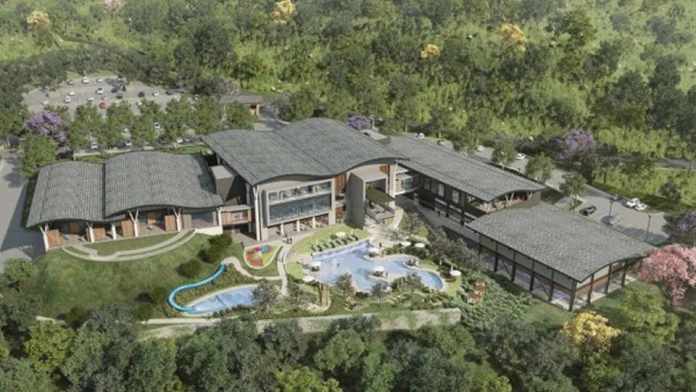


 “Antibiotic resistance is a global problem, and resistant bacteria may be more common in other countries than in the United States,” the agency warns.


 The operator will install public sites in the areas of Guanacaste, Puntarenas, Heredia, San Jose and the South Zone, offering free internet access at speeds of 100, 200 and 300 Mbps via fibre-optic infrastructure.


