The Instituto Costarricense de Turismo (ICT) – tourism board – reminded pilgrims and all others who travel through Costa Rica to Panana City to attend the World Youth Day 2019, that every ticket sold in Costa Rica for international land transport must pay a tax equivalent of 5% of its value.
The tax is payable, regardless of the reason of the trip, to invidivuals or companies that sell international transport service, such as bus companies or tour operators that provide service to Panama City directly from San Jose.
Exempt from the tax are tickets sold under the special laws or international treaties and verified by the ICT.
Nor does this tax apply to pilgrims (and other tourists) who, on the occasion of World Youth Day, take a local transportation service – ie local bus – from somewhere in Costa Rica to Paso Canoas and then, after clearing immigration, continue on their way to Panama city.
For clarity, the tax would payable on a ticket purchased on say Ticabus that provides service between San Jose – Panama City, but not on a ticket on local route bus, say San Jose to Paso Canoas.
The ICT says it will be carrying out operations to verify that the tax is paid.
World Youth Day 2019 will begin on Tuesday, January 22 and ends on Sunday, January 27. Pope Francis will be attending the event.
A blackout (apagón in Spanish) that affected a large part of the Central American isthmus, especially Panama and Nicaragua, left several communities in Costa Rica without electricity, mainly in Guanacaste, Limón and the metropolitan area of San José.
The Instituto Costarricense de Electricidad (ICE) reported affected the areas of Las Cañas, La Virgen and Santa Rita, in the Chorotega region; Naranjo, Alto Castro and Rosario, in Huetar Norte, and Siquirres, in the Huetar Caribe region.
In San Jose, the ICE subsidiary, the Compañía Nacional de Fuerza y Luz (CNFL) reported power cuts in some areas of Alajuelita, El Llano, La Union, Goicoechea, Zapote, Tibás and Desamparados.
The cuts in power in Costa Rica were a precuationary measure, at 2:17 pm Sunday, the ICE deciding to take the country offline from the Sistema de Interconexión Eléctrica de los Países de América Central (Siepac). the Electrical Interconnection System of the Central American Countries.
The last great regional blackout occurred on July 1, 2016, a problem that originated in Panama.
The Central American countries are interconnected by Siepac, which allows transactions in the Central American Electricity Market (MER).
By late Sunday evening, both ICE and the CNFL reported full power restored.
Sunday morning more than 500 Nicaraguans took to downtown San Jose, to raise their voice against the Government of Daniel Ortega.
More than a demonstration, the gathering had hints of a party with typical food and music from their homeland and dozens of Nicaragua flags.
The peaceful event began in the La Sabana Park and concluded in the Plaza de la Democracia.
Geral José López, doctor and part of the Unión de Nicaragüenses en el Exilio por una nueva Nicaragua (Unepun) – Union of Nicaraguans in Exile for a new Nicaragua, explained that they seek to join forces so that international organizations proclaim the same they do and, in some way, demand a new Constituent Assembly.
“We are here to save our lives. In Nicaragua, we cannot raise flags, not even sing our anthem, but we cannot let it go on like this. Nicaragua has to return to being democratic,” he said.
Lopez also said he was demanding justice for the more than 500 deaths, the thousands of wounded and the freedom of the innumerable number of political prisoners.
Nicaragua free!
“Viva Nicaragua libre!” Was one of the phrases that the protesters repeated over and over again.
“They killed my 14-month-old son, shot dead. He died in my arms while walking with my family,” said Nelson Gabriel Dorcio, from Managua.
He is one of the more than 40,000 Nicaraguans who have requested asylum in Costa Rica, after being threatened with death for denouncing or demonstrating against the Ortega regime.
“I was a transience leader. I was in charge since April 19 when everything started. They threatened me with death. I want to return to my country, it is not easy to be in a country with latent xenophobia for Nicas; but there my head has a price,” said a woman a who did not identify herself for fear of reprisals in her Nicaragua.
The spirit of nationalism, thirst for their land and justice could be felt among the marchers. “For Luis, Byron, Victoria, Amaya …”, read one of the signs.
“I’m here because I want to be free in my country. The regime forced me to flee. I was in the trenches and they chased me, they threatened us with death. My two children and my parents are there, I came by way of the mountains, it took us 11 days. Now I’m scared for them,” said Jamileth Hurtado, a short, dark-skinned woman from Zelaya Central.
The Crisis in Nicaragua
The crisis in Nicaragua began in April 2018, after armed forces confronted young students in Managua, triggering an exodus of Nicaraguans to Costa Rica, fearing loss of life in their own country.
The Dirección General de Migración y Extranjería (DGME) – Costa Rica’s immigration service – reported that as of December, 40,323 Nicaraguans requested refuge. Of that amount, 21,885 obtained a provisional status as refugee claimants.
The Inter-American Commission on Human Rights (IACHR), which has the Special Monitoring Mechanism for Nicaragua (Meseni) installed in Nicaragua, says (to December) 325 deaths have been recorded in the country.
A month earlier, in November, the Nicaraguan Association for Human Rights (Anpdh) had the number of deaths at 545, according to the Nicaragua newspaper, La Prensa.
The first total eclipse of the moon in happening tonight, Sunday, January 20, and can be seen with the naked eye in the skies of Costa Rica if the weather conditions allow it where you are.
The eclipse is expected to occur between 9:33 pm and 12:50 am January 21.
Although you can easily observe the eclipse (if the sky is clear at your location), you can appreciate more detail through binoculars and telescopes.
You can find the eclipse in the sky to the east and the zenith.
Laura Flórez-Estrada y Jazmín Elizondo contrajeron matrimonio en julio del 2015. Fotografía Marcela Bertozzi
The State has accused Laura Flórez-Estrada and Jasmin Elizondo, as well as their witnesses and the notary who married them, in July 2015, on the crime of “falsedad ideológica en perjuicio de la familia” (ideological falsehood to the detriment of the family).
Laura Flórez-Estrada and Jazmín Elizondo were married in July 2015 when same-sex marriages were prohibited in Costa Rica. The marriage was registered due to an error in the Civil Registry. In 2018, a Constitutional Court paved the way for same-sex marriages in Costa Rica. Photo Marcela Bertozzi
The lesbian couple, who were able to be married thanks to an error in the Registro Civil (Civil Registry), the two witnesses and the notary will appear for a preliminary hearing in the Criminal Court of San José, on February 5, to determine if the case merits going to trial.
The hearing date was made public Friday night by Marco Castillo, the notary who registered the civil marriage.
Adriana Sánchez González and Mario Villalta, are the two witnesses required to make the marriage official.
Castillo was able to register the marriage in 2015 between the two women, due to the fact that in the civil registry Jazmín Elizondo’s sex appeared as male.
The error was made public in early November of that year and triggered the State’s lawsuit against the five people involved.
According to Castillo, the charge is for the defendants taking part in a marriage between same-sex couple prohibited by law at the time.
Since, in August 2018 the Constitutional Court (Sala Constitucional) resolved that the prohibition of marriages between persons of the same sex is unconstitutional.
“The logical thing would be that now our case does not go beyond the preliminary hearing, they should not process us and this should be dismissed,” explained Flórez-Estrada, that her intention is to ask the judge in the preliminary hearing to dismiss the case against her and the others.
The notice to the preliminary hearing that will take place on February 5, 2019
She added that, in addition, on their side is the advisory opinion issued by the Inter-American Court of Human Rights (IACHR) and that led to Costa Rica’s Constitutional Court decision.
For his part, Castillo explained that if the State continues with the process they will file a case with the IACHR for a violation of their human rights “now that equal marriage has been approved”.
The lawyer added that he doesn’t believe that IACHR action will suit the State.
In addition, explained the lawyer, that accusing them of the crime of ideological falsehood to the detriment of the family, the Civil Registry tries to declare the nullity of the marriage between the two women, when it was the Registry’s error that had Jazmín Elizondo registered as male.
“Yo estoy Pura Vida. Y tú, ¿Cuándo vienes?” (I am Pura Vida. And you? When are you coming?) reads the billboard in front of the Plaza de Cuzco, in the cold weather of the central Paseo de la Castellana in Madrid, Spain.
The billboard invites Spaniards to escape the winter to know the tourist attractions of our country.
At the same time, the Atocha train station exhibits impressive images and videos of nature, wildlife, adventure activities, waterfalls and beaches a Spanish tourist will find in Costa Rica.
In this busy station, a promotional video is played more than 1,000 times a day on large format screens and interactive digital screens. In addition, the electric ramps for accessing the high-speed train of the Madrid-Barcelona route were decorated with designs and colors inspired by the typical Sarchí carts.
The campaign is geared to the growing number of tourists from ‘el Viejo Continente’ (the old continent as Europe is often described as in Costa Rica).
According to the ICT – the Costa Rica tourism board – between January and December 2018, there were 69,000 tourist arrivals from Spain, the fourth largest marker for tourists to Costa Rica from Europe.
“For the first time in history, a positioning campaign of Costa Rica as a destination in large format outdoor media in the Spanish market, medium that allows us to have great reach and strategic high traffic points such as the Paseo de la Castellana and the Atocha station,” said Ireth Rodríguez, ICT promotions manager.
According to the ICT, the Atocha train station reports a daily transit of 1.8 million passengers with a medium and medium-high demographic profile, but above all it is filled with the “best prospects” of Spanish tourists identified in the ICT research.
The campaign that is set to run for three weeks comes at a cost of 90,000 Euros (US$102,000).
Rico’s TICO BULL – On the social media, the Ministerio de Obras Publicas y Transportes (MOPT), the folks who daily try to solve our traffic problems, but alas have their hands tied by drivers in Costa Rica who neither respect the rules of the road or those of the Transito (traffic cops) for their own good and ours, have taken to the social media in an appeal to conscience.
This week they published this photo and ask …
… let’s just imagine for a second, just for a second so that your hair doesn’t stand on end, what would happen if the train hits this vehicle loaded with fuel.
The image is one of many that fill social media pages, of dumb-ass drivers doing dumb-ass things, especially with the train.
For the longest time, people have complained of the lack of train level crossings, especially in the greater metropolitan area. For the longest time, many have criticized the MOPT, the Incofer – the railway – and anyone who will listen about how people are being injured and even killed because of the lack of road safety.
This month the first couple of dozen train level crossings were put into action, with dozens more to come.
But the project has been all in vain, as almost daily drivers run into the barriers. Some complain they weren’t working, others, there was no train coming so “why wait”, while others, I am sure, though they could be the barrier and the train.
Fortunately for most, like the truck in the picture, the didn’t lose the race to the train.
Remember, the train has priority over other vehicles on the road, followed by big trucks, buses, small truck, large vehicles, small vehicles, motorcycles, mopeds, bicycles, tricycles and you and I.
Keeping that list and order in mind might just make sure you get home every time you go out.
Pia Loyola, better known as Pia Miller, is a Chilean-born Australian fashion model and actress, best known for playing Kat Chapman in the series “Home and Away.”
Brazilian financial authorities have identified suspicious money transfers into an account of President Jair Bolsonaro’s son in 2017, the Globo news outlet reported Saturday, citing the country’s Council for Financial Activities Control.
According to the outlet, in 2017, 48 cash transfers of 2,000 reals (US$500) each one, were made to the account of president’s son Flavio Bolsonaro. In total, 96,000 reals (about US$26,000) were credited to his account in five days.
The money came through ATMs located in the building of the Legislative Assembly of Rio de Janeiro. The news outlet reported that the council still did not identify who made those cash deposits, but suggested that it might be an attempt to hide a source of funds.
Earlier in the week, the Brazilian Supreme Court has halted an investigation in suspicious payments to Flavio’s former driver Fabricio Queiroz, who had some 1.2 million reals (more than US$300,000) on his account in 2016-2017. This decision has been made at the request of Flavio.
It is common to see hamburger commercials at prices to get you in the door, but what about a special burger for US$499?
The Caviar and Wagyu burger for US$499. The burger joint says it has sold 2 so far in the 15 months they have been in business.
Well, at Ridiculous Burgers, in Jaco center (in front of the Red Cross) that’s the price for one of their special burgers. And although the price seems ‘ridiculous’, the burger joint says it has sold two so far in the year and three months they have been open for business.
What makes this hamburger, that costs the equivalent of 85 Big Macs, so expensive?
In addition to the bun and typical hamburger fixings, it includes two very particular and expensive ingredients: caviar and wagyu.
“A can of caviar costs ¢113,000 colones and there is only one distributor in the country, while the kilogram of wagyu costs ¢62,150 colones and I bought it from a man in San José. Of that amount I get four portions, hence the price of the hamburger is so high,” Maria Fernanda Alvarado, manager of the restaurant and one of the” moms “of the idea, told La Teja.
Maria Fernanda said that the idea of opening “Ridiculous burgers” was her landlord, Phill Jones, a New Zealander and between them, together with Costa Rican chef Ivo Vitra, they conceived the exotic hamburger.
Ok, we all (at least most us) know what caviar is, but what is Wagyu?
On Wikipedia, Wagyu (和牛 Wagyū, “Japanese cow”) is any of the four Japanese breeds of beef cattle. In several areas of Japan, wagyu beef is shipped carrying area names. Some examples are Matsusaka beef, Kobe beef, Yonezawa beef, Mishima beef, Ōmi beef, and Sanda beef.
In Japan, there are four breeds of wagyu: Japanese Black (黒毛和種 Kuroge Washu), Japanese Brown (赤毛和種 Akage Washu or Akaushi), Japanese Polled (無角和種 Mukaku Washu), and Japanese Shorthorn (日本短角和種 Nihon Tankaku Washu).
In Australia, the Australian Wagyu Association is the largest breed association outside Japan. Australian Wagyu cattle are grain fed for the last 300–500 days of production. Wagyu bred in Western Australia’s Margaret River region often have red wine added to their feed as well.
In the United States, Japanese Wagyu cattle are bred with Angus cattle. This crossbreed has been named American Style Kobe Beef.
In Canada, Wagyu cattle farming in Canada appeared after 1991 when the Canadian Wagyu Association was formed. Canadian Wagyu beef products are exported to the U.S., Australia, New Zealand, Hawaii and Europe.
In Costa Rica, Wagyu is available from a guy in San Jose and in Jaco, on Costa Rica’s Central Pacific beach town, at the ‘World Famous in Costa Rica’ Ridiculous Burgers.
Haven’t got then US$500 yet? You can scale down to Salmon instead of caviar (and Wagyu) for US$399 or just the Wagyu for US$99
But not toworry, while you’re saving up for possibly being the third buyer of this special Caviar and and Wagyu burger or Salmon or just Wagyu, the burger joint offers up a whole lot of other burgers are less ridiculous prices.
Editor’s note. No special consideration was received or offered for this article, but one would be gladly accepted in exchange for nothing.
Former President Óscar Arias described the accusation by the Public Ministry as "a complete falsehood." Photo: Jose Cordero
The General Prosecutor’s Office (Fiscalia) filed on Friday an accusation ‘prevaricato’ against former president Oscar Arias Sanchez with the Juzgado Penal de Hacienda, del II Circuito Judicial de San José – Criminal Court of the Treasury of the Second Judicial Circuit of San José.
Former President Oscar Arias described the accusation by the Public Ministry as “a complete falsehood.” Photo: Jose Cordero
“The accused Oscar Arias Sanchez, from his position as head of state, drew up the plan so that the Crucitas mining project could be developed by achieving administrative actions and resolutions at all costs, even contrary to law,” reads the statement filed with the Court.
According to the Ministerio Público (Public Ministry), Arias devised an alleged “criminal plan” for the Canadian company Industrias Infinito to operate the Crucitas mine, in Cutris de San Carlos, during his second administration (2006-2010).
In the indictment, the Fiscalia attributes two crimes of malfeasance for allegedly dictating resolutions contrary to the law and based on false facts.
First, the Fiscalia accuses the former president of the signing of a resolution to “validate and correct” the mining concession to Industrias Infinito, in 2008, presumably knowing that this permit had been repealed by the Constitutional Court or Sala IV four years earlier, and despite the fact that the project apparently lacked a new environmental impact study.
And second, of declaring the project of national convenience without supposedly having a cost-benefit analysis that demonstrated that the deforestation of 192 hectares of forest would generate greater social benefits than the socio-environmental impact.
That document, says the Prosecutor’s Office, was an indispensable requirement for the signing of the decree.
According to the Fiscalia, Arias “delegated the material execution of his plan” to his then Minister of the Environment, Roberto Dobles Mora, who is also accused of the same.
Consulted by La Nacion, Arias’ lawyer, Rodolfo Brenes, said his client reminded readers his opinion article Por qué aprobé elproyecto Crucitas? published in that newspaper on January 15, which reads:
“To imply that in some way the project is especially related to me or my administration is a complete falsehood. Anyone who would have been elected in 2006 would have received the mining company’s request for a concession.
“Anyone who would have been elected would have received the same recommendation from Minae’s (Ministry of Environment) technical staff to declare the national convenience project, something that was derived from our own legislation, which states that mining is in the public interest.
“And anyone who would have been elected would have had to decide whether to sign the decree for which I am currently accused, a decree such as the one signed by hundreds in the exercise of the presidency.”
Brenes questioned the account of the facts released this Friday by the Prosecutor’s Office, in a private session, and insisted that everything is a “speculative theory”.
“That is totally false and is nothing more than a speculative theory, which has no evidentiary support. It must be remembered that the project had been in process since 1993. The environmental feasibility was granted in 2005, during the administration of Don Abel Pacheco, today the current Environment Minister Carlos Manuel Rodríguez,” said Brenes.
The lawyer added, “In addition, we must not forget that many aspects of the project were analyzed by the Constitutional Court, which gave it its approval. And, of course, the Attorney General’s Office defended the legality of everything that was done. In fact, in light of this background, it is understandable why the Prosecutor’s Office did not interview 16 witnesses in the case of Oscar Arias. If they had, it would have been impossible to accuse him (Arias).”
Among the witnesses, the Fiscalia intends to call are former Environment Minister René Castro under the Chinchilla Administration and the former Attorney General from 2004 to 2010, Ana Lorena Brenes.
The two are on the list with four others witnesses for the prosecution if the case goes to trial.
Wiki deifnes “Prevaricato” as a crime that consists in an authority, judge or other public servant dictating an arbitrary resolution in an administrative or judicial matter knowing that said resolution is unfair and contrary to the law. It is comparable to breach of the duties of the public servant. Such action is a manifestation of an abuse of authority.
NYC Mayor Bill De Blasio is now openly calling for the expropriation of private property (WikiCommons).
With the rising influence of socialism in the Democratic Party, and the real power and influence of groups like the Democratic Socialists of America, it’s hardly outlandish to suggest that the ideology is playing an increasingly important role on the national stage. Bernie Sanders, who won 43% of the vote in the 2016 Democratic Party primary, has long openly identified as a socialist, while maintaining close ties with socialist regimes like Fidel Castro’s Cuba and Daniel Ortega’s Nicaragua.
New York City Mayor Bill De Blasio is now openly calling for the expropriation of private property (WikiCommons).
Alexandria Ocasio-Cortez, another socialist politician, has become the rising star of the party, skyrocketing to Twitter fame, where she currently ranks only behind Donald Trump in terms of popularity on Twitter. Some Democrats have embraced her, while others have shunned her. You get the sense that Pelosi and Schumer understand all too well that the more AOC crafts the party’s public policy and image, the more their electoral prospects in 2020 decline.
Bernie and AOC may be socialists working within the Democratic Party to erode our free-market capitalist system, but even they have not called for the measures that New York City’s socialist mayor Bill de Blasio recently championed. In a recent public address, he promoted expropriation of private property as a tool of social justice to crack down on problem landlords:
“When a landlord tries to push out a tenant by making their home unlivable, a team of inspectors and law enforcement agents will be on the ground to stop it in time…If the fines and the penalties don’t cut it, we will seize their buildings and we will put them in the hands of a community nonprofit that will treat tenants with the respect they deserve.”
So, to play the devil’s advocate for a moment, one might suggest: well, yes expropriation of private property is a dangerous precedent, but De Blasio and the city of New York would of course be very judicious and responsible (and selective) with their use of this new power. After all, he has only discussed expropriation of private property for derelict landlords who are not taking proper care of their buildings.
Are we really expected to believe, however, that the expropriation of private property is going to end with ramshackle buildings in New York City? This after all is the mayor who recently said that he wished the city of New York could have control over the real estate market, determining such things as rents and prices.
“Our legal system is structured to favor private property,” he lamented. Oh really? So, this is not Khmer Rouge-era Cambodia? This is not 1959 Cuba? This is not today’s Venezuela? A legal system that favors private property?
I would expect this for the mayor of the largest city in Cuba or North Korea. I certainly would not expect if from the United States. And where is the mainstream media, where are the real estate developers, where are the business leaders of New York City, up in arms about this? Are they too afraid of Mayor De Blasio and his reign of tyranny to do anything about this?
De Blasio continued: “people would like to have the city government be able to determine which building goes where, how high it will be, who gets to live in it, what the rent will be.”
Yes, there have been zoning codes and height restrictions in cities for centuries, Mayor De Blasio. We are aware of that. No one is suggesting that you should be able to put a meat-packing plant or a leather tannery in the middle of the quiet upper-class Park Slope neighborhood that you live in. No one is suggesting that someone who owns a plot of land has a natural god-given right to build a 300 story building.
Not even the most ardent economic libertarian would say there should be no zoning or height restrictions in urban areas.
But suggesting that the city of New York should be able to determine who gets to live in buildings, and how much the rent will be?
Now, how exactly would that work? De Blasio would like to see a new NYC bureaucracy: the Bureau of Housing Assignment?
I can see it now: annual budget of USD $600,000,000, 1,200 employees (most of them former volunteers on the Bernie Sanders and Elizabeth Warren presidential campaigns), all there to perform a valuable public service to the city of New York.
Their maxim: “From each according to his ability, to each according to his needs.”
It would be ever so delightful. You don’t have enough money to afford the rent in Manhattan, but you’ve always wanted to live within walking distance of central park? You’re in luck, because Mayor De Blasio and his crack team at the Bureau of Housing Assignment just expropriated a building from a greedy, capitalist landlord, and we are looking for the neediest people to put in a neighborhood where studio apartments rent for USD $3,000 a month.
You don’t have a job? Well, that’s just fine. We will put you on every government program available for the next five or ten years…or hell, maybe just for the rest of your life. Just remember, when it comes time to vote…who gave you that nice expropriated apartment. Dear Leader Bill de Blasio.
This has all been done before. Fidel Castro expropriated virtually every piece of private property on the entire island and determined who would live there and what they would have to pay.
Hugo Chavez routinely expropriated the property of his political opponents and “redistributed” it to “needy” people, who just happened to be his biggest political supporters.
Socialism in America is here, and it’s being pushed by autocratic mayor De Blasio and his social justice allies.
But we can’t be silent. De Blasio and his expropriation program must be stopped at all costs.
A car bomb exploded Thursday, January 17, at a police academy in Bogota, leaving at least 21 people dead and dozens injured, Colombian police reported.
Members of the security forces and rescue personnel work at the site of an explosion on a police cadet training school in Bogota on Jan. 17.
“Unfortunately, the preliminary toll is 21 people dead, including the person responsible for the incident, and 68 wounded”, the police said in a statement, adding that 58 of those injured had been discharged from hospital.
Earlier in the day, citing local police, that at least nine people were killed and 54 were injured on Thursday by a car bomb that went off in a police school in the Colombian capital of Bogota, AP news agency reported citing police.
This comes after Penalosa said earlier that five people died and ten other people were injured.
Juntos, el Gobierno y la sociedad, vamos a trabajar por Colombia. No vamos a ceder ante los actos de terror. Colombia está firme, no se amedrenta, ni se someterá a los criminales. La información ciudadana es muy importante para desarticular a la estructura criminal responsable. pic.twitter.com/NXhdJmtPld
The explosion took place early in the morning before the start of graduation ceremony and left 10 people injured.
Members of the security forces and rescue personnel work at the site of an explosion on a police cadet training school in Bogota on Jan. 17.
Earlier, witnesses had told the AP news agency said they heard a loud explosion which shattered windows in buildings in close proximity to the General Santander police academy.
Reacting to the reports, Colombian President Iván Dugue wrote on Twitter that he immediately returned to Bogota and was going to the scene. Previously, the president had plans to hold a meeting of the Security Council in Choco on Thursday.
A police officer and two women wipe their tears close to the scene where a car bomb exploded, according to authorities, in Bogota, Colombia January 17, 2019. Photo: Reuters
On Thursday afternoon President Ivan Duque announced three-day national mourning.
“To honor their memory, we have announced three-day national mourning,” Duque said in a televised address to the nation. The president also ordered to tighten security measures at the country’s border and routes leading to cities.
Duque also called on Colombians to unite against terrorism and asked them to support the investigation into the attack.
Duque said authorities had identified the perpetrator on the day of the attack and were eager to bring the people connected to the terror act to justice.
The president pledged to boost the fight against criminal gangs.
Nos unimos a la iniciativa ciudadana de marchar, este domingo, en rechazo al terrorismo y en memoria de los jóvenes asesinados. Estamos preparados para seguir enfrentando las organizaciones criminales y construir un país pujante, optimista y comprometido con un mejor futuro. pic.twitter.com/RBek0zfxYC
A caravan of migrants from Honduras en route to the United States, cross the Suchiate river to Mexico from Tecun Uman. | Photo: Reuters
Hundreds of Central American migrants entered Mexico undocumented through an open border, in spite of the Government’s offer to give a humanitarian visa to transit freely for a year in the country.
A caravan of migrants from Honduras en route to the United States, cross the Suchiate river to Mexico from Tecun Uman. | Photo: Reuters
Between Thursday and Friday, over a thousand Central American migrants crossed the border between Guatemala and Mexico, into the state of Chiapas.
“The road today was open,” said Marco Antonio Cortez, 37, a baker from Honduras traveling with his wife and children, ages 2 and 9. “They didn’t give us bracelets or anything, they just let us pass through Mexico migration.”
The Mexican government, led by President Andres Manuel Lopez Obrador (AMLO), is trying to guarantee the safe and orderly flow of people through the border and offered a one-year humanitarian visa. To Help with the process, on Thursday, officials gave migrants wrist bands to wear until they could register with authorities and continue with the humanitarian visa process that would last for five days.
According to the Mexican National Migration Institute, the migrants can stay in temporary shelters in Mexico until they receive humanitarian visas allowing them to remain in the country, or they can wait in Guatemala for their document to be ready, as was written in a statement.
The majority of those migrants who crossed the border undocumented, seek only to go to the United States (U.S.) and won’t stay in Mexico. Groups of migrants left El Salvador and Honduras earlier in the week, the latest in a string of caravans of people largely fleeing poverty and violence.
The caravans have inflamed the debate over U.S. immigration policy, with President Donald Trump using the migrants to try to secure backing for his plan to build a wall covering the country’s southern border with Mexico.
Mexican President Andres Manuel Lopez Obrador is pursuing a “humanitarian” approach to the problem, vowing to stem the flow of people by finding jobs for the migrants. In exchange, he wants Trump to help spur economic development in the region.
Guatemala’s Supreme Electoral Court (TSE) called for general elections for June 16, 2019, as the country is going through a political crisis fostered by President Jimmy Morales’s conflict with the U.N. Anti-Graft body.
File photo
“The Supreme Electoral Court calls to participation with a civi spirit, in harmony and without confrontations,” said Mario Aguilar, president of the TSE.
More than seven million Guatemalans will elect about 4,000 public servants, including president, vice president, municipal authorities and representatives for local, national and Central American houses.
Neither president Morales nor the presidents of the other government branches were present at the TSE ceremony announcing the elections date.
Morales was elected with a promise for change in 2015 after ex-President Otto Perez Molina resigned accused of corruption. The U.N.-backed International Commission Against Impunity in Guatemala (CICIG ), which Morales is now trying to expel from the country as soon as possible, played a key role in the investigations.
While Perez Molina’s trial goes on, his vice president Roxana Baldetti was already sentenced to more than 15 years in prison.
His current dispute with the CICIG proved to have a strong political cost, with massive protests in favor of the international institution.
Thelma Aldana, who served as the Attorney General (2014-2018) and worked along the CICIG in several high profile corruption cases, has said in the past she would like to participate in the presidential elections. Although she hasn’t formalized her candidacy yet, her team has been discussing the possibility to make her the candidate of a new, progressive political party known as “Movimiento Semilla” (Seed Movement).
As soon as she left her position in 2018, several cases were filed against her by the political establishment, accusing her of embezzlement, abuse of authority and other cases.
Other visible names that will probably participate in the elections are Sandra Torres, who in 2011 divorced then president Alvaro Colom to be able to run in the elections and made it to the second round against Morales in 2015; Alejandro Giammattei, who has been a candidate three times already; and Zury Rios, daughter of the late dictator Efrian Rios Montt, who founded a political party to participate.
The electoral authorities informed that there will be 27 out of 28 parties participating in the process so far, as one is suspended, receiving up to US$3.7 million for campaign expenses.
Parties will not be forced to include women or indigenous people in their candidacies because an electoral reform didn’t pass in 2016.
Nine months into the Nicaraguan sociopolitical crisis, the country is looking at a difficult year ahead. It faces a government who has shut its doors to everything but repression.
There are at least six trends that will impact political outcomes in Nicaragua in 2019. Their combination, evolution, and interaction with key stakeholders will determine scenarios for either further deterioration or for positive change.
Nicaragua needs strong incentives to prevent a debacle that would cause irreparable damage. It’s not good for anyone – not for Nicaraguans, Daniel Ortega’s political circle, the great capital, nor the international community – for the country to be left in ruins.
1. Ortega’s Belief in Governing with the Maduro Doctrine
Ortega’s leadership style since April 2018 has excluded any type of political agreement or negotiation and has demanded from everyone blind loyalty to the regime. Unfortunately, Ortega’s only way of governing at this point is through force and coercion, which he is betting on for 2019.
The intention is to maintain power through police and military force, using the legal system to intimidate and control opposition, dissidence, and protest. The monopoly of power and the legal and military approach that the regime has taken allows ample maneuvering room to stay in power through fear.
This political model, although unsustainable in the long term—because it depends on a certain degree of capital and political clout—it is one of the few remaining resources that the regime has. The Ortega-Murillo family intends to keep intimidating, imprisoning, and torturing the Nicaraguan population and violating their human rights in 2019. Their aim is to weaken the economic and political elite and wear down the population, such that eventually it gives up, stops resisting, and accepts any type of transition offered by Ortega and Murillo.
2. An Imperfect but United Opposition
Despite facing repression, surveillance and intimidation, the Nicaraguan Opposition at the hands of the Unidad Nacional Azul y Blanco (UNAB) will remain an important and legitimate voice for change. During a political rearrangement and transition, it continues to move forward with fresh, representative leadership, a proactive agenda, and stronger partnerships.
The Ortega-Murillo regime believes that maintaining an absolute monopoly of power will guarantee them control over the resistance. However, they are underestimating the opposition: the Blue and White Unity is legitimate, has resisted, and has grown stronger. Its message has been consistent and unwavering.
The leadership that emerges in the next months will strengthen a coalition that is diverse in terms of the social groups, economic classes, and interests that it represents, bringing together different social, economic, and geographic contingents in a country that already supports it greatly. The goal is to resist repression and threats from the regime, and at the same time continue to support and pressure for political reforms, while gaining international recognition. The type of political agenda and the negotiation put forth by this movement will be of fundamental importance as a means to gain further popular support in the short run.
3. The “beans and rice” economy
Nicaragua’s economic deterioration in 2018 is more profound than its -4% growth suggests. For Nicaragua to recover to 2017 levels (levels that on their own were already insufficient to foster economic development), it would need a cash influx of at least $1 billion over a short period of time. Meanwhile, losses in production, access to markets, and international confidence, among other things, are structural factors that affect an already fragile economy.
The regime’s economic strategy is a throwback to the 1980s, seeking to rule with a political economy based around low levels of production as long as Ortega’s clientele is fed. This “rice and beans” approach contrasts with the reality of a dire social and economic situation, with few scenarios for recovery in the next 12 months.
Moreover, the Nicaragua of today is not the Nicaragua of the 1980s. In the 21st century, access to finance, to the global economy and competitive employment are factors that define economic growth, and not the context of heavy subsidies and access to Soviet support that prevailed during the revolutionary crisis in the 1980s.
While it is true that the economic crisis affects the population and the private sector, politically it is affecting the government even more. The government is essentially left with empty pockets and few resources to pay its employees (despite promises of a pay increase for the Police). The regime will be making use of international reserves and ‘extra money’ or ‘hidden reserves,’ but it is practically digging up whatever it can mine to find resources.
4. The Specter of Armed Conflict and Sporadic Conflicts
Daniel Ortega didn’t read “The Patient Impatience” by Tomas Borge very well. He didn’t understand that the limits of tolerance are broad, and that tolerance itself is not passive. Nor did he understand that when these limits are set too narrowly, they can end up being justly transgressed.
Unfortunately, the specter of armed conflict should not be underestimated. While it is true that the political resistance owes part of its great success to its nonviolent nature, there now is a critical mass of people who can no longer endure this repression and believe that armed violence is the fast track solution to political change.
The problem is that some people may end up in confrontations with the Police or may incite an uprising within the Army (which is not unified, despite General Julio César Avilés’ efforts), or use foreign territories to attack. While this risk is the exclusive responsibility of the regime, everyone ought to feel an obligation to prevent an armed conflict. After all, this outcome would ultimately play into Ortega’s hands, because Ortega wants to keep ruling in a state of ‘prolonged war,’ the third phase of political control after repression and the “rice and beans” economy.
5. “Every Man for Himself”
Albert Hirschman wrote that people have three possible options at hand: exit, voice and loyalty, that is, to migrate or opt out, to protest, or to accept the status quo. Pressure and repression highlight the most primordial aspects among human beings, a sense of physical self-preservation, the belief that from now on what matters most is saving oneself.
The ‘every man for himself’ syndrome manifests itself in three areas: migration, dissidence, and accommodation. This repression has succeeded in expelling some people under direct threat or fear for their lives. In 2018, more than 60,000 Nicaraguans fled the country in the midst of political and economic collapse. Many have found refuge in Costa Rica, and given the continued deterioration, more people will flee in 2019.
Although political dissidence will also start to disband, Daniel Ortega’s empire, which was preserved through intimidation, force and blackmail, is starting to crumble. The political and economic elites close to the regime are rethinking things and deciding to jump ship. For some, like Rafael Solis, the “patient impatience” is already over, and the regime has become politically and morally indefensible.
For others, economic interests do not surpass the political cost of sanctions against the government and the Ortega-Murillo family. Whether a matter of principle or pragmatism, dissent is growing.
Bruce Bueno from Mesquita explains that dictators stay in power by keeping a small power circle, which they provide with protection in exchange for loyalty and not being replaced by others. However, fissures occur when the allies get ahead of the dictator and opt out of the regime. This trend will increase in 2019, despite the regime’s promises of political and economic favors.
Finally, there are grave economic concerns: the very precarious situation in which the business class, including large, small and micro-enterprises, find themselves may force them into making bad decisions. Some will want to get cozy with the government as a short-term strategy; others will try to get into the illegal economy, like the situation in Venezuela, trying to launder money to sell to the government in their desperation. Shifting organized crime networks in the region could take advantage of this situation. This survival strategy is key for the 2019 outlook and could go either way, both in favor of or against the country.
6. A More Active and Critical International Community Responds to the Alteration of Constitutional Order
The OAS started the year off with a fourth meeting looking at the situation in Nicaragua. Its interpretation of the conflict has been consistent and increasingly convinced that Nicaragua’s constitutional order has been altered. The OAS, however, is not the only international stakeholder that is mobilizing in favor of change. Nor is the United States. The United States has proactively established a foreign policy strategy towards Nicaragua that includes sanctions unless it carries out and commits to the political reforms it has promised.
Sanctions are a measure that has been implemented to put the Nicaraguan government in check. The sanctions have implications that go well beyond the cancellation of visas or putting names on the OFAC list. They include putting together a criminal case on human rights violations. The Ortega-Murillo family has underestimated the United States and talk of blaming them for staging a coup will not get them far.
At the same time, other countries such as Canada, Costa Rica, El Salvador, Spain and Mexico who along with the United States represent more than 70% of trade, tourism and remittances have not reacted positively to the Ortega regime. Though El Salvador has held off on criticizing it, the country is expected to elect an adversary to Ortega in the upcoming February 2019 elections.
International condemnation regarding the despotic nature of the regime goes beyond its main trading partners. It also includes the Nicaraguan diaspora, whose international pressure is important because it has diplomatic ties, a global presence, and economic capital that affects the survival of the regime.
Considerations on Political Change
The combination of these trends generates scenarios and clues as to the direction that Nicaragua is heading. In the face of growing international pressure, a more defined opposition leadership, and an economically weakened government facing emboldened opposition, the repressive capacity of the regime will not be enough to keep it afloat. However, if Ortega is betting on armed confrontation with those hoping for a fast track solution, Nicaragua may enter a violent period over the short term, creating even more divisions in a country that still has many wounds from the past.
Only if dissidence stops, international pressure turns out to be ineffective, and the opposition is completely neutralized through fear and torture, can things be expected things to continue as they have been in 2018.
The key question is really if Daniel Ortega and Rosario Murillo want to repeat the history of William Walker, reducing the country to ashes before they leave.
Nicaragua’s oldest and most-widely read newspaper, La Prensa, published its Friday edition with a blank front page in protest against what it says is the government’s withholding of ink, paper and other materials needed for its printing press since September.
La Prensa circulated on Friday in the streets of Managua with a blank front page
In a Friday editorial, the newspaper asked: “Have you imagined living without information?,” and complained that the government of President Daniel Ortega had impounded its supply of printing materials for 20 weeks.
“We don’t know how much longer we can keep printing the newspaper. Maybe two more months, maybe until tomorrow,” Jaime Chamorro Cardenal, director of La Prensa, said.
Human rights organizations and independent media say the government of Daniel Ortega is attacking freedom of expression.
Holding up the blank front page, La Prensa director Jaime Chamorro had a message for Vice-president and Ortega’s wife, Rosario Murillo: “La Prensa will reach 100”
The government recently shut down the cable news television channel 100% Noticias and continues to hold the owner Miguel Mora and the Nicaraguan-Costa Rican press director on charges of terrorism and hate-incitement, while a judge ordered the arrest of three more. The online news Confidencial had its offices raided days before.
Protests raged for months before a government clampdown reined them in, but more than 300 people were killed during that time and over 500 incarcerated, according to the Nicaraguan Center for Human Rights, one of the groups the government has blacklisted.
La Prensa said customs agents at the behest of the government have been withholding imports of paper and ink in retaliation for critical coverage of simmering political tensions in the country. The Dirección General de Servicios Aduaneros (DGA) has been withholding materials since September.
Since April 2018, Nicaragua has been experiencing one of its worst crises since a civil war in the 1980s.
Nicaragua’s customs authority was not available for comment on the accusations made by La Prensa. The government did not respond to a request for comment.
Daniel Ortgea maintains there is freedom of expression in the country and has accused the opposition of seeking to mount a coup to oust him.
A group from South Korea arrived in Costa Rica this week ahead of the World Youth Day event that will begin in Panama on January 22.
The group from the Archdiocese of Seoul, led by the auxiliary bishop Msgr. Pietro Chung Soon-taek arrived in Cartago for the Dias en al Diocesis 2019 (Diocesan Youth Day).
The group is hosted by the Parroquia San Esteban Protomártir (parrish of Saint Stephen Protomartyr).
It is the first encounter for young Koreans to meet Costa Rican peers: the two countries are practically at the two ends of the planet, and complicated for youths to cover the costs of such a journey.
As AsiaNews.it reports, the communications office of the Archdiocese of Seoul writes, “they have joined in a simple and spontaneous way. They are young and share the same faith “.
To enliven the guests, the parishioners of San Esteban prepared a show with traditional dance and song. In a sign of thanks, the Koreans brought a statue of Mary Queen of Korea and a painting representing the 103 Korean martyrs.
In Costa Rica, from the 17th to the 20th, the students will be involved in voluntary work and in the visit to the local sanctuaries: on the last day they will take a bus that will take them to Panama City for the 15 hour journey, where they will wait for Pope Francis’s arrival and the beginning of World Youth Day 2019 (WYD) that runs to January 27.
The Pope is very interested in the Korean situation. After the apostolic mission to Korea of 2014, the pontiff repeatedly pushed Seoul and Pyongyang to true reconciliation.
And the L’Osservatore Romano (the Vatican newspaper) reports Pope Francis met a group of Korean parliamentarians. During the meeting, he encouraged those present as well as the two Koreas “to dialogue and seek consensus that foster and strengthen the common good”.
To the requests for prayers for peace on the Korean peninsula, Francis replied: “I always pray for the two peoples and for peace between them”. The Pontiff then added: “in the inter-Korean relations a spirit of reconciliation and unity is important”.
Costa Rica’s cable television, IP telephony, and cellular phone market could be concentrated in the hands of a few with the recent news of a possible merger between Liberty Latin America, that recently purchased a major stake in Cabletica and Millicom, which operates in Costa Rica under the Tigo brand.
Although it would be a global merger, Liberty must request the approval of the merger from the local authorities in Costa Rica
Although the merger, if one occurs, is global, both companies require the approval of the Superintendencia de Telecomunicaciones (Sutel) – Costa Rica’s telecom regulator and the Comisión de Promoción de la Competencia (Coprocom) – competition commission.
The objective of the Sutel and Corpcom is preventing market dominance and protect consumers.
On January 14, Liberty Latin America confirmed that it is in preliminary negotiations with Millicom International Cellular for a possible transaction. The firm clarified that the talks between both parties could reach an agreement. Or they could end in nothing.
In Costa Rica, such a merger would imply that the new operator would have substantial power in the domestic market, given that Cabletica and Tigo are the operators with a strong presence especially in Internet and cable television.
Sutel’s data (from 2015, the latest published) reveals that Cabletica and Tigo had a 39% share of fixed Internet subscribers. In 2017, the two companies accounted for 68% of cable television.
Tigo also offers satellite television service, dominating over the competition Claro, Movistar, and Sky.
In IP telephony, Cabletica and Tigo dominated the segment with 54% of customers at the end of 2017.
Liberty’s presence in the region
In 2018 Liberty Latin America acquired 80% of Cabletica (the remaining 20% remains in the hands of Televisora de Costa Rica), a purchase that was announced in February of that year and approved by regulatory authorities last June.
In 2014, Liberty Global purchased Cable & Wireless (C&W), which includes mobile telephony services in several markets including Panama. In Costa Rica C&W only offers services at the corporate level.
Costa Rica’s telecommunications regulator Sutel has approved the takeover by cable TV and broadband operator Telecable of regional operator Cable Costa for an undisclosed sum, reports El Financiero.
Following a probe, Sutel agreed to green light the transaction after clarifying that the companies would still have less than 25 percent of the market when combined.
Cable Costa operates in the Turrialba and Jimenez cantons of Cartago province and the deal is expected to close on 01 March, said the report.
Police in Nicaragua assure that the four officers killed in the country’s southern border, is by members of a criminal gang based in Costa Rica
The four Nicaragua police officers were brutally attacked Thursday afternoon on the Nicaragua side of the border allegedly by a gang operating in Costa Rica
In a statement released Thursday afternoon, the Nicaraguan National Police say that “a police patrol was attacked cowardly, coming under fire from gunmen belonging to the criminal group known as the “Banda el Jobo”, which commits assaults, drug trafficking and cattle rustling from its base in Costa Rica”.
According to the Nicaraguan authorities, the officers were in the San Ramón district, in the municipality of San Carlos and Río San Juan department when they were.
The deceased were identified as José Luis Montenegro Masís, Karina Vanessa Ramírez Herrera, Jonathan de Jesús Narváez Rivas and Carlos Iván Tenorio Obando.
Missing is police official Maynor José Hurtado, according to the statement.
“Our police institution condemns these criminal acts (…) and reaffirms its commitment to continue working for peace, security and protection of life and property of individuals, families and communities,” highlighted the statement to the press.
The official notice 02-2019 of the Nicaragua National Police website attributes the attack to the band “El Jobo” operating in Costa Rica
For their part, Costa Rica’s Ministry of Public Security (MSP) stated that they learned of the facts through international media, as they did not receive any official notification from their counterparts in Nicaragua.
Allan Obando Flores, director of the Border Police, stressed that Costa Rica ruled out that the country is used for the operation of criminal groups that attack neighboring countries.
“We categorically deny that our territory is used at this time to make any kind of attack against civil or military authorities in a neighboring country. We continue with constant patrols to reject criminal groups that operate within our borders and provide security to the inhabitants of that area,” Obando explained.
The Minister of Securit, Micheal Soto, Tweeted “Our ministry maintains a police presence on our northern border and, at no time, we have detected that our territory is being used for the operation of a criminal group that is attacking neighboring countries.”
Editor’s note, some reports indicate the attack occurred on Wednesday. The original press released by the Nicaragua police stated Wednesday, January 17. It was later corrected (see above) to read Thursday, January 17.
The original press release stated the attack was on Wednesday, January 17. It was later corrected.
This report is a with a slightly different twist that the ‘normal’ trafficking in persons and prostitution stories from Costa Rica.
The Fiscalía Adjunta contra la Trata de Personas y el Tráfico Ilícito de Migrantes (Deputy Prosecutor’s Office against Trafficking in Persons and the Illicit Trafficking of Migrants) reports finding guilty a man on two counts of proxenetismo agravado (aggravated pimping) and one count of extorsión (extortion), and a 12 years prison sentence.
Archive photo of Costa Rica jail
The man, identified as Bernal Chaves Godínez and known as ‘Marcela’, would receive male sex workers at his home in San Jose to sexually exploit them.
The victims were men from Guatemala, Honduras, and Venezuela, who were required to pay, on average, ¢10,000 colones for the room and ¢5,000 for each client they serviced for 30 minutes.
The charge of extortion was because the sex workers were required to pay a sum ranging from US$2,000 to US$3,000 for the right to practice prostitution in some areas of San Jose. If they did not pay, wanted to operate independently, the defendant threatened them and sent people to do them harm.
Important to note, prostitution or men or women over the age of 18 in Costa Rica is not prohibited. However, pimping (proxenetismo is prohibited. So is extortion.
Costa Rica – Over the past 10 years, Samsung has established a rich legacy of smartphone innovation that has helped make people’s lives smarter and easier.
Image from Samsung Costa Rica
Now, Samsung is celebrating a decade of game-changing innovations with a set of captivating billboards that pay homage to the company’s Korean originality, and tease an exciting future for the Galaxy lineup.
In other words, a bold new vision for the Galaxy brand that will drive smartphone innovation for the next 10 years and beyond.
The billboards – which have been installed in Paris’s famous Place de la Concorde – pair beautiful imagery with text written in Hangeul, the Korean letters. When translated, the intriguing messages are revealed to say, “The future unfolds” and “February twentieth.”
What exactly does the future hold for the Galaxy brand?
You’ll have to wait until Galaxy Unpacked 2019 next month to find out. Until then, check out the images of the billboard below, and be sure to stay tuned to Samsung Newsroom for more updates on the company’s next big announcement.
On their way to Panama cityr for the World Youth Day 2019 through Costa Rica, 715 pilgrims will be under the watchful eyes of the different police forces of the Ministerio de Gobernación y Policía and the Ministerio Seguridad Pública (Ministry of the Interior and Ministry of Security).
Pilgrims from Costa Rica are joined from more coming from Mexico and Central America outside the Basilica de Los Angeles in Cartagao, bound for World Youth Day 2019 in Panama.
The pilgrims are making their way to Panama to attend the international Catholic event focsued on religious faith and youth. The event opens Tuesday, January 22 and runs to Sunday, January 27 and includes the attendance of Pope Francis.
They come from Mexico and other parts of Cental America, crossing into Costa Rica at the Nicaragua borders and most will enter Panama by way of Sixola, while others at the Paso Canoas border.
Participating in the police operation in Costa Rica are the Air Surveillance Service, the National POlice, the Border Police, the Immigration Police, the Tourist Police, the Specialized Police Units and the National Coast Guard Service.
In Panama, between 250,000 and 300,000 visitors are expected, which includes pilgrims, volunteers, media and Bishops from 187 countries.
This is the third World Youth Day to be held in Latin America, after Buenos Aires, Argentina, in 1987 and Rio de Janeiro, Brazil, in 2013.
Albino Vargas alegó que la huelga contra la reforma fiscal duró "tantos días como el Gobierno quiso que durara" y equiparó la huelga como consecuencia de una negativa al diálogo con los llamados a las armas que hacen ciudadanos particulares en redes sociales. Fotografía Marcela Bertozzi/Agencia Ojo por Ojo
During an appearance before the Comisión sobre Huelgas del Congreso (Legislative Commission on Strikes), the secretary-general of the of the strongest public workers unions the ANEP, Albino Vargas, affirmed that the reason the recent national strike last 89 days is the same that motivates some people in the social networks who are calling for coups d’état or an armed struggle.
Albino Vargas (right) argued that the national strike against the tax reform lasted “as many days as the government wanted it to last” and equated the strike as a consequence of a refusal to dialogue and with calls to arms by private citizens on the social networks. Photo Marcela Bertozzi / Agencia Ojo por Ojo
Vargas was called before the Commission that is investigation changes to the strike rules by public sector employees proposed by the legislator for the Partido Liberacion Nacional (PLN) party, Ricardo Benavides.
In an heated exchange, Benavides accused Vargas of not being truthful in his answer that he had nothing with the ‘bloqueos‘ (roadblocks) common during the strike that began on September 10 and fizzled out with the passing of the Plan Fiscal (tax reform), the basis of the strike, three months later.
“I can see your fellow union leaders smirking while you say you had nothing to with the strikes,” Benavides told Vargas.
“There is a culture of bloqueos in this country” Albino Vargas, secretary-general of the ANEP
Meanwhile, Vargas insisted that “There is a culture of blockades in this country, which is done without a union leader saying: let it be done. A community closes a highway and the local authorities immediately appear to meet the demands of that community”.
The union leader, perhaps the most influential of all unionists, added that the blockades “are social facts, real, the product of a society in which the majority feel that they are being excluded”.
At that point, Albino Vargas, as a spokesperson for the National Nacional de Empleados Públicos y Privados (ANEP) – Association of Public and Private Employees – that encompasses thousands of public school teachers, the backbone of the 2018 national strike – and the Patria Justa trade union collective, told the legislators that there are different forms of social struggle today.
“There is a growing distance between the governors and the governed,” said Vargas.
The union leader added that, though he is not in favor of “those things”, the are citizens in the social networks today calling for an armed struggle and to topple the government of Carlos Alvarado.
“Why are there Costa Ricans talking about a coup d’état? Why do they talk about the need for armed struggle and are they considering studying the concept of civil disobedience?” Albino told the commission legislators.
“The national strike lasteD as many days as the government wanted it to last” Albino Vargas, secretary-general of the ANEP
Immediately, he justified that these phenomena is taking place because “ordinary citizens feel that for a long time our rulers have not listened”. He argued that, on the other hand, “high-flying corporate interests” are being heard (by the same rulers).
“The strike lasted as many days as the government wanted it to last, there was closure to dialogue. There was never the minimum intention of removing even a period from the fiscal reform,” said the ANEP leader.
The reform to strikes by the public sector
Bill 21,049 to reform the Reforma Procesal Laboral en el Código de Trabajo (Labor Procedure Reform in the Labor Code) aims to, among other things, reduce the time for the courts to resolve an action of illeglality.
Benavides said that his hope is to reduce the process from months, as it is currently the case, to weeks and even days.
Of the more than 30 actions brought before the courts with respect to the last national strike, in a number of the cases a final resolution is still forthcoming.
As expected, Vargas challenged the reform, saying the drafting of the bill began before the end of the strikle and criticized the motives and the timing in a time in which society is very “polarized”, calling the reforms as ‘revengeful’ for the movement against the tax reform.
Other union leaders are expected next week to make their appearance before the commission.
It has been a month and a half since Carla Stefaniak was murdered in Costa Rica, her body found on December 3 near the Airbnb she spent the last night, and the family of the Venezuelan-American and her lawyers in San Jose are “concerned” about the progress of the investigation.
Carla Stefaniak went missing while vacationing in Costa Rica. The 36-year-old Venezuelan-American was reported missing when she failed to show in Florida the day she was to have returned home from the Costa Rica vacation. Photo Social Media
Stefaniak, 36, has traveled to Costa Rica, in the company of her sister-in-law, to celebrate her birthday. For her last night in the country, she stayed in San Antonio de Escazu before she was to leave for her home in Florida the following day.
She was reported missing on November 28, 2018, when she didn’t show in Florida. At first the security guard at the Airbnb she stayed told authorities he had seen leave early in the morning of her disappearance.
Investigators of the Organismode Investigacion Judicial (OIJ) were not totally convinced. Days later, on December 3, her partially buried body was found in the woods.
The guard now came under suspicion and after a search of his room, in the same property where Stefaniak had stayed, he ws arrested.
Weeks later is he still the only suspect in the murder of Carla Stefaniak.
However her family is not convinced he acted alone, they insist that there are others connected to Carla’s death.
Carla Stefaniak had been celebrating her birthday, with her sister-in-law, in Costa Rica at the end of November. Photo social media
The lawyer for Carla’s family, in a telephone conversation with Telemundo 51, referring to the fact that the prosecutor has been changed three times and they have not been allowed to visit the place of the murder, said “We are a little worried. We have some doubts about what is happening (with the case).”
This concern is shared by Carlos Caicedo, Carla’s father, who while in Costa Rica to identify the body, has insisted from the getgo the security guard did not act alone.
“The Fiscalia (Prosecutor’s Office) has shown a strange behavior. How is it possible that they have changed the prosecutor three different times? What happens there?” Caicedo said to Repretel.com, local channel 6 television news.
Rivera also said that they are aware there is “a person’s DNA match” at the crime scene, but it is up to the OIJ to see if it corresponds to Bismark Espinosa Martínez, the security guard.
Rivera is one of the attorneys who represents Carla Stefaniak’s family in Costa Rica, said that at least five people participated in the “atrocious murder” and in the burial of the body.
The peloton was frequently drenched in rain. Photo: Rebecca Reza
(Velonews) “Just wait until you see! Pura Vida!” Lilieth Paniagua told me as she bid me farewell. Pura Vida is the local greeting in Costa Rica, but also how people say goodbye, ask how you are doing, or comment on their day — basically they say it for nearly everything.
Though we had just met, Lilieth treated me like I was her daughter, inviting me to her home in Turrialba, Costa Rica, a small working-class village set alongside an active volcano and part of the route at the Vuelta a Costa Rica. Lilieth attends the race every year. “Cycling is really big here, you’ll see. It’s a tradition for us, I hope you enjoy it!” she said.
The Vuelta Costa Rica is a UCI 2.2 stage race and part of the UCI America Tour. Last year, the race was upended by a doping controversy that ensnared many of the top finishers. I attended the 54th edition of the event this past December to report on the efforts being made by the Costa Rican Cycling Federation [FECOCI] to combat doping in the race. What I experienced was a massively popular bicycle race, with thousands of spectators lining the streets every day to cheer on a peloton of strong riders. I was impressed by Costa Rica’s passion for bicycle racing.
This year was my first time seeing the race in person and covering it as a journalist. It was eye-opening, and invigorating.
Crowds were massive at this year’s race. Photo: Luis Barbosa
“Don’t worry! Trust me, I have everything covered,”photographer Luis Barbosa told me a week before our arrival.
This would become a theme throughout our travels during the race. I had yet to receive my flight reservations or list of hotels, but I trusted Barbosa since he had photographed the race for the past four years.
I have covered cycling in the U.S. and Mexico for a decade, but this was my first time venturing into Central America. Costa Rican cycling officials told me that the race had not attracted an American journalist in many years. Attending the race was also a first for VeloNews.
Former British cyclist Rob Hayles once described the Tour de France as a “fantastic circus” and “logistical nightmare.” Anyone working a pro cycling stage race would know that’s a pretty accurate description for any event. For journalists, covering a stage race is often a whirlwind. We often rely on the race Bible as our treasure map, while we constantly search for Wi-Fi and try to remember to eat. Covering the Vuelta a Costa Rica was no different, and I often wondered if I had a bed for the following evening’s stage.
At stage races, the press corps often miss the live action outside of the few kilometers after the start and before the finish. We spend much of each day in the press room watching the live feed. Some days, a coveted spot in a media car opens up, and we are able to see the action up close. Neither media car, nor live TV feed was available at the Vuelta a Costa Rica. Covering the action of each day was extremely challenging.
Friends gave me a few warnings before I traveled to the race: Watch out for the mysterious meat from street vendors. Don’t drink the water. A tourist was just murdered there last month. This is not far off from the usual warnings I hear before my regular trips to Mexico. I live on the border of Ciudad Juárez so I am not easily fazed by such warnings.
In the end, I had nothing to worry about. Costa Rica was plenty safe, and the people I met were extremely inviting. That said, covering the race did provide some wild moments.
Credit: Luis Barbosa
My first day at the race arrived with plenty of stress. Just two hours before the start I learned that the race did not provide transportation for journalists to the start, which was an hour drive away.
“Don’t worry! Trust me, I have everything covered,” Barbosa told me. Luckily, Colombian team TCBY Bicicletas Strongman offered us a ride. As the driver weaved through the busy morning traffic, I was serenaded by a van full of Colombians, belting out their favorite reggaeton and cumbias songs. Three stage winners — William Muñoz, Jonathan Cañaveral, and Oscar Quiroz — all sung together on the way to the start.
Riding in the caravan at the Vuelta Costa Rica was a harrowing experience. The number of press motorcycles and vehicles easily doubled what you find at U.S. races. That huge parade squeezed into Costa Rica’s extremely narrow roads. Without warning, the traffic control would often blare their sirens, only meters ahead of the breakaway, as the race squeezed down to one lane, narrowly avoiding big supply trucks and other oncoming or parked traffic.
As the race sped by, drivers jumped out of their cars to capture the action on outstretched phones. Miraculously, no one crashed during these frequent and scary moments, even when riders took a feed or were speaking with their directors. In fact, I saw just two minor crashes throughout the 10 days of racing, an impressive feat compared to even the most organized American races.
Team directors of the Central and South American teams were superb at multitasking, chatting on their phones, while checking race numbers and conducting business, all while avoiding the many potholes and obstacles on the roads. I was often jolted from my car seat, mid tweet, by a team director testing his car on a speed bump. One day, an entire carafe of coffee spilled on me. Another day, I looked up from my phone just in time to be doused by muddy street water from a zooming team car. “Sorry!” yelled the director. I was soggy for my post-race interviews that day.
The peloton was frequently drenched in rain. Photo: Rebecca Reza
There were moments during the race that were, admittedly, more chaotic and disruptive than you might see at a professional race in the United States. There were also moments of serene beauty.
With 20 kilometers to go in one stage, race radio announced that the finish was moved 8 kilometers up, due to a protest by local fishermen. There was a break of four riders at the time, and the peloton had begun to chase. Team cars sped up to their riders while every commissaire within earshot shouted the news to the peloton. There was no marked finish line or podium stage for the day, and I felt like I was at a local race back home in Texas. Yet the chaos elicited no complaints from riders or directors. Nobody batted an eye.
The racing terrain in Costa Rica was punishing and steep — definitely riding to put on your bucket list. During the second stage, the peloton hit a 2-kilometer climb into the finish that had grades up to 20 percent. The riders seemed to grind to a stop, weaving back and forth out of their saddle. Before the race, I was told all about the mountains, but the valleys and plains we passed through, filled with coffee and sugar fields, were also breathtaking. Huge Guanacaste trees, the national tree of Costa Rica, with their massive canopies, provided a beautiful backdrop.
Throughout the 10 stages, we were surrounded by major mountains, including the infamous Cerro de La Muerte climb. On that climb we ventured into the clouds as the riders disappeared into the fog.
The enormous crowds of spectators lining the road each day was something I had never experienced before, even at big races in Colorado and California. The roads were so packed on stage 6 up through Turrialba, that riders had to climb single-file, often disappearing behind the motorcycles.
On stage 7, the breakaway attacked right from the gun. Driving rain and wet roads caused several motorcycles to crash, and multiple riders suffered mechanical problems. As we drove past several impromptu waterfalls up the long climb to Golcoechea, the spectators used the massive leaves of rainforest trees as umbrellas.
The ninth stage featured a 45-kilometer climb up La Georgina, which makes Arizona’s Mt. Lemmon appear short. With 10 kilometers to go to the finish in Llano Grande Cartago, the enormous crowds of roadside spectators gave a constant, deafening cheer. The finish felt more like a music festival than a bicycle race.
Photo: Rebecca Reza
The Vuelta finished on Christmas Day with a festival at the finish line. Costa Rican rider Bryan Salas took the overall win, 1:23 ahead of his teammate, Costa Rican Daniel Bonilla.
While Christmas may seem like a strange date for the finish of a bicycle race, officials from Costa Rica’s cycling federation told me they tried to change the dates several years ago, to attract North American and European teams. What happened? The locals protested and boycotted, until it was changed back to Christmas. They simply loved the bike racing and festive atmosphere.
I will remember the Vuelta a Costa Rica for the hectic caravan, the rain, and the aggressive racing. I will mostly remember the passion of the local fans, who every day stood alongside the road to show their love of bicycle racing.
Pura Vida, indeed.
Contributor Rebecca Reza recently traveled to the Vuelta Ciclista a Costa Rica for an upcoming feature story in VeloNews Magazine.
Telefonica, under its brand Movistar and the second largest in terms of users mobile operator in Costa Rica, is close to finalising the sale of its Guatemala and El Salvador units for a total of around EUR 530 million (US$600 million dollars).
The Spanish business daily El Economista reports the company has been working on the divestments since at least September and has accelerated the process in recent days, with Claro (America Movil) cited as the most likely buyer if anti-trust concerns can be overcome via concessions or remedies, said the sources.
Another rival present in the region – Millicom, operating regionally under the Tigo brandn – recently confirmed talks with Liberty Latin America on a potential acquisition of its shares.
Telefonica, headquartered in Spain, has also been exploring the total or partial sale of its Mexican unit for some time but the report suggests negotiations are advancing faster in Central America with operations in Costa Rica, El Salvador, Guatemala, Nicaragua and Panama valued at around US$865 million dollars in total.
Telefónica is the number one Spanish multinational by market capitalisation and one of the largest private telecommunications companies in the world.
At first glance, the Portuguese man o’ war (fragatas portuguesas in Spanish) can be striking and even beautiful to observe, but it’s best to keep a safe distance and never, ever, under any circumstances, touch any.
Their appearance is deceptive. The Physalia physalis is a marine hydrozoan of the family Physaliidae found in the Atlantic, Indian and Pacific Oceans. Its long tentacles deliver a painful sting, which is venomous and powerful enough to kill fish or, rarely, humans.
Despite its appearance, the Portuguese man o’ war is not a true jellyfish but a siphonophore, which is not actually a single multicellular organism (true jellyfish are single organisms), but a colonial organism made up of specialized individual animals (of the same species) called zooids or polyps.
How did they get to Costa Rica’s Caribbean beaches?
The strong winds of the past days and the swell, have caused that the also called false jellyfish arrive to Costa Rica’s Caribbean coast.
Their presence motivated a call of warning on the part of the Centro de Investigación en Ciencias del Mar y Limnología (Cimar) – Center of Investigation in Sciences of the Sea and Limnology – of the University of Costa Rica (UCR).
A complex species
This species have tentacles that store toxins that are used as a defense mechanism and also in order to catch the prey.
One of the problems with identifying these stings is that the detached tentacles may drift for days in the water, and the swimmer may not have any idea if they have been stung by a man o’ war or by some other less venomous creature.
Detached tentacles and dead specimens (including those that wash up on shore) can sting just as painfully as the live organism in the water and may remain potent for hours or even days after the death of the organism or the detachment of the tentacle.
Stings usually cause severe pain to humans, leaving whip-like, red welts on the skin that normally last two or three days after the initial sting, though the pain should subside after about 1 to 3 hours (depending on the biology of the person stung).
However, the venom can travel to the lymph nodes and may cause symptoms that mimic an allergic reaction including swelling of the larynx, airway blockage, cardiac distress, and an inability to breathe. Other symptoms can include fever and shock, and in some extreme cases, even death, although this is extremely rare.
Medical attention for those exposed to large numbers of tentacles may become necessary to relieve pain or open airways if the pain becomes excruciating or lasts for more than three hours, or breathing becomes difficult. Instances where the stings completely surround the trunk of a young child are among those that have the potential to be fatal.
In Costa Rica
Infograph by La Nacion
According to Jeffrey Sibaja Cordero, Cimar investigator, speaking to La Nacion, the fragatas portuguesas are normally found in oceanic waters, so it is not uncommon to see them in the Pacific, but they can also be present in the Caribbean.
“What happens is that by winds and waves, they are taken to the coast and to the beach,” said the expert.
“This is where this situation (presence in beaches) occurs , since they can be in very shallow waters, where people are bathing or in the sand on the beach, that is what would could happening right now, according to reports from people,” he added.
Sibaja said that this proximity to the coast is not rare, it happens from time to time.
For his part, Dr. Yayo Vicente, from the Directorate of Health Surveillance, of the Ministry of Health, confirmed on Sunday they received photos of these organisms on the beaches of Cahuita.
“We were very worried, first because we did not know of their presence in the country. This type of ‘aguamala’ (medusa) is more frequent in the Pacific, in warm waters and we did not know they were present in the Caribbean,” Vicente told La Nacion.
So far, the Ministry of Health has no record of anyone who has been affected by coming into contact with any of these complex organisms.
Treatment of stings
Stings from a Portuguese man o’ war are often extremely painful. They result in severe dermatitis characterized by long, thin, open wounds that resemble those caused by a whip. These are not caused by any impact or cutting action, but by irritating urticariogenic substances in the tentacles.
Treatment for a Portuguese man o’ war sting usually begins with the application of poured salt water to rinse away any remaining microscopic nematocysts. Salt water should be used as fresh water has been shown to cause nematocystic discharge.
Predators and prey
The Portuguese man o’ war is a carnivore. Using its venomous tentacles, a man o’ war traps and paralyzes its prey while “reeling” it inwards to the digestive polyps. It typically feeds on small marine organisms, such as fish and plankton.
The government of Carlos Alvarado is trying to confirm the existence of a supposed network of people who provide clandestine shelter to Nicaraguan refugees in Costa Rican territory.
Security Minister Micheal Soto on Tuesday said the government is reacting to a report in the New York Times that suggests that possibility.
Soto did not specify the location where this house would be.
The protests in Nicaragua began in April 2018, led by university students who showed discontent over a social security reform and then escalated to a civilian movement that demands the departure of Ortega and his wife and vice-president Rosario Murillo and a call for new elections.
Up to November, the Inter-American Commission on Human Rights (IACHR) report 325 death.
According to the article, the supposed refuge is financed by a Nicaraguan businessman, Jorge Estrada, who had fled to Costa Rica three years earlier after the government confiscated a housing development he was building.
“Estrada now runs something of an underground railroad. He has arranged for the hasty departure of about 600 people, he said and pays the rent for three safe houses including this one in Costa Rica. The fugitives call him ‘Comando’,” says the NYT article.
The Nicaraguan government’s version of this story, the protesters are terrorists and murderers.
Tuesday afternoon, during the press conference at Casa Presidencial, following the Governing Council (Cabinet) meeting, Soto stressed that the publication does not speak of the existence of a subversive group of Nicaraguans that is armed from Costa Rica, to take action against the Ortega government.
However, “this information must be reviewed in detail,” said Soto, suggesting the possibility of contacting the journalist responsible for the publication to verify it.
“The Costa Rican government does not favor or allow the use of Costa Rican territory for any type of activity that has to do with problems from neighboring countries,” Soto added.
According to the minister, it is common the existence of shelters in San José and in other provinces, where there are Nicaraguans seeking refuge that, with probability, may be against the Nicaraguan government.
“A different thing is that we are allowing or coordinating a kind of resistance established in the country for some kind of activities in Nicaragua,” he concluded.
According to the New York Times, the safe house is run by a 39-year-old mother of two who goes by the pseudonym “the Godmother,” whose real name is Lisseth Valdivia, and who used to own three clothing stores in Matagalpa, a city north of Nicaragua’s capital, Managua.
“She liked working out at the gym. She rode a new scooter. She was earning a decent living. Then her life, and the lives of tens of thousands of other Nicaraguans were upended in April (…),” Frances Robles writes.
The photos in the report appear men (mainly young people), women, adolescents, and children and speaks of at least 50 people living in the three-bedroom rural house. According to the article, the patio of the house is full of mattresses, suitcases and sheets are used to separate women and men.
“Although the property is on the other side of the border, in Costa Rica, those who live here take turns to do night watches because they fear that Nicaraguan agents may infiltrate their refuge,” the report says.
The article says she is in charge of vetting newcomers to the ranch, turning away anyone who has been in jail, because she fears they could have been released on the condition they become informers.
“If international help does not materialize, Nicaraguans are not interested in political asylum in Costa Rica,” says Valdivia. “Almost everyone is going back, even if it’s only with rocks.”
Updated, Jan. 17. Netflix Costa Rica has reached out, informing us that person names as the spokesperson for the company is an employee, however she is not an official spokesperson for the company. Netflix Costa Rica did officially confirm the price increase as reported below.
Looks like all of us Netflix junkies are going to be paying more each month for the fix for our trusty streaming service.
Netflix announced a general increase in its rates in the United States and some 40 Latin American countries, including Costa Rica.
The new price adds US$1 or US$2 on your monthly bill sometime soon, depending on your plan. The company announced the change on Tuesday (January 15). The price increase will affect all new customers starting immediately, and will be applied to existing subscribers over the upcoming three months.
Netflix’s basic or cheapest plan, which doesn’t offer HD, will see a one-dollar increase, going up from $7.99 to $8.99 per month. Its other two plans will go up two dollars in cost per month each — with its most popular plan (that includes two HD streams) going from $10.99 to $12.99, and its premium plan (that includes four 4K streams) hiking up from $13.99 to $15.99.
According to Buzzfeed News, existing customers will be notified of the price hike via e-mail and the Netflix app 30 days prior to the cost being reflected in their monthly bill.




 Ok, we all (at least most us) know what caviar is, but what is Wagyu?


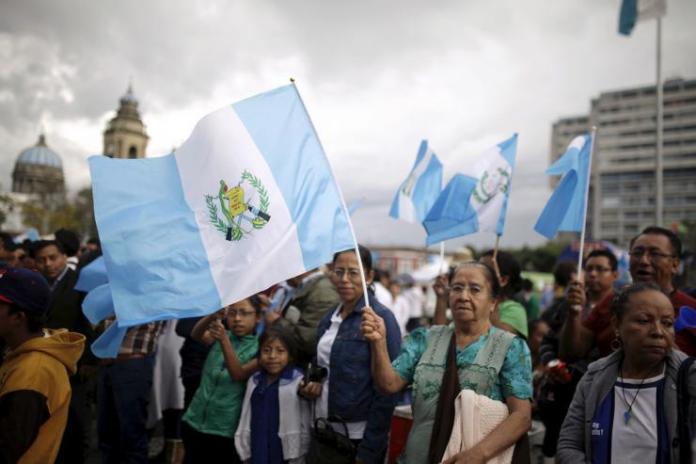


 In Costa Rica, such a merger would imply that the new operator would have substantial power in the domestic market, given that Cabletica and Tigo are the operators with a strong presence especially in Internet and cable television.


