JetBlue announced Thursday (September 20) that starting this month it will now offer fresh food on select Latin America and Caribbean routes for the very first time.
Popular on domestic long-haul flights, EatUp Café menu items are now available for purchase on international flights longer than four hours departing from John F. Kennedy International Airport (JFK) and Boston Logan International Airport (BOS). Additionally this month, the airline introduced three all-new EatUp snack boxes featuring refreshed, curated treats for all tastes.
“We are always looking for new ways to push the envelope when it comes to serving food at 35,000 feet,” said Elizabeth Windram, vice president of marketing, JetBlue. “Imagine having a Mediterranean salad shaker on your way to Costa Rica. The Latin America and Caribbean regions account for one-third of our flying, so it’s only natural that we bring this fresh food offering to even more JetBlue customers.”
Bringing EatUp Café to More Latin America and Caribbean Routes
EatUp Café has been available on more than two dozen transcontinental routes from John F. Kennedy International Airport, Boston Logan International Airport and Fort Lauderdale-Hollywood International Airport. Now, the airline is bringing its popular fresh food offering to more Latin America and Caribbean flights, providing customers with freshly-prepared meals on more than 70 domestic and international routes combined.
New Routes to/from New York’s John F. Kennedy International Airport (JFK) and to/from Boston Logan International Airport (BOS) include Liberia, Costa Rica (LIR). Click here for a list of all routes.
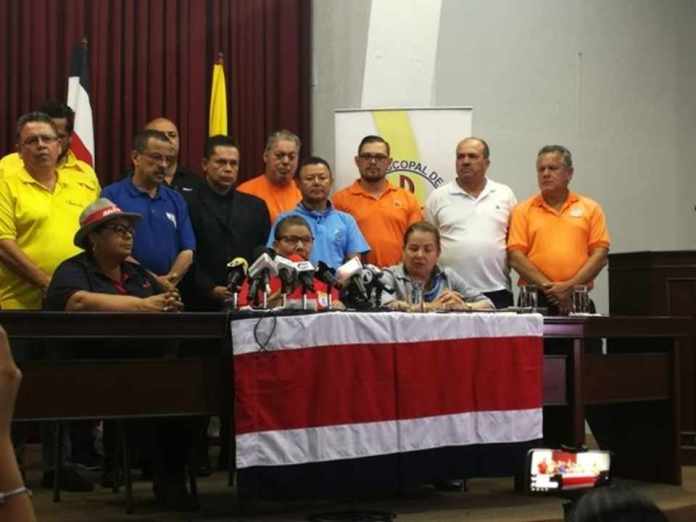
Labor Minister Steven Núñez was part of the negotiating team along with Justice Minister Marcia González and Pilar Garrido, Minister of Planning. Photo Jeffrey Zamora
Costa Rica, caught in the biggest strike in almost two decades. On this 12th day of the national strike, the public sector unions continue their strike against Government of Carlos Alvarado’s the Plan Fiscal (Tax Reform).
Labor Minister Steven Núñez (sitting) forms part of the Government negotiating team that includes Justice Minister Marcia González and Pilar Garrido, Minister of Planning (front row, left and right of Nuñez).
Today, Friday is also the third consecutive day of pre-dialogue talks with no clear end to the strike. A stalemate.
While government representatives and the unions leadership sit down in their third location, today in downtown San Jose, demonstrations and blockades in various parts of the country continue.
Though the government had stood firm it would not sit down to talks unless the strike was called off, the unions stood firm, they would agree to negotiate a settlement with the Catholic Church as mediator, but the strike would continue.
This the longest strike since the “ICE Combo” demonstrations against the Miguel Angel Rodriguez administration in 2000, with no signs of a solution in sight.
The effects of the strike has been felt in every sector of Costa Rican society: health services (hospitals and clinics), education (half the public schools closed), transportation (blockades of major routes and the distribution of fuel) and the tourism industry, the engine of the Costa Rican economy and a major source of foreign currency.
The union leadership
“The most important thing is to restore channels of dialogue and communication,” said the Minister of Labor, Steven Nunez, following the first sit-down session on Wednesday, amid strong criticism from the private sector for the alleged tolerance of the Government.
The Alvarado administration has not yet quantified the overall economic effect of the strike. The tourism industry says the impact of the strike has caused losses in the “millions”. Travel agencies report up to 50% cancellations in hotel reservations and travel. On Monday, Celebrity Cruises with 3,500 passengers canceled a scheduled stop in Puntarenas.
President Carlos Alvarado continues to defend the need for the tax bill to meet the “fiscal emergency” facing the country. The President is staying firm that, if not approved, timely payment of salaries of officials, public investment and, therefore, the pace of the economy is in danger.
In difference to other strikes, this time there have been outbreaks of violence between protesters and police, including a tear gas intervention on Tuesday to reopen the passage to Caribbean ports, vital for the normal functioning of the Costa Rican economy.
There have also been attempts to sabotage the pipelines of the Recope in the La Garita (Alajuela) pipeline.
Last weekend, Costa Ricans suffered gas shortages in several points in the country, and lines at gasoline stations in many parts of San Jose due to the fear of fuel transporters being caught between the blockades.
There are high hopes that today’s talks, in the Caja de Ande building, in San José, could result in defining the base for formal negotiations.
“The idea of continuing this dialogue is indicating the willingness of the parties to continue on this path of consensus to build the social peace we need,” said Catholic Church mediator Edwin Aguiluz.
The priest said that this is a very complex situation, “but I am still optimistic and the fact that we continue in these conversations is a good sign that we continue working for this purpose (…) My hope and optimism are standing.”
Though they have agreed to the talks, the unions don’t share the same optimism. Yesterday, Mélida Cedeño, of the Association of Teachers of Secondary Education (APSE) and representative of the Union leadership, said that the unions are asking the government to scrap the tax reform that the legislators are currently discussing and ask for a new text offered by them, one they feel is a “just and voluntary reform” that could be approved through fast track.
Given the Government’s refusal to that text, there is “lack of political will of the government negotiating team (…) to raise an alternative option,” she said.
“As long as there is no political commitment to meet this proposal, the strike continues (…) The indefinite strike is still in our fight,” she said.
For his part, Minister Nuñez said they (the government) made a proposal to the union leadership, however “they (the unions) have maintained a position that they have maintained for months and they did not move one millimeter of that position,” he said.
“We reiterate that the strike must be stopped, in that we have been clear and specific, and we have reiterated our support for the advancement of the (tax reform) bill,” said Núñez.
“Their position is to create a new bill that is going to be done with multisectoral participation (…) That’s a position, not a proposal,” the minister added.
Nuñez insisted that they are never going to renounce dialogue and that they are not going to desist from the bill that is in the Legislative Assembly either. “In Costa Rica, the main problems have been resolved through consensus and agreement,” he added.
The history of dictators repeats itself. They repress and terrorize their population when they should protect and respect them, while at the same time hiding the terrible truth. And, as if that were not enough, they blame the victims themselves.
Dictators, besides being repressive, are liars. They can also pretend that they are not interested in riches, but they always die affluent.
Franco, after the bombing of Guernica by the Condor Division, hastened to blame the Reds of the devastation caused by the fire produced by the bombs—a lie he kept while the war lasted—and also denied that the German and Italian aviation supported his side.
Four years earlier, Hitler blamed the communists for the fire at the Reichstag—headquarters of the Parliament—which led to mass arrests and the consolidation of the Fuhrer’s power. It was necessary to wait until 1980 for justice to be done posthumously and the convicted person acquitted for causing the fire.
If we go back to the times of the Roman Empire, Nero—who ordered his own mother to be executed—stopped the rumors that he was responsible for the burning of Rome by accusing the Christians; and, incidentally, exacerbated the persecution against them.
Ortega is not an exception. In the XXI Century, as ruler of Nicaragua, he is the champion of liars. He denies any responsibility for the crisis that this Central American country goes through. A crisis, let’s remember, that in only four months—from April 18th when it began, to August 18th when the Office of the High Commissioner for Human Rights (OHCHR) of the UN issued its report—more than 300 fatalities and 2,000 injured have been counted, the majority of them from police and paramilitary repression.
This is a crisis that has forced over 23,000 people to flee violence from Ortega’s paramilitary forces and seek refuge in neighboring Costa Rica. A crisis that includes, as has been reported by the OHCHR: the disappearance of people, obstruction of medical care for the wounded, illegal detentions, mistreatment, cases of torture and rape in detention centers. And, a crisis, in short, that is leaving a severe economic impact on the country and the loss of hundreds of thousands of jobs. The disregard for human rights that protect the freedom of assembly and expression is total.
Neither is Ortega an exception when it comes to blaming his detractors and denouncing unspeakable interests, such as the thief that shouts “the thief!” to divert attention from his crimes. He says that it is a “coup d’état” organized by imperialism and forces from the right; that the Catholic Church—his ally for many years—is part of the conspiracy; that leaders of non-governmental organizations and civil society are in on the plot.
By doing so, he aims to justify police and criminal prosecution against the opposition, which has already taken 126 people to the dock accused of terrorism and organized crime, simply for having participated in peaceful protests. Add to that the countless dismissals of public officials for showing insufficient enthusiasm with the Government.
Indescribable abuses against a people that includes the dismissal of 200 doctors and health personnel from hospitals and health centers for the “serious crime” of curing those who were injured by police bullets.
But, Ortega has the nerve to reject all these accusations and also to accuse the bishops of being liars. To sustain that Paulo Abrau, Executive Secretary of the Inter-American Human Rights Commission (IAHRC) “lies every day” when referring to Nicaragua, and of rejecting the OHCHR report “as subjective, biased, notoriously partial and drafted under the influence of sectors linked to the opposition.” Not content with that, Ortega allows himself the gesture of expelling the Office of the High Commissioner of the United Nation’s team from Nicaragua.
And now, after clearing with bullets the roadblocks and barricades that the students and peasants had lifted, after violently removing the students held up in a university and after pushing into exile thousands of terrified citizens, he announces that he stays, that he will not allow early elections, that he will not leave before the elections scheduled for 2021—and we will see if he loses then, with the tricks in place to guarantee that he wins.
Ortega is allowed to disregard an undeserved way-out offered by the Organization of American States (OAS) and supported by business people and the Catholic Church in Nicaragua, as well as by many governments in the continent, including the United States. It was a solution that favored him a lot, because the population wants him to resign now and be judged, and not to have a government presided by him to call for elections, because, who in their right mind could trust him? But, in the interest of a consensus that would allow a solution to the conflict, early elections could have been susceptible to an agreement with the opposition.
Dictators are also known for their greed and their attachment to wealth. Let us remember Tachito Somoza and Leonidas Trujillo, the tyrants who became the two most affluent men Latin America in their time, with fortunes estimated in billions of dollars.
We also have Pinochet and, on the Iberian Peninsula, Franco. Of both it was said by some that “they could be dictators, but they were honest,” until we learned about their fortunes, suitable of the tales in “A Thousand and One Nights”, thanks to their legacies.
The first [Pinochet], such a patriot, hid many secret accounts in the Riggs Bank of the United States. The second [Franco], the “Caudillo,” had amassed several billion pesetas that allowed his family until today to have an endless list of real estate properties in various Spanish cities, without counting the famous “Pazo de Meirás”, which had belonged to the writer Emilia Pardo Bazan and that was “donated” by the local authorities to Franco to use as his summer vacation home.
So now, given his Sandinista origin, Is Ortega at least an exception among dictators regarding greed? Everything indicates the contrary. The interests of the Ortega-Murillo family, a numerous group consisting of the presidential couple, eight children—without including his wife’s daughter who, as an adolescent, was sexually abused by him—sons-in-law and daughters-in-law, are distributed in various sectors of the economy.
From energy to the distribution of oil to banking and to the communications media, including four television channels—and the news programs of a fifth—that the family controls directly. There will be a time when an investigation could be done of the agreements related to the Venezuelan oil sold to Nicaragua under very advantageous conditions, which led to the formation of companies controlled by Ortega outside the State and the public budget. Then, we will also learn the origins of the enrichment of this wealthy family.
Besides their cruelty, deception and greed, what else do dictators share? Well, another thing that is very clear: that history will never absolve them. The tyrants that massacre their people appear in books and encyclopedias as villains and infamous. Posterity will never let them resemble admired figures, such as Allende, Olof Palme, Sandino, Marti or even Pepe Mujica. The Somozas, Trujillo, Pinochet, Franco and Hitler will always remain as the plague. They will always be characters that no one will want to have as an ancestor. And, that group has now been joined by Ortega and, along with him, his wife and Vice-President, Rosario Murillo. What a pity, considering what they could have become!
Article first appeared at Confidencial.com.ni. Read original here.
With editing by Today News.
Daniel Ortega wants a civil war. Of all the possible scenarios to put an end to the tragedy that Nicaragua lives, it is the only one that can assure his permanence in power. In all the others, his leaving is certain.
“Surely, the darkness of war covers any brightness of what could be called civil…there is no more disputable name for war than a civil war”.
General William Sherman is credited with calling civil war the worse of all infernos (hells) because they are fought between relatives, neighbors and citizens from the same community. Even worse, as history attests, from the ancient Romans (who coined the term Bellum Civile) until today, each civil war is born from the hot ashes left from the previous one. The wounds among brothers do not heal with the last shots.
Nicaragua is the best proof of that. Despite our national anthem—except in very brief periods—for 197 years of history we have been killing each other. Chaining one war after another and staining with “nica” blood our “glorious bicolor banner.”
But now is the first time that one side is not willing to take up arms. This may be the breaking point of a fatal determinism: one party that throws the glove of war to another that instead of picking it up insists on non-military solutions. A revived Gandhi? No, it is the collective intelligence of a people apparently willing to not repeat the mistakes of the last war. And, it is not that they lack the desire to look for a weapon in the midst of so much abuse by henchmen and assassins; it is that the conviction is prevailing that the strength of the oppressors is also its weakness.
True to its essence, Ortega and company declared war on the people of Nicaragua when faced by the civic push of citizens’ protests. Incapable of non-violent answers, it has escalated repression: first by gangs of the Sandinista Youth, afterwards by combined forces of the police and the FSLN, and finally by the deployment of masked thugs as a third armed body of the State. The courts, the National Assembly, and the Ministry of Health and Education have joined in this battle to set up a State in civil war. That is to say, the faction in civil war of Ortega and supporters.
Without any authorities to guarantee security or the citizen’s rights of all—which meant leaving the other part of the population at the mercy of the violent ones—the trap was set. It was only a matter of pushing the social protest to regroup on the other side, to organize itself for war and arm itself. That is to change the mortars and stones for rifles and go on to the stage they had planned so that the army could go into action without hiding its face.
With both sides up in arms the dictatorship would officially declare a civil war and obtain all the options to win. The conspiracy argument would finally provide the basis to present itself as the victim of an “imperialist plot hatched in the offices of Washington.” The victim’s pose would help the regime to break the international isolation in which it finds itself, and give arguments to the Jurassic left to steer their position as accomplices and would provide the basis for expressions of solidarity from other authoritarian regimes, including military aid.
But the strategy has gone wrong. There is no civil war in Nicaragua. What is happening is the perpetration of a barbaric act, the implementation of a policy of atrocities, the annihilation of any form of protests against oppression, no matter how passive or silent it may be. The rush to restore the normality previous to April 18th has led them to use all the power of the State, but they have been shooting themselves on the foot. With all that, evidence has been presented that the disproportionate use of force reveals a dictatorial vein of a regime that is not willing to compromise with the demands of democracy, justice and freedom of a people that demands political change.
It would be a mistake to fall into the temptation of civil war. Experience and courage are not lacking, but it would be a mistake to fall into the trap of military confrontation. On the contrary, to continue fighting in the political arena has been found to be more effective. Yes, we know that it is not easy to keep putting up with arbitrary detentions, torture and murder, but what the regime wants, is that provoked by repression we fall into the abyss of total civil war. On that field, they have all the chances to win.
However, not so in the political arena. Since April 18th each movement of the people has displaced them, making them look more slow, erratic and cruel. They were so in the first protest of the retirees in Leon and Camino de Oriente (Managua), just as they have been ridiculous and impotent against the blue and white balloons of September.
Surely the path of civil resistance will be longer and sometimes despairing, but that of the civil war would be more painful and would sow the seeds of new confrontations. As Luciano said more than 2,000 years ago, “a foreign sword has never sunk in this way: it is the wounds inflicted by the hands of our fellow citizens that have penetrated most deeply.”
Ortega wants, needs urgently, a civil war to continue clinging to power, because he does not conceive another way of life that is not perched on the presidential chair. But, if he cannot develop his full capacity to kill, he will have no other option but to step down from the throne by political means. Then, as it has happened with other tyrants, the citizenry, will be responsible for rebuilding the democratic state that will bring the murderers and their supreme leader to trial. Only then we will be able to exterminate the cursed germ of dictatorships and civil wars that have destroyed our country.
We are also winning by not falling into the trap of civil war.
Article first appeared at Confidencial.com.ni. Read the original here.
Editing by Today News.
In an exclusive TMZ reports the first couple who got engaged on ABC’s ‘Bachelor’-spinoff, “The Proposal,” have called it quits just a few months after the show premiered this summer.
Mike Crowe and Monica Villalobos in Costa Rica
California police officer and amputee Mike Crowe tells TMZ that his new fiancee, 31-year-old SoCal real estate agent Monica Villalobos, broke things off with him while they were recently on a trip to Costa Rica.
Mike proposes to Monica
The split happened just last week in the middle of their vacation — Mike says Monica told him she didn’t have feelings for him anymore.
Monica Villalobos
Mike’s clearly still hurting from the fresh break-up. He says not only did he put himself out there in trying to meet that special someone on TV, but notes that a ton of people have gotten emotionally invested in their journey. Plus, he says the Costa Rica trip was supposed to be in celebration of his 30th birthday … so this doubly sucks for him.
As to whether he feels like he was set up for failure by the premise of the show — propose to someone you’ve never met within an hour-long program — Mike says no. He tells us he didn’t have any expectations and didn’t feel any outside pressure on the relationship. It’s unclear if Monica felt the same, but he implies she might’ve not loved the scrutiny.
There’s a potential silver lining here though. We ask if he’d be open to being cast in “The Bachelorette” if producers come calling. Let’s put it this way … he ain’t saying no!
(AP) — A staple of summer — swarms of bugs — seems to be a thing of the past. And that’s got scientists worried.
Pesky mosquitoes, disease-carrying ticks, crop-munching aphids and cockroaches are doing just fine. But the more beneficial flying insects of summer — native bees, moths, butterflies, ladybugs, lovebugs, mayflies and fireflies — appear to be less abundant.
Scientists think something is amiss, but they can’t be certain: In the past, they didn’t systematically count the population of flying insects, so they can’t make a proper comparison to today. Nevertheless, they’re pretty sure across the globe there are fewer insects that are crucial to as much as 80 percent of what we eat.
Yes, some insects are pests. But they also pollinate plants, are a key link in the food chain and help decompose life.
“You have total ecosystem collapse if you lose your insects. How much worse can it get than that?” said University of Delaware entomologist Doug Tallamy. If they disappeared, “the world would start to rot.”
He noted Harvard biologist E.O. Wilson once called bugs: “The little things that run the world.”
The 89-year-old Wilson recalled that he once frolicked in a “Washington alive with insects, especially butterflies.” Now, “the flying insects are virtually gone.”
It hit home last year when he drove from suburban Boston to Vermont and decided to count how many bugs hit his windshield. The result: A single moth.
WINDSHIELD TEST
The un-scientific experiment is called the windshield test. Wilson recommends everyday people do it themselves to see. Baby Boomers will probably notice the difference, Tallamy said.
Several scientists have conducted their own tests with windshields, car grilles and headlights, and most notice few squashed bugs. Researchers are quick to point out that such exercises aren’t good scientific experiments, since they don’t include control groups or make comparisons with past results. (Today’s cars also are more aerodynamic, so bugs are more likely to slip past them and live to buzz about it.)
Still, there are signs of decline. Research has shown dwindling individual species in specific places, including lightning bugs, moths and bumblebees. One study estimated a 14 percent decline in ladybugs in the United States and Canada from 1987 to 2006. University of Florida urban entomologist Philip Koehler said he’s seen a recent decrease in lovebugs — insects that fly connected and coated Florida’s windshields in the 1970s and 1980s. This year, he said, “was kind of disappointing, I thought.”
University of Nevada, Reno, researcher Lee Dyer and his colleagues have been looking at insects at the La Selva Biological Station in Costa Rica since 1991. There’s a big insect trap sheet under black light that decades ago would be covered with bugs. Now, “there’s no insects on that sheet,” he said.
But there’s not much research looking at all flying insects in big areas.
THE EVIDENCE
Last year, a study that found an 82 percent mid-summer decline in the number and weight of bugs captured in traps in 63 nature preserves in Germany compared with 27 years earlier. It was one of the few, if only, broad studies. Scientists say similar comparisons can’t be done elsewhere because similar bug counts weren’t done decades ago.
“We don’t know how much we’re losing if we don’t know how much we have,” said University of Hawaii entomologist Helen Spafford.
The lack of older data makes it “unclear to what degree we’re experiencing an arthropocalypse,” said University of Illinois entomologist May Berenbaum. Individual studies aren’t convincing in themselves, “but the sheer accumulated weight of evidence seems to be shifting” to show a problem, she said.
After the German study, countries started asking if they have similar problems, said ecologist Toke Thomas Hoye of Aarhus University in Denmark. He studied flies in a few spots in remote Greenland and noticed an 80 percent drop in numbers since 1996.
“It’s clearly not a German thing,” said University of Connecticut entomologist David Wagner, who has chronicled declines in moth populations in the northeastern United States. “We just need to find out how widespread the phenomenon is.”
THE SUSPECTS
Most scientists say lots of factors, not just one, caused the apparent decline in flying insects.
Suspects include habitat loss, insecticide use, the killing of native weeds, single-crop agriculture, invasive species, light pollution, highway traffic and climate change.
It’s death by a thousand cuts, and that’s really bad news,” Wagner said.
To Tallamy, two causes stand out: Humans’ war on weeds and vast farmland planted with the same few crops.
Weeds and native plants are what bugs eat and where they live, Tallamy said. Milkweeds, crucial to the beautiful monarch butterfly, are dwindling fast. Manicured lawns in the United States are so prevalent that, added together, they are as big as New England, he said.
Those landscapes are “essentially dead zones,” he said.
Light pollution is another big problem for species such as moths and fireflies, bug experts said. Insects are attracted to brightness, where they become easy prey and expend energy they should be using to get food, Tallamy said.
Jesse Barber of Boise State is in the middle of a study of fireflies and other insects at Grand Teton National Park. He said he notices a distinct connection between light pollution and dwindling populations.
“We’re hitting insects during the day, we’re hitting them at night,” Tallamy said. “We’re hitting them just about everywhere.”
Lawns, light pollution and bug-massacring highway traffic are associated where people congregate. But Danish scientist Hoye found a noticeable drop in muscid flies in Greenland 300 miles (500 kilometers) from civilization. His studies linked declines to warmer temperatures.
Other scientists say human-caused climate change may play a role, albeit small.
RESTORING HABITAT
Governments are trying to improve the situation. Maryland is in a three-year experiment to see if planting bee-friendly native wildflowers helps.
University of Maryland entomology researcher Lisa Kuder says the usual close-crop “turf is basically like a desert” that doesn’t attract flying insects. She found an improvement — 70 different species and records for bees — in the areas where flowers are allowed to grow wild and natural alongside roads.
The trouble is that it is so close to roadways that Tallamy fears that the plants become “ecological traps where you’re drawing insects in and they’re all squashed by cars.”
Still, Tallamy remains hopeful. In 2000, he moved into this rural area between Philadelphia and Baltimore and made his 10-acre patch all native plants, creating a playground for bugs. Now he has 861 species of moths and 54 species of breeding birds that feed on insects.
Wagner, of the University of Connecticut, spends his summers teaching middle schoolers in a camp to look for insects, like he did decades ago. They have a hard time finding the cocoons he used to see regularly.
“The kids I’m teaching right now are going to think that scarce insects are the rule,” Wagner said. “They’re not realizing that there could be an ecological disaster on the horizon.”
AP article by Seth Borenstein. Associated Press video journalist Federica Narancio contributed to this report. Follow Seth Borenstein on Twitter: @borenbears . His work can be found here. The Associated Press Health & Science Department receives support from the Howard Hughes Medical Institute’s Department of Science Education. The AP is solely responsible for all content.
Despite the meeting with the Government on Wednesday, that many on both sides say went well, the leaders of the various public sector unions reasserted last night that the “indefinite national strike” will continue.
The union leadership
The preliminary talks expected to lead to a dialogue that will include President Carlos Alvarado will continue today Thursday at the Escuela Social Juan XXIII in Tres Ríos, which offers the participants better security.
On Wednesday, government representatives expressed concern to security surrounding the downtown San Jose location, the Palacio Arzobispal de San José.
The activities that are scheduled for today, day 11 of the national strike, are regional, while in San Jose there will be a march from Parque Central to the Legislative Assembly starting at 8:00 am.
According to Labor Minister, Steven Nunez, who was as representative of the Government in the meeting, one of the demands they have to negotiate is to end the strike.
“We have been clear, we must remove the blockades and strike demonstrations if we want to move on to the next phase of a dialogue and negotiation table,” the minister said.
According to reports sent by the 27 regional offices of the Ministry of Public Education (MEP), 52% of public schools were closed on Wednesday.
The MEP received reports from 4,470 schools and colleges (97% of the total), of which 2,155 were reported as open and 2,315 as closed.
The Regional Offices of San José (Central, North and West), Cartago and Heredia have the lowest percentage of closed institutions, while the Zona Norte-Norte and Grande de Térraba were the two regional Offices with the highest percentage of closed centers, 90% in both places.
“In recent days we have received dozens of queries from teachers who have been on strike and wish to return to their duties, but they are afraid because they have been told that they could suffer reprisals, but that is false and whoever says otherwise is lying, whoever wants to return to the classrooms can do it without any concern,” said Yaxinia Díaz, director of Resources Human of the MEP.
On attendance control, the MEP made a cut at 3:40 pm on Wednesday, finding that in 36.7% of the schools across the country, only 20.4% of the teachers were present.
With the mediation of the Catholic Church, the government and labor unions had their first ‘approach’ this Wednesday afternoon, to lay the foundations to possible negotiations to end the 10-day old national strike.
Meanwhile, the blockades persist on the main roads across the country. The latest report from the Ministry of Public Education (MEP) reveals that teachers in 52% of the schools in the country are still on strike.
Bishop José Rafael Quirós is part of the mediating team
The MEP received reports of the 4,470 public schools and colleges, 2,315 are closed.
The Ministers of Labor, Steven Núñez, and Justice, Marcia González, head the government team in the preliminary talks.
At the meeting began shortly after 9:30 am this Wednesday morning in the Palacio Arzobispal de San José, the government was represented by the Minister of Labor (Ministro de Trabajo), Steven Núñez, ministers Marcia González (Justice), Pilar Garrido (Planning) and vice-ministers of Labor Juan Alfaro and Natalia Álvarez and the union leadership represented by Mélida Cedeño, Carmen Brenes, Gilberto Cascante, Luis Chavarría, Marta Rodríguez, Lenín Hernández, Mario Rojas Vilchez, and Albino Vargas. It had been agreed to on Tuesday that President Carlos Alvarado would not be attending the preliminary meetings.
The union leadership
Meanwhile, protests continued in the areas of the Parque Central and the Catedral Metropolitana.
Morning roadblocks were found on Ruta 1 in the area of La Cima between Palmares and San Ramon, Ruta 32 at kilometer 53, Ruta 141 the Alajuela – Ciudad Quesada, and Ruta 2 at kilometer 135 at the Jilguero river between San Jose and Pérez Zeledón, among others.
Striking is hard work, gotta stay fit. What better than the middle of the road. Alfonso Quesada took this photo on the Costanera Sur in the area of Tajo, in Cuidad Cortes
The meeting this Wednesday was intended to lay the foundations for a negotiation. In this first meeting, the parties raised their conditions for dialogue.
The Positions:
Minister of Labor: they have to lay off blockades.
The Judicial Investigation Organization (OIJ) reports an increase in cases of suicide in Costa Rica. The concern of authorities is that “the victims are getting younger and younger”.
In 2017, the OIJ handled 327 cases of suicide.
The statistics of the Judicial Police indicate that during the first semester of 2017 there were 188 cases, whereas in the same period for this year there were 201.
“It has increased. Most cases are of Costa Ricans and we have a tough job because it increases and increases,” said Sisy Castillo, Chief of the Section of Psychiatry and Forensic Psychology of the OIJ.
“This is not just about the health system. It is a social problem that includes many sectors such as education, economy, public services. There are conflicts that are accumulating and there comes a time when people lose hope,” added the psychologist.
The expert recommends that families be alert to sudden changes in people and analyze several points such as:
Monitor behavioral changes of young people and adolescents.
Do not overlook gestures related to suicides.
Analyze phrases related to loss of interest and mood changes.
Attention to the use of drugs or alcohol.
If family members have depressive behaviors avoid having guns in the house.
This month the Colegio Profesional de Psicólogos de Costa Rica (CPPCR) – College of Psychologists of Costa Rica – called on health authorities so that the prevention of suicide is addressed as a public priority.
The Colegio raised its voice to the high rate of suicides reported in Costa Rica: almost a suicide a day.
“The data from scientific research on the subject indicates that suicidal behavior does not lie the desire to die, but a deep suffering associated with despair and helplessness. It occurs when the stressors in the subject’s life exceed their ability to cope with them,” explained Waynner Guillén, President of the CPPCR.
The Fuerza Public (National Police) found an ultralight type aircraft hidden in a farm in the sector of Playa Carate in the Osa Peninsula, Puntarenas.
The officers spotted the ultralight while patrolling the area. The airplane was camouflaged in black sarán (plastic), the type used for privacy fencing.
“The Canine Unit of the Air Surveillance Service was called in to determine or rule out the presence of drugs and/or money within said aircraft, which is an ultralight type category and has space for two people,” said the Ministry Security in a press release.
The Ministry indicated that on July 18 they located another similar aircraft in Bagaces, Guanacaste.
On Tuesday afternoon, in a heated intervention in the Legislative Assembly, the legislator for the Partido Liberación Nacional (PLN) – National Liberation Party – Ana Karine Niño Gutierrez, said that the country can “ir a la mierda” (go to shit) if the misinformation campaign that has been set up around the country over the Plan Fiscaal (Tax Reform) promoted by the Government is maintained.
Ana Karine Niño Gutierrez
The Legislator was clear, insisting that much of the information circulating in social networks and media are nothing more than “gossip” and “stories that are not real”; reason why she urged her fellow legislator, the media and the government to act responsibly and disseminate truthful and accurate information about the Bill.
“Let’s have a healthy public debate. I want to urge president (Carlos) Alvarado, fellow legislaros and the media, to please hold a public debate as they did when they were campaigning,” said Niño.
“We are not in favor of the plan, we are in favor of the people, and it is important that they understand it.”
“It’s true, there are things in the reform that we do not want there to be, but let’s talk truthfully. Let’s stop sending false information, or it will be by us that this country goes to shit,” concluded the Legislator.
The PLN has been the great ally of the Government in this initiative, since they supported the plan from the Comisión Especial de Plan Fiscal (Special Commission of Fiscal Plan).
Today, Wednesday, is the 10th consecutive day of the national strike.
Compared to countries in Asia and the Gulf that host the majority of American universities’ overseas branch campuses, Costa Rica has some advantages. It’s closer to home, in the same time zone as Texas for about half the year (Costa Rica doesn’t observe Daylight Saving Time).
The new Texas Tech campus in Costa Rica is located in Avenida Escazu
It’s a popular destination for American students studying abroad. It’s a stable democracy. And, unlike China, Qatar and the United Arab Emirates — all places with significant numbers of American branch campuses — it has a democratic government.
Texas Tech University is opening a new branch campus in Costa Rica this fall. The project is a collaboration with a for-profit company that paid to develop the campus and is bearing the full capital and operational costs (and risks) of running it. The company, EDULINK — a subsidiary of the Promerica Group, a multinational conglomerate of companies involved in banking, hotels and real estate — collects tuition and pays Texas Tech for the academic and student services it provides according to an agreed-upon budget.
Under the terms of the agreement, signed in 2016, Texas Tech has “full authority” over all academic and student services and will “make final determinations relating to all academic and research programs, educational requirements, and pedagogical content … including student body and faculty size, curriculum design and development, faculty rights, selection and appointment, student admissions, student affairs, and the conferring of degrees.”
EDULINK built the campus in the capital city of San José at its expense and is responsible for operating the campus and providing specific administrative and management services. EDULINK will also recruit students, although the contract notes that Texas Tech has “sole authority” over all admission decisions and policies.
“What made this acceptable to our board was the financial commitment by Promerica,” said Lawrence Schovanec, Texas Tech’s president. “They wanted us to be sure that tuition dollars provided by students at Texas Tech would not be subsidizing this endeavor. Promerica and our group down there called EDULINK has made an extraordinary commitment: they cover all the costs, they built the facilities, but we have full academic control. We have to demonstrate that to our accreditor.”
The university had a target of enrolling 200 students in the first year, but just 40 students are enrolled for the fall. The traditional academic year in Costa Rica starts in the winter/spring, so Texas Tech’s is an off-cycle start.
Tuition is $600 per credit hour, which would amount to $18,000 for a 30-credit-hour academic year. That’s not a whole lot less than the $23,496 undergraduate out-of-state tuition rate for Texas Tech’s main campus in Lubbock, but the cost of living in Costa Rica is lower. And students from the San José area can study at a U.S. institution while staying at home.
“It’s a new university,” Schovanec said about the lower-than-expected enrollment. “The cost is more than some of the privates, and for the public institutions in Costa Rica, college is free. That’s undoubtedly an issue; yet the cost is much, much less than sending a student to the United States. I think it’s going to take some time to market the programs. I think it’s going to be very important that we provide an experience that students feel is an equal of what they would have received in the United States.”
“The concept has been well received in the country,” Schovanec continued. “When we had the inauguration of the campus last spring, the vice president of Costa Rica came and spoke and expressed great enthusiasm for our campus. Members of the cabinet were there; members of industry were there. I’m very pleased by the reception we’ve received and I think it’s just going to take some time to develop our recruitment.”
The new campus is part of what John Keith, the executive president of Banco Promerica, described as “one of the jewels” of a large mixed-use development project known as Avenida Escazú. The development includes offices for multinational companies, residential housing, parking, retail stores, restaurants and entertainment venues.
“Having a U.S. university with all these multinationals investing in Costa Rica will generate a lot of real estate opportunities,” Keith said. “That’s the economic motivation on our side.”
Keith said that in developing the model, Promerica pursued what he likened to the Marriott hotel chain’s practice of entering into management contracts with local property owners. “We took the idea of the management contracts of the hotels, and we used those same principles to turn it into an education agreement with TTU. So the same way Marriott has grown all over the world with their concept of a management agreement and the estate owned by local people, U.S. universities can do the same. In every city that there is a Marriott, there can be a U.S. university.”
The agreement between Texas Tech and Promerica envisions that, at full capacity, the Costa Rica campus will enroll 1,300 students, including visiting study abroad students from the Lubbock campus. A six-member steering committee made up of half Texas Tech appointees and half EDULINK appointees sets the annual budget for the campus and provides strategic oversight. In the event of a deadlock, the agreement between Texas Tech and EDULINK stipulates that Texas Tech’s president has final determination over any matters related to “academic affairs, student support services, minimum types and amounts of insurance coverage, or any material deviation from the general principles of TTU-CR as outlined in this agreement,” while the CEO of EDULINK would have final say in all other matters.
The campus is starting with five undergraduate degree programs in computer science, electrical engineering, industrial engineering, mathematics and restaurant, hotel and institutional management. Instruction is in English and faculty at the campus are a mix of Texas Tech faculty visiting from the home campus in Lubbock and locally hired adjunct professors.
The campus is seeking approval from Costa Rica’s National Council of Private University Higher Education (known by the Spanish acronym CONESUP), which would allow its degrees to be recognized for certain government jobs. Texas Tech’s provost, Michael Galyean, said CONESUP approval is an “ongoing process” and that Texas Tech has a letter from the council “acknowledging our presence in Costa Rica and our ability to grant U.S. degrees.”
Texas Tech is one of a handful of American universities with campuses in Latin America. Other public universities with campuses in the region are Arkansas State University, which has a campus in Mexico that opened last year, and Florida State University, which has a long-standing campus in Panama.
Latin America, unlike parts of Asia and the Gulf, has not traditionally been a hot spot for international branch campus development. Indeed, a database maintained by the Cross-Border Education Research Team at the State University of New York at Albany lists just one international branch campus in Costa Rica: Texas Tech’s.
Jason Lane, the director of the cross-border research team and interim dean of Albany’s School of Education, said the relatively small numbers of international branch campuses in Latin America might be due partly to language issues and to the low levels of internationalization of many universities in that part of the world. And, until recently, institutions in the U.S. weren’t as interested in reaching out.
“For whatever reason, Latin America has not historically been a major player for U.S. institutions in internationalization efforts relative to Europe or Asia or the Middle East even,” Lane said. “That is beginning to change. Particularly Southern states see more connection between their changing populations and Latin America, and it increasingly makes sense to look at moving south of the border.”
Schovanec, Texas Tech’s president, said that about half the students starting at the Costa Rica campus this fall come from outside the country, from elsewhere in Central and South America.
“We truly have a commitment to expanding our access in the southern half of the Western Hemisphere, and we were fortunate to enter into this partnership in Costa Rica that allows us to do just that,” he said. “We really do want to be serving that part of the world.”
The United States Embassy in San Jose sent an alert to its citizens in Costa Rican territory, as the national strike reached its 9th day on Tuesday.
Through its website, the Embassy mentioned that the demonstration called by the unions, against the tax reform bill and the Government, continue this week throughout Costa Rica, and particularly in San Jose.
“Protesters may express their opposition by interrupting government services, creating traffic jams, and disrupting local commerce. This may occur with little or no warning,” says the message.
The alert repeated the message from the Costa Rican Ministry of Public Security, announcing it will be taking steps to guarantee transit and fuel supplies, though intermittent gas shortages and cancellation of non-emergency medical appointments at public hospitals may occur. Emergency services and local airports are expected to remain operational.
“The Embassy cannot predict when demonstration activity will subside and recommends that all U.S. citizens in Costa Rica plan accordingly,” said the message.
The Embassy recommends the following actions to take:
Monitor local media for updates.
Plan any travel within country to account for potential traffic delays
Avoid areas of demonstrations, and exercise caution if in the vicinity of any large gatherings, protests, or demonstrations
The Embassy phone number is: +506 2519-2000 from 8:00 a.m. to 4:30 p.m. through Friday; after-hours ask to be transferred to the Duty Officer.
Call 1-888-407-4747 toll-free in the United States and Canada or 1-202-501-4444 from other countries from 8:00 a.m. to 8:00 p.m. Eastern Standard Time (EST), Monday through Frida (except U.S. federal holidays).
Canada refuses to sign a statement against military intervention but 'still opposes armed action'
(CBC.ca) Canada broke ranks this week with the majority of a group of American nations it helped to create to deal with the spiraling crisis in Venezuela.
Canada refuses to sign a statement against military intervention but ‘still opposes armed action’
And although Canada’s refusal to sign a joint statement of the Lima Group — a statement that commits members to opposing military intervention in Venezuela — does not portend a sudden shift in Canadian policy, it is part of the first significant split among the group’s 14 members over how far they might go to restore democratic government to the impoverished nation.
The dispute began Friday when Luis Almagro, the Uruguayan secretary-general of the Organization of American States, visited the city of Cucuta on Colombia’s border with Venezuela.
The city has become one of the main crossing points for hundreds of thousands of Venezuelans fleeing hunger and chaos at home.
In a news conference on the Simon Bolivar international bridge, with Colombia’s new foreign minister Carlos Holmes Trujillo García at his side, Almagro said that “with regards to military intervention to overthrow the regime of Nicolas Maduro, I believe we mustn’t rule out any option.”
Almagro accused Venezuela’s ruling United Socialist Party of using “misery, hunger and lack of medicine as repressive instruments to impose its political will on the people,” and said the region had never seen “a government so immoral as to refuse to accept humanitarian aid when it’s in the middle of a humanitarian crisis.”
No to armed intervention
Almagro’s statements were too belligerent for many of the countries of the Lima Group, which counts as members Argentina, Brazil, Canada, Chile, Colombia, Costa Rica, Guatemala, Guyana, Honduras, Mexico, Panama, Paraguay, Peru and Saint Lucia.
(The United States, Uruguay, Barbados, Grenada and Jamaica are observer nations, and the group is also supported by the OAS and the European Union.)
This video of Venezuelan President Nicolás Maduro eating luxuriously in an Istanbul restaurant was posted Monday night by Turkish celebrity chef Salt Bae, and deleted hours later following furious online reaction from Venezuelans.
Peru called for all members to back a motion repudiating “any type of action or declaration that implies military intervention or … threats or the use of violence.”
But after intense negotiations, only 11 of the 14 member states could agree to put their names on that statement.
The holdouts were Canada and Venezuela’s neighbours to its west and east, Colombia and Guyana.
Although Global Affairs Canada has published on its website previous joint statements from the Lima Group that it has supported, Canada did not publicize its decision to refuse to endorse the statement opposing intervention.
The refusal to sign seemed to signal a hardening of Canada’s position on Venezuela, but government sources tell CBC News that Canada’s refusal was motivated by procedural concerns over the way the statement came together, and the Trudeau government is not endorsing any call for military intervention against the government in Caracas.
Rather, Canadian officials felt the motion, originally introduced by Peru, was rushed and did not go through proper channels.
Still, the dispute over Almagro’s controversial call to arms marks the first deep public split in the Lima Group, which Canada was instrumental in setting up and which continues to be the Trudeau government’s main vehicle for diplomacy on Venezuela.
War talk gets louder
While Canadian officials sought to qualify their position on intervention, Colombia’s new president Ivan Duque appears to have moved closer to the idea of using force against the Venezuelan government — an idea he rejected earlier this summer.
On Monday, Colombia accused Venezuelan forces of making an armed incursion into Colombia and abducting three Colombian citizens from an Amazonian island called Maipures 3 in the Orinoco river. The Maduro government responded by saying the island, which it calls Mantequero, belongs to Venezuela (although it has been under Colomb
The National’s Adrienne Arsenault is at the Venezuela-Colombia border to see how police are trying to protect vulnerable Venezuelans from smugglers and stem the flow of illegal trade.
It was the latest incursion alleged by Colombia in a rapidly escalating war of words, raising the prospect that border incidents could flare into something more serious.
The Trump administration has openly entertained the possibility of armed action since August 2017, when President Donald Trump said “Venezuela is not very far away, and the people are suffering, and they’re dying. We have many options for Venezuela, including a possible military option, if necessary.”
Earlier this month, the New York Times reported that White House officials had met with mutinous Venezuelan officers who were plotting Maduro’s overthrow. Many of those officers have since been arrested, the Times reported.
Canada ‘uncivilized, obsessive, hostile’
The Trudeau government has been far more circumspect. Government sources say Canada was keen to create the Lima Group without Washington’s participation because it shows pan-American unity on the restoration of democracy in Venezuela, yet can’t be easily dismissed by Caracas as a puppet of the United States.
Just today, Canadian officials told CBC Ottawa might well sign a statement of non-intervention if it were presented differently than the one issued this weekend.
But Venezuela increasingly has come to see Canada as an enemy regardless.
They do so as the Venezuelan government denies such a crisis even exists, going as far to refuse any humanitarian aid.
At the same time, Venezuela’s foreign ministry denounced “a new threat against its peace and sovereignty by the two principal military powers in the hemisphere, the USA and Canada.” The Venezuelan communiqué cited a meeting in Ottawa last December 19 where U.S. and Canadian officials ostensibly discussed intervention plans.
Throughout the summer of 2018, after Canada banned the Venezuelan embassy from collecting ballots on Canadian soil for what Ottawa considered a sham election, Venezuela’s foreign minister Jorge Arreaza launched a series of statements accusing the Trudeau government of “uncivilized, hostile, obsessive behaviour” toward his country.
“It’s evident that the obsessive conduct of the government of Canada against Venezuela,” said one statement, “derives from the humiliating subordination of its foreign policy to the racist and supremacist administration of Donald Trump. The facts show that this servile policy of Canadian authorities is the product of the desperation of this government to avoid losing benefits and preferences in its trade agreements with the U.S.”
Other Venezuelan statements accused “pro-imperialist Canada” of “a laughable superiority complex” toward the South American nation.
Breathing space for Maduro
The splits among American nations over Venezuela were already clearly on view at the Summit of the Americas this past April in Lima. Maduro stayed away after the Peruvian government made it clear he wasn’t welcome, but Venezuela was very much the centre of attention, with nearly every other leader referring to the crisis in the country.
On one side, the countries of the Lima Group and the U.S. denounced the Venezuelan regime and warned they would not respect the results of its upcoming elections. Meanwhile, a smaller group of countries — Bolivia, Nicaragua, El Salvador, Cuba and some Caribbean island nations — denounced Maduro’s exclusion.
But the latest split between members of the Lima Group suggests that even those countries that agree Maduro has to go are split on how to make that happen.
Those signs of disunity will be welcome news to a regime that appears to be drowning in its economic crisis. But any relief the Maduro government might feel will be tempered by the fact that neighbouring Colombia, with its powerful military, refused to sign the statement against intervention.
Despite the blockades on Route 1, on both sides of the Juan Santamaría International Airport (SJO), authorities assure airport operations are continuing to operate normally.
“Part of the good functioning of the airport terminals is thanks to the fact that 100% of the personnel of Migration, Customs and Civil Aviation are working,” said Aeris, the operator of the San Jose airport.
Authorities the same goes for the Daniel Oduber (LIR) airport in Liberia.
Besides assuring passengers getting to their flight on time and arriving passengers get to their destination, the government is assuring a continued supply of fuel to the airlines.
Police patrols in the outskirts of the San Jose airport
Daily, some 50 fights arrive daily at the Juan Santamaria, representing the arrival of more than 6,000 visitors; in addition, a similar number of flights and passengers depart the airport daily.
Police patrols in the outskirts of the San Jose airport
Although airport operation continues normal, the yellow alert since last Friday in all airport terminals in the country, as well as the activation of security processes in the perimeter of airports, is maintained in as a preventive measure.
Police patrols in the outskirts of the Liberia airport
Access to the terminals is still strictly limited for passengers properly identified with their passport and airport personnel.
Casa Presidencial reports the police action in La Garita Recope plant was successful, the gas tankers filled with fuel with able to leave the plant to destinations across the GAM.
Four people were arrested as suspects of forming a gang dedicated to drug trafficking in Santa Ana, reported the Policía de Control de Drogas (PCD) – Drug Control Police.
Photo courtesy PCD
These groups had, presumably, the control of territories such as Río Oro, Piedades and Santa Ana center.
The PCD raided 2 homes in Piedades and Río Oro.
“The narco structure was composed of 2 women named Acuña, who are sisters, 44 and 51 years years of age, with a history of aggravated resistance; also two men with surnames Sánchez, 27, and Coto, 32, also with a criminal history,” said the PCD statement.
In total, police confiscated 60 doses of marijuana, 54 doses of crack, 33 doses of cocaine and ¢163,000 colones in cash.
The operations will continue tomorrow, Tuesday, to guarantee that the units are operating in accordance with the provisions of their permit.
The Policia de Transito (Traffic Police) warned holders of concessions from the Public Transport – ie buses and minivans – from using their units to transport strikers or face sanctions that could be a fine of more than ¢100,000 or have their license plates confiscated or both.
The controls are meant to guarantee public bus services during the strike
The sanction applies to buses that used outside their concession parameters, that is not operating on their established route, for hire to carry strikers.
German Marin, chief of the traffic police, said the control began Monday in different parts of the country to ensure that buses (under concession) are used according to their specific permits.
The sanction does not apply to buses not under the CTP (Consejo de Transporte Publico) concession.
The Consejo de Transporte Publico (CTP) permits are specific. The buses have routes to fulfill, from one point to another, or to transfer students, according to the respective authorization,” said Marín.
As drivers around the Greater Metropolitan Area of San Jose (GAM) lines up for blocks to fill their gas tanks on Monday, fearing a shortage at the pumps as the national strikes continued without end, the same concern was shared at the Cruz Roja (Red Cross) and Bomberos (Fire Department), prompting an announcement Monday afternoon that they would limit their responses.
Bomberos regional fire station
The Cruz Roja said except for critical cases (red) and urgent (yellow) people with minor injuries (green) should try to get to medical centers on their own means.
The Cruz Roja defines “Red” as critical, potentially recoverable patients, who require immediate medical attention and “Yellow”, a patient presenting an emergency situation with life risk. It can be complicated at any time.
According to Jim Batres, deputy director of the Cruz Roja operations, the internal directive is normal when facing major emergencies or circumstances such as that the country is living at this time, “where the transport of fuel to gas stations has been compromised in some way or another and that has caused some level of shortage.”
At the Bomberos, Fire Cheif Hector Chaves, said they have suspended temporarily all non-emergency operations, such as neighbor fire prevention campaigns, to maintain a fuel reserve capacity to meet emergencies.
Chaves added that they have been in conversation with local gas stations for them to reserve at least 1,000 liters of fuel for emergency vehicles. Chaves said they have also been talking to bus fleet operators who have their own gas filling tanks in the event of an emergency.
Authorities are asking the population to “make rational use of our services”, that is not to call 9-1-1 unless there is a real life-threatening emergency.
The measure is expected to remain while the context of uncertainty in the country is maintained..
The labor unions announced Monday evening an agreement to a preliminary dialogue with the Catholic Church as mediator, but would continue the strike action that today enters its 9th consecutive day.
On a tour of the various news television channels Monday night, President Carlos Alvarado continued his rhetoric of the importance of the Plan Fiscal (Tax Reform), while continuing an open door policy for dialogue.
The President did back off on the call that the unions, as a condition of dialogue, call off the strike.
In their statement following the President’s news ops, the group of union leaders made their own headlines on the late evening news, saying, “the union unity accepts mediation of the Catholic Church to explore a preliminary conversation with the government, however, in no way does it imply a suspension of the strike, which we will continue tomorrow (Tuesday) and for indefinite.”
The union leadership made their announcment from the Episcopal Conference offices in San Jose
The union leadership said it met, in a previous meeting, with the Archbishop of San José, José Rafael Quirós Quirós and other priests, to express their will to achieve a rapprochement between the parties, but was emphatic in reiterating its rejection of the “Fiscal Combo” and its explicit request that there be no repression against the people who are demonstrating.
“The indefinite strike continues and will not be postponed until the Bill is withdrawn,” said the statement.
Residents of Limon haven taken to social networks threaten the president, Carlos Alvarado and the Minister of Security Michael Soto, in response to the tear gas used by police against protesters blocking the Moin RECOPE plant.
In the video posted on Facebook, two masked men made the threat.
The put the President on notice that they are tired and will teach the President that his arrogance and ignorance will fall, “if war is what you want, a war you will get.”
Blockades by strikers at the RECOPE plants in La Garita (Alajuela), Barranca (Puntarenas) and Ochomogo (Cartago) are affecting the supply of gasoline in Guanacaste and the Greater Metropolitan Area of San Jose (GAM), and the rest of the country.
In addition, truckers have decided to stop work. They claim the lack of safety and poor conditions they have faced in the different Recope distribution centers and roads have exposed them to risks, without any support or protection from the police.
This was confirmed by the director of the Chamber of Expenders of Combustible, José Miguel Masís, who stressed that the organization has the slogan of maintaining supply, but implore the Government to be more effective in lifting the blockades.
Photos taken on Sunday, September 16, 2018 published on Crhoy.com
A number of gasoline stations in the greater metropolitan area of San Jose (GM) have reported low fuel supply due to the blockades at RECOPE facilities.
Gasoline stations in Moravia, Guadalupe, Escazú, Belén, and Santa Ana reported low supplies, waiting for their tankers to fill at Recope.
Another growing trend is that many people ask to fill the tank, instead of asking for a fixed amount, such as ¢5,000 or ¢10,000 colones.
The situation in the GAM is no way near what is happening Guanacaste, where gas stations with gas supply report long lines, many with no fuel to dispense.
Celebrity Cruises announced the cancelation of the stop in Costa Rica of its Infinity liner with 3,500 passengers on board, that was due to dock in Puntarenas this morning (Monday) at 6 am.
File photo. Cruise Ships at Puntarenas Port
The cruise line said it decided to bypass the stop in Costa Rica, to avoid possible delays due to the strike of public unions.
Juan Ramón Rivera, executive president of the Costa Rican Institute of Ports of the Pacific (Incop), confirmed that the company Celebrity Cruises notified that the ship will no longer dock in Costa Rica this Monday.
The ship was going to be in port for 10 hours during which time passengers can take tours, visit the artisan shops and spend tourist dollars.
The concern of the cruise line is a blockade can delay tours and if a tour cannot return on time, the ship obviously has to wait for those passengers and, then, the ship’s itinerary get totally complicated.
Rivera told La Nacion, “They decided not to dock in Puntarenas, because they say that the blockages on the roads are going to delay the tours, and then, if the tours are delayed, the boat cannot sail on time. That was the reason why they canceled the arrival of that cruise to Puntarenas.”
Puntarenas port
“That’s the damage that these strikers do to the country, right? The most booming industry in this country, which is tourism, they are damaging it, ” added Rivera.
Enoch Quesada, a member of the Cámara de Turismo Puntarenense (Puntarenas Chamber of Tourism), said: “the impact is enormous because these months, prior to December, are usually very bad and many families and businesses were heavily dependent on this ship”.
Quesada said small and large tour operator companies, taxi drivers, restaurants, souvernir shops are all affected.
“At least 300 people were harmed directly. It is an incredible affectation for this sector that is hit and that is entering a very low season, September and October. This (the ship that will no longer arrive) was a kind of buoy to stay afloat,” said Quesada.
He added that, on Monday, those affected, ready for the tourists, to confront the unionists who block roads.
For the past week, authorities and citizens have been forced to deal with blockades in different parts of the country, by the strikers who are opposed to approving the tax reform that is currently before the Legislative Assembly.
The Policia de Transito (traffic police) have been unable to keep up with the intermittent blockades, calling on dialogue the only way out of the crisis.
“Very regrettable, we are very sorry because we want to promote tourism so that Puntarenas has more jobs and move away from the socio-economic problems it has, but they put stones in the way”, lamented Rivera.
According to the official, this is the first vessel that cancels its docking on the Pacific coast. The arrival of a smaller cruise ship in Golfito this Monday is still on.
As the strike enters its 8th consecutive day, on Sunday President Carlos Alvarado emphasized that the continuing of the strike is “unprecedented and unjustified”.
The president said that in the government are prepared to take those who continue striking, responding to the call by the unions to paralyze the country, to court
“This type of strike is illegal and we will be able to assert it before the courts. With the Government team I have taken the measures to ensure that public order and essential services are maintained and that the impact on people is minimized, “said Alvarado, who was somewhat annoyed in his Sunday message on national television.
President Carlos took the opportunity to remind the labor unions that the dialogue remains open and precisely that what makes the strike unjustified.
“A group of unions has called for a public sector strike … they make this call after rejecting my personal invitation to dialogue,” he added.
Regarding the process of the Plan Fiscal (Tax Reform) Bill, he said that it will not be withdrawn from the current legislative agenda.
Alvarado stressed that the unions conditioned dialogue as long as he was present during the dialogue and that the tax reform was withdrawn from the Legislative Assembly.
Albino Vargas, secretary general of the Association of Public and Private Employees (ANEP) said that, despite the message from President Carlos, nothing will stop them and criticized him for saying that the movement is illegal.
He questioned whether the President has already communicated with the magistrates of the Supreme Court of Justice so that they can come up with rulings “tinged” with politics.
Regarding the dialogue, Vargas said that unions were always willing to negotiate, but never received a response when they asked at least the presence of Rocio Aguilar, Minister of Finance and Edna Camacho, Minister of Economic Coordination, at the negotiating tables
“President Alvarado looks a lot like Daniel Ortega, offers dialogue when he has already made a decision that the tax reform is because it is. With inflexible and hard positions there is no real dialogue”, questioned the union leader.
On the comparison of Alvarado with Ortega, he explained the Ortega response to the request of the Nicaraguan people to talk about the “democratic” management, he (Ortega) answered with a yes, but from behind he was preparing an “olla de atol”.
Some correspondents of Guana Noticias on Saturday visited different gas stations across the province, in order to check whether or not there is actually a shortage of fuel, as has been reported in the social networks, at the service stations.
From Guana Noticias
Verified was that the majority of the gasoline stations only had regular gasoline. Following is a detailed report:
Cañas: at the JSM Gran Parqueo gas station there is only super and regular gasoline.
Bagaces: the super and regular gasoline is out, only diesel.
La Cruz: the little regular gasoline that was left is already running out.
Filadelfia: the diesel has run out completely and there is very little gas left.
Liberia: two gas stations are already out of service, because the fuel is exhausted and those that still have only regular gasoline, however, the JSM apparently have enough of both fuels.
Hojancha: does not have fuel of any kind.
Santa Cruz: several gas stations ran out of gasoline and a limited amount of diesel.
Nicoya: the gas station, the Alliance does not have fuel and two other gas stations have a super and regular reserve.
Jicaral: does not have fuel of any kind.
Some of the fuel stations that still had fuels, were collapsed by number of customers, who have the worry of not being able to fill their tank, before the fuel reserves at gasoline stations are fully empty.
Lines up at Playas del Coco gas station. Photo from Facebook
Guana Noticias updated their survery Sunday afternoon, finding only the only the Huacas gas station had gasoline, but by the night it had run out of fuel reserves.
The shortage of gasoline in the Guanacaste province is due to the different roadblocks reported in the different sectors of Puntarenas and Guanacaste, a direct effect of the national strike that today, Monday, September 17, enters its eighth day.
Bus service affected
The lack of fuel is also affecting bus service to and from the province. On the Facebook group, Costa Rica by Bus, posted Sunday, “Currently, there are no buses leaving the Nicoya Peninsula for San Jose and most all the local bus lines have no fuel to run buses. La Pampa, Folklarica and a few others are not servicing the coast until further notice. Of course, these companies are such great communicators that you will only know when they resume operations when a bus arrives.”
Kent Ogletree posted, “Just experienced this. Had bus scheduled to San Jose this morning. Got up way early to find no local bus. Then get to TRALAPA station to find morning bus canceled as the bus has no fuel. Almost zero Collectivos out either to get back home. Now we try to get back to the station for afternoon bus.”
Truckers join the strike
The gas shortage may soon be felt in the other provinces with the announced this weekend by fuel transports that they will, as of Monday, join the strike saying they have received threats to burn the tankers if they continue trying to take fuel to the different regions of the country.
The truckers say they will resume work when authorities can guarantee them the necessary security.
Thousands of Costa Ricans today enter their seventh day of protests against the proposed plan fiscal (tax reform), maintaining firm on the call from the public sector labor unions to maintain a national strike.
The protests have interrupted mains roads that affected the carrying of the Torch of Independence, clashes between police and university students, violence in Limon and Civil Aviation issuing a yellow alert for the country’s international airports.
The Catholic Church and Universities have offered to mediate. The unions have rejected the offer by the universities, but have yet to pronounce on the Church’s involvement.
The president of the National Council of Rectors, Marcelo Prieto, confirmed on Saturday night that the unions rejected the mediation of the members of the National Council of Rectors (Conare).
“This is the best way to take on the situation. We all want the best for the country,” Alvarado said on Twitter, but not referring on the strike in his public appearances the last couple of days, in Cartago for the receiving of the Torch and on Saturday in San Jose during the independence celebrations.
The protests this week is one the largest and longest lasting in more than a decade.
Albino Vargas, head of the ANEP, the largest of the public employee unions is maintaining firm that the national strike will continue, President Carlos saying there is no dialogue until the strike is called off.
The thousands of unionized public sector employees began striking last Monday. They reject the Plan Fiscal (Tax Reform) proposal, which is currently under discussion in the Legislative Assembly, arguing that it would disproportionately affect the middle and lower classes.
One of the key elements of the reform would convert the current 13% Sales Tax on goods to a Value Added Tax (VAT) or Impuesto de Valor Agregado (IVA) in Spanish, applied both to goods and services.
Melida Cedeno, president of the APSE teacher union, said: “This strike is indefinite and will end only when the government has the will to sit down at the table to talk with all the workers … and withdraw the proposed law.”
Protests intensified Wednesday with a massive march in the streets of downtown San Jose. The march ended outside the Assembly with minors clashes between protesters and police.
On Saturday, Independence Day, the protests continued. In the area of Barranca, Puntarenas, roadblocks affected traffic on the Interamerican highway.
Political analyst Gustavo Araya said the strike represents a resurgence of activity for the unions, which enjoyed a close relationship with former President Luis Guillermo Solis during his 2014-2018 administration.
Labor is more skeptical of Alvarado for being in a coalition government and for having as his Ministro de la Presidencia (Chief of Staff) Rodolfo Piza, who ran for President (Alvardo’s job) as the presidential candidate for the Partido Unidad Social Cristiana (PUSC) and considered a right-wing ideologue by union leaders.
Despite the pressure by the labor unions, business, and other sectors, the tax plan has been markedly slow in movement in the Legislative Assembly.
For Monday, in their eight day, strikers threaten to camp out “as long as necessary” in front of the Legislative Assembly.
“Bring your grandfather, the boy of the house and even the potty,” was the recommendation of the union groups gathered this Saturday, in an impromptu civic act in the Plaza de las Garantías Sociales, in San José.
Luis Chavarría, of the National Union of Employees of the CCSS and the Social Security (Undeca), made a call for public health workers to continue demonstrating against what they consider to be business abuses.
“Six days after the strike, we are very affected by the throat, but not by spirit or by patriotism. In this movement have to come out the great gollerías (bs) of the businessmen,” said Chavarría.
“We are defending Costa Rica, because we love it, we respect it and we want the best. We need your support. Do not be afraid. We know that educators have always been brave,” said Gilberto Cascante, head of the Asociación Nacional de Educadores (ANDE) – the public teachers union.
“We are going to win this fight. We’re sure of that. We are winning the strike and we will definitely win,” said Amalia Vargas, another representative of ANDE.
Guatemalans took to the streets Friday to protest president Jimmy Morales’ announcement that the government would not renew the work visas of the members of the International Commission Against Impunity in Guatemala (CICIG), just days after Congress announced they would move forward with a corruption investigation against him.
After the announcement hundreds of Guatemalans, gathered to protest, chanting “Morales, to court!” and “No, Ivan (head of the CICIG) will not go.” Photo:ReutersMorales’ supporters also mobilized to support the president’s decision. They argue the CICIG acts politically against the government. Photo:ReutersHuman rights groups and political parties condemned the president’s use of the military for his announcement. Photo:ReutersShortly after, activists warned that military cars were riding around the CICIG’s offices. Photo:EFEOthers gathered in Congress to protest against Morales and demand Congress lifts his immunity so he can be investigated for illicit campaign funds. Photo:EFEAnother protest is being organized for Saturday. Guatemalans are now demanding Morales to step down. Photo:EFE“The clown’s puppets.” A protester carries a sign criticizing the Minister of the Interior Enrique Degenhart and Foreign Affairs Minister Sandra Jovel. Photo:EFEMorales has tried to stop investigations against him and expel the CICIG from Guatemala before. Photo:EFE
As President Jimmy Morales gave a speech Friday night to celebrate Guatemala’s 197 years of independence in the Constitution square, citizens chanted the slogan “Get Out! Get Out!”
From Twitter
Annually on September 14, Guatemalans carry the fire of the independence in symbolic marches. This year, in the midst of a political controversy, stirred by president Morales’ expulsion of an international anti-corruption body, Guatemalans chose to celebrate independence by demanding Morales step down while protesting against corruption.
A heavy police and military presence was also condemned by citizens who were searched before being able to enter the Plaza Mayor, where celebrations took place.
Excesiva presencia militar y policial en los actos cívicos de independencia causan indignación en la Ciudad de #Guatemalapic.twitter.com/L9oshuD2F5
“Excessive military and police presence in civic independence acts caused indignation in Guatemala City.”
Despite state security presence, protesters carried banners calling for Morales’ resignation: “Resign Jimmy” and “Get Out Corrupted Clown,” were among the messages that were displayed.
Protests also took place outside Guatemala City. In the department of Quiche, communities replaced traditional celebrations with an anti-corruption protest.
Comunidad educativa de Primavera del Ixcán, Quiché, sustituye las antorchas y el desfile del 15 de septiembre por una marcha contra la corrupción en Guatemala. pic.twitter.com/VE3rKlcqYc
“The Primavera de Ixcan educational community, Quiche, substitutes torches and the Sept. 15 parade with a march against corruption in Guatemala.”
Protesters have also condemned government’s militarization, demanded the continuation of the United Nations-backed International Commission Against Impunity in Guatemala (CICIG), and voiced their concerns over a lack of public works along with budgets for public education and other services.
In late August, days after Congress began an investigation into allegations that Morales’ received illegal financing during his 2015 campaign to determine whether or not his immunity from prosecution should be lifted, the president announced his government would not renew the work visas for CICIG members. Morales also decided to ban Ivan Velasquez, head of the CICIG, from entering the country.
Investigations by the CICIG have implicated Morales and many of his close associates, including his brother and his son in cases of corruption. Morales’ son Jose Manuel and his brother Sammy are facing trial for defrauding the state in 2013.
The decision prompted a wave of sustained protests. Throughout the week Guatemalans organized demonstrations in front of Congress and in main squares to reject widespread political corruption.
Guatemalan students have also lamented the state’s abandonment of public education, the United Nations Development Program has revealed the country had lost two points in the Human Development Index, which measures levels of income, health, education, inequality, and life expectancy.
CARACAS/BEIJING (Reuters) – Venezuelan President Nicolas Maduro is travelling to China to discuss economic agreements, as the crisis-struck OPEC nation seeks to convince its key Asian financier to disburse fresh loans.
Chinese President Xi Jinping walks next to Venezuela’s President Nicolas Maduro during his welcoming ceremony in Beijing, China Friday. | Photo: Reuters
“I am going with great expectations and we will see each other again in a few days with big achievements,” the leftist leader said on Wednesday in a state broadcast from the airport, without providing details.
Venezuela’s Information Ministry did not respond to a request for comment.
China’s Foreign Ministry said Maduro would visit from Thursday until Sunday at the invitation of President Xi Jinping.
“Recently, the Venezuelan president has actively pushed forward economic reforms, and there has been a positive reaction to these from society,” ministry spokesman Geng Shuang told a daily news briefing.
“I think that a Venezuela that is steadily developing is in everyone’s interests. China has faith that the Venezuelan people and government will be able to handle its domestic affairs with the legal framework,” he added.
“This visit by President Maduro is beneficial to both sides’ mutual trust, to push forward cooperation, to expand ties between the two countries and to promote Venezuela’s development.”
Chinese state-run newspaper the Global Times said in a Friday editorial that some had claimed Maduro’s government would have collapsed without China’s support.
“They clearly underestimate the Maduro government’s capabilities. It should be noted that the government has quite a few supporters and its political foundation is not as vulnerable as the Western media describe,” it said.
Venezuelan Vice President Delcy Rodriguez is currently in China and on Wednesday met with Chinese Vice President Wang Qishan, the Chinese Foreign Ministry said in a brief statement late on Wednesday.
The two countries have long had friendly ties and cooperation has been “steadily progressing” in all fields, the ministry cited Wang as telling Rodriguez.
On Tuesday, Rodriguez met with Zhang Jianhua, president of top state energy firm CNPC.
CNPC said on its website that Zhang told Rodriguez, who was also accompanied by a vice president of Venezuelan state oil firm PDVSA, that he hopes both sides continue to work harder to deepen cooperation in the oil and gas sectors.
The company cited Rodriguez as saying she hopes CNPC can help Venezuela boost output and move the cooperation to a higher level.
CNPC is a major investor in oil and gas exploration in Venezuela and also a top lifter of Venezuelan oil under the government-to-government loans for oil deals.
Over a decade, China ploughed more than $50 billion into Venezuela through oil-for-loan agreements that helped Beijing secure energy supplies for its fast-growing economy while bolstering an anti-Washington ally in Latin America.
The flow of cash halted nearly three years ago, however, when Venezuela asked for a change of payment terms amid falling oil prices and declining crude output that pushed its state-led economy into a hyperinflationary collapse.
Venezuela’s finance ministry in July said it would receive $250 million from the China Development Bank to boost oil production but offered no details. Venezuela previously accepted a $5 billion loan from China for its oil sector but has yet to receive the entire amount.
Local consultant Asdrubal Oliveros, who tracks Chinese loans closely, said on Wednesday Venezuela was close to clinching a fresh loan of $5 billion to finance oil projects. Beijing was waiting for Maduro to announce a series of economic measures, including a steep devaluation and more flexible currency controls, before extending fresh funds, Oliveros said.




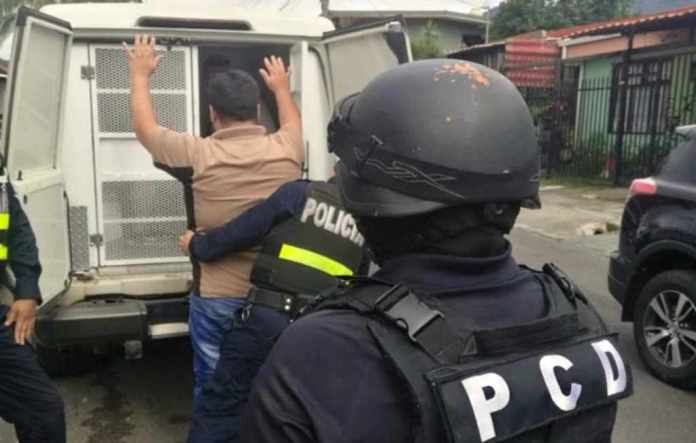


 From the pages of Crhoy.com.