Monday, March 30, 2026
Home Blog Page 834

La Republica Online Goes Subrscription

0

La Republica, Costa Rica’s business newspaper will soon be charging for online content. The Larepublica.net will allow non-subscription readers up to five “premium” articles per month, along with the rest of the online content.

larepStarting February 11, 2013, the online edition will cost US$0.99 for the first month and then US$5 monthly for unlimited access to premium content, newsletter and mobile version.

La Republica is following a trend in online news going to paid content.

Many online publications are finding that a major portion of revenue for news and information each month is derived from subscription revenue…this allows for the improvement of services.

The charging for content is said to be a correction of the so-called “original sin” of the online news business — namely, a failure to charge for content when the web was new. One of the latest manifestations of this idea appears in an e-book called “Why American Newspapers Gave Away the Future,” from former Wall Street Journal executive Richard Tofel, which looks at the failure of newspapers on a number of levels.

Online news readership overtakes newspapers
What is worrisome to newspaper publishers is that online news readership has overtaken print newspapers. Today, more of us are getting our news from the Web than from newspapers. The Internet now trails only television among American adults as a destination for the news.

Many news organizations now deliver their online content on mobile platforms, in particular mobile apps, to provide new ways to generate subscriber and advertising revenues in local markets.

Most owners of mobile devices – smartphones, tablets, etc – report having an app that helps the local information or news.

If online newspapers forced you to pay, would you read them? That is the question being considered by every news organization, big and small.

Typically, news sites and blogs rely on advertising money to stay up and running. Rupert Murdoch, CEO and Sith Lord of News Corp (which owns a variety of book, magazine and newspaper publishers including HarperCollins, The New York Post and The Wall Street Journal) is one of the most vocal — not to mention powerful — forces driving the idea that online news websites should charge for the content provided.

The Wall Street Journal, owned by Murdoch’s News Corp, is perhaps the leader in news site that charges a subscription fee for access to all of its articles.

It’s no secret that the magazine and newspaper industry is in trouble, and pay walls are seen as one way to help stop the bleeding.

So, where do you stand?

Online newspaper
120220_61532-6267285.streams_desktop_x_smallAn online newspaper, also known as a web newspaper, is a newspaper that exists on the World Wide Web or Internet, either separately or as an online version of a printed periodical.

Going online created more opportunities for newspapers, such as competing with broadcast journalism in presenting breaking news in a more timely manner. The credibility and strong brand recognition of well-established newspapers, and the close relationships they have with advertisers, are also seen by many in the newspaper industry as strengthening their chances of survival. The movement away from the printing process can also help decrease costs.

Online-only newspapers
The true online only paper is a paper that does not have any hard copy connections. Unlike blog sites a newspaper website is run as a newspaper.

- A word from our sponsors -

Scared But Alive. Three Walk Away From Spectacular Bridge Accident.

0

157243_vuelco-platina-260113

Three people are lucky to be alive today following a spectacular car accident on the “platina” brige. The accident occurred in the early hours of Saturday morning.

Apparently the driver lost control of the vehicle and hit the retaining wall.

The vehicle overturned and came within inches of falling into Virilla river below, a drop of a few hundred metres straight down.

The steel side mesh past the retaining wall held the vehicle in place. The passengers who were able to walk away from the accident with minor blows and pretty shook, probably counting their blessings.

- A word from our sponsors -

Man Arrested In Propane Gas Tank Explosion That Killed 3

0

157290_cilindro_gas_200113

A 62 year old man was detained by Judicial agents for being responsible for the death of three and injury of four in an Alajuela soda (small restaurant) last week, caused by the explosion of a propane tank.  See report.

The man, whose identity was not released to the press, is beleived to be the supplier of the propane gas to the soda.

The man was apprehended in his vehicle transporting gas cylinders, similar to the one causing the explosion last week that killed three women aged 20, 33 and 51. Three other women were injured, as well as a minor.

For his part, the minister of the Environment, Rene Castro, has called for tough action on the handling – rather, mishandling – of propane gas cylinders.

The minister stated that forthcoming are regulations.

- A word from our sponsors -

300.000 In Costa Rica Live in “Informal Settlements”

0

asentamiento-652x300

Almost 300.000 people in 417 “informal settlements” (precarios in Spanish) live in poor conditions according to the study “Hogares en asentamientos informales, ¿quiénes son y cómo viven?“ – Households in informal settlements, who are they and how do they live?” – by Costa Rica’s census and statistics board, the Instituto Nacional de Estadísticas y Censos (INEC).

The study cites poor sanitary conditions, homes made of tin, problems with access to fresh water and electricity and the risk of people surrounded by violence and insecurity.

The research, based on the 2011 Census results, found that some 80.000 families live in precarios.

Although, at least for the majority living in the Central Valley, the areas that come to mind immediately are Lomas (Pavas), La Carpio and Leon XIII, the study shows aras like Miramar (Puntarenas), Cuidad Quesada (San Carlos), Puriscal, Liberia (Guanacaste) and Limón, all have informal settlements.

According to the INEC sociologist, Sofia Mora, there was an increase of 5% between 2000 and 2011.

The director of Detección y Asignación de TECHO, Mauricio Mora, explained that his group and with the support of the INEC will be doing a more detailed investigation, visiting areas prone to flooding and landslides, with the objective to show the failure of pubic policy when working with informal settlements.

The results of the investigation by TECHO are expected to be presented formally on October 17, Extreme Poverty Day.

- A word from our sponsors -

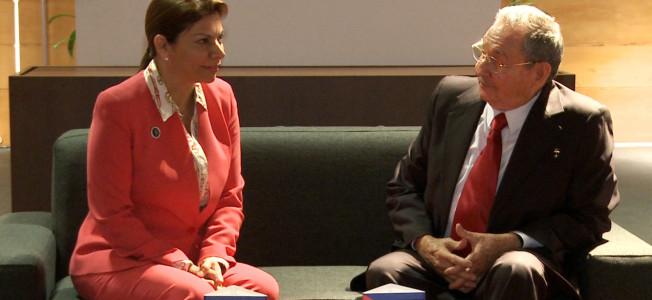
Laura Chinchilla and Raul Castro Held Historic Meeting While in Chile

0
Costa Rica's president, Laura Chinchilla (left) and Cuba's Raul Castro (right) held the first official meeting between leaders of the two countries since 1959.
Costa Rica’s president, Laura Chinchilla (left) and Cuba’s Raul Castro (right) held the first official meeting between leaders of the two countries since 1959.

For the first time since 1959, the leaders of Costa Rica and Cuba held an official meeting, when Laura Chinchilla met with Raul Csastro after the end of the  I Cumbre de la Comunidad de Estados Latinoamericanos y Caribeños (Celac) – First Summit of Latin America and Caribbean, held in Santiago de Chile.

Costa Rica’s Chinchilla and Cub’a Castro stressed cooperation between the two countries in fields of education, health, environment and culture.

During the summit, Costa Rica’s Foreign Minister, Enrique Castillo, signed the cooperation and framework agreement reached on January 10 in Havana.

Costa Rica unilaterally broke diplomatic ties with Cuba in 1961 and resumed in 2009. Since, the Costa Rica’s director of foreign policy, the vice-chancelloer and minister of Culture, Environment and Foreign Affairs have all visited Cuba, meanwhile Cuban Culture Minister, Rafael Beral visited Costa Rica last November,

Cuba will chair the forum CELAC in 2013 and Costa Rica in 2014.

Iin other meetings held during the summit in Chile, Chinchilla arranged a visit to Costa Rica by Mexican President, Enrique Peña Nieto, on Feb. 19. She also pledged to support the entry of the Dominican Republic as a full member of the Central American Integration System (SICA) and strengthening economic ties with Spain.

- A word from our sponsors -

Mobile Banking Security Tips

0

Keep Track of Your Mobile Device

5-mobile-banking-security-tips-1Perhaps the biggest risk is also the reason why mobile banking is so popular — mobile devices are easy to carry around everywhere we go. They can contain everything from passwords to contact lists to our calendar appointments. Information like that can be dangerous if your mobile device falls into the wrong hands.

Be Careful of What You Download

While there aren’t as many examples of malware out in the mobile device market as there are on traditional PCs, the fact remains that mobile devices are just specialized computers. That means it’s possible for someone to design an app that could try to access your information. One way this could happen is if the app hides a keylogger.

Use Official Bank Apps When Possible

Many banks now offer official applications in smartphone and tablet app stores. In general, these apps tend to be more secure than sending information by SMS message or e-mail. Most banks go to great lengths to make sure any information sent across a network by an app is encrypted.

Make sure your bank sanctions the app before you download and install it. Most banks will include a section on their Web sites to let you know about the official app. Once you’ve verified the app is official, it shouldn’t be difficult to download and install to your device.

Avoid Banking While on Public Networks

Many mobile devices allow you to connect to different types of networks, including Wi-Fi networks. You might be tempted to check your balance or make some transfers while you grab a quick drink at a coffee shop. But before you log into your account, make sure you’re not connected to the public network.

Public connections aren’t very secure — most places that offer a public Wi-Fi hotspot warn users not to share sensitive information over the network. If you need to access your account information, you may want to switch to another network. If you’re using a smartphone or other cellular device, disabling the Wi-Fi and switching to a cellular network is a good solution. You never know who might be listening in over the public network.

Don’t Follow Links

You may have heard the term phishing. Phishing refers to the practice of tricking someone into revealing private information. Fishing and phishing are similar concepts — there’s bait involved with both. With a phishing scheme, that bait might be as simple as a text message or e-mail. It may be as complex as a fake Web site designed to mimic your bank’s official site, which is called spoofing.

You should never follow a banking link sent to you in a text message or e-mail. These links could potentially lead you to a spoofed Web site. If you enter your information into such a site, you’ve just handed that data over to thieves. It’s always a good idea to navigate to a Web site directly. Enter your bank’s Web address into your phone and bookmark it. This will help you avoid bogus Web sites.

On a related note, you should never send your account information or password via text message or e-mail. It’s a common phishing scheme to send out bogus requests for such information. Don’t fall for it!

- A word from our sponsors -

Seven Costa Rica Banks Offer Customers Apps

0

From small transactions to balance inquiries, Costa Rica banks offer their services by way of “Apps” for smartphones and other mobile devices, like a tablet.

V2_Home_MobileBankingAll three state banks, Banco Nacional (BN), Banco de Costa Rica (BCR) and Banco Popular offer their customers apps. Private banks include, BAC, Scotiabank, Citi and BCT.

In addition to Apps, Costa Rica’s banks offer services by way of SMS (Short Messaging Service) that provide banking information and transactions.

Known as “banca movíl” (mobile web), a customer use commands to identify a transaction based on codes define bby the bank to channel the orders.

In the case of BAC the number is 1BAC (1222), the Banco de Costa Rica uses BCRM (2276) and the Banco Nacional, BNCR (2627). Private banks like Scotiabank, Bancredito and Promerica provide services through the Kölbi platform of the Instituto Costarricense de Electricidad (ICE). To use this mobile service, a PIN provided by the bank is required to activate and then to make transaction.

Mobile Banking
Mobile banking has until recently (2010) most often been performed via SMS or the mobile web. Apple’s initial success with iPhone and the rapid growth of phones based on Google’s Android (operating system) have led to increasing use of Apps, applications downloaded to the mobile device.

Advancements in web technologies such as HTML5, CSS3 and JavaScript have seen more banks launching mobile web based services to complement native applications.

Whe accessing a bank’s website on a mobile device a number of things can happen on mobile detection such as redirecting to an app store, redirection to a mobile banking specific website or providing a menu of mobile banking options for the user to choose from of which visiting the main homepage is one.

But how secure is mobile banking? Could a thief sniff out your bank account information digitally? Is it safe to make financial transactions using an app or text messaging, or by visiting a mobile Web site?

The good news is that mobile banking is somewhat secure just because there are so many variations of banking apps and methods in the market. A thief has no way of predicting which method a potential victim might use. If there were only one standardized method the story might be different. Even so, there are certain rules you should follow to make sure your banking information remains safe.

Experts say that accessing your bank’s mobile website or using your bank’s mobile application to access your account is much more secure than conducting traditional online banking on your computer.

- A word from our sponsors -

Legislator’s GPS Info Is Public Domain

0

Want to know where your legislator – or any legislator  – has been? Or at least his/her vehicle? Now, anyone can request information recorded on a legislator’s GPS

The Legislature’s legal department said that the information is public domain, following a decision by the Legislative Directorate.

The decision stemmmed from the refusal of some legislators in handing in reports of fuel consumption. Reports of legislators running around the country raised questions of waste.

- A word from our sponsors -

Bank Manager Turned Robber Behind Bars

0

157203_juan_carlos_250113

The Juzgado Penal de Hacienda in San José ordered Juan Carlos Quesada to three months preventive detention while the investigation into the missing ¢378 million colones taken from the Banco Nacional branch in Cobano continues.

Quesada, a manager at the bank, is the prime suspect in the “embezzlement” of funds from the bank.

In a television interview following his giving himsel up, he admitted taking the money and that he acted alone.

The money has yet to be found.

Quesada’s lawyer, José Miguel Villalobos, has argued that his client be charged with simple larceny, which meant a penalty of a few months to to up three years in jail. However, the Fiscalia charged with him emebezzlement with has a penalty of up to eight years.

The preventive detention is eliminate the suspect fleeing jurisdicition and hampering the investigation.

He will be held at San José’s San Sebastian jail, on the south side of San José.

- A word from our sponsors -

At 102 Nicoya Resident Is Looking To Live 100 More

0

157172_abuelo_102_250113

The Nicoya Peninsula is reputed to be one of the few places in the world where people live the longest. And don Victoriano Fajando Fajardo is living proof.

The Dulce Nombre de Nicoya resident celebrated his birthday 102 on Friday.

Don Victoriano is a lifelong farmer who never went to school, because back then he would have had to walk hours to get to school.

He married young to doña Dora Hernández Pérez, who today is still his wife, after 72 years of marriage.

The couple have four daughters, five grandchildren and seven great-grandchildren.

At 102 years of age don Victoriano is walking without a cane, is a lover of rancheras and so happy that he wants to live another 100.

- A word from our sponsors -

One Driver’s License For Central America?

0

Licencias-652x300

Your Costa Rica drivers license could be used throughout Central America if transit authorities and road safter councils of the region can come to an agreement in talks next week.

The subject of a “one” license for the region has been under discussion since 2008. According to the director of Costa Rica’s Consejo de Seguridad Vial (Cosevi), Silvia Bolaños, the type of license, legal age and consent requirements are items being assessed,

Bolaños said that another aspect of the regional license is that it incorporate a chip that contains the driver information.

The director added that next week there is promise of decisions on the various agreements discussed the last several months.

One of the points important to Costa Rica is that the new “Central America” drivers license would continue to restrict a foreigner from leaving the country if he or she has a debt – unpaid fines – with the Cosevi.

Representatives of the seven Central American countries are expected to sit down on Monday in San José, with results of the meeting to be made public on Wednesday.

The creation of a “Central America” license eliminates the need for a separate license for each country.  The countries of Central America are: Guatemala, Honduras, El Salvador, Belize, Nicaragua, Costa Rica and Panama.

- A word from our sponsors -

Darthmouth Alum to publish Costa Rica guide

0

While many dream of traveling the world, James Kaiser ’99 turned his fantasy into reality. Unlike most conventional paths, Kaiser’s profession brought him to Costa Rica, where he encountered thousands of dolphins, visited mass turtle nesting sites and experienced indigenous reenactments of the Spanish invasion of Latin America.

crbeach

Kaiser will compile these adventures and into his fifth guidebook, to be published in February.

Kaiser’s writing career began as an accident. Following his graduation, Kaiser returned home to Bar Harbor, Maine to write a guidebook on Acadia National Park.

He then went back to the College for a fifth year to complete his bachelor’s in engineering, but realized that his passion lay in travel writing.

“Basically, that one year that I took off, when I was just going to have some fun and write a guidebook, turned into a career,” Kaiser said.

Kaiser took several studio art classes at Dartmouth, but had no formal photography training. He taught himself to shoot professional photos and said that the high-quality pictures in his books set him apart from his competitors.

With the exception of his most recent book, Kaiser’s guidebooks have focused exclusively on national parks, including the Acadia, Grand Canyon, Joshua Tree and Yosemite National Parks.

Ready for a change, Kaiser went to the 2006 Winter Olympics in Torino, Italy and shot photos for Yahoo Sports. After spending over a month in the cold weather, Kaiser welcomed an invitation to Costa Rica from his friend Scott Braman ’99.

“I absolutely fell in love with the country,” Kaiser said. “It was beautiful, tropical, exotic. Everything about it I just loved.”

Costa Rica is an eco-traveler’s paradise not unlike an American national park, where visitors can look at wildlife and venture to natural destinations, Kaiser said.

Kaiser’s devotion to immersing himself in Costa Rica contributed to the high quality of his book, according to David Boddiger, an editor at the Tico Times who befriended Kaiser while he was writing.

“James struck me because he seemed like somebody who came down here and really threw himself into the country,” Boddiger said. “He wanted to learn the language and he went the extra mile to understand the culture.”

Kaiser did not speak Spanish when he arrived in Costa Rica, and he dedicated his first months in the country to learning the language.

Kaiser said his trip was filled with memorable adventures. At Ostional beach, he saw a mass turtle nesting.

“I was on a beach, literally surrounded by thousands of turtles laying their eggs,” he said.

Kaiser also climbed Cerro Chirripo, the tallest mountain in Costa Rica. From the peak, Kaiser saw the Pacific Coast and Caribbean Coast on either side.

In addition to viewing the natural wonders of the country, Kaiser enjoyed attending native festivals, such as the Festival de los Diablitos and an Independence Day parade. His friend Alberto Font accompanied him to the parade.

“It was kind of shocking for James to see a lot of people dancing on the streets,” Font said. “I guess he had never seen something like that before. He was amazed.”

Kaiser will donate 5 percent of his book’s proceeds to protecting Costa Rica’s biodiversity. The guidebook will also be printed on FSC certified paper, which comes from “sustainable, responsible sources,” he said.

Kaiser publishes his own guidebooks through his company Destination Press. While he was forced to publish his first guidebook on his own, he has found the practice to be lucrative, he said.

Kaiser remains connected to his first guidebook, even after writing four others.

“It is the first one I ever did and that’s where I am from,” he said. “I have a lot of emotional attachment to Acadia.”

Over the next few years, Kaiser will convert his guides into ebooks, and will add audio, video and multimedia. He has yet to decide where his next guidebook will take him.

By Brian Chalif, Darthmouth.com

- A word from our sponsors -

Movistar Offers “Super Bonus” Promotion. But It Isn’t Free!

0

Movistar in Costa Rica is reaching to a younger generation, offering unlimited access to the internet and social media sites with any with a minimum ‘recarga” (refill) of ¢1.000 colones.

20130330generacionmovistarThe promotion is for all “pre-pay” users, though targeted at a younger audience

Signing up or refilling with the promotion minimum, customers will receive a “Superbono” (Super Bonus). Following the refill, customers will receive a text (SMS) message to choice either two days of free internet of up to 1 Mbps or two days of unlimited text messaging.

But, there are catches.

One, to make the choice, customers are required to send back a text message which will cost ¢500 colones.

Two, the refills cannot be accumulated. That is, if you refill two times ¢1.000 you do not get four days, always two. Or if you refill at one time ¢2.000, again, only two days and not four.

Three, the ¢500 cost is for each Super Bonus you activate.

Four, text messaging is only for local operators (no international texting) and does not include premium, such as adding photos or videos.

For  the small print (literally of the promotion rules click here.

- A word from our sponsors -

Costa Rican Tribe’s Traditional Medicines Get A Modern Media Makeover

0

terraban

When the Terraba tribe in Costa Rica rallied to oppose a hydroelectric dam they feared would destroy their land and their centuries-old culture, the indigenous community took a modern approach.

They linked up with journalism students at Elon University in North Carolina, who built a website describing the tribe’s way of life, including how it makes use of medicinal plants.

The 750-person tribe relies on an array of grasses, shrubs and seeds to treat everything from sunburns and colds to leukemia and prostate cancer.

None of their teas and ointments have the Food and Drug Administration’s seal of approval, but the plants have been mainstays of the Terraba tribe for centuries.

“The Terraba are a woman-centered society,” Amanda Sturgill, a journalism profesor who led the project, writes in an email to Shots. “Knowledge about cultivation and use of the plants is passed down through women. If they are relocated, though, access to some of these plants will be lost.”

Last summer, Sturgill and her students spent time with the Terraba tribe, whose roots trace back 10,000 years in Central America. “The leader of one of their clans let us photograph different plants and explained their uses,” she says.

The students pulled the information together in a website that also explores the Terraba’s language, history and traditions. The site launched Thursday.

“The Costa Rican government has said that the Terraba aren’t a robust culture enough to preserve them,” Sturgill says. “We are showing that they are unique.”

- A word from our sponsors -

Costa Rica Prepping for Legalized Marijuana in US

0

Costa Rica, Mexico and Colombia have opened talks with U.S. officials to prepare for the legalization of marijuana in some U.S. states, according to presidenta Laura Chinchilla, who is attending the World Economic Forum in Switzerland.

medical marijuanaChinchilla, from her Swiss Alpine resort, said concern over the easing of drug laws stems from the growing number of U.S. states with medical marijuana laws, and some states that have gone beyond that.

In November, voters in Colorado and Washington state approved measures making it legal to smoke marijuana recreationally without a prescription or medical reason, raising concerns of a growth in demand.

The dialogue between the nations involves “what is going to happen with legalization in some of the states in the U.S. and the impact it can have” on the battle against international drug cartels, Chinchilla said in an Associated Press interview.

Costa Rica, with its tourist-based economy and lack of a national army, has focused on keeping safe its beaches, parks and other public draws. It is one if the safest countries in Central America based on the number of homicides, she noted.

The drug cartels that have become entrenched in Mexico “pose a very important menace to our country,” Chinchilla said. U.S. cooperation with Costa Rican authorities is needed because it is a huge consumer.

Source: ABC News

- A word from our sponsors -

A “Moving” Week, 15 Earthquakes Registered

0

157107_sismografos4g

It was 12:40am Friday another earthquake shook Costa Rica. This time the quake registered 3.5 on the Richter scale, mild compared to the 5.3 less than 24 hours earlier.

The epicentre of today’s quake was located 1 kilometre nortwest of Bajo Gloria in El Guarco de Cartago, says the Observatorio Vulcanológico (OVSICORI) and the Sismológico de Costa Rica.

This is has been a moving week, seismologically speaking.

This morning’s tremor is one of 15 quakes registered during this week, ranging between 2.3 and 5.3.

At 1:08am Thursday a 5.3 quake registered in the Central Valley, in the area of Turrubares, near Orotina. The others, in lower intensity, have been felt in various areas of the country, including areas of Santa Maria de Dota and Playa Garza, in Guanacaste.

OVSICORI experts say the tremors are “normal” for we live in a country with high seismicity.

- A word from our sponsors -

When Does Robbing Bank Become Embezzlement?

0

UPDATED: The bank manager who made off with more than ¢370 million colones from the branch he managed for more than three years is being charged with embezzlement instead of robbery.

quesada420According to the Fiscalia de Puntarenas, Juan Carlos Quesada’s appropriating the state bank’s money is no different than employee taking home a portable computer.

The employee with a clean work record of 18 years with the Banco Nacional is alleging that he was coerced by area criminals, who approached him days earlier while walking a Puntarenas beach.

Scared for his life and that of his family, Quesada told authorities he decided to make off with the money from the branch Saturday night at closing time.

The man gave himself up to authorities at 4:55pm Thursday following days as the only suspected after bank officials o Tuesday confirmed the missing money and Quesada not showing up for work, nor his whereabouts known.

The 43 year old bank manager who was said to have been suffering from severe depression, serious financial problems and had been recommended by a bank psychiatrist to be removed from his position, confessed on camera to Telenoticias’ Greivin Moya to taking the money.

In the interview, Quesada said he acted alone, told the story of and why took the money from the bank’s vault.

The money is still missing. Quesada turned himself in empty handed and authorities have yet to say if they have leads on what happened to cash.

- A word from our sponsors -

Importers To Be Fined For Importing”Total Loss” Vehicles

0

chatarra-652x300

Importers who bring in cars in a state of “total loss” will be liable to a fine of ¢1.4 million colones (US$2.800 dollars).

The regulation, Article 5 of the Ley de Tránsito (Traffic Act) goes into force on Saturday, January 26, though it will be up to three months before the regulations will be in effect.

The traffic law will prohibit the registration of vehicles, if:

  • the vehicle has been declared a total loss
  • the vehicle presents unauthorized structural modifications
  • the vehicle has its VIN or chassis identification altered
  • the vehicle has removed from circulation in the country of origin
  • the vehicle does not comply with the general requirement of movement as per subsection d or article 32, concerning the location of the steering wheel (this is to limit the importing of right hand driver vehicles)

According to Silvia Bolaños, director of the Consejo Nacional de Seguridad Vial (Cosevi), the appropriate authorities, including Hacienda (Finance), Aduanas (Customs) and Registro Nacional (property registry) will be given guidelines as to when a vehicle cannot be imported.

The director de Aduanas, Gerardo Bolaños, warns consumers to be careful when buying a vehicle that has yet to clear customs and be registered.

- A word from our sponsors -

“Unlocking” Your Cellphone Continues Legal in Costa Rica

0

5cdf2fe8acdaa74584314222032c_h338_w600_m6_lfalse

While “unlocking” a cellphone in Costa Rica is common place, the practice is being outlawed in the United States.

Starting Jan. 26, buying and unlocking a phone will no longer be legal in the United States.

In Costa Rica, all cellphones sold by retailers and carrier must be unlocked and used on any network operating in the country. An unlocked phone is useful for those traveling internationally because it allows phones to work on different networks.

The term “unlocking” a phone means to remove the security feature that prevents the phone being used on a different network. Once a phone is unlocked, it can work on more than one carrier’s network.

In the United States, the Librarian of Congress, who determines any exemptions to a strict anti-hacking law called the Digital Millennium Copyright Act (DMCA), decided in October 2012 that unlocking cellphones would no longer be allowed. A 90-day window was provided during which people could still buy phones and unlock them.

Mashable reports that the Electronic Frontier Foundation (EFF) is questioning DMCA’s right to determine who can unlock a phone.

EFF attorney Mitch Stoltz said in a letter to TechNewsDaily.com: “Arguably, locking phone users into one carrier is not at all what the DMCA was meant to do. It’s up to the courts to decide.”

- A word from our sponsors -

Bank Manager Turned Robber Gives Himself Up

0

157099_juan_carlos_quesada_240113_1

The bank manager who made off with ¢378 million colones from the Banco Nacional in Cóbano de Puntarenas, Juan Carlos Quesada, gave himself up to authorities, but declined to give a statement.

The manager is being charged by the prosecution with embezzlement.

Quesada admitted making off with the money following closing of the bank branch on Saturday, telling authorities that he acted alone.

Defence lawyers say, that when an employee makes off with property in the exercise of a public function (the Banco Nacional is a State bank), it is in embezzlement and not larceny.

Quesada is being held in the Puntarenas jail cell and is expected to go before the courts today.

- A word from our sponsors -

Bomberos Costa Rica Launch App For Emergencies

0

bomberosThe Benemérito Cuerpo de Bomberos de Costa Rica – Costa Rica’s fire department – has launched App (application or software) that allows iPhone and iPad users to be alerted of emergencies in real time.

The App can be downloaded, free of charge, from Apple’s App store. The app only works on devices OS5.0 or higher.

The App provides details on ongoing emergencies being attended to by the fire department, separating from reports made to actual emergecies; location of fire stations; a map; and about the Bomberos.

The app is also configurable to the user, that is the user can set the type of notifications and information he or she wants to receive.

- A word from our sponsors -

Cooking Dangerously

0

gastank

Many homes Costa Rica use gas in their kitchens, and with no gas line coming from a public utility piped in from the street, the only source is a propane gas tank or cylinder.  And chances are if you use gas stove in Costa Rica that the regulator is obsolete and considered unsafe in the rest of the world.

The type of regulator in use in Costa Rica has long been considered unsafe in the rest of the world. The cheap pin type regulator is actually referred to as the “Central American type”.

new_RED86D~1
The cheap pin type regulator is actually referred to as the “Central American type”, considered unsafe in the rest of the world.

If the condition of the cylinder and regulator is good the chances of any serious problem is small.

However, many in Costa Rica, to save a few colones, will continue to use rusted out and dented cylinders, even with faulty regulators and leaks, a dangerous combination when considering that the majority of the cylinders are next to the gas stove and usually in a confined space, like in the kitchen or worse yet a closet, with poor or little to no ventilation.

Very few homes have the space to place the gas cylinder outside, in the patio for instance. And even then, there is the problem of using the appropriate gas line and not just a rubber garden home.

All this and carelessness can lead to disaster, as was the case on Monday when a cylinder in a soda in Alajuela blew up, injuring six and killing one of three sisters who owned and ran the small restaurant.

It is not uncommon to see propane gas cylinders in poor condition. Worse is that these cylinders are sold and distributed in poor condition. This is evidenced by visiting your nearby “pulperia” (grocery store) where cylinders are available for purchase/exchange.

Typically, once you purchase a cylinder you only need to exchange an empty for a full one. Although you own (paid the purchase price) for a cylinder, you only get to exchange it for another unless you are willing to go the source – the gas plant – to have it refilled.

[one_half last=”no”][colored_box color=”blue”]LP Gas Prices in Costa Rica:

8.598 lt. (small tank): ¢3.146

21.495 lt (regular tank): ¢7.864

85.981 lt (large tank): ¢31.457

BBQ tank: ¢6.291[/colored_box][/one_half]Thus, in effect your cylinder is only as good as the last user and since there is no responsibility to take care of it or report it damaged, well…

Z-Gas or Zeta Gas is one of the major distributor in Costa Rica after taking over Tropigas last year.

Although Z-Gas assures that they discard damaged cylinder, it is in contrast to the reality of the cylinders at the corner store. Z-Gas blames the problem on other companies, saying they only fill their cylinders and cannot control the quality of the others.

Felipe Mejija Iturbe, an official for Z-Gas, blames “piracy”. In a recent press statement, he said “the problem is in pirate companies who fill the cylinders without authorization or provide maintenance to same”.

To get an idea of the magnitude of the danger, Z-Gas has handles some 250.000 cylinders a month through some 5.000 distribution points across the country.

There is no clear number of the total number of cylinders out there and their condition.

lp2

According to Héctor Chaves, the director of the Bomberos de Costa Rica, the fire department attends to some 3.000 emergencies a year related to gas cylinders. Of those, Chaves explains, 80% are related to leaking regulators, the rest to the poor condition of the cylinder due to rust, dents and abuse.

“The problem is that nobody takes responsibility for the problem, everyone passes the buck and no one takes care of the maintenance of the cylinder”, says Chaves.

According to Chaves, a potential tragedy is in every household.

How to protect yourself from a tragedy
lp1Compared to other flammable gases, propane is more difficult to ignite. In order to burn, air must contain between 2.2% and 9.6% propane vapors. Thus, although propane leaks can be hazardous, they are not nearly as dangerous as other types of gas leaks. Also, a leaky underground propane tank does not cause as much pollution as a heating oil leak.

Inspect closely the condition of the cylinder before taking it from the store. In the majority of cases, the choice of cylinder is not very good, meaning trading a good one for one not so good. One way to avoid this is to buy a new cylinder and then locate a refill location and reusing “your” cylinder.

Keep the cylinder in an open and well ventilated area. Just by keeping it in the patio, where there is no ventilation for any possible leaking gas to escape into the air – means nothing. Gas can easily build up and explode.

Ensure that the regulator is not leaking, properly fitted at all times.

Currently there are no laws or regulations in place controlling the use and maintenance of gas cylinders. Thus the responsibility of providing safe cylinders and maintaining them safe is up to the individual supplier. And since the price of the gas is regulated – set by the government – maintaining and replacing gas cylinders cuts into profits.

To solve the problem in Costa Rica gas companies would have to replace the cylinders in use in order to switch to the much safer screw type regulators that are in use worldwide. Legislation to require the change has been languishing for years and the gas companies are unwilling to make the change until someone can answer the question of who will pay.

Major Tragedies Due to Leaking Gas Cylinders

August 24, 2008 – La Amistad, Jacó – a leak led to an explosion killing three.

December 27, 2011 – Paraiso de Cartago, one man dies from the explosion; another suffers burns to 95% of his body

January 21, 2103 – Six people injured, one woman dies in an explosion


- A word from our sponsors -

54% Of Traffic Tickets Appealed

0

More than half of traffic tickets are appealed says the Consejo de Seguridad Vial (Cosevi), confirming that it has some 160.000 tickets currently in appeal and with only a staff of 40 to process them.

trafficficThe Cosevi introduced the appeal system in December 2008 and to date 54% of all traffic tickets have been appealed, as drivers faced with fines in the hundreds of dollars use the system to either get off completely or at very least stall the time to pay

Silvia Bolaños, director of the Cosevi, admits that there is a serious problem in the system.

By numbers alone, each of the 40 lawyers working with the Cosevi have to resolve 4.000 appeals each to erase the backlog.

When submitting an appeal at the Cosevi offices in La Uruca, you are told to expect a resolution within six months. In reality, however, the resolution of a case can be up to 2 years or more.

In the meantime, the driver (or the owner of the vehicle before the latest decision of the Constitutional Court) had plenty of time to pay up if found guilty.

Bolaños calls the appeal process a “loophole”. “We are continuing to strengthen the loophole that encourages irresponsibility of Costa Ricans faced with having to pay a traffic infraction”, Bolaños told La Nacion.

The situation goes further than just avoiding paying a traffic fine. Bolaños explains that, when a driver’s vehicle or license plates are confiscated for such as driving impaired, if the ticket is appealed, the vehicle or plate has to be released during the appeal process.

Appealing a traffic ticket is the cause of many other problems, according to the director. Without the ability of collecting on traffic fines, or at least in a timely manner, traffic lights continue working damages, streets do not get the repair attention they need or the ability of the Cosevi to paint lines,  for example, the director admits.

Appealing a traffic ticket in Costa Rica is unlike that of the United States, Canada and many other countries, in that the driver files an appeal – filling out a form that includes a statement of what occurred – and then waits, waits, waits, waits…waits for a decision.

No hearing is scheduled. A driver is not afforded the ability to present his or her case before a traffic court or judge. The appeal is decided on and the decision is rendered.

If absolved, the traffic ticket there is no requirement to pay the traffic ticket. The ticket still remains a matter of record, with the notation that it was absolved. To the contrary, the ticket becomes fully payable and interest and late fees and penalties apply if not paid within the established time.

- A word from our sponsors -

QTip: Appealing A Traffic Ticket in Costa Rica

0

crt17

OK, you’ve been picked off for talking on a cellular phone, or not wearing a seat belt or driving over the limit and you get a ticket. You have two choices – nothing to do with guilt or innocence – to pay or appeal.

If you choose to appeal the traffic ticket, here is what you need to know.

One: You need to visit a Consejo de Seguridad Vial (Cosevi) near you. In San José, the Cosevi is located in La Uruca, adjacent to the Banco Nacional.

Two: With the traffic ticket in hand, you will need to obtain a form and fill it out. The form has to be filled out in Spanish with completed details of what occurred.

Three: Be as specific as possible. This is the only opportunity for you tell your side of the story. There is no traffic court or judge to hear your case, the decision will be made by one of the 40 lawyers on staff for that specific purpose.

Four: Do not forget to include a way to get communication. This is the only notice you will get. If you are found guilty and didn’t get notice, you will then have to pay the fines, late penalties, etc, etc.

Five: Wait. Wait. Wait. Wait. Wait. Wait. Wait. Wait. Wait. Wait. Wait. Wait. Wait. Wait. Wait. Wait. Wait. Wait. Wait. Wait. Wait. Wait. Wait. Wait. Wait. Wait. Wait. Wait….

Although you will be told that a decision is forthcoming in six months, it can take more than a year, even up to 2 years or more. Currently the Cosevi has 160.000 traffic ticket appeals to process and only a staff of 40.

Six: Once you get notice of the decision, if you are found guilty, you have to now pay up. If found not guilty, do nothing. You just saved a few hundred dollars and points on your license.

- A word from our sponsors -

Change of the Times, Otto Guevara With New Girlfriend

0

The convention to see a political leader  his or her spouse at their side in Costa Rica is no longer. Nor is  the convention of their personal lives delved into in the press.

ottoguevFew know the today’s current leaders are without a “significant other”, single men or women who reach out to the public for votes, promising this, that and the other, but telling very little what goes on behind the scenes, events that shape the person and the quality of their leadership.

Currently, only one high profile politician makes his private life – perhaps not willingly – public – Otto Guevara.

As founder of the Partido Movimiento Libertario (ML) and three times (2002, 2006 and 2010) presidential candidate, the private life of Guevara made the headlines in 2010, before the elections when his then girlfriend and soon to be wife, Deborah Formal, refused communion at a church service.  Formal was seen on national television pocketing part of the host after receiving Eucharist at Catholic Mass.

That unusual act by Formal is said to have cost Guevara the 2010 election. And possibly the calling off of the wedding set for December 18, 2010. Neither of the two are talking about it, nor to each other.

This week, Guevara’s persona life made the headlines, this time sporting a new beau. She is Dra. Ileana Alfaro. Guevara and the young doctor have been seen and photographed in public, confirming they are “an item”.

Asked about her ex’s new relationship, Formal told the Diario Extra, “I know nothing of that, but if he has a girlfriend I wish him a lot of happiness.”

Like the lives of most of Costa Rica’s politicians, very little is known about Guevara’s personal life, much less of his new girl.

All we know is this: Otto Guevara Guth (born October 13, 1960) is the son of civil servants. His father, Claudio, was a physician for Costa Rica’s social security system. His mother, Mariechen, worked for the Social Security system before resigning to run the family’s tourism business.

Guevara studied at the University of Costa Rica where he earned Bachelor’s degree in law followed by a Masters in International Business from National University of Costa Rica and a second Masters degree in Law with an emphasis on Conflict Resolution from Harvard University. He was also a long-serving professor of law at the University of Costa Rica where he imparted his understanding of education and conflict resolution to his students.

Failing to see any representation for his values in Costa Rica’s traditional parties, Guevara founded the Movimiento Libertario in 1994 to challenge the conventional orthodoxy of Costa Rican politics which he saw as lurching towards greater corruption and less respect for the individual rights of his people. He believes that the principles of moderate intervention of the State and more economical freedom as the best way to improve the lives of the Costa Rican people.

- A word from our sponsors -

License Plate Changeover Delayed

0
Starting soon all of the older license plates MUST be changed over to the new, more secure plates. At the time of change, a vehicle owner can request a new alpha-numeric plate or keep the same number.

The Registro Nacional (property registry) has delayed the commencement of the license plate changeover that was to have started this month. The delay is due to technical problems with the internet website that will take in the request from vehicle owners.

According to Kathia Salazar, directora de Servicios Registrales, system testing is ongoing to avoid problems and/or the collapose of the website.

Salazar hinted that April could be the new start date, the date when owners of vehicles with the old plates must start to make the switch, which can  include requesting one of the new alpha-numeric plates.

Once the system is working, a vehicle owner has to only make the request online and the visit the nearest Registro National office to pick up the plates.

The changeover is expected to chronological. For example, all plates ending in 1 will be first, which owners will then have three months to obtain the new plates.

The Registro is not providing many details at this time other than new plates will cost ¢15.000 colones for a pair for automobiles and ¢8.000 for motorcycles. Vanity plates – a combination of three letters and three numbers – will cost an additional ¢20.000.

The new plates include security measures to avoid copying or twinning and a sticker that is to be placed on the front windshield. Once the vehicle has the new plates there will be a total of  three stickers on the windshield:  Marchamo, Riteve and Plate.

- A word from our sponsors -

5.3 Quake Shook Central Valley

0

157011_sismo

Costa Rica’s Central Valley (San José and surrounding areas) shook early Thursday morning, when an earthquake registering 5.3 on the Richter scale hit at 1:08am.

The OVISCORi said the epicentre was located six kilometres southwest of San Francisco de Turrubares (9.8925 / -84.4715), in the area of Orotina, west of San José, with a depth of 62 kilomeres.

The quake was felt throughout the Cental Valley.

No damages or injuries were reported.

- A word from our sponsors -

Prime Rate Drops to 8.6%

0

bccrfiThe Banco Central (Central Bank) today has reduced the Tasa Básica Pasiva  (Prime Rate) even further, dropping to 8.6% from 8.9 the day earlier.

The rate climbed to a high of 12% in January 2009 from a low of 7% a year before that.

on January 24, 2003 the Tasa Básica was 17.5%.

For a historic look at the Tasa Baásica click here.

- A word from our sponsors -

Costa Rican president says new US drug laws to affect fight against drug cartels

0

chinchi3650

DAVOS, Switzerland (Associated Press) – Costa Rican President Laura Chinchilla says her country, Mexico and Colombia have opened talks with U.S. officials to prepare for the legalization of marijuana in some U.S. states.

She said in an Associated Press interview that the Central American nations worry about what the effect that legalization in some U.S. states will have on the battle against international drug cartels.

Chinchilla says the drug cartels that have become entrenched in Mexico “pose a very important menace to our country” and U.S. cooperation is needed because it is a huge consumer of those drugs.

She also says “it’s very hard to pretend that they are going to disappear. What is happening is that they move from one country to another.”

- A word from our sponsors -

U.S. Medical Tourism

0

NEW YORK (Reuters) – For Jim Kucera, the pain was just getting worse. The salesman from New Hope, Minnesota, needed a hip replacement urgently, but the cost of treatment would also be painful: Lacking health insurance, he would have to pay out of pocket.

MEDICOS12-250x187At first, Kucera looked abroad at countries like Israel and India, where he figured he could get the procedure done for about $30,000, a bargain compared with the $50,000 or more that American hospitals would likely charge.

But he balked at the long distances involved and the potential for in-flight health problems.

Then, he came across the encouraging idea of being a medical tourist closer to home – right here in the United States.

“I’d never heard of that before,” says the 63-year-old Kucera.

He connected with North American Surgery, an intermediary firm that hospitals hire to market their services to out-of-pocket payers, and it found him a better deal. Late last year, Kucera’s hip replacement procedure was done – in Oklahoma City – for less than $20,000, including flights and hotels.

The idea of medical tourism has gained currency in recent years, encouraging patients to explore their options.

Hospitals like Bumrungrad in Bangkok offer five-star-hotel amenities, replete with gourmet food, marble floors, treatment by Western-trained doctors, recuperation at a tropical resort, and a much lighter bill than is typical in the United States.

That’s spurred about 700,000 Americans to travel abroad each year for medical treatment, according to Josef Woodman, author of the book “Patients Beyond Borders.”

For the less adventurous, however, jetting to India or Singapore for medical care is a bridge too far.

“There are questions of medical training, of language issues, of lengthy travel,” says Rick Baker, founder of North American Surgery. “If you have to file a malpractice lawsuit, good luck doing that in India. If you need a transfusion, where’s that blood coming from? Or what if you pick up a bug common to that part of the world but is rarely seen in the U.S., that is difficult to diagnose and treat?”

Enter the idea of ‘domestic medical travel.’ After all, one doesn’t have to be treated at the local healthcare facility, and traveling to another state for medical care can be more comforting for many than crossing an ocean.

It’s not just the uninsured who may travel for medical care. Workers for some major corporations can be treated at so-called “surgical centers of excellence” – first-rate medical facilities within the U.S. – and have it covered by their insurance. About 22 percent of large employers now support that, and another 19 percent are considering it, according to the 2012 National Survey of Employer-Sponsored Health Plans by consulting firm Mercer.

“There’s going to be much more of this going forward,” predicts Eric Grossman, a senior partner with Mercer. “There’s a lot of interest in it right now among employers and health carriers.”

For instance, home-improvement retailer Lowe’s recently agreed on a deal with the Cleveland Clinic, winning bulk discounts on top-flight cardiac care for its employees. PepsiCo Inc. did the same with The Johns Hopkins Hospital in Baltimore, while Wal-Mart Store Inc. has struck similar agreements with several hospitals around the country.

How the new healthcare reform legislation will affect medical comparison shopping remains to be seen. Observers suggest it might have a different effect on different consumers.

Mercer’s Grossman predicts that companies and carriers will become much more active in seeking discounts in the years to come, in order to contain costs. North American Surgery’s Baker worries that broader coverage will mean hospitals will be less likely to cut similar deals for uninsured individuals, but of course there will be far fewer of the latter once the mandate that people have coverage kicks in on January 1, 2014.

To be sure, domestic medical travel isn’t a cure-all.

Long trips back to your home base aren’t ideal for anyone after a major procedure, even if it is stateside rather than abroad. And if you’re doing this on your own, instead of through an insurance plan, there will be added costs to consider, like airline tickets or having a companion come along to assist.

And, of course, the bottom line with medical care isn’t the cost, it’s the quality of care. So medical travelers have to vet their destination hospitals and doctors carefully.

There’s also the challenge of getting reliable cost comparisons. Most American facilities shy away from providing hard numbers on the cost of various procedures, since each patient’s case is inherently unique.

“The resistance to that is tremendous in the U.S.,” says Woodman. “I would like it to be mandatory for U.S. hospitals to publicize their costs online, just as auto dealers put prices on car windshields.”

North American Surgery sends most of its clients to Oklahoma, Arizona and South Dakota, where facilities have been open to offering discounts in exchange for cash payment, and in turn give Baker’s company a percentage of the total bill.

Another firm, Denver-based BridgeHealth Medical, specializes in helping self-insuring employers get discounted surgeries.

If cardiac bypasses usually go for between $80,000-$120,000, Baker says he can get the same operation for $33,000. Another client was quoted $100,000 for a valve replacement; Baker got him into a top hospital for $27,000.

Patients who are considering domestic medical travel can research the records of doctors at sites like Healthgrades.com and Zocdoc.com, and study U.S. News & World Report’s annual hospital rankings.

The caveats for domestic medical travelers are essentially the same as they are for those scouting locations abroad, says Woodman. Opt for fully accredited hospitals with an extensive, successful history in performing the procedure you are seeking. Bring full medical documentation back home with you, so you can follow up with local doctors if or when you need to.

Bring a medical-travel companion; you will likely need the assistance. Indeed, if your health plan is covering you to travel a significant distance to a surgical center of excellence, they will usually spring for a companion as well, says Mercer’s Grossman.

If you’re uninsured, research whether the price the institution is quoting you is “all-in” – including things like inpatient days, consultations, and anesthesia – or whether those elements are a la carte, which could bloat the final bill significantly.

As for Jim Kucera, the freedom from pain brought by his new hip has prompted him to start bowling again. Sure, he had to raid some retirement funds to pay the bill, but it was worth it for a new lease on life.

“I should have done it years ago,” he says.

- A word from our sponsors -

Bank Manager and ¢378 Million Colones Missing

0

bn-cobano

Juan Carlos Quesada is the prime suspect in the missing ¢378 million colones (US$750.000 dollars) missing from the vault of the Banco Nacional Cobano branch

Quesada, a manager of the at the branch in Santa Teresa de Cóbano de Puntarenas, was last seen Saturday night when a taxi driver drove him home. He had worked for the Banco Nacional for the last 18 years, the last 4 years in Cobano.

The alert came Tuesday when Quesada did not show for work and bank auditors discovered the missing month.

The Organismo de Investigación Judicial (OIJ) was called in on Monday first to investigate a missing person. The investigation turned into a robbery and countrywide manhunt after auditors found cash missing from the vault.

800-8000-645

- A word from our sponsors -

Illegal fishing suspected in Costa Rica mass turtle killing

0

(AP) The Costa Rican government says illegal fishing could be the cause of 280 sea turtles showing up dead in the Golfo Dulce off the Pacific coast.

Environment ministry official Jackelyn Rivera says her agency has launched an investigation and ordered the Coast Guard to patrol the area more heavily in search of those responsible.

Some 280 sea turtles showed up dead on Monday. They were Kemp’s ridley and black turtles, both endangered varieties.

Environmentalist Didier Chacon said Tuesday that the damage could have been done by long-line fishing, in which a rope with hooks is buoyed for miles to catch swordfish, but also snags other marine life in the process. Chacon said the method is illegal, especially in marine conservation areas such as the Golfo Dulce.

- A word from our sponsors -
th>

¢461.96 BUY

¢466.89 SELL

/
27 March 2026 - At The Banks - Source: BCCR