The doctor and nuclear disarmament activist accusing former Costa Rica President and Nobel Laureate, Oscar Arias, told the New York Times (NYT) she was inspired by the #metoo movement over sexual misconduct and that she was coming forward to protect other young women.
The woman, identified by the NYT as Alexandra Arce von Herold, who is not seeking monetary damages, alleges that Arias sexually assaulting her four years ago, in December 2014.
On Monday, Arce filed a ‘denuncia’ (criminal complaint) against the two-time president and 1987 Nobel Peace Prize winner. In the copy of the 10-page complaint she provided to the NYT, Arce says she was at Arias’ home when he came up behind her, touched her breasts and shoved his hands up her skirt, penetrating her with his fingers.
Arias, through his lawyer, Rodolfo Brenes, said he categorically denies the accusations made against him. “I have never acted in a way that disrespected the will of any woman,” said the statement by the lawyer.
Arce told the NYT she regretted not having fought back that afternoon when Arias allegedly grabbed her. Arce had met Arias through her mother, a former legislator for the Partido Liberacion Nacional (PLN).
“I just froze, and I didn’t know what to do,” she said in an interview with the NYT. “I was so much in shock. That had never happened to me before.”
Arce said she did not go public earlier because, before the #metoo movement, the notion of making such a serious allegation against someone so powerful seemed unimaginable. She said that seeing women accuse powerful men like Harvey Weinstein and Bill Cosby of sexual harassment and sexual assault was inspiring.
But it was watching the young gymnasts testify one after the other about sexual assault by a United States Olympic team doctor, Larry Nassar, condemned in the United States for sex crimes against gymnasts, between 2017 and 2018, that clinched her decision to come forward.
“All the other women, that did, that helped me. So I thought maybe, maybe, I can help other people too,” Arce told the NYT.
The New York Times said Arce provided the newspaper a copy of the 10-page complaint she filed with the Fiscalía de Género del Ministerio Público.
The allegation against Arias is the highest-profile in Central America to date, that could deliver a serious blow to the legacy of the most powerful figure in Costa Rica.
“It’s the right thing to do,” she told the NYT, “even if it destroys me.”
Former President Arias declined to provide an interview on the complaint. Through his lawyer, he indicated that he would wait to see the information that would be published. (Photo: Katya Alvarado)
A doctor and activist, and daughter of a former PLN legislator denounced former president and Nobel Laureate, Oscar Arias, for rape that would have occurred in 2014.
Former President Oscar, through his lawyer, said he rejects the accusation and assures that he will defend himself in the courts of justice for the charges against him. (Photo: Katya Alvarado/ Semanario Universidad)
The complaint was made before the Fiscalía Adjunta de Género (Deputy Prosecutor’s Office of Gender), on Monday.
The Public Prosecutor’s Office confirmed on Tuesday that a complaint about a sexual offense against a person surnamed Arias was filed on Monday. However, because it is a case under investigation, it indicated that no further details will be revealed.
The complainant had related her story to the weekly university newspaper, Semanario Universidad.
“I opened the folder, I explained, and when we finished I got up with my back to him. Then, he grabbed me from behind and touched my breasts. I told him no and that he was married. That was my no. It was the only thing I could think to tell him. I had met his wife.
“It was the only thing that occurred to me because I am an idiot, but I did not know what to do really and I thought that this was the only line of defense I could have. And when he did not react to that, I did not know what to say, because I had this fear that if he refused, he would not cooperate with us anymore.
“I do not remember what he said, but he kept touching me, he put his fingers in my vagina and he touched me all over and he kissed me. And then he told me to wait for a bit and he left the office. I was like I did not know what to do, I felt trapped at that moment”.
The Univesidad say it also has the story of several witnesses to whom the complainant told the details hours and days after the alleged attack..
According to the victim, who was 30 years old at the time and led an organization dedicated to activism to abolish nuclear weapons, the incident occurred on December 1, 2014 at the former president’s house, located in the posh neighborhood of Rorhmoser, on the west side of San José, where she went to deliver documents about an anti-nuclear campaign.
That day
According to the woman’s testimony, on the morning of that December 1, 2014, she had a meeting with a Costa Rican diplomat and then went to the former president’s to hand him a folder with information about the anti-nuclear campaign, which he was supporting.
The doctor says that after the attack, the former president left the office for a few moments. “He came back and said: ‘Oh no, it’s that we cannot here, we have to go to the office’, one he keeps in Barrio Escalante or Barrio Dent, I do not know. And I thought to myself: ‘what are you talking about?’ And I said: ‘Aha, yes, it’s fine’, because it was like my chance to leave. Then I got into my car and went home.”
Once at home, the complainant said that she called her boyfriend via Skype, since he lives abroad. According to her story, while she was telling him what happened, she received a call from Arias who complained that she had not gone to his office.
She says that she asked her boyfriend – who was listening on Skype – to keep quiet while on the call and dodging Arias, telling him she had a meeting in the Legislative Assembly.
Consulted by Universidad, the complainant’s boyfriend recalled that that day she called him and told him about the interview he had had with Arias and explained that, at the end, that he “touched her sexually” and that she “panicked”.
“It took her a while to realize what really happened to her, that she is not the one who did something wrong, that she was not the culprit, but rather the victim,” he said.
According to the Universidad, the complainant also told the story to her father, her mother, friends and colleagues.
One of the first to find out was her colleague Martin Hinrichs, who was part of the International Campaign to Abolish Nuclear Weapons (ICAN). Both attended an event in Vienna, Austria, days after the attack, so the doctor told her what happened, hearing a nervous breakdown during the trip.
The weekly also published a series of messages by victim to friends and family.
Arias rejects the accusation
Oscar Arias rejects rape charges: ‘I have never acted disrespecting the will of any woman’.
The former president, in a statement sent to the media by his lawyer, Rodolfo Brenes, said:
“With regard to the information published today (Tuesday), I must say that I categorically reject the accusations that are made against me. I have never acted disrespecting the will of any woman, even less in the case of her freedom to relate to another person.
“In my public life, I have promoted gender equality, because I consider it an indispensable means to achieving a more just and equitable society for all people.”
Arias assures that he will defend himself in the courts of justice for the charges against him.
“Being that, reportedly, there is a (criminal) complaint made against me, I will exercise my defense before the Courts of Justice and I will not make further public comments on this issue,” Arias said in a statement.
The Penal Code on rape
According to article 156 of the Penal Code, it is punishable by imprisonment from 10 to 16 years, who is “accessed or has carnal access by oral, anal or vaginal, with a person of one sex or the other”, among others circumstances “when taking advantage of the vulnerability of the victim or being unable to resist or” when using corporal violence or intimidation “.
The law also states that “the same penalty shall be imposed if the action consists of introducing one or more fingers, objects or animals to the victim, vaginally or anally, or forcing the victim to introduce them herself”.
The surprise nomination of non-professional indigenous woman Yalitza Aparicio for this year’s best actress Oscar for her role as a domestic servant in Alfonso Cuarón’s critically acclaimed Roma has been greeted as a “fairytale”.
Netflix
Yalitza was training to be a teacher when she reluctantly went to an audition where Cuarón was immediately struck by her. Her presence and her similarity to his own childhood maid – on whom the film is based – secured her the role.
Yalitza didn’t plan on auditioning for Roma. In fact, she didn’t even have plans to be an actor at all. Propelled into the spotlight by her role, she has become the first indigenous woman to grace the cover of Mexican Vogue. She also endeared herself to her growing social media following by uploading to Twitter a video of her sobbing reaction to news of her nomination.
With her Best Actress nod, Aparicio becomes only the second Mexican-born actress to be recognized in the category, following in the footsteps of Salma Hayek (nominated in 2003 for Frida), and, in a story that seems only possible on the pages of a script, her road to Hollywood’s biggest night is nothing short of miraculous.
Sumamente feliz, cuando desperté hoy tan temprano, (claro, a la hora de aquí) no esperaba está noticia, gracias Ale A. García y @marielmmayorga por despertarme ???? pic.twitter.com/PdziTnDKxh
If Yalitza wins, she will be the first indigenous Latina Oscar winner and will join the small number of non-professional actors to win an Oscar in recent times. This number includes Anna Paquin for her role in The Piano (1993) and Haing S Ngor, a former doctor from Cambodia, who won the 1985 best supporting actor Oscar for his role in Roland Joffe’s The Killing Fields, in which his own traumatic experiences informed his outstanding performance as a local journalist.
But Yalitza also stands out as being typical of the non-professional’s experience throughout cinema history. Her “journey” from naïve provincial girl to the red carpet hits many familiar notes.
Alfonso Cuarón
Before Roma, Yalitza was not known as the performer in her family. That title was held by her older sister Edith, who, in 2016, was invited by the director of a Tlaxiaco cultural center to a mysterious casting call. “My sister sings, and in Mexico we have these things called Casa de la Cultura, which are specific places where they actually foster culture. They support people who want to do something in culture,” she told Deadline in December.
Christopher Howard’s Live in Costa Rica – It is very easy to look at the negatives in Costa Rica when one is comparing the country with the United States or Canada. They are too completely different countries and, above all, cultures.
Downtown San Jose from photo archives
It is really easy to distort the facts when one does not understand a country. This is especially true if you do not speak the language. Speaking Spanish well will make one’s life easier.
You will always be a “stranger in a strange land” if you don’t speak the language. Also, you will have the chance to really understand the Costa Rican people and make some great life-time friends if you no the lingo.
It is impossible to compare Costa Rica with North America. But far too many gringos fall into this trap and become “ugly Americans.”
I have lost count of the times that I have heard foreigners say, “In the States we do it this way. Why can’t they do it like us”.
You just cannot compare apples and oranges.
In many cases expats become frustrated because Costa Rica doesn’t meet their unrealistic expectations. They compare the current Costa Rica with the way the country was 30 years ago. Things change! The U.S. is even different that it was thirty years ago. Remember, “He who lives in the past, is dead in the present”.
The cost of living is higher here than most countries in the region, but once you get settled and know where to shop you can have a reasonably affordable lifestyle.
Although the gap between Costa Rica and the U.S. is narrower than when I came here 40 years ago, one cannot realistically expect everything to be like the U.S.
Yes, there is crime here.
The most common crime is theft. However, we do not have the level of violence that prevails in the United States. There are homicides but there aren’t the mass and indiscriminate shootings since the gun laws are much stricter. A person can only own three handguns legally and assault rifles are not permitted. Granted criminals always find a way to buy weapons on the black market.
Furthermore, there is no threat of terrorism since the country has no enemies.
I do not look at things through rose colored glasses but realize that the worst here are far better than the worst in the United States. Believe me!
Keep in mind that the country is not going to change for you; one has to adapt to the lifestyle here. If not, you will be truly unhappy and frustrated.
Most people who return home (as in leave Costa Rica) just can’t adapt to the culture, come with mental baggage and have unrealistic expectations.
I lived in Mexico and travelled through all of Central America and chose to live here because it is by far the best in Latin America.
Why do you think people from other countries in the region move here in search of the “Costa Rican Dream”.
Article first appeared at Live In Costa Rica Blog.
Rico’s TICO BULL – One of the questions I am often asked is what changes I have seen in my more than two decades of living in Costa Rica. There are many. Traffic congestion in the greater metropolitan area and the “Americanization” of the country are top two, without question.
“Americanized” might be somewhat true for all Central American countries, but I believe it is more mainstream right here, in Ticolandia. Even more than Panama.
I base my point of view on the “PriceSmart” index. This is the number of PriceSmart stores in a country based on its population.
Costa Rica is a country about the size of Switzerland or for “Americans”, two West Virginias, with just a little over five million inhabitants.
Yet, there are seven, yes, seven PriceSmart stores in the country: Zapote, Escazu, Heredia, Llorente (Tibas), Alajuela, Tres Ríos, and Santa Ana. All seven stores are located in the Greater Metropolitan Area (GAM) which is about half of the country’s population.
You see, there are no PriceSmart stores outside the GAM. There are McDonald’s in various communities outside the GAM, even a Walmart in Liberia, but no PriceSmart stores. Not yet anyway.
Thus, in Costa Rica there are seven PriceSmart stores for a population of 2.5 million, give or take a few. This means, using simple math, that each store caters to 357,000 people, give or take a few.
If we compare that to say, Nicaragua or Colombia, I think you will see my point.
In Nicaragua, PriceSmart operates two stores in Managua. The Managua GAM has a population of 1.4 million, give or take a few. That means that each store caters to 750,000 people, give or take a few.
In Colombia, the bastion of the PriceSmart world with an overall population of almost 50,000 million there are the same number of PriceSmart stores as in Costa Rica.
The PriceSmart stores in Colombia are in one each in Barranquilla, Periera, Medellin and two each in Bogota and Cali with a combined population of some 20,000 people, give or take a few. That translates to one store per 2.8 million people, give or take a few.
Yes, Costa Rica is still Costa Rica. But “Americanized”. Especially the Central Valley and Jacó. However, it is still very Latin and the people are wonderful. Give or take a few.
BTW, there are no PriceSmart stores in Switzerland or West Virginia
Do you shop at PriceSmart? How many times a month (or week) do you visit? Post your comments below or to our official Facebook page.
PriceSmart declared a US$0.70 per share dividend at the company’s 2019 annual meeting of stockholders held on January 30, 2019, in San Diego.
A $0.35 per share is payable on February 28, 2019, to stockholders of record as of close of business on February 15, 2019, and $0.35 per share payable on August 30, 2019, to stockholders of record as of the close of business on August 15, 2019.
PriceSmart said it anticipates the ongoing payment of semi-annual dividends in subsequent periods.
Headquartered in San Diego, PriceSmart owns and operates 41 U.S.-style membership shopping warehouse clubs in 12 countries in Latin America and the Caribbean and one U.S. territory.
In Costa Rica, PriceSmart now operates seven stores; seven in Colombia; five in Panama; four each in Trinidad and the Dominican Republic; three each in Guatemala and Honduras; two each in El Salvador and Nicaragua; and one each in Aruba, Barbados, Jamaica and the United States Virgin Islands.
The company has acquired property and is currently constructing warehouse clubs in Santiago, Panama and Santo Domingo, the Dominican Republic that are expected to open in the spring of 2019.
The Company also plans to open warehouse clubs in San Cristobal, Guatemala and an additional club in Panama City, Panama, in the fall of 2019.
PriceSmart also operates a cross-border logistics and e-commerce business through Aeropost (formerly Aerocasillas in Costa Rica) which was purchased in March 2018.
PriceSmart membership from one country can be used in all other countries.
Venezuelan President Nicolás Maduro created a new cryptocurrency called the ‘Petro’ to combat hyperinflation. Reuters/Carlos Garcia Rawlins
Signs of backsliding include elected leaders who expand their executive powers while weakening the legislature and judiciary, elections that have become less competitive and shrinking press freedom.
When government institutions erode like this, it isn’t just bad for democracy – it also hurts countries economically, research shows.
Authoritarianism isn’t always bad for the economy. Autocratic China and Singapore are both economic success stories, growing at double digits – a pace largely unseen in Western democracies.
But these countries were never set up to be democracies.
When a one-time democracy turns toward authoritarianism, however, the economic effect is often negative. That’s because, in a democracy, economic policy is meant to be made jointly, by various elected officials from the executive and legislative branches. Other independent government agencies, like the U.S. Federal Reserve or central bank, help decide economic policy, too.
Lawmakers check impulsive decisions by presidents in a number of formal and informal ways, our research shows. Policies that relate to government investments, taxing and spending, among other issues, are generally the result of negotiation between the two branches.
When legislatures can no longer effectively serve this function – because they’ve been sidelined, as in Venezuela and Turkey, or because they are dominated by the ruling party, as in Hungary – there’s little to prevent authoritarian leaders from making bad choices that hurt the economy.
Turkey is a good example of the risks that come from having one all-powerful, fallible leader.
In July 2018, President Erdoğan expanded his executive powers to include making key appointments to Turkey’s central bank and appointed his son-in-law to lead economic policy in Turkey. Erdoğan then restricted the bank from raising interest rates to curb rising inflation – despite warnings from economists that this move would lead the value of the Turkish currency to plummet. And, of course, it did.
Social unrest is bad for the economy
Legislatures play an important role in setting economic policy also because, as representative bodies made up of different political parties, they serve as channels through which people and social groups can make demands on policymakers.
In healthy legislative debate in a functioning democracy, opposing parties develop economic policies that help their constituents. They also try to change laws that they believe will hurt the people they represent.
When authoritarian leaders sideline opposition parties and stack the legislature with their supporters, the only way for citizens to air their grievances is on the streets.
Social unrest can deepen economic woes, especially when it gets violent. Riots may destroy physical infrastructure like oil pipelines or block highways that keeps the country running. People may flee for their own safety, leaving jobs undone and critical positions unfilled.
Democratic backsliding reduces foreign investment
International markets, too, dislike social unrest. When protests are prolonged or if the governments crack down violently, it is common for investors to flee.
International investors get worried, too, when parliaments have too few opposition parties to effectively check the executive branch, our study finds.
When democratically elected leaders turn authoritarian, investors get nervous, withdrawing funds and reducing investments.
Since 2013, Hungary, Venezuela and Turkey have all seen notable declines in their foreign direct investment, a measure of global confidence in a country, according to the World Bank. Declines range from 66 percent in Venezuela to 300 percent in Hungary.
One reason investment drops as democracy erodes is because investors fear the government could begin meddling in their businesses in ways that reduce profits.
This is a common strategy of authoritarian leaders from both the right and the left.
Since taking sweeping control of Hungary’s parliament in 2018, for example, President Orban’s right-wing Fidesz party has reasserted government control over major energy firms, taking over public utilities and increasing government oversight of foreign companies that operate in the country.
In Venezuela, the left-wing Maduro has taken over food production in the country, ordering companies like Nestle and Pepsi to vacate their factories in 2015.
It’s all about the legislatures
Our study found one condition that allows economies to thrive even when democracy is in decline: functioning political parties in independent legislatures.
In the Philippines, hard-right president Rodrigo Duterte has imprisoned, even killed, thousands of citizens as part of his “war on drugs.” Duterte has also arrested powerful people who criticize his policies. So far, however, the Filipino parliament is still fairly functional, with opposition parties that operate freely.
Consequently, the Filipino economy remains unaffected by Duterte’s authoritarianism. Gross domestic product has grown at a good rate of around 7 percent since 2012. Foreign investments have also been increasing.
Sharing some power with lawmakers gives the economy a boost. Ultimately, that may help these authoritarian-leaning leaders stay in power longer.
The paramo is bleak, stark, and intimidatingly desolate. It is also hauntingly beautiful and eerily seductive.
The English word paramo comes from the Spanish for wasteland (páramo in Spanish; stress on the first syllable in both languages). It may derive from a pre-Roman language of the Iberian Peninsula. It is sometimes translated into English as alpine tundra or moor.
It refers to a variety of high altitude tropical ecosystems found exclusively in Latin America. It is a biome, or biological community, found in the contiguous countries of Costa Rica, Panama, Colombia, Venezuela, Ecuador, and Peru. Paramos are also found in the Sierra de los Cuchumatanes of Guatemala—a fact often left out of writings on the subject.
Paramos exist at higher altitudes—from 3,000 meters (roughly 9,800 feet) above sea level to the permanent snowline. This is above the continuous timberline—at least for larger trees. Temperatures are highly variable, but generally much colder than the lowlands. Paramos are sometimes described as daytime summer and nighttime winter. This ecosystem receives a lot of water—rain, fog, cloud moisture, etc.—although the amount varies by region and season.
Paramos are divided into three zones according to altitude, which controls climate and vegetation. The lowest level is the subparamo, found between 3,000 and 3,500 meters (roughly 9,800 to 11,500 feet). This is the paramo ecosystem mostly found in Costa Rica, although at the higher elevations here paramos begin to change over to the middle level—grass paramo. The highest level, extending up to the snowline, is the superparamo.
The subparamo is a transition zone with characteristics of the forest below as well as the higher more severe zones. In addition to abundant grass it has scattered shrubs and small trees.
In Costa Rica the paramo is not well known.
Even people living close by paramos are unaware of the ecological treasure they have as a neighbor. They are found mostly along the Cordillera de Talamanca which stretches from southwest of San José to Panama and beyond, especially Cerro Chirripó, Cerro de la Muerte, Cerro Buenavista, Cerro Kamuk, and Cerro Vueltas. There are a number of places between Cartago and Pérez Zeledón along the Interamerican Highway where you can stop to experience paramos. Finally, paramos can also be found on the higher slopes of Irazú and Turrialba volcanoes.
Small ponds are another aspect of paramos.
These potholes are called turberas, sometimes translated into English as peat lake. They are often difficult to find due to the dense growth surrounding them—you can pass within a few feet of a turbera without realizing it.
Plant and animal life in the is highly adapted to the severe climatic conditions. Some biologists consider paramos to be hotbeds of ongoing evolution.
Getting out into the paramo is challenging due to the thin air and rough terrain.
Still, I would encourage you to at least stop along the highway to appreciate a highly unusual and rare biological community.
As the Lima Group countries ready for an emergency meeting on Venezuela hosted by Canada, here in Venezuela on Sunday, Nicolas Maduro attended the latest in a string of almost daily military exercises.
Anti-government protesters hold Venezuelan flags as they block a highway to demand the resignation of President Nicolas Maduro, in Caracas, Venezuela, on Saturday. (Rodrigo Abd/Associated Press)
Each new day in Venezuela brings a new choreographed display of military loyalty to Maduro, and an escalation in the rhetoric of imminent invasion by outside forces led by the United States.
Sunday’s event was staged by naval commandos on the coast of Aragua state, where a group of about a hundred soldiers, crouched on their haunches on the beach at Turiamo on Venezuela’s central coast, chanted the slogan: “Always loyal! Never traitors!”
A naval commando pinned a medal on Maduro’s chest while the two men shouted the slogan together.
Los Comandos del Mar me impusieron la insignia que representa la lealtad y el compromiso de los hombres y mujeres de nuestra @ArmadaFANB, con la Constitución, el Pueblo y la Patria. La recibí con honor, orgullo e identidad; cuenten conmigo. ¡Gracias! pic.twitter.com/ffc7EPEprB
“We are in a time of defense of our independence,” Maduro told the marines, pacing in front of them on the beach with a microphone. “To be or not to be, said the great Shakespeare, to be a nation, or to be a colony; to be of Venezuela, or to be nothing; to be a united people and armed forces, or to be disintegration; to be the future and the present, or to be the disappearance of this dream that’s more than 200 years old: Venezuela.”
Nuestros dignos oficiales de la #FANB, en unión Cívico–Militar, son la máxima garantía de la integridad y soberanía territorial. pic.twitter.com/znIBpwtcQ3
Only one country that has seriously discussed the possibility of using armed force to displace: the United States under the Trump administration, that stands alone in suggesting such an option is on the table.
In Canada, ahead of the meeting of the Lima Group on Thursday, February 7, the CBC news reports Prime Minister Justin Trudeau’s government has consistently opposed the idea of an armed event.
An anti-government protester walks past a concrete highway barrier defaced with the Spanish word for dictatorship during demonstrations against Maduro in Caracas on Saturday. (Fernando Llano/Associated Press)
“I think it’s far too premature to have any discussion regarding any type of military actions,” Canada’s Defence Minister Harjit Sajjan reiterated Friday on CBC’s Power and Politics. “We need to allow the diplomatic space and the experts to be able to move forward.”
Neighboring Colombia, the best-placed country geographically to intervene militarily in Venezuela, has also made it clear war is not an option.
“I have never mentioned recourse to war-like methods. That would play into the hands of the dictator (Maduro) who imagines and demonizes the threat of military intervention to wind up patriotic sentiments and cling to power,” said Colombian President Ivan Duque.
Choosing sides
Two rival presidents claiming legitimacy for the leadership of Venezuela has forced a large number of countries to choose a side.
The leftist or left-leaning governments — including Cuba, Nicaragua, Uruguay, and South Africa — support Maduro’s second term.
Venezuela’s President Nicolas Maduro, from second left, Bolivia’s President Evo Morales, Nicaragua’s President Daniel Ortega and El Salvador’s President Salvador Sanchez Ceren, place their hands on the tomb of Venezuela’s late President Hugo Chavez in 2016. Ceren lost El Salvador’s presidential election on Sunday, meaning Maduro lost an ally. (Ariana Cubillos/Associated Press)
The right-wing or right-leaning governments — including Brazil, the U.S., and Colombia — see it another way, backing Juan Guaidó.
There is also a split along another axis that has little to do with left or right. Authoritarian governments including Russia and China are backing Maduro.
Canada, Argentina, Costa Rica, France, Germany, democracies that might not otherwise have an ideological stake in the squabble but believe Maduro has illegitimately given himself a second term in office following a widely condemned vote last year, have taken or moved towards Guaidó.
A masked anti-government protester throws a Molotov cocktail towards Venezuelan Bolivarian National Guardsmen during anti-Maduro protests in Caracas on Saturday. (Fernando Llano/Associated Press)
The biggest countries the most committed
The most powerful nations involved have taken positions that leave little room for negotiated solutions.
The U.S. has committed to a regime change and refuses to rule out war. Russia and China have both invested significant resources in the Maduro regime. Much of Venezuela’s most modern military equipment comes from Russia. China has provided technology. Both have provided loans. Big loans.
President elect Nayib Bukele of the Great National Alliance (GANA) greets supporters before casting his vote in a presidential election in San Salvador, El Salvador, February 3, 2019 | Photo: Reuters
Presidential candidate Nayib Bukele from the Great Alliance for National Unity (GANA) has won the presidency of El Salvador on Sunday with 53.1% of the vote while Hugo Martinez, from the ruling Farabundo Marti National Liberation Front (FMLN), was supported by 14% of the voters, according to electoral authorities. Carlos Calleja from the far right ARENA party came in second place with 31.8% of the vote.
President elect Nayib Bukele of the Great National Alliance (GANA) greets supporters before casting his vote in a presidential election in San Salvador, El Salvador, February 3, 2019 | Photo: Reuters
So far 80.1% of the vote have been counted.
The elections were supposed to have begun at 7:00 am local time with polls closing at 5:00 pm; however, due to delays many voting centers did not open their doors till 8:00 am, resulting in many voters leaving without voting as they had to go to work.
Since the end of its bloody civil war in 1992, El Salvador has been governed by just two parties: ruling leftists the FMLN, and its rival, the ARENA.
The government arranged for 23,300 agents to keep peace and security during the elections.
A total of 4,063 missions are tasked with observing the elections out of which 2,338 are national missions and 1,725 are international. The international missions include the European Union, OAS, the Inter-American Union of Electoral Organizations (UNIORE).
Bukele had started the celebrations early, proclaiming himself the winner before Julio Olivo, President of the Supreme Electoral Tribunal (TSE) had a chance to announce the winner.
Bukele told the media in a press conference immediately after the announcement, that he was thankful for the public vote of confidence, and thank you “to all those who are still waiting for the minutes to be transmitted despite the fact that the result is irreversible.”
The former Mayor of San Salvador has the backing of the Vice President of El Salvador, Óscar Ortiz, who told local media that he was “ready for a successful transition.”
Furthermore, Uruguayan Luis Almagro – currently serving as the 10th Secretary General of the Organization of the U.S., tweeted his approval, saying “We celebrate your proposal for a new chapter for #ElSalvador.”
Felicitamos a @nayibbukele por su histórico triunfo en primera vuelta. Celebramos su propuesta de un nuevo capítulo para #ElSalvador. Y saludamos la madurez política de los candidatos contendientes al aceptar su victoria #OEAenElSalvador#Elección2019
The elections were the sixth held since the U.S.-influenced civil war (1980-1992), with the country regaining democracy in 1992. Five million voters turned-out, according to Latin American publication, Infobae.
A general from Venezuela’s Air Force has announced he no longer recognizes Nicolas Maduro as the country’s president, in what appears to be the highest ranking military defection to hit the regime.
General Francisco Esteban Yanez Rodriguez
In a video circulating the social media, wearing a military uniform, General Francisco Esteban Yanez Rodriguez, as director of strategic planning in the high command of the Venezuelan Air Force, recognized the self-declared interim president, as Venezuela’s leader.
The General says he has disavowed the “dictatorial” authority of Maduro.
“I am addressing you to inform you that I do not recognize the authoritative and dictatorial authority of Nicolás Maduro and I recognize legislator Juan Guaidó as president in charge of Venezuela,” said Yánez.
Yánez claims that 90% of the Armed Forces “are not with the dictator, they are with the people of Venezuela”.
“The transition to democracy is imminent,” he says, urging Venezuelans to come out peacefully into the streets in support of Guaido.
The General told other members of the Armed Forces to “stay at home” if they are afraid of backing Guaido openly due to the internal threats. Yánez also called on the soldiers not to protect Maduro.
Aviación Militar, on their Twitter account, posted a photo of Yánez with the letters ‘traitor’. “It is a hard blow for the FANB,” military expert Rocio San Miguel told AFP.
Indigno el hombre de armas que traiciona el juramento de fidelidad y lealtad a la Patria de Bolívar y al legado del Cmdte. Hugo Chávez, y se arrodilla ante pretensiones imperialistas. G/D Francisco Yanez TRAIDOR pic.twitter.com/1O1KNH63TI
“The people have already suffered enough”, says Yánez, describing repression and deaths from hunger and lack of medicines. “Do not repress (them) anymore.”
“Given the happenings of the last few hours, already the transition to democracy is imminent,” the general says.
Maduro has two planes on standby to flee the country, the general claims, adding “he should go. The time for democracy is now,” he concludes.
General de División del Alto Mando de la Aviación Militar, Francisco Esteban Yánez Rodríguez, reconoce a Juan Guaidó como presidente encargado. “Me manifiesto por una Venezuela democrática, por la patria de nuestros hijos y la tragedia que vive nuestro pueblo”. #2Febreropic.twitter.com/3YfgnTsFlY
The two-minute video, though not clear where or when it was filmed, was tweeted out among Venezuelan journalists and spread from there. The clip has been viewed almost 100,000 times so far. The Associated Press said they had reached him on a Colombian mobile phone number.
Several countries, including the United States, Canada and the Lima Group (Argentina, Brazil, Canada, Chile, Colombia, Costa Rica, Guatemala, Honduras, Mexico, Panama, Paraguay and Peru) have recognized Guaido as president, despite still with no control over state institutions or day-to-day governance, and dismissed Maduro’s second term presidency as illegitimate.
The Lima Group is a multilateral body that was established following the Lima Declaration on 8 August 2017 in order to establish a peaceful exit to the crisis in Venezuela.
Corruption in the government of Costa Rica is a real thing. So is the lengthy process of firing an alleged corrupt public employee.
Image from Shutterstock
In 2018, corruption was the second cause of dismissal of the central Government. In 199 of the cases of dismissals registered in that year, 61 were for corruption.
The process of dismissing a public sector employee, even if all the evidence is clear, is not an easy one, taking months and even years, because the firing of a public employee is not a simple procedure, much less an expedited one.
The process can take at least six months to resolve in the first instance that starts with an internal investigation and then delayed for months and even years while the appeals processes are completed.
And, while defining the dismissal of public officials involved in acts of corruption, which in some cases, could take up to years to be resolved, workers can be suspended, however, by a resolution of the Constitutional Court, they will continue to receive their salary.
The only way for a quick dismissal is if the employee acknowledges responsibility or a criminal case is opened and the employee is remanded (preventive prison) for more than three months.
Otherwise, the process will be slow and complicated, as the final decision could be by five institutions: the entity where the employee works, the Dirección General de Servicio Civil, the Tribunal de Servicio Civil, the Tribunal Administrativo de Servicio Civil and the Tribunal Contencioso Administrativo.
And, though some of the institutions have similar names, each is independent and may end up repeating the same procedure as the previous.
One of the bottlenecks in the process is notifications. According to Alfredo Hasbum, director of Civil Service, actions have been taken such as using email and digital signature in notifications of decisions, but these have had no impact on the time to the final decision.
The La Nacion has produced an infograph showing the process, which begins with the minister of the entity (where the employee works) appointing an investigator into the case.
There is no specific timeframe for the internal investigation. An single error could lead to the case being dropped, in which case the employee cannot be submitted to a new process.
The process then continues to the next institution and repeated, each process taking weeks and months to complete. In each step, the corresponding institution has to have found the employee responsible (guilty) before it can move to the next.
If one of the institutions were to find the employee not responsible (not guilty), the process would stop there and cannot be appealed.
Only after all the processes have been completed and ‘dismissal is supported’, the filing Minister now has one month from being notified to fire the employee.
The private security company that shut down last year handed over to the Ministry of Public Security (MSP), a total of 81 firearms, along with ammunition.
Photo MSP
MSP deputy minister Eduardo Solano said the decision was made by the company because it did not know what to do with the weapons and there was a danger they could end up in the hands of criminals.
“We made a coordinated effort with the private security company not knowing what to do with the weapons. They will be in the temporary custody of the General Directorate of Armaments, while we define what the future of these weapons will be,” said Solano.
Solano added that he hopes the weapons will be destroyed.
In relating the story of Lucha Zapada and the apparent suicide of her 16-year-old granddaughter that to all her instincts of seeing her. bleeding out on the sidewalk while ‘cruzrojistas’ (paramedics) worked on her, she was murdered, a report in La Nacion reveals 19 young girls, all minors, were victims of femicide in the last six years.
The number represents 13% of all of the 145 femicides in the country between January 2013 and December 2018.
According to data from the Observatorio de Género del Poder Judicial (Gender Observatory of the Judiciary) and the judicial yearbooks of the Organismo de Investigación Judicial (OIJ), of the 14 femicides, 19 were of women under 18 years of age or minors.
This figure includes minors who died victims of their partners (as in significant others), daughters who were killed along with their mothers and girls who died during rape or abuse.
Methods used by the killers
The data reveals that the most frequent way in which these minors were killed was by stabbing (6), followed by strangulation, gunshot and beaten (3 of each), smothered (2), beaten (1) and one unspecified.
Deaths by province
47% of the femicides of minors occurred in the provinces of Alajuela with five victims and San José with four, three each in Guanacaste and Puntarenas, and two each in Heredia and Limon. While in Cartago there was no femicide of minors, between 2013 and 2018.
Most violent years
2014 and 2015 were the years in which there were the most femicides of minors, with four cases each year.
Age of the victims
The minors victims of femicides where mostly between 11 and 18 years of age. From 11 to 15 and from 16 to 17, six were registered in each range, while from 0 to 5 years there were four cases and from 6 to 10, three.
The triggers
Fiorella (Zapata’s granddaughter, which the La Nacion reports is based on) apparently had a relationship with a man, her killer, who was six years older than she.
The trigger in the majority of femicides where the victim is a minor is intrafamily violence, followed by the so-called “improper relations”.
The data reveals that in the 19 cases, eight of the femicides were committed by the father or stepfather and five by boyfriend (or girlfriend) of the victim. In three of the cases, the young girl’s mother was also the victim in the violence.
Four other femicides were perpetrated by unknown persons and in one of them, the murderer was known to the family, while another of the victims was killed by her brother-in-law.
“There is a concrete risk that in femicides, the attacker also lashes out at the children (…). Maybe in Costa Rica we have not seen it, but in other countries men first kill children because they know that this is the most direct way to harm women.
“Other risk factors for minors are when a child tries to defend his mother and in that context dies,” said Ana Hidalgo, coordinator of the Área de Violencia de Género del Instituto Nacional de las Mujeres (Inamu) – Area of Gender Violence of the National Institute of Women.
“Other risk factors for minors are when a child tries to defend his mother and in that context dies,” added Hidalgo.
Despite being tedious, traveling is fun. It eliminates the monotony, helps you to unwind, refresh, and as a result, you become more creative. So, have you been in the same routine for some time and you feel that you’re not even performing your duties the way you should?
Is your boss always complaining about your work? If yes, I suggest you take a break and travel to a different location. I assure you, you will enjoy it and come back more energetic than before.
However, other than the travel anxiety that affects almost all travelers, you may encounter some more traveling challenges if not well prepared.
The below tips will help you to maintain good health during your trip.
1. Take a nap
Sleeping is very crucial to your health. Getting sufficient sleep makes you relax, and stress-free. Being stressed is the last thing that you need while you’re on your trip, of course, in most cases you traveled to relax and have fun if it’s not for business. Don’t let stress hinder you from happiness.
Getting exhausted is the order of the day for travelers, and it can sometimes affect your sleep. However, ensuring you’re in a conducive and calm environment will make you doze without disturbances. If traveling by airplane, bring your face mask to enable you to sleep during the day. Having your earphones on to listen to cool music will also soothe you into slumber faster.
2. Keep hydrated
Water is life. When packing for your trip, always remember to carry your water bottle with you. Whichever means of transport you may use, you’re likely to get dehydrated when you sweat. Carry more water if you’re hiking, skating or riding because you’ll need it! Water keeps your body metabolism running smoothly. It also helps to remove all the toxins from your body and so we can’t emphasize more of its benefits.
3. Eat healthy food
Many are the time travelers get tempted to eat every food they come across in their new country or site. However, making sure you take only health food can save you from illnesses. Take all three main dishes during the day and make healthy snacking. Take a lot of fruits, and if you’re not sure of the kind of water used in an area, avoid salads and only eat boiled or fried meals not to take contaminated food that can get you unwell.
4. Maintain cleanliness
Maintaining cleanliness is another vital thing to look for when you travel. So, whether you’re camping in the wilderness or traveling to an undeveloped, remote areas, you shouldn’t have any excuse when it comes to staying clean. Bring wet wipes and antibacterial liquid with you to wipe around the surfaces before you use. Ensure to clean your hands at all times, and also wash your fruits thoroughly before eating. When you practice cleaning, you’ll be free from germs that cause contagious diseases.
5. Do exercise
A workout is always healthy to your body. And just like sleeping, it releases you from stress. It also helps you to burn calories that are harmful to your body and so when you keep fit; you are free from disorders such as diabetes, obesity, heart diseases to mention a few. Some restaurants offer yoga classes, so make sure you attend every morning or in the evening. You can also do simple exercises such as stretching, meditating and even yoga thanks to YouTube videos that can guide you right in your room.
6. Have your first aid kit well stocked
Well, no matter what precautions you may take, don’t make any risks when it comes to your health. Take your first aid with you and especially if you’re taking part in any outdoor activities such as skating, riding or hiking. Who knows? Anything can happen. Also, ensure you and your partner know how to use all the tools in the kit.
7. Get vaccinated
Again, don’t take the risk. Study your destination ahead of the time to identify possible misfortunes that one can encounter. Get familiar with the place by using the internet or asking for those who’ve been there before. If by any chance there is a notorious virus known to attack people, see your doctor months before and get vaccinated. You can also get travel insurance in case of emergencies.
Conclusion
There you have it. Get rid of that fear that you always have when you think of traveling and get going. Prepare yourself in advance and park all the necessities that you will require without over packing.
Practice the above tips, wear comfortable layered outfit and shoes and don’t forget to carry your cleansing and sunburn products to protect your skin. Always take the necessary precaution such as having the right gear while you’re riding or skating and you’ll surely enjoy a good trip!
United flight 1079, bound for New Jersey, suffered an engine failure moments after take-off from the Juan Santamaria international airport (SJO) Friday morning.
mage from amateur video
The airplane was able to return safely to the airport.
Image from amateur video
“There were several explosions from the left wing. We all started at once to react. The first thing that goes through your mind is that you’re going to die, that the plane is going to crash. They are things that one does not want to happen. I’m still shaking. Scary,” Ricardo Vargas was one of the passengers to talk to the television news cameras after landing.
According to Vargas, the situation was very exasperating, people screaming. “It’s a situation that you do not want on anyone. Much fright, screams, despair, some people tried to keep us calm,” he added.
The Boeing 737-800 with 138 people, including the crew, on board took off at 9:09 am.
At 9:28 am the aircraft was back on the tarmac and passengers were immediately attended by the Cruz Roja (Red Cross). No physical injuries were reported.
It is still unknown what could have caused the fire in the turbine, one of the hypotheses is that it hit a bird during takeoff.
The United States is freezing like in the movie The Day After Tomorrow. That country and also Canada are victims of a phenomenon called ‘polar vortex‘.
Cities like Chicago have registered temperatures of up to -46 ℃ (a person can freeze in 10 minutes of exposure).
That is: it is a deadly cold. A *%@# cold!
The polar vortex is a large area of low pressure and cold air surrounding both of the Earth’s poles. It ALWAYS exists near the poles, but weakens in summer and strengthens in winter. The term “vortex” refers to the counter-clockwise flow of air that helps keep the colder air near the Poles.
Many times during winter in the northern hemisphere, the polar vortex will expand, sending cold air southward with the jet stream.
To understand what a Polar Vortex is and why it happens you can Google it here.
Can these climatic waves reach our country?
When will they?
The stupid question is the one that is not asked.
The answer is no. There will be no polar vortex in Costa Rica in 2019. We are saved from such atrocity.
Werner Stolz, of the Instituto Meteorológico Nacional (IMN) – the National Weather service, confirms this: “There is no arrival of a very strong cold front. We are totally out of this polar vortex.”
Phew.
A “Churchill puntarenense”
We can still enjoy a delicious “Churchill” outdoors.
Following are photos from the Internet of what is going on up north. We recommend using winter clothing from this, they are chilling.
Chicago is set to be colder than Antarctica
People walk through a snowstorm in downtown Jackson, Mich., Monday, Jan. 28, 2019. (J. Scott Park/Jackson Citizen Patriot via AP)
You can now take off your winter clothes, you’re back to Costa Rica.
St.Louis Post-Dispatch – Decades have passed since tiny Panama ranked among Washington’s big national security concerns. The 1989 U.S. invasion notwithstanding, the two nations have enjoyed largely cordial relations since the Panama Canal handover in December 1999.
A boom in canal transits that include two-thirds of cargo ships traveling to or from the United States helped keep Panama and its globally strategic canal well within the U.S. sphere of influence.
Until now.
Under President Donald Trump’s watch, Washington has stood idly as China rolled into Panama and established a major hemispheric foothold alongside a waterway essential to U.S. commerce and national security.
Much as former President Jimmy Carter was blamed for negotiating the treaties that handed control of the U.S.-built canal to Panama, it was Trump who allowed China to sink its claws into this highly strategic asset.
This might not seem like a major issue for folks here in the Midwest, but the vast majority of commercial products and farm commodities traded by local farmers pass through the Panama Canal. Access to the canal is vital for U.S. military vessels, including nuclear submarines. Few waterways carry higher strategic importance for the United States, which is why the U.S. militarily occupied Panama for nearly a century.
China recognized that strategic importance long ago, but the Trump administration is only now waking up to what it might have lost. China has worked for years to bribe and cajole its way into the hearts of Latin American leaders to break the region’s longstanding recognition of Taiwan over mainland China.
Even though the United States withdrew recognition of Taiwan in 1979 in favor of China, it has pressed countries across Central America and South America not to recognize China. Panama, Ecuador, El Salvador and Guatemala remained steadfast in their loyalty to Taiwan. But China slowly picked them off one by one, typically with multibillion-dollar loans and development aid that came replete with backroom deals that enriched officials while leaving their countries deeply in debt to Beijing.
Ecuador is now swimming in an unaffordable $19 as The New York Times reported Dec. 24 — all for a dam that the country didn’t really need and can’t use because it was so shoddily constructed.
After decades of efforts by Republican and Democratic administrations to forge trade deals across Latin America, Washington turned away from the region and trade accords in general under Trump. China filled the void and has now become Latin America’s top trading partner.
Perhaps the most telling sign of China’s intentions was the travel schedule of Xi Jinping after he became president in 2013. His first visits to the hemisphere were not to the United States but rather to Trinidad and Tobago, Costa Rica, Mexico, Brazil, Argentina, Venezuela, Cuba, Ecuador, Peru, Chile, Argentina and Panama. By the time he met with Trump last year, China’s plan to supplant the United States in Latin America was well underway.
In August, Washington was shaken by news that El Salvador had withdrawn recognition of Taiwan in favor of China. The Dominican Republic did likewise only three months earlier. Panama did it in June 2017 — all without consulting the United States. John Feeley, the U.S. ambassador to Panama, resigned in protest at the Trump administration’s lack of attention. His replacement hasn’t been named.
Secretary of State Mike Pompeo has grown so concerned over China’s economic incursions, in September he recalled the top U.S. diplomats from Panama, El Salvador and Guatemala for “consultations related to recent decisions to no longer recognize Taiwan.”
Too little, too late. Panama is currently wallowing in the attention and investment largesse showering down from China. Beijing funded construction of new $1.4 billion bridge spanning the canal. Upon announcing the bridge deal in December, President Juan Carlos Varela declared, “Panama is moving ahead in its relations with China and without a doubt this project that begins its construction today is part of that message and trust between the two countries.” It was the day after Xi had paid his first visit to the country.
The two nations now are negotiating a free trade agreement, prompting Washington to warn Panama against committing itself to Beijing in ways that could violate the free trade accord Panama signed with President George W. Bush’s administration in 2007.
Chinese companies now operate ports at both the Pacific and Caribbean ends of the canal. Another reportedly is planning to build a cruise-ship port at a former U.S. Air Force base. The site also will sit atop a major telecommunications trunk line — perfect for monitoring international phone and internet traffic.
Varela planned to give China the choicest property on the Amador causeway — former home to U.S. admirals overlooking the canal’s Pacific end — for Beijing to build its new embassy, but after the plans were leaked to a reporter, the United States protested loudly and the deal was canceled. The location would have given China a prime monitoring post to track U.S. military vessels passing through the canal.
Given the disastrous results of Trump’s other forays into international relations, chances are strong that he’ll say or tweet something to drive Panama or other Latin American allies further toward Beijing’s warm embrace — an embrace that could become a stranglehold on a vital shipping lifeline for America.
The United States has unleashed a full-blown campaign to force out Nicolas Maduro, having reaffirmed its commitment to continue supporting Juan Guaido, the self-proclaimed interim president.
The US attempts to oust Venezuelan President Nicolas Maduro mark a new step in implementing the current administration’s plan to reinforce control over the region and curb Russia’s and China’s influence there, The Wall Street Journal reported.
According to the WSJ’s source, the Trump administration has adopted a new strategy towards Latin America, and it’s not just about Venezuela.
The insider claims that Cuba will likely return to the spotlight since it’s “an antagonist that has dominated American attention in the region for more than 50 years, as well as recent inroads made by Russia, China and Iran”.
The WSJ writes that even though Washington has long criticized Maduro and his predecessor, Hugo Chavez, there’s a number of administration officials who believe that Cuba presents a greater threat from the national security perspective.
Those officials have reportedly cited Cuba’s intelligence operations in the US and its attempts to push the anti-American agenda forward in neighboring Latin American countries.
The publication further elaborates that the Trump administration is seeking to sow discord between Venezuela and Cuba and to cause the “collapse of the regimes” in both countries.
In light of US attempts to isolate Havana and Caracas, the two countries are intensifying their contacts with Russia, China and Iran, which spurs Washington’s indignation, the WSJ notes.
A potential ouster of Venezuela’s Maduro is likely to have an immense impact on the region as a whole, and Cuba in particular.
The Trump administration has reversed the Obama-era policy toward the island, having imposed a de facto economic blockade on Havana, which depends heavily on Venezuelan oil.
Big Risks
According to the newspaper, the new strategy was developed by Mauricio Claver-Carone, Senior Director of the US National Security Council’s Western Hemisphere Affairs division, while Senator Marco Rubio and Congressman Mario Diaz-Balart significantly influenced the plan.
The WSJ then alleged that after Venezuela and Cuba, the US will focus on Nicaragua.
But the strategy bears serious risks: if Washington’s support for Venezuelan opposition figure Juan Guaido fails to force Maduro out of office, or break ties between Caracas and Havana, the situation in Venezuela may further deteriorate, while the US will be mired in the crisis.
Such a setback may strengthen the positions of Beijing, Moscow, and Tehran in the region, the paper alleged.
At the same time, the WSJ suggests that the US is unlikely to involve other nations in its activities against Cuba: Venezuela has long been considered an outcast by many US allies; however some nations, including Canada and France, are interested in Cuba’s business community.
Escalating Political Crisis in Venezuela
Over the past several days, Venezuela has been living through a presidential crisis: on 23 January, the head of the opposition-led National Assembly, Juan Guaido, challenged the legitimately elected Maduro and proclaimed himself the country’s interim president.
The move was instantly recognized by the United States and a handful of South American countries, with the Trump administration urging Maduro to step down and accept Guaido’s presidency as a fait accompli.
While Maduro has accused Washington of orchestrating a coup in the country, the US has decided to step up the pressure on him and announced that it was slapping sanctions on Venezuela’s state-owned oil and gas giant PDVSA.
Washington blocked all of PDVSA’s assets under its jurisdiction and froze $7 billion worth of the company’s assets, which was blasted by the Venezuelan authorities as a “robbery” that is being accomplished with the help of the “treacherous action of the Venezuelan opposition”.
Shortly after that, the US certified the authority of Guaido to control some assets held by US-insured banks, while the Venezuelan Supreme Court blocked the opposition leader’s bank accounts and financial transactions within the country’s jurisdiction.
It also banned Guaido from leaving the country until an investigation into his activities is completed.
US National Security Adviser John Bolton, for his part, has warned Caracas of “serious consequences for those who attempt to subvert democracy and harm Guaido”.
Guaido has been recognized by US key allies, including Canada and Israel, and over a dozen Latin American nations. The EU Parliament is also considering following suit.
Russia, Iran, Turkey, China, Nicaragua, El Salvador and others have, in turn, reaffirmed their support for Maduro as the only legitimate president of Venezuela.
There is no certainty that the Venezuelan political regime is about to change.
However, the events of the last few weeks would increase the likelihood of a transition to an economic system in which the market plays an important role, which encourages Costa Rican merchants.
Venezuela President Nicolas Maduro (left) and self-proclaimed president, leader of the opposition, Juan Guaidó. Photo montage by La Republica
Venezuela is a country whose oil resources are among the largest in the world, as well as vast tracts of fertile land, located just 1,000 kilometers from Costa Rica.
Meanwhile, bilateral trade has deteriorated in recent years, due to Venezuela’s internal problems.
Between 2012 and 2018, exports from Costa Rica fell by 93%, from US$82 million to US$5 million, according to Cadexco. Imports also decreased in that period, going from US$40 million to US$14 million.
“Corruption reduces the possibility of the private sector to export to Venezuela, but no doubt a more peaceful regime would solve the problems of hunger and commercial ties that are today,” said Vladimir de la Cruz, political scientist and former Costa Rica Ambassador in Caracas.
The main Costa Rican exports to Venezuela in 2018 were medicines, aluminum sheets and medical devices and main imports were aluminum, bitumen and asphalt and carbon.
“It is not good that the neighborhood is burning, the ideal is that a change of regime occurs with a peaceful and democratic solution, both in Venezuela and Nicaragua, because otherwise Costa Rica would be like a cockroach on a hinge,” said Francisco Barahona, political scientist.
Experts all agree, Venezuela is a market that could be important for Costa Rica.
Not totally unexpected, a citizen filed a ‘recurso de amparo’ (appeal) against the RTV and the Ministry of Transportation for the mobile inspection units that went into service last week, that perform, at the request of a traffic officer (Transito), a roadside vehicle inspection.
The appellant, Alejandro Naranjo, considers that the roadside inspection is a “persecution against drivers”.
In his appeal, he writes that the practice is just a way to give a driver a ticket without respecting the validity of the (Riteve) sticker.
Naranjo goes on to say that inspection “has to be done at the Riteve facilities, not on the street”.
He writes, “something can break down after the inspection and one cannot know it is broken, thus one would have to inspect fully the entire vehicle every day”.
He continues, “there should also be a fix of the roads infrastructure before this type of abuse”.
In Costa Rica, anyone, without the need of a lawyer or a formal presentation can file a “recurso” to the Constitutional Court. In some cases, appeals have been presented handwritten on a napkin.
So far the Riteve nor the MOPT has not commented on the recurso.
The Venezuela National Assembly on Tuesday appointed María Faría as the new diplomatic representative in Costa Rica, following Juan Guaidó’s self-proclaimed presidency of Venezuela last week.
Juan Guaidó
María Faría was appointed along with other diplomats in different countries of Latin America and many of these from the Lima Group of countries: Argentina (Alisa Trota), Canada (Orlando Viera), Chile (Guarequena Gutiérrez), Colombia (Humberto Calderón), Ecuador (Rene de Sola), Honduras (Claudio Sandoval), Panama (Fabiola Zacarce) and Peru ( Carlos Scull).
The announcement was made by Guaidó on his Twitter account.
Aprobada por unanimidad en sesión ordinaria la designación de nuevos representantes diplomáticos:
Guaidó’s surprise announcement on January 23, and with the almost immediate support of the United States, triggered a serious political crisis in Venezuela.
Protests and riots mainly in the capital city of Caracas left some 40 dead and 850 arrested, according to the Office of the UN High Commissioner for Human Rights.
Nicolas Maduro, who was re-elected as president for a second term last May and took office on January, has denounced the maneuver as a coup led by the United States, that on Monday imposed oil sanctions on Venezuela, whose budget depends entirely on oil revenues and gave Guaid+ control of Venezuela’s accounts in the U.S.
Rodolfo Piza, Costa Rica’s Minister of the Presidency, said at a press conference after a cabinet meeting, that “the consequences of the decision on the recognition of Mr. Guaidó’s government in Venezuela will be applied, the procedures and changes, approval, they will correspond to the Ministry of Foreign Affairs together with the Presidency.”
Venezuelans in Costa Rica approve appointment
Me honra la designación como representante diplomática de Venezuela en Costa Rica. Asumo esta responsabilidad histórica con la que honraré a todos los jóvenes valientes de nuestro país. 1/2
Napoleón Martínez, coordinator in the country of the movement “Venezuela we are all one” (Venezuela somos todos) gave a thumbs up to the Faria’s appointment.
Maria Faria. Photo from Facebook
“She lives in the country with her husband and her son, who was born here, for the last 6 years and has always supported us in some processes,” Martínez said.
For her part, Maria Faría wrote on her Facebook account the following on Costa Rica: “This country s blessed by its nature. This country is blessed by its beautiful people. This country is blessed by its Peace and democracy, is recognized worldwide for having a consolidated democracy. This country is characterized because they are faithful defenders of human rights, safeguard the common good of the citizen, teach that education is the true engine of personal development . This country is blessed when every child who has the Nation knows that Thanks to those Patriots who abolished the Army on December 1, 1948, they will be able to live in a country whose protection depends on civil society … “.
Most crashes with the train are not as severe as this one occurring in June last year.
Legislators are considering a novel approach to eliminating, at least reduce, collisions with the train by proposing to send imprudent drivers to driver education classes, in addition to paying the traffic ticket.
Most crashes with the train are not as severe as this one occurring in June last year. In 2018 there were 84 incidents with 12 deaths involving the train, down from 156 in 2017
The proposed legislation amends the Ley de Transito that would see a driver involved in a crash with the train lose six points on their license, which means a mandatory attendance of ‘awareness and re-education classes’ when it comes time to renew their license.
Other changes proposed by legislators are raising the traffic fine of between ¢94,000 and ¢189,000 (plus costs) from the current ¢52,000 for damages to a train locomotice, car or railway crossing. In addition, owners (not the driver) of vehicles parked on a railway or obstruct the passage of the train will incur a fine of ¢94,000 (plus costs).
“In this way we continue to reinforce specific actions to improve people’s mobility, introducing modifications that improve the relationship of the necessary coexistence of vehicles and the train, with the aim of achieving fewer accidents,” said Enrique Sánchez, legislator for the Partido Acción Ciudadano (PAC), proponent of the bill.
According to figures by the Incofer (the railway), in 2018, there were 64 fewer crashes with the commuter train, compared to 2017 when the total was 156, up from 117 the year before.
However, in 2018 there were more fatalities.
The 84 accidents in 2018 left 12 people dead: five lost their lives in vehicles crashing with the train and another seven died after being run over by the train. While in 2017 there were 10 deaths, one in a crash and nine run over.
The points system
All drivers in Costa Rica start out with 12 points, that in addition to traffic fines, are reduced depending on the infraction.
When it comes time to renew a drivers license, a driver with a good driving record will have their license renewed for six years and with 12 available points. The cost for this renewal is ¢5,000 colones.
On the other hand, a driver with a not so good record behind the wheel, that is with points deducted, with have some restrictions on their driver’s license.
With a between 5 and 8 points deduction, the renewal is only for 4 years and with only 8 points (instead of the 12). With a between 9 and 11 points deduction, the license renewal is only for 3 years and with only 6 points (instead of the 12). The cost for the foregoing renewals, even though for less time, is still ¢5,000 colones.
Losing all 12 points currently means losing a drivers license for one year and attending driver education.
Each year the Incofer incurs costs in the million of colones for damage to their locomotives, railway cars, track and railway level crossings by imprudent drivers. In very few cases has the Incofer been able to recover costs.
Last Thursday, Telefonica, operating in Central America under the Movistar brand, announced the sale of its operations in Guatemala and El Salvador to Mexico’s America Movil (Claro) for US$648 million dollars.
The Movistar brand is the second most imporant cellular operator in Costa Rica.
In addition, the Spanish company continues to look for a buyer for the rest of its business in Central America (Costa Rica, Nicaragua and Panama).
In Costa Rica, the question looms, what will happen to the customers of the country’s is the second most important operator in the mobile telephony, as revealed by data from the Telecommunications Superintendence, the Sutel.
But more, why is it leaving?
According to Gilles Maury, analyst at the consulting firm Deloitte, speaking to La Nacion on the matter, he explained that there are better places to make money: Asia, North America and Europe; for example and that the eventual exit from Costa Rica and Central America responds to an international transformation of telecommunications markets.
The telecom market in Costa Rica opened in 2011 when the country moved from a single operator, the Instituto Costarricense de Electricidad (ICE) to three that included Movistar and Claro.
Within two years, Movistar moved to second place in the Costa Rica market, going from 124,000 customers in 2011 to 2.2 million in 2017.
Telefonica’s market share grew from 25% to 26.3% in that period, while ICE, under its Kolbi brand, dropped from 53% of the market at the end of 2016 to 51.8% in 2017. This place Americal Movil’s Claro brand reached a high to 21.3% in the same period.
If and when Movistar does leave the Costa Rican market, for the consumer, pretty much all will continue to remain the same – their number and contract – with the exception of paying for the service to a new operator.
Any change in ownership of the concession (holder of the frequency spectrum) requires the approval of the Sutel, which has the power to examine any deal before approving or rejecting it.
“There is no other option (process), as required by the Telecommunications Law and concession contracts to foreign firms,” explained Édwin Estrada, Deputy Minister of Telecommunications.
The deputy minister assured that the law is “very strong” to safeguard the consumer. “The user should expect their services to be provided in the same conditions, regardless of the operator. The State will never approve a transaction that affects the user, the quality of the service or the public interest. Never,” he stressed.
What if Telefonica’s operation were purchased by either ICE or Claro? Such a sale would not ‘necessarily’ trigger a rate change at the regulator level, explained Maryleana Méndez, former member and chair of the Sutel Board of Directors. “The first step of the government is to analyze the impact on the market, its legality and how it would affect the user”, said Méndez.
According to Méndez, is Claro announces an interest to buy Telefonica as it did in Guatemala and Honduras, the government would first assess the legality issue and other variables, such as the market share before and after a merger, specifically the competition level.
With respect to the State-owned ICE acquiring Movistar, Méndez said the precedent was set in 2013 with the state agency buying Cable Vision de Costa Rica, but the closing of the deal will, again, depend on the impact on the competitive level.
Besides ICE and Americal Movil, who could be interested in buying Movistar in Costa Rica? The Spanish newspaper El Pais speculates a contender could be Millicom (operating under the Tigo brand) but does not rule out the possibility of the U.S. giant, AT&T.
The Movistar concession expires in 2026, while Claro in 2033.
Earlier this month, tax authorities raided the offices of Telefonica to collect information about an alleged tax fraud that exceeds ¢1.25 billion colones.
Suspecting that a patient operated recently at the San Juan de Dios hospital in San Jose could carry a “very contagious neurological disease” the medical center to closed their operating rooms for 12 hours.
A statement from the hospital said all all operating rooms would be closed from 7:00 pm Tuesday to 7:00 am Wednesday, to be disinfected, but it did not specify the type of disease.
“The decision to take this measure was taken by the heads of that national hospital, when one of the surgical teams intervened a patient with an umbilical hernia who us suspected of being a carrier of a very contagious neurological disease,” the hospital said in a statement.
The medical center added that one operating room would remain open for emergencies where, based on circumstances, could not be transferred to other medical centers, the closest being the Hospital Mexico and Hospital Calderon Guardia.
Italian police seized some 650kg of cocaine in the northwestern port of Livorno. File pic
Italian authorities report the seizure of 650 kg of cocaine in the northwestern port of Livorno earlier this month, more than double the entire amount seized there last year, originating from Central America.
Italian police seized some 650kg of cocaine in the northwestern port of Livorno shipped to Europe from Honduras via Costa Rica. File photo
The street value of the seized cocaine, discovered on January 15 stuffed into large duffle bags, is 130 million euros (US$148 million dollars),
The drugs were in a container of coffee beans that left Honduras and transferred a cargo ship in Costa Rica before crossing the Atlantic, destined to a Madrid-based company in the port of Barcelona.
Though Italian police report no arrest, they speculate the drugs were imported by one of the large cocaine importers in Europe, southern Italy’s ‘Ndrangheta organized crime group.
Monserrat, Ariana, Paula and Karina are the names of the “cuatrillizas” (quadruplets) born Monday morning in the Hospital Mexico in San Jose. The births were at 9:33 am, 9:35 a, 9:36 a, and 9:38 am.
The mother, from Liberia, Guanacaste, Jerlis Vazquez Briceño, is doing fine. The babies under the special care of the neonatal department of the hospital.
According to the hospital director, some 20 people participated in the births by caesarian.
Dr. Lucía Sandoval, head of the obstetrics service at Hospital México, commented that “the pregnancy reached 32 weeks, which is a great success in view of the fact that high-level pregnancies – more than two babies – definitely is a risk for the mother and the babies having complications.”
The good doctor added that the pregnancy was natural.
The dog, an American Stafford, was usually kept in the garage,
An eleven-month-old baby died on Monday morning in hospital, the victim of the injuries she suffered after being bitten by a dog. The attack took place in the small house, located in San Gabriel de Calle Blancos de Goicoechea, in San José, around 10:30 am Monday.
The dog, an American Stafford, was usually kept in the garage of the small house. Apparently the infant, somehow, crawled into the garage.
The parents of the only child took her to the nearby clinic in Tibas, where after administering first aid, transferred to her to the Children’s Hospital in San Jose, where she died.
The dog, an American Stafford, was owned by the family. It was one one of six dogs that were without proper conditions and a parrot, whose possession is prohibited.
The dog typically ran loose in the small garage. Apparently, the baby crawled from the house into the garage and was attacked. The mother was also injured while trying to rescue the infant.
“We do not know how exactly the little girl came into contact with the dog. The mother realized it when she heard the attack,” said Olga Arguedas Arguedas, director of the Children’s Hospital in San Jose.
Arguedas explained that the infant suffered severe injuries to the head from the attack.
“As often happens with small babies, the animal grabbed it by the head and it caused very serious injuries to the brain,” explained the pediatrician.
There are no other children in the house, the infant was the couple’s only child.
The Ministry of Transport has cleared up doubts of drivers asked by a Policia de Transito official (traffic police office) to submit to a roadside vehicular inspection that began last week on the major roads of the greater metropolitan area of San Jose.
We’ve all seen this, even experienced it first hand. The aim of the roadside inspection is fine drivers. File photo
Is it true that if an transito (traffic officer) stops me at one of Riteve’s mobile stations I can lose the sticker?
That is the most frequent doubt that Riteve has had to answer since last Thursday when they began to work with the Policia de Transito, operating the mobile inspection equipment.
“It is not true that Riteve (vehicular inspection) is done roadside. The inspection is annual (twice yearly for taxis) at the stations. A vehicle with the current sticker and submitted to a roadside inspection will not lose it for any reason,” explained Jennifer Hidalgo, spokeswoman for Riteve.
The roadside inspection is at the request of a Transito who eyes a problem with a vehicle and requests the Riteve personnel to do a test for a specific item, ie tires or exhaust emissions or even a broader inspection. If a defect is found, the driver is fined according to the provisions of the Ley de Transito (Traffic Law), but not in any way affect the status of the sticker.
However, stresses the deputy director of Transito, Alberto Barquero, the roadside inspection request is not optional. Refusing to submit to a request is like refusing to provide a driver’s license when an officer requests it
“The Ley de Transito establishes the obligation to stop at the moment the police require it for anything,” said Barquero.
So, for example, if a car is circulating with say a burnt out headlight (or tail light) the driver could be fined with ¢47,000 colones; if the gas emissions exceeds the established limits, the official, in addition to a fine of ¢306,000 colones, may even confiscate the license plates and or vehicle.
The vehicle would still retain its original sticker period, but the driver is fined for being behind the wheel of a vehicle that is currently with defects, even though the now defect was not at the time of the inspection.
The aim is to eliminate vehicles that are not maintained and/or altered for the inspection and to reduce traffic accidents.
An example of an altered condition is the renting of tires (yes, it is a real thing) for the Riteve inspection, which are then replaced with the less than optimal tires that would have never passed the inspection.
Barquero explained that the equipment and Riteve personnel allows the police official technical support of his suspicion.
The roadside inspection can take up to 15 minutes max if multiple tests are carried out, according to Jennifer Hidalgo.
“When we do the tests, we give the officer the result and the officer evaluates on what action to take. It is very likely that the officer will decide to a fine if it is for tires in poor condition, but there are other cases such as ‘rotulas” (ball joints) that is not a defect in the law, in which cases officers would recommend to the driver the need to have it looked at,” the Riteve spokesperson added.
The two mobile inspection units are valued at US$100,000 each and will operate in different routes.
The decision of the location and time and if there is a priority target, for example, big rigs, according to the dynamics of the traffic conditions.
Luica Piñeda, news director of 100% Noticias, in prison awaiting trial. The dual citizen – Nicaraguan and Costa Rican – is asking Ortega hand over to Costa Rica
Lucía Pineda, the news director of Nicaragua’s shuttered cable news channel 100% Noticias by the government, awaiting trial in a Nicaragua prison, asks the Ortega government to heed to the call of Costa Rican authorities that she be handed over to them.
Lucia Piñeda, news director of 100% Noticias, in prison awaiting trial. The dual citizen – Nicaraguan and Costa Rican – is asking Ortega to hand her over to Costa Rica
Piñeda, a dual citizen (Costarican and Nicaraguan), was arrested last month along with 100% Noticias owner and director, Miguel Mora, accused of “Inciting Hatred” and “Fake News”.
Last week the Ortega regime waivered and allowed a delegation of Members of the European Parliament (MEP) to visit Nicaragua and allowed to hold meetings with all sectors of society, including political prisoners.
Photo of dual citizen Lucia Piñeda before her arrest in December.
The MEP delegation was led by Ramon Jauregui, a Spanish socialist who fought alongside the Sandinistas to overthrow the dictator Anastasio Somoza in 1979.
On Monday, MEP José Inácio Faria published a video of Lucía Pineda where she expresses her wish that Nicaraguan continues to pray and that they will soon give her freedom.
A clip of the video was published in Nicaragua’s mainstream press. However, the online publication, Nicaragua Investiga, posted on YouTube the complete video where Lucia asks the Ortega government to heed to the call of Costa Rican authorities that she be handed over to them.
In good spirits, speaking freely, Piñeda said that “they (the Ortega regime) deliver me to the Costa Rican authorities as a right as I am Costa Rican”.
In the video, she points out that in Nicaragua she has no family other than some cousins since her mother, brothers and close relatives all live in Costa Rica. She explains how she lives in cell number 38 with 4 other women, all political prisoners and “not criminals”, that she was arrested at her place of work, not on the street or anything like that while doing her job. “I am a journalist,” she emphasizes.
Piñeda told the Europeans that the day they raided the 100% Noticias, the police arrested her arbitrarily, they did not show her any arrest warrant or the reason for why she was being detained.
Also arrested that day was Miguel Mora, Piñeda’s boss and editor and owner of 100% Noticias.
Mora is also being held in the infamous El Chipote prison in Managua. Both are scheduled to being trial on January 30.
During their visit, the MEPs managed to corroborate the inhumane conditions that persist in the prison, which since they have denounced the conditions.
Faria also published a powerful photograph in Mora, is greatly deteriorated. MEP Faria explained that Mora is being kept in a completely dark cell and that for almost 40 days he has not seen sunlight.
Miguel Mora (in blue with a beard and glasses) surrounding by Members of the European Parliament during their visit last week, granted access by the Ortega government
“Subhuman conditions in the prisons offered by the Ortega regime. I ask for immediate freedom for these citizens who are not criminals and who only love their country,” Faria wrote.
Costa Rica reacted to the detention of Piñeda, days following her incarceration the government of Carlos Alvardo announced that it would take the case to the Permanent Council of the Organization of American States (OAS).
Last week, the owner and director of the online news Confidencial, Carlos Chamorro, exiled himself in Costa Rica following a crackdown by the Ortega police on the independent media. Chamorro continues to publish his publication critical of the Daniel Ortega from Costa Rica.
A week earlier, Rafael Solis, a judge in Nicaragua’s Supreme Court and in Ortega’s inner circle took refuge in Costa Rica, resigning his seat on the bench and his membership to the Sandinista party.
For the latest in Nicaragua’s socio-political crisis, visit Today Nicaragua.



 On Monday, Arce filed a ‘denuncia’ (criminal complaint) against the two-time president and 1987 Nobel Peace Prize winner. In the copy of the 10-page complaint she provided to the NYT, Arce says she was at Arias’ home when he came up behind her, touched her breasts and shoved his hands up her skirt, penetrating her with his fingers.


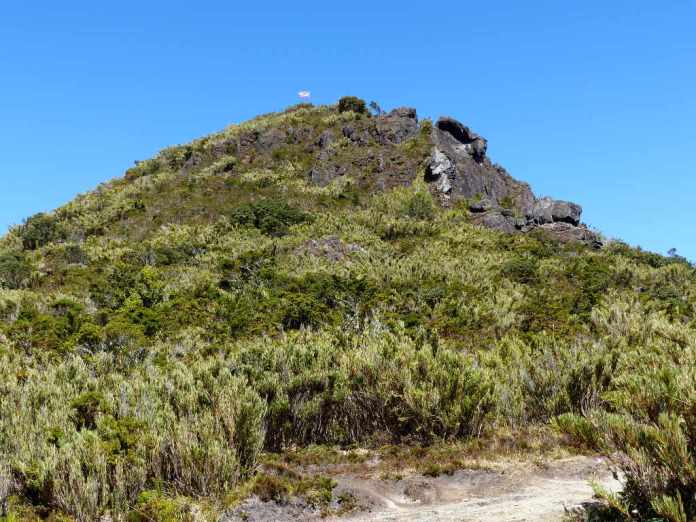


 There is no specific timeframe for the internal investigation. An single error could lead to the case being dropped, in which case the employee cannot be submitted to a new process.








 A statement from the hospital said all all operating rooms would be closed from 7:00 pm Tuesday to 7:00 am Wednesday, to be disinfected, but it did not specify the type of disease.


