Image from the The Panama Papers - The Secretrs of Dirty Money
Image from the The Panama Papers – The Secretrs of Dirty Money
The Costa Rica Bar Association (Colegio de Abogados in Spanish) said on Monday that accusations against honour in the case known as Panama Papers must be carefully analyzed.
The warning was issued by Juan León, Attorney from the Bar Association, during an appearance before the legislative commission investigating the local implications of the case.
The attorney said that generalizing can lead to mistakes and stated that appearing in a record does not necessarily have legal implications, and stressed the need to respect the principle of innocence and asked legislators to close loopholes for tax evasion.
León also added that this does not mean that corporations and business relations with companies in other countries are inadequate.
In a post by Q’s own Rick Philps, on Facebook has this to say, “It must be remembered that ‘The Panama Papers’ do not indicate anything more than the names of parties who have offshore companies registered in Panama, which is not a crime. The ‘Papers’ do not show anyone to be guilty of tax evasion, which would have to be the subject of a separate inquiry, on a case-by-case basis.”
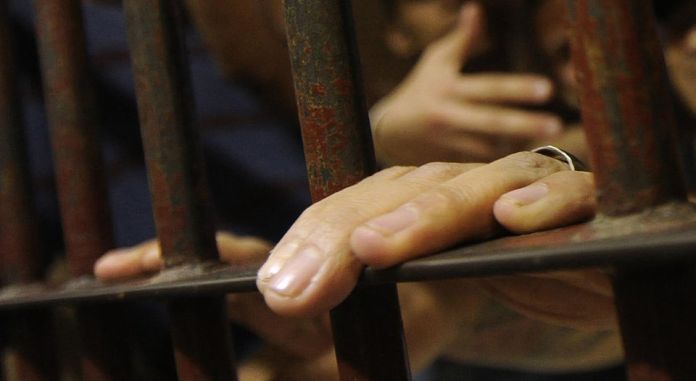
The unstoppable trafficking that occurs within the prison system allows for cellular phones to be accessible to prisoners. Photo Eyleen Vargas, La Nacion
Putting a stop to prisoners carrying out scams and other crimes, mainly extortions, from behind bars is the aim of a bill proposed by the government, that would compel telecommunication companies to block their cellular signals within prisons.
According to the Organismo de Investigación Judicial (OIJ), in 2014 the number of crimes carried out from prisons were 468, by 2015 it rose to 685.
The OIJ noted that in 2015 a total of 28 computer frauds were committed, however, in January of this year alone, 77 crimes were recorded.
The bill proposes to give the telecoms (Kolbi, Movistar and Claro) six months to implement the necessary measures to their networks to block their cellular signals past the prison walls.
The effort is not new, nor are the complaints. As smartphone technology increases, so does the opportunities for convicted criminals to continue operating the other side of the bars.
In 2009, prison authorities installed antennas to block cellular calls from La Reforma prison in Alajuela, however, extortion and scams continued to increase. The reason, the antennas placed only blocked GSM signals, while inmates committing crimes continued to use the older TDMA phones.
Another attempt was made in 2011, when the Ministerio de Justicia (ministry of Justice*) banned the use of cell phones in prisons. However, it allowed the sale phone cards (for use on public pay phones). The thinking behind that was that calls originating from prisons would be announced to the caller.
Despite the efforts, the unstoppable trafficking that occurs within the prison system allows for cellular phones to be accessible to prisoners, and rarely, if any punishment is handed out for violations.
The new plan places the burden on the telecommunications companies.
Empty streets, no line at the banks and supermarkets a breeze to shop and check out are some of the benefits of the mid-year vacation period in Costa Rica that began Monday and lasts to the Monday after next.
The mid-year vacation is the traditional two week break from school that occurs in the first two weeks of July. It is also a break from the rainy season, referred to as “veranillo de San Juan” – Costa Rica’s Little Dry Season – loosely translated as “indian summer”.
It is also a great time to take care of pending chores are government offices and state institutions, yes, there is a good chance of a fewer workers, but, definitely fewer people.
This year the vacation period caught me by surprise. The past couple of months have been rather hectic for me, a trip up to Toronto and Cuba two weeks ago.
I had not realized how a trip into the time tunnel (Cuba) really affected me.
For example, it’s been 10 days since my return and I have watched far less television since, after a week no television at all while in Cuba. I have also taken the time to appreciate the freedom we enjoy here. I was only in Cuba for a total of 7 days.
So, as I do most end/beginning of month and mid-month, I decided not to go out unless I really had to. So, today (Tuesday) when I did go out I was taken shocked by almost no traffic in Santa Ana. I breezed through the Cruz Roja and Rio de Oro intersections. The BCR Santa Ana branch was practically empty. The parking lot at the Mas x Menos was deserted, only a few customers inside. I was the only customer at the local ferreteria (hardware store).
“Hey, what’s going on?” I asked. “It’s vacation time,” Carlos, who was very helpful today, informed me.
Oh yeah, I had forgotten.
And that also reminded the reason for the gas hike on Friday, which, had I remembered of the vacations I would not have expected it on Saturday.
You see, Recope (the refinery), the Aresep (the government regulator) and the central government (that takes in half of the price at the pumps in taxes) are very good at planning and executing the plan of raising gasoline prices right at the start of any vacation or holiday period. Globalvia, the concessionaire of Ruta 27 also got into the act, conveniently raising tolls on Friday.
The Sarcastic Onions, from left, Natalie Martin (keyboard), Sam Daniels(drums) and Danny Spence (guitar).
Inspired by their travels and experiences peforming across Central America and Ontario (Canada), Natalie Martin and Danny Spence created the multi-genre layer sound of The Sarcastic Onions.
The Sarcastic Onions. From left, Natalie Martin (keyboard), Sam Daniels(drums) and Danny Spence (guitar). Photo from The Sarcastic Onions website.
Martin and Spence, together for 11 years, have been performing and writing music together since 2005.
Their song “Chicken Again” is a hilarious summary of the Spence and Martin “road trip to hell.”
“We thought we were going somewhere that we ultimately weren’t with this terrible road and we just could not seem to turn back. Dan said ‘let’s just give up’ and I said ‘no, we will keep going’,” recalls Martin, adding they get lost somewhere past Thunder Bay near Pukaswka National Park in northwestern Ontario.
“Another hour goes by and I thought Oh God this is just terrible. The whole time we kept seeing wild animals, like a black bear and a deer. So I was driving and Danny had the guitar in the passenger’s seat. We started grunge singing about all the weird things that we were seeing on this road. Shortly after that, baaaaad chicken (from a major chain grocery store) got purchased,” she adds.
The Central American connection comes through Spence’s retired mother who lives in Costa Rica, where Spence began vacationing and then performing in the late ’90s, learning to play music and work with Calypso musicians. In 2005, Martin joined him and the pair now plays full-time in resorts for special groups and holidays during the winter months which included a 2015 tour with acclaimed reggae band Plan B.
Martin says they have a Caribbean band called Coconut Cross comprised of polar opposites.
“There are two older guys, two younger guys, two black guys and two white people,” she notes, “Then there is a Calypso guy, a Patois kind of guy, plus Danny and me. It’s just such a mixture. We came up with that name and it seems to suit us pretty well,” says Martin adding the music on the next Onions album is inspired by their time in Costa Rica.
“There are a couple of reggae songs we are excited about,” she says. “We got a little bit political but not too crazy. We touched on the Mike Duffy scandal, so stayed tuned for “Senator Pig.”
[su_box title=”The Sarcastic Onions” box_color=”#f8f8f8″ title_color=”#141212″ radius=”0″]”Cruising on King Street” – Marina’s Bar – 323 King St. E., Kitchener – Friday, July 8, 8 p.m. – FREE. www.thesarcasticonions.com [/su_box]
Martin and Spence say The Sarcastic Onion was inspired by the by the acerbic wit of John Lennon. “The Beatles are our all-time favourite band. And John Lennon is the ultimate sarcastic onion, so the name’s definitely a nod to him,” says singer/keyboardist/bass player Natalie Martin, who is one layer of the Onions along with lead guitarist (and Martin’s partner), Danny Spence (Bad Pickle), and drummer Sam Daniels.
“We like to glorify the mundane!” says Martin with a raucous laugh.
That explains Spence’s Peter Sellers-style German narration to the apocalypse-tinged 10-minute Spinal-Tap-ish “turn-volume-up-to-11” “Planet X” on their debut CD. Spence’s prog flourishes and wailing solos are set to Martin’s cry of alarm, “Open your eyes and wake up.”
“Planet X” was produced by Ron Roy at Threshold Sound. Martin says the songs were tracks that she and Spence had been working on for a few years in the studio.
“We had a couple of guest musicians but mostly the drums were crafted from good drum tracks. Ron is fantastic at filling in all the blanks,” notes Martin. “We would do all of the harmonies and play all of the instruments. Now that we have Sam we really feel like our sound has come together in terms of our harmonies.”
The Sarcastic Onion will plays Kitchener’s Marina’s Bar on July 8.
Original article appeared at the The Hamilton Spectator
This frog looks like it’s got something to say. The strawberry poison-dart frog is native to Central America and the species varies widely in colour, from bright red all over to splashes of blue on its limbs – giving it the nickname blue jeans frog.
Photo Cristobal Serrano
Cristobal Serrano has been photographing these creatures for years, but this one, spotted in the humid lowlands of a forest near the city of Puerto Viejo de Sarapiquí in Costa Rica, was special.
The frog (Oophaga pumilio) had particularly well-defined blue trousers and sleeves and was perched in a Venus wine cup fungus. Its proud stance and outspread arm looked to Serrano like a speaker addressing a crowd, making an oratorical gesture.
To illuminate the scene, Serrano carefully set up three flashes: one backlight, one from the right and a spotlight just the right size for the frog. “In macro photography, you need to control the flashes very well,” he says.
He named the photo The Speaker to reference both the theatrical amphibian and the fungus cups, which look like audio speakers.
The photo won a string of awards, including France’s Nature Images Award, and the Memorial Maria Luisa contest and LUX award, both in Spain. Serrano attributes his success to the image’s lighting and composition – as well as the popularity of the animal under his spotlight. “This frog is the most iconic of the poison-dart frogs,” he says.
That just has to go to INCOFER, our manager of trains which sometimes work and sometimes you need to take the bus.
It was noted by the Spanish-language newspaper, La Nacion that the brakes on our trains are really breaks from trucks and not trains.l.
How long do they last, if at all, who knows?
Award #2
How is it possible that government monopolies such as electricity, gasoline, water and land-line phones lose money every year and with the blessing of the government, up their user fees.
There is no reasonable explanation!
But in each case, CNFL. RECOPE, ICE, AyA with the support of price fixing ARESEP get big increases in user fees not to mention the Mickey Mouse taxes that go to every organization except Little Sisters of the Poor.
Award #3
Do you ever blink twice why our universal health, commonly known as the Caja or CCSS is out of money when everyone in the country, by law, must pay the monthly premium?
To start with an estimated 54,000 companies do not pay the premium collected from employees. Each employee pays in 9% of their salary to cover health insurance.Some 54,000 companies both large and small pocket the 9% while the employees go uninsured.
And, the federal government who is now making payments but is years behind.
Award #4
It is about to cost tourists, business passenger $31 to enter Pura Vida and $51 to escape.
The good news is, that airlines can build these costs into the price of a ticket.
However, by land, sea or foot the $51 exit tax is applicable. So much for the
90-day perpetual tourist and so terribly much for the Nicaraguans who make the beds, clean the homes and pick the crops.
A family of four flying in from Detroit will pay $328 just to come in and out plus there is no guarantee they will ever see a monkey.
Award #5
It is a tie.
Head to head between our President Solis standing on a balcony, much like a male Eva Peron giving the V for victory sing to throngs of people in Lima, Peru. Not after the election of Kuczynki, but rather when he was still a candidate running against Fujimori.
Why are we promoting foreign political candidates?. If that were the U.S.all hell would break loose.
This Award must be shared with the government of Costa Rica.
We have $450 million in loans to improve roads. The money has been sitting there to draw down for 19 months and not one USD has been used up.
Yet, our streets are filled with potholes (huecos) the size of small jacuzzi, and I need to purchase new shocks for the cars every six months or like many drivers, memorize the locations to avoid them.
Convergys operates in Costa Rica, Colombia, Nicaragua, Honduras, El Salvador and the Dominican Republic. In Costa Rica it currently employs more than 2,000 people speaking English, Spanish and Portuguese
Convergys in Costa Rica is on the expansion, opening its third building and looking to hire 500 customer service representatives, billing specialists and network engineers.
Those interested can visit in person the Ultrapark 1 in La Aurora de Heredia, from Monday to Friday, betweer 8:00am to 3:00pm, or apply online.
Convergys, a that provides outsourced, integrated, customer care and billing services, began operations in Costa Rica in 2009 and currently employs 2,000 working in English, Spanish and Portuguese. The company has presence in countries such as Colombia, Nicaragua, Honduras, El Salvador and the Dominican Republic.
“This expansion is a result of multiple factors that combine and symbolizes our ability to attract and generate jobs in an industry that continues to transform and evolve into more complex and specialized operations,” Eugenia Rojas, communications manager for Convergys in Latin America, told La Republica.
Many businesses feel Costa Rica is too much paperwork and high production costs to do business here.
Tired of the bureaucracy and high production costs, many Costa Rica entrepreneurs believe the country has become to expensive and difficult to operate in, while other countries like Colombia and Panama are making it attractive for them to relocate.
Many businesses feel Costa Rica is too much paperwork and high production costs to do business here.
The Costa Rican Union of Chambers and Associations of Private Enterprise (Uccaep) says many Costa Rica business are receiving tempting offers from abroad.
Franco Arturo Pacheco, the new president of Uccaep, says the private business sector is in dire need for a reduction in “tramites” (paperwork) and lower energy costs. The most recent case, cites Pacheco, is of Costa Rica pineapple producers wooed by Colombia to move their production there.
Pacheco insists that “the government must open its eyes to the high impact this would have on attracting investment and employment” in the country.
Despite the “hard to do business” environment, the Uccaep believes entrepreneurs from all sector should stay put and rather bet on continuing to attract investment to generate more jobs.
In the Doing Business ranking by the World Bank Group, Costa Rica ranks 121st in places to start a business and 58th overall of Ease of Doing Business. Meanwhile, Colombia ranks 84th and 54th, respetively and Panama 69th and 44th.
For Juan Rafael Lizano, president of the National Chamber of Agriculture and Agribusiness (CNAA), the situation has reached a point that leads many companies to informality. The consequences are that it affects income tax collections and contributions to the social security fund, the Caja.
Lizano says it’s unlikely companies will leave Costa Rica altogether. “Although the country is expensive, there is a very high investment here. However, some businessmen might start looking abroad for their expansion opportunities, with lower operating costs,” said Lizano.
The Ministry of Transport and Public Works announced in the Official Gazette the new fares in foreign currency that will govern air services in Venezuela.
According to resolution No. 045 published in the Official Gazette No. 40,933 dated June 28, the Ministry decided to approve the updating and implementation of fares for paperwork, aviation rights and services provided by the National Institute of Civil Aviation airports run by state-owned Bolivarianos de Aeropuertos, and the Maiquetía International Airport.
The ruling reads that aviation rights in dollars for the route to Latin American and the Caribbean will be worth USD 3,000; to the United States and Canada, USD 3,300, and to Europe USD 5,500.
Similarly, the document reads that landing rights for foreign planes in national and international flights will be USD 10.02 and USD 11.88 at day-time and night-time, respectively.
Passengers doing stopovers in airports run by the Maiquetía International Airport, Venezuelan military planes, and planes designated for humanitarian aid and Bolivarian missions will be exonerated from such payment.
Pricing in US dollars complies with the rules of the International Civil Aviation Organization (ICAO).
The United States on Thursday included Venezuela, along with Haiti and Belize, on the list of countries that are not making enough efforts to combat people trafficking. This measure could lead to sanctions against such nations
US President Barack Obama now has 90 days to decide if sanctions will be imposed on the nations on the “black list,” that is to say, countries that are not doing enough to combat people trafficking. Those sanctions could include freezing non-humanitarian and non-commercial aid or denying the countries loans from multilateral institutions.
They join a score of countries appearing once again this year in the lowest category, including Venezuela, Belize, Equatorial Guinea, Russia, Iran, North Korea, Syria, Algeria, South Sudan and Mauritania, Efe reported.
“When we talk about ‘human trafficking,’ we are talking about slavery, modern-day slavery that claims more than 20 million victims worldwide and supports an illicit industry bringing in USD 150 billion,” US Secretary of State John Kerry said Thursday when releasing the report.
Venezuela was included on the blacklist in 2014 and remains there after appearing for several previous editions in “special observation,” the next-lowest category where Cuba is.
“The Venezuelan government does not fully comply with minimum standards for the elimination of (human) trafficking and is not making significant efforts to do it so,” the report reads.
Irrigating the coffee plants to be sold to producers in the country. Photo Oscar Sánchez, El Nuevo Diario
A subsidiary of Mercon Group is preparing to produce more than 10 million coffee seedlings per year to meet demand from local producers.
In partnership with the Guatemalan company Pylons Antigua, the company Transplanta, belonging to the Mercon Group, began operating a nursery with 25 thousand square meters under shade in Sebaco, where it plans to produce more than 10 million coffee seedlings per year.
The company “… cultivates in biodegradable paper bags, which disintegrate in the ground after six months, instead of the traditional black plastic bag.”
José Antonio Baltodano, president of Mercon told Elnuevodiario.com.ni that “… this new technique used to produce gold grain seedlings is environmentally friendly, because every year in Nicaragua more than 30 million plastic bags are used in coffee nurseries which then pollute the environment … “.
“… Depending on the plant, the price of each unit will be between 25 and 30 cents, Staackmann said. ”
Marijuana used to be “the weed that kills” in Colombia anti-drug ads on TV, but not anymore. Following the legalization of medical marijuana, the country seeks to legally export derivatives of one of the world’s most popular drug.
The first license to export cannabis derivatives for medical purposes was granted to a Colombian-Canadian company PharmaCielo, Health Minister Alejandro Gaviria announced Tuesday.
But the government’s favorable attitude towards marijuana is something relatively new.
The drug has been smoked and traded in Colombia for decades, and — thanks to the drug being illegal — helped the rise of Colombia’s first drug cartels in the 1970s.
The country’s repressive policy came under fire during the presidency of former President Alvaro Uribe (2002-2010) when the Supreme Court decriminalized the drug, much to the dislike of the conservative president, who consistently tried to implement laws that would make the carrying of marijuana criminal.
Marijuana, like coca and poppy, was considered a “weed that kills” as the production of most of Colombia’s drugs, including marijuana, was controlled by illegal armed groups, in particular the FARC, Colombia’s largest rebel group.
All this changed when Uribe left office, making place for the current President Juan Manuel Santos, who was unafraid to admit he too smoked pot while studying in the United States.
Since then, and again to the dislike of Uribe, Santos began to radically relax drug legislation, seeking to approach domestic drug use as a public health rather than a public security issue.
To curb international drug trafficking, Santos urged the international community to rethink the hardly successful “War on Drugs” waged under the leadership of the United States.
Back home, Santos supported efforts by the Liberal Party to legalize the drugs. Members of Santos’ own U Party even sought the absolute legalization of marijuana, but to no avail.
While Congress was still debating the issue, the Santos administration moved ahead and issued a decree that would allow the legal production and sale of marijuana for medical purposes.
The new rules represented “a major step that put Colombia at the vanguard and forefront of the fight against illnesses,” Santos said during the signing ceremony for the presidential decree.
Congress followed and passed a bill legalizing medical marijuana months later, pushed by the Supreme Court that upped the number of marijuana plants that can be grown legally to 100.
While Congress was still debating the issue, the Santos administration was already beginning to seek benefits for the treasury that has suffered from a major drop in global oil prices.
Additionally, as the country sought a peace deal with the FARC, the government needed employment opportunities for coca farmers.
Or, as the health minister put it, “Colombia could be the winner of this emerging global market for medicinal marijuana.”
“It’s a challenge and chance to change the image of Colombia to one that grows weeds that heal and cure,” Federico Cock-Correa, chief executive of PharmaCielo said.
And with that comment, marijuana stopped being the “weed that kills” in Colombia.
Colombia’s defense minister met with Venezuelan President Nicolas Maduro and other top officials to work out a joint security plan that would allow the reopening of the border separating the two neighbors.
Venezuela unilaterally began closing the border in August last year after three members of the military were shot and amid a growing economic and institutional crisis in the Socialist-run state.
The Venezuela-Colombia border region has long been a troubled region, mainly because of both countries’ neglect in the region.
On the Colombian side, guerrilla groups and drug traffickers have long become the de facto authority in parts of the border region.
On Venezuela’s side, drug traffickers benefiting from corruption have become increasingly prominent.
On both sides, smugglers have tried to benefit from Venezuela’s dropping currency to sell contraband product in Colombia.
Now, almost a year later, Colombian Defense Minister Luis Carlos Villegas and his Venezuelan counterpart General Vladimir Padrino Lopez agreed to “revive” bilateral cooperation seeking to curb organized crime along the border.
“Thanks to the efforts made by both countries we can say that organized crime has received major blows on both sides of the border,” said Villegas.
Organized crime continues to profit from human trafficking, forced labor, and sexual trafficking of vulnerable populations throughout Latin America, according to the US State Department’s most recent report examining the matter.
The annual Trafficking in Persons (TIP) report (pdf) from the State Department analyzes human trafficking trends and gives assessments of each nation’s efforts to combat it. The report ranks governments on their implementation of the Trafficking Victims Protection Act’s (TVPA) minimum standards. The TIP uses a scale going from one to three, with one being full implementation of the minimum standards.
Out of 30 Latin American and Caribbean nations, only three were considered Tier One: Colombia, The Bahamas, and Chile. Many fell within Tier Two and Tier Two Watch List, indicating they do not fully meet the TVPA’s minimum standards but are making significant efforts to do so. Four countries languished in Tier Three: Belize, Venezuela, Haiti, and Suriname.
The report found that sexual exploitation, forced labor, and human trafficking remain a problem that disproportionality affects the disenfranchised and most economically disadvantaged. Internally displaced peoples, children, LGBT persons, indigenous populations, migrants and other minorities are all particularly targeted.
Many are forced into labor in industries ranging from ranching to textiles, with poorly regulated extractive industries like mining or logging posing big problems for isolated communities. Such extractive industries often offer a source of revenue for organized crime groups, and are especially prevalent in Colombia, Bolivia, Peru, and Venezuela.
The State Department report highlights the actions of criminal groups in Mexico, El Salvador, Guatemala, and Honduras, where gangs and other criminal organizations continue to profit from human trafficking. These groups often coerce people to engage in drug smuggling, but they also profit from sex trafficking rings, brothels, and human smuggling.
Armed factions and guerrillas continue exploiting children and other populations through forced labor, conscription, or by forcing them to cultivate and transport drugs. Groups in Paraguay, Colombia and Peru were emphasized in the report.
Organized crime groups have longed viewed vulnerable populations such as migrants and children as sources of income and free labor. They can utilize their existing criminal networks to smuggle human victims as well as drugs and other contraband. Vulnerable populations often reside in areas where there is little state presence and organized crime groups operate with impunity.
Treating human trafficking as an organized crime issue can lead to more effective enforcement, as evidenced by a recent multinational operation that led to the arrest of at least 29 people in four countries. However, government corruption and official complicity remains a major barrier to combating human trafficking in Latin America. The report says public officials and members of law enforcement are particularly implicated in this illegal activity in Belize, Paraguay, Mexico, Brazil, El Salvador and Honduras. The report singles out Belize and Venezuela as nations that have put little effort into complying with minimum international standards for combatting human trafficking
The report did show some improvement from the previous reporting period in terms of the overall number of cases tried and convictions handed down for human trafficking. But the inclusion of the United States and Canada in that sample may mean that the apparent progress is misleading when it comes to Latin America.
Authorities across Central America have dismantled a migrant smuggling network that spanned from Brazil to Mexico, a remarkable sting operation that comes amid heightened US concerns of potential terrorists using these networks to illegally enter the United States.
Twenty-nine alleged members of the network were captured in El Salvador, Honduras, Costa Rica and Panama during coordinated raids on June 28 as part of “Operation Mesoamerica,” reported Prensa Libre. Guatemalan authorities arrested the alleged ringleader, Luis Leonardo Mejía Pasapera, alias “Leo,” along with eight other suspects. Twelve individuals were detained in Panama, five in Honduras, two in Costa Rica, and one in El Salvador, according to Guatemala’s Public Ministry (as the Attorney General’s Office is known there). One of the leaders of the smuggling network was arrested last week in Brazil.
Many of the migrants were of Asian or African nationalities looking for passage into the United States. The trafficking network gathered migrants in Dubai, according to investigators, where they were provided with documentation to enter Brazil. Once in Brazil, the migrants traveled by plane to Colombia before entering Panama by land. The network then smuggled the migrants through Central America, using either Pacific or Atlantic sea routes.
When the migrants arrived in Mexico, criminal groups used them as mules to smuggle drugs into the United States, according to Costa Rica’s attorney general, Jorge Chavarría. Prensa Libre reported the smuggling ring charged each migrant between $7,000 and $25,000 for the journey.
Guatemala’s Secretary General of the Public Ministry, Mayra Véliz, said the network was well-organized and capable of smuggling up to 150 migrants at a time.
“It is perhaps the most powerful migrant trafficking organization in the region,” said Mauricio Boraschi, a prosecutor in Costa Rica investigating organized crime.
Véliz said the investigation into the smuggling network began in March 2015 based on information from the US Embassy in Guatemala. US Immigration and Customs Enforcement (ICE) supported the operation that led to the arrest in El Salvador, reported La Prensa Gráfica.
Guatemalan authorities said there are still suspected operatives who have yet to be detained.
As of now, it is unclear what role US authorities played in either coordinating or assisting in Operation Mesoamerica. The only information that has been reported so far is that the US Embassy in Guatemala alerted local authorities to the existence of the migrant smuggling network in early 2015, and that ICE provided support to the operation in El Salvador. Repeated attempts by InSight Crime to reach the US Embassy in Guatemala’s press office were unsuccessful.
Some US officials familiar with the issue are concerned migrant smuggling networks may be aiding potential terrorists illegally enter the United States. Under this pretext, the smuggling networks vault from an illegal immigration issue to a national security issue for US authorities. However, almost 15 years after September 11, there is no indication terrorists have illegally entered the United States from Latin America. And evidence of an overarching terrorist-organized crime nexus in the region remains scarce.
Although these fears originate from the events of September 11, 2001, there may be heightened attention on this issue now for a couple of reasons. First, the huge influx of Central American migrants into the United States could be making the US southern border increasingly vulnerable. A US border patrol agent told the Arizona Republic last November that he fears criminal groups could smuggle potential terrorists across the border while a distracted US force is busy rounding up and deporting migrants.
Second, a high-ranking US official has suggested potential terrorists would prefer entering the US via smuggling networks rather than by legal means. While some US politicians oppose receiving Syrian refugees because they fear terrorists could be camouflaged as asylum-seekers, others say terrorists have quicker and less risky alternatives.
“Frankly, if I came with a clear intent to do harm in this country, I don’t think that I would choose the route of entering here and asking for refugee status or asking for refugee status overseas,” US Customs and Border Protection Commissioner Gil Kerlikowske told the Arizona Republic.
Finally, such concerns are likely fueled by reports of links between Middle Eastern terrorist groups and Latin American organized crime. There have been periodic warnings over the years about Hezbollah’s growing influence in the region, and the threat it poses to the United States, though hard evidence of that threat has not materialized.
John Wesley Saatio. Photo from the Pensacola News Journal.
The man who mocked Costa Rica law officials escaping their custody, John Wesley Saatio, an expert in escapes, escaped from U.S. law enforcement officials within days of being returned to the United States from Costa Rica.
John Wesley Saatio. Photo from the Pensacola News Journal.
Saatio was extradited to the United States from Costa Rica last week (June 25) and was in the process of being transported back to Hougthon, MI when he escaped from the custody of a private inmate transportation company in Santa Rosa county.
This morning, the Pensacola News Journal reports Saatio was recaptured within 48 hours of escaping custody during a restroom break on Interstate 10 in Milton. According to the press from the Santa Rosa County Sheriff’s Office, a citizen called around to advise of a suspicious person, deputies deploying a K-9 unit, apprehending the suspect four hours later. Saatio was searched and two makeshift handcuff keys were found in his socks.
According to Michigan State Prison records, Saatio had been arrested for breaking and entering a building with intent, and is a sex offender violation involving a person under the age of 13.
Following his escaped from Hougton Country, MI prison on June 19, 2015, Saatio made his way to Costa Rica, where he was captured last month in a bar in Pacific coastal town of Jaco, after a year on the run.
Costa Rica authorities caught up with him after receiving confidential information.
An expert in escapes, Saatio almost made fools of Tico law officials, after his arrest was caught “bending the bars” and almost getting free. He was immediately transferred to a the Hatillo immigration detention centre in San Jose, when, days after his arrival, managed to escape detention while being served dinner, breaking through a fence and out through the roof of the facility.
His freedom, however, was short-lived, recaptured in less than 48 hours.
This time, not taking any chances of another escape, the fugitive was being held in the cells of the OIJ, Costa Rica’s judicial police.
Under orders of the of the Dirección General de Migración y Extranjería (immigration service) to be extradited from Costa Rica, the process had been suspended following a request for asylum.
Immediatly following his recapture, his asylum request was denied and his deportation from Costa Rica was carried out.
Benjamin Franklin, John Adams, and Thomas Jefferson (left to right) draft the Declaration of Independence.
Illustration courtesy Jean Leon Gerome Ferris, Library of Congress
Benjamin Franklin, John Adams, and Thomas Jefferson (left to right) draft the Declaration of Independence. Illustration courtesy Jean Leon Gerome Ferris, Library of Congress
From National Geographic – Many time-honored patriotic tales turn out to be more fiction than fact. On the 4th of July—marked in 2012 by a continent-spanning Google doodle—here’s a look at some memorable myths from the birth of the United States.
1. The Declaration of Independence Was Signed on July 4
Independence Day is celebrated two days too late. The Second Continental Congress voted for a Declaration of Independence on July 2, prompting John Adams to write his wife, “I am apt to believe that [July 2, 1776], will be celebrated, by succeeding Generations, as the great anniversary Festival.”
Adams correctly foresaw shows, games, sports, buns, bells, and bonfires—but he got the date wrong. The written document wasn’t edited and approved until the Fourth of July, and that was the date printers affixed to “broadside” announcements sent out across the land. July 2 was soon forgotten.
In fact, no one actually signed the Declaration of Independence at any time during July 1776. Signing began on August 2, with John Hancock’s famously bold scribble, and wasn’t completed until late November. 2. Paul Revere Rode Solo
Patriot Paul Revere really did hit the road on the night of April 18, 1775, to alert the countryside that British troops were on the move. But the image of an inspired, lone rider isn’t accurate. Revere was part of a low-tech—but highly effective—early-warning system.
The system did include lanterns at Boston’s Old North Church, from whose steeple the church sexton, Robert Newman, held two lanterns as a signal that the British were coming. However Revere wasn’t watching for them that night.
Revere and fellow rider William Dawes, who was sent by a different route, successfully reached Lexington, Massachusetts, to warn Samuel Adams and John Hancock that they’d likely be arrested. But Revere and Dawes were captured by the British with third rider Samuel Prescott soon afterward.
The liberties later taken with the Revere legend weren’t mistakes but deliberate mythmaking by Henry Wadsworth Longfellow, who intended his famous 19th-century poem to stoke patriotism on the eve of the Civil War. The ride’s real story is told at Paul Revere House, the Boston museum where Revere once lived and from which he left on that fateful night.
3. July 4, 1776, Party Cracked the Liberty Bell
U.S. independence surely prompted a party, but joyful patriots didn’t ring the Liberty Bell until it cracked on July 4, 1776. In fact the State House Bell likely didn’t ring at all that day. It probably did ring, along with the city’s other bells, to herald the first public readings of the Declaration of Independence on July 8, according to a history of the bell published by the Pennsylvania Historical & Museum Commission.
As for that crack, well, the bell had been poorly cast and cracked soon after its arrival in 1752. The bell was subsequently recast, and recracked, several times but was intact during the Revolutionary War.
Today’s iconic crack actually appeared sometime during the 19th century, though the exact date is in dispute. It was also during this period that the bell became popularly known as the Liberty Bell—a term coined by abolitionists.
4. Patriots Flocked to Fight for Freedom
This enduring image is accurate—when describing the beginning of the Revolutionary War. But as it became clear that the struggle for independence would be long and difficult, the enthusiasm of many American men for fighting began to wane, while their concerns for the well-being of their farms and other livelihoods grew
After initial enlistment rushes, many colonies resorted to cash incentives as early as 1776 and states were drafting men by the end of 1778, according to historian John Ferling in a 2004 Smithsonian magazine article.
5. The Declaration of Independence Holds Secret Messages
Some revolutionary myths are of modern origin. There’s no invisible message or map on the back of the Declaration of Independence, as depicted in the film National Treasure. But the National Archives admits there is something written on the back of the priceless document.
A line on the bottom of the parchment reads “Original Declaration of Independence dated 4th July 1776.” Why? The large document would have been rolled for travel and storage during the 18th century, so the reverse-side writing likely acted as a label to identify the document while it was rolled up.
6. John Adams Died Thinking of Thomas Jefferson
Incredibly both John Adams and Thomas Jefferson did die on the Fourth of July, but there’s no real evidence to suggest that Adams’s final thoughts were with Jefferson or that he uttered “Jefferson survives” on his deathbed.
Even if he had, he’d have been wrong, as Jefferson beat him in death by several hours. The day does seem inauspicious for presidents, however. The less celebrated James Monroe also died on July 4, in 1831.
7. America United Against the British
The Revolutionary War also pitted Americans against Americans in large numbers. Perhaps 15 to 20 percent of all Americans were loyalists who supported the crown, according to the U.K. National Army Museum. Many others tried to stay out of the fight altogether.
Records from the period are sketchy at best, but an estimated 50,000 Americans served as British soldiers or militia at one time or another during the conflict, a significant force pitted against a Continental Army that may have included a hundred thousand regular soldiers over the course of the war.
8. Betsy Ross Made the First American Flag
There is no proof that Betsy Ross played any part in designing or sewing the American flag that made its debut in 1777. In fact, the story of the famous seamstress didn’t circulate until it was raised by her grandson nearly a century after the fact, and the only evidence is testimony to this family tradition.
To be fair, there’s also no conclusive evidence that Ross didn’t sew the flag, and there are several reasons why she just might have done so. The Betsy Ross House on Philadelphia’s Arch Street (where Ross may or may not have actually lived) tells the whole tale and leaves visitors to draw their own conclusions.
9. Native Americans Sided With the British
“(He) has endeavoured to bring on the inhabitants of our frontiers, the merciless Indian Savages, whose known rule of warfare, is an undistinguished destruction of all ages, sexes, and conditions.”
The Declaration of Independence made this claim against King George III, and many Native Americans did eventually fight with the British. But many others sided with people in the colonies or simply tried to stay out of the European conflict altogether, according to Dartmouth College historian Colin Galloway, author of The American Revolution in Indian Country: Crisis and Diversity in Native American Communities.
Most New England Indians supported the Continentals, and the powerful Iroquois Confederacy was split by the conflict. Native “redcoats” fought not for love of King George but in hopes of saving their own homelands—which they thought would to be the spoils of the War for Independence.
Those who allied themselves with the British saw their lands lost in the Peace of Paris treaty, but Native Americans who supported Americans fared little better in the long run.
Original article can be found at National Geographic.
The positive side of high gasoline prices: reduces street racing and all the bad stuff that comes with it. See what street racing is like in Costa Rica since the latest gasoline hike last Friday.
The Observatorio Vulcanológico y Sismológico de Costa Rica (Ovsicori) – Volcanological and Seismological Observatory of Costa Rica – reported a strong quake to hit Costa Rica’s northern zone on Saturday.
The quake, registering more than 5 degrees on with the epicentre located in La Fortuna de Bagaces, hit minutes before 8:00pm. The strongest at 5.3 occurred at 7:58pm. The others were 4, 4.1 and 4.8 reported at 9:00pm.
The central communications centre of the Cruz Roja (Red Cross) reported receiving calls of falling objects, especially in the communities of Armenia and Bijagua de Upala. There were no reports of personal injuries.
The Red Sismólógica Nacional (RSN) – National Seismological Network – reported the quake had a magnitude 5.0 degrees and located 4 kilometers north of Upala.
Los miembros del SICA se comprometieron a fortalecer el sistema y buscar una mayor transparencia. (Cancillería de Costa Rica. )
The members of the SICA committed to strengthen the regional political bloc and to more transparency. Photo Costa Rica Foreign Ministry.
Costa Rica has rejoined the Sistema de la Integración Centroamericana (SICA) – Central American political bloc – six months after abandoning it over a disagreement about Cuban migrants.
Costa Rica’s Deputy Foreign Minister, Alejandro Solano, made the announcement on Thursday during the XLVII Cumbre (summit) taking place in Honduras. that it had agreed to return to the Central American Integration System following a summit in Honduras.
Costa Rica had left the SICA in protest at the refusal of other countries to cooperate in finding a solution to the Cuban migrant crisis, when 8,000 Cubans were stranded in Costa Rican territory by Nicaragua’s decision to close its borders to them.
Eventually Costa Rica was able to negotiate an air bridge with neighbours and Mexico to bypass Nicaragua, allowing the migrants to reach their intended destination, the United States.
The government of Luis Guillermo Solis demanded reforms in the way the SICA works as condition of rejoining the regional body.
On Thursday, the countries agreed to a report that includes a list of SICA staff salaries, budget, income, regardless of origin and to present a roadmap of actions necessary to strengthen the SICA, and increasing transparency,among other things.
Deputy Foreign Minister Solano streets that the SICA should respond “more efficiently to the political, social and economic challenges in the region.”
Journalist and model Jalé Berahimi insists her sudden resignation from the ‘Intrusos de la farándula’ television show has nothing do with the altercation with show host Mariana Loranca.
Jale Berahimi is in white, Mariana Loranca wearing brown.
On her Facebook page, Berahimi insists she is leaving the show to pursue her lime of swimwear and maintains a close friendship with Loranca.
“It has nothing to do with it. I gave the reasons why I’m leaving the show yesterday. And that is all I’ll say,” Berahimi said Saturday morning, following a consultation by telephone.
Weeks ago, on air, a discussion over travelling and doing things alone as a woman led to a series of strong words back and forth between Loranca and Berahimi, the former calling Berahimi “jealous” because she did not even know Europe.
In response, Berahimi said she was born in Spain and raised in Dubai and called the hostess a “muerte de hambre” (deadbeat), Loranca telling Berahimi to look at a world map, as Dubai is not in Europe.
“(…) One thing has nothing to do with the other, the altercation in the program was a while ago and that Mariana and I before being coworkers have been friends, confidants we call each other on the phone and bare all … she knows me well and knows how I am (lousy) for jokes and sometimes have no filter…we spoke and humbly accept my mistake!” said Berahimi.
Gaston Carrera, producer of the television program, was emphatic that the resignation of Berahimi has to do with her personal project and not the row with Loranca.
“I do not understand what that (the resignation) has to do with the altercation,” said Carrera. “They all (journalists and presenters) have views that do not coincide with each other,” added the producer.
Berahimi will be with the television station until July 22. According to Carrera, he is looking for her replacement, but is in no hurry. He appears calm about Berahimi’s loss, saying “the program has many years on the air and people have come and gone. Its part of the evolution of show business”.
Chayote is an edible plant belonging to the gourd family Cucurbitaceae, along with melons, cucumbers and squash
Chayote is one of the more common foods found daily in Costa Rican cuisine. The chayote can be eaten raw in salads, or stuffed and baked. Other preparations include mashing, pickling, frying or boiling.
According to the Cámara de Exportadores de Costa Rica (Cadexco), some 2,000 families, mainly in the area of Ujarrás, depend on this product for a living. It is the only economic activity in the area, where some 350 small farmers tend to some 500 planted hectares.
Yorleni Araya and Roxana Araya (sitting) are two of the women of the Mujeres Emprendedoras del Valle de Ujarras (Enterprising Women of Ujarras Valley) interviewed for the Chayote event this weekend.
Ujarrás is located in Paraiso de Cartago, east of San Jose. And until tomorrow, July 3, the Ruinas de Ujarrás (Ruins of Ujarrás) is the scene of the 7th edition of the Feria Nacional de Chayote (National Chayote Fair) for families to come and delight the quality of the “chayotera” production of the area.
Laura Bonilla, president of Cadexco, said the event is a great opportunity for “chayoteros” (chayote producers) to show visitors their products.
It was in the seventies that the Ujarrás area was chosen for the product that has become part of Costa Rica’s traditional and exported internationally. The United States, Canada and some European countries is the main export destination of the Chayote from Ujarrás.
Costa Rica’s banana and pineapple producers are exploring leaving the country for cheaper production destinations such as Colombia, says the Camara de Exportadores – the Chamber of Exporters – (Cadexco).
The companies, all internationals, feel Costa Rica has become too expensive relative to other economies.
“We just want then to let us work,” said Laura Bonilla, president of Cadexco, who says the Central Bank (BCCR) does not speak the language of exporters.
Bonilla, following holding a forum on the subject, added the Cadexco does not believe the employment numbers by the Central Bank, in fact feels they are much lower than what we are being told.
Bonilla said that in the case of Colombia, for example, the South American country is promoting a policy of attracting investment and subsidized interest rates for companies, in particular the agricultural sector.
Gerardo Corrales, economist and speaker at the Cadexo forum, said the dollar exchange is one of the main problems at this time.
“Colombia, Brazil, Mexico and Peru have devalued their currencies, as such Costa Rica’s export sector cannot compete. In my view, the exchange rate policy (of Costa Rica) has been very managed to control inflation when in rural areas the unemployment rate is 30%. These are people who are not bilingual, nor are they in global digitization, they are not people to work in shared service centres,” said Corrales.
According to Corrales, production costs in those countries, as in Costa Rica, may increase, but the difference is their income will increase relatively, reaching 50% or more, while in Costa Rica it is between 2% and 5%.
The main conclusion is that Costa Rica has become an expensive country to produce and exporters have lost competitiveness due to the exchange rate policies of the Central Bank.
According to Corrales, the difference in rates in dollars and colones and government funding with foreign debt causes the exchange rate to remain lower, but the main question is why the Central Bank influences that there is no upward movement.
Corrales said that, according to data from the Central Bank itself, exporters have lost 30% of competitiveness and all that is required is that the BCCR stop meddling to prevent the trend to continue.
In the past two weeks the dollar exchange rate at banks has increased ¢14 colones, the sell rate posted this morning (July 2) being ¢554 colones to one US dollar.
A tropical wedding. Why Costa Rica Is The Perfect Honeymoon Destination
A tropical wedding. Why Costa Rica Is The Perfect Honeymoon Destination
(Huffingtonpost) If you’re paying for your own wedding, chances are you’re wondering how you can possibly add the expense of a honeymoon on top of burgeoning modern wedding costs.
And while it makes sense to do a combination of saving up in advance and scaling back on non-essentials in order to write those wedding vendor checks, the hope is that you only get married once, right?
You want pick the right mate for you and have a great wedding that reflects you and your partner without going into massive debt.
But the honeymoon is an important part of the wedding. You only get married once? Well, you only have an opportunity to honeymoon once. You won’t regret taking it. So don’t skip it. Here are all the reasons why Costa Rica is the perfect honeymoon destination.
It’s incredibly affordable, with something for everyone. Costa Rica has several tour operators that can build your custom experience of the country based on your budget and interests. Do you want shuttles to your destinations, waterfall hikes, volcanic hot springs, horseback riding, ziplining and whitewater rafting while staying at inexpensive hotels? Done.
Do you want less of your time booked in activities and nicer hotels to relax in? That can also be done.
Whatever the honeymoon experience is in your head, it’s the business of the tour operators to make it a reality. Those seeking more adventure can opt to rent a car and drive; just be sure to make sure that the roads will be passable the time of year you are traveling. Roads are narrow and twist and turn at every bend.
The people are warm. Costa Ricans say, “Pura vida!” or “Pure life!” In general, Costa Ricans are very welcoming, ready with a smile to greet you and help you. Much of the population you will encounter in the tourism industry is bilingual, so there is no language barrier.
It speaks to both the nature lover and the less adventurous. With world class surfing, parasailing, ATV rides, ziplining, horseback riding and whitewater rafting, Costa Rica calls to adventure seekers. Yet those who just want to sit on the beach, or maybe take a leisurely hike to drink in the scenery have plenty of opportunities to feel right at home as well.
“In the Costa Rica’s diverse habitats and ecosystems live 13 thousand plant species, 2,000 moth and 4,500 butterfly species, 163 varieties of amphibians, 220 types of reptiles, 1,600 species of fresh and salt-water fish, and at least 870 types of birds.” There are also, “22 national parks, 10 wildlife refuges, 12 biological reserves, 8 forest reserves and 26 protected zones, covering 25% of the national territory.”
There are food options for all appetites. Costa Ricans eat both meat and fish, and have plenty of delicious fruits. So whether you’re a carnivore or vegetarian, chances are you won’t go hungry. The typical plate, which you can order at any Costa Rican restaurant, is a protein with rice, beans, vegetables and plantains.
The weather is nearly always ideal. There’s a rainy season and there’s Monteverde, or the Cloud Forest, which is often damp and chilly, but most of the rest of Costa Rica is either beach weather or fairly temperate year round.
The original article by Ashley Wren Collins can be found at the Huffingtonpost.com
In an attempt of a cash grab, the Ministerio de Hacienda (Tax Department) seems to be up to its old tricks, raising the “Valor Hacienda” (tax value) of vehicles once again, in time for the 2017 Marchamo.
An old decrepit jalopy like this can still have a high tax value in Costa Rica. Photo used for illustrative purposes.
If you will recall, last November Hacienda had upped the tax value on many vehicles, affecting vehicle owners, paying a higher property tax on the annual Marchamo.
Hundreds of owners complained and in almost all cases, Hacienda was obliged to lower the tax value of the vehicle at that time.
However, according to a post by El Chamuko on his “El Infierno en Costa Rica” (Hell in Costa Rica) blog, he received a letter from a reader, one of the owners to had made a complaint and had the tax value on his vehicle reduced, only to find that it’s back up there again.
The writer says he had to agree to the (lowered) value of ¢16.620.000 colones for his vehicle, a value that not the actual market, “let’s just say its some value”, only to find his reduction of ¢1.470.000 has now been added back to the value that will most likely be used this coming November.
Should that vehicle a year later not be worth less? Not in Costa Rica!
To check the “Valor Hacienda” of your vehicle, go to the Car-Tic@ Auto Consulta website by the Ministerio de Hacienda. Type in the plate number (and the optional class for a leaner search result – ‘Part’ is for private passenger vehicle) to find out the tax value.
If you feel that the value is too high, now is a good time to start the process of having the value re-evaluated. Wait until November and you will most likely have to pay the Marchamo (with the higher tax) and then wait for a refund, if you do get your vehicle’s tax value reduced.
The ‘Crocodile Bridge’, the bridge over the Tarcoles River on the way to and from Jaco and the Central Pacific coast, is a top spot for new and long time visitors and nationals. It’s a unique and very special place where hoardes of crocodiles gather in impressive numbers.
This video from Animal Planet captures the magic lived by hundreds daily.
Diego Rodríguez practically spend all day – his working day – Wednesday in his vehicle due to traffic congestion, protests, road closures and delivery trucks parked in the narrow streets of San Jose, all contributing to the nightmare lived daily by drivers.
According to his Facebook post, it should have taken him not more than 2 hours to his typical run, from Tibas through the streets of San Jose and his final destination of Desamparados.
“I spend about 7 hours in my car ‘driving’. SEVEN HOURS to drive 80 kilometres. It is to say, I drove at an average speed of 11 km/h,” posted the young man.
In addition to the typical congestion, Diego met up with the bad luck of teachers on the streets in protest and downed power lines in San Rafael de Escazu.
“We’re really screwed,” said the driver in sharing his experience on the Crhoy.com on Facebook page.
Another poster, Adriana Viquez, an Instituto Costarricense de Electricidad (ICE) employee, said she prefers to walk from La Sabana to Heredia to spending four hours in her car daily.
For example, on the Ruta 27 from the Cuidad Colon tolls (Piedades de Santa Ana), traffic now starts building up around 7:00am. It will take almost one hour to travel from Santa Ana to Paseo Colon, almost half of that time from Santa Ana to the Escazu tolls. The typical travel time in the evening, between 10pm and 5am is 15 minutes (at the posted speed limits). In the afternoon, drives face the same traffic conditions on the driver back west.
Use the comments section of post to our Facebook page your experiences with traffic congestion.
Long lines were typical at gasoline stations across the Central Valley and the country
Long lines were typical at gasoline stations across the Central Valley and the country last night, ahead of a major increase in fuel prices that took effect at the stroke of midnight.
Hikes in Gasoline, Tolls and Electricity took effect This morning, Friday July 1.
The lines were long at many gasoline stations Thursday night, filling up ahead of the ¢84 colones increase in the price of a litre of super gasoline, ¢77 for regular (or plus) and ¢71 for diesel.
The price for a litre of gasoline this morning is ¢602 for super, ¢575 for regular and ¢451 for diesel.
This increase wiped out the “historic” drop in prices last march, when gasoline prices took a nose dive. Many drivers interviewed last night questioned the increase, given that the price of oil on international markets remains low and with no major increases.
On the road, the tolls on the Ruta 27 (San Jose – Caldera), save for the Escazu tolls that remains at ¢330 for light passenger vehicles and motorcycles, increased from ¢10 to ¢50 colones.
Globalvia, the road concessionaire, said the adjustment is to reflect the recent changes in the dollar exchange.
Electricity also went up today. Electrical rates (tarifas luz in Spanish) jumped 5.49% for customers of the Instituto Costarricense de Electricidad (ICE), while customers of the Compañía Nacional de Fuerza y Luz (CNFL) – an ICE subsidiary – will be paying 4.45% more. Five other utilities also increased their rates this morning, all minor compared to ICE and the CNFL, while Coopesantso made a reduction.
The increase is being blamed on higher demand for electrical power. According to the Índice Mensual de Actividad Económica (IMAE), demand for the period of February to April 2015 was 2.218 GWh, while in the same period in 2016 the demand was 2.366 GWh.
According to the Aresep, the regulating authority, the rate hike was due to an increase in spending by ICE in the purchase of bunker and diesel fuel to power generators to meet the increased demand.
Smoke billowing out of the top of the Banco Nacional building in downtown San Jose was part of a fire drill to test the responsiveness of the fire department
Smoke billowing out of the top of the Banco Nacional building in downtown San Jose was part of a fire drill to test the responsiveness of the fire department
QCOSTARICA – Many were surprised last night to see smoke coming out of the top of the Banco Nacional building, surrounded by fire trucks and a myriad of emergency vehicles, in the heart of San Jose.
It was all a simulation.
It was around 9:30pm Wednesday night when the fire drill went off on the 19th floor of the tall building, testing firefighters and other emergency response teams, in the event of a real emergency.
Hector Chaves, head of the Bomberos de Costa Rica, explained at least four fire companies, with firefighters from various areas of the Central Valley, were involved in the simulation.
Chaves added that the simulation tested the responsiveness of the Bomberos to react in a “rare” situation.
The firefighters passed the test with flying colours.
Every month the Bomberos chooses a different place for a different emergency drill.
QCOSTARICA – In the Tarcoles river anything can happen. In the latest case, a cow wasn’t so lucky. Tired, it slipped and fell. The crocodiles didn’t miss a beat.
This was near the ‘crocodile bridge”, the bridge over the Tarcoles river on the way to Jaco, where a group of tourists were witness to an experience they may never forget.
Warning: for the faint at heart, turn off the sound!
Crocodiles are natural apex predators. These ancient animals are at the top of the food chain. They don’t waste their energy chasing prey, always ready for a (energy) free meal.
Last week, a cow fell from a hillside that was not fenced. When it tried to climb up, it slipped and fell into the river. Snap. Within seconds it was lost in the water.
The video was posted by Kleber Cruz on Facebook’s Biofotos. The video was taken by Roger Orozco, a Biofotos guide on a tour and continues to cause astonishment among users of the social media website.
QCOSTARICA from Detailedorientedtraveler.com – One of my favorite things we did when we were in Costa Rica was learning how to make homemade tortillas.
I love to cook and bake from scratch so I jumped at the opportunity to learn how to make tortillas (for free!)
Costa Rica has some of the freshest food I’ve ever had while traveling. There are a few Costa Rican staples, but it’s not largely known for its food like Mexico or Cuba. A few of the staples we were able to sample were Gallo Pinto for breakfast (rice, black beans usually served with eggs) and Casados for lunch (rice, beans, a meat, salad and plantains.)
The foods I fell in love with, however, were the incredible assortment of fresh tropical fruit and veggies. While there, we ate mangos, papaya, pineapple, yucca, coco, guava, guanabana to name a few. At home, I try to recreate the tropical fruit spreads as often as possible.
Back to the tortillas. Oh the fresh, handmade, homemade tortillas. Five simple ingredients, a little mixing, a quick turn on a hot griddle and you can have this yummy goodness. I learned that in southern Costa Rica, this was usually made as an afternoon snack.
Homemade Tortillas
Ingredients:
2 heaping spoonfuls of corn flour – Masa Harina will work here in the states. Do not substitute corn meal, as it’s too grainy
1 spoonful of sour cream
1 spoonful of cheese – any good quality cheese will do. I like to use queso fresco or queso Mexico and shred it up for both mixing in and putting on the tortilla
A pinch of salt
Water
Mix the first 4 ingredients in a bowl with your fingers until it starts to get clumpy. Yes, there are no exact measurements and that’s okay. I use my dinner spoons and it works out fine. Add water a spoonful at a time until you get a nice dough ball that you can roll around the bowl and it does not stick to the sides.
Place the dough ball on wax paper and start to press into a flat tortilla shape. Once you get it all pressed out, put on a hot skillet and press out any air bubbles with the wax paper. When it’s lightly browned one side, flip over and continue to lightly press with the wax paper to cook all the way through.
Enjoy warm with a dollop of sour cream and more shredded queso
Now if you’ll excuse me, I’m hungry. I think I’ll go make some fresh tortillas with a side of papaya. A perfect, local Costa Rican snack.