The new president of Guatemala, Alejandro Giammattei, is suggesting that Costa Rica should extend the “open skies” proposal that the president of El Salvador has already agreed on.
“The open skies policy is necessary for passengers to have the greatest benefit at the level of comfort and cost to travel,” said Ronny Rodriguez, director of Volaris Institutional Relations for Central America. Courtesy Volaris Costa Rica / La República
Open skies would mean a sharp reduction in the cost of regional flights because they will be classified as domestic — rather than international taxation, La República reports in Spanish.
Airlines such as Volaris would sell their cheaper tickets as a national flag airline benefiting from an eventual tax exemption, confirmed Ronny Rodríguez, director of Volaris Institutional Relations for Central America.
Currently, taxes represent more than 60% of the price of airline tickets. On domestic flights, the traveler would only pay airport taxes.
Less taxes mean a reduction in the price of tickets and an increase in frequencies, which motivates competitors to reduce their fares for flights within Central America.
With fewer regulations, procedures for travelers will also be more agile.
Currently, there are no frequency restrictions with Guatemala, so in some ways both countries are already immersed in an open skies policy, with the proviso that Costa Rica can refuse any request with which it does not agree.
The Guatemalan proposal was presented in January to Carlos Ricardo Benavides, president of Costa Rica’s Legislative Assembly.
A week ago, Giammattei signed, together with Nayib Bukele, president of El Salvador, an open skies agreement that will allow domestic flights between their countries and free movement of people, something similar to what happens in the European Union.
The same deal with Honduras is intended, a country that expressed interest.
The plan is to integrate the regional air market through domestic flights and extend the Cooperation and Facilitation Agreement for the Development of Air Operations, signed in 2006 by Nicaragua, Honduras, El Salvador and Guatemala.
Costa Rica could be integrated under its own interests, Volaris’ Rodríguez explained.
“To review the position of the president of Guatemala, it is necessary to consider macroeconomic, statistical and market indicators, according to the objectives of the country and the different industries that may be involved,” said Álvaro Vargas, general director of Civil Aviation.
Experts from the aeronautical and tourism industry agree that it is not a bad idea to sign an open skies agreement with neighboring countries if Costa Rica’s interests are respected.
Walmart and Mas X Menos locations in Costa Rica now sell Great Value coffee grown in Tres Ríos, Naranjo and Tarrazú, according to a press release from Walmart de Mexico y Centroamerica.
The company says it is the first Great Value product made in Costa Rica and suggested the coffee may be sold in other markets in the near future, the Tico Times reports.
As part of a 20-store development deal, Quiznos is on track to open five new restaurants this year in Latin American markets including Costa Rica, Honduras, Panama, Nicaragua and El Salvador, where strong brand awareness and a pioneering franchise partner make this region ripe for brand expansion, Quiznos says in a press release.
The new Quiznos in Sabana Costa Rica is one of many new locations opening in Latin America this year. (Photo: Business Wire)
“As we dive into the next phase of our long-term growth strategy, our Latin American presence is one vehicle to accelerate the reinvigoration of the Quiznos brand and drive further expansion of our innovative platform,” said Tom Harper, Vice President of International Development, REGO Restaurant Group, owner of Quiznos. “Along with our trusted and dedicated partner, Master Franchisee Richard Eisenberg, we see considerable potential to benefit from this as a targeted investment approach.
In Costa Rica, the Contentious Administrative Court ruled in favor of the companies who accused the government of damaging the local market, after the Solis administration banned the import of Mexican avocado in 2014.
The conflict, which remains unsolved, dates back to several years ago, when in May 2014 Costa Rican authorities decided to ban the import of avocados from Mexico, arguing the existence of the disease known as sunspot.
As a result of the ban, six avocado importing companies decided to go to court to seek a millionaire compensation, arguing that the decision caused damage to the companies, since according to the plaintiff was caused damage to the market.
Crhoy.com reports that after the case was known “… the Contentious Administrative Court condemned the State of Costa Rica for the ban on importing Mexican Hass avocado, during the administration of Luis Guillermo Solis Rivera.”
The Chamber of Exporters and Importers of Perishable Products confirmed the resolution of the case, “… however, the amount to be paid was not defined and it was transferred to the Execution of Judgment where a new expert’s report should be made.”
The presence of the Mexican product in the country has fallen dramatically since in 2014 purchases made to companies in Mexico represented 83% of the total, but since 2016 there are no reported imports of Hass avocado from the U.S. country.
A 13-year-old Costa Rican indigenous girl from Talamanca is pregnant with a man almost 50 years older than her. Under unknown conditions, both were to Panama.
It is unknown for how long and why the minor was in Panama; that will be up to the judicial investigation to determine. Photo for illustrative purposes.
The minor, who is in the last trimester of pregnancy, was repatriated to Costa Rican on January 17. However, the case was not made public until Thursday.
The information was confirmed by Patricia Hernández, director of the Patronato Nacional de la Infancia (PANI) – Chile Welfare Agency – who explained that the girl is from Bribrí, Talamanca.
“It was detected by Panamanian authorities. The girl was there and the repatriation is requested. We looked at the case and saw that it has an aggravating factor and it is that of a 13-year-old girl in an advanced state of pregnancy. Apparently by a senior adult,” she said.
Hernandez said it is not known how long the minor was in Panamanian lands or with whom she lived there. “Those are details that are already part of the judicial investigation and confidentiality must be respected,” she said.
Upon arriving in Costa Rica, the Board of Trustees was responsible for making all relevant medical check-ups, since, as the victim told them, he had never carried out a prenatal check.
“Both (the girl and the baby) are in optimal health,” said Hernandez. Both are under special protection.
The suspect, whose identity has not been revealed, was arrested in Panama. It was reported that he is being prosecuted for an alleged crime of rape.
The PANI indicated that, for the time being, its role in the criminal proceedings against the suspect is passive. “We maintain communication and follow up on the process, especially if they require the participation of the girl at some stage,” explained Hernandez.
A case as such processed in Costa Rica, the accused could be prosecuted, among other crimes, of maintaining an improper relationship with the child, with punishment ranging from three to six years in prison when the victim is older than 13 and under 15, and the perpetrator is five or more years older.
If the victim is over 15 and under 18, and the accused is seven or more years older, the punishment is two to three years in prison.
Also, when the relationship between the offender and the victim is family, trust or authority, the penalty is four to ten years.
The lawyer specializing in family law, Gustavo Koutsouris, told La Nacion that the suspect could also be prosecuted for rape since, at age 13, a minor does not have the necessary reasoning and maturity capacity to determine if something is good or bad.
Koutsouris emphasized that rape should not necessarily mediate violence, it can also be a product of deception or against the will of the victim.
Meanwhile, Federico Campos, a criminal lawyer, added that, though the events occurred in Panama, they could also be tried in Costa Rica, because the jurisdiction of international child protection laws is unrestricted.
As of March 1, Sancarleños will be able to travel to Managua, Nicaragua with a departure in Ciudad Quesada.
The TransNica company will open this new route San José-Ciudad Quesada-Los Chiles-Tablillas-Managua.
Currently, TransNica offers service to and from Managua and San Jose by way of Peñas Blancas.
Several weeks ago, the Consejo de Transporte Publico (CTP) authorized the company to operate this new route through the North Zone of the country.
“We want to offer a quality service with an efficient transportation principle as we have been doing. We have a fleet of 20 buses all, friendly to the environment, ergonomic seating, air conditioning, television, in order to allow the passenger on that journey of 8 or 9 hours, to go in comfortable conditions,” TransNica general manager Oscar Alfaro told San Carlos Digital.
In Cuidad Quesada, the operations center is in the Plaza San Carlos Terminal, with one departure daily at 8:00 am from Cuidad Quesada on the 5:00 am bus from San Jose.
The cost is US$25 from Ciudad Quesada (US$29 from San Jose).
The bus crossed the border at Tablillas, passing through the Santa Fe Bridge, San Miguelito, Acoyapa, Juigalpa, Masapa to Managua.
So it is, from 10 pm to 5 am, drivers cross an intersection even if the light is red. Yes, you read that right, even if the light is red.
However, it doesn’t mean you just ignore the red light.
The Traffic Law (Ley de Transito) stipulates that between those hours, the red traffic light becomes akin to a stop sign: you need to come to a full stop, check for vehicles and pedestrians crossing and then advance.
The other important note is that it’s not mandatory to advance on red. Even if there are others behind honking their horn.
A driver will not be sanctioned during the vehicular restriction day for the vehicle if carrying at least 4 people (including the driver).
Construction and back to classes next week are expected to add to San Jose’s nightmare traffic conditions
Facing growing congestion in the San Jose metropolitan area, Transit authorities remind drivers that loading up on vehicular restriction means the vehicle can circulate the restricted area between 6 am and 8 am and 4:30 pm and 7:00 pm without being sanctioned.
The beginning of the 2020 school next Monday, February 10, and the continuing and new road improvement works are expected to generate a significant increase in the number of vehicles on the road. And with that more added congestion.
Taking advantage of giving co-workers and friends and neighbors with similar or identical destinations can alleviate congestion.
Important to note that, inside the restricted area, there must be at least 4 passengers (including the driver) at all times.
The deputy director de la Policía de Tránsito, Alberto Barquero, explained that if the driver lets off one or more of the passengers (or room to pick up) inside the restricted area, they will be exposed to the ¢23.415 fine.
The idea is that, at least while in the restricted area, the car has at least 4 people at all times to avoid being sanctioned.
In addition to the usual bottleneck area during morning and afternoon weekdays, expect congestion in areas like La Uruca with the start of the Circunvalación Norte overpass, the Garantias Socials tunnel, the overpass in Guadalupe and the rotonda La Bandera.
The vehicular restrictions of San Jose apply on Mondays to vehicles with plates ending in 1 and 2; Tuesdays 3 and 4; Wednesdays 5 and 6; Thursday 7 and 8; and, Fridays 9 and 0, from 6 am to 7 pm.
PBS Group, whose capital is mainly Jamaican and is present in 16 countries within the Caribbean basin, plans to launch an aggressive strategy of business solutions in Costa Rica.
The group plans a US$3 million expansion of its installations in the metropolitan area of San José and the launch of the operations of Hightech Corporation (HTC), which it acquired last year, La República reports in Spanish.
Those who are looking for work and speak at least two languages may participate in the Cinde Job Fair, which will offer 3,000 positions by more than 50 different leading companies and academic institutions.
The Costa Rican Coalition for Development Initiatives (Cinde) announced that the fifteenth edition of its fair will be from Friday, March 6 to Sunday, March 8 at the Costa Rica Convention Center, located in Cariari.
The main requirement for attendees is to speak a second language, mainly English. Other languages include Portuguese, French, Italian, German or Mandarin.
Companies will look for both professional and technical personnel, with or without previous experience.
Among the positions available are in the fields such as project management, software development, computer science, systems engineering, accounting, finance, administration, financial analysis, technical support, engineering, human resources, sales, purchases, supply chain and manufacturing or production, among others.
Among the companies that will participate are: Amazon, Sykes, IBM, Bac Credomatic, Abbott, Accenture, Bayer, Brightstar, Citrix, Creganna Medical, HP, CWT, Equifax, Evonik, HP INC, Intertec, Kareo, Prodigious, Roche, Smith & Nephew, Stryker, Tech Data, Thomson Reuters, Western Union, Align Technology, OTSI, Akamai, Auxis, Baxter, Bimbo Global Services, BuildCR, Cardinal Health, EY, GSK, Infosys, Infotree Global Solutions, Johnson Controls, Lion Resources, National Instruments, Neustar, Refinitiv, Lightstorm, FUJITSU, British American Tobacco, Cloudera, Teleperformance, Acuity, Knowledge Partners, Concentrix, Cenfotec University, Health Prime, and others.
In addition, this edition will have a specialized forums for people 40 years of age or older who are interested in knowing how to reconvert their professional profile and learn about the new skills and demands that industry requires to make their reintegration or labor transformation more effective.
Attendees must be over 18 years of age, must complete a previous registration on the website by clicking here, apply to the online language tests in English, Portuguese or French (depending on the language being mastered) enabled by the company International Language.
Finally, applying to available positions is in person through a QR code that the system will generate after completing the registration.
Fair hours are: Friday, March 6 and Saturday, March 7, from 9:00 am at 5:00 pm and Sunday, March 8 from 10:00 am and until 4:00 pm
Despite the serious attempt by transport officials to reduce drunk driving, the statistics are alarming considering that in the last three years only 153 drivers lost their license due to drunk driving.
According to records by the COSEVI, the roads safety council division of the Ministry of Transport (MOPT), of the 3,035 drivers who last year were transferred to the Prosecutor’s Office (Fiscalia) for reckless driving, 2,138 were found to be above the allowed levels of alcohol.
The other 897 (30%) were for driving above 150 kilometers per hour (a criminal offense in Costa Rica), participating in road racing or driving under the influence of other drugs.
Not very high numbers considering the number of drivers out there.
But more disturbing is the low number of drivers who actually lost their license from 2017 to 2019 and in that period 77 drivers under the age of 13 were pulled over found to be driving under the influence of alcohol.
The latter were referred to the Juvenile Criminal Court (Juzgado Penal Juvenil), where they given talks and assigned to some type of work in schools or a youth center, as their penalty. Many were motorcycle drivers. These juvenile offenders, will also have to wait one more year to get their license, that is they will only be able to do so after their 19th birthday.
“Nobody goes to jail if there are no deaths or serious injuries,” said Carlos Rivas, COSEVI legal advisor, which occurs in most cases of drunk driving.
He said the Criminal Code allows alternative measures for various crimes, including reckless driving, when third parties are not injured.
Each judge defines the penalty, but the prison can be exchanged for a fine of at least three base salaries of the Judiciary, a figure that currently amounts to ¢1,350,600 colones. Similarly, a public service period can be applied by the judge if the person is not able to pay the fine.
Almost everyone takes advantage of these measures to avoid jail, the record shows. The Judiciary reported that of the 465 cases of reckless driving last year, only 70 cases received a less than 10 years in jail sentence.
The re-education classroom in Paso Ancho. Foto Alonso Tenorio
Now, given the seriousness of reckless driving, the Traffic Police (Policia de Transito) would maintain accurate studies. It does not, it can only provide certain observations and clues in the scenes of serious accidents.
Finding cans of beer, half-consumed bottles of liquor, or survivors in a drunken state, allow them to calculate that last year about 30 people died in accidents where the liquor was involved. That figure is eight more than the 22 cases in 2018.
“There needs more work on the issue,” said Attorney General (Fiscal General) Emilia Navas. She added that culture and ethical idiosyncrasies lead many to drive under the influence of liquor and drugs, as if an accident were never going to happen.
“A strict policy remains in the Attorney General’s Office and that will not change,” she said.
The highest number of cases of reckless driving are in the Judicial Circuit Courts of San José, Cartago and Alajuela, in that order.
The average age of those arrested is 28, the oldest 86.
In 2012, reforms to the Ley de Transito (Traffic Act), introduced a point system to drivers licenses.
Drivers who reach 5 points on their license are required to take a road re-education course and a pass rate of 80% in order to renew their license.
Legislator Ivonne Acuña, 39, who says she has been driving since she was 14, is one of the drivers having to attend re-education for the six points on her license for crossing the double yellow line. Foto Rafael Pacheco / La Nacion
The course is a week-long, with specific subjects based on the reasons for the points. If alcohol is involved, the talks include legal implications, consequences, and statistics.
At the training center in Paso Ancho, some 32 people a month are in classes after reaching the five points or more. The cost is ¢5,000 for the course and ¢5,000 for the manual.
Arrivals hall at the Juan Santamaria International airport in San Jose
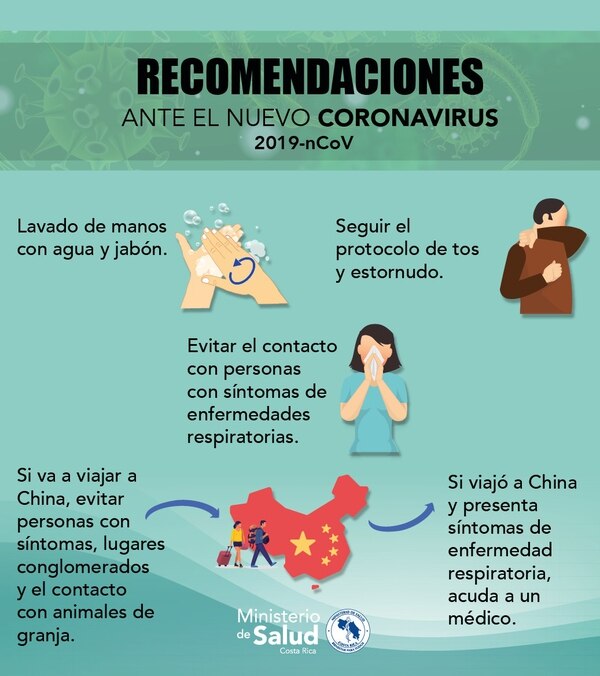
Costa Rican airports have a coordination and contingency plan in case someone from China (especially Wuhan) arrives in the country with respiratory symptoms. There are also posters with key information and recommendations for tourists entering or leaving the country.
The arrivals hall at the Juan Santamaria International airport in San Jose. There are no direct flights to Costa Rica from China, but there is information at airports with indications for people who were in Wuhan and have respiratory symptoms
All this is part of the preventive protocol for the new coronavirus 2019-nCoV that is being applied to both Juan Santamaría international airport in San Jose (SJO) and Daniel Oduber (LIR), in Liberia, Guanacaste.
Monday morning, at a press conference, the Minister of Health, Daniel Salas, was emphatic that the entrance to people who were in China will not be closed. There are no direct flights from China to Costa Rica.
“That (closed access) was done by other countries. The World Health Organization (WHO) emphasizes that it is not necessary. We did not with SARS, we did not with MERS, we did not with AH1N1, which were more deadly, nor will we do it with this one,” said Salas.
“The whole focus of sustained infection is in China, especially in Wuhan. It is present in 20 other countries, but in a very isolated way, it is not a sustained transmission. Mortality is 2%, but I believe that when there is a better count of cases that mortality will result in less than 1%,” he added.
Natalia Carvajal (right) published the photo with Karina Ramos (left) on Instagram has received more than 50,000 likes in less than a day
They couldn’t be more different, like water and oil, but that does not stop the former beauty queens Natalia Carvajal and Karina Ramos from being great friends.
Natalia Carvajal (right) published the photo with Karina Ramos (left) on Instagram has received more than 50,000 likes in less than a day
With a broad message through Instagram, Carvajal dedicated a few words of support for Ramos, whom she considers one of the most determined and hardworking people he knows.
“Beyond prejudices, of labels. Beyond the ego trips and the walls that we put around our hearts. Beyond the good times and also those who have hurt us. So you to know someone. Until we have enough information to see beyond what the eyes see, to see the invisible, the essential,” says the message.
“This woman and I cannot be more different. She is like whiskey, an acquired taste. Difficult to swallow for those who are tasting it for the first time but irreplaceable for those who are lovers (of whiskey). I am like wine: easier to swallow at the beginning but have a punch after the second glass. Our history has been long and complicated but I have been able to see beyond all that. Miss Charm TV already has a queen. And that would be,” Natalia wrote.
Three former presidents were caught on camera voting in Sunday’s municipal elections: Abel Pacheco (2002-2006), Miguel Angel Rodrigues (1998-2002) and Laura Chinchilla (2010-2014).
“I am a little old but well” said the 86-year-old former President Pacheco on Sunday
Pacheco, who turned 86 last December, made it public he would be casting his vote for the Partido Unidad Social Cristiana (PUSC) grouping. The former president, now 86 years old, said “I am a little old but well” (estoy viejillo pero bien).
Former President Abel Pacheco said he would be voting party line
He also took the opportunity to comment that the central canto of San Jose (where he lives) “lacks security and opportunities to keep young people away from drugs”.
“… I walk a little, eat and drink,” said with a laugh the former president who was greeted warmly with hugs by the community of Pavas.
Miguel Angel Rodriguez, who turned 80 a few weeks ago, voted in his community of San Rafael de Escazu.
Former President Miguel Angel Rodriguez
Rodriguez was accompanied by his wife, Lorena, who also voted at the same educational center. Both were cheerful and greeted followers who came to greet or take photos with them. Rodriguez looked in very good mood and health.
For her part, Laura Chinchilla, much younger than the former two presidents (she will be 61 next month) shared her photo and message on her social networks, saying she voted “as a tribute to the tens of thousands of people who have put their name on a nomination today to serve their community.”
La Chinchilla
Chinchilla is registered to vote in Desamparados. She currently teaches at Georgetown University at the Institute of Politics and holds Honorary Doctorates from the University for Peace of the United Nations, Georgetown University and Kyoto University of Foreign Studies.
Buying an “entero” (entire lottery ticket) is a tradition of doña Laura, who has been buying from chancera María Zulai Vindas Céspedes.
Current president Carlos Alvarado and his wife were a hit at the polling station, people abound and lots of selfies.
The prez accompanied by his wife Claudia Dobles. Despite the presidential couple lives in Santa Ana, Don Carlos is registered to vote in Pavas.
I wasn’t able to find anything on the other (living) former presidents: Luis Guillermo Solis (2014-2018), Oscar Arias (1986-1990 and 2006-2010), Jose Figueres Olsen (1994-1998) and Rafael Angel Calderon Fournier (1990-1994).
Pacheco is by far my most favorite president of Costa Rica. Who is yours? Post your comments on our official Face (book) page.
In the CRhoy.com caricature, we see President Carlos Alvarado (left) painting the typical Costa Rican country house, at the precipice of the Fiscal Deficit, while his predecessor Luis Guillermo Solis and his “official mascot” looks on from the firm ground.
“The Alvarado administration said it will ask the Ministry of Finance for an accounting of the deficit.
Sunday, February 2, was election day in Costa Rica as Ticos and Ticas went to the polls, in voting centers across towns and all over the country, to choose their local leaders.
Though elections results are not official yet (the official results are when all the ballots are manually counted, a process that began this morning with the delivery of the paper ballots to the TSE offices in San Jose) preliminary results by the Tribunal Supremo de Elecciones (TSE) has the Partido Liberación Nacional (PLN) keeping the largest number of mayors in the country.
According to the numbers, the PLN would have 45 municipalities of the country, dropping five from 2016, the Partido Unidad Social Cristiana (PUSC) with 16 (up from 14 in 2016), while the Partido Acción Ciudadana (PAC) will have four and the Nueva Generación party with three.
In San Jose, the country capital, Johnny Araya will maintain his mayoral chair, a post he held for more than two decades before stepping in the presidential waters in 2024 and a failed attempt to the president’s chair in, to seem him return to municipal politics.
Johnny Araya returns to San Jose as mayor, a post he has held for more than 20 years, save for a short period when decided to enter national politics in 2014.
Rounding out the majors in the Central Valley, in Alajuela, Humberto Soto remains mayor, as does Jose Manuel Ulate in Heredia, both PLN members; In Cartago, Mario Redondo, of the Alianza Democratica Cristiana, ousted the PLN mayor Rolando Rodriguez.
In contrast, in communities across the country, the ‘cantonal parties’ (local parties with no national affiliation) significantly increased their presence in the country’s local governments.
“I make a call for maturity to the party leaders. So that tonight the winners assume their victory with an integrating and conciliatory spirit, knowing that the work they have ahead they can only face it successfully with the collaboration of their political rivals. And so that those who have not been favored by the popular vote, humbly assume the verdict of the polls, which in a democracy is respected and complied,” said Luis Antonio Sobrado, head of the TSE, in a speech last night after the vote count began.
Sobrado, added recalled that “local democracy not only demands voting every four years. It goes further: it is about getting involved, participating and contributing throughout the mandate of their representatives, to have the moral authority to demand accountability. ”
Gustavo Román, Political Advisor of the TSE, said that there is a “slight improvement” in participation but “we maintain the challenge – as a society – of raising the standard of participation in these elections. We will only achieve this with more education, with more awareness of the importance of local governments and with a modification of the way in which we citizens perceive ourselves.”
A doctor looks to a monitor showing thermal scanners that detect temperatures of passengers at the security check inside the airport in Guatemala City, Guatemala January 27, 2020. REUTERS/Luis Echeverria
The Central American governments of El Salvador and Guatemala have imposed travel restrictions to try to keep out the coronavirus, including barring travelers who have recently visited China, officials said on Friday.
A doctor looks to a monitor showing thermal scanners that detect temperatures of passengers at the security check inside the airport in Guatemala City, Guatemala January 27, 2020. REUTERS/Luis Echeverria
Guatemalan President Alejandro Giammattei said his country’s ban applies to those who have been to China in the last 15 days. “The purpose is to shield Guatemala from coronavirus,” he told reporters after visiting a public hospital.
Giammattei, a retired doctor who took office this month, said the travel restriction applies to people entering via the country’s ports, airports and land crossings. He added that crews on ships arriving in Guatemalan ports that have been in China during the previous 15 days would not be allowed to enter, and that any crew member who did enter would immediately be quarantined.
President Nayib Bukele of El Salvador had announced a similar ban on Thursday night, describing it as a “prudent” but unspecified amount of time.
Honduran President Juan Orlando Hernandez, meanwhile, told reporters that his government would soon make an announcement aimed at “effective management of this situation.”
In Panama, the Panama Canal Authority said that ships arriving in canal waters, whether to port or transit, must report suspected cases 30 days prior to arrival if they have called at ports located in countries with confirmed cases.
Costa Rica’s Minister of Health, Daniel Salas, ruled out that Costa Rica will ban the entry of people coming from China, due to the new coronavirus.
The Minister’s response comes after countries like El Salvador, Guatemala, in Central America and the United States adopted this measure.
“… It is never justified to close airport doors,” Salas said Friday in an interview with La Teja.
The minister recalled that the World Health Organization (WHO) said Thursday that “there are no reasons” to limit travel or trade with China after it declared the coronavirus as an “international emergency.”
“Let’s be more serious, this is not about applying xenophobic measures,” he said. “If all the countries of the world begin to do this (close doors), this is paralyzed,” he added.
Chinese health authorities reported that the death toll from the epidemic is now 258 people, with about 10,000 confirmed cases of infection and about 102,000 people under observation.
Because of that, countries have taken extreme precautionary measures, choosing to protect their borders and repatriate their citizens from China.
The last to announce this measure was the United States, which on Friday declared a public health emergency for the new coronavirus and announced that it will temporarily prohibit the entry of foreigners who have traveled to China in the last 14 days.
At the moment, the Ministry of Health asks citizens to take measures such as washing their hands frequently, cooking food properly (meat and eggs, especially), avoiding close contact with people with symptoms of respiratory diseases, coughing and sneezing using a tissue or covering with the forearm.
Costa Rican officials will monitor transit points such as airports.
Languages can be very generous. They usually lend words to each other. For example, in Spanish, we use many English words such as email, link, ok, bye … We also transform them and play “soccer”, eat “hamburgers” and even “Google”.
But what happens the other way around? What Spanish words or expressions do American English speakers use?
And we don’t mean just “por favor”, “de nada”, “gracias” y “adiós”.
We speak of words that sneaked into English in the United States thanks to the fact that 41 million people speak Spanish in the country – according to the 2017 census estimates – and the enormous impact of Latin culture in that country.
In addition, since there is no equivalent to the Real Academia Española for the English language, the Merriam-Webster dictionary picks them up for use.
Here is a brief list of the words and expressions in Spanish used in United States English.
Some may surprise you …
1. Fiesta
According to the Merriam-Webster dictionary, fiesta in English is synonymous with festival and is a moment of celebration that marks a special occasion.
And to give an example, the San Diego Union Tribune newspaper published an article last October about the international balloon festival in Albuquerque, New Mexico: “The annual balloon fiesta draws pilots from around the world and from more than 40 U.S. states.” (La fiesta anual de globos atrae a pilotos de todo el mundo y de más de 40 estados de EE.UU.)
2. Siesta
Although English has the word nap to refer to siesta, this word is also used to talk about rest in the United States, as defined by the Merriam-Webster dictionary.
An article in the Boston Globe newspaper last November: “Some companies promote siesta and have installed sleep pods – with special beds, music, lights, and vibrations designed to induce sleep”. (Algunas compañías promueven siestas y han instalado cápsulas para dormir, con camas especiales, música, luces y vibraciones diseñadas para inducir el sueño).
3. Barrio
The word barrio (neighborhood) is another example that the Spanish language has a marked influence on English spoken in the United States.
The Merriam-Webster dictionary not only defines barrio as “a district of a city or town in a Spanish-speaking country” but also specifies that it is a Spanish-speaking jurisdiction in a US city or town, especially in the southwest “of the country.
And an example of how barrio is used in English in the United States appears in the following excerpt from the article in the US publication Longreads last November: “The Catholic Church up the road gave Christmas gifts to the children in the barrio. They were donated by charities from overseas, but by the time the load reached the neighborhood, the rich had taken their pick from the lot.” (La Iglesia Católica -ubicada- al final de la calle. dio regalos de Navidad a los niños en el barrio. Fueron donados por organizaciones benéficas del extranjero, pero cuando la carga llegó al barrio, los ricos ya habían elegido lo mejor).
4. Patio
Because if there is a barrio, surely there must also be a patio in some houses.
For the Merriam-Webster dictionary, patio is the same as courtyard, which is the English translation.
And both words are used interchangeably in the North American country. This can be seen in this article in the American newspaper Washington Post of December this year about Valerie Plame, the most famous American spy: “On the patio at Harry’s, Plame was hard to miss with her blond hair, blue jeans and a pristine white short-sleeved shirt.” (En el patio de Harry, Plame era difícil de pasar por alto con su cabello rubio, jeans azules y una impecable camisa blanca de manga corta).
5. Cafeteria
Cafeteria in the United States English means “a restaurant where customers are served coffee at a counter and take food to the tables,” says the Merriam-Webster dictionary.
And you’ve probably seen them millions of times in American movies.Although the customs of consumption also undergo changes.
This is reflected in this December newspaper article by the Houston Chronicle of Texas on the American food chain Luby’s” “The iconic Texas cafeteria chain is increasingly focused on online ordering, third-party delivery and curbside pickup to boost its lagging sales.” (La icónica cadena de cafeterías de Texas se centra cada vez más en los pedidos por internet, en la entrega de órdenes por parte de terceros y entrega de pedidos en la acera para aumentar sus ventas rezagadas).
6. Gusto
Gusto not only resounds in the United States English with the same meaning as in Spanish, but the Merriam-Webster dictionary describes it with three definitions.
The first as a translation of gusto (taste in English), whose plural is gustoes.
The second as “the enjoyment or enthusiastic and vigorous appreciation.” “She described the adventure with great gusto” (Ella describió la aventura con gran gusto o entusiasmo).
And the third definition as “a vitality marked by an abundance of vigor and enthusiasm.” “He could not match the gusto of their competitors”. (No podía igualar el “gusto” de sus competidores).
7. Político
Politico, whose origin is from Latin politic and Greek politikós, is another example of the use of Spanish words in American English
But although the latter has the word politician to refer to the person who is dedicated to doing politics, American English speakers also adopt the Spanish version in their vocabulary, according to the Merriam-Webster dictionary.
An example of this use is a recent article in the Fortune magazine about Tom Steyer, a candidate for the Democratic Party’s primaries for the 2020 presidential elections in the United States.
“Steyer entered the race late and lacks the name recognition of politico bigwigs like Senators Elizabeth Warren (D-Mass.) And Bernie Sanders (I-Vt.), And former Vice President Joe Biden.” (Steyer ingresó a la carrera tarde y carece del reconocimiento de nombres de grandes personajes políticos como los senadores Elizabeth Warren (D-Mass.) Y Bernie Sanders (I-Vt.), y el ex vicepresidente Joe Biden).
Another fact: one of the political media dedicated in the United States is called Politico.
8. Aficionado
An Aficionado (a fan) is someone who likes an activity, for example, and who is not a professional in it.
And the same word and definition fit for US English speakers, describes the Merriam-Webster dictionary.
An example? The next sentence of a journalistic note from the Houston Chronicle of Texas last November: “For many coffee aficionado, Starbucks ‘iconic red cups signal the start of the holiday season.” (Para muchos aficionados al café, las icónicas tazas rojas de Starbucks señalan el comienzo de la temporada navideña).
9. Macho
Macho is that person who exhibits machismo, a way of showing virility aggressively.
And both words mean the same thing in both Spanish and English, as defined by the Merriam-Webster dictionary.
Although in United States English, macho is not only a qualifying adjective for a male person but also to describe a culture or movie.
An example of the use of macho in English can be seen in a recent National Review article about the movie Once Upon a Time … in Hollywood (“Había una vez en Hollywood”).
“Rick and Cliff stand for an old-school way of doing things – all macho movies and masculine camaraderie.” (Rick y Cliff representan una forma de hacer las cosas de la vieja escuela: todas las películas varoniles y la camaradería masculina).
10. Sierra
In the United States English the words hills or mountains are used to refer to the natural elevation of the terrain.
But sierra is also used, as defined by Merriam’s dictionary as “a mountain range especially with a jagged or irregular contour.”
Proof that this word is very present in English is the name of the mountain range in California, Sierra Nevada.
11. “Mi casa es su casa”
This is a courtesy expression that is used in Spanish to welcome another person and feel comfortable in the house.
According to legend, the phrase is about 500 years old and occurred in the territory of what is now Mexico when the Aztec king Moctezuma and the Spanish Hernán Cortés met on November 8, 1519.
Apparently, Moctezuma offered the Spaniards one of their houses to rest. It was there when he said, “esta es su casa” as Mexican historian Alejandro Rosas wrote.
But this phrase crossed borders and reached the English speakers of the United States.
In addition to sneaking into American English, the phrase “Mi casa es su casa” also appears in cinema in a renowned scene in the movie Pulp Fiction (“Tiempos violentos”), with John Travolta and Uma Thurman, directed by Quentin Tarantino.
12. “Chili con carne”
Language loans between two languages also happen in the gastronomic area.
So, the Merriam-Webster dictionary has an entry for chili con carne. And it defines it as “a spicy stew of ground beef and chopped chili peppers or chili powder (which is accompanied) often with beans.”
Without a doubt, it is a Mexican collaboration.
Here, an example embodied in a newspaper article from the Cleveland.com site: “For novices, don’t expect Texas-style chili con carne in a bowl; the Cincinnati version is more akin to a thick sauce to top spaghetti or slather on a hot dog.” (Para los principiantes, no esperen chili con carne al estilo de Texas en un tazón; la versión de Cincinnati es más parecida a una salsa espesa para un espagueti o para embadurnar un perro caliente).
13. “Hasta la vista baby”
And as we could not finish otherwise, we share a phrase that became world-famous when Austrian-American actor Arnold Schwarzenegger pronounced it in the movie Terminator 2.
Here we leave a BBC interview with Schwarzenegger in which he talks about the origin and repercussion of this phrase.
Starting sometime this month (February), the construction order for the three-level crossing will be given to begin at La Uruca, at the intersection of the Circunvalación road entrance, at the junction where the Burger King restaurant was located.
Artist rendering of the La Uruca intersection of the Circunvalación road entrance
This work will occupy a permanent lane closure, which will cause even more congestion in the area throughout 2020.
“This work is part of the North Circunvalación contract and is a transcendental work. The start order will be given at the beginning of February and this will represent an important step restriction in the area, since only two lanes will be enabled (one per direction),” explained the Minister of Public Works and Transportation (MOPT), Rodolfo Méndez Mata.
The work consists of building a three-level passage, which will allow the fluid passage between La Uruca, theCircunvalación, the autopista General Cañas and Ruta 27 to Caldera.
“We are already making all the preparations for the start of the works. It is one of the most important for the country … We will try to make the best traffic management with the support of the Traffic Police,” added the Minister.
At 12:13 pm, Thursday, January 30, 2020, a phreatic eruption occurred in the Rincon de La Vieja volcano, about 23 km from Liberia, in the province of Guanacaste.
A hot mudflow of composed of a slurry of pyroclastic material flowed in rivers and ravines near the volcano, primarily the Azufrada gorge, Zanjona gorge, and Pénjamo river.
The mudflow reached the fords or bridges between 15 to 30 minutes after the eruption.
The following photographs by Dr. Mauricio Mora show the effect of the mudflows that went down the Penjamo river. The population is advised not to carry out activities in these rivers and keep an eye on secondary mudflows.
On Friday, January 31, 2020, staff of the volcanology section of the Red Sismológica Nacional, Costa Rica (National Seismological Network) and the Comision Nacional de Emergencias (National Emergency Commission), in coordination with the Air Force section of the Fuerza Publica made a flight over the Rincon de La Vieja volcano.
Despite the cloudiness, it was possible to observe material released by yesterday’s eruption that could generate secondary mudflows in case of rain in the area.
Here we share some of the flight photographs taken by Dr. Paulo Ruiz.
During 2019, Invest in Bogota, Colombia’s capital investment promotion agency, supported 48 greenfield Foreign Direct Investment (FDI) projects, its highest number for a calendar year since its institution in 2006.
The U.S. was Bogota’s main ally in Foreign Direct Investment in 2019
Overall, Invest in Bogota supported the arrival of investments from 25 countries in 2019. For this year the United States was the main ally for the city with 10 projects, Canada, the second, with four projects, and Germany, Spain, Mexico, and France, with three projects each, were tied in the third place.
In addition to receiving investment from countries such as the United States, Spain or France, Invest in Bogota supported projects from Japan, South Korea, Saudi Arabia, and Australia, among others. This evidences that the city is developing interest from regions of the world that were not regularly inclined to Invest in Bogota in previous years.
This indicates, according to the agency that the city is developing interest from regions of the world that were not inclined to Invest in Bogota in previous years.
According to Invest in Bogota’s Executive Director, Juan Gabriel Pérez, the FDI projects “surpassed US$600 million dollars and generated more than 7,700 direct Jobs in 2019″.
Pérez added, “these are quality jobs for local citizens and proof of the positive effects of FDI”.
Bogota continues to create an infrastructure that promotes the city as an attractive destination for Information Technology (IT) companies, Business Process Outsourcing (BPO) and Shared Service Centers (SCS). These sectors received the largest number of investment projects for the city in 2019, attracting 14 IT and BPO projects, which brought an estimated 4,000 direct jobs.
Some of the IT and BPO companies that invested with the assistance of Invest in Bogota in the city during 2019 were: Ixerv LAC (United Arab Emirates), Nub8 (US), Grupo ARS (Ecuador), the British software development firm Endava, and Switzerland’s Amaris Consulting, which opened a global robotic process automation center.
The second sector in which Invest in Bogota supported the largest number of investment projects was life sciences, which includes industries as medical devices, pharmaceuticals, cosmetics and health services, with 10 new and reinvestment projects. The city also received 10 investment projects for the value-added manufacturing sectors, 8 in creative industries and 4 in infrastructure.
Since 2006, Invest in Bogota has been involved in 384 projects which correspond to an estimate of US$3 billion daollrs and has created over more than 45,000 direct jobs.
(Reuters) – “Do not wear a mask if you are well” read a warning plastered across the front of Singapore’s main newspaper on Friday, as authorities around the world sought to calm panic buying of masks seen as a guard against the fast-spreading coronavirus.
A sign is posted on a medical supply store that says surgical and N95 masks are already out of stock, in Manila, Philippines, January 31, 2020. REUTERS/Eloisa Lopez
In neighboring Malaysia, the government urged people to always have masks and hand sanitizers ready, similar to advice by authorities in Thailand and Vietnam.
Conflicting messages have sowed confusion over how to protect against an epidemic that has claimed over 200 lives in China and spread to over 20 countries, with some experts saying wrong handling of masks could even increase infection risk.
“Wearing a mask only when u feel unwell? Then why do u need soldiers when there isn’t war? It’s better to be safe than sorry” Facebook user Kenny Chan Wai Kong posted in Singapore, where authorities have announced plans to give four masks to every household as retailers’ stocks run dry across the island.
In parts of Asia, wearing face masks is common when people are sick or to counter urban pollution.
Official guidance from the World Health Organisation and the Centre for Disease Control and Prevention makes no mention of wearing a face mask as a preventative measure against the virus – but their websites do not specifically advise against them.
Australia and Taiwan have said healthy people don’t need masks, but Australia has released 1 million masks from the national medical stockpile, and masks are widely worn in Taiwan’s capital Taipei where the government has imposed purchase limits and an export ban on masks.
The Taiwan Railway Administration said on Friday that if the virus continues to spread it will refuse to carry passengers not wearing masks.
MASKS MUST BE FITTED CORRECTLY
Coronavirus can be transmitted from person to person, although it is not clear how easily. Most cases have been in people who have been in the Chinese city of Wuhan at the center of the outbreak, family members of those infected, or medical workers.
Transmission is likely through contact with an infected person via particles in the air from coughing or sneezing, or by someone touching an infected person or object with the virus on it and then touching their mouth, nose or eyes.
“Situations that require a mask are when you are in a crowd…or if you are caring for a sick person. If it makes you feel better, wear a surgical mask,” Angela Rasmussen, virologist at the Center for Infection & Immunity at Columbia University said on the Reuters Global Markets Forum.
Other experts have said disposable surgical masks may not fit the face tightly enough to prevent infection, while some have pointed out that wrong handling of masks such as touching the front could increase the likelihood of infection spread.
In Hong Kong, a lawmaker who chairs the city’s government health services panel was slammed over a short video she posted showing people how to steam and re-use disposable face masks.
More unusual advice has seen India’s government suggest a traditional concoction that includes ginger and holy basil as virus protection, while a Myanmar minister was rebuked for sharing a Facebook post that advised people to eat more onions.
Some overseas Chinese have been buying masks to send to friends and relatives in China, where some stocks have been running out. Chinese citizens living in Vietnam, Thailand and Malaysia sent 150,000 masks back to their home province of Gansu on Thursday, China’s Xinhua news agency reported.
In China, where nearly 10,000 cases have been reported so far, Zunyou Wu, chief epidemiologist at the Chinese Center for Disease Control and Prevention, told state broadcaster that people need to wear masks when taking public transport.
Reporting by John Geddie, Aradhana Aravindan and Keith Zhai in Singapore, Joseph Sipalan in Kuala Lumpur, Khahn Vu in Hanoi, Jiraporn Kuhakan and Panu Wongcha-um in Bangkok, Ben Blanchard in Taipei, Anne Marie Roantree in Hong Kong, Euan Roche in Mumbai, Thu Thu Aung in Yangon and Jonathan Barrett in Sydney; Writing by John Geddie; Editing by Michael Perry
Guatemalan President Alejandro Giammattei offered his Salvadoran counterpart, Nayib Bukele, the opportunity to build and operate a port in Guatemalan waters in the Atlantic Ocean to promote commerce.
Giammattei, who took office in January, said the governments will work to develop a legal framework so that El Salvador can develop projects through a public-private partnership on the Guatemalan coast, Reuters reports.
“We have offered El Salvador something unprecedented in the history of Central American integration, and today I want to announce it publicly because we are going to explore, as soon as possible, the possibility that El Salvador has a port in the Atlantic, in the Guatemalan Atlantic,” Giammattei said during a news conference at the Salvadoran presidential residence.
El Salvador, the smallest country in the isthmus, has a Pacific coast but no access to the Atlantic Ocean.
The two leaders met on Monday in the Salvadoran capital to announce that flight routes between the countries will be considered local in order to reduce costs and encourage tourism.
In addition, the presidents said that they are working to achieve the free movement of people across borders, harmonize customs and coordinate security plans to fight gangs and criminal groups operating in the region.
Salvadoran President Bukele said the governments will seek to invest in hotel construction and logistics centers in the Guatemalan Atlantic, in addition to boosting the flow of goods, without giving details.
“This is something historic, I can’t remember anything this great happening as far as Central American unity is concerned,” Bukele said.
Reporting by Nelson Renteria in San Salvador and Sofia Menchu in Guatemala City; Editing by Sandra Maler
Work on the Fourth Bridge over the Panama Canal is set to begin at the end of March according to the Chinese construction consortium and the Ministry of Public Works.
The consortium and the ministry reported that the alignment of the project and an understanding of the methodology that will be used to estimate costs have been disseminated, Newsroom Panama reports.
On average, microempresas (small businesses) in Costa Rica have 13 years of economic activity, but there are differences by sector: in the agricultural sector, the average is 20 years, in the industry sector is 14 years, in the trade sector is 12 years and in the service sector the average 11 years, reported the National Institute of Statistics and Censuses (INEC).
According to the Encuesta Nacional de Microempresas de los Hogares 2019 (National Survey of Household Microenterprises 2019), “… another aspect that characterizes the microempresas, is that in 93.8% of economic activities, the producer works individually, with their partners or with people who help occasionally or unpaid (own account), the remaining 6.2%, are owners who employ people on a paid and permanent (employers), basis whether in their own home or another.
By sector of economic activity in 2019, of the 396,796 microempresas, the service sector accounted for 43.2%, with the highest concentration. In addition, industry accounts for 21.7%, commerce for 21.1% and agriculture for 14.1%.
Regarding service activities, the highest percentage of businesses are: transportation, food services, gardeners, beauty treatments, shrimp. In commerce, retail sales in establishments, at home and in the street prevail, as well as the maintenance and repair of motor vehicles; in industry, construction, the manufacture of bakery products and the production of dairy products predominate. In the agricultural activities, coffee and banana crops, cattle raising and pig farming are the most important. These are some examples of greater relative importance within a great diversity of activities developed by this sector of household enterprises.”
In Costa Rica, a bill under discussion seeks caps on interest rates on loans, a measure that could lead to a reduction in credit for higher-risk borrowers.
Bernardo Alfaro (left) and Rodrigo Cubero (right) appearing this week before the legislative committee on tax affairs
As part of the discussion in the Legislative Assembly, the heads of the Central Bank of Costa Rica (BCCR), Rodrigo Cubero, and the General Superintendence of Financial Entities (Sugef), Bernardo Alfaro, were asked to give their views on the content of the proposed bill.
Both officials agree that setting interest rate ceilings will lead to changes in the local market, as the financial system could exclude some clients and also some incentives would be lost.
Alfaro told Elobservador.cr that “… If the main purpose of the rate (of usury) is the protection of the consumer, then the rate must be set at the extreme prices; but if the caps on interest rates are a policy instrument, to achieve a lower cost of credit, the rates are compromised.”
Cubero explained that “… Establishing maximum limits on interest rates could have effects such as foreclosure, given a reduction in supply for the riskiest debtors. This is according to international evidence. Those most affected are lower-income financial clients and micro and small businesses, since transactions are more expensive and have a higher risk profile, and they have no guarantees. Exclusion leads to the loss of traceability of operations, with a direct effect on taxation.”
The comments were made before the Committee on Tax Affairs of the Legislative Assembly.
Both defended the methodological calculation that would set the interest cap around 45% and that has been questioned by some legislators.
Cubero highlighted the World Bank’s findings on the experience of caps on interest rates around the world, with two common findings:
Exclusion of the poorest
Increase in the total cost of credits, through commissions and others
“This is why the rate must be high enough, to avoid exclusion and determine the crime of usury (…) Always with the understanding that this rate is set at a level that avoids abuse and minimizes financial exclusion,” said Cubero.
He also said that the usury rate must be over an effective rate, not a nominal rate, as it must include costs and commissions, which is the most real calculation.
The president of the Central Bank emphasized that the World Bank has recommended alternative measures such as promoting financial education and strengthening the Credit Information Center, where all debts are recorded.
In the coming weeks, legislators will continue to discuss the issue, as the aim is to adopt a legal framework to sanction those who charge fees outside the market.
(Press Release) Gisela Sánchez assumes the presidency of the Board of Directors of AMCHAM Costa Rica, the largest multi-sector chamber in Costa Rica, to strengthen the essential objectives that since its foundation in 1973 have recognized AMCHAM, to promote commerce and investment between Costa Rica and the United States.
Gisela Sanchez’s leadership is evident in the projects and initiatives she has executed at FIFCO since 2008, making her one of the most recognized companies in the region. This experience allows her to have a broad vision of how to improve the commercial relationship between Costa Rica and the United States and how to support companies so that the can grow and increase their competitiveness.
This appointment also highlights how more and more women are occupying leadership positions. “I am committed to promoting women’s leadership, in this case by articulating the 90 productive sectors that make up AMCHAM, to promote business growth and foreign direct investment, as well as commercial linkages. I hope to represent in the best way possible the women of the country” Gisela Sanchez, Chairman of the Board of AMCHAM and Director of Corporate Relations of FIFCO.
Since 2010 Gisela Sanchez is a member of the Board of Directors of AMCHAM and since January 28th she will be the President.
Gisela is the Director of Corporate Relations of Florida Ice & Farm Co. (a Costa Rican company with operations in Central America and the United States). Prior to joining this company, she worked as a consultant for governments, NGOs and companies in Central America in the areas of competitiveness and corporate social responsibility.
In 2006, she published two books: “10 Casos sobre Buenas Prácticas en Responsabilidad Social Empresarial” and “El Potencial Competitivo de Guatemala”. In 2001, she began her work with Fundación AVINA in Latin America where she held the position of manager of strategic initiatives supporting the development of social and environmental leaders in the Latin American region.
Before joining AVINA, she worked as a researcher and project coordinator at the Latin American Center for Competitiveness and Sustainable Development at INCAE Business School.
Gisela a Costa Rican woman, an industrial engineer, and obtained her master’s degree in business administration from the Kellogg School of Business at Northwestern University, with an emphasis on marketing and strategy. She is a CALI (Central American Leadership Initiative) Fellow, received the Stephan Schmidheiny Award for Innovation in Sustainability in 2013 and received the John Mc Nulty Award in 2015.
Gisela has been nominated twice as one of Central America´s 50 most influential women by Forbes Magazine.
Costa Rica's drug cost is among the highest in the region with up to 35% difference between one pharmacy and another
A study by the Ministry of Economy, Industry and Commerce (MEIC) determined that the Costa Rican drug market is oligopolistic because it is concentrated in the hands of a few, who control prices and make it very difficult for others to enter on equal terms.
Costa Rica’s drug cost is among the highest in the region with up to 35% difference between one pharmacy and another
An example of this is a purchase of a box of 30 tablets of Atorvastatin, a pill that helps reduce the so-called “bad cholesterol” and triglycerides, that is fraught with abysmal price differences, up to 35% between different pharmacies.
The drug can cost ¢25,962.41 in one “farmacia” (pharmacy or drug store); ¢17,166.15 in another; and ¢16,342 in the third, according to the MEIC done in June 2019.
The “Estudio del Mercado Privado de Medicamentos a Nivel Detallista en Costa Rica” (Study of the Private Market of Medicinal Products at the Retail Level in Costa Rica) is one that the government is using to promote several legislative bills aimed at reducing the price of medicines and increasing the population’s access to these products. See the study in PDF format here.
Daniel Salas, Minister of Health, confirmed that they are currently working on a bill that they would present to the Legislative Assembly in February.
The intention he said, is “to ensure a drop in prices in the market”.
Salas acknowledged that the cost of medicines in Costa Rican private pharmacies is one of the highest in Latin America and the world.
In Nicaragua, for example, drugs cost 25% of what they are in Costa Rica; and in Honduras half, according to MEIC data.
“The bill seeks a balance between the price of entry into the country (known as CIF), the distribution chain, profit margins and the strengthening of pharmacovigilance (the practice of monitoring the effects of medical drugs after they have been licensed for use).
“It is a bill that is evolving. There is an awareness of the Government of impacting the medication policy and that a decrease in price is really felt so that there is more access,” explained Salas.
The proposed bill is in addition to several decrees that are in process; among these, one for doctors to prescribe a drug but not a brand, but with the WHO international common denomination, or active substance of the drug.
Another decree would allow parallel imports, that is, placed into circulation are non-counterfeit products imported from another country without the permission of the owner of the intellectual property.
Millions of dollars at stake
This is not the first time that the government talks about bills to lower the price of drugs in private pharmacies.
Rogelio Pardo Evans, Minister of Health from 1998 to 2002, promoted several actions to achieve that goal, without success, during his four years in the position. Pardo signed, in a single month (August 1998), six decrees to open the market to free competition and stimulate a drop in prices.
Five years ago, the then minister of Health, María Elena López, announced the creation of a drug price monitoring system, which would be fed by consumers from their cell phones.
According to her, this would diminish “the big differences between pharmacies for the same products”. The system had to be developed by the Digital Government, but it did not prosper.
What would be different today, with this proposal?
According to Salas, the decision to carry out this comprehensive strategy is of the highest level.
“(…) in this case, the President (Carlos Alvarado Quesada) and the Minister of the Presidency (Víctor Morales Mora) are very clear that this is what we want to promote,” he told La Nacion.
The private medicine market in Costa Rica is close to US$550 million annually, according to MEIC research.
When the Caja Costarricense de Seguro Social (CCSS) public investment in medicines, the market would easily reach US$1 billion annually.
Household spending is also significant. For 2017, it exceeded ¢190,000 million colones, according to MEIC data. 71% of that expense was made by people in the highest income brackets.
In Costa Rica, 5,700 drug patents are registered; Of these, only 47 have bioequivalence, the Asociación de Farmacéuticos y Propietarios de Farmacias Independientes de Costa Rica (Afaprofaco) – Association of Pharmacists and Independent Pharmacy Owners of Costa Rica – reported.
The value chain in Costa Rica, from lab to consumer
According to Arnoldo Trejos Dobles, director of Investigaciones Económicas y de Mercados, del MEIC, and one of those responsible for reviewing the June 2019 MEIC study, without mentioning names, reported: “that four ‘droguerías’ (responsible for distributing drugs in pharmacies) has 70% of the private market.”
In total, in Costa Rica there 77 laboratories (national and foreign) that produce farmacos (drugs), 221 distributors, and 1,167 private retail pharmacies (independents and chains) in addition to the public pharmacies by the CCSS and the Instituto Nacional de Seguros (INS) – state insurer that runs public hospitals and clinics for its insured.
View of part of the Reventazón Hydroelectric plant on September 16, 2016 when it was inaugurated. Its initial value was $ 757 million and ended at $ 1,567 million (107% difference) which impacted the financial balance of ICE and rates. / Photography: Alonso Tenorio.
The Instituto Costarricense de Electricidad (ICE) announced the end of an era by ruling out the construction of more of its own hydroelectric plants; a decision that could lead to a reduction of electricity rates in Costa Rica.
View of part of the Reventazón Hydroelectric plant on September 16, 2016 when it was inaugurated. Its initial cost was US$757 million and ended at US$1.567 bllion (107% difference) which impacted the financial balance of ICE and electricity rates. / Photo: Alonso Tenorio.
The decision was applauded by the industrial sector that has historically criticized ICE for the high cost of its investments and its impact on electricity rates.
Hazel Cepeda Hodgson, ICE general manager, confirmed that the entity does not foresee new own power generation works for at least seven years.
The forecast is that it will be until 2027 when ICE will review if it is necessary to increase the capacity for generation and if so, it will most likely opt for geothermal generation.
“Although ICE will not enter into the construction of new projects in the coming years, the analysis and planning of the energy matrix dictates that by 2027 we review whether we should undertake a new project at the end of the useful life of some of our plants. If so, it would be in geothermal energy where there is great potential,” Cepeda explained in an interview with La Nación on January 23.
When asked if this implied for the ICE to give up new hydro projects, Cepeda replied: “Definitely. What we will work on will be research and development very cautiously in geothermal energy”.
In the country, there is a capacity to develop hydro projects but the majority of rivers are located in indigenous territories or national parks; a circumstance that legally prevents ICE from carrying them out.
For now, the Instituto plans for the year 2034 the possible expansion of six of its own geothermal parks and once in operation, a wind farm of its own (there are another six planned, but with private capital) and two private solar projects.
Police made the arrests this Tuesday at dawn. Photo: Édgar Chinchilla
The Policía Profesional de Migración de Costa Rica (Costa Rica’s immigration police) reported on Wednesday the capture of three Nicaraguans wanted for the killing of a family in the Maio Indian Reserve, in Nicaragua, in October 2019.
Police made the arrests this Tuesday at dawn. Photo: Édgar Chinchilla
Nicaraguan authorities never confirmed the finding of the murdered family, but at the time the Fundación del Río, through environmentalist Amaru Ruiz denounced the massacre caused by land conflicts.
The three Nicaraguans, including two brothers named García Calderón, were arrested in Pital de San Carlos, in the province of Alajuela. The third captured is identified by his last names Morales Sequeira.
Stephen Madden, director of the immigration police, said the arrests were made at 5:50 am Tuesday, and that the detainees are wanted for “several homicides on the Nicaragua side.”
Costa Rican authorities used information provided by the Dirección de Inteligencia y Seguridad (IS) – Directorate of Intelligence and Security.
“The detainees were transferred to the Central Region Apprehension Center in Heredia, where consultations will be held with Nicaraguan authorities to confirm the arrest warrants,” Costa Rica’s immigration service reported.
According to information reported by Nicaragua’s La Prensa, the massacre occurred in the La Pimienta community, in San Juan de Nicaragua, municipality of Río San Juan.
The murder occurred on Thursday, October 3, 2019, and the deceased were identified as: Pablo Calderón Espinoza, 80; Lucrecia Pérez Dormu, 40; Yadira Pérez Martínez, 22; Isaías Calderón Pérez, 16; and one-year-old Pablo Alonzo Calderón.
“Conflict and insecurity in southeastern Nicaragua has increased due to land trafficking, mining, the invasion of settlers, the lack of institutionalism in the country and the lack of interest of the Ortega Murillo regime of addressing the environmental and social situation.’ environmentalist Amaru Ruiz. Ruiz shared on her Facebook profile last October.
In the social networks circulated a complaint allegedly prepared by inhabitants of the area, where they pointed to an ex-mobilized of the Resistance as the alleged author of the crime. The complaint stated that the man called “Domo” had committed eight murders for reasons of land trafficking in the Biological Reserve, not including the massacre of the Calderón Espinoza family.
Despite the seriousness of the complaint, the “Orteguista Police” (police loyal to the Ortega regimen) never ruled on the case, nor confirmed that there was a massacre.
Waiting on Nicaraguan authorities
Costa Rica now has to wait for Nicaragua to request the extradition of the suspects.












 Gisela Sanchez’s leadership is evident in the projects and initiatives she has executed at FIFCO since 2008, making her one of the most recognized companies in the region. This experience allows her to have a broad vision of how to improve the commercial relationship between Costa Rica and the United States and how to support companies so that the can grow and increase their competitiveness.


