Former president Luis Guillermo Solis and his wife Mercedes Peñas Domingo
Former president Luis Guillermo Solis and his wife Mercedes Peñas Domingo will be leaving Costa Rica to start a new work life in Florida, USA.
Former president Luis Guillermo Solis and Mercedes Peñas. Photo from Facebook
Peñas made the announcement on her Facebook page on Wednesday.
“I thank the Florida International University (FIU) for the honor it gives Luis Guillermo and me for the one-year work offer, starting in September. I, as a researcher on issues of territorial development and risk prevention at the local level and Luis as a visiting professor at the Center for Latin American and Caribbean Studies. From this new responsibility I will continue to support Costa Rica in improving the management of the territories,” said the former lady.
Solis had assured, shortly before leaving power, that he would return to his life as a university professor.
“We like hiking, last week, on Saturday, we climbed the Cerro Platanares in San Carlos, going up, we got this photo, the Arenal, Miravalles and Rincon de la Vieja. The views are wonderful,” wrote Willy Gálvez in submitting the photo.
The Arenal Volcano, located in La Fortuna, in the province of Alajuela, Costa Rica
Mother Nature in a country like Costa Rica is unpredictable. And, therefore, it makes it difficult to predict if at some point we will endure eruptions similar to those that caused a wake of death and destruction in Guatemala in the last few days.
The Arenal Volcano, located in La Fortuna, in the province of Alajuela, Costa Rica
The Fuego volcano, located 50 kilometers from Guatemala’s capital city, Guatemala City and at a height of 3,700 meters (12,140 feet), produced a series of powerful eruptions that buried entire villages and left more than 70 dead.
A clear example of what can be in Costa Rica was the eruption of the Arenal volcano in July 1968, with a deadly and destructive balance in its surroundings. Or, what happened in the Rincon de la Vieja, thousands of years ago.
“All the volcanoes in Central America are formed by the subduction zone. Because the Cocos plate gets under the Caribbean plate. That’s why we have active volcanoes throughout the region. That binds again, because they have a very explosive and gas-rich magma,” explained Raúl Mora, volcanologist at the Universidad Estatal a Distancia (UNED).
According to the geologist, all Costa Rican volcanos are capable of generating pyroclastic flows and waves. However, the most recent ones did not have the magnitude – not by any means – that the Fuego volcano presented on Sunday.
“Costa Rica is a country full of active volcanos that can generate this type of activity. The difference is that most of these volcanoes are national parks, with safety perimeters where people cannot build. In the case of Arenal there is already a restriction on land use and in Turrialba we want to do the same,” said Mora.
Experts insist that monitoring devices installed in national volcanos are not infallible and eruptive events cannot be predicted either. However, the culture of risk and prevention rooted in the Costa Rican system is a point in favor.
Though volcanos look alike, but there is no such thing as two volcanos the same.
“The Fuego volcano is the most active in Central America and the eruption on Sunday proves it. It has had activity since colonial times, for in 1542 the first Spaniards who came to the area described the eruptions. Unlike our volcanos that for reasons of individuality are calmer, but they had their violent past,” concluded Mora.
But of importance (of possible eruptions), of note are:
Arenal
It will be 50 years since the great eruption of 1968. It generated pyroclastic flows and waves that killed dozens of people and hundreds of cattle heads. It was an eruption greater than that of the Fuego volcano. The colossus is currently in a period of rest, so to speak.
The Arenal Volcano is an active andesitic stratovolcano in north-western Costa Rica, some 135 km from San Jose. The Arenal volcano measures at least 1,633 meters (5,358 ft) high. It is conically shaped with a crater 140 meters (460 ft) in diameter. Geologically, Arenal is considered a young volcano and it is estimated to be less than 7,500 years old.
Poás
In April 2017 it generated phreatomagmatic eruptions, with pyroclastic flows and waves. The waves, which are more gas than rock, affected the tourists viewpoint and burned surrounding vegetation. They were small pyroclastic flows and waves that were concentrated in the crater and surroundings.
The Poás Volcano is an active 2,708 meter (8,885 ft) stratovolcano. It has erupted 40 times since 1828, including April 2017. The volcano is 48 km from San Jose (32 km from the San Jose airport).
It produced important eruptions in the 60s. There are deposits in the tourist viewpoint that show that it has generated pyroclastic waves. The waves are characterized by having more gas, instead of rocks. They were not as great as those of the Fuego or El Arenal volcano.
The Irazú is an active volcano close to the city of Cartago, some 31 km and 55 km from San Jose. At 3,432 metes (11,260 feet), the Irazú Volcano is the highest active volcano in Costa Rica.
Turrialba
In May 2016, it generated a pyroclastic surge. Also, a pyroclastic flow was formed that managed to overcome the ring of the active crater and began to be emplaced by the slope that goes to La Central. It was the last time there was something like this in the Central Volcanic Mountain Range.
The Turrialba, a stratovolcano, is 3,340 m (10,958 ft) high and is 64 km from San Jose.
Turrialba is adjacent to Irazú and both are among Costa Rica’s largest volcanoes. Turrialba has had at least five large explosive eruptions in last 3500 years. On clear days both the Pacific Ocean and Caribbean Sea can be seen from the summit.
Rincon de la Vieja
Since 2017 it has been quite active, with similar events with minor pyroclastic flows and waves.
The Rincón de la Vieja (from Spanish, “The Old Woman’s Corner”) standing at 1,916 meters (6,286 ft) is an active andesitic complex volcano in north-western Costa Rica, about 23 km from Liberia, in the province of Guanacaste and 269 km from San Jose
What are pyroclastic flows or waves?
A pyroclastic flow (also known as a pyroclastic density current or a pyroclastic cloud) is a fast-moving current of hot gas and volcanic matter (collectively known as tephra) that moves away from a volcano reaching speeds of up to 700 km/h (430 mph) and temperatures above 700 ° Celsius
Although at present no Costa Rican volcano has shown this type of activity, in the past there are records about the emanation of pyroclastic flows and waves.
Behind on your business taxes? The General Directorate of Taxation, of the Ministry of Finance (Ministerio de Hacienda), may be knocking on your door as it did this past week, yellow taping (closing down) 35 businesses for five calendar days in different parts of the country, for the breach of tax obligations.
Photo Courtesy of the Ministry of Finance.
In the first months of the year, another 67 were sanctioned, bringing the total to more than 100.
Of the total closures made this year, seven are due to reoccurrence not issuing or not submitting invoices for the sale of goods or services; 33 due to for not submitting statements on time; and 62 for not paying the taxes within the period stipulated by law.
In the list of the 35 businesses closed at the end of May are suppliers, beauty salons, hotels, restaurants, retailers of cellular phones, accessories or repair; among others.
Carlos Vargas, general director of taxation, said that his office will continue to carry out more closures and other controls throughout the year, in order to reduce levels of non-compliance and tax evasion.
On the other hand, Nogui Acosta, Deputy Minister of Revenue, called on all business managers to comply with their tax duties on time and thus avoid affecting their business.
Fuel prices in Costa Rica and Central America are up, with Costa Rica having the highest prices in the region.
Wife: Is he celebrating the World Cup season? Husband: No, it’s the season of price increases…
According to data by Acodeco.gob.pa, the price of a gallon of regular gasoline (as of June 4) are:
Costa Rica $4.22
Nicaragua $3.99
Honduras $3.83
El Salvador $3.62
Guatemala $3.60
Panama $3.33
The high prices are being blamed on the “geopolitical events that took place in the month of May between the United States and Iran” that led to an increase in the prices of petroleum products, which has been felt in the global market, due to the economic sanctions that focus on reducing the supply of exports to the international hydrocarbons market.
Along with this issue, OPEC and non-member countries led by Russia, has an item on its agenda for June 22 in Vienna, Austria, to decide if they will keep the pact outlined since the beginning of 2017 of only producing 1.8 million barrels per day or raise the amount of pumping to be able to supply global demand in light of the shortage that Iran will generate, these events are creating uncertainty for investors, because prices of petroleum and derivatives show mixed fluctuations that are difficult to predict.
In Costa Rica, the latest increase in fuel prices was on Friday, June 1, 2018, when a litre of regular gasoline rose to ¢653 (from ¢633), super went to ¢680 (from ¢662) and diesel to ¢562 (from ¢560).
Before the end of the month we can expect even higher prices at the pumps in Costa Rica.
This Friday, June 8, Recope is expected to request the Aresep for another hike in gasoline prices, which would go into effect the last Friday of June.
UPDATE: Costa Rica’s immigration service, Dirección General de Migración y Extranjería (DGME) said, “what proceeds now is to assess or review the actions that will be carried out by the country where the person was convicted (as per international arrest warrant, alert by Interpol, among others), to carry out the actions that correspond in Costa Rica.”
The only migratory movement recorded by the Elena Udrea was the entry into the country on February 7 of this year at 4:31 p.m. by way of the Juan Santamaría International Airport.
– – –
A court in Romania on Tuesday sentenced in absentia Elena Udrea, a former minister who fled legal troubles by seeking refuge in Costa Rica, to six years in prison.
Tuesday’s decision upholds a judgment on March 29, 2017, to six years in prison for corruption and abuse of office, which 44-year-old former minister had appealed.
In the same case, Rudel Obreja, former FRB (The Romanian Box Federation) president, was sentenced to five years imprisonment and Tudor Breazu, the administrator of the Nana lands owned by Elena Udrea, was sentenced to three years in prison. Ion Ariton, former Minister of Economy, was acquitted for improper accusations of abuse of service and use of influence in order to obtain undue benefits.
In February, claiming she was saying the victim of “a politically-motivated trial”, Udrea claimed asylum in Costa Rica and has since stirred controversy by posting numerous interviews online from her self-imposed exile.
The boxing match called “Gala Bute” took place on July 9, 2011, when the Romanian Lucian Bute defeated the Frenchman Jean-Paul Mendy.
As part of Tuesday’s judgment, Udrea has also been ordered to pay back 900,000 euros (US$1.05 million dollars) to two local businessmen and 1.7 million euros (US$1.983 million dollars) in damages to the national tourism authority.
At the height of her career, Udrea was considered one of Romania’s most influential politicians.
In the past, Udrea has posed for glamour magazines and the Romanian media dubbed her “Traian Băsescu’s blonde”, referring to the country’s former center-right president.
Cahuita might be described as a town blessed with two Meccas. It can be seen as a Mecca of Costa Rican wildlife with a hearty serving of fine dining; in addition, it can be considered a Mecca of superb cuisine with an ever-present sideshow of wild creatures.
Photo by Jack Donnelly
Cahuita is a small town, population around 8,300, on the Caribbean coast. It lies just off the main road between Puerto Limón and Puerto Viejo de Talamanca. Its history is heavily involved with oil and banana companies, but today it thrives primarily on tourism—mostly Europeans.
Apart from the center of town—a crossroads by the central park—two important points of reference are the black beach and the white beach. Black and white refer to the color of the sand, not the people. The white beach has extremely strong and dangerous currents—pretty place, but don’t even think about getting in the water. I swim at the black beach and I have never had a problem, although there are signs warning of strong currents.
Photo by Jack Donnelly
The crown jewel of Cahuita wildlife is the Cahuita National Park, Parque Nacional Cahuita. You can access the park right in town from the white beach—walking trails only. The main entrance is just off the highway heading toward Puerto Viejo. In addition to the walking trails there are beaches and a boardwalk that lets you hike through the thick swampy forest for about 2 km. Howler monkeys can often be seen from the road lounging about high in the trees during the heat of the day.
Another must-see is the Sloth Sanctuary—a few miles up the main road heading toward Limón. You can get up close and personal with the resident sloths, two-toed and three-toed, who are unable to return to the wild due to their injuries. The lecture on sloths, in English and Spanish, is extremely informative. Subsequently, visitors can opt for a one-hour canoe tour of the estuary at the rear of the sanctuary—birds, monkeys, crocodiles, etc.
I would not discount the wildlife to be seen and photographed in hotel gardens—iguanas, birds, sloths, agoutis, frogs, etc. There are a number of nature tours offered by guides and commercial tour companies. The Tree of Life, a wildlife rescue center, is located up the road from the black beach.
Photo by Jack Donnelly
A lesser-known attraction is the wonderful cuisine—in my opinion, the best in Costa Rica. This may be due to the longstanding European influence. In fact, some of the restaurants are owned by Europeans. Of the ten best meals I’ve had in Costa Rica, at least six of them were in tiny Cahuita.
Another culinary attraction is the Afro-Caribbean food. Cahuita is widely considered to be the premier locality in Costa Rica to enjoy this style of cooking.
It is also a center of Afro-Caribbean culture. There are festivals and concerts featuring reggae and calypso music. Walter Ferguson, often called the calypso king, still lives in the center of Cahuita. He was recently awarded the Costa Rican National Prize for Intangible Culture (Premio de Cultura Inmaterial Emilia Prieto Tugores). In Costa Rica Afro-Caribbeans (or Afro-Antilleans) are commonly called afrodecendientes (Afro-decendents).
Photo by Jack Donnelly
Cahuita is a place of many small hotels, some of them very modest and others rather posh. In addition to English, German and French are spoken at many of these establishments.
The next time your body is crying out for the beach, give the Pacific beaches a rest and think about Cahuita on the Caribbean.
The number of people who were reported missing after Guatemala’s Fuego Volcano eruption amounted to nearly 200 people, Sergio Cabanas, the head of the National Coordination for Disaster Reduction of Guatemala, said.
The country’s National Institute of Forensic Sciences said on Tuesday that bodies of 75 people were found, while only 23 were identified.
This is terrifying! Volcano erupted in Guatemala killing 33 people and 1.7m are affected by it. If you you’d like to help, please reach out to the Red Cross who are there assisting. pic.twitter.com/xDFbdOTj03
— LFC Podcasting Couch (@PodcastingCouch) June 5, 2018
The volcano Fuego located some 25 miles west of Guatemala City erupted on Sunday. Guatemalan President Jimmy Morales declared on Monday a three-day period of national mourning.
The US Geological Survey (USGS) reported earlier that a 5.2 magnitude earthquake has stricken Guatemala a day after a deadly volcanic eruption occured. An epicenter was located some 104 kilometers south-southwest of the town of Champerico and had an approximate depth of ten kilometers.
That’s a line of rescuers down there, working in dangerous conditions near Guatemala’s #VolcánDeFuego where villages are covered in ash …
The local-based media outlets reported earlier that dozens of people were missing with over 3,000 more having been evacuated from the affected areas. The Guatemalan authorities said earlier they fear the death toll would increase.
The Dutch airline, KLM, says it aims to again operate flights permanently between San Jose and Amsterdam, while Edelweiss and Air France announced the increase in flights before the end of the year, all with direct service between Costa Rica and the “old continent” as Europe is referred to by many in the country.
Esteban Altamirano, marketing manager for KLM in Costa Rica. Photo Esteban Monge/La República
The change means more direct trips each week for tourists coming to Costa Rica and travelers in the country headed to Europe.
The decisions of the airlines come from successful operations and an occupancy in flights that is around 90%.
In the case of KLM, the period in which the route from Costa Rica will operate is not known, since it will depend on aspects such as market behavior, sales, and public acceptance. Currently, the airline offers seasonal flights, during the European winter, after its return to the country in 2017, after a 20-year absence.
“We had positive results last season. It has been a very pleasant surprise; a market that was not expected so much in the beginning and started as an experiment has responded positively. The clients are satisfied,” said Esteban Altamirano, Marketing Manager for Costa Rica at KLM.
For the 2018/2019 season, KLM will commence flights on October 28, with three weekly (Tuesday, Friday, and Sunday) that could be extended to March.
Air France, that began operations in Costa Rica in 2016 with seasonal flights, currently maintains two weekly flights between San Jose and Paris that will increase to four between October 29 of this year and March 2019. Flights will be on Mondays, Wednesdays, Thursdays, and Saturdays.
Edelweiss, that connects San Jose with Zurich, will add starting in September flights on Sundays to its current flights on Tuesdays and Fridays.
“In the last 12 months, Edelweiss has operated more than 200 flights between Costa Rica and Switzerland, transporting more than 55,000 passengers. Due to this resounding success, it has been decided to increase flights, adding a third frequency as of September 30,” the airline said in May through a press release.
Lufthansa, part of the Edelweiss group, that began operation in March with the San Jose – Frankfurt flights on Tuesdays and Saturdays is expected to add more flights.
“We are very happy with how this flight started, it has had a great reception among the customers. Although it is very early, we are already thinking about a possible increase in frequencies, we do not know if this year,” said Tamur Goudarzi Pour, Vice President of Sales of Lufthansa, one month after the first flight from Germany to the country.
For its part, the Spanish airline, Iberia, offers daily flights between San Jose and Madrid, with additional weekly flights during the October – March season.
Other airlines with direct, but limited direct flights, to and from San Jose (SJO) include British Airways (London), and Condor (Frankfurt).
Airlines with stops to and from San Jose and European cities include Avianca (Bogota and El Salvador), Copa (Panama) and Air Canada (Toronto).
Without a new public employment law, the cost containment measures presented by the Ministra de Hacienda (Minister of Finance) Rocio Aguilar, will not be enough to resolve public finances.
Ministra de Hacienda (Minister of Finance) Rocio Aguilar
Likewise, the business sector insists that the next step is to take measures that change public sector employment, mainly in remunerations and benefits to restrict salaries and perks (pluses in Spanish) but that can only be resolved by the Legislative Assembly.
For their part, legislators are taking a wait and see attitude for the measures to be implemented before tabling tax reforms, both regarding public sector employment and new taxes.
In an interview with La Republica, the minister said to only propose measures to cut expense is not enough. The Minister is clear that it is necessary to have a new law on public employment, as well as to modernize taxes in general.
On the law of public employment, Aguilar said, “not only of wages, but of everything that refers to public employment. Our laws are simply about wages, there has to be a transformation…what are the competencies that are required, what are the processes of updating officials, what will the compensation scheme be, according to the capacity of the country?”.
For the Minister there is also a need to reform the institutional design of the organizations, “We can not live with 330 institutions, that is a luxury that we can no longer afford.
There has to be a fusion of programs and institutions that would improve the quality of spending”.
Former Costa Rican President Luis Guillermo Solís Rivera has been named a distinguished visiting professor at FIU’s Kimberly Green Latin American and Caribbean Center (LACC), a kind of homecoming for Solís, who served as a researcher with LACC from 2004 to 2008 and also worked with FIU’s Center for the Administration of Justice.
“Through his commitment to a life of public service and dedication to building greater knowledge and understanding across borders, President Solís has not only improved the lives of his countrymen but he has built a positive legacy that will touch generations to come,’’ said FIU President Mark B. Rosenberg. “We could not be more pleased to have such a distinguished diplomat, scholar and statesman return to FIU.”
As a visiting professor, Solís will lecture on governance and democratic sustainability in Latin America and the Caribbean, among other topics. His appointment is for one year.
Before he was elected Costa Rica’s 47th president (2014 – 2018), Solís held numerous diplomatic positions, including ambassador for Central American affairs and director general for foreign policy. Solís holds a bachelor’s degree in history from the University of Costa Rica (UCR) and a master’s degree in Latin American studies from Tulane University in New Orleans.
A police officer stumbles while running away from a new pyroclastic flow. Reuters: Luis Echeverria
Guatemala’s national disaster agency CONRED said on Monday the death toll from the Fuego volcano eruption Sunday is 69. Officials said just 17 victims had been identified because the intense heat of the volcanic debris left most bodies unrecognizable.
The volcano continues to spill out smoke and ash as residents evacuate from Escuintla. (AP: Luis Soto)
“It is very difficult for us to identify them because some of the dead lost their features or their fingerprints” from the red-hot flows, said Fanuel Garcia, director of the National Institute of Forensic Sciences. “We are going to have to resort to other methods … and if possible take DNA samples to identify them.”
Burying the dead.
Nearly 2,000 people are in shelters and more than 3,200 have been evacuated from the areas near the volcano to the west of Guatemala’s capital city, Ciudad Guatemala.
Coffins are set for victims at a fire station in Alotenango. Reuters: Jose Cabezas
A witness near the volcano said more people had been evacuated beyond a 8-kilometer perimeter from the site after the latest explosion. One woman who said more than 20 of her relatives went missing in the tragedy begged Guatemalan President Jimmy Morales, who traveled to the disaster area on Monday, to find them.
Firefighters recover a body from near the volcano. AP: Oliver de Ros
The President spoke with distraught victims who lost relatives in the eruptions.
A police officer stumbles while running away from a new pyroclastic flow. Reuters: Luis Echeverria
Fuego, one of several active volcanos out of 29 in Guatemala.
Residents carry a victim away from the Fuego volcano. (AP: Oliver de Ros)
The eruption, on the far side of the volcano, facing the Pacific coast on Sunday sent columns of ash and vapor some 10 kilometers into the sky.
“The landscape on the volcano is totally changed, everything is totally destroyed,” government volcanologist Gustavo Chigna said on local radio.
The agency also launched an online registry of missing people.
The latest on the deadly volcano eruption in Guatemala is 62, at 1:00 p.m. Monday, confirmed the director of Guatemala’s National Institute of Forensic Science.
Fanuel Garcia said there could be more deaths, but that is the number of bodies so far recovered, and so far only 13 have been identified.
Dozens more are missing, the country’s disaster agency says.
Villages on the slopes of Fuego volcano were buried in volcanic ash, mud and rocks as the volcano erupted for 16 and a half hours on Sunday.
Pyroclastic flows, which are fast-moving mixtures of very hot gas and volcanic matter, rushed down the mountainside and engulfed villages.
Fast-moving flows hit villages, killing people inside their homes. Sergio Cabañas, head of the country’s National Disaster Management Agency (Conred), said the town of El Rodeo had been “buried”. Other towns affected include Alotenango and San Miguel Los Lotes.
Rescuers are still trying to reach a number of villages and the death toll is expected to rise.
Temporary shelters have been set up for about 3,000 residents who have been evacuated.
President Jimmy Morales who with his wife, personally visited one of the affected areas, Escuintla, personally saw five bodies pulled from the ashes as reported by CNN en Español.
The president has declared three days of national mourning.
The Fuego volcano is one of Latin America’s most active volcanos, is bout 40km (25 miles) south-west of the capital Guatemala City. A major eruption devastated nearby farms in 1974, but no deaths were recorded.
Another eruption in February this year sent ash 1.7km (1.1 mile) into the sky. Sunday’s event was on a much greater scale.
Are you in the area? If it is safe to do so please share your experiences by emailing rico@theqmedia.com.
Costa Rica’s national team, La Seleccion or La Sele, is moving up three positions in the FIFA ranking. On June 7, the Fédération Internationale de Football Association (FIFA; French for “International Federation of Association Football”) will be announcing the latest rankings.
But, as usual leaks at the FIFA ensure we get all the news before it is made official by the international governing body.
La Sele will be 23rd in the world, 8 points behind Mexico (15) and two ahead of the United States (25).
The top 10 in the FIFA are:
1. Germany
2. Brazil
3. Belgium
4. Portugal
5. Argentina
6. Switzerland
7. France
8. Poland
9. Spain
10. Chile
In the 2018 World Cup in Russia, Costa Rica is in group E, meaning they will face the 34th ranked (Serbia), the 6th (Switzerland) and the number 2 in the ranking (Brazil).
Scenes like the one on Thursday have been common lately
Three out of every 10 homicides since January of this year are linked to drug trafficking or organized crime, explained Verónica Pérez of the Office of Plans and Operations of the Organismo de Investigación Judicial (OIJ).
Scenes like the one on Thursday in Calle Blancos have been common lately. On average there is a murder every 14 hours.
The last case that the authorities are investigating – and try to determine if it is related to drugs – is that of a Colombian who was gunned down the last week in Calle Blancos, attacked in his late model BMW.
According to the Cruz Roja (Red Cross), the man was shot in the head, chest and stomach. He was declared dead at the scene.
Perez said that so far this year there have been 260 homicides, 39 more than the same period last year. The average is1.7 murders per day or one every 14 hours.
“Of those homicides, many or a large majority are linked to drug trafficking or organized crime. They are people who had some link with those type of crimes,” she said.
The investigations of the OIJ determined that the deceased persons were related to the criminal structure, either in the function of a leader, vendor, distributor or manager of a bunker.
“We see that they have different functions within this structure and eventually rise up in rank,” she said.
The OIJ official explained that these deaths are mainly due to territorial disputes or settlement of scores.
“Every time authorities dismantle an organization, a void is created and that is exploited by other groups, it is at that moment that the executions take place,” said Perez.
The majority of the murders occurred in the provinces of San Jose, Limon, and Alajuela.
In a report in March, when there were only 104 homicides, Walter Espinoza, director of the OIJ, said that the judicial police body has a more than a 50% resolve rate and on average a murder case takes 162 days to bring the perpetrator(s) to justice.
Worrying authorities is the continued trend from last year when there were 620 murders, 15 of which where innocent people, people being at the wrong place and at the wrong time.
Jealous woman alleges hubby took his own life. Forensic evidence points to the contrary,
A jealous woman will be standing trial for allegedly killing her husband while driving home from a bar in Guatuso de Alajuela. The prosecutor alleges the 44-year-old woman, in a jealous rage, shot her husband while driving.
The jealous woman alleges hubby took his own life. Forensic evidence points to the contrary,
The incident occurred in October 2015. After being shot, Rónald Jesús Cortes, was able to brake the vehicle and open the door to get out. That is the last thing he could do before expiring next to the opened door. The woman, identified as Reyes Ortiz, then placed the gun next to her husband and went home.
Apparently, she did not like her husband’s flirting with a waitress in the bar they had been drinking all night. On her arrest in March 2016, the woman told police her husband had taken his own life. The autopsy revealed otherwise. A GSR test resulted positive. The couple had been married since 1997.
Architect Claudia Dobles met last Thursday with officials of the Panama Metro, to learn of their experiences with the development of a mass transit system. Photo Office the First Lady
Claudia Dobles is more than just the wife of President Carlos Alvarado and the First Lady, she is also the force to bring the metro (subway) to Costa Rica.
Architect Claudia Dobles (blue striped shirt) met last Thursday with officials of the Panama Metro, to learn of their experiences with the development of a mass transit system. Photo Office the First Lady
To that end, the First Lady is studying the Panama experience and in three months will announce the first step in bringing the fast train to the country.
First lady studies Panama subway and announces that in three months she will take the first step with fast train in costa rica
The architect has already met with the developers of the metro in Medellin and mass transport of Bogota, both cities in Colombia with a combined population of three times that of Costa Rica. Last Thursday Dobles met with officials of the Panama Metro.
The experiences of the other Latin American countries in the construction of mass rapid transit will be part of the planning for the Tren Rápido de Pasajeros (TRP)- Rapid Passenger Train.
Dobles explained that the objective of the meetings is to take note of good practices and lessons learned in those countries, which can serve as a reference for the construction project of the new train here at home.
The First Lady is learning about the bidding processes they had, such as the timing and cost estimates. “How was the bidding process that they had … we were talking about what their time (schedule) were, if they managed to stick to the times or not, if they did not manage their times, what were the delays and why, cost estimates and understanding within those costs, what they were included, to see what could be in some way comparable or not with ours,” explained Dobles.
The first lady reported that the feasibility stage of the TRP project is expected to be awarded within three months, with an eye by Casa Presidencial to proceed to the construction bidding process by February next year.
According to Dobles, it is most likely that a concession model will be used.
The goal of the government of Carlos Alvarado is that, at the end of his term, the first stage of the TRP is awarded and construction is in progress. That phase will cost US$600 million, while the complete investment amounts to US$1.3 billion dollars.
The Instituto Costarricense de Ferrocarriles (INCOFER), the Autoridad Reguladora de los Servicios Públicos (ARESEP), the Ministerio de Hacienda (Finance), the Ministerio de Obras Públicas y Transportes (MOPT), the Ministerio de Planificación (Planning), led by the Dobles office are involved in the negotiations and members of civil society also offered advice.
Doubles said her team is preparing a project schedule with more exact dates, which will be made public soon.
A friend is the main suspect to have killed Vincenzo Costanzo, whose body tied with plastic tape and wrapped in black plastic, appeared on January 29, 2017, on the side of the road to the Universidad para la Paz, Cuidad Colon, in the canton of Mora, San Jose.
The victim, an Italian national with some 25 years of living in Costa Rica, was a majority shareholder of the private company Cebaco Inversiones SA, owner of 17 hectares on the Isla Cébaco, located in the Pacific waters, in Panama, and where only 650 people live.
The 52-year-old Italian lived in Costa Rica for some 25 years. His body was found on January 2017 on an isolated road in Cuidad Colon
The murder of Costanzo occurred at a time when the sale of this property, valued at several million euros, was being negotiated with businessmen from Milan, Italy.
Initially, it was presumed that stealing this money could be the motive for the crime. However, after a year and four months of investigations, the Organismo de Investigación Judicial (OIJ) has the hypothesis that the murder was over an alleged debt for drugs, which the victim had with a ‘friend or partner’ of Italian nationality.
Alvaro González, head of the Homicide section of the OIJ, said: “We presume that he can be a member of his own nationality because he mixed a lot with people from his country of origin (…) Vincenzo was with someone he knew and yes he had a disagreement. He was worried about some kind of debt from a non-licit business. ”
Graphic by La Nacion
Likewise, the police chief ruled out that Costanzo’s crime is linked to the murders of the 51-year-old Italian Stefano Calandrelli, May 14 and whose body appeared in the Sucio River, on Route 32, and that of Salvatore Ponzo, 36, riddled with bullets on May 23, after he left the Italian embassy, in Los Yoses, Montes de Oca, San Jose.
“It’s a casual issue determined by nationality. The three deceased have had no relationship between them, which has been verified,” said Gonzalez.
Vincenzo Costanzo was single and has a son. He lived in Jacó (Puntarenas), but visited San José a lot for commercial reasons, as he was the owner of pizzerias.
In a message that Vincenzo sent on WhatsApp on January 24, 2017, to his sister, he said: “I’m going to the capital (San José) today. I’m supposed to leave (for Italy) tomorrow, it seems that this thing (the sale) will close (…) I’m a bit exhausted. ”
Costanzo would be meeting in San José with a known Italian “just to have coffee.” That person was the contact with those interested in buying land on the island. The name of that person was supplied by the Italian authorities to Costa Ricans.
Alvaro González added that Costanzo was seen alive the last time on January 24 near a residential complex in Alto de Las Palomas, in Escazú. They saw him between 7 p. m. at 7:30 p.m. m. Then he disappeared.
He died of suffocation from a tape too tight around his neck, the OIJ reported. In spite of the decomposition of the corpse, relatives recognized him by his tattoos.
The head of Homicide of the OIJ admitted knowing the message of WhatsApp and the negotiation for the sale of the property.
“A person we have contacted in Panama and who has been willing to collaborate with us in the investigation has helped us rule out the sale of the property as a possible motive for the crime,” he added.
González, who preferred not to expand more details on the matter so as not to hinder the police investigation, said their focus is aimed rather at Costanzo who, allegedly, was part of an organization dedicated to sending drugs to Europe, by means of “mules” (people who carry narcotics attached to their body, in suitcases or intracorporeally).
The OIJ chief added that the Italian traveled frequently to the United States, Panama, and Italy, according to immigration records.
Gonzalez said that they have had contact with relatives and have exchanged information with the Italian authorities and the International Police (Interpol). “The only thing I can tell you is that in Italy, Vincenzo Costanzo had no criminal history”.
Olive Branch (*) In April 2014 two hundred seventy-five girls were kidnapped from their school in Chibok, Nigeria. In the four years since then, one hundred were released and others managed to escape but about 100 never returned. Where they are is unknown. With all the advances in technology, including drones that do aerial observación, they were never found. Aside from their families these girls remain unimportant.
Photo by Mitzi Stark
In 2012 in Pakistan, Malala Yousafzai, a 14-year-old girl and two companions were shot by extremists as they made their way home from school. Education for girls is still not universally accepted.
In much of the world, girls are victims of sexual, physical, psychological and emotional abuse and they are defenseless. Because of the culture surrounding girls they are afraid to resist or escape their abusers. One-third of all women in the world have been victims of some form of abuse at the hands of fathers, step-fathers, husbands or a family member.
During adolescence the first sexual experience for boys is a mark of manhood. An event to brag about. For girls, no. There is the fear of pregnancy. The fear of parental disapproval. It’s a moral conflict. She’s a whore. Or she offers her body for the pleasure of a boyfriend. There is often shame.
Photo by Mitzi Stark
Girls are victims of commercial exploitation for dolls, toy dishes, sexy clothes and Barbie dolls to teach them the role of womanhood. Even in modern cultures parents still hope their daughters will marry well and provide them with grandchildren. The bride in her gown and veil is still the dream of teen women. The wedding is the high point of her life. She expects to live happily ever after.
In most societies, the arrival of a baby boy is cause for celebrating while the birth of a girl baby is not quite the same. In many homes, a number of girls are born in an effort to produce a boy. Even in royal families the heir to the throne is male even if he has older sisters.
In the workplace women are also victims of prejudice as administrators see women employees as less capable or that menstruation or pregnancy will affect their capacity to work. Among governments and corporations few women hold positions of power or decision making. And in public situations women are more timid when it comes to expressing their opinions. They feel embarrassed or fear being ridiculed. The reason is that girls grow up with lower expectatives for an independent future or for opportunities to excel. Or they lack the self-esteem to break away from the traditional roles for women.
Photo by Mitzi Stark
Raising girls is an overwhelming responsibility but it is also the key to their future. It is important that parents know and understand that girls have fears and help them face those fears. Parents, especially mothers need to stand by their daughters. With that they will learn to accept challenges. And they will learn to say “no” without shame.
It is necessary to educate boys as well so that will stand by girls as they would another boy. Solidarity should never be based on gender, it should be human based.
Instincts are powerful in women. Girls need to learn to listen to theirs.
Mothers, aunts, teachers need to be role models to girls, that girls see the scope of womanhood and do not fear to choose a lifestyle that suits them.
This is not to say that dresses and dolls are bad for girls but they need to learn to solve problems and to develop potential. They need toys and games that stretch their imaginations and capabilities. They need to be included in sciences and technology to be prepared to face the future whether that future is a profession, a job, a community volunteer or motherhood.
*Olive Branch is the collective name of members of the Women’s International League for Peace and Freedom, section Costa Rica. Mitzi Stark, Emily Morales and Ashli Nelson contributed to this article. Contact us at peacewomen@gmail.com.
The United States government has provided millions of dollars as well as weapons to the Salvadoran elite police units that are accused of illegally executing alleged criminals, the CNN broadcaster reported on Wednesday, citing multiple sources.
The US actions may come under worldwide scrutiny as the United Nations forthcoming report in June will accuse El Salvador’s police of “a pattern of behavior by security personnel amounting to extrajudicial executions,” the broadcaster has learned.
The United States has provided almost $68 million of aid to the police of the Latin American country in 2016 and around $73 million last year, although from the public documents it is unclear which police units have received the aid, according to the media outlet.
One of the units, called the Special Reaction Forces (FES), is responsible for the killing of 43 alleged gang members in 2017 without prosecution. The spokesperson of the US Embassy to El Salvador has confirmed that funding was provided to FES, which has since been disbanded.
The United States’ aid to the law enforcement agencies of El Salvador is aimed at the fight against MS-13, previously known as La Mara Salvatrucha, an international gang based in the Latin American country. It was designated a transnational criminal organization in 2012.
The Fuego Volcano eruption in Guatemala has wreaked havoc in the country, leading to the deaths of at least 25 people and injuries of hundreds more, as well as mass evacuations and disruption of the work of a major airport.
A drone has captured the destruction that the volcano caused in Guatemala, showing apocalyptic images of city blocks covered with volcanic ash. Local media reported the volcanic ash was registered in seven municipalities near the volcano.
Dozens of people are missing with over 2,000 more having been evacuated from the affected areas, the Noticias 4Vision broadcaster reported.
La Aurora airport in the country’s capital of Guatemala City, was reportedly closed on Sunday due to the eruption, according to reports citing the Guatemalan Coordinating Agency for Disaster Reduction (CONRED).
Yanet Garcia, Mexico’s hottest weather girl. The 27-year-old global sex symbol loves posting crazy hot selfies on Instagram, along with sexy videos on her YouTube channel.
At least 25 people were killed when Guatemala’s Fuego volcano erupted Sunday for the second time this year, spewing ash and rock and forcing the airport to close, the country’s disaster agency said.
“The toll was 25 dead as of 9:00 pm (0300 GMT Monday),” the spokesman for the National Coordinator for Disaster Reduction (CONRED) said in a WhatsApp group.
The eruption spewed a river of red, hot lava and belched thick clouds of smoke nearly 10 kilometers (six miles) into the air, according to the CONRED.
Video: At least seven dead and dozens injured after Fuego Volcano erupts in Guatemala. pic.twitter.com/0btKz7HfSY
The eruption sent ash billowing over the surrounding area, turning plants and trees gray and blanketing streets, cars and people. Farmers covered in ash fled for their lives as civil defense staffers tried to relocate them to shelters during the event.
Authorities urged residents living near the volcano to evacuate immediately and warned residents of the towns of Chimaltenango, Sacatepequez and Escuintla to watch out for volcanic rocks and ash.
Some 1.7 million people stand to be affected, according to Sergio García Cabañas, director of CONRED.
— News Breaking by @AlBoeNEWS (@NewsBreaking) June 4, 2018
Search and rescue operations for the missing and dead have been suspended due to low light and dangerous conditions, and will resume early on Monday morning, Cabañas said.
“Explosions are still coming from the volcano,” said Eddy Sánchez, director of the National Institute for Seismology, Vulcanology, Meteorology and Hydrology of Guatemala known as INSIVUMEH. He warned of mudslides as rainfall continues, and urged people to stay off roads close to the volcano.
President Jimmy Morales announced a red alert for Escuintla, Chimaltenango and Sacatepequez, the areas most affected by the eruption, and an orange alert throughout the country.
The president said he and his government would determine whether to ask Congress to declare a state of emergency in the areas, while at the same time appealing to the population for calm.
(UPI) The Venezuelan government said it released 39 political prisoners, a move the country’s authoritarian president called “an act of generosity.”
San Cristobal’s former mayor Daniel Ceballos (2-L) and wife Patricia de Ceballos (L) greet sympathizers and relatives after his release at the Bolivarian Intelligence Service (Sebin) in Caracas, Venezuela, June 1, 2018. Photo by EPA-EFE/Edwinge Montilva
On Friday, the government released the prisoners, which included former San Cristobal mayor and opposition politician Daniel Ceballos, because it is moving “away from hate and intolerance,” Constituent Assembly President Delcy Rodriguez said in a speech in Caracas, according to Bloomberg. The Constituent Assembly was formed through dubious elections held last year. The U.S. State Department has called the legislature “illegitimate.”
“This is the first step toward what Venezuela should be,” Rodriguez said.
Venezuelan President Nicolas Maduro, who won another term last month in an election the U.S. called a “sham,” said he hopes others see the prisoner releases in a positive light.
“It’s an act of generosity, of benevolence; I hope it is taken as such,” Maduro said, according to the Wall Street Journal.
Some of the prisoners had been punished for protesting against Maduro’s government in the last four years. Ceballos was jailed multiple times since 2014, when he was arrested for what the government said was the incitement of anti-government protests. Ceballos’ political party, Political Will, called it a kidnapping.
Opposition leader Juan Pablo Guanipa said the prisoners released Friday should never have been jailed in the first place.
“These are people who assumed their right to protest and to criticize,” Guanipa said
The violence in several cities of Nicaragua has become critical in recent days, and between Wednesday and Saturday, at least 23 people died due to repression and clashes between police, government-related groups, and protesters.
Place where a young man died in Masaya Saturday. Photo: Orlando Valenzuela
Violent actions occurred in the cities of Managua, Masaya, Chinandega, and Estelí.
Since April 18, when the protests against the government began, at least 111 people have lost their lives, according to reports from human rights organizations, such as the on the scene of the five deaths in Masaya Saturday morning.
In Managua, the death of the American citizen Henry Vera, 48 years old, was confirmed. A statement published by the Instituto de Medicina Legal (Institute of Legal Medicine) or forensic medicine details that “it was determined that the death was violent and from the legal medical point of view, the manner of death was homicidal.”
Though numerous reports indicate Vera was another victim of the clashes, however, the facts indicate American was ambushed after receiving a call that a friend was in need of help. The body was stripped down to his boxers and his vehicle set on fire, indicating the murder was may have been a hit and not related to ongoing clashes.
Fateful day. The highest number of deaths, 16, was recorded on Wednesday, May 30, Mother’s Day in Nicaragua.
That day in Managua there were nine dead, shot in the march in solidarity with the mothers of the victims of the protests of April and May, in the vicinity of the Universidad Nacional de Ingeniería (UNI) – the National University of Engineering; Four in Esteli; Two in Chinandega; and one in Masaya.
Futbol or soccer fever is heating up in Costa Rica as La Seleccion, the national team, heads into Russia for their first World Cup 2018 game in two weeks, on June 17 against Serbia.
Costa Rica’s national teaam poses with President Carlos Alvarado, the first lady Claudia Dobles and their 4-year-old son, following the Swearing-in ceremony on Friday. “Sí Se Puede,” (Yes You Can) wrote the Prez on his Facebook page.
That fever will be on display today, in La Sabana, when the Ticos take on Northern Ireland in a friendly in the World Cup Countdown.
In 2014, La Sele reached the quarterfinals. In Russia, there are higher expectations.
Qualification: Runners-up in the North, Central American and Caribbean (CONCACAF) qualifiers fifth round hexagonal
Appearances in World Cups: this is the 5th (last in 2014)
Best placement: Quarterfinals in 2014
FIFA Ranking: 25
In Brazil 2014, Costa Rica won England, Italy, and Uruguay and only lost in the last eight on a penalty shootout to the Netherlands.
The trip to Russia will be under the direction of former player Oscar Ramirez, who took over the team from Paulo Wanchope resigning after being involved in a fight at an under-23 game. Ramirez is keeping the same base of players from the 2014 World Cup.
Keylor Navas, Costa Rica’s best-known, now a star with the Real Madrid, with two Champions League titles in the past three years, is expected to lead the team to higher expectations than their last time out.
Giancarlo Gonzalez, Bryan Oviedo, Kendall Waston, Oscar Duarte, Bryan Ruiz, Celso Gamboa, Cristian Bolanos, Joel Campbell and David Ramirez are part of the teams’ starter line-up.
The United States Embassy in Managua, Nicaragua confirmed the death of the American whose was found killed Saturday morning in the Rubenia sector.
Scene of the crime. Foto: Orlando Barrios, END
“The U.S. Government expresses its condolences to the family of the U.S. citizen killed last night and to all the families who have recently visited the Forensic Medicine Institute. The death of a U.S. citizen is of great concern to our Embassy,” she wrote in he twitter account. Ambassador Laura Dogu.
The #US Government expresses its condolences to the family of the U.S. citizen killed last night and to all the families who have recently visited the Forensic Medicine Institute. The death of a U.S. citizen is of great concern to our Embassy.
The Ambassador did not disclose the name of the victim, but unofficially the victim is Henry Vera, owner of the Sports Bar located at km 13 of the road to Masaya.
According to sources, Vera received a call telling him that a friend was injured in the area of Rubenia, and arriving at the location to assist his friend, he was ambushed, the assailants shooting him and burned his vehicle.
Residents said the incident took place in the early hours of Saturday morning, in front of the Parrales Vallejos transport cooperative.
A witness who requested anonymity said the victims were semi naked, one of them still alive, and was taken to hospital by a woman on a motorcycle.
The Minister of Finance, Rocío Aguilar, has some of the most absurd bonuses under her watch to see if they can be flown.
President Carlos Alvardo, on Wednesday, requested to renegotiate the collective agreements of State institutions because some of the bonuses or “pluses” in Spanish that are bleeding the State finances.
The perks were born out of the necessity to make some public service jobs that nobody wanted more competitive. However, over the years, these perks became bigger and some more absurd at some public institutions.
The new Minister of Finance, Rocío Aguilar, reviewing the list of some fo the most absurd bonuses paid by some State institutions.
Among them, according to Rocio Aguilar, the new Minister of Finance, who is urging legislators to do their part to eliminate them, are:
Lechita: There is one State institution that gives a carton of milk per week to all its employees.
Time is money: There are State institutions that pay employees for the time they spend in traffic. Takes two hours to get to work and then two back home? An extra fours hours pay a day? Now you know the reason for all the traffic congestion.
Personal mechanic: Although unbelievable, there are State institutions that provide a mechanic’s shop for employees to fix their personal cars.
Personnel staff: State institutions contract private companies to manage the employee savings fund.
Danger pay: There are institutions that pay an additional percentage to their employees for the “dangerousness” of the work. And we’re not talking about police, fire, and paramedics.
Areas of difficulty: Some civil servants are overpaid because they have to go through (and live) in areas of “difficulty” that, in some cases, are not.
Annuities: They were invented to give an incentive to people who do their job well and ended up giving them to everyone even if they do not.
Severance pay: There are State institutions in which you do not have to be fired to get severance pay…even if you resign, they give it to you!
Double take: There are jobs at some State institutions where a university degree is counted twice. That is you get a higher pay because the job requires a university degree and then get a bonus for having the degree.
Four times pay: There are State institutions that will pay four times the salary if asked to work an ’emergency shift’. Show up for one hour, get paid for four and so on.
“I Do”: Some State institutions will pay their employees ¢35,000 to get married.
Studying part-time: Benefits are paid to employees for part-time studies, up to a maximum of six hours a week.
High altitudes: There are institutions that pay extra if required to work at high altitudes.
It’s hot out there!: The same if asked to work in places where the temperature exceeds 45 degrees Celsius.
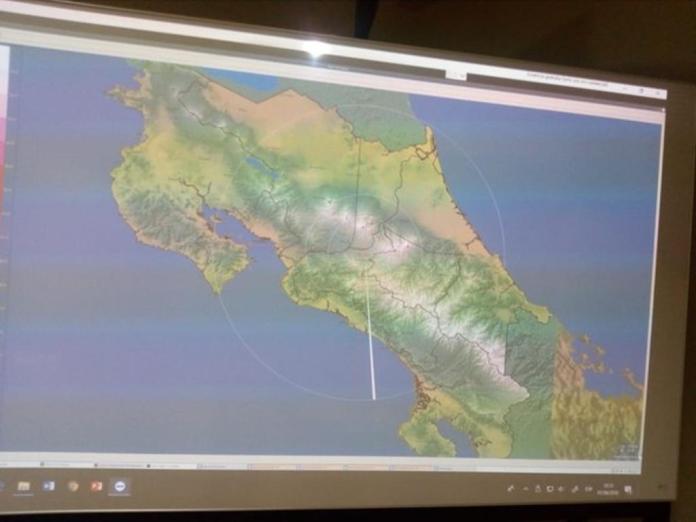
This Friday at 10:15 a. m. the radar only detected a few banks of clouds over our country. Photo: Hugo Solano
The new radar of the national weather service, the N Instituto Meteorológico Nacional (IMN) will detect in real time the threats from heavy rains in a diameter of 120 kilometers.
The new radar of the IMN measures one meter in dimater and weighs 400 kgs. Photo: Rafael Pacheco / La Nacion
Its instruments will also alert on the presence and direction of volcanic ash, as well as areas with hail.
On Friday, the head of forecasts of the IMN, Werner Stolz, indicated that it is a tool of great precision that will cover the entire Central Valley, as well as much of the north and Los Santos.
Stolz explained, that in the event of a volcanic eruption, the radar will pick up these particles and warn of the magnitude and direction, which will be of great help to aviation, as well as to the population that could be affected.
As hailstones are larger particles than ash, they are more easily detected. Cumulonimbus clouds are vertical and have a high water content, so their dark bases near the surface can generate tornadoes.
The radar will allow for faster reaction and with more time before extreme events, lives can be saved.
According to Stolz, from now on, the IMN can inform the population under radar coverage that at a specific point, within a period of less than two hours, an important event will occur from the meteorological point of view.
The radar has a cost of US$600,000 that includes the equipment, installation, calibration, and maintenance for two years, after which the IMN will take care of the equipment.
The director of the IMN, Juan Carlos Fallas, said the service is looking to install a similar equipment in the Caribbean and thus expand coverage to most of the national territory.
On Friday at 10:15 a.m. the radar only detected a few banks of clouds over our country. Photo: Hugo Solano / La Nacion
Hurricane Pre-season outlook
On Friday, June 1, the 2018 Atlantic hurricane season officially began and will end on November 30, 2018.
On April 5, 2018, the CSU released its forecast, predicting a slightly above-average season with 14 named storms, 7 hurricanes, and 3 major hurricanes. On May 24, the NOAA released their first forecasts, calling for a near to above average season in 2018. In contrast, on May 30, Tropical Storm Risk (TSR) released their updated prediction, significantly reducing their numbers to 9 named storms, 4 hurricanes and 1 major hurricane.
With climate change the storms will be more severe, and rising sea levels will make their effects worse. Last year, 2017, was the worst Atlantic season on record. According to everything hurricane researchers are learning, 2017 was the kind of hurricane season we should get used to.
Costa Rica’s former vice president has spoken about the “horrible” division caused in the country during its recent election cycle, saying it became a vicious “referendum on gay rights” when one of the favorites to win was against marriage equality.
However, despite the defeat of Fabricio Alvarado Muñoz, the LGBTQ community said that the divisive atmosphere that was created during the campaign has created a wave of homophobia.
Speaking at The Economist’s Pride and Prejudice conference, the country’s former vice-president, Ana Helena Chacón Echeverría, said that these divisions were “hell” for the LGBTQ community.
Speaking on the issue, she said: “We just went through elections in Costa Rica, and the country split in half. This was the issue. We weren’t talking about taxes or infrastructure or poverty, they were talking about gay rights, yes or no?
“It was like a referendum on gay rights. We went through torture during those months because, for the first time in my country, gay people were feeling fear. It was hateful.”
She added: “We won in the end, and now all the countries that are part of the Inter-American Court have to adapt their laws for same-sex marriage and gender [recognition], and that’s a great thing.
“Now we’ll have to do some things to change our laws so that everybody will have the same rights.
“For me, it was wonderful news, but we went through hell during those elections… it was very sad for me.
“They were talking about morals, values, traditional families, ‘the family is just a mother and a father and the kids and the dog’… but we are all families.”
The former VP finished, saying: “I believe in dignity, I believe people should be happy. We have to raise our voices because we don’t want anyone to live with discrimination or stigma.”
During her speech, Chacón made reference to a ruling by the Inter-American Court of Human Rights (IACHR) which said that all of the countries under its jurisdiction needed to treat same-sex couples “without discrimination.”
However, despite the ruling, each country’s constitutional court will need to separately rule the same. Chacón said: “We have to apply what the court said.
“Of course there will be other issues to discuss, like adoption. I’m pro-adoption for same-sex couples.”
Sadly, despite Chacón’s comments, marriage equality might be a little ways off in Costa Rica. Even though they pledged to follow the court’s decision, their first same-sex wedding was blocked the day before it happened.
Natalia Porras obtained her identity card with feminine appearance since September 2009. Now, however, apart from the appearance, the name will appear with the name of the self-perceived gender, without the "known as". Photography: National Archive
As of Thursday, May 31, the number of requests by trans people to change the name before the State and on their cedula (national identity card), according to their self-perceived gender, reached 151.
Natalia Porras obtained her cedulaa with feminine appearance in 2010. Now, however, apart from the appearance, the name will appear with the name of the self-perceived gender, without the “known as”. Photography: La Nacion Archive
This procedure, which has been claimed for years by the trans population, will be possible after the Supreme Electoral Tribunal (TSE) announced on May 17 a reform in the Civil Status Regulation.
Luis Bolaños, director of the Civil Registry, explained that since the decision is recent, they are preparing the system to include the annotation in accordance with the change of regulation.
“We already have everything, I think next week we should be approving a good part (of the applications),” said Bolaños.
The reform allows the changes to be made without the formalities, such as appearing before a judge. In addition, the “known as” is eliminated, from the cedula.
In 2010, The TSE had taken the first step in favor of the rights of the trans population, by allowing the photograph the cedula to be taken with a female or male image, according to the sex with which the person identified themselves.
The other measure that will be applied soon will be the disappearance of the annotation of the birth sex on the cedula, although this information will remain in the files of the Civil Registry.
In this way, the TSE complies with the Advisory Opinion of the Inter-American Court of Human Rights, issued last January, in which it orders to recognize, without any discrimination, the rights of LGBTI persons.