


- A word from our sponsors -

Business people in Central America agree that because of the Coronavirus that has been spreading from China, global supply chains have been disrupted and commodity prices have fallen.

An analysis by the Guatemalan exporters’ union states that among the risks identified as a result of the outbreak of the coronavirus, is the possible irruption to the supply chains of Guatemala and Central American industries, by identifying that China has become one of the 3 main countries of origin of Guatemalan imports.
The Agexport report states that “... Among the main imports from China are the following products:
If there is an irruption in the supply chains, it could come from one of these products, although it is still an uncertain situation and depends on the times of dispatch and delivery agreed, which usually have months in advance, details the document.
The Agexport analysis concludes that “… The long periods of advance for supplies allow companies to re-evaluate their stocks with a prudent time to avoid stoppages in their production chains, although everything depends on the development of the virus in China and the capacity of the authorities to control and neutralize it.
“The drop in consumerism in the areas under quarantine, the few people at the ports and customs, and the long lines of containers in Chinese ports are the main symptoms of the damage the virus is causing to Latin American exports, in particular South America.”
Panama is another country that was affected by the spread of the disease, as shipments of Panamanian beef that arrived in Wuhan in early February could not be delivered, because of the health alert in place.
The report conculdes, “For now, the economic effect has not had a strong impact on Guatemala, due to the distance and shipping times to/from China, but a possible disruption to the supply chains that supply finished products or raw materials from China is not ruled out.” See full Agexport document (in Spanish).
America’s Quarterly reports that China’s reduced economic activity could have a significant effect on Latin American exports. “Except for Mexico, China is a major destination for products from Latin America’s largest economies, and is the number one trade partner for Brazil, Chile and Peru.

“Primary sector goods and commodities comprise the bulk of the region’s Chinese sales. China purchases a hefty portion of the copper and other industrial metals produced by Chile and Peru. It is also the main buyer of soft commodities and agricultural and forestry products from Argentina and Brazil (as well as Chile and Peru), and a major consumer of Colombian and Ecuadorian oil and Brazilian iron ore.”
“How serious is the risk of the coronavirus spreading to Latin America and the Caribbean?” asks the Latin American Advisor.
Fiona Mackie, regional director for Latin America and the Caribbean at The Economist Intelligence Unit said: “Although there is still a lot of uncertainty around the eventual path of the coronavirus, there is clear evidence already of an impact on emerging market financial markets and on commodities that will transmit rapidly to Latin America, and especially South America’s large commodity exporters.”
“There will be a direct impact from reduced trade with China, and the region’s open economies that export a lot to China will be particularly vulnerable here,” added Mackie.

On the question, “Is the Coronavirus a Major Threat to Latin America?”, Margaret Myers, director of the Asia & Latin America program at the Inter-American Dialogue said: “Fortunately, there isn’t yet any evidence of the novel coronavirus having spread to Latin America, but some countries in the region are already feeling the outbreak’s economic effects.”
Reuters reports that the coronavirus outbreak in China may be altering the 2020 investment outlook for Latin America. “The consensus among economists is that while the overall impact on Latin American growth and financial markets from the outbreak will be limited, there may be wide divergences across the region.”
“The most exposed economies are Chile, Peru, and to some extent Brazil,” said Alberto Ramos, head of Latin American research at Goldman Sachs. “The key source of downside risk to LatAm is a deterioration of the terms of trade triggered by deep long-lasting impact of a China slowdown on commodity prices.”
There has not been a single confirmed case (as of February 25, 2020) anywhere in Latin America of the new coronavirus. However, there are suspected cases in two countries, Brazil and Colombia.

An analysis by pharmaceutical-technology.com:
Brazil has six coronavirus suspected cases as of February 17, 2020, including three in Sao Paulo, one in Parana, and two in Rio Grande do Sul.
Following the announcement of first three suspected cases of coronavirus in Brazil on 28 January, a higher number of suspected cases was being announced. Brazil had 14 suspected cases as of February 3, reported in the states of Sao Paulo, Rio Grande do Sul, Santa Catarina and Rio de Janeiro.
The government repatriated 30 Brazilians from Wuhan. Two Brazilian air force planes carrying the passengers arrived at a military base in Anapolis in the state of Goias on 09 February, the New York Times reported. The passengers have been placed under quarantine for a period of 18 days.
The first suspected case of the coronavirus infection was reported in Colombia on January 27, 2020. A male passenger arrived in Cali from China passing through Spain and the US. The patient showed symptoms such as fever and respiratory troubles. Samples for testing were sent to the Centers for Disease Prevention and Control in the US and returned to be negative.
As many as 50 suspected cases have been reported in the country, as quoted by Reuters. One confirmed case of a Colombian national has been reported on the Diamond Princess cruise ship. The patient is a crew member on the ship and has been shifted to a medical facility in Japan.
Colombia announced on February 5 that it was the first country in Latin America to perform its own diagnostics tests for coronavirus. The tests can deliver test results in a span of 24 hours.
The Colombian government is also planning to evacuate a total of 14 citizens who are currently stranded in China.

To date, there are 80,299 confirmed cases of the coronavirus, with 2,750 deaths, affecting 37 countries. Visit the Covid-19 microsite for the latest coronavirus news, analysis and updates

An analysis of consumer interests and preferences in Costa Rica, prepared by the Trade Intelligence Unit of CentralAmericaData, yields interesting results on the characteristics and people who express interest in clothing and accessories.
In Costa Rica, almost one third (31%) of the population with the highest average income in the country, shows interest in sunglasses, jewelry and clothing, about 72% of them are between 21 and 45 years old, and have a high level of purchasing power.
When each segment is analyzed, 14% of consumers show interest in sunglasses, and of this group of people, 5 out of every 10 are between 15 and 30 years old; three out of ten people show interest in some type of clothing, and about 68% of them are between 15 and 30 years old, and have a low level of purchasing power.
When analyzing the general population, it is observed that 23% show interest in handbags, and 47% of this segment is between 31 and 60 years old. This segment of consumers reports one of the lowest levels of consumption.

(Reuters) – A new “freshwater” charge introduced this month to help the Panama Canal cope with climate change will cost the shipping industry up to US$370 million a year, marking another blow for maritime companies already hit by fallout from the coronavirus outbreak.
The Panama Canal, one of world’s busiest shipping routes which handled nearly 14,000 transits last year, said last month it would introduce a charge from Feb. 15 of $10,000 for any vessel more than 125 feet long.
The canal, which relies on water from nearby Gatun Lake, has been hit by drought which affects water levels in the chokepoint. The Panama Canal authority said it would bring in a variable surcharge based on the level of Gatun Lake to ensure the canal has enough water.
The authority said the charges were a consequence of a lack of rainfall and this was a short-term measure needed to tackle the impact of climate change.
The International Chamber of Shipping (ICS), which represents more than 80% of the global merchant fleet, said on Thursday it was surprised by the charge after working with the canal authority on a separate increase in tolls which is due to come into effect in April.
“The industry is currently facing increased price pressures globally, as demand has been hit hard by the coronavirus and markets are adjusting to the new regulations on sulphur levels,” ICS secretary general Guy Platten said, referring to new rules requiring ships to use cleaner fuel.
The coronavirus outbreak has upended supply chains and already disrupted shipping across the world leading to commercial losses for certain types of shipping, including container lines.
The industry is also having to pay billions of dollars in extra fuel costs due to the tough new sulphur emissions rules that started in January.
Platten said the global shipping sector was already operating “on the slimmest of margins”.
“ICS calculates that at current water levels the ‘freshwater charge’ alone could cost global shipping $230 million. In a worst case scenario this could be as high as $370 million per year,” he said.
“Cost hikes in this range, without sufficient warning, places undue pressure on the industry at a sensitive time when we are being asked to invest in a low emissions future,” Platten said. He urged the canal authority “to rethink the hasty introduction”.
The Panama Canal Authority said the measures were in line with water surcharges introduced at ports around the world. In a statement, it said the measure had been explained to customers.
“The Panama Canal remains committed to adapt to and mitigate rising environmental challenges, and is confident the new water measures are the best and necessary solution for safeguarding an operational level of water, particularly as Panama heads into its dry season,” the statement said.
“By implementing these measures, the Panama Canal simply aims to ensure that the value of its limited resources is appropriately factored into global supply chains and adapted accordingly,” it said.
A study last month estimated at least US$1 trillion of investment in new fuel technology is needed to enable the shipping industry to meet U.N. targets for cuts in carbon emissions by 2050.

White House senior adviser Jared Kushner is organizing an investment conference in Mexico City, aiming to pair private money with foreign aid for Central America that his father-in-law President Donald Trump froze as punishment for the region’s high level of migration to the U.S.
Planners hope to hold the conference in late March or April. The event would also involve the governments of Honduras, Guatemala and El Salvador pledging to enact unspecified business-friendly policies, Bloomberg reports.
The White House’s hope is that fresh investment and aid to the three countries would serve as both reward for their governments’ cooperation with Trump’s push to stem the flow of migrants and incentive for citizens of the region to stay in their home countries. It’s also an attempt to reframe the provision of U.S. foreign aid, an expenditure Trump has often dismissed as wasteful.

The Defensoria de los Habitantes calls on President Carlos Alvarado for an accounting on the Presidential Data Analysis Unit (UPAD) issue.

President Carlos Alvarado, on national radio and television, admitted on Monday night that there were “errors” in the formation of the Presidential Data Analysis Unit (UPAD), secretly created by the Government to handle “confidential” information of Costa Ricans, and described the concerns regarding the proposed decree as “legitimate.”
The president accepted an error was made. “I want to start by pointing out, quite clearly, that mistakes were made on this issue, so I ordered to correct immediately repealing the decree,” he said on national television.
Alvarado said, “when a mistake is pointed out, it is corroborated, you accept it, fix it and apologize”, emphasizing that “the doubts and concerns of citizens and different sectors made it clear that the formulation of some concepts was wrong, particularly in its article 7”.
Alvarado said that it was also a mistake not to explain, in advance, and sufficiently, to all citizens the objective and working mechanisms of the unit, with all the necessary details to make clear the absolute respect for the privacy of all citizens.
“There were some efforts to publicize the tools that this team generated from the data, but not sufficient and necessary (…). This team worked with publicly accessible information from the State institutions to which it was authorized, as well as the information allowed by law. They did not have access to personal records such as telephone calls, social networks, financial and tax information or medical records,” he explained.
“As a country, we rightly complain about the inefficiencies we find in public spending, of the duplicities or insufficient coverage of the programs. To correct these things, data analysis is required, it must be done well and privacy must be guaranteed,” concluded the president in his message to the country.

For her part, Nancy Marín, Minister of Communication, said that due to a human mistake, the
Government decided to make an express derogation of the presidential decree that created theUPAD. “People are wrong and that is why we immediately repealed the decree,” Marín said.
While the President and his staff are on a publicity campaign to win over the public confidence, on Monday, by unanimity, the 49 legislators present approved the opening of an investigation “on the possible violations by the Government to the right of privacy of people, regarding the collection and handling of their personal data”.
The investigation will be carried out by a legislative committee made up of 7 legislators and will have a period of two months to render their report and will prevail over the sessions of any other permanent or special legislative commission.

Also, legislators unanimously approved a motion calling on the Minister of the Presidency, Víctor Morales Mora, to explain everything related to the UPAD unit and the executive decree, published and repealed, last week.
Legislator for the Nueva República party, Ivonne Acuña, went a step further, promoting a motion that would censure Morales, the interim head of National Planning, Luis Daniel Soto Castro and calling on the president to appear before the legislature to explain all.
Earlier in the morning on Monday, the Defensora de los Habitantes (Ombudswoman), Catalina Crespo, and her team met with President Alvarado and other Casa Presidencial staffers to discuss the issue. Following the meeting, Crespo announced the Defensoria de los Habitantes will be investigating the technical and legal aspects of the operation of the UPAD.

Meanwhile, the Ministerio Publico (Prosecutor’s Office) has received two criminal complaints against the President, while the Constitutional Court (Sala Constitucional) has received a ‘recuso de amparo’ (appeal) against the Ministry of the Presidency for the creation of the UPAD.
On the social networks Monday night, the president’s talk to the nation left more doubts than answers. Despite assurances by Alvarado that there was no “spying or secret conspiracy” on the part of his administration, the majority commenting on social media felt the “Presidency” is lying.

Tony Roma’s international food restaurant closed operations in Costa Rica, although the sign at the door says “Closed for remodeling” (Cerrado por remodelación). The closure was confirmed by the communication department of the Ministry of Labor and Social Security (MTSS).

According to the MTSS, from February 17 to date, 12 conciliation applications by employees have been received for calculations and advice on the amount of the settlement.
“There are several people (employees) who have come to request a calculation and to be given labor advice … There are also some people who have requested some conciliation through the electronic system,” said the MTSS in an official response.
Sources confirmed to the Q that confirmed that the restaurant, located in Escazú, closed it doors a week ago, despite the sign they placed on their doors.

About 45 employees are now out of work.
In January, the Applebee’s chain left the country leaving more than 90 people unemployed.

Four scientists from the University of Costa Rica (UCR) confirmed the reappearance of “bed bugs” (“chinches de cama” in Spanish) in the country and in the Central American region for the first time in the last 20 plus years.

The bedbugs were obtained from crevices of a bed at an apartment in Heredia, Costa Rica, in June 2017, the family reporting a rash in feet and hands and insomnia, as a result of the insect bites.
“A family that lived in an apartment in Heredia reported the appearance of the bed bugs. For personal interest, I visited the house, interviewed the owners, collaborated with the company, collected samples, and morphologically identified the specimens. The people living in the house reported being very affected by the bites. Later, I sought the help of our Medical Entomology laboratory in the School of Microbiology to confirm the identification, and made the final confirmation at the molecular level,” said biologist Laura Sánchez.
Historical evidence from Central America confirms that C. hemipterus was the species prevalent in the region, including Nicaragua, Costa Rica, and Panama. Costa Rica had only C. hemipterus specimens from different areas of the country, and most were obtained before the 1980s .
To identify this species, the team, made up of Sánchez and microbiologists Juan Carlos Cambronero, Ólger Calderón Arguedas and Adriana Troyo Rodríguez used a sample of 25 bed bugs (16 nymphs and 9 adults).
The live insects were flushed out by heating the piece of wooden furniture with a hairdryer. Specimens that came out were collected. In total, 25 bed bugs were identified as C. lectularius.

“We immediately knew this case was very important,” said Cambronero, “because our laboratory maintains a collection of arthropods of medical importance that receives samples every year from different areas of the country, and there had been no reports of bedbugs for decades. In fact, thanks to this collection we know that the specimens we have from infestations before the 1980s correspond to Cimex hemipterus and not Cimex lectularius.”
The insects were identified according to their morphology, and DNA was extracted from one nymph. Their finding in the Central American region was published on January 12, 2020, in the Journal of Medical Entomology.

Cimex Lectularius, a species of Cimicidae (bed bugs), whose primary hosts are humans, is one of the world’s major “nuisance pests”. Bed bugs are not known to transmit any infectious disease. The bugs are travelers, they often spread by hitchhiking on luggage, furniture, and possessions. They are not typically spread from direct person-to-person contact.
Their bites can result in a number of health impacts including skin rashes, psychological effects and allergic symptoms that may take between minutes to days to appear and itchiness is generally present.
These insects are light brown or dark brown and measure about seven millimeters (an adult is similar in size to the seed of an apple).

Entomologytoday.org writes, “Once a plague of blood-feeding insects with a history reaching back to at least to ancient Egypt, populations of Cimex have rebounded worldwide over the past 10 years, possibly because of insecticide resistance, inadequate controls, and increased international travel.
“One area of the world that appeared to have escaped this resurgence, though, was Central America. Even in the past 10 years, the temperate C. lectularius was reported in Canada, the United States, Venezuela, Peru, Argentina, and Chile, while only one report in Central America was noted in Nicaragua (the species wasn’t known). Previous reports from Nicaragua, Panama and Costa Rica did note the presence of the tropical bed bug (C. hemipterus), though no bed bugs of any species were reported in Costa Rica for 20 years.”

Impact on tourism
The discovery of “chinches” could have a significant impact on tourism. Infestations can result in bad reputations for hotels and can also result in significant cost increases for controlling the parasitic insects.
While bedbugs are not commonly associated with disease transmission, their bites do draw blood and can cause skin reactions and sometimes more severe allergic reactions.

Costa Rica president, Carlos Alvarado, was criminally denounced by lawyer Gloria Navas, for the creation of the Data Analysis Unit (UPAD).
According to Alvarado, the UPAD team was created for decision making through statistics, however, it also gives the government access to confidential information from public institutions.
The public revelation of the UPAD’s existence generated controversy, given it is not known exactly what that private information will be used for.
On Sunday, Alvarado ordered a stop to the work of the UPAD so that the Ombudsman’s Office can conduct an investigation.
At 8 am this Monday morning, Ombudswoman Catalina Crespo met with the president and said they will do a “legal and technical investigation of the UPAD”.
The official announcement of the creation of UPAD was made by President Alvarado on Friday, February 21. However, the unit had been operating for some 18 months prior.
Attorney General, Emillia Navas, confirmed her office is evaluating two formal complaints filed against President Alvarado.
Although the Ministerio Publico (Public Prosecutor’s Office) did not reveal the names of the complainants, lawyer Gloria Navas did on social media publicized that she was one of had filed a complaint against the president, the Minister of the Presidency, Víctor Morales, as well as the interim Minister of Planning, Daniel Soto.
The press office of the Ministerio Publico confirmed that the complaints are being processed and that a case has not yet been opened at this time.
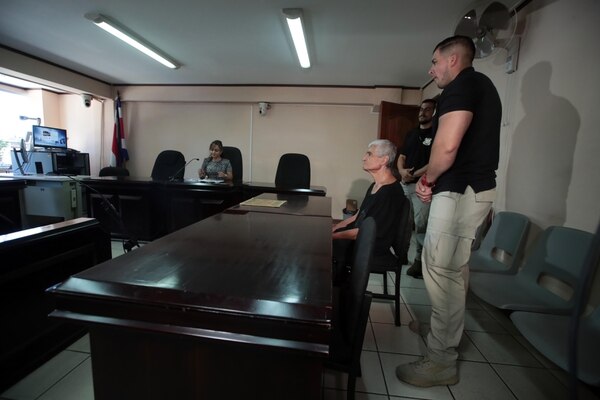
A 55-year-old homeless man was sentenced to one year in prison for twice raping a dog in Alajuelita, San José. Judge Sonia Quintana, of the Pavas Criminal Court of Pavas, handed down the sentence this Monday morning.
Eyewitness testimony during trial was overwhelming proof that Fausto Martín Rojas Araya did rape the dog on two separate occasions in October 2017. The jail sentence is six months for each count, reported La Nacion.
See our report “Man who raped a dog pleads “Don’t take it away from me, it’s my girlfriend” here.

In 1999, a trial court of the First Judicial Circuit of San José sentenced a man to four years in prison for dishonest abuses to the detriment of his niece, a minor, committed in 1995. Two months later, the Appeals Court ratified the sentence.

The individual left the country to evade the serving the sentence despite the fact that the authorities issued 13 arrest warrants between 2000 and 2005.
In February 2006, this individual was captured in Costa Rica. However, he was released because a year earlier, in April 2005, the case had prescribed.
That is the news that the newspaper Al Día published in February 2006, when the newspaper still existed and that, until several months ago, it could still be read online.
Now, no one can access that online information because, in August 2019, the Agencia de Protección de Datos de los Habitantes (Prodhab) – Agency for the Protection of Inhabitants Data – ordered the suppression of that news from that Al Dia’s website*.
Prodhab, an agency attached to the Ministerio de Justicia y Paz (Ministry of Justice and Peace) – the ministry that runs the country’s prison system – ordered the deletion of two other news items published in the online edition of La Nación, related to individuals with pending criminal cases.
Likewise, Prodhab has issued orders to suppress the news in digital media of the Diario Extra, among others.
To order the suppression of news from the media, this government agency obtains its power from the general rule of the Ley de Protección de la Persona frente al Tratamiento de sus Datos Personales (número 8968) – Law on the Protection of the Person against the Processing of Personal Data – on the books since September 2011.
Prodhab uses the criterion that people have the “right to be forgotten” of negative facts of their lives, even if their judicial sentences were never fulfilled, and that all records are to be deleted in databases.
The measure has been applied without taking into account that the media constitute the first historical record of nations.
The government agency categorizes digital archives of these media as “databases” and applies the general rule established in the articles of Law 8968 that the Prodhab applies rigorously, that reads: “In no case, personal data that may affect its owner, in any way, will be kept, after ten years have elapsed from the date of occurrence of the recorded events, unless otherwise provided by special regulations”.
The law establishes that personal data may be collected, stored or used when they are “current, truthful, accurate and adequate for the purpose for which they were collected” and establishes that the person in charge of the “database will delete the data that have ceased to be relevant or necessary because of the purpose for which they were received and registered.”
Deleted news
In July 2018, Prodhab ordered the elimination of an article in which La Nación reported, in March 2006, about the extradition of a Costa Rican captured in Miami by Interpol.
In September 2018, the agency also ordered the removal of a La Nación web article, from February 2007, about a convicted person for the crimes of abortion without consent and firearm aggression, who was captured in the United States and returned to Costa Rica.
Freedom of expression
In Costa Rica, Article 29 of the Constitution guarantees freedom of expression, while Article 13 of the American Convention on Human Rights states that “the right to expression cannot be restricted by direct or indirect means, such as abuse of official or private controls of paper for newspapers, radio frequencies, or equipment and devices used in the dissemination of information or by any other means aimed at preventing the communication and circulation of ideas and opinions.
The danger
In an interview with La Nación, the current director of Prodhab said that, for the purposes of the Agency, the reports of an online media are a “database” and that, when analyzing the requests of individuals, they do not evaluate on the merits, but only if they comply with the requirements, considering that they are information older than 10 years.
The law literally defines a database in this way: “Any file, record or other structured sets of personal data, which are subject to treatment or processing, automated or manual, whatever the method of its preparation, organization or access. ”
“We cannot go beyond what the law tells us, that if it tells us that the maximum term is 10 years and a complaint arrives before us, which complies with the precepts, we must order the suppression,” said Mora.
The official added that the agency is not responsible for judging whether a person was guilty or not, or if they committed a crime, because “the court has already issued a resolution.”
“We do not question the decision of the court in the case, or if the person is guilty or not. The Agency is not responsible for judging or questioning the credibility of a person,” argued Prodhab director.
According to the argument put forward by Mora, Prodhab considers itself mainly the “right of informational self-determination”, which for its purposes is the right of a person to decide “where and how of their information”.
Regarding the criteria to order that an article be removed from a newspaper, the official indicated that each analysis depends on the specific case, so that for the same facts in two different complaints, there could be totally different resolutions.
“The rule is very general and, as the case may be, the Agency has to make the proper interpretation,” said Mora.
Mora emphasized that the actions of the Agency do not order the destroying of the news items, rather their access to the public.
Deleting print editions?
Asked about the possibility that, upon complaint, an individual may request that printed editions of a media outlet be eliminated, the director of Prodhab responded that “the law does not establish a limit”, but that the decisions they have taken and the cases that have been analyzed go “to an issue of practicality.”
“I could not order that all the editions of a newspaper of 20 years ago be eliminated, it seems that that would not make much sense, it is even something that is already out of control of the same media,” Mora argued.
She argued that the law refers to databases, and therefore they direct their resolutions to the “person in charge of those databases, as it may be physical or digital.”
“What is intended when ordering the removal of information that is on the web, it is the public’s access to that information,” said the director of the Agency.
*Al Dia was a publication of the Grupo Nacion, both in print and online. Today the Al Dia website redirects to La Nacion

Costa Rica President Carlos Alvarado ordered on Sunday a stop all the work of his data analysis unit, “so that the Ombudsman’s Office will conduct its investigation.”

The president announced his decision through his Twitter account, where he said he prefers that the Defensora de los Habitantes (Ombudswoman), Catalina Crespo, can remove all doubts or concerns that arose from a decree published in La Gaceta, where a team of analysts of the Unidad Presidencial de Análisis de Datos (UPAD) would have access to confidential information of citizens.
Sobre el equipo de Análisis de Datos. pic.twitter.com/SdA785wa4O
— Carlos Alvarado Quesada (@CarlosAlvQ) February 24, 2020
Although the chief insisted that the unit was created to use the information and statistics for decision-making, the controversy has focused on article 7 of the decree, published on Monday, February 17, where access was given to confidential information of public institutions.
Alvarado said on Sunday he will be meeting with Crespo and her team this Monday morning, at Casa Presidencial and that the Vice Minister of the Presidency, Silvia Lara, will be in charge of attending to all the observations made about the data analysts unit.
On the other hand, without giving details, he said that on Monday he will also give a public message on the subject.
Earlier on Sunday, La Nacion reported that in a telephone conversation, the Minister of Communication, Nancy Marín, said that the decree that proposes access to confidential data of Costa Ricans had a “weakness that generated little clarity and uncertainty.”
The government spokeswoman said she does not know who or how the decree was created where Carlos Alvarado orders the creation of the UPAD, in particular, article 7 of the decree, where it literally says that the Unit will have “access to confidential information available to public institutions when required”.
The data analysis unit is made of three team members, two of whom we know publicly:

The Policia de Transito (Traffic Police) had to take out their guns and fire at a drunk-driver for him to stop.

A 26-year-old man, identified by his last names Loaiza Guzmán, was fired upon by traffic officials in the early morning of Saturday after the man evaded a police checkpoint in San Jose, endangering the lives of other drivers and pedestrians, reports La Teja.

The Mercado Central de San Jose has become a little safer thanks to the elimination of gas cylinders used in the kitchens of the market’s sodas, thanks to the gas piping work by the municipality of San Jose.
The investment of ¢31.1 million colones connects the 41 eateries that give the market flavor, eliminating for once and for all the individual gas cylinders and their risk to both possible fires and health issues of some 5,000 people who visit the market daily from leaking cylinders, reports La Teja.

A 55-year-old homeless man, identified by his last names Rojas Araya, could become the first person to be convicted for mistreating, or rather raping, a dog whom he considered his girlfriend, as one of the witnesses narrated.

Rojas, who has been in pretrial detention since last December, was sitting in the hot chair of the Pavas Criminal Court on Friday, listening to witnesses testifying against him.
According to the report by La Teja, prosecutor Claudia Villafuerte said it was clear that Rojas raped the dog twice in October 2017, in San Josecito de Alajuelita, and that the events had been witnessed by several people.

Ángela Quesada Abarca, a resident of Alajuelita, San Jose, in her eye-witness testimony told the judge, in a strong tone, how, on October 18, 2017, she saw the defendant rape the dog at the edge of the street.
“It was about six o’clock in the morning and I was in a taxi on my way home when the taxi driver told me ‘see! see!'” Quesada Abarca detailed, with great detail, what the accused was doing to the animal.
The woman described that, when discovered, the defendant fled to a vacant lot and the dog followed him, with difficulties.
Quesada added that she tried to file a complaint with the Fuerza Publica (police), but they put up many obstacles.
A second witness, Joselyn Hidalgo Mena, testified on the second sexual attack of a dog by the defendant, occurring on October 27, 2018.
“I was driving with my ex-boyfriend to my house when we saw that he (Rojas) was at the edge of the street raping a dog. (The dog) was screaming, you could tell it wasn’t having a good time,” said Hidalgo.

In the trial, Pablo Castro Castro, Joselyn’s ex-boyfriend, also gave testimony, corroborating the young woman’s version.
Both told the judge that after witnessing the abuse they were so shocked that they went to the Alajuelita police delegation.
“About forty minutes after, the officers arrived with him (Rojas) in a “perrera” (paddy wagon) and I heard him say ‘don’t take it (the dog) away from me it is my girlfriend’, that made me even more furious”, Castro recalled with a strong tone in his voice.
More witnesses gave their testimony. The “zaguatica” (street dog), named Ala by the Asociación para el Bienestar y el Amparo Animal (ABAA) – Association for Animal Welfare and Protection – not to be victimized again, was not present in the court or called to give witness.

While Rojas, who has been in preventive detention since his arrest, Ala is being well cared for at a Coronado shelter for animals.
On Monday, the trial is expected to end and the prosecutor’s office to ask for a sentence of four months prison for each count of rape – a total of eight months – against Rojas.

A neighbor suffocated with a blouse a well-known Patí de Sixaola, Talamanca, vendor to hide a sexual attack he had committed, minutes before. That is the conclusion reached the judges of the Criminal Court of Limón, for which they sentenced a man surnamed Kelis, to 35 years in prison.
The homicide 74-year-old Estevana Espinoza Ríos, who was very well known in this small community, occurred between the night of July 19 and the morning of July 20, 2018, reported La Nacion.

An enthusiastic black-clad crowd at el Chivo Bar in Desamparados welcomed back legendary death metal band Master to Costa Rica after an absence of 21 years.
Founder and frontman Paul Speckmann was joined by drummer Ruston Grosse and electric guitarist Pat Shea for a nonstop, sweatsoaked 80-minutes set, with songs ranging across their fourteen studio albums, including Collection of Souls (1993) and Slaves to Society (2007).
Death metal is a subgenre of heavy metal, which relies on prominent drumming, heavy bass, and electric guitar, and growling or shouting vocals. It stems from bands such as Possessed, Slayer and Venom in the early 80s, as well as Speckmann’s own creation of the bands War Cry, Death Strike, and Master during this same period. Performances require a sophisticated level of musicianship often not appreciated by outsiders and demands physical stamina by both band and audience. Last night’s show included a version of a mosh pit called a circle pit, in the middle of the club behind the front rows.

San Jose was the first stop on a tour that will take the band through Central America and Mexico. The next stop is El Salvador.
Speckmann manages the band himself from his home in the Czech Republic. Promoter Raquel Piedra of Empire Productions C.R. brought them to Costa Rica.

They travel with their own guitars, of course, but not drums, which can be a problem for death metal, as aggressive drum playing features in all the songs. So Ms. Piedra leased a Pearl set, which Ruston Grosse said was better than his own set in Florida.
Article by Mark Schreiber for Q Magazine!

Two economic advisers in the office of President Carlos Alvarado, Alejandro Madrigal, and Andrés Villalobos, have been working for a year and a half, secretly collecting information and storage of private data of certain sectors of the population.
The work of the two advisers and the operation of the Unidad Presidencial de Análisis de Datos (UPAD) had been kept a secret.
This Friday CRHoy.com announced that President Alvarado signed a decree last October to create the UPAD (Presidential Data Analysis Unit), through which he intends to obtain confidential data of Costa Rican citizens.
After the first questioning, the Minister of Communication formalized the repeal of the decree, claiming that there will be dialogue on the issue. However, the reality is that the UPAD has been operating for more than 18 months.
Madrigal replied to inquiries made by CRhoy.com and confirmed that he and his partner Villalobos have been working on that line for a year and a half and that for 2020 ¢60 million colones were allocated for the purchase of modern computer equipment, including a new server, and software, for the UPAD operations.
The money to finance the group came from “an adjustment on some budget items”.
When asked about the government’s refusal to inform the population about the project despite having already signed the decree, Madrigal said they had “planned to publicize next March with the announcement of the platform.”
The truth is that President Alvarado never made public that he intended to create an office where he would handle confidential data on people, for the use of his office when making political decisions.
Contradictions. Madrigal gave details that contradict what was cited in the content of decree 41996-MP-MIDEPLAN, for the creation of UPAD, where assertions are made such as the dynamics of obtaining the confidential data managed by State institutions.
The advisor acknowledged that the confidential data they have handled in the last 18 months is only related to the socio-economic profile of certain groups of citizens.
However, the decree states that UPAD may access confidential information of each citizen, which is contained in the databases of centralized and decentralized institutions.
A 50-year-old man and an a senior became the first two people in Costa Rica – and in the Americas – who were found to be infected with the bacteria most resistant to antibiotics used in the treatment of meningitis and meningococcal septicemia that cause serious brain damage and even death.
 The Centro Nacional de Referencia en Bacteriología (CNRB) – National Center of Reference in Bacteriology, of the Instituto Costarricense de Investigación y Enseñanza en Nutrición y Salud (Inciensa) – Costa Rican Institute for Research and Education in Nutrition and Health (Incense), issued an alert, in early February, after documenting the circulation of Neisseria meningitidis (N. meningitidis) serogroup Y, resistant to penicillin and not sensitive to cefotaxime, two third generation antibiotics, reports La Nacion.

Rico’s TICO BULL – Costa Rica issues national id, the Cédula de identidad, commonly known as the “cedula”, to its citizens based on the physical provinces they were born, San Jose, Alajuela, Heredia, Cartago, Limon, Puntarenas, and Guanacaste.
The identity card number is designed to identify citizens numerically. The nine-digit number consists of three parts: the first corresponds to the seven provinces where the person was born: 1 – San Jose, 2 – Alajuela, 3 – Cartago, 4 – Heredia, 5 – Guancaste, 6 – Puntarenas, and 7 – Limon.
But there are two other numbers or “provinces” – if you will – that identifies two other classes of citizens: 8 – those born outside of Costa Rica, and 9 – those born outside to borders of Costa Rica where at least one of whose parents is a citizen of Costa Rica.
The 8th province represents naturalized (Nacionalizado o naturalizado) citizens, that is foreign natural persons born in their home country and choosing to become a citizen of Costa Rica.
The 9th province are called “special cases” (casos especiales). I have yet to see a cedula starting with 9.
More: Costa Rica Has 235.000 “Invisbles”: Citizens Without A Cedula
Every Costa Rican citizen must carry an ID card immediately after turning 18. The Tribunal Supremo de Elecciones (TSE) – Elections Tribunal – issues the cedula. They have no cost to citizens (unless there is a particular case of abuse). The TSE also issues minors who have completed their 12th birthday, but not their 18th, a special cedula.

In Costa Rica the cedula is necessary for most places and actions, for about anything: at the bank, at the phone company, supermarket shopping (if paying with plastic), hospitals, at any government office, and so on… It is mandatory for electoral processes and anyone is entitled to request it to check whether or not they are of legal age for certain places such as bars or nightclubs.
Besides being used for proof of identity, the cedula is also used for the Tax Identification Number (TIN), since the Costa Rican Tax Administration (Ministerio de Hacienda) does not assign a tax identification number TIN in a strict sense.
People over 65 years old (ciudadano de oro) can show it on urban buses and trains to travel for free or, on longer routes, a discount on the price of the trip.

A series of announcements aimed at Latino voters launched by a Democratic group has created a stir when comparing President Trump with dictators Fidel Castro, Hugo Chávez, Nicolás Maduro and Augusto Pinochet. The comparison is exaggerated, but it raises some valid questions.

The announcements, announced by the Priorities USA Action, the largest Democratic Party super PAC, present videos of Venezuelan and Cuban immigrants, and circulate on Facebook, Twitter and Google.
The announcements begin with the message “What is a leader? An authoritarian, a demagogue, a dictator.” They show images of incendiary speeches by Chavez and Castro insulting and humiliating their political rivals, attacking the media and suggesting that they will remain in office beyond their constitutional terms.
Then, the ads show recent videos of Trump saying practically the same things, including a speech last year saying: “Under normal rules, I will leave in 2024, but we may have to go to an additional period.”
Equating Trump with Castro, Chavez or Pinochet is unfair, because Trump does not wear a military uniform, has not closed Congress, nor has he closed independent newspapers or television networks. And political comedians, who are generally the first victims of dictators, have record audiences imitating Trump.
But a February 14 article in the “Foreign Policy” magazine lists several worrying signs about Trump’s lack of attachment to the rules of democracy. The article, by Harvard professor Stephen M. Walt, argues that Trump is carrying out a slow-motion transformation to an autocracy.
Among the symptoms:
That is precisely what happens in the autocracies of the XX1 century.
Contrary to what the notices of the Democratic action committee say, Trump is unlikely to become a Castro, or a Chávez.
But no one can rule out that, if he is reelected, Trump becomes a modern autocrat, like Vladimir Putin of Russia or Recep Tayyip Erdogan of Turkey. That is the real danger.
—
Translated from the article by By Andres Oppenheimer, El Nuevo Herald, Miami. Don’t miss the tv show “Oppenheimer Presents” on Sunday at 8 pm Miami time on CNN in Spanish. Twitter: @oppenheimera
Editor’s Note: The opinions in this article are those of the author, as published by our content provider, and do not necessarily represent the views of the Q or The Q Media.

Uber restarted operations in Colombia on Thursday (February 20) after shutting down its app for almost three weeks. In a statement, the company said it had found “new alternatives” to work legally in Colombia.

Uber said that from now on, its app will help users enter contracts with drivers in which they are “renting” the vehicles, along with the drivers’ services. The San Francisco-based company said that Uber will technically act as a “point of contact” between the two parties in Colombia.
“Our new model will allow users to rent a vehicle with a driver, under an agreement between both parties. The application will be the point of contact which connects the two parties together to form a contract,” they said.
“We took the decision to rethink things,” it added.
When Uber quit Latin America’s third-most populous country on February 1, it sent a message saying ‘Adiós Colombia’ to its users
Users on Thursday found there was an extra step involved in hailing a ride: they had to click to confirm they were prepared to enter into a rental agreement.
Taxi unions and legislators were skeptical that Uber’s new approach complies with laws regulating public transport in Colombia.
“It’s a mockery of the law,” said Ernesto Sandoval, general manager of Taxis Teleclub, a Bogota cab company. “You can’t provide public transport and say it is a rental service,” he told the Caracol radio station.
Uber, operating in Colombia since 2013, by the end of January of this year had 2,000,000 users as well as 88,000 drivers.
Uber’s departure for the better part of this month appeared to be an opportunity for rival services such as China’s Didi and Greece’s Beat, which both operate in Colombia, though their future also seemed in doubt following the court ruling which Uber complied, but argued that it went against a free trade agreement between Colombia and the United States.
The company also said the ruling was discriminatory as it only told Uber to cease operations, and did not address similar apps that also operate in Colombia.
The row over Uber has been discomforting for Colombia’s president, Iván Duque, who has pledged to make “The Orange Economy” — creative and technological industries — a pillar of his government.
Article originally appeared on Q Colombia and is republished here with permission.

Having 6.5% of the world’s biodiversity in just 0.03% of the world’s territory and talent as its flagship differentiating resources amazes more than one from the moment they set foot on Costa Rican soil.
Just like it did to fDi Intelligence’s judging panel who chose Costa Rica as the top-two country globally for FDI Strategy in fDi’s Tourism Locations of the Future 2019/20 rankings. Australia tops the list.
The ranking belongs to the December 2019/ January 2020 edition of fDi Intelligence, a division of the Financial Times. The evaluation also recognizes Costa Rica’s sustainability practices, training programs, and the work of the Costa Rican Investment Promotion Agency (CINDE) to attract investment to the country.
Costa Rica also leads the “Specialism & Bespoke Awards,” which distinguishes the country’s work in different categories. The country excels in nine of them: activity tourism, wildlife, connectivity, education and training, incentives, hotel development and investment, accelerated growth, sustainability, incentive tourism, conferences, and exhibitions.
“Visitors to Costa Rica can enjoy horseback riding, white-water rafting, and skydiving. Other popular activities include visiting Monteverde’s suspension bridges and riding an aerial tram through the rainforest”, reads the magazine’s highlight about activity tourism, a category shared with Azerbaijan.
 “We are honored that the country’s efforts are recognized. We’ve done a coordinated and efficient work to promote it as a suitable FDI tourism destination with Costa Rica’s authenticity, values, and cultural tradition,” said María Amalia Revelo, Minister of Tourism.
Jorge Sequeira, CINDE’s Managing General, applauded the recognition: “Being the top-2 destination for FDI strategy in tourism reinforces Costa Rica’s image. It also reflects the positive impact of the initial steps that have taken place under the agreement sign between CINDE and the Ministry of Tourism (ICT) last year to further enhance tourism infrastructure investments. During the last decades, the country has worked to lead sustainable tourism hand in hand with its vision of economic development. CINDE shares that vision. and it is a commitment that will directly impact the country’s employment generation.”
Regarding education and training, fDi Intelligence says: “In Costa Rica, IPA CINDE works closely with academia and the local ecosystem to develop talent. The agency develops working groups and forums to identify gaps in the market, helps foster academic alliances between local and international universities and drives the creation of custom training programs.”
This award also applauded the work of Azerbaijan, Bosnia-Herzegovina, Jamaica, and Macao. In the category of incentive tourism, conferences, and exhibitions, Costa Rica shares this recognition with Ukraine and Colombia. The magazine highlights the construction of the Costa Rica Convention Center, which has been operating since 2018, with a US$35 million investment that “boosts the country’s competitiveness as an international destination for business tourism.”
The sustainability award highlights the work of ICT through sustainability certification, which distinguishes the work of companies in this field.
In February of 2019, the ICT signed an agreement with CINDE as part of a five-year strategy to search and promote investment projects in tourism infrastructure, which include hotels, entertainment, corporate, thematic or sports properties, and port or airport infrastructure to support the tourism sector.
The methodology. The fDi Intelligence ranking was measured based on data from 51 destinations, with statistics on the fDi Benchmark and fDi Markets instruments. The 51 sites were required to have a minimum Gross Domestic Product (GDP) of 10% generated by tourism and/or countries with at least 10% of FDI projects in the tourism cluster.
The study was also based on data from the United Nations World Tourism Organization and surveys.
Download a PDF of these rankings here: fDi Tourism locations of the future 2019:20

Massachusetts-based medical device manufacturer Hologic, Inc. on Tuesday (February 18) inaugurated its 32-employee financial services center in Costa Rica, expanding the company’s presence in the Central American country.
The service center has been in operation since June 2019 in the Coyol Free Trade Zone in Alajuela, Costa Rica, but Hologic didn’t have the formal launch of its operations until Tuesday. The facility will provide support for Hologic’s U.S. and Canadian operations, and the company expects to hire more employees for the facility, reports WBJ.
The financial center is in the same manufacturing plant Hologic has been operating in Costa Rica since 2008, where it makes devices for gynecological health and early breast cancer diagnosis. It is the company’s only Latin American location. In total, Hologic has more than 700 employees in the country.
Life sciences is one of the fastest-growing sectors of the Costa Rican economy, according to Hologic. In 2018, Costa Rican life sciences exports totaled US$3.3 billion, a 17.7% increase over 2017. More than 70 life sciences companies have a location in Costa Rica.

I always seem to see the most dismal future. They used to call economics the dismal science. Maybe they were right.
At business school in the early 1970s they taught us that manufacturing would inexorably move towards globalization. The reasons seemed obvious:
A seamless, ever-growing paradise of low-cost efficiency beckoned.
I became a partner in a global consulting firm that helped multinationals around the world to realize this dream. We made hundreds of millions and clients saved billions by globalizing supply chains.
Fast forward to the chaos we face today. Everything has gone into reverse.
Here are some issues facing Costa Rica in this emerging new order.
Chris Clarke is a writer living in Grecia, Costa Rica and contributor to the Q. Since settling here, 6 of his works of fiction, written under the name of Aaron Aalborg, have been published on Amazon. They are available as e-books and in paperback. They often include scenes set in Costa Rica. ‘Doom Gloom and Despair’ is a book of short stories. Several are set in Central America and are darkly humorous. He is working on book number 7.
Clarke describes as a retired economist and international businessman. His interests include current affairs, global geopolitics, and economics.

A woman discovered that her 9-year-old daughter had been raped by her live-in partner, through a video found on the phone that he (the suspect) had given to the child.
With this evidence, the woman filed the complaint against her former partner, surnames Alan Alvarado, with the Prosecutor’s office for Gender Affairs, that requested his imprisonment, as a precautionary measure, which was accepted by the Criminal Court of Grecia that issued four months of preventive detention against Alvarado.
According to the Prosecutor’s Office (Ministerio Public) statement, the events began when the girl was 6 years old and, apparently, the last sexual attack occurred in December 2019.
The violations allegedly occurred in the different houses where the couple and the girl lived during the last three years, located in Puntarenas, Sarchí, and Nicoya.
Sexual abuse in the home, unfortunately, is not too uncommon. On February 13, we learned publicly that a man and a woman sexually abused a twenty-month-old girl and recorded the actions on a cell phone.
The victim was not their child.
That day, the Organismo de Investigación Judicial (OIJ) confirmed the arrest of the suspects, a woman of last names Centeno Castrillo, 47, and a man surnamed Morera Alfaro, 39.
According to the press release, they are accused in Alajuela for the alleged crimes of sexual abuse, production, and dissemination of child pornography and rape.
The man was able to abuse the victim because the woman suspect is close to the family of the child and, sometimes, took care of her.

The government reversed and repealed on Friday the decree that created a new office in Casa Presidencial, under the president Carlos Alvarado, which could access information of a “confidential nature” that is available in public institutions.
The Minister of Communication, Nancy Marín, through a press release informed about the annulment of Decree No. 41996-MP-Mideplán, which gave rise to the Unidad de Análisis de Datos (UPAD) – Data Analysis Unit.
The elimination of the norm, according to the communiqué, is due “due to doubts externalized by various sectors”.
“The decision was made with the objective of opening a dialogue on the need for the Executive Branch to have a permanent department of data analysis, which allows the formation of public policies based on statistics and data science,” adds the statement, issued by the Presidency at 1:13 pm Friday afternoon.
President Alvarado, meanwhile, said publicly: “We have repealed the decree … I reiterate my government’s vocation for respect for human rights.”
Marín argued that “governments must work with accurate and timely information that will guide public policy for the benefit of people.”
According to the decree published in La Gaceta on February 17, in brief, the UPAD would be an entity attached to the Presidency of the Republic and will serve as the “advisory body” of the President.
Its function would be to exercise permanent advice to the president, “strengthening a public policy decision-making approach based on the evidence provided by the data analysis.”
The document established that the president’s office would access information from the central and decentralized public administration, except that which is considered a state secret.

The salaries of more than 260,000 public sector employees are close to being frozen indefinitely, due to the critical situation of public finances.

They will not receive salary increases or cost of living after the public debt exceeds the equivalent of 60% of Gross Domestic Product (GDP). Nor can the Government grant subsidies to the productive sector if the public debt exceeds 60% of GDP, which would occur this year; these extraordinary containment measures would be applied in 2022, reports La Nacion.

Everyone knows Uber, Didi, and inDriver. They are the mobile applications for the transport of people most popular among Costa Ricans. But dd you know that in Costa Rica there way more app options to get around town?
While the top three are international (U.S., China, and Russia), there are four Costa Rican apps competing in the sector: Beego, which has been operating for almost two years; Ultra, which works since last year; Boon, which was to be launched in 2019, but is just beginning and SMrides, which serves both Escazú and Puntarenas.
Special discounts, rewards to driving partners, elimination of dynamic fare or personalized service are part of the strategies that apps use to obtain customer loyalty.
Neither the constant traffic operations, heavy fines, strikes and even the persecution of a part of the formal taxi sector have slowed the rise of multinational apps, or local options.
Since its arrival in Costa Rica in August 2015, Uber has operated under the status of illegality – according to the Transit authorities – despite the fact that representatives of the U.S. company urge the creation of legislation that regulates its operation, as well as the rest of transport collaborative apps.
However, legislators have not managed to agree on the guidelines to follow to regulate the operation of the transport apps and thus equip their requirements and obligations with the red (formal) taxis, around 13,000 drivers.
Over the past year we have been hearing that they – the government and legislators – are “this close” to regulating the sector. The last was to have been by the end of January 2020.
The options based on popularity:


Reuters – Forever 21 has a new lease on life after Simon Property Group Inc., Brookfield Property Partners LP and Authentic Brands Group agreed to acquire the bankrupt teen fashion retailer.
Forever 21, which has 815 stores in 57 countries, will continue to operate in U.S. and international markets, Authentic Brands said. The retailer has four St. Louis-area locations.
The retailer’s current operations in Central America, South America, Mexico, the Philippines and the Caribbean would be converted to a licensed partnership model.
The new owners are also working with existing and new partners to expand Forever 21 across key territories, including South America, China, the Middle East and India, Authentic Brands said.
Financial terms of the deal were not disclosed.
© Copyright - Newspaper WordPress Theme by TagDiv
