(QCOSTARICA) The wave of events that triggered the death of George Floyd in the United States is new evidence of the systematic racism that that country is experiencing, reflected Davia Antonia, who four years ago left Los Angeles, California, to settle in Costa Rica’s Caribbean coast.
In the land, where she was born and raised, she was the victim of an inequality based on racism that did not allow her to grow as a professional and as an individual, so she decided to settle in Costa Rica and look for opportunities. The Life-A-Holic project started a little over a month ago.
Her venture offers consulting services that help Afro-descendant families relocate to Costa Rica’s south Caribbean.
It also provides travel consultancies, on the construction of container houses, processes to acquire citizenship and other details related to living in Costa Rica.
She chose Puerto Viejo as her home and operations center because she considers it to be a community that lives in equality and free from racial prejudice.
There she lives in a container house of her own design, surrounded by orchards that also help her to be self-sufficient.
These conditions allow an affordable lifestyle in Costa Rica, very far from that offered by large cities such as Los Angeles, where the price of homes is very high, according to Antonia.
In addition to consulting, Life-A-Holic is a showcase for the people of Puerto Viejo, of their art and gastronomy, through videos and photos that Antonia herself produces.
Its objective is to turn Costa Rica into a leading market for the African American community, both to settle and to visit the country.
“My movement transcends the message of Black Lives Matter, which, although it is an important protest, does not feed the main purpose of my initiative. I dream that every person, who is suffering oppression, discrimination or whose life is threatened, can find their freedom in Costa Rica,” added the entrepreneur.
You can contact Antonia at the WhatsApp number + 1562-270-4308. You can also find more information on the site Lifeaholiccostarica.com.
Editor’s note:
This is not a sponsored article, the Q has not received any compensation of any kind.
(QCOSTARICA) “I cannot think of a better country to reach the new normal.” This is how Costa Rican David Gutiérrez Swanson described his arrival in Costa Rica on Monday from Spain with his family and even his dog Cucho on the first flight after the reopening of airports in the country.
Arriving passengers were gifted customized facemasks by the ICT, with the “esencial Costa Rica” logo. Photo ICT
In an interview with La Nacion, Gutiérrez, asked what is it like to fly for 11 hours at an altitude of 8 kilometers over hundreds and hundreds of kilometers of ocean with a mask over your face at all times for fear of infection? said, “It was very calm”.
This family from Santa Ana has lived in Madrid for three years due to Gutiérrez’s work as a lawyer at the legal services firm BLP.
His wife, Carolina Ortiz Odio, and their sons Felipe and Alberto, 10 and 11 years old, respectively, came with him, as well as the Jack Russell terrier whose size allowed it to travel in the cabin.
“We always come on vacation and we have to be in solidarity with our country and the tourism that requires so much help. How are we going to go on vacation to another country when we can do it in our own country and show confidence?” Gutiérrez declared.
Together they navigated new routines and received unexpected gifts that, which, despite everything, left them with the impression that the innovations adopted in Costa Rica do inspire confidence and give security to those who enter and to the rest of the population.
“Iberia was very professional detailing everything and allowing us to fill out forms online and the same for foreign travelers, who were warned about the requirements,” said Gutiérrez, who, with his family, will have to respect the 14-day isolation order for all returning Costa Ricans and residents.
Airport staff ready to receive passengers from Spain Monday night. Photo ICT
One day before the flight, he recalled, he got a message from Iberia, informing that their carryon would be placed in the cargo hold at no extra charge. This detail allowed the family to avoid the typical boarding movements of securing carry on. “That seemed logical to me (…),” said Gutiérrez.
At the Madrid terminal, the use of a mask was mandatory from the entrance to the exit. At the time of boarding, travelers were called by rows of seats rather than groups; starting from the back to the front rows and always with great distance between people.
“It seems to me that the process shows or generates a lot of confidence. Of course, it is uncomfortable and there are new requirements, but as a Costa Rican vacationer, or if I were a foreigner on a trip, I would come more calmly to a country that asks for these requirements, than to another where none of these provisions matter. David Gutiérrez, Costa Rican residing in Madrid
Once inside the cabin, everyone began, with disinfecting wipes in hand, a painstaking cleaning job in the area where they would travel 11 hours.
All cleaned tables, armrests, screens and everything they would have contact with. All except Cucho who remained oblivious to it all.
“At all times, the Iberia staff was on top of everyone wearing their mask. That was what was most cared for. Food service was something else. (…) it was packaged food with a label that said it had been sanitized. That gives you calm,” he said.
Q: How scary is traveling like this?
A: Not really. We did not feel any uneasiness, rather a lot of confidence; nor did we see scenes of hysteria or anger, nor did anyone become foolish. Everyone was with a correct attitude. A lot of novelty things we have to face.
Q: How were the new novelties on such a long journey?
A: I’m not going to play intrepid either, but we and neighbors (fellow passengers) on the plane were calmly learning new routines. There was always calm and nobody said “I want hot lasagna instead of this sandwich.” I would say that we all flew recognizing that it was so for everyone’s safety.
Arriving in Costa Rica
Upon arrival in Costa Rica, other novelties imposed more routines.
Firefighters from Costa Rica received the plane and accompanied it to the gate where they launched jets of water on the newly arrived plane in a kind of welcome christening.
The deplaning of passengers was again by rows, this time from front to back, which avoided “that confusion and mess that takes place in the center of the cabin,” said Gutiérrez in reference to the proverbial and unalterable of some travelers’ habit of standing up as sound as the plane reaches the gates and the sound of the “ding” that seat belts can be removed.
The Minister of Tourism, Gustavo Segura, personally welcomed arriving passengers Monday night. Photo: ICT
Carrying Cucho on his arm in his travel cage, Gutiérrez and his family walked towards immigration when they ran into staff from the Costa Rican Tourism Institute (ICT) who had a surprise for them.
And it was not only that Minister Gustavo Segura was there welcoming the passengers, but the masks with the ‘esencial’ Costa Rica printed on canvas: the multicolored lines of our typical carts declared a National Symbol in 1988 as a tribute to the culture of work, sacrifice and perseverance of the Costa Rican people.
The label on the sachets containing the masks read: “This is our essence: to be good hosts. Welcome to Costa Rica”.
Tourism minister Gustavo Segura (right) greeting arriving passengers. Photo: ICT
“It was a very big detail, there were even for children and everything,” said the father, referring to the nuances and typical drawings characteristic of one of the national symbols of Costa Rica.
“Foreigner always tells you that the Costa Rican is good people, and makes you think about it, but it is true, we Costa Ricans are good people and warm. One perceives it when treating people of other nationalities. Those people who came to receive us were really warm; almost loving and made us all a very moving arrival,” he recalled.
(QCOSTARICA) Arriving at the San Jose airport (SJO) in Costa Rica requires the completion of the epidemiological form or Health Pass, among other requirements for entry.
Here is the link to the Health Pass (Pase de Salud), both in English and Spanish.
(QCOSTARICA) Mother’s Day is fast coming up, the “mother” of all holidays in Costa Rica, that is on August 15. This year, like just about everything else, we have to adapt to the virus that affects us all.
One of those changes is that although Mother’s Day is on the 15th, the legal holiday has been moved to the 17th to create a long weekend and promote national tourism. Note that it has been tried in the past, and failed miserably. The 15th is the only day that most recognize. Period.
Another change is how we shop for that perfect gift for Mother. The major commercial centers – Multiplaza, City Mall, Oxígeno, and others are all in the greater metropolitan area (GAM), which means they will be closed for 12 days, starting Monday, August 10, to August 21.
Mall shopping hours are also reduced, as will all retailers in the orange zones, closing time is 5:00 pm, the same time that the total vehicular restrictions goes into effect.
I line with the protocols issued by the Ministry of Health and under strict compliance with the gradual opening of establishments, capacity is at 50% capacity, use of mask or shield is obligatory to enter, as is taking temperature as a requirement in all its accesses, for all, workers and customers.
At Multiplaza, in Escazu, for example, implemented the new “Contactless” technology in their parking lots, which allows the visitor to enter by simply putting their hand near the entrance station to obtain the parking ticket, in this way the barrier is raised automatically.
According to the Multiplaza marketing department, all the protocols that they reinforce every day seek to give their clients the support of being in a comfortable, safe, and calm environment for those who are in search of the ideal gift for their mother.
(QCOSTARICA) This Tuesday, August 4, the Minister of Health reported 435 new cases of COVID-19 in Costa Rica, while the accumulated number reached 19,837.
Avenida Central in Downtown San Jose
For the first time in months we saw real reporting on the number of recovered cases. Up to Tuesday, I could not see how, with incubation period for COVID-19 of up to 14 days maximum, why we would only have 100 or so reported recoveries every day when for more than a month we have more than 500 new cases daily.
The reported recoveries on Tuesday, August 4, were 1,901 for a total now of 6,590 or 33.2%.
The number of active cases, however, continues to be disturbing now at 13,066 or 65.9%.
Worrisome is the increase in hospitalizations, now reaching an all time high of 391, or which 98 require intensive care.
The number of deaths continues, with 10 more on Tuesday, for a total of 181: 66 women and 115 men, ranging in age from 23 to 99. The Ministry of Health is no longer providing detailed information of the deceased.
On the good news, the National Emergency Commission (CNE) announced changes in the alert map, where there were communities that left the orange zone.
Sigifredo Pérez, director of operations of the CNE, said that these modifications will take effect from August 5.
The canton of Mora, the districts of San Cristóbal, and Frailes in Desamparados are demoted to yellow alert. In Alajuela, the canton of Poás and the Sarapiquí district turn to yellow; while in Heredia, San Rafael also turns yellow.
Thus these communities join phase three of commercial reopening, including not having to be closed for the period of August 10 to August 21, as will be for communities in orange zones.
Passengers on the first flight from Spain after 137 days arriving in San Jose Monday night
(QCOSTARICA) The U.S. Embassy in San Jose, Costa Rica, has posted the latest information on repatriation flights to and from the United States and Costa Rica for August.
Passengers on the first flight from Spain after 137 days of pandemic restrictions arriving in San Jose Monday night
The Embassy says it has partnered with United Airlines to offer three commercial repatriation flights each week for U.S. citizens and residents from Juan Santamaria Airport (SJO) to Houston, Texas (IAH).
These flights will take place on Monday, Thursday, and Friday through August 31. There will be no flights from Daniel Oduber Quiros Airport in Liberia during August. Visit www.united.com for details on pricing and flight times.
Spirit Airlines is offering a commercial repatriation flight on Friday, August 7. The flight will depart SJO Airport in San José, Costa Rica and arrive at FLL Airport in Ft. Lauderdale, Florida. Visit www.spirit.com for flight times and ticket prices.
Spirit and United currently requires all passengers to wear face coverings during the check-in process and for the duration of the flight. Health regulations for boarding the United and Spirit flights will be managed according to Costa Rica Ministry of Health guidelines.
At this time that includes medical personnel monitoring passenger lines for people with COVID-19 symptoms and asking passengers with symptoms to self-identify.
Health regulations for arrival at Houston’s IAH airport are managed by the airport and Customs and Border Patrol (CBP) under guidance from CDC and state health officials.
All passengers will be subject to Costa Rica immigration and customs laws and Airline policies. The U.S. Embassy is not able to intervene if people are stopped for violations or do not meet airline regulations. U.S. Citizens must have valid passports to enter the United States.
If you do not have a valid U.S. passport, please email ACSsanjose@state.gov immediately to apply for an Emergency Passport. Foreign national passengers must possess an official travel document from their country of nationality and permission to approach a United States port of entry such as a legal permanent resident card, U.S. visa, or Electronic System for Travel Authorization (ESTA) pre-approval. For more information on U.S. entry follow this link: https://www.cbp.gov/travel.
From the United States: Foreign nationals with legal residency (temporary or permanent), estancias, special categories, applications in progress, spouses of Costa Rican nationals, parents of minor Costa Rican children who entered under the exceptions, etc., that depart the country after March 25th will NOT BE ALLOWED to re-enter until the borders fully reopen.
This means that for example a U.S. national who has Costa Rican residency cannot fly back to the US and return a few weeks later.
From authorized countries: Legal residents (temporary or permanent), people with estancias and special Categories who have an entry impediment (this was issued at the time of departure from Costa Rica if after March 25), may be allowed back if they come from one of the authorized countries (Canada, the European Union and the United Kingdon) as long as they have been in there for at least 14 days prior to travel to Costa Rica.
For example, a U.S. citizen who travels to Canada, the European Union (Schengen visa countries) or the UK and stays for at least 14 days prior to travel to Costa Rica, can enter. Currently, direct commercial flights scheduled to Costa Rica from Europe are from Spain, France, England, Switzerland, and Holland.
They will be required to present:
Valid DIMEX (residency) card.
Proof that their respective Caja (social security) is up to date.
Proof of having been in Canada, the EU or the UK for the past 14 days, ie passport stamp of entry.
Upon arrival in Costa Rica, be subject to a 14-day quarantine at home.
No exceptions have been made for legal residents with businesses or homes in Costa Rica. No exceptions have been made for humanitarian reasons either.
These guidelines will be reviewed again on August 31st, 2020.
Contradiction prevails
One of the documents Immigration itself has published clearly states that “per the Constitution, it is not possible to reject the entry of Costa Rican nationals and residents into Costa Rica”.
(QCOSTARICA) Posted by Nef Powell to Expatriates in Costa Rica Facebook group: I flew into Costa Rica last night. I wanted to just share quickly what our experience was like to help others who might be planning on coming in soon.
Our negative COVID 19 tests were checked at the gate by Iberia before we were allowed to board. The plane was pretty full, around 70% capacity. The flight itself was okay, everyone seemed very compliant with mask-wearing – taking them off only to eat or drink.
On arrival, we were amongst the first 10 people off the plane and I think we were the first to have COVID test paperwork checked in the initial holding area set up just by the gate. Chairs were out for everybody with markers for social distancing. Once our tests had been checked we were moved to a second area where insurance was to be checked. However, we had struggled to get our insurance paid for because there was a bug on the (INS) website. We had QR codes as part of completing the entry form though, so our paperwork was kind of in no man’s land. There were about three people at one point crowded around a laptop whilst on the phone trying to get it to work. They tried filling it out a few times and it wouldn’t work.
My husband suggested they put our insurance through separately and that worked eventually when they did that.
We had to fill out a paper version of the online form too.
Once insurance was paid, another checkpoint was set up to check all paperwork again, then we could proceed through the airport and our temperatures were checked.
This whole process took us about 2 hours, although we were there longer than many other people who were processed after us. Expect it to take ages whilst they sort out what is going on. We couldn’t go to the toilet through this part so make sure you go before you get off the plane!
Finally, going through border checks took much longer than normal. That took another hour roughly, perhaps longer. Some families hadn’t filled out the paperwork and were doing it at the counter. Make sure you fill out before you get to this point!
I understand there were people without negative tests allowed into the plane yesterday. I don’t know why this happened, but remember that nationals don’t need a negative COVID test to get on a plane so that risk would always be there. We personally will be keeping to ourselves for the next two weeks regardless.
The experience wasn’t the best but we are super happy to be here so it was worth it. Please feel free to ask any questions and I’ll try to get back to you.
In the comments, Nef Powel was asked if she was granted the customary 90-day visa for tourists, to which her reply was “yes they did, no questions asked”.
This was a concern that the tourist stay would be tied to the term of the insurance.
The cost? Nef Powell says she paid about $1,300 for three of us (2 in our 30s and our 6-year-old) for their 90-day stay.
(QCOSTARICA) The International Air Transport Association (IATA) issued a warning to the Costa Rican government for the “excessive” cost of the mandatory travel insurance policy for international travelers entering the country.
One of the requirements established for the entry of foreign tourists to the country is the purchase of insurance by the State insured, the Instituto Nacional de Seguros (INS), which is classified as “expensive” by the business sector and chambers of tourism.
According to the calculator implemented by the INS, travel insurance to cover medical expenses and lodging in the event tourists become infected and require medical attention while visiting the country ranges depending on age from US$275, US$299 for a tourist between 18 and 45, US$581 for between 46 and 70, to US$965 for older.
The IATA questions the excessive rate that the policy can only be purchased with a single provider, in this case, the INS.
“Although we understand that this measure seeks to cover the cost of medical treatment in the event of an eventual contagion in Costa Rica, we consider that it is a deterrent to attract tourism to the country. Any difference in the cost of the trip could seriously and directly affect the recovery of both the tourism sector and air transport. This brings into play the important contribution of this key sector of the economy that is hard hit after 5 months of paralysis,” said Peter Cerdá, IATA regional vice president for the Americas.
The international organization even asked Costa Rica to analyze the request for the requirement of negative COVID-19 tests for passengers from Canada, the European Union (EU) and the United Kingdom, the only three countries currently authorities for commercial flights to Costa Rica.
“Limiting operations to certain countries and at the same time requesting COVID-19 tests as an entry requirement for all passengers could discourage passenger demand and, therefore, affect tourism and the national economy,” said Cerdá.
Under current conditions, IATA does not believe that the current conditions requested by Costa Rican authorities encourage an increase in air traffic and a higher demand for passengers.
“Historically, Costa Rica has managed to boost its tourism industry largely due to travelers arriving in the country by air. We call on the government to reconsider these measures and to continue working with its main ally, the air transport industry, so that it can lend its experience and best practices so that aviation becomes one of the pillars of reconstruction of the economic situation of the country after the pandemic,” concluded Cerdá.
On Friday, July 31, President Carlos Alvarado called on his Minister of Tourism and Minister of the Economy, to review the INS rates and analyze the possibility that other insurers offer insurance policies, including insurance purchased abroad.
On Saturday, August 1, the INS announced it would be launching a lower-cost insurance product, but did not provide details, only saying the request is before the insurance regulatory body for approval.
(QCOSTARICA) The Marchamo, the vehicular right to circulate, “is a fair burden and it makes no sense to reduce it in the midst of an economic crisis like the one facing the country,” assures the Minister of Finance, Elian Villegas.
The Marchamo is not “road tax”, a tax was charged on the use of the vehicle, rather it taxes the property.
Of course, he is right. What sense would it make for a government strapped for cash give up on a tax that cannot be evaded, arbitrarily set and has to be paid or you keep your vehicle parked?
The Marchamo is nothing more than a tax on property. Between 65 and 70 percent of the annual circulation permit is just that, tax.
Responding to constituents who want a reduction in the cost of the annual circulation permit due to a decrease in traffic caused by the sanitary vehicle restriction due to the Covid-19 pandemic, legislators are proposing to reduce the tax portion of the Marchamo by up to 50 percent.
“From the point of view of the Treasury, I don’t see the sense to try to reduce the amount of this tax at a time when we require fresh fiscal resources, which do not come from debt, but precisely from the taxes that we already have. It makes no sense that we intend to decrease the tax revenue of a State that currently requires more resources.
“If we were in a different fiscal situation, with a surplus of 10% or 9% of GDP, then we could do something different, make other distributions and lower rates of Value Added Tax (VAT) or Income Tax , but that is not the fiscal situation that Costa Rica is in,” was the Minister’s response.
The minister also explained that reducing taxes such as the Marchamo would imply a fiscally painful decision if it is taken into account that the country needs resources to finance itself for the rest of the year, given a financial deficit that could reach figures close to 10% of the GDP due to the contraction of the economy generated by the SARS-CoV-2 pandemic.
The Minister was also emphatic that it is not a “road tax”, which was repealed since 1987. That tax was charged on the use of the vehicle, not like the current one, which taxes the property.
Villegas also argues that “The vehicle property tax is a progressive tax. It is a tax paid by those who have a vehicle and those who do not have a vehicle do not pay. Also, if you have a vehicle worth ¢60 million, you pay more than someone who has a vehicle of ¢1.5 million. It is a tax proportional to its value, so, from that point of view, it is one of the taxes that should not be touched”.
(QCOSTARICA) In the 50 years of tradition, this 2020 will be the second time the year-end celebrations will be canceled: the first time in 2006, due to technical safety recommendations in the event of a possible earthquake, and year due to the coronavirus pandemic.
The bullfights are a staple of the Zapote Fair
But, the cancellation is not only for the Zapote Fair, but the coronavirus has put also put thekibosh on the Tope (horse parade) and the Carnaval (Carnival).
“In effect, the Municipality of San José before the provisions of the Ministry of Health, cancels the Fiestas de San José 2020-2021,” states the statement.
“The tope and the carnival will be suspended as these are activities that gather large numbers of people in San José. In view of the directive issued by the Ministry of Health, where it is indicated that the activities of massive concentration are suspended throughout this year 2020 due to the health emergency that the country is experiencing, the Municipality of San José makes it official this Monday, August 3, that the traditional Fiestas de San José, the tope and carnival are canceled.
“Obviously it hurts us as it happened with the cancellation of the Festival of Light; however, we comply 100% with the provisions of the Ministry of Health, with the understanding that protecting the health of all Costa Ricans is essential at this time.
“The San José Festivities have been held uninterruptedly for 50 years at the Zapote Fairground (with the exception of 2006), but this year, due to the world crisis that the country is facing due to Covid-19, the Festival Commission of San José will not carry out this Costa Rican tradition of the end of the year,” said San Jose Mayor Johnny Araya.
The mayor added that at the moment the Commission is working on the possibility of analyzing some type of event that can be done without an audience; However, it will be something that “will be considered soon,” the statement said.
María Trinidad Matus Tenorio, 25, traveled to Costa Rica at the end of July 2018 to enjoy nature. She was murdered on August 8 in Playa El Carmen, in Santa Teresa de Cóbano.
(QCOSTARICA) Mexican tourist María Trinidad Matus Tenorio was drowned on the beach of Santa Teresa in Cóbano, and the alleged suspect in killing her stole her cell phone.
This was part of the Prosecutor’s Office (Fiscalia) list of facts of the crime that is being tried in the Criminal Court of Puntarenas. The accused for the murder of the tourist is a man with the last name Sancho Rodríguez.
The Fiscalia said Sancho Rodríguez did not act alone in the attack on the Mexican tourist, who at the time was in the company of another woman of British nationality, who survived.
According to the Fiscalia, Sancho took Matus to the sea, while the other man assaulted the English woman, who managed to flee.
Maria enjoyed Costa Rica where she celebrated meeting new friends
The events occurred on August 5, 2018, between 2:30 am and 4:00 am.
“Later, according to the accusation, the subject stripped her of part of her clothes and plunged her into the sea, causing the young woman to drown; Then he fled the site with the cell phone of the victim,” said the Prosecutor’s Office.
Witness accounts and a series of injuries sustained by Sancho during the attack led to his arrest 4 days later, when the Cóbano Prosecutor’s Office announced that it obtained key evidence to link Sancho as a suspect in the murder.
“At the request of the Cóbano Prosecutor’s Office, Sancho had been evaluated by the Legal Medical Unit in Puntarenas, where some injuries he had on his body were analyzed. In addition, physical examinations were made, which were positive by two witnesses,” said the Prosecutor’s Office.
María Trinidad Matus was a music lover and was taking her first steps as an artist in Mexico. Last May, a song by the foreigner with a video in her memory was published on her social networks.
On Facebook, she used the stage name of Official Marmaid, a combination of Maria and mermaid, which showed how passionate she was about the sea. In addition, she was passionate about traveling around the world.
In Costa Rica, before her arrival in Santa Teresa, she visited different areas such as La Fortuna and Manuel Antonio.
"We already have the right to work," clarified the Minister, but commerce has to earn the right to reopen their businesses.
“We already have the right to work,” clarified the Minister, but commerce has to earn the right to reopen their businesses.
The Minister of Planning, Pilar Garrido, says she was misinterpreted when she asked the Costa Ricans (Ticos) to “earn the right” to have open businesses.
The life sciences and specialized services areas open investment options in Costa Rica, according to Comex and Azofras. Edwards Lifescienses manufactures heart valves in La Lima, Cartago. Photo: Rafael Pacheco
(QCOSTARICA) A plan by U.S. President Donald Trump’s administration to encourage U.S. companies from that to return their operations from Asia to the Americas could benefit Costa Rica, according to the Association of Free Trade Zones of Costa Rica (Azofras) and the Ministry of Foreign Trade (Comex).
Life sciences and specialized services areas open investment options in Costa Rica, according to Comex and Azofras. Edwards Lifesciences manufactures heart valves in La Lima, Cartago. Photo: Rafael Pacheco
On July 29, Reuters reported that the Trump administration is working on a new initiative that would use financial incentives to encourage U.S. firms to move production facilities out of Asia and into the United States, Latin America and the Caribbean.
The project could bring US$30 billion to US$50 billion in U.S. investment back to the Americas, Mauricio Claver-Carone told Reuters in an interview, adding that infrastructure, energy and transportation could be the first potential areas of focus.
“We’re essentially creating a ‘Back to the Americas’ initiative,” he said. That would include both reshoring to bring some investment to the United States and moving some investment to Latin America and the Caribbean – or so-called ‘nearshoring’ – Claver-Carone said.
Claver-Carone is the U.S. candidate to be the next head of the Washington-based Inter-American Development Bank (IDB) – (in Spanish, Banco Interamericano de Desarrollo – BID) – Latin America’s principal development finance institution, a position that is also sought by the former president of Costa Rica, Laura Chinchilla (2010-2014).
The IDB has set the date for its next annual meeting on March 17-21, 2021 in Barranquilla, Colombia, but it still plans to name a new president in September this year, it said in a press release last week.
The proposal also jumps at times of strong retaliation between the governments of the United States and China, whose relations have deteriorated in recent days, on multiple fronts, such as the repression in Hong Kong with the entry into force of a controversial security law, the COVID-19 pandemic and tensions in the South China Sea.
The Minister of Foreign Trade, Dyalá Jiménez, and the president Azofras, Carlos Wong, warned that the country has advantages to take advantage of this situation but must speed up reforms because it is a conjunctural situation.
According to Minister Jiménez, Costa Rica is always closely monitoring the policies and strategies of other countries to predict, as far as possible, the projections that companies have for their investments in the global economy.
Jiménez explained that Costa Rica is positioning itself increasingly stronger as a center of life sciences, wellness and innovation. She added that with certain reforms that are promoted in the Legislative Assembly, the country can be positioned in other sectors, such as light manufacturing, and in services for research and development.
In this way, Costa Rica will increasingly become a very reliable destination, with an enviable commercial platform and with a human talent prepared at a higher than average level, said the Minister.
The country is also working, she explained, in improving the supply of local services for multinational companies, which would generate greater linkages.
Wong agreed with the Minister on the need to approve the modernization projects of the Instituto Nacional de Aprendizaje (INA) – National Institute of Learning, the reform of the National Council of Higher Private University Education (Conesup) and the improvement of the regulatory framework for telecommunications.
Logistics, ease of business execution and legal certainty will be key in the race to capture investments, Wong recalled. In this, he declared, Costa Rica is a strong competitor, but it is also necessary to advance in the project to make working hours more flexible.
For Wong, opportunities will be opened in medical devices and in a range of services such as cybersecurity, electronic commerce, with digital content and in the telecommunications area.
(QCOSTARICA) At 6:59 pm Monday, Iberia flight 6317 landed at the Juan Santamaría International Airport (SJO), the first commercial passenger flight since the air borders were closed to tourists, on March 18, due to the global alert for the coronavirus pandemic.
The flight, with 214 passengers on board, left the Madrid-Barajas Adolfo Suárez airport at 4:39 pm from Spain, arriving in San Jose a few minutes ahead of schedule.
Tourism Minister, Gustavo Segura, stated that his satisfaction with the restart of international tourism operations, which, he said, is “attached to health protocols.”
He also recalled that a “gradual opening” is being proposed, first with a limited number of flights from the European Union, the United Kingdom and Canada; “with the hope that it contributes optimism to the micro and small companies that depend on tourism in our country and at the same time be safe for the Costa Rican population in times of pandemic.”
For his part, Rafael Mencia, the director of Aeris (operator of the Juan Santamaría International Airport), shared a similar sentiment, adding that the arrival represents a “first step”.
“As managers of Costa Rica’s main airport, we prepared ourselves in the right way to guarantee a successful return (of flights),” he stressed.
The ICT also pointed out that for this first flight, all the protocols established for the reopening of international flights were followed.
A negative PCR test for Covid-19 was requested from all passengers, masks were used at the air terminal and they were asked for travel insurance to cover accommodation in the event of quarantine and medical expenses for acute illness. They were also asked to fill out an epidemiological form, temperature measurements were applied, and physical distance standards were applied at the terminals.
The ICT confirmed, however, that 13 of the passengers were able to board the flight without the COVID-19 test results and were tested upon arrival and an isolation order was issued for 24 hours to wait for the test results.
“They underwent swabbing upon arrival at Juan Santamaría International Airport, and they must accept a 24-hour health restriction at the first hotel in their destination, pending a negative result that allows them to continue their trip in Costa Rica.
“This is exceptional. The fact is that, this time, to the passengers who had not complied with the insurance requirement or the PCR test, due to the short time they were alerted, we will apply exceptional measures for this flight and only this one,” said the ICT.
Foreigners who wish to travel to our country must, among other requirements, undergo a PCR test up to 48 hours prior to arrival to rule out the presence of the new coronavirus in their body.
They must also purchase an insurance policy that covers medical expenses and additional lodging, in case they have to be quarantined for COVID-19, or for possible extraordinary closings of the air borders.
The international air terminals (San Jose and Liberia) have permission to operate since last Saturday, August 1. However, it is not today that the first commercial flight arrives.
The Iberia flight is scheduled for a turn around to Madrid Tuesday morning. On Thursday, the Lufthansa flight from Frankfurt, Germany, is scheduled to arrive.
Meanwhile, Daniel Oduber Airport awaits permission from the Ministry of Health to receive travelers from the United States. Well, until now, only people from Canada, the United Kingdom and the European Union are allowed to arrive.
(QCOSTARICA) The North American Costa Rican Chamber of Commerce (AmCham) urged the Government of Carlos Alvarado to allow commercial flights from the United States “as soon as possible” to attract more tourists and thus support the reactivation of tourism sector.
“Given the reopening of air borders, the exclusion of flights from the United States significantly limits the arrival of tourists to Costa Rica,” said AmCham in a statement, pointing that last year alone more than 1.3 million Americans visited the country.
On Monday, the first flight carrying tourists arrived at the Juan Santamaria airport (SJO) in San Jose, an Iberia flight from Madrid, Spain.
Gisela Sánchez, president of AmCham, stated that most of the airlines that fly to Costa Rica come from the United States. It is also the country with the highest frequency of direct flights.
“Historically, Americans make up the largest group of tourists, so it is illogical to exclude them. We believe that, applying the same regulation proposed for other countries, they should be able to enter our country,” Sánchez said.
Currently, only commercial flights from Canada, the European Union and the UK have been authorized. Visitors are required to have a COVID-19 PCR test result within 48 hours of the flight, complete the Ministry of Health digital epidemiological form and purchase travel insurance for medical expenses from the State insurer.
The Amcham proposes that, under equal conditions, commercial flights from the United States should be authorized.
Overcharging insurance for tourists will affect the arrival of tourists
The Chamber also requested that the COVID test be expanded to 72 hours before the trip to facilitate the application and presentation of results, and criticized the government’s measure that the purchase of insurance can only be purchased from the Instituto Nacional de Seguros (INS), whose cost ranges from $ 275 to $ 965 for a 15-day stay.
AmCham is the country’s largest bi-national chamber of commerce, charged with promoting bilateral trade and investment between the United States and Costa Rica, for the last 45 years.
The organization brings together exporters, importers, shared service centers, legal and consulting firms, industries, real estate, educational centers and universities, retail and wholesale businesses, agricultural and livestock companies, among others.
The Amcham joins the clamor of the tourism sector and airline representatives, who also criticize the insurance requirement without considering policies purchased abroad, who believe that there should not be a single provider, much less with rates that discourage tourists from visiting the country.
“Many people who want to visit our country already have insurance that offers international coverage against COVID-19, so the measure taken by the government will discourage international tourism,” said the Chamber.
Subjected to criticism from different sectors, President Carlos Alvarado, said on Friday he has called on his Minister of Tourism (ICT), Gustavo Segura, and Minister of Economy, Industry and Commerce (MEIC), Victoria Hernández, to review allowing the use of international insurance to cover the hospitalization and accommodation of foreign tourists in the country in case of infection by COVID-19.
(QCOSTARICA) Jean-Marc Lampron, from Montreal, Canada, has been visiting Guanacaste for the past 15 years every summer. This year was not going to be the exception, but the high cost of the trip forced him to look for another destination.
Lampron, in an interview with Ameliarueda.com, said the INS insurance required to enter Costa Rica would cost him US$900 dollars for a two-week stay, in contrast to the US$110 the Canadian travel insurance, which covers the costs of a Covid-19 hospitalization and repatriation, for a year.
Air Canada says it will resume flights to Costa Rica in mid-September
“I am ready to return. Normally I enter Costa Rica on December 1st and until the end of March. But if I have to pay almost a thousand dollars for insurance alone, it doesn’t make sense,” Lampron said.
Like him, several Canadian tourists confirmed canceling their trips to Costa Rica as a result of the high cost involved.
Greivin Brenes, the owner of the Rincón del Cactus tourist agency, reports 20 confirmed cancellations in the last two days alone when the insurance costs were announced.
“In the coming weeks, I am sure that there will be many more cancellations not only for me but for many sectors that try to promote tourism in Costa Rica. A lot of people are going to look in Mexico, which is much cheaper,” said
Brenes added that besides the confirmed cancellations, he has around 60 people who have contacted him wanting to change their destination because “Costa Rica is too expensive”.
iCosta Rica opened its international borders on August 1 to tourists from Canada, the European Union, and the United Kingdom.
Air Canada and WestJet have confirmed their first flights to Costa Rica from Canada will be mid-September.
As part of the requirements to enter Costa Rica, the Ministry of Health ordered tourists to test negative for a Covid-19 test conducted in the last 48 hours before the trip and mandatory to purchase travel insurance by the Instituto Nacional de Seguros (INS), the State insurer.
The cost of that policy for two weeks, the average stay in Costa Rica according to the Tourism Board, is US$275 for minors, US$280 for 30-year-old and up US$964 for older adults, the population most vulnerable to Covid-19.
“This is the reason for the change of destination but I also see that the situation in Costa Rica with the coronavirus is not very good. What you hear here is that the situation is quite bad. If in addition to that we have to pay a thousand dollars to cover a problem for a period of two weeks, it doesn’t make sense,” said the tourist.
Costa Rica’s National Chamber of Tourism (Canatur) asked government authorities to review the cost of this policy, since it would discourage the economic reactivation of tourism, according to a statement.
Rubén Acón, president of the Canatur, says he is hopeful other insurers will be able to sell coverage. “We advocate that the amounts of some of the coverage that seem to be extremely high and disproportionate, be readjusted,” he added.
On Friday, President Carlos Alvarado asked the Minister of Tourism and the Minister of the Economy for a review of the INS rates.
On Saturday, the INS announce it would be rolling out a lower-cost insurance product as soon at it receives regulatory approval.
Meanwhile, the tourism sector is asking the government to allow tourists to enter the country with insurance purchased abroad, which would cover them if they develop or get infected with the coronavirus in the country.
Priscilla Hererra, director of Health provided Sunday's report
(QCOSTARICA) The Ministry of Health reported this Sunday, August 2, 788 new cases of the coronavirus in Costa Rica, bringing the total to 18,975.
Priscilla Hererra, director of Health provided Sunday’s report
A total of 4,585 have recovered and the number of active cases has risen to 14,288.
366 people are in hospital, of which 98 are in intensive care, including a 14-year-old.
In the past 24 hours, eight people died with the virus, for a total of 162 so far in the pandemic. One of the deceased reported on Sunday was a 26-year-old.
The Ministry of Health last week stopped providing details of the deceased, only reporting the daily and accumulated numbers.
Among the most common risk factors presented by these deceased are high blood pressure, diabetes, chronic kidney disease, smoking, and obesity.
Gerardo Oviedo is on of three mayors calling for business reopening tested positive for COVID-19
(QCOSTARICA) The Municipality of Santa Ana reported on Sunday night that the mayor, Gerardo Oviedo, tested positive for COVID-19.
Gerardo Oviedo is one of three mayors calling for business reopening tested positive for COVID-19
Oviedo met last Friday with the mayors of Escazú, Arnoldo Barahona, and of Mora, Alfonso Jiménez, to unite in defying the central government to allow businesses in their jurisdictions operate without the restrictions established by the government during the “closed phase” (August 10 to 21) of August.
With the mayor of Santa Ana affected by the virus, the mayors of Escazú and Mora will also have to be quarantined.
“The mayor is in an optimal state of health, complying with the protocol and the home isolation measures established by the health authorities.
“Once the information was received, we proceeded with the identification and preventive isolation of the group of people who had direct contact with him,” said the Municipality of Santa Ana.
Barahona confirmed that the meeting was held in at Escazu Municipal Palace, which was disinfected last Saturday and that he has not been notified and that he is not worried at all, since the meeting was held under the strictest protocols.
“I have not been notified (…) I am not worried at all, the meeting was under the strictest protocols you can imagine, everyone with a mask, we were six in a room for 20 people.
The three municipal leaders are urging the government to request that businesses not be closed for 12 days in August, as established by the Ministry of Health in the territories with an orange alert.
(QCOSTARICA) The municipalities of Escazú, Santa Ana, and Mora would allow their businesses to operate without the restrictions established by the government during the “closed phase” (August 10 to 21) of August.
Downtown Santa Ana
The decision by the mayors of three cantons on the west side of San Jose came after they were excluded from the central government’s coordination table
The three local governments are expected to present their protocol plans to the central government so that commercial establishments in their jurisdiction can operate without the 12 days of closing.
Alfonso Jiménez, Mayor of Mora, confirmed that the initiative seeks that those premises that have a municipal license can operate normally, following strict sanitary hygiene measures.
Additionally, Jiménez commented that the municipalities would withdraw their police officers from the operations that the central government is currently coordinating to monitor compliance with the restrictions.
For his part, Gerardo Oviedo, mayor of Santa Ana, said that the proposal will be discussed in the respective municipal councils this week.
According to the mayors, they were left out of the working table with the National Emergency Commission (CNE), so the actions expected to be announced by three cantons also seek to generate pressure to reincorporate them in the decision making.
“There are absolute inconsistencies with what the government is doing. Why they do not allow you to go to a funeral, but there are no prohibitions for marches (…) You cannot enter a bookstore, but you can stand in line to buy lottery tickets. That’s where we say ‘if you don’t know how to handle this matter, you better leave it us,'” said Arnoldo Barahona, the mayor of Escazu.
“There is a proposal for the reopening to be throughout the month under protocols already developed by us. But associated with that there is also a proposal for actions as to how the issue would be handled if we are not listened to, what happens is that if I am not going to tell you anything because it is for a virtual press conference on Wednesday.
“The people who are worse off were the people who were fired from all the premises that have closed, which can no longer be sustained. At the country level there are hundreds of thousands of families because what is happening is not only in Escazú, Santa Ana and Mora, it is throughout the country. But we who have so much commercial and service activity are what we are suffering the most,” added Barahona.
The Ministry of Health reported Sunday that 18 of the new 788 new cases reported on Sunday were in Escazu, 44 in Santa Ana and 4 in Mora.
The canton of Escazu currently has 376 active cases, Santa Ana 317 and Mora 32.
(QCOSTARICA) A total of 148 Nicaraguans, of the 169 who remained stranded in the Peñas Blancas border with Nicaragua, began the process to re-enter their country on Sunday, Costa Rica’s immigration service reported.
Nicaraguans stranded at the Peñas Blancas border making line at Nicaragua immigration on Sunday after being stranded for more than 15 days
That process began after the COVID-19 test to which they were subjected was negative, which was an essential requirement for them to be allowed to return to their country.
“These people are being given their exam and the process of entering Nicaragua will proceed, in an orderly and coordinated manner with the Nicaraguan authorities,” immigration said in a statement.
Meanwhile, the 21 who tested positive for COVID-19 must remain quarantined on Costa Rican soil until they no longer have symptoms. They will be housed in a shelter prepared by the municipality of the border canton of La Cruz, where they will receive medical attention.
“People (who tested) positive are going to receive care through civil society, food and the medical service is going to be run by these organizations. (Costa Rica) Immigration has provided a place for civil society organizations to enter to attend to these people,” said Raquel Vargas, Costa Rica’s director of immigration.
“Tents will be installed with the right conditions. This approach will be carried out by the private company hired by civil society. They are in good health. They will remain there until the programmed new sampling. Food will be provided by Corner of Love, an organization that has been giving them food assistance throughout their stay at the border,” said Vargas.
Hundreds of Nicaraguans who were returning to their country from Costa Rica were stranded since last July 14 at the border, prevented from entering their home country by the new sanitary measures imposed by the government of Daniel Ortega due to the pandemic.
Within days the number of Nicaraguans stranded between the borders, having checked out of Costa Rica and not allowed to enter Nicaragua, grew to 300 by the middle of last week reportedly to more than 500.
During the two weeks, the dictatorship of Daniel Ortega only allowed a small group of women and children. The rest lived under the hot Guanacaste sun and dark nights, with little water and food and only one toilet.
in the so-called needle area in Peñas Blancas and in very difficult sanitary conditions, some 300 people came together. However, the Government of Nicaragua allowed the passage of some women and children, since they were at great risk in the place.
NGO’s in Costa Rica such as the Arias Foundation and Corner of Love, among others, provided support.
Civil society organizations and private companies organized and financed the COVID-19 tests for Nicaraguan citizens, which was conducted by the Hospital Clínica Bíblica.
“For civil society organizations, the Center for Labor Rights, the University of La Salle, the Foundation for Peace and other organizations that are supporting this issue, we are pleased to know that the results are already in place and that, of the total the tests carried out by the Hospital Clínica Bíblica, a very low percentage of approximately 12%, came out positive,” said Fidelina Mena Corrales, representative of the Center for Labor Rights.
Not a Cordoba to the regime
“The Covid-19 tests were financed by Costa Rican human rights organizations that work with the immigrant population,” said Braulio Abarca, coordinator of Communication and Public Relations of the Nicaragua Never + Human Rights Collective.
Since the tests were carried out in Costa Rica, the Nicaraguan Government, which established a cost of US$150 for each test and to be done only by the country’s Ministry of Health (Minsa), did not receive a single Córdoba for the tests made at the border.
Abarca added that the behavior of the Nicaraguan regime is a complete “violation of the human rights and fundamental freedoms of the Nicaraguan population,” citing Nicaragua’s political constitution, “(…) that no national can be expelled from his country of origin or restricted from entering it”.
Three pregnant women await treatment at a hospital in Lima, Peru (ANSA)
Latin America is becoming the epicenter battleground for the Covid-19 pandemic, with sharply rising numbers of infections and deaths. Yet scant testing services in many areas mask the true extent of the crisis.
Three pregnant women await treatment at a hospital in Lima, Peru (ANSA)
Brazil has 2.6 million Covid-19 infections which have resulted in more than 90,000 deaths. That’s second only to the United States.
Health officials say Mexico has more than half a million cases, with more than 46,000 deaths.
Yet health authorities in both countries concede this is more than likely a gross underestimation.
Low testing rates
One significant factor is the testing system which is fractional, fragmented and minimal.
Mexico is testing six people per thousand, and in Brazil it’s twelve per thousand.
The Director of the Pan-American Health Organization (PAHO), Dr. Carissa Etienne, says that Latin America has now become the epicenter of the pandemic.
Leading by example
Critics say the leaders of Brazil and Mexico have not been setting a good or responsible example.
In Mexico, President Andres Manuel Lopez Obrador, who has a well-documented history of heart trouble, having suffered two heart attacks, doesn’t often wear a mask either.
Opposition politicians are seeking a court order to oblige him to do so. He’s retorted he’ll only wear a mask once corruption nationwide is defeated.
Many see this as a case of do what I say, rather than do what I do.
A man dressed as the Grim Reaper warns beachgoers in Mexico to return home (AFP or licensors)
(Q24N) The cases of Covid-19 keep rising and rising in Mexico. Friday, July 31, set the single-day record so far, with 8,458 new cases. Fatalities have now overtaken the United Kingdom.
A man dressed as the Grim Reaper warns beachgoers in Mexico to return home (AFP)
Mexico has recorded 439,036 cases and 47,746 fatalities (Aug 3) in the five months since the pandemic first hit Mexico.
Mexico is now sixth in the world with total cases, behind the United States (4,813,647), Brazil (2,733,677), India (1,805,838), Russia (850,870) and South Africa (511,485).
Slightly over 7% of the cases are active, and there are 90,000 suspected cases, because the results are still not yet known.
The Mexican Health Ministry says there were 198,000 cases in July, which adds up to 47% of the total tally.
There are twelve countries that have a higher mortality rate than Mexico, but this is likely to change.
Emergency situation
Half of Mexico’s 32 States are anchored on red alert emergency level status. This indicates the maximum risk of infection.
Health experts are warning that unless Mexico swiftly takes more effective measures, its death toll will rise to above seven million.
Less than 7,300 Covid tests-per-million have been carried out on Mexico’s population.
Deputy Health Minister Hugo Lopez Gatell, who’s the spokesman for the pandemic in Mexico, says it’s been particularly badly-hit, in part due to a high level of underlying illnesses, including diabetes and high blood pressure.
First lady of Brazil tests positive for coronavirus (ANSA)
(Q24N) Michelle Bolsonaro’s positive test for COVID 19, follows a rally in the capital Brasilia during which she gave a speech with a mask on.
First lady of Brazil tests positive for coronavirus (ANSA)
Michelle aged 38, is reported in good health and following the advice of experts.
Her husband, 65-year-old President Jair Bolsonaro has recovered from COVID. He reported that he’d tested positive on July 6th and spent more than two weeks in self-imposed isolation in the Presidential Palace. At that time he had symptoms, which included fever and a cough.
Science and Technology Minister Marcos Pontes aged 57, has announced he’s tested positive, being the fifth member of the Government to be taken ill.
Brazil has just re-opened its borders to international air travel for the first time since March. Yet, it has the second-highest infection rate in the World, with 2.5 million people infected and more than 90,000 deaths.
In the last day, President Bolsonaro attended a water supply installation inauguration in the State of Bahia, lowering his mask and shaking hands. Before COVID took its deadly grip in Brazil he had described it as: “A little flu.”
(QCOSTARICA) In the midst of the coronavirus pandemic: which airlines have flights to and from Costa Rica and which do not? This is the official information of the Juan Santamaría – San Jose – airport (SJO) as at August 1.
Aeroméxico: Suspended operations until further notice.
Air Canada: Resumes operations on September 12 towards Toronto.
Air France: It resumes operations on October 14 towards Paris.
Air Panama: Suspended operations until further notice.
Air Transat: Suspended operation until further notice.
Alaska Airlines: Waiting for information from the airline.
Albatros Airlines: Suspends operations until further notice.
American Airlines: Waiting for information from the airline.
Avianca: It resumes operations on September 1 towards El Salvador, Guatemala, Panama and Lima. It resumes operations on October 1 towards Bogotá.
British Airways: Resumes operations on October 27.
Condor: Waiting for information from the airline.
Costa Rica Green Airways: Available for charter flights.
Copa Airlines: Waiting for information from the airline.
Delta Airlines: Waiting for information from the airline.
Edelweiss: Resumes operations on October 15 towards Zurich.
Iberia: It resumes operations on August 3 towards Madrid.
Interjet: Waiting for information from the airline.
JetBlue: Resumes operations on September 1 towards New York, Orlando and Fort Lauderdale.
KLM: Suspended operations until further notice.
Latam: Waiting for information from the airline.
Lufthansa: Resumes operations on August 5 towards Frankfurt.
Sansa: Waiting for information from the airline.
Skyway: Waiting for information from the airline.
Southwest: Restart of operations in 2021.
Spirit: Repatriation flights scheduled to / from Fort Lauderdale on August 7 and 14.
United: Repatriation flights scheduled to / from Houston on August 3, 6, 7, 10, 13, 14, 17, 20, 21, 24, 27, 28, and 31.
Volaris: Repatriation flights scheduled to / from Mexico City on August 25 and 29.
West Jet: Suspended operations until further notice.
Wingo: It resumes operations on September 1 towards Panama and Bogotá.
The characteristics of the global health emergency imply a constant update of the data, according to the information provided by the airlines. Freight operations maintain their normal itineraries.
As of August 1, international tourists from authorized countries – Canada, the European Union, and the United Kingdom – are allowed entry into Costa Rica, subject conditions: a negative COVID-19 test result and the mandatory purchase of travel insurance by the State insurer. See: San Jose airport empty on reopening
(QCOSTARICA) The Instituto Nacional de Seguros (INS) said Saturday it is working on a new insurance policy for travelers, with lower coverage, “which may mean a decrease in price.”
INS Executive President Róger Arias announced in a press release on August 1 that the recently launched policy will be reviewed.
“Our only interest is to contribute to the revival of tourism, providing protection to foreigners who visit the country and avoid, to the extent possible, the saturation of public health centers,” said Arias.
This new policy will have to go through regulatory approval before the insurance company provides further details.
The INS reaction is presented in a context in the tourism sector warned that the first policy launched by that entity to the market is very expensive and will become a barrier for international travelers to decide to travel to Costa Rica.
In addition, Costa Rican President Carlos Alvarado, on Friday asked the ministers of Tourism, Gustavo Segura, and of the Economy, Industry and Commerce (MEIC), Victoria Hernández, to search for options for international policies, with coverage for the COVID- 19, that can be authorized in Costa Rica.
On Saturday, August 1, the country reopened the international airports to the entry of tourists from the European Union (EU), Great Britain and Canada. But apart from the strong sanitary control requirements, such as having a negative COVID test and fill out the health form, it requires the purchase the costly INS insurance.
“We, as a country, should be facilitators, but the INS insurance what it does is make the product (Costa Rica trip) more expensive; it doesn’t make sense and the only thing it does is make the country more expensive in the face of a very complicated situation that we have,” said Javier Pacheco, president of the Costa Rican Chamber of Hotels (CCH)
For his part, Rubén Acón, president of the National Chamber of Tourism (Canatur), said they cannot be happy until see and analyze the new INS product.
Acón added that he has information to the effect that the insurance egulator, the General Superintendence of Insurance (Sugese), is analyzing the approval of two other products from international insurers.
“This is also positive news, but equally, he said, nothing can be said until the policies are approved and released,” stated Acón.
For both Pacheco and Acón, the tourism sector and public in general, the way the INS handled the policy issue is a mistake.
From the comments on social networks and emails received by the Q on our article, many agree on the requirement of insurance for tourists, but there are already products for international travel and the idea would for Costa Rica to recognize those who have coverage against the disease and not be required to purchase the INS policy.
(QCOSTARICA) Empty, but ready to receive, is the way to describe the Juan Santamaria international airport (SJO) on Saturday, August 1, the first day of the reopening of the air terminal to tourists.
Juan Santamaría International Airport 135 days after the air borders were closed for the arrival of foreigners. Photo: Juan Diego Córdoba
Costa Rica barred the arrival of foreign tourists on March 18, a total of 135 days.
It will not be until tomorrow, Monday, August 3, when the first commercial flight lands at the San Jose airport from Madrid, Spain.
The Iberia flight, with 250 people including some nationals, arrived Monday afternoon at its pre-pandemic time slot. The flight then turns around the next day for Madrid.
For their part, foreigners must process the necessary requirements to be able to travel to our country, such as being negative for the COVID-19 PCR test, contracting insurance that covers medical expenses and additional accommodation, in case of having to quarantine or re-closing of air borders.
Rafael Mencía, director of Aeris, the private company operator of the air terminal, affirmed that, since sales to flights with international tourists were closed, on March 18, they have worked on the protocols to reactivate its operation.
“There are a number of procedures and implementations like sanitizing mats. We have a supply of gels throughout the airport, as well as the addition of lavatories to give passengers the possibility of complying with the recommendation of the World Health Organization (WHO), which speaks of hand hygiene as the main mechanism of prevention.
“We also have social distancing, wherever there is a process with lines. We have studied the capacity of the airport, we have studied how to put passengers 1.8 meters between each other so that there is no possibility of contagion,” said Mencia.
Other measures include the mandatory wearing of a mask or shield inside the terminal.
Additionally, international tourists will need to fill out an online form before landing, known as the Health Pass.
For now, only about five flights a week have been authorized to operate, which represents, according to Aeris, 1% of the operation that was handled before the start of the pandemic.
Rodolfo Méndez, Minister of Public Works and Transport, stated that the protocols guarantee the health care of those who use both the Santamaría and the Daniel Oduber International Airport (LIR), in Liberia, Guanacaste.
“We have prepared ourselves by preparing rigorous protocols for the operation of international airports and today we can say that we are fully prepared for the authorization issued by the Ministry of Health so that we can guarantee health protection of both workers and those who use these facilities for tourism or those who enter or leave the country for reasons of a different nature,” said Méndez.
At the moment, only the San Jose airport will receive flights from Europe for this month and then Canada as well starting in mid-September.
The Liberia airport, however, will continue without receiving commercial flights, since the airlines they have confirmed are from the United States and the government has not given the authorization to receive flights from that country, taking into account its epidemiological situation.
According to Aeris, constant cleaning and disinfection of luggage trays and trolleys in terminals, pay stations in parking lots, internal buses, self-check kiosks, toilets and baby changers, among others are a priority.
The airport will also have a special area for COVID-19 suspected cases, and an increase in the frequency of cleaning and disinfection in high traffic areas (service counters, door handles, armrests, handrails, water sources, elevators, etc.).
The commercial area inside the terminal will have strict protocols that include no product tastings or samples, promoting the use of contactless pay, common areas limited to 50% capacity, and respecting social distancing.
There are basically two types of users coming and going form the San Jose airport: foreign tourists and Costa Rican nationals and residents.
Requirements when entering the country
Tourists must have a PCR test and negative result 48 hours before the trip.
Tourists must acquire travel insurance from the State insurer, INS, that covers quarantine accommodation and medical expenses for acute illness.
The airlines must inform passengers, with final destination Costa Rica and prior to arrival in the country, that they must complete the online form known as the Health Pass.
Body temperature measurements will be carried out on all passengers and must pass through disinfecting rugs.
Once the immigration process is finished, there is signage for the distance of travel bubbles around the baggage carousels until continuing with the Customs and the State Phytosanitary Service processes.
Costa Ricans and legal residents need not have the COVID test or purchase the INS insurance, bu must also fill out the health form and will be issued a 14-day self-isolation order.
Requirements when leaving the country
Airlines should facilitate online checking in to make processes more efficient.
Arrival time at the airport with at least 3 hours before departure or 4 hours for long-haul flights.
Only international passengers will enter the departures hall of the terminal.
The use of masks is mandatory.
Temperature measurements, with thermal cameras, will be made at the access bridges to the departures level.
At boarding gates the use of the seats will be limited; In case of travel bubbles, they can use all the seats.
The airline will establish procedures to organize the boarding process for small groups (10 passengers), starting with passengers at the rear of the plane.
Passengers waiting to board should be waiting sitting, no standing in line.
(QCOSTARICA) OPINION – Today, August 1, is an important day. The day that Costa Rica’s international airports reopen to the much-needed tourists that is expected to revive the country’s economy.
President Alvarado pointed out that the first flight should be awaited to determine if the pilot test of the entrance requirements works or if there is a need to adjust and improve.
It is also one day after Costa Rica’s president ordered to evaluate the use of international insurance in tourist entry requirements, asking the minister of Tourism and Minister of the Economy, to review so that the travel policies acquired abroad include hospitalization and accommodation coverage for COVID-19.
The president is responding to the warning of businessmen from the tourism sector and the Association of Airlines (ALA) that the high cost of insurance for travelers, in case of COVID-19, is a disincentive to the visitation of the country.
Alvarado Tweeted, Friday, July 31, that he ordered Gustavo Segura, Minister of Tourism (ICT), and Victoria Hernández, Minister of the Economy (MEIC), to verify that the travel policy does not become in a “bottleneck” in the reopening of the country’s air borders.
He instruido a la Ministra de Economía y el Ministro de Turismo revisar la oferta del seguro de viaje necesario para ingresar a CR a partir de mañana. Se revisará que los seguros internacionales que cubran la COVID-19 puedan ser considerados para cumplir con este requisito.
— Carlos Alvarado Quesada (@CarlosAlvQ) July 31, 2020
Duh!
Although we can applaud this action, our question is, how do people with such an obvious lack of vision, logic, common sense, and business acumen get appointed to such positions of authority?
Our question is also, where was the president last week when the decisions were being made, and what went through his mind when he sat there, with his ministers explaining the insurance requirement?
This initial stupid decision has probably cost the tourism industry millions of tourists dollars in postponed or canceled trips to Costa Rica
Corrective action has to be taken quickly, to let the tourists – for now consisting of Canadians, Europeans and the British – that Costa Rica does not see tourists as stupid and easy marks to grab money from them.
The president’s actions have to be clear and decisive. The actions of the ICT and MEIC ministers do not need to be reviewed, they need to be replaced.
The president needs to own up the error made by the people he appointed. He needs to send the message that ineptitude will not cut it. Or he should step aside.
Tourism is Costa Rica’s main source of income and hard currency. It is responsible for almost 12% of direct and indirect employment and represents 8% of Costa Rica’s gross domestic product (GDP).
Will tourists fill the arrivals since on Monday, August 3, when the first flight from Madrid, Spain arrives? The last time international tourists stepped here was in March 18, 2020.
Tourist Insurance Requirements
The guidelines of the Protocol for the gradual operation of the Juan Santamaría International Airport during the COVID-19 pandemic, establish that all visitors must have travel insurance approved by the General Superintendence of Insurance (Sugese).
The protocol dictates that the insurance must have a coverage of at least US$20,000 for medical expenses and at least US$4,000 for accommodation.
So far, the Instituto Nacional de Seguros (INS) – the State insurer – is the only local provider that has a policy with the conditions dictated by the protocol.
However, it isn’t cheap.
The INS premium that must be paid by every tourist wanting to enter Costa Rica is based on the length of stay and age, ranging from US$275 for minors (under 18) to more than US$965 for those over 70, for a period of two-week stay, the average stay of tourists in Costa Rica.
The requirement to purchase the INS insurance is not negotiable and independent of any other insurance the tourist purchases abroad.
“Insurance started from the theme that health is first. The valid concern of both the Ministry of Health and the Caja (Costa Rican Social Security) is that if, eventually, a tourist comes and is hospitalized due to COVID-19, who would pay those hospitalization costs?, knowing that it can be onerous,” said Alvarado.
The upfront cost for the INS insurance for say a family of four – two adults and two minor children – would add US$1,650 (assuming $550 for each adult and the known $275 for each minor), to the US$1,438 each tourist spends for an average 12.6 day stay in Costa Rica, according to an ICT survey.
First flights
On Monday, August 3, the first scheduled flight by the Spanish airline Iberia, is expected to arrive at the Juan Santamaria international airport (SJO), from Madrid Spain (MAD). Meanwhile, for Wednesday 5, the German airline Lufthansa makes its debut flight from Frankfurt (FRA).
Both airlines, typically turn around, bound for their original destination, the following day.
Let’s wait and see
President Alvarado pointed out that the first flight should be awaited to determine if the pilot test of the entrance requirements works or if there is a need to adjust and improve.
“This is something that has not been done yet; It would be the first experience… the bottleneck that could be the issue of insurance,” said Alvarado.
Really, is there any question that it would not be?
(QCOSTARICA) Costa Rica has become a much more expensive destination for foreign tourists starting August 1, when the country reopens its air borders.
The cost of travel to Costa Rica has become more expensive due to the requirement that international tourists, starting this Saturday, must provide a negative COVID-19 PCR test result and purchase travel insurance provided by the State insurer, to cover medical expenses and lodging in case of developing or contracting the COVID-19 during their stay.
The cost of the Instituto National Seguros (INS) policy is depending on age and their length of stay. Charges for this policy can range from US$275 for minors, to more than US$965 for people over 70, for a two-week stay.
That is the quote obtained from the INS portal, the only one authorized until now to sell it in the country.
That is in addition to the COVID test that must be done in their country to present it upon entering the Juan Santamaría or Liberia airports, which can range from US$100 to US$150 or more.
The Minister of Tourism, Gustavo Segura, stated that consultations are being made about different alternatives to reduce the cost of travel insurance costs.
For now, one possibility is that more insurers authorized to operate in the country present offers to the General Superintendency of Insurance (Sugese) and compete with INS.
“The reality of the pandemic the world is facing forces us to include new requirements to make the opening as safe as possible,” added the minister.
The politics behind the insurance policy is that the protocol text to allow the reopening of the airports says verbatim: “All foreign passengers must have travel insurance approved by the General Superintendency of Insurance of Costa Rica (Sugese), through a local insurer, to cover the medical expenses incurred by the traveler for the illness of COVID-19, as well as accommodation.
“This insurance must have a coverage of at least $20,000 (twenty thousand US dollars) for medical expenses and at least $4,000 (four thousand US dollars) for accommodation,” the document says.
And so far, only the INS has this authorization by the Superintendencia General de Seguros (Sugese)
This policy can only be purchased from an insurer authorized by the General Superintendence of Insurance (Sugese), which limits its sale to the scope of other insurance companies registered in Costa Rica.
The tourism sector says that the additional cost of these requirements will become a brake on the arrival of foreign tourists, at a time when the sector revival is urgent, after four and a half months of “zero season”. The borders have been closed since March 18.
Tourism entrepreneurs and airline representatives pointed out as a problem that the Government forces tourists to purchase the approved insurance in Costa Rica, despite any travel insurance they have purchased abroad.
Gerardo Vargas, Marketing Manager at the INS, explained “Behind the cost of the policy there is a lot of actuarial calculation to substantiate that the premium is sufficient to cover the risks”.
A link to the INS website will be included in the electronic form for tourist entry requirements to the country.
Tomás Soley, head of Sugese, confirmed that the INS is, until now, the only insurer that has proposed a special policy for foreign tourists.
The Asociación de Líneas Aéreas Internacionales (ALA) joined other sector groups such as the Costa Rican Association of Travel Agencies (ACAV) and the National Chamber of Tourism (Canatur) the denounce the high costs to tourists.
The ALA also complained in a statement that they weren’t asked to participate in the discussions where these decisions were made.
Sary Valverde, president of the ACAV, suggests the Government should authorize policies acquired abroad with pandemic coverage and include, for example in the health form, the decision that the tourist bears the costs if their policy does not cover it.
(QCOSTARICA) President Carlos Alvarado admitted this Friday that the Fuerza Publica (police) did not abide by the protocol agreed to in attending demonstrations, when they arrested six people who participated in a protest by merchants on Ruta 27, in San Ana.
Alvarado said that he regrets what happened and that he spoke to it with his Minister o Publis Security, Michael Soto.
“Demonstrations are a right of Costa Ricans, as long as it is done without obstructing the right of transit or affecting other people, it is a right to be able to demonstrate.
“In this particular case, as I already mentioned, I do not agree; the protocols set out by this government were not followed, which is, in the first instance, to dialogue with the protesters; in case if there is no response, give them the first alert, and if they do not abide by it, act in accordance t law,” explained Alvarado.
“I think that, in this case, this process, which I am informed of, was not carried out in this way and I do not agree with how it was acted upon. I have already discussed this with the Minister of Security, he was not aware of the circumstance until once it happened and I think we regret that circumstance because it was not carried out by our protocols,” he added.
As reported this morning, police arrested six people Friday morning, after they asked a group of merchants protesting near Forum, in Santa Ana, San José, to disperse.
Among those arrested are four men and two women “for obstruction of the national public highway.” They are a brother and sisted with the last name Carballo, a woman named Sojo and three others with the last names Sequeira, Méndez and Zamora.
“The detainees were transferred to the Flagrancy Prosecutor’s Office of the First Judicial Circuit of San José,” Security said through its press office.
The merchants reportedly demanded, inter alia, for the closure phase announced for August to be removed in areas with an orange alert and they be allowed to work until 10 pm.
Also, they requested for a reduction in utility rates and rents for premises.
After the fact, the Ombudsman’s Office urged the Government to enter into a social dialogue to meet the demands of merchants, who complain about the economic damage caused by the periods of closure established to face the COVID-19 pandemic.
(QCOSTARICA) The Arias Foundation for Peace reported that COVID tests for Nicaraguans stranded on the northern border began today, Friday, July 31, after obtaining sufficient funds to finance them almost entirely.
“The resources come from humanitarian organizations and individuals that responded to the call of the Fundación Arias para la Paz y el Progreso Humano and the Centro de Derechos Laborales,n with the generous support of the Clinica Biblica and under the coordination of the Costa Rica’s General Directorate of Migration and Aliens,” said the NGO.
“Today, more than ever is when the solidarity of Costa Ricans comes to the surface. The humanitarian help on the northern border hundreds of Nicaraguans. Individuals and private organizations put into practice that golden rule of all religions: love of neighbor,” commented Lina Barrantes commented, executive director of the Fundación Arias.
Likewise, Tanya Amador, founder of Corner of Love, who has assisted for days with food, explained that in the late afternoon of this Friday 169 people in total, had the PCR tests.
For her part, Costa Rica’s general director of immigration, Raquel Vargas, was present at the site, and told Nicaragua Actual, that they are facilitating the space and guaranteeing order and discipline so that all the work goes well. She recalled that the tests are being carried out thanks to the articulation of civil society and private cooperation.
A doctor from the Clínica Bíblica hospital told the same media outlet that the program consisting of doctors, microbiologists and laboratory technicians for sample collection and subsequent processing, is at no cost to the stranded Nicaraguans.
“This crisis with Nicaraguans on the border has only one culprit, and it is the Ortega-Murillo dictatorship who are disrespecting the most sacred universal values of respect for human dignity,” Barrantes commented.
Almost two weeks ago, the Ortega regime has denied entry to its compatriots for not having the negative COVID-19 test, a measure unknown to most given the regime’s lack of transparency in all matters COVID.
It is hoped that once with the results – after approximately 48 hours – there will be no impediment for those with negative results return to their homes in their country. Although it is the Nicaraguan State’s obligation to guarantee the tests, according to former diplomats, the regime has refused to do them.
For their part, the Nicaraguans are encouraged by the tests and hope that the horror they have lived almost in the open will soon end. One of the stranded Nicaraguans, on condition of anonymity, expresses that she is happy for the opportunity to resolve her situation, but is concerned about what will happen if someone tests positive.
This Thursday the Costa Rican minister of public security, Michael Soto, was cautious and expressed that for the moment said it is preferred to wait to see what happens. “We would hope that the tests are done and that people can continue, so, in due course, we will value it,” he told the media Thursday morning.
Many Nicaraguans expressed publicly their gratitude to all in Costa Rica for their support and now this humanitarian effort to help them.
None dared to speak out publicly against the Ortega or the Nicaraguan government.
(QCOSTARICA) Six people were arrested for blocking passage on the ruta 27, at the Santa Ana intersection, this Friday morning.
The arrests were made by officers Fuerza Publica (national police) of those who disobeyed the order to clear the road in front of the Forum and Mega Super, in Santa Ana.
The Ministry of Public Security (MSP) confirmed that among those arrested there are four men and two women “for obstruction of the national public highway.”
Minutes after the arrest it was reported that the road was free to transit.
“The detainees were transferred to the San Jose flagrancy prosecutor’s office the MSP said through its press office.
Apparently, the protesters were merchants, among others, demanding relaxed sanitary measures to allow them to open their businesses, eliminate the “closed” phase (August 10 to 21) and allow the vehicular restriction be from 5 am to 10 pm. In orange alert areas all merchants other than essentials will have to close again and the vehicular restrictions are form 5 am to 5 pm daily.
They also clamor for some benefits that allow them to improve their economy, such as a discount on utilities and a government mandate to pay less rent, among other items.




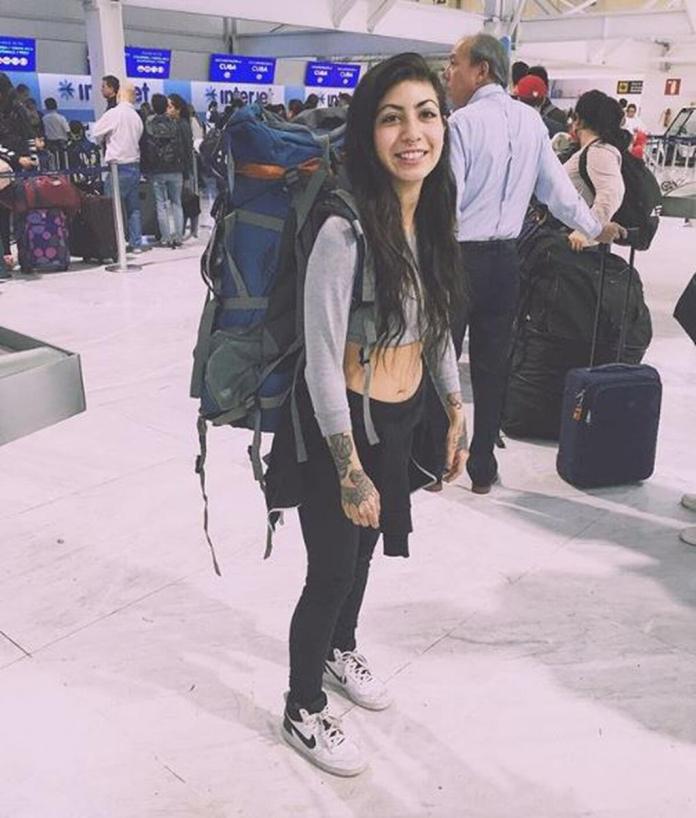


 “They underwent swabbing upon arrival at Juan Santamaría International Airport, and they must accept a 24-hour health restriction at the first hotel in their destination, pending a negative result that allows them to continue their trip in Costa Rica.


