Photo of Mendecinos stranded in Costa Rica from social networks
They came to Costa Rica to enjoy the paradise that the country offers, without knowing that they would be imprisoned by the sudden voracity of a “monster” called COVID-19.
Argentinians stranded in Costa Rica at the San Jose airport. from social networks
When the call from world health authorities to stay home to prevent the spread of the dreaded coronavirus, some 300 Argentines became trapped in Costa Rican between the unprecedented chaos of the global air operation and the closure of borders.
In most cases, the foreigners arrived in Costa Rica days before, arriving when there still was no positive cases of the virus. Nor were there any in Argentina. Many of the trips had been planned way in advance.
As of this Thursday, March 26, the future of the 300 Argentines was not clear, what would happen. They desperately insisted on a more forceful collaboration on the part of the diplomatic authorities of their country, but nothing has been so positive as to translate into an opportunity to return to South America soon.
In the midst of this anxiety, the foreigners created two accounts on social networks (one on Instagram and the other on Twitter) to report on their situation and thus be heard by the authorities of their country. For now, the Argentine government is keeping plans to repatriate citizens stranded in different countries frozen.
“Currently we are 300 stranded Argentines, who had our return planned for the first or second week of April. As the border closure continues, we calculate that we are going to grow and that we are going to pass the current number,” explained Angie Durán, spokesperson for the group.
Durán arrived in Costa Rica in December and had a return ticket for the beginning of April. All this time here, she has been working virtually. She even spent a few days in Nicaragua, from where she returned due to the closure of the borders.
“I came back here when the borders closed because my return ticket was from San José ( Costa Rica). All airlines canceled their operations. The first was Avianca, then Copa and now it is Latam. The options to return to Argentina are completely closed, except for some flights scheduled for today or tomorrow by Aerolineas Argentinas, but it does not enter Costa Rican territory. At the moment, they are going to repatriate from Miami, Barcelona and Madrid,” said the tourist.
They cry out for help
Despite the willingness of the Argentine Embassy in Costa Rica to help, in reality, the stranded tourists organized themselves autonomously due to the alleged lack of forcefulness of the diplomats.
“We started to make a list of who we are, what our return dates were, what our situation is and the needs we have. Precisely, we ask the authorities for serious information about the dates when we would be returning and how those returns will be scheduled.
“Those of us who were going to return in the last 2 weeks of March are running out of money. Especially those who came on vacation. If they have to stay throughout the month of April, we calculate that they do not have the way to pay for that stay. Added to that the hotels and hostels every day are closing. Options are reduced for the stay,” said the young woman.
The foreigners ask their embassy to help them find a place to stay. At the moment, they do not know if there is a possibility of a rescue flight. It is believed that between 20,000 and 40,000 Argentines are stranded in different countries around the world.
In Costa Rica, stranded tourists are scattered in areas such as San José, Puerto Viejo de Talamanca or Guanacaste. The request of the Argentine Chancellery was that they not all concentrate in the capital, but that they stay in the places where they were, to avoid greater risks of contagion.
“We are afraid to stay here for weeks. Precisely the possibility of a shortage of money and medicines is our second complaint. The first is that they tell us when and how we are going to return (home). Since the beginning of the week we have already asked the Consulate in San José to help us with medicines. We have a large percentage of people at risk, in need of medical treatments and who had planned their return already,” said Durán, who explained that among the stranded tourists there are babies, children and a considerable number of people over 65 years of age.
As of this Friday, March 27, Costa Rica reported 263 positive cases and 2 deaths of COVID-19, while in Argentina, authorities there reported 690 confirmed cases and 17 deaths as of this morning (March 28).
Pilar Garrido, Minister of Planning, and Rodrigo Chaves, Chief of Finance (on the right), accompanied President Carlos Alvarado at the press conference this Friday. Photo: Courtesy of the Presidency / Roberto Carlos Sánchez.
President Carlos Alvarado announced on Friday a plan to give a ¢200,000 per month subsidy, for at least three months, to 375,000 families economically affected by the coronavirus pandemic.
Pilar Garrido, Minister of Planning (left) and Rodrigo Chaves, Chief of Finance (right), listening to President Carlos Alvarado at the press conference Friday announcing his proposal for the ‘aporte solidario’. Photo courtesy Presidencia
The aid would be granted to people who are laid off, whose working hours have been reduced, independent workers with a decrease in income and the informal sector.
For this, the Executive will send to the Legislative Assembly an extraordinary budget request for ¢225 billion, financed with ¢100 billion from the government’s budget and keeping fuel prices at a fixed rate, with the intention of the government collecting the differential.
“We would be fixing the price of fuels, which has been discussed with the legislators and there is a consensus, that since there has been a reduction (in fuel prices … this surplus we can give, in solidarity, to the families that need it during the emergency,” explained the president.
In other words, due to the worldwide pandemic, oil prices have dropped drastically and that is being reflected in fuel prices at the pumps in Costa Rica. The government would maintain fuel prices higher than that requested by the Recope to make up the difference to finance the subsidy.
The proposal is expected to be presented this coming week and quick approval.
According to the government, the number of families that would need a subsidy could rise and exceed 600,000 (in Costa Rica there are 1.5 million households).
To define who qualifies for the subsidy, the government would rely on instruments such as the payroll reports of the Costa Rican Social Security Fund and the Single System of State Beneficiaries (Sinirube).
The table of this solidarity contribution is not defined, but the Treasury gave examples: a person with a monthly salary of ¢1.1 million would contribute ¢10,000. One of ¢1.5 million, ¢50,000 and one of ¢2 million, ¢100,000 and more for people with even higher salaries.
The president stated that it is still too early to know how many families will be affected, and for how long, by the financial situation caused by the covid-19.
The proposal has generated opposite opinions, from those who believe the government can ill afford this type of program and many who don’t believe the money will actually get to the most needed; to, applauding the efforts of the Alvarado administration, to several comments on social networks of wanting to make a contribution to the ‘aporte solidario’ though they earn less than a million monthly.
In the photo, a police operation west of the tolls on the General Cañas
The Policia de Transito (Traffic Police) report having issued fines to 212 on the third night of the vehicular restrictions. The majority in the metropolitan area.
In the photo, a police operation west of the tolls on the General Cañas
The restriction is in effect countrywide from 10:00 pm to 5:00 am weeknights and from 8:00 pm to 5:00 on weekends.
In addition, 328 drivers were fined in the first nights (Wednesday and Thursday) of the measure to motivate people to stay home.
“People are not paying attention,” lamented Michael Soto, the Minister of Public security, whose national police force is working in conjunction with Transito.
The fine for violating the restriction is ¢23,000 colones. In addition to the traffic police, authorized officers of the Fuerza Publica and municipal police forces can sanction drivers.
Many say the fine is too low, not a motivation to disobey. Or maybe drivers are not accustomed to seeing the traffic police out at night.
The measure will continue, unless extended due to the health situation associated with the spread of COVID-19, until April 12.
As of this Friday, March 27, 263 positive cases of the coronavirus were reported in Costa Rica, with 2 deceased.
The General Cañas east of the toll booths Friday night
Rico’s Covid-19 Digest – Despite the call from the Minister of Health and the plea by President Carlos Alvarado to stay home, it seems that people do not understand and rather took to the streets this Friday afternoon.
The General Cañas east of the toll booths Friday night
The three major routes – Ruta 27, Circunvalacion and General Cañas – were full of cars, lots of congestion like we haven’t seen in weeks. From the photos, one would think the coronavirus pandemic was beaten, it was over, let’s celebrate.
Downtown San Jose was once again bumper to bumper. The Policia de Transito (Traffic Police) were back in action attending to the multiple traffic accidents in different sectors of the metropolitan area.
The Circynvalacion on Friday
Now, what I don’t understand, if everything is closed, que puta madre are they in the streets for? Because it’s pay weekend? Gasoline is cheaper? What happened to saving up for the tougher times ahead?
I am very saddened to see that in Costa Rica many are not taking it seriously, acting in a way avoid contagion … not take precautions because they only think of themselves without caring about others, their families, friends … very unfortunate … take off your mask of solidarity … you are being a hypocrite … inconsiderate and not very supportive.
Ruta 27 headed towards the Escazu tolls
Let’s abide by the recommendations of experts like Dr. Salas, inform yourself, educate your family and friends who for some reason or circumstances are not taking this seriously and go about their life inside and outside their home as if nothing.
Me, I am in my seventh day of self-isolation. I had planned this morning to go out to get some fresh fruits: low on bananas, down to my last slice of watermelon, haven’t had a fresh orange in days.
I had planned on wearing a mask and gloves, yeah, yeah, maybe overreacting.
George Washington University in the U.S. revealed an impressive video of a CT scan of a patient with Covid-19, showing what the contagious coronavirus does to people’s lungs.
But, after seeing the photos and the reports from various news sites, I think not. Maybe tomorrow. At worst I can do without the fresh fruits and the risk of catching the coronavirus for a few more days.
Stay healthy, stay safe. And please stay hone unless you really, really have to go out. This, the pandemic, is serious. And we’re not going to come out of this as well as we could if we all do not do our part.
Venezuelan President Nicolás Maduro called his US counterpart Donald Trump “a miserable” after Washington accused him of “narcoterrorism” and offered a reward for his arrest.
Venezuelan President Nicolas Maduro has refuted the US accusations, calling Donald Trump “a miserabla” and “acts not only as a cowboy, racist and supremacist, he also handles international relations as an extortionist”
“The Donald Trump government, in an outrageously extreme, vulgar, miserable action, launched a set of spurious, false accusations,” Maduro said on radio and television.
Venezuelan President Nicolas Maduro has refuted the US accusations that his government has links to drug trafficking.
On Thursday, US Attorney General William Barr said the US was pressing criminal charges against Maduro for allegedly facilitating drug trafficking into the United States. Washington also unveiled money-laundering charges against Venezuela’s Chief Supreme Court Justice Maikel Moreno.
Earlier in the day, the US authorities offered a series of rewards for information on five top officials in the Venezuelan government, including $15 million for Maduro himself, based on the alleged “involvement in narco-terrorism”.
In addition to Maduro, the other indicted officials include National Constituent Assembly President Diosdado Cabello Rondon, former director of Venezuela’s military intelligence Gen. Hugo Carvajal Barrios, former Venezuelan Army general Cliver Alcala Cordones as well as Fuerzas Armadas Revolucionarias de Colombia (FARC) members Luciano Marin Arango and Seuxis Hernandez Solarte.
The U.S. Justice Department said in a press release that each defendant is charged with four narco-terrorism and drug trafficking-related charges that carry sentences of a minimum of 50 years in prison and a maximum life sentence. Barr said the United States expects eventually to gain custody of the defendants.
So I tell him: ‘You are a miserable Donald Trump!’ He acts not only as a cowboy, racist and supremacist, he handles international relations as an extortionist,” he added.
In the mid-day briefing, Health Minister, Dr. Daniel Salas said the number of confirmed cases increased by 32 over the previous day, the total today is 263.
President Carlos Alvarado (center, with computer) led the briefing this Friday from Casa Presidencial
The confirmed are 121 men and 142 women, aged between 2 and 87 years, in 48 cantons. Most are Costa Rican, 241, and 20 are foreigners.
Nine are hospitalized, five of which are in intensive care, their age from 36 and 66.
The good news, one patient has been declared recovered, that is they no longer carry the virus and can no longer infect others. More are expected to be declared recovered in the coming days.
“We have 263 cases, many of them have already transmitted to others who will manifest symptoms in the following days if we let our guard down. Let’s remember that every infected person infects three others on average,” said Minister Salas.
“We have not reached the peak of the curve, we are several weeks away from reaching that, and when we can gradually relax the measures, but at this time it is very necessary that we follow the recommendations to stay home,” he added.
On that tone, The Minster of Security, Micheal Soto, expressed frustrations over reports that this Friday morning there were more people on the roads, like the Ruta 27, the Circunvalacion and La Uruca.
To that end, the minister announced an important change in the vehicular restrictions applicable countrywide: starting Saturday, March 27, the restriction starts at 8 pm (and not 10 pm) and continues to 5 am.
On Monday, it goes back to 10 pm and then for the following weekend, starting Friday, April 3, it will again be from 8 pm.
According to Soto, in the first two days of the restrictions, 212 drivers have been fined -(159 on Tuesday (the first day) and 169 on Wednesday.
In addition, 27 people have been arrested for not respecting the Health order placed on them.
Trump is utterly unsuited to deal with this crisis, either intellectually or temperamentally.
The Atlantic – For his entire adult life, and for his entire presidency, Donald Trump has created his own alternate reality, complete with his own alternate set of facts. He has shown himself to be erratic, impulsive, narcissistic, vindictive, cruel, mendacious, and devoid of empathy. None of that is new.
Trump is utterly unsuited to deal with this crisis, either intellectually or temperamentally says Peter Wehner, Contributing writer at The Atlantic and senior fellow at EPPC
But we’re now entering the most dangerous phase of the Trump presidency. The pain and hardship that the United States is only beginning to experience stem from a crisis that the president is utterly unsuited to deal with, either intellectually or temperamentally. When things were going relatively well, the nation could more easily absorb the costs of Trump’s psychological and moral distortions and disfigurements. But those days are behind us. The coronavirus pandemic has created the conditions that can catalyze a destructive set of responses from an individual with Trump’s characterological defects and disordered personality.
We are now in the early phase of a medical and economic tempest unmatched in most of our lifetimes. There’s too much information we don’t have. We don’t know the full severity of the pandemic, or whether a state like New York is a harbinger or an outlier. But we have enough information to know this virus is rapidly transmissible and lethal.
The qualities we most need in a president during this crisis are calmness, wisdom, and reassurance; a command of the facts and the ability to communicate them well; and the capacity to think about the medium and long term while carefully weighing competing options and conflicting needs. We need a leader who can persuade the public to act in ways that are difficult but necessary, who can focus like a laser beam on a problem for a sustained period of time, and who will listen to—and, when necessary, defer to—experts who know far more than he does. We need a president who can draw the nation together rather than drive it apart, who excels at the intricate work of governing, and who works well with elected officials at every level. We need a chief executive whose judgment is not just sound, but exceptional.
There are some 325 million people in America, and it’s hard to think of more than a handful who are more lacking in these qualities than Donald Trump.
But we need to consider something else, which is that the coronavirus pandemic may lead to a rapid and even more worrisome psychological and emotional deterioration in the commander in chief. This is not a certainty, but it’s a possibility we need to be prepared for.
Here’s how this might play out; to some extent, it already has.
Let’s start with what we know. Someone with Trump’s psychological makeup, when faced with facts and events that are unpleasant, that he perceives as a threat to his self-image and public standing, simply denies them. We saw that repeatedly during the early part of the pandemic, when the president was giving false reassurance and spreading false information one day after another.
After a few days in which he was willing to acknowledge the scope and scale of this crisis—he declared himself a “wartime president”—he has now regressed to type, once again becoming a fountain of misinformation. At a press conference yesterday, he declared that he “would love to have the country opened up, and just raring to go, by Easter,” which is less than three weeks away, a goal that top epidemiologists and health professionals believe would be catastrophic.
“I think it’s possible. Why not?” he said with a shrug during a town hall hosted by Fox News later in the day. (Why Easter? He explained, “I just thought it was a beautiful time, a beautiful timeline.”) He said this as New York City’s case count is doubling every three days and the U.S. case count is now setting the pace for the world.
As one person who consults with the Trump White House on the coronavirus response put it to me, “He has chosen to imagine the worst is behind us when the worst is clearly ahead of us.”
After listening to the president’s nearly-two-hour briefing on Monday—in which, among other things, Trump declared, “If it were up to the doctors, they may say … ‘Let’s shut down the entire world.’ … This could create a much bigger problem than the problem that you start off with”—a former White House adviser who has worked on past pandemics told me, “This fool will bring the death of thousands needlessly. We have mobilized as a country to shut things down for a time, despite the difficulty. We can work our way back to a semblance of normality if we hold out and let the health system make it through the worst of it.” He added, “But now our own president is undoing all that work and preaching recklessness. Rather than lead us in taking on a difficult challenge, he is dragging us toward failure and suffering. Beyond belief.”
YES AND NO. The thing to understand about Donald Trump is that putting others before self is not something he can do, even temporarily. His attempts to convey facts that don’t serve his perceived self-interest or to express empathy are forced, scripted, and always short-lived, since such reactions are alien to him.
This president does not have the capacity to listen to, synthesize, and internalize information that does not immediately serve his greatest needs: praise, fealty, adoration. “He finds it intolerable when those things are missing,” a clinical psychologist told me. “Praise, applause, and accolades seem to calm him and boost his confidence. There’s no room for that now, and so he’s growing irritable and needing to create some way to get some positive attention.”
She added that the pandemic and its economic fallout “overwhelm Trump’s capacity to understand, are outside of his ability to internalize and process, and [are] beyond his frustration tolerance. He is neither curious nor interested; facts are tossed aside when inconvenient or [when they] contradict his parallel reality, and people are disposable unless they serve him in some way.”
IT’S USEFUL HERE to recall that Trump’s success as a politician has been built on his ability to impose his will and narrative on others, to use his experience on a reality-television show and his skill as a con man to shape public impressions in his favor, even—or perhaps, especially—if those impressions are at odds with reality. He convinced a good chunk of the country that he is a wildly successful businessman and knows more about campaign finance, the Islamic State, the courts, the visa system, trade, taxes, the debt, renewable energy, infrastructure, borders, and drones than anyone else.
But in this instance, Trump isn’t facing a political problem he can easily spin his way out of. He’s facing a lethal virus. It doesn’t give a damn what Donald Trump thinks of it or tweets about it. Spin and lies about COVID-19, including that it will soon magically disappear, as Trump claimed it would, don’t work. In fact, they have the opposite effect. Misinformation will cause the virus to increase its deadly spread.
So as the crisis deepens—as the body count increases, hospitals are overwhelmed, and the economy contracts, perhaps dramatically—it’s reasonable to assume that the president will reach for the tools he has used throughout his life: duplicity and denial. He will not allow facts that are at odds with his narrative to pierce his magnetic field of deception.
But what happens to Trump psychologically and emotionally when things don’t turn around in the time period he wants? What happens if the tricks that have allowed him to walk away from scandal after scandal don’t work quite so well, if the doors of escape are bolted shut, and if it dawns on even some of his supporters—people who will watch family members, friends, and neighbors contract the disease, some number of whom will die—that no matter what Trump says, he can’t alter this epidemiological reality?
As the health-care and economic crises worsen, Trump’s hallmarks will be even more fully on display. The president will create new scapegoats. He’ll blame governors for whatever bad news befalls their states. He’ll berate reporters who ask questions that portray him in a less-than-favorable light. He’ll demand even more cultlike coverage from outlets such as Fox News. Because he doesn’t tolerate relationships that are characterized by disagreement or absence of obeisance, before long we’ll see key people removed or silenced when they try to counter a Trump-centered narrative. He’ll try to find shiny objects to divert our attention from his failures.
All of these things are from a playbook the president has used a thousand times. Perhaps they’ll succeed again. But there’s something distinct about this moment, compared with every other moment in the Trump presidency, that could prove to be utterly disorienting and unsettling for the president. Hush-money payments won’t make COVID-19 go away. He cannot distract people from the global pandemic. He can’t wait it out until the next news cycle, because the next news cycle will also be about the pandemic. He can’t easily create another narrative, because he is often sharing the stage with scientists who will not lie on his behalf.
The president will try to blame someone else—but in this case the “someone else” is a virus, not a Mexican immigrant or a reporter with a disability, not a Muslim or a Clinton, not a dead war hero or a family of a fallen soldier, not a special counsel or an NFL player who kneels for the national anthem. He will try to use this crisis to pit one party against the other—but the virus will kill both Republicans and Democrats. He will try to create an alternate story to distract people from an inconvenient truth—but in this case, the public is too afraid, the story is too big, and the carnage will be too great to be distracted from it.
America will make it to the other side of this crisis, as it has after every other crisis. But the struggle will be a good deal harder, and the human cost a good deal higher, because we elected as president a man who is so damaged and so broken in so many ways.
Article by Peter Wehner, Contributing writer at The Atlantic and senior fellow at EPPC, first appeared at TheAtlantic.com. Read the original here.
Not going to the hospital on time, for fear of the coronavirus, caused complications in the health of two children, who are now in serious condition, reported the National Children’s Hospital.
Children’s Hospital in San José. File photo
“People, out of fear, are not consulting in a timely manner in those patients who have chronic diseases,” said Olga Arguedas, director of the medical center.
Arguedas confirmed that the diagnosis of the patients is leukemia and cancer; Still, the parents delayed taking the children to the hospital for fear of Covid-19.
“When a child with leukemia or cancer has a fever, they have to come to the hospital immediately, the doors are always open,” stressed the doctor.
“In general, all children with chronic illnesses must be closely monitored and cared for by their parents,” she added.
The call goes out to all patients with children in specialties such as cardiology and pulmonology; also for minors who take medications that lower their defenses.
Despite the national situation, all emergency surgeries are being performed in a timely manner at the National Children’s Hospital. In addition, the specialized pediatric center provides teleconsultations so that parents and their children can stay home.
At the hospital, patient flows were adapted to reduce the risks of contagion.
The Municipality of San José, in coordination with the “Chepe se baña” organization, installed mobile sinks in the center of San José with the objective that passers-by and inhabitants of the street have where to wash their hands and thus combat Covid-19.
“The mobile lavatories are an initiative of the Chepe se Baña organization that had been working for days with a mobile unit on the roads in San José, especially those with the highest concentration of street inhabitants and that in the context of the emergency National health the Municipality of San José has decided to reinforce this week with two pick-ups, “said Marcelo Solano, Chief of the San José Municipal Police.
The Muni and organization said that they are evaluating for the next week to use other municipal vehicles, in such a way that they have water, soap and alcohol available to all people who need hand washing.
Nuevos lavatorios móviles de la Municipalidad de San José y #ChepeSeBaña. Mañana salen primeras dos unidades. Grupo de voluntarios desinfectarán a habitantes de calle y policías municipales velarán por la seguridad. #CoronavirusCRpic.twitter.com/LlLqgKp7RX
“All efforts towards this population (the homeless) have been coordinated from the CNE’s emergency operations center and, in turn, through the municipal emergency committee and the social committee, this is one of the most practical initiatives being carried out that also seeks to carry information and communication to the street population about COVID-19, which also makes available to many people the possibility of washing their hands on public roads,” added Solano.
The police chief also stressed that they are already sharing the experience so that it can be replicated in the other cantons.
Lavatorios móviles ya en funcionamiento. Éste fue ubicado frente al Parque Central. Más de 500 persona lo utilizaron hoy. #CoronavirusCRpic.twitter.com/NRym4lZuYC
“We share the initiative because it is a very easy initiative, very practical and that it could be available to other local governments and other NGOs that want to contribute to this initiative in the context of the emergency,” the police chief concluded.
Three young men who were working in the San Luis dam died after a mound of sand fell on them. The event was recorded at 6:33 am this Friday in San Luis de Llano Bonito, in León Cortés, San José.
According to the Fire Department, the three were loading sand onto a truck and, for unknown reasons, it fell on them.
At 8 am Firefighters reported that two were found dead and one more was undergoing resuscitation. However, soon after, the Red Cross confirmed that the third also died.
The victims were 26, 16 and 14 years old, authorities said.
The Cuerpo de Bomberos (Fire Department) staged an early morning “simulacro” evacuation drill ahead of the opening of the CENARE, the converted rehabilitation center into a hospital exclusively for patients of the coronavirus.
The drill began at 6:00 am with several machine units of the Bomberos, with hoses connected to fire hydrants and a ‘cisterna’ (tanker truck) to ensure a constant flow of water to fight a fire.
Specialized units to deal with contamination and hazard materials also took part in the drill.
Watch the video.
The CENARE is an 88 bed facility located in La Uruca with restricted access.
With some 30 new cases of the coronavirus confirmed on Thursday and I am expecting a similar number to be announced today at the noon covid-19 briefing, that could see the number of positive cases reach 300 by the Sunday, if not sooner, will the government of Carlos Alvarado order a lockdown, similar to measures taken in Colombia, Panama and El Salvador?
I proffer, most likely.
Does Carlos Alvarado have any other choice? Ticos aren’t heeding to his and the call of the minister of health, Daniel Salas, to stay home, work from home if you can, don’t drive at night, has closed bars, clubs, casinos, beaches, parks, churches and so on.
Yet… people are not listening.
I don’t take stock of the warning by both Salas and the Minister of Planning, María del Pilar Garrido, that between 20% and 50% of the population could get infected. They are trying to bring a point home.
Yet… people are not paying attention.
As of yesterday, in Costa Rica we have 231 confirmed cases, five of which are serious, in intensive care, the majority at home, hopefully, isolated from friends and family. The cases are spread out to now more than half of the cantons or counties if you will, the majority concentrated in the Central Valley.
This morning, Friday, the Ministry of Health opened the CENARE, a rehabilitation center converted into an 88 bed hospital exclusively for coronavirus patients. The country is getting ready.
Yet… there seems no urgency by many, if not most.
Yesterday’s increase was the single most on any day since the first case detected in Costa Rica on March 6. The number today, I fear will be much higher, each coming day setting records.
Fortunately, although one too many, we have had only two deaths, tow 87-year-olds.
Which brings me to another point, while the major focus is on protecting the elderly, the young are the ones getting sick. The age range yesterday was from 2 to 87, an average age of 41.
The age of the patients in the intensive care range from 36 to 72, three of which are under 50.
Yet… the young in particular are going about things as if normal.
I mentioned earlier Panama and Colombia are on lockdown. How is it going for them?
Panama, a country with a population of 4.16 million (2019) has 674 confirmed cases and reports 9 deaths; Colombia, population 50.3 million (2019), reports confirmed 491 cases and 6 deaths. We, in Costa Rica, have 231 cases and 2 deaths for a population of 5 million (2019).
Doing simple math, we are still doing pretty good, but…
This is our last chance to avoid a lockdown, more loss of life and the ‘pura vida’ way of living. Yes, this will pass, and things will be back to normal. But what will be the new normal?
Stay home for the next 2-3 weeks, whether the government goes to lock down or not. Adopt a self-isolation or quarantine, whichever word works best for you, going out only to the supermarket (one person, not your entire entourage) or the doctor, clinic, hospital.
Work online if you can, if you have to go to work, be careful, think of you loved ones back home. And when you do get home, remove your clothing, shower, disinfect before hugging your kids, your parents, your wife.
The coronavirus is not spread through the air. The virus’s main route of transmission is from one person to another, through droplets that are sneezed or coughed out by infected people. This is known as “droplet spread”.
While it is in these droplets, the coronavirus is only in the air for a short time and travels only a short distance before it is pulled down by gravity after being coughed or sneezed out.
A single cough can produce up to 3,000 droplets, while a sneeze can produce as many as 10,000. These droplets then land in or are breathed into another person’s airways, or fall on a surface that is touched by an uninfected person, who then touches their face – specifically their mouth, nose, ears or eyes.
Me, I am on day 6 of self-isolation.
In truth, my self-isolation has been, so far, pretty easy in that my normal day before the coronavirus I would spend a lot of time at home, sometimes not going out for 3 or 4 days, and then to the supermarket, bank, sometimes, to change it up, a trip to Multiplaza.
All my friends are also in self-isolation, we touch base with each other daily, before the virus we would meet up once a week or 10 days.
Do not become part of the statistics. Do not let me think that you, yes you, are one of the numbers I update daily here. Stay home.
The damn beach will be there in 3 weeks; YOU might not.
Edit: A post on Facebook from Bob, a friend who for years lived in Costa Rica and now calls La Estrella, south of Medellin home, on the lockdown in Colombia:
Day 7 or 8 of lockdown… I have only been out of the house once during this time for about an hour. I believe this is the cause of me starting to lose track of time, day of week even how many days we have been on lockdown. Lockdown ends on April 13th, at first I thought it would be easy now I am starting to doubt that. My next scheduled outing is 6 days away when I get to go out again and buy groceries.
It didn’t take long, it was expected to happen. Within hours of the countrywide vehicular restrictions going into force, the Constitutional Court received two ‘recursos de amparo’ – appeals against the government measure.
On Tuesday, March 24, at 10 pm and continuing until 5 am, the Policia de Transito was tasked to prohibit the circulation of all passenger vehicles, except for very specific exemptions, such as police, fire, and ambulance, people who work the night shift (with proof), government vehicles such as those of CE, AyA, Incofer, CNFL, Correos de Costa Rica, Recope, MOPT, Conavi, DGAC, among others, the press, authorized transport vehicles, cargo vehicles, funeral homes, food delivery, private security and people acting in an emergency such as taking a sick person to the hospital, among others.
The vehicular restriction applies to every road in the country, every night during the declared national emergency until April 12, from 10 pm to 5 am.
Drivers caught face a fine of ¢23,000 colones (the same applied to the weekday vehicular restrictions of San Jose). A stopped driver may also face other transit sanctions such as driving without a license, no marchamo or riteve, etc and can face also the confiscation of the license plates and/or vehicle.
Appeals, though filed separately, allege a violation of freedom of transit. One was filed by the Nacional de Fomento Económico (ANFE) – National Association for Economic Development and the other by a lawyer named Castrillo.
At the moment they are in the admissibility stage, the first step in the constitutional challenge process.
The fact that the Constitutional Court accepts a filing for admissibility does not mean it has validity or that the Court will deal with the matter in a timely fashion. It is simply accepting the filing.
The recurso de amparo can be filed by anyone and at any time against any alleged slight of constitutional rights. The filing need not be formal, it can literally be handwritten on a napkin and does not require a lawyer to be filed.
Vice-President Epsy Campbell (pink shirt) coordinating the operations for the closure of borders
In the last 7 days, since the closure of all borders to foreigners entering, immigration authorities prevented the entry of 958 foreigners who wanted to enter the country through all the border posts, mainly in Peñas Blancas and Las Tablillas, as well as different “blind spots” on the northern border.
Immigration police are maintain inspections of vehicles to detect illegals being smuggled into the country
That is the most up-to-date information released Thursday by Vice President Epsy Campbell, who is responsible for coordinating the operations for the closure of borders as a result of the COVID-19 emergency.
Vice-President Epsy Campbell (pink shirt) is coordinating the operations for the closure of borders
Official statistics also show that, in the same period of these 7 days, 5,204 health orders have been issued at all immigration control posts.
The Peñas Blancas border post is a ghost town
Citizens who receive the health order upon entering the country must comply with a mandatory 14-day isolation, if violated could face criminal responsibilities.
Only cargo is permitted to cross the border into and from Nicaragua
Daniel Ortega and Rosario Murillo with the PAHO representative in Nicaragua, prior to a virtual meeting with SICA, on March 12. PAHO representative in Nicaragua says that there was "a typing error" when registering 6 positive cases and not 2, as the Government maintains. Photo: Government
The situation in Nicaragua is at its worst, a people that are slowly coming out of the April 2018 crisis, now embattled by the coronavirus pandemic. And where is its leader, the man that for decades Nicaraguans and loved and hated?
“Be like Ortega,” is the viral message in Nicaragua to combat the covid-19. The message refers to the absence of Nicaragua President Daniel Ortega, who hasn’t been seen in public since the coronavirus pandemic.
The message to ‘be like Ortega’ is to tell Nicaraguans to stay home, not to go out, just as their president is doing.
Daniel Ortega and Rosario Murillo with the PAHO representative in Nicaragua, prior to a virtual meeting with SICA, on March 12. PAHO representative in Nicaragua says that there was “a typing error” when registering 6 positive cases and not 2, as the Government maintains. Photo: Government
“Ortega doesn’t go to marches or meetings. Ortega doesn’t send his grandchildren to school. Nothing makes Ortega leave his house. Ortega wants to live. Be smart, be like Ortega,” is the ironic message on Nicaragua’s social media, but that also serves as a model to follow when battling the coronavirus.
Ortega, 75 and his wife and vice-president of Nicaragua, Rosario Murillo, 69, haven’t been seen participating in any public event since February 21, the taking of possession of General Julio Cesar Aviles of his third consecutive term for another five years as commander in chief of the Nicaraguan army.
Also absent were Ortega and Murillo in the march/rally organized by the government on March 14th called, “Love in the Time of Covid-19”, in Managua, attended by thousands of Sandinista sympathizers and public employees. Also absent were organizers and leaders, of the even or their children who had participated in previous marches.
The opposition calls Ortega inept and a coward. “Do they know why Ortega doesn’t show his face during Nicaragua’s coronavirus crisis? Because he’s an inept coward and doesn’t know what to say in a crisis like this, and hides, but for his followers, he’s a God who speaks through his priest [Murillo],” wrote the opposition politician Eliseo Nuñez in a tweet.
Murillo has been at the front of the coronavirus pandemic in Nicaragua, organizing, marshaling the troops, if you will, even though she hasn’t shown up in person for meetings, but communicates by telephone calls to television stations where she reported the two confirmed cases of covid-19 in the country and on Thursday, the first death.
Critics say the fear of being infected keeps the presidential couple, who for their age are among the population most vulnerable to this virus.
Supporters and defenders justify the absence, arguing that he has delegated the duty of informing his wife and that of prevention to Health authorities.
“And Ortega? Why doesn’t he show up at all? He hides his face, his government is negligent and irresponsible, putting the life of the people of Nicaragua in danger,” said Dora Maria Tellez the former Minister of Health during the first Sandinista government in the 1980s.
Tellez, presently a dissident, characterized Murillo’s behavior as “criminal conduct to convene people through a microphone to expose themselves to coronavirus” by promoting a day of house-to-house visits to combat coronavirus.
With two confirmed cases, one death and 14 suspected, the government of Ortega and Murillo has not declared an alert nor restrictions, unlike the rest of Central America. In Nicaragua there is no emergency for the pandemic, schools are open, the borders are open, in fact the government is inviting tourism.
The government promotes a campaign of small sanitation brigades, accompanied by police, visiting house-to-house all over the country, with no protective mask or gloves, with the objective of distributing information about how to take care of health in the face of Covid-19.
Thousands of families have rejected the campaign by not opening their doors to them.
With the lack of government preventive measures, the absence of Ortega and Murillo in public, other health vigilance, the Nicaraguan people have resorted to acting on their own, based on the recommendations of the World Health Organization (WHO).
Nicaragua registered on Thursday, March 26, the first death from the new coronavirus, according to authorities from the Ministry of Health (Minsa). This is the second of two patients confirmed with Covid-19 in the country.
So far, the government of Daniel Ortega reports two confirmed cases of infection by the new coronavirus and 14 suspected. La Prensa
According to the Minsa, the patient died at 6:05 pm. The victim “had multiple health weaknesses associated with his condition as a carrier of the HIV virus,” Minsa said in a statement. Authorities say the man was also diabetic and hypertensive.
Vice-President Rosario Murillo reported this second case on March 20. It was a man who had returned to Nicaragua on March 16 from Colombia who presented chest pain, cough, respiratory distress and bilateral pneumonia.
So far, the government of Daniel Ortega has reported two cases of infection by the new coronavirus. The first case was reported on March 18 by the vice president, who said that it was a man who traveled to Panama and days later presented symptoms. According to Murillo, the man is stable.
Suspicious cases
As of noon on Thursday, Rosario Murillo reported that they are monitoring 14 suspected cases of coronavirus in the country, all asymptomatic.
Among the cases, there are people who had contact with the two confirmed cases and there are also other suspects who entered the country from countries such as Italy, Spain and South Korea.
Ministry of Health of Honduras reported on Thursday the first death by Covid-19 in that country. That is a 60-year-old man from Villanueva who entered a hospital in San Pedro de Sula.
According to a statement from the Honduras National Risk System (SINAGER), this person was admitted on March 19 and the Covid-19 test resulted positive.
“The patient developed Severe Bilateral Pneumonia with multiple pulmonary infiltrates, causing respiratory failure and later a cardiac arrest,” the statement cites.
Villanueva Mayor Walter Perdomo told a press conference that the first victim is feared to have had contact with other residents because he was an informal merchant. “He was one of the first patients we had you and until now in that neighborhood we have had no more patients to report.”
COMUNICADO #15
El Gobierno de la República de Honduras, a través del Sistema Nacional de Riesgos (SINAGER), informa a la población lo siguiente:#HondurasQuedateEnCasa#Covid19
Honduras has 52 confirmed cases, the first two were on March 11. They were two women from Europe, one of them 42, and pregnant. The other is a woman who came from Switzerland.
From the first to cases, the Honduras government declared a state of sanitary emergency. closed schools for 14 days, both public and private and also canceled all public events.
Honduras continues with restrictions on travelers from Europe, China, Iran, and South Korea, with the exception of Hondurans who want to enter the country and the accredited diplomatic corps.
An expert committee made up of former ministers of health, infectious diseases, pulmonologists, and internists was created to “give a comprehensive clinical approach to the intervention plan of the Ministry of Health.”
Honduras established a Guideline for epidemiological surveillance, management, control and prevention of COVID-2019. They have a monitoring protocol for people who have been related to the two confirmed cases.
The new coronavirus pandemic has claimed the lives of 24,361 and 542,788 confirmed (March 27, 2020, at 4:50 am) worldwide.
Carlos Alvarado and Rodrigo Chaves (right) minister of Finance
This Thursday morning, before meeting with legislators at the Museo de Niños (Children’s Museum), the Minister of Finance announced that the government will propose the creation of a solidarity tax on both the wages of the private and public sector employees to help finance a support plan for those who lost their jobs for the coronavirus emergency.
Carlos Alvarado and Rodrigo Chaves (right) minister of Finance
According to Finance Minister Rodrigo Chaves, the tax would begin to be collected on monthly salaries of ¢500,000 and up with a 5% contribution and would increase the higher the salary is up to 25%, added Planning Minister Pilar Garrido.
Chaves literally said: “All of us who are blessed to have the job will contribute. That is the proposal. It won’t be for low-income people. It will start in more or less with a very small contribution for those who earn ¢500,000 (monthly) or more, 5% and, from there, it will go up as people earn more, where those who earn ¢4.3 million (monthly) or more will make a greater contribution, at least for the time that is necessary”.
The Minister of Planning, Pilar Garrido, also said of the tax: “Right now, it is being visualized from a certain amount that is around more than ¢1 million (monthly) and is differentiated, let’s say, people who earn less than that, 5%, the maximums, 25%, but everything is still under development”.
According to Chaves, the idea is to generate resources to add ¢360 billion colones, along with two other measures, to grant subsidies to people unemployed by the crisis.
The Minister of Health, Daniel Salas, made the same announcement during the mid-day covid-19 briefing, using the same figures stated earlier by the Finance Minister.
However, later, President Carlos Alvarado denied that he intended to collect a wage tax.
The US Government on Thursday filed charges for “narco terrorism” (drug terrorism) against Venezuelan president, Nicolás Maduro, and offered US$15 million for any information leading to his capture.
“I have a message for senior chavismo officials: the party is ending,” Ariana Fajardo Orshan, Attorney General for the Southern District of Florida told a press conference.
The move is sure to further escalate the tension between Washington and Caracas.
The Trump administration ceased its recognition of Maduro as the legitimate president of Venezuela, following accusations of election fraud and human rights abuse, recognizing the president of Venezuela’s National Assembly, Juan Guaido, as the country’s leader, although Guaido was not elected to the top office.
The United Nations, as well as UN Security Council member states China and Russia, continue to recognize the Maduro government.
Venezuelan Foreign Minister Jorge Arreaza said on Thursday that drug trafficking charges brought forward earlier in the day by the Trump administration against President Nicolas Maduro showed the “desperation” of the “Washington elite”.
Arreaza said that the White House decision to offer a reward for the capture of Maduro and other high-ranking officials for alleged drug trafficking and “narco-terrorism” prove the administration’s “obsession” with Venezuela, and point to Trump’s attempts to get better “electoral returns” in the state of Florida.
“The Bolivarian Republic of Venezuela denounces that at a time when humanity is facing the fiercest of pandemics, the government of Donald Trump is again attacking the people of Venezuela and its democratic institutions using a new form of coup d’etat, on the base of miserable, vulgar and unfounded accusations”, the foreign minister in a government statement.
Do not relax Covid-19 measures in Wuhan too soon, scientists warn
Lifting restrictions in March could lead to new peak of cases in August, study suggests
A study published in The Lancet medical journal Thursday warns that relaxing the quarantine measures in the Chinese city of Wuhan – the first epicenter of the COVID-19 outbreak – too soon could result in a second wave of coronavirus cases.
Do not relax Covid-19 measures in Wuhan too soon, scientists warn. Lifting restrictions in March could lead to new peak of cases in August, study suggests
“Restrictions on activities in Wuhan, if maintained until April, would probably help to delay the epidemic peak. Our projections suggest that premature and sudden lifting of interventions could lead to an earlier secondary peak, which could be flattened by relaxing the interventions gradually,” the study reads.
The study’s findings were based on mathematical modeling which simulated potential COVID-19 outbreaks in Wuhan under various scenarios.
“The unprecedented measures the city of Wuhan has put in place to reduce social contacts in school and the workplace have helped to control the outbreak,” said lead author Kiesha Prem of the London School of Hygiene & Tropical Medicine in the UK. “However, the city now needs to be really careful to avoid prematurely lifting physical distancing measures, because that could lead to an earlier secondary peak in cases. But if they relax the restrictions gradually, this is likely to both delay and flatten the peak.”
Huge crowds of people crammed trains and buses in Hubei province – of which Wuhan is the capital – on Wednesday as travel restrictions were lifted following a strict, two-month lockdown. The lockdown in Wuhan will end in around two weeks, the provincial government also announced on Tuesday. The Chinese National Health Commission on Wednesday also reported that there were 147 new cases of people being infected with the coronavirus overseas and traveling back to China with the infection, bringing the total current number of imported infections in China to at least 474.
Even though the study’s models were based on China, the conclusions are most likely applicable to other countries, the researchers noted.
Tim Colbourn, an epidemiologist from University College London who was not involved in the study, said the findings could be used to help governments to determine how to lift lockdowns.
“Given many countries with mounting epidemics now potentially face the first phase of lockdown, safe ways out of the situation must be identified,” he said, the Guardian reported.
During the Cold War the CIA was obsessed with keeping communism out of Latin America. In the 1970s and 1980s, the agency backed right-wing regimes in Guatemala which carried out genocidal attacks in indigenous groups that supported left-wing rebels.
Three retired officers in the Guatemalan army are awaiting trial accused of carrying out genocide against the Maya Ixil people almost 40 years ago.
General Benedicto Lucas García, General Manuel Callejas y Callejas and Colonel César Octavio Noguera Argueta were high up in the CIA-backed Guatemalan regime when it clamped down on leftist rebels and civilian sympathisers in the late 1970s and early 1980s.
CIA Backed Dictators and Military Juntas
Washington’s policy in Central America was defined by the Cold War, the growing influence of Cuba in the region and a neurotic fear that communism would take over and threaten the US’s southern border.
In 1979 the Nicaraguan dictator Anastasio Somoza was ousted by the Sandinistas and next door, in El Salvador, the Farabundo Marti Liberation Front was fighting to unseat a military junta which deployed death squads against suspected guerrillas and their supporters.
Guatemala occupied a vital strategic position straddling the Central American isthmus just south of Mexico and President Jimmy Carter and his successor Ronald Reagan were determined not to let it fall into communist hands.
So when several leftist rebel armies, most notably the Guerrilla Army of the Poor (EGP), began an insurgency the CIA was quick to support the government of President Fernando Romeo Lucas Garcia, a former army general.
The Guatemalan government was also supported by Argentina – then run by a military junta committing savage human rights abuses against leftists – and got logistical support from Israel, Taiwan and apartheid-era South Africa.
Lucas Garcia’s army carried out brutal massacres against indigenous groups in the Maya highlands, who were largely supportive of the EGP and other rebel armies.
Over the next four years around 200,000 people were killed and the violence did not improve when Lucas Garcia was ousted in a military coup by General Efrain Rios Montt.
The guerrillas gradually lost ground during the 1980s and eventually the Guatemalan National Revolutionary Unity (URNG), an umbrella group representing the rebels, signed a peace agreement in 1996 in which they were reintegrated into democratic politics.
But despite the peace agreement there was still a long wait for justice for the victims of the government atrocities.
The Center for Justice and Accountability said: “Due to the extent to which Guatemala’s judicial, police, and military institutions have historically been infiltrated by organised crime…the country is often ranked as one of the most corrupt and impunity-riddled states in the world.”
In many cases judges wore masks to hide their identities when presiding over cases in which the defendants were powerful individuals.
In 2009, under international pressure, the Guatemalan government set up the Courts for High Risk Crimes, which introduced higher security for judges and lawyers involved in the process.
In 2013 Rios Montt, by then aged 86, was finally convicted by the Courts for High Risk Crimes of his involvement in the Maya Ixil genocide, but he immediately appealed and died five years later during his retrial.
Benedicto Lucas García – the former chief of the General Staff and brother of former President Lucas Garcia – and Callejas, a former chief of military intelligence, were jailed for 58 years for detaining, torturing and raping a teenager, Emma Molina Theissen and killing her 14-year-old brother Marco.
The pair, along with Noguera Argueta, a former chief of military operations, are now facing trial for their role in the Maya Ixil genocide.
Earlier this month Judge Miguel Ángel Gálvez suspended a pre-trial hearing after defence lawyers claimed the genocide charges should be heard by an ordinary court, rather than the Courts for High Risk Crimes.
It remains unclear whether the Maya Ixil people will ever get justice.
The US Government on Thursday filed charges for “narco terrorism” (drug terrorism) against Venezuelan president, Nicolás Maduro, and offered US$15 million for any information leading to his capture.
“I have a message for senior chavismo officials: the party is ending,” Ariana Fajardo Orshan, Attorney General for the Southern District of Florida told a press conference.
The move is sure to further escalate the tension between Washington and Caracas.
The Trump administration ceased its recognition of Maduro as the legitimate president of Venezuela, following accusations of election fraud and human rights abuse, recognizing the president of Venezuela’s National Assembly, Juan Guaido, as the country’s leader, although Guaido was not elected to the top office.
The United Nations, as well as UN Security Council member states China and Russia, continue to recognize the Maduro government.
Venezuelan Foreign Minister Jorge Arreaza said on Thursday that drug trafficking charges brought forward earlier in the day by the Trump administration against President Nicolas Maduro showed the “desperation” of the “Washington elite”.
Arreaza said that the White House decision to offer a reward for the capture of Maduro and other high-ranking officials for alleged drug trafficking and “narco-terrorism” prove the administration’s “obsession” with Venezuela, and point to Trump’s attempts to get better “electoral returns” in the state of Florida.
“The Bolivarian Republic of Venezuela denounces that at a time when humanity is facing the fiercest of pandemics, the government of Donald Trump is again attacking the people of Venezuela and its democratic institutions using a new form of coup d’etat, on the base of miserable, vulgar and unfounded accusations”, the foreign minister in a government statement.
The Caja Costarricense de Seguro Social (CCSS) or Caja says it has the drug called hydroxychloroquine or chloroquine, which is being used in other countries to assess whether or not it is effective in treating COVID-19.
Image from the internet
The president of the Caja, Román Macaya, confirmed that said medicine is being considered as a possible treatment but that they are in constant communication with Chinese doctors to determine if it really is effective and what would be the correct dose to be given to patients.
“This drug is being tested in clinical studies. There are some promising studies on this and other drugs, but it is something that is evolving,” said Macaya.
Dr. Daniel Salas, Minister of Health, made a vehement call not to self-medicate since ingestion in large quantities could cause harm to human beings.
Salas, an epidemiologist, said “The indiscriminate use of antivirals and antimicrobials can provoke resistance and when they must be used, they will not be effective. It can only be sold or given under a prescription.”
Hydroxychloroquine treats malaria, systemic lupus erythematosus, rheumatic disorders like rheumatoid arthritis, porphyria cutanea tarda, and Q fever. Certain types of malaria, resistant strains, and complicated cases typically require different or additional medication.
The U.S. Food and Drug Administration (FDA), believes that while this drug has potential against the new coronavirus, it must go through careful testing processes to determine if it really is the most effective medical tool against the virus.
Worldwide, the call to avoid self-medication is also reiterated, since victims of overdoses have already been reported.
The Fuerza Publica (national police) reported carrying out numerous operations in the last Wednesday in the Los Chiles sector, at the Nicaragua border, where 38 Nicaraguans attempting to enter Costa Rica illegally were impeded.
According to information from the Ministry of Public Security, the night and early morning interventions allowed the police to intercept a taxi and 2 trucks in which the illegals were traveling.
None had any identification. Authorities believe their intention was to reach the metropolitan area in search of work. All were deported.
Costa Rican authorities said they would continue the strict controls on this side of the border to impede the illegal crossing, to and from Nicaragua, during the national emergency.
On day 21 of the first detection of the coronavirus covid-19 in Costa Rica, the Ministry of Health reported during the mid-day briefing there are now 231 confirmed cases.
Of these, 101 are women and 130 men; 209 are Costa Rican and 18 foreigners, four whose nationality is still under investigation.
By age group, there are 223 adults (of which 19 are seniors) and eight minors. There are contagions detected in 43 of the 82 cantons in Costa Rica
Through laboratory tests, in addition, 2,331 suspected cases have been ruled out.
Currently, there are six people in a hospital, five of them in intensive care. The ages of these patients range from 36 to 72, three of which are under the age of 50.
“So we have to be careful that it’s not just about protecting older adults. It is obviously the most fragile population. They should avoid going to public places, try to bring them food, teach them virtual procedures but not have direct contact with them because we can all get sick,” warned Daniel Salas, the Minister of Health/
Salas also reported that the authorization was given to five private laboratories to carry out the covid-19 tests, in addition to the Ministry of Health. They are Labin, Clínica Blíblica, Páez, San José and Hospital Metropolitano.
“We have authorized them. It is important that there be more and more tests in the country, but these are conditioned on having an immediate report so that the Ministry of Health makes the health orders, the contact of close people and the entire protocol,” he warned.
Minister Salas has warned that the pandemic wave may last from eight to 12 weeks. In addition, according to the response of citizens, between 20% and 60% of the population can get sick.
He recalled that what happens within private properties is the responsibility of each person and family. So, he said, if the intention is to seek physical distance from one another, there is no point in having a party in a house.
“We cannot enter your house to tell you not to have a meeting or a party. It is a moment of responsibility and that involves the internal spaces of the house,” said the Minister.
“The more a person has symptoms, the ability for those droplets of saliva to infect objects and for those objects to contaminate someone else, multiplies,” he explained on the need to disinfect surfaces.
The Cámara de Propietarios de Bienes Inmuebles (Caprobi) – Chamber of Real Estate Owners – expressed concern over a proposal, which legislators and the government are discussing, among others, to defer the payment rent on residential and commercial premises for three months due to the coronavirus pandemic.
For illustrative purposes
On Tuesday, the Legislative Assembly and Executive Power created four working groups to discuss measures for the covid-19 emergency.
A first table will discuss actions for the debtors of the national financial system; a second will discuss reforms to the Labor Capitalization Fund (FCL); while a third the Mandatory Pension Regime (ROP); and the fourth, rents and contracts.
With respect to rents, a draft proposal from the Executive Power would postpone the payment of rental of commercial premises and homes for three months.
Tenants would have to start paying the deferred monthly payments six months after the law comes into effect, with extra monthly payments starting at a minimum of 5% of the total accumulated amount, to which on Wednesday it was updated to at least 20%.
In addition, the proposal includes the suspension of evictions for four months.
Two legislators want the forum to discuss two additional items, the first by PLN legislator Wagner Jiménez, which would also introduce a three-month moratorium on judicial or administrative evictions that would apply to a home renter who has lost their job, was previously unemployed or show that, due to the health crisis, they do not receive enough income to pay the corresponding rent; Pedro Muñoz, legislator for the PUSC, wants discussion on an initiative that would allow the suspension or renegotiation of all types of legal contracts that exist in the country, “due to an event of force majeure.”
The discussion table on rents is composed of, in addition to Jiménez and Muños, Karine Niño, of the PLN; Otto Roberto Vargas, of the PRSC; Patricia Villegas, of the PIN; Mileidy Alvarado, of the PRN; Catalina Montero, from PAC; Jonathan Prendas, from New Republic; Pedro Muñoz, of the PUSCM; and José María Villalta, of the FA.
For the government: Irene Campos, Minister of Housing and Human Settlements (Mivah).
According to Pablo Guier Acosta, president of Caprobi, there are approximately 300,000 rental houses in the country, whose income depends on thousands of families, from whom these rents cannot be taken away.
“The sacrifice cannot imply the absolute suicide of any sector, nor of owners, tenants or the government,” said Guier.
He added that many real estate owners are older adults who saved to invest in a house or commercial premises to lease out, and their financial well being depends on such activity, which would suffer not only economic hardships but could also affect their mental and physical health
“Those who have become unemployed need help, but that does not harm the rest of the country because, if not, what we are going to have is not only an economic crisis, but a medical crisis, heart attacks, sick people, depression, being witha zero income, we all have to protect ourselves together,” argued Guier.
Another concern is the impact on shopping centers, since they have many employees and what the country least needs is for them to go bankrupt and generate more layoffs.
In addition, Guier noted that the project lacks conditions to access the benefit of the postponement since it does not require checking if the tenant is really affected by the pandemic.
For Caprobi’s president, the government would also have to negotiate a moratorium on the payment of municipal taxes and patents.
“At this time we have to protect as far as possible families, each Costa Rican, from the possibilities we have in politics and regulations to where possible,” argued legislator Catalina Montero, saying that she agrees with the project presented by the government, and they will seek to unify the projects that are handled at the rents table.
On the other hand, Jonathan Prendas, of the Nueva República bloc, said that they should refine the draft so as not to leave unprotected one group in the desire to protect the other.
“We are fully available at this virtual negotiating table to reach an understanding that we are in a crisis that warrants urgent decisions,” said Prendas.
Costa Rica prevented the entry of the majority of African and Asian migrants who are in Panama, near the Paso Canoas border post, with the intention of passing through Costa Rica on their way north, their final destination the United States.
Michael Soto, Minister of Public Security, assured Wednesday night that only 60 of the 2,600 people who intend to cross the country were allowed to enter.
“On the issue of extra-continentals we are in regional coordination to establish a humanitarian passageway. At this time, 2,600 people who have been talked about have not entered,” Soto said during the daily conference in which the Government updates the numbers of people infected with the new coronavirus.
Responding to questions into reports in social networks (and some press) that show busloads of migrants on the Panamanian side of the border, the minister replied: “They were about 60, but not 2,600 as indicated.”
The minister said they (the migrants) were taken to the Migrant Attention Center (Catem Sur), located at kilometer 20 of Golfito. “At the moment they are there waiting for this (national emergency) to pass,” added Soto.
Residents of Río Claro de Golfito were concerned on Wednesday when they saw several of the migrants walking the streets of their community.
Prior to the closing of the borders (on March 18), Costa Rica would grant to African and Asian migrants a temporary permit to stay up to 25 days, during which time they would travel by their own means to the northern border, from there leave illegally, since Nicaragua does not allow their entry.
On this occasion, according to the immigration service, the 60 migrants who managed to enter the country will be taken by bus under police surveillance to the northern border.
The same is intended to be done with the contingent that remains on Panamanian soil when they are finally allowed to pass.
Firstly, foreigners will be delivered to Costa Rica directly, by Panamanian immigration authorities, on Panamanian buses to the Catem Sur, where they will undergo a medical review.
Then, they will be transported by bus to Catem Norte, in La Cruz, Guanacaste, where they will again undergo a medical check-up.
The objective of this measure is to prevent foreigners from passing through the country on their own as they previously did.
Immigration hopes that, once in La Cruz, the migrants look for, as has been the norm, for the routes to continue advancing in their journey towards North America.
It is believed that the goal of these migrants is to reach the United States and not to remain on Costa Rican soil.
Today Nicaragua Wednesday that the Nicaraguan Army will patrol the border with Costa Rica, closing blind spots, to prevent Nicaraguans from leaving or entering Nicaragua illegally. It is expected that the controls will apply to migrants as well.
By now, according to the reports of the Canatur and the immigration service, all the tourists who had been visiting Costa Rica prior to March 19 have left the country. However, that is not entirely accurate.
There is one group of visitors, the “perpetual tourist”, who for all intense and purposes live, some even work, and call Costa Rica home, yet their migratory status is one of tourist, with a maximum stay* of up to 90 days, such as North Americans and Europeans.
While some perpetual tourists who stay beyond their tourist vista and become “irregular”, as the immigration service describes it, others leave the country for some time, visiting friends, family or their other home, perhaps even their country of origin, there is another group who leave Costa Rica and come right back to start fresh.
The make a “visa run” on a regular basis, either by way of crossing into Nicaragua or Panama, maybe stay a day or two, even though it is not required, and then return to Costa Rica.
The closing of the border on March 18 has put a damper on the “visa run”, given that they are not permitted to return; only Costa Rican nationals and foreign (legal) residents are allowed entry during the national emergency.
So, for perpetual tourists who entered Costa Rica after December 17, 2019, the Dirección General de Migración y Extranjería (DGME) – Costa Rica’s immigration service – has extended all tourist visa to May 17, 2020.
For visitors still in the country and who entered Costa Rica before December 17, 2019, they may be subject to sanctions, which is a penalty of US$100 for every month (or part thereof) of their overstay of the tourist visa.
The sanction, unless it is extended, again, as it has been for the previous few years, is to go into effect on April 21, 2020.
I believe this year the date will not be pushed back (extended). The fine applied at the time the person leaves the country, read this carefully, retroactive all the way back to March 1, 2010.
For example, the tourist with an entry stamp of December 16, 2019, leaving in April would have to pay US$100, in May it would US$200 and so on.
If the visitor is unwilling (refuses) or cannot pay, their return is barred for 3 times the overstay: thus not paying the US$100 (one month) will mean 3 months barred, six months for the US$200 (two months) and so on.
Those in the following situation, unless there are any changes to the above to which we will update this page, you can find out at http://201.201.187.139/multas/default.aspx (in Spanish) an estimate of what you owe and make the payment prior to leaving.
The fine can be paid at the Banco de Costa Rica (BCR) bank in person, as well online.
To penalty will not apply to:
Minors
Refugees
Asylum-seekers
People with disabilities
Transborder workers, ie flight crews
Permanent residents, even If their DIMEX is expired
Those in the process of change of status
Those have been denied the residency process but at the time of departure has not been notified or have been notified but have filed an appeal
Under normal circumstances, I would say, if you are perpetual tourists, don’t get caught with your proverbials hanging, leave the country – a visa run, visit friends in another country, catch on family, etc.
But, we are not in normal times. Leaving the country during the national emergency, for now until April 12, you will not be allowed to return until we are all done with the coronavirus.
In addition, you may find that your destination as either closed its borders to you, such as Panama and Colombia and others have self-isolation and quarantine orders, such as Canada, that you will have to abide by.
Not an easy time, as the coronavirus affects us all, in some way or another, hopefully not trough infection, illness or worse.
Stay healthy, stay safe, stay home (in Costa Rica), it will all soon be over and we can back to normal, a new normal for sure.
The information contained here is not meant to be legal advice, rather for information purposes only. Consult a lawyer or residency consultant, or visit the DGME website.
* At the time of entry, the immigration officer at the point of entry decides the maximum stay in the country and includes in the passport entry stamp, which can be as little as a few days and not the maximum allowed depending on the country of origin.
The dollar exchange rate is currently under strong pressure, towards a rise driven by situations such as the fall in tourism and exports, which decrease the amount of dollars available in the country; while, on the downside, it is driven by the fall in oil and import prices, which imply less demand for the currency.
Though impossible to make predictions, the Central Bank indicated at the beginning of the month that there was “a growing uncertainty”
Knowing how the price of the dollar will behave is an impossible prediction to make. However, economists agree that the country has enough tools to neutralize a too violent fluctuation.
The exchange rate has maintained a growing trend since March 14, when it was at ¢567.68. Since then it has climbed to ¢582.05 on March 26 for a cumulative increase of ¢14.37 in 12 days.
What about the exchange rate?
The price of the dollar is governed by supply and demand. So their cost goes up when fewer dollars are available to people who are looking for them; and it goes down when the dollar amount is more satisfactory for the market.
The drop in tourism and exports, for example, implies a lower availability of foreign exchange in the country; while the fall in the price of oil and imports imply less need for them.
According to the ex-Deputy Minister of Finance and academic of the National University (UNA), Fernando Rodríguez, this implies that the exchange rate undergoes a “balance” effect, in which some effects are fairly offset by others.
For Rodríguez, the main impact for the Costa Rican economy, yes, would come from tourism. In other words, we are talking about an upward effect, since that sector is totally stagnant – in “zero season” and prevents the arrival of more dollars in the country.
“Obviously, dollars are not coming in for tourism, and that could turn the balance somewhere. It is perhaps the strongest pressure there can be on the exchange rate, because the variations on imports and exports are partial, regardless of how much they go to be affected, but tourism not.” he said.
However, the economist assured that this upward impact could be offset by the entry of international credits managed by the country, such as the US$500 million with the Andean Development Corporation (CAF) recently approved by the Legislative Assembly.
Along with the $ 500 million loan with CAF, the Legislative Assembly is preparing to approve a second loan for US$380 million with the Inter-American Development Bank (IDB), and both could increase the availability of dollars in the market.
Likewise, entities such as the Acobo Financial Group have reiterated that the Central Bank maintains its commitment to maintain a balance in the exchange rate, and intervene if necessary to “avoid violent fluctuations”.
As mentioned, it is impossible to make predictions, but specialists such as Acobo’s economic analyst, Luis Diego Herrera, assure that the dollar “has shown stability” so far in 2020, and stressed that “the financial institutions show a positive balance”.
This indicates that banks buy more dollars than they sell and that implies that there is “enough supply of dollars in the economy.”
Rodríguez, for his part, affirmed that, although the Central Bank could not completely stop a trend of the dollar (up or down), the entry of international credit resources could be a combination tool that helps to moderate the pressures towards the rise implying impacts as strong as the complete brake on tourism.
Regarding the economic movements caused by the Covid-19 pandemic, the Central Bank indicated at the beginning of the month that there was “growing uncertainty about global macroeconomic performance in light of the risks introduced by the outbreak”, but that “it would closely follow these events in try to take the necessary measures in a timely manner.”
The Nicaraguan Army denies the existence of re-armed contra groups, but soldiers have reportedly been searching the northern countryside for rebel activity. Image by Tim Rogers. Nicaragua, 2012.
The Nicaraguan Army will close starting today, Wednesday, March 25, the “blind spots” on that country’s southern border with Costa Rica, not allowing anyone to leave or enter Nicaragua.
The Nicaraguan Army has not responded to confirm the deployment at the border with Costa Rica to avoid anyone leaving or entering the country through “blind spots”. Archive photo
Today Nicaragua reports that Nicaragua’s main independent news outlet, La Prensa, learned unofficially of the deploying of the army at Nicaragua – Costa Rica border and requests for information from the Army spokesperson, Colonel Álvaro Rivas, have gone unanswered.
On March 18, Costa Rica closed its border, both in the south with Panama and north with Nicaragua, allowing in only Costa Rican nationals and legal residents.
Fearing the traditional mass exodus of Nicaraguans in Costa Rica heading their homeland for the Semana Santa holidays and the lax attitude of regime of Danie Ortega to enact measures combat the spread of the coronavirus, on Monday, March 23, Costa Rica announced that all legal residents and refugees leaving the country during the national emergency would lose their migratory status.
Although the measure did not target Nicaraguans, saying all residents, it presumed there is a concern of open border police Nicaragua continues.
The announcement by President Carlos Alvardo on Monday followed a bilateral meeting, at the Peñas Blancas border, between Costa Rican officials and their Nicaraguan counterparts to discuss joint actions to deal with the spread of the new coronavirus.
The meeting was led by Costa Rica’s Foreign Minister Rodolfo Solano and the Minister of Health, Dr. Daniel Salas and other high ranking officials. For Nicaragua, Foreign Minister Dennis Moncada led his country’s delegation.
At the end of the bilateral meeting, the governments of Costa Rica and Nicaragua agreed to establish mechanisms to share information on the health situation, but keep the borders open for the transit of goods.
Nicaragua reports only 2 confirmed cases
El19digital.com, the official news of the northern neighbor says that as of March 25, there are only 2 confirmed cases of the covid-19 in the country, the same number announced more than a week ago and not more than six suspected.
Image from El19Digital.com
Nicaragua is one of the few countries that has not closed its borders as a measure against the pandemic of the new coronavirus Covid-19. The country maintains hermeticism about the information related to the coronavirus pandemic and refuses to take preventive measures.




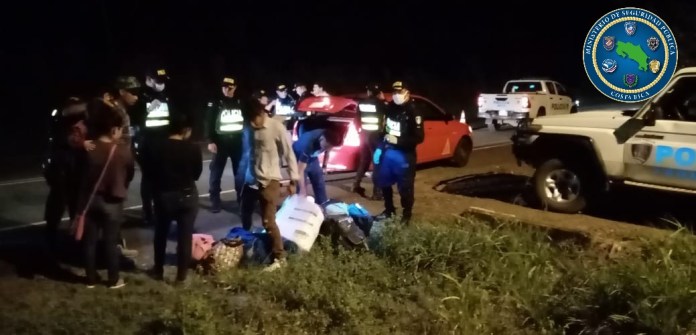


 have to pay US$100, in May it would US$200 and so on.


