The Chilean government celebrated 30 years of democracy in the country. Students, however, staged massive protests to call out the president’s response to income inequality.
As Chile celebrated three decades of democracy on Wednesday, students across the national capital ramped up protests against President Sebastian Pinera over income inequality in the country.
The Chilean government celebrated 30 years of democracy in the country. Students, however, staged massive protests to call out the president’s response to income inequality.
“We must combat violence and care for our democracy,” said Pinera, in a speech at the presidential palace. “Democracy is never guaranteed.”
Chile has seen a series of mass protests against inequality since October last year when the government attempted to raise metro fares. Pinera has been under fire for the strong police response to these protests, including a liberal use of tear gas.
Students have taken an active part in these civil disobedience protests, even blocking public transportation by sitting with their legs dangling over the lines at multiple metro stations. One of the top trending topics on Twitter in Chile has been #FueraPinera or “Pinera Out.”
Chilean dictator Augusto Pinochet handed over power to Patricio Aylwin on March 11, 1990, which marked the country’s return to democracy after Pinochet came to power in 1973. Numerous cases of government excesses — including torture and killings — were reported during this period.
Multiple cases of police brutality have been reported during protests against Pinera, who has been in office for two years. Many opposition legislators chose to boycott the celebratory event at the presidential palace in light of the authorities’ response to protesters.
Pinera addressed the protests during his speech, as he talked about the “many problems that have caused great pain to the soul of our nation and that undoubtedly require the commitment and contribution of all Chileans.”
President Carlos Alvarado and Daniel Salas, Minister of Health, headed a press conference announcing the lastest confirmed cases and measures to mitigate propagation of the covid-19 virus.
The number of confirmed cases in the country with the coronavirus covid-19, rose to 23 this Thursday, the latest a nurse from the San Rafael de Alajuela Hospital, announced the Minister of Health this Thursday afternoon.
President Carlos Alvarado and Daniel Salas, Minister of Health, (with papers before them) headed a press conference announcing the latest confirmed cases and measures to mitigate the propagation of the covid-19 virus.
Health Minister Daniel Salas added that, to date, 206 other suspected cases have been ruled out.
Salas presented, with the presence of President Carlos Alvarado, presented the information at a press conference and reported new measures when entering “a new stage of care”: the second phase of the yellow alert.
Alvarado emphasized that the protection of the country does not only depend on the Ministry of Health, but on all citizens.
Among these measures is the recommendation that citizens maintain a distance of 1.8 meters (5.9 feet) from each other in public spaces, especially in the presence of people with any respiratory symptoms.
“Someone who sneezes or coughs outdoors without covering up properly is threatening the life of a person at risk directly. That sneeze can cause an infection of influenza or the new coronavirus,” said the Health Minister.
For his part, Alvarado explained that being a “very contagious” virus, what is sought with mitigation measures “is a curve (of cases) that is longer in time but flatter”; that is to say, that although the presence of the disease is maintained for a longer time, there are fewer new cases every day, without large peaks, which allows better attention in the health services.
Minister Salas warned that there will be no vaccine soon. There is also no specific treatment, so the only way to attack it is to prevent it.
School closings
President Carlos Alvarado rejected closing schools across the country; only those schools with risk factors will suspend lessons for 14 extendable business days
In such situations, Health orders will be issued to order closure. Currently, there are 16 closed schools, of which six are public and ten private. All are under a Health order.
Among those risk factors are that a student, teacher or official or relative presents positive symptoms. It can also be due to a lack of water, referring to the water rationing program active in various communities, a typical summer or “dry season” condition.
In addition, meetings or gatherings between students or teachers from different educational centers are prohibited.
During the press conference, President Alvarado answered why closure of educational centers is not ordered, saying that “an absolute closure would have a great social impact in other provinces where no risk factors have been identified.”
“The recommendation of the best experts in the country in various fields is what supports these decisions,” Alvarado said.
In this way, he rejected the request made by 24 legislators, who on Wednesday approved a motion to request the suspension of classes countryside for at least 15 days.
“These measures seek to mitigate the peak of the contagion curve, while minimizing the social and economic impact of the emergency,” said Salas.
More measures
Another measure announced today is a 50% reduction in the approved capacity of public gathering sites, such as theaters
The cancellation of all foreign travel by all public officials was also ordered. The Minister invited the private sector to make the same decision.
“That responds to two situations, one is that we have been detecting the cases that have arisen, but we already know that there is a declared pandemic, that there is circulation and we want to collaborate in minimizing the establishment of other chains. In addition, at this time, traveling is an uncertain matter, it may be that they may become stranded, unable to return,” said Salas.
In order to counter the negative effect of the coronavirus covid-19 on the national economy, ColombiaPresident Iván Duque announced several measures to alleviate the most affected sectors, including the creation of a US$250 billion Bancóldex credit line.
In the speech, President Iván Duque (at the podium) did not rule out that his government increased restrictions and decreed that public events that gather thousands of people be canceled.
The president assured that special deadlines will also be established for the presentation of the declaration and the payment of the private settlement of the tax contribution in the tourism sector, corresponding to the first quarter of the year.
Said payment will be in July and not in April, as stipulated.
In the same way, special terms will be established for the payment of the declaration of Value Added Tax (VAT) for the first semester of 2020 and income tax for 2019 for the tourism and aviation sectors will be pushed back to the second semester of this year.
“We are going to modify tariffs to also allow the importation of medical equipment tools and implements in our country and we also want to extend this to the aviation sector, so that we can overcome these adversities with commercial measures that facilitate the arrival of implements and spare parts needed,” he added.
This Thursday the president will attend the Unified Command Post, PMU, to analyze the situation of the coronavirus.
Massive public events canceled
At 3:00 pm today (March 12) all events bringing together more than 500 people have been ordered canceled. “These events should be avoided with the help of local health authorities,” said the president.
Similarly, also starting from today, “the transit of cruises in Colombia is suspended” he said.
Duque pointed out that “In Cartagena, there is a case of coronavirus in an 85-year-old woman who remains in hospital”.
“There is a special circumstance that we have a boat with a point of departure and arrival in Cartagena. A rigorous protocol will be determined to fully guarantee the handling of the situation,” said Duque.
In addition, the match of the Colombian professional soccer that was going to be played this weekend was canceled and, for now, the matches must be held behind closed doors.
The decision was made after the president met with the economic team at the Casa de Nariño (Government House), after the World Health Organization (WHO) declared Covid-19 a pandemic.
Confirmed cases
Colombia has confirmed nine cases of coronavirus covid-19 so far and no deaths reported. Bogotá, Medellín, Cartagena, and Buga (near Clai) are the cities where there are cases.
Argentina on Thursday announced the suspension of international flights from the areas most affected by the new coronavirus covid-19 for 30 days.
Argentina has 31 confirmed cases and the first death reported in Latin America.
A health emergency was also declared for one year, although schools have not been closed nationwide, according to a decree by the Alberto Fernández government.
“We are preparing new intensive care rooms,” among other measures, but “if we do not have the responsibility of each one of us, the risk becomes exponential,” the president warned in statements to Miter radio.
Argentina’s immigration service, in a provision published this Thursday in the Official Gazette, temporarily suspends the processing admission of temporary and transitory residents of foreigners who are nationals or originating from the United States, Europe and China.
The scope of the measure includes migrant workers, renters, pensioners, investors, scientists, athletes, artists, religious, academics and students, as well as those who “wish to enter the national territory with the purpose of performing paid or unpaid work in the scientific, professional, technical, religious or artistic field.”
President Alberto Fernández advanced that an official measure will soon be issued for a mandatory quarantine for citizens arriving in the country from nations with high circulation of coronavirus.
Fernández also pointed out that he is analyzing “suspending the deal with Italy”, the country with the most cases in all of Europe.
Bigger ecosystems like the Amazon rainforest and the Caribbean coral reefs could be in danger of collapsing more rapidly than was previously assumed, a study has found.
A new study has found that larger ecosystems — like the Amazon rainforest and Caribbean coral reefs — can collapse at a faster rate than previously imagined. The time left to prevent this catastrophe is limited, authors say.
Bigger ecosystems like the Amazon rainforest and the Caribbean coral reefs could be in danger of collapsing more rapidly than was previously assumed, a study has found.
The findings, published Tuesday, also indicated that larger ecosystems may disintegrate at a faster rate than smaller ones.
“The messages here are stark. We need to prepare for changes in our planet’s ecosystems that are faster than we previously envisaged,” said Professor John Dearing of the University of Southampton, who led the study published in the journal Nature Communications.
According to the study, once the threshold is passed, the Amazon rainforest could die in 49 years, while the Caribbean coral reefs would take less than 15 years to collapse completely. In the first case, rapid deforestation is seen as the main culprit, while pollution and acidification is the main factor affecting the health of the corals.
“These findings are yet another call for halting the current damage being imposed on our natural environments that pushes ecosystems to their limits,” Dearing concluded.
While large ecosystems take longer to reach their tipping point because of their size, once this point is reached, the deterioration occurs at a faster pace than smaller systems, the study found.
It studied 42 different ecosystems – including terrestrial, marine and freshwater ecosystems – that varied vastly in size. Critics of this study, however, think that this was not enough, as there was no tropical rainforest included in the terrestrial ecosystems studied.
“It is very unlikely, if not dystopian, to expect that an area half the size of Europe will experience a complete shift in vegetation in just 50 years,” Erika Berenguer, a senior research associate at the University of Oxford, told the Reuters news agency.
“While there is no doubt that the Amazon is at great risk and that a tipping point is likely, such inflated claims do not help either science or policymaking,” she added.
However, the study’s authors think that humanity may need to prepare for change sooner than expected, as the Amazon rainforest could reach its tipping point as early as next year.
Dr. Martha Reyes of the Ministerio de Salud de Nicaragua (MINSA) – Nicaragua Ministry of Health, on Wednesday, denied the rumors existing on social networks about the arrival in Nicaragua of the COVID-2019.
Dr. Martha Reyes, director of Health Surveillance
The doctor confirmed on Channel 4’s En Vivo magazine that no suspicious cases of the disease have yet been reported in the country.
Reyes indicated that Health Surveillance provides a daily report of the situation of the coronavirus.
She added that Nicaragua is working on a protocol of care and rapid response to the eventual arrival of the covid-19, which involves strengthening surveillance at the 13 points of entry.
Dr. Reyes said that active surveillance is maintained and preparation is guaranteed in the 19 hospitals designated to care for any suspected case, with trained health personnel, supplies, and available protective equipment.
Likewise, she emphasized the sanitary and hygienic measures that must be put into practice in homes, educational centers and workplaces to contain the transmission, such as frequent hand washing, with soap and water, for at least 20 seconds, before eating, after going to the bathroom, and when the person is sick.
“Another protection measure is to cover the nose and mouth when coughing or sneezing, with the internal angle of the elbow or with a handkerchief, so as not to contaminate the hands and not spray others with the droplets of secretion, and in this way protect to family members, work and study colleagues,” mainly, said Dr. Reyes.
She added that if there is a patient with respiratory symptoms, do not share spoons, forks, and glasses that the sick person uses. In addition, the surface of tables or desks, children’s toys, among others, must be cleaned.
Dr. Reyes also called to go to the health unit when fever or respiratory symptoms occur.
Worldwide, up to this Wednesday, 118,334 confirmed cases and 4,292 deaths from coronavirus are reported. In Latin America, 17 countries are affected by the new virus.
An official statement read Wednesday on state television’s evening news, Cuba announced its first three confirmed cases, saying all three are Italian tourists who developed symptoms while in the city of Trinidad and have tested positive for the virus that causes COVID-19 disease.
The statement also said the three are out of danger.
State television said the Italian tourists who were staying at a hostel after arriving at Havana airport on Monday had presented respiratory symptoms and were taken to a hospital on Tuesday.
The statement from Cuba’s Ministry of Health says a fourth Italian tourist also showed symptoms but tested negative.
The ministry says the patients have been transferred to the Pedro Kouri Institute of Tropical Medicine in Havana.
Over the past 10 days, Cuba has ramped up its campaign on how to ward off the infection, through talks at workplace and community meetings, and through state media.
“We can make (masks) at home using material like cotton, cloth, linen,” according to 5 de Septiembre, the Cienfuegos province state newspaper. “These are washable and we can carry several with us, depending on how many hours we will be in public spaces or areas with a lot of people.”
While residents of other countries have queued up at pharmacies and stores to stock up on surgical and dust masks as the epidemic spreads, these are not usually available for sale to the general population in Cuba.
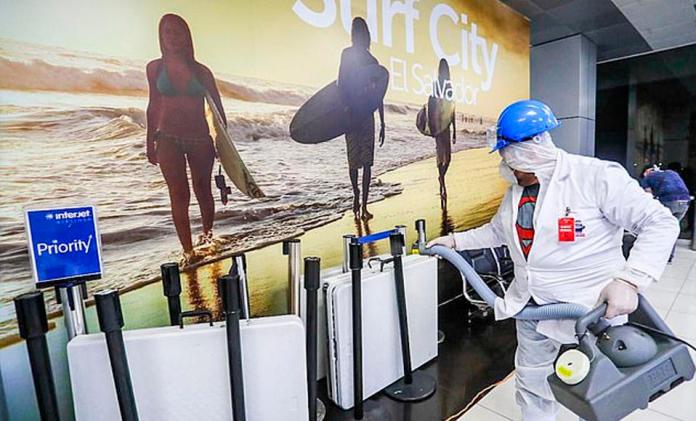
El Salvador’s president Nayib Bukele has imposed a national quarantine that prohibits any foreigners from entering El Salvador for 30 days to try to keep out the new coronavirus.
Bukele also said public and private schools would be closed for 21 days.
El Salvador has no confirmed cases of the virus.
Wednesday’s announcement comes one day after Bukele said residents of Nicaragua, Honduras, and Guatemala would need a passport to enter El Salvador rather than just a national identification card. He reversed that move hours later.
Guatemala earlier Wednesday announced that it would not allow Europeans or citizens from China, Iran and North and South Korea to enter the country.
The Costa Rican embassy and consulate in Italy are arranging the return of 14 Costa Ricans whose flights have been canceled or transferred after the Italian government closed off its borders and declared the entire country as a “protected area”.
The Ministry of Foreign Relations of Costa Rica reiterates that they are in a search for alternatives to repatriate the Costa Ricans.
The Ministry did not indicate if the Ticos have been infected with the coronavirus covid-19.
The letter that Adolfo Hitler sent to the President of Costa Rica León Cortés in 1936 was deciphered by a German pensioner who lives in Alajuela.
In 1936, Hitler wrote a letter of thanks to Cortés for the appointment of Dr. Alfonso Acosta as minister and extraordinary envoy to Germany.
The letter, which is kept in the National Archive, does not have an official translation, precisely because of the difficulty that the calligraphy with which it was written presents to read, even for the Germans, reports La Teja.
Of February 8 of this year Chelles, open since 1909, closed its doors
“Avenida Central” or “El Bulevar” (Central Avenue) in the heart of San Jose, ceased to be “the largest mall in Costa Rica”.
For more than a 100 years Chelles service arroz con pollo from this same corner in downtown San Jose
Now you walk that boulevard and you realize more that the situation, economically speaking, is truly ugly. In each block, you can see closed stores, something that for months has been a constant not only in downtown San José, but also in other provinces.
Of February 8 of this year Chelles, open since 1909, closed its doors
For decades was the Bulevar was the largest and most active commercial retail area in the entire capital.
Among all the recent closings, one that stands out is the “Chelles” bar and restaurant, that stood in the corner of the Bulevar for the last century (opening its doors in 1909), said goodbye on February 8 last.
Chelles drew devotees to its generous casados, bocas, and dishes like the arroz con pollo. Many of the regular patrons had been dining there for decades, though tourists were always welcomed with open arms.
Other closures include the Regis store, starting up in 1958 by the Mainemer family from Poland, this famous store sold fabrics, stuffed animals and clothes. They named Regis because the fabrics they brought from New York were truly royal, according to the book “El que no enseña, no vende”, from the Museum of Contemporary Art and Design.
Arenas Skate & Surf, Extremos, Levi’s and El Parque all are no longer.
Quiznos closed its storefront and moved inside the Universal food court.
Passersby of Bulevar are shocked to see the metal curtains drawn closed. “It hurts my soul to see this, to see the phantom that Central avenue has become, how ugly it looks,” Laura Quesada told La Teja.
“People who complain are absolutely right, this will soon be deserted, there are many closed premises, for the Ticos in this country there is no opportunity for anything,” said Vera Brenes, another passerby.
Though the reasons for the closures are not clear, many will be quick to point that it’s all about the IVA – the Value Added Tax (VAT) – that went into effect last July.
“Everything that is happening is because of VAT. Since that tax began to govern, commerce began to decline and the avenue is already seen as a desert. The closures are happening one after another. The stores open for a month or two and close again, they can’t take it. One feels sad to see this, the situation in the country is really bad, there are many people without jobs,” said Fanny Segura, who works at the Timing boutique.
Gisela Zeledón, the administrator of the store Lux Form store, expressed the same sentiment.
“What has weighed the most is VAT on rents, because it is an additional increase to the annual increases. We had tenants who had to be closed because they did not pay, others closed as usual on Saturday and Monday and emptied their stores, others ended the contract and went to rent in smaller premises. To this we must add that there are very few people buying, they are looking for the cheapest. Stores are empty,” she explained.
“The rent normally is between 40% and 50% of the income of a business, to increase that by 13% was to the last straw”, said Mauricio Scaglietti, Scaglietti store administrator.
To this, Scaglietti adds, “the excess taxes that merchants must face.”
Curiously, the Municipality of San José does not report a drop in the number of permits or in its income.
In 2017 1,745 permits were requested and 1,180 canceled; in 2018, 2069 were requested and 1,140 canceled; while last year 2,047 were requested and 1206 were canceled.
“This situation of closings is a problem that is occurring throughout the country, there is a contraction of the economy that is being felt in many places and we are hopeful that the efforts being made will provoke an economic reactivation,” said Johnny Araya, mayor of San José.
The Starbucks chain informed its customers in North America that they might notice limiting seating at some locations to improve “social distancing” and thus avoid infections of the new covid-19 coronavirus.
In a letter from CEO Kevin Johnson, the boss says some stores could enable mobile order-only scenarios for pickup via the Starbucks app or delivery via Uber Eats. Some locations could be reduced to drive-thru ordering only. Others could close entirely as a last resort. “The world is grappling with an issue of enormous scale and human impact, and our hearts go out to all who have been affected by the outbreak of coronavirus,” Johnson said in the letter.
In Costa Rica, Starbucks operates 14 stores, however, Johnson’s letter specifically targets its North American operations.
The Q was able to purchase these products in La Fortuna. Supply in the San Jose area is limited or non-exitent.
The major supermarket chains in Costa Rica implemented restriction measures regarding the sale of personal cleaning items, antibiotic gels and disinfectants (if they have any in stock) due to the spread of the new coronavirus covid-19 in the country.
The country’s main supermarket chains coordinate with their suppliers to increase the supply of cleaning and hygiene products in their stores in the country, while in the meantime limit purchases
Walmart (Walmart, Mas x Menos, Maxi Pali, and Pali stores), Auto Mercado and PriceSmart confirmed the limit of units sold per person due to the increased demand for these products.
Walmart stores have limited the sale of Lysol sprays, for example, to 3 per customer. Others, if they have stock, which most don’t, have also instituted limits per item per customer.
L
I was able to purchase these products in La Fortuna Megasuper, that has no restrictions on number of purchases.. Supply in the San Jose area is limited or non-exitent. Photo Rico / QCR
uisa Díaz, Quality Director of the Ministry of Economy, Industry and Commerce (MEIC), confirmed that limiting the acquisition of articles is a practice that is not prohibited in the country.
“It is a valid practice, from the point of view of consumer protection, because commerce protects having a product to continue selling and avoids the hoarding of other market agents,” Díaz explained.
Walmart is the major, in terms of the number of stores, 230 in all formats; Automercado has 21 stores; Pricesmart has seven stores in the greater metropolitan area.
Smaller chains like Megasuper, for the time being, have no limit on sales of these products, though their stock is very limited.
The Q did not get a reply from the other chains on their policies during this period.
The fear of catching the coronavirus covid-19 has already caused at least 8,000 confirmed cancellations for travel to Costa Rica, according to Cámara Nacional de Turismo (Canatur). – National Chamber of Tourism.
Tourist activities in Costa Rica will also be affected by cancellations for travel to Costa Rica
Canatur said various sectors of national tourism have already begun to report “strong effects” between cancellations, change of itineraries and a decrease of future reservations.
The sector report comes just a day after the Ministry of Health confirmed 22 cases of the covid-19 in Costa Rica and on the same day when the World Health Organization (WHO) declared a pandemic.
Also on Wednesday, the U.S. Government ordered the suspension of all trips from Europe, which could translate into an additional impact on Costa Rica’s and international tourism in general, which is expected to lead to more local cancellations.
Even before the Canatur revealed the results of its consultations with its affiliates, it was evident that the rate of cancellations had intensified this week, “which is hitting the tourism industry hard in the height of the high season,” Canatur said in a statement.
The Cámara Costarricense de Hoteles (CCH) – Costa Rican Chamber of Hotels – reports more than 8,000 hotel nights have canceled, so far, some for the month of March, but mainly for April, May, and June. Likewise, it projects a decrease in future reservations that ranges between 5% and 50% in different hotels and areas in the country.
The Asociación Costarricense de Agencias de Viajes (ACAV) – Costa Rican Association of Travel Agencies – indicated that the issuing agencies have had to cancel almost 90% of reservations made to Europe and the Far East, and future reservations have fallen by 50%.
For its part, the Asociación Costarricense de Operadores de Turismo (ACOT) – Costa Rican Association of Tour Operators – reported that some of its affiliates reported significant cancellations by groups of Japanese tourists and student groups, mainly by Americans, who had planned to enjoy their spring break in the country.
Although March presents cancellations, one of the situations that most worries the sector, is the downward trend in reservations that has been seen, practically, in tourist activities.
Canatur urgently called on the Government to take this into account and implement support measures for entrepreneurs, in order to avoid an economic collapse that leads to massive layoffs and the inability of businesses to meet their obligations.
One of the concerns of many, voiced on social networks and water coolers around the country, is what happens if the get the virus, the coronavirus covid-19, while at work.
The Instituto Nacional de Seguros (INS) – the state insurer – has stated salaried employees who are infected by the covid-19 in the performance of their job will be covered by the Work Risk Policy).
The payment of subsidy for payment of temporary disability, according to the Labor Code, corresponds to 60% of the worker’s daily salary during the first 45 days; from the 46th day and until the 730th (the max), this subsidy corresponds to approximately 85% of the daily salary.
About 1.5 million workers have this INS coverage, a policy that must be acquired by all employers in Costa Rica.
INS president, Elian Villegas, explained that the coverage is activated only when the person is infected with the new coronavirus on the job.
For those people who are infected outside their work centers, the policy is not valid. In this case, it is the Health and Maternity Insurance (SEM) of the Costa Rican Social Security Fund (CCSS) that is responsible for the person’s health and salary.
“For example, Occupational Risks covers a journalist who is going to interview a person sick with coronavirus and gets it there, precisely because their were doing their job. If a doctor acquires the virus, but was on vacation outside the country or in the country, then in this case it would not be covered. Only people who can be infected in the exercise of their job,” explained Villegas.
The Occupational Risks police also covers the death of the insured: the spouse will receive for 10 years an annual income equivalent to 30% of the deceased’s annual salary and minors of the insured will also receive a benefit, from 20% to 40%. If there are no children, the spouse’s benefit payment will be 40%.
It is still being investigated how this 54-year-old man contracted the virus. Image for illustrative purposes. Photography: Andrew Theodorakis / Getty Images / AFP
How did covid-19 get to the Alajuela Hospital doctor, a 54-year-old man who became the superdisseminator? He is currently the source of infection for 16 of the 22 people who have been confirmed with covid-19.
Although the CCSS is still investigating how this 54-year-old man contracted the virus, it is focusing on the recovery of the patient.
The man is in a delicate condition at Hospital México.
There is no answer to the question of how that first contagion was, the same one that became the starting point for three-quarters of the patients with the disease in the country.
What is known about this man is that he traveled to Panama, to the Tocumen international airport (PTY) in Panama City, where he met his aunt and a niece of the woman (whose link to him is unknown) who came from Cuba.
He traveled to Costa Rica with the two women.
At the moment, the Health Surveillance authorities of the Ministry of Health have three scenarios: the first is that this man has been infected here in Costa Rica by someone who had not registered symptoms (less likely possibility).
The second is that he, at some point, was infected at the Tocumen airport, one of the largest and busiest in the region, by someone a person with the virus (either with or without symptoms).
The third possibility is that the virus came from Cuba and that, instead of he being the one who infected his aunt, it was the other way around.
On Wednesday Cuba reported 3 confirmed cases of the coronavirus covid-19. Before yesterday, Cuba had not reported any cases. Meanwhile Panama has now reported 8 confirmed cases and one death, of the two deaths reported in Latin America.
CCSS focused on recovery
Faced with inquiries about an eventual investigation into the actions of the medical professional, given the way in which the disease spread, the Caja Costarricense de Seguro Social (CCSS) – also known as the Caja – executive president, Román Macaya, stated that for now they are concentrating on seeking his recovery.
Macaya reiterated that the contacts the doctor made, of which 16 were already positive, were made before the diagnosis of covid-19.
The CCSS president added that, as it was happens he is an employee of the Caja, but it could have well been a bus driver or any other peson who would have been exposed to a large number of people before showing symptoms and being diagnosed.
“This virus on average infects two to three people per case;here we have 16 directly or indirectly associated ”, Macaya said.
The Caja president added that “It is a very rare case in the epidemiology of this disease, given that it is normal for two or three to be infected for each person. This doctor already has 16 cases associated directly or indirectly to him.”
This phenomenon is known as superdissemination, and, although it is rare, it has been seen in the United Kingdom and South Korea. In the latter, a 41-year-old woman, spread the disease to 37 people.
The number of those infected with covid-19 in Costa Rica reached 22 in Costa Rica, the Ministry of Health reported Wednesday afternoon.
They are people between 10 and 73 years of age; fourteen women and eight men, two of which are seniors and two minors.
Of the 22 patients, 16 had contact with the doctor from the San Rafael de Alajuela Hospital, a 54-year-old man, who had recently traveled to Panama, who became the superdisseminator of covid-19.
Of the infected,19 are Costa Ricans, three Americans, including the first confirmed case of an American woman arriving from New York, not showing symptoms on arrival on March 1 and her husband, who has tested positive but is still asymptomatic; the third American is a resident of Costa Rica who recently traveled north.
The confirmed cases are in the provinces of San José, Heredia, Guanacaste and Alajuela.
Twenty of those affected remain at home, only two are hospitalized, including the doctor, who remains in intensive care.
When asked about an eventual investigation into the actions of the doctor, given the way in which the disease spread, the CCSS executive president, Román Macaya, stated that for now they are concentrating on his recovery.
Macaya explained that the contacts infected by the doctor were made before he was diagnosed with the covid-19.
“As it happens, he was an employee of the Caja, he could very well have been a bus driver, who was exposed to a large number of people before a diagnosis. That shows how contagious the virus is. This virus on average infects two to three people per case; here (with the doctor) we have 16 directly or indirectly associated”, he added.
Health also confirmed that there is a pregnant woman in the infected, this information came to light out because she herself made it known on social networks. She is 39 years old and is in her 17th week of gestation.
Authorities explained that data from the World Health Organization (WHO) indicate that pregnant women do not seem to have an increased risk of severity due to the disease. In an investigation with 147 pregnant women (64 confirmed, 82 suspected and one asymptomatic), only 1% became critical.
The groups at greatest risk are diabetics, heart patients, the hypertensive, elderly and those with lung diseases, as well as cancer patients or diseases that compromise their immune system, who face this virus with greater severity.
The cases in Latin America this Wednesday night is as follows:
Mexico: 8 confirmed cases, 0 reported deaths
Guatemala: 0 confirmed cases, 0 reported deaths
El Salvador:: 0 confirmed cases, 0 reported deaths
The Bolsa Nacional de Valores (Costa Rica’s National Stock Exchange) said it received a request for authorization of a new stock exchange post, which would be called Iberoamérica Capital, Puesto de Bolsa.
In a press release on March 6, the Bolsa Nacional de Valores explained that in the coming “… 10 working days, counting from the working day following this statement, any observation on the managers, shareholders, administrators or legal representatives that could evidence the non-fulfillment of the requirements of honorability established by the regulations can be received.”
The official document details that the manager of this file is Julia del Carmen González Chue, whose participation in Iberoamérica Capital, Puesto de Bolsa S.A. will be “… 9,900,000 common and registered shares of 30 colons each, for a total of ¢297,000,000, representing 99% of the capital stock.”
The press release adds that the “… share participation of María Cecilia Moreira Salas, will be 100,000 common and nominative shares of 30 colones each, for a total of ¢3,000,000, which represents 1% of the capital stock.”
The facilities of the Alajuela hospital were thoroughly cleaned on suspicion of Covid 19, in 165 cases of its workers. Photo: CCSS
The alert at the Alajuela hospital and the closure of 4 public schools in Desamparados had as a starting point: a beloved official of the medical center.
The Alajuela hospital got a thorough cleaning on suspicion of Covid-19 in 165 cases of its workers. The hospital closed its outpatient services on Monday for three days
While the Ministry of Health and the Costa Rican Social Security Fund (CCSS) prepared the ground so that the eventual arrival of the coronavirus to Costa Rica did not hit hard, one of its officials became the main source of the virus that has us all on alert.
A 54-year-old man, a San Rafael de Alajuela Hospital official, had direct contact with five of the 13 confirmed cases and 165 of the 179 suspected cases that are currently being analyzed at the Instituto Costarricense de Investigación y Enseñanza en Nutrición y Salud (Inciensa) – Costa Rican Institute for Research and Teaching in Nutrition and Health
This was reported by the Minister of Health, Daniel Salas, on Tuesday.
Those 165 people with suspicion of being infected are employed at the Alajuela hospital
“The number of suspicious cases that this 54-year-old man has generated has been very high,” said Daniel Salas
A teacher at the El Porvenir de Desamparados school was in contact with the CCSS worker and through her, the affectation has been made to the other two centers where her children study, the two minors confirmed with COVID-19.
“We know that he visited the Panama airport during the incubation period and that he went to meet an aunt who came from Cuba, but it is not known exactly where he got the virus.
“The samples of three Japanese from a group of thirteen who were in the northern zone are being analyzed. The other (ten) visitors have no symptoms,” said Minister Salas.
Of the 13 confirmed cases, only the CCSS official and his 73-year-old aunt are in hospital, the rest are being kept isolated in their homes,
Chinese ride-hailing platform DiDi Chuxing on Monday announced its launch of operations in Panama as part of its expansion plan in Latin America.
According to DiDi’s general director for Central America, Pablo Mondragon, Panama will be the company’s second Central American market, after Costa Rica, where it began operations in November, reports Xinhua News Agency.
The route that connects the capital with San Ramón de Alajuela will be subjected to an emergency intervention to improve the shattered nerves of those who have to travel along it.
At present, a trip that in efficient conditions would take just over an hour between San Ramón and the capital, consumes up to half an hour more, in rush hour; This is because the road no longer can handle the high number of vehicles that circulate. With 17 minor works, congestion will be alleviated, La Republica reports.
The Ministry of Health issued a closing health order to the Blue Valley private school in Escazu, after confirming that a parent tested positive for the coronavirus covid-19. Both the father and son (student at the school) are in quarantine.
The school, with 1,000 students, will remain closed for 10 business days, confirmed the Ministry of Health.
In addition, Lincoln College, a private school in Santo Domingo de Heredia, reported that it sent home a group of high school students who last weekend were in direct or close contact with an infected man.
The school will remain closed until Friday, March 13, to allow for complete disinfection of the halls and common areas.
Lincoln College said they will take advantage of the following days to test the technology for virtual classes on days the school is closed.
“We want to emphasize that so far none of these students is ill or is a suspicious case. At Lincoln School we are taking all necessary precautionary measures to protect community members from the possibility of contagion by covid-19,” the school said in a statement.
Four public schools closed. The Ministry of Public Education (MEP) has reiterated that, for the moment, it will not suspend the academic year for public schools because the virus has had a statistically mild affectation in minors.
However, on Tuesday, four public schools in Desamparados, San José, were closed due to the detection of a case in each of the education centers.
The schools are, the Escuela Reverendo Francisco Schmitz, in El Porvenir; the Colegio Técnico Profesional Máximo Quesada; the Monseñor Rubén Odio; and the Liceo Nocturno de Desamparados.
As of Tuesday afternoon, Costa Rica has 13 confirmed cases of the covid-19 and 179 suspicious that are awaiting test results.
The Minister of Health, Daniel Salas, called again on the population to apply hygiene measures to delay the eventual transmission of the virus.
“The most important measures are not only those taken by the Government but those assumed by the population,” Salas reiterated in reference to the practice of handwashing and sneezing and coughing protocols.
Panama's Health Minister Rosario Turner announces the first death by coronavirus in the country in Panama City, on March 10. Luis Acosta/AFP/Getty Images
Panama. The Minister of Health of Panama, Rosario Turner, confirmed Tuesday afternoon the first coronavirus covid-19 death, a 64-year-old man school principal
Panama’s Health Minister Rosario Turner announced the first death by coronavirus covid-19 in Panama City on March 10.
It is the first covid-19 death in Central America.
The man, who had also suffered from diabetic complications and bacterial pneumonia, died on March 8, but it was not until Tuesday when authorities determined that the cause was covid-19.
Also, Panama’s Health authorities reported that the number of coronavirus covid-19 infections rose to 8 – one of them in intensive care – and that there are 66 suspicious cases. On Monday, Panama announced the first case, a 40-year-old woman who returned to the country from Madrid.
Turner said the victim was a school principal where two teachers tested positive for covid-19. In view of that situation, authorities suspended classes at that campus and others from Central Panama, North Panama and the suburb of San Miguelito until April 7.
The government ordered the suspension of all massive events, including fairs and sports activities.
The minister said that the majority of those infected are “without respiratory distress” and remain at home.
In the region, Mexico (7), Costa Rica (13) and Panama (8) have confirmed cases of the coronavirus covid-19.
Expomóvil 2020 has been suspended until further notice before the cancellation of massive events by COVID-19.
Car lovers will have to wait to visit the Expomóvil 2020 as it joins the list of massive events that will be suspended following the guideline issued by the Costa Rican government in the presence of the new coronavirus in our country.
“Once the state of emergency is over, the Expomóvil 2020 will be duly rescheduled,” said the Association of Vehicle Importers said in a statement and Machinery (AIVEMA) in a statement.
Among other cancellations or suspension is Guns N´Roses, and Soda Stereo concerts, the Transitarte Festival, the X-Knights, the Costa Rica Music Festival, as well as the Salsa Fest, among others
The measure will be maintained for at least two weeks, at which time it will be reassessed and more decisions will be made.
The Government of Carlos Alvarado said it will use all available resources to address the coronavirus, so cancellation of mass events and teleworking are part of the measures to be used to avoid the spread of infection.
The Ministry of Health confirmed Tuesday at noon that the suspected number of cases of the Coronavirus COVID-19 went from 11 to 179 in the last hours.
The Minister of Health, Daniel Salas (center) during a press conference Tuesday mid-day
At this time 59 cases have been ruled.
As to the confirmed cases, the number remains at 13, two of them an 11-year-old girl and a 13-year-old boy.
According to Daniel Salas, Minister of Health, 165 of these people, with respiratory symptoms, had some degree of relationship with the 54-year-old doctor at the San Rafael hospital in Alajuela, who remains in intensive care.
Rodrigo Marín, director of Health Surveillance, at the Ministry of Health, confirmed that of the 13 confirmed cases, only two are admitted to hospital: the doctor and his 73-year-old aunt; the rest are in isolation in their home or hotel, as the case of an American tourist couple – the first confirmed case – who arrived in Costa Rica in with the infection on March 1, but did not display any symptoms. In fact, the husband, although testing positive for the virus, continues asymptomatic.
In a mid-day press conference, the Minister confirmed that mitigation measures announced seek to delay active community transmission, when there are already many people who are infected more frequently in one place.
“The most important measures are not only those taken by the Government, but those assumed by the population,” Salas reiterated, referring to the practice of handwashing and the protocol of sneezing and coughing, not greeting with a handshake, hug or kisses, and not going to massive activities such as concerts and sporting events, especially those who have risk factors.
Salas clarified that it is not yet possible to affirm that the 165 people have the covid-19.
“We cannot say that they will be positive. Some may and others not. It would be an unlikely scenario for all 165 to be positive,” said the minister.
The Minister of Health said it is impossible to disrupt life in Costa Rica with drastic measures as has been adopted in other countries, alluding to Italy and Isreal and that later today the government will issue a decree as a guideline to public institutions.
Minister Salas confirmed that no activity may be carried out that requires Health authorization, for example, concerts, public shows, fairgrounds, bullfighting activities, among others.
The ministry of Health is expected to issue a decree later today to that include measures to reduce the propagation of infection
Businesses such as bars, cafes, sodas, movie theaters and hotels, as well as shopping centers, farmer’s markets, and churches are not subject to regulations. “We cannot paralyze society, we cannot panic,” concluded Salas.
An issue facing the country is that Costa Rican legislation does not provide for a leave of absence for employees who could be isolated while confirming infection of the Covid-19 or are confirmed.
This causes uncertainty about the salary of employees who could face this situation, as well as job security.
Given the legal vacuum faced by employers and employees in these cases, the head of the Ministry of Labor and Social Security (MTSS) said it will send a bill to the Legislature in the coming days.
This initiative would reform the Labor Code and the General Health Law, to protect the worker in case of being isolated.
“We have made an analysis and we have a lack in our regulations,” said Geannina Dinarte, Minister of Labor.
The Minister clarified that, once the contagion is confirmed, the salaried worker will be covered with sickness insurance of the Costa Rican Social Security Fund (CCSS), as with any health situation.
The labor law expert of the BLP firm, Randall González, explained that there is also another scenario in which employees could become disabled: “If the disease spread in the workplace, the employee could be disabled due to occupational risk”.
In addition, he warned that the health guidelines provided by the employer are mandatory for all employees. Failing, they could be exposed to penalties.
“The employer has the obligation to provide internal guidelines or recommendations within the organization and is mandatory for the worker, in order to avoid the possible spread of the disease,” said Gonzalez.
Dinarte also recommended that employers insitute telecommuting measures, especially with those workers who might have symptoms.
“We need to ensure that people with some symptoms do not arrive at the workplace to avoid contagion. There are resources available to avoid them, such as disabilities, in case they are able to do so, or through other mechanisms such as teleworking or vacations by prior agreement,” said Minister Dinarte.
Regarding medical care, employers cannot prohibit their workers from receiving medical evaluation; In doing so, the employee could file a complaint with the Ministry of Health for breach of their rights.
Archive photo fo a criminal trial courtroom in Costa Rica.
A photographer, identified by his last names Núñez Romero, requested a special abbreviated process and accepting guilt for being part of a child pornography network that operated in Costa Rica between 2009 and 2017.
Archive photo fo a criminal trial courtroom in Costa Rica.
With the request by the accused, the open trial that had been scheduled for later this month was suspended. A private hearing will be held where the guilty plea will be entered and sentence defined.
The man was charged with the trafficking in persons, rape, and production of child pornography against 26 girls who dreamed of becoming professional models.
The victims lived in vulnerable areas of the country and according to reports from the Organismo de Investigacion Judicial (OIJ), the material was sold abroad, in countries such as Mexico and Brazil.
In July 2019, another defendant – considered a partner of Núñez Romero – pleaded guilty in an abbreviated proceeding for which he was sentenced to 797 years in prison which, due to the rules of process, he will actually only spend 39 years behind bars.
Frustrated dreams
The OIJ said the victims (minors) were between 10 and 15 years old. Most were recruited in vulnerable areas and deceived with the illusion of becoming international models.
“The videos could only be seen in countries in North America, Europe, and Asia, so the research was extremely complicated, so he had to resort to technological tools to obtain the evidence,” said Walter Espinoza, head of the Judicial Police.
Naked photos and videos of the minors were taken while the parents waited in a separate room. Allegedly the parents had signed permits that allowed the naked photos.
According to the investigation, up to 26 minors were seduced and were also raped. Apparently, the accused carried out casting sessions, where they chose the victims and then, under threat, forced them to have sexual relations.
In 2011, Roman and Cody Dial visited Taktsang Monastery in Bhutan. Courtesy Roman Dial
Roman Dial hoped his son would be his outdoor partner for life. But that dream ended when his son disappeared in Costa Rica’s wilderness. Dial’s new book is The Adventurer’s Son.
In 2011, Roman and Cody Dial visited Taktsang Monastery in Bhutan. Courtesy Roman Dial
After two years of his frantic search, the remains appeared and accidental death was determined. In his book ‘The Son of the Adventurer’, just published, Roman travels the thorny road traveled. What were the collateral damages?
Dial is known for his skills in mountaineering, rafting and backcountry endurance racing. He shared those passions with his son, Cody Roman. Over the years, father and son embarked on exotic adventures together, once packrafting in Australia, another time venturing into Arctic Alaska.
“He was a great outdoorsman,” Dial says of his son. “I kind of hoped that he would be an outdoors partner for me for life.”
In an email to his parents shortly before entering Corcovado National Park, in Osa, Puntarenas, in mid-July 2014, Cody wrote “I am not sure how long it will take me, but I plan to do four days in the jungle and one day to leave. I will be limited by a path to the west and the coast on the other side of the road, where it should be difficult to get lost forever.”
“It should be hard to get lost forever.” The phrase would resonate hundreds of times for the elder Roman, as he said in an interview with the ABC network, already when the disappearance of Cody was in the months and decided to, beyond every reasonable effort, to know what had happened to his son.
“I was racked with a lot of feelings, like terror and guilt and urgency,” Dial says. “I got an airplane ticket to fly [to Costa Rica] the next day.”
What this whole … process has shown me is that for 40 years I was extremely selfish in that I would go out and do risky things because it was a thrill that made me feel good, and I never really realized that when we die we’re dead and we don’t feel anything. Roman Dial
Jazz and Cody Dial
Upon entering Corcovado, Cody intended to conduct training and then make an expedition to the Darién area, “one of the most dangerous places on earth,” the remote jungle between Colombia and Panama, “plagued by guerrillas, drug traffickers, and mortal wildlife”, as he had written to his friends via email.
Finally, in 2016, a Costa Rican miner found Cody’s body in the jungle. “It was in a shallow canyon that was only about half a mile from where I’d camped multiple times looking for him,” Dial says. There was no sign of foul play.
Dial’s new book, The Adventurer’s Son, is an account of his search for Cody, as well as a reflection on the risks of extreme wilderness adventures.
An excerpt from the bestseller published by The New York Times sheds light on the extreme passion of the dead son in his risky adventures: “It was this bold nature that led him to begin training for an expedition to the Darien Gap…Like many children, he minimized the dangers to his parents, consulted with his father on the best way to obtain fresh water while writing to his friends about traveling ‘through the North American cocaine center and the world capital of murder’. As a practice for the Darién Gap, he decided to sneak into the Corcovado National Park of Costa Rica … where he was lost forever.”
On his action plan when he began looking for Cody, “I called the (U.S.) embassy and I said, ‘My son is missing,’ but I wasn’t hoping they were going to do anything. I wanted to go down there and do everything that I could. I thought it was my responsibility, not theirs.
Park rangers inspect the site where the remains of Cody Roman were found on May 20, 2016
“When I got there, I discovered that they weren’t even looking where I said he planned to go. They were pursuing this lead where somebody had seen my son, they claimed with this local drug dealer [Pata de Lora] walking on a trail outside of the park, and that just didn’t add up to me.
“My son’s been sending these emails for months about these wild adventures he’s been going on, and he’d said explicitly that he eschewed guides, and here he was with a guide on a tourist trail outside of the park? It just didn’t add up. But everybody treated me as if I was just a typical parent who didn’t really know their child,” said Dial.
In an interview highlight with NPR on agreeing to work with a former DEA investigator and TV production company that wanted to solve the mystery and do a TV show about his son’s disappearance, Dial said “There were three cameramen and bright lights … [the investigator said] Look, this is really hard to tell you, but we found out that your son was abducted by miners and then he was murdered. And then he paused. He said, ‘This is the hardest part to tell you. He was dismembered and fed to the sharks in the ocean.’ And it was all predicated on the Pata de Lora [drug dealer] story.
“I was just shocked because here I had come down and I signed up for this TV show hoping that they would be able to help me, but instead, all they had done is sort of staged this really dramatic moment … with the cameras rolling, they had this expert investigator tell me that my son had been murdered and dismembered and fed to sharks. And all I could think of is, Oh, no. Another Pata de Lora story. This is not the guy that I want.” So it felt really exploitative right there.
On learning that his son’s body had been found: “The consul general at the embassy … said, Roman, a body has been found near Dos Brazos, and we think it may be your son. There was some camping gear there. … I fly down to Costa Rica immediately. I want to get to this site before they start bringing stuff up. And the next day … the embassy sends me some texts and it’s their photographs of the equipment that they’ve found at the site. And sure enough, it’s all my son’s stuff.
“I’d made a poster of equipment that he would have had, like a reward poster. There were the green shoes that I put on the poster. And there was the sleeping pad that was yellow on one side and silver on the other. There was that in one of these photographs. And there was the backpack that I’d found that he’d bought in a North Face store in San Jose. … There was a blue headlamp that I’d given him in Anchorage. And there was the compass that I’d given him in Anchorage. And there was his stuff. And it was him.”
On what he believes happened to Roman: “[The forensic anthropologist] said, We looked at the bones and there’s no sign of trauma. There were no machete hack marks on the bones. There were no bullet fractures. … It seemed like he hadn’t been murdered. I can’t see why somebody would have murdered him in the bottom of this canyon. It looked to me like maybe a tree had fallen on him or one of the rangers said they thought that a snake had bitten him because they found a fer-de-lance [snake] down there, and fer-de-lances, they live in the same area, small area their whole life. They don’t go very far.”
After activating the alerts in the different rescue bodies in these cases, such as the Costa Rican Red Cross and the Air Surveillance Service of the Ministry of Public Security and the local press already reporting on the stray young man in Corcovado, Roman Dial made his anguish public and concern: “He should have returned ten days ago, and he always informs us. But we have not heard anything and we are worried,” said the man to Costa Rican authorities shortly before making the first of 20 trips to the country to try to find his son.
Twenty trips in a period of almost two years in which the desperate dad became increasingly obsessed, kept track of different versions of locals who claimed to have seen a young man with the characteristics of Cory in a calamitous, wandering state. Others said they had seen him join a guide that others described as a supposed criminal.
Roman came and went, sometimes accompanied by a former DEA agent, because having not found a clue of the young man for months and months, Roman tried to mount his own search.
“In Costa Rica there is no crime without a body. I have spent a year and a half looking through the Osa Peninsula. I’m tired, exhausted (…) I don’t want to go there again, but I will. Because without our presence, it seems that nothing happens. I went there first to find him alive, lost or injured. Later, I find out what happened. Now I want justice,” wrote the Roman in his blog The Roaming Dials.
In the end, his search was reviewed by a documentary series by NatGeo, Missing Dial, which documented the lines of research that Roman and the ex-agent had followed with interviews of the locals. The documentary practically concluded that Cody’s disappearance had been at the hands of criminals.
But then, in an unusual grimace of fate, on May 20, 2016, just two days before the NatGeo documentary premiered, park rangers found what would be Cody’s human remains and personal objects 75 meters from the quebrada Doctor, in the near the cerro Negrito. The site is about three hours walk from the community of Dos Brazos del Río Tigre, in Puerto Jiménez de Golfito.
Roman and Peggu Dial with the head of the OIJ, Walter Espinoza (in suit)
Roman and his wife Peggy, traveled to Costa Rica in the middle of a tremendous emotional maelstrom, finally relieved after being able to close their son’s story and publicly thanked the authorities and the people of Costa Rica for their help and support throughout the process “Losing a child can be the worst thing that can happen to one. I’d rather have died before losing my son. I thank all Costa Ricans,” said Dial.
With the fate of Cody now known, the airing of the NatGeo documentary – with the homicide hypothesis – generated great reaction in social networks by national viewers, who complained at the time of the great irresponsibility of National Geographic for the damages caused to the image of Costa Rica and the residents of Corcovado.
There were also those who understood the father’s despair, but stressed that the young man had entered the dense jungle on his own, without complying with the safety recommendations that all visitors to the park should follow.
The result is the bestseller, a book that contains 50 black and white photographs and a stark-and detailed-account of what happened during the almost two years of uncertainty, without knowing what had happened to “the one I have loved the most,” as he refers to his firstborn.
In his story, Dial travels between the joy of happy memories, pride in Cody’s fierce adventurous spirit and a kind of reflection / self-expiration for, perhaps, just perhaps, having let his son go too far in his eagerness adventurous.
The Ministry of Health (Ministerio de Salud) confirmed this Tuesday morning (March 10) that there are now 13 people in Costa Rica with Coronavirus Covid-19. Of these, eight were in contact with the 54-year-old from Alajuela man who is still in intensive care.
Of the 13 confirmed cases, three are American:
A 49-year-old American woman
A 49-year-old American man, husband of the American woman. He continues asymptomatic.
A 54-year-old Costa Rican man, who remains in a delicate condition.
A73-year-old Costa Rican woman, who came into contact with 54 year old man.
A 41-year-old Costa Rican woman, who came into contact with 54 year old man.
A 54-year-old Costa Rican woman, who came into contact with 54 year old man.
A 56-year-old Costa Rican woman, who came into contact with 54 year old man
A 34-year-old Costa Rican man, who came into contact with 54 year old man.
A 52-year-old Costa Rican man, who came into contact with 54 year old man.
An 11-year-old Costa Rican girl, who came into contact with 54 year old man.
A 13 year old Costa Rican boy, who came into contact with 54 year old man.
A 54-year-old Costa Rican man, with epidemiological link under investigation.
A 70-year-old American woman, resident in our country, with a recent travel record to the United States, and passed through two airports in that country.
These confirmed cases are in San José, Heredia, Guanacaste and Alajuela. All of them are isolated in their homes or in medical centers, with constant monitoring by health professionals and health authorities. All are reported stable except the 54-year-old man, who is in delicate condition due to an underlying condition.
In addition, there are 11 people suspicious cases between nationals and foreigners, that, according to a statement from the Ministry of Health, the “vast majority” were in contact with the 54-year-old man.
To date, 59 people have been ruled out of being infected.
Panama activated the epidemiological surveillance protocols last week at airports, ports and other points of entry into the country Social Networks
Panama has confirmed its first case of the Covid-19. The patient is a 40-year-old Panamanian woman, Panama’s Health Minister Rosario Turner reported last night in a press conference.
Panama last week activated the epidemiological surveillance protocols at airports, maritime ports and other points of entry into the country
Minutes before, Panama President Laurentino Nito Cortizo, confirmed the information through his Twitter account.
According to Minister Turner, the patient arrived in Panama Sunday afternoon from Madrid, Spain. She arrived in the country on Iberia flight 6339.
Although from the moment she arrived in Panama she had some fever and cough, it was not until Monday morning when she went to the Dr. Arnulfo Arias Madrid Hospital Complex of the Social Security Fund and there she was treated, according to the protocols established last January, Turner said.
The positive confirmation of this patient’s coronavirus Covid-19 was provided to the authorities of the medical center at about 7:00 pm, the minister’s press conference was held shortly after 8:30 pm.
The woman is isolated at home and will receive daily visits from health workers.
The virus that causes the COVID-19 has also been confirmed in Latin America: in the Brazil (25), Argentina (17, one death), Chile (13), Ecuador (15), Peru (9), Costa Rica (9), Mexico (7), Colombia (3) and Paraguay (1).
Click here for the latest on the Coronavirus around the world.
The doctor is admitted to the San Rafael de Alajuela Hospital, where he also works. This health center, until March 11, even suspended appointments with medical specialists as part of the measures to prevent the spread of covid-19. Photo: Jorge Navarro
There is not enough information, or so far it has been made public, about the way in which a specialist doctor at the San Rafael de Alajuela Hospital contracted the coronavirus covid-19 and infected at least five of the nine confirmed so far.
The doctor, one of the 9 confirmed cases of covid-19, is in the intensive care at San Rafael de Alajuela Hospital in Alajuela, where he also works.
The case was defined on Monday by the Minister of Health, Daniel Salas, as atypical; Therefore, it is still under investigation.
The only thing that is known, officially, is that this 54-year-old man went to receive a 73-year-old aunt at the Tocumen airport in Panama City, and three days later he presented symptoms.
The trip and the symptoms would have occurred over the past week, between Monday, March 2 and Thursday, March 5.
His condition as a diabetic would have complicated his general condition, which merited his admission to the Intensive Care Unit of the public hospital. This Monday, the Caja Costarricense de Seguro Social (CCSS) reported the man has shown some improvements but maintains in intensive care.
The aunt, Salas said, came from Cuba and although she is also one of the nine confirmed cases of covid-19, she has not developed the usual symptoms: fever, tiredness and dry cough. Some patients may have pains, nasal congestion, rhinorrhea, sore throat or diarrhea.
These symptoms are usually mild and appear gradually, as reported by the World Health Organization (WHO).
The people that the Ministry of Health identifies as contacts of this doctor are the following:
A 73-year-old woman, Costa Rican, an aunt of the doctor.
A 41-year-old woman, Costa Rican, caregiver for the 73-year-old woman.
A 54-year-old woman, Costa Rican.
A 56-year-old woman, Costa Rican.
A 34-year-old man, Costa Rican.
Until late Monday night, March 9, the Ministry of Health recorded nine confirmed cases in Costa Rica by covid-19 and 22 suspicious cases awaiting laboratory results. Another 35 suspected cases were ruled out. They are people who live in the provinces of San José, Heredia, Guanacaste and Alajuela.
The information was confirmed by Mario Ruiz Cubillo, medical manager of the Ministry of Health. The samples were sent to the Centro Nacional de Referencia en Virología. (National Reference Center in Virology).
The 75 people who underwent the analysis had some type of contact with the doctor at the San Rafael de Alajuela Hospital, that is temporarily closed its outpatient care; Patients with a medical appointment and scheduled operations between March 9 and 11, inclusive, will have to reschedule.
Since December, the Alajuela hospital has been the subject of an accompaniment process by a team from the Caja’s Medical Management after serious problems were detected in the management of medical services.
The Alajuela hospital employes some 1,600 people. It serves a population of about 700,000 in the province of Alajuela.
A DNA test confirmed that the bones found in February on the slopes of the Barva volcano in Heredia belong to Karolay Serrano, 25.
According to the OIJ, the young mother is believed to have been murdered on August 12, 2019, by a minor and his accomplice, who were hired by the Serrano ex-boyfriend.
Rosmery Cordero, Karolay’s mother, confirmed the OIJ delivered her the bad news today (Monday), reported La Teja.






 The Instituto Nacional de Seguros (INS) – the state insurer – has stated salaried employees who are infected by the covid-19 in the performance of their job will be covered by the Work Risk Policy).


