The President of El Salvador, Nayib Bukele, confirmed on Wednesday night the first positive case of the new coronavirus (Covid-19).
The Salvadoran president assured that it is a patient who allegedly entered the country illegally.
El Salvador has been on lockdown, one of the first countries in Central America to bar the entry of foreigners.
The case was located in the department of Metapán, where a health shield has already been installed for 48 hours. “Today, more than ever, we must be united,” said Bukele.
According to the press secretariat of the presidency of El Salvador, the patient is isolated and “it is very likely that he entered the country through a blind spot.”
“Just as we deal with the first stage of virus prevention, we will also continue working to contain it,” Bukele said on the national network.
The Salvadoran president also explained that a team of 80 people has been activated who will work with the support of the authorities to identify “Salvadorans who had contact with the patient who tested positive for Covid-19 to carry out the health tests.”
Bukele noted that El Salvador is prepared to attend 1,300 cases of coronavirus. “80% in care rooms and the other 20% in hospital beds,” Bukele said.
“We are going to fight so that the numbers are minimal. With the two hospitals we have for this and the care rooms, we are going to have the best facilities in Latin America to contain this virus,” declared the Salvadoran president.
Coronavirus Covid-19 in Central America (March 18, 2020):
An 87-year-old retired pediatrician is the first to die of covid-19 in Costa Rica.
The Ministry of Health confirmed, on Wednesday afternoon, that this is one of the patients associated with the outbreak of infections that originated in the Alajuela hospital.
It was also corroborated by President Carlos Alvarado, through his Twitter account, in which he detailed that the doctor’s death occurred at 4:15 pm.
“We show solidarity with his family. Let us react, accept the orders of the Ministry of Health, only united and with solidarity, we will pass this national emergency,” said Alvarado.
A las 4:15 pm falleció en Costa Rica la primera persona a consecuencia del COVID-19, un adulto mayor. Nos solidarizamos con su familia. Reaccionemos, acatemos las órdenes del Ministerio de Salud, solo unidos y con solidaridad pasaremos esta emergencia nacional.
The senior was hospitalized in the Intensive Care Unit of the San Rafael de Alajuela hospital. He was the oldest person who had been diagnosed with covid-19 in the country.
Earlier in the day the Ministry of Health confirmed 69 people in Costa Rica with the virus.
Of these 69, at least 25 cases are associated with another 54-year-old doctor, who is considered a superdisseminator of the virus in the country. He is currently hospitalized in the Intensive Care Unit of the Hospital México.
Primer fallecido por COVID-19
Hoy, hace pocos minutos, se registra el primer fallecimiento de paciente confirmado por COVID-19. Se trata de un hombre de 87 años de edad y que se encontraba internado en cuidados intensivos en el Hospital de Alajuela.
In addition, according to data confirmed by Health, two other people are also in intensive care and six are hospitalized in intermediate care. The remaining patients are isolated in their homes.
During the press conference this Wednesday at noon, the Health Minister (before the death was announced), made a vehement call for people to take seriously the situation that the country is currently going through.
“You who are listening to this message: Please! React!,” he said.
Authorities have also repeatedly insisted that the virus primarily affects older adults, as well as having underlying illnesses such as diabetes, hypertension, heart disease, asthma and cancer.
The explicit call of Health authoritiess is that people who present these risk factors do not leave their home and, in case they have to, avoid conglomerations.
“We have not experienced the scenario of having many cases, but this is increasing, this is going to increase significantly in the coming weeks (…) we are not calling for minor things, they are lives, they are families, it can hit anyone ”, Minister Salas pointed out.
With the objective of protecting the health of customers and employees, both Walmart and Automercado announced new store hours, complying with the recommendations of the health authorities, in the presence of Covid-19 in the country.
All Walmart brand stores: Walmart, Masxmenos, Maxi Pali and Pali stores will be, to avoid crowds, limiting the number of customers in the stores at any one time.
Walmart and Masxmenos will open from 8 am to 8 pm, Max Pali and Pali stores from 9 am to 7:30 pm.
At the Automercado, staff is at the doors to control the automatic doors manually to control the number of people in the stores at any one time.
The stores hours will be from 7:00 am to 9:00 am for seniors and one person accompanying, then for all customers from 9:00 am to 8:00 pm for all others.
Both chains are using the extra closing times for thorough cleaning and disinfection.
As to limits on products, while the Walmart brand stores have limited on different items, no limits are in place at the Automercado stores.
The Minister of Health, Daniel Salas, updated the confirmed cases of the coronavirus covid-19 situation in Costa Rica, totalling 69, an increase in 19 in cases in the last 24 hours.
Image for illustrative purposes
The age range of the infected is from 8 to 87 years old. There are 30 women and 39 men, of whom 63 are Costa Rican and six are foreigners. Of all of them, seven are in hospital.
The affected are located in 25 cantons in five provinces. Puntarenas and Limón are the only two provinces with any confirmed cases.
By age, 64 are adults (7 seniors) and 5 minors are included. 855 people have been ruled, that is tested negative.
Minister Salas explained there have five contagion conglomerates are identified: one in Alajuiela, responsible for 25 transmissions; another in Escazú, with nine infections attributed; another focus on Pérez Zeledón with three cases; six in Desamparados. There are six more, where the epidemiological link of which is unknown.
“We have to be very serious in tackling this, today the World Health Organization says that we have to quarantine, we have to maintain the measures we are taking. We have not lived through the scenario of having many cases, but this is increasing, this is going to increase significantly in the following weeks,” emphasized Health Minister Salas.
In an impassionate please, Salas urged the population to take the situation seriously, “this is not a vacation, there are people moving about without care”, reiterating that people should stay home.
The minister added “we don’t have yet deaths, but we will … we don’t have a lot of cases, but they will increase” trying, during the press conference, to impart the seriousness of the situation and though the situation is well within the capacity of the Health system, “it could go beyond our capacity”.
Casa Presidencial (Government House) has been holding mid-day press conferences to update on the coronavirus covid-19 cases and announce economic measures aimed at keeping commerce moving, in particular assistance to small and medium sized businesses (pymes the acronym in Spanish).
To that end, on Wednesday, President Carlos Alvarado signed a decree to direct state banks – Banco de Costa Rica (BCR) and Banco Nacional (BN) – to reduce interest rates on loans to pymes, based on their particular cases, and postponement of repayment of capital and interest on loans.
Alvarado urged the Banco Popular, a semi-state bank and private banks to follow the lead of the state banks.
The President also reminded the public that Costa Rica is well stocked, there is no need to hoard, to over buy in fear of food and staples running out.
Costa Rica is preparing to quarantine all nationals and residents who enter the country. Photography: Mayela López
If you, a national or legal resident, enter the country through any airport, seaport or land border starting today, Wednesday, the Immigration officers will hand you a Health order that to a mandatory 14-day isolation, a nicer word for quarantine.
Costa Rica is preparing to quarantine all nationals and legal residents who enter the country. Photo: Mayela López
But don’t think the isolation is to be taken lightly, no, no, no. Health authorities may be on you at any time, with a visit to your home, by phone and if you show any signs of being sick, the isolation could be prolonged.
Mandatory implies legal repercussions for not complying with the order.
As you are coming from another country and there is a pandemic spreading around the world, you are considered a suspect of carrying the new coronavirus, and are subject to isolation. Period.
When entering the country, Immigration officers will take your contact information and share that information with the Ministry of Health.
From the first day, the local Health units will monitor your condition and could give you medical guidelines.
“We make visits, we make corroborations by phone and, only in some cases where there are conditions, such as immunological problems, could the isolation be prolonged,” explained Health Minister Daniel Salas.
People infected with the new coronavirus are contagious from the onset of the disease, even before symptoms develop.
This is why it is important that you exercise extreme hygiene and bot come into direct contact with family members or roommates to avoid infecting them, especially if they did not accompany you on the trip.
To those living with other people, health authorities recommended locking oneself in a room, avoiding sharing common areas and even using a disposable tableware.
“It is complex to say, because all houses are different, but the ideal would be to be in a room alone, to use disposable spoons and plates as much as possible, as well as to be totally isolated. That would be the ideal option”, said Rodrigo Marín, director of Health Surveillance.
Important. Starting today, isolation will be an order and not a recommendation as has been so far. Everyone arriving starting today will have to submit to the quarantine. No exceptions.
“They (those who enter the country as of midnight on Wednesday) have a health order with which, if isolation is breached, they are subject to criminal charges, fines established in the Penal Code, and even, up to prison for health non-compliance,” Minister Salas warned.
According to article 277 of the Penal Code, the person who disrespects a health measure issued to prevent the spread of an epidemic, is exposed to a sentence of between one to three years in prison, or a fine of between 50 to 200 days salary.
In such case, a judge determines the sanction, including the amount corresponding to each day of the fine, according to the person’s financial situation, taking into account their standard of living, their daily income and the reasonable expenses.
The Finance Minister, Rodrigo Chaves, had a series of meetings with the deputies this Tuesday, to discuss the Government's agenda to alleviate the effects of the covid-19. Photo: Courtesy Nueva República.
With the unanimous vote of 47 legislators present, the Legislative Assembly approved in the first debate, on Tuesday night, the Ley de Alivio Fiscal ante el Covid-19 (Tax Relief Law before Covid-19), after an intense day of negotiations between the legislative factions and the Minister of Finance, Rodrigo Chaves.
Finance Minister, Rodrigo Chaves (center) was hands on during the day Tuesday, in negotiations with legislators, that led to the approval of the bill to alleviate the effects of the covid-19 on businesses. Photo: Courtesy Nueva República.
With the approval of the plan proposed by the Government, it benefits companies, merchants and independent workers, since the Ministry of Finance will postpone the payment of four types of taxes for the months of April, May and June.
The bill, once it gets approval in second and final reading and the signature of President Carlos Alvarado, will implement a moratorium of taxes such as the Value Added Taxe (VAT), on profits, selective consumption and tariffs for the import of merchandise into the country.
Instead of paying it in April, May and June, tax collectors or taxpayers may pay up no later than December 31.
Legislators also guaranteed to exempt from the payment of the VAT, for three months, on rents paid by businesses. Currently, that is a 13% tax is paid by those who rent premises with a cost greater than ¢668,000 colones per month.
The exemption applies as long as the lessee and the lessor are registered Single Tax Registry (Registro Único Tributario).
Important to note that the above is the simplified version of the bill, the actual process of what and how the tax moratorium and postponment, penalties, fees, etc are complicated and taxpayers are best to consult their accountants or tax lawyer as to how they changes apply to them and their effect on their business.
OPINION – The FANAL has temporarily stops focusing on producing its main contribution to “Costa Rica’s public health”, the guaro, to produce antiseptic alcohol and everyone applauds as if they would be the only company in the country do be able to do it. And more efficiently than any private company.
What a contradiction. The Fabrica Nacional de Licores (FANAL) – a state monopoly – is now a champion of Tico’s health in time of pandemic, when for the last almost 170 years it has been producing a product affecting the health of the same very people it is now looking to save.
The FANAL was inaugurated on September 2, 1850, “to concentrate and place in the hands of the State the distillation of ethyl alcohol and the production of alcoholic beverages for national consumption” – the guaro – currently distributed under the Cacique brand.
By 1853, the FANAL, at the time it went under the name Fábrica Nacional de Aguardientes (National Factory of Aguardientes), was one of the largest industries in the country, with a purpose to promoting the sugarcane industry, defending the population from the consumption of harmful liquors with a high content of impurities and toxic elements, found in the black market, affected State revenues and constituted a risk to public health.
The FANAL contributes greath financial wealth to the Consejo Nacional de Producción Costa Rica (CNP) – an autonomous whose function is to promote and encourage productive agricultural activities and improve the country’s economic development and competitiveness.
Enough of history, let me concentrate on the present.
On Tuesday, yesterday, the FANAL, in conjuction with the Correos de Costa Rica (Post Office), it is supplying the needs of Ticos with a much needed product, the alcohol gel, that has been sold out in stores across the country.
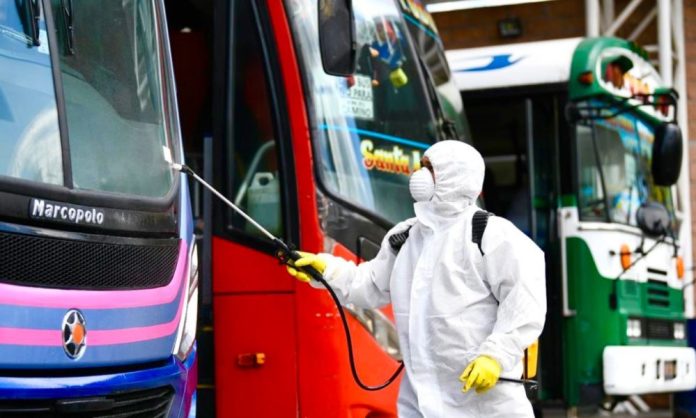
In fact, it may be the only place to buy gel to help us prevent infection of the coronavirus covid-19 in our little place in the world.
For many, at least from the comments on social networks, the company is a saviour, a breath of relief against a deadly virus that has broken the pura vida way of life, closed entry to all foreigners, the population closed off in tis homes and keeping a distance from each other.
In an opinion article in La Nacion Tuesday, for those who take the time to read it, they will find that the FANAL is no saviour, rather a burden on all Costa Ricans, a company that operates in financial secrecy.
“Nobody knows how much it owes or how much it loses, that is, nobody knows how much it is worth and everything indicates that it is not much,” in the worlds of Finance Minister Rodrigo Chaves.
“In a country where so many public companies have failed, leaving billions in losses, the Fanal may not even have a value. At best, it adds a new reason for wonder. Clarifying what happened is no longer within the common means of control and the authorities will resort to a forensic audit,” says the La Nacion editorial (read it here in Spanish).
Everyone very proud of the country’s public institutions, institutions like ICE, RECOPE, AyA, and the other letters of the alphabet (no, not the Google company) for the most part that are broken and in crisis.
While most Ticos are expressing their pride of the FANAL, few if any, save for the residents of the Hatillos who have to take to the streets in the last couple of weeks, are worrying that the AyA is making water cuts in the midst of a crisis!
Rico’s TICO BULL – Several arrivals, foreigners, into Costa Rica’s Juan Santamaria (San Jose) international airport the last week had a similar answer: no one checked me out.
I had each one, how was the line inside (the immigration and customs line), what were you asked and did anyone check you out? Not always in the same order, but the same three questions.
The first were more than a week ago, when Costa Rica was only gearing up to the coronavirus covid-19, outside the arrivals packed with people waiting, tons of people coming out.
It was somewhat scary at first to see many, in those early days, wearing masks. Especially when a group of orientals, all wearing masks, made their out of the door past the customs. Large groups of students, smaller groups of older tourists. From the US, Europe and Latin America. You could spot the difference, their attitude, their style and their luggage.
As the days passed, the crowds waiting got thinner, by Saturday a week later, only a handfull of people waiting. And it was noon, one of the busiest times of the day at the SJO.
By this time I had thought screening would have been a norm, the arrivals in the days before had said hardly had they been asked anything.
All the people I picked up had some ties to the medical profession, none were doctors, some were nursers, others in the medical evac and transport business in Chepe for a conference. At the end of the week, the pick ups were of “medical escorts” picking up patients in Costa Rica for their return home to the US of A and Canada.
All had the same answer, no one checked them out. Other than the standard immigration questions, it was business as usual. Not what I have been reading and reporting, measures being taken by the government to keep us safe.
On Tuesday, a friend arrived from Texas. I was not there to pick him up, but spoke to him after his arrival.
No one checked him out either. And this was the same day that Minister of Health Daniel Salas informed us of 41 confirmed cases of the coronavirus covid-19 in the country; a day after President Carlos Alvarado announced a shut down of the borders to all foreigners.
No one checked him out.
Was I missing something?
Browsing the web I came across an article by Liseth Castro of the Tico, 23-year-old Mauricio Montero, who entered the country, on Tuesday, from Washington State(Lizeth said D.C.,
Mauricio Montero. Photo from Lisezthcastro.tv
though I am sure she meant the state) where as of last night, Tuesday, reports more than 1,000 infected and 54 deaths.
And no one checked him out either.
“After traveling with strict protection measures, the Tico was greatly surprised when at the Juan Santamaría Airport they did not even check him (out),” writes Lizeth.
Montero said he flew to Costa Rica “with my heart in my hand because I didn’t know if I could catch the virus”, taking advantage of the US$100 cost, when a few months back he had paid more than ten times that for a one day to the next flight to attend his mother’s funeral.
He said came to Costa Rica before the Ministry of Health’s stricter provision, that requires Ticos to a mandatory 14-day isolation, came into effect.
The Government of Daniel Ortega and Rosario Murillo continues to row against the tide in the matter of coronavirus prevention: Vice President Murillo ordered to “expand and develop” all the events raised in her summer campaign, called “Nicaragua All Sweet, with Love for You, summer 2020 ”.
Cruiseship “Amadea” with 470 tourists and a crew of 310 arrived at Port of Corinto, in Chinandega on Saturday, March 14. The cruiseliner left Mexico on March 9
This means that they keep face-to-face meetings on the agenda such as “fairs, contests, catwalks and ventures”, among other activities “typical of the season, in the logic of our Creative, Family, Popular Economy and of our Local Culture”.
An attitude opposed to closing borders, quarantines and avoiding crowds of people taken by other countries, regardless of whether or not they have confirmed cases of covid-19.
“We promote Promotion in all its forms, because we know how much Work, Effort and Creativity goes to this Season that represents enjoyment for un@s, Trabajo Digno and Bienestar Familiar, para tant@s (sic),” said the vice president.
Historically, Easter is one of the most vigorous times for the national economy. After the serious socio-political crisis caused by police and paramilitary violence, the Ortega-Murillo government tries to revive the economy with its “creative economy” model. With the coronavirus pandemic spreading rapidly in Central America, the Sandinista administration refuses to impose a preventive quarantine, arguing that “thank God there is no confirmed case.”
The Episcopal Conference of Nicaragua (CEN) reported on Monday that they will limit the religious celebrations of Easter due to the covid-19. The bishops asked the faithful “most vulnerable to contagion” not to attend masses and processions, and the hosts will be delivered in the hands and not in the mouth. But Murillo rather encouraged in his circular to participate in religious days: “Natural presence, according to the Faith of our People, in all the Cults, Traditions and Religious Events, typical of the Season (sic),” asks the vice president.
In Contrast
Against the grain, Honduras and Guatemala closed their borders on Monday, Costa Rica on Wednesday. While this Saturday in the Port of Corinto, in Chinandega, the Tourism Institute (Intur) received dozens of tourists who came aboard the cruise ship Amadea. The cruise ship set sail on March 9 from Puerto Vallarta, Mexico, stopping in Guatemala and El Salvador. “The cruise passengers were received by children dressed in folk costumes and Intur authorities,” reported the propagandist El 19 Digital.
“The Nicaragua Toda Dulce, con Amor para Vos, Verano 2020, is maintained, expanded and developed with more Media Protagonism, in all forms, including Networks, INTUR, Mayors, and the Protagonists themselves and the Cultural Promoters, Environmental, Tourist and Social (sic) ”, ordered Vice President Murillo.
The government details that all “the Social, Trade Union, Merchants, Commerce, Entrepreneurship, Digital and Technological Initiatives and Carriers meetings” are also “maintained, expanded and developed”. “All Cultural and Sports, Social, Economic, Environmental, Creative and Innovative Events; all the Infrastructure Works and Lots and Homes are maintained, expanded and developed ”, reaffirms the circular.
In all the circular, Murillo highlights that they will maintain “all the Planning that multiplies Hope and Achievements, and at the same time we take care of and comply with all the Indications of Preventive Education, so that Health prevails (sic)”.
Anasha Campbell, co-director of the Nicaraguan Institute of Tourism (Intur), announced this Monday that they have 80 activities prepared in the context of Easter, “as part of the restitution of the right to healthy recreation, recreation, and the enjoyment of art and culture in tranquility and peace ”. Among the activities mentioned, a marathon in the Salvador Allende port, a field mass in León Viejo, concerts and popular festivals stand out.
Prevention plans vague
Regarding the prevention plans that the government has in the face of the coronavirus pandemic, Murillo’s circular is very vague. “We are going to guarantee from the Specialized Institutions, the permanent transmission of all the Indications and Measures that emanate from the National, Regional and World Health Authorities,” states the document.
Photo from El 19 Digital
For her part, Health Minister Carolina Dávila Murillo signed a statement stressing that quarantine will not be declared in the country. He assures that if there are cases “with respiratory symptoms and an epidemiological link”, the individual will be admitted to a health unit for study. If there are indications of coronavirus, the patient “will be admitted to the established medical health unit.”
“People from countries with risk of transmission established by the WHO and without symptoms, will have no restrictions on their mobility and movement in the country,” added Minister Dávila. The statement from the Ministry of Health is out of line with the warning that its specialists made on the stage that 32,500 infected and 813 deaths in Nicaragua due to the coronavirus could be registered in six months.
Mined does not suspend classes
The Ministry of Education (Mined) issued a guide intended for teachers to prevent the spread of the virus. Although the document provides general information about the covid-19, and a series of measures such as hand washing and avoiding “crowds”, the Mined does not suspend classes or workshops for teachers. Instead, foreseeing “eventuality”, they recommend teachers use technologies such as “Facebook life” (the correct thing is Facebook Live) or WhatsApp to follow the school calendar.
In a more political than technical tone, Vice President Murillo expressed in her circular that they will “work from all State and Government Entities to ensure all the Plans and Programs of this Year of Grace, 2020, as well as that preventive and permanent protective reproduction , to continue making all the efforts of containment ”. “We have the privilege of being organized, from the neighborhood, the region and the community, and this greatly facilitates work and care,” said the first lady.
The U.S. Embassy San Jose advised that beginning today, March 18, the Embassy in Costa Rica will reduce or cancel appointments for nonimmigrant visas, except for emergencies and some H-2 visa applications.
The diplomatic center says it will resume routine visa services as soon as possible, but cannot give a specific date at this time.
Payment of the fee for a visa application is valid in the country where it was purchased up to one year after the payment date.
An entire section of meat and poultry is left empty after panicked shoppers swept through in fear of the coronavirus at a grocery store in Burbank, Calif. on March 14, 2020. (AP Photo/Richard Vogel)
Toilet paper shortages, profiteering from hand sanitizer and empty shelves in grocery stores. Thanks to COVID-19, governments in most industrialized nations are preparing for shortages of life’s necessities.
If they fail, riots over food may be inevitable.
Some wonder if we are responding appropriately to COVID-19, and it’s clear that recent events expose a fundamental flaw in the global systems that bring us our daily bread.
An entire section of meat and poultry is left empty after panicked shoppers swept through in fear of the coronavirus at a grocery store in Burbank, California on March 14, 2020. (AP Photo/Richard Vogel)
We live in a wondrous age when global supply chains seamlessly link farmers and consumers using the principles of “just enough, just in time.” For years, companies have worked hard to keep inventories low, timing shipments to balance supply and demand using knife-edge accuracy.
In many ways, this system is a miracle. Low-cost food is one outcome. And if there’s a problem in one part of the supply chain, the global system is good at finding alternatives. (Mangoes from Asia gone bad? Try the mangoes from Central America!)
But with this abundance — and convenience — comes a hidden cost that COVID-19 has exposed: a loss of resilience. Our global food system depends on the tendrils of international trade to wrap the world in an ever more complex system of buyers, sellers, processors and retailers, all of whom are motivated to keep costs low and operations lean.
Building resilience
So when the supply chain system itself is thrown into question — as it is now thanks to COVID-19 — then the wheels threaten to come off the proverbial apple cart. COVID-19 shows that we need to wake up and realize that if we really want to be resilient, we need to build in more redundancies, buffers and firewalls into the systems we depend on for life.
In practical terms, this means we should be keeping larger inventories and promoting a greater degree of regional self-sufficiency.
These measures will help ensure that our communities don’t panic if the food trucks stop.
A truck is loaded with containers full of apples ready to be shipped to the market. (Shutterstock)
But while this may sound sensible, high inventories and more regional self-sufficiency are, in fact, antithetical to the “just enough, just in time” approach that drives most of our economy, even though no one’s suggesting we need to be completely self-sufficient of the time.
Take the systems that produce and distribute the corn, wheat and rice that fuel most of humanity’s calories. The latest United Nations report on the global grain system contains some bad news. Last year, the world ate more grains than it produced within the year, and our carry-over stocks (defined as the amount of food we have, globally, at the end of the year to see us through to the next harvest) are declining.
The good news is that this decline comes after a run of good years where farmers delivered one monumental harvest after another. So our carry-over stocks started last year in pretty good shape and this means we’ve currently got about four months of food stored. But there’s a downward trend regarding those stockpiles, and this is worrisome.
Climate change poses challenges
But what if Mother Nature doesn’t play nice with us this year?
Climate change, after all, is making food harder to produce. What if we face a major drought in Europe and Asia like we did in 2010 to 2011? Or another big Midwestern drought similar to the situation in 2012 and 2013? And what if COVID-19 doesn’t go away by summer?
If any of these things happen, we may not have the buffers to protect ourselves. And it won’t be toilet paper and hand sanitizer we need to worry about. It might be wheat, rice and corn.
Wheat is harvested in a Kansas field in June 2018. THE CANADIAN PRESS/AP/Charlie Riedel
Today, conventional wisdom is that the average city in North America has a three-day supply of fresh food (dried, canned and other preserved food supplies will last a bit longer). This, according to some, means that we are all only ever “nine meals from anarchy.” Luckily, North American grocery stores have sophisticated supply chains so no one is seriously suggesting that the panicked purchasing of the last few days that has emptied shelves will persist. Nevertheless, the systems we depend upon are, in many ways, fragile and inherently vulnerable.
In all likelihood, COVID-19 will pass and most of us will only suffer economic setbacks from lost wages and disruptions linked with cancelled classes, travel and meetings. But in the aftermath, it’s important to ask whether we — as a society — will treat this as a moment to learn a bit about the fragility of the modern world.
Will we work collectively to put resilience alongside efficiency as a primary driver for the systems we depend upon each and every day to feed ourselves?
This article, by Evan Fraser, Professor, Director of the Arrell Food Institute and Tier 1 Canada Research Chair in Global Food Security, University of Guelph, is republished from The Conversation under a Creative Commons license. Read the original article.
While most of the world is in a pandemic over the coronavirus covid-19, in Nicaragua there is no “Emergency” and all visitors, even from countries with confirmed cases of covid-19 will have no restrictions for moving around in Nicaragua
Fascade of the Fernando Velez Pais Hospital in Managua. Photo: Ivette Munguía
Even the projected mortality rate of up to 80% among patients who present the most serious complications from the Covid-19 virus in Nicaragua, the estimate of Ministry of Health (Minsa), is not a motivation for the Ortega-Murillo administration.
This estimate was contained in a leaked document obtained by Confidencial, which according to public health experts, the projection amounts to an admission that the government doesn’t have the capacity to respond to this pandemic, once a patient presents complications.
The Minsa document which Confidencial obtained and revealed on Thursday, March 12, calculates that six months after confirming the first case of the novel virus – Nicaragua has yet to confirm any case – some 32,500 people in the country will have contracted the illness and, of these, some 8,125 would have complications. They further anticipate that 1,016 would need the intensive care units, and 80% of them, some 800, would die.
The statistic “was put out there because they know that they are not going to have 800 deaths, and later they can say that there were no more than 10 or 15 deaths from the coronavirus because our health services were strong, we were efficient, and prepared,” Dr. Alejandro Lagos, who holds a masters in public health and hospital management, told Confidencial.
While the World Health Organization (WHO) recommended avoiding mass crowds to prevent coronavirus, the Ortega government calls for big rallies
“With this projection, Minsa is practically saying that the most serious patients are only going to come to the hospital to die, as if it were a matter of helping them ‘die with dignity’, the doctor criticizes. That’s not the objective of a health system,” he emphasizes.
In its report of March 13, Confidencial writers Ivette Munguía and Juan Carlos Bow say “The hermetic silence from the regime of Daniel Ortega and Rosario Murillo regarding the Coronavirus (Covid-19) pandemic, and the scant information being offered about how to prevent the illness has generated increased uncertainty in Nicaragua.”
In fact, rumors in the towns and municipalities across the country persist of patients with the coronavirus infection in hospitals and clinics, but, there are no official statements to confirm or deny what Nicaraguans believe.
Lack of information fertile ground for panic. Covid-19 is new. It is unknown. There are more questions than answers. There are all sorts of speculations, home remedies on the social networks that have a cure. But, so far, the truth if that a vaccine is far away, maybe a year or more.
Arguello said the state silence represents a “lack of prevention” of the pandemic, because the population isn’t being informed. As a result, “people get hysterical, enter into panic, begin to spend money, begin to create scarcity, and people in business take advantage of that.”
This week a supermarket chain restricted the sales of sanitizing products to avoid hoarding, and the supply of face masks is running out in some of the country’s pharmacies. Alcohol in liquid and gel form has also become scarce.
Vice President and first lady Rosario Murillo has centralized communication. The covid-19 has raised alarms in nearly all parts of the world. Italy has locked down the country, no one coming or out, movements within the country are restricted.
Closer to home, neighbors to the north and south have closed their borders. All foreigners are prohibited from entering those countries. El Salvador, Honduras and Costa Rica have all closed their borders. Nicaraguans who are naturalized or hold legal residency in Costa Rica can enter that country but must submit to a 14-day mandatory isolation.
Vice President Rosario Murillo reiterated in her daily noon monologue that “no type of quarantine” will be established for travelers. In addition, “the people with some tie to the epidemic that present symptoms can go to a unit of the health department for study and follow up.”
She explained that travelers that arrive from countries with confirmed cases of Covid-19 will have no restrictions for moving around in Nicaragua.
In addition to these measures, Minsa has stated that: “if there are cases that offer indications and test positive for the Coronavirus, they will be admitted to the established Health Unit to receive medical attention.
So while coronavirus spreads rapidly in Central America (Costa Rica has 50 cases confirmed, Honduras 8, Guatemala 6 confirmed and 1 death, and Panama with 69 confirmed cases and 1 reported death ), in Nicaragua the Ortega-Murillo regime refuses to declare a preventive quarantine.
All national parks, biological reserves, wildlife refuges and other protected wildlife areas in Costa Rica will be closed to visitors starting Monday, March 23, the Ministry of Environment and Energy (Minae) reported in conjunction with the National System of Conservation Areas (Sinac).
The decision was adopted in line with the National Emergency Declaration announced this Monday, March 16, by the Government to counter the effects of covid-19 in the country and also to safeguard the safety of officials and visitors of the different Protected Wild Areas.
The measure will be in place until April 13. Meanwhile, as part of the preventive measure, up to Sunday only 50% of regular visitation will be allowed, La Nacion reported.
The Junta de Administración Portuaria y de Desarrollo Económico de la Vertiente Atlántica (Japdeva) announced the suspension of the cruise season in Limón.
Cruise ship activity in Limón will be suspended to April 30 as a measure before COVID-19.
Fourteen cruise ships will not dock at Limon between March 17 to April 30.
“We know that this will have an impact on the area and Japdeva’s finances, public health is a priority at this time and that we must all collaborate in the emergency care,” explained Andrea Centeno, president of the Japdeva.
The measure suspends the arrival of cruise ships passengers, but the entry of crews remains enabled as long as the sanitary protocols requested by the Ministry of Health are approved.
At the regional level, each cruise season leaves US$350,000 to the Atlantic region in activities related to commerce, crafts, transportation, among others. The loss from the 14 cruise ships amounts to US$4.9 million dollars.
Costa Rican authorities reinforced aerial, maritime and land surveillance on the northern border with Nicaragua, to prevent the entry of non-resident foreigners from the neighboring country.
In January alone, 78,000 entries and 49,000 exits were registered at the official land border posts with Nicaragua at Peñas Blancas and Las Tablillas. Archive photo of the Costa Rica side of the Peñas Blancas border.
This measure is part of the actions to closed borders starting tomorrow, Wednesday, March 18, when only Costa Rican nationals and legal residents will be allowed into the country.
With the entry into force of the entry ban, we can expect greater deployment of police, both at border posts, and in the so-called blind spots on the border. “We have decided to move an important police resource to the northern border in order to guarantee national security and protect Costa Rican public health,” said first vice-president Epsy Campbell.
Five police forces will participate in the operation on the border with Nicaragua: Fuerza Publica (national police), Policia de Fronteras (Border Police), Policia Profesional de Migracion (immigration police), Servicio Nacional de Vigilancia Aérea (National Air Surveillance Service) and the y el Servicio Nacional de Guardacostas (National Coast Guard Service).
The Director of Immigration, Raquel Vargas, explained that people who enter the country illegally will be detained and will be returned to the country of origin by a migratory post, in other words, deported.
“Rejection is a police action that prevents entry into the national territory for contravening an existing regulation or directive. In this case, the President of the Republic (Carlos Alvarado) informed on the prohibition of entry to foreigners for the next four weeks, “said Vargas.
The exception to the entry ban are flight crews, diplomats, transport drivers of goods or merchandise and people in transit. On the last, the person must have a confirmed flight out of Costa Rica, there is no time frame given, but assumed it would be like the first flight out.
On the other hand, nationals or legal residents will receive a health order to remain in mandatory isolation for 14 days.
According to data from the Directorate of Immigration, during the month of January 2020 alone, 78,000 people were admitted and 49,000 exits were registered at the official land border posts with Nicaragua at Peñas Blancas and Las Tablillas.
According to the latest report from the Health authorities during the Tuesday mid-day press conference, in Costa Rica, there are 50 positive cases for covid-19, nine more than on Monday.
Of that number, 46 are adults and four minors. Four of them are in intensive care.
The infected are located in 19 cantons, in five provinces; the provinces of Limon nor Puntarenas have any confirmed cases.
The age range of the infected is maintained at between 10 and 87 years. There are 24 women and 26 men; 44 are Costa Rican and 6 are foreigners.
Rodrigo Marín, director of Health Surveillance, explained that 37 of the infected are associated with clusters or specific foci. He specified that twelve are imported, one that would be from Panama is being investigated.
For his part, the executive president of the Caja Costarricense de Seguro Social (CCSS) or Caja, Román Macaya, informed that starting on March 27 the use of the facilities of the National Rehabilitation Center (CENARE), a hospital located in La Uruca, to be used for covid-19 patients.
“In all hospitals, we are reprogramming the programmable, it turns out that in CENARE everything is programmable, there are no emergencies,” said Macaya.
According to Macaya, although at the moment only 8% of the 50 infected are in intensive care, it is necessary to increase the capacity of hospitalization, mainly, that phase.
The CENARE, born as an idea in 1954 when Costa Rica suffered the largest polio epidemic that affected more than 50,000 children, would be used for normal hospitalization and intermediate care, without ruling out additional complexities.
After the coronavirus emergency, Macaya said, the CENARE will return to normal operations.
Minister of Health, Daniel Salas (standing at podium) led the press conference at Casa Presidencial on Tuesday, along with the director of immigration, the medical director of the CCSS and others
Immigration protocol ready
With respect to the movement of people in and out of the country, the director of Immigration, Raquel Vargas, reported the decree by which entry into the national territory will be restricted is in place.
As reported on Monday, starting tomorrow, Wednesday, March 18, all foreigners will not be allowed entry into Costa Rica at all border points – airports, land and maritime – until April 12. At that time, the possibility of an extension will be analyzed.
Starting tomorrow, only Costa Ricans or legal residents can enter the country, who will have to submit to 14-day mandatory isolation, as per instructions of immigration officials. The exceptions are crews, diplomats, transport drivers of goods or merchandise and people in transit.
“It is a form with a resolution that the person must fill out indicating their place of residence, name and ID,” said Vargas.
The immigration director stressed that each person will be presented with the form and will be subject to sanctions – ie criminal charges, fines and possible imprisonment – if violated.
Incoming Ticos or residents will also be immediately approached by the Red Cross, while people in transit will be verified to have a confirmed connecting flight.
“There are flights completely canceled, the person must verify that their connection exists before traveling,” she warned.
The concern due to the threat posed by the Covid-19 coronavirus has caused some people to race to over-supply or hoard on products.
Some like to imagine an apocalyptic panorama and purchase more than necessary. For this, the Walmart chain, with 270 stores across the country – Walmart, Masxmendos, Maxi Pali and Pali brands – made the decision to limit the purchase of some basic food products such as rice and beans to a maximum of six per customer.
Other products on the list include oil, cereal, pasta, sugar, and water, among others, La Teja reported.
Medical centers in the province of San José have deployed M*A*S*H (an acronym for Mobile Army Surgical Hospital) tents to attend Covid-19 cases. The objective is to prevent contacts with other people and thus slow the advance of the virus.
Outside the Marcial Fallas Clinic in Desamparados
The M*A*S*H tents will be applied, for the moment, at the Marcial Fallas Clinic in Desamparados, the National Children’s Hospital and San Juan de Dios in downtown San Jose.
The “mobile hospitals” were donated by the U.S. Embassy in Costa Rica.
Outside the Marcial Fallas Clinic in Desamparados
Patients will move through the stages, from the mobile tents to the hospital, depending on their level of sickness and infection.
Isolated at home is not a vacation, authorities warn
Costa Rica raised its shields for 28 days to stop the increase in the number of people infected with covid-19, which as of Monday had 41 confirmed cases in just 11 days.
Mandatory home isolation is not a vacation, authorities warn
For this reason, on Monday, March 16, President Carlos Alvarado and the Minister of Health, Daniel Salas, signed a national emergency declaration that puts into effect the following measures, although the time could be extended if necessary:
The entry of all foreigners is prohibited. The measure will take effect at 11:59 pm Wednesday, March 1 and will be in effect until 11:50 pm Sunday, April 12.
It entry ban applies to all seaports, airports and land borders.
Only Costa Ricans and legal residents (with DIMEX card) can enter the country and must submit to mandatory home isolation for 14 days. On entry, they will receive a health order from the Immigration police.
Suspension of classes in all public and private schools across the country. The suspension starts today, Tuesday, March 17 and is in effect until April 4. However, since schools are typically closed during Semana Santa (Easter Week) – this year April 5 to 12 – students will be returning to classes on April 13.
The social assistance programs Avancemos and Crecemos will continue, that is families in need will continue to receive their cash transfers. Financial aid from the Instituto Nacional de Aprendizaje (INA) will also be maintained, and the school canteen service, for many children, the only good meal a day.
Childcare will continue available to single mothers who heads of households so that they can work, and that elderly family members do not have to assume the task of child care.
The national emergency decree facilitates the work of coordination between all institutions and channels economic resources to where it is most needed.
The yellow alert announced last week will be maintained, to also facilitate coordination between emergency institutions.
Bars, discos/clubs, casinos will all remain closed. Restaurants are required to operate at 50% of Health permit capacity. Failure will result in a closing of 30 business days.
As of Monday night, almost 100 bars, 2 discos and 22 casinos in San Jose were shuttered by Municipal Police for breach of the order.
This just in from Outlier Legal Services, the lastest on residencies and tourist status in Costa Rica during the national emergency due to the coronavirus covid-19.
Archive photo. Entry stamp on a tourist passport. The immigration official has the discretion to allow up to 90 days.
Outlier reports that Costa Rica’s immigration service, the Dirección General de Migración y Extranjería (DGME) issued Monday evening (March 16) which, in summary, states:
The DGME WILL NOT receive Residency applications going forward and until May 17, 2020. This includes all categories. Basically, Residency applications are suspended until May 17, 2020.
Consequently, documents that will expire within this period will be deemed valid (meaning their validity will be automatically extended) until July 17, 2020.
Exigencies will not be raised by the DGME until July 17, 2020.
The DGME will continue analyzing applications during this time. Hopefully, it will give them time to catch up on delayed work.
Approvals and rejections will continue to be issued and notified solely via fax or email only.
The exclusive attorney window used by many professionals to follow up on applications will remain closed until May 17, 2020.
DIMEX requests: Will work solely through Banco de Costa Rica and Correos de Costa Rica by APPOINTMENT ONLY. Residencies based on marriage to a Costa Rican national can and will only be renewed at Immigration. Therefore, these will be suspended and may be processed between May 17 and July 17, 2020. If any of the other categories cannot be renewed through Banco de Costa Rica or Correos de Costa Rica, applicants will have until July 17, 2020, to process their renewals.
Entry visas for Restricted Nationalities are suspended until May 17, 2020.
Tourists (non-Residents) who entered the country after December 17, 2019, may legally remain in Costa Rica until May 17, 2020.
Minor’s exit permit requests and issuance of Costa Rican passports will continue to work, as normal.
But there are still some unanswered questions, the first being what happens to people in the country today, given the closing of land borders (effective today), who have no legal status in the country, ie their temporary/tourist visa has expired or will expire before the reopening of borders and do not have the financial resources for a flight out or flights are not available?
On April 21, 2020, the fine for overstaying a visa takes effect. The fine also applies to temporary residents whose DIMEX has expired. A permanent resident with an expired DIMEX will not be fined.
The DIMEX card. A ‘temporary’ (temporal) resident status is not the same as ‘permanent’ (permanente)
The fine is US$100 per each month (or part thereof) of the overstay. Very important here, the DGME website says “the sum of the fine is retroactive from March 1, 2010”.
If the fine is not paid, exit from the country is not denied. However, getting back in the future may be another matter. From the DGME, “If the person cannot or does not want to pay the fine, at the time of their departure, the Immigration officer will impose an entry impediment for triple the time the person remained in the country illegally”. Click here to query fines.
The next question, is what of foreign nationals who have received residency approvals but have not yet gotten their DIMEX card? Are they now considered a legal resident and can enter the country as such during the lockdown?
Though the immigration official at the entry may not be familiar with the residency approval and thus delay entry, will the airline give you a seat without providing proof of residency – the DIMEX card?
And lastly, with respect to driving in the country, will the Policia de Transito (traffic police), who operate under the authority of the Ministry of Transport (MOPT) and the COSEVI that issues drivers licenses, deem you as “legal” to drive while the tourist visa or DIMEX has expired and renewal or leaving the country is difficult during the national emergency?
Tourists are allowed to drive in the country using their foreign driver’s license as long as their tourist visa (entry stamp) is valid. It is one item the car rental companies will check (should check) when handing over the keys.
Though Immigration is granting tourists “legal” status until May 17, 2020, will the traffic police/transport authorities recognize such?
We do not have the answer yet. We will post here any and all updates to these questions and others that may come up when we have them.
In the meantime, stay safe. Stay healthy.
The information on this page is not meant to be legal advice, it is provided for information purposes only.
El Salvador’s President Nayib Bukele on Monday accused Mexico of allowing a dozen confirmed coronavirus cases to board a flight due to leave Mexico City for San Salvador, and said he had suspended all passenger air travel with immediate effect.
Bukele, who made the assertion on Twitter, did not provide evidence or more detail about the situation.
El vuelo de Avianca procedente de México hacia San Salvador, que sale a las 4:00pm y que arribaría a nuestro país a las 6:50pm, trae 12 casos confirmados de #COVID19
El avión no podrá ingresar al país.
Le pido a toda la gente que piensa abordar ese vuelo, QUE NO LO HAGA.
Without explaining how he knew, Bukele tweeted that “the El Salvador airport runway is closed to non-cargo aircraft until further notice. The planes on the way will have to change flights”.
Regarding the flight from Mexico, Bukele said in the Tweet that it was an Avianca flight, leaving Mexico at 4:00 pm and that it would arrive in El Salvador at 6:50 pm”.
According to him, it would bring 12 cases of the COVID19 and “The plane will not be able to enter the country. I ask all the people who think to board that flight, NOT TO DO IT”.
Minutes later, Bukele retweeted this message from Avianca Central America.
“Flight AV431 operating the Mexico – El Salvador route has been canceled. It has NOT been boarded and passengers are being duly informed.”
Mexico’s Undersecretary of Foreign Relations, Maximiliano Reyes, wrote in response to Bukele:
“Mr. President, with all due respect, we would like to know what are the sources of your information? The Government of Mexico has always acted with absolute responsibility in this situation, including preventively, being pioneers in the region.”
Señor Presidente, con todo respeto, nos gustaría saber ¿cuáles son las fuentes de su información? El Gobierno de México siempre ha actuado con absoluta responsabilidad en esta situación, incluso de manera preventiva, siendo pioneros en la región.
— Maximiliano Reyes Zúñiga (@maximilianoreyz) March 16, 2020
For his part, Mexico’s Foreign Relations Minister Ebrard C. also tweeted Bukele:
“President Bukele: the Avianca flight you mentioned was canceled because all the flights to San Salvador were suspended. Could you share with us what are the 12 cases of coronavirus you mention and where they were confirmed? Is it responsible in this and in any other case?”
Presidente Bukele: el vuelo AVIANCA que menciona se canceló porque se suspendieron todos los vuelos a San Salvador. Podría ud. compartirnos cuales son los 12 casos de coronavirus que menciona y donde se confirmaron? Es lo responsable en este y en cualquier otro caso.
Two hours later, the Minister tweeted Bukele with:
“Mr. President, we checked the passengers of the AVIANCA flight and I can confirm that they are healthy. The health authority found no coronavirius, including the 12 Salvadoran youths who were wearing face masks. I know you will be happy. Kind regards.”
Sr Presidente verificamos a los pasajeros del vuelo AVIANCA y puedo confirmarle que están sanos. La autoridad sanitaria no encontró coronavirius,incluyendo los12 jóvenes salvadoreños que portaban cubrebocas. Sé le dará mucho gusto.Saludos cordiales. pic.twitter.com/JmRtbMyQME
All Colombian land and sea borders will be closed starting on Tuesday, March 17 and until May 30, by order of President Iván Duque. The decision is another of the measures that the National Government takes to contain the advance of the coronavirus in the country.
Colombian President Ivan Duque announced the closing of all Land, Sea and River Borders from March 17 to May 30
The president pointed out that “Colombia’s borders will be closed from this March 17, 2020 until May 30 (…) This border closure will restrict the entry and exit of the country of all national and foreign citizens. During the closing of borders the transport of cargo will be allowed for the entrance and exit of products through the terrestrial points enabled”.
Me permito informale a los colombianos que he tomado la decisión de cerrar, a partir de esta media noche, todas las fronteras terrestres, marítimas y fluviales del país. Las fronteras de Colombia estarán cerradas desde de este 17 de marzo de 2020 hasta el próximo 30 de mayo (1/3)
The head of state explained that, basically, the aim is to stop the flow of people to avoid further spread of the disease.
“In the case of Peru, President Martín Vizcarra made the decision to close all border points. Freight transportation will always be excepted. In the case of Ecuador, President Lenin Moreno understood that there must be a flow of passengers. In the case of Brazil, we reached the same conclusion,” said Duque.
This decision is in addition to those that have been made in recent days, among which are the suspension of classes in all schools and universities and the restriction on entry by air to the country of foreigners “from any country in the world.”
The exceptions to this measure are Colombian nationals, residents of Colombia and diplomats, who will enter subject to a mandatory 14-day preventive isolation.
Combine payday (March 15), the declaration of a national emergency, the news of the country closing its borders to foreigners, and the rising number of confirmed cases of the coronavirus covid-19, saw many this Monday afternoon put aside the call to avoid massive events, packing major stores.
Pricesmart Santa Ana
The photos are from Crhoy.com, whose photographers visited several large stores in Heredia, Escazu and Santa Ana.
Toilet paper, soaps, gel alcohol, and cleaning products, in general, are among the most purchased by Costa Ricans.
Mas x menos in Heredia
The Ministry of Economy (MEIC) says it will be vigilant in situations of overpricing – gouging – as well as supply problems. This past weekend some retailers had to limit the sale of certain items, rationing if you will, but also to aovid so that it is not resold at a premium.
Pricesmart Heredia
Victoria Hernández, Minister of Economy, assured that they are working on a proposal to regulate the price of certain products, among which are: antibacterial bar and liquid soaps, disinfectant spray, liquid, and gel alcohol.
President Carlos Alvarado announced today that from March 18 and until Sunday, April 12, only Costa Ricans and legal residents will be able to enter the country by air, sea, and land. The Government also closed schools both public and private.
The Minister of Tourism, María Amalia Revelo, acknowledged that the entry restriction that will be applied at all airports, seaports and land borders, starting Wednesday, March 18 will severely hit the tourism sector.
The restriction on the entry of foreigners will take effect from Wednesday, March 18 to April 12.
“It is a complex day for the sector, we know it. We know that there will be an extremely strong economic impact,” Revelo said at a press conference, after the announcement of the declaration of national emergency by President Carlos Alvarado, at Casa Presidencial on mid-day Monday.
According to the minister, the Government will try to work with the Legislative branch on some measures to alleviate the crisis that small, medium and large entrepreneurs in the tourism and other economic sectors could face, as a result of the emergency response to the new coronavirus.
Along these lines, the Finance Minister, Rodrigo Chaves, and Planning Minister, Pilar Garrido, presented legislators with a plan to counter the negative effect of the covid-19 on the entire business sector.
This plan consists of suspending, for three months from April to June, the collection of the Value Added Tax (VAT) – impuesto al valor agregado (IVA), in Spanish – as well as income tax, selective consumption and tariffs for the merchandise imports.
“Those are measures that are being worked on at the moment to be able to alleviate, in some way, the situation that many tourism entrepreneurs will face,” said Revelo.
Entering and leaving Costa Rica
María Amalia Revelo clarified that, unlike other countries, Costa Rica did not suspend flights, so the entry of Costa Ricans and legal residents and the departure of foreigners from the country will be guaranteed.
“Tourists who are in the country will be able to leave Costa Rica in an orderly manner. Of course, we know that airlines are going to significantly reduce the number of flights to (and from) Costa Rica. We have not asked any airline to suspend flights, it is the arrival of tourists (that is prohibited) during those 26 days,” said Revelo.
As for Costa Ricans or residents who return to the country, they will have to undergo 14 days of isolation in their homes.
“Those who enter the country will have to carry out a 14-day preventive isolation instructed by the Immigration officers throughout the country, following the indications of the yellow alert,” declared President of the Carlos Alvarado.
On Monday, March 16, the Ministry of Health confirmed six more cases of coronavirus covid-19, raising the total to 41.
To continue the fight against. the government of Carlos Alvarado announced a continuation of the yellow alert, it will be decreeing a national emergency and banned entry into Costa Rica by all foreigners. Costa Ricans and foreign residents must submit to a 14-day mandatory isolation on return to the country.
The travel ban goes into effect on March 18 and maintains until April 12.
Schools will also be closed until April 13, the school year extended to December 23 and all lunchrooms and care networks will be kept open to give needy children at least one good meal a day and single mothers of households ability to continue working and not leave the children with elders.
President Carlos and the Minister of Health, Daniel Salas, reiterated the need to stay home, to maintain contact to avoid infection to a minimum, work from home if possible, and cancel any travel abroad.
On Sunday, all bars, discos, and casinos were ordered closed and restaurants to operate at 50% capacity, a team of police and inspectors will be monitoring the situation and sanction offences.
Let’s not share rumors!
The Ministry of Health remains the official source for any news regarding COVID-19 in Costa Rica. The official information can be found here:
At 12:40 pm, Costa Rica President Carlos Alvarado announced that the country will maintain a state of yellow alert, and issued an emergency decree that empowers the government to take action in a possible state of urgency and need due to the coronavirus COVID-19.
Health Minister Daniel Salas (at the podium) detailing the government’s plan of action, while President Carlos Alvarado looks on after announcing the state of emergency and travel ban of all foreigners to Costa Rica.
Alvarado explained, “This allows for more agile budgetary and administrative measures and continuity of services.”
In addition, the Government adopts the following measures:
Suspend classes, both public and private schools and INA training centers, from March 17 to April 4, inclusive. Given that Semana Santa (April 5 to 12) the educations centers would be normally closed, schools will re-open on April 13.
The school calendar yes is extended to December 23.
Cash transfers from the social programs Avancemos and Crecemos, financial aid from the INA, as well as food services (lunchrooms) for students will be maintained.
The care networks will remain open to ensure that the mothers who are heads of household can continue working and prevent they leave their children in the care of seniors. Attendance is at the discretion of those in charge.
From 11:59 pm Wednesday, March 18 to 11:59 pm Sunday, April 12, 2020, only Costa Ricans and residents may enter the country. The restriction applies to all entries by sea, air, and land.
In addition, Costa Ricans and residents who enter will have to carry out mandatory preventive isolation for 14 days.
Authorities are also recommending that people work at home – teletrabajo in Spanish – if at all possible remain at home and that those with risk factors take the necessary actions not to expose themselves to contact with other people.
Along the same lines, the Minister of Health, Daniel Salas, reiterated nationals need to cancel their trips outside the country, especially if they had a trip scheduled for Easter.
“The actions implemented require the commitment of all, let’s each do our part, let’s not leave the country and, as much as possible, let’s stay at home,” said the health minister.
As of today, March 16, Costa Rica has 41 confirmed cases of COVID-19, with an age range of 10 to 87 years.
The patients are 20 women and 21 men, of which 35 are Costa Ricans and 6 foreigners.
Confirmed cases have been registered in 17 cantons of five provinces: San José, Heredia, Guanacaste, Alajuela and Cartago.
By age, they are 32 adults, five seniors and four minors.
At this time, 615 people have been ruled out as been infected with the covid-19.
On Monday, March 16, in an unprecedented action, Colombia closed its borders to all foreigners in response to the worldwide coronavirus pandemic.
The closing of the borders is to prevent an outbreak in the country with 54 confirmed cases: 28 in Bogota, 7 in Medellin, 7 in Neivo, 3 in Cartagena, and one each in Cali, Palmira, Cucuta, Manizales, Dosquebradas, Facatativá, Villavicencio and in Rionegro (Antioquia).
From Monday, March 16, the incoming travel ban is for all non-resident foreigners. In addition, resident nationals or migrants must be isolated for fourteen days, on a mandatory basis.
The announcement was made this Sunday on Twitter where the president wrote that “non-nationals and non-residents of Colombia are restricted from entering the country.”
Confirmamos 9 casos nuevos de coronavirus en Colombia. Los pacientes diagnosticados se encuentran en la ciudad de Bogotá. Con estos, el país llega a un total de 54 casos pic.twitter.com/3NFNo8Cd3l
The Minister of Transport, Angela María Orozco, assured that sanctions will be imposed on those who fail to comply with the measure and recalled that in recent days five tourists, from Spain and France, were expelled because they abandoned the hotels where they were to carry out the preventive quarantine.
The first confirmed case in Colombia was announced on March 6 and since then authorities have instituted a series of measures to prevent the spread of the disease, including the suspension of massive events, the cancellation of shows and now the closing of borders.
Me permito informarle al país: a partir de este 16 de marzo, se restringe el ingreso al país de personas no nacionales y no residentes en Colombia. Todos los pasajeros colombianos y residentes extranjeros tendrán aislamiento preventivo obligatorio por 14 días. #PrevenciónYAcción
In an unprecedented and not really unexpected, Costa Rica closed its borders to all foreigners due to the coronavirus covid-19.
Health Minister Daniel Salas Monday afternoon at Casa Presidencial
Beginning on Wednesday, March 18 and until April 12, only nationals and residents will be allowed entry into Costa Rica.
The measure will apply to air, sea and land borders.
Costa Ricans and residents must enter a “preventive isolation” for 14 days as directed of the immigration service. The exception will be flight crews and accredited diplomats.
President Carlos Alvarado made the announcement during a press conference at Casa Presidencial, starting at 12:40 pm.
The measure is part of a declaration of emergency that includes the closing of ALL schools, private and public, until April 4. However, given the Semana Santa holidays, from April 5 to 12, schools will re-open on Aprile 13.
As of this afternoon, there 41 confirmed cases of the covid-19 in Costa Rica, detected in 17 cantons, five provinces.
The patients are 32 adults, 5 older adults and 4 minors, detailed the Minister of Health, Daniel Salas.
Health Minister Salas said in his comments that “We cannot see this as many see it just passing by and it won’t touch me.
“Most of the (infected) people are going to recover, but let’s think about those who are not going to do so quickly or are not going to do it at all,” said the Minister.
This story is developing. We will be updating as new information is available.
While some headed for the beaches, others not so far, visiting local parks, despite the call to stay home
This Sunday Costa Rican families took advantage of the sunny day to go for stroll the different points of the country, despite a call to stay home.
While some headed for the beaches, others not so far, visiting local parks, despite the call to stay home to prevent contact with people who could be infected with the coronavirus. Foto Jorge Navarro / La Teja
A combination of great weather, pay weekend that meant money to fill the jalopy’s gas thank and that on Monday (today), many schools would be closed. Its vacation time!
Close to home, the Ojo de Agua, in Belen, was full of people. La Sabana and La Paz parks the same. Not huge crowds, yet crowds nonetheless.
At the beaches, Playa Jaco was crowded when it should have been empty. Reports from Guanacaste, Tamarindo was “repleto”.
This means that the request of the Ministry of Health and the call by President Carlos Alvarado for people to stay home to prevent contact with people who could be infected with the coronavirus fell on dead ears.
On Sunday, at the mid-day press conference, Health Minister Daniel Salas showed his anger, especially in the face of reports of the metropolitan area bar scene Friday and Saturday nights.
“We are going to take a ‘vueltica’ (ride, walk, etc) because we are bored in the house,” was common answer by people questioned by local media why they were out and about.
“We’re packing gel alcohol” was another common answer.
Bored of staying home, the Rojas Jiménez family went for a visit to to Ojo de Agua.Photo: Jorge Navarro / La Teja
Some did restrain, saying they had planned to go to the beach, but they got a little concerned and decided to take in the local parks instead.
“It is typical that we Ticos believe we are immune and that nothing will happen to us,” said a frustrated Minister of Health during the Sunday press conference.
“Let’s not think that this is not going to touch (affect) me. We all have someone close to us who have risk factors (high blood pressure, diabetes, asthma, older adults) and we don’t want to see them in an intensive care unit,” Salas explained.
One Tico, a doctor, decided to denounce one particular situation, that of a mother who took her two children to the beach, to end up in a medical center, in Guanacaste where he works.
On his Facebook page, Dr. Fernando Vásquez Lizano criticized the woman for clearly not heeding to the warning to stay home due to the coronavirus.
“I’m on call, making free use of my profession with pleasure, but I want to know: what the hell is a lady doing with two young children who fell while at the beach, who live in Hatillo and took advantage of the fact that they closed the school to come to the beach? They got hurt and are now waiting for an x-ray,” he said.
Dr. Vásquez works at a Guanacaste medical center.
“They are given (medical) attention, the Caja belongs to everyone, but isn’t it that we are in a situation of yellow alert due to the virus that threatens people’s lives in a real way?” he said.
Besides running the risk of contagion, the doctor points out that situations like this will tax the health system, even collapse it in a short time if people don’t take action. “We must learn from the Italian experience. Let’s take it seriously,” he said.
“It is best to stay at home to read a book, turn off the internet so that they are not so distressed, and stop sharing information and activate solidarity,” he added.
As of this morning, the doctor’s post of Sunday has received more than 30K shares and 2.2K comments.




 In fact, it may be the only place to buy gel to help us prevent infection of the coronavirus covid-19 in our little place in the world.


