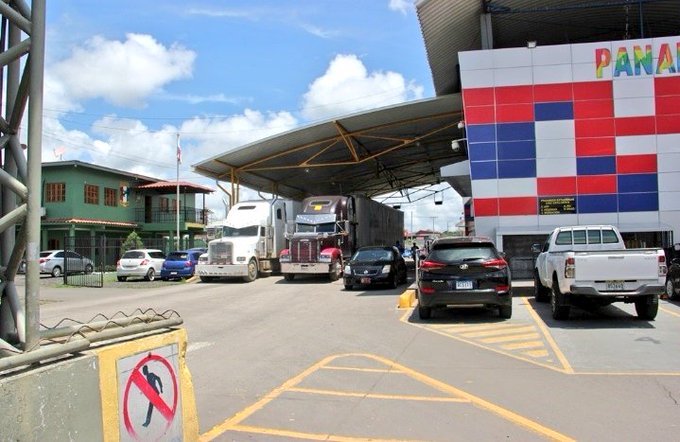
The hotel rented by the National Emergency Commission (CNE) for 40 patients with COVID-19 who are not rooted in Costa Rica or without a safe place to comply with their isolation order was filled in less than 10 days.
According to the CNE, the hotel located in Sabana Sur (the location was not disclosed for the privacy of the patients) was ready on May 13 and as of Thursday (May 22), there were already 38 people calling it home.
The amenities include a single room with a bathroom, food service (breakfast, lunch, dinner and two snacks), laundry, cleaning and hygiene.
The monthly cost to be paid by the CNE for the accommodation of patients is ¢23 million colones, for a maximum period of three months.
Foreigner truckers testing positive and prohibited to enter Nicaragua, as well as people infected in La Carpio are part of those who currently occupy the hotel.
The Head of Operations of the CNE, Sigifredo Pérez, in charge of the project, explained that those who are located in this hotel are asymptomatic, but that they need to comply with their isolation in a correct and safe way to avoid the spread of the virus in the country.
The two requirements that were established for the transfer to this hotel are not having roots in the country and having a quarantine order issued by the Ministry of Health.
The entrance and exit to this lodging is dynamic, depending on the recovery of each, who are under permanent monitoring by health authorities. If necessary and if there is an evolution of their symptoms, they are transferred to the hospital system.
Those infected with COVID-19 who are sent to this hotel will not be able to leave the premises during their entire period of isolation.
Given the need for more spaces with accommodation and food services for those infected with the new coronavirus, the CNE is carrying on the process of seeking out more accommodations.
Surfers who will travel again in search of waves and also consider the sanitary measures carried out by country during the coronavirus, will find that Costa Rica is, today, the nation with the lowest mortality among the 10 favorite world destinations for to surf.
Roca Bruja, the aspirational destination for every surfer who arrives in Costa Rica. Photo Surf-forcast.com
With a mortality rate of just 1.08% during the contagion days so far, Costa Rica is today, the ninth country in the world that has best treated the health emergency, but the first among the 10 most visited destinations for surfing reasons.
Both National Geographic and other international media have repeatedly placed Costa Rica among the Top 10 of privileged countries to surf in their publications.
The other nine destinations are: Indonesia, Hawaii, the United States, Australia, South Africa, Spain, New Zealand, Brazil and Ireland.
However, Costa Rica, within that Top 10, is with the lowest mortality rate and with the least amount of infections in relation to the entire population.
Australia and New Zealand, would be the next two favorite countries to surf, with the best treatment of the health of its population during this historic pandemic that today totals more than 340,000 deaths worldwide.
In fact, data from the DDI (Data-Driven Innovation Lab) of the Singapore Institute of Technology (SIT), predict that Costa Rica will be the 17th country in the world and 1st in America to overcome the pandemic.
Australia will be the fourth country in the world, while New Zealand the fifth, also to overcome the covid, according to DDI.
No secret
It is no secret to anyone that Costa Rica has been in the front of the international media for how it takes care of its citizenship, an action that will catapult it into the considerations of surfers and tourists in general to choose their next destination.
Recent data from the same Instituto Costarricense de Turismo (ICT) – Costa Rica Tourism Board, reveal that surfing tourism in Costa Rica represents between 15% and 20% of total visitors. This means that the number of surfers who visit the country each year exceeds half a million.
In fact, the good wave season has just started for the entire Pacific of our country with the arrival of the rainy or “green season”, where private companies have invested more in hotels and commerce.
Precisely, for Juan Carlos Borbón, Director of Marketing of the ICT (Costa Rica’s Tourism Board), it is a pride that the perception of Costa Rica about the management of the pandemic is so positive in the world and without a doubt this will contribute to reinforce the positioning of the country as a destination to visit in the future.
With the support of our public relations and advertising agencies in the United States and Europe, we have shared interesting information about Costa Rica, its culture, people, tourist attractions, its beaches and its waves. Juan Carlos Borbón, Director of Marketing of the ICT
“We remained in mind the main source markets that consider us once it is possible to travel to Costa Rica, after we all learn to surf together this Covid-19,” he concluded.
Last Monday, May 18, the Ministry of Health gave the final green light to surfers in Costa Rica to return to using the sea and the beach, during time slots and during the week.
That day, despite speculation from part of the community that the government allowed them to surf only the dry tide, the quality of waves that broke along the Costa Rican Pacific, was Class A World, reports crserf.com
“I got a message on Facebook, I did not know the person who sent it, nor were we friends on that social network, but it said there was a photo casting, I was excited and I went with my mom, we were not there even five minutes.
“Everything was extremely normal: the clothes, the photos, the girls. There was nothing out of place. About two or three photo sessions were normal and then those in charge began to demand other things (photos of a sexual nature).
“They got the data from the place where I was studying, they knew my schedule, they were going to look for me and, since I didn’t want to (do the photos), they started with threats.
“They threatened to take my sister’s life, kidnap her or sexually abuse her, they attacked me with the most sensitive things in my life, she was very young and to protect her, I agreed. I was a girl, I was 13 years old …
“I never went for money, nor did I want to be a model, I was curious, I was very innocent and I entered that (social) network unconsciously.”
This is the way, María, a made-up name used for this report, described what she lived for approximately three years, during which time she was a victim of human trafficking for the purpose of sexual exploitation derived from the production and dissemination of child pornography.
She is one of 26 girls who was recruited by a modeling agency based in San José, of which two photographers linked to an international network were in charge of producing material and send it to Mexico.
They produced photos and videos of minors between 11 and 17 years old and uploaded to pornographic websites.
The investigation of this case, known as R–INO (rescue of innocents), began in 2015 after the mother of one of the minors discovered that there were photos of her daughter on porno sites and filed the complaint.
Starting there, the Organismo de Investigación Judicial (OIJ) began to investigate and, in June 2017, carried out seven raids.
The work by the OIJ investigators determined that the leaders of the group in Costa Rica were two photographers, identified as Elías de Jesús Solano Corrales and Justo Tony Núñez Romero.
The Prosecutor General’s Office confirmed that the first is serving 39 years in prison and the second was convicted, but remains in preventive detention (waiting out any appeal), while his 28 years sentence becomes firm.
Both accepted the charges and went through an abbreviated process.
How human traffickers operate
HOW THE PEOPLE TRAFFICKING NETWORKS OPERATE
Authorities believe that anyone can be a victim of this crime.
Rodrigo Picado Mena, OIJ investigator these types of cases are very complex and difficult to connect all the links. In addition to Costa Rica and Mexico, the group had members in Brazil; and, the pages in which the material was disseminated were blocked for those three countries, so it was necessary to use special technological tools to uncover the case.
“It was not just a site, but it was linked to a lot of other web pages with child pornographic content (…). We realized that the material was promoted on pornographic pages and on the deep web, and to have access you had to be a member and pay with bank cards, wire transfers and bitcoins.
“Membership cost US$29 and, from there, the value of the material varied between US$500 and US$5,000,” said Picado.
He highlighted that in Costa Rica the group recruited its victims, all minors, through social networks and in schools located in urban-marginal areas; however, they did not have an established profile.
The offer they made to hook the girls was modeling and later, under duress and threats, they continued to use them for the production of pornographic material.
Picado mentioned that in order not to raise suspicions, photography, and video sessions were held in the afternoons at the houses of the accused, motels, or remote hotels.
Initially, they were paid ¢25,000 (US$45) per session, but when they were forced, they stopped giving them money, despite the fact that Solano and Núñez continued to receive money for production expenses.
“The payment was at the beginning, and then everything under threats and coercion. They, through social networks, had all the information of the victims and their relatives, so with the data they exercised control over the girls. In some cases there were threats with knives and in others they said they would harm them or their family members,” said the investigator.
Although three other people were arrested in the raids, the investigation determined that the two photographers were the only ones responsible, who were also convicted of rape, sexual acts and illicit association.
If they have knowledge of a case, people can call 800-8000-645, which is the OIJ’s confidential line. The authorities believe that a complaint can make a difference.
María, who was a victim of the two men for approximately three years, remembers that they both had everything so controlled that they knew who her best friend was, so when they picked her up from school they forced her to say that she would be at her house.
When they did not want to take a photo or were not satisfied with their work, the band used another method of control: the attention of a psychologist, who was the brother of one of the accused and insisted on telling the girls that the photos they were taking in the nude or with little clothing, there was nothing wrong.
“Every time you did this type of photography he (the psychologist) talked to you as if to try to convince you that this was okay, or that nothing bad was going to happen.
“Once I was depressed, he gave me about two weeks of therapy that was useless, but his role made me feel like I was cool in that network at the same time.
“Just imagine, I was a girl and a psychologist comes with scientific therapies and obviously one will believe it.
“Every time a victim felt bad, they sent him and he talked to you,” explained María, who is currently 20 years old and is a student of Health Sciences.
Her disassociation with the organization occurred with a deception, which she saw as the only possibility to prevent her situation from worsening, since they offered her a considerable amount of money in exchange for allowing the recording of a video while masturbating.
She claims that in order to leave the house she was in at the time she said that she accepted, but it was then when she decided that she never wanted to have contact with those types who had taken advantage of her.
The intimidations did not end there, but to defend herself, she threatened one of the photographers to file a complaint, so they agreed to leave her alone as long as she did not tell.
After that, she decided to break the silence and tell her mother what she was experiencing and, although the first option was to report, she begged her not to do it out of fear, since the group had members in other countries.
However, with the passing of time, she could not recover, so filled with courage went to the OIJ to report.
María never changed her address, but she did move from her school and her cell number varied.
In addition, she stopped using Facebook, and, although she currently has Instagram, she acknowledges that she uses it little because social networks do not seem productive.
Recruiting in public places and social networks
Trafficking in persons is a crime whose purpose is exploitation, in this case it was sexual, but it can also be for labor, irregular adoption or for the illegal removal of organs.
Sandra Chaves Esquivel, from the Human Trafficking and Migrant Smuggling Management of the Dirección General de Migración y Extranjería (DGME) – Costa Rica’s immigration – stated that this crime can occur in the country or in other countries and that the methods used by criminals to capture its victims are variable.
Chaves assures that there are no vulnerable people, but rather conditions that make trafficking groups take advantage of the circumstances.
For example, consider a myth that only low-income people become victims, since there are times when the offer of a trip, an invitation to an activity, among others, can trigger the crime.
She stressed that age is an important factor, since 15-year-old does not believe the same as at 25, so this is sometimes taken advantage of by criminal networks.
“When there is an organized network, there is preparation to search for victims, that is, that in the group they are merchandise captors, it sounds very ugly, but in human trafficking, the human being is simple merchandise, so they study the profiles very well. .
“In the social network there is data of where she lives, where she studies, where she eats ice cream on the weekend, friends, the person’s emotional state, among others, which is why, if they are well organized, networks choose those profiles and attack from there, it is very easy to do it because they have a lot of information on people’s profiles.
“The other way to choose their victims is through a study, in which they look for the highest condition of vulnerability of people. We have had recruitments in churches, where there is a person who takes advantage of people’s testimonies to recruit them,” Chaves emphasized.
She added that the deceptions usually come with job offers, whether in modeling or other areas.
Erick Lewis Hernández, head of the OIJ’s Specialized Section Against Cybercrime, stressed that social networks are a double-edged sword, because they have too many uses for the population, but they also host personal data.
He recognized that there are those who create job offers or virtual businesses and that facilitates the criminal’s access to data.
“The information that the victim often puts on their social networks is used by the criminal to profile and gradually try to gain confidence until they reach what they really want,” he said.
According to Hernández, groups dedicated to human trafficking are often organized, where there are people with established functions such as the recruitment, transfer and threat of victims, in which one or two people are in charge of all the work.
There are also cases such as the R-INO, where there are members in various countries with a leader who gives orders remotely and only occasionally visits to verify how the business is progressing.
Women are vulnerable populations, according to data from the International Organization for Migration (IOM).
Francesca Tabellini, assistant project specialist with emphasis on human trafficking in the Mesoamerica Program of the IOM National Office for Costa Rica, explained that 73% of women (23% underage girls and 50% over 18) have levels of vulnerability against 27% men (7% children, 20% adults).
She indicated that, sadly, there are cases in which a person can be a victim of trafficking throughout their life, taking into account that they become invisible.
“We have statistics on global trafficking cases that exceed the millions, together with the migrant smuggling, arms and drug trafficking, as one of the most lucrative businesses in the world.
“We know that for every victim that we are able to uncover, there are many more that unfortunately, we will never know, that they are cases that will never come to light because they are invisible.
“This is a very complex crime and an extremely lucrative business, it generates a lot of profits worldwide, which is why these networks are very sophisticated and make a person, sadly, be able to stay in that situation of human trafficking for life, if we did not succeed as an institution that can effectively escape,” explained Tabellini.
María stressed that it was her courage and her desire that other girls did not go through what she did that she denounced and acknowledges that moving forward, after what she lived, has been a personal decision.
She emphasizes that in her case there were never any economic or social problems that made her connect with the group and she asked other victims not to be afraid, because there are always people who will help them.
In her case, they were the judicial investigators and a psychologist. So for her, the Judiciary is an efficient institution that really cares about helping people who come to report.
“I tell parents never to let children use social media alone, because they are very innocent and family support is important. You really don’t have to trust anyone.
“My message to the victims is that although sometimes we feel alone and we think that because of what happened to us, no one will accept us, that thought is a mistake, it is possible to get ahead and fulfill dreams. Sometimes, it is very heavy to live from the past and to continue with our normal lives and meet goals, we have to put that chip aside, “concluded the young woman.
In the future, she hopes to run a campaign or some group that has to do with human trafficking, but for now she is focused on her career and moving on with her life.
The vehicular restrictions are from 7:00pm to 5:00 m on weekends and from 10 pm to 5 am weekdays. Image for illustrative purposes
The Ministerio de Seguridad Pública confirmed that a criminal court judge disregarded the sanitary vehicle restriction and fled, after being stopped at a police checkpoint at 8:10 pm on Saturday.
The vehicular restrictions are from 7:00 pm to 5:00 m on weekends and from 10 pm to 5 am on weekdays. Image for illustrative purposes
This is a driver, surnamed Fernández, 31, who, according to the police report, was driving a grey Kia vehicle, with a passenger, when he was asked to stop, asked for his ID and job letter to exonerate him from the sanitary vehicle restriction.
On weekends, the sanitary vehicle restriction extends from 7 pm to 5am, the reason why, on their way through the 25 de Julio citadel, Hatillo, the officers asked the judicial officer to stop.
“Learning that he was violating the sanitary restriction, he flees, heads eastbound, then takes Circunvalación, enters Hatillo 3 against traffic, along the fair’s boulevard and continues to flee towards Sabana Sur,” says the police report
The report continued that the driver then entered the area of Sabana Oeste, on Calle Morenos, and entered a condominium near La Nunciatura, in the parking area.
At no time did the police did not lose sight of the vehicle.
Approached Fernández said he was a judge and added that he would not get out of the vehicle. He finally did and was promptly arrested.
The driver, who has served as a public defender and criminal judge in the Desamparados Courts and other judicial offices, is exposed, in addition to the sanctions for non-compliance with the health restriction, charges for disrespect of authority and reckless driving.
A void in the Options and Naturalizations Law prevents denial of nationality to foreigners with criminal records
(QCOSTARICA) It is almost impossible to believe, but it is so. Officials from the Civil Registry of the Tribunal Supremo de Elecciones (TSE) have been forced to go to a prison to hand over Costa Rican nationality to a foreigner who is in prison for homicide.
While Costa Rican society is a victim of criminality, the country’s laws are so outdated and so contrary that they prevent foreigners with criminal records on national soil from claiming Costa Rican nationality.
This situation was revealed by the l Organismo de Investigación Judicial (OIJ) and the Civil Registry of the TSE to legislator Gustavo Viales, president of the Legislative Commission on Security and Drug Trafficking.
The legislator said that officials from these institutions came to his office to request the commission propose a reform of the Ley de Opciones y Naturalizaciones (Naturalizations Law), which dates to 1950.
The legislator did not specify how many cases the TSE has had to grant Costa Rican nationality to a foreigner with a criminal record in recent years.
Currently, foreigners in the country who want to apply for Costa Rican nationality are only required to have their criminal records from their country of origin, but not from Costa Rica.
This is stipulated in the (Naturalizations Law.
“It is inappropriate to request good behavior in your country of origin, but it is not requested in Costa Rica, the country in which you are applying to reside. The Tribunal Supremo de Elecciones has had to go to a prison cell to hand over Costa Rican nationality to a person who is there for murder. If this crime had been committed in his country of origin, he simply would have not been given nationality, it seems to me a huge contradiction. There is no impediment to this happening, the law has been very outdated, since the 1950s,” said Viales.
The proposal aims to reform article 15 of this law by adding a subsection. According to the text, Costa Rican nationality would not be granted in the following cases:
When the applicant is from a nation at war with Costa Rica.
When it is judicially verified that the applicant has been convicted as a social, political or religious agitator, inside or outside the country or that it has been convicted abroad for that type of activity or for crimes of fraud, theft, fire, falsification of currency or of credit titles or by others of equal or greater gravity, according to the penalties established in our repressive Code or in the special laws for such crimes.
When it is judicially verified that the applicant has had a relationship with international trafficking of narcotic, psychotropic, “inhalant” substances or chemical substances destined to the manufacture or dissolution of narcotic drugs, in accordance with the crimes established by law.
When the applicant has been convicted in the national or foreign justice system for the commission of a criminal offense or for crimes with penalties exceeding three years or more, according to the crimes established in our legal system or in the special laws for such delinquencies.
The proposal adds that “in the event that the applicant has pending legal proceedings, inside and outside of Costa Rica, the pertinent legal measures will be taken in order to order the suspension of the naturalization process until there is a firm and final judgment. ordered by the respective Courts of Justice”.
“With this proposal, what we want is for there to be greater control when a foreigner wishes to opt for Costa Rican nationality. Currently, only the fact of marrying a Costa Rican person should not constitute a direct route to Costa Rican nationality, mainly from the perspective of national security. Another series of transcendental requirements must be analyzed, such as the crime record abroad and in the national territory,” said Viales.
(QCOSTARICA) Same-sex couples in Costa Rica will be able to marry as of May 26, when a judicial provision that authorizes these marriages will enter into force, although it will not have the party climate expected by the containment measures of the new coronavirus.
That day there will be a “commemoration” that will begin on Monday night with a live broadcast on Trece Costa Rica Television (channel 13), broadcast on social networks and other channels, with a historical review of the fight for equal marriage and greetings from international and local personalities, according to the executive director of the Sí Acepto Costa Rica, (Yes I accept Costa Rica) campaign, explained Gia Miranda.
The broadcast will include the first marriage between two women at 12:01 am Tuesday.
“Before the pandemic we had a big party planned nationwide,” said Miranda.
A 2018 ruling by the Constitutional Chamber will take effect on Tuesday, and the sexual diversity community is preparing to celebrate the first marriages with virtual parties, in compliance with sanitary measures against the spread of Covid-19.
“Same-sex couples have waited for many decades for the recognition of their rights on equal terms,” said Luis Salazar, LBGTI Presidential Commissioner for the Population.
“They pay the same taxes as any other citizen, they have the same obligations under the law, but sexual orientation became a discriminatory condition to deny them their rights,” the lawyer and activist claimed.
His comment pointed to an attempt by conservative legislators to ask the Constitutional Court, the same court that gave same-sex marriage the green light 18 months ago to reform the Family Code to allow same-sex marriages and are now seeking an indefinite postponement of the entry into force, arguing that they need time to legislate on it.
The president of the Legislative Assembly, Eduardo Cruickshank, supported the request, noting on social networks that he was “committed to defending the family as established and pleases our Heavenly Father.”
International right
Salazar recalled that in 2000 the Constitutional Court (Sala IV as it is commonly referred to) urged the Legislative Assembly to legislate on the subject, and since 2010 bills began to be presented, none of which came to be voted on.
“There is a lack of political will, there has been no interest in safeguarding the rights of the LGBTI population,” said Salazar.
The issue gained new prominence in Costa Rica when in January 2018 the Inter-American Court of Human Rights (IACHR) issued an advisory opinion, at the request of the country, in which it determined that a homosexual couple has the same marital rights as a heterosexual couple.
Based on that resolution, Sala IV declared the Family Code rule that prevents same-sex marriage unconstitutional and gave the legislature 18 months to draft new regulations and in the event that the Legislature did not legislate on the subject, as it happened, the equal marriage would automatically take effect when the term expires on May 26.
Miranda recognized that there is a fight that continues from the entry into force of equal marriage to educate the population.
Back in November 2019, The Simpsons “came” as tourists to Costa Rica where they could see that there is respect for same-sex couples.
“A legal change does not imply that there is a social change, but it is an enormous advance, a wonderful milestone in the history of Costa Rica,” she said.
In her opinion, the change implies that “at a legal level we are no longer going to have second-class citizens,” and with this, all families are going to be protected under the law, regardless of how they are made up.
She indicated that there are more than 1,140 LGBT parenting(homoparental in Spanish) families in Costa Rica, according to the 2011 census, and the legal change implies that their children will no longer be unprotected under the law.
“We have to turn the page, we have to understand that this has nothing to do with religious beliefs, it has to do with basic rights,” Miranda said.
About the broadcast
Trece Costa Rica Television (Channel 13) says the transmission will take place on May 25, from 9 pm to 11 pm, prior to the entry into force of the change in legislation, and will be broadcast on television through its television signal, costaricamedios.cr and Facebook Live. I
n addition, this virtual event will be broadcast on the social networks of the Sí Acepto Costa Rica campaign.
The broadcast has the support of the Canadian and Dutch Embassies and will be carried out in accordance with all the guidelines issued by the Ministry of Health on COVID-19 for television broadcasts.
This Sunday, May 24, 12 new cases of Covid-19 coronavirus are registered in Costa Rica, of which six are minors, according to the case report issued by the Ministry of Health.
The infants are stable, according to information from the institution’s press department, although no further details were given. In the last 24 hours, the number of minors who have been infected with the deadly virus increased from 58 to 64.
To date, 930 confirmed cases of Covid-19 are reported in the country, with an age range of three months to 87 years.
These are 432 women and 498 men, located in 70 of the 82 cantons.
A total of 620 people have already recovered, aged between one and 86 years.
Deaths remain at 10, one woman and nine men.
15 people are hospitalized, three of them in intensive care with an age range of 29 to 64 years. In the last 24 hours, a 66-year-old patient left the ICU.
(QCOSTARICA) Supermarkets, barracks, hairdresser salons, churches, nursing homes, Ebáis and other sites in high social risk areas will be used for the random sampling of Coronavirus.
This is a strategy that the Caja Costarricense de Seguro Social (CCSS) will implement during this month, according to the guidelines of the Ministry of Health.
Each week 30 samples will be taken in the 36 high social risk communities across the country, the Caja reported.
Since May 1, 2,344 samples have been taken, of which three have tested positive.
“You’re an idiot!” Part Two… a continuation… I honestly don’t think that the vast majority of people that move to Costa Rica, whether full or part time… truly know what they are getting into.
Basics are just that… basics … and almost everyone gets them right.
People in general buy into the “pura vida” lifestyle and what great people Ticos are. They believe because they want to believe.
But hold off on that sentence for a moment…
After buying our land… we basically looked at each other and said “what do we do now?”
In the States we would simply hire a builder and he would handle everything from A to Z.
Not in Costa Rica.
So we had to educate ourselves first…
We found out from a local expat that owned a Bed and Breakfast in our town what the procedure is … and least “roughly”… and we also got a referral for a builder from Wady ( remember? He was our first guide and setup our original purchase of land and our first rental ).
Meet Arturo, a transplant from Venezuela who married a local girl from Grecia. He was our builder.
Rhonda designed our house… but we needed to have the design put into the proper format for permitting purposes.
I was glad to give the construction work to her… she is mechanical… I am non-tech AND non mechanical.
She and Arturo got along famously considering neither totally understood each other.
And construction is one area where newcomers are viewed as “easy marks”. If you read much about Costa Rica and building your own home… you will read horror stories galore.
It was an education.
Neither of us had ever built a house… and we were stunned at how everything was reduced to basics… primarily because no one could really afford luxuries like cement mixers or laser sights or even ANYTHING resembling a power tool. It was the way it was “back home” probably 60 or 70 years ago, maybe more.
But everything went amazingly well.
We weren’t necessarily shocked because we just assumed that everyone else did what we did.
Nope.
People were shocked when they found out what we ended up paying.
We actually had people knocking on our door asking if they could see our home… and local online papers and writers stopped by for information and the biggest shock was Newsweek wanting to do a story about us.
They did. ( they called it “Running Away to Retire” )
It wasn’t exactly the most exciting news of the year but considering that we had done something which , up until then, most gringos had failed miserably at. Luckily, it is different now… well, most of the time.
Then… we invited my parents down.
Dad was apprehensive and even asked if the house had running water. This is a guy who had his ship sunk in WWll and survived in freezing water for half a day.
When he saw our house…. He was speechless… literally.
He went through every inch of the house and couldn’t believe that everything was custom made and everything was basically done by hand.
Then he apologized. And then he actually had tears in his eyes and could barely get out a “I am so sorry… this is beautiful and I am sorry that I doubted the two of you.”
Now… this doesn’t happen today like I described. Gringos and home builders are a common occurrence and nearly two decades have gone by… but…
Some things never change…. Because most contractors or builders will always find ways to make more money off of those who do not know “how things really work.”
And I firmly believe that over 90% of all people that build in CR overepay substantially.
No one could believe what we built our home for… in fact , even our neighbors would stop over and rave. ( well, part of the reason for it too, was that Rhonda loves bright colors… Ticos don’t ).
Even today, real estate and construction are two of the most common purchases by gringos and sadly, most gringos have no idea what they are doing and what is a fair price and what is not.
Do your homework.
Other customs and everyday occurrences that might shock or blindside you:
Before proceeding I will tell you point blank that most of you will think I am lying… people want to believe that Costa Rica is the promised land and everyone is honest and forthright.
Sorry, but there are warts and pimples even in paradise.
And when I write this I am always reminded of a song that I heard when I attended a banquet when I was graduating from college… it was really more of a roast and a “going away” but with tongue in cheek.”
Three people sang a song that one had written and it was entitled and dedicated to all of those “couples” that were intending to get married after graduation… It was called “you have pimples on your butt, you are nice.”
You get the idea.
Well now, 50 years after my graduation that song is still bouncing around in my head but it now applies to Costa Rica.
Moving on…
Here are some of the most common irritations that most gringos list their first few months in country:
Waiting in lines… Ticos seemingly have the patience of Job… they do not mind in the least and seemingly retreat to a corner in their brain where they are entertained. It is a miracle. Accept it or move… because this is one attribute that most gringos wish they had. And the lines never get smaller.
Why do many Costa Rican businesses have three people for every one job? Notice when you are in one next time…
Ticos are horrible drivers… REALLY horrible. Drive defensively everywhere you go.
Many businesses, when totaling up your purchase will overcharge you… sometimes it is a conversion mistake but most of the time they will add in a few extra dollars ( or more ). Check your own bill. Just make sure. This is one “wart” that people really don’t believe … just be aware and get used to it. It happens to everyone.
Many Ticos think gringos have “money trees” back home… in other words, no matter if you have nothing more than a social security pension or you have just purchased an ocean liner… this is really another touchy issue because many Costa Ricans will deny it but you would be surprised how many locals do NOT realize that an ATM is not a place where money is printed for gringos only. Accept it and be firm.
You should NOT be embarrassed about having money. Be generous but don’t be taken advantage of.
Real estate … if you really truly want to know how you will be overcharged 99% of the time and not even know it… ask for a copy of my book “The Greater Fool Theory of Real Estate in Costa Rica”
Should you rent before you buy? Well, we didn’t and no, we are not sorry but a lot of people are… very sorry. Costa Rica has so many climates and geographies that you will think you are in a perpetual Kodak Minute.
One of our favorite things to do is to take a drive to a place we have never been before… because you can drive anywhere in the country and back in a single day ( granted, some destinations make for a VERY long day… but you get the idea. This is one point where I can say, without any hesitation, that the country puts damn near anywhere else to shame. It really does.
There IS pollution in Costa Rica… and you would really think that all of the emphasis on pura vida and the emphasis on renewable energy and much more… that pollution is minimal. It is not. There is crap everywhere and it is accepted… It IS getting better… but just don’t be shocked.
I know that this one likely will not surprise too many people but do not be surprised at how much almost everything costs … I am still shocked if I order a typical Costa Rican meal ( a casado ) and I am handed a bill for over $10. In the States it would be $5… honest. Gas is still $5 a gallon as I write this and no one has said boo… most of the money from gasoline purchases (surprisingly) goes to the government.
Many people have a “fantasy island dream” of how Costa Rica SHOULD be based upon readings, websites and advertisements from the government. Face it, “no military”, pura vida, biodiversity, absolutely stunning scenery almost around every corner, friendly people… the list is a long one especially if you are surfing from website to website. Reality is not someone else’s opinion, it is yours to make it what you wish. Take your time.
There IS crime here… most is petty. Take steps to protect yourself.
A few more things in closing… Tico drivers are maniacs, drive defensively ( I had to say it again ) … there IS corruption ( probably less than “back home” … but it exists and yes bribes are commonplace )… there are weird insects and poisonous ones too… ( they ain’t going away either… get used to them )
Eventually you will see that Costa Rican law is different than almost everywhere in the States or Canada. And it is also considerably different when the courts hand out sentences. They are remarkably lenient and if the country ever wants to attain LESS crime, they will have to raise terms of sentencing… Face it, 10 years for a murder is not exactly a crime deterrent… or suspended sentences for theft.
Take the small amount of information that you don’t believe, with a grain of salt… accept that there will be things that drive you crazy and accept that you will probably lose a few dollars ( or more ) in a business transaction because everyone does…
Do NOT be surprised that everything is not Nirvana or a perfect world.
Rhonda and I have been here nearly two decades and we have seen all of the “bad stuff” that I mention here… and more.
But in all honesty, from both of us… we would not live anywhere else. The beauty surpasses anywhere else as far as we are concerned… and the variety, the fauna and flora… and even all of the P.R. that we see in press releases or advertisements…
In today’s world… it is where we belong. And there is nowhere else that we would rather be than in Costa Rica.
Fernanda Mora, the wife of Costa Rican footballer Joel Campbell, published a hot photograph with her sweetheart, which raised the temperature of her followers on social networks.
In the spicy image the couple is shown very serious and sensual.
“Loving in the nude, without appearances, without exceptions, without rancor, without fear,” wrote the striker’s wife on Instagram
Immediately comments to said photo said things such as: “Café con leche”, “Fotaza”, “I love them”, “Fotón”, “You are perfect”.
Panama’s Chamber of Commerce, Industries and Agriculture of Panama (CCIAP), has underscored the phased reopening of the Panama economy when on Thursday, May 21, during the inauguration of its new board of directors the new president of this union, Jean Pierre Leignadier, emphasized the need to proceed with caution with the gradual opening of the companies.
He highlighted the need for a Constitutional Reform, especially in the Justice System and legal certainty as a requirement to attract investment.
He also highlighted the need for the Legislative Body to avoid politicking and take its role in creating
(QCOSTARICA) The Ministry of Health is investigating an “atypical case” of coronavirus in Costa Rica, where a patient tested positive for the first time for covid-19 on March 27, was discharged and who was positive again, continuing to suffer from a lack of smell and taste.
According to data from the Ministry of Health, 8 samples were taken from the “atypical case” patient between March 27 and May 14, of which 4 were positive and 4 negative. (Image for illustrative purposes)
“There is an important fact and that is that this person never regained the sense of smell and taste. Those were two symptoms that manifested from the beginning of the diagnosis and have remained until today,” explained the Minister of Health, Daniel Salas.
According to a timeline provided by the Ministry of Health, the person tested positive for the first time on March 27. On April 9 a sample was taken to see the evolution and it was negative; however, a new sample, 24 hours later, was positive.
On April 14, a new sampling was performed and it was negative; 24 hours later it was positive again.
On April 21 and April 22, both tests were negative, the patient was declared recovered.
However, the patient maintained a loss of smell and taste and presented a fever. On May 14, a new test performed and it was positive.
“As of April 21 and 22, samples are taken and both are negative. On May 14 this person has a fever and is tested and it is positive,” said the Minister of Health.
The Minister said that it is unlikely that it is a new contagion, but that it could be due to an error in taking the samples.
The Minister assured that they will remain cautious with the case and will carry out all possible examinations to determine what happened to the patient, including complementary tests and tracking of the people who participated in the taking and processing of the two tests that gave negative one month ago.
“There is a good chance that it is not due to infection again; however, this is under investigation because there may be some condition in the taking of the sample, in the processing, and that will be under study and everything we can gather at the evidence level to see how we can guide the classification of this atypical case,” said Salas.
(QCOSTARICA) Vehicle owners whose vehicular inspection (Riteve) comes up in May or June will have a one-month grace period.
That is, for vehicles with license plates ending in 5 they can drive without being sanctioned to the end of June and plates ending in 6 to the end of July.
The measure is part of the strategies taken by the Ministry of Transport and the Road Safety Council to provide assistance to Riteve stations, in the face of the threat of the spread of the Coronavirus.
“It is important to remember that we have been taking these types of actions since the start of the pandemic. In the case of Riteve, a grace period had already been granted to the owners of the vehicles that had to attend the review in April,” explained, Rodolfo Méndez, Minister of Transport.
This decree does not cover those vehicles who were to have been inspected in March and previous months.
Vehicles are required to be inspected at least once a year (taxis twice, for example) and based on the last digit of the license place, ie 1 is for January to 0 for October.
Not having the current vehicle inspection is subject to a fine if caught.
To have your vehicle inspected, an appointment is necessary and can be made online at https://www.rtv.co.cr/obtener-cita/ or by phone at 905 788 0000. A text message will confirm your appointment.
On the day of the inspection, important to arrive a few minutes early and you must present your current driver’s license, title deed and identification.
Pets and weapons are not allowed in the inspection line.
Due to the pandemic, only the driver of the vehicle can be in the inspection line and remain in the vehicle at all times.
All temporary import certificates of vehicles for the tourist category are automatically extended until Friday, July 17, 2020, due to the national emergency due to the Coronavirus, the National Customs Service (Servicio Nacional de Aduanas) reported.
The objective of this measure is to extend the term to facilitate the procedure for tourists and Costa Ricans residing abroad.
With this provision, those who have temporary import certificates for vehicles that are about to expire should not go to the Customs offices to carry out the renovation, to avoid crowding and meet the standards established by the Ministry of Health.
For the extension to be applied, the vehicles must have up to date the Compulsory Automobile Insurance (SOA), whose payment can be made, in any authorized agency of the Instituto Nacional de Seguros.
(QCOSTARICA) The long arm of the Minister of Health reached out to a number of cyclists who decided to disobey the order not to ride in clusters.
At the beginning of the week, Dr. Daniel Salas, called on cyclists not to repeat what had occurred over the weekend, cyclists riding in groups and not respecting the recommendations of social distancing.
Minister Salas sternly warned that they would be fined. And this exactly what happened this Saturday morning to a group of cyclists who turned a deaf year to the Minister and were met by officers of the Fuerza Publica (national police).
On the Florencio del Castillo highway (San Jose – Cartago), a group of cyclists were stopped for circulating improperly,
The call from the Ministry of Health to the cyclists was clear, but some became deaf and the Traffic Police acted forcefully, in non-compliance with sanitary measures due to the crisis caused by the coronavirus COVID-19.
Although the fine was not for riding in clusters, the rules of traffic rule of no cyclists was enforced.
The Traffic Act (Ley de Transito) prohibits cycling on highways with speed of 80 km/h or greater, such as the Florencio del Castillo, the Prospero Fernandez and all other sections of the Ruta 27, the Circunvalacion (Ruta 39) and the General Cañas and Bernardo Soto (Ruta 1), among others.
“Indeed we have a control in Florencio del Castillo. This is a matter of always, it is a matter of traffic law. The circulation of bicycles has always been restricted on routes where the circulation of 80 km/ h or more is allowed. We are alarmed to see that circulation is increasing considerably in sections where it is restricted for speed reasons,” Alberto Barquero, deputy director of the Policia de Transito stated.
Cyclists who fail to comply with the measures are exposed to the seizure of the bicycle and a fine of more than ¢53,000 colones. Should authorities decided to apply a violation the Health restriction, the fine could be ¢450,000 colones.
Despite the tough words of the Minister of Health, a strong police presence on the highways, mainly to enforce the vehicular restrictions (today all even-numbered plates 0-2-4-6-8 are restricted from circulating between 5:00 am and 7:00 pm and all vehicles from 7:00 pm to 5:00 am), the Policia de Transito, Fuerza Publica and Ministry of Security report cyclists riding in groups on many of the highways and local roads.
On Monday, May 18, Minister Salas, was clear, ” you can go out pedaling, but with people who make up the same “social bubble”. If we persist in this type of activity of bicycle conglomerations, we are empowered to fine them with a base salary (¢450,000 colones) and I do not want to get there,” said the hierarch.
(QCOSTARICA) More than 61 countries around the world set their sights on Costa Rica after the successful return of professional first division soccer (fútbol in Spanish), which some 670 national and foreign media reported.
This was reported by representatives of the Costa Rican Football Federation (Fedefútbol) and the Union of First Division Football Clubs (Unafut), commenting on the return of the national championship after a pause for about two months caused by the emergency. national as a result of the coronavirus COVID-19.
“Costa Rica became the first league in America to return to the fields,” said UNAFUT president Julián Solano, assuring that matchday 16 ended successfully under the application of a strict protocol that was worked out together with the Office of the Minister of Sport, the Ministry of Health and the governing bodies of soccer.
“The world is watching the games. We have received calls from Argentina, the United States, Honduras, El Salvador, Mexico, France, Spain and other nations asking about our protocol and what we had done to be able to return. This is a reflection that all of us as a country are doing things well,” added Solano.
According to the data provided by the governing bodies of Costa Rican soccer, more than 40 million people watched the games between Deportivo Saprissa and Club Sport Herediano on Wednesday through the ESPN network.
“Costa Rica is shining like no other country,” said Fedefútbol president, Rodolfo Villalobos.
“I am very proud. A huge thank you to the 12 clubs who have taken up that challenge with such responsibility, to all the members of national soccer, to the players, coaching staff and leaders of UNAFUT, and to the press that has accompanied us in this process”, highlighted Villalobos.
He reaffirmed his gratitude to the people of Costa Rica for becoming the first league in America to return to soccer, reaffirming the commitment of the soccer leadership of the Minister of Sport, the Ministry of Health and other government authorities.
“We will fully comply with each guideline and we will continue to the end to be able to end this championship,” he exclaimed.
For his part, the Minister of Sport, Hernán Solano Venegas, pointed out that a country “that bets on leaving no one behind with its social security system, which is striving, which is disciplined following the rules of the Ministry of Health against Covid -19, is a world example.”
Days earlier, the Minister surprisingly visited several stadiums of the different clubs to meet and inspect the conditions of their infrastructures, as well as the application of the sanitary guidelines approved by the Ministry’s technical team under the instructions of the Ministry of Health.
“I must congratulate the coaching staff, players, doctors and leaders of the different soccer institutions for the work. They have given very positive and satisfactory results regarding the implementation of the rigorous sanitary measures issued by the government authorities. What is happening today is turning Costa Rica into a showcase to the world,” said Venegas.
UNAFUT President Julián Solano announced that they will soon present proposals for improvement to the office of the Minister of Sport after the experience of the first day with the aim of developing a “3.0 protocol”.
“It is about some adjustments that some clubs have requested, always thinking of protecting the population and all those who are involved in the practice of professional soccer,” he concluded.
After more than 18 months, residents of Santa Ana and drivers on the ruta 121 – the old road to Piedades – can enjoy in a few weeks fluid traffic with the completion of the work on the bridges.
The bridge over the Caraña is almost complete
In one month, two structures of a package of six bridges on this alternate road to Ruta 27 will be completed and in service. This is the bridge over the Caraña river, which has 93% progress and over the rio Oro river, with 89% completion.
The other bridges intervened are the El Cubillo (80%), Azul (76%), Uruca (70%) and Corrogres (west of the rotonda Red Cross) that started this year.
Works completed are the bridges over the Guapinol, Muerte 1, Muerte 2, San Marcos and Cruz rivers, in the center of Piedades.
The new bridges benefit the communities of Santa Ana center, Piedades, Trinidad and Ciudad Colón, among others, with more fluidity and a real alternate to the 27.
The price in Costa Rica of jet fuel will be reduced by eliminating the subsidies on liquefied petroleum gas (LPG), bunker, asphalt and asphalt emulsion.
The measure is concretized through a decree and is part of the plan promoted by the government for the revival of tourism, as it will benefit airlines when flights resume.
According to estimates, the subsidy to other fuels through the price of jet fuel meant ¢8.12 per liter on average in 2019. The operation of the airlines became more expensive.
The decree has already been signed by President Carlos Alvarado, and by the Minister of Energy and Mines (Minae), Carlos Manuel Rodríguez, as reported on Friday May 22 by the Costa Rican Tourism Institute (ICT).
According to the official statement, in recent times the airlines have opted for a practice called “tanking”, which consists of traveling with fuel overload to avoid acquiring it in Costa Rica.
The reduction in the price of jet fuel was included in the plan for the revival of the tourism sector after the covid-19 pandemic. The measure was to be negotiated with the Minae as the governing body of this area, explained the Minister of Tourism, María Amalia Revelo, when she presented the proposal.
The next step is for the Regulatory Authority for Public Services (Aresep) to carry out the study and set the new prices for this type of fuel.
The decree justifies the action in the need to guarantee that the price of fuels contributes to the country’s competitiveness.
“Tourism is one of the most important economic and cultural activities that the country has, both for the productive chains that it generates, and for the cultural exchange with other nations. Hence our main interest in providing a prompt solution to the entrepreneurs in this sector,” said President Alvarado after signing the measure.
For her part, Minister Revelo emphasized: “We will continue making clear and forceful decisions that allow us to place tourism again as the first industry in the country.”
The tourism minister recalled that 73% of visitors who arrived in Costa Rica last year did so by air. That meant a total of 2,314,888 visitors in 2019.
The ICT, meanwhile, indicated that in 2019, 24% of the total cost of operating the airlines was for fuel. This was reported based on figures from the International Air Transport Association (IATA).
The strong savings that Costa Rica is having in the purchase of fuels due to the pandemic contributes to the internal foreign exchange market remaining in surplus, despite the reduction in income from tourism.
According to data provided by Recope, the State entity that purchases finished fuel products for distribution, the country went from paying US$161.7 million for fuels, in April 2019, to US$35.7 million, in April 2020, a fall of 78%.
This is due both to the drop in the price of fuels on international markets, that went from US$78.89 per barrel in April 2019 to US$32.22 a year later; as for the reduction quantity purchased, from 2,050,343 barrels to 1,109,732 barrels.
This generates a very important drop in the demand for dollars in the foreign exchange market since Recope is a great demand for them, and for this reason there are signs of an abundance of dollars in the market.
Another sign is that the Central Bank’s monetary reserves have increased, from US$8.574 billion, last Friday, May 15, to US$8.842 billion on Wednesday, May 20.
This is due, in part, to the fact that the Central Bank has taken advantage of inventories to continue fueling its program of accumulating monetary reserves.
The Central Bank announced last November 29 that it would execute a program to purchase international reserves for up to US$1 billion, during the period from November 27, 2019, to December 31, 2020. As of May 21, the Bank Central has purchased US$620.9 million.
This situation has led to the price of the dollar exchange remaining stable. This year, one US dollar has fluctuated between ¢562.17 and ¢584.93 (the average price in the Monex market). On Friday (May 22) it closed at ¢571.47.
Other factors influencing the surplus
Economist Norberto Zúñiga explained that both the supply and demand for dollars have decreased; but demand has done so in a greater proportion.
Zúñiga cited other factors that influence the surplus shown by the exchange market.
“Generally, when income is reduced, as is the case today, people tend to decrease their consumption of goods and services considered luxury in a greater proportion. Among these products are trips abroad, the purchase of automobiles, refrigerators and other durable items; which require the use of dollars for purchases,”h e said.
Furthermore, when economic activity contracts and the prospects are not very rosy, as now, investment is significantly reduced and with it the import of machinery and materials, which are generally bought in dollars, abroad.
Zúñiga added that during this year the financial intermediaries have also used part of their currencies and have reduced their demand for dollars. As a consequence, the net external position (assets minus foreign currency liabilities) decreased by US$158 million.
Another factor he cited is that credit to the private sector has been very stagnant; In the case of financing in dollars, it has decreased, which is why financial institutions demand less foreign exchange in the market, also for this reason.
Interior view of the facilities of the company Microtechnologies Costa Rica located in the Logistics Condominium RC in El Coyol (Alajuela) / Microtechnologies Costa Rica for LN
(QCOSTARICA) The Ford Motor Company transformed one of its production lines to become an assembler of artificial ventilators for intensive care patients by covid-19. To help in this manufacturing, the company looked to a company in Alajuela, Costa Rica.
The automotive giant contacted Microtechnologies Costa Rica, located in El Coyol, to manufacture key components for the ventilators.
Interior view of the facilities of the Microtechnologies manufacturing plant located in Coyol, Alajuela, CostaRica. Microtechnologies Costa Rica
In the most severe cases of covid-19, a patient’s lungs become inflamed and filled with so much fluid that they fail to supply enough oxygen to the bloodstream to keep the person alive.
One way to counter this deficiency is with a ventilator: a device that helps the patient’s lungs do their job while the rest of the body fights the virus.
The parts that will be manufactured in Costa Rica are called pressure and vacuum switches, a kind of mechanical diaphragm pushed at a pressure of 25 pounds per square inch (psi).
The switches fulfill a critical function for the correct operation of the ventilator.
Specifically, they verify that the inlet pressure of the compressed air into the ventilator is optimal and exact, thereby ensuring the correct operation of the device, which then injects an adequate oxygen supply into the patient’s lungs.
About 100,000 of these pieces will be produced in Costa Rica thanks to team of 350 Costa Ricans dedicated to the design and production of the same. To date, workers have already delivered nearly 20,000 of these components and plan to complete the remaining components in the coming weeks.
The switch that Ford hired Microtechnologies Costa Rica to manufacture. The component is an integral part of the artificial ventilators that the American car company is producing. / Microtechnologies Costa Rica
Daniel Araya, director of sales for Microtechnologies Costa Rica, explained that the first contact with Ford occurred on March 27 and, by March 30, company began their work at full speed.
The first export of parts was precisely a week later, on April 6.
Araya added that the entire order is to be completed in the first week of June with all components created at the Coyol plant bound for the Ford factory located in Ypsilanti, a town in Washtenaw County, Michigan.
Depending on the behavior of the disease in the United States, Araya anticipates that they could receive another order from Ford, but his hope is that it won’t be case.
“We take on this challenge with a great sense of responsibility as appropriate in this business of manufacturing critical components, but also with a greater sense of urgency, as we know that our work contributes to saving lives,” explained Araya.
Track record
The company has been in Costa Rica for 22 years and is internationally recognized as a manufacturer of innovative solutions for other manufacturers in industries such as automotive, medical device, aerospace and others with high demands on the type of parts required for their equipment.
From Alajuela, Costa Ricans design new materials, create prototypes of parts and tools, highly complex automated assembly lines; perform part validation and run scale production of precision metal components.
Their work is so specialized that they even assemble wires made of precious metals and precision switches and sensors; among others.
On March 24, Ford reported that it was working with General Electric Healthcare to expand production of a simplified version of GE Healthcare’s existing ventilator design, to help patients with respiratory failure or shortness of breath caused by covid-19. .
“We are encouraged by how quickly companies from across industries have mobilized to address the growing challenge we collectively face from COVID-19,” said GE Healthcare President & CEO Kieran Murphy.
“We are proud to bring our clinical and technical expertise to this collaboration with Ford, working together to serve unprecedented demand for this life-saving technology and urgently support customers as they meet patient needs,” added Murphy, cited in a statement from Ford.
QCOSTARICA) Make a note on your calendar, December 1 is now officially a holiday in Costa Rica, the day of the abolition of the army.
In the photo, President Carlos Alvarado (sporting a new haircut) is with Christiana Figueres (light dress) daughter of former President Jose Maria Figueres Ferrer and Dyalá Jiménez (red dress) Minister of Foreign Trade and Don Pepe’s granddaughter. Photo Casa Presidencial
The holiday is a “Pago No Obligatorio” or a non-paid legal holiday. That is, if you work the day you get paid, if not, no pay.
The new holiday was approved as an amendment to the Labor Code and replaces October 12 (Cultures Day).
The celebratory act took place in the Museo Nacional (National Museum), the former Bellavista Barracks, where on December 1, 1948, the then president of the Founding Board of the Second Republic, José Figueres Ferrer, affectionately known as “Don Pepe”, declared the Army abolished, knocking down the barracks’ walls.
Don Pepe hitting the walls of the Bellavista Barracks on December 1, 1948 in celebration of the abolition of the national army. Photo Casa Presidencial
Among the attendees at the ceremony were Christiana Figueres, daughter of former President Figueres Ferrer and former Executive Secretary of the United Nations Framework Convention on Climate Change and Dyalá Jiménez, Minister of Foreign Trade and Don Pepe’s granddaughter.
Missing was former president of Costa Rica and son of Don Pepe, Jose Maria Figueres Olsen.
(QCOSTARICA) Nicaragua has not responded to the options that Costa Rica presented to resolve the situation of commercial transport at the border, due to the measures adopted to prevent the spread of covid-19.
Dyalá Jiménez, Minister of Foreign Trade laying out the controlled route for truckers at the Thursday press conference at Casa Presidencial
Dyalá Jiménez, Minister of Foreign Trade, explained that three options were proposed, one of which Panama accepted, to authorize the entry of truckers to national territory, under a health and safety protocol that will allow the transfer of goods in a controlled manner.
The purpose of these measures, such as mandatory testing of drivers, imposed by Costa Rica at its borders is to prevent the entry of the virus from neighboring countries.
“My interpretation, because of course I am not the Nicaraguan authority and it is important to understand how I have interpreted the messages of Nicaraguan authorities, that Nicaragua would prefer that we return to the original state of affairs pre-pandemic, and that is the message that I have received.
“Nicaraguan authorities would prefer that the process (of border crossing) remain functioning in the same way that they had been before, and that is impossible for the reasons we all,” said Jiménez.
The controlled route plan would allow foreign truckers to enter Costa Rica, travel on a defined route, and make use of bonded warehouses to load and unload and rest within a 72-hour time frame. The plan was accepted by only Panama
On Friday, May 15, Costa Rica issued a directive that foreign drivers would not be allowed to enter if they tested positive for the covid-19, requiring foreigner truckers to submit to testing and wait for the results. Drivers testing positive would be denied entry.
To date, 46 drivers tested positive at the northern border and were turned back. Another 4 who tested positive, not being Nicaraguans, were rejected by Nicaraguan authorities are now in quarantine in Costa Rica.
The three options presented by Costa Rica are:
One, an intermodal system, in that trailers with goods would unhook from their tractors at the border and be hooked by a driver in Costa Rica, for delivery to its destination in the country.
Two, truckers who are in transit, that is their load is not destined for Costa Rica, would travel by a police escorted caravan from border to border, ie from Peñas Blancas to Paso Canoas and back.
The third option, announced Thursday and accepted by Panama at the southern border, truckers would be monitored by GPS, traveling on defined routes from the border to a bonded warehouse, where the load is dropped or picked up and head back to the border within 72 hours.
In the third option, drivers would be in Costa Rica under a controlled environment, limiting their exposure to the population and would be able to fuel up, rest, etc within the established time frame.
Truckers lined up to enter Costa Rica at the Peñas Blancas border. The Nicaragua truckers association says the line this past week reached up to 20 kilometers north of the border. File photo
Nicaragua has not accepted any of the three. On the contrary, Nicaragua’s dictator Daniel Ortega, keeps his border closed to all cargo traffic in and out in retaliation. His wife and vice-president, Rosario Murillo, lashed out at Costa Rica, including accusing the Ticos as racists, without saying so.
Costa Rica has also come under pressure from importers, exporters and carrier companies throughout the region. This pressure could be eased if Costa Rica can get its act together and implement the El Salvador – Costa Rica ferry that was to have started operation January last.
The ferry would allow cargo from El Salvador, Honduras and Guatemala to by-pass Nicaragua, reach Costa Rica and Panama, and vice-versa, and in less time and cost.
Minister Jiménez said they Costa Rica will continue the dialogue to resolve the situation with Nicaragua and maintain the movement of goods without increasing the spread of covid-19.
(QCOSTARICA) Dozens of Americans left Nicaragua on Wednesday on an emergency flight authorized by the U.S. Embassy in Managua, in the face of a sharp increase in infections and deaths from the coronavirus, according to official reports.
Inside the Managua airport on Wednesday. Photo US Embassy Managua
The United States Ambassador to Managua, Kevin Sullivan confirmed that 147 citizens “could return home” on Wednesday, May 20, aboard a direct flight from Managua (MGA) to Miami (MIA), operated by Eastern Airlines.
“The Embassy strongly encourages US citizens interested in returning to the United States to consider this option,” the Embassy said on social media.
The advisory continued with: “When you have purchased your tickets from Eastern Airlines, please go directly to the airport to meet your flight; you do not need to come to the Embassy. This flight may experience delays; please be patient and arrive at the airport with water and snacks, as airport food vendors are currently not open.
A second flight was scheduled for Thursday, May 21. We could not confirm if the flight did occur and if so, how many Americans were able to leave.
Covid-19 in Nicaragua
On Tuesday, Nicaragua’s Ministry of Health (Minsa) reported 254 new cases of the covid-19, the Tuesday earlier it had reported only 35 cases; the number of deaths reported were 17, from 8 a week earlier andThe Central American country registers 17 deaths and 254 cases.
Minsa, in its confusing report, added that 199 patients have recovered.
Specialists calculate that the sick and deaths from COVID-19 would be greater than those presented by official figures because there were no containment measures to prevent the spread of the virus.
(QCOSTARICA) The expertise of a doctor of the Costa Rican Social Security Fund (CCSS) revealed that a girl was raped by her own father for seven years, in Quepos, Puntarenas.
The man, identified as Alcides Castillo Vásquez, was sentenced to 31 years in prison, the Prosecutor’s Office confirmed in a press release.
The Public Ministry detailed that the sexual attacks occurred between 2012 and 2019, when the minor was between 6 and 13 years old, occurring in the house, located in La Inmaculada, in Quepos.
The sexual abuse was discovered when the girl went to the CCSS clinic because she needed medical attention. At that time, the doctor suspected that he was a victim of sexual abuse.
The girl’s 45-year-old father was arrested on July 4 last year, held in preventive detention until April 24 last, when he accepted the charges without a trial.
(QCOSTARICA) Without saying the name, Rosario Murillo, Nicaragua’s vice-president and wife of the dictator Daniel Ortega, lashed out against Costa Rica.
Rosario Murillo, El19Digital.com
Speaking in the official media on Tuesday, Murillo said: “This situation is taking place in Central America, where thousands of families depend on the honest work of Central American truckers and where it will prevail, we are sure, the good. That is, the right of families in all Central American countries to work because nobody is above anyone.”
And she continued: “We live in Central America, we do not live in Europe. There is no one European country and the other Central American countries. Countries that call themselves Europeans where they despise the identity and idiosyncrasy of native peoples. They call us indios (natives)… “.
Murillo was, of course, referring to Costa Rica, but without saying so direclty.
The Ortega government has come under fire for resisting imposing measures to control coronavirus infections for more than two months since the first case appeared.
The government has handled information about the pandemic in a confused and restricted way, amid complaints that many alleged deaths from COVID-19 are diagnosed as “atypical pneumonia” or “respiratory arrest”, although ordering immediate burials, dictated for the current pandemic.
There has been no call to quarantine, Rather, the government has promoted mass gatherings, parades, boxing events, and recently the soccer championship attended by fans.
(QCOSTARICA) Health Minister Dr. Daniel Salas on Thursday reminded the business sector and regional leaders that people’s lives, at stake during the covid-19 pandemic, are priceless, just as Costa Rica proposes a pilot plan to streamline the transit of commercial goods from Central America through the country.
During the noon press conference, to date, Salas said, the region has accumulated 495 deaths and more than 18,000 infected with covid-19. “(…) we cannot put a price on that. And that is why we are here, in this, because we know that people’s lives do not have a price. No one can say that commercial cargo is worth more than the lives of the people at stake in the midst of this pandemic.
“Because we are very clear about what our priority is as a country, which is, to defend the life and health of people, and us why we apply the measures that we are applying. With that zeal and that vehemence is how we will continue to do it, because any commercial transaction cannot be above the life of any person,” said Salas, in one of the strongest interventions since the beginning of this national emergency.
Shortly after providing the daily report of confirmed cases, today 903, Salas responded to journalists about the costs associated with the disruption in commercial land transportation across borders caused by the pandemic.
The sanitary measure has had an impact on the export and import trade of good by land, and has generated extensive lines of trucks on both borders, Nicaragua to the north and Panama to the south.
It also sparked a strong reaction by the President of Nicaragua, Daniel Ortega, accusing Costa Rica of closing its borders to trade. On the Nicaraguan side of the Peñas Blancas, as a pressure tactic, the Ortega government is preventing the passage of truckers in both directions.
“I want to refer to the commercial losses that have been generated in the midst of this with the issue of truckers. But I would like to ask those who pose this situation: we already have 495 deaths in Central America, including Belize. More than 18,000 cases, many hospitalized, and those deaths and those hospitalized, we cannot be put a price on,” Salas said.
Since the beginning of May, Costa Rica has not allowed the entry of truckers at either border with respiratory symptoms and made it mandatory for any commercial cargo carrier entering Costa Rica to test negative for the covid-19.
To date, 46 truckers have tested positive and were not authorized to enter Costa Rica.
The solution
To resolve the problem with commercial transport at the borders, the Minister of Foreign Trade, Dyalá Jiménez, explained a pilot plan to start this Friday, with the hitching or unhitching of the trailers, or the driver reliefs, on defined routes from border customs to bonded warehouses.
She also announced the continuation of travel by caravans escorted by police.
There will be special customs warehouses authorized by Health so that carriers arrive with the cargo, rest, and load/unload cargo if necessary.
For this, GPS will be used to track movements of transit from and to customs warehouses, the so-called controlled bonded route, that the trucker has up to 72 hours from entry to carry their operation.
The objective is that the truckers enter the country, load and unload their cargo and leave Costa Rica, with as little contact outside the safe areas to reduce possibility of contagion.
This agreement, according to the Minister of Foreign Trade, was signed yesterday afternoon with Panamanian authorities.
“I want to remind Costa Ricans of the importance of trade in the region. Panama is a commercial partner,” said the minister.
As of May 21, six new cases of COVID-19 were reported, for a total of 903 confirmed cases, since the first on March 6.
The age range is from 3 months to 87 years. There are 417 women and 486 men, of whom 745 are Costa Ricans and 158 foreigners.
The number of truckers who were not authorized to enter Costa Rica for testing positive for the COVID-19, remains at 46, this is partly due to the stalled movement of cargo at the northern border.
The number of active cases is now 301. A total 592 people have recovered; the number of deaths remain at 10.
At this time, 12 people are hospitalized, three of them are in intensive care with an age range of 55 to 76.
(TODAY NICARAGUA) Here is a simple math exercise: how do you get 199 recovered patients of the Covid-19 when you had only 25 confirmed cases to begin with?
In its official report on Tuesday, May 19, Nicaragua’s Ministry of Health assured that 199 Nicaraguans that were infected with the Covid-19 have recovered. A week earlier, in its report of May 12, the Minsa said it had only 25 cases in the entire country.
The most severe Cpvid-19 patients can spend up to a month in the Intensive Care Unit.
The incongruity of the Minsa is betrayed by the behavior of the virus in the human body. The World Health Organization (WHO) explains that the time between a person’s exposure to Covid-19 and the onset of symptoms takes around five to six days, but the total incubation period is fourteen days.
It does not work like the common flu, that on the third day the symptoms disappear and in a week the recovery can be complete.
That is, there is no way that 199 patients could have recovered in a week and if they are cases from the start of the pandemic, that means the Minsa did not report them and has been lying all this time.
The head of the Minsa, Martha Reyes, said in a report that covers the week of May 12 to 19, that “to date we have the recovery of 199 Nicaraguans”, and assured that “from the start of the pandemic until today from today-May 19-, we have attended and given responsible and careful follow-up to 470 people”.
She did not give further details.
But the previous week, in her report, the Minsa said that there were only 25 cases in the country.
Experts agree that the recovery time of patients can vary due to the severity level of the case, starting with those who are asymptomatic, but in 80% of infections, according to studies carried out in other countries, the cases are mild. They are people who develop a catarrhal stage, there is no fatigue, there may be a fever or not, a sore throat, among others. The average recovery is about two weeks.
Serious cases are those that show some of the symptoms after the first week of becoming infected, those that move to the pulmonary or inflammatory phase, feel fatigue, their oxygen saturation decreases, and require hospitalization and even ventilatory support; on average, taking three to six weeks for the body to stabilize again.
In very serious cases, which are patients moved to the Intensive Care Unit (ICU) and require a connection to a ventilator, can remain n the hospital for some time, even up to two months from the start of symptoms, until they die or recover.
Every patient, even in the mildest form, takes time to recover from the Covid-19.
Cases since April?
As of April 20, the Minsa reported only ten cases of Covid-19 in the entire country. The number was increased to 15 two weeks later and on May 12, there were 25 cases.
However, reports from NGO’s like Observatorio Cuidadano put the numbers much, much higher, estimating (since officials numbers not available) that the infected could be as high as 800, increased to double that this week. Which is closer to the reality in the country.
Let’s say for a moment the 199 recovered are for real, and they were mild cases, which implies about two weeks of recovery, these cases had to have been confirmed in late April or early May.
If within this statistic there are the most serious cases, of those that take from three to six weeks to show improvement, that indicates that they are patients infected in mid-April. Remember that is when the Minsa said only 10 cases in the entire country.
Contrary to previous occasions, this Tuesday the Minsa provided more data than in other press conferences, but kept its pattern of statistics confusing, without clarifying the real impact of the pandemic.
Doctors consulted all agree that it is not possible that the 199 people had recovered suddenly, thus the logical explanation is that they had been previously diagnosed and had not been reported by the Minsa.
“It is literally impossible for them to get sick and recover in a week. That is not possible from a medical point of view,” infectologist Carlos Quant told La Prensa.
The Minsa not only surprised everyone with the numbers of recovered, but it also assured that they had confirmed 254 new cases of Covid-19, a statistical jump in a week that breaks the behavior of contagion in other countries in the same period of a rise in the curve, which It is where Nicaragua is located.
Epidemiologist Rafael Amador explains that the Minsa already had these cases, but had not reported them, this reinforces the fact that the 25 infections they had referred to were “absolute underreporting,” he said.
He added that severe cases develop other complexities, but this happens not directly due to the virus, but as a consequence of the body’s response to the virus, which is the inflammatory phase and generalized coagulopathy, which involves hospital management of a patient, whose period Recovery is greater, which will also depend on the chronic diseases you suffer from.
The World Health Organization (WHO) points out that the majority (81%) of people with Covid-19 present mild symptoms without complications, in some severe symptoms that require oxygen therapy appear (14%), and approximately 5% should be treated in intensive care unties. Of the critically ill, most require mechanical ventilation.
In March, WHO Director-General Tedros Adhanom said that people recovered from Covid-19 could infect others, so they should continue 15 days after medical discharge in isolation, even if they stop having symptoms.
Quant explains that the recommendation is still valid because some patients, after recovering, can still infect someone or reinfect themselves because it is not yet known if they have sufficient immunity.
More inconsistencies
Despite the Minsa offering more data this week, there are inconsistencies which does not allow to arrive at a real total number of Covid-19 cases, how many of have recovered, are in hospital, or have died.
Dr. Miguel Ángel Orozco, health officer, explains that there is an inconsistency with the Minsa data on the number of patients recovered against the number of confirmed positive cases, either by tests or by clinical criteria, which is another category introduced by the Minsa this Tuesday.
“This is a question that must be cleared by the governing body of health. The Minsa must follow what the International Classification of Diseases X Edition (CIES-X) determines for these cases,” said the doctor.
“It is illogical to report from one report to another a total of 199 recovered, without before they had not been reported for diagnosed cases, which is how Minsa reported this new situation,” he added.
Orozco also explained that the most convenient way to manage the pandemic is to organize the information in a technical way, so that it makes epidemiological sense, that serves to make decisions, to know how the epidemic behaves in Nicaragua. The most appropriate would be to calculate the rates, or any way that allows comparing; however, these have published total data on pandemic cases, keeping accumulated, since the first contagion.
“In the country, the story is another. It is as if a game starts every week and the indicators start again, and that cannot be so, (…) this is not accounting, these are statistics that must follow the technical norms of the case,” he told La Prensa.
Outside the prison system, during the last mass release of prisoners by the dictatorship. LAPRENSA / Roberto Fonseca.
The Costa Rican Consulate in Nicaragua made a formal request to the Ortega Government to be able to repatriate “a group” of Costa Rican prisoners, in the face of the pandemic due to the new coronavirus. It did not detail how many people there would be.
Outside the Nicaragua prison system, during the last mass release of prisoners by the dictatorship. Photo LA PRENSA / Roberto Fonseca.
As confirmed by Consul Óscar Camacho, the petition to the Nicaraguan Ministry of the Interior; However, he stressed, they are efforts that are made every year.
For example, last year 19 Costa Ricans were repatriated so that they could serve the rest of the sentence in Costa Rican jails. So far this 2020, two have been repatriated.
“We live coordinating these processes with the Nicaraguan Ministry of the Interior and, in effect, for the entire period of covid-19, we have asked that the possibility of repatriating a group of Nicaraguan prisoners be studied,” Camacho said.
Because the application is still under study, the consul preferred not to delve into figures on how many people deprived of liberty would benefit from the change.
“We do not have the exact data because we do not know if they will be able to be repatriated. It is an express request from the Consulate to the Nicaraguan authorities. We hope to have that detail refined in the coming weeks. Until then we could say who is leaving,” he said.
This request comes amid the Nicaraguan press has denounced on multiple occasions that the government of Daniel Ortega hides the true data on the number of tests carried out on covid-19, its results and the number of fatalities.
In addition, they assure that there is a community contagion.
Parallel to the process that Costa Rica is continuing with Nicaraguan prison authorities, the Daniel Ortega regime ordered the expulsion of foreign detainees who are serving sentences in the different prisons of the country.
Ortega dictated the return of the prisoners to their countries of origin through “Expulsion”. However, criminal experts in Nicaragua believe that it is illegal, in that foreigner prisoners must be released through “extradition” that guarantees compliance with the sentence of the prisoner in their country of origin.
Extradition is a time-consuming diplomatic process that includes the participation of the Justice system and Foreign Ministries of both countries to ensure that repatriated prisoner serves out their sentence
“They are guilty persons, their participation in a punishable act was proven, and there are people affected and the principle of justice that is universal must be observed, while expulsion does not,” says criminal lawyer Elton Ortega.
For its part, the Ministry of Justice of Costa Rica indicated through the press office, that they are aware of the intentions of the Costa Rican Consulate and that, therefore, they will work on a strategic plan for the eventual reception of these new ingresses of prisoners.
EDITORIAL – In an interview on Fox News Thursday morning, Judge Andrew Napolitano spoke about his op-ed, stating that Americans should have the right to take care of themselves and not the government.
In Costa Rica, the government has chosen for a slow phased process of re-opening the economy. Divided, many do not agree, while many do.
On social networks the arguments for a quick reopening are countered with let’s take it slow. Both agreeing that it is the government’s job to decide for them. Us. Me.
What if Napolitano, a former judge of the Superior Court of New Jersey, is right, we should have to right to take care of ourselves.
Who is the government to decide what is an essential service? Who is to say a barber or beautician is not an essential service?
In his op-ed Napolitano asks, rhetorically, questions such as”
What if we’d all be healthier and happier if we make our own choices with our own physicians rather than the government making choices for us?
What if it is un-American for the government to tell you how to care for yourself?
What if it is equally un-American for you to follow the government when it intrudes into your personal choices?
What if the government gave itself the power to interfere with our personal choices?
What if that self-imposed power violates the basic constitutional principle that the government derives its powers from the consent of the governed?
What if no one consented to a government that interferes with our personal choices?
What if our personal choices to take personal chances have never needed a government permission slip?
What if the government makes essential whatever serves its friends, enhances its wealth, maintains its stability and removes obstacles to its exercise of power?
What if the Constitution — with its protections of our rights to make free choices — is an intentional obstacle to governmental power?
Listening to Napolitano on Fox and reading his op-ed, he does not address an issue that is as equally important as an individual right, to which I fully support, but what happens when people get sick, do they take care of themselves then? or turn to the state?
And what if the state cannot meet the demand for services as more people get sick?
Perhaps in a country like the United States it could work. But could it in Costa Rica, a small country, with a small population and limited resources?
What if — when the pandemic is over — the government remains tyrannical?
What if — when the pandemic is over — the government refuses to acknowledge its end?
What if the government wants to stoke fear in the populace because mass fear produces mass compliance?
What if individual fear reduces individual immunity?
What if a healthy immunity gets stronger when challenged?
What if a pampered immunity gets weaker when challenged?
What if we all pass germs and viruses — that we don’t even know we have — on to others all the time, but their immune systems repel what we pass on to them?
After listening to him on Fox News and read his entire article “What if the government has it all wrong about COVID-19?“, and though many of his what if’s make sense, what I didn’t here is an answer, from Napolitano or his interviewers: what if I get sick (with the covid-19) and I can not now take care of myself and the government is overwhelmed with all the self cared?
In a small country like Costa Rica, with a small population limited resources, that up to now has done a great job at containing the spread of contagion and managed to maintain the numbers requiring hospitalization and specialized medical care, putting the health of the populace ahead of the economy, the “I should be able to take of myself” argument can easily turn into a nightmare.
The actions of the government led by the Health Minister, Daniel Salas, was with one objective, being able to deal, that is have the capacity, to treat those that get sick from the covid-19, in addition to the regular health conditions that country’s health system faces daily.
The country has a limited capacity, 88 specialized beds for Covid-19 patients, only a handful of hospitals, all in Central Valley to deal with covid-19 patients. Only so many doctors, nurses, and protective personal equipment.
The government chose to remind us daily to wash our hands – I have never washed my hands so much in my entire life before this – wear a mask if you going out in public, maintain social distancing, and so on.
I watch every day Dr. Salas, and if not, Dr. Roman Macaya or Dr. Rodrigo Marin – our Dr. Tony Fauci equivalent – remind us every day of taking care of ourselves to avoid getting infected or infect others.
Yes, I believe we should not have too much government control over our well being, how to live our lives, but I ask you to look north of us, to our neighbor, where their dictator told them they have the liberty to work, to take care of themselves.