Not only have we had to endure staying at home, can’t drive at night, until last week malls closed, no lottery as well.
The Junta de Protección Social (JPS), the state lottery, shut down the games on March 20, leaving thousands without their fix.
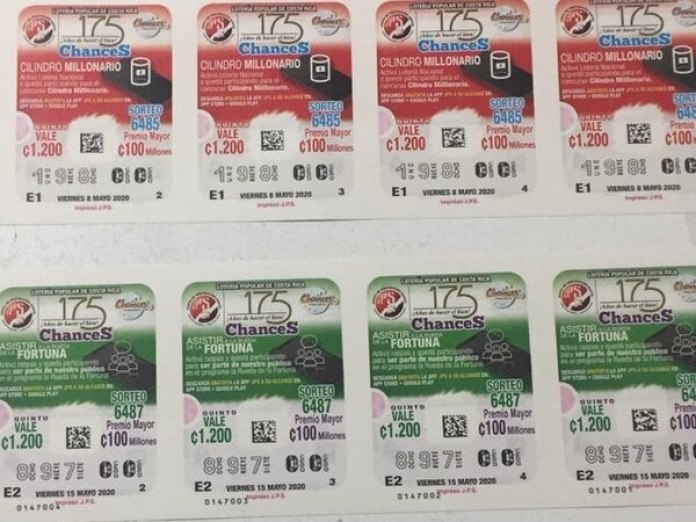
But good news, on Monday the JOS said that the games are back, with the first draw of Chances to be played this Friday, May 8; and that tickets were being made available to vendors that same morning.
he jackpot will pay ¢100 million colones. The cost of an ‘entero’ (5 tickets) is ¢6,000 or ¢1,200 for each piece.
The JPS assured that social distancing and handwashing is part of the precaution of the times and as ordered by the Ministry of Health as a condition of resuming the games.
Given the crisis caused by the virus, the JPS is also trying innovations in its product placement system. Instead of the customer looking for the seller, it encourages the seller to get closer to the customer.
How? By cellphone. By Whatsapp. The lottery listed the telephone number and email of vendors on its website and the area of the country they sell in. The list so far is short, but expected to increase in the coming days, according to the JPS.
In contrast to popular belief, lottery vendors are registered with the JPS, they are not random sellers.
Of the more than 300 authorized street vendors of the lottery, 13% are seniors, whom the JPS is allowing, during the national emergency, to appoint a representative to buy the tickets and special hours if they do so personally.
The Centro de Aprehensión Regional Central (CARC) – immigration holding center – located in San Francisco de Heredia, is on lockdown, following an outbreak in the center over the last couple of days, and responsible for 12 of the 13 new cases of coronavirus covid-19 reported in the last 24 hours.
In total, there are 14 people infected in the center. The first two detained were detected on Saturday, which initiated testing of all detainees (27) and staff (33).
Health Minister Daniel Salas on Tuesday explained that the two Nicaraguan men started with symptoms on April 30 and on May 2 they tested positive. Of the 60 tests carried out on Sunday, “the result of six tests is pending,” said the Minister.
Raquel Vargas, director of Immigration, said that at the moment there are no police officers from the institution with covid-19, but one administrative officer. In addition to the lockdown of the CARC facilities, in Heredia, closed for at least 14 days is the main immigration office in La Uruca.
Vargas stressed that since the national emergency began, the entity activated specific protocols and now, given the situation they are going through, they have been put into practice.
“The risk has materialized and we had an established framework for action to address the situation of the covid-19 along with other institutions.
“We created, under the direction of the Ministry of Health, is an epidemiological fence, which is to detect people and officials and take administrative actions,” Vargas explained.
The director added that the positive cases of the detainees are totally separated from the negative ones, while the staff who stayed at the center are working with all the required security measures. The administrators are at home under quarantine.
Johanna Fernández, an official of the Immigration Police who remained inside at the center, said that everything they have needed in recent days has been provided to them and stressed that they have implemented all the necessary sanitary protocols.
People who are detained at CARC at this time have between two and four months of being there, said the director of Immigration and are foreigners of various nationalities who are currently in an irregular (illegal) immigration status in the country.
Up to Monday night, May 4, the government had distributed ¢19.7 billion colones among 157,859 people affected as a result of the emergency by COVID-19, through the delivery of the Bono Proteger.
Costa Rica’s minister of Labor, Giannina Dinarte
The minister of Labor, Giannina Dinarte, explained that another 91,866 people requested the opening of a bank account to receive the subsidy.
Dinarte indicated that, of the 157,859 deposits already made, 51.2% correspond to men and 48.7% to women.
As of this Tuesday, the minister said, the Executive Branch had received the request for financial aid from 598,554 people, of this the majority (36 %) are independent workers, 22.4% are informal or temporary employees, 21.6% are people who have been laid off, 12% workers affected by labor reduction and 8% are people with suspended contracts.
San José is the province where more people have requested the subsidy, with a total of 202,823 requests. Alajuela ranks second with 110,235 requests, followed by Puntarenas with 68,402, Guanacaste 57,257, Cartago 57,252, Heredia 51,620 and Limón 50,965.
The Minister said that, until now, the government has not communicated rejections in the request for these subsidies, explained that requests are not met “according to who came first”, but depending on their state of vulnerability.
The subsidies of ¢62,500 or ¢ 125,000 are aimed at people who were left without or with less income due to the measures applied as a result of the pandemic, which led companies to reduce working hours, suspend contracts or lay off personnel.
Minister of Health Daniel Salas updated the coronavirus situation in Costa Rica
The Ministry of Health confirmed that the number of people infected with COVID-19 in the country is now to 755 cases, 13 new patients were added to the list in the last 24 hours.
Of the 13 new cases, 12 were reported in the Central Regional Apprehension Center (CARC), the immigration holding center in Heredia. On May 2, the first two cases, to Nicaraguan men waiting on the resolution of their case, had been confirmed in that same place. A center-wide test of staff and detainees was initiated.
“They are contacts of the two detainees who were positive on May 2. The Apprehension Center is in isolation by health order, positive people will remain there, with strict monitoring by the Health authorities,” said Health Minister Daniel Salas.
In the past 12 days, the number of new cases did not reach 10 per day.
Of the total number of cases, by gender they are 403 men and 352 women, ranging in age from one to 87.
As of today, there are 413 people recovered. The number of patients in hospital is 17, of whom 5 are in intensive care.
Puntarenas is a port town on Costa Rica’s Gulf of Nicoya, in the province of Puntarenas. The city is home to over 100,000 and its proximity to the ocean makes it a popular destination for locals and tourists.
Puntarenas is most important in offering a commercial fishing port for the country, but it also serves as a terminal for ferries and a docking station for cruise ships that are traversing the Pacific Ocean with many on their way through the Panama Canal.
Unites from different fire stations and almost 500 firemen worked around the clock for 72 hours to complete extinguish the firer at the paper packaging warehouse in El Coyol, in Alajuela.
The fire was under control by Sunday morning when work then focused on the total extinguishing of the fire.
“It is the largest fire we have had in the last 10 years, we are talking about 22,00 square meters of area and around 70,000 cubic meters of raw material (paper and wood). This has required a lot of resource displacement. At the beginning we had more than 11 fire extinguishing units, tanks, tankers, support vehicles,” said Luis Salas, the Bomberos (Fire Department) operational director.
A total of 490 firefighters from different areas of the country, both salaried and volunteer, worked to control and then extinguish the fire.
The vast majority of non-potable water supplies came from a lake, industrial parks and the Recope all near the fire.
The origin and cause of the first is still unknown. Salas said the investigation started this Tuesday morning, now that the fire is complete out.
86/5000
In those times of coronavirus the stuffed animals in the house should be washed constantly.
Stuffed animals are a comfort item that can provide emotional support and comfort to children and some adults. The stress of everyday life during COVID-19 can be daunting and affect children, as well as adults.
In these times of coronavirus, the stuffed animals (peluches) in the house should be washed constantly and avoid being touched by outsiders. Photo for illustrative purposes
For many families in the country teddys (peluches in Spanish) are infallible in children’s rooms and many adults. However, can these beloved infect you with the coronavirus? It is a big question.
“If a person infected with the coronavirus sneezes or coughs directly onto stuffed animals in my home, chances are yes, but otherwise there is no scientific evidence that stuffed animals connect to the coronavirus.
“Of course, what peluches can do is trigger other diseases that could make the child or adult sick, lower their defenses and be more prone to viral diseases,” explains the expert in pediatric infectious medicine, Dr. María Luis Ávila Aguero, who is also head of the Infectology Service at the National Children’s Hospital and former Minister of Health (2006 – 2011).
Dr. Ávila recommends that during these times of coronavirus what we should do is keep those stuffed animals that we love so well groomed and avoid being touched by outsiders.
It must be remembered very well in these days of the pandemic that the stuffed animals are real banks of dust and mites, they are places that love bacteria in the air because that is how it stays in our homes.
“Children, especially younger ones, usually suck on them and if there are bacteria in the stuffed toy they get into the child’s body and make them sick,” the good doctor warns. “They can trigger allergies, asthma and skin irritations. We talk about diseases that have a lot to do with the respiratory system, which we must be very careful these days”.
It is a fact that many adults cannot sleep without stuffed animals in their beds says Dr. Maria Luisa Avila. Photo for illustrative purposes
The doctor recommends washing them constantly, although they are no longer so fluffy.
The main thing is that your children do not sleep with stuffed animals in bed, nor should adults because it is a fact that many adults cannot sleep without stuffed animals in their beds.
The victim was attacked when she was between 13 and 14 years old, consequences of the sexual assaults she became pregnant.
A man who worked as a security guard was sentenced to 48 years in prison for raping and making his stepdaughter pregnant.
The victim was raped when she was between 13 and 14 years old, becoming pregnant as a consequence of the sexual assaults. Image for illustrative purposes / Shutterstock
The special prosecutor’s office, Unidad de Género de la Fiscalía Adjunta de Alajuela, reported that the Nicaraguan mand identified with the surnames Rivera Riso was charged with five crimes of rape against a minor.
The sentence was imposed last week by the Alajuela Criminal Court, but was made public on Monday, May 4.
According to the Prosecutor’s Office, the sexual assaults occurred between April 2015 and March 2017, when the accused took advantage of the moments he was alone with the victim, who are the time was between 13 and 14 years old.
“As this (prosecutor’s) office showed, as a result of sexual assault, the young woman became pregnant, so the neighbors denounced it to the Patronato Nacional de la Infancia (PANI). The institution intervened and took her to one of their shelters.”
“However, it was not until September of the previous year when the offender told PANI officials what Rivera had done to her, so they accompanied her to file the complaint and, immediately, the Gender Unit ordered the arrest of the accused,” explained the Prosecutor’s Office through a statement.
Rivera remains in preventive detention while the sentence becomes final.
Scientists have identified a new strain of the coronavirus that has become dominant worldwide and appears to be more contagious than the versions that spread in the early days of the COVID-19 pandemic, according to a new study led by scientists at Los Alamos National Laboratory.
The new strain appeared in February in Europe, migrated quickly to the East Coast of the United States and has been the dominant strain across the world since mid-March, the scientists wrote.
After spending a terrible night, with fever and severe headaches and shoulders, Henry* did not hesitate to go to the local EBAIS (clinic) in San José the next morning.
It was March 9, three days after the first case of the new SARS-CoV-2 coronavirus was detected in the country, which to date has left just 742 infections but only 6 deaths
Local health worker making a house call to deliver medicines and verify patient’s treatments.
At the government health center, he and his mother, who also had symptoms, were given some basic tests and sent back home.
“They told me that I had a very large throat infection,” he tells his story.
The 50-year-old Venezuelan, residing in Costa Rica, suspected that he had caught covid-19 in his office, as another employee tested positive a few days earlier, after returning from a trip to Europe.
By March 17, Henry went back to the clinic to have samples taken. And four days later he received an email: he and his mother tested positive for covid-19.
Despite having some discomfort, and that his mother is at greater risk as she is over 70, his treatment was to be carried out at home. His wife and daughter were also infected.
Henry assures that they never felt abandoned, but quite the opposite.
“From March 21 and until about 10 days ago, doctors came here for every other day,” to closely follow the treatment, explains Henry.
They were visited by health workers from the EBAIS, and their doctor was in contact with the family through WhatsApp messages.
The Equipos Básicos de Atención Integral de la Salud (Basic Teams for Comprehensive Health Care) – EBAIS – system has been the first line of response to the pandemic in Costa Rica and represents one of the keys that have allowed the country to have the lowest covid-19 case fatality rate in Latin America, experts say.
As the country today is 60 days in from the first detected case, on Monday, more than half of the infected (399) have recovered and 17 are hospitalized, of which only 5 are in Intensive Care.
Our best vaccine against covid-19 is to have a disciplined and educated population and a fairly consolidated health system. We do not spend on the army, but we do spend a lot on health, social security and education, and that has been very important,” says Dr. Luis Villalobos, a former dean of the Faculty of Medicine at the University of Costa Rica.
A solid health system. Through more than 1,000 EBAIS clinics, administered by the Caja Costarricense de Seguro Social (CCSS), staffed by doctors, nurses, technical assistants and pharmacists, clinicians are treating covid-19 cases at the detection stage, which is crucial for containing infections.
The mortality rate in Latin America. Source Johns Hopkins Coronavirus Resource Center
As in Henry’s case, as a possible case is identified, active monitoring of symptoms is maintained until confirmation. If a patient worsens, then they go to the hospitalization level.
The most complicated moments in these last two months occurred between March 18 and April 13, when 496 new infections were confirmed. The worst day was April 9 with 37 infections reported in a single day. See our Covid-19 timeline here.
However, since then the progression of the disease has decreased markedly: less than 10 new cases have been detected every day, with the exception of April 16 and 22 (16 and 12 new cases respectively).
Artificial respirators, which many countries are struggling to obtain, are about 400 in the health system, and the government announced the acquisition of 300 more.
And having only 6 deaths from covid-19 in almost two months has made Costa Rica one of the countries with the lowest mortality rate from the disease in Latin America, and even in other regions of the world.
The operation of the system is largely due to the fact that Costa Rica is one of the few countries in the Americas (along with the US, Canada, Cuba and Uruguay) that invests more than 6% of the Gross Domestic Product (GDP) in health.
“Most of the population, due to the short time of the presence of the virus in our country, has not been exposed to the virus, has not been infected with the virus. We can have an increase in cases, transmission chains, intensely, in no time. The country is walking on a very fragile eggshell floor,” he warns.
Although on May 1, the government relaxed some measures in place since the beginning of pandemic, Health Minister Daniel Salas, who is cautious about the near future, warns Costa Ricans that the return to what was normal cannot be accelerated nor will it come in the medium term.
On May 11, the government of President Alvarado is expected to let the population know what restrictions will or will not continue past May 15.
* Henry is not the real name of the patient, his identity is reserved so as not to cause concern to his relatives in Venezuela.
The host of “Sábado Feliz” Natalia Rodríguez showed on her social networks that she is one of those women who can continue to be friends with her ex-boyfriends.
From Facebook
Newly married, the hot Tica was for many years the girlfriend of the actor Mario Chacón, who forms the comedy quartet Media Docena and lead in the Costa Rican film, “Maikol Yordan de Viaje Perdido“.
And although some thought, as typical after a breakup, that the two do not even speak to each other are very wrong.
Naty decided to give her ex-boyfriend a hand by announcing his restaurant on her social networks. And we can be sure she didn’t ask for a single colon.
Mario (Mailol) and his partner Daniel Moreno are owners of Sabor a Tango and due to the pandemic, they are betting on express service. And without hesitation, Naty was there to help.
We imagine that Don Emilio Garro, Naty’s husband, is OK with his new wife given her ex a hand.
The officers carry out constant operations to enforce the sanitary measures. MSP photo.
Three men will have to pay the equivalent of ¢150,000 in school supplies after acknowledging that they went to the beach despite the health order issued by the Ministry of Health that prohibits visiting these places as a preventive measure against COVID-19.
Police carry out constant operations to enforce sanitary measures. Photo: MSP
In addition, another man was sentenced to four months in prison for the same reason; however, he got a suspended sentence, so he will not have to be in prison.
The Prosecutor’s Office reported Monday that two of the men, with the last names Castillo Rojas and Rowe Orozco, visited the beach, in Matina de Limón, when the sanitary order had already been issued. Both were notified on April 9 and 18 by the Coast Guard, who told them they should not be there.
On April 28, at about 11:00 pm, the men were at that same beach again, so they were detained by the officers.
The other two, identified by their last names Winter Rowe and Guadamuz Solera, were caught on the same beach by the police on April 13 and 16, on both occasions the uniformed officers notified them to let them know that they should not be there. Despite that, on April 28 they were back, so they were arrested.
Criminal charges were filed against the four for the crime of disobedience to authority. All accepted the charges to avoid going to trial.
The beaches and national parks around the country continue closed as part of the measures to contain the contagion of the coronavirus.
The cultivation of Cannabis hemp ( cáñamo in Spanish) would help the economic reactivation, informed President Carlos Alvarado, who announced on Monday that he will be sending a bill to the Legislative Assembly this week.
The idea is that the incipient sector has all the guarantees and security of the case.
“We will promote the cultivation of hemp to reactivate the productive sector, with all the guarantees and security of the case. We will use all the prestige derived from the country, in life sciences and tourism, to take off again in all regions. The government’s economic team will present the details of these and other initiatives this week ”
This is one of the initiatives made in his speech to Legislators on Monday, that he will promote to revive the economy after the crisis caused by the national emergency of covid-19.
In the Legislative Assembly, there is already a bill, out forward by independent legislator Zoila Rosa Volio, which seeks to legalize the production of cannabis and hemp for medicinal purposes.
The initiative of the deputy Volio points out that hemp, the name by which one of the cannabis species is known, does not have psychoactive properties, since it is a variety that contains a low content of THC, one of the cannabinoid substances that works as a psychotropic.
Among the main uses that are given to non-psychoactive cannabis, indicates the proposal, is the production of medicines and cosmetics with the oil that is extracted from the plant. It also works for textile fibers, bio-construction materials and biofuels.
The plan argues that, in some countries like France, Canada and Sweden, there are specific industries dedicated to the production of hemp derivatives.
Other countries, such as Ecuador, recently announced that they will boost the production of this plant to reactivate its economy in the face of the ravages of the coronavirus pandemic.
For the implementation of this crop, which has a denser stem than that of marijuana, a series of regulations must be approved and reformed that regulate crops, production and marketing of hemp.
Volio: ‘It will generate a lot of employment’
“I think it is a project that is going to generate a lot of employment and I think it is what we need that to reactivate the economy,” said legislator Zoila Rosa Volio about her proposal.
Enrique Sánchez, head of the ruling party, the PAC, said that his caucus is in favor of this bill and is working on a text together with different deputies, including legislator Volio, among whom he said there was a consensus.
According to Sánchez, the substitute text seeks “to guarantee that the employment and wealth generated by this new industry is distributed wealth that is not concentrated and that there is no risk that it will generate some monopolies.”
“From the announcement made today by the president about hemp production, effectively, as one of the actions to stimulate post-pandemic production, we are going to wait for the details of the proposal of the Executive (Government) to make compatible the initiatives that arise and finally be able to specify a law in this regard,” she added.
The bill (file N ° 21,315) is called the ” Ley De Producción De Cannabis Y Cáñamo Para Fines Medicinales” (Cannabis And Hemp Production Law for Medicinal Purposes) and seeks to industrialize the products that result from the cultivation of hemp and, in the case of cannabis, would allow its medicinal use.
The plan aims to “generate a pharmaceutical industry around the products that result from the cultivation of cannabis and hemp, which have already been accepted worldwide.”
According to the Volio bill, the medicinal use and production of cannabis and hemp is legal in more than 21 countries, which means a global market of more than 1 billion people, in which around 60% of the market is in countries where the medicinal use of plants is legally permitted.
For this, the Ministry of Health will be in charge in matters of medicinal production of cannabis and hemp, which has legal powers to regulate and verify compliance.
Likewise, the Ministry of Agriculture and Livestock (MAG) would be responsible for sowing, importing seeds and regulations for the industrial phase of the products.
In his annual report to the Legislative Assembly, President Carlos Alvarado on Monday reviewed how Costa Rica has successfully faced the Covid-19 pandemic, reported on the country’s achievements prior to the emergency, and outlined the challenges that we must all face in theimmediate future.
“This enemy has subdued rich and powerful nations, but little Costa Rica, brave, united and hopeful, is determined to defeat it, and we will overcome it!” Was one of Alvarado’s first sentences, hinting at the success of the health approach, which places it as the country with the lowest mortality due to the virus in the entire American continent.
Despite this, the President made it clear that we are barely at the beginning of a long process.“Let’s not deceive ourselves or trust ourselves.We are facing the greatest challenge of our generation”, for which it is essential that we believe in ourselves as never before.
Alvarado insisted that the strength of the response to the pandemic is possible thanks to almost 200 years of the country’s history: a nation without an army, which enjoys liberties and guarantees, a country interested in the education of citizens and with solid security. Social.
President Carlos Alvarado presented an uncertain and complex picture of the pandemic, combined with a strong dose of hope and a call for national unity. (Photo Julieth Méndez, Casa Presidencial)
In this context, he highlighted the way in which the world pandemic has shown the importance of a Solidarity State, at the same time that he called for strengthening it in changing times and realities. He indicated that to overcome the crisis emanating from the pandemic, it is necessary to renew the social pact and continue modernizing the State. “I want to be equally categorical here: the actions that we will promote aim to take care of the country that we have built,” he emphasized.
“I was not called (elected) to govern to eliminate the Social Rule of Law: never! This must be preserved for this and future generations. But I was called to protect and modernize it, to prolong it over time,” he stated forcefully.
The President highlighted the public-private sector collaboration that made it possible to transform the CENARE in 11 days into the Specialized Patient Care Center with Covid-19, to adopting the concept that the public and the private sectors are not antagonists but natural and necessary allies. “We would advance light years. We must discipline ourselves so that after the pandemic this practice is not an exception, but a rule.,” said Alvarado.
“Let us leave aside the voices that seek to sow divisions. What we have done well in the face of the pandemic has been in plurality, but in union and teamwork. We must follow the path of innovation, solidarity and disciplined work,” he said.
Lastly, the President set the path to “successfully face the triple threat to life, social welfare and the economy represented by Covid 19”, making it clear that the challenge after overcoming the health crisis will be “to act to protect the stability of the economy and enhance its recovery. ”
He was vehement in all his speech about the importance of balance in decision making so as not to leave anyone behind, in a Costa Rica that must reinvent itself as a result of the crisis. In this regard, he noted that “the key to the decisions we have before us, once again, is to distribute the burdens. It is union and solidarity. It is balance. And that the burden of this pandemic is not burdened on the poorest and most vulnerable. That we maintain and improve social cohesion.
“There is an urgent need to act to reduce the fiscal impact of the pandemic, guarantee debt service and maintain the proper functioning of the institutions,” he said.
He mentioned the importance of generating healthy income, a measure that must go hand in hand with austerity and the redirection of funds. At the same time, he proposed the search for a solution to informality, streamline the State and cut procedures.
“We must also innovate by attracting investment. We will use all the prestige in life sciences and tourism, to take off again in all regions,” he said.
He spoke of the urgency of important reforms such as that relating to public employment, the ordering and closing of some decentralized institutions, the new modalities of working hours, the closure of Fonabe and the proposal to give greater flexibility to the National Institute of Learning (INA) so that it responds promptly to new trends and thus strengthen the employability of its students.
These actions will be necessary as the economy will drop 3.6 percent of GDP and there will be an additional shortage of more than ¢701 billion colones in the state coffers. “You cannot realistically obtain this figure only one way or the other, it has to be a balanced and temporary combination of loads,” he continued in line with the balance in strategic decision-making.
“Our goal is to reduce that impact by approximately 2 percent of GDP, to return the country to the fiscal consolidation route it had embarked on before the pandemic,” Alvarado said, while announcing the reduction of his salary by 10 % and reiterated his resignation to the pension as a former president, to set the example regarding the solidarity contribution proposal.
At the international level, he indicated the strategic actions that he is promoting and that will benefit Costa Rica in its recovery.He recalled the country’s leading role in establishing the patent repository to combat Covid-19 so that future treatments and vaccines are available to all, and the promotion of a global initiative for pandemic-related financing for countries ofAverage income –l ike Costa Rica – is at a fixed rate, hopefully, zero rate, and long-term.
In the last stage of the speech, he called for a constructive spirit in difficult times and to leave behind decisions based on electoral politics.
“In my two years in office, I have not dedicated myself to finding guilty parties, finding excuses or caring for popularity.I have dedicated myself to seeking and proposing solutions, regardless of whether in the short term they appear to be very harsh and have high political costs.The electoral cycle doesn’t interest me at all,” said Alvarado.
In closing, he drew a realistic panorama but also full of hope, indicating that “difficult days are coming but we should not be afraid, but with determination and self-confidence. We are going to overcome them as we have done so far: with solidarity, with empathy and with a firm decision.”
“With the conviction that we will move forward, without fear, I will continue to promote the changes that are necessary to improve Costa Rica,” he said.
“Today we have the technical capacity and data analysis to identify all people in poverty, or living marginally, or who suffer a sharp drop in their income. This makes it technically possible to eliminate poverty in Costa Rica, through the proper targeting of resources.”
La Carpio, one of San Jose’s impoverished areas
“My pain, as president, is that today we don’t have the financial resources to do it. But there will be no excuse for not achieving it in the near future, when the pothole caused by the pandemic is overcome.”
The “Bono Proteger” consists of providing, exclusively through direct bank deposit, subsidies of up to ¢ 125,000 per month, which allows identifying not only families in poverty, but also the economically active population working independently work and informally.
According to the president, subsidies have already been paid out to 90,000 people and “another 220,000 will obtain it in the coming days.”He added that the government effort to give the subsidy “allowed banking access to at least 60,000 people.”
Alvarado admitted that “the social effects of the measures necessary to flatten the contagion curve and thus defend life and health are very severe in terms of unemployment and loss of income for families.”
The Ministry of Health issued guidelines on Monday afternoon for establishments that provide food services, beauty salons and even people who want to play sports.
All of them emphasize strict rules of personal hygiene and of the implements for each activity, as well as ensuring the distance between both workers and clients.
In restaurants or home delivery or take-out services, sanitary equipment must stand out, dispensers filled with, antibacterial soap, alcohol gel, paper towels for drying hands and a trash cans with pedal-operated lid. Maintenance, cleaning, disinfection of the premises must be ensured with a visible logbook.
Likewise, it recommends that the handwashing station be activated automatically (with pedal and sensor) and place dispensers with alcohol gel in the access area to the food service and in the cash register or pay areas and entry/exit points for use by staff and customers.
Signs should be in place to remind customers to apply alcohol gel to their hands when entering and leaving the premises, and to keep these alcohol dispensers in good working order and stocked.
Limit the maximum capacity of the food service to 50%, as well as of common areas such as roof terraces, ranchos, event rooms, patios and dining rooms. Companies may implement other, more stringent indications, as long as what is indicated by the Ministry of Health is complied with.
All information that is transmitted to both workers and clients must be from the Ministry of Health.
If possible, the company should cancel staff meetings until further notice and adjust to the measure of 50% of the capacity of the room where they will be held.
If the company has an elevator, restrict the number of people using it. This according to the size of the elevator and considering a distance of 1.8 meters between people.
Beauty salons and barbershops. Authorities request these establishments to intensify cleaning and hygiene measures, especially on surfaces that are frequently handled, such as handles, reception desks, counters, showcases, shelves, chairs, tables, computer equipment, dataphones, among others.
They must keep tools and work equipment properly disinfected and, in addition to the general cleaning of the premises, when deemed necessary, clean and disinfect objects and surfaces that come into contact with customers.
It is recommended to serve customers only through prior appointments, this in order to avoid crowds within the premises. If this is not possible, in the waiting room or lobby, it must be ensured that customers maintain the correct safety distance of 1.8 meters between person and person.
It is recommended to establish a different schedule of care for vulnerable sectors of the populations such as seniors, chronic patients and people with special needs.
Other guidelines for include:
The personnel who work in barbershops, hairdressers, beauty centers, due to their proximity required for the service, must wear a mask or face mask, glasses or masks at all times.
After attending to each client, disinfect the area and work tools and use gloves, face masks and cutting layers, disposable sheets or use disposable paper, different for each user.
Cloths, capes and sheets that are used with each client must not be reused. A paper collar or, in its absence, toilet paper should be used as a collar between the layer and the client’s skin.
Perform the handwashing protocol after going to the toilet, before eating and after coughing or sneezing.
Avoid touching eyes, nose and mouth.
Used lenses or masks must be washed with soap and water after use with each client, so it is recommended that good quality resistant lenses or masks be used.
Food processing plants
In these facilities, Health requests the placement in visible spaces signs with protocols for sneezing and coughing, hand washing, other ways of greeting, not touching their faces and what are the populations at risk.
Permanently stock in bathrooms for employees and the public toilet paper, antibacterial soap, disposable towels for hand drying and gel alcohol.
Depending on the type of activity, mark areas that indicate the social distance between clients within the establishment. Also place at the main entrance of the facility and customer service area, dining rooms if any, dispensers with alcohol gel for the use of customers.
Limit the use to a maximum of 50% of its capacity, the areas of attention to the public, areas of common use such as recreational or sports areas, meeting rooms and dining rooms.
If the company building has an elevator, the number of people must be restricted when using it, according to its dimensions and keeping a distance of two meters between people.
If there is a food preparation area and a dining room, it must comply with the general guidelines mentioned above for food services and the attention of external clients through scheduled appointments must be individual.
To carry out sports individually or as a family, the Ministry asks that if you are going to practice sports such as cycling, athletics, tennis and others in public spaces allowed open, distance yourself from other people at least 1.8 meters.
If you go jogging, running, biking, walking and such, also keep the minimum distance of 1.8 meters from other people who do not live with you.
Surfing, for now, remains without authorization.
“If you go out with children, take care that they follow the prevention guidelines previously exposed”, cites this part of the guidelines.
In the case of cycling and tennis, disinfect the bicycle and all accessories before and after use.
The practice of sports must be carried out without companions.
At 59 days after the first case of covid-19 was reported in Costa Rica, 742 people have been infected, three more than on Sunday, when 739 cases were confirmed.
The information was released on Monday morning by the director of Health Surveillance, of the Ministry of Health, Rodrigo Marín, in a conference earlier than the usual 12:45 pm.
Of those affected, men continue in the majority with 390, while women are 352.
From the count, the number of minors who have been affected reached 40; the number of adults is 702, of which 38 are seniors.
The infection has spread to 63 of the 82 cantons, La Cruz, in Guanacaste, the latest to report a positive case. Last week Bagaces and Abangares, also in Guanacaste, and Golfito, in Puntarenas, reported their first positive cases.
The number of recovered is 399, that is, 53% of people who tested positive no longer have the virus.
As of this morning, Monday, there are 17 people hospitalized, five of them are in the Intensive Care Unit (ICU) ranging in age from 57 to 75.
The number of deaths remains at 6, the last death reported was on April 20.
Marín assured that they are paying a lot of attention especially to Costa Ricans and residents who return from places of high transmission.
“In Costa Rica, there is a low transmission due to the measures that have been taken,” he guaranteed.
Monday morning, prior to the press conference,
On Monday morning, the pharmaceutical company Gutis highlighted in a press release that to date 433 patients with covid-19 have received hydroxychloroquine, a medication they produce in Costa Rica.
The pharmaceutical said it has delivered two million pills to the Caja and assured that it had reserves if necessary.
Venezuela announced that an armed group launched an invasion before dawn on Sunday by boat, attacking through the port city of La Guaira.
Interior Minister Nestor Reverol said on state television that Venezuelan forces overcame the attackers. He did not say who the assailants were but identified them as coming from Colombia.
“In the early hours of May 3, a group of terrorist mercenaries from Colombia intended to carry out an invasion by sea with the aim of committing terrorist acts in the country,” the minister said.
Reverol added that the terrorists were planning to “assassinate leaders of the revolutionary government and generate chaos and confusion among the public.”
Attackers ‘used speedboats’
“These terrorists tried to enter in speedboats along the coast of La Guaira state, but thanks to the timely, effective action of our Bolivarian National Armed Force and […] of the Bolivarian National Police they were shot down and others arrested,” he said.
Authorities are conducting a wide-reaching search to capture all of those involved.
Hundreds of messages circulated on social networks describing overhead flights, gunfire and explosions and the increased presence of security forces in La Guaira state.
Venezuelan President Nicolas Maduro frequently accuses political adversaries of attempting to overthrow his administration with the support of the United States, which has vowed to force him from office through sanctions that have crippled the OPEC nation’s oil exports.
Mired in crisis
Maduro has overseen a six-year economic crisis that has left many citizens unable to obtain basic food and medicine and forced nearly five million people to emigrate.
The US and more than fifty other countries disavowed Maduro after his disputed 2018 election, which they say was rigged, and instead have recognized opposition leader Juan Guaido as the nation’s legitimate interim leader.
But Maduro retains the backing of the country’s armed forces as well as countries including China and Russia, which have harshly criticized the U.S. sanctions.
Far-right Brazilian leader Jair Bolsonaro took to the streets Sunday to attack Congress and the courts in a speech to hundreds of his supporters, mentioning once again the backing he continues to have with the armed forces.
This comes as the country is engulfed in a political scandal as Bolsonaro faces the most serious crisis of his mandate | Photo: Reuters
“We have the armed forces at the people’s side: the side of order, democracy, liberty,” Bolsonaro said in a speech transmitted live on Facebook, underlining the former army captain’s increasing isolation as he downplays the impacts of the novel coronavirus on Latin America’s largest nation.
As in an April rally also attended by Bolsonaro, demonstrators on Sunday called for the closing of the Supreme Court and Congress, and a return to dictatorial measures used during Brazil’s 1964 to 1985 military regime; to which Bolsonaro and his vice president have publicly shared their admiration.
Yet the latest rally was carried out as the president faces widespread criticism from across the political spectrum for dismissing the threat of the virus in Brazil, which had registered 95,559 confirmed cases and 6,750 deaths as of Saturday evening.
On Sunday, dozens of public figures signed an open letter to the Brazilian government calling on officials to protect the nation’s indigenous people, who often live in remote locations with limited access to healthcare.
Also, this comes as the country is engulfed in a political scandal as Bolsonaro faces the most serious crisis of his mandate, after his closest ally former justice minister Sergio Moro, quit last week and accused the president of firing the federal police chief in a bid to appoint a personal ally to the post and obstruct graft probes targeting his sons.
On the day that Brazil reaches 100,000 cases, the president participates in a rally and expresses his support for those who ask for the closure of the legislative and judicial power.
Brazil’s Supreme Court blocked Bolsonaro’s pick for a new chief on Wednesday, enraging the president.
As Bolsonaro’s relationship with legislators and the courts continue to downgrade, he has become increasingly dependent on staffing his government with the active or former military.
Political leaders have called Bolsonaro’s participation in anti-democratic rallies irresponsible, especially as he has spoken approvingly of the nation’s military dictatorship, which was responsible for hundreds of extrajudicial executions.
The president has also advocated violence against journalists accusing them of publishing “fake news.” At the Sunday rally, at least three photographers were attacked by demonstrators, according to a Reuters witness.
Workers at factories in Tijuana manufacturing for Hyundai, Roger’s, Carso, Safran, Hisense and Ontex have all staged protests in recent days, according to journalist Alfredo Alvarez.
Luis Hernandez, who heads the Manufacturing and Export Industry Association (Index) in the Mexican state of Baja California, said 60% of the region’s 1,200 suppliers have shut. He said there have been issues with about 20 companies where “employees see the pandemic as an opportunity to go on paid leave.”
Officially, only essential businesses are permitted to stay open in Mexico. Yet many Mexican factories that assemble, manufacture, or process goods to be exported to the US have kept up production nonetheless. Alfredo Alvarez has reported that laborers have been told they will be fired unless they show up to work.
Deadly consequences
This refusal to heed the lockdown has had the gravest consequences, with 20 workers reported to have died from the coronavirus — 13 of them in a factory producing car parts for Lear Corporation in the city of Ciudad Juarez.
Mexican firms depend heavily on trade with the United States, which in turn can exert substantial political pressure
The Los Angeles Times has reported that Lear Corporation’s health department became aware of COVID-19 cases among its workforce in late March, handing out pain killers to those infected and demanding they return to work. Apparently, other companies are being similarly careless with their workers.
On Wednesday last, for instance, a spokesperson for Surgical Specialities, which manufactures medical products, confirmed that two workers at the firm’s Tijuana site had died from coronavirus infections.
The factory has been allowed to keep up production as medical products are considered essential. But laborers have reported that the workforce present at the factory has not been thinned out to 50%, as stipulated in the guidelines. Index now recommends that companies install thermal testing facilities at factory gates to detect possible coronavirus infections among workers. So far, only one company has followed this advice.
Millions of jobs at risk
The pressure to keep up production, meanwhile, not only stems from Mexican companies but also US demand. Christopher Landau, the US ambassador to Mexico, tweeted that he would do everything in his power to keep supply chains up and running. In Mexico, meanwhile, some seven million people are employed in the manufacturing sector, which comprises two-thirds of all Mexican exports.
But Mexico and the US do not always agree on which sectors are essential. While the former only classifies food producers and health care product manufacturers as crucial, the US also deems the aerospace and arms industry indispensable.
This is not always a straightforward call to make. While Mexico’s lighting industry considers itself a key sector for security reasons, Baja California governor Jaime Bonilla closed a factory run by US company Copper Lightning. And Industry Representative Hernandez fears that unless Mexico and the US come to an understanding soon, supply chains will disintegrate.
Governor Bonilla, a member of the ruling Morena party, has in fact shut down a range of factories refusing to comply with lockdown rules. One reason, presumably, is that region’s hospitals are already at maximum capacity. Speaking to journalists, he criticized that “firms are out to make more money, even though they are risking their workers’ health.” The state of Baja California has seen the third-highest number of coronavirus infections across Mexico. So far, 975 people have tested positive for the virus, and 133 have died. Valdez has, however, signaled he might consider lifting restrictions, saying he was closely monitoring developments in the US, where production sites are continuing to operated under certain conditions.
Traffic controls can be at any time and at any place, throughout the country
Good news for those who have a Riteve appointment in the coming days and it falls on the day of your vehicular restriction.
Traffic controls can be at any time and at any place, throughout the country. One of the favorite spots is pictured, La Sabana westbound, at this point, just before the pedestrian overpass, once you’ve entered the pista, there is no way to avoid
The Ministry of Health and the Ministry of Transport signed an agreement so that drivers can get to their appointment and not be sanctioned for violation of the vehicular restrictions.
The exception began on May 1, but be warned, the exemption is not carte blanche to as you wish, that is, you will be ok going from your home (or work) to Riteve and back, the Transitos (traffic cops) will surely know if that is what you are doing or trying to circumvent the restrictions.
“The person must circulate strictly and only to and from the inspection station. The person must leave at a reasonable time prior to their appointment and cannot take advantage of it to run errands ”, explained Alberto Barquero, deputy director of the Traffic Police.
So, for example, if a person has an appointment at 11 am, getting stopped at 8 am or 3 pm will most likely get you a ticket, points on your license and good change will be walking home.
Barquero explained that 3 hours to get to or from the Riteve is not reasonable.
To ensure you won’t get fined, here are a few tips:
First and foremost your license plate should end in 5 – the month of May – which is the month your inspection is due
Have proof of the appointment. Riteve sends a text message to your cellular phone confirming the date, time and station
Don’t make an appointment at say the Puntarenas station if you live in Escazu
The exemption only be during 5:00 am and 7:00 pm, don’t be driving during the nighttime restrictions, Riteve stations are closed and you will be sanctioned (if caught)
In case your inspection is overdue, say 4 for April, don’t be driving unless you want to face the music, make alternate arrangements, such as a tow truck to get your vehicle to the Riteve and back if it does not pass.
When making an appointment, do not do it on the day you know you will have the restriction. Riteve online will allow you choose the time and day that suits you best; the same making an appointment through the call center.
At the Riteve, have all the necessary documents – car ownership and you current driver’s license. Riteve, in these times, is not allowing more than one person in the vehicle, no children or pets either.
Disinfecting the mercado central in downtown San Jose
Coronavirus in Costa Rica: what is the effective formula in the Latin American country where fewer covid-19 patients die? asks BBC Mundo, given that our country has recorded only 6 deaths from 739 confirmed cases in the 59 days since the first was reported.
Disinfecting the mercado central in downtown San Jose
That is a death rate of 0.86%.
“Our best vaccine against covid-19 is to have a disciplined and educated population, and a fairly consolidated health system,” Dr. Luis Villalobos, told BBC Mundo.
“We do not spend on the army, but we do spend a lot on health, social security and education, and that has been very important,” adds the also former dean of the Faculty of Medicine at the University of Costa Rica (UCR).
Spain’s El Pais said on Friday, “Costa Rica clings to caution despite registering 10 days without deaths from covid-19”. The last death reported was on April 20.
Mortality in Costa Rica is the lowest on the continent, but the authorities refrain from relaxing sanitary measures, calling it a momentary triumph.
However, internal critics question the figure, arguing that not enough testing has been done. As of Sunday, May 3, 13,851 tests have been made, a rate of 277 per 100,000 inhabitants, although Health Minister, Dr. Daniel Salas, does not tire of assuring in his daily press conferences that tests are being applied to all those who suspect they have been infected
In any case, there are other figures that Health authorities present as evidence that until now everything is under control. There are only 16 patients in hospitals, and of these, six occupy intensive care beds.
The hospital that the Caja Costarricense de Seguro Social (CCSS) exclusively set up for covid-19 is at 95% vacancy. And then there are the number of recoveries, on Sunday more than half of the confirmed cases are in the recovered column.
The some 3.000 black bags the CCSS purchased in March are almost intact.
Other newspapers in Europe and Latin America had similar praises in their publications this weekend.
In Costa Rica, The Minister of Health, Dr. Daniel Salas and the President of CCSS, Roman Macaya, insist that despite the good numbers and the decline in the virus curve, on the need to maintain strict measures.
“Costa Rica has a robust and universal health system explains,” Macaya.
The Costa Rica public system has 29 hospitals, as well as clinics and a small health area for practically each neighborhood called Basic Equipment for Comprehensive Care (EBAIS), which are the first step in health care. This network enables personalized daily monitoring of COVID-19 patients and has also prevented the country from having community transmission of the virus, since all cases have their identified epidemiological link.
This universality ensures that people have free access to COVID-19 evidence, as long as they meet the established parameters to consider someone as a suspicious case.
“Early detection is one of the key factors Costa Rica has been able to keep the death rate low,” explains Salas.
“The Sentinel model favored the early detection of the disease. It allows us to know what is happening in the most strategic, hottest points of the country,” he said April 23. “The moment we have an increase in cases that are in those sentinel units across the country, it immediately alerts us that there is increased circulation of a virus”.
Unlike some other countries in the region and the world, Costa Rica has not established a generalized quarantine, but it has ordered restrictions on the movement of vehicles, the closing of bars, discos, cinemas, gyms, and the operation with diminished capacity of restaurants, shops and other small businesses.
As of May 1 and due to the decrease in the curve of active cases, it has begun to reopen some activities such as gyms, beauty salons, mechanical workshops and cinemas with limitations.
Meanwhile, Minister Salas – a 43-year-old doctor and expert in epidemiology – has become a figure with a direct voice that has permeated the population and that sometimes resembles a scolding.
“I need that you react, please react!” Was one of the phrases of the minister that became most popular when Costa Rica was just beginning to face the pandemic and the authorities advocated staying home.
Meanwhile, the Clodomiro Picado Institute of the University of Costa Rica that specializes in the development of snake antivenoms that it exports to various countries in the world, is applying that technique to create a serum to treat seriously ill patients of COVID-19. The serum will be developed with plasma donated by recovered patients, since the body of these people generates an immunity (resistance) to the virus.
For its part, the state-run Instituto Costarricense de Investigación y Enseñanza en Nutrición y Salud (Inciensa) – Costa Rican Institute for Research and Teaching in Nutrition and Health – managed for the first time in the country’s history to sequence the genome of the SARS COV-2 virus, which causes COVID-19.
This advance will allow us to know if the virus has mutations over time, generate information that can be useful for developing vaccines, to know the dynamics and diversity of the viral population, the transmission routes in the country, among other uses.
Immigration and the Ministry of Health confirmed Saturday afternoon two new positive cases of COVID-19, that of two foreigners being held at immigration holding -Centro de Aprehensión Regional Central (CARC) – of the Immigration Police in Heredia.
According to immigration, the Nicaraguan nationals were preventively isolated by applying sanitary measures and awaiting the corresponding migratory process.
Their symptoms began on Thursday, April 30. They were tested on Friday, results came out positive for covid-19.
The two men are in stable health and remain in isolated areas, within the cells of the holding center.
Authorities are now testing staff and others in holding.
The FDA has approved remdesivir for emergency use on hospitalized coronavirus patients. A drug trial of remdesivir showed a positive effect on coronavirus patients’ recovery time and survival rate.
Dr Anthony Fauci said earlier this week, “The data shows that remdesivir has a clear-cut, significant, positive effect in diminishing the time to recovery. … What it has proven is that a drug can block this virus.”
US regulators have allowed the emergency use of the experimental drug remdesivir, which appears to help some coronavirus patients recover faster. It is the first drug shown to help fight Covid-19, which has killed more than 230,000 people worldwide, The Guardian reports.
The Minister of Health, Dr. Daniel Salas, explained on Saturday that the use of remdesivir as a treatment for patients with COVID-19 is not used as a short-term option in the country.
Remdesivir is an antiviral that prevents virus replication and has been used in other diseases such as Ebola, with high effectiveness, according to Salas. This drug was recently approved by the United States Food and Drug Administration (FDA) as a treatment for critically ill patients with the new coronavirus.
“There are a very large number of studies that are evaluating different types of drugs and that eventually some will be authorized and others will not. There is still not too strong evidence from studies done elsewhere that justly indicates all the possible effectiveness that remdesivir may have,” said Minister Salas.
The Minister indicated that the antiviral has some side effects that can be dangerous for patients.
“There is eventually a risk of kidney damage; This has been seen in some patients as one of the side effects, although there may be others. We in Costa Rica continue to assess all the evidence that is emerging and, depending on how solid it is and all the cases that follow, we can consider new treatments to be used in COVID-19 patients,” he said.
Another problem that the Minister of Health sees in the use of remdesivir is that, at the moment, it is not freely available for purchase.
Let’s also remember that this depends a lot on the availability of the drug itself. This medicine has not been released to the market before, it is not like others that have been used and that have been on the market for a long time. We always continue to wait, seeing the studies, the strength of use and the availability that we may have in this regard,” said Salas.
On this last point, Salas affirmed that it is an example of the proposal presented by Costa Rica to the World Health Organization (WHO), to release patents of the discoveries against COVID-19 and that all countries worldwide can freely use them.
Dr. Daniel Salas, the Minister of Health, has become a heartthrob of sorts in Costa Rica, besides seeing him daily on national television, providing us an update on the coronavirus pandemic in the country, his image is everywhere, from doll figures to women’s pajamas.
Dr. Daniel Salas, Minister of Health and Costa Rica’s Heartthrob
His mug can be found on a cup, on a cake, on personalized products mostly sought after by women … who, since March 6, became the most important figure in the fight against coronavirus in the country.
A definite favorite is the women’s t-shirt combo by One3 Taller Serigráfico, which features the minister and with the words, “He is the only man who can prohibit me from leaving the house“.
Given this, Salas assures that he appreciates the comments and all the positive things that people highlight about his work, but he is not alone in the management of the crisis, it is a work of dozens of people.
“Many people are working on this and we break our souls for all of you. I am proud that people respond to and understand the message. Let’s not throw in the towel, please,” he said.
Karla Solís, owner of One3 Taller Serigráfico, located in San Rafael de Coronado and who for the last 4 years has been dedicated to selling personalized items, said: “When the quarantine started, sales dropped a lot and that made us lose a lot of income. The business was run by my boyfriend, Andrey, and myself and we saw an opportunity in women, because some admire the work of the minister, but there is also a reality and that is that there are women who are physically attracted to him.”
Mostly women over 40 are buying the two-piece pajama set says its creator
Solís said they did not want to sexualize the image of Salas, but rather highlight the Minister’s recommendation not to leave home. So they created a two-piece pajamas, on the blouse there is a photo of the minister and in the shorts, there are viruses, prohibited logos, and soap. They sell for ¢ 9,000.
“People have been amused by the reaction of some people about the measure of not leaving home. For this reason, we talked with the person who helps us with pajamas and we found it interesting to make the garment alluding to the minister and we did not imagine the boom that this product would have,” she assured.
On Friday, April 24, a sample of the pajamas was uploaded to social networks and more than 20 people ordered it, most of them ladies over 40 years old.
Doña Yamileth and her daughter María Garita are the owners of La Quequería, a dream that was born 8 years ago and with which they try to sweeten the lives of their clients every day.
María expressed that her mother also does housework and because of the pandemic she lost her job.
“She tries to see the positive side of things and since we have this additional business, we wanted to do something different, as a tribute to the minister, for being the person who has taken the lead in this difficult situation,” said Maria.
“Let them eat cake“
The ladies came up with a cake featuring the good doctor, the first one on Sunday, April 26, the day after he wore for the first time the fuscia t-shirt at the press conference.
Within hours of they has numerous calls for more cakes.
“The start of the cake is the minister, we made a figure with fondant icing (pasta Australiana in Spanish) that you can eat and we have already received several orders. The outside cake is the same for all sizes, what changes is the flavor. You can choose from choco mint, vanilla, filled with dulce de leche and each one costs ¢30,000,” she indicated.
Seidy Obando says she was asked for a gift basket some friends and thinking about the isolation and the situation the country is going through, it occurred to her to make “survival” kits.
She is the owner of Esencia Creativa and thought that these gifts could be a saving grace for her clients in times of the coronavirus and therefore, she did not think twice about putting together a kit that would be liked by her clients.
“The kit contains snacks, popcorn and chocolates because at this moment where we all have to stay at home, these products are ideal to watch a movie, to share with the family.
All you need to survive the pandemic
“In addition, I wanted to add a cup with the image of the minister, because he is the most talked-about figure in the country at the moment and I put gel alcohol on him, because, without a doubt, he is one of the most used products at this moment ”, he added.
Obando added that two weeks ago she published it on her Instagram account and to date has had orders for 45 kits. And who bought them? You guessed it. Women.
“Each kit costs ¢10,000 and most have been requested by women over 25 years of age. People are struck by the minister’s cup and I sincerely appreciate that in this difficult time for the economy, people continue to buy our products,” she said.
Including the respective prevention protocols to avoid the spread of the virus, cinemas, beauty salons, auto parts sales, non-contact sports training centers, gyms and swimming schools were able to open up again as of May 1.
The Ministry of Health adopted relaxed measures that will be in place between May and May 15, saying “… The measures will be gradual and will depend on the behavior of the cases and if necessary restrictions will be implemented again.
It is enabled during the week from 5:00 am to 7:00 pm:
Cinemas and theaters with a minimum separation of 2 meters between each person and the ticket office or electronic reservation.
Facilities for practice or training of non-contact sports, with a reduction of their normal maximum occupancy capacity to twenty-five percent (25%).
Gyms with a reduction of their maximum normal occupancy capacity to twenty-five percent (25%), with a differentiated schedule for people with risk factors.
Swimming schools, with a reduction of their maximum normal occupancy capacity to twenty-five percent (25%).
In addition to the list of exceptions already issued, weekends are available from 5:00 am to 7:00 pm:
Beauty salons and barber shops, with a capacity of fifty percent (50%) according to maximum capacity and only by appointment.
Retail sale of parts, pieces and accessories for motor vehicles and motorcycles, with a capacity of fifty percent (50%) according to maximum occupancy capacity.
Parking lots or car parks.”
Any activity found to be in breach of established guidelines and protocols will have their health permit suspended for one calendar month. If the non-compliance is repeated, the activity will be suspended indefinitely.
Further changes will be evaluated on May 11.
Up to and including May 15, the countrywide vehicular restrictions will be maintained as follows:
From 5::0 am to 7:00 pm restrictions are based on the last digit of the licence plate as follows:
Monday to Friday: 1 & 2 on Mondays, 3 & 4 on Tuesdays, 5 & 6 on Wednesdays, 7 & 8 on Thursdays, 9 & 0 on Fridays
On Weekends: all even plates 0, 2, 4, 6 & 8 are restricted on Saturdays, all even 1, 3, 5, 7, 9 on Sundays
From 7:00 pm to 5:00 am all vehicles (save on the exemptions list) are prohibited from circulating
Violation of the vehicular restriction is sanctioned by a ¢110,400 colones fine, six points on the drivers license and confiscation of license plate and/or vehicle.
Ben Afleck and Ana de Armas in Costa Rica last March, when rumors of a relationship began
it’s been almost two months since the rumors of the romance between Ben Affleck and Ana de Armas. They are now Instagram official!
Along with posting photos of Ana’s 32nd birthday celebration, Armas wrote on Instagram, “Thank you all so much for the birthday wishes and love! Cheers to another great year.
Ben and Ana vacationed in Costa Rica in early March, enjoying a romantic walk on the beach, up and close, and everything.
The couple sparked dating rumors in early March after several sightings in Ana’s hometown of Havana, Cuba. A source told People magazine, “Ana was his tour guide and took him to all her favorite places. Ben seemed to love the trip. He was in a great mood and very friendly. They are definitely dating.”
A landslide this Saturday afternoon hindered the passage at kilometer 250 between Buenos Aires and Palmar Norte, reported Minor Picado Cascante, Traffic Police Chief of the Brunca Region.
According to Picado, the event occurred around 1:20 pm in the sector of Abrojo.
Crews were called in to clean up the debris on the road, which was partially re-opened before nightfall.
If you must pass through the area, take it into account, slow down, use precaution, expect machinery to continue working in the area and possible traffic congestion.
An Empaques San Ana warehouse in El Coyol, Alajuela, began to burn shortly after noon this Saturday, and then it broke out as the largest fire in the last 10 years.
At 4:45 p. m., more than 100 firefighters and 17 units, were still in place after more than four hours of continuous work. The alarm rang at 12:19 pm.
According to Héctor Chaves, director of the Bomberos (Fire Department), it will take several days to control the fire that, as of this morning had already consumed more than 30,000 square meters (323,000 square feet).
Volunteer and regular firefighters have been working on the active scene to not only control and put out the flames but also to prevent the fire from reaching liquefied petroleum gas (LPG) tanks, as well as diesel fuel bunkers.
One of the major problems in fires of this magnitude is lack of water and/or hydrants. The Bomberos have on scene 10 tanker trucks and three pumpers to get water from a rainwater accumulating lake some 500 meters away.
Several nearby companies made water from their tanks available.
Chief Chaves said that the work of the next few days is to lower the temperatures of the rubble from the warehouse located about 1 km from the Riteve vehicle inspection station, on the south side of the Bernardo Soto highway (Ruta 1).
Chaves added the primary materials stored in the warehouse are pressed cardboard and wood.
With eight new cases confirmed this Saturday, May 2, the number of people infected with covid-19 in Costa Rica increased to 733.
However, for the first time since first case was confirmed in the country, on March 6, the number of recovered patients exceeded that of active infections, bringing the number of covered to 372, meanwhile, the number of active cases is 357.
Recovered patients are discharged after undergoing two diagnostic tests 24 hours apart. Both should test negative.
Health Minister, Daniel Salas, affirmed that this first achievement does not minimize the danger for our country, since new waves of contagion could appear if the personal hygiene and social distancing measures are not adhered to and measures are relaxed.
“Let’s not let our guard down, that’s the first thing. Individual security measures have not changed. We are working in a gradual recovery process,” said Salas.
Salas warned that strict measures may be adopted again if the number of cases turns an upswing. That decision to will come on May 11.
Of the total number of confirmed cases, 351 are women and 384 men, spread out in 60 of 82 cantons across the country.
By nationality, 657 are Costa Rican and the other 76 are foreigners.
By age, there are 693 adults (38 or who are seniors) and 40 minors. The age ranges from 1 to 87 years.
Regrettably, there are 6 deaths reported, the last one on April 20, which means we have gong 12 days without a fatality.





 On Monday morning, the pharmaceutical company Gutis highlighted in a press release that to date 433 patients with covid-19 have received hydroxychloroquine, a medication they produce in Costa Rica.


 “We do not spend on the army, but we do spend a lot on health, social security and education, and that has been very important,” adds the also former dean of the Faculty of Medicine at the University of Costa Rica (UCR).


