Thursday, April 30, 2026
Home Blog Page 241

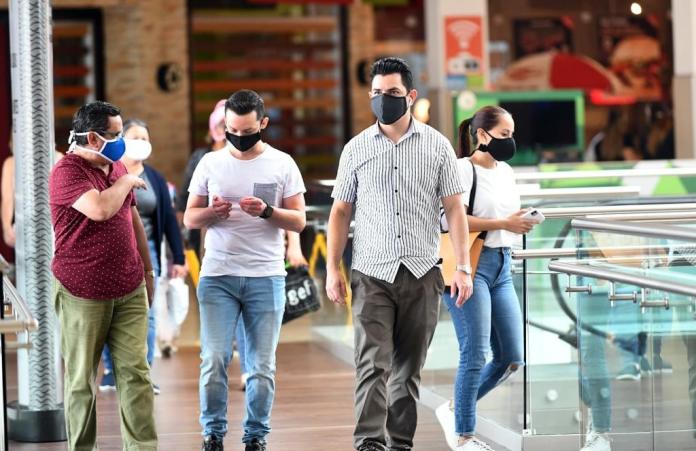
Today Monday, vehicle restriction is unified; Orange alert cantons enter transition phase

0

(QCOSTARICA) As of today, Monday, August 31, the vehicular restrictions are unified throughout the country, with an extension of hours, a measure that will continue to the end of September as part of a phase of greater economic openness in the context of the pandemic.

As announced by the Government last Wednesday, without distinction of orange or yellow  cantons, from today to September 30, vehicles can circulate from Monday to Friday from 5:00 am to 10:00 pm and from 5:00 am to 8:00 pm on weekends.

The vehicles that cannot circulate is based on the last digit of the license plate, as follows:

  • Mondays, vehicles with license plates ending in 1 & 2 cannot circulate.
  • Tuesdays, vehicles with license plates ending in 3 & 4 cannot circulate.
  • Wednesdays, vehicles with license plates ending in 5 & 6 cannot circulate.
  • Thursdays, vehicles with license plates ending in 7 & 8 cannot circulate.
  • Fridays, vehicles with license plates ending in 9 & 0 cannot circulate.
  • Saturdays, vehicles with license plates ending in 0, 2, 4, 6, & 8 cannot circulate.
  • Sundays, vehicles with license plates ending in 1, 3, 5, 7, & 9 cannot circulate.

Transition stage

The stage of transition is at the national level, but the cantons in orange alert will have some peculiarities, with today to September 8, begins a period of nine days of transition phase, with restriction measures in certain commercial establishments, with exceptions.

As of September 9, orange alert areas move to a controlled opening stage.

The Government called this model and is maintained throughout September, throughout the country, “Costa Rica works and takes care of itself” (“Costa Rica trabaja y se cuida”), which includes greater commercial openness and less mobility restrictions of vehicles and people.

In the cantons with an orange alert, between Monday, August 31, and Tuesday, September 8, in principle, there is a closure of all businesses, except for the following exceptions:

  • Supermarkets, hardware stores, home service, vehicle repair, shops, restaurants, beauty salons, hotels, cabins or accommodation establishments, among others.
  • The operation of individual sports is authorized, outdoors or in closed spaces, without public; contact sports for the training of the highly competitive national women’s and men’s teams; and competitions in the high performance or professional category, behind closed doors and without an audience; and contact sports for individual training without contact or physical approach; all according to the list authorized by the Minister of Sports.
  • All the country’s beaches will be allowed to open from Monday to Sunday from 5:00 am to 2:30 pm.
  • All establishments with a sanitary operating permit that do not provide attention to the public (productive activities, industries, free zones, among others).

Cantons on yellow alert will continue with the process of reopening establishments.


Controlled opening phase: from September 9 to 30:

  • Controlled opening of establishments that have a sanitary operating permit and that serve the public, from Monday to Friday from 5 am to 10 pm., and from Saturday to Sunday from 5 am to 8 pm., respecting 50% of its maximum capacity.
  • The closure of all massive concentration activities is maintained due to their very high-risk level, such as concerts, bars, casinos, among others. Likewise, there is a list of establishments that can function but with a different capacity, such as places of worship, event halls, cinemas and theaters.
  • Event rooms for business or academic activities may work with a maximum of 75 people, not including logistics personnel, with seating separation measures of at least 1.8 meters, respecting social bubbles and with lists of attendees with identification numbers. and contact number. The rest of activities in event rooms such as weddings or baby showers should be held with a maximum of 30 people.

For the complete list of establishments and activities that can operate according to the established rules, visit the website: presidencia.go.cr/alertas.

Rather than you give you the list of all that is permitted open, here is what cannot operate:

  • Concerts.
  • Public shows.
  • Fairgrounds.
  • Bullfighting activities.
  • Topes
  • Sports activities with fans
  • Festivals
  • Entertainment activities in shopping centers
  • International Film Festival
  • Organization of conventions and commercial exhibitions
  • National Festival of the Arts
  • Melico Salaza Theater (except for virtual broadcasts)
  • National Theater (except for virtual broadcasts and guided tours with groups of no more than 10 people)
  • Games for children, skate parks, jumping parks, inflatables and the like
  • Amusement Parks
  • Parque Viva (except for car races without spectators)
  • Bars and Pubs
  • Discoteques
  • Night clubs
  • Spas
  • Religious activities and processions
  • Gambling and betting activities; ie casinos and bingo halls

Complete list and other measures can be found at: presidencia.go.cr/alertas

- A word from our sponsors -

El Bayern de Múnich, reyes de Europa de manera incontestable

0

La edición más atípica de la historia de la UEFA Champions League ha llegado a su fin.


El Bayern de Múnich consiguió su quinto entorchado europeo, asombrando al planeta con un ritmo de juego frenético y un acierto en los últimos metros, que le han llevado a convertirse en el rival más temible del viejo continente.

Después de realizar unos cuartos de final ante el FC Barcelona apoteósicos con un 2-8 que quedará para los anales de la historia de la competición, y una semifinal correcta ante el Leipzig, el conjunto bávaro se plantaba en la final, después de muchos años y con un objetivo claro: no dar opciones al PSG.

La escuadra gala, por su parte, se encontraba ante la mayor oportunidad hasta el momento de conseguir algo grande en el viejo continente, después del gran desembolso realizado desde el año 2009 cuando el jeque Nasser Al-Khelaïfi certificó la compra del club parisino.

La final se decantó claramente en su totalidad para el cuadro alemán, pese a que el PSG de la mano de un Neymar Jr. inspiradísimo, tuvo ocasiones para que el destino de su club hubiera sido otro muy diferente. La historia quedó escrita y el Bayern Múnich escribió de nuevo su nombre al lado de una ‘orejona’ que no por atípica ha sido menos deseada y celebrada por toda la plantilla dirigida de manera excelsa por Hans-Dieter Flick.

El técnico alemán ha pasado de ser una solución de emergencia, a convertirse en un auténtico líder fuera del terreno de juego con unos números sobresalientes desde su llegada, que se han materializado en la consecución de un triplete histórico.

La UEFA Champions League no es un trofeo más. Su consecución califica la temporada de una escuadra como excelsa, aunque no consiga más títulos. Por ello, todo lo que rodea a la competición se magnifica, haciendo necesario incidir en estudios y cuestionarios sobre la UEFA Champions League que hacen a los aficionados dar un pasito más en los entresijos de la Liga de Campeones.

Sin duda, esta temporada será recordada por todos los aficionados al Bayern de Múnich, y lo cierto es que las alegrías es previsible que no cesen en las campañas venideras. Un equipo con jugadores jóvenes de primer orden mundial, que se encuentra muy compenetrados, y un recién llegado al banquillo que ha dado con la tecla correcta, hacen al conjunto bávaro el máximo aspirante para volver a reinar en el viejo continente la próxima temporada que está en ciernes.

Por su parte, el PSG ha dado el primer paso para ser una potencia europea no solo por nombres, sino también por resultados. Conservar la dupla Neymar-Mbappé será fundamental para que el próximo curso tengan opciones de levantar la primera ‘orejona’ de su historia.


Infografía desarrollada por la casa de apuestas deportivas bwin

- A word from our sponsors -

Enraged not let in, tourist throws tantrum…He had the wrong test

0
Photo from Twitter

(QCOSTARICA) A Spanish tourist, claiming to be a journalist, enranged at not being allowed to enter Costa Rica when he arrived on an Iberia flight, in the company of his 80-year-old mother, took the social networks posting a series of videos of the “bronca” (tantrum) with immigration officials.

Photo from Twitter

On Twitter as @endeavourdeck, the man says “we have been rejected by the Costa Rican authorities … we have traveled 10,000 kilometers … we bring serological tests that have been negative in Spain,” who also threatens to send those videos to Fox News and other television networks. news. “You will see, Mr. President. You will see the president and the minister of health (…) Because the PCR is useless, even if the decree says so, the PCR is useless”.

Photo from Twitter

Tourists are required to have a negative PCR test with 48 hours (at the time,  now changed to 72 hours) to enter Costa Rica.

Apparently, the man had brought the results of a serological test, which is not the one requested by Costa Rica to allow entry. The man was clear he understood that the decree published by the Costa Rican authorities asks for the PCR test and not the one he brought, even so, he throws a tantrum.

At the end of a long night and early morning, the man and his mother had to travel back to Spain on the return flight.

We do not know if the error was of the man or the airline that allowed him to board with the wrong test.

What do you think? Should he have been let in, despite having the wrong test or where immigration official correct in their decision? Post your comments to Facebook, Twitter or send me an email.

Requirements for tourists to enter Costa Rica

  • Valid passport
  • Fill out the electronic epidemiological HEALTH PASS form, available at https://salud.go.cr.
  • RT-PCR diagnostic test with a negative result; the sample must have been taken within 72 hours of travel to Costa Rica.
  • Passengers coming from the U.S. must show through their driver’s license or state identification (State ID) that they live in one of the 12 authorized states*.  This requirement excludes children traveling with their families.
  • Traveler’s Medical Insurance – international or purchased in Costa Rica through the National Insurance Institute (INS – Instituto Nacional de Seguros) www.grupoins.com/seguroparaviajeros, or Sagicor www.sagicor.cr/seguro_para_turistas/­.

For international insurance policies, tourists must request a certification from their insurance company, issued in English or Spanish, verifying at least the following three conditions:

  • Effectiveness of the policy during the visit to Costa Rica.
  • Guaranteed coverage of medical expenses in the event of becoming ill with the pandemic COVID-19 virus while in Costa Rica, for at least US$50,000 dollars.
  • Includes minimum coverage of US$2,000 dollars for lodging expenses issued as a result of the pandemic.

Passengers who fail to comply with these requirements may not enter the country.

Upon landing in Costa Rican territory, travelers must wear face protection and comply with the strict protocols of the air terminal with regard to physical distancing, disinfection of carpets, and taking temperature readings, and must follow any other sanitary instructions.

* U.S. citizen tourists who are residents of New York, New Jersey, Maine, Connecticut, New Hampshire, Vermont, Maryland, Virginia, and the District of Columbia may enter Costa Rica on limited flights departing from the United States. As of September 15, residents of Colorado, Massachusetts, and Pennsylvania can also enter Costa Rica.

Tourists from authorized states may enter the country even if their route includes a stop at a destination that is not authorized, as long as they do not leave the transit airport.

Links to updated OFFICIAL information on the situation of COVID-19 in Costa Rica

You can stay informed at the following links:


- A word from our sponsors -

COVID-19 Costa Rica: 1,214 new cases for Aug 29, the greatest number of infections in 24 hours

0

(QCOSTARICA) The Ministry of Health this Saturday, August 29, reported the highest number of people infected with COVID-19 in just one day.

There are 1,214 people of which 225 are by nexus and 989 by a laboratory test, bringing the total confirmed cases of COVID-19 in Costa Rica to 39,699 positive cases, with an age range that goes from zero to 100 years.

Three cantons had the highest number of new infections San José center with 204 new cases, Alajuela with 114 and Desamparados with 100.

For this Saturday, 413 people are hospitalized, of which 133 are in Intensive Care Units (ICU) with the age range between 11 to 83 years.

The Ministry of Health reported another 11 deaths in the last 24 hours: nine men and two women with an age range between 44 and 89 years.

The total deaths related to the SARS-COV2 virus now stands at 418: 160 women and 258 men with ages ranging from 21 to 100 years.

Today, we saw another big leap in the number of recovered, Health officials reported 1,073 new, raising the total recovered to 15,737 people.

- A word from our sponsors -

97 Haitian migrants in Golfito were transferred to La Cruz in Guanacaste

0

[HQ] This Saturday, August 29, immigration transferred the 97 Haitian migrants in a shelter in Golfito to the Temporary Attention Center for Migrants (CATEM NORTE)  located in Santa Cecilia de la Cruz in Guanacaste.

Photo Costa Rica Noticias

Last week the migrants decided to leave that shelter due to the deplorable conditions and walk with the intention of reaching the northern border with Nicaragua.

After walking for three days, advancing only 70 kilometers, at Palmar Norte, immigration officials reached an agreement with them, stopping their walk and be transferred by bus.

Friday night they were given a temporary transit permit for 6 months and early Saturday moring they left for the northern border, arriving around 2 pm at the La Cruz shelter.

“We are in the process of accommodation in each of the corresponding tents so that they can calmly wait for the time of the pandemic, also so that they can seek employment

Fidelina Mena, of the Association of Labor Rights of Without Borders of Costa Rica, said “the migrants can now calmly wait out the pandemic, can now seek employment and can survive on their own.”

The CATEM NORTE to date houses 114 foreigners and the CATEM SUR 167.

- A word from our sponsors -

Survey reveals what some think about traveling in times of pandemic

0

QTRAVEL – Surely, in recent days, you have read that Costa Rica is opening its air borders to more international tourists, adding more areas from the United States.

From that, a myriad of concerns arise, but the one that must be turning around in most head s is what will tourism be like in times of a pandemic?

Precisely, a survey carried out by Viajala.com, the leading travel platform in Latin America, explains how people feel to travel in the midst of this health emergency.

Viajala.com took in the opinion of After hearing 3,000 people in 6 countries (Argentina, Brazil, Chile, Colombia, Mexico, and Peru), revealing what those concerns were to return to “travel the whole world.”

As a result, 31% of respondents are concerned that they will face a second wave of COVID-19 infections, despite lifting any restrictions, especially confinement.

In addition, users agree that they want to travel next year, specifically between January and July 2021.

But on the other side of the story, 30% of people are worried about their economic situation; since it seems it may be difficult for them to recover from the crisis generated by Covid-19.

Thus, the results showed two possible obstacles to traveling again: a re-outbreak of coronavirus and an economic crisis.

Another concern on the mind of the traveler is the tourist structure of the destination

Thomas Allier, CEO of Viajala Mexico, recently pointed out that “despite government restrictions on commercial flights are being lifted in some countries of the region, but for tourist activity to fully recover, travelers must regain confidence in flying.”


- A word from our sponsors -

Sunrise in Cot de Oreamuno

0

(QCOSTARICA) It is Saturday morning and the day gives its first signs of life in Cot de Oreamuno, one of the oldest towns in Costa Rica, located 8.6 kilometers from the center of Cartago, on the route to the Irazú volcano.

At 5:34 a.m. the first rays of the sun reveal natural beauty. Farmers move between pastures to get to their jobs in the field. Photo: Rafael Pacheco

In this picturesque and rural place of only 15 square kilometers, precisely, the productive area of the north of the province begins. In this town, the vast majority of its people dedicate themselves to agricultural work, and from very early on you can see the parade of laborers through streets and trails towards the main road to board the trucks that will take them to farms much higher up.


- A word from our sponsors -

Pandemic leaves Costa Rica without vaccines against polio, tetanus, chickenpox and pneumonia

0

(QCOSTARICA) Six months after the declaration of national emergency due to the pandemic, an unprecedented situation has arisen: the shortage of three vaccines, which represent around 30% of that applied to children and seniors.

Until this August 27, the General Store of the Caja Costarricense de Seguro Social (CCSS) kept the stocks of the pentavalent vaccine at zero, which protects against five diseases (polio, Haemophilus influenza, diphtheria, pertussis, and tetanus), pneumo23, to protect the adult population against pneumonia higher; and chickenpox.

This has caused that a still not estimated number of minors and population over 65 years of age lost both the basic and booster doses established for those vaccines in the national schedule.

“The provider indicates that there are no flights available.”

“Due to restrictions in the plant due to COVID-19, the supplier reports that it cannot have the product in the amount and time stipulated.”

The frequency of these messages by the Pan American Health Organization (PAHO) increased as the COVID-19 emergency spread around the world.

They were sent many times to the CCSS, the local office of the PAHO, whose revolving fund is what facilitates the purchase of all the vaccines that Costa Rica has in its national vaccination scheme.

Although the programming for these purchases is made a year in advance and works almost with the precision of a Swiss watch, the pandemic was powerful enough to turn everything upside down.

“If everything was coldly calculated from the previous year, this year the COVID has come to change many things in our reality,” said Jefry Castro, pharmacist of the CCSS Epidemiological Surveillance subarea.

Castro explained what is happening: “There were many flights canceled by the COVID. With vaccines, stocks of up to three months are managed to provide support for some delay, but we cannot maintain very wide ones either because the expiration dates of the doses are very short.

“According to projections, they should have arrived (in Costa Rica) between April and May; we are in August, we ate the ‘mattresses’ and of course we have to be out of stock, “he said.

The closing of borders in many countries of the world, including ours, recognized the specialist, is the reason that no programming will support the disorders caused by the pandemic.

“If everything was coldly calculated from the previous year, this year the covid has come to change many things in our reality,” said Castro.

The Costa Rican vaccination scheme is one of the most robust in the world. Its coverage reaches almost the entire national population at an early age, and with vaccines such as seasonal influenza, which are given every year, it achieves important levels of protection among the risk groups chosen for the campaigns.

The purchase of vaccines begins to be scheduled one year before entering the country through the PAHO revolving fund, which allows the products to be purchased at better prices.

This scheme is made up of 15 vaccines that protect against a group of 25 diseases.

- A word from our sponsors -

In the market for an airplane, but not just any plane?

0

(Q24N) Friday morning, as a maintenance and training measure, the presidential plane TP-01, operated by the Mexican Air Force (FAM), made a roundtrip flight from Mexico City to Guadalajara, Jalisco, without landing.

Official sources indicated that this practice is in order that “the engines are not damaged due to lack of use”.

Last Monday, August 24, President Andrés Manuel López Obrador (AMLO) got on the presidential plane, a specially-outfitted Boeing 787 Dreamliner was purchased in 2012, for the first time since he assumed office on December 1, 2018, where he recorded a video promoting the raffle of the aircraft, which will be held on September 15.

AMLO has described the plane as a symbol of government excess, frequently using commercial flights to travel across Mexico. In a video that he uploaded to his Twitter account, and while touring different areas of the aircraft, the President stated that “with so much poverty” in his country, the “José María Morelos andPavón” (the name of the aircraft) was an insult.

“We are going to raffle this plane on September 15 (Mexico’s Independence Day) and what is obtained will be used to buy medical equipment and serve the people. Buy your raffle piece, let’s make history,” says the president in the video.

Jorge Mendoza Sánchez, general director of Banobras, reported that one of the two interested buyers put down a million-dollars as a deposit for an eventual purchase.

“There is an advance with one of the bidders in terms and conditions of purchase and sale, a deposit of one million dollars was already received last Monday; Likewise, last week we received a second offer for another interested party, which is being analyzed at the moment,” he said.

So, why the raffle? What would ordinary Mexicans who win the raffle do with such an aircraft, you ask?

Well AMLO has a plan. He will give 100 raffle winners each 2,000,000 pesos (US$919,000 dollars) from the government’s expected US$160 million dollars in ticket sales.

Raffle tickets will cost about 500 pesos (US$23).

- A word from our sponsors -

Costa Rica makes it mandatory the use of masks as of September 9

0

(QCOSTARICA) With the opening in September, there will also be a change in the health guidelines on the use of personal protective equipment, in order to stop the contagion by COVID-19.

Health Minister Daniel Salas

The Minister of Health, Daniel Salas, announced on Friday that as of September 9, it will be mandatory to use masks in closed spaces with little air intake and that the face shield will only be a complement.

“If the guidelines are going to be changed and masks in closed spaces serving the public will be mandatory, the shields will be an accessory.

“If we all protect ourselves, obviously almost no one is going to get infected. The use of a mask will be mandatory,” Salas insisted.

The Minister added, it is important that people prepare to acquire their mask and not have problems when they enter closed places such as shopping centers, stores, supermarkets, among others.

Starting on September 9 and until the end of the month, the “Stay at home” that prevailed for more than five months of the pandemic, will take a turn, as “Costa Rica works and takes care of itself” becomes the new motto, as the country moves towards greater mobilization of people and more businesses allowed to open.

Establishments may operate from Monday to Friday from 5 am to 10 pm, and 5  am to 8 pm on Saturdays to Sundays, the same hours of the vehicular restrictions.

Gymnasiums will be allowed to open with the same hours. Religious activities will also be allowed, but with no more than 75 people.

Beaches will have allowed access from 5 pm to 2:30 pm every day, and all the country.

However, activities that will continue to be prohibited are all those that involve mass concentration such as topes, concerts, and festivals, due to their high level of contagion risk.

Bars, casinos, discos, spas and games for children are also still not allowed to open.

Sports activities, ie soccer, without fans in the stands are enabled.

The vehicular restrictions will apply the same throughout the country, in both orange and yellow areas, starting Monday, August 31 to September 30, from 5 am to 10 pm weedays and 5 am to 8 pm weekends.

The vehicles not permitted to circulate are:

  • Mondays, plates ending in 1 & 2
  • Tuesdays, plates ending in 3 & 4
  • Wednesdays, plates ending in 5 & 6
  • Thursdays, plates ending in 7 & 8
  • Fridays, plates ending in 9 & 0
  • Saturdays, plates ending in 0, 2, 4, 6, 8
  • Sundays, plates ending in 1, 3, 5, 7, 9

The fine for not respecting the vehicular restrictions is ¢110,000 colones, six points on the driver’s license and seizure of license plates and/or vehicle.


- A word from our sponsors -

It stopped raining in Guanacaste, for now; large losses in lowlands and coast

0

(QCOSTARICA) The residents of Santa Cruz, Carrillo, La Cruz and other Guanacaste cantons were barely recovering from the floods left by the indirect effect of tropical storm Marco, last week, when a new storm hit them, raining for 24 hours straight.

Photo Guananoticias.com

This Friday morning the rains subsided, continuing intermittingly in some areas, caused the rivers and streams to overflow in a matter of hours and run freely through the streets, farms, and even homes.

In addition to damaging several bridges, crops, and felling trees, 622 people were forced out of their homes and into shelters or homes of friends and family, as waters reached heights of almost one meter in several areas.

Photo Guananoticias.com

Guana Noticias reports water wreaked havoc neighborhoods like Potreto, damaging appliances, furniture, in addition to losing food.

The Chief of Operations of the National Emergency Commission (CNE), Sigifredo Pérez, affirmed that there were 25 flood events between Wednesday night and Thursday morning and then 12 in the rest of the day. A total of 17 shelters were activated in Santa Cruz, Carrillo, and La Cruz.

That CNE has already started field evaluations, in order to help the victims, many of whom will remain in shelters while the waters recede.

Photo Guananoticias.com

According to the national weather service, the Instituto Meteorológico Nacional (IMN), on Wednesday the accumulated in the areas of ​​Ostional, Garza, Nosara, Tempate, Cuajiniquil, and other points reached 300 liters per square meter, this on top of the 350 that fell on Tuesday.

Photo Guananoticias.com

Throughout August, the historical average for that area is 231 liters. However, that figure quintupled in two weeks because, in addition to the 650 liters in two days, 481 liters had fallen in the area between Thursday and Saturday last week.

The IMN is forecasting that normal conditions of the rainy season will gradually return in the coming days.

- A word from our sponsors -

Health authorizes in country tests to detect COVID-19 antibodies

0

(QCOSTARICA) Costa Rica already has guidelines for the application of tests to detect if a person was exposed to the SARS-CoV-2 virus, which causes COVID-19 and if they developed antibodies.

Working from home where he is in isolation, Dr. Daniel Salas, Minister of Health, made the announcement along with health report during Friday’s press conference

The announcement was made by the Minister of Health, Daniel Salas, through video, as well as through a statement.

These are blood tests, unlike diagnostic tests, which are nasopharyngeal.

According to the information provided by the Ministry of Health, the uses of these tests will be:

  • Biomedical research studies, for example, observational, clinical research, duly authorized, as established by Law 9234, Biomedical Research Regulatory Law.
  • Studies of immune response to vaccines against COVID-19, duly authorized.
  • Evaluation of the immune response of people who have recovered from COVID-19, for the process of donating and receiving therapeutic convalescent plasma.
  • Support for the diagnosis of special medical situations where patients have late complications of COVID-19 such as multisystemic inflammatory syndrome in children and adolescents (MISC) or Guillain-Barré syndrome (GBS).
  • Users of private health services, as indicated by the treating physician.

The minister insisted that this type of test is not used to diagnose COVID-19, nor is it the basis for issuing health orders or to allow entry or exit from the country.

“These tests that are to detect antibodies are not for diagnosis, that has to be clear, it is not that a person is undergoing the test and is going to say that they have an acute infection, what can be said is that there was previous exposure,” he insisted.

Minister explained that there are different types of tests to detect the virus, some for diagnosis, which detect fragments of its genome. That said, it is carried out in a Molecular Biology laboratory, these are the tests called PCR (Polymerase Chain Reaction).

The second type of test is to find virus proteins that react with the body. These proteins enter and are recognized as foreign agents in the body and what it does is that it produces antibodies to defend itself.


- A word from our sponsors -

COVID-19 Costa Rica: 1,193 new cases this Friday, the highest daily figure

0

(QCOSTARICA) This Friday, August 29, Costa Rica registered the highest number of new cases in 24 hours: 1,193, of which 216 are due to epidemiological nexus and 977 based on laboratory tests.

That daily figure is the highest since the start of the pandemic, although more than 1,000 have been recorded on three other occasions, all three this month: on Wednesday (August 26); 1,059 on August 21; and 1,011 on August 7.

The accumulated infections is now 38,485.

There are 411 people hospitalized, of them 140 are in  intensive care units (ICUs), aged 13 to 83 years.

In addition, 10 more deaths were registered: five men and five women. The ages range from 65 to 94 years.

There are already 407 deaths associated with COVID-19: 158 women and 249 men, with an age range of 21 to 100 years.


- A word from our sponsors -

Scotiabank lays off 98; closes five branches in Costa Rica

0

(QCOSTARICA) Scotiabank reported this Friday, August 28, the layoff of 98 employees and the closure of five branches in Costa Rica.

The bank did not provide specific details, saying only it as a result of a process of analysis of the economic reality of the country.

“We carefully analyzed the national economic context in order to remain productive and competitive to continue offering quality products and services to our clients,” the bank said in a statement.

The Canadian-based bank had, as of last July, a payroll of 1,733, according to the registry of the Superintendencia General de Entidades Financieras (Sugef). – the banking regulator.

“For the people who will ultimately be affected, we are deploying different efforts to support them in this transition, faithful to our principles and our commitment to treat our people in a fair, equitable and respectful manner,” said the entity.

The branches that are closed are Curridabat, in Pinares; Forum, in Santa Ana; the Juan Santamaría airport, in Alajuela; San Francisco de Dos Ríos, San José and iPlaza Carolina, in Montes de Oca.

These agencies had been temporarily closed for several weeks due to the pandemic. The Bank informed that customers in these areas will be notified of the final closure.

“We watch over the strengthening of the business; looking for optimizations, digital efficiencies and their sustainability to offer our clients a value proposition with many more benefits,” affirmed Scotiabank.

As of last July, the entity reported a net profit of ¢1.499 billion colones, a drop of 80%, compared to the ¢7.672 billion profit for the same period of 2019, according to the Sugef.

On July 9, the entity announced the closure of credit cards to 20,000 customers to comply with the new interest rate caps, imposed by usury law.

- A word from our sponsors -

It’s not about the numbers… it’s the dollars

0

Rico’s TICO Bull – A reader sent an email about the new U.S. states that are allowed entry into Costa Rica as announced Thursday by Tourism Minister, Gustavo Seguro and in the near future.

“I doubt very much that the heads making this decision are looking at it logically,” states the email.

Archive photo

The statement is based on the misassumption that (as it was communicated) officials in Costa Rica were studying the most recent data (infections per 100,000) as a way to monitor what states to include for entry into Costa Rica.

As it is pointed out, there are states with lower per 100,000 case counts (as at August 28, 2020) of those authorized, such as Ohio with a case count of 1,017 per 100,000, while Maryland has a case count of 1,763, Massachusetts 1,844, Virginia 1,366, Pennsylvania 1,062 and Washington DC 1,953.

Colorado is the only in the group of the approved six states with the lowest case count of 985.

The reality is that I doubt very much that the decision is based on the numbers. What I see is a pattern.

All the states, New York, New Jersey, New Hampshire, Vermont, Connecticut, Maine announced last week, and yesterday’s Maryland, Virginia, Pennsylvania, Massachusetts (with the exception of Colorado) are all close the two main airports that shuttle a large part of Americans to Costa Rica, JFK, and Newark (EWR); and to a lesser part Baltimore’s Thurgood Marshall Airport (BWI), Philadelphia’s International airport (PHL), and Washington DC’s Dulles (IAD).

In my opinion, it is not about the coronavirus numbers, it’s about the much-needed tourist dollars.

With that, I expect an announcement in the coming days, that the states of California, Texas and Florida, will get the green light, perhaps for flights as early as October 1.

These three states, especially Texas and Florida, had pre-pandemic, multiple airlines and flights daily into Costa Rica, both the San Jose (SJO) and Liberia (LIR) international airports.

In addition, many of the airports in California, Texas, Florida and New York are a hub for flights from approved countries such as Japan, China, Australia, and European nations to Costa Rica, which goes in hand with the Thursday’s announcement allowing transfers or stopovers from the United States, “as long as they do not leave the airport”.

Although the Minister’s stopover comments referred to “tourists from authorized states” we can foresee that it will when all the details of the new measures are provided, include also tourists from authorized countries.

Also changed was extending the PCR tests an extra 24 hours to 72 hours prior to travel.

Also, Costa Rica will now allow the arrival on private flights of citizens originating from “unauthorized places”.

As of September 1, private flights from the United States will also be allowed to enter the country, “given that due to their size and nature they have a much lower epidemiological risk” under the same requirements (passport, PCR test, travel insurance, completed health form) with the prior approval from the Ministry of Health and the General Directorate of Immigration.

Among the reasons for admissibility are investment analysis, property in Costa Rica; humanitarian reasons; etc.

Another is the allowing of the entry of private yachts in the marinas of Golfito, Los Sueños, Pez Vela, Banana Bay, and Papagayo.


- A word from our sponsors -

New Motto: “Costa Rica works and takes care of itself”

0

(QCOSTARICA) The “Stay at home” (Quedate en casa) that prevailed for more than five months of the pandemic, will take a turn in September. The new motto will be “Costa Rica works and takes care of itself.”

The latter is the name of the model that the government announced to allow greater mobilization of people and greater operation of commercial establishments.

The stake for this opening is responsibility, an aspect that President Carlos Alvarado on Wednesday emphasized during the noon presser from Casa Presidencial.

“This management model is one where we all have to be responsible for our care, always use a mask, sneeze protocol, hand washing, distancing, respect bubbles and not expose ourselves unnecessarily,” he warned.

“Responsibility is not only a matter for individuals, but also for institutions, municipalities and commercial establishments. Failure to comply with that commitment will be reflected in a rebound in infections, which would force a step back, as happened months ago.

“It is important that we all do our part in this process, because we will carry indicators to monitor the evolution and when alerts are raised, if things are not going in the right direction, we will have to take measures to go back, but that depends on how much well behave,” he added.

For Álvaro Sáenz, president of the Costa Rican Union of Chambers and Associations of the Private Business Sector (Uccaep), this mechanism of opening with responsibility should have been applied since March.

The union leader welcomed the flexibility and recognized the responsibility that comes from citizens to businesses with the application of protocols.

“Together we can move this forward and not punish economic activity,” he declared.

1,000 cases daily

The flexibility comes when the number of daily cases has risen from the single digits to dozens, to a few hundred, to now hovering the 1,000 mark – 985 on Thursday (August 27) and 1,002 cases on Wednesday (August 26), the third-highest. The second highest so far on 1,011 on August 7 and the highest, 1,059, on August 21.

The accumulated number of cases is 37,392 (August 27), a figure that surpassed the worst-case scenario that was to have occurred for September, according to estimates by the School of Mathematics of the University of Costa Rica.

Purple is the “transition” phase, the green is the “controlled opening” phase


Unified vehicle restrictions

The main change to the “Costa Rica works and takes care of itself” model is that from August 31 to September 30 the vehicle restriction is unified. That is, while there will still be yellow and orange areas, the vehicular restrictions will be the same in both.

Two phases for commerce

Regarding the operation of commerce, the model advances in two phases. The first of nine days, considered transitional, and the second of controlled opening.

“It consists of deepening a model that makes a balance between people’s health and life and the economy and employment. Throughout the pandemic we have maintained the largest number of productive activities, we have opened the beaches, hotels, flights, more establishments, it is necessary to go one step further,” President Alvarado said.

Thus, from August 31 to September 8 there will be an adjustment period that will only affect the 23 cantons on orange alert. During those days there will be restriction measures in certain establishments.

More information on who can and cannot be open during September, visit presidencia.go.cr/alertas

For example, hardware stores, sales of materials, vehicle repair do not have a scheduled restriction but must meet the 50% capacity. Hotels at 100%, except in common areas, which must be at 50%.

Restaurants, sodas, cafes, shops, beauty salons, barbershops and aesthetics can serve 50%, from 5 am to 10 pm.

For those days of transition, in cantons under orange alert they will not be able to open gyms, nor do religious activities.

Starting on Wednesday, September 9, the controlled opening phase begins, that allows many commercial operations to operate between 5 am and 10 pm weekdays and 5 am to 8 pm on weekends.

However, activities that will continue to be prohibited (yellow or orange) are all those that involve mass concentration such as concerts, popular festivities, due to their high level of contagion risk; Bars, casinos, discos, spas and games for children are also still not allowed to open.

As for beaches, access will be allowed from 5 am to 2:30 pm on all beaches across the country.


- A word from our sponsors -

12 States authorized for arrivals to Costa Rica in September

0

(QCOSTARICA) The Minister of Tourism, Gustavo Segura, announced this Thursday the expanded list of U.S. states from which can enter Costa Rica in September.


The Minister confirmed that starting from September 1, residents of Virginia, Maryland and Washington D.C. will be added to the list of residents from New York, New Jersey, New Hampshire, Vermont, Connecticut and Maine announced last week.

And, starting from September 15, residents of Massachusetts, Pennsylvania and Colorado will be welcome as part of the gradual reopening of international tourism to Costa Rica.

The commercial flights from the U.S. are open all Costa Rican nationals and residents and tourists who are residents of any one of the 12 states, a driver’s license or state ID is required for proof of residency.

The U.S. airports serving the 12 states pre-pandemic are New York’s JFK (JFK) and La Guardia (LAG), New Jersey’s Newark (EWR), Washington’s Dulles (IAD), Pennsylvania’s Philadelphia (PHL).

However, the authorization does not mean U.S. tourists can only arrive in Costa Rica from airports in the approved states, visitors can arrive via a flight with a stop or layover in a non-authorized airport. For example, a resident of Washington DC can fly to Houston (IAH) on United that has regular (COVID) service to and from San Jose or a resident Pennsylvania to Miami (MIA).

The arrivals can at Costa Rica’s international airports, the Juan Santamaria (SJO) in San Jose and the Daniel Oduber (LIR) in Liberia.

The 12 states are in addition to visitors from Canada, the United Kingdom, the European Union (Schengen visa area), Japan, Thailand, China, Australia, New Zealand and Uruguay.

In addition, starting in September, the PCR coronavirus test has been extended to 72 hours before the flight, from 48 hours.

All other conditions for the arrival of tourists remain, such as a valid passport, health pass and travel insurance.

This story is developing and will be updated as more information is made available.


- A word from our sponsors -

U.S. Visa Renewal – Renovación de visas

0

(QCOSTARICA)  The United States Department of State extends the range of eligibility for visa renewal for those who have a valid visa that has expired in the last 24 months. The previous requirement was that the valid visa had expired in the last 12 months.

This extension of the period will be maintained from August 25 to December 31 of this year, said the U.S. Embassy in Costa Rica in a press release this Thursday, August 27, 2020.

The Consular Section of the United States Embassy in Costa Rica can now classify a visa applicant as eligible for renewal, without the need to schedule a physical appointment at the Consulate, as long as they meet the following criteria:

Effective August 25, 2020, through December 31, 2020, the United States Department of State has expanded the field of individuals eligible for visa renewal to those who have had a valid visa expire within the last 24 months. The previous requirement was to have had a valid visa expire within 12 months.

Accordingly, the Consular Section of the United States Embassy in Costa Rica may find you eligible for a visa renewal without scheduling a physical appointment at the Consulate if you meet the following criteria:

  • You wish to renew a full-validity (ten years) B1/B2 U.S. visa that is currently valid or has expired within the last 24 months.
  • You are a citizen or legal resident of Costa Rica
  • You have never resided unlawfully in the United States or otherwise violated U.S. laws.

You are NOT eligible for a visa renewal appointment if you meet any of the following criteria:

  • You have never had a U.S. visa.
  • Your last U.S. visa expired more than 24 months ago.
  • Your last valid visa was canceled or revoked.
  • Your previous visa was limited to a single entry or to a period of validity that was less than ten years.
  • You did not provide fingerprints during your previous visa application.
  • You wish to apply for a visa in a different visa class than your previous visa. For example, you had a B1/B2 visa, but now you wish to apply for a F-1 student visa. ​​
  • You do not hold a valid Costa Rican passport or residency card.
  • You are applying for more than one visa at the same time. For example, you are applying for both F and B1/B2 visas.
  • You lost your previous passport that had a valid or expired U.S. visa, or it was stolen. ​​

If the applicant considers that they are eligible to renew the visa and would like to use the renewal process, they must follow the steps indicated in the section “Visa renewal process through DropBox of the following link: https://www.ustraveldocs.com/cr/cr-niv-visarenew.asp.

If you need assistance with your visa application or want to learn more about obtaining a visa to travel to the U.S., in Costa Rica call: 4000-1976. Callers in the United States 9 am to 5 pm (CT) Monday through Friday: (703) 745-5475.  Or reach a customer service representative via email at support-costarica@ustraveldocs.com. ​

The original press release in Spanish:

El Departamento de Estado de Estados Unidos extiende el rango de elegibilidad para la renovación de visa para quienes tienen una visa válida que venció en los últimos 24 meses. El requisito anterior era que la visa válida hubiera expirado en los últimos 12 meses. Esta extensión del periodo se mantendrá desde el 25 de agosto y hasta el 31 de diciembre de este año.

La Sección Consular de la Embajada de Estados Unidos en Costa Rica puede ahora clasificar a un solicitante de visa como elegible para la renovación, sin la necesidad programar una cita física en el Consulado, siempre y cuando cumpla con los siguientes criterios:

  • La persona desea renovar la visa B1/B2 de validez completa (diez años), que se encuentre vigente o que haya vencido hace menos de 24 meses.
  • Si el solicitante es ciudadano o residente legal de Costa Rica.
  • Si la persona nunca ha vivido ilegal en Estados Unidos ni ha violado las leyes estadounidenses.

Una persona NO es elegible para una cita de renovación de visa si tiene uno de los siguientes criterios:

  • Nunca ha tenido una visa para viajar a Estados Unidos.
  • Tiene una visa B1/B2 que expiró hace más de 24 meses.
  • Si la última visa válida fue cancelada o revocada.
  • Si la visa anterior estaba limitada a una sola entrada o a un periodo de validez menor a diez años.
  • Si la persona no proporcionó huellas digitales durante la solicitud de visa previa.
  • Si desea solicitar una visa de clase diferente que su visa anterior. Por ejemplo, si se tuvo una visa B-1/B-2, pero ahora desea solicitar una visa de estudiante F-1.
  • Si no tiene un pasaporte válido de Costa Rica o una tarjeta de residencia.
  • Si está solicitando más de una visa a la vez. Por ejemplo, está solicitando una visa F y una visa B1/B2.
  • Si el pasaporte anterior, que tenía una visa de Estados Unidos válida o expirada, fue robado o extraviado.

Si el solicitante considera que es elegible para renovar la visa y le gustaría utilizar el proceso de renovación, debe seguir los pasos señalados en la sección “Proceso de renovación de Visa a través de Drop Box del siguiente link: https://www.ustraveldocs.com/cr/cr-niv-visarenew.asp.


- A word from our sponsors -

If masks prevent the COVID-19 spread, then why do doctors and nurses get infected?

0

(RICO’S COVID-19) If masks prevent the spread of the coronavirus, why do doctors and nurses often get infected while wearing all the PPE, including masks?

A question that is commonly used by those against using a mask, even in the midst of a rise in coronavirus cases.

Wearing a mask should no longer the question, rather “what kind of face mask should I wear?”.

The World Health Organization (WHO), the Centers for Disease Control and Prevention (CDC), and the National Institute for Health (NIH) are all in agreement: wear face masks.

No face mask of any kind is 100% effective. Even an N95 won’t save you if you touch your face with contaminated hands right after you take it off. Face masks must be used in combination with distancing and washing your hands, among other protective measures.

So, back to the question. The answer is because it’s the amount of virus you are exposed to that matters, both in how likely you are to get infected, and how sick you are likely to become.

Even when wearing a mask, even an N95 won’t save you. Some virus particles can always get through the filter material, sneak around the mask on a drop of sweat or misplaced finger, settle in the eyes, and enter the body.

In most cases, very small quantities of a virus – even an infectious virus like the COVID-19 – will be destroyed by the body’s innate immunity, the body attacking any foreign material not recognized as part of itself.

If exposure is low enough, the innate immunity is generally sufficient.

This is as opposed to acquired immunity, such as a vaccine, which involves antibodies and antigens to help create a rapid powerful response to a known pathogen, without experiencing the illness.

But doctors, nurses, even the cleaning staff, are different. They are constantly exposed to the virus. When they get off shift or take a break, they can count on having the virus all over them.

If they wear a face mask, shield, and gloves, they will greatly reduce their exposure. Virus particles are very, very small, and can linger in the air for an unknown period of time and can fly off of gowns and clothing as they are removed.

Estéfani Vargas

Estéfani Vargas, the Coordinator of General Services of the Specialized Center for the Care of Patients with COVID-19 (CEACO), told Telenoticias that, to perform her job properly, she has to bathe up to six times a day.

Vargas, a 31-year-old industrial engineering student working for the Costa Rican Social Security Fund (CCSS) for six months, said that she and her colleagues put on double gloves and double masks and make sure that none of their body is exposed when they enter to clean the patient areas.

The take on all this is that if you are constantly exposed at a high enough level because say you work in a hospital with COVID-19 patients or have prolonged exposure to someone is infected, knowingly or not, such as being in contact with an asymptomatic person, you may get very sick, even if you are young and fit and otherwise not at great risk.

If you are constantly exposed at a low level, your innate immunity may be overwhelmed or exhausted, and you can get sick.

Bottom line: No face mask of any kind of magical answer. Wearing a mask alone will not prevent you or someone you love from becoming infected with COVID-19. But wearing one yourself, even if nobody else around you, reduces your own chances of catching the virus.

The other bottom line: Don’t forget, face masks used in combination with physical distancing and hand hygiene, and other protective measures reduce the risk even more.

The last bottom line: Personally I am doing my best to avoid catching the COVID-19. If were to catch it, I will deal with it. But I prefer not to.

- A word from our sponsors -

August restrictions fail to reduce Costa Rica’s infection rate of new coronavirus

0
The pressure on health services to maintain the trend in the contagion of covid-19, will be greater in September. In the photo, the ICU of Hospital México where these patients are treated. Photo: Courtesy Hospital México

(QCOSTARICA) The restrictions on the mobility of the population programmed or “closed phase” in August to curb the COVID-19 failed to lower the contagion rate of the new coronavirus.

The pressure on health services to maintain the trend in the contagion of COVID-19, will be greater in September. In the photo, the ICU of Hospital México where coronavirus patients are treated. Photo: Hospital México

Far from falling below one, as expected, the R rate of reproduction rose from 1.1 to 1.2, according to the measurement reported on August 26 by the Central American Population Center (CCP), from the University of Costa Rica (UCR).

This calculation, clarifies the CCP, corresponds to infections that occurred around Thursday, August 20.

The projection is that, if the trend continues, the number of daily cases would reach 1,650 by September 26, with 760 hospitalized, of which 270 in an Intensive Care Unit (ICU).

Currently, there are 400 people hospitalized, of which 143 of them in the ICU and 386 deaths, reported the Ministry of Health on August 26, at the same time that government authorities, led by President Carlos Alvarado, announced more open measures for September.

“This projected number of new cases can vary between 700 and 3,400 depending on whether the R (reproduction rate) decreases or continues to increase.

“It is clear, then, that the new wave of restrictions (hammer) that started on August 8 did not achieve the desired objective of reducing the R rate below one. The mobility and interaction restrictions imposed are reflected in a reduction of just one percentage point in Google’s mobility index. These restrictions evidently did not manage to reduce the R rate,” comments the weekly update by the CCP.

Experts warn that this could be because the restrictions have only had an effect in the Greater Metropolitan Area (GAM), but that the emergence of outbreaks in other places concealed that impact.

“The lack of results calls into question the effectiveness of the policy of restrictions in this new period,” they conclude.

According to the CCP “Costa Rica is in the fifth-lowest place in Latin America, but gradually losing positions.”

It points out as a positive element that Costa Rica still remains among the countries with the lowest mortality from COVID-19 in Latin America, with 70 accumulated deaths per 100,000 elderly people.

The CCP warns, as they have been doing in recent weeks, that the country “is gradually moving away from the select group with minimal mortality ratios, made up of Uruguay, Paraguay, and Cuba, in which the pandemic has had little impact … until now”.

Projections of the Center for Research in Pure and Applied Mathematics (CIMPA), for the Ministry of Health, presented on August 8, indicated that the country would reach 35,000 accumulated cases on September 5.

Other estimates, from July, which did not contemplate the scenarios of closings and openings programmed in recent weeks by the government, indicated that the figure would be recorded until the end of September.

That figure was reached on August 24.


- A word from our sponsors -

U.S. sees unnecessary COVID-19 testing in asymptomatic people

0

AFP – After previously encouraging people without Covid-19 symptoms to get tested if they have been exposed to someone diagnosed with the virus, US health authorities have abruptly reversed their position without a clear explanation.

The instruction came from top officials in the Trump administration, according to a New York Times report.

The changes in guidance were quietly made to the Centers for Disease Control and Prevention (CDC) website on Monday amid US media reports of political interference from the White House.

President Donald Trump has repeatedly said that the US should do less testing, and blamed testing for making it appear as though the country is doing poorly against the pandemic.

This is not true: though the US is testing at a high level, that is because its outbreak is worse than any other country in the world, with more than 5.8 million confirmed cases and almost 180,000 deaths.

The CDC’s site previously said: “Testing is recommended for all close contacts of persons with SARS-CoV-2 infection.

“Because of the potential for asymptomatic and pre-symptomatic transmission, it is important that contacts of individuals with SARS-CoV-2 infection be quickly identified and tested.”

The site now says: “If you have been in close contact (within 6 feet) of a person with a COVID-19 infection for at least 15 minutes but do not have symptoms, you do not necessarily need a test unless you are a vulnerable individual or your health care provider or State or local public health officials recommend you take one.”

Fauci critical

In a call with reporters, senior health department official Brett Giroir said, “The new guidelines are a CDC action. As always, guidelines received appropriate attention, consultation and input from (coronavirus) Task Force experts.”

Giroir did not elaborate on what new evidence had led to the guidance.

But he said that the documents had been seen by other senior officials including the widely respected Anthony Fauci, who leads the National Institute of Allergies and Infectious Diseases.

Fauci later denied this, telling CNN: “I was under general anesthesia in the operating room and was not part of any discussion or deliberation regarding the new testing recommendations.

“I am concerned about the interpretation of these recommendations and worried it will give people the incorrect assumption that asymptomatic spread is not of great concern. In fact, it is,” he added.

Fauci had surgery last Thursday to remove a vocal cord polyp.

The CDC has previously emphasized that between 40-50 percent of people with Covid-19 are asymptomatic, and therefore getting tested is important to stop the spread of the virus.

Many other health experts also reacted with dismay.

“I still can’t make sense of @CDCgov change in guidance,” tweeted Leana Wen, a professor at George Washington University and former health commissioner of Baltimore.

“An estimated 40-50% of people with #covid19 are asymptomatic. Those exposed to the virus need to know to protect their family members & the public. One has to wonder: is this change because we don’t have enough tests?”

Both The New York Times and CNN quote officials saying that the CDC was instructed to change its guidelines following pressure from the president.

The Trump administration has previously been accused of pressuring the CDC to change its guidance on reopening schools, weighting its recommendations heavily in favor of in-person learning.

The political neutrality of the Food and Drug Administration was also questioned this week when its chief, Stephen Hahn, joined Trump in misrepresenting a key statistic about the effectiveness of blood plasma.

He later apologized.

(Except for the headline, this report has not been edited by Q staff and is published from a syndicated feed.)

- A word from our sponsors -

U.S. – China Dispute reaches company expanding the road to Limón

0

(QCOSTARICA) The dispute between the United States and China reaches the China Harbor Engineering Company (CHEC), which is in charge of the expansion work of the 107 kilometers of the Ruta 32 between Rio Frío and the center of Limón.

CHEC is working the expansion of the Ruta 32, the road to Limón.

This morning, the United States Embassy in San José issued a statement by the U.S. Ambassador to Costa Rica, Sharon Day, and U.S. Secretary of State Mike Pompeo, who questions that the Asian giant uses its companies to seize the resources of 3,000 acres of the South China Sea.

Among the companies are the China Communications Construction Company (CCCC), the parent company of the CHEC construction company.

“Costa Rica has experienced the misdeeds of the China Communications Construction Company (CCCC), having worked with its subsidiary CHEC on the project to widen Route 32. CCCC and its subsidiaries are a threat to every country’s sovereignty, economic growth, and environmental quality,” said Ambassador Day.

“The People’s Republic of China should not be allowed to use CCCC and other state companies as weapons to impose its expansionist agenda,” warns Pompeo’s statement, released by the United States Embassy in Costa Rica.

Pompeo adds that the United States “will take action until we see that Beijing stops its coercive behavior in the South China Sea, and we will support our allies and partners to resist this destabilizing activity.”

Among the measures he highlighted are imposing visa restrictions on citizens of China “responsible or complicit in the claim, construction or large-scale militarization of disputed outposts in the South China Sea or in the use of coercion by the PRC against claimants from Southeast Asia to prevent their access to marine resources”.

The complete statement from Micahel Pompeo, U.S. Secretary of State:

The United States supports a free and open South China Sea. We respect the sovereign rights of all nations, regardless of size, and seek to preserve peace and uphold freedom of the seas in a manner consistent with international law. In July, I announced an updated policy regarding Beijing’s unlawful maritime claims in the South China Sea and emphasized that the United States was prepared to take firm action to oppose Beijing’s campaign of bullying.

Today, the Department of State will begin imposing visa restrictions on People’s Republic of China (PRC) individuals responsible for, or complicit in, either the large-scale reclamation, construction, or militarization of disputed outposts in the South China Sea, or the PRC’s use of coercion against Southeast Asian claimants to inhibit their access to offshore resources. These individuals will now be inadmissible into the United States, and their immediate family members may be subject to these visa restrictions as well. In addition, the Department of Commerce has added 24 PRC state-owned enterprises to the Entity List, including several subsidiaries of China Communications Construction Company (CCCC).

Since 2013, the PRC has used its state-owned enterprises to dredge and reclaim more than 3,000 acres on disputed features in the South China Sea, destabilizing the region, trampling on the sovereign rights of its neighbors, and causing untold environmental devastation. CCCC led the destructive dredging of the PRC’s South China Sea outposts and is also one of the leading contractors used by Beijing in its global “One Belt One Road” strategy. CCCC and its subsidiaries have engaged in corruption, predatory financing, environmental destruction, and other abuses across the world.

The PRC must not be allowed to use CCCC and other state-owned enterprises as weapons to impose an expansionist agenda. The United States will act until we see Beijing discontinue its coercive behavior in the South China Sea, and we will continue to stand with allies and partners in resisting this destabilizing activity.


- A word from our sponsors -

Measures for September: “Costa Rica works and takes care of itself”

0

(QCOSTARICA) President Carlos Alvarado on Wednesday, August 26, 2020, announced the measures that will be in place for the month of September.

Under the motto “Costa Rica works and takes care of itself”, the President said it consists of deepening a model that makes a balance between people’s health and life and the economy and employment.

“Throughout the pandemic, we have maintained the largest number of productive activities, we have opened the beaches, hotels, flights, more establishments, it is necessary to go one step further,” said the president.

Staring on August 31 and to September 8, there will be a period of adjustment, that will only affect the 23 cantons on orange alert, but after that, starting on September 9, all low-risk businesses will be allowed to open.

Only establishments whose activity is riskier will remain closed. The complete list can be found at presidencia.go.cr/alertas.

Also, the vehicle restriction will be maintained pretty well the same for the past couple of months, the changes are:

  1. The restrictions will be unified, that is the same for both orange and yellow alert areas;
  2. The total restriction will be from 10 pm to 5 am on weekdays and from 8 pm to 5 am on weekends.

During the week, the vehicles that will NOT be allowed to circulate between 5 am and 10 pm are:

  • On Mondays, vehicles with license plates ending in 1 & 2
  • On Tuesdays, vehicles with license plates ending in 3 & 4
  • On Wednesdays, vehicles with license plates ending in 5 & 6
  • On Thursdays, vehicles with license plates ending in 7 & 8
  • On Fridays, vehicles with license plates ending in 9 & 0
  • On Saturdays, vehicles with license plates ending in 0, 2, 4, 6 & 8
  • On Sundays, vehicles with license plates ending in 1, 3, 5, 7 & 9

The President explained: “This management model is one where we all have to be responsible for our care, always use a mask, sneeze protocol, hand washing, distancing, respect bubbles and not expose ourselves unnecessarily”.

It is required then, Alvarado insisted, that all parties assume their responsibility: people, institutions, municipalities, businesses.

“It is important that we all do our part in this process because we will carry indicators to monitor the evolution and when alerts are raised, if things are not going in the right direction, we will have to take measures to turn back, but that depends on how well we all behave,” Alvarado added.

As to commerce, the opening of restaurants, cafes, shops, retail stores, beauty parlors, supermarkets and vehicle repair shops will continue, among others. However, there are 140 exceptions.

Among the highlights are that hotels can operate at 100% capacity, though common area use must be at 50%.

There will be access to beaches from 5 am to 2:30 pm in all of the country.

Sporting will be enabled, with the Ministry of Sports providing details of the activities that will be permitted. “They are fundamental, that they create jobs, that they work is essential to protect employment,” said Alvarado.

What is definite that cannot reopen are activities with large public participation, due to their very high-risk level, such as massive events, concerts, bars, casinos, among others. Likewise, there is a list of establishments that can function but with a different capacity, such as places of worship, event rooms, cinemas and theaters.

President Alvarado pointed out all the details will be announced in the next couple of details and can be found at the government website, presidencia.go.cr/alertas. or the links above.

At the Q will be bringing you all the details as the become available.


- A word from our sponsors -

COVID-19 Costa Rica: 1,002 new cases Wednesday; opening as of September 9 for less risky businesses

0

(QCOSTARICA) After the worst-case scenario in terms of contagion, projected for September, was surpassed in advance on Tuesday, the country is preparing for new measures against the COVID-19 pandemic.

Via a live feed from his home where he remains in isolation, the Minister of Health, Dr. Daniel Salas, joined the noon presser after more than a week’s absence, providing the epidemiological report for Wednesday.

The Minister reported 1,002 new cases for August 26, of which 202 are due to epidemiological nexus and 800 to laboratory tests.

There are 400 people hospitalized, of them 143 are in the Intensive Care Units (ICU).

Ten deaths were reported in the last 24 hours: five men and five women, with ages ranging from 63 to 86 years, bringing the total to 386.

Dr. Salas is in isolation due to contact with his father who on Monday was confirmed positive for COVID-19, after apparent intra-hospital transmission.

In addition, the president of the National Emergency Commission (CNE), Alexánder Solís, remains in isolation, who like Dr. Salas came in contact with an infected person.

Measures for September

Joining Costa Rica President Carlos Alvarado was the Minister of the Economy,  Veronica Hernandez, and Sigifredo Pérez, operations manager of the CNE, announcing the measures that will be in place for the month of September.

Called “Costa Rica works and takes care of itself”, the President said:

“It consists of deepening a model that makes a balance between people’s health and life and the economy and employment.

“Throughout the pandemic, we have maintained the largest number of productive activities, we have opened the beaches, hotels, flights, more establishments, it is necessary to go one step further”.

From August 31 to September 8 there will be an adjustment period that will only affect the 23 cantons on orange alert, but after September 9, all low-risk businesses will be allowed to open. Only establishments whose activity is riskier will remain closed.

Also, the vehicle restriction will be maintained pretty well the same for the past couple of months, the changes are, 1. the restrictions will be unified, that is the same for both orange and yellow alert areas; and 2, the total restriction will be from 10 pm to 5 am on weekdays and 8 pm to 5 am on weekends.

During the week, the vehicles that will NOT be allowed to circulate between 5 am and 10 pm are:

  • On Mondays, vehicles with license plates ending in 1 & 2
  • On Tuesdays, vehicles with license plates ending in 3 & 4
  • On Wednesdays, vehicles with license plates ending in 5 & 6
  • On Thursdays, vehicles with license plates ending in 7 & 8
  • On Fridays, vehicles with license plates ending in 9 & 0
  • On Saturdays, vehicles with license plates ending in 0, 2, 4, 6 & 8
  • On Sundays, vehicles with license plates ending in 1, 3, 5, 7 & 9

The President explained, “This management model is one where we all have to be responsible for our care, always use a mask, sneeze protocol, hand washing, distancing, respect bubbles and not expose ourselves unnecessarily”.

It is required then, Alvarado insisted, that all parties assume their responsibility: people, institutions, municipalities, businesses.

Businesses that cannot open during September

“It is important that we all do our part in this process because we will carry indicators to monitor the evolution and when alerts are raised, if things are not going in the right direction, we will have to take measures to turn back, but that depends on how well we all behave,” Alvarado added.

As to commerce, the opening of restaurants, cafes, shops, retail stores, beauty parlors, supermarkets and vehicle repair shops will continue, among others. However, there are 140 exceptions.

Among the highlights are that hotels can operate at 100% capacity, though common area use must be at 50%.

There will be access to beaches from 5 am to 2:30 pm in all of the country.

Sporting will be enabled, with the Ministry of Sports providing details of the activities that will be permitted. “They are fundamental, that they create jobs, that they work is essential to protect employment,” said Alvarado.

What is definite that cannot reopen are activities with large public participation.

The closure of all mass concentration activities is maintained due to their very high-risk level, such as mass concentration events, bars, casinos, among others. Likewise, there is a list of establishments that can function but with a different capacity, such as places of worship, event rooms, cinemas and theaters.

President Alvarado pointed out all the details will be announced in the next couple of details and can be found at the government website, presidencia.go.cr/alertas.


- A word from our sponsors -

Caja continues reduction in health insurance for September

0

(QCOSTARICA) For the sixth consecutive month, the Caja Costarricense maintains a reduction in monthly contributions.

The decision, which benefits employers, self-employed workers, and the voluntary insured.

  • Employer contributions will remain reduced to 15% with respect to the contributions o February 2020.
  • Voluntary insured and independent workers (individual and collective), who had reference monthly income less than ¢633,930, the base will remain reduced to 75% compared to the amount of February 2020 (that is, 25 % less).
  • Voluntary insured and independent workers (individual and collective) for categories 3, 4 and 5; that is, for those who had reference monthly income with amounts greater than ¢633,930, will continue paying the full or 100% of the amount paid in February 2020.

The measures adopted since March have made it possible to cushion the impact of the country’s economic crisis on health insurance and pensions.


- A word from our sponsors -

Chinese tech products the love of Costa Rican consumers

0

(QCOSTARICA) Tech products made in China have begun to gain the acceptance and taste of Costa Ricans, where it is increasingly common to see brands such as Huawei or Xiaomi when it comes to electronic devices.

Xiaomi opened its newest store in Multiplaza Curridabat on Saturday, August 22 as part of its expansion in Costa Rica.

An example of this is Xiaomi, which has just opened its third store in Costa Rica in less than a year, adding Plaza Lincoln and Multiplaza Curridabat to Multiplaza Escazú that opened in October last year.

“We are very excited to continue expanding our presence in Costa Rica with this store in Multiplaza Curridabat. We have had a very good acceptance by the public and this encourages us to continue offering innovative and quality products in the country,” said Josué Fonseca, Retail Coordinator of Xiaomi stores.

In addition to smartphones, the brand also known as “Mi” produces smartwatches and bracelets, speakers, headphones, streaming devices, televisions, batteries, routers, scales, and even scooters, all available in Costa Rica.

Three years ago these devices began to arrive in Costa Rica through Dataformas, which at the time was responsible for the local representation and Almacenes Casa Blanca for their marketing.

Another clear example is Huawei, which entered Costa Rica approximately ten years ago, with its equipment for telecommunications networks and mobile phones.

Today the brand has 44% of the Costa Rican mobile market, with more than 30 cell phone models, from the P, Y, and Mate series, in addition to tablets, laptops, smart headphones, among others.

Regarding the telecommunications equipment market, Grupo ICE (Kölbi ), and  Movistar Costa Rica cellular networks, both 3G and 4G, are based on Huawei technology.

Huawei also has two brand stores called Experience Stores, located in Rohrmoser and in Multiplaza Escazú.


- A word from our sponsors -

Global income tax? Legislators ask Carlos Alvarado not to waste time

0

(QCOSTARICA) Instead of promoting proposals that affect the economic reactivation and the image of the country as a business destination, as is the case of global income tax, President Carlos Alvarado should support other initiatives that do generate investment opportunities and not waste time, according to legislators of the PNR, PLN and PUSC.

To approve any tax, the government requires the support of at least 38 of the 57 legislators. The Alvarado government would not be able to achieve that without the support of the PRN, PLN and PUSC since together they add more than 30 votes. La Republica

Their warning comes days after the government was inclined to support new taxes, based on the text proposed by Welmer Ramos, a PAC legislator.

The fact that the country is facing a COVID-19 health and economic pandemic at the same time, would make it counterproductive to promote new taxes, since investment would contract, affecting the generation of jobs, so it would be irresponsible, said Carmen Chan, head of the Partido Nueva Republica (PNR).

On the other hand, the country lacks a tax infrastructure that allows the identification, monitoring, and collection of such taxes, according to Yorleny León, deputy for the Partido Liberacion Nacional (PLN).

The universal or global income tax would apply to all taxpayers with residence in our country, whether they are nationals or not, regardless of whether the income, wealth, or profits is generated in the country or abroad.

In this way, a Costa Rican in any part of the world, such as the footballer Keylor Navas, would have to pay an income tax in Costa Rica, for what he earns in France as a goalkeeper for Paris Saint-Germain.

Currently, only revenue earned within Costa Rica is subject to Costa Rican tax, with rates based on the kind of income, such as income from fixed salaries to income from profit-generating activities.

To approve any tax, the Alvarado government requires the support of at least 38 legislators, which it would not be able to achieve without the help of PRN, PLN and PUSC parties, since together they add more than 30 votes of the 57 available.

“It is an irresponsible, merely ideological proposal that is sold as a solution to the country’s problems, and that in reality is nothing more than populism. Approving the world income tax would decrease competitiveness and therefore would mean an impoverishment for Costa Ricans,”, concluded María Inés Solís, legislator for the Partido Unidad Social Cristiana (PUSC).

The initiative is promoted by legislators Welmer Ramos, Franggi Nicolás, Paola Valladares and María Vita Monge, whose main argument is that the lesson of the Panama Papers case should be learned, and this is a way that would attack tax evasion.

In addition, the OECD promotes the exchange of recommendations and the application of the best practices of its member countries, with many of them having robust tax structures; so those legislators believe it is a first step.

La Republica

- A word from our sponsors -

COVID-19 Costa Rica: 842 new cases Monday; three cantons added to Orange alert

0

(QCOSTARICA) For Tuesday, August 25, the Ministery of Health reported 842 new cases of COVID-19 in Costa Rica, 602 confirmed with laboratory tests, and 240 due to epidemiological nexus.

The accumulated figure is now 35,305, which even exceeds the figure projected as the worst scenario for September, the figure that was considered if people violated the sanitary measures.

Priscila Herrera, general director of Health, gave the information through a video, since the Minister of Health, Dr. Daniel Salas, continues absent from his post since August 14, attending to the illness of his father.

Dr. Salas was expected back at work on Monday, however, it was confirmed during Tuesday afternoon’s press conference that he will return on September 7 after completing a 14 day isolation for having had contact with a confirmed case of COVID-19, his 68-year-old father who on Monday was confirmed testing positive. The elder Salas is suspected to have been infected intrahospital.

According to Herrera, for Tuesday, there are 412 hospitalized, of which there are 144 are in the intensive care unit (ICU).

Herrera also reported 14 deaths due to covid-19: seven men and seven women, raising the total deaths to 376 deaths.

Diana Posada, Deputy Minister of Strategic Management of the Ministry of Justice, confirmed the second death for cases detected in prisons.

The head of operations at the Comisión Nacional de Emergencias (CNE), Sigifredo Pérez, confirmed that the cantons of Mora and Puriscal in the province of San Jose and Oreamuno in the province of Cartago, are elevated to Orange alert, which means more restrictive measures.


- A word from our sponsors -

High probability of another strong earthquake in Jacó in days

0

(QCOSTARICA) The seismic behavior that has been studied for years in Costa Rica’s central Pacific, where the 6.2 magnitude earthquake (upgraded from 6.0) occurred on August 24 at 3:51 pm, reveals that there is a high probability that a similar earthquake will occur soon.

According to Marino Protti, of the Volcanological and Seismological Observatory of Costa Rica (Ovsicori), it is what they call duplets or seismic pairs.

“In most cases, not always, they appear as seismic pairs, where an earthquake of magnitude close to 6 occurs and after a few hours, or a few days, even in a couple of weeks, another one appears as part of the sequence, of similar magnitude and in some cases even a little greater in magnitude,” said the seismologist and researcher a the National University of Costa Rica (UNA).

Lepolt Linkimer, of the National Seismological Network (RSN) agrees with him, stating that in the following week there is a 31% probability that an earthquake of magnitude greater or equal to 5 will occur.

Therefore, residents of the areas where it was felt the most should not be surprised if the tremor occurs.

Linkimer, however, put the chances that this tremor would be part of the pair, will exceed or equal in magnitude to that of this Monday, at only 4%.

In January of this year, a seismic duplex occurred in Dominical de Osa and was felt in the Central Valley.

Nor is it ruled out that this seismicity revitalizes other faults near or far.

This Monday’s earthquake is the second of magnitude equal to or greater than 6 located in the seismogenic zone near Jacó since 1973, when the RSN was founded.

According to about 1,000 reports received by the RSN, the earthquake was felt throughout the country and so far the highest aftershock has been 3.6.

There are dozens of microseisms less than two degrees in the area, but up to 2 pm Tuesday, August 25, the RSN has precisely located 19 aftershocks, six of them greater than magnitude 3.

Aftershocks greater than magnitude 3

  • Aug 24, 3:55 pm, M 3.1
  • Aug 24, 3:58 pm, M 3.3
  • Aug 24, 5:05 pm, M 3.1
  • Aug 24, 8:54 pm, M 3.6
  • Aug 24, 9:44 pm, M 3.0
  • Aug 25, 4:11 am, M 3.2
Green under 3.5; Orange 3.6 to 4.9; Red over 5. Click here for a live feed from the RSN.

The central Pacific region is seismically one of the most active in the country.

Green under 3.5; Orange 3.6 to 4.9; Red over 5. Click here for a live feed from the RSN.

Almost three years ago, on November 12, 2017, a magnitude 6.2 earthquake occurred about 18 km southeast of the one that occurred on Monday.

Similarly, near there, the Cobano earthquake, with a magnitude of 7, was on March 25, 1990, which activated the Puriscal seismic swarm months later, the largest in the country’s historical records.


- A word from our sponsors -

San Jose Mayor Confirms Testing Positive For COVID-19

0

(QCOSTARICA) The mayor of San José, Johnny Araya, confirmed he tested positive for COVID-19, for which he had to quarantine along with four members of his family.

The mayor of Costa Rica’s capital city, reported that he had almost no symptoms and that his 14-day quarantine is over.

He explained that the contagion occurred through his wife, Sandra León, who was helping her mother with a problem at home, along with two other sisters. One of the latter was infected.

The confirmation that his wife had COVID-19 on August 10. Due to epidemiological nexus, he said, he was quarantined and the test was also done, which was positive.

“I had few symptoms, almost none, very few. My wife had more, like five days, nothing serious, like with strong flu, she had a lot of body pain,” said Araya.

According to Araya, during the quarantine he kept working remotely.

Araya participated in a meeting with President Carlos Alvarado and other mayors on August 6, but assured that the news of his wife’s contagion came three days after that meeting. He stated that all those who participated in the meeting that day are well.

Johnny Araya is the third mayor to disclose having covid-19.

The first was the head of the mayor of Santa Ana, Gerardo Oviedo, who was confirmed on August 2; on August 5, the mayor of Puntarenas, Wilber Madriz, announced on his social networks that he also had COVID-19.

- A word from our sponsors -

Ministry of Transport extends grace for August Riteve inspection

0

(QCOSTARICA) It’s almost the end of August and for owners of vehicles with license plates ending in 8, it’s Riteve time, the annual vehicular inspection.

Normally, come September 1, drivers would be fined ¢54,636 colones for not having the current inspection.

However, in times of pandemic, the Ministry of Transport (MOPT) recognizes the reduced hours and sanitary measures in effect at Riteve stations result in delays in getting appointments and as it has been done in past months, is allowing a grace period of a month.

Thus, vehicles with plates ending in 8 will have to the end of September for the inspection and, according to the Director of the Traffic Police, German Marín Sandí, his officers will not sanction during September those who had to have (and pass) the inspection in August.

However, Marín reminded, those who had to have and pass the inspection in July have to the end of this month or face sanctions starting next Tuesday, September 1.


- A word from our sponsors -

Protests against health measures turned to violence

0

(QCOSTARICA) A march of dozens of people protesting against the health measures applied by the Government to face the COVID-19 pandemic turned to violence both at Presidential House and in the Legislative Assembly, this Tuesday,

In Zapote, protesters acted against a Traffic Police tow truck; Some even got on the vehicle, according to Columbia News, reporting that during the protest an “explosive” was heard detonated at 2:10 pm near the tow truck.

A video by Columbia also shows the apparent launch of the explosive under the Transit vehicle, as well as a person who reprimands the young man who launched it.

During the demonstration, which previously had been held at the Legislative Assembly, acts of harassment and violence against television channel 7 reporter Yahira Piña and others, who were covering the movement, were also recorded by cameras.

“Given the acts of violence and vandalism, the Government emphatically reiterates its rejection of any manifestation of violence. We always advocate for democratic dialogue for the solution of differences,” declared the Deputy Minister of the Presidency for Political Affairs and Citizen Dialogue, Randall Otárola.

Otárola added that days ago that group sent a list of requests, “to which a timely response will be provided.”

At Cuesta de Moras

The demonstration at Cuesta de Moras (Legislative Assembly) legislators and former legislators supported the movement in protest against the closures of gyms, vehicle restrictions and even the credit approved in the Legislature the day before with the International Monetary Fund (IMF).

The group of protesters was led by former legislators Óscar Campos, José Miguel Corrales and Célimo Guido.

Meanwhile, legislators from the independent Nueva República and thel Partido Unidad Social Cristiana (PUSC) made speeches in support of the protesters, particularly Harllan Hoepelman and Ignacio Alpízar, as well as the PUSC’s Shirley Díaz.


- A word from our sponsors -
th>

¢461.96 BUY

¢466.89 SELL

/
27 March 2026 - At The Banks - Source: BCCR