(QCOSTARICA) Allison Pamela Bonilla Vásquez, 18, went missing six months ago. He whereabouts are unknown, she was last seen on March 4, walking home in the Florencio del Castillo urbanization, Ujarrás de Paraíso, Cartago.
Allison Bonilla, 18, went missing on March 4. Her whereabouts are still unkown
She never made it.
Allison’s family have left no stone unturned, the Organismo de Investigacion Judicial (OIJ) has been on the case from day one. The only trace of Allison was her prescription glasses found near where she was last seen.
All the family and investigators have had to go on are the calls Allison made, one to her mother to tell her she was on her way home and to her boyfriend, telling him she believed she was being followed.
The OIJ cannot be sure if the girl is alive or dead. Nor do they understand the motive for the disappearance.
Six months have gone by without a trace of Allison. But, like the family, the OIJ did not give up.
Wednesday night, at 9:00 pm, the OIJ confirmed the arrest of a man, a neighbor of Allison. A 28-year-old man identified by his last names Sánchez Ureña. His arrest took place at his home, a short distance from Allison’s family, where the missing girl lived.
OIJ detain the only suspect in the disappearance of Allison Bonilla
The family had pointed the finger towards the now arrested man. The Cartago Deputy Prosecutor’s Office had directed searches on the man’s resident in March. Initially, the OIJ said that it “did not find any significant clues.”
The OIJ has been quiet on what changed, which led to the arrest Wednesday night.
After the news broke, Rodrigo Araya, lawyer for Allison Bonilla’s family, stated that they have little information about the events, only that they know the man was apprehended.
“We can confirm the arrest of alias Sukia as the possible perpetrator responsible for the disappearance of Allison (Bonilla),” he said, adding that they hope to have more information today, Thursday, September 3, when it is expected that both the OIJ and the Prosecutor’s Office will provide more details about the case.
Allison with her mother
The family is hopeful that the arrest will bring them closed to know of Allison’s whereabouts, hopeful to find her as soon as possible.
The family is devastated. While the hope is to find Allison alive, the family may have to face an unexpected ending.
Dr. Daniel Salas, Minister of Health, providing the daily report from his home where is in self-isolation
(QCOSTARICA) On Wednesday, September 02, 2020. The Minister of Health, Dr. Daniel Salas today emphasized the care that must be taken when carrying out certain activities in closed spaces where people converge, taking into account that next Wednesday, September 9 begins a period of opening.
Dr. Salas detailed the care that should be taken in public transport, the office, gyms, food establishments such as sodas, restaurants and cafes, in cinemas and theaters, as well as in stores and supermarkets.
The general call is always to:
Do not go to public places if you have respiratory symptoms.
Constant hand washing (before touching our faces and when we get somewhere).
Correct use of a facemask.
Distancing
Do not break social bubbles.
However, Salas took the opportunity to make specific recommendations for:
Public transport
Avoid touching surfaces, both at the bus stop and inside the units.
Bring the full amount of the fare to avoid receiving change.
Use a 70% alcohol solution for disinfection after touching money or after handling any surface.
Keep bus windows open.
Try not to start conversations on buses.
The Office
Clean the contact surfaces before starting work, this can be done with a 70% alcohol solution.
If possible, have natural ventilation, opening all possible windows.
Have an alcohol solution dispenser and use it frequently, this gel must have a concentration of at least 60% alcohol.
Establish shifts to attend the lunchrooms, avoiding crowds, and ensuring that you are not in front of other people.
Do not attend the cubicles of other colleagues.
Gyms
The use of special masks is recommended for physical activities.
Make sure the machine has been cleaned before it is used by another person.
Do not use the cloth used to dry sweat to clean or handle machines.
Food establishments (sodas, restaurants and coffee shops)
Make sure that tables and surfaces are cleaned prior to use.
Respect the arrangement of furniture established by the premises to ensure distance.
When removing the facemask to eat, store it in a clean bag to prevent it from coming into contact with other surfaces.
Avoid handling commonly used objects such as sauce dispensers, salt, pepper and others.
Do not share food with your companions.
Prefer electronic means of payment to avoid handling cash. If effective, wash your hands or apply a 70% alcohol solution.
Try not to speak while eating food.
Cinemas and theaters
Best to urchase tickets online or by phone in order to avoid interactions and crowds at the box office.
When removing the facemask to eat, store it in a clean bag to prevent it from coming into contact with other surfaces.
Retail stores and supermarkets
• Plan purchases in advance, to reduce the time spent in the establishment.
Only make purchases by one individual per family.
Avoid going during high traffic hours.
Bring your own bags for shopping.
Touch only the items you are going to buy.
Prefer electronic means of payment to avoid handling cash. If effective, wash your hands or apply a 70% alcohol solution.
Apply disinfectant solution on the handle of grocery carts and baskets.
The Minister ended by encouraging people to take care of themselves and at the same time to supervise, as clients and collaborators, compliance with the protocols within the establishments and in case of finding faults, make the signal to the establishment, in case the premises show disinterest in abiding by the signaling or repeating non-compliance, it is prudent to make a complaint at 1322.
Dr. Daniel Salas, Minister of Health, providing the daily report from his home where is in self-isolation. He is expected back at the pulpit on Monday, September 7
(QCOSTARICA) The number of new daily cases over 1,000 seems to be common now, with yesterday’s 1,121 new confirmed cases of COVID-19 in Costa Rica, bringing the total to 43,305 since March 6.
Dr. Daniel Salas, Minister of Health, providing the daily report from his home where is in self-isolation. He is expected back at the pulpit on Monday, September 7
By age, we have 39,288 adults (of which 2,783 seniors) and 3,837 minors.
There are 16,512 recovered people, of which 7,540 are women and 8,972 are men.
456 people are hospitalized, 154 of them in intensive care with an age range of 2 to 83 years. The highest number so far.
On Wednesday, 10 regrettable deaths were reported: eight men, and two women, with an age range of 48 to 81 years.
In total there are 453 deaths related to COVID-19: 174 women and 279 men, with an age range of 19 to 100 years.
(QCOSTARICA) Following a wave of criticism on social networks, the tourism sector and in the Legislative Assembly, for charging visitors to see the whales at a time that country is promoting national tourism to reactive the economy, the board of directors of the Costa Rican Fisheries and Aquaculture Institute (Incopesca) agreed to a moratorium, for this year and 2021, on the payment for whale watching.
The fee to obtain the card and be authorized for this tourist activity was US$5.65 for one day.
The decision was announced Wednesday afternoon, September 2, by Incopesca executive president, Daniel Carrasco Sánchez, after the measure unleashed a wave of criticism,.
The charge for observing these cetaceans dates from 2005, when it was established in Executive Decree January 20, 2005, published in La Gaceta on July 28, 2005, called Regulation for the Operation of Activities Related to Cetaceans in Costa Rica.
“We understand the economic impact of all sectors and the need to reactivate the national economy, especially the coastal communities, so we agreed to postpone for 2020 and 2021 the collection of the license for whale watching, whose rate was officialized by the Board of Directors,” Carrasco explained in the statement.
Humpback whales weighing more than 40 tons are already visible in the Parque Nacional Marino Ballena (Ballena National Marine Park), in south Puntarenas.
From December to April, the park is visited by migrating humpback whales who come to breed in the warmer tropical waters off the Central American coast. From June to November, the whales migrate north to the West Coast of the United States and southern British Columbia, where they feed.
In the terrestrial area of the park there are the beaches of Ballena beach, Uvita bay beach and Piñuela beach.
The fee to obtain the card and be authorized for this tourist activity was US$5.65 for one day.
(QCOSTARICA) The owner of a recently purchased used cellular phone got a disturbing surprise on his first use, finding some videos where a man is observed raping a 10-year-old girl.
The buyer reported the incident. In the investigation, they were able to identify the minor, who told investigators that the sexual assaults had occurred for about four years and committed by her stepfather.
In custody is a 40-year-old man identified by his last names Mendoza Zúñiga, who was arrested Monday at his place of work and a search of his home in Guarari de Heredia, followed where “important evidence” was found.
The suspect is charged with rape of a minor.
Apparently, he took advantage of the fact that the girl’s mother worked at night. This went on for about 4 years.
At the moment, the Judicial Police indicate this minor would not be the only victim of Mendoza Zúñiga.
(QCOSTARICA) Lower fines for violating the vehicle restrictions are on the way, after a group of 33 legislators approved a motion, this Wednesday, to pave the way for a bill that would reduce fines from the current ¢110,000 to ¢23,415.
The bill would also eliminate the confiscation of license plates and/or vehicle, and the six points on the driver’s license for violation.
The reform to the Ley de Tansito (Traffic Law) reduces fines to last April when the higher fines were part of the government’s response to the COVID-19 pandemic, to reduce circulation and keep people at home.
for breaching the sanitary vehicle restriction, a sanction that the same Congress approved last April at the beginning of the covid-19 pandemic.
“That complicates a lot, because the person takes about a month and a half to receive the plates again, and you have to take a course for the license,” Pablo Heriberto Abarca, PUSC legislator and promoter of the bill, argued in support of his proposal.
The bill has the support of PLN, PRN, PIN, PRSC parties, as well as independent legislators. The PAC (governing party) and the Frente Amplio are against the motion.
“The restriction continues to be disrespected regardless of the fine generated. This is not an effective means to promote compliance with sanitary measures,” says Abarca.
Already on several occasions, the Constitutional Court has rejected appeals filed by citizens against said vehicle restriction, as the magistrates allege that the measures taken by the Government are of public interest.
Ronald Evans, epidemiologist and head of research at the School of Medicine of the Universidad Hispanoamericana, warns that September will be the peak of the pandemic for what he calls to be a cultured, educated and disciplined people. Courtesy / The Republic
(QCOSTARICA) Costa Rica closed the month of August with the fourth-highest COVID-19 reproduction rate in Latin America, surpassed only by Argentina, Guatemala, and Honduras.
Ronald Evans, epidemiologist and head of research at the School of Medicine of the Universidad Hispanoamericana, warns that September will be the peak of the pandemic for what he calls to be a cultured, educated and disciplined people. La Republica
On August 31, the country registered a figure of 1.19, which means that someone infected spreads the virus to more than one person. Today, September 2, the rate dropped slightly to 1.15 according to the Centro Centroamericano de Población (CCP), that corresponds to infections that occurred around Thursday, August 27, since on average, 6 days usually elapse between the moment of infection and the confirmatory laboratory report.
The CCP says the R rate of COVID-19 in Costa Rica, oscillated between 1.1 and 1.2 throughout the month of August.
If this trend continues, there is a risk that the health system is compromised.
The CCP outlook for the next 30 days
To illustrate the significance of the levels of the reproduction rate of the pandemic in Costa Rica, the CCP projected three scenarios”
Scenario 1: neutral. If the country stagnates at the rate R = 1.15 in recent days, within a month we will be with reports of around 2,100 daily cases. This number is almost double the current average and could exceed the CCSS’s hospital care capacity, since 1,100 people would probably require hospitalization, 360 of them in ICU beds, that is, almost double that at present. It is also expected to reach a cumulative 960 deaths as of October 2.
Scenario 2: optimistic. If, in the best of cases, the R rate decreases and reaches a value of R = 0.8 in 4 weeks, the outlook is of a moderate decrease in the number of new cases that would reach 900 per day on October 2, This figure is also problematic, both because of the pressure on hospital services and because it continues to exceed the country’s capacities to track and test contacts to contain the outbreak. A comfortable situation of optimal case traceability and containment of the outbreak will only be achieved if the number of new daily cases remains below 100 (as before June 20).
Scenario 3: Pessimistic. If there is a disastrous tendency to increase the contagion rate to R = 1.5 (a situation that could occur as a result of the lifting of mobility restrictions), it would return to the catastrophic exponential increase in the curve of new infected and towards 2 In October 4,200 new cases would be reported (graph 2).
That is why citizens should increase caution.
“Slowly, the figures and rates increased daily. The average ranged between 800 and 900 for a few days, but we exceeded with ease a thousand cases. And the estimates made through various institutions, both national and international, tell us that the peak of the curve will be reached at the end of September or mid-October,” said Ronald Evans, epidemiologist and researcher at the School of Medicine of the Universidad Hispanoamericana.
Distancing, the use of facemasks (not face shields), and the increase in the amount of testing and tracking (a point at which the country remains in deficit), are the three vital actions that must be followed to contain the contagion rate, insists the CCP.
Three actions to reduce or contain the transmission rate: (1) distancing (2) masks and (3) tracking-testing
As for the distancing, Google reported an increase in the mobility of citizens in August, after the reopening and the “hammer” in July.
For example, as of August 20, an 11% increase in social interaction among Costa Ricans was reported, compared to July.
On Wednesday, the Ministry of Health reported 1,121 new cases, for a total of 43,305 confirmed cases, with an age range of zero to 100 years. There are 20,273 women and 23,032 men, of which 33,520 are Costa Rican and 9,785 are foreigners.
456 people are in hospital, 154 of them in intensive care, the highest figures to date, with an age range of 2 to 83 years, and 10 regrettable deaths: eight men, and two women, with an age range of 48 to 81 years, for a total of 453.
Minister of Health, Daniel Salas, providing Wednesday’s health report remotely from his home
The Minister of Health, Daniel Salas, working from home following while in self-isolation after coming into contact with an infected person, his father, who was hospitalized for a coronary problem and became infected intrahospital, emphasized today the care that must be taken when carrying out certain activities in closed spaces where people converge, taking into account that next Wednesday, September 9, an opening period begins.
In the region
On August 31, the COVID-19 reproduction rate in Latin America closed as follows (risk classification according to Dhafer Malouche, statistician at the University of Cartago in Tunisia):
(QCOSTARICA) The owners of bars and cantinas (taverns) who convert their business into restaurants or sodas could face serious legal problems, explained Luis Eduardo Araya, advisor to the National Union of Local Governments (UNGL).
“The guideline of the Ministry of Health cannot be above Law 9047 on the commercialization of alcoholic beverages,” he argued.
Additionally, the business transformation could lead to problems with patents, zoning, and the municipal regulatory plan.
On Tuesday, Septemeber 1, the Ministry of Health, decreed that operators of bars and taverns, who have been closed since March, could temporarily convert their businesses.
However, the UNGL advisor sess problems with that, given that bars are given permits to operate based on their location and which even violates the distancing that is required in restaurants, according to Araya.
On the other hand, two mayors, Marcel Soler, mayor of Montes de Oca, and Nixon Ureña, mayor of San Ramón, both agree the directive violates municipal autonomy.
“Changing the commercial activity of a bar is not the authority of the Ministry of Health, the simplest thing was to allow this type of business to operate under a series of guidelines,” said Soler.
(QCOSTARICA) With the opening of airports for commercial flights starting in August, the General Directorate of Migration and Foreigners (DGME) reports it has carried out the migratory control of more than 10,000 people, 4,200 people arrivals to and 6,200 departures from Costa Rica, all of them, at the Juan Santamaría International Airport (SJO).
As part of the controls, the immigration service verifies that the requirements established for tourists are met, such as:
Ticket for continuity of travel or return to your country
Demonstration of economic solvency corresponding to $ =100 per month of tourism
Passport in good condition and the visa (if needed)
Have no entry impediment
In addition, foreigners must now verify compliance with sanitary requirements:
Demonstrate permanence in the countries or cities authorized to enter the country.
Verification of the form called “Health Pass” that is available at the link
Demonstrate they travel insurance, either acquired from any of the local insurers or international insurance endorsed by the Costa Rican Tourism Institute, which covers at least the expenses of accommodation and medical expenses generated by the COVID-19 disease. In the event that group insurance is presented, the coverage must be sufficient to cover the accommodation and medical expenses generated by the COVID-19 disease to each of the persons covered
Present a document in English or Spanish that proves that a test called COVID-19 PCR-RT was performed within 72 hours (extended from 48 hours) prior to the flight to Costa Rica, with a negative result.
According to the DGME, about 45 people of different nationalities were rejected (not allowed entry) for failure to comply with these requirements in the first month.
As of September 1, the authorized countries are Canada, the European Union (Schengen area), the United Kingdom, Japan, Thailand, China, Australia, New Zealand, and Uruguay.
From the United States, authorized entry is, from September 1, for residents New York, New Jersey, New Hampshire, Connecticut, Maine, Vermont, Maryland, Virginia, and Washington D.C. And, from September 15, residents of Pennsylvania, Massachusetts, and Colorado will also be authorized for entry.
For any questions about your travel situation, it is best to contact the Costa Rica consulate nearest you or the DGME at their website www.migracion.go.cr, or through their Facebook page.
(QCOSTARICA) With the opening of the air and sea borders to tourists from authorized countries, and residents, important to note that the land borders – Peñas Blancas and Las Tablilla with Nicaragua and Paso Canos and Sixaola with Panama – continue closed.
The date also applies to all “impedimentos de ingreso” (entry impediments) on residents who left the country after March 25, 2020.
Currently, only Costa Rican nationals and residents who do not have the impediment, that is left the country prior to March 25, can enter at land borders.
The Pan-Amaerican highway cuts through the center of Panama City. Smugglers used the route to move migrants toward the border crossing at Paso Canoas with Costa Rica (Photo Brandon Derr / Cronkite Borderlands Project)
Cronkite Borderlands Project – Panama – A spike in migrants moving north through Panama has law enforcement officials worried the country will become an international center for human trafficking.
The Pan-American highway cuts through the center of Panama City. Smugglers used the route to move migrants toward the border crossing at Paso Canoas with Costa Rica (Photo Brandon Derr / Cronkite Borderlands Project)
Last year, nearly 22,000 migrants from Haiti, Cuba and a number of African and Asian countries were detained after crossing the perilous Darién jungle along the Panama-Colombia border, according to Panama’s National Migration Service.
Others choose a much more expensive alternative: paying organized criminal groups to take them through Central America and Mexico and into the U.S. illegally.
Many of those smuggled by criminal networks legally enter Panama by plane with tourist visas and are picked up by smugglers at Panama City’s international airport, said Emeldo Marquez, Panama’s top organized crime prosecutor.
“Your objective is not to stay here,” he said of migrants. “Your objective is to immediately leave the country to reach the U.S.”
Santiago Paz, director of mission for the International Organization for Migration in Panama, said smugglers are effective at “identifying the routes which are flexible,” allowing them to evade detection from authorities. This also makes it difficult for his organization to measure the problem.
The National Migration Service recorded 6.3 million people traveling in or out of Panama during 2019, with 90% going through the airport. This makes it easy for smugglers to hide their business and nearly impossible to know the true extent of smuggling or trafficking operations, officials said.
Last year, however, one trafficking group was dismantled. Marquez was part of an international strike force, including law enforcement officials from Costa Rica, with additional support from the U.S. Department of Homeland Security and Interpol, that arrested or detained 68 people – 57 in Costa Rica and 11 in Panama.
The smuggling network was led by a Nicaraguan woman who called herself “Mama Africa.” She was arrested in Costa Rica.
“Her job was to receive them and transport them until they reached Mexico,” Marquez said, adding that the organization had a web of conspirators in multiple countries.
“This criminal organization works all through Central American and even Mexico – until people reach the United States,” Marquez said.
The 2019 investigation, called Operation Adalid, started on Dec. 5, 2018, with a tip from Panama’s Ministry of Public Security.
“We had information about people of Cuban nationality who were entering the national territory through the Tocumen International Airport with tourist visas,” Marquez said. “After entering, they were approached by people working in coordination with other groups that operated in the Republic of Costa Rica.”
Mama Africa’s network had been in business for years, officials said.
In 2017, Nicaraguan police detailed a smuggling interdiction operation on the Costa Rica-Nicaragua border that resulted in a shootout with authorities, the death of one smuggler, and the arrest of several others, including Mama Africa’s son, who were charged with migrant smuggling.
SENAFRONT agents during a training exercise their Meteti base in the Darién province of Panama on March 8, 2020. Despite satellite equipment that can detect activity in real-time, units on the ground still have to make the apprehensions of suspected smugglers and traffickers. (Photo by Nicole Neri/Cronkite Borderlands Project)
The organization was, at the time, focusing on smuggling migrants from Cameroon and bringing them into the U.S. overland starting in Ecuador or Brazil, according to a news release from the Nicaraguan government. But Marquez said that by the time of Operation Adalid, the smugglers had shifted their focus to Cuban migrants.
The journey of a migrant smuggled from Cuba isn’t cheap or easy. Migrants usually learn of the method from friends or family members who made the trip before them, or find instructions posted online, according to Oriel Ortega Benitez, director general of the National Border Service of Panama, known by the Spanish acronym SENAFRONT.
Although there is no guarantee smuggled migrants will make it to the U.S., Marquez said Interpol confirmed to the Panamanian prosecutor’s office that at least 41 Cubans have used the Mama Africa network to make it into the U.S.
In transit, it’s the promise of future payment that keeps migrants safe. If the migrant doesn’t have the money to continue the route, they may be forced to work off that debt though manual labor or sexual acts. Control of a person is what links migrant smuggling to its more heinous cousin: human trafficking.
“It is an abusive situation. They aren’t given food. They are made to work many hours. It is a form of slavery,” said Waleska Hormechea, Panama’s top government official responsible for combating human trafficking.
Her office was established within the Ministry of Public Security in 2019 to train and educate law enforcement agencies on trafficking, as well as help coordinate larger efforts to investigate and prosecute trafficking rings.
Although its clandestine nature makes verification difficult, human trafficking is believed to be the third most lucrative crime in the world – behind only the smuggling of drugs and weapons, Hormechea said.
It is estimated to be a $150 billion a year industry, according to reports from the International Labor Organization.
If their money dries up, Hormechea said, migrants in smuggling networks often find themselves in trafficking situations.
Hormechea recalls a Cuban family who used smugglers to get to Panama, where they had to earn more money to find another smuggler for the next leg of the journey. With no family members to send additional money, she said, they sought out employers who would overlook their lack of documentation, and they were soon taken advantage of and abused.
“It was not the original network that brought them in that trafficked them, but they were in vulnerable condition and that allowed them to be more susceptible to being exploited,” Hormechea said.
She fully expects the numbers of trafficked individuals to rise because the financial incentive is so great. Hormechea also believes more cases will be detected as enforcement increases.
“We are trying to strengthen the prosecution of crime to achieve better coordination between investigators, the prosecutors, and administrative authorities,” she said, adding that the tip that started Operation Adalid came from this sort of intragovernmental coordination.
When tips aren’t available, one of the most effective means of uncovering these networks is by following the money.
In 2018, the first global study on migrant smuggling from the U.N. Office of Drugs and Crime looked at 30 smuggling routes around the world and concluded, “there is evidence that, at a minimum, 2.5 million migrants were smuggled for an economic return of US $5.5-7 billion in 2016.” The report noted “this is a minimum figure as it represents only the known portion of this crime.”
Often, migrants pay for smuggling through what analysts call “sponsors,” usually family members or friends already in the United States. Funds can be easily sent to cities along the route, through such services as Western Union.
Rich Lebel, director of the Southwest Border Transaction Records Analysis Center in Phoenix, tracks these transfers of money from southern border states to help law enforcement in the U.S. break up human trafficking and migrant smuggling rings.
Money flows are among the most reliable ways to quantify overall smuggling activity, he said, but proving a crime requires tracing each transaction to determine which are innocuous and which are funding organized crime.
“Data is just that, its data,” Lebel said. “How you use it in conjunction with your other investigative resources, then it becomes intelligence.”
Marquez, Panama’s organized crime prosecutor, sees that precision as the greatest challenge for investigations of trafficking and smuggling networks.
“The hardest part about doing this work is that we have to obtain precise information,” he said. “If we don’t have precise information, or if it’s not enough, that’s when we can’t prove that such crime is being committed.”
Although closely related and often conflated, migrant smuggling and human trafficking are distinct crimes.
Migrant smuggling usually involves the illegal transportation of undocumented people who pay to take part in the activity. Traffickers coerce and control their victims, removing their ability to choose.
The strictest interpretation of these definitions would put migrants who engage in smuggling on the same side of the law as the smuggler. However, the U.N. Convention Against Transnational Organized Crime established protocols that ensure the migrants do not also face smuggling or trafficking charges if the smuggler or trafficker is caught.
Smuggled migrants “were obviously in a condition of desperation to place themselves in this situation,” Hormechea said, which is why Panama doesn’t prosecute migrants.
Migrants who were smuggled still could be liable for illegally entering a particular country and could face prosecution and deportation, depending on the country in question.
The U.S. Department of Homeland Security and Interpol both have a presence in Panama to aid local authorities. The Homeland Security Investigations unit in Panama focuses on identifying organizations that move people across borders.
For large operations against established networks, such as Operation Adalid, HSI agents provide intelligence for Panamanian law enforcement, who then disrupt the crime.
HSI’s main concerns in Panama are U.S. national security – to detect known or suspected terrorists who might use these networks to bypass checkpoints and Panama’s “controlled flow” migration system, according to a DHS official who spoke on condition that he not be identified by name.
Ortega Benitez of SENAFRONT said his agency’s presence at the exit of the Darién jungle has made this route more risky for smugglers who “have increased their prices, because we have more controls.”
He said SENAFRONT focuses on migrant smuggling and human trafficking interdiction because “our border is very attractive for criminal organizations.”
SENAFRONT utilizes such tools as the BITMAP program, a collaboration that shares the biometrics of migrants with law enforcement agencies in the U.S. and Europe, to detect criminals and other security threats. Migrants who may be security threats are more likely to engage a smuggler to bypass this system.
Ortega Benitez, who has received extensive training in the U.S., lauds this sort of international cooperation and says it’s essential for moving the needle on migrant smuggling and human trafficking, as well as other transnational crimes.
“We have an infinite number of criminal organizations in the region, and they are more and more organized,” he said. “What does this mean? That we need to work together to counter them.”
SENAFRONT has collaborated directly with Costa Rica, Honduras and the U.S. on operations that have resulted in arrests.
Ortega Benitez describes traffickers as internationally focused.
“Traffickers begin their work in the country of origin and continue all the way to the destination country,” he said.
Smuggling networks like Mama Africa’s also can follow this structure, according to Marquez, but they do not always require large-scale organized networks to move and house migrants.
The profile of a smuggler is very diverse, according to the U.N. Office on Drugs and Crime’s global study on migrant smuggling. One reason separate groups of smugglers run different legs of a route is they often are locals who wouldn’t consider themselves a member of any organized crime organization, the study said.
“People who are smugglers in the Darién are mostly natives from the region,” said Marquez, who has also prosecuted smugglers operating in the forbidding jungle. “They are usually farmers and Indigenous people. They transport and guide migrants, and they charge per person and for each stretch separately.”
This decentralized structure can make investigations particularly complex and time consuming. Marquez and other Panamanian prosecutors by law are given six months to investigate a possible crime, but he says that’s almost never enough time.
“Depending on the number of people affected, our office can request a complex cause filing in order for the judge to extend the period of investigation – most of the time the six months for an investigation is not enough,” he said. “We almost always ask for an extension.”
One of the most important factors in an investigation is the size and scope of the smuggling network, and for that, Marquez said, international cooperation goes a long way to helping secure a conviction.
“The most important collaboration is information exchange,” Ortega Benitez said. “Organized crime doesn’t have borders, so no country should either – in this sense.”
Cronkite Borderlands Project is a multimedia reporting program in which students cover human rights, immigration and border issues in the U.S. and abroad in both English and Spanish.
(Prensa Latina) America Crece is the new US mask to dominate the economy in Latin America and is hidden in memorandums of understanding (MOU) such as the one recently signed with Panama.
Bayano Digital addressed the issue on Monday. This site included Panama in the warning made by former Bolivian diplomat Maria Luisa Ramos.
Ramos called the initiative of the Donald Trump administration a Trojan Horse, which also allows that country, through the MOU, to evade mandatory parliamentary controls in the involved nations.
During the recent visit of a US delegation to Panama City, a memorandum was signed ‘to expand our current exchange agreement on energy issues and seek to channel private investment in infrastructure works,’ an official note from the Ministry of Foreign Affairs says.
America Crece is the Trump-style version of the Alliance for Progress by then President John F. Kennedy (1961-1963) proposed at the beginning of his term as a form of submission to the continent, after the triumph of the Cuban Revolution a few miles from US territory.
Jorge Almengor, Vice Minister of Finance of Panama, participated in the America Crece launch event at the White House in December 2019, supposedly focused on catalyzing the private sector investment in regional infrastructures, to support the economic development that leads to employment creation, according to its creators.
TODAY NICARAGUA (Confidencial) Emilio closed his business for almost one hundred days, a period he remembers as eternal. He is the owner of a gym, and “for the safety of clients and staff”, he decided to close temporarily. But Emilio never thought that the closure would drag on for so long. “I was on the verge of selling everything, and shutting down permanently”, he recalls while talking about reopening a business in Nicaragua, in times of Covid-19.
Granada, Nicaragua
The gym, which served more than two hundred clients per day, had three trainers, a bar manager, and a cashier. He also hired a lady who cleaned the place twice a day. “They ended up being practically unemployed”, he says.
His gym closed on March 19, a day after the government of Daniel Ortega and Rosario Murillo announced the first positive case of Covid-19. “The fear of closing already existed, but with this announcement, most businesses closed, and on social media, many people told us that it was good of us to stay closed for safety reasons”, he adds.
Emilio had to live off of his savings, while his wife continued to work in a store, a strategy that allowed them to support themselves and their two children. “With a lot of sacrifices, we were able to eat and pay the rent of the house that we live in. We did not have much left. I was able to pay the rent for the gym for two months but had to ask the owner for an extension. He was quite understanding,” he says.
It was frustrating for Emilio to see the days go by without a routine, but especially without an income. “Many gyms have had to rent or sell their machines in order to survive. Others have closed”, he expresses.
The gym reopened a few weeks ago applying all of the possible safety measures. “More cleaning, hand sanitizing gel, taking temperatures, limited opening times, avoiding agglomerations, and reducing the number of people that can come in at one time”, he explains.
However, the number of clients who returned to the gym was minimal and continues to be that way. “People are still afraid and the gym is one of the places where people are most afraid to get infected with Coronavirus,” he claims. Although the income is smaller, it is enough to pay for the salary of his workers and the rent.
Nicaraguan businesses are struggling
The survey entitled “Assessing the needs of businesses as a result of Covid-19”, organized by the Superior Council of Private Enterprise (Cosep), revealed that 64% of businesses declared that the cash flow to maintain staff and business operations was insufficient and that 10% of business owners were considering closing temporarily or permanently.
The survey was conducted in June among 206 businesses of different economic sectors, in 15 of 17 departments and the two autonomous regions of Nicaragua, and it also revealed that 7% of the companies “have stopped operating due to Covid-19”.
47% of the businesses surveyed reported a high financial impact of Covid-19 on revenue and sales, and 31% reported a medium impact. As a result of the pandemic, approximately 33% of companies have had to lay off workers amid the health crisis.
“My small business became a family business”
Ana Moreno, the owner of a clothing and accessories store in Rivas, experienced a fall in demand leading to low cash flow. “I realized that people started going out less, and when they did their shopping they prioritized the purchase of basic food products, and very few people were looking for clothing, make-up or shoes”, she told me.
Because of it, she decided to fire her two employees and take care of her small business on her own. Two of her three daughters, who stopped going to school or college, started to help her in the store.
“Since the pandemic worsened in Nicaragua, I had to turn a small business that generated at least two jobs, into a family one, so that it continued to exist,” she explains.
What Moreno feels most bad about is having to fire her two employees. “Both of them had to set up small businesses by selling food, but I would like to hire staff again because my daughters will go back to their routine at some point”, she claims.
She acknowledges that the situation “has improved a little”, but until recently, her income was not enough to support herself and she barely had enough to pay rent and purchase food. “This virus has come to destroy everything, and in my case, my business is only five years old, three of those years dealing with a political crisis and now a health crisis which has made me stumble”, she complains.
The ghost of unemployment
A study conducted by the Nicaraguan Foundation for Economic and Social Development (Funides), published in late May, estimates that the health crisis generated by Coronavirus will leave between 59,300 and 123,400 people unemployed.
The research center calculates that the unemployment rate will increase from 6.6% in 2019 to a rate between 7.3% to 9.2% in 2020. This means that by the end of the year between 272,600 and 336,700 people will be unemployed.
Funides’ August Situation Report reveals that the general poverty rate will increase from 28.2% in 2019 to a range of between 32.2% and 36.9% in 2020 due to the impact of the coronavirus pandemic.
This would imply that between 2.1 to 2.4 million people would live on 1.76 dollars or less a day”, the NGO warned in a chapter called “Impacts of Covid-19 on unemployment, poverty, and inequality in Nicaragua”.
Meanwhile, the Economic Commission for Latin America (ECLAC) foresees an economic recession that will worsen in Latin America due to Covid-19, for which they estimate a regional collapse of Gross Domestic Product (GDP) of -9.1%, which in the specific case of Nicaragua will be -8.3%
“The business started to fall”
In late February, reservations decreased at a hotel located in the colonial city of Granada. During that time, the Covid-19 pandemic was extending and the cancelations came from France, Spain, Italy, but also Canada, Costa Rica, and the United States.
“When the first case was announced in Nicaragua, there were already fewer tourists. The majority of them were people who were already in the country and were seeking refuge in a hotel to pass the possible quarantine,” explains the owner of the business, who prefers not to reveal his name.
However, the Nicaraguan government never declared a lockdown, a national quarantine, or any preventive measures. Instead, the Ortega-Murillo regime organized marches, parties, fairs, and massive sports events. “That ended up driving tourists away because they knew that coming to Nicaragua increased the chances of getting infected with Covid-19”, he explains.
For several weeks, the owner of the hotel operated on a minimal amount of tourists. Only three or four hotel rooms, out of the twelve that he has available for guests, were taken. “Some nights, there was only one person in the entire hotel”, he recalls.
Because of this, he had to send his staff on vacation. In total, he has eight employees. Later on, some of them were absent from work because they became ill with Covid-19 or because their relatives were infected.
(QCOSTARICA) The majority of Nicaraguan refugees or asylum seekers in Costa Rica go hungry and only have access to one or two meals a day, the UN High Commissioner for Refugees (UNHCR) warned last Friday.
“Before the pandemic, and thanks to effective local integration initiatives in Costa Rica, only 3% of refugees ate once a day or less,” UNHCR said in a statement.
However, “this has quadrupled to 14%, according to a humanitarian assessment carried out by UNHCR in July and August.”
Migrants have been severely affected by the containment measures adopted to stop the spread of Covid-19.
READ: “In Nicaragua we do not have data or equipment to deal with the pandemic,” denounce medical residents
The same evaluation revealed that 63% of Nicaraguan refugees or asylum seekers can only eat twice a day.
“Refugee host communities are facing similar conditions and the economic downturn in these countries will make it even more difficult for refugees and host communities to recover,” UNHCR warned.
According to the organization, 81,000 Nicaraguans left their country after the repressive wave unleashed by the 2018 protests, which demanded the departure of President Daniel Ortega. Of that total, 80% settled in Costa Rica.
Nicaraguan refugees in other countries in the region, such as Panama, Mexico and Guatemala, reported similar problems, according to UNHCR.
Many of them returned to their country as a result of the loss of employment in their countries of asylum, but faced obstacles from the Nicaraguan government, which demanded negative proof of COVID-19 to allow them to return.
Letter to the editor: Thank you for allowing me to respond to this very important subject. I give the benefit of the doubt to the officials that have been and are trying to get this thing under control. Kudos for their insight and efforts on the medical and hospital accomplishments in fighting COVID-19.
The Costa Rican public has been served well compared to other countries around the world.
The BUT is some of the decisions regarding the economic situation and quality of life issues that make no sense at the expense of the public. The list is long and for the most part, has not slowed the spread. This will only get worst unless the government and President make smarter decisions. The country has been closed since March so the spread cannot be blamed on outsiders.
Silly requirements such as high priced medical insurance to enter the country are ridiculous and even the attempt should raise the alarm on who is in a position to make these decisions.
Those folks should be replaced immediately.
I own a small place and have not been welcome since March. Still, I pay bills, high taxes such as Marcharmo and others.
Certainly, required things such as negative tests make sense but some of the roadblocks created by officials who are not affected by the slowed economic situation must be reevaluated quickly.
Those officials should be sent on their way without a luxury pension. Maybe when they have to purchase their own vehicles, pay for their own gasoline and meals they will return to reality.
Returning travelers that bring economic relief must be fast-tracked in order to bring ordinary people back to work.
In closing, I hope the situation improves quickly and the officials look for solutions that work going forward.
(QCOSTARICA) The Ministry of Health is giving bars and taverns (cantinas) that have been closed since March, a lifeline, allowing them to convert to restaurants and sodas to reopen for business.
Director of Health, Priscilla Herrera
The Director of Health, Priscilla Herrera, made the announcement during the Tuesday afternoon presser, explaining the process and conditions of the conversion.
“The Ministry of Health released today the administrative provisions relating to the conversion of commercial establishments for bars, canteens, and taverns to commercial establishments for restaurants, sodas, and cafeterias with the current sanitary operating permit,” Herrera said.
To carry out the conversion:
The establishment must have a valid health operating permit.
The request must be made by the permit holder by email from the respective Health Governing Area.
The application must contain a commitment to comply with and respect the requirements, guidelines, and protocols issued by the authorities for the operation of restaurants, sodas, and coffee shops.
An affidavit that the establishment meets the requirements to function as a restaurant, soda, and cafeteria.
Authorization for the health authority to immediately close the business establishment if it is determined that it does not meet the requirements to function as a restaurant, soda, and cafeteria or if it did not respect the requirements, guidelines, and protocols issued by the authorities of health for this type of establishments.
Once the permit holder submits the request with the requirements, they will be authorized to change the business line from a bar, or tavern to a restaurant, soda, and cafeteria, without the need for the Health Governing Area authority to issue an administrative act.
According to Salud, if you have a liquor license, you can sell it as restaurants do.
The measure has been in force since that Tuesday and while the state of national emergency is in force due to the pandemic.
Casinos and nightclubs, however, will remain closed, as well as children’s play centers and facilities for mass events.
(QCOSTARICA) September began with a report of 897 new cases of COVID-19; 224 due to epidemiological link and 673 due to laboratory tests.
The cumulative is now 42,184 infections, according to the report provided by video by the general director of Health, Priscilla Herrera.
This Tuesday, 448 people are hospitalized, 149 of them in intensive care with an age range of 11 to 83 years.
Herrera also reported seven deaths associated with COVID-19, in the last 24 hours, four men, and three women, with an age range of 45 to 95 years. The total number of deaths is now 443.
The number of recoveries reported Tuesday is 214, for a total of 16,270.
(QCOSTARICA) While United Airlines never stopped operations to and from Costa Rica, operating repatriation flights to and from Houston (IAH), this week the airline will resume full operations, as U.S. residents from nine states can now enter.
According to Aeris, the manager of the Juan Santamaria International airport (SJO) in San Jose, the airline will resume flights to and from the Newark Airport (EWR), in New Jersey, one of the authorized states.
According to United’s website, there are nonstop flights from Newark Airport (EWR) in New Jersey, scheduled for Thursday, September 3, Friday 4, Saturday 5, and Sunday 6.
Screenshot taken at 10:13 am this Tuesday morning
Other U.S. airlines American Airlines, Delta, JetBlue or Spirit have yet to confirm when they will resume. In the case of Southwest, the airline said it will restart operations to Costa Rica in 2021.
Air Canada had planned to resume flights to Costa Rica on September 12, from and to Toronto (YYZ). However, the airline posts on its website as September 30 its first flight to San Jose, and October 6 to Liberia (LIR), in Guanacaste.
On August 27, the Minister of Tourism, Gustavo Segura, confirmed the open air borders to foreign tourists will continue gradually, despite the fact that the country is heading for a month of greater openings in commercial activity.
As of today, September 1, Costa Rica’s airport borders are open to the arrival of residents from the states of New York, New Jersey, Connecticut, Vermont, Maine, New Hampshire, Maryland, Virginia, and Washington D.C. On September 15, residents of Pennsylvania, Massachusetts, and Colorado will be permitted entry.
The authorization given in August to arrivals from Canada, the European Union (Schengen area), the United Kingdom, Japan, Thailand, China, Australia, New Zealand and Uruguay continues this month.
In addition, the Minister of Tourism, Gustavo Segura, tourists make stops in unauthorized cities will be allowed, as long as the passengers DO NOT leave the airport from which they will depart for Costa Rica.
The requirements for tourists to enter Costa Rica, in addition to a valid passport and visa (if required according to their nationality), are as follows:
They must come from any of the authorized countries or states through commercial flights or private flights.
Tourists from the U.S. must provide a driver’s license or State ID that certifies them as residents of the authorized state.
They must complete the digital form called Health Pass.
They must demonstrate that they have national or international travel insurance that covers accommodation and medical expenses generated by the COVID-19 disease. In the event that group insurance (family group) is presented, the coverage must be sufficient to cover the accommodation and medical expenses generated by the COVID-19 disease to each of the persons covered.
They must present a negative result COVID-19 PCR test document had been carried out within 72 hours (extended from 48 hours) prior to the departure of the flight to Costa Rica. This document must be submitted in Spanish or English.
The land border posts continue to be closed to tourists and foreigner residents of Costa Rica, only Costa Rican nationals may enter and be subjected to a 14-day self-isolation health order.
(QCOSTARICA) In a matter of almost 15 hours, the Rincón de la Vieja volcano registered three eruptions, as confirmed by the Volcanological and Seismological Observatory of Costa Rica (Ovsicori).
Image from the Ovsicori cameras of the August 20 eruption. For a live view of all the volcanos monitored by the Osvicori, click here.
On Sunday, there were 2 events. One at 6:09 pm and another at 6:19 pm. Both were captured by the Ovsicori cameras.
On Monday, a new eruption was registered at around 8:57 am, the column of water vapor and ash particles rising some 500 meters high above the crater.
The eruptive activity in the Guanacaste colossus increased since the middle of last May, with moderate eruptions and very frequent gas exhalations.
The Rincon de la Vieja volcano this Tuesday morning. For a live view of all the volcanos monitored by the Osvicori, click here.
The Rincón de la Vieja, located 23 kilometers from Liberia, is the only one that is active in the Guanacaste mountain range.
The colossus does not have the active crater in a horizontal position. It is inclined towards the northeast flank and therefore, when an eruption occurs, the material and sound waves are perceived towards that sector.
(QCOSTARICA) As the month of September says goodby to “stay at home” and ushers in “Costa Rica works and takes care of itself” that allows more mobility, consumers will see higher prices at the pumps.
With the approval by the Regulatory Authority agency on Friday, the price of fuel will increase sometime this week ¢29 for a liter of super gasoline, ¢19 for plus 91, and ¢50 for diesel.
This increase corresponds to the monthly request made by the RECOPE, stating that the increase is necessary due to “the tariff lag due to COVID-19″.
With this approved increase, the price of a liter of super gasoline will go from ¢570 to ¢599, plus 91 from ¢551 to ¢570, and diesel from ¢445 to ¢495.
Last Friday, the expansion of the Barranca-Limonal section began, the last of the plan to increase the capacity of the highway from two to four lanes between Puntarenas and Guanacaste.
(QCOSTARICA) In the first quarter of 2023, it will be possible to go from Barranca to Liberia, driving at the posted speed limit, in less than two hours.
Last Friday, the expansion of the Barranca-Limonal section of the Ruta 1 or Interamericana Norte began, the last of the plan to increase the capacity of the highway from two to four lanes between Puntarenas and Guanacaste.
This is when the expansion of the last section of the Ruta 1 or Interamericana Norte that connects Puntarenas with Guanacaste.
The first 50.5 kilometers section between Liberia and Cañas is currently operational, while the second, the 20.8 kilometers between Cañas and Limonal (with 40% progress) is under construction and should be completed sometime next year.
The third, the 50.3 kilometers between Limonal and Barranca, got the start order last Friday, August 28, shaping the dream of traveling on a wide road between Puntarenas and Guanacaste.
The plan includes converting the current two-lane road into a four-lane highway (with four-lane bridges) and contemplates the construction of underpasses at the intersections that go to the main towns so that the entire road can be one smooth ride.
With these works completed, it will be possible to travel the 122 kilometers from Barranca to Liberia, at an average speed of 80 kilometers per hour, in less than two hours.
Currently, if traveling at the posted speed limits (taking into account the 60 km/h between Barranca and Cañas and without heavy trucks) up to more than three hours.
Under these conditions, the travel time between the two provinces would be shortened to 1:52 minutes.
This is a significant saving of time, fuel, and patience of having to navigate a road of great importance for regional commerce and tourism on a road that has only one lane in each direction, having to move at low speeds behind heavy trucks that move products through Central America.
The works between Barranca and Limonal is in the hands of the consortium made up of Costa Rica’s H Solís and the Dominican company La Estrella.
The construction period is 30 months so, in the absence of unforeseen events considered force majeure, it will be ready in the first quarter of 2023.
(QCOSTARICA) Costa Rica ranks fifth in the world in terms of tourism income, indicates the International Monetary Fund (IMF).
The imbalance between exports and imports of this sector indicates that the country has an effect of close to 3% of the Gross Domestic Product (GDP).
There are other countries more affected, such as Thailand and Greece, which stopped receiving income close to 6% of the GDP of their economy; Portugal, with margins higher than 4% and Morocco, whose loss is close to 4%.
It will take Costa Rica several years to recover pre-pandemic tourist traffic.
With the opening of borders, which it has gradually incorporated, it could recover between 25% and 30% of the traffic in 2019, according to the most optimistic projection made by Gustavo Segura, Minister of Tourism.
“This depends on the behavior of the pandemic in the country of origin of the tourist,” he added.
However, the recovery of the air sector could take, on average, between five and six years, so that until 2025 the region will see levels similar to those reported during 2019, according to estimates from the Air Transport Association of Latin America and the Caribbean.
(QCOSTARICA) Asked about the effectiveness of reactivating Costa Rica’s shared management model “Costa Rica trabaja y se cuida” (Costa Rica works and takes care of itself) strategy, Victoria Hernández, Minister of Economy, considered that it would be “risky” to predict how much it can reduce current unemployment, which is currently around 24%.
Minister of Economy, Victoria Hernández
“It would be risky to say that we are going to reverse unemployment when we are still working to maintain current employment,” the official replied at a press conference.
The challenge will be to reduce “paperwork and informality,” according to Hernández.
The shared management model is the strategy chosen by the Government to deal with the COVID-19 pandemic during September, and this consists of a joint responsibility of people and businesses to reverse the contagion level, in the face of a greater opening of activities.
President Carlos Alvarado announced the measure last week, that would be in effect this month, explaining “We have to live with the pandemic, it (September) will be a month of transition. We are going to deepen a model that balances health and economic activities”.
At the core of the strategy is a “single vehicle restriction” for the entire country, and allowing hotels to operate throughout the country with a capacity of 100%, while the common areas must be kept at 50% capacity, regardless of whether it is an orange or yellow canton.
Likewise are the beaches that can now open to 2:30 pm throughout the country.
The strategy also focuses more on municipal committees for the cantonal approach to the pandemic, as a complement to the macro strategy that the Government has been implementing based on health alerts and restrictions.
In a recent poll by the CIEP of the University of Costa Rica (UCR), 54% of Costa Ricans surveyed report that they or someone from their family nucleus lost their job in the last four months, due to the economic slowdown caused by COVDI-19.
However, the efforts of the Government to reduce unemployment may have an uphill climb as entrepreneurs willing to hire staff does not exceed 10%. According to the Survey of Business Expectations, of the University of Costa Rica, pessimism and current hardships mean that entrepreneurs do not have great projections of hiring personnel, according to what is shown by the
Among all sectors, there is an average that only 8% visualized increasing their payroll between July and September. This means that, compared to the average of the last ten years (for the third quarter), all sectors showed a lower level in the net employment expectation; understandable by the COVID-19 crisis.
What could happen is a return of workers with a suspended contract, as announced by Alonso Elizondo, executive director of the Chamber of Commerce.
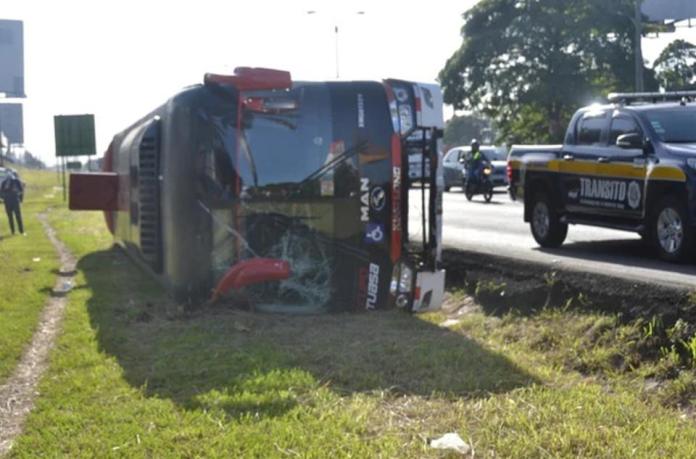
(QCOSTARICA) It was a matter of scary seconds when a tractor-trailer taps the rear end of a bus causing the driver to lose control, ending up in a ditch a short distance from the tolls on the Autopista General Cañas, east of the San Jose airport.
None of the passengers, nor the driver was seriously hurt in the incident.
“I was coming on the right lane and at I felt that it pushed me, I looked in the rearview mirror and I had a trailer fully close to the bus, as much as I tried to maneuver to hold onto the lane, I couldn’t, I tried to brake, but the front tire went off in the ditch and I lost control,” Alex Céspedes, the 14-year veteran bus driver, said of Monday afternoon’s incident.
Alex Céspedes, the 14-year veteran bus driver
Céspedes said he had never experienced anything similar in his year of driving.
He, like many of the passengers, suffered bumps and bruises. Only four of the some 40 passengers required a transfer to the Alajuela hospital
“It had never happened to me. At the time I rolled over, I couldn’t hold my leg and I was beaten, but I worried about the passengers Thank God they were just bruised.
“Some of them told me they also felt the push (from the trailer),” he said.
“We transferred four delicate patients with lumbar, thorax and limb injuries. In addition, we treated another five who were stable,” said Ariel Cubillo, one of the Red Cross paramedics who attended the emergency.
(QCOSTARICA) The Ministry of Health was back to work on Monday reporting 847 new case for Sunday, August 30 and 741 for Monday, August 31, for a total 1,588 new cases in the last 48 hours.
The total of infected is now 41,287 since the first case on March 6.
The report indicates 11 deaths occurring in the period between Saturday and Sunday noon and 7 from Sunday to Monday, for a total of 18 in the last two days, raising the total deceased to 436.
The youngest death was also reported this Monday, a 19-year-old woman, a foreigner residing in Guanacaste. She had been admitted to Hospital México and was diagnosed on August 24. She had an autoimmune disease, a condition in which your immune system mistakenly attacks your body.
In mid-August, two 21-year-olds were reported the youngest victims at the time.
(QCOSTARICA) Though the Banco de Costa Rica (BCR) has been printing driver’s license renewals for some time, and now within six months the BCR will be printing all driver’s licenses.
Last Thursday, the Department of Accreditation of Driving Licenses of the General Directorate of Road Education of the Ministry of Public Works and Transportation (MOPT) said it will stop printing driver’s licenses as well as the temporary driving permits.
“We have signed an agreement today with which we all win, the user wins by obtaining a service closer to them, with greater geographical and time coverage, the Administration wins with the simplification of procedures, eliminating the duplication of a public service,” said Rodolfo Méndez Mata, head of the MOPT.
“These initiatives seek to significantly improve the quality of public services. We have more than 10 years of experience providing this service with excellent results, we have the technical knowledge and the necessary resources to continue supporting our strategic partner: MOPT,” commented Álvaro Camacho De la O, Deputy Manager of Corporate Banking at the BCR.
The BCR’s commitment is to enable at least 65 service platforms throughout the country so that users can obtain their licenses there for the first time. In addition, they will be able to renew licenses and get duplicates.
All procedures will cost ¢7,000, except for renovations, which have a value of ¢10,000.
The MOPT press office indicated that this decision does not imply layoffs.
(QCOSTARICA) Costa Rica will allow the entry of tourists arriving by yachts or sailboats as of September 1. The Government issued on Saturday an executive decree that enables the entry by sea of visitors from the list of authorized countries.
The country has open air borders countries of the European Union (Schengen zone), United Kingdom, Japan, South Korea, Thailand, Singapore, China, Australia, New Zealand, Canada, Uruguay, and 12 U.S. states.
Tourists who come from any one of these countries and would have not made a stopover elsewhere will be able to enter the national territory without any inconvenience.
Among the requirements that tourists arriving on yachts or sailboats must meet is a negative PCR test (which must be taken 72 hours before the trip); that they must have medical insurance that offers coverage in case of contracting the SARS-CoV-2 virus; they must deliver the document “International Boat Departure” and complete the Health Pass, issued by the Ministry of Health.
Tourists who do not have a negative PCR test (which must be taken 72 hours before the trip), or tourists who set sail from a city or country that is not on the list of open borders with Costa Rica, will receive a health order to 14 days of quarantine.
In both scenarios, the days at sea will be deducted from the last departure recorded in the ship’s log.
For the entry of tourists by sea, yachts or sailboats must dock in the authorized marinas such as Golfito, Los Sueños, Pez Vela, Banana Bay and Papagayo.
Gustavo Segura, Minister of Tourism, explained at a press conference that a very controlled opening of the sector will continue and asked to strictly apply sanitary protocols to sustain this reactivation in the medium term.
(QCOSTARICA) The Burger King Costa Rica restaurant chain launched a dog biscuit called Dogpper, a solution to consumers with pets, manufactured by the Super Perro brand and flavored with Whopper.
Burger King’s Dogpper is available free through the Uber Eats platform, as well as BK app with any purchase over ¢8,000 colones and Autoking (drive-through) when enlarging a combo and paying with any Banco Nacional card. See here conditions.
The cookie will be available from August 31 to September 29, 2020 or while stocks last.
“The Dogpper is a product specially designed for pets and we are very happy to collaborate so that when the whole family gathers together to eat and share, everyone can enjoy the unique taste of BK,” said Vladimir Monestel, Marketing Director of Burger King Costa Rica.
The Dogpper cookie is strictly for the consumption of customer’s pet dogs and it should not be consumed at any time by people or by other types of pets other than dogs.
(QCOSTARICA) The existence of more than 300 public entities, with many performing duplicated, tripled, and even obsolete functions, is described as absurd by La Republica columnist and economist at Economía Hoy, Gerardo Corrales.
“They represent an unnecessary expense for some 320,000 civil servants who, in the central government alone, the estimate is an expenditure of ¢60 million colones per person,” Corrales said.
The thought is supported by the warnings of legislators that soon there will be projects that seek to end this duplication of functions, such as María Inés Solís, of the Partido Unidad Social Cristiana (PUSC).
Reviewing the operation of state institutions continues in the limelight, especially since last Friday, when selling the Instituto Nacional de Seguros (INS) and the Banco de Costa Rica (BCR) was a proposal made by Miguel Ángel Rodríguez, former president of Costa Rica (1998 – 2002) , in a conversation with current president Carlos Alvarado.
Rodriguez, along with former president Laura Chinchilla, (2010 – 2014) met virtually with Alvarado as part of the plan “Costa Rica Listens, Dialogues and Proposes”, to talk with the former heads of government exchanging experiences and possible solutions to the deficit, unemployment and public debt.
Former president Laura Chinchilla (2010-2014)
In addition, discussion included issues on taxes and the stand-by agreement with the International Monetary Fund (IMF).
“The objective of President Alvarado is to share visions with former presidents about the crucial situation in which we find ourselves as a country and the decision-making that it implies,” said Agustín Castro, Minister of Communication.
(QMAGAZINE) Costa Rican model Juliana Herz continues to make her way in the US market. The Tica is now part of the faces of the new line of cosmetics that the mediatic businesswoman Kylie Jenner, youngest of the Kardashians, will launch this Monday, August 31.
This has been shown by Jenner herself on the social networks of her brand Kylie Cosmetics, where Herz is seen in several of the publications and that the model herself has also shared on Twitter.
This is not the first time Juliana has worked with a member of the Kardashian clan, as the previous year she also modeled Kim’s makeup brand, KKW Beauty.
For that campaign, the Tica wore Kim’s brand highlighter, eyeliner, and lipstick, as well as a matte shadow palette.
Juliana has also worked with Khloe Kardashian and her brand Good American, and on that occasion, she was even interviewed for the brand’s website and YouTube channel.
(QCOSTARICA) In response to my article, “When the cat is away..” John Breek wrote:
“Or should we rather say, “when the cat is out of the bag…”.
“Our dear health dept officials are perhaps recognizing that masking up, social distancing, stay@home house arrests and locking down (trashing) the economy was well,…stupid!
“So now what, Salas and Co., can’t possibly admit “they” screwed up, career politicians just don’t but usually double down instead hence the mandatory masking starting 9 September.
“Everybody is dying of the “virus”, not of cancer, not pneumonia, not tuberculosis, not of old age or any other comorbidity, the PCR test is useless and doesn’t mean anything.
“Dr. Salas needs to quite taking advise from the CDC, WHO, NIH, Dr. Fauci and Bill Gates, he needs to zoom out and see the bigger picture, do his own research outside the box, see the plan the scamdemic that is used as cover for a NWO of total control by a small group of psychopaths.
“Read George Orwell’s book titled 1984.
“Folks worldwide are awaking-protesting against to this scam, against these fascist lock downs and masking, the main-stream-media propaganda like CNN et al are losing the Covid-1984 narrative.
“I know you won’t publish this Rico but that’s Okay for I also know “they”… will fail.”
John Breek gave permission to print his letter and the use of his name.
The opinion here is that of Mr. Breek, and not necessarily of mine or the Q.
Have a comment or opinion to this article or any of our articles? You can post to our official Facebook page, Twitter or email.